

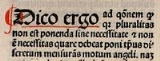
Occam's razor

Encyclopedia
Occam's razor, also known as Ockham's razor, and sometimes expressed in Latin
as lex parsimoniae (the law of parsimony, economy or succinctness), is a principle that generally recommends from among competing hypotheses selecting the one that makes the fewest new assumptions.
in discussions. That is, the razor
is a principle that suggests we should tend towards simpler theories until we can trade some simplicity for increased explanatory power. Contrary to the popular summary, the simplest available theory is sometimes a less accurate explanation. Philosophers also add that the exact meaning of "simplest" can be nuanced in the first place.
Bertrand Russell
offered what he called "a form of Occam's Razor": "Whenever possible, substitute constructions out of known entities for inferences to unknown entities."
Occam's razor is attributed to the 14th-century English logician, theologian and Franciscan
friar
Father William of Ockham
(d'Okham) although the principle was familiar long before.
The words attributed to Occam are "entities must not be multiplied beyond necessity" (entia non sunt multiplicanda praeter necessitatem), although these actual words are not to be found in his extant works.
The saying is also phrased as pluralitas non est ponenda sine necessitate ("plurality should not be posited without necessity").
To quote Isaac Newton
, "We are to admit no more causes of natural things than such as are both true and sufficient to explain their appearances. Therefore, to the same natural effects we must, so far as possible, assign the same causes."
In science, Occam’s razor is used as a heuristic
(general guiding rule or an observation) to guide scientists in the development of theoretical models rather than as an arbiter between published models. In the scientific method, Occam's razor is not considered an irrefutable principle of logic
, and certainly not a scientific result.
Solomonoff's inductive inference
is a mathematical proof of Occam's razor, under the assumption that the environment follows some unknown but computable probability distribution.
(c. 1285–1349) is remembered as an influential nominalist though his popular fame as a great logician rests chiefly on the maxim attributed to him and known as Ockham's razor. The term razor (the German "Ockhams Messer" translates to "Occam's knife") refers to distinguishing between two theories either by "shaving away" unnecessary assumptions or cutting apart two similar theories.
This maxim seems to represent the general tendency of Occam's philosophy
, but it has not been found in any of his writings. His nearest pronouncement seems to be Numquam ponenda est pluralitas sine necessitate [Plurality must never be posited without necessity], which occurs in his theological work on the Sentences of Peter Lombard (Quaestiones et decisiones in quattuor libros Sententiarum Petri Lombardi (ed. Lugd., 1495), i, dist. 27, qu. 2, K).
In his Summa Totius Logicae, i. 12, Ockham cites the principle of economy, Frustra fit per plura quod potest fieri per pauciora [It is futile to do with more things that which can be done with fewer]. (Thorburn, 1918, pp. 352–3; Kneale and Kneale, 1962, p. 243.)
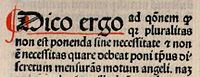 The origins of what has come to be known as Occam's razor are traceable to the works of earlier philosophers such as Maimonides
(Rabbi Moshe ben Maimon, 1138–1204), John Duns Scotus (1265–1308), and even Aristotle
(384–322 BC) (Charlesworth 1956).
The term "Occam's razor" first appeared in 1852 in the works of Sir William Hamilton, 9th Baronet
(1788–1856), centuries after Ockham's death. Ockham did not invent this "razor"; its association with him may be due to the frequency and effectiveness with which he used it (Ariew 1976). Ockham stated the principle in various ways, but the most popular version was written by John Ponce
from Cork
in 1639 (Meyer 1957).
For Ockham, the only truly necessary entity is God; everything else, the whole of creation, is radically contingent through and through.
, logic
, pragmatism
, and especially probability theory
have become more popular among philosophers.
. Thomas Aquinas
made this argument in the 13th century, writing, "If a thing can be done adequately by means of one, it is superfluous to do it by means of several; for we observe that nature does not employ two instruments [if] one suffices."
argued that whether something is simple or complex depends on the way we choose to describe it. Quine
proposed his Maxim of Shallow Analysis which says that we should uncover no more structure than necessary in order to show that a sentence is grammatical.
Even if Occam's razor is empirically justified, so too is the need to use other "theory selecting" methods in science
. Such other scientific methods are what support the razor's validity as a tool in the first place. This is because measuring the razor's (or any method's) ability to select between theories requires the use of different, reliable "theory selecting" methods for corroboration.
One should note the related concept of overfitting
, where excessively complex models are affected by statistical noise
(a problem also known as the bias-variance trade-off), whereas simpler models may capture the underlying structure better and may thus have better predictive
performance. It is, however, often difficult to deduce which part of the data is noise (cf. model selection
, test set
, minimum description length
, Bayesian inference
, etc.).
 In the history of competing explanations this is certainly not the case. At least, not generally (some increases in complexity are sometimes necessary), and so there remains a justified general bias towards the simpler of two competing explanations. To understand why, consider that, for each accepted explanation of a phenomenon, there is always an infinite number of possible, more complex, and ultimately incorrect alternatives. This is so because one can always burden failing explanations with ad-hoc hypotheses
. Ad-hoc hypotheses are justifications which prevent theories from being falsified
. Even other empirical criteria like consilience
can never truly eliminate such explanations as competition. Each true explanation, then, may have had many alternatives that were simpler and false, but also an infinite number of alternatives that were more complex and false.
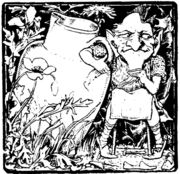
Put another way, any new, and even more complex theory can still possibly be true. For example: If an individual makes supernatural
claims that Leprechauns were responsible for breaking a vase, the simpler explanation would be that he is mistaken, but ongoing ad-hoc justifications (e.g. "And, that's not me on film, they tampered with that too") successfully prevent outright falsification. This endless supply of elaborate competing explanations cannot be ruled out—but by using Occam's Razor.
Some argue that Occam's razor is not a theory at all (in the classic sense of being an inference-driven model); rather, it may be a heuristic maxim
for choosing among other theories and instead underlies induction.
Alternatively, if we want to have reasonable discussion we may be practically
forced to accept Occam's razor in the same way we are simply forced to accept the laws of thought and inductive reasoning
(given the problem of induction
). As philosopher Elliott Sober explains (see below) not even Reason itself can be justified on any reasonable grounds. This has been taken to prove that the accepted bedrock premises of understanding are necessarily unjustifiable by pure reason; we must start with first principles of some kind (otherwise an infinite regress occurs).
The pragmatist may go on, as David Hume
did on the topic induction, that there is no satisfying alternative to granting this premise. Though one may claim that Occam's razor is invalid as a premise helping to regulate theories, putting this doubt into practice would mean doubting whether every step forward will result in locomotion or a nuclear explosion. In other words still: "What's the alternative?"
and E. T. Jaynes. Using Bayesian reasoning, a simple theory is preferred to a complicated one because of a higher prior probability. William H. Jeffreys and Berger stated that
"as a consequence of the fact that a hypothesis with fewer adjustable parameters will automatically have an enhanced posterior probability, due to the fact that the predictions it makes are sharp..."
argues that a preference for simple theories need not appeal to practical or aesthetic considerations. Our preference for simplicity may be justified by its falsifiability
criterion: We prefer simpler theories to more complex ones "because their empirical content is greater; and because they are better testable" (Popper 1992). The idea here is that a simple theory applies to more cases than a more complex one, and is thus more easily falsifiable. This is again comparing a simple theory to a more complex theory where both explain the data equally well.
once argued along the same lines as Popper, tying simplicity with "informativeness": The simplest theory is the more informative one, in the sense that less information is required in order to answer one's questions (Sober 1975). He has since rejected this account of simplicity, purportedly because it fails to provide an epistemic justification for simplicity. He now expresses views to the effect that simplicity considerations (and considerations of parsimony in particular) do not count unless they reflect something more fundamental. Philosophers, he suggests, may have made the error of hypostatizing simplicity (i.e. endowed it with a sui generis
existence), when it has meaning only when embedded in a specific context (Sober 1992). If we fail to justify simplicity considerations on the basis of the context in which we make use of them, we may have no non-circular justification: "just as the question 'why be rational?' may have no non-circular answer, the same may be true of the question 'why should simplicity be considered in evaluating the plausibility of hypotheses?'" (Sober 2001)
argues for simplicity on logical grounds:
Since our choice of theory cannot be determined by data (see Underdetermination
and Quine-Duhem thesis), we must rely on some criterion to determine which theory to use. Since it is absurd to have no logical method by which to settle on one hypothesis amongst an infinite number of equally data-compliant hypotheses, we should choose the simplest theory: "...either science is irrational [in the way it judges theories and predictions probable] or the principle of simplicity is a fundamental synthetic a priori truth" (Swinburne 1997).
:
and on the related concept of "simplicity":
(rule of thumb) to guide scientists in the development of theoretical models rather than as an arbiter between published models. In physics
, parsimony was an important heuristic
in the formulation of special relativity
by Albert Einstein
, the development and application of the principle of least action
by Pierre Louis Maupertuis
and Leonhard Euler
, and the development of quantum mechanics
by Ludwig Boltzmann
, Max Planck
, Werner Heisenberg
and Louis de Broglie. In chemistry
, Occam’s razor is often an important heuristic
when developing a model of a reaction mechanism
. However, while it is useful as a heuristic in developing models of reaction mechanisms, it has been shown to fail as a criterion for selecting among some selected published models. In this context, Einstein himself expressed a certain caution when he formulated Einstein's Constraint: "Everything should be kept as simple as possible, but no simpler." Elsewhere, Einstein harks back to the theological roots of the razor, with his famous put-down: "The Good Lord may be subtle, but he is not malicious."
In the scientific method, parsimony is an epistemological, metaphysical
or heuristic
preference, not an irrefutable principle of logic
, and certainly not a scientific result. As a logical principle, Occam's razor would demand that scientists accept the simplest possible theoretical explanation for existing data. However, science has shown repeatedly that future data often supports more complex theories than existing data. Science tends to prefer the simplest explanation that is consistent with the data available at a given time, but history shows that these simplest explanations often yield to complexities as new data become available. Science is open to the possibility that future experiments might support more complex theories than demanded by current data and is more interested in designing experiments to discriminate between competing theories than favoring one theory over another based merely on philosophical principles.
When scientists use the idea of parsimony, it only has meaning in a very specific context of inquiry. A number of background assumptions are required for parsimony to connect with plausibility in a particular research problem. The reasonableness of parsimony in one research context may have nothing to do with its reasonableness in another. It is a mistake to think that there is a single global principle that spans diverse subject matter.
As a methodological principle, the demand for simplicity suggested by Occam’s razor cannot be generally sustained. Occam’s razor cannot help toward a rational decision between competing explanations of the same empirical facts. One problem in formulating an explicit general principle is that complexity and simplicity are perspective notions whose meaning depends on the context of application and the user’s prior understanding. In the absence of an objective criterion for simplicity and complexity, Occam’s razor itself does not support an objective epistemology.
The problem of deciding between competing explanations for empirical facts cannot be solved by formal tools. Simplicity principles can be useful heuristics in formulating hypotheses, but they do not make a contribution to the selection of theories. A theory that is compatible with one person’s world view will be considered simple, clear, logical, and evident, whereas what is contrary to that world view will quickly be rejected as an overly complex explanation with senseless additional hypotheses. Occam’s razor, in this way, becomes a “mirror of prejudice.”
It has been suggested that Occam’s razor is a widely accepted example of extraevidential consideration, even though it is entirely a metaphysical assumption. There is little empirical evidence that the world is actually simple or that simple accounts are more likely than complex ones to be true.
Most of the time, Occam’s razor is a conservative tool, cutting out crazy, complicated constructions and assuring that hypotheses are grounded in the science of the day, thus yielding ‘normal’ science: models of explanation and prediction. There are, however, notable exceptions where Occam’s razor turns a conservative scientist into a reluctant revolutionary. For example, Max Planck
interpolated between the Wien and Jeans radiation laws used an Occam’s razor logic to formulate the quantum hypothesis, and even resisting that hypothesis as it became more obvious that it was correct.
However, on many occasions Occam's razor has stifled or delayed scientific progress. For example, appeals to simplicity were used to deny the phenomena of meteorites, ball lightning
, continental drift
, and reverse transcriptase
. It originally rejected DNA
as the carrier of genetic information in favor of proteins, since proteins provided the simpler explanation. Theories that reach far beyond the available data are rare, but general relativity
provides one example.
In hindsight, one can argue that it is simpler to consider DNA
as the carrier of genetic information, because it uses a smaller number of building blocks (four nitrogenous bases). However, during the time that proteins were the favored genetic medium, it seemed like a more complex hypothesis to confer genetic information in DNA rather than proteins.
One can also argue (also in hindsight) for atomic building blocks for matter, because it provides a simpler explanation for the observed reversibility of both mixing and chemical reactions as simple separation and re-arrangements of the atomic building blocks. However, at the time, the atomic theory
was considered more complex because it inferred the existence of invisible particles which had not been directly detected. Ernst Mach
and the logical positivists rejected the atomic theory
of John Dalton
, until the reality of atoms was more evident in Brownian motion
, as explained by Albert Einstein
.
In the same way, hindsight argues that postulating the aether
is more complex than transmission of light through a vacuum
. However, at the time, all known waves propagated through a physical medium, and it seemed simpler to postulate the existence of a medium rather than theorize about wave propagation without a medium. Likewise, Newton's idea of light particles seemed simpler than Christiaan Huygens's idea of waves, so many favored it; however in this case, as it turned out, neither the wave- nor the particle-explanation alone suffices, since light behaves like waves as well as like particles (wave–particle duality
).
Three axioms presupposed by the scientific method are realism (the existence of objective reality), the existence of natural laws, and the constancy of natural law. Rather than depend on provability of these axioms, science depends on the fact that they have not been objectively falsified. Occam’s razor and parsimony support, but do not prove these general axioms of science. The general principle of science is that theories (or models) of natural law must be consistent with repeatable experimental observations. This ultimate arbiter (selection criterion) rests upon the axioms mentioned above.
There are many examples where Occam’s razor would have picked the wrong theory given the available data. Simplicity principles are useful philosophical preferences for choosing a more likely theory from among several possibilities that are each consistent with available data. A single instance of Occam’s razor picking a wrong theory falsifies the razor as a general principle.
If multiple models of natural law make exactly the same testable predictions, they are equivalent and there is no need for parsimony to choose one that is preferred. For example, Newtonian, Hamiltonian, and Lagrangian classical mechanics are equivalent. Physicists have no interest in using Occam’s razor to say the other two are wrong. Likewise, there is no demand for simplicity principles to arbitrate between wave and matrix formulations of quantum mechanics. Science often does not demand arbitration or selection criteria between models which make the same testable predictions.
Michael Lee and others provide cases where a parsimonious approach does not guarantee a correct conclusion and, if based on incorrect working hypotheses or interpretations of incomplete data, may even strongly support a false conclusion. He warns "When parsimony ceases to be a guideline and is instead elevated to an ex cathedra pronouncement, parsimony analysis ceases to be science."
: the units of selection controversy and systematics
. George C. Williams
in his book Adaptation and Natural Selection
(1966) argues that the best way to explain altruism
among animals is based on low level (i.e. individual) selection as opposed to high level group selection. Altruism is defined as behavior that is beneficial to the group but not to the individual, and group selection is thought by some to be the evolutionary mechanism that selects for altruistic traits. Others posit individual selection as the mechanism which explains altruism solely in terms of the behaviors of individual organisms acting in their own self interest without regard to the group. The basis for Williams's contention is that of the two, individual selection is the more parsimonious theory. In doing so he is invoking a variant of Occam's razor known as Lloyd Morgan's Canon
: "In no case is an animal activity to be interpreted in terms of higher psychological processes, if it can be fairly interpreted in terms of processes which stand lower in the scale of psychological evolution and development" (Morgan 1903).
However, more recent biological analyses, such as Richard Dawkins
's The Selfish Gene
, have contended that Williams's view is not the simplest and most basic. Dawkins argues the way evolution works is that the genes that are propagated in most copies will end up determining the development of that particular species, i.e., natural selection turns out to select specific genes, and this is really the fundamental underlying principle, that automatically gives individual and group selection as emergent
features of evolution.
Zoology
provides an example. Muskoxen, when threatened by wolves
, will form a circle with the males on the outside and the females and young on the inside. This as an example of a behavior by the males that seems to be altruistic. The behavior is disadvantageous to them individually but beneficial to the group as a whole and was thus seen by some to support the group selection theory.
However, a much better explanation immediately offers itself once one considers that natural selection works on genes. If the male musk ox runs off, leaving his offspring to the wolves, his genes will not be propagated. If however he takes up the fight his genes will live on in his offspring. And thus the "stay-and-fight" gene prevails. This is an example of kin selection
. An underlying general principle thus offers a much simpler explanation, without retreating to special principles as group selection.
Systematics
is the branch of biology
that attempts to establish genealogical relationships among organisms. It is also concerned with their classification. There are three primary camps in systematics; cladists, pheneticists, and evolutionary taxonomists. The cladists hold that genealogy
alone should determine classification and pheneticists contend that similarity over propinquity of descent is the determining criterion while evolutionary taxonomists claim that both genealogy and similarity count in classification.
It is among the cladists that Occam's razor is to be found, although their term for it is cladistic parsimony. Cladistic parsimony (or maximum parsimony
) is a method of phylogenetic inference in the construction of types of phylogenetic trees (more specifically, cladograms). Cladograms
are branching, tree-like structures used to represent lines of descent based on one or more evolutionary change (s). Cladistic parsimony is used to support the hypothesis (es) that require the fewest evolutionary changes. For some types of tree, it will consistently produce the wrong results regardless of how much data is collected (this is called long branch attraction
). For a full treatment of cladistic parsimony, see Elliott Sober's Reconstructing the Past: Parsimony, Evolution, and Inference (1988). For a discussion of both uses of Occam's razor in Biology see Elliott Sober's article Let's Razor Ockham's Razor (1990).
Other methods for inferring evolutionary relationships use parsimony in a more traditional way. Likelihood
methods for phylogeny use parsimony as they do for all likelihood tests, with hypotheses requiring few differing parameters (i.e., numbers of different rates of character change or different frequencies of character state transitions) being treated as null hypotheses relative to hypotheses requiring many differing parameters. Thus, complex hypotheses must predict data much better than do simple hypotheses before researchers reject the simple hypotheses. Recent advances employ information theory
, a close cousin of likelihood, which uses Occam's razor in the same way.
Francis Crick
has commented on potential limitations of Occam's razor in biology. He advances the argument that because biological systems are the products of (an on-going) natural selection, the mechanisms are not necessarily optimal in an obvious sense. He cautions: "While Ockham's razor is a useful tool in the physical sciences, it can be a very dangerous implement in biology. It is thus very rash to use simplicity and elegance as a guide in biological research."
In biogeography
, parsimony is used to infer ancient migration
s of species
or population
s by observing the geographic distribution and relationships of existing organism
s. Given the phylogenetic tree, ancestral migrations are inferred to be those that require the minimum amount of total movement.
, doctors and philosophers of medicine speak of diagnostic parsimony. Diagnostic parsimony advocates that when diagnosing a given injury, ailment, illness, or disease a doctor should strive to look for the fewest possible causes that will account for all the symptoms. This philosophy is one of several demonstrated in the popular medical adage
"when you are in Texas and you hear hoofbeats, think horses, not zebras
." While diagnostic parsimony might often be beneficial, credence should also be given to the counter-argument modernly known as Hickam's dictum
, which succinctly states that "patients can have as many diseases as they damn well please." It is often statistically more likely that a patient has several common diseases, rather than having a single rarer disease which explains their myriad symptoms. Also, independently of statistical likelihood, some patients do in fact turn out to have multiple diseases, which by common sense nullifies the approach of insisting to explain any given collection of symptoms with one disease. These misgivings emerge from simple probability theory—which is already taken into account in many modern variations of the razor—and from the fact that the loss function
is much greater in medicine than in most of general science. Because misdiagnosis can result in the loss of a person's health and potentially life, it is considered better to test and pursue all reasonable theories even if there is some theory that appears the most likely.
Diagnostic parsimony and the counter-balance it finds in Hickam's dictum have very important implications in medical practice. Any set of symptoms could be indicative of a range of possible diseases and disease combinations; though at no point is a diagnosis rejected or accepted just on the basis of one disease appearing more likely than another, the continuous flow of hypothesis formulation, testing and modification benefits greatly from estimates regarding which diseases (or sets of diseases) are relatively more likely to be responsible for a set of symptoms, given the patient's environment, habits, medical history and so on. For example, if a hypothetical patient's immediately apparent symptoms include fatigue and cirrhosis
and they test negative for Hepatitis C
, their doctor might formulate a working hypothesis that the cirrhosis was caused by their drinking problem
, and then seek symptoms and perform tests to formulate and rule out hypotheses as to what has been causing the fatigue; but if the doctor were to further discover that the patient's breath inexplicably smells of garlic and they are suffering from pulmonary edema
, they might decide to test for the relatively rare condition of Selenium poisoning.
, Occam's razor is sometimes applied to the existence of God
; if the concept of a God does not help to explain the universe better, then the idea is that atheism should be preferred (Schmitt 2005). Some such arguments are based on the assertion that belief in God requires more complex assumptions to explain the universe than non-belief (e.g. the Ultimate Boeing 747 gambit
). On the other hand, there are various arguments in favour of a God which attempt to establish a God as a useful explanation. Philosopher Del Ratzsch suggests that the application of the razor to God may not be so simple, least of all when we are comparing that hypothesis with theories postulating multiple invisible universes
.
, who viewed belief in God as a leap of faith
which sometimes directly opposed reason. This is also the same basic view of Clarkian
Presuppositional apologetics
, with the exception that Clark never thought the leap of faith was contrary to reason. (See also: Fideism
). In a different vein, Alvin Plantinga
and others have argued for reformed epistemology
, the view that God's existence can properly be assumed as part of a Christian's epistemological structure (see also basic belief
s). Yet another school of thought, Van Tillian
presuppositional apologetics
, claims that God's existence is the transcendentally
necessary prior condition to the intelligibility of all human experience and thought. In other words, proponents of this view hold that there is no other viable option to ultimately explain any fact of human experience or knowledge, let alone a simpler one.
William of Ockham
himself was a theist. He believed in God, and thus in some validity of scripture; he writes that “nothing ought to be posited without a reason given, unless it is self-evident (literally, known through itself) or known by experience or proved by the authority of Sacred Scripture.” In Ockham's view, an explanation which does not harmonize with reason, experience or the aforementioned sources cannot be considered valid. However, unlike many theologians of his time, Ockham did not believe God could be logically proven with arguments. In fact, he thought that science actually seemed to eliminate God according to the Razor's criteria. To Ockham, science was a matter of discovery, but theology was a matter of revelation
and faith
(e.g. some sort of Non-overlapping magisteria
). He explains: “only faith gives us access to theological truths. The ways of God are not open to reason, for God has freely chosen to create a world and establish a way of salvation within it apart from any necessary laws that human logic or rationality can uncover.”
Another application of the principle is to be found in the work of George Berkeley
(1685–1753). Berkeley was an idealist who believed that all of reality could be explained in terms of the mind alone. He famously invoked Occam's razor against Idealism
's metaphysical competitor, materialism
, claiming that matter was not required by his metaphysic and was thus eliminable. One problem with this argument is that the razor is easily turned around on Berkeley's Idealism itself, which is premised on the notion of a supernatural entity constantly projecting ideas into the observer's mind to give the impression of matter. Invoking such a supposition to explain the appearance of matter is far more unnecessary than the supposition that matter itself is real.
In the 20th century Philosophy of Mind, Occam's razor found a champion in J. J. C. Smart
, who in his article "Sensations and Brain Processes" (1959) claimed Occam's razor as the basis for his preference of the mind-brain identity theory over mind-body dualism. Dualists claim that there are two kinds of substances in the universe: physical (including the body) and mental, which is nonphysical. In contrast identity theorists claim that everything is physical, including consciousness, and that there is nothing nonphysical. The basis for the materialist claim is that of the two competing theories, dualism and mind-brain identity, the identity theory is the simpler since it commits to fewer entities. Smart was criticized for his use of the razor and ultimately retracted his advocacy of it in this context.
Paul Churchland
(1984) cites Occam's razor as the first line of attack against dualism, but admits that by itself it is inconclusive. The deciding factor for Churchland is the greater explanatory prowess of a materialist position in the Philosophy of Mind as informed by findings in neurobiology.
Dale Jacquette (1994) claims that Occam's razor is the rationale behind eliminativism and reductionism in the philosophy of mind. Eliminativism is the thesis that the ontology of folk psychology
including such entities as "pain", "joy", "desire", "fear", etc., are eliminable in favor of an ontology of a completed neuroscience.
in order to avoid excessive punishment. In the utilitarian
approach to the philosophy of punishment, Jeremy Bentham
's "parsimony principle" states that any punishment greater than is required to achieve its end is unjust. The concept is related but not identical to the legal concept of proportionality
. Parsimony is a key consideration of the modern restorative justice
, and is a component of utilitarian approaches to punishment, as well as the prison abolition movement
. Bentham believed that true parsimony would require punishment to be individualised to take account of the sensibility
of the individual—an individual more sensitive to punishment should be given a proportionately lesser one, since otherwise needless pain would be inflicted. Later utilitarian writers have tended to abandon this idea, in large part due to the impracticality of determining each alleged criminal's relative sensitivity to specific punishments.
. By definition, all assumptions introduce possibilities for error; if an assumption does not improve the accuracy of a theory, its only effect is to increase the probability that the overall theory is wrong.
There are various papers in scholarly journals deriving formal versions of Occam's razor from probability theory and applying it in statistical inference
, and also of various criteria for penalizing complexity in statistical inference. Recent papers have suggested a connection between Occam's razor and Kolmogorov complexity
.
One of the problems with the original formulation of the principle is that it only applies to models with the same explanatory power (i.e. prefer the simplest of equally good models). A more general form of Occam's razor can be derived from Bayesian model comparison and Bayes factor
s, which can be used to compare models that don't fit the data equally well. These methods can sometimes optimally balance the complexity and power of a model. Generally the exact Ockham factor is intractable but approximations such as Akaike Information Criterion
, Bayesian Information Criterion, Variational Bayes
, False discovery rate
and Laplace approximation are used. Many artificial intelligence
researchers are now employing such techniques.
William H. Jefferys and James O. Berger (1991) generalise and quantify the original formulation's "assumptions" concept as the degree to which a proposition is unnecessarily accommodating to possible observable data. The model they propose balances the precision of a theory's predictions against their sharpness; theories which sharply made their correct predictions are preferred over theories which would have accommodated a wide range of other possible results. This, again, reflects the mathematical relationship between key concepts in Bayesian inference
(namely marginal probability, conditional probability
and posterior probability
).
The statistical view leads to a more rigorous formulation of the razor than previous philosophical discussions. In particular, it shows that "simplicity" must first be defined in some way before the razor may be used, and that this definition will always be subjective. For example, in the Kolmogorov-Chaitin Minimum description length
approach, the subject must pick a Turing machine
whose operations describe the basic operations believed to represent "simplicity" by the subject. However one could always choose a Turing machine with a simple operation that happened to construct one's entire theory and would hence score highly under the razor. This has led to two opposing views of the objectivity of Occam's razor.
requires approximately the same length description across different formulations, and is small compared to the Kolmogorov complexity
of most practical theories. Marcus Hutter
has used this consistency to define a "natural" Turing machine of small size as the proper basis for excluding arbitrarily complex instruction sets in the formulation of razors. Describing the program for the universal program as the "hypothesis", and the representation of the evidence as program data, it has been formally proven under ZF
that "the sum of the log universal probability of the model plus the log of the probability of the data given the model should be minimized." Interpreting this as minimising the total length of a two-part message encoding model followed by data given model gives us the Minimum Message Length (MML) principle
One possible conclusion from mixing the concepts of Kolmogorov complexity and Occam's razor is that an ideal data compressor would also be a scientific explanation/formulation generator. Some attempts have been made to re-derive known laws from considerations of simplicity or compressibility.
According to Jürgen Schmidhuber
, the appropriate mathematical theory of Occam's razor already exists, namely, Ray Solomonoff
's theory of optimal inductive inference and its extensions. See discussions in for the subtle distinctions between the algorithmic probability (ALP) work of Ray Solomonoff
and the Minimum Message Length
work of Chris Wallace
, and see both for such discussions and also (in sec. 4) discussions of MML and Ockham's razor. For a specific example of MML as Ockham's razor in the problem of decision tree induction, see.
The other things in question are the evidential support for the theory. Therefore, according to the principle, a simpler but less correct theory should not be preferred over a more complex but more correct one. It is this fact which gives the lie to the common misinterpretation of Occam's razor that "the simplest" one is usually the correct one.
For instance, classical physics
is simpler than more recent theories; nonetheless it should not be preferred over them, because it is demonstrably wrong in certain respects.
Occam's razor is used to adjudicate between theories that have already passed "theoretical scrutiny" tests, and which are equally well-supported by the evidence. Furthermore, it may be used to prioritize empirical testing between two equally plausible but unequally testable hypotheses; thereby minimizing costs and wastes while increasing chances of falsification of the simpler-to-test hypothesis.
Another contentious aspect of the razor is that a theory can become more complex in terms of its structure (or syntax
), while its ontology
(or semantics
) becomes simpler, or vice versa. Quine, in a discussion on definition, referred to these two perspectives as "economy of practical expression" and "economy in grammar and vocabulary", respectively. The theory of relativity
is often given as an example of the proliferation of complex words to describe a simple concept.
Galileo Galilei
lampooned the misuse of Occam's razor in his Dialogue
. The principle is represented in the dialogue by Simplicio. The telling point that Galileo presented ironically was that if you really wanted to start from a small number of entities, you could always consider the letters of the alphabet as the fundamental entities, since you could certainly construct the whole of human knowledge out of them.
was a contemporary of William of Ockham (1287–1347) who took exception to Occam's razor and Ockham's use of it. In response he devised his own anti-razor: "If three things are not enough to verify an affirmative proposition about things, a fourth must be added, and so on." Although there have been a number of philosophers who have formulated similar anti-razors since Chatton's time, no one anti-razor has perpetuated in as much notoriety as Chatton's anti-razor, although this could be the case of the Late Renaissance Italian motto of unknown attribution Se non è vero, è ben trovato ("Even if it is not true, it is well conceived") when referred to a particularly artful explanation.
Anti-razors have also been created by Gottfried Wilhelm Leibniz (1646–1716), Immanuel Kant
(1724–1804), and Karl Menger
. Leibniz's version took the form of a principle of plenitude, as Arthur Lovejoy has called it, the idea being that God created the most varied and populous of possible worlds. Kant felt a need to moderate the effects of Occam's razor and thus created his own counter-razor: "The variety of beings should not rashly be diminished."
Karl Menger found mathematicians to be too parsimonious with regard to variables so he formulated his Law Against Miserliness which took one of two forms: "Entities must not be reduced to the point of inadequacy" and "It is vain to do with fewer what requires more." See "Ockham's Razor and Chatton's Anti-Razor" (1984) by Armand Maurer. A less serious, but (some might say) even more extremist anti-razor is Pataphysics, the "science of imaginary solutions" invented by Alfred Jarry
(1873–1907). Perhaps the ultimate in anti-reductionism, "Pataphysics seeks no less than to view each event in the universe as completely unique, subject to no laws but its own." Variations on this theme were subsequently explored by the Argentine writer Jorge Luis Borges
in his story/mock-essay Tlön, Uqbar, Orbis Tertius
. There is also Crabtree's Bludgeon
, which takes a cynical view that "[n]o set of mutually inconsistent observations can exist for which some human intellect cannot conceive a coherent explanation, however complicated."
Latin
Latin is an Italic language originally spoken in Latium and Ancient Rome. It, along with most European languages, is a descendant of the ancient Proto-Indo-European language. Although it is considered a dead language, a number of scholars and members of the Christian clergy speak it fluently, and...
as lex parsimoniae (the law of parsimony, economy or succinctness), is a principle that generally recommends from among competing hypotheses selecting the one that makes the fewest new assumptions.
Overview
The principle is often summarized as "simpler explanations are, other things being equal, generally better than more complex ones." In practice the principle is usually focused on shifting the burden of proofPhilosophic burden of proof
The philosophic burden of proof is the obligation on a party in an epistemic dispute to provide sufficient warrant for their position.-Holder of the burden:When debating any issue, there is an implicit burden of proof on the person asserting a claim...
in discussions. That is, the razor
Razor (philosophy)
In philosophy, a razor is a device which allows one to shave away unlikely explanations for a phenomenon.Famous razors include:*Aristotle's razor *Occam's razor - when faced with competing hypothesis select the one that makes the fewest assumptions...
is a principle that suggests we should tend towards simpler theories until we can trade some simplicity for increased explanatory power. Contrary to the popular summary, the simplest available theory is sometimes a less accurate explanation. Philosophers also add that the exact meaning of "simplest" can be nuanced in the first place.
Bertrand Russell
Bertrand Russell
Bertrand Arthur William Russell, 3rd Earl Russell, OM, FRS was a British philosopher, logician, mathematician, historian, and social critic. At various points in his life he considered himself a liberal, a socialist, and a pacifist, but he also admitted that he had never been any of these things...
offered what he called "a form of Occam's Razor": "Whenever possible, substitute constructions out of known entities for inferences to unknown entities."
Occam's razor is attributed to the 14th-century English logician, theologian and Franciscan
Franciscan
Most Franciscans are members of Roman Catholic religious orders founded by Saint Francis of Assisi. Besides Roman Catholic communities, there are also Old Catholic, Anglican, Lutheran, ecumenical and Non-denominational Franciscan communities....
friar
Friar
A friar is a member of one of the mendicant orders.-Friars and monks:...
Father William of Ockham
William of Ockham
William of Ockham was an English Franciscan friar and scholastic philosopher, who is believed to have been born in Ockham, a small village in Surrey. He is considered to be one of the major figures of medieval thought and was at the centre of the major intellectual and political controversies of...
(d'Okham) although the principle was familiar long before.
The words attributed to Occam are "entities must not be multiplied beyond necessity" (entia non sunt multiplicanda praeter necessitatem), although these actual words are not to be found in his extant works.
The saying is also phrased as pluralitas non est ponenda sine necessitate ("plurality should not be posited without necessity").
To quote Isaac Newton
Isaac Newton
Sir Isaac Newton PRS was an English physicist, mathematician, astronomer, natural philosopher, alchemist, and theologian, who has been "considered by many to be the greatest and most influential scientist who ever lived."...
, "We are to admit no more causes of natural things than such as are both true and sufficient to explain their appearances. Therefore, to the same natural effects we must, so far as possible, assign the same causes."
In science, Occam’s razor is used as a heuristic
Heuristic
Heuristic refers to experience-based techniques for problem solving, learning, and discovery. Heuristic methods are used to speed up the process of finding a satisfactory solution, where an exhaustive search is impractical...
(general guiding rule or an observation) to guide scientists in the development of theoretical models rather than as an arbiter between published models. In the scientific method, Occam's razor is not considered an irrefutable principle of logic
Logic
In philosophy, Logic is the formal systematic study of the principles of valid inference and correct reasoning. Logic is used in most intellectual activities, but is studied primarily in the disciplines of philosophy, mathematics, semantics, and computer science...
, and certainly not a scientific result.
Solomonoff's inductive inference
Inductive inference
Around 1960, Ray Solomonoff founded the theory of universal inductive inference, the theory of prediction based on observations; for example, predicting the next symbol based upon a given series of symbols...
is a mathematical proof of Occam's razor, under the assumption that the environment follows some unknown but computable probability distribution.
History
William of OckhamWilliam of Ockham
William of Ockham was an English Franciscan friar and scholastic philosopher, who is believed to have been born in Ockham, a small village in Surrey. He is considered to be one of the major figures of medieval thought and was at the centre of the major intellectual and political controversies of...
(c. 1285–1349) is remembered as an influential nominalist though his popular fame as a great logician rests chiefly on the maxim attributed to him and known as Ockham's razor. The term razor (the German "Ockhams Messer" translates to "Occam's knife") refers to distinguishing between two theories either by "shaving away" unnecessary assumptions or cutting apart two similar theories.
This maxim seems to represent the general tendency of Occam's philosophy
Philosophy
Philosophy is the study of general and fundamental problems, such as those connected with existence, knowledge, values, reason, mind, and language. Philosophy is distinguished from other ways of addressing such problems by its critical, generally systematic approach and its reliance on rational...
, but it has not been found in any of his writings. His nearest pronouncement seems to be Numquam ponenda est pluralitas sine necessitate [Plurality must never be posited without necessity], which occurs in his theological work on the Sentences of Peter Lombard (Quaestiones et decisiones in quattuor libros Sententiarum Petri Lombardi (ed. Lugd., 1495), i, dist. 27, qu. 2, K).
In his Summa Totius Logicae, i. 12, Ockham cites the principle of economy, Frustra fit per plura quod potest fieri per pauciora [It is futile to do with more things that which can be done with fewer]. (Thorburn, 1918, pp. 352–3; Kneale and Kneale, 1962, p. 243.)
Maimonides
Moses ben-Maimon, called Maimonides and also known as Mūsā ibn Maymūn in Arabic, or Rambam , was a preeminent medieval Jewish philosopher and one of the greatest Torah scholars and physicians of the Middle Ages...
(Rabbi Moshe ben Maimon, 1138–1204), John Duns Scotus (1265–1308), and even Aristotle
Aristotle
Aristotle was a Greek philosopher and polymath, a student of Plato and teacher of Alexander the Great. His writings cover many subjects, including physics, metaphysics, poetry, theater, music, logic, rhetoric, linguistics, politics, government, ethics, biology, and zoology...
(384–322 BC) (Charlesworth 1956).
The term "Occam's razor" first appeared in 1852 in the works of Sir William Hamilton, 9th Baronet
Sir William Hamilton, 9th Baronet
Sir William Hamilton, 9th Baronet was a Scottish metaphysician.-Early life:He was born in Glasgow. He was from an academic family, including Robert Hamilton, the economist...
(1788–1856), centuries after Ockham's death. Ockham did not invent this "razor"; its association with him may be due to the frequency and effectiveness with which he used it (Ariew 1976). Ockham stated the principle in various ways, but the most popular version was written by John Ponce
John Ponce
John Ponce was an Irish Franciscan scholastic philosopher and theologian.He originated the classic formulation of Ockham's Razor, in the shape of the Latin phrase entia non sunt multiplicanda praeter necessitatem, "entities are not to be multiplied unnecessarily".-Life:His family name was John Punch...
from Cork
County Cork
County Cork is a county in Ireland. It is located in the South-West Region and is also part of the province of Munster. It is named after the city of Cork . Cork County Council is the local authority for the county...
in 1639 (Meyer 1957).
For Ockham, the only truly necessary entity is God; everything else, the whole of creation, is radically contingent through and through.
Justifications
Beginning in the 20th century, epistemological justifications based on inductionInductive reasoning
Inductive reasoning, also known as induction or inductive logic, is a kind of reasoning that constructs or evaluates propositions that are abstractions of observations. It is commonly construed as a form of reasoning that makes generalizations based on individual instances...
, logic
Logic
In philosophy, Logic is the formal systematic study of the principles of valid inference and correct reasoning. Logic is used in most intellectual activities, but is studied primarily in the disciplines of philosophy, mathematics, semantics, and computer science...
, pragmatism
Pragmatism
Pragmatism is a philosophical tradition centered on the linking of practice and theory. It describes a process where theory is extracted from practice, and applied back to practice to form what is called intelligent practice...
, and especially probability theory
Probability theory
Probability theory is the branch of mathematics concerned with analysis of random phenomena. The central objects of probability theory are random variables, stochastic processes, and events: mathematical abstractions of non-deterministic events or measured quantities that may either be single...
have become more popular among philosophers.
Aesthetic
Prior to the 20th century, it was a commonly-held belief that nature itself was simple and that simpler hypotheses about nature were thus more likely to be true. This notion was deeply rooted in the aesthetic value simplicity holds for human thought and the justifications presented for it often drew from theologyTheology
Theology is the systematic and rational study of religion and its influences and of the nature of religious truths, or the learned profession acquired by completing specialized training in religious studies, usually at a university or school of divinity or seminary.-Definition:Augustine of Hippo...
. Thomas Aquinas
Thomas Aquinas
Thomas Aquinas, O.P. , also Thomas of Aquin or Aquino, was an Italian Dominican priest of the Catholic Church, and an immensely influential philosopher and theologian in the tradition of scholasticism, known as Doctor Angelicus, Doctor Communis, or Doctor Universalis...
made this argument in the 13th century, writing, "If a thing can be done adequately by means of one, it is superfluous to do it by means of several; for we observe that nature does not employ two instruments [if] one suffices."
Linguistic
SimonHerbert Simon
Herbert Alexander Simon was an American political scientist, economist, sociologist, and psychologist, and professor—most notably at Carnegie Mellon University—whose research ranged across the fields of cognitive psychology, cognitive science, computer science, public administration, economics,...
argued that whether something is simple or complex depends on the way we choose to describe it. Quine
Willard Van Orman Quine
Willard Van Orman Quine was an American philosopher and logician in the analytic tradition...
proposed his Maxim of Shallow Analysis which says that we should uncover no more structure than necessary in order to show that a sentence is grammatical.
Empirical
Occam's razor has gained strong empirical support as far as helping to converge on better theories (see "Applications" section below for some examples).Even if Occam's razor is empirically justified, so too is the need to use other "theory selecting" methods in science
Science
Science is a systematic enterprise that builds and organizes knowledge in the form of testable explanations and predictions about the universe...
. Such other scientific methods are what support the razor's validity as a tool in the first place. This is because measuring the razor's (or any method's) ability to select between theories requires the use of different, reliable "theory selecting" methods for corroboration.
One should note the related concept of overfitting
Overfitting
In statistics, overfitting occurs when a statistical model describes random error or noise instead of the underlying relationship. Overfitting generally occurs when a model is excessively complex, such as having too many parameters relative to the number of observations...
, where excessively complex models are affected by statistical noise
Statistical noise
Statistical noise is the colloquialism for recognized amounts of unexplained variation in a sample. See errors and residuals in statistics....
(a problem also known as the bias-variance trade-off), whereas simpler models may capture the underlying structure better and may thus have better predictive
Predictive inference
Predictive inference is an approach to statistical inference that emphasizes the prediction of future observations based on past observations.Initially, predictive inference was based on observable parameters and it was the main purpose of studying probability, but it fell out of favor in the 20th...
performance. It is, however, often difficult to deduce which part of the data is noise (cf. model selection
Model selection
Model selection is the task of selecting a statistical model from a set of candidate models, given data. In the simplest cases, a pre-existing set of data is considered...
, test set
Test set
A test set is a set of data used in various areas of information science to assess the strength and utility of a predictive relationship. Test sets are used in artificial intelligence, machine learning, genetic programming, intelligent systems, and statistics...
, minimum description length
Minimum description length
The minimum description length principle is a formalization of Occam's Razor in which the best hypothesis for a given set of data is the one that leads to the best compression of the data. MDL was introduced by Jorma Rissanen in 1978...
, Bayesian inference
Bayesian inference
In statistics, Bayesian inference is a method of statistical inference. It is often used in science and engineering to determine model parameters, make predictions about unknown variables, and to perform model selection...
, etc.).
Testing the razor
The razor's claim that "simpler explanations are, other things being equal, generally better than more complex ones" is amenable to empirical testing. The procedure to test this hypothesis would compare the track records of simple and comparatively complex explanations. The validity of Occam's razor as a tool would then have to be rejected if the more complex explanations were more often correct than the less complex ones (while the converse would lend support to its use).Ad hoc hypothesis
In science and philosophy, an ad hoc hypothesis is a hypothesis added to a theory in order to save it from being falsified. Ad hoc hypothesizing is compensating for anomalies not anticipated by the theory in its unmodified form....
. Ad-hoc hypotheses are justifications which prevent theories from being falsified
Falsifiability
Falsifiability or refutability of an assertion, hypothesis or theory is the logical possibility that it can be contradicted by an observation or the outcome of a physical experiment...
. Even other empirical criteria like consilience
Consilience
Consilience, or the unity of knowledge , has its roots in the ancient Greek concept of an intrinsic orderliness that governs our cosmos, inherently comprehensible by logical process, a vision at odds with mystical views in many cultures that surrounded the Hellenes...
can never truly eliminate such explanations as competition. Each true explanation, then, may have had many alternatives that were simpler and false, but also an infinite number of alternatives that were more complex and false.
Put another way, any new, and even more complex theory can still possibly be true. For example: If an individual makes supernatural
Supernatural
The supernatural or is that which is not subject to the laws of nature, or more figuratively, that which is said to exist above and beyond nature...
claims that Leprechauns were responsible for breaking a vase, the simpler explanation would be that he is mistaken, but ongoing ad-hoc justifications (e.g. "And, that's not me on film, they tampered with that too") successfully prevent outright falsification. This endless supply of elaborate competing explanations cannot be ruled out—but by using Occam's Razor.
Practical considerations and pragmatism
The common form of the razor, used to distinguish between equally explanatory hypotheses, may be supported by the practical fact that simpler theories are easier to understand.Some argue that Occam's razor is not a theory at all (in the classic sense of being an inference-driven model); rather, it may be a heuristic maxim
Maxim (philosophy)
A maxim is a ground rule or subjective principle of action; in that sense, a maxim is a thought that can motivate individuals.- Deontological ethics :...
for choosing among other theories and instead underlies induction.
Alternatively, if we want to have reasonable discussion we may be practically
Pragmatism
Pragmatism is a philosophical tradition centered on the linking of practice and theory. It describes a process where theory is extracted from practice, and applied back to practice to form what is called intelligent practice...
forced to accept Occam's razor in the same way we are simply forced to accept the laws of thought and inductive reasoning
Inductive reasoning
Inductive reasoning, also known as induction or inductive logic, is a kind of reasoning that constructs or evaluates propositions that are abstractions of observations. It is commonly construed as a form of reasoning that makes generalizations based on individual instances...
(given the problem of induction
Problem of induction
The problem of induction is the philosophical question of whether inductive reasoning leads to knowledge. That is, what is the justification for either:...
). As philosopher Elliott Sober explains (see below) not even Reason itself can be justified on any reasonable grounds. This has been taken to prove that the accepted bedrock premises of understanding are necessarily unjustifiable by pure reason; we must start with first principles of some kind (otherwise an infinite regress occurs).
The pragmatist may go on, as David Hume
David Hume
David Hume was a Scottish philosopher, historian, economist, and essayist, known especially for his philosophical empiricism and skepticism. He was one of the most important figures in the history of Western philosophy and the Scottish Enlightenment...
did on the topic induction, that there is no satisfying alternative to granting this premise. Though one may claim that Occam's razor is invalid as a premise helping to regulate theories, putting this doubt into practice would mean doubting whether every step forward will result in locomotion or a nuclear explosion. In other words still: "What's the alternative?"
Mathematical
There have been attempts to derive Occam's Razor from probability theory, notable attempts made by Harold JeffreysHarold Jeffreys
Sir Harold Jeffreys, FRS was a mathematician, statistician, geophysicist, and astronomer. His seminal book Theory of Probability, which first appeared in 1939, played an important role in the revival of the Bayesian view of probability.-Biography:Jeffreys was born in Fatfield, Washington, County...
and E. T. Jaynes. Using Bayesian reasoning, a simple theory is preferred to a complicated one because of a higher prior probability. William H. Jeffreys and Berger stated that
"as a consequence of the fact that a hypothesis with fewer adjustable parameters will automatically have an enhanced posterior probability, due to the fact that the predictions it makes are sharp..."
Karl Popper
Karl PopperKarl Popper
Sir Karl Raimund Popper, CH FRS FBA was an Austro-British philosopher and a professor at the London School of Economics...
argues that a preference for simple theories need not appeal to practical or aesthetic considerations. Our preference for simplicity may be justified by its falsifiability
Falsifiability
Falsifiability or refutability of an assertion, hypothesis or theory is the logical possibility that it can be contradicted by an observation or the outcome of a physical experiment...
criterion: We prefer simpler theories to more complex ones "because their empirical content is greater; and because they are better testable" (Popper 1992). The idea here is that a simple theory applies to more cases than a more complex one, and is thus more easily falsifiable. This is again comparing a simple theory to a more complex theory where both explain the data equally well.
Elliott Sober
The philosopher of science Elliott SoberElliott Sober
Elliott Sober is Hans Reichenbach Professor and William F. Vilas Research Professor in the Department of Philosophy at University of Wisconsin–Madison. Sober is noted for his work in philosophy of biology and general philosophy of science. Sober taught for one year at Stanford University and has...
once argued along the same lines as Popper, tying simplicity with "informativeness": The simplest theory is the more informative one, in the sense that less information is required in order to answer one's questions (Sober 1975). He has since rejected this account of simplicity, purportedly because it fails to provide an epistemic justification for simplicity. He now expresses views to the effect that simplicity considerations (and considerations of parsimony in particular) do not count unless they reflect something more fundamental. Philosophers, he suggests, may have made the error of hypostatizing simplicity (i.e. endowed it with a sui generis
Sui generis
Sui generis is a Latin expression, literally meaning of its own kind/genus or unique in its characteristics. The expression is often used in analytic philosophy to indicate an idea, an entity, or a reality which cannot be included in a wider concept....
existence), when it has meaning only when embedded in a specific context (Sober 1992). If we fail to justify simplicity considerations on the basis of the context in which we make use of them, we may have no non-circular justification: "just as the question 'why be rational?' may have no non-circular answer, the same may be true of the question 'why should simplicity be considered in evaluating the plausibility of hypotheses?'" (Sober 2001)
Richard Swinburne
Richard SwinburneRichard Swinburne
Richard G. Swinburne is an Emeritus Professor of Philosophy at the University of Oxford. Over the last 50 years Swinburne has been a very influential proponent of philosophical arguments for the existence of God. His philosophical contributions are primarily in philosophy of religion and...
argues for simplicity on logical grounds:
Since our choice of theory cannot be determined by data (see Underdetermination
Underdetermination
In scientific theory, underdetermination refers to situations where the evidence available is insufficient to identify which belief we should hold about that evidence...
and Quine-Duhem thesis), we must rely on some criterion to determine which theory to use. Since it is absurd to have no logical method by which to settle on one hypothesis amongst an infinite number of equally data-compliant hypotheses, we should choose the simplest theory: "...either science is irrational [in the way it judges theories and predictions probable] or the principle of simplicity is a fundamental synthetic a priori truth" (Swinburne 1997).
Ludwig Wittgenstein
From the Tractatus Logico-PhilosophicusTractatus Logico-Philosophicus
The Tractatus Logico-Philosophicus is the only book-length philosophical work published by the Austrian philosopher Ludwig Wittgenstein in his lifetime. It was an ambitious project: to identify the relationship between language and reality and to define the limits of science...
:
- 3.328 If a sign is not necessary then it is meaningless. That is the meaning of Occam's razor.
- 4.04 In the proposition there must be exactly as many things distinguishable as there are in the state of affairs which it represents. They must both possess the same logical (mathematical) multiplicity (cf. Hertz's Mechanics, on Dynamic Models).
- 5.47321 Occam's razor is, of course, not an arbitrary rule nor one justified by its practical success. It simply says that unnecessary elements in a symbolism mean nothing. Signs which serve one purpose are logically equivalent, signs which serve no purpose are logically meaningless.
and on the related concept of "simplicity":
- 6.363 The procedure of induction consists in accepting as true the simplest law that can be reconciled with our experiences.
Science and the scientific method
In science, Occam’s razor is used as a heuristicHeuristic
Heuristic refers to experience-based techniques for problem solving, learning, and discovery. Heuristic methods are used to speed up the process of finding a satisfactory solution, where an exhaustive search is impractical...
(rule of thumb) to guide scientists in the development of theoretical models rather than as an arbiter between published models. In physics
Physics
Physics is a natural science that involves the study of matter and its motion through spacetime, along with related concepts such as energy and force. More broadly, it is the general analysis of nature, conducted in order to understand how the universe behaves.Physics is one of the oldest academic...
, parsimony was an important heuristic
Heuristic
Heuristic refers to experience-based techniques for problem solving, learning, and discovery. Heuristic methods are used to speed up the process of finding a satisfactory solution, where an exhaustive search is impractical...
in the formulation of special relativity
Special relativity
Special relativity is the physical theory of measurement in an inertial frame of reference proposed in 1905 by Albert Einstein in the paper "On the Electrodynamics of Moving Bodies".It generalizes Galileo's...
by Albert Einstein
Albert Einstein
Albert Einstein was a German-born theoretical physicist who developed the theory of general relativity, effecting a revolution in physics. For this achievement, Einstein is often regarded as the father of modern physics and one of the most prolific intellects in human history...
, the development and application of the principle of least action
Principle of least action
In physics, the principle of least action – or, more accurately, the principle of stationary action – is a variational principle that, when applied to the action of a mechanical system, can be used to obtain the equations of motion for that system...
by Pierre Louis Maupertuis
Pierre Louis Maupertuis
Pierre-Louis Moreau de Maupertuis was a French mathematician, philosopher and man of letters. He became the Director of the Académie des Sciences, and the first President of the Berlin Academy of Science, at the invitation of Frederick the Great....
and Leonhard Euler
Leonhard Euler
Leonhard Euler was a pioneering Swiss mathematician and physicist. He made important discoveries in fields as diverse as infinitesimal calculus and graph theory. He also introduced much of the modern mathematical terminology and notation, particularly for mathematical analysis, such as the notion...
, and the development of quantum mechanics
Quantum mechanics
Quantum mechanics, also known as quantum physics or quantum theory, is a branch of physics providing a mathematical description of much of the dual particle-like and wave-like behavior and interactions of energy and matter. It departs from classical mechanics primarily at the atomic and subatomic...
by Ludwig Boltzmann
Ludwig Boltzmann
Ludwig Eduard Boltzmann was an Austrian physicist famous for his founding contributions in the fields of statistical mechanics and statistical thermodynamics...
, Max Planck
Max Planck
Max Karl Ernst Ludwig Planck, ForMemRS, was a German physicist who actualized the quantum physics, initiating a revolution in natural science and philosophy. He is regarded as the founder of the quantum theory, for which he received the Nobel Prize in Physics in 1918.-Life and career:Planck came...
, Werner Heisenberg
Werner Heisenberg
Werner Karl Heisenberg was a German theoretical physicist who made foundational contributions to quantum mechanics and is best known for asserting the uncertainty principle of quantum theory...
and Louis de Broglie. In chemistry
Chemistry
Chemistry is the science of matter, especially its chemical reactions, but also its composition, structure and properties. Chemistry is concerned with atoms and their interactions with other atoms, and particularly with the properties of chemical bonds....
, Occam’s razor is often an important heuristic
Heuristic
Heuristic refers to experience-based techniques for problem solving, learning, and discovery. Heuristic methods are used to speed up the process of finding a satisfactory solution, where an exhaustive search is impractical...
when developing a model of a reaction mechanism
Reaction mechanism
In chemistry, a reaction mechanism is the step by step sequence of elementary reactions by which overall chemical change occurs.Although only the net chemical change is directly observable for most chemical reactions, experiments can often be designed that suggest the possible sequence of steps in...
. However, while it is useful as a heuristic in developing models of reaction mechanisms, it has been shown to fail as a criterion for selecting among some selected published models. In this context, Einstein himself expressed a certain caution when he formulated Einstein's Constraint: "Everything should be kept as simple as possible, but no simpler." Elsewhere, Einstein harks back to the theological roots of the razor, with his famous put-down: "The Good Lord may be subtle, but he is not malicious."
In the scientific method, parsimony is an epistemological, metaphysical
Metaphysics
Metaphysics is a branch of philosophy concerned with explaining the fundamental nature of being and the world, although the term is not easily defined. Traditionally, metaphysics attempts to answer two basic questions in the broadest possible terms:...
or heuristic
Heuristic
Heuristic refers to experience-based techniques for problem solving, learning, and discovery. Heuristic methods are used to speed up the process of finding a satisfactory solution, where an exhaustive search is impractical...
preference, not an irrefutable principle of logic
Logic
In philosophy, Logic is the formal systematic study of the principles of valid inference and correct reasoning. Logic is used in most intellectual activities, but is studied primarily in the disciplines of philosophy, mathematics, semantics, and computer science...
, and certainly not a scientific result. As a logical principle, Occam's razor would demand that scientists accept the simplest possible theoretical explanation for existing data. However, science has shown repeatedly that future data often supports more complex theories than existing data. Science tends to prefer the simplest explanation that is consistent with the data available at a given time, but history shows that these simplest explanations often yield to complexities as new data become available. Science is open to the possibility that future experiments might support more complex theories than demanded by current data and is more interested in designing experiments to discriminate between competing theories than favoring one theory over another based merely on philosophical principles.
When scientists use the idea of parsimony, it only has meaning in a very specific context of inquiry. A number of background assumptions are required for parsimony to connect with plausibility in a particular research problem. The reasonableness of parsimony in one research context may have nothing to do with its reasonableness in another. It is a mistake to think that there is a single global principle that spans diverse subject matter.
As a methodological principle, the demand for simplicity suggested by Occam’s razor cannot be generally sustained. Occam’s razor cannot help toward a rational decision between competing explanations of the same empirical facts. One problem in formulating an explicit general principle is that complexity and simplicity are perspective notions whose meaning depends on the context of application and the user’s prior understanding. In the absence of an objective criterion for simplicity and complexity, Occam’s razor itself does not support an objective epistemology.
The problem of deciding between competing explanations for empirical facts cannot be solved by formal tools. Simplicity principles can be useful heuristics in formulating hypotheses, but they do not make a contribution to the selection of theories. A theory that is compatible with one person’s world view will be considered simple, clear, logical, and evident, whereas what is contrary to that world view will quickly be rejected as an overly complex explanation with senseless additional hypotheses. Occam’s razor, in this way, becomes a “mirror of prejudice.”
It has been suggested that Occam’s razor is a widely accepted example of extraevidential consideration, even though it is entirely a metaphysical assumption. There is little empirical evidence that the world is actually simple or that simple accounts are more likely than complex ones to be true.
Most of the time, Occam’s razor is a conservative tool, cutting out crazy, complicated constructions and assuring that hypotheses are grounded in the science of the day, thus yielding ‘normal’ science: models of explanation and prediction. There are, however, notable exceptions where Occam’s razor turns a conservative scientist into a reluctant revolutionary. For example, Max Planck
Max Planck
Max Karl Ernst Ludwig Planck, ForMemRS, was a German physicist who actualized the quantum physics, initiating a revolution in natural science and philosophy. He is regarded as the founder of the quantum theory, for which he received the Nobel Prize in Physics in 1918.-Life and career:Planck came...
interpolated between the Wien and Jeans radiation laws used an Occam’s razor logic to formulate the quantum hypothesis, and even resisting that hypothesis as it became more obvious that it was correct.
However, on many occasions Occam's razor has stifled or delayed scientific progress. For example, appeals to simplicity were used to deny the phenomena of meteorites, ball lightning
Ball lightning
Ball lightning is an unexplained atmospheric electrical phenomenon. The term refers to reports of luminous, usually spherical objects which vary from pea-sized to several metres in diameter. It is usually associated with thunderstorms, but lasts considerably longer than the split-second flash of a...
, continental drift
Continental drift
Continental drift is the movement of the Earth's continents relative to each other. The hypothesis that continents 'drift' was first put forward by Abraham Ortelius in 1596 and was fully developed by Alfred Wegener in 1912...
, and reverse transcriptase
Reverse transcriptase
In the fields of molecular biology and biochemistry, a reverse transcriptase, also known as RNA-dependent DNA polymerase, is a DNA polymerase enzyme that transcribes single-stranded RNA into single-stranded DNA. It also helps in the formation of a double helix DNA once the RNA has been reverse...
. It originally rejected DNA
DNA
Deoxyribonucleic acid is a nucleic acid that contains the genetic instructions used in the development and functioning of all known living organisms . The DNA segments that carry this genetic information are called genes, but other DNA sequences have structural purposes, or are involved in...
as the carrier of genetic information in favor of proteins, since proteins provided the simpler explanation. Theories that reach far beyond the available data are rare, but general relativity
General relativity
General relativity or the general theory of relativity is the geometric theory of gravitation published by Albert Einstein in 1916. It is the current description of gravitation in modern physics...
provides one example.
In hindsight, one can argue that it is simpler to consider DNA
DNA
Deoxyribonucleic acid is a nucleic acid that contains the genetic instructions used in the development and functioning of all known living organisms . The DNA segments that carry this genetic information are called genes, but other DNA sequences have structural purposes, or are involved in...
as the carrier of genetic information, because it uses a smaller number of building blocks (four nitrogenous bases). However, during the time that proteins were the favored genetic medium, it seemed like a more complex hypothesis to confer genetic information in DNA rather than proteins.
One can also argue (also in hindsight) for atomic building blocks for matter, because it provides a simpler explanation for the observed reversibility of both mixing and chemical reactions as simple separation and re-arrangements of the atomic building blocks. However, at the time, the atomic theory
Atomic theory
In chemistry and physics, atomic theory is a theory of the nature of matter, which states that matter is composed of discrete units called atoms, as opposed to the obsolete notion that matter could be divided into any arbitrarily small quantity...
was considered more complex because it inferred the existence of invisible particles which had not been directly detected. Ernst Mach
Ernst Mach
Ernst Mach was an Austrian physicist and philosopher, noted for his contributions to physics such as the Mach number and the study of shock waves...
and the logical positivists rejected the atomic theory
Atomic theory
In chemistry and physics, atomic theory is a theory of the nature of matter, which states that matter is composed of discrete units called atoms, as opposed to the obsolete notion that matter could be divided into any arbitrarily small quantity...
of John Dalton
John Dalton
John Dalton FRS was an English chemist, meteorologist and physicist. He is best known for his pioneering work in the development of modern atomic theory, and his research into colour blindness .-Early life:John Dalton was born into a Quaker family at Eaglesfield, near Cockermouth, Cumberland,...
, until the reality of atoms was more evident in Brownian motion
Brownian motion
Brownian motion or pedesis is the presumably random drifting of particles suspended in a fluid or the mathematical model used to describe such random movements, which is often called a particle theory.The mathematical model of Brownian motion has several real-world applications...
, as explained by Albert Einstein
Albert Einstein
Albert Einstein was a German-born theoretical physicist who developed the theory of general relativity, effecting a revolution in physics. For this achievement, Einstein is often regarded as the father of modern physics and one of the most prolific intellects in human history...
.
In the same way, hindsight argues that postulating the aether
Luminiferous aether
In the late 19th century, luminiferous aether or ether, meaning light-bearing aether, was the term used to describe a medium for the propagation of light....
is more complex than transmission of light through a vacuum
Vacuum
In everyday usage, vacuum is a volume of space that is essentially empty of matter, such that its gaseous pressure is much less than atmospheric pressure. The word comes from the Latin term for "empty". A perfect vacuum would be one with no particles in it at all, which is impossible to achieve in...
. However, at the time, all known waves propagated through a physical medium, and it seemed simpler to postulate the existence of a medium rather than theorize about wave propagation without a medium. Likewise, Newton's idea of light particles seemed simpler than Christiaan Huygens's idea of waves, so many favored it; however in this case, as it turned out, neither the wave- nor the particle-explanation alone suffices, since light behaves like waves as well as like particles (wave–particle duality
Wave–particle duality
Wave–particle duality postulates that all particles exhibit both wave and particle properties. A central concept of quantum mechanics, this duality addresses the inability of classical concepts like "particle" and "wave" to fully describe the behavior of quantum-scale objects...
).
Three axioms presupposed by the scientific method are realism (the existence of objective reality), the existence of natural laws, and the constancy of natural law. Rather than depend on provability of these axioms, science depends on the fact that they have not been objectively falsified. Occam’s razor and parsimony support, but do not prove these general axioms of science. The general principle of science is that theories (or models) of natural law must be consistent with repeatable experimental observations. This ultimate arbiter (selection criterion) rests upon the axioms mentioned above.
There are many examples where Occam’s razor would have picked the wrong theory given the available data. Simplicity principles are useful philosophical preferences for choosing a more likely theory from among several possibilities that are each consistent with available data. A single instance of Occam’s razor picking a wrong theory falsifies the razor as a general principle.
If multiple models of natural law make exactly the same testable predictions, they are equivalent and there is no need for parsimony to choose one that is preferred. For example, Newtonian, Hamiltonian, and Lagrangian classical mechanics are equivalent. Physicists have no interest in using Occam’s razor to say the other two are wrong. Likewise, there is no demand for simplicity principles to arbitrate between wave and matrix formulations of quantum mechanics. Science often does not demand arbitration or selection criteria between models which make the same testable predictions.
Michael Lee and others provide cases where a parsimonious approach does not guarantee a correct conclusion and, if based on incorrect working hypotheses or interpretations of incomplete data, may even strongly support a false conclusion. He warns "When parsimony ceases to be a guideline and is instead elevated to an ex cathedra pronouncement, parsimony analysis ceases to be science."
Biology
Biologists or philosophers of biology use Occam's razor in either of two contexts both in evolutionary biologyEvolution
Evolution is any change across successive generations in the heritable characteristics of biological populations. Evolutionary processes give rise to diversity at every level of biological organisation, including species, individual organisms and molecules such as DNA and proteins.Life on Earth...
: the units of selection controversy and systematics
Systematics
Biological systematics is the study of the diversification of terrestrial life, both past and present, and the relationships among living things through time. Relationships are visualized as evolutionary trees...
. George C. Williams
George C. Williams
Professor George Christopher Williams was an American evolutionary biologist.Williams was a professor emeritus of biology at the State University of New York at Stony Brook. He was best known for his vigorous critique of group selection. The work of Williams in this area, along with W. D...
in his book Adaptation and Natural Selection
Adaptation and Natural Selection
Adaptation and Natural Selection: A Critique of Some Current Evolutionary Thought is a 1966 book by the American evolutionary biologist George C. Williams...
(1966) argues that the best way to explain altruism
Altruism
Altruism is a concern for the welfare of others. It is a traditional virtue in many cultures, and a core aspect of various religious traditions, though the concept of 'others' toward whom concern should be directed can vary among cultures and religions. Altruism is the opposite of...
among animals is based on low level (i.e. individual) selection as opposed to high level group selection. Altruism is defined as behavior that is beneficial to the group but not to the individual, and group selection is thought by some to be the evolutionary mechanism that selects for altruistic traits. Others posit individual selection as the mechanism which explains altruism solely in terms of the behaviors of individual organisms acting in their own self interest without regard to the group. The basis for Williams's contention is that of the two, individual selection is the more parsimonious theory. In doing so he is invoking a variant of Occam's razor known as Lloyd Morgan's Canon
Morgan's Canon
Coined by 19th-century British psychologist C. Lloyd Morgan, Morgan's Canon remains a fundamental precept of comparative psychology...
: "In no case is an animal activity to be interpreted in terms of higher psychological processes, if it can be fairly interpreted in terms of processes which stand lower in the scale of psychological evolution and development" (Morgan 1903).
However, more recent biological analyses, such as Richard Dawkins
Richard Dawkins
Clinton Richard Dawkins, FRS, FRSL , known as Richard Dawkins, is a British ethologist, evolutionary biologist and author...
's The Selfish Gene
The Selfish Gene
The Selfish Gene is a book on evolution by Richard Dawkins, published in 1976. It builds upon the principal theory of George C. Williams's first book Adaptation and Natural Selection. Dawkins coined the term "selfish gene" as a way of expressing the gene-centred view of evolution as opposed to the...
, have contended that Williams's view is not the simplest and most basic. Dawkins argues the way evolution works is that the genes that are propagated in most copies will end up determining the development of that particular species, i.e., natural selection turns out to select specific genes, and this is really the fundamental underlying principle, that automatically gives individual and group selection as emergent
Emergent evolution
Emergent evolution is the hypothesis that, in the course of evolution, some entirely new properties, such as life and consciousness, appear at certain critical points, usually because of an unpredictable rearrangement of the already existing entities...
features of evolution.
Zoology
Zoology
Zoology |zoölogy]]), is the branch of biology that relates to the animal kingdom, including the structure, embryology, evolution, classification, habits, and distribution of all animals, both living and extinct...
provides an example. Muskoxen, when threatened by wolves
Gray Wolf
The gray wolf , also known as the wolf, is the largest extant wild member of the Canidae family...
, will form a circle with the males on the outside and the females and young on the inside. This as an example of a behavior by the males that seems to be altruistic. The behavior is disadvantageous to them individually but beneficial to the group as a whole and was thus seen by some to support the group selection theory.
However, a much better explanation immediately offers itself once one considers that natural selection works on genes. If the male musk ox runs off, leaving his offspring to the wolves, his genes will not be propagated. If however he takes up the fight his genes will live on in his offspring. And thus the "stay-and-fight" gene prevails. This is an example of kin selection
Kin selection
Kin selection refers to apparent strategies in evolution that favor the reproductive success of an organism's relatives, even at a cost to the organism's own survival and reproduction. Charles Darwin was the first to discuss the concept of group/kin selection...
. An underlying general principle thus offers a much simpler explanation, without retreating to special principles as group selection.
Systematics
Systematics
Biological systematics is the study of the diversification of terrestrial life, both past and present, and the relationships among living things through time. Relationships are visualized as evolutionary trees...
is the branch of biology
Biology
Biology is a natural science concerned with the study of life and living organisms, including their structure, function, growth, origin, evolution, distribution, and taxonomy. Biology is a vast subject containing many subdivisions, topics, and disciplines...
that attempts to establish genealogical relationships among organisms. It is also concerned with their classification. There are three primary camps in systematics; cladists, pheneticists, and evolutionary taxonomists. The cladists hold that genealogy
Genealogy
Genealogy is the study of families and the tracing of their lineages and history. Genealogists use oral traditions, historical records, genetic analysis, and other records to obtain information about a family and to demonstrate kinship and pedigrees of its members...
alone should determine classification and pheneticists contend that similarity over propinquity of descent is the determining criterion while evolutionary taxonomists claim that both genealogy and similarity count in classification.
It is among the cladists that Occam's razor is to be found, although their term for it is cladistic parsimony. Cladistic parsimony (or maximum parsimony
Maximum parsimony
Parsimony is a non-parametric statistical method commonly used in computational phylogenetics for estimating phylogenies. Under parsimony, the preferred phylogenetic tree is the tree that requires the least evolutionary change to explain some observed data....
) is a method of phylogenetic inference in the construction of types of phylogenetic trees (more specifically, cladograms). Cladograms
Cladistics
Cladistics is a method of classifying species of organisms into groups called clades, which consist of an ancestor organism and all its descendants . For example, birds, dinosaurs, crocodiles, and all descendants of their most recent common ancestor form a clade...
are branching, tree-like structures used to represent lines of descent based on one or more evolutionary change (s). Cladistic parsimony is used to support the hypothesis (es) that require the fewest evolutionary changes. For some types of tree, it will consistently produce the wrong results regardless of how much data is collected (this is called long branch attraction
Long branch attraction
Long branch attraction is a phenomenon in phylogenetic analyses when rapidly evolving lineages are inferred to be closely related, regardless of their true evolutionary relationships. For example, in DNA sequence-based analyses, the problem arises when sequences from two lineages evolve rapidly...
). For a full treatment of cladistic parsimony, see Elliott Sober's Reconstructing the Past: Parsimony, Evolution, and Inference (1988). For a discussion of both uses of Occam's razor in Biology see Elliott Sober's article Let's Razor Ockham's Razor (1990).
Other methods for inferring evolutionary relationships use parsimony in a more traditional way. Likelihood
Likelihood
Likelihood is a measure of how likely an event is, and can be expressed in terms of, for example, probability or odds in favor.-Likelihood function:...
methods for phylogeny use parsimony as they do for all likelihood tests, with hypotheses requiring few differing parameters (i.e., numbers of different rates of character change or different frequencies of character state transitions) being treated as null hypotheses relative to hypotheses requiring many differing parameters. Thus, complex hypotheses must predict data much better than do simple hypotheses before researchers reject the simple hypotheses. Recent advances employ information theory
Information theory
Information theory is a branch of applied mathematics and electrical engineering involving the quantification of information. Information theory was developed by Claude E. Shannon to find fundamental limits on signal processing operations such as compressing data and on reliably storing and...
, a close cousin of likelihood, which uses Occam's razor in the same way.
Francis Crick
Francis Crick
Francis Harry Compton Crick OM FRS was an English molecular biologist, biophysicist, and neuroscientist, and most noted for being one of two co-discoverers of the structure of the DNA molecule in 1953, together with James D. Watson...
has commented on potential limitations of Occam's razor in biology. He advances the argument that because biological systems are the products of (an on-going) natural selection, the mechanisms are not necessarily optimal in an obvious sense. He cautions: "While Ockham's razor is a useful tool in the physical sciences, it can be a very dangerous implement in biology. It is thus very rash to use simplicity and elegance as a guide in biological research."
In biogeography
Biogeography
Biogeography is the study of the distribution of species , organisms, and ecosystems in space and through geological time. Organisms and biological communities vary in a highly regular fashion along geographic gradients of latitude, elevation, isolation and habitat area...
, parsimony is used to infer ancient migration
Historical migration
It is thought that pre-historical migration of human populations began with the movement of Homo erectus out of Africa across Eurasia about a million years ago. Homo sapiens appears to have colonized all of Africa about 150 millennia ago, moved out of Africa some 80 millennia ago, and spread...
s of species
Species
In biology, a species is one of the basic units of biological classification and a taxonomic rank. A species is often defined as a group of organisms capable of interbreeding and producing fertile offspring. While in many cases this definition is adequate, more precise or differing measures are...
or population
Population
A population is all the organisms that both belong to the same group or species and live in the same geographical area. The area that is used to define a sexual population is such that inter-breeding is possible between any pair within the area and more probable than cross-breeding with individuals...
s by observing the geographic distribution and relationships of existing organism
Organism
In biology, an organism is any contiguous living system . In at least some form, all organisms are capable of response to stimuli, reproduction, growth and development, and maintenance of homoeostasis as a stable whole.An organism may either be unicellular or, as in the case of humans, comprise...
s. Given the phylogenetic tree, ancestral migrations are inferred to be those that require the minimum amount of total movement.
Medicine
When discussing Occam's razor in contemporary medicineMedicine
Medicine is the science and art of healing. It encompasses a variety of health care practices evolved to maintain and restore health by the prevention and treatment of illness....
, doctors and philosophers of medicine speak of diagnostic parsimony. Diagnostic parsimony advocates that when diagnosing a given injury, ailment, illness, or disease a doctor should strive to look for the fewest possible causes that will account for all the symptoms. This philosophy is one of several demonstrated in the popular medical adage
Adage
An adage is a short but memorable saying which holds some important fact of experience that is considered true by many people, or that has gained some credibility through its long use....
"when you are in Texas and you hear hoofbeats, think horses, not zebras
Zebra (medical)
Zebra is a medical slang term for a surprising diagnosis. Although rare diseases are, in general, surprising when they are encountered, other diseases can be surprising in a particular person and time, and so "zebra" is the broader concept....
." While diagnostic parsimony might often be beneficial, credence should also be given to the counter-argument modernly known as Hickam's dictum
Hickam's dictum
Hickam's dictum is a counterargument to the use of Occam's razor in the medical profession. The principle is commonly stated: "Patients can have as many diseases as they damn well please". The principle is attributed to John Hickam, MD...
, which succinctly states that "patients can have as many diseases as they damn well please." It is often statistically more likely that a patient has several common diseases, rather than having a single rarer disease which explains their myriad symptoms. Also, independently of statistical likelihood, some patients do in fact turn out to have multiple diseases, which by common sense nullifies the approach of insisting to explain any given collection of symptoms with one disease. These misgivings emerge from simple probability theory—which is already taken into account in many modern variations of the razor—and from the fact that the loss function
Loss function
In statistics and decision theory a loss function is a function that maps an event onto a real number intuitively representing some "cost" associated with the event. Typically it is used for parameter estimation, and the event in question is some function of the difference between estimated and...
is much greater in medicine than in most of general science. Because misdiagnosis can result in the loss of a person's health and potentially life, it is considered better to test and pursue all reasonable theories even if there is some theory that appears the most likely.
Diagnostic parsimony and the counter-balance it finds in Hickam's dictum have very important implications in medical practice. Any set of symptoms could be indicative of a range of possible diseases and disease combinations; though at no point is a diagnosis rejected or accepted just on the basis of one disease appearing more likely than another, the continuous flow of hypothesis formulation, testing and modification benefits greatly from estimates regarding which diseases (or sets of diseases) are relatively more likely to be responsible for a set of symptoms, given the patient's environment, habits, medical history and so on. For example, if a hypothetical patient's immediately apparent symptoms include fatigue and cirrhosis
Cirrhosis
Cirrhosis is a consequence of chronic liver disease characterized by replacement of liver tissue by fibrosis, scar tissue and regenerative nodules , leading to loss of liver function...
and they test negative for Hepatitis C
Hepatitis C
Hepatitis C is an infectious disease primarily affecting the liver, caused by the hepatitis C virus . The infection is often asymptomatic, but chronic infection can lead to scarring of the liver and ultimately to cirrhosis, which is generally apparent after many years...
, their doctor might formulate a working hypothesis that the cirrhosis was caused by their drinking problem
Alcoholism
Alcoholism is a broad term for problems with alcohol, and is generally used to mean compulsive and uncontrolled consumption of alcoholic beverages, usually to the detriment of the drinker's health, personal relationships, and social standing...
, and then seek symptoms and perform tests to formulate and rule out hypotheses as to what has been causing the fatigue; but if the doctor were to further discover that the patient's breath inexplicably smells of garlic and they are suffering from pulmonary edema
Pulmonary edema
Pulmonary edema , or oedema , is fluid accumulation in the air spaces and parenchyma of the lungs. It leads to impaired gas exchange and may cause respiratory failure...
, they might decide to test for the relatively rare condition of Selenium poisoning.
Religion
In the philosophy of religionPhilosophy of religion
Philosophy of religion is a branch of philosophy concerned with questions regarding religion, including the nature and existence of God, the examination of religious experience, analysis of religious language and texts, and the relationship of religion and science...
, Occam's razor is sometimes applied to the existence of God
Existence of God
Arguments for and against the existence of God have been proposed by philosophers, theologians, scientists, and others. In philosophical terms, arguments for and against the existence of God involve primarily the sub-disciplines of epistemology and ontology , but also of the theory of value, since...
; if the concept of a God does not help to explain the universe better, then the idea is that atheism should be preferred (Schmitt 2005). Some such arguments are based on the assertion that belief in God requires more complex assumptions to explain the universe than non-belief (e.g. the Ultimate Boeing 747 gambit
Ultimate Boeing 747 gambit
The Ultimate Boeing 747 gambit is a counter-argument to the modern form of the argument from design. It was introduced by Richard Dawkins in chapter 4 "Why there almost certainly is no God" of his 2006 book The God Delusion.- Context and history :...
). On the other hand, there are various arguments in favour of a God which attempt to establish a God as a useful explanation. Philosopher Del Ratzsch suggests that the application of the razor to God may not be so simple, least of all when we are comparing that hypothesis with theories postulating multiple invisible universes
Many-worlds interpretation
The many-worlds interpretation is an interpretation of quantum mechanics that asserts the objective reality of the universal wavefunction, but denies the actuality of wavefunction collapse. Many-worlds implies that all possible alternative histories and futures are real, each representing an...
.
God as beside the razor
Rather than argue for the necessity of God, some theists consider their belief to be based on grounds independent of, or prior to, reason, making Occam's razor irrelevant. This was the stance of Søren KierkegaardSøren Kierkegaard
Søren Aabye Kierkegaard was a Danish Christian philosopher, theologian and religious author. He was a critic of idealist intellectuals and philosophers of his time, such as Georg Wilhelm Friedrich Hegel, Friedrich Wilhelm Joseph Schelling and Karl Wilhelm Friedrich Schlegel...
, who viewed belief in God as a leap of faith
Leap of faith
A leap of faith, in its most commonly used meaning, is the act of believing in or accepting something intangible or unprovable, or without empirical evidence...
which sometimes directly opposed reason. This is also the same basic view of Clarkian
Gordon Clark
Gordon Haddon Clark was an American philosopher and Calvinist theologian. He was a primary advocate for the idea of presuppositional apologetics and was chairman of the Philosophy Department at Butler University for 28 years...
Presuppositional apologetics
Presuppositional apologetics
In Christian theology, presuppositionalism is a school of apologetics that presumes Christian faith is the only basis for rational thought. It presupposes that the Bible is divine revelation and claims to expose flaws in other worldviews...
, with the exception that Clark never thought the leap of faith was contrary to reason. (See also: Fideism
Fideism
Fideism is an epistemological theory which maintains that faith is independent of reason, or that reason and faith are hostile to each other and faith is superior at arriving at particular truths...
). In a different vein, Alvin Plantinga
Alvin Plantinga
Alvin Carl Plantinga is an American analytic philosopher and the emeritus John A. O'Brien Professor of Philosophy at the University of Notre Dame. He is known for his work in philosophy of religion, epistemology, metaphysics, and Christian apologetics...
and others have argued for reformed epistemology
Reformed epistemology
In the philosophy of religion, reformed epistemology is a school of thought regarding the epistemology of belief in God put forward by a group of Protestant Christian philosophers, most notably, Alvin Plantinga, William Alston, Nicholas Wolterstorff and Michael C. Rea...
, the view that God's existence can properly be assumed as part of a Christian's epistemological structure (see also basic belief
Basic belief
Under the epistemological view called foundationalism, basic beliefs are the axioms of a belief system.Foundationalism holds that all beliefs must be justified in order to be believed...
s). Yet another school of thought, Van Tillian
Cornelius Van Til
Cornelius Van Til , born in Grootegast, the Netherlands, was a Christian philosopher, Reformed theologian, and presuppositional apologist.-Biography:...
presuppositional apologetics
Presuppositional apologetics
In Christian theology, presuppositionalism is a school of apologetics that presumes Christian faith is the only basis for rational thought. It presupposes that the Bible is divine revelation and claims to expose flaws in other worldviews...
, claims that God's existence is the transcendentally
Transcendence (philosophy)
In philosophy, the adjective transcendental and the noun transcendence convey the basic ground concept from the word's literal meaning , of climbing or going beyond, albeit with varying connotations in its different historical and cultural stages...
necessary prior condition to the intelligibility of all human experience and thought. In other words, proponents of this view hold that there is no other viable option to ultimately explain any fact of human experience or knowledge, let alone a simpler one.
William of Ockham
William of Ockham
William of Ockham was an English Franciscan friar and scholastic philosopher, who is believed to have been born in Ockham, a small village in Surrey. He is considered to be one of the major figures of medieval thought and was at the centre of the major intellectual and political controversies of...
himself was a theist. He believed in God, and thus in some validity of scripture; he writes that “nothing ought to be posited without a reason given, unless it is self-evident (literally, known through itself) or known by experience or proved by the authority of Sacred Scripture.” In Ockham's view, an explanation which does not harmonize with reason, experience or the aforementioned sources cannot be considered valid. However, unlike many theologians of his time, Ockham did not believe God could be logically proven with arguments. In fact, he thought that science actually seemed to eliminate God according to the Razor's criteria. To Ockham, science was a matter of discovery, but theology was a matter of revelation
Revelation
In religion and theology, revelation is the revealing or disclosing, through active or passive communication with a supernatural or a divine entity...
and faith
Faith
Faith is confidence or trust in a person or thing, or a belief that is not based on proof. In religion, faith is a belief in a transcendent reality, a religious teacher, a set of teachings or a Supreme Being. Generally speaking, it is offered as a means by which the truth of the proposition,...
(e.g. some sort of Non-overlapping magisteria
Non-overlapping magisteria
Non-overlapping magisteria is the view advocated by Stephen Jay Gould that "science and religion do not glower at each other... [but] interdigitate in patterns of complex fingering, and at every fractal scale of self-similarity." He suggests, with examples, that "NOMA enjoys strong and fully...
). He explains: “only faith gives us access to theological truths. The ways of God are not open to reason, for God has freely chosen to create a world and establish a way of salvation within it apart from any necessary laws that human logic or rationality can uncover.”
Philosophy of mind
Probably the first person to make use of the principle was Ockham himself. He writes "The source of many errors in philosophy is the claim that a distinct signified thing always corresponds to a distinct word in such a way that there are as many distinct entities being signified as there are distinct names or words doing the signifying." (Summula Philosophiae Naturalis III, chap. 7, see also Summa Totus Logicae Bk I, C.51). We are apt to suppose that a word like "paternity" signifies some "distinct entity", because we suppose that each distinct word signifies a distinct entity. This leads to all sorts of absurdities, such as "a column is to the right by to-the-rightness", "God is creating by creation, is good by goodness, is just by justice, is powerful by power", "an accident inheres by inherence", "a subject is subjected by subjection", "a suitable thing is suitable by suitability", "a chimera is nothing by nothingness", "a blind thing is blind by blindness", "a body is mobile by mobility". We should say instead that a man is a father because he has a son (Summa C.51).Another application of the principle is to be found in the work of George Berkeley
George Berkeley
George Berkeley , also known as Bishop Berkeley , was an Irish philosopher whose primary achievement was the advancement of a theory he called "immaterialism"...
(1685–1753). Berkeley was an idealist who believed that all of reality could be explained in terms of the mind alone. He famously invoked Occam's razor against Idealism
Idealism
In philosophy, idealism is the family of views which assert that reality, or reality as we can know it, is fundamentally mental, mentally constructed, or otherwise immaterial. Epistemologically, idealism manifests as a skepticism about the possibility of knowing any mind-independent thing...
's metaphysical competitor, materialism
Materialism
In philosophy, the theory of materialism holds that the only thing that exists is matter; that all things are composed of material and all phenomena are the result of material interactions. In other words, matter is the only substance...
, claiming that matter was not required by his metaphysic and was thus eliminable. One problem with this argument is that the razor is easily turned around on Berkeley's Idealism itself, which is premised on the notion of a supernatural entity constantly projecting ideas into the observer's mind to give the impression of matter. Invoking such a supposition to explain the appearance of matter is far more unnecessary than the supposition that matter itself is real.
In the 20th century Philosophy of Mind, Occam's razor found a champion in J. J. C. Smart
J. J. C. Smart
John Jamieson Carswell "Jack" Smart AC is an Australian philosopher and academic who is currently Emeritus Professor of Philosophy at Monash University, Australia...
, who in his article "Sensations and Brain Processes" (1959) claimed Occam's razor as the basis for his preference of the mind-brain identity theory over mind-body dualism. Dualists claim that there are two kinds of substances in the universe: physical (including the body) and mental, which is nonphysical. In contrast identity theorists claim that everything is physical, including consciousness, and that there is nothing nonphysical. The basis for the materialist claim is that of the two competing theories, dualism and mind-brain identity, the identity theory is the simpler since it commits to fewer entities. Smart was criticized for his use of the razor and ultimately retracted his advocacy of it in this context.
Paul Churchland
Paul Churchland
Paul Churchland is a philosopher noted for his studies in neurophilosophy and the philosophy of mind. He is currently a Professor at the University of California, San Diego, where he holds the Valtz Chair of Philosophy. Churchland holds a joint appointment with the Cognitive Science Faculty and...
(1984) cites Occam's razor as the first line of attack against dualism, but admits that by itself it is inconclusive. The deciding factor for Churchland is the greater explanatory prowess of a materialist position in the Philosophy of Mind as informed by findings in neurobiology.
Dale Jacquette (1994) claims that Occam's razor is the rationale behind eliminativism and reductionism in the philosophy of mind. Eliminativism is the thesis that the ontology of folk psychology
Folk psychology
Folk psychology is the set of assumptions, constructs, and convictions that makes up the everyday language in which people discuss human psychology...
including such entities as "pain", "joy", "desire", "fear", etc., are eliminable in favor of an ontology of a completed neuroscience.
Penal ethics
In penal theory and the philosophy of punishment, parsimony refers specifically to taking care in the distribution of punishmentPunishment
Punishment is the authoritative imposition of something negative or unpleasant on a person or animal in response to behavior deemed wrong by an individual or group....
in order to avoid excessive punishment. In the utilitarian
Utilitarianism
Utilitarianism is an ethical theory holding that the proper course of action is the one that maximizes the overall "happiness", by whatever means necessary. It is thus a form of consequentialism, meaning that the moral worth of an action is determined only by its resulting outcome, and that one can...
approach to the philosophy of punishment, Jeremy Bentham
Jeremy Bentham
Jeremy Bentham was an English jurist, philosopher, and legal and social reformer. He became a leading theorist in Anglo-American philosophy of law, and a political radical whose ideas influenced the development of welfarism...
's "parsimony principle" states that any punishment greater than is required to achieve its end is unjust. The concept is related but not identical to the legal concept of proportionality
Proportionality (law)
Proportionality is a principle in law which covers two distinct concepts. Within municipal law it is used to convey the idea that the punishment of an offender should fit the crime...
. Parsimony is a key consideration of the modern restorative justice
Restorative justice
Restorative justice is an approach to justice that focuses on the needs of victims, offenders, as well as the involved community, instead of satisfying abstract legal principles or punishing the offender...
, and is a component of utilitarian approaches to punishment, as well as the prison abolition movement
Prison abolition movement
The prison abolition movement seeks to abolish prisons and the prison system. The movement advocates for the abolition of prisons and the prison system on the basis of it being ineffective. Prison abolitionists present a broad critique of the modern criminal justice system, which they believe to...
. Bentham believed that true parsimony would require punishment to be individualised to take account of the sensibility
Sensibility
Sensibility refers to an acute perception of or responsiveness toward something, such as the emotions of another. This concept emerged in eighteenth-century Britain, and was closely associated with studies of sense perception as the means through which knowledge is gathered...
of the individual—an individual more sensitive to punishment should be given a proportionately lesser one, since otherwise needless pain would be inflicted. Later utilitarian writers have tended to abandon this idea, in large part due to the impracticality of determining each alleged criminal's relative sensitivity to specific punishments.
Probability theory and statistics
One intuitive justification of Occam's razor's admonition against unnecessary hypotheses is a direct result of basic probability theoryProbability theory
Probability theory is the branch of mathematics concerned with analysis of random phenomena. The central objects of probability theory are random variables, stochastic processes, and events: mathematical abstractions of non-deterministic events or measured quantities that may either be single...
. By definition, all assumptions introduce possibilities for error; if an assumption does not improve the accuracy of a theory, its only effect is to increase the probability that the overall theory is wrong.
There are various papers in scholarly journals deriving formal versions of Occam's razor from probability theory and applying it in statistical inference
Statistical inference
In statistics, statistical inference is the process of drawing conclusions from data that are subject to random variation, for example, observational errors or sampling variation...
, and also of various criteria for penalizing complexity in statistical inference. Recent papers have suggested a connection between Occam's razor and Kolmogorov complexity
Kolmogorov complexity
In algorithmic information theory , the Kolmogorov complexity of an object, such as a piece of text, is a measure of the computational resources needed to specify the object...
.
One of the problems with the original formulation of the principle is that it only applies to models with the same explanatory power (i.e. prefer the simplest of equally good models). A more general form of Occam's razor can be derived from Bayesian model comparison and Bayes factor
Bayes factor
In statistics, the use of Bayes factors is a Bayesian alternative to classical hypothesis testing. Bayesian model comparison is a method of model selection based on Bayes factors.-Definition:...
s, which can be used to compare models that don't fit the data equally well. These methods can sometimes optimally balance the complexity and power of a model. Generally the exact Ockham factor is intractable but approximations such as Akaike Information Criterion
Akaike information criterion
The Akaike information criterion is a measure of the relative goodness of fit of a statistical model. It was developed by Hirotsugu Akaike, under the name of "an information criterion" , and was first published by Akaike in 1974...
, Bayesian Information Criterion, Variational Bayes
Variational Bayes
Variational Bayesian methods, also called ensemble learning, are a family of techniques for approximating intractable integrals arising in Bayesian inference and machine learning...
, False discovery rate
False discovery rate
False discovery rate control is a statistical method used in multiple hypothesis testing to correct for multiple comparisons. In a list of rejected hypotheses, FDR controls the expected proportion of incorrectly rejected null hypotheses...
and Laplace approximation are used. Many artificial intelligence
Artificial intelligence
Artificial intelligence is the intelligence of machines and the branch of computer science that aims to create it. AI textbooks define the field as "the study and design of intelligent agents" where an intelligent agent is a system that perceives its environment and takes actions that maximize its...
researchers are now employing such techniques.
William H. Jefferys and James O. Berger (1991) generalise and quantify the original formulation's "assumptions" concept as the degree to which a proposition is unnecessarily accommodating to possible observable data. The model they propose balances the precision of a theory's predictions against their sharpness; theories which sharply made their correct predictions are preferred over theories which would have accommodated a wide range of other possible results. This, again, reflects the mathematical relationship between key concepts in Bayesian inference
Bayesian inference
In statistics, Bayesian inference is a method of statistical inference. It is often used in science and engineering to determine model parameters, make predictions about unknown variables, and to perform model selection...
(namely marginal probability, conditional probability
Conditional probability
In probability theory, the "conditional probability of A given B" is the probability of A if B is known to occur. It is commonly notated P, and sometimes P_B. P can be visualised as the probability of event A when the sample space is restricted to event B...
and posterior probability
Posterior probability
In Bayesian statistics, the posterior probability of a random event or an uncertain proposition is the conditional probability that is assigned after the relevant evidence is taken into account...
).
The statistical view leads to a more rigorous formulation of the razor than previous philosophical discussions. In particular, it shows that "simplicity" must first be defined in some way before the razor may be used, and that this definition will always be subjective. For example, in the Kolmogorov-Chaitin Minimum description length
Minimum description length
The minimum description length principle is a formalization of Occam's Razor in which the best hypothesis for a given set of data is the one that leads to the best compression of the data. MDL was introduced by Jorma Rissanen in 1978...
approach, the subject must pick a Turing machine
Turing machine
A Turing machine is a theoretical device that manipulates symbols on a strip of tape according to a table of rules. Despite its simplicity, a Turing machine can be adapted to simulate the logic of any computer algorithm, and is particularly useful in explaining the functions of a CPU inside a...
whose operations describe the basic operations believed to represent "simplicity" by the subject. However one could always choose a Turing machine with a simple operation that happened to construct one's entire theory and would hence score highly under the razor. This has led to two opposing views of the objectivity of Occam's razor.
Objective razor
The minimum instruction set of a Universal Turing machineUniversal Turing machine
In computer science, a universal Turing machine is a Turing machine that can simulate an arbitrary Turing machine on arbitrary input. The universal machine essentially achieves this by reading both the description of the machine to be simulated as well as the input thereof from its own tape. Alan...
requires approximately the same length description across different formulations, and is small compared to the Kolmogorov complexity
Kolmogorov complexity
In algorithmic information theory , the Kolmogorov complexity of an object, such as a piece of text, is a measure of the computational resources needed to specify the object...
of most practical theories. Marcus Hutter
Marcus Hutter
Marcus Hutter is a German computer scientist and professor at the Australian National University. Hutter was born and educated in Munich, where he studied physics and computer science...
has used this consistency to define a "natural" Turing machine of small size as the proper basis for excluding arbitrarily complex instruction sets in the formulation of razors. Describing the program for the universal program as the "hypothesis", and the representation of the evidence as program data, it has been formally proven under ZF
Zermelo–Fraenkel set theory
In mathematics, Zermelo–Fraenkel set theory with the axiom of choice, named after mathematicians Ernst Zermelo and Abraham Fraenkel and commonly abbreviated ZFC, is one of several axiomatic systems that were proposed in the early twentieth century to formulate a theory of sets without the paradoxes...
that "the sum of the log universal probability of the model plus the log of the probability of the data given the model should be minimized." Interpreting this as minimising the total length of a two-part message encoding model followed by data given model gives us the Minimum Message Length (MML) principle
One possible conclusion from mixing the concepts of Kolmogorov complexity and Occam's razor is that an ideal data compressor would also be a scientific explanation/formulation generator. Some attempts have been made to re-derive known laws from considerations of simplicity or compressibility.
According to Jürgen Schmidhuber
Jürgen Schmidhuber
Jürgen Schmidhuber is a computer scientist and artist known for his work on machine learning, universal Artificial Intelligence , artificial neural networks, digital physics, and low-complexity art. His contributions also include generalizations of Kolmogorov complexity and the Speed Prior...
, the appropriate mathematical theory of Occam's razor already exists, namely, Ray Solomonoff
Ray Solomonoff
Ray Solomonoff was the inventor of algorithmic probability, and founder of algorithmic information theory, He was an originator of the branch of artificial intelligence based on machine learning, prediction and probability...
's theory of optimal inductive inference and its extensions. See discussions in for the subtle distinctions between the algorithmic probability (ALP) work of Ray Solomonoff
Ray Solomonoff
Ray Solomonoff was the inventor of algorithmic probability, and founder of algorithmic information theory, He was an originator of the branch of artificial intelligence based on machine learning, prediction and probability...
and the Minimum Message Length
Minimum message length
Minimum message length is a formal information theory restatement of Occam's Razor: even when models are not equal in goodness of fit accuracy to the observed data, the one generating the shortest overall message is more likely to be correct...
work of Chris Wallace
Chris Wallace (computer scientist)
Professor Christopher Stewart Wallace was an Australian computer scientist notable for having devised:...
, and see both for such discussions and also (in sec. 4) discussions of MML and Ockham's razor. For a specific example of MML as Ockham's razor in the problem of decision tree induction, see.
In literature and writing
Occam's razor has been recommended as a measure of how good the plot of a novel is. Simple and logical plots are easy to explain and this enhances the experience of the reader. The writer is also less likely to make an error while explaining the plot to the reader.Controversial aspects of the razor
Occam's razor is not an embargo against the positing of any kind of entity, or a recommendation of the simplest theory come what may.The other things in question are the evidential support for the theory. Therefore, according to the principle, a simpler but less correct theory should not be preferred over a more complex but more correct one. It is this fact which gives the lie to the common misinterpretation of Occam's razor that "the simplest" one is usually the correct one.
For instance, classical physics
Classical physics
What "classical physics" refers to depends on the context. When discussing special relativity, it refers to the Newtonian physics which preceded relativity, i.e. the branches of physics based on principles developed before the rise of relativity and quantum mechanics...
is simpler than more recent theories; nonetheless it should not be preferred over them, because it is demonstrably wrong in certain respects.
Occam's razor is used to adjudicate between theories that have already passed "theoretical scrutiny" tests, and which are equally well-supported by the evidence. Furthermore, it may be used to prioritize empirical testing between two equally plausible but unequally testable hypotheses; thereby minimizing costs and wastes while increasing chances of falsification of the simpler-to-test hypothesis.
Another contentious aspect of the razor is that a theory can become more complex in terms of its structure (or syntax
Syntax
In linguistics, syntax is the study of the principles and rules for constructing phrases and sentences in natural languages....
), while its ontology
Ontology
Ontology is the philosophical study of the nature of being, existence or reality as such, as well as the basic categories of being and their relations...
(or semantics
Semantics
Semantics is the study of meaning. It focuses on the relation between signifiers, such as words, phrases, signs and symbols, and what they stand for, their denotata....
) becomes simpler, or vice versa. Quine, in a discussion on definition, referred to these two perspectives as "economy of practical expression" and "economy in grammar and vocabulary", respectively. The theory of relativity
Theory of relativity
The theory of relativity, or simply relativity, encompasses two theories of Albert Einstein: special relativity and general relativity. However, the word relativity is sometimes used in reference to Galilean invariance....
is often given as an example of the proliferation of complex words to describe a simple concept.
Galileo Galilei
Galileo Galilei
Galileo Galilei , was an Italian physicist, mathematician, astronomer, and philosopher who played a major role in the Scientific Revolution. His achievements include improvements to the telescope and consequent astronomical observations and support for Copernicanism...
lampooned the misuse of Occam's razor in his Dialogue
Dialogue Concerning the Two Chief World Systems
The Dialogue Concerning the Two Chief World Systems was a 1632 Italian language book by Galileo Galilei comparing the Copernican system with the traditional Ptolemaic system. It was translated to Latin as Systema cosmicum in 1635 by Matthias Bernegger...
. The principle is represented in the dialogue by Simplicio. The telling point that Galileo presented ironically was that if you really wanted to start from a small number of entities, you could always consider the letters of the alphabet as the fundamental entities, since you could certainly construct the whole of human knowledge out of them.
Anti-razors
Occam's razor has met some opposition from people who have considered it too extreme or rash. Walter of ChattonWalter Chatton
Walter Chatton was an English Scholastic theologian and philosopher who regularly sparred philosophically with William of Ockham, well known for Ockham's Razor.Chatton proposed an "anti-razor". From his Lectura I d. 3, q. 1, a...
was a contemporary of William of Ockham (1287–1347) who took exception to Occam's razor and Ockham's use of it. In response he devised his own anti-razor: "If three things are not enough to verify an affirmative proposition about things, a fourth must be added, and so on." Although there have been a number of philosophers who have formulated similar anti-razors since Chatton's time, no one anti-razor has perpetuated in as much notoriety as Chatton's anti-razor, although this could be the case of the Late Renaissance Italian motto of unknown attribution Se non è vero, è ben trovato ("Even if it is not true, it is well conceived") when referred to a particularly artful explanation.
Anti-razors have also been created by Gottfried Wilhelm Leibniz (1646–1716), Immanuel Kant
Immanuel Kant
Immanuel Kant was a German philosopher from Königsberg , researching, lecturing and writing on philosophy and anthropology at the end of the 18th Century Enlightenment....
(1724–1804), and Karl Menger
Karl Menger
Karl Menger was a mathematician. He was the son of the famous economist Carl Menger. He is credited with Menger's theorem. He worked on mathematics of algebras, algebra of geometries, curve and dimension theory, etc...
. Leibniz's version took the form of a principle of plenitude, as Arthur Lovejoy has called it, the idea being that God created the most varied and populous of possible worlds. Kant felt a need to moderate the effects of Occam's razor and thus created his own counter-razor: "The variety of beings should not rashly be diminished."
Karl Menger found mathematicians to be too parsimonious with regard to variables so he formulated his Law Against Miserliness which took one of two forms: "Entities must not be reduced to the point of inadequacy" and "It is vain to do with fewer what requires more." See "Ockham's Razor and Chatton's Anti-Razor" (1984) by Armand Maurer. A less serious, but (some might say) even more extremist anti-razor is Pataphysics, the "science of imaginary solutions" invented by Alfred Jarry
Alfred Jarry
Alfred Jarry was a French writer born in Laval, Mayenne, France, not far from the border of Brittany; he was of Breton descent on his mother's side....
(1873–1907). Perhaps the ultimate in anti-reductionism, "Pataphysics seeks no less than to view each event in the universe as completely unique, subject to no laws but its own." Variations on this theme were subsequently explored by the Argentine writer Jorge Luis Borges
Jorge Luis Borges
Jorge Francisco Isidoro Luis Borges Acevedo , known as Jorge Luis Borges , was an Argentine writer, essayist, poet and translator born in Buenos Aires. In 1914 his family moved to Switzerland where he attended school, receiving his baccalauréat from the Collège de Genève in 1918. The family...
in his story/mock-essay Tlön, Uqbar, Orbis Tertius
Tlön, Uqbar, Orbis Tertius
"Tlön, Uqbar, Orbis Tertius" is a short story by the 20th century Argentine writer Jorge Luis Borges. The story was first published in the Argentine journal Sur, May 1940. The "postscript" dated 1947 is intended to be anachronistic, set seven years in the future...
. There is also Crabtree's Bludgeon
Crabtree's Bludgeon
Crabtree's Bludgeon is a foil to Occam's Razor , and may be expressed so:"No set of mutually inconsistent observations can exist for which some human intellect cannot conceive a coherent explanation, however complicated."...
, which takes a cynical view that "[n]o set of mutually inconsistent observations can exist for which some human intellect cannot conceive a coherent explanation, however complicated."
See also
External links
- What is Occam's Razor? This essay distinguishes Occam's razor (used for theories with identical predictions) from the Principle of Parsimony (which can be applied to theories with different predictions).
- Skeptic's DictionarySkeptic's DictionaryThe Skeptic's Dictionary is a collection of cross-referenced skeptical essays by Robert Todd Carroll, published on his website skepdic.com and in a printed book. The skepdic.com site was launched in 1994 and the book was published in 2003 with nearly 400 entries. As of January 2011 the website has...
: Occam's Razor - Ockham's Razor, an essay at The Galilean Library on the historical and philosophical implications by Paul Newall.
- The Razor in the Toolbox: The history, use, and abuse of Occam’s razor, by Robert NovellaNew England Skeptical SocietyThe New England Skeptical Society is a non-profit educational organization dedicated to promoting science and reason. It was originally founded in January 1996 as the Connecticut Skeptical Society...
- NIPS 2001 Workshop "Foundations of Occam's Razor and parsimony in learning"
- Simplicity at Stanford Encyclopedia of Philosophy
- Humorous corollary "Rev. Nocents' Toothbrush" (science vs. religion)
- Sherlock Hemlock from Sesame Street – teaching Occam's razor to young children, Sherlock Hemlock comes up with a complex solution to a simple problem. But then reality proves him correct.
- Economic Parsimony in Practice at Pinchtown.com
- short blog entry about statistical parsimony
- Disproof of parsimony as a general principle in science