


Obscurantism

Encyclopedia
Obscurantism is the practice of deliberately preventing the facts or the full details of some matter from becoming known. There are two, common, historical and intellectual, denotations: 1) restricting knowledge—opposition to the spread of knowledge
, a policy of withholding knowledge from the public
, and, 2) deliberate obscurity—an abstruse style (as in literature
and art
) characterized by deliberate vagueness.
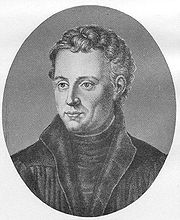 The term obscurantism derives from the title of the 16th-century satire Epistolæ Obscurorum Virorum
(Letters of Obscure Men), based upon the intellectual
dispute between the German humanist Johann Reuchlin
and Dominican
monks, such as Johannes Pfefferkorn
, about whether or not all Jewish
books should be burned
as un-Christian. Earlier, in 1509, the monk Pfefferkorn had obtained permission from Maximilian I
(1486–1519), the Holy Roman Emperor, to incinerate all copies of the Talmud
(Jewish law and Jewish ethics
) known to be in the Holy Roman Empire
; the Letters of Obscure Men satirized the Dominican monks' arguments for burning “un-Christian” works.
In the 18th century, Enlightenment
philosophers used the term "obscurantism" to denote the enemies of the Enlightenment and its concept of the liberal diffusion of knowledge. Moreover, in the 19th century, in distinguishing the varieties of obscurantism found in metaphysics
and theology
from the “more subtle” obscurantism of Immanuel Kant
's critical philosophy
, and of modern philosophical skepticism
, Friedrich Nietzsche
said: “The essential element in the black art of obscurantism is not that it wants to darken individual understanding, but that it wants to blacken our picture of the world, and darken our idea of existence.”
 In restricting knowledge to an élite
ruling class of “the few”, obscurantism is fundamentally anti-democratic
, because its component anti-intellectualism
and elitism
exclude the people as intellect
ually unworthy of knowing the facts and truth about the government
of their City-State
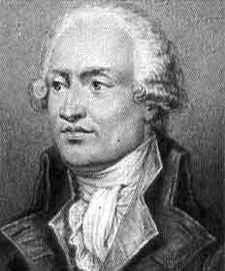
. In 18th-century monarchic France, the Marquis de Condorcet
, as a political scientist
, documented the aristocracy
’s obscurantism about the social problems that provoked the French Revolution
(1789–99) that deposed them and their King, Louis XVI of France
.
In the 19th century, the mathematician
William Kingdon Clifford
, an early proponent of Darwinism
, devoted some writings to uprooting obscurantism in England, after hearing clerics — who privately agreed with him about evolution — publicly denounce evolution
as un–Christian
. Moreover, in the realm of organized religion, obscurantism usually is associated with religious fundamentalism
, but is a distinct strain of thought independent of theologic allegiance. The distinction is that fundamentalism presupposes sincere religious belief, whereas obscurantism is based upon minority manipulation of the popular faith as political praxis, (cf. Censorship
).
The obscurantist can be personally a scientist
,a philosopher, a truly faithful
person, a naturalist
, or just agnostic
, but, as one member of the society, believes that religion among the populace serves the aim of social control. To that effect, the obscurant limits the publication, extension, and dissemination of knowledge, of evidence countering the common-belief status quo with which the nation are ruled — the local variety of the necessary Noble Lie
, introduced to political discourse by the Classical Greek
philosopher Plato
in 380 BC. Hence the “stable-status quo restriction of knowledge” denotation of obscurantism applied by pro-science reformers within religious movements, and by contemporary skeptics, such as H.L. Mencken, in critiquing religion
.
. Classical Greece
(6–4 c. BC) provides an original and powerful source of obscurantism in The Republic (ca. 380 BC), wherein Plato
proposes government via the Noble Lie
— the necessary mythical justification for the status quo that guides the philosopher king
in ruling society. To maintaining political stability, the Noble Lie naturally classifies people, determining their places in life and society, per the proportions of gold, silver, and iron, that each man and woman contained when formed in the earth; those meant to rule
contained gold, whilst those meant to serve (soldiers, farmers, craftsmen et al.) respectively contained silver and iron.
It is noteworthy that Politeía (“City-State Governance”), i.e. "governing," not "government," is the original title of The Republic. From this philosophic source then derived Neo-Platonism, Christian mysticism
, negative theology
, and hermeticism
, philosophies which use linguistic and logic
al strategies that indirectly speak about the ineffable — a concept inexpressible as thought, and only expressible as emotion. Historically, the idea that rulers and leaders know best is inherent to every form of totalitarianism
. In the Skeptical Inquirer magazine (September–October 2004), the article “Obscurantism, Tyranny, and the Fallacy of Either Black or White” quotes Prof. Bergen Evans
: “Obscurantism and tyranny go together.”
Leo Strauss
, for whom philosophy and politics intertwined, and his Neo-conservative
adherents adopted the notion of government by the enlightened few as political strategy. He noted that intellectuals, dating from Plato
, confronted the dilemma of either an informed populace “interfering” with government, or if it were possible for good
politicians to be truthful and still govern to maintain a stable society — hence the Noble Lie necessary in securing public acquiescence. In The City and Man (1964), he discusses the myths in The Republic that Plato proposes effective governing requires, among them, the belief that the country (land) ruled by the State belongs to it (despite some having been conquered from others), and that citizenship derives from more than the accident of birth
in the City-State. Thus, in the New Yorker magazine article Selective Intelligence, Seymour Hersh
observes that Strauss endorsed the “Noble Lie” concept: the myths politicians use in maintaining a cohesive society.
Prof. Shadia Drury
criticized Strauss’s acceptance of dissembling and deception of the populace as “the peculiar justice of the wise”, whereas Plato proposed the Noble Lie as based upon moral
good. In criticizing Natural Right and History (1953), she said that “Strauss thinks that the superiority of the ruling philosophers is an intellectual superiority and not a moral one . . . [he] is the only interpreter who gives a sinister reading to Plato, and then celebrates him.”
, Al Farabi, and Plato
, proposed that an esoteric writing style is proper for the philosophic text. Rather than explicitly presenting his thoughts, the philosopher’s esoteric writing compels the reader to think independently of the text, and so learn. In the Phædrus
, Socrates notes that writing does not reply to questions, but invites dialogue with the reader, thereby minimizing the problems of grasping the written word. Strauss noted that one of writing’s political dangers is students' too-readily accepting dangerous ideas — as in the trial of Socrates
, wherein the relationship with Alcibiades
was used to prosecute him.
For Leo Strauss, philosophers’ texts offered the reader lucid “exoteric” (salutary) and obscure “esoteric” (true) teachings, which are concealed to the reader of ordinary intellect; emphasizing that writers often left contradictions and other errors to encourage the reader’s more scrupulous (re-)reading of the text. In observing and maintaining the “exoteric – esoteric” dichotomy, Strauss was accused of obscurantism, and for writing esoterically.
” (April 2000), the computer scientist Bill Joy
, then a Sun Microsystems
chief scientist, in the sub-title proposed that: “Our most powerful twenty-first-century technologies — robotics, genetic engineering, and nanotech[nology] — are threatening to make humans an endangered species”; in the body, he posits that:
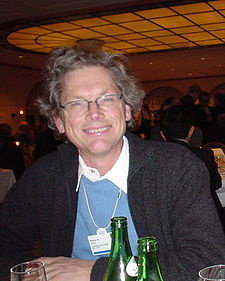
Joy’s proposal for limiting the dissemination of “certain” knowledge, in behalf of preserving society, was quickly likened to obscurantism. A year later, the American Association for the Advancement of Science
, in the Science and Technology Policy Yearbook 2001, published the article “A Response to Bill Joy and the Doom-and-Gloom Technofuturists”, wherein the computer scientists John Seeley Brown and Paul Duguid countered his proposal as technological tunnel vision, and the predicted, technologically-derived problems as infeasible, for disregarding the influence of non-scientists upon such societal problems.
vacuousness. Philosophers who are neither empiricists
nor positivists
often are accused of obscurantism in describing the abstract concepts of their disciplines. For philosophic reasons, these authors might modify, or reject, verifiability, falsifiability, or logical non-contradiction. From said perspective, obscure (clouded, vague, abstruse) writing does not necessarily signal that the writer has a poor grasp of the subject, because unintelligible writing sometimes is purposeful and philosophically considered.
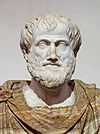
, Aristotle
’s Nicomachean Ethics
(The Ethics) stand accused of ethical obscurantism, because of the technical, philosophic language and writing style, and their purpose being the education
of a cultured governing élite
.
, Schelling
, and Hegel
deliberately mimicked Kant's way of writing. "Because of his style which was obscure, Kant was properly understood by exceedingly few. And it is as if all the philosophical writers, who since Kant had had some success, had devoted themselves to writing still more unintelligibly than Kant. This was bound to succeed!"
 G. W. F. Hegel
's philosophy, and the philosophies of those he influenced, especially Karl Marx
, have been accused of obscurantism. Analytic
and positivistic
philosophers, such as A. J. Ayer, Bertrand Russell
, and the critical-rationalist
Karl Popper
, accused Hegel and Hegelianism
of being obscure. About Hegel’s philosophy, Arthur Schopenhauer
wrote that it is: ". . . a colossal piece of mystification, which will yet provide posterity with an inexhaustible theme for laughter at our times, that it is a pseudo-philosophy paralyzing all mental powers, stifling all real thinking, and, by the most outrageous misuse of language, putting in its place the hollowest, most senseless, thoughtless, and, as is confirmed by its success, most stupefying verbiage. . . ."
Nevertheless, biographer Terry Pinkard notes "Hegel has refused to go away, even in analytic philosophy, itself." Hegel was aware of his obscurantism, and perceived it as part of philosophical thinking — to accept and transcend the limitations of quotidian thought and its concepts. In the essay "Who Thinks Abstractly?", he said that it is not the philosopher who thinks abstractly, but the layman, who uses concepts as givens that are immutable, without context. It is the philosopher who thinks concretely, because he transcends the limits of quotidian concept
s, in order to understand their broader context. This makes philosophical thought and language appear obscure, esoteric, and mysterious to the layman.
criticized German and French philosophy, especially German Idealism
, for their traditions of German irrationalism and ideologically motivated obscurantism. Later thinkers whom he influenced, such as the philosopher György Lukács and the sociologist Jürgen Habermas
, followed with similar arguments of their own. However, methodological individualist
philosophers, such as Karl Popper
and Friedrich Hayek
, who reject the reality of and the appeal to collective
entities such as class
, in turn criticized Marx and Marxist
philosophy as obscurantist.
’s obscurantism is illuminated by the criticism of the limits-of-language proposition presented in the Tractatus Logico-Philosophicus
(1921), and in abandoning empirical explanation of linguistic description in later works. Friedrich Waismann
accused Wittgenstein of "complete obscurantism" for betraying empirical inquiry; this criticism then was developed by Ernest Gellner
. In Wittgenstein on Freud and Frazer (1988), Frank Cioffi discusses “limits obscurantism”, “method obscurantism”, and “sensibility obscurantism” as the varieties of obscurantism found in the philosophy of Ludwig Wittgenstein.
, and those influenced by him, such as Jacques Derrida
and Emmanuel Levinas
, have been labeled obscurantists by critics from Analytic Philosophy
and the Frankfurt School of Critical Theory. Of Heidegger, Bertrand Russell
wrote, "his philosophy is extremely obscure. One cannot help suspecting that language is here running riot. An interesting point in his speculations is the insistence that nothingness is something positive. As with much else in Existentialism, this is a psychological observation made to pass for logic." That is Russell's complete entry on Heidegger, and it expresses the sentiments of many 20th-century Analytic philosophers
concerning Heidegger.
newspaper and The Economist
magazine, described the dead man as a deliberately obscure philosopher.
The topologist
René Thom
and the analytic tradition
logician W. V. Quine called Jacques Derrida
’s work “pseudophilosophy” and “sophistry”, and were seconded, in the New York Review of Books article “An Exchange on Deconstruction” (February 1984), by John Searle
’s comments on Deconstruction
: “. . . anyone who reads deconstructive texts with an open mind is likely to be struck by the same phenomena that initially surprised me: the low level of philosophical argumentation, the deliberate obscurantism of the prose, the wildly exaggerated claims, and the constant striving to give the appearance of profundity, by making claims that seem paradoxical, but under analysis often turn out to be silly or trivial.”
In Contingency, Irony, and Solidarity
(1989), Richard Rorty
proposed that in The Post Card: From Socrates to Freud and Beyond (1978), Jacques Derrida purposefully used undefinable words (e.g. Différance
), and used defined words in contexts so diverse that they render the words unintelligible, hence, the reader is unable to establish a context for his literary self. In that way, the philosopher Derrida escapes metaphysical accounts of his work. Since the work ostensibly contains no metaphysics, Derrida has, consequently, escaped metaphysics.
Derrida's philosophic work is especially controversial among American and British academics, as when the University of Cambridge
awarded him an honorary doctorate, despite opposition from among the Cambridge philosophy faculty and analytical philosophers worldwide. To wit, in opposing the decision, slated for 16 May 1992, Prof. Barry Smith, The Monist magazine editor, in The Times
of London, published From Professor Barry Smith and others, an earnest letter of protestation arguing that:
Despite the academics’ public letter of protestation, signed by Prof. Smith, Hugh Mellor
, W. V. Quine, David Armstrong
, Ruth Barcan Marcus
, René Thom, and twelve others, Cambridge University conferred the honorary doctorate upon him, albeit with a vote of only 62%.
was an intellectual
who defended obscurantism, to a degree. To his students’ complaint about the deliberate obscurity of his lectures, he replied: "The less you understand, the better you listen." In the 1973 seminar Encore, he said that his Écrits (Writings) were not to be understood, but would effect a meaning in the reader, like that induced by mystical texts. The obscurity is not in his writing style, but in the repeated allusions to Hegel, derived from Alexandre Kojève
’s lectures on Hegel, and similar theoretic divergences.
The Sokal Affair
(1996) was a publishing hoax
that New York University
physicist
Alan Sokal
perpetrated on the editors and readers of Social Text
, an academic journal
of post-modern
cultural studies
that was not then peer-reviewed
. In 1996, as an experiment testing editorial
integrity (fact-checking, peer review), Prof. Sokal submitted a pseudoscientific
article — proposing that physical reality is a social construct — to learn if Social Text would “publish an article liberally salted with nonsense if: (a) it sounded good, and, (b) it flattered the editors’ ideological preconceptions.”
Social Text published the article, “Transgressing the Boundaries: Towards a Transformative Hermeneutics of Quantum Gravity”, by Prof. Alan Sokal, in the Spring/Summer 1996 issue, dedicated to the Science Wars
, then occurring in US academia, about the conceptual validity of scientific objectivity. Amid intellectual battles about the nature of scientific theory, among scientific realists
and postmodern critics
, Prof. Sokal submitted his hoax article for publication. The raison de guerre being that postmodernist critics questioned the objectivity
of science, usually via the criticism of scientific method and knowledge, usually in the disciplines of cultural studies
, cultural anthropology
, feminist studies
, comparative literature
, media studies
, and science and technology studies
. Whereas the scientific realists countered that objective scientific knowledge exists, riposting that postmodernist critics almost knew nothing of the science they criticized. In the event, editorial deference to “Academic Authority” (the Author–Professor) prompted the editors of Social Text to not fact-check Prof. Sokal’s manuscript, by submitting it to peer review, by a scientist.
Hence, and elsewhere, on publication day, in the May 1996 edition of the Lingua Franca journal, in the article “A Physicist Experiments With Cultural Studies”, Prof. Sokal announced that his transformative hermeneutics article was a parody
, submitted “to test the prevailing intellectual standards”, concluding that, as an academic publication, Social Text ignored the requisite intellectual rigor of verification and “felt comfortable publishing an article on quantum physics without bothering to consult anyone knowledgeable in the subject.” Moreover, as a public intellectual
, Prof. Sokal said his hoax was an action protesting against the contemporary tendency towards obscurantism — abstruse, esoteric, and vague writing in the social sciences
:
Moreover, independent of the hoax, as a pseudoscientific opus
, the article “Transgressing the Boundaries: Towards a Transformative Hermeneutics of Quantum Gravity” is described as an exemplar “pastiche
of left-wing
cant
, fawning references, grandiose quotations, and outright nonsense, centered on the claim that physical reality is merely a social construct.”
consequences. In the essay “Why I Am Not a Conservative” (1960), he disparages conservatism
for its inability to adapt to changing human realities, or to offer a positive political program. The connotation of his usage of “obscurantism” is akin to the meaning of the appeal to consequences
fallacy.
Knowledge
Knowledge is a familiarity with someone or something unknown, which can include information, facts, descriptions, or skills acquired through experience or education. It can refer to the theoretical or practical understanding of a subject...
, a policy of withholding knowledge from the public
Public
In public relations and communication science, publics are groups of individuals, and the public is the totality of such groupings. This is a different concept to the sociological concept of the Öffentlichkeit or public sphere. The concept of a public has also been defined in political science,...
, and, 2) deliberate obscurity—an abstruse style (as in literature
Literature
Literature is the art of written works, and is not bound to published sources...
and art
Art
Art is the product or process of deliberately arranging items in a way that influences and affects one or more of the senses, emotions, and intellect....
) characterized by deliberate vagueness.
Epistolæ Obscurorum Virorum
The Epistolæ Obscurorum Virorum was a celebrated collection of satirical Latin letters which appeared 1515-1519 in Hagenau, Germany...
(Letters of Obscure Men), based upon the intellectual
Intellectual
An intellectual is a person who uses intelligence and critical or analytical reasoning in either a professional or a personal capacity.- Terminology and endeavours :"Intellectual" can denote four types of persons:...
dispute between the German humanist Johann Reuchlin
Johann Reuchlin
Johann Reuchlin was a German humanist and a scholar of Greek and Hebrew. For much of his life, he was the real centre of all Greek and Hebrew teaching in Germany.-Early life:...
and Dominican
Dominican Order
The Order of Preachers , after the 15th century more commonly known as the Dominican Order or Dominicans, is a Catholic religious order founded by Saint Dominic and approved by Pope Honorius III on 22 December 1216 in France...
monks, such as Johannes Pfefferkorn
Johannes Pfefferkorn
Johannes Pfefferkorn was a Jewish-born, German Catholic theologian and writer who converted from Judaism. Pfefferkorn actively preached against the Jews and attempted to destroy copies of the Talmud, and engaged in a long running pamphleteering battle with Johann Reuchlin.-Early life:Born a Jew,...
, about whether or not all Jewish
Judaism
Judaism ) is the "religion, philosophy, and way of life" of the Jewish people...
books should be burned
Book burning
Book burning, biblioclasm or libricide is the practice of destroying, often ceremoniously, books or other written material and media. In modern times, other forms of media, such as phonograph records, video tapes, and CDs have also been ceremoniously burned, torched, or shredded...
as un-Christian. Earlier, in 1509, the monk Pfefferkorn had obtained permission from Maximilian I
Maximilian I, Holy Roman Emperor
Maximilian I , the son of Frederick III, Holy Roman Emperor and Eleanor of Portugal, was King of the Romans from 1486 and Holy Roman Emperor from 1493 until his death, though he was never in fact crowned by the Pope, the journey to Rome always being too risky...
(1486–1519), the Holy Roman Emperor, to incinerate all copies of the Talmud
Talmud
The Talmud is a central text of mainstream Judaism. It takes the form of a record of rabbinic discussions pertaining to Jewish law, ethics, philosophy, customs and history....
(Jewish law and Jewish ethics
Jewish ethics
Jewish ethics stands at the intersection of Judaism and the Western philosophical tradition of ethics. Like other types of religious ethics, the diverse literature of Jewish ethics primarily aims to answer a broad range of moral questions and, hence, may be classified as a normative ethics...
) known to be in the Holy Roman Empire
Holy Roman Empire
The Holy Roman Empire was a realm that existed from 962 to 1806 in Central Europe.It was ruled by the Holy Roman Emperor. Its character changed during the Middle Ages and the Early Modern period, when the power of the emperor gradually weakened in favour of the princes...
; the Letters of Obscure Men satirized the Dominican monks' arguments for burning “un-Christian” works.
In the 18th century, Enlightenment
Age of Enlightenment
The Age of Enlightenment was an elite cultural movement of intellectuals in 18th century Europe that sought to mobilize the power of reason in order to reform society and advance knowledge. It promoted intellectual interchange and opposed intolerance and abuses in church and state...
philosophers used the term "obscurantism" to denote the enemies of the Enlightenment and its concept of the liberal diffusion of knowledge. Moreover, in the 19th century, in distinguishing the varieties of obscurantism found in metaphysics
Metaphysics
Metaphysics is a branch of philosophy concerned with explaining the fundamental nature of being and the world, although the term is not easily defined. Traditionally, metaphysics attempts to answer two basic questions in the broadest possible terms:...
and theology
Theology
Theology is the systematic and rational study of religion and its influences and of the nature of religious truths, or the learned profession acquired by completing specialized training in religious studies, usually at a university or school of divinity or seminary.-Definition:Augustine of Hippo...
from the “more subtle” obscurantism of Immanuel Kant
Immanuel Kant
Immanuel Kant was a German philosopher from Königsberg , researching, lecturing and writing on philosophy and anthropology at the end of the 18th Century Enlightenment....
's critical philosophy
Critical philosophy
Attributed to Immanuel Kant, the critical philosophy movement sees the primary task of philosophy as criticism rather than justification of knowledge; criticism, for Kant, meant judging as to the possibilities of knowledge before advancing to knowledge itself...
, and of modern philosophical skepticism
Philosophical skepticism
Philosophical skepticism is both a philosophical school of thought and a method that crosses disciplines and cultures. Many skeptics critically examine the meaning systems of their times, and this examination often results in a position of ambiguity or doubt...
, Friedrich Nietzsche
Friedrich Nietzsche
Friedrich Wilhelm Nietzsche was a 19th-century German philosopher, poet, composer and classical philologist...
said: “The essential element in the black art of obscurantism is not that it wants to darken individual understanding, but that it wants to blacken our picture of the world, and darken our idea of existence.”
Restricting knowledge
Elite
Elite refers to an exceptional or privileged group that wields considerable power within its sphere of influence...
ruling class of “the few”, obscurantism is fundamentally anti-democratic
Democracy
Democracy is generally defined as a form of government in which all adult citizens have an equal say in the decisions that affect their lives. Ideally, this includes equal participation in the proposal, development and passage of legislation into law...
, because its component anti-intellectualism
Anti-intellectualism
Anti-intellectualism is hostility towards and mistrust of intellect, intellectuals, and intellectual pursuits, usually expressed as the derision of education, philosophy, literature, art, and science, as impractical and contemptible...
and elitism
Elitism
Elitism is the belief or attitude that some individuals, who form an elite — a select group of people with intellect, wealth, specialized training or experience, or other distinctive attributes — are those whose views on a matter are to be taken the most seriously or carry the most...
exclude the people as intellect
Intellect
Intellect is a term used in studies of the human mind, and refers to the ability of the mind to come to correct conclusions about what is true or real, and about how to solve problems...
ually unworthy of knowing the facts and truth about the government
Government
Government refers to the legislators, administrators, and arbitrators in the administrative bureaucracy who control a state at a given time, and to the system of government by which they are organized...
of their City-State
City-state
A city-state is an independent or autonomous entity whose territory consists of a city which is not administered as a part of another local government.-Historical city-states:...
. In 18th-century monarchic France, the Marquis de Condorcet
Marquis de Condorcet
Marie Jean Antoine Nicolas de Caritat, marquis de Condorcet , known as Nicolas de Condorcet, was a French philosopher, mathematician, and early political scientist whose Condorcet method in voting tally selects the candidate who would beat each of the other candidates in a run-off election...
, as a political scientist
Political science
Political Science is a social science discipline concerned with the study of the state, government and politics. Aristotle defined it as the study of the state. It deals extensively with the theory and practice of politics, and the analysis of political systems and political behavior...
, documented the aristocracy
Aristocracy
Aristocracy , is a form of government in which a few elite citizens rule. The term derives from the Greek aristokratia, meaning "rule of the best". In origin in Ancient Greece, it was conceived of as rule by the best qualified citizens, and contrasted with monarchy...
’s obscurantism about the social problems that provoked the French Revolution
French Revolution
The French Revolution , sometimes distinguished as the 'Great French Revolution' , was a period of radical social and political upheaval in France and Europe. The absolute monarchy that had ruled France for centuries collapsed in three years...
(1789–99) that deposed them and their King, Louis XVI of France
Louis XVI of France
Louis XVI was a Bourbon monarch who ruled as King of France and Navarre until 1791, and then as King of the French from 1791 to 1792, before being executed in 1793....
.
In the 19th century, the mathematician
Mathematics
Mathematics is the study of quantity, space, structure, and change. Mathematicians seek out patterns and formulate new conjectures. Mathematicians resolve the truth or falsity of conjectures by mathematical proofs, which are arguments sufficient to convince other mathematicians of their validity...
William Kingdon Clifford
William Kingdon Clifford
William Kingdon Clifford FRS was an English mathematician and philosopher. Building on the work of Hermann Grassmann, he introduced what is now termed geometric algebra, a special case of the Clifford algebra named in his honour, with interesting applications in contemporary mathematical physics...
, an early proponent of Darwinism
Darwinism
Darwinism is a set of movements and concepts related to ideas of transmutation of species or of evolution, including some ideas with no connection to the work of Charles Darwin....
, devoted some writings to uprooting obscurantism in England, after hearing clerics — who privately agreed with him about evolution — publicly denounce evolution
Evolution
Evolution is any change across successive generations in the heritable characteristics of biological populations. Evolutionary processes give rise to diversity at every level of biological organisation, including species, individual organisms and molecules such as DNA and proteins.Life on Earth...
as un–Christian
Christianity
Christianity is a monotheistic religion based on the life and teachings of Jesus as presented in canonical gospels and other New Testament writings...
. Moreover, in the realm of organized religion, obscurantism usually is associated with religious fundamentalism
Fundamentalism
Fundamentalism is strict adherence to specific theological doctrines usually understood as a reaction against Modernist theology. The term "fundamentalism" was originally coined by its supporters to describe a specific package of theological beliefs that developed into a movement within the...
, but is a distinct strain of thought independent of theologic allegiance. The distinction is that fundamentalism presupposes sincere religious belief, whereas obscurantism is based upon minority manipulation of the popular faith as political praxis, (cf. Censorship
Censorship
thumb|[[Book burning]] following the [[1973 Chilean coup d'état|1973 coup]] that installed the [[Military government of Chile |Pinochet regime]] in Chile...
).
The obscurantist can be personally a scientist
Scientist
A scientist in a broad sense is one engaging in a systematic activity to acquire knowledge. In a more restricted sense, a scientist is an individual who uses the scientific method. The person may be an expert in one or more areas of science. This article focuses on the more restricted use of the word...
,a philosopher, a truly faithful
Faith
Faith is confidence or trust in a person or thing, or a belief that is not based on proof. In religion, faith is a belief in a transcendent reality, a religious teacher, a set of teachings or a Supreme Being. Generally speaking, it is offered as a means by which the truth of the proposition,...
person, a naturalist
Atheism
Atheism is, in a broad sense, the rejection of belief in the existence of deities. In a narrower sense, atheism is specifically the position that there are no deities...
, or just agnostic
Agnosticism
Agnosticism is the view that the truth value of certain claims—especially claims about the existence or non-existence of any deity, but also other religious and metaphysical claims—is unknown or unknowable....
, but, as one member of the society, believes that religion among the populace serves the aim of social control. To that effect, the obscurant limits the publication, extension, and dissemination of knowledge, of evidence countering the common-belief status quo with which the nation are ruled — the local variety of the necessary Noble Lie
Noble lie
In politics a noble lie is a myth or untruth, often, but not invariably, of a religious nature, knowingly told by an elite to maintain social harmony. The noble lie is a concept originated by Plato as described in the Republic.-Plato's Republic:...
, introduced to political discourse by the Classical Greek
Classical Greece
Classical Greece was a 200 year period in Greek culture lasting from the 5th through 4th centuries BC. This classical period had a powerful influence on the Roman Empire and greatly influenced the foundation of Western civilizations. Much of modern Western politics, artistic thought, such as...
philosopher Plato
Plato
Plato , was a Classical Greek philosopher, mathematician, student of Socrates, writer of philosophical dialogues, and founder of the Academy in Athens, the first institution of higher learning in the Western world. Along with his mentor, Socrates, and his student, Aristotle, Plato helped to lay the...
in 380 BC. Hence the “stable-status quo restriction of knowledge” denotation of obscurantism applied by pro-science reformers within religious movements, and by contemporary skeptics, such as H.L. Mencken, in critiquing religion
Religion
Religion is a collection of cultural systems, belief systems, and worldviews that establishes symbols that relate humanity to spirituality and, sometimes, to moral values. Many religions have narratives, symbols, traditions and sacred histories that are intended to give meaning to life or to...
.
Plato
The obscurant favors restricting knowledge (publication, extension, dissemination) among the populace, for the “greater good” of the nation and the City-StateCity-state
A city-state is an independent or autonomous entity whose territory consists of a city which is not administered as a part of another local government.-Historical city-states:...
. Classical Greece
Classical Greece
Classical Greece was a 200 year period in Greek culture lasting from the 5th through 4th centuries BC. This classical period had a powerful influence on the Roman Empire and greatly influenced the foundation of Western civilizations. Much of modern Western politics, artistic thought, such as...
(6–4 c. BC) provides an original and powerful source of obscurantism in The Republic (ca. 380 BC), wherein Plato
Plato
Plato , was a Classical Greek philosopher, mathematician, student of Socrates, writer of philosophical dialogues, and founder of the Academy in Athens, the first institution of higher learning in the Western world. Along with his mentor, Socrates, and his student, Aristotle, Plato helped to lay the...
proposes government via the Noble Lie
Noble lie
In politics a noble lie is a myth or untruth, often, but not invariably, of a religious nature, knowingly told by an elite to maintain social harmony. The noble lie is a concept originated by Plato as described in the Republic.-Plato's Republic:...
— the necessary mythical justification for the status quo that guides the philosopher king
Philosopher king
Philosopher kings are the rulers, or Guardians, of Plato's Utopian Kallipolis. If his ideal city-state is to ever come into being, "philosophers [must] become kings…or those now called kings [must]…genuinely and adequately philosophize" .-In Book VI of The Republic:Plato defined a philosopher...
in ruling society. To maintaining political stability, the Noble Lie naturally classifies people, determining their places in life and society, per the proportions of gold, silver, and iron, that each man and woman contained when formed in the earth; those meant to rule
Government
Government refers to the legislators, administrators, and arbitrators in the administrative bureaucracy who control a state at a given time, and to the system of government by which they are organized...
contained gold, whilst those meant to serve (soldiers, farmers, craftsmen et al.) respectively contained silver and iron.
It is noteworthy that Politeía (“City-State Governance”), i.e. "governing," not "government," is the original title of The Republic. From this philosophic source then derived Neo-Platonism, Christian mysticism
Christian mysticism
Christian mysticism refers to the development of mystical practices and theory within Christianity. It has often been connected to mystical theology, especially in the Catholic and Eastern Orthodox traditions...
, negative theology
Negative theology
Apophatic theology —also known as negative theology or via negativa —is a theology that attempts to describe God, the Divine Good, by negation, to speak only in terms of what may not be said about the perfect goodness that is God...
, and hermeticism
Hermeticism
Hermeticism or the Western Hermetic Tradition is a set of philosophical and religious beliefs based primarily upon the pseudepigraphical writings attributed to Hermes Trismegistus...
, philosophies which use linguistic and logic
Logic
In philosophy, Logic is the formal systematic study of the principles of valid inference and correct reasoning. Logic is used in most intellectual activities, but is studied primarily in the disciplines of philosophy, mathematics, semantics, and computer science...
al strategies that indirectly speak about the ineffable — a concept inexpressible as thought, and only expressible as emotion. Historically, the idea that rulers and leaders know best is inherent to every form of totalitarianism
Totalitarianism
Totalitarianism is a political system where the state recognizes no limits to its authority and strives to regulate every aspect of public and private life wherever feasible...
. In the Skeptical Inquirer magazine (September–October 2004), the article “Obscurantism, Tyranny, and the Fallacy of Either Black or White” quotes Prof. Bergen Evans
Bergen Evans
Bergen Baldwin Evans was an American lexicographer, a Rhodes Scholar, a Harvard College graduate, a Northwestern University professor of English, and a television host...
: “Obscurantism and tyranny go together.”
Political philosophy
In the 20th century, the American conservative political philosopherPolitical philosophy
Political philosophy is the study of such topics as liberty, justice, property, rights, law, and the enforcement of a legal code by authority: what they are, why they are needed, what, if anything, makes a government legitimate, what rights and freedoms it should protect and why, what form it...
Leo Strauss
Leo Strauss
Leo Strauss was a political philosopher and classicist who specialized in classical political philosophy. He was born in Germany to Jewish parents and later emigrated to the United States...
, for whom philosophy and politics intertwined, and his Neo-conservative
Neoconservatism
Neoconservatism in the United States is a branch of American conservatism. Since 2001, neoconservatism has been associated with democracy promotion, that is with assisting movements for democracy, in some cases by economic sanctions or military action....
adherents adopted the notion of government by the enlightened few as political strategy. He noted that intellectuals, dating from Plato
Plato
Plato , was a Classical Greek philosopher, mathematician, student of Socrates, writer of philosophical dialogues, and founder of the Academy in Athens, the first institution of higher learning in the Western world. Along with his mentor, Socrates, and his student, Aristotle, Plato helped to lay the...
, confronted the dilemma of either an informed populace “interfering” with government, or if it were possible for good
Value (ethics)
In ethics, value is a property of objects, including physical objects as well as abstract objects , representing their degree of importance....
politicians to be truthful and still govern to maintain a stable society — hence the Noble Lie necessary in securing public acquiescence. In The City and Man (1964), he discusses the myths in The Republic that Plato proposes effective governing requires, among them, the belief that the country (land) ruled by the State belongs to it (despite some having been conquered from others), and that citizenship derives from more than the accident of birth
Accident of birth
Accident of birth is a phrase pointing out that no one has any control of, or responsibility for, the circumstances of their birth or parentage. With a modern scientific understanding of genetics, one can reasonably call any human being's entire genome an accident of birth...
in the City-State. Thus, in the New Yorker magazine article Selective Intelligence, Seymour Hersh
Seymour Hersh
Seymour Myron Hersh is an American Pulitzer Prize-winning investigative journalist and author based in Washington, D.C. He is a regular contributor to The New Yorker magazine on military and security matters...
observes that Strauss endorsed the “Noble Lie” concept: the myths politicians use in maintaining a cohesive society.
Prof. Shadia Drury
Shadia Drury
Shadia B. Drury is a Canadian academic and political commentator of Egyptian Arab Christian origin. She is Canada Research Chair in Social Justice at the University of Regina, in Regina, the provincial capital of Saskatchewan, Canada...
criticized Strauss’s acceptance of dissembling and deception of the populace as “the peculiar justice of the wise”, whereas Plato proposed the Noble Lie as based upon moral
Morality
Morality is the differentiation among intentions, decisions, and actions between those that are good and bad . A moral code is a system of morality and a moral is any one practice or teaching within a moral code...
good. In criticizing Natural Right and History (1953), she said that “Strauss thinks that the superiority of the ruling philosophers is an intellectual superiority and not a moral one . . . [he] is the only interpreter who gives a sinister reading to Plato, and then celebrates him.”
Esoteric texts
Leo Strauss also was criticized for proposing the notion of "esoteric" meanings to ancient texts, recondite knowledge inaccessible to the “ordinary” intellect. In Persecution and the Art of Writing (1952), he proposes that some philosophers write esoterically to avert persecution by the political or religious authorities, and, per his knowledge of MaimonidesMaimonides
Moses ben-Maimon, called Maimonides and also known as Mūsā ibn Maymūn in Arabic, or Rambam , was a preeminent medieval Jewish philosopher and one of the greatest Torah scholars and physicians of the Middle Ages...
, Al Farabi, and Plato
Plato
Plato , was a Classical Greek philosopher, mathematician, student of Socrates, writer of philosophical dialogues, and founder of the Academy in Athens, the first institution of higher learning in the Western world. Along with his mentor, Socrates, and his student, Aristotle, Plato helped to lay the...
, proposed that an esoteric writing style is proper for the philosophic text. Rather than explicitly presenting his thoughts, the philosopher’s esoteric writing compels the reader to think independently of the text, and so learn. In the Phædrus
Phaedrus (Plato)
The Phaedrus , written by Plato, is a dialogue between Plato's main protagonist, Socrates, and Phaedrus, an interlocutor in several dialogues. The Phaedrus was presumably composed around 370 BC, around the same time as Plato's Republic and Symposium...
, Socrates notes that writing does not reply to questions, but invites dialogue with the reader, thereby minimizing the problems of grasping the written word. Strauss noted that one of writing’s political dangers is students' too-readily accepting dangerous ideas — as in the trial of Socrates
Socrates
Socrates was a classical Greek Athenian philosopher. Credited as one of the founders of Western philosophy, he is an enigmatic figure known chiefly through the accounts of later classical writers, especially the writings of his students Plato and Xenophon, and the plays of his contemporary ...
, wherein the relationship with Alcibiades
Alcibiades
Alcibiades, son of Clinias, from the deme of Scambonidae , was a prominent Athenian statesman, orator, and general. He was the last famous member of his mother's aristocratic family, the Alcmaeonidae, which fell from prominence after the Peloponnesian War...
was used to prosecute him.
For Leo Strauss, philosophers’ texts offered the reader lucid “exoteric” (salutary) and obscure “esoteric” (true) teachings, which are concealed to the reader of ordinary intellect; emphasizing that writers often left contradictions and other errors to encourage the reader’s more scrupulous (re-)reading of the text. In observing and maintaining the “exoteric – esoteric” dichotomy, Strauss was accused of obscurantism, and for writing esoterically.
Bill Joy
In the Wired magazine article, “Why the Future Doesn't Need UsWhy the future doesn't need us
"Why the future doesn't need us" is an article written by Bill Joy in the April 2000 issue of Wired magazine...
” (April 2000), the computer scientist Bill Joy
Bill Joy
William Nelson Joy , commonly known as Bill Joy, is an American computer scientist. Joy co-founded Sun Microsystems in 1982 along with Vinod Khosla, Scott McNealy and Andy Bechtolsheim, and served as chief scientist at the company until 2003...
, then a Sun Microsystems
Sun Microsystems
Sun Microsystems, Inc. was a company that sold :computers, computer components, :computer software, and :information technology services. Sun was founded on February 24, 1982...
chief scientist, in the sub-title proposed that: “Our most powerful twenty-first-century technologies — robotics, genetic engineering, and nanotech[nology] — are threatening to make humans an endangered species”; in the body, he posits that:
- The experiences of the atomic scientistsAtomic physicsAtomic physics is the field of physics that studies atoms as an isolated system of electrons and an atomic nucleus. It is primarily concerned with the arrangement of electrons around the nucleus and...
clearly show the need to take personal responsibility, the danger that things will move too fast, and the way in which a process can take on a life of its own. We can, as they did, create insurmountable problems in almost no time flat. We must do more thinking up front if we are not to be similarly surprised and shocked by the consequences of our inventions.”
Joy’s proposal for limiting the dissemination of “certain” knowledge, in behalf of preserving society, was quickly likened to obscurantism. A year later, the American Association for the Advancement of Science
American Association for the Advancement of Science
The American Association for the Advancement of Science is an international non-profit organization with the stated goals of promoting cooperation among scientists, defending scientific freedom, encouraging scientific responsibility, and supporting scientific education and science outreach for the...
, in the Science and Technology Policy Yearbook 2001, published the article “A Response to Bill Joy and the Doom-and-Gloom Technofuturists”, wherein the computer scientists John Seeley Brown and Paul Duguid countered his proposal as technological tunnel vision, and the predicted, technologically-derived problems as infeasible, for disregarding the influence of non-scientists upon such societal problems.
Deliberate obscurity
In the second sense, “obscurantism” denotes making knowledge abstrusely difficult to grasp. In the 19th and 20th centuries "obscurantism" became a polemical term for accusing an author of deliberately writing obscurely, to hide his or her intellectualIntellectual
An intellectual is a person who uses intelligence and critical or analytical reasoning in either a professional or a personal capacity.- Terminology and endeavours :"Intellectual" can denote four types of persons:...
vacuousness. Philosophers who are neither empiricists
Empiricism
Empiricism is a theory of knowledge that asserts that knowledge comes only or primarily via sensory experience. One of several views of epistemology, the study of human knowledge, along with rationalism, idealism and historicism, empiricism emphasizes the role of experience and evidence,...
nor positivists
Positivism
Positivism is a a view of scientific methods and a philosophical approach, theory, or system based on the view that, in the social as well as natural sciences, sensory experiences and their logical and mathematical treatment are together the exclusive source of all worthwhile information....
often are accused of obscurantism in describing the abstract concepts of their disciplines. For philosophic reasons, these authors might modify, or reject, verifiability, falsifiability, or logical non-contradiction. From said perspective, obscure (clouded, vague, abstruse) writing does not necessarily signal that the writer has a poor grasp of the subject, because unintelligible writing sometimes is purposeful and philosophically considered.
Aristotle
In contemporary discussions of virtue ethicsVirtue ethics
Virtue ethics describes the character of a moral agent as a driving force for ethical behavior, rather than rules , consequentialism , or social context .The difference between these four approaches to morality tends to lie more in the way moral dilemmas are...
, Aristotle
Aristotle
Aristotle was a Greek philosopher and polymath, a student of Plato and teacher of Alexander the Great. His writings cover many subjects, including physics, metaphysics, poetry, theater, music, logic, rhetoric, linguistics, politics, government, ethics, biology, and zoology...
’s Nicomachean Ethics
Nicomachean Ethics
The Nicomachean Ethics is the name normally given to Aristotle's best known work on ethics. The English version of the title derives from Greek Ἠθικὰ Νικομάχεια, transliterated Ethika Nikomacheia, which is sometimes also given in the genitive form as Ἠθικῶν Νικομαχείων, Ethikōn Nikomacheiōn...
(The Ethics) stand accused of ethical obscurantism, because of the technical, philosophic language and writing style, and their purpose being the education
Education
Education in its broadest, general sense is the means through which the aims and habits of a group of people lives on from one generation to the next. Generally, it occurs through any experience that has a formative effect on the way one thinks, feels, or acts...
of a cultured governing élite
Elite
Elite refers to an exceptional or privileged group that wields considerable power within its sphere of influence...
.
Kant
Kant employed technical terms that were not commonly understood. Schopenhauer contended that post-Kantian philosophers such as FichteJohann Gottlieb Fichte
Johann Gottlieb Fichte was a German philosopher. He was one of the founding figures of the philosophical movement known as German idealism, a movement that developed from the theoretical and ethical writings of Immanuel Kant...
, Schelling
Friedrich Wilhelm Joseph Schelling
Friedrich Wilhelm Joseph Schelling , later von Schelling, was a German philosopher. Standard histories of philosophy make him the midpoint in the development of German idealism, situating him between Fichte, his mentor prior to 1800, and Hegel, his former university roommate and erstwhile friend...
, and Hegel
Georg Wilhelm Friedrich Hegel
Georg Wilhelm Friedrich Hegel was a German philosopher, one of the creators of German Idealism. His historicist and idealist account of reality as a whole revolutionized European philosophy and was an important precursor to Continental philosophy and Marxism.Hegel developed a comprehensive...
deliberately mimicked Kant's way of writing. "Because of his style which was obscure, Kant was properly understood by exceedingly few. And it is as if all the philosophical writers, who since Kant had had some success, had devoted themselves to writing still more unintelligibly than Kant. This was bound to succeed!"
Hegel
Georg Wilhelm Friedrich Hegel
Georg Wilhelm Friedrich Hegel was a German philosopher, one of the creators of German Idealism. His historicist and idealist account of reality as a whole revolutionized European philosophy and was an important precursor to Continental philosophy and Marxism.Hegel developed a comprehensive...
's philosophy, and the philosophies of those he influenced, especially Karl Marx
Karl Marx
Karl Heinrich Marx was a German philosopher, economist, sociologist, historian, journalist, and revolutionary socialist. His ideas played a significant role in the development of social science and the socialist political movement...
, have been accused of obscurantism. Analytic
Analytic philosophy
Analytic philosophy is a generic term for a style of philosophy that came to dominate English-speaking countries in the 20th century...
and positivistic
Logical positivism
Logical positivism is a philosophy that combines empiricism—the idea that observational evidence is indispensable for knowledge—with a version of rationalism incorporating mathematical and logico-linguistic constructs and deductions of epistemology.It may be considered as a type of analytic...
philosophers, such as A. J. Ayer, Bertrand Russell
Bertrand Russell
Bertrand Arthur William Russell, 3rd Earl Russell, OM, FRS was a British philosopher, logician, mathematician, historian, and social critic. At various points in his life he considered himself a liberal, a socialist, and a pacifist, but he also admitted that he had never been any of these things...
, and the critical-rationalist
Critical rationalism
Critical rationalism is an epistemological philosophy advanced by Karl Popper. Popper wrote about critical rationalism in his works, The Open Society and its Enemies Volume 2, and Conjectures and Refutations.- Criticism, not support :...
Karl Popper
Karl Popper
Sir Karl Raimund Popper, CH FRS FBA was an Austro-British philosopher and a professor at the London School of Economics...
, accused Hegel and Hegelianism
Hegelianism
Hegelianism is a collective term for schools of thought following or referring to G. W. F. Hegel's philosophy which can be summed up by the dictum that "the rational alone is real", which means that all reality is capable of being expressed in rational categories...
of being obscure. About Hegel’s philosophy, Arthur Schopenhauer
Arthur Schopenhauer
Arthur Schopenhauer was a German philosopher known for his pessimism and philosophical clarity. At age 25, he published his doctoral dissertation, On the Fourfold Root of the Principle of Sufficient Reason, which examined the four separate manifestations of reason in the phenomenal...
wrote that it is: ". . . a colossal piece of mystification, which will yet provide posterity with an inexhaustible theme for laughter at our times, that it is a pseudo-philosophy paralyzing all mental powers, stifling all real thinking, and, by the most outrageous misuse of language, putting in its place the hollowest, most senseless, thoughtless, and, as is confirmed by its success, most stupefying verbiage. . . ."
Nevertheless, biographer Terry Pinkard notes "Hegel has refused to go away, even in analytic philosophy, itself." Hegel was aware of his obscurantism, and perceived it as part of philosophical thinking — to accept and transcend the limitations of quotidian thought and its concepts. In the essay "Who Thinks Abstractly?", he said that it is not the philosopher who thinks abstractly, but the layman, who uses concepts as givens that are immutable, without context. It is the philosopher who thinks concretely, because he transcends the limits of quotidian concept
Concept
The word concept is used in ordinary language as well as in almost all academic disciplines. Particularly in philosophy, psychology and cognitive sciences the term is much used and much discussed. WordNet defines concept: "conception, construct ". However, the meaning of the term concept is much...
s, in order to understand their broader context. This makes philosophical thought and language appear obscure, esoteric, and mysterious to the layman.
Marx and Marxism
In his early works, Karl MarxKarl Marx
Karl Heinrich Marx was a German philosopher, economist, sociologist, historian, journalist, and revolutionary socialist. His ideas played a significant role in the development of social science and the socialist political movement...
criticized German and French philosophy, especially German Idealism
German idealism
German idealism was a philosophical movement that emerged in Germany in the late 18th and early 19th centuries. It developed out of the work of Immanuel Kant in the 1780s and 1790s, and was closely linked both with romanticism and the revolutionary politics of the Enlightenment...
, for their traditions of German irrationalism and ideologically motivated obscurantism. Later thinkers whom he influenced, such as the philosopher György Lukács and the sociologist Jürgen Habermas
Jürgen Habermas
Jürgen Habermas is a German sociologist and philosopher in the tradition of critical theory and pragmatism. He is perhaps best known for his theory on the concepts of 'communicative rationality' and the 'public sphere'...
, followed with similar arguments of their own. However, methodological individualist
Methodological individualism
Methodological individualism is the theory that social phenomena can only be accurately explained by showing how they result from the intentional states that motivate the individual actors. The idea has been used to criticize historicism, structural functionalism, and the roles of social class,...
philosophers, such as Karl Popper
Karl Popper
Sir Karl Raimund Popper, CH FRS FBA was an Austro-British philosopher and a professor at the London School of Economics...
and Friedrich Hayek
Friedrich Hayek
Friedrich August Hayek CH , born in Austria-Hungary as Friedrich August von Hayek, was an economist and philosopher best known for his defense of classical liberalism and free-market capitalism against socialist and collectivist thought...
, who reject the reality of and the appeal to collective
Collectivism
Collectivism is any philosophic, political, economic, mystical or social outlook that emphasizes the interdependence of every human in some collective group and the priority of group goals over individual goals. Collectivists usually focus on community, society, or nation...
entities such as class
Social class
Social classes are economic or cultural arrangements of groups in society. Class is an essential object of analysis for sociologists, political scientists, economists, anthropologists and social historians. In the social sciences, social class is often discussed in terms of 'social stratification'...
, in turn criticized Marx and Marxist
Marxism
Marxism is an economic and sociopolitical worldview and method of socioeconomic inquiry that centers upon a materialist interpretation of history, a dialectical view of social change, and an analysis and critique of the development of capitalism. Marxism was pioneered in the early to mid 19th...
philosophy as obscurantist.
Wittgenstein
Ludwig WittgensteinLudwig Wittgenstein
Ludwig Josef Johann Wittgenstein was an Austrian philosopher who worked primarily in logic, the philosophy of mathematics, the philosophy of mind, and the philosophy of language. He was professor in philosophy at the University of Cambridge from 1939 until 1947...
’s obscurantism is illuminated by the criticism of the limits-of-language proposition presented in the Tractatus Logico-Philosophicus
Tractatus Logico-Philosophicus
The Tractatus Logico-Philosophicus is the only book-length philosophical work published by the Austrian philosopher Ludwig Wittgenstein in his lifetime. It was an ambitious project: to identify the relationship between language and reality and to define the limits of science...
(1921), and in abandoning empirical explanation of linguistic description in later works. Friedrich Waismann
Friedrich Waismann
Friedrich Waismann was an Austrian mathematician, physicist, and philosopher. He is best known for being a member of the Vienna Circle and one of the key theorists in logical positivism.-Birth & Early Interest in Philosophy:...
accused Wittgenstein of "complete obscurantism" for betraying empirical inquiry; this criticism then was developed by Ernest Gellner
Ernest Gellner
Ernest André Gellner was a philosopher and social anthropologist, described by The Daily Telegraph when he died as one of the world's most vigorous intellectuals and by The Independent as a "one-man crusade for critical rationalism."His first book, Words and Things —famously, and uniquely...
. In Wittgenstein on Freud and Frazer (1988), Frank Cioffi discusses “limits obscurantism”, “method obscurantism”, and “sensibility obscurantism” as the varieties of obscurantism found in the philosophy of Ludwig Wittgenstein.
Heidegger
Martin HeideggerMartin Heidegger
Martin Heidegger was a German philosopher known for his existential and phenomenological explorations of the "question of Being."...
, and those influenced by him, such as Jacques Derrida
Jacques Derrida
Jacques Derrida was a French philosopher, born in French Algeria. He developed the critical theory known as deconstruction and his work has been labeled as post-structuralism and associated with postmodern philosophy...
and Emmanuel Levinas
Emmanuel Lévinas
Emmanuel Levinas was a Lithuanian-born French Jewish philosopher and Talmudic commentator.-Life:Emanuelis Levinas received a traditional Jewish education in Lithuania...
, have been labeled obscurantists by critics from Analytic Philosophy
Analytic philosophy
Analytic philosophy is a generic term for a style of philosophy that came to dominate English-speaking countries in the 20th century...
and the Frankfurt School of Critical Theory. Of Heidegger, Bertrand Russell
Bertrand Russell
Bertrand Arthur William Russell, 3rd Earl Russell, OM, FRS was a British philosopher, logician, mathematician, historian, and social critic. At various points in his life he considered himself a liberal, a socialist, and a pacifist, but he also admitted that he had never been any of these things...
wrote, "his philosophy is extremely obscure. One cannot help suspecting that language is here running riot. An interesting point in his speculations is the insistence that nothingness is something positive. As with much else in Existentialism, this is a psychological observation made to pass for logic." That is Russell's complete entry on Heidegger, and it expresses the sentiments of many 20th-century Analytic philosophers
Analytic philosophy
Analytic philosophy is a generic term for a style of philosophy that came to dominate English-speaking countries in the 20th century...
concerning Heidegger.
Derrida
In their obituaries, “Jacques Derrida, Abstruse Theorist, Dies at 74” (10 October 2004) and “Obituary of Jacques Derrida, French intellectual” (21 October 2004), The New York TimesThe New York Times
The New York Times is an American daily newspaper founded and continuously published in New York City since 1851. The New York Times has won 106 Pulitzer Prizes, the most of any news organization...
newspaper and The Economist
The Economist
The Economist is an English-language weekly news and international affairs publication owned by The Economist Newspaper Ltd. and edited in offices in the City of Westminster, London, England. Continuous publication began under founder James Wilson in September 1843...
magazine, described the dead man as a deliberately obscure philosopher.
The topologist
Topology
Topology is a major area of mathematics concerned with properties that are preserved under continuous deformations of objects, such as deformations that involve stretching, but no tearing or gluing...
René Thom
René Thom
René Frédéric Thom was a French mathematician. He made his reputation as a topologist, moving on to aspects of what would be called singularity theory; he became world-famous among the wider academic community and the educated general public for one aspect of this latter interest, his work as...
and the analytic tradition
Analytic philosophy
Analytic philosophy is a generic term for a style of philosophy that came to dominate English-speaking countries in the 20th century...
logician W. V. Quine called Jacques Derrida
Jacques Derrida
Jacques Derrida was a French philosopher, born in French Algeria. He developed the critical theory known as deconstruction and his work has been labeled as post-structuralism and associated with postmodern philosophy...
’s work “pseudophilosophy” and “sophistry”, and were seconded, in the New York Review of Books article “An Exchange on Deconstruction” (February 1984), by John Searle
John Searle
John Rogers Searle is an American philosopher and currently the Slusser Professor of Philosophy at the University of California, Berkeley.-Biography:...
’s comments on Deconstruction
Deconstruction
Deconstruction is a term introduced by French philosopher Jacques Derrida in his 1967 book Of Grammatology. Although he carefully avoided defining the term directly, he sought to apply Martin Heidegger's concept of Destruktion or Abbau, to textual reading...
: “. . . anyone who reads deconstructive texts with an open mind is likely to be struck by the same phenomena that initially surprised me: the low level of philosophical argumentation, the deliberate obscurantism of the prose, the wildly exaggerated claims, and the constant striving to give the appearance of profundity, by making claims that seem paradoxical, but under analysis often turn out to be silly or trivial.”
In Contingency, Irony, and Solidarity
Contingency, Irony, and Solidarity
Contingency, Irony, and Solidarity , is a book by American philosopher Richard Rorty, based on two sets of lectures he gave at University College, London, and at Trinity College, Cambridge....
(1989), Richard Rorty
Richard Rorty
Richard McKay Rorty was an American philosopher. He had a long and diverse academic career, including positions as Stuart Professor of Philosophy at Princeton, Kenan Professor of Humanities at the University of Virginia, and Professor of Comparative Literature at Stanford University...
proposed that in The Post Card: From Socrates to Freud and Beyond (1978), Jacques Derrida purposefully used undefinable words (e.g. Différance
Différance
Différance - French term coined by Jacques Derrida and homophonous with the word "différence". Différance plays on the fact that the French word différer means both "to defer" and "to differ." Derrida first uses the term différance in his 1963 paper "Cogito et histoire de la folie"...
), and used defined words in contexts so diverse that they render the words unintelligible, hence, the reader is unable to establish a context for his literary self. In that way, the philosopher Derrida escapes metaphysical accounts of his work. Since the work ostensibly contains no metaphysics, Derrida has, consequently, escaped metaphysics.
Derrida's philosophic work is especially controversial among American and British academics, as when the University of Cambridge
University of Cambridge
The University of Cambridge is a public research university located in Cambridge, United Kingdom. It is the second-oldest university in both the United Kingdom and the English-speaking world , and the seventh-oldest globally...
awarded him an honorary doctorate, despite opposition from among the Cambridge philosophy faculty and analytical philosophers worldwide. To wit, in opposing the decision, slated for 16 May 1992, Prof. Barry Smith, The Monist magazine editor, in The Times
The Times
The Times is a British daily national newspaper, first published in London in 1785 under the title The Daily Universal Register . The Times and its sister paper The Sunday Times are published by Times Newspapers Limited, a subsidiary since 1981 of News International...
of London, published From Professor Barry Smith and others, an earnest letter of protestation arguing that:
- “In the eyes of philosophers, and certainly among those working in leading departments of philosophy throughout the world, M. Derrida’s work does not meet accepted standards of clarity and rigour . . . M. Derrida’s career had its roots in the heady days of the 1960s and his writings continue to reveal their origins in that period. Many of them seem to consist in no small part of elaborate jokes and the puns ‘logical phallusies’ and the like, and M. Derrida seems to us to have come close to making a career out of what we regard as translatingTranslationTranslation is the communication of the meaning of a source-language text by means of an equivalent target-language text. Whereas interpreting undoubtedly antedates writing, translation began only after the appearance of written literature; there exist partial translations of the Sumerian Epic of...
into the academic sphere tricks and gimmicks similar to those of the DadaDadaDada or Dadaism is a cultural movement that began in Zurich, Switzerland, during World War I and peaked from 1916 to 1922. The movement primarily involved visual arts, literature—poetry, art manifestoes, art theory—theatre, and graphic design, and concentrated its anti-war politics through a...
ists or of the concrete poetsConcrete poetryConcrete poetry or shape poetry is poetry in which the typographical arrangement of words is as important in conveying the intended effect as the conventional elements of the poem, such as meaning of words, rhythm, rhyme and so on....
. . . Certainly he has shown considerable originality in this respect. But again, we submit, such originality does not lend credence to the idea that he is a suitable candidate for an honorary degree . . . M. Derrida’s voluminous writings in our view stretch the normal forms of academic scholarshipScholarly methodScholarly method or scholarship is the body of principles and practices used by scholars to make their claims about the world as valid and trustworthy as possible, and to make them known to the scholarly public.-Methods:...
beyond recognition. Above all — as every reader can very easily establish for himself (and for this purpose any page will do) — his works employ a written style that defies comprehension . . . [thus] Academic status based on what seems to us to be little more than semi-intelligible attacks upon the values of reason, truth, and scholarship is not, we submit, sufficient grounds for the awarding of an honorary degree in a distinguished university.”
Despite the academics’ public letter of protestation, signed by Prof. Smith, Hugh Mellor
Hugh Mellor
David Hugh Mellor is an English philosopher.Mellor was born on 10 July 1938 in London. After studying chemical engineering at university, he took up philosophy. His main work has been in metaphysics....
, W. V. Quine, David Armstrong
David Malet Armstrong
David Malet Armstrong , often D. M. Armstrong, is an Australian philosopher. He is well-known for his work on metaphysics and the philosophy of mind, and for his defence of a factualist ontology, a functionalist theory of the mind, an externalist epistemology, and a necessitarian conception of the...
, Ruth Barcan Marcus
Ruth Barcan Marcus
Ruth Barcan Marcus is the American philosopher and logician after whom the Barcan formula is named. She is a pioneering figure in the quantification of modal logic and the theory of direct reference...
, René Thom, and twelve others, Cambridge University conferred the honorary doctorate upon him, albeit with a vote of only 62%.
Lacan
Jacques LacanJacques Lacan
Jacques Marie Émile Lacan was a French psychoanalyst and psychiatrist who made prominent contributions to psychoanalysis and philosophy, and has been called "the most controversial psycho-analyst since Freud". Giving yearly seminars in Paris from 1953 to 1981, Lacan influenced France's...
was an intellectual
Intellectual
An intellectual is a person who uses intelligence and critical or analytical reasoning in either a professional or a personal capacity.- Terminology and endeavours :"Intellectual" can denote four types of persons:...
who defended obscurantism, to a degree. To his students’ complaint about the deliberate obscurity of his lectures, he replied: "The less you understand, the better you listen." In the 1973 seminar Encore, he said that his Écrits (Writings) were not to be understood, but would effect a meaning in the reader, like that induced by mystical texts. The obscurity is not in his writing style, but in the repeated allusions to Hegel, derived from Alexandre Kojève
Alexandre Kojève
Alexandre Kojève was a Russian-born French philosopher and statesman whose philosophical seminars had an immense influence on twentieth-century French philosophy, particularly via his integration of Hegelian concepts into continental philosophy...
’s lectures on Hegel, and similar theoretic divergences.
Sokal
Deference to Authority: obscurantism internalizedThe Displacement of the idea that facts and evidence matter, by the idea that everything boils down to subjectiveSubjectivismSubjectivism is a philosophical tenet that accords primacy to subjective experience as fundamental of all measure and law. In extreme forms like Solipsism, it may hold that the nature and existence of every object depends solely on someone's subjective awareness of it...
interests and perspectives is — second only to American political campaigns — the most prominent and pernicious manifestation of anti-intellectualismAnti-intellectualismAnti-intellectualism is hostility towards and mistrust of intellect, intellectuals, and intellectual pursuits, usually expressed as the derision of education, philosophy, literature, art, and science, as impractical and contemptible...
in our time. — Larry LaudanLarry LaudanLarry Laudan is a contemporary philosopher of science and epistemologist. He has strongly criticized the traditions of positivism, realism, and relativism, and he has defended a view of science as a privileged and progressive institution against popular challenges...
, Science and Relativism (1990)
The Sokal Affair
Sokal Affair
The Sokal affair, also known as the Sokal hoax, was a publishing hoax perpetrated by Alan Sokal, a physics professor at New York University. In 1996, Sokal submitted an article to Social Text, an academic journal of postmodern cultural studies...
(1996) was a publishing hoax
Hoax
A hoax is a deliberately fabricated falsehood made to masquerade as truth. It is distinguishable from errors in observation or judgment, or rumors, urban legends, pseudosciences or April Fools' Day events that are passed along in good faith by believers or as jokes.-Definition:The British...
that New York University
New York University
New York University is a private, nonsectarian research university based in New York City. NYU's main campus is situated in the Greenwich Village section of Manhattan...
physicist
Physics
Physics is a natural science that involves the study of matter and its motion through spacetime, along with related concepts such as energy and force. More broadly, it is the general analysis of nature, conducted in order to understand how the universe behaves.Physics is one of the oldest academic...
Alan Sokal
Alan Sokal
Alan David Sokal is a professor of mathematics at University College London and professor of physics at New York University. He works in statistical mechanics and combinatorics. To the general public he is best known for his criticism of postmodernism, resulting in the Sokal affair in...
perpetrated on the editors and readers of Social Text
Social Text
Social Text is an academic journal published by Duke University Press. Since its inception as an independent editorial collective in 1979, Social Text has addressed a wide range of social and cultural phenomena, covering questions of gender, sexuality, race, and the environment...
, an academic journal
Academic journal
An academic journal is a peer-reviewed periodical in which scholarship relating to a particular academic discipline is published. Academic journals serve as forums for the introduction and presentation for scrutiny of new research, and the critique of existing research...
of post-modern
Postmodernism
Postmodernism is a philosophical movement evolved in reaction to modernism, the tendency in contemporary culture to accept only objective truth and to be inherently suspicious towards a global cultural narrative or meta-narrative. Postmodernist thought is an intentional departure from the...
cultural studies
Cultural studies
Cultural studies is an academic field grounded in critical theory and literary criticism. It generally concerns the political nature of contemporary culture, as well as its historical foundations, conflicts, and defining traits. It is, to this extent, largely distinguished from cultural...
that was not then peer-reviewed
Peer review
Peer review is a process of self-regulation by a profession or a process of evaluation involving qualified individuals within the relevant field. Peer review methods are employed to maintain standards, improve performance and provide credibility...
. In 1996, as an experiment testing editorial
Publishing
Publishing is the process of production and dissemination of literature or information—the activity of making information available to the general public...
integrity (fact-checking, peer review), Prof. Sokal submitted a pseudoscientific
Pseudoscience
Pseudoscience is a claim, belief, or practice which is presented as scientific, but which does not adhere to a valid scientific method, lacks supporting evidence or plausibility, cannot be reliably tested, or otherwise lacks scientific status...
article — proposing that physical reality is a social construct — to learn if Social Text would “publish an article liberally salted with nonsense if: (a) it sounded good, and, (b) it flattered the editors’ ideological preconceptions.”
Social Text published the article, “Transgressing the Boundaries: Towards a Transformative Hermeneutics of Quantum Gravity”, by Prof. Alan Sokal, in the Spring/Summer 1996 issue, dedicated to the Science Wars
Science wars
The science wars were a series of intellectual exchanges, between scientific realists and postmodernist critics, about the nature of scientific theory which took place principally in the US in the 1990s...
, then occurring in US academia, about the conceptual validity of scientific objectivity. Amid intellectual battles about the nature of scientific theory, among scientific realists
Scientific realism
Scientific realism is, at the most general level, the view that the world described by science is the real world, as it is, independent of what we might take it to be...
and postmodern critics
Postmodernism
Postmodernism is a philosophical movement evolved in reaction to modernism, the tendency in contemporary culture to accept only objective truth and to be inherently suspicious towards a global cultural narrative or meta-narrative. Postmodernist thought is an intentional departure from the...
, Prof. Sokal submitted his hoax article for publication. The raison de guerre being that postmodernist critics questioned the objectivity
Objectivity (science)
Objectivity in science is a value that informs how science is practiced and how scientific truths are created. It is the idea that scientists, in attempting to uncover truths about the natural world, must aspire to eliminate personal biases, a priori commitments, emotional involvement, etc...
of science, usually via the criticism of scientific method and knowledge, usually in the disciplines of cultural studies
Cultural studies
Cultural studies is an academic field grounded in critical theory and literary criticism. It generally concerns the political nature of contemporary culture, as well as its historical foundations, conflicts, and defining traits. It is, to this extent, largely distinguished from cultural...
, cultural anthropology
Cultural anthropology
Cultural anthropology is a branch of anthropology focused on the study of cultural variation among humans, collecting data about the impact of global economic and political processes on local cultural realities. Anthropologists use a variety of methods, including participant observation,...
, feminist studies
Feminist Studies
Founded in 1972, Feminist Studies was the first scholarly journal in women’s studies and remains a premier journal in the field. It is currently an independent nonprofit publication housed at the University of Maryland in College Park, Maryland....
, comparative literature
Comparative literature
Comparative literature is an academic field dealing with the literature of two or more different linguistic, cultural or national groups...
, media studies
Media studies
Media studies is an academic discipline and field of study that deals with the content, history and effects of various media; in particular, the 'mass media'. Media studies may draw on traditions from both the social sciences and the humanities, but mostly from its core disciplines of mass...
, and science and technology studies
Science and technology studies
Science, technology and society is the study of how social, political, and cultural values affect scientific research and technological innovation, and how these, in turn, affect society, politics and culture...
. Whereas the scientific realists countered that objective scientific knowledge exists, riposting that postmodernist critics almost knew nothing of the science they criticized. In the event, editorial deference to “Academic Authority” (the Author–Professor) prompted the editors of Social Text to not fact-check Prof. Sokal’s manuscript, by submitting it to peer review, by a scientist.
Hence, and elsewhere, on publication day, in the May 1996 edition of the Lingua Franca journal, in the article “A Physicist Experiments With Cultural Studies”, Prof. Sokal announced that his transformative hermeneutics article was a parody
Parody
A parody , in current usage, is an imitative work created to mock, comment on, or trivialise an original work, its subject, author, style, or some other target, by means of humorous, satiric or ironic imitation...
, submitted “to test the prevailing intellectual standards”, concluding that, as an academic publication, Social Text ignored the requisite intellectual rigor of verification and “felt comfortable publishing an article on quantum physics without bothering to consult anyone knowledgeable in the subject.” Moreover, as a public intellectual
Intellectual
An intellectual is a person who uses intelligence and critical or analytical reasoning in either a professional or a personal capacity.- Terminology and endeavours :"Intellectual" can denote four types of persons:...
, Prof. Sokal said his hoax was an action protesting against the contemporary tendency towards obscurantism — abstruse, esoteric, and vague writing in the social sciences
Social sciences
Social science is the field of study concerned with society. "Social science" is commonly used as an umbrella term to refer to a plurality of fields outside of the natural sciences usually exclusive of the administrative or managerial sciences...
:
In short, my concern over the spread of subjectivistSubjectivismSubjectivism is a philosophical tenet that accords primacy to subjective experience as fundamental of all measure and law. In extreme forms like Solipsism, it may hold that the nature and existence of every object depends solely on someone's subjective awareness of it...
thinking is both intellectualIntellectualAn intellectual is a person who uses intelligence and critical or analytical reasoning in either a professional or a personal capacity.- Terminology and endeavours :"Intellectual" can denote four types of persons:...
and politicalPoliticsPolitics is a process by which groups of people make collective decisions. The term is generally applied to the art or science of running governmental or state affairs, including behavior within civil governments, but also applies to institutions, fields, and special interest groups such as the...
. Intellectually, the problem with such doctrineDoctrineDoctrine is a codification of beliefs or a body of teachings or instructions, taught principles or positions, as the body of teachings in a branch of knowledge or belief system...
s is that they are false (when not simply meaningless). There is a real world; its properties are not merely social constructions; facts and evidence do matter. What sane person would contend otherwise? And yet, much contemporary academic theorizing consists precisely of attempts to blur these obvious truths — the utter absurdity of it all being concealed through obscure and pretentious language.
Moreover, independent of the hoax, as a pseudoscientific opus
Magnum opus
Magnum opus , from the Latin meaning "great work", refers to the largest, and perhaps the best, greatest, most popular, or most renowned achievement of a writer, artist, or composer.-Related terms:Sometimes the term magnum opus is used to refer to simply "a great work" rather than "the...
, the article “Transgressing the Boundaries: Towards a Transformative Hermeneutics of Quantum Gravity” is described as an exemplar “pastiche
Pastiche
A pastiche is a literary or other artistic genre or technique that is a "hodge-podge" or imitation. The word is also a linguistic term used to describe an early stage in the development of a pidgin language.-Hodge-podge:...
of left-wing
Left-wing politics
In politics, Left, left-wing and leftist generally refer to support for social change to create a more egalitarian society...
cant
Cant (language)
A Cant is the jargon or argot of a group, often implying its use to exclude or mislead people outside the group.-Derivation in Celtic linguistics:...
, fawning references, grandiose quotations, and outright nonsense, centered on the claim that physical reality is merely a social construct.”
Appealing to emotion
The economist Friedrich von Hayek used the term “obscurantism” differently, to denote and describe the denial of the truth of scientific theory because of disagreeable moralMorality
Morality is the differentiation among intentions, decisions, and actions between those that are good and bad . A moral code is a system of morality and a moral is any one practice or teaching within a moral code...
consequences. In the essay “Why I Am Not a Conservative” (1960), he disparages conservatism
Conservatism
Conservatism is a political and social philosophy that promotes the maintenance of traditional institutions and supports, at the most, minimal and gradual change in society. Some conservatives seek to preserve things as they are, emphasizing stability and continuity, while others oppose modernism...
for its inability to adapt to changing human realities, or to offer a positive political program. The connotation of his usage of “obscurantism” is akin to the meaning of the appeal to consequences
Appeal to consequences
Appeal to consequences, also known as argumentum ad consequentiam , is an argument that concludes a premise to be either true or false based on whether the premise leads to desirable or undesirable consequences...
fallacy.
See also
- Anti-intellectualismAnti-intellectualismAnti-intellectualism is hostility towards and mistrust of intellect, intellectuals, and intellectual pursuits, usually expressed as the derision of education, philosophy, literature, art, and science, as impractical and contemptible...
- DenialismDenialismDenialism is choosing to deny reality as a way to avoid an uncomfortable truth: "[it] is the refusal to accept an empirically verifiable reality...
- DoublespeakDoublespeakDoublespeak is language that deliberately disguises, distorts, or reverses the meaning of words. Doublespeak may take the form of euphemisms , making the truth less unpleasant, without denying its nature. It may also be deployed as intentional ambiguity, or reversal of meaning...
- PaternalismPaternalismPaternalism refers to attitudes or states of affairs that exemplify a traditional relationship between father and child. Two conditions of paternalism are usually identified: interference with liberty and a beneficent intention towards those whose liberty is interfered with...
- Politicization of sciencePoliticization of scienceThe politicization of science is the manipulation of science for political gain. It occurs when government, business, or advocacy groups use legal or economic pressure to influence the findings of scientific research or the way it is disseminated, reported or interpreted. The politicization of...
- PseudophilosophyPseudophilosophyPseudophilosophy is a term applied to philosophical ideas or systems which are claimed not to meet mainstream academic standards. The term is almost always used pejoratively and is often contentious...
- Pseudointellectual
- PositivismPositivismPositivism is a a view of scientific methods and a philosophical approach, theory, or system based on the view that, in the social as well as natural sciences, sensory experiences and their logical and mathematical treatment are together the exclusive source of all worthwhile information....
- ScientismScientismScientism refers to a belief in the universal applicability of the systematic methods and approach of science, especially the view that empirical science constitutes the most authoritative worldview or most valuable part of human learning to the exclusion of other viewpoints...
- FundamentalismFundamentalismFundamentalism is strict adherence to specific theological doctrines usually understood as a reaction against Modernist theology. The term "fundamentalism" was originally coined by its supporters to describe a specific package of theological beliefs that developed into a movement within the...