

Notebook

Encyclopedia
A notebook is a book or binder composed of pages of notes, often ruled, made out of paper, used for purposes including recording notes or memoranda, writing, drawing
, and scrapbooking
.
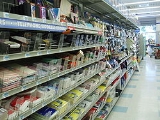
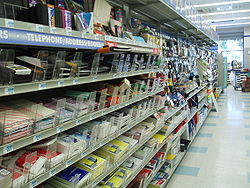 Paper notebooks can be
The only technical requirement for this type of stationery to be considered a true "legal pad" is that it must have margins of 1.25 inches (3.17 centimeters) from the left edge of legal pad. Here, the margin, also known as down lines, is room used to write notes or comments. Legal pads usually have a gum binding at the top as opposed to a spiral or stitched binding.
, comb
, sewn, clasp, disc, and pressure, some of which can be combined. Binding methods can affect whether a notebook can lie flat when open and whether the pages are likely to remain attached. The cover material is usually distinct from the writing surface material, more durable, more decorative, and more firmly attached. It also is stiffer than the pages, even taken together. Cover materials should not contribute to damage or discomfort.
It is frequently cheaper to purchase notebooks that are spiral-bound, meaning that a spiral
of wire is looped through large perforation
s at the top or side of the page. Other bound notebooks are available that use glue
to hold the pages together; this process is "padding". Today it is common for pages in such notebooks to include a thin line of perforations that make it easier to tear out the page. Spiral-bound pages can be torn out but frequently leave thin scraggly strips from the small amount of paper that is within the spiral, as well as an uneven rip along the top of the torn-out page. Hard-bound notebooks include a sewn spine, and the pages are not easily removed. Some styles of sewn bindings allow pages to open flat, while others cause the pages to drape.
Variations of notebooks that allow pages to be added, removed, and replaced are bound by either rings, rods, or discs. In each of these systems the pages are modified with perforations that facilitate the specific binding mechanism's ability to secure them. Ring-bound
and rod-bound notebooks secure their contents by threading perforated pages around straight or curved prongs. In the open position, the pages can be removed and re-arranged. In the closed position, the pages are kept in order. Disc-bound
notebooks remove the open or closed operation by modifying the pages themselves. A page perforated for a disc-bound binding system contains a row of teeth along the side edge of the page that grip onto the outside raised perimeter of individual discs.
s have page numbers preprinted to support priority claims. Many notebooks have graphic decorations. Personal organizer
s can have various kinds of preprinted pages.
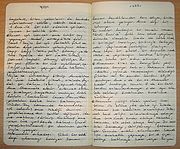 Artists often use large notebooks which include wide spaces of blank paper appropriate for drawing. Lawyers use rather large notebooks known as legal pads that contain lined paper (often yellow) and are appropriate for use on tables and desks. These horizontal lines or "rules" are sometimes classified according to their space apart with "wide rule" the farthest, "college rule" closer, "legal rule" slightly closer and "narrow rule" closest, allowing more lines of text per page. When sewn into a pasteboard backing, these may be called composition book
s, or in smaller signatures may be called "blue books" or exam books and used for essay exams. In contrast, journalists prefer small, hand-held notebooks for portability (reporters' notebook
s), and sometimes use shorthand
when taking notes. Scientists and other researchers use lab notebook
s to document their experiments. The pages in lab notebooks are sometimes graph paper
to plot data. Police officers are required to write notes on what they observe, using a Police notebook
. Land surveyors
commonly record field notes in durable, hard-bound notebooks called "field books."
Notebook pages can be recycled via standard paper recycling
. Recycled notebooks are available, differing in recycled percentage and paper quality.
. Laptop computers began to be called notebooks when they reached a small size in the 1990s, but they did not have any special note-taking ability. Personal digital assistant
s (PDAs) came next, integrating small liquid crystal display
s with a touch-sensitive layer to input graphics and written text. Tablet PC
s are larger and provide more writing and navigation space.
Digital paper
combines the simplicity of a traditional pen and notebook with digital storage and interactivity. By printing an invisible dot pattern on the notebook paper and using a pen with a built in infrared camera the written text can be transferred to a laptop, mobile phone or backoffice for storage and processing.
Drawing
Drawing is a form of visual art that makes use of any number of drawing instruments to mark a two-dimensional medium. Common instruments include graphite pencils, pen and ink, inked brushes, wax color pencils, crayons, charcoal, chalk, pastels, markers, styluses, and various metals .An artist who...
, and scrapbooking
Scrapbooking
Scrapbooking is a method for preserving personal and family history in the form of a scrapbook. Typical memorabilia include photographs, printed media, and artwork. Scrapbook albums are often decorated and frequently contain extensive journaling...
.
Paper notebooks
- Form factor (size and weight)
- Binding and cover material (including printing and graphics)
- Pre-printed material on writing surfaces (lines, graphics, text)
Legal pad
According to legend, Thomas W. Holley of Holyoke, Massachusetts invented the legal pad around the year 1888 when he innovated the idea to collect all the sortings, various sort of substandard paper scraps from various factories, and stitch them together in order to sell them as pads at an affordable and fair price. In about 1900, the latter then evolved into the modern legal pad when a local judge requested for a margin to be drawn on the left side of the paper. This was the first legal pad.The only technical requirement for this type of stationery to be considered a true "legal pad" is that it must have margins of 1.25 inches (3.17 centimeters) from the left edge of legal pad. Here, the margin, also known as down lines, is room used to write notes or comments. Legal pads usually have a gum binding at the top as opposed to a spiral or stitched binding.
Binding and cover
Principal types of binding are padding, perfect, spiralCoil binding
Coil binding, also known as spiral binding, is a commonly used book binding style for creating documents, reports, presentations and proposals. This binding style is known by a number of names including spiral coil, color coil, colorcoil, ez-coil, plastic coil, spiral binding, plastikoil and...
, comb
Comb binding
Comb binding is one of many ways to bind pages together into a book. This method utilizes round plastic spines with 19 rings or 21 rings and a hole puncher that makes rectangular holes...
, sewn, clasp, disc, and pressure, some of which can be combined. Binding methods can affect whether a notebook can lie flat when open and whether the pages are likely to remain attached. The cover material is usually distinct from the writing surface material, more durable, more decorative, and more firmly attached. It also is stiffer than the pages, even taken together. Cover materials should not contribute to damage or discomfort.
It is frequently cheaper to purchase notebooks that are spiral-bound, meaning that a spiral
Spiral
In mathematics, a spiral is a curve which emanates from a central point, getting progressively farther away as it revolves around the point.-Spiral or helix:...
of wire is looped through large perforation
Perforation
A perforation is a small hole in a thin material or web. There is usually more than one perforation in an organized fashion, where all of the holes are called a perforation...
s at the top or side of the page. Other bound notebooks are available that use glue
Polyvinyl acetate
Polyvinyl acetate, PVA, PVAc, poly, is a rubbery synthetic polymer with the formula n. It belongs to the polyvinyl esters family with the general formula -[RCOOCHCH2]-...
to hold the pages together; this process is "padding". Today it is common for pages in such notebooks to include a thin line of perforations that make it easier to tear out the page. Spiral-bound pages can be torn out but frequently leave thin scraggly strips from the small amount of paper that is within the spiral, as well as an uneven rip along the top of the torn-out page. Hard-bound notebooks include a sewn spine, and the pages are not easily removed. Some styles of sewn bindings allow pages to open flat, while others cause the pages to drape.
Variations of notebooks that allow pages to be added, removed, and replaced are bound by either rings, rods, or discs. In each of these systems the pages are modified with perforations that facilitate the specific binding mechanism's ability to secure them. Ring-bound
Ring binder
Ring binders are folders in which punched pieces of paper may be held by means of clamps running through the holes in the paper...
and rod-bound notebooks secure their contents by threading perforated pages around straight or curved prongs. In the open position, the pages can be removed and re-arranged. In the closed position, the pages are kept in order. Disc-bound
Disc-binding
Disc-binding is a variation of notebook binding that allow pages to be added, removed, and replaced easily. Additionally pages can be transferred between notebooks of different functions and sizes....
notebooks remove the open or closed operation by modifying the pages themselves. A page perforated for a disc-bound binding system contains a row of teeth along the side edge of the page that grip onto the outside raised perimeter of individual discs.
Preprinting
Sameer Notebooks used for drawing and scrapbooking are usually blank. Notebooks for writing usually have some kind of printing on the writing material, if only lines to align writing or facilitate certain kinds of drawing. Inventor's notebookInventor's notebook
An inventor's notebook is used by inventors, scientists and engineers to record their ideas, invention process, experimental tests and results and observations. It is not a legal document but is valuable, if properly organized and maintained, since it can help establish dates of conception and...
s have page numbers preprinted to support priority claims. Many notebooks have graphic decorations. Personal organizer
Personal organizer
A personal organizer, day planner, personal analog assistant, or personal planner is a small book/binder, designed to be portable, usually containing a diary, calendar, address book, and other sections usually including blank paper. It may also include pages with useful information, such as maps,...
s can have various kinds of preprinted pages.
Uses
Composition book
A composition book is one of a type of stock-bound notebook commonly used by writers and students. Although available in several colors, the original marbled black-and-white cover, with its generic label on the front, is the overwhelming favorite....
s, or in smaller signatures may be called "blue books" or exam books and used for essay exams. In contrast, journalists prefer small, hand-held notebooks for portability (reporters' notebook
Reporter's Notebook
Reporter's Notebook is an investigative news magazine television show in the Philippines hosted by senior reporters Jiggy Manicad and Maki Pulido and broadcast journalist Rhea Santos...
s), and sometimes use shorthand
Shorthand
Shorthand is an abbreviated symbolic writing method that increases speed or brevity of writing as compared to a normal method of writing a language. The process of writing in shorthand is called stenography, from the Greek stenos and graphē or graphie...
when taking notes. Scientists and other researchers use lab notebook
Lab notebook
A lab notebook is a primary record of research. Researchers use a lab notebook to document their hypotheses, experiments and initial analysis or interpretation of these experiments...
s to document their experiments. The pages in lab notebooks are sometimes graph paper
Graph paper
Graph paper, graphing paper, grid paper or millimeter paper is writing paper that is printed with fine lines making up a regular grid. The lines are often used as guides for plotting mathematical functions or experimental data and drawing diagrams. It is commonly found in mathematics and...
to plot data. Police officers are required to write notes on what they observe, using a Police notebook
Police notebook
A police notebook, pocket notebook or PNB is a notebook used by police officers to officially record details and incidents while on patrol...
. Land surveyors
Surveying
See Also: Public Land Survey SystemSurveying or land surveying is the technique, profession, and science of accurately determining the terrestrial or three-dimensional position of points and the distances and angles between them...
commonly record field notes in durable, hard-bound notebooks called "field books."
Notebook pages can be recycled via standard paper recycling
Paper recycling
Paper recycling is the process of recovering waste paper and remaking it into new paper products. There are three categories of paper that can be used as feedstocks for making recycled paper: mill broke, pre-consumer waste, and post-consumer waste. Mill broke is paper trimmings and other paper...
. Recycled notebooks are available, differing in recycled percentage and paper quality.
Possible electronic successors
Since the late 20th century, many attempts have been made to integrate the simplicity of a notebook with the editing, searching, and communication capacities of computers through the development of note taking softwareComparison of notetaking software
-General features:-Formatted text features, others:-See also:* Comparison of web annotation systems...
. Laptop computers began to be called notebooks when they reached a small size in the 1990s, but they did not have any special note-taking ability. Personal digital assistant
Personal digital assistant
A personal digital assistant , also known as a palmtop computer, or personal data assistant, is a mobile device that functions as a personal information manager. Current PDAs often have the ability to connect to the Internet...
s (PDAs) came next, integrating small liquid crystal display
Liquid crystal display
A liquid crystal display is a flat panel display, electronic visual display, or video display that uses the light modulating properties of liquid crystals . LCs do not emit light directly....
s with a touch-sensitive layer to input graphics and written text. Tablet PC
Tablet computer
A tablet computer, or simply tablet, is a complete mobile computer, larger than a mobile phone or personal digital assistant, integrated into a flat touch screen and primarily operated by touching the screen...
s are larger and provide more writing and navigation space.
Digital paper
Digital paper
Digital paper, also known as interactive paper, is patterned paper used in conjunction with a digital pen to create handwritten digital documents. The printed dot pattern uniquely identifies the position coordinates on the paper...
combines the simplicity of a traditional pen and notebook with digital storage and interactivity. By printing an invisible dot pattern on the notebook paper and using a pen with a built in infrared camera the written text can be transferred to a laptop, mobile phone or backoffice for storage and processing.