


Non-standard analysis

Encyclopedia
Mathematics
Mathematics is the study of quantity, space, structure, and change. Mathematicians seek out patterns and formulate new conjectures. Mathematicians resolve the truth or falsity of conjectures by mathematical proofs, which are arguments sufficient to convince other mathematicians of their validity...
that formulates analysis
Mathematical analysis
Mathematical analysis, which mathematicians refer to simply as analysis, has its beginnings in the rigorous formulation of infinitesimal calculus. It is a branch of pure mathematics that includes the theories of differentiation, integration and measure, limits, infinite series, and analytic functions...
using a rigorous notion of an infinitesimal
Infinitesimal
Infinitesimals have been used to express the idea of objects so small that there is no way to see them or to measure them. The word infinitesimal comes from a 17th century Modern Latin coinage infinitesimus, which originally referred to the "infinite-th" item in a series.In common speech, an...
number.
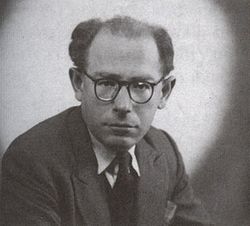
Non-standard analysis was introduced in the early 1960s by the mathematician Abraham Robinson
Abraham Robinson
Abraham Robinson was a mathematician who is most widely known for development of non-standard analysis, a mathematically rigorous system whereby infinitesimal and infinite numbers were incorporated into mathematics....
. He wrote:
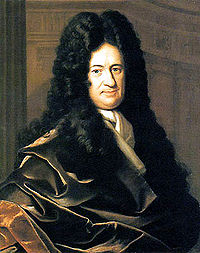
- [...] the idea of infinitely small or infinitesimal quantities seems to appeal naturally to our intuition. At any rate, the use of infinitesimals was widespread during the formative stages of the Differential and Integral Calculus. As for the objection [...] that the distance between two distinct real numbers cannot be infinitely small, G. W. Leibniz argued that the theory of infinitesimals implies the introduction of ideal numbers which might be infinitely small or infinitely large compared with the real numbers but which were to possess the same properties as the latter.
Robinson argued that this law of continuity
Law of Continuity
The Law of Continuity is a heuristic principle introduced by Leibniz based on earlier work by Nicholas of Cusa and Johannes Kepler. It is the principle that "whatever succeeds for the finite, also succeeds for the infinite"...
of Leibniz's is a precursor of the transfer principle
Transfer principle
In model theory, a transfer principle states that all statements of some language that are true for some structure are true for another structure...
. Robinson continued:
- However, neither he nor his disciples and successors were able to give a rational development leading up to a system of this sort. As a result, the theory of infinitesimals gradually fell into disrepute and was replaced eventually by the classical theory of limits.
Robinson continues:
- It is shown in this book that Leibniz's ideas can be fully vindicated and that they lead to a novel and fruitful approach to classical Analysis and to many other branches of mathematics. The key to our method is provided by the detailed analysis of the relation between mathematical languages and mathematical structures which lies at the bottom of contemporary model theoryModel theoryIn mathematics, model theory is the study of mathematical structures using tools from mathematical logic....
.
A non-zero element of an ordered field
Ordered field
In mathematics, an ordered field is a field together with a total ordering of its elements that is compatible with the field operations. Historically, the axiomatization of an ordered field was abstracted gradually from the real numbers, by mathematicians including David Hilbert, Otto Hölder and...
F is infinitesimal if and only if its absolute value
Absolute value
In mathematics, the absolute value |a| of a real number a is the numerical value of a without regard to its sign. So, for example, the absolute value of 3 is 3, and the absolute value of -3 is also 3...
is smaller than any element of F of the form 1/n, for n a standard natural number. Ordered fields that have infinitesimal elements are also called non-Archimedean
Non-Archimedean
In mathematics and physics, non-Archimedean refers to something without the Archimedean property. This includes:* Ultrametric space** notably, p-adic numbers * Non-Archimedean ordered field, namely:** Levi-Civita field** Hyperreal numbers** Surreal numbers...
. More generally, non-standard analysis is any form of mathematics that relies on non-standard model
Non-standard model
In model theory, a discipline within mathematical logic, a non-standard model is a model of a theory that is not isomorphic to the intended model . If the intended model is infinite and the language is first-order, then the Löwenheim-Skolem theorems guarantee the existence of non-standard models...
s and the transfer principle
Transfer principle
In model theory, a transfer principle states that all statements of some language that are true for some structure are true for another structure...
. A field which satisfies the transfer principle for real numbers is a hyperreal field, and non-standard real analysis uses these fields as non-standard models of the real numbers.
Robinson's original approach was based on these non-standard models of the field of real numbers. His classic foundational book on the subject Non-standard Analysis was published in 1966 and is still in print. On page 88, Robinson writes:
- The existence of non-standard models of arithmetic was discovered by Thoralf SkolemThoralf SkolemThoralf Albert Skolem was a Norwegian mathematician known mainly for his work on mathematical logic and set theory.-Life:...
(1934). Skolem's method foreshadows the ultrapower construction [...]
Several technical issues must be addressed to develop a calculus of infinitesimals. For example, it is not enough to construct an ordered field with infinitesimals. See the article on hyperreal number
Hyperreal number
The system of hyperreal numbers represents a rigorous method of treating the infinite and infinitesimal quantities. The hyperreals, or nonstandard reals, *R, are an extension of the real numbers R that contains numbers greater than anything of the form1 + 1 + \cdots + 1. \, Such a number is...
s for a discussion of some of the relevant ideas.
Motivation
There are at least three reasons to consider non-standard analysis: historical, pedogogical, and technical.Historical
Much of the earliest development of the infinitesimal calculus by Newton and Leibniz was formulated using expressions such as infinitesimal number and vanishing quantity. As noted in the article on hyperreal numberHyperreal number
The system of hyperreal numbers represents a rigorous method of treating the infinite and infinitesimal quantities. The hyperreals, or nonstandard reals, *R, are an extension of the real numbers R that contains numbers greater than anything of the form1 + 1 + \cdots + 1. \, Such a number is...
s, these formulations were widely criticized by George Berkeley
George Berkeley
George Berkeley , also known as Bishop Berkeley , was an Irish philosopher whose primary achievement was the advancement of a theory he called "immaterialism"...
and others. It was a challenge to develop a consistent theory of analysis using infinitesimals and the first person to do this in a satisfactory way was Abraham Robinson.
In 1958 Curt Schmieden and Detlef Laugwitz
Detlef Laugwitz
Detlef Laugwitz was a German mathematician, who worked in Differential geometry, History of mathematics, Functional analysis, and Non-standard analysis.-Biography:...
published an Article "Eine Erweiterung der Infinitesimalrechnung" - "An Extension of Infinitesimal Calculus", which proposed a construction of a ring containing infinitesimals. The ring was constructed from sequences of real numbers. Two sequences were considered equivalent if they differed only in a finite number of elements. Arithmetic operations were defined elementwise. However, the ring constructed in this way contains zero divisors and thus cannot be a field.
Pedagogical
Some educators maintain that the use of infinitesimals is more intuitive and more easily grasped by students than the so-called "epsilon-delta" approach to analytic concepts. See H. Jerome Keisler's book Elementary Calculus: An Infinitesimal ApproachElementary Calculus: An Infinitesimal Approach
Elementary Calculus: An Infinitesimal approach is a textbook by H. Jerome Keisler. The subtitle alludes to the infinitesimal numbers of Abraham Robinson's non-standard analysis...
. This approach can sometimes provide easier proofs of results than the corresponding epsilon-delta formulation of the proof. Much of the simplification comes from applying very easy rules of nonstandard arithmetic, viz:
-
- infinitesimal × bounded = infinitesimal
-
- infinitesimal + infinitesimal = infinitesimal
together with the transfer principle mentioned below.
Another pedagogical application of non-standard analysis is Edward Nelson
Edward Nelson
Edward Nelson is a professor in the Mathematics Department at Princeton University. He is known for his work on mathematical physics and mathematical logic...
's treatment of the theory of stochastic processes, presented in his monograph Radically Elementary Probability Theory.
Technical
Some recent work has been done in analysis using concepts from non-standard analysis, particularly in investigating limiting processes of statistics and mathematical physics. Albeverio et al. discuss some of these applications.Approaches to non-standard analysis
There are two very different approaches to non-standard analysis: the semantic or model-theoretic approach and the syntactic approach. Both these approaches apply to other areas of mathematics beyond analysis, including number theory, algebra and topology.Robinson's original formulation of non-standard analysis falls into the category of the semantic approach. As developed by him in his papers, it is based on studying models (in particular saturated model
Saturated model
In mathematical logic, and particularly in its subfield model theory, a saturated model M is one which realizes as many complete types as may be "reasonably expected" given its size...
s) of a theory
Theory
The English word theory was derived from a technical term in Ancient Greek philosophy. The word theoria, , meant "a looking at, viewing, beholding", and referring to contemplation or speculation, as opposed to action...
. Since Robinson's work first appeared, a simpler semantic approach (due to Elias Zakon) has been developed using purely set-theoretic objects called superstructures
Universe (mathematics)
In mathematics, and particularly in set theory and the foundations of mathematics, a universe is a class that contains all the entities one wishes to consider in a given situation...
. In this approach a model of a theory is replaced by an object called a superstructure V(S) over a set S. Starting from a superstructure V(S) one constructs another object *V(S) using the ultrapower construction together with a mapping V(S) → *V(S)
which satisfies the transfer principle
Transfer principle
In model theory, a transfer principle states that all statements of some language that are true for some structure are true for another structure...
. The map * relates formal properties of V(S) and *V(S). Moreover it is possible to consider a simpler form of saturation called countable saturation. This simplified approach is also more suitable for use by mathematicians who are not specialists in model theory or logic.
The syntactic approach requires much less logic and model theory to understand and use. This approach was developed in the mid-1970s by the mathematician Edward Nelson
Edward Nelson
Edward Nelson is a professor in the Mathematics Department at Princeton University. He is known for his work on mathematical physics and mathematical logic...
. Nelson introduced an entirely axiomatic formulation of non-standard analysis that he called Internal Set Theory
Internal set theory
Internal set theory is a mathematical theory of sets developed by Edward Nelson that provides an axiomatic basis for a portion of the non-standard analysis introduced by Abraham Robinson. Instead of adding new elements to the real numbers, the axioms introduce a new term, "standard", which can be...
(IST). IST is an extension of Zermelo-Fraenkel set theory (ZST) in that alongside the basic binary membership relation
 , it introduces a new unary predicate standard which can be applied to elements of the mathematical universe together with some axioms for reasoning with this new predicate.
Syntactic non-standard analysis requires a great deal of care in applying the principle of set formation (formally known as the axiom of comprehension) which mathematicians usually take for granted. As Nelson points out, a common fallacy in reasoning in IST is that of illegal set formation. For instance, there is no set in IST whose elements are precisely the standard integers (here standard is understood in the sense of the new predicate). To avoid illegal set formation, one must only use predicates of ZFC to define subsets.
Another example of the syntactic approach is the Alternative Set Theory
Alternative set theory
Generically, an alternative set theory is an alternative mathematical approach to the concept of set. It is a proposed alternative to the standard set theory.Some of the alternative set theories are:*the theory of semisets...
introduced by Vopěnka, trying to find set-theory axioms more compatible with the non-standard analysis than the axioms of the ZST.
Applications
There was some initial hope in the mathematical community thatnon-standard analysis would alter the way mathematicians thought about
and reasoned with real numbers. This expectation materialized slowly
due to the belief that non-standard analysis will prove something in the
classical mathematics that cannot be demonstrated by the standard methods.
But non-standard analysis uses a conservative extension of Zermelo–Fraenkel
set theory, and so every theorem of ZFC that is proved by non-standard
analysis can be demonstrated without using the new tools.
The first example, confirming the belief, was the theorem proven by Abraham Robinson and Allen Bernstein that every polynomially compact linear operator on a Hilbert space
Hilbert space
The mathematical concept of a Hilbert space, named after David Hilbert, generalizes the notion of Euclidean space. It extends the methods of vector algebra and calculus from the two-dimensional Euclidean plane and three-dimensional space to spaces with any finite or infinite number of dimensions...
has an invariant subspace
Invariant subspace
In mathematics, an invariant subspace of a linear mappingfrom some vector space V to itself is a subspace W of V such that T is contained in W...
. Upon reading a preprint of the Bernstein-Robinson paper, Paul Halmos reinterpreted their proof using standard techniques. Both papers appeared back-to-back in the same issue of the Pacific Journal of Mathematics. Some of the ideas used in Halmos' proof reappeared many years later in Halmos' own work on quasi-triangular operators.
Other results were received along the line of reinterpreting or reproving previously known results. Of particular interest is Kamae's proof of the individual ergodic theorem or van den Dries and Wilkie's treatment of Gromov's theorem on groups of polynomial growth
Gromov's theorem on groups of polynomial growth
In geometric group theory, Gromov's theorem on groups of polynomial growth, named for Mikhail Gromov, characterizes finitely generated groups of polynomial growth, as those groups which have nilpotent subgroups of finite index....
. NSA was used by Larry Manevitz and Shmuel Weinberger
Shmuel Weinberger
The mathematician Shmuel Aaron Weinberger is an American topologist. He completed a PhD in mathematics in 1982 at New York University under the direction of Sylvain Cappell. Weinberger was from 1994 to 1996 the Thomas A...
to prove a result in algebraic topology.
The real contributions of non-standard analysis lie however in the concepts and theorems that utilizes the new extended language of non-standard set theory.
Among the list of new applications in mathematics there are new approaches to probability
hydrodynamics,
measure theory,
nonsmooth and harmonic analysis, etc.
There are also applications of non-standard analysis to the theory of stochastic processes, particularly constructions of Brownian motion as random walks. Albeverio et-al have an excellent introduction to this area of research.
Applications to calculus
As an application to mathematical education, H. Jerome Keisler wrote Elementary Calculus: An Infinitesimal ApproachElementary Calculus: An Infinitesimal Approach
Elementary Calculus: An Infinitesimal approach is a textbook by H. Jerome Keisler. The subtitle alludes to the infinitesimal numbers of Abraham Robinson's non-standard analysis...
. Covering non-standard calculus
Non-standard calculus
In mathematics, non-standard calculus is the modern application of infinitesimals, in the sense of non-standard analysis, to differential and integral calculus...
, it develops differential and integral calculus using the hyperreal numbers, which include infinitesimal elements. These applications of non-standard analysis depend on the existence of the standard part of a finite hyperreal r. The standard part of r, denoted st(r), is a standard real number infinitely close to r. One of the visualization devices Keisler uses is that of an imaginary infinite-magnification microscope to distinguish points infinitely close together. Keisler's book is now out of print, but is freely available from his website; see references below.
Critique
Despite the elegance and appeal of some aspects of non-standard analysis, there has been skepticism in the mathematical community about whether the nonstandard machinery adds anything that cannot easily be achieved by standard methods. These criticisms notwithstanding, however, there is no controversy about the mathematical validity of the approach and the results of non-standard analysis.It is known that IST
Internal set theory
Internal set theory is a mathematical theory of sets developed by Edward Nelson that provides an axiomatic basis for a portion of the non-standard analysis introduced by Abraham Robinson. Instead of adding new elements to the real numbers, the axioms introduce a new term, "standard", which can be...
is a conservative extension
Conservative extension
In mathematical logic, a logical theory T_2 is a conservative extension of a theory T_1 if the language of T_2 extends the language of T_1; every theorem of T_1 is a theorem of T_2; and any theorem of T_2 which is in the language of T_1 is already a theorem of T_1.More generally, if Γ is a set of...
of ZFC
Zermelo–Fraenkel set theory
In mathematics, Zermelo–Fraenkel set theory with the axiom of choice, named after mathematicians Ernst Zermelo and Abraham Fraenkel and commonly abbreviated ZFC, is one of several axiomatic systems that were proposed in the early twentieth century to formulate a theory of sets without the paradoxes...
. This is shown in Edward Nelson's 1977 AMS Bulletin paper in an appendix written by William Powell.
Bishop's critique of NSA and of Keisler's elementary calculus book based on Robinson's theory is documented at Criticism of non-standard analysis#Bishop's criticism.
Logical framework
Given any set S, the superstructure over a set S is the set V(S)defined by the conditions



Thus the superstructure over S is obtained by starting from S and iterating the operation of adjoining the power set of S and taking the union of the resulting sequence. The superstructure over the real numbers includes a wealth of mathematical structures: For instance, it contains isomorphic copies of all separable metric spaces and metrizable topological vector spaces. Virtually all of mathematics that interests an analyst goes on within V(R).
The working view of nonstandard analysis is a set *R and a mapping

which satisfies some additional properties.
To formulate these principles we first state some definitions:
A formula has bounded quantification if and only if the only
quantifiers which occur in the formula have range restricted over sets, that is are all of the form:


For example, the formula

has bounded quantification, the universally quantified variable x ranges over A, the existentially quantified variable y ranges over the powerset of B. On the other hand,

does not have bounded quantification because the quantification of y is unrestricted.
Internal sets
A set x is internal if and only if x is an element of *A for some element A of V(R). *A itself is internal if A belongs to V(R).We now formulate the basic logical framework of nonstandard analysis:
- Extension principle: The mapping * is the identity on R.
- Transfer principle: For any formula P(x1, ..., xn) with bounded quantification and with free variables x1, ..., xn, and for any elements A1, ..., An of V(R), the following equivalence holds:
-

- Countable saturation: If {Ak}k ∈ N is a decreasing sequence of nonempty internal sets, with k ranging over the natural numbers, then

One can show using ultraproducts that such a map * exists. Elements of V(R) are called standard. Elements of *R are called hyperreal number
Hyperreal number
The system of hyperreal numbers represents a rigorous method of treating the infinite and infinitesimal quantities. The hyperreals, or nonstandard reals, *R, are an extension of the real numbers R that contains numbers greater than anything of the form1 + 1 + \cdots + 1. \, Such a number is...
s.
First consequences
The symbol *N denotes the nonstandard natural numbers. By the extension principle, this is a superset of N. The set *N − N is nonempty. To see this, apply countable saturationSaturated model
In mathematical logic, and particularly in its subfield model theory, a saturated model M is one which realizes as many complete types as may be "reasonably expected" given its size...
to the sequence of internal sets

The sequence {An}n ∈ N has a nonempty intersection, proving the result.
We begin with some definitions: Hyperreals r, s are infinitely close if and only if
If and only if
In logic and related fields such as mathematics and philosophy, if and only if is a biconditional logical connective between statements....

A hyperreal r is infinitesimal if and only if it is infinitely close to 0. For example, if
n is a hyperinteger
Hyperinteger
In non-standard analysis, a hyperinteger N is a hyperreal number equal to its own integer part. A hyperinteger may be either finite or infinite. A finite hyperinteger is an ordinary integer...
, i.e. an element of *N − N, then 1/n is an infinitesimal. A hyperreal r is limited or bounded if and only if its absolute value is dominated by (less than) a standard integer.
The bounded hyperreals form a subring of *R containing the reals. In this ring, the infinitesimal hyperreals are an ideal
Ideal (ring theory)
In ring theory, a branch of abstract algebra, an ideal is a special subset of a ring. The ideal concept allows the generalization in an appropriate way of some important properties of integers like "even number" or "multiple of 3"....
.
The set of bounded hyperreals or the set of infinitesimal hyperreals are external subsets of V(*R); what this means in practice is that bounded quantification, where the bound is an internal set, never ranges over these sets.
Example: The plane (x,y) with x and y ranging over *R is internal, and is a model of plane Euclidean geometry. The plane with x and y restricted to bounded values (analogous to the Dehn plane) is external, and in this bounded plane the parallel postulate is violated. For example, any line passing through the point (0,1) on the y-axis and having infinitesimal slope is parallel to the x-axis.
Theorem. For any bounded hyperreal r there is a unique standard real denoted st(r) infinitely close to r. The mapping st is a ring homomorphism from the ring of bounded hyperreals to R.
The mapping st is also external.
One way of thinking of the standard part
Standard part function
In non-standard analysis, the standard part function is a function from the limited hyperreals to the reals, which associates to every hyperreal, the unique real infinitely close to it. As such, it is a mathematical implementation of the historical concept of adequality introduced by Pierre de...
of a hyperreal, is in terms of Dedekind cut
Dedekind cut
In mathematics, a Dedekind cut, named after Richard Dedekind, is a partition of the rationals into two non-empty parts A and B, such that all elements of A are less than all elements of B, and A contains no greatest element....
s; any bounded hyperreal s defines a cut by considering
the pair of sets (L,U) where L is the set of standard rationals a less than s and U is the set of standard rationals b greater than s. The real number corresponding to (L,U) can be seen to satisfy the condition of being the standard part of s.
One intuitive characterization of continuity is as follows:
Theorem. A real-valued function f on the interval [a,b] is continuous if and only if for every hyperreal x in the interval *[a,b],

Similarly,
Theorem. A real-valued function f is differentiable at the real value x if and only if for every infinitesimal hyperreal number h, the value

exists and is independent of h. In this case f'(x) is a real number and is the derivative of f at x.
 -saturation
It is possible to "improve" the saturation by allowing collections of higher cardinality to be intersected. A model is  -saturated
Saturated model
In mathematical logic, and particularly in its subfield model theory, a saturated model M is one which realizes as many complete types as may be "reasonably expected" given its size...
if whenever
 is a collection of internal sets with the finite intersection property
Finite intersection property
In general topology, a branch of mathematics, the finite intersection property is a property of a collection of subsets of a set X. A collection has this property if the intersection over any finite subcollection of the collection is nonempty....
and
 ,
,

This is useful, for instance, in a topological space
 , where we may want
  -saturation to ensure the intersection of a standard neighborhood base is nonempty.
For any cardinal
 , a
, a  -saturated extension can be constructed.
See also
The following topics are of central importance and are discussed in the articles below.- OverspillOverspillIn non-standard analysis, a branch of mathematics, overspill is a widely used proof technique...
- Non-standard calculusNon-standard calculusIn mathematics, non-standard calculus is the modern application of infinitesimals, in the sense of non-standard analysis, to differential and integral calculus...
- Non-standard measure theory
- Non-standard functional analysis
- Internal set theoryInternal set theoryInternal set theory is a mathematical theory of sets developed by Edward Nelson that provides an axiomatic basis for a portion of the non-standard analysis introduced by Abraham Robinson. Instead of adding new elements to the real numbers, the axioms introduce a new term, "standard", which can be...
The following articles are related:
- Elementary Calculus: An Infinitesimal ApproachElementary Calculus: An Infinitesimal ApproachElementary Calculus: An Infinitesimal approach is a textbook by H. Jerome Keisler. The subtitle alludes to the infinitesimal numbers of Abraham Robinson's non-standard analysis...
- Hyperreal numberHyperreal numberThe system of hyperreal numbers represents a rigorous method of treating the infinite and infinitesimal quantities. The hyperreals, or nonstandard reals, *R, are an extension of the real numbers R that contains numbers greater than anything of the form1 + 1 + \cdots + 1. \, Such a number is...
- hyperintegerHyperintegerIn non-standard analysis, a hyperinteger N is a hyperreal number equal to its own integer part. A hyperinteger may be either finite or infinite. A finite hyperinteger is an ordinary integer...
- InfinitesimalInfinitesimalInfinitesimals have been used to express the idea of objects so small that there is no way to see them or to measure them. The word infinitesimal comes from a 17th century Modern Latin coinage infinitesimus, which originally referred to the "infinite-th" item in a series.In common speech, an...
- Surreal numberSurreal numberIn mathematics, the surreal number system is an arithmetic continuum containing the real numbers as well as infinite and infinitesimal numbers, respectively larger or smaller in absolute value than any positive real number...
- Non-classical analysisNon-classical analysisIn mathematics, non-classical analysis is any system of analysis, other than classical real analysis, and complex, vector, tensor, etc., analysis based upon it.Such systems include:...
- Smooth infinitesimal analysisSmooth infinitesimal analysisSmooth infinitesimal analysis is a mathematically rigorous reformulation of the calculus in terms of infinitesimals. Based on the ideas of F. W. Lawvere and employing the methods of category theory, it views all functions as being continuous and incapable of being expressed in terms of discrete...
- Criticism of non-standard analysisCriticism of non-standard analysisNon-standard analysis and its offshoot, non-standard calculus, have been criticized by several authors. The evaluation of non-standard analysis in the literature has varied greatly...
- Influence of non-standard analysisInfluence of non-standard analysisThe influence of Abraham Robinson's theory of non-standard analysis has been felt in a number of fields.-Probability theory:"Radically elementary probability theory" of Edward Nelson combines the discrete and the continuous theory through the infinitesimal approach...
- Hyperfinite set
- Constructive non-standard analysisConstructive non-standard analysisIn mathematics, constructive nonstandard analysis is a version of Abraham Robinson's non-standard analysis, developed by Moerdijk , Palmgren , Ruokolainen . Ruokolainen wrote:-References:...