


Nityananda

Encyclopedia
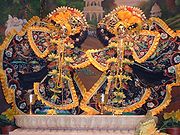
Image:Panca-tattva Altar.jpg|thumb|This is interactive (clickable) image-map. Click! on lotus feet. Sri Krishna
Krishna
Krishna is a central figure of Hinduism and is traditionally attributed the authorship of the Bhagavad Gita. He is the supreme Being and considered in some monotheistic traditions as an Avatar of Vishnu...
Chaitanya (centre), Sri Nityananda Prabhu (wearing blue), Sri Advaita Acharya
Advaita Acharya
Advaita Acharya , born Kamalaksha Bhattacharya, was a notable disciple and companion of the founder of the Gaudiya Vaishnava sect, Chaitanya Mahaprabhu, and guru of Haridasa Thakur...
(with beard), Sri Gadadhara Pandit (purple dhoti), Sri Srivas
Srivasa Thakura
Image:Panca-tattva Altar.jpg|thumb|This is an interactive image-map. Click! on lotus feet. Sri Krishna Chaitanya , Sri Nityananda Prabhu , Sri Advaita Acharya , Sri Gadadhara Pandit , Sri Srivas Pandit...
Pandit (with shaven head and saffron dhoti). Pancha-Tattva deities: Chaitanya Mahaprabhu
Chaitanya Mahaprabhu
Chaitanya Mahaprabhu was a Vaishnava saint and social reformer in eastern India in the 16th century, believed by followers of Gaudiya Vaishnavism to be the full incarnation of Lord Krishna...
, Nityananda, Advaita Acharya
Advaita Acharya
Advaita Acharya , born Kamalaksha Bhattacharya, was a notable disciple and companion of the founder of the Gaudiya Vaishnava sect, Chaitanya Mahaprabhu, and guru of Haridasa Thakur...
, Gadadhara and Srivasa
Srivasa Thakura
Image:Panca-tattva Altar.jpg|thumb|This is an interactive image-map. Click! on lotus feet. Sri Krishna Chaitanya , Sri Nityananda Prabhu , Sri Advaita Acharya , Sri Gadadhara Pandit , Sri Srivas Pandit...
, installed on a Vaishnava altar. |450px|alt=Click on lotus feet
rect 248 267 338 353 Chaitanya
rect 156 265 237 347 Nityananda
Nityananda
Image:Panca-tattva Altar.jpg|thumb|This is interactive image-map. Click! on lotus feet. Sri Krishna Chaitanya , Sri Nityananda Prabhu , Sri Advaita Acharya , Sri Gadadhara Pandit , Sri Srivas Pandit...
rect 66 290 154 370 Advaita Acharya
Advaita Acharya
Advaita Acharya , born Kamalaksha Bhattacharya, was a notable disciple and companion of the founder of the Gaudiya Vaishnava sect, Chaitanya Mahaprabhu, and guru of Haridasa Thakur...
rect 340 262 437 347 Gadadhara
rect 455 267 560 350 Srivasa Thakura
Srivasa Thakura
Image:Panca-tattva Altar.jpg|thumb|This is an interactive image-map. Click! on lotus feet. Sri Krishna Chaitanya , Sri Nityananda Prabhu , Sri Advaita Acharya , Sri Gadadhara Pandit , Sri Srivas Pandit...
Nityananda (Bangla: শ্রী নিত্যানন্দ ; Oriya
Oriya language
Oriya , officially Odia from November, 2011, is an Indian language, belonging to the Indo-Aryan branch of the Indo-European language family. It is mainly spoken in the Indian states of Orissa and West Bengal...
: ନିତ୍ୟାନନ୍ଦ ) (b 1474 CE), was a Vaishnava
Vaishnavism
Vaishnavism is a tradition of Hinduism, distinguished from other schools by its worship of Vishnu, or his associated Avatars such as Rama and Krishna, as the original and supreme God....
saint, famous as a primary religious figure within the Gaudiya Vaishnava tradition of Bengal
Bengal
Bengal is a historical and geographical region in the northeast region of the Indian Subcontinent at the apex of the Bay of Bengal. Today, it is mainly divided between the sovereign land of People's Republic of Bangladesh and the Indian state of West Bengal, although some regions of the previous...
, by whom he is worshipped as an incarnation of Balarama
Balarama
Balarama , also known as Baladeva, Balabhadra and Halayudha, is the elder brother of the divine being, Krishna in Hinduism. Within Vaishnavism Hindu traditions Balarama is worshipped as an Avatar of Vishnu, and he is also listed as such in the Bhagavata Purana...
. Nityananda was Chaitanya Mahaprabhu
Chaitanya Mahaprabhu
Chaitanya Mahaprabhu was a Vaishnava saint and social reformer in eastern India in the 16th century, believed by followers of Gaudiya Vaishnavism to be the full incarnation of Lord Krishna...
's friend and disciple. They are often mentioned together as Gaura-Nitai (Gaura, "golden one", referring to Chaitanya, Nitai being a shortened form of Nityananda) or Nimai-Nitai (Nimai being another name of Chaitanya). Followers often refer to Nityananda as 'Sri Nityananda', 'Prabhu Nityananda' or 'Nityananda Rama
Rama
Rama or full name Ramachandra is considered to be the seventh avatar of Vishnu in Hinduism, and a king of Ayodhya in ancient Indian...
'.
According to Gaudiya-Vaishnava tradition Nityananda is an incarnation of Balarama
Balarama
Balarama , also known as Baladeva, Balabhadra and Halayudha, is the elder brother of the divine being, Krishna in Hinduism. Within Vaishnavism Hindu traditions Balarama is worshipped as an Avatar of Vishnu, and he is also listed as such in the Bhagavata Purana...
, with Chaitanya Mahaprabhu being his eternal brother and friend, Krishna
Krishna
Krishna is a central figure of Hinduism and is traditionally attributed the authorship of the Bhagavad Gita. He is the supreme Being and considered in some monotheistic traditions as an Avatar of Vishnu...
. He is considered the 'most merciful' incarnation of the Supreme Personality of Godhead
Svayam Bhagavan
Svayam Bhagavan , "The Lord" or Lord Himself, is a Sanskrit theological term. The term refers to the concept of absolute representation of the monotheistic God as Bhagavan within Hinduism....
.
Life
Nityananda Prabhu was born to a religious Bandyaghati BrahminBrahmin
Brahmin Brahman, Brahma and Brahmin.Brahman, Brahmin and Brahma have different meanings. Brahman refers to the Supreme Self...
, Mukunda Pandit (also known as Hadai Pandit) and Padmavati in Ekachakra
Ekachakra
Ekachakra is a small village, located 20 km away from the town of Rampurhat in the Birbhum District of West Bengal. Within Hindu tradition, the five Pandavas from the epic, Mahabharata are described as staying in Ekachakra during their years in exile...
(a small village in Birbhum district
Birbhum district
Birbhum district is an administrative unit in the Indian state of West Bengal. It is the northernmost district of Burdwan division—one of the three administrative divisions of West Bengal. The district headquarters is located at Suri...
of present West Bengal
West Bengal
West Bengal is a state in the eastern region of India and is the nation's fourth-most populous. It is also the seventh-most populous sub-national entity in the world, with over 91 million inhabitants. A major agricultural producer, West Bengal is the sixth-largest contributor to India's GDP...
) around the year 1474. His devotion and great talent for singing Vaishnava hymns (bhajan
Bhajan
A Bhajan is any type of Indian devotional song. It has no fixed form: it may be as simple as a mantra or kirtan or as sophisticated as the dhrupad or kriti with music based on classical ragas and talas. It is normally lyrical, expressing love for the Divine...
) were apparent from a very early age. He became well known in his youth for his dramatic re-enactments of Lord Rama
Rama
Rama or full name Ramachandra is considered to be the seventh avatar of Vishnu in Hinduism, and a king of Ayodhya in ancient Indian...
's pastimes, wherein he would generally play the part of Lakshman, Rama's younger brother along with the other boys of Ekachakra.
At the age of thirteen, Nityananda left home with a travelling renunciate (sannyasi) known as Lakshmipati Tirtha
Lakshmipati Tirtha
Lakshmipati Tirtha was a Vaishnava saint. He was a disciple of Vyasatirtha who gave him the name 'Lakshmipati Tirtha' upon initiation...
. Nityananda's father, Hadai Pandit, had offered the travelling sannyasi anything he wished as a gift. To this Lakshmipati Tirtha replied that he was in need of someone to assist him in his travels to the holy places (he was about to begin a pilgrimage) and that Nityananda would be perfect for the job. As he had given his word Hadai Pandit reluctantly agreed and Nityananda joined him in his travels. This started Nityananda's long physical and spiritual journey through India which would get him in contact with important Guru
Guru
A guru is one who is regarded as having great knowledge, wisdom, and authority in a certain area, and who uses it to guide others . Other forms of manifestation of this principle can include parents, school teachers, non-human objects and even one's own intellectual discipline, if the...
s of the Vaishnava tradition. Apart from Lakshmipati Tirtha, who at some point initiated him, he was also associated with Lakshmipati Tirtha's famous other disciples: Madhavendra Puri
Madhavendra Puri
Madhavendra Puri also known as Madhavendra Puri Goswami is a Vaishnava saint who appeared in the 14th century.-Biography:...
, Advaita Acharya
Advaita Acharya
Advaita Acharya , born Kamalaksha Bhattacharya, was a notable disciple and companion of the founder of the Gaudiya Vaishnava sect, Chaitanya Mahaprabhu, and guru of Haridasa Thakur...
, and Ishvara Puri, the spiritual master
Guru
A guru is one who is regarded as having great knowledge, wisdom, and authority in a certain area, and who uses it to guide others . Other forms of manifestation of this principle can include parents, school teachers, non-human objects and even one's own intellectual discipline, if the...
of Chaitanya Mahaprabhu.
The Jagai-Madhai episode
The episode of Jagai-Madhai is arguably most well known of tales related to Chaitanya and Nityananda. There are a few versions of the story, but the basics outline of the traditional tale is as follows:- Once while chanting the name of KrishnaKrishnaKrishna is a central figure of Hinduism and is traditionally attributed the authorship of the Bhagavad Gita. He is the supreme Being and considered in some monotheistic traditions as an Avatar of Vishnu...
in the streets, Nityananda was attacked by Jagai and Madhai, two irreverent drunk brothers. Madhai threw an earthen pot which cut his forehead. At this point Nityananda is said to have uttered the now famous sentence, "Merechhish kolshir kana, tai bole ki prem debona" (Shall I stop giving you love because you have hit me with an earthen pot?). Chaitanya heard of the episode, flew to a rage, and wanted to kill the brothers with his divine ChakraChakramThe chakram , sometimes called a war quoit, is a throwing weapon from India. Its shape is of a flat metal hoop with a sharp outer edge from in diameter...
. Nityananda begged him to pardon them and they became Chaitanya's disciples, converted by Nityananda's compassion.
Marriage and the descendants
Nityananda married two daughters of Suryadasa Sarakhela, Vasudha and Jahnava. After marriage, he settled in KhardahaKhardaha
Khardaha is a city, a municipality and police station of Barrackpore subdivision in North 24 Parganas district in the Indian state of West Bengal. It is a part of the area covered by Kolkata Metropolitan Development Authority....
. He had a son, Virachandra or Virabhadra, and a daughter, Ganga, by his first wife Vasudha. Virabhadra was later initiated to vaishnava rites by his stepmother Jahnava.
Legacy
Hinduism
Hinduism is the predominant and indigenous religious tradition of the Indian Subcontinent. Hinduism is known to its followers as , amongst many other expressions...
in Eastern India
India
India , officially the Republic of India , is a country in South Asia. It is the seventh-largest country by geographical area, the second-most populous country with over 1.2 billion people, and the most populous democracy in the world...
, plagued mainly by the caste
Caste
Caste is an elaborate and complex social system that combines elements of endogamy, occupation, culture, social class, tribal affiliation and political power. It should not be confused with race or social class, e.g. members of different castes in one society may belong to the same race, as in India...
system, which they denounced. Much of Vaishnava literature, regarded as one the finest literary heritage of medieval Bengal, came from them or their disciples. Even in secular literature, their brotherly love towards each other has been celebrated.
Principal Sobriquets of Nityananda
- Nityananda -- He Who embodies eternal bliss
- Avadhutendu -- The Moon of divine madmen
- Vasudha-prana-vallabha -- The beloved of the life-breath of Vasudha
- Jahnavi-jivita-pati -- The eternal divine husband of Shrimati Jahnavi-devi and the maintainer and sustainer of Her life and soul
- Krsna-prema-prada -- He Who bestows ecstatic love for Krishna
- Prabhu -- The Lord and Master of the devotees
- Padmavati-suta -- The dear son of Padmavati
- Sriman -- He of splendorous transcendental majesty
- Saci-nandana-purvaja -- The older brother of mother Saci's son
- Bhavonmatta -- He Who is maddened in overwhelming ecstatic emotions
- Jagat-trata -- The savior of the universe
- Rakta-gaura-kalevara - He Whose complexion is golden tinged with red
from the writings of Sarvabhauma Bhattacharya.
See also
- Chaitanya MahaprabhuChaitanya MahaprabhuChaitanya Mahaprabhu was a Vaishnava saint and social reformer in eastern India in the 16th century, believed by followers of Gaudiya Vaishnavism to be the full incarnation of Lord Krishna...
- Gaudiya Vaishnava
- MayapurMayapurMayapur is located on the banks of the Ganges river, at the point of its confluence with the Jalangi, near Navadvip, West Bengal, India, 130 km north of Kolkata...
- Pancha Tattva (Vaishnavism)
External links
- Life Story of Nityananda
- A Biography of Nityananda Prabhu
- Nityananda Trayodasi Festival
- Lecture on Nityananda & Chaitanya: 'The Darkness Dispellers'
- Nityananda Rama at Panihati
- Nityananda Janmasthan - Nitai's birthplace
- The Lotus Feet of Sri Nityananda Prabhu
- Nityananda's Name
- Descendants of Nityananda