

New Swabia

Encyclopedia
New Swabia is a cartographic
name sometimes given to an area of Antarctica between 20°E
and 10°W
in Queen Maud Land
, which within Norway is administered as a Norwegian dependent territory
under the Antarctic Treaty System
. New Swabia was explored by Germany in early 1939 and named after that expedition's ship, the Schwabenland, itself named after the German
region of Swabia
.
, South Georgia, the Kerguelen Islands
, and the Crozet Islands
were astronomical, meteorological, and hydrological, mostly in close collaboration with scientific teams from other countries. As the 19th century ended Germany began to focus on Antarctica.
The first German expedition to Antarctica was the Gauss expedition from 1901 to 1903. Led by Arctic veteran and geology professor Erich von Drygalski
, this was the first expedition to use a hot-air balloon in Antarctica. It also found and named Kaiser Wilhelm II Land
. The second German Antarctic expedition (1911–1912) was led by Wilhelm Filchner
with a goal of crossing Antarctica to learn if it was one piece of land. As happened with other such early attempts, the crossing failed before it even began. The expedition discovered and named the Luitpold Coast
and the Filchner Ice Shelf. A German whaling
fleet was put to sea in 1937 and, upon its successful return in early 1938, plans for a third German Antarctic expedition were drawn up.
(1879–1963), a captain in the Kriegsmarine
(German navy). The main purpose was to find an area in Antarctica for a German whaling station, as a way to increase Germany’s production of fat. Whale oil
was then the most important raw material for the production of margarine
and soap
in Germany and the country was the second largest purchaser of Norwegian whale oil, importing some 200,000 metric tonnes annually. Besides the disadvantage of being dependent on imports, it was thought that Germany would soon likely be at war, which was considered to put too much strain on Germany’s foreign currency reserves. Another goal was to scout possible locations for a German naval base.
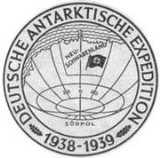
 On 17 December 1938 the New Swabia Expedition left Hamburg for Antarctica aboard the MS Schwabenland (a freighter built in 1925 and renamed in 1934 after the Swabia
region in southern Germany) which could also carry and catapult aircraft. The secret expedition had 33 members plus the Schwabenlands crew of 24. On 19 January 1939 the ship arrived at the Princess Martha Coast
, in an area which had lately been claimed by Norway
as Dronning Maud Land
and began charting the region. Nazi German flags were placed on the sea ice along the coast. Naming the area Neu-Schwabenland after the ship, the expedition established a temporary base and in the following weeks teams walked along the coast recording claim reservations on hills and other significant landmarks. Seven photographic survey flights were made by the ship’s two Dornier Wal seaplane
s named Passat and Boreas. About a dozen 1.2 meter-long aluminum arrows, with 30 centimeter steel cones and three upper stabilizer wings embossed with swastikas, were air dropped onto the ice at turning points of the flight polygons (these arrows had been tested on the Pasterze glacier
in Austria before the expedition). Eight more flights were made to areas of keen interest and on these trips some of the photos were taken with colour film. Altogether they flew over hundreds of thousands of square kilometres and took more than 16,000 aerial photographs, some of which were published after the war by Ritscher. The ice-free Schirmacher Oasis
, which now hosts the Maitri
and Novolazarevskaya
research stations, was spotted from the air by Richardheinrich Schirmacher (who named it after himself) shortly before the Schwabenland left the Antarctic coast on 6 February 1939.
On its return trip to Germany the expedition made oceanographic studies near Bouvet Island
and Fernando de Noronha
, arriving back in Hamburg on 11 April 1939. Meanwhile the Norwegian government had learned about the expedition through reports from whalers along the coast of Queen Maud Land.
(NBSAE) (1949–1952), led by John Schjelderup Giæver. Others were not named until they were remapped from aerial photographs taken by the Norwegian Antarctic Expedition
(1958–1959).
is also in the region. New Swabia is a cartographic
area of Queen Maud Land
which within Norway is administered as a Norwegian dependent territory
under the Antarctic Treaty System
by the Polar Affairs Department of the Ministry of Justice and the Police
.
Cartography
Cartography is the study and practice of making maps. Combining science, aesthetics, and technique, cartography builds on the premise that reality can be modeled in ways that communicate spatial information effectively.The fundamental problems of traditional cartography are to:*Set the map's...
name sometimes given to an area of Antarctica between 20°E
20th meridian east
The meridian 20° east of Greenwich is a line of longitude that extends from the North Pole across the Arctic Ocean, Europe, Africa, the Atlantic and Indian oceans, the Southern Ocean, and Antarctica to the South Pole....
and 10°W
10th meridian west
The meridian 10° west of Greenwich is a line of longitude that extends from the North Pole across the Arctic Ocean, the Atlantic Ocean, Ireland, Africa, the Southern Ocean, and Antarctica to the South Pole....
in Queen Maud Land
Queen Maud Land
Queen Maud Land is a c. 2.7 million-square-kilometre region of Antarctica claimed as a dependent territory by Norway. The territory lies between 20° west and 45° east, between the British Antarctic Territory to the west and the Australian Antarctic Territory to the east. The latitudinal...
, which within Norway is administered as a Norwegian dependent territory
Dependent territory
A dependent territory, dependent area or dependency is a territory that does not possess full political independence or sovereignty as a State, and remains politically outside of the controlling state's integral area....
under the Antarctic Treaty System
Antarctic Treaty System
The Antarctic Treaty and related agreements, collectively called the Antarctic Treaty System or ATS, regulate international relations with respect to Antarctica, Earth's only continent without a native human population. For the purposes of the treaty system, Antarctica is defined as all of the land...
. New Swabia was explored by Germany in early 1939 and named after that expedition's ship, the Schwabenland, itself named after the German
Germany
Germany , officially the Federal Republic of Germany , is a federal parliamentary republic in Europe. The country consists of 16 states while the capital and largest city is Berlin. Germany covers an area of 357,021 km2 and has a largely temperate seasonal climate...
region of Swabia
Swabia
Swabia is a cultural, historic and linguistic region in southwestern Germany.-Geography:Like many cultural regions of Europe, Swabia's borders are not clearly defined...
.
Background
Like many other countries, Germany sent expeditions to the Antarctic region in the late 19th and early 20th centuries, most of which were scientific. The late 19th century expeditions to the Southern OceanSouthern Ocean
The Southern Ocean comprises the southernmost waters of the World Ocean, generally taken to be south of 60°S latitude and encircling Antarctica. It is usually regarded as the fourth-largest of the five principal oceanic divisions...
, South Georgia, the Kerguelen Islands
Kerguelen Islands
The Kerguelen Islands , also known as the Desolation Islands, are a group of islands in the southern Indian Ocean constituting the emerged part of the otherwise submerged Kerguelen Plateau. The islands, along with Adélie Land, the Crozet Islands and the Amsterdam and Saint Paul Islands are part of...
, and the Crozet Islands
Crozet Islands
The Crozet Islands are a sub-antarctic archipelago of small islands in the southern Indian Ocean. They form one of the five administrative districts of the French Southern and Antarctic Lands.-Geography:...
were astronomical, meteorological, and hydrological, mostly in close collaboration with scientific teams from other countries. As the 19th century ended Germany began to focus on Antarctica.
The first German expedition to Antarctica was the Gauss expedition from 1901 to 1903. Led by Arctic veteran and geology professor Erich von Drygalski
Erich von Drygalski
Erich Dagobert von Drygalski was a German geographer, geophysicist and polar scientist, born in Königsberg, Province of Prussia....
, this was the first expedition to use a hot-air balloon in Antarctica. It also found and named Kaiser Wilhelm II Land
Kaiser Wilhelm II Land
Kaiser Wilhelm II Land is the part of Antarctica lying between Cape Penck, at 87°43'E, and Cape Filchner, at 91°54'E and is claimed as part of the Australian Antarctic Territory, although this claim is not universally recognized....
. The second German Antarctic expedition (1911–1912) was led by Wilhelm Filchner
Wilhelm Filchner
Wilhelm Filchner was a German explorer.At the age of 21, he participated in his first expedition, which led him to Russia. Two years later, he travelled alone and on horseback through the Pamir Mountains, from Osh to Murgabh to the upper Wakhan to Tashkurgan and back...
with a goal of crossing Antarctica to learn if it was one piece of land. As happened with other such early attempts, the crossing failed before it even began. The expedition discovered and named the Luitpold Coast
Luitpold Coast
Luitpold Coast is that portion of the coast of Coats Land extending from the vicinity of Hayes Glacier, at 27° 54' W, to 36° W, which is regarded as the east limit of the Filchner Ice Shelf. It was discovered by Wilhelm Filchner, leader of the German Antarctic Expedition, 1911-12, and named for...
and the Filchner Ice Shelf. A German whaling
Whaling
Whaling is the hunting of whales mainly for meat and oil. Its earliest forms date to at least 3000 BC. Various coastal communities have long histories of sustenance whaling and harvesting beached whales...
fleet was put to sea in 1937 and, upon its successful return in early 1938, plans for a third German Antarctic expedition were drawn up.
German Antarctic Expedition (1938–1939)
The third German Antarctic Expedition (1938–1939) was led by Alfred RitscherAlfred Ritscher
Alfred Ritscher was a German polar explorer. A captain in the German Navy, he led the third German Antarctic Expedition in 1938-39, which mapped the New Swabia area of Queen Maud Land. Ritscher Peak and Ritscher Upland there are named for him.-External links:*...
(1879–1963), a captain in the Kriegsmarine
Kriegsmarine
The Kriegsmarine was the name of the German Navy during the Nazi regime . It superseded the Kaiserliche Marine of World War I and the post-war Reichsmarine. The Kriegsmarine was one of three official branches of the Wehrmacht, the unified armed forces of Nazi Germany.The Kriegsmarine grew rapidly...
(German navy). The main purpose was to find an area in Antarctica for a German whaling station, as a way to increase Germany’s production of fat. Whale oil
Whale oil
Whale oil is the oil obtained from the blubber of various species of whales, particularly the three species of right whale and the bowhead whale prior to the modern era, as well as several other species of baleen whale...
was then the most important raw material for the production of margarine
Margarine
Margarine , as a generic term, can indicate any of a wide range of butter substitutes, typically composed of vegetable oils. In many parts of the world, the market share of margarine and spreads has overtaken that of butter...
and soap
Soap
In chemistry, soap is a salt of a fatty acid.IUPAC. "" Compendium of Chemical Terminology, 2nd ed. . Compiled by A. D. McNaught and A. Wilkinson. Blackwell Scientific Publications, Oxford . XML on-line corrected version: created by M. Nic, J. Jirat, B. Kosata; updates compiled by A. Jenkins. ISBN...
in Germany and the country was the second largest purchaser of Norwegian whale oil, importing some 200,000 metric tonnes annually. Besides the disadvantage of being dependent on imports, it was thought that Germany would soon likely be at war, which was considered to put too much strain on Germany’s foreign currency reserves. Another goal was to scout possible locations for a German naval base.
Swabia
Swabia is a cultural, historic and linguistic region in southwestern Germany.-Geography:Like many cultural regions of Europe, Swabia's borders are not clearly defined...
region in southern Germany) which could also carry and catapult aircraft. The secret expedition had 33 members plus the Schwabenlands crew of 24. On 19 January 1939 the ship arrived at the Princess Martha Coast
Princess Martha Coast
Princess Martha Coast is that portion of the coast of Queen Maud Land lying between 05° E and the terminus of Stancomb-Wills Glacier, at 20° W. The entire coastline is bounded by ice shelves with ice cliffs 20 to 35 m high....
, in an area which had lately been claimed by Norway
Norway
Norway , officially the Kingdom of Norway, is a Nordic unitary constitutional monarchy whose territory comprises the western portion of the Scandinavian Peninsula, Jan Mayen, and the Arctic archipelago of Svalbard and Bouvet Island. Norway has a total area of and a population of about 4.9 million...
as Dronning Maud Land
Queen Maud Land
Queen Maud Land is a c. 2.7 million-square-kilometre region of Antarctica claimed as a dependent territory by Norway. The territory lies between 20° west and 45° east, between the British Antarctic Territory to the west and the Australian Antarctic Territory to the east. The latitudinal...
and began charting the region. Nazi German flags were placed on the sea ice along the coast. Naming the area Neu-Schwabenland after the ship, the expedition established a temporary base and in the following weeks teams walked along the coast recording claim reservations on hills and other significant landmarks. Seven photographic survey flights were made by the ship’s two Dornier Wal seaplane
Seaplane
A seaplane is a fixed-wing aircraft capable of taking off and landing on water. Seaplanes that can also take off and land on airfields are a subclass called amphibian aircraft...
s named Passat and Boreas. About a dozen 1.2 meter-long aluminum arrows, with 30 centimeter steel cones and three upper stabilizer wings embossed with swastikas, were air dropped onto the ice at turning points of the flight polygons (these arrows had been tested on the Pasterze glacier
Pasterze Glacier
The Pasterze, at approximately 8.4 kilometers in length, is the longest glacier in Austria and in the Eastern Alps reaching from the Johannisberg to above sea level. It lies within the Hohe Tauern mountain range in Carinthia, directly beneath Austria's highest mountain, the Grossglockner...
in Austria before the expedition). Eight more flights were made to areas of keen interest and on these trips some of the photos were taken with colour film. Altogether they flew over hundreds of thousands of square kilometres and took more than 16,000 aerial photographs, some of which were published after the war by Ritscher. The ice-free Schirmacher Oasis
Schirmacher Oasis
The Schirmacher Oasis is a 25 km long and up to 3 km wide ice-free plateau with more than 100 fresh water lakes. It is situated in the Schirmacher Hills on the Princess Astrid Coast in Queen Maud Land in East Antarctica, and is on average 100 metres above sea level...
, which now hosts the Maitri
Maitri
Maitri is India's second permanent research station in Antarctica. It was built and finished in 1989, shortly before the first station Dakshin Gangotri was buried in ice and abandoned in 1990-91...
and Novolazarevskaya
Novolazarevskaya Station
Novolazarevskaya Station is a Russian, formerly Soviet, Antarctic research station. The station is located at Schirmacher Oasis, Queen Maud Land, 75 km from the Antarctic coast, from which it is separated by Lazarev Ice Shelf. It was opened on January 18, 1961 by the 6th Soviet Antarctic...
research stations, was spotted from the air by Richardheinrich Schirmacher (who named it after himself) shortly before the Schwabenland left the Antarctic coast on 6 February 1939.
On its return trip to Germany the expedition made oceanographic studies near Bouvet Island
Bouvet Island
Bouvet Island is an uninhabited Antarctic volcanic island in the South Atlantic Ocean, 2,525 km south-southwest of South Africa. It is a dependent territory of Norway and, lying north of 60°S latitude, is not subject to the Antarctic Treaty. The centre of the island is an ice-filled crater of an...
and Fernando de Noronha
Fernando de Noronha
Fernando de Noronha is an archipelago of 21 islands and islets in the Atlantic Ocean, offshore from the Brazilian coast. The main island has an area of and had a population of 3,012 in the year 2010...
, arriving back in Hamburg on 11 April 1939. Meanwhile the Norwegian government had learned about the expedition through reports from whalers along the coast of Queen Maud Land.
Geographic features mapped by the expedition
Because the area was first explored by a German expedition, the name Neuschwabenland (or New Schwabenland or New Swabia) is still used for the region on some maps, as are many of the German names given to its geographic features. Some geographic features mapped by the expedition were not named until the Norwegian-British-Swedish Antarctic ExpeditionNorwegian-British-Swedish Antarctic Expedition
Norwegian–British–Swedish Antarctic Expedition the first Antarctica expedition involving an international team of scientists...
(NBSAE) (1949–1952), led by John Schjelderup Giæver. Others were not named until they were remapped from aerial photographs taken by the Norwegian Antarctic Expedition
Sixth Norwegian Antarctic Expedition
The sixth Norwegian Antarctic Expedition was a scientific expedition to Queen Maud Land, intended as part of Norway's participation in the International Geophysical Year, 1957-58. The crew set sail from Oslo on board two whaling ships, the Polarsirkel and Polarbjørn, on November 10, 1956. They...
(1958–1959).
- Ahlmann RidgeAhlmann RidgeAhlmann Ridge, also known as Ahlmannryggen, is a broad, mainly ice-covered ridge, about long, surmounted by scattered, low peaks. It rises between Schytt Glacier and Jutulstraumen Glacier and extends from Borg Massif northward to Fimbul Ice Shelf in Queen Maud Land...
- Alan PeakAlan PeakAlan Peak , also known as Alanpiggen, is a peak at the west side of the mouth of Reece Valley, in the south part of the Sverdrup Mountains in Queen Maud Land. Plotted from air photos by the Third German Antarctic Expedition...
- Aurdalsegga RidgeAurdalsegga RidgeAurdalsegga Ridge is an irregular ridge long surmounted by Mount Nikolayev, rising immediately southeast of Aurdalen Valley in the Südliche Petermann Range of the Wohlthat Mountains in Antarctica...
- Austvorren RidgeAustvorren RidgeAustvorren Ridge is the eastern of two rock ridges which trend northward from the Neumayer Cliffs in Queen Maud Land. It was photographed from the air by the Third German Antarctic Expedition , and mapped by Norwegian cartographers from surveys by the Norwegian-British-Swedish Antarctic Expedition...
- Boreas NunatakBoreas NunatakBoreas Nunatak is a nunatak, high, nearly southwest of Passat Nunatak at the mouth of Schytt Glacier in Queen Maud Land. It was discovered by the Third German Antarctic Expedition , led by Capt. Alfred Ritscher, and named after Boreas, one of the Dornier flying boats of the expedition...
- Borg MassifBorg MassifBorg Massif is a spectacular mountain massif, about long and with summits above , situated along the northwest side of the Penck Trough in Queen Maud Land, East Antarctica. The tallest peak, at , is Hogsaetet Mountain...
- Conrad MountainsConrad MountainsThe Conrad Mountains are a narrow chain of mountains, long, located between the Gagarin Mountains and Mount Dallmann in Queen Maud Land, Antarctica. The Conrad Mountains are a subrange of the Orvin Mountains...
- Drygalski MountainsDrygalski MountainsDrygalski Mountains is a group of scattered mountains and nunataks lying between the Filchner Mountains and Kurze Mountains in the Orvin Mountains of Queen Maud Land. Discovered by the Third German Antarctic Expedition , led by Capt. Alfred Ritscher, and named for Professor Erich von Drygalski,...
- Filchner MountainsFilchner MountainsFilchner Mountains is a mountain range 11 km southwest of Drygalski Mountains, at the west end of the Orvin Mountains of Queen Maud Land. Discovered by the Third German Antarctic Expedition , led by Capt. Alfred Ritscher, and named for Wilhelm Filchner, leader of the German expedition to the...
- Fimbul Ice ShelfFimbul Ice ShelfFimbul Ice Shelf is an ice shelf about 120 miles long and 60 miles wide, nourished by Jutulstraumen Glacier, bordering the coast of Queen Maud Land from 3° W to 3° E...
- Gessner PeakGessner PeakGessner Peak is the highest peak of Storkvarvet Mountain, standing 3 mi N of Habermehl Peak in the NE part of the Mühlig-Hofmann Mountains of Queen Maud Land.-Discovery and naming:...
- Gneiskopf PeakGneiskopf PeakGneiskopf Peak is a peak rising southwest of Mount Neustruyev at the southern end of Südliche Petermann Range, in the Wohlthat Mountains of Queen Maud Land.-Discovery and naming:...
- Habermehl PeakHabermehl PeakHabermehl Peak is a peak 3 miles south of Gessner Peak in the northeast part of the Mühlig-Hofmann Mountains of Queen Maud Land. Discovered by the Third German Antarctic Expedition , led by Capt. Alfred Ritscher, and named for the director of the German Weather Service. Remapped from air photos...
- Humboldt MountainsHumboldt MountainsHumboldt Mountains is a group of mountains immediately west of the Petermann Ranges, forming the westernmost portion of the Wohlthat Mountains in Queen Maud Land, Antarctica. They were discovered and mapped by the Third German Antarctic Expedition , led by Capt...
- Isdalen ValleyIsdalen ValleyIsdalen Valley is an ice-filled valley between Aurdalsegga and Isdalsegga Ridges in Südliche Petermann Range, Wohlthat Mountains. Discovered and plotted from air photos by German Antarctic Expedition, 1938-39. Replotted from air photos and he surveys by Norwegian Antarctic Expedition, 1956–60, and...
- Isdalsegga RidgeIsdalsegga RidgeIsdalsegga Ridge is a rock ridge surmounted by Pinegin Peak, forming the east wall of Isdalen Valley in Südliche Petermann Range, Wohlthat Mountains. Discovered and plotted from air photos by German Antarctic Expedition, 1938-39. Replotted from air photos and surveys by Norwegian Antarctic...
- Isfossnipa PeakIsfossnipa PeakIsfossnipa Peak is a peak 2 miles southeast of Austvorren Ridge, surmounting the east part of Neumayer Cliffs in Queen Maud Land. Photographed from the air by the Third German Antarctic Expedition...
- Ising GlacierIsing GlacierIsing Glacier is a glacier flowing northwest between Isingen Mountain and Kvitkjolen Ridge in the Sverdrup Mountains, Queen Maud Land. Photographed from the air by the German Antarctic Expedition...
- Istind PeakIstind PeakIstind Peak is a partly ice-covered peak 1 mile south of Tindeklypa, on the east side of Ahlmann Ridge in Queen Maud Land. Photographed from the air by the Third German Antarctic Expedition...
- Kraul MountainsKraul MountainsKraul Mountains is a chain of mountains and nunataks that trend northeastward from Veststraumen Glacier for approximately in western Queen Maud Land. They were discovered by the Third German Antarctic Expedition , led by Capt. Alfred Ritscher, and named for Capt. Otto Kraul, ice pilot of the...
- Lake UnterseeLake UnterseeLake Untersee is the largest surface freshwater lake in the interior of the Gruber Mountains of central Queen Maud Land in East Antarctica. It is situated to the southwest of the Schirmacher Oasis. The lake is approximately long and wide, with a surface area of , and a maximum depth of...
- Mount DallmannMount DallmannMount Dallmann is a bold mountain 11 mi E of the northern portion of the Conrad Mountains, in the Orvin Mountains of Queen Maud Land, Antarctica.Mount Dallmann was discovered by the Third German Antarctic Expedition , led by Capt...
- Mount KrügerMount KrügerMount Krüger, or Krügerfjellet, is a mountain standing southwest of Kvitho Peak in the Sverdrup Mountains of Queen Maud Land, Antarctica.The summit of Krüger is the highest point in the Sverdrup Mtns.- Discovery and naming :...
- Mount NeustruyevMount NeustruyevMount Neustruyev is a peak in East Antarctica, 2,900 m, standing 5 mi NNE of Gneiskopf Peak in Südliche Petermann Range, Wohlthat Mountains, Queen Maud Land.-Discovery and naming:...
- Mount ZimmermannMount ZimmermannMount Zimmermann is a peak standing 3.5 miles north of Ritscher Peak in the Gruber Mountains, central Queen Maud Land. Discovered by the Third German Antarctic Expedition , led by Capt. Alfred Ritscher, and named for the vice-president of the Deutsche Forschungsgemeinschaft ....
- Mount ZuckerhutMount ZuckerhutMount Zuckerhut is a peak standing 2 miles southeast of Ritscher Peak in the Gruber Mountains of Queen Maud Land. Discovered and given the descriptive name Zuckerhut by the Third German Antarctic Expedition , led by Capt. Alfred Ritscher....
- Mühlig-Hofmann MountainsMühlig-Hofmann MountainsThe Mühlig-Hofmann Mountains is a major group of associated mountain features extending east to west for 65 miles between the Gjelsvik Mountains and the Orvin Mountains in Queen Maud Land, East Antarctica...
- New Swabia
- Orvin MountainsOrvin MountainsThe Orvin Mountains constitute a major group of mountain ranges, extending for about 65 miles between the Wohlthat Mountains and the Mühlig-Hofmann Mountains in Queen Maud Land...
- Payer MountainsPayer MountainsThe Payer Mountains is a group of scattered mountains extending north-south for about , standing east of the Weyprecht Mountains and forming the eastern half of the Hoel Mountains in central Queen Maud Land. They were discovered by the Third German Antarctic Expedition , led by Capt...
- Penck TroughPenck TroughPenck Trough is a broad ice-filled valley trending SW-NE. for about 60 miles between Borg Massif and the northeast part of Kirwan Escarpment, in Queen Maud Land. Discovered by the Third German Antarctic Expedition , led by Capt. Alfred Ritscher, and named for German geographer Albrecht Penck...
- Petermann RangesPetermann RangesThe Petermann Ranges are a number of associated mountain ranges including the Ostliche Petermann, Mittlere Petermann, Westliche Petermann, Südliche Petermann, and Pieck Ranges, located just east of the Humboldt Mountains in the central Wohlthat Mountains of Queen Maud Land. They were discovered and...
- Preuschoff RangePreuschoff RangePreuschoff Range is a mountain range consisting of Mount Hochlin and associated features, lying just west of Kaye Crest in the Mühlig-Hofmann Mountains of Queen Maud Land. The name "Preuschoff-Rucken" was applied in the general area by the Third German Antarctic Expedition , led by Capt...
- Ritscher PeakRitscher PeakRitscher Peak is a prominent peak , standing 7 mi WSW of Mount Mentzel in the Gruber Mountains of Queen Maud Land. This peak was discovered and mapped by the Third German Antarctic Expedition of 1938-39 and was named for Capt. Alfred Ritscher, leader of the expedition.Latitude:...
- Ritscher UplandRitscher UplandRitscher Upland is a large ice-covered upland of western Queen Maud Land, bounded by Kraul Mountains and Heimefront Range to the west and southwest, and by Borg Massif and Kirwan Escarpment to the east. It was discovered by the Third German Antarctic Expedition , and named for Capt. Alfred...
- Saetet CirqueSaetet CirqueSaetet Cirque is a large cirque in the north side of Jutulsessen Mountain, in the Gjelsvik Mountains, Queen Maud Land. Photographed from the air by the Third German Antarctic Expedition...
- Sandeggtind PeakSandeggtind PeakSandeggtind Peak is a tall peak, standing 1 mi south of Sandho Heights on Sandegga Ridge in the Conrad Mountains, Queen Maud Land. Discovered and photographed by the Third German Antarctic Expedition , led by Capt. Alfred Ritscher. Mapped by Norway from air photos and surveys by NorAE,...
- Schirmacher OasisSchirmacher OasisThe Schirmacher Oasis is a 25 km long and up to 3 km wide ice-free plateau with more than 100 fresh water lakes. It is situated in the Schirmacher Hills on the Princess Astrid Coast in Queen Maud Land in East Antarctica, and is on average 100 metres above sea level...
- Shatskiy HillShatskiy HillShatskiy Hill is a hill, 2,705 m, in the Dekefjellrantane Hills of the Weyprecht Mountains, Queen Maud Land. Discovered and plotted from air photos by the Third German Antarctic Expedition , led by Capt. Alfred Ritscher...
- Stabben MountainStabben MountainStabben Mountain is a prominent mountain immediately north of Mayr Ridge in the north part of the Gjelsvik Mountains, Queen Maud Land. Photographed from the air by the German Antarctic Expedition...
- Storkvarvet MountainStorkvarvet MountainStorkvarvet Mountain is a mountain that is round in plan and has several radial spurs, standing N of Haberrnehl Peak at the NE end of the Muhlig-Hofmann Mountains, Queen Maud Land.-Discovery and naming:...
- Südliche Petermann RangeSüdliche Petermann RangeSüdliche Petermann Range is one of the Petermann Ranges, trending NE-SW for 22 mi from Svarthausane Crags to Gneiskopf Peak, in the Wohlthat Mountains, Queen Maud Land...
- Sverdrup MountainsSverdrup MountainsThe Sverdrup Mountains are a group of mountains about long, standing just west of the Gjelsvik Mountains in Queen Maud Land, East Antarctica. With its summit at , the massive Mount Krüger forms the highest point in the Sverdrup Mountains....
- Terningen PeakTerningen PeakTerningen Peak A small rock peak, 2,680 m, marking the summit of Terningskarvet Mountain in the Gjelsvik Mountains, Queen Maud Land. Photographed from the air by the Third German Antarctic Expedition , led by Capt. Alfred Ritscher...
- TindeklypaTindeklypaTindeklypa is a double summit separated by a deep ravine. The feature is located 1 mile north of Istind Peak, on the east side of Ahlmann Ridge in Queen Maud Land. Photographed from the air by the German Antarctic Expedition...
- Vorposten PeakVorposten PeakVorposten Peak is an isolated peak about 25 miles northeast of the Payer Mountains in central Queen Maud Land. This feature was discovered by the Third German Antarctic Expedition , led by Capt. Alfred Ritscher, and named Vorposten because of its location at the eastern extremity of the area...
- Weyprecht MountainsWeyprecht MountainsWeyprecht Mountains is a small group of mountains about 10 miles west of the Payer Mountains, forming the western half of the Hoel Mountains in Queen Maud Land. They were discovered by the Third German Antarctic Expedition , led by Capt...
- Wohlthat MountainsWohlthat MountainsWohlthat Mountains is a large group of associated mountain features consisting of the Humboldt Mountains, Petermann Ranges, and the Gruber Mountains, located immediately east of the Orvin Mountains in Fimbulheimen in the central Queen Maud Land. Discovered by the Third German Antarctic Expedition ,...
- Zhil'naya MountainZhil'naya MountainZhil'naya Mountain is the central mountain, 2,560 m, of the Svarthausane Crags, in Südliche Petermann Range, Wohlthat Mountains, Queen Maud Land. Discovered and plotted from air photos by German Antarctic Expedition, 1938-39...
- Zwiesel MountainZwiesel MountainZwiesel Mountain is a large complex mountain which is highly dissected, rising to 2,970 m and forming the north portion of Pieck Range in the Petermann Ranges of Queen Maud Land. It was discovered and given the descriptive name "Zwiesel-Berg" by the Third German Antarctic Expedition , led by...
Aftermath
Germany made no formal territorial claims to New Swabia. No whaling station or other lasting bases were built there by Germany until the Georg-von-Neumayer-Station, a research facility, was established in 1981. Germany's current Neumayer-Station IIINeumayer-Station III
Neumayer-Station III, also known as Neumayer III after geophysicist Georg von Neumayer, is a German South pole research station of the Alfred-Wegener-Institut in the Antarctic. It is located on the approximately 200-metre thick Ekstrom Ice Shelf several kilometres south of Neumayer-Station II. The...
is also in the region. New Swabia is a cartographic
Cartography
Cartography is the study and practice of making maps. Combining science, aesthetics, and technique, cartography builds on the premise that reality can be modeled in ways that communicate spatial information effectively.The fundamental problems of traditional cartography are to:*Set the map's...
area of Queen Maud Land
Queen Maud Land
Queen Maud Land is a c. 2.7 million-square-kilometre region of Antarctica claimed as a dependent territory by Norway. The territory lies between 20° west and 45° east, between the British Antarctic Territory to the west and the Australian Antarctic Territory to the east. The latitudinal...
which within Norway is administered as a Norwegian dependent territory
Dependent territory
A dependent territory, dependent area or dependency is a territory that does not possess full political independence or sovereignty as a State, and remains politically outside of the controlling state's integral area....
under the Antarctic Treaty System
Antarctic Treaty System
The Antarctic Treaty and related agreements, collectively called the Antarctic Treaty System or ATS, regulate international relations with respect to Antarctica, Earth's only continent without a native human population. For the purposes of the treaty system, Antarctica is defined as all of the land...
by the Polar Affairs Department of the Ministry of Justice and the Police
Minister of Justice and the Police (Norway)
In Norway, the Minister of Justice and the Police is the head of the Royal Norwegian Ministry of Justice and the Police and a member of Government of Norway. Current minister is Grete Faremo of the Norwegian Labour Party who is part of the second cabinet Stoltenberg...
.
Literature
- D.T. Murphy, German exploration of the polar world. A history, 1870–1940 (Nebraska 2002).
External links
- Photographs of the MS Schwabenland and its seaplanes (text in German)
- More photographs of the MS Schwabenland (text in German)
- 1901–03 German Antarctic Expedition Scott Polar Research Institute
- 1911–12 German Antarctic Expedition Scott Polar Research Institute
- Kartographische Arbeiten und deutsche Namengebung in Neuschwabenland, Antarktis