

New England town

Encyclopedia
The New England town is the basic unit of local government in each of the six New England
states. Without a direct counterpart in most other U.S. states, New England towns are conceptually similar to civil townships in other states, but are incorporated, possessing powers like cities
in other states. New England towns are often governed by town meeting
. Virtually all corporate municipalities in New England are based on the town model; statutory forms based on the concept of a compact populated place
, which is prevalent elsewhere in the U.S., are uncommon. County government in New England states is typically weak, sometimes even non-existent; for example, Connecticut and Rhode Island retain counties only as geographic subdivisions that have no governmental authority, while Massachusetts
has abolished eight of fourteen county governments so far.
form of government, as many still are today. Towns originally were the only form of incorporated municipality in New England. The city form of government was not introduced until much later. Boston, for instance, widely regarded as the unofficial capital of New England, was a town for the first two centuries of its existence.
The entire land areas of Connecticut
and Rhode Island
had been divided into towns by the late 18th century, and Massachusetts
was almost completely covered early in the 19th century. By 1850, the only New England state that still had large unincorporated areas left was Maine
, and by the end of the 19th century most areas in Maine that could realistically be settled had been organized into towns.
Early town organization in Vermont
and much of New Hampshire
proceeded in a somewhat different manner from that of the other New England states. In these areas, towns were often “chartered” long before any settlers moved into a particular area. This was very common in the mid to late 18th century (towns in southeastern New Hampshire such as Exeter
whose existence predates that period were not part of this process, however). Once there were enough residents in a town to formally organize a town government, no further action was necessary to incorporate. This practice can lead to inconsistencies in the dates of incorporation for towns in this region. Dates given in reference sources sometime reflect the date the town was chartered – which may have been long before it was even settled – not the date its town government actually became active. In other parts of New England, it was not unheard of for “future towns” to be laid out along these lines, but such areas would not be formally incorporated as towns until they were sufficiently settled to organize a town government.
A typical town in the northern three states was laid out in a 6 by square. Each contained 36 sections, 1 miles (1.6 km) squares or 640 acres (259 ha). One section was reserved for the support of public schools. This was copied when the Continental Congress laid out Ohio in 1785-87.
Many early towns covered very large amounts of land, and once areas had become settled, new towns were sometimes formed by breaking areas away from the original existing towns. This was an especially common practice during the 18th century and early 19th century. More heavily populated areas were often subdivided on multiple occasions. As a result, towns and cities in such areas are often smaller in terms of land area than an average town in a rural area. Formation of new towns in this manner slowed in the later part of the 19th century and early part of the 20th century, however, and is very rarely seen today; in fact, boundary changes of any type are fairly rare.
. In addition, Maine also has a unique type of entity called a plantation
. Beneath the town level, Connecticut has incorporated boroughs
, and Vermont has incorporated villages
.
(and/or city manager
) and city council
or other similar arrangement. Cities and towns are regarded as equivalents under both state law and the attitudes of local residents. In common speech, people often generically refer to communities of either type as “towns”, drawing no distinction between the two.
The presence of incorporated boroughs in Connecticut and incorporated villages in Vermont has influenced the evolution of cities in those states. In Connecticut in particular, the historical development of cities was quite different from in the other New England states, and at least technically, the relationship between towns and cities is even today different from elsewhere in New England. Just as boroughs in Connecticut overlay towns, so do cities; for example, while Hartford
is commonly thought of as a city, there is technically both a coextensive “City of Hartford” and “Town of Hartford”, the latter essentially existing only on paper. In practice, though, most cities in Connecticut today do not function any differently from their counterparts elsewhere in New England. See the section below on boroughs and villages for more background on this topic.
There are far fewer cities in New England than there are towns, although cities are more common in heavily built-up areas, and most of the largest municipalities in the region are titled as cities. Across New England as a whole, only about 5% of all incorporated municipalities are cities. Cities are more common in the three southern New England states, which are much more densely populated, than they are in the three northern New England states. In early colonial times, all incorporated municipalities in New England were towns; there were no cities. Springfield, Massachusetts
, for instance, was settled as a "plantation" (in colonial Massachusetts, the term was synonymous with town) as early as 1636, but the city of Springfield was not established until 1852.
The oldest cities in New England date to the last few decades of the 18th century, (e.g. New Haven, Connecticut
was chartered as a city in 1784.) In New England, cities were not widespread until well into the 19th century. New Hampshire did not have any cities until the 1840s, and for many years prior to the 1860s Vermont had just one city. Even Massachusetts, historically New England's most populous state, did not have any cities until 1822, when Boston was granted a city form of government by the state legislature.
Population is not a determination in what makes a city or a town in New England and there are many examples of towns that have larger populations than nearby cities. The practical threshold to become a city seems to be higher in the three southern New England states than in the three northern New England states. In Massachusetts, Connecticut and Rhode Island, every city has at least 10,000 people, and there are only a few that have fewer than 20,000. In Maine, New Hampshire and Vermont, there are a number of cities with fewer than 10,000 people, even a couple with fewer than 5,000.
Over time, some of the distinctions between a town and a city have become blurred. Since the early 20th century, towns have been allowed to modify the town meeting form of government in various ways (e.g., representative town meeting, adding a town manager). In recent decades, some towns have adopted what effectively amount to city forms of government, although they still refer to themselves as towns. As a practical matter, one municipality that calls itself a town and another that calls itself a city may have exactly the same governmental structure. With these changes in town government, a reluctance to adopt the title of city seems to have developed, and few towns have officially done so since the early 20th century. In Massachusetts, 14 municipalities (Agawam
, Amesbury
, Barnstable
, Braintree
, Easthampton
, Franklin
, Greenfield
, Methuen
, Palmer
, Randolph
, Southbridge
, Watertown
, West Springfield
and Weymouth
) have adopted Mayor-Council or Council-Manager forms of government in their home rule charters, but nevertheless continue to call themselves "towns," although they are legally considered to be cities by the Secretary of the Commonwealth's office and are sometimes referred to in legislation and other legal documents as "the city known as the Town of ..." To an extent, whether or not a community is labeled a city is related more to how large it was relative to the general population a century ago than to how large its population is today.
In colonial times, Massachusetts also used the term “plantation” for a community in a pre-town stage of development (Maine originally got the term from Massachusetts, as Maine was part of Massachusetts until 1820, when it became a state via the Missouri Compromise
). The term plantation had not been much used in Massachusetts since the 18th century. Massachusetts also once had “districts”, which served much the same purpose. They were considered to be incorporated, but lacked the full privileges of a town. Maine and Rhode Island are also known to have made limited use of the district concept. Districts have not been at all common since the first half of the 19th century, and there have not been any districts anywhere in New England in over a century. Maine is the only New England state that currently has a significant amount of territory that is not sufficiently populated to support town governments, thus the only New England state that still has a need for the plantation type of municipality.
For a historical example in New Hampshire, see Plantation number four.
Two of the New England states do have general-purpose municipalities of this type, however, to at least a limited extent. Connecticut has incorporated borough
s, and Vermont has incorporated villages
. Such areas remain a part of their parent town, but assume some responsibilities for municipal services within their boundaries. In both states, they are typically regarded as less important than towns, and both seem to be in decline as institutions. In recent decades, many boroughs and villages have disincorporated, reverting to full town control.
The term “village” is sometimes used in New England to describe a distinct, built-up place within a town or city. This may be a town center, which bears the same name as the town or city (almost every town has such a place), or a name related to that of the town, or a completely unrelated name. The town of Barnstable, Massachusetts
, for example, includes “villages” called Barnstable
, West Barnstable
, and Hyannis
. Except for the incorporated villages in Vermont, these “villages” are not incorporated municipalities and should not be understood as such. Towns do sometimes grant a certain measure of recognition to such areas, using highway signs that identify them as "villages", for example. These informal "villages" also sometimes correspond to underlying special-purpose districts such as fire or water districts, which are separately incorporated quasi-municipal entities that provide specific services within a part of a town (in Maine and New Hampshire, the term "village corporation" is used for a type of special-purpose district). Many villages also are recognized as places by the United States Postal Service
(some villages have their own post offices, with their names used in mailing addresses) or the United States Census Bureau
(which recognizes some villages as census-designated place
s and tabulates census data for them). For an example of the latter, see West Kennebunk, Maine
, which is a constituent part of the town of Kennebunk, Maine
. But they have no existence as general-purpose municipalities separate from the town (if they even have any legal existence at all), and are usually regarded by local residents as a part of the town in which they are located, less important than the whole.
It is possible for a Connecticut borough or Vermont village to become a city. In Connecticut, cities overlay towns just as boroughs do, and, just like a borough, a city can cover only a portion of a town rather than being coextensive with the town. This is rare today—only one or two examples remain—but it was more common in the past. Cities actually developed earlier in Connecticut than in the other New England states, and were originally based on the borough concept. At one time, all cities were non-coextensive; the practice of making cities coextensive with their towns was a later adaptation intended to mimic the city concept that had emerged in the other New England states. Over time, many non-coextensive cities have expanded to become coextensive with their parent town. As with boroughs, many have also disincorporated and reverted to full town control. These two trends have combined to make non-coextensive cities very rare in recent times.
In Vermont, if a village becomes a city, it does not continue to overlay its parent town, but breaks away and becomes a completely separate municipality. Most cities in Vermont today are actually former villages rather than former towns, and are much smaller than a typical town in terms of land area. The above process has created several instances where there are adjacent towns and cities with the same name. In all cases, the city was originally the “town center” of the town, but later incorporated as a city and became a separate municipality.
and unorganized, not part of any town, city or plantation. Maine has significantly more such area than the other two states. While it should be noted that these areas do exist, their importance should not be overstated. They are certainly the exception rather than the rule in the New England system, and the number of New England residents who live in them is extremely small in comparison to those who live in towns and cities, even in Maine. Most such areas are located in very sparsely populated regions. Much of the barely inhabited interior of Maine is unorganized, for example.
The majority of the unincorporated areas in New Hampshire are in Coos County
, and the majority of the unincorporated areas in Vermont are in Essex County
. Two additional counties in New Hampshire and three additional counties in Vermont contain smaller amounts of unincorporated territory. In Maine, eight of the state’s sixteen counties contain significant amounts of unorganized territory (in essence, those counties in the northern and interior parts of the state). Four other counties contain smaller amounts.
Most of these areas have no local government at all; indeed, some have no permanent population whatsoever. Some areas have a very rudimentary organization that does not rise to the level of an organized general-purpose municipal government (e.g., a town clerk’s office exists for the purpose of conducting elections for state or federal offices). In general, unorganized areas fall into one of the three categories below.
”). Sometimes they represent small areas that were left over when a particular region was carved into towns, not large enough to be a town on their own. Some appear to have simply been granted outside the usual town structure, sometimes in areas where it was probably not contemplated that towns would ever develop. Over time, those located in more populated areas were, in general, annexed to neighboring towns, or incorporated as towns in their own right. No such areas exist today in Massachusetts, Connecticut or Rhode Island, but some remain in New Hampshire, Vermont and Maine.
Maine has significantly more unorganized territory than Vermont or New Hampshire. Fewer than 100 Vermont residents and fewer than 250 New Hampshire residents live in unorganized areas. In Maine, by contrast, about 10,000 residents live in unorganized areas. As a result, Maine has developed more of an infrastructure for administration of unincorporated and unorganized areas than the other New England states. The existence of this fallback probably explains why Maine has had significantly more towns disincorporated over the years than any other New England state. There have been numerous instances of towns in Maine disincorporating despite populations that numbered in the hundreds. While these were not large communities, they were large enough to realistically operate a town government if they wanted to, but simply elected not to. In Vermont and New Hampshire, disincorporation has, in general, not been brought up for discussion unless a town’s population has approached single digits.
at the boundary with New York State, housing the Stratford Shoal Light
, is not part of any town and is administered directly by the United States Coast Guard
. In general, inhabited minor off-shore islands are administered as part of a nearby town, and, in some cases, are their own independent towns.
does not classify New England towns as "incorporated places". They are instead classified as "minor civil division
s" (MCDs), the same category into which civil townships fall. The Census Bureau classifies New England towns in this manner because they are conceptually similar to civil townships from a geographic standpoint, typically exhibiting like population-distribution patterns. Like civil townships, but unlike most incorporated municipalities in other states, New England towns do not usually represent a single compact populated place. Plantations in Maine are similarly classified as MCDs.
That New England towns serve, in essence, the same function as incorporated places in other states, but are not treated as incorporated places by the Census Bureau, can be a source of confusion. The Census classifications should not be understood to imply that New England towns are not incorporated, or necessarily serve a similar purpose to MCDs in other states in terms of governmental function or civic-identity importance. New England towns are classified as MCDs not because they are not "incorporated" but because, in Census terms, they are not "places".
New England metropolitan area
s are grouped by towns, while in other regions they are grouped by counties.
That New England states, in general, regard cities and towns on equal footing, yet they are handled in two different ways by the Census Bureau, can be another source of confusion. The Census classifications should not be understood to imply that cities are incorporated but towns are not, or that cities and towns represent two fundamentally different types of entities. Note that the Census classifies New England municipalities strictly based on whether they are towns or cities, with no regard to the actual population-distribution pattern in a particular municipality. All municipalities titled as cities are classified as incorporated places, even if their population-distribution pattern is no different from that of a typical town; towns are never classified as incorporated places, even if they are thoroughly built-up. The ambiguity over whether certain municipalities in Massachusetts should be classified as cities or towns, and the Census Bureau's inconsistent handling of these municipalities (see the Statistics and Superlatives section below), further blurs matters.
s (CDPs) within New England towns. These often correspond to town centers or other villages, although not all such areas are recognized as CDPs. In cases where a town is entirely or almost entirely built-up, the Census sometimes recognizes a CDP which is coextensive with the entire town. CDPs are only recognized within towns, not cities. Because the primary role of CDPs is to establish "place" data for communities located in unincorporated areas, a CDP cannot be within an incorporated place. Since the Census Bureau recognizes New England cities as incorporated places, a CDP cannot be within a city.
Data users from outside New England should be aware that New Englanders usually think in terms of entire towns (i.e., MCD data), making CDP data of marginal local interest. Since virtually all territory in New England outside of Maine is incorporated, CDPs do not really serve the same purpose as they do elsewhere; CDPs in New England invariably represent territory that is not "unincorporated", but part of a larger incorporated town. The extent to which such an area has its own distinct identity can vary, but is not usually as strong as identification with the town as a whole. There are numerous instances where the Census Bureau recognizes the built-up area around a town center as a CDP, resulting in a CDP that bears the same name as the town. In these cases, data for the CDP is, in general, meaningless to local residents, who seldom draw any particular distinction between the built-up area around the town center and outlying areas of the town. A local source citing data for such a community will almost always use the data for the entire town, not the CDP.
At the same time, not all built-up places of significant population are recognized as CDPs. The Census Bureau has historically recognized relatively few CDPs within urbanized areas in particular. Many towns located in such areas do not contain any recognized CDPs, and will thus be completely absent from Census materials presenting population of “places”. Greenwich, Connecticut is one prominent example. While the Town of Greenwich appears in MCD materials, the Census Bureau does not recognize Greenwich as a "place".
In theory, a CDP could probably be defined within an MCD representing an unorganized area. Due to the extremely sparse population in most such areas, however, there are few if any cases in which the Census Bureau has actually done so.
 Massachusetts
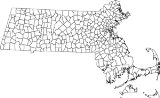
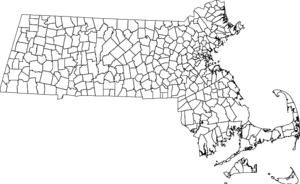
contains 351 municipal corporations, consisting of cities and towns. These 351 municipalities together encompass the entire territory of Massachusetts; there is no area that is outside the bounds of a municipality. Using usual American terminology, there is no "unincorporated" land in Massachusetts.
Of the 351 municipalities, the number that are cities and the number that are towns is a matter of some ambiguity. Depending on which source is consulted, anywhere from 39 to 53 are cities. The ambiguity is the result of questions around the legal status of municipalities that have since the 1970s, through home-rule petition, adopted corporate charters approved by the state legislature with forms of government that resemble city government and do not include elements traditionally associated with town government (especially, a board of selectmen and a town meeting). Of the fourteen communities that have done so, all but three call themselves a "town" in their municipal operations, and are usually referred to by residents as "towns", but the Massachusetts Secretary of the Commonwealth's Office considers all fourteen to be legally cities. Other sources within state government often refer to all fourteen municipalities as towns, however. The U.S. federal Census Bureau listed all as towns through the 1990 Census. For the 2000 Census, some were listed by the Federal government as towns and some as cities, a situation that continues in Census materials since 2000. Massachusetts appears to be the only New England state where this issue has arisen, though other New England states also have municipalities that have adopted what amounts to city forms of government but continue to call themselves "towns". In the other New England states, it does not appear that any need to officially label such municipalities as "cities" has been identified.
For purposes of determining the "largest town", "smallest city", in this article, only the 42 municipalities that title themselves as cities are recognized as cities. This includes the 39 cities that adopted city forms of government through pre-home rule procedures. The other 309 municipalities in the state are treated as towns below. The same classification is used for identifying Massachusetts cities on the List of New England towns page and its attendant pages with historical census population statistics.
For further information, see Massachusetts government#Form of government: city vs. town.
contains 39 incorporated towns and cities. Eight are cities and 31 are towns. These 39 municipalities together cover the entire state; there is no unincorporated territory.
contains 169 incorporated towns. Put into terms that are equivalent to the other New England states, 19 are cities and 150 are towns. (As discussed in the Cities section of Other types of municipalities in New England above, the relationship between towns and cities in Connecticut is different from the other New England states, at least on paper; thus, in the technical sense, all 169 of the above municipalities are really towns, with 19 overlaid by a coextensive city of the same name). Together, these 169 municipalities cover the entire state. There is no unincorporated territory, but, as in all New England
states, there are a fair number of unincorporated, named communities that lie within the incorporated territory of a municipality.
Connecticut is one of two New England states to have any type of incorporated general-purpose municipality below the town level, namely incorporated boroughs (Vermont has incorporated villages). There are nine remaining in the state. They were once more numerous. Many of those that remain are very small. Connecticut also has at least one remaining city (Groton
) that is within, but not coextensive with, its parent town
. A second non-coextensive city, Winsted
, still exists on paper, but its government has been consolidated with that of the town of Winchester
for many years, making it more of a special-purpose district than a true municipality. Winsted is no longer recognized by the Census Bureau as an incorporated place, although data is tabulated for a Census Designated Place whose area appears to be coextensive with that of the city.
contains 234 incorporated towns and cities. Thirteen are cities and 221 are towns. These 234 municipalities together cover the vast majority of, but not all of, the state's territory. There are some unincorporated areas in the sparsely populated northern region of the state. Most of the unincorporated areas are in Coos County
, the state's northernmost county. Carroll
and Grafton
counties also contain smaller amounts of unincorporated territory. This territory includes seven unincorporated townships and an assortment of gores, grants, purchases, and locations. The remaining seven counties in the state are entirely incorporated (Grafton County was also fully incorporated at one time, but lost that status when one of its towns disincorporated). Fewer than 250 of the state's residents live in unincorporated areas.
Vermont contains 246 incorporated towns and cities, which together cover nearly all of the state's territory. Nine are cities and 237 are towns. There are some unincorporated areas in the sparsely populated mountainous regions of the state. Most of the unincorporated areas are in Essex County
, in the northeastern part of the state. Bennington, Windham
and Chittenden
counties also contain smaller amounts of unincorporated territory. This territory includes five unincorporated townships and a handful of gores and grants. The remaining ten counties in the state are entirely incorporated (Bennington and Windham counties were also fully incorporated at one time, but lost that status when a town disincorporated). Fewer than 100 of the state's residents live in unincorporated areas.
Vermont is one of two New England states to have any type of incorporated general-purpose municipality below the town level, namely incorporated villages (Connecticut has incorporated boroughs). There are about 40 in the state. There were once nearly double that number. Most of those that remain are very small.
 Maine
Maine
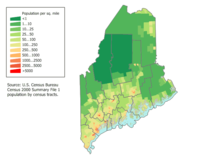
contains 488 organized municipalities of which 22 are incorporated as cities, 432 are incorporated as towns, and the remaining 34 are organized as plantations. These 488 organized municipalities together cover much of, but not all of, the state's territory. Of Maine's sixteen counties, only four are entirely incorporated. Four other counties are almost entirely incorporated, but include small amounts of unincorporated/unorganized territory (three of these four counties were entirely incorporated or organized at one time, but lost that status when a town disincorporated or a plantation surrendered its organization). The remaining eight counties contain significant amounts of unincorporated/unorganized territory. Most of these areas are in very sparsely populated regions, however. Only about 1.3% of the state's population lives in areas not part of a town, city, or plantation.
(Since the 2000 Census, two towns, Madrid and Centerville, have disincorporated. Thus, at the time of the 2000 Census, Maine had 22 cities, 434 towns, and 34 plantations, for a total of 490 organized municipalities.)
New England
New England is a region in the northeastern corner of the United States consisting of the six states of Maine, New Hampshire, Vermont, Massachusetts, Rhode Island, and Connecticut...
states. Without a direct counterpart in most other U.S. states, New England towns are conceptually similar to civil townships in other states, but are incorporated, possessing powers like cities
City
A city is a relatively large and permanent settlement. Although there is no agreement on how a city is distinguished from a town within general English language meanings, many cities have a particular administrative, legal, or historical status based on local law.For example, in the U.S...
in other states. New England towns are often governed by town meeting
Town meeting
A town meeting is a form of direct democratic rule, used primarily in portions of the United States since the 17th century, in which most or all the members of a community come together to legislate policy and budgets for local government....
. Virtually all corporate municipalities in New England are based on the town model; statutory forms based on the concept of a compact populated place
Place (United States Census Bureau)
The United States Census Bureau defines the term place as a concentration of population. The types of places defined by the Census Bureau are incorporated place, such as a city, town or village, and census designated place , which resembles a city, town or village but lacks its own government...
, which is prevalent elsewhere in the U.S., are uncommon. County government in New England states is typically weak, sometimes even non-existent; for example, Connecticut and Rhode Island retain counties only as geographic subdivisions that have no governmental authority, while Massachusetts
Massachusetts
The Commonwealth of Massachusetts is a state in the New England region of the northeastern United States of America. It is bordered by Rhode Island and Connecticut to the south, New York to the west, and Vermont and New Hampshire to the north; at its east lies the Atlantic Ocean. As of the 2010...
has abolished eight of fourteen county governments so far.
Characteristics of the New England town system
- Towns are laid out so that all land within the boundaries of a state is allocated to a town or other corporate municipality. Except in some very sparsely populated areas of the three northern New England states (primarily in the interior of MaineMaineMaine is a state in the New England region of the northeastern United States, bordered by the Atlantic Ocean to the east and south, New Hampshire to the west, and the Canadian provinces of Quebec to the northwest and New Brunswick to the northeast. Maine is both the northernmost and easternmost...
), the concept of unincorporated territory, even in rural areas, is unknown. With the exception of those very sparsely populated areas, all land in New England is within the boundaries of a town or other incorporated municipality. - Towns are municipal corporations, with their powers defined by a corporate charter, state statutes and the state constitution. Historically, the laws regarding their authority have been broadly construed, giving them significant autonomy in managing their own affairs. New England towns possess all the powers that a cityCityA city is a relatively large and permanent settlement. Although there is no agreement on how a city is distinguished from a town within general English language meanings, many cities have a particular administrative, legal, or historical status based on local law.For example, in the U.S...
in other states would typically have. - Traditionally, a town's legislative body is the open town meetingOpen town meetingAn open town meeting is a form of town meeting in which all registered voters of a town may vote . This form of government is typical of smaller municipalities in the New England region of the United States....
, which is a form of direct democratic ruleDirect democracyDirect democracy is a form of government in which people vote on policy initiatives directly, as opposed to a representative democracy in which people vote for representatives who then vote on policy initiatives. Direct democracy is classically termed "pure democracy"...
, with a board of selectmenBoard of selectmenThe board of selectmen is commonly the executive arm of the government of New England towns in the United States. The board typically consists of three or five members, with or without staggered terms.-History:...
possessing executive authority. Only two small Swiss LandsgemeindeLandsgemeindeThe Landsgemeinde or "cantonal assembly" is one of the oldest forms of direct democracy. The first historically documented assembly took place in 1294...
remain as similarly democratic as the small New England town. - A town almost always contains a built-up populated place (the "town center") with the same name as the town. Additional built-up places with different names are often found within towns, along with a mixture of extraneous urban and rural territory. There is no unincorporated territory between the towns; leaving a town means entering another town or other municipality. In most parts of New England, towns are irregular in shape and size and are not laid out on any type of grid (the leading exception is that much of the interior of Maine was originally laid out as surveyed townships). The town center often contains a town common, often used today as a small park.
- Since virtually all residents live within the boundaries of an incorporated municipality, residents receive most local services at the municipal level, and county government tends to be very weak. Differences among states do exist in the level of services provided at the municipal and county level, but generally most functions normally handled by county-level government in the rest of the United States are handled by town-level government in New England. In ConnecticutConnecticutConnecticut is a state in the New England region of the northeastern United States. It is bordered by Rhode Island to the east, Massachusetts to the north, and the state of New York to the west and the south .Connecticut is named for the Connecticut River, the major U.S. river that approximately...
, Rhode IslandRhode IslandThe state of Rhode Island and Providence Plantations, more commonly referred to as Rhode Island , is a state in the New England region of the United States. It is the smallest U.S. state by area...
, and parts of MassachusettsMassachusettsThe Commonwealth of Massachusetts is a state in the New England region of the northeastern United States of America. It is bordered by Rhode Island and Connecticut to the south, New York to the west, and Vermont and New Hampshire to the north; at its east lies the Atlantic Ocean. As of the 2010...
, county government has been completely abolished. In other areas, some counties provide judicial and other limited administrative services. - Residents usually identify with their town for purposes of civic identity, thinking of the town in its entirety as a single, coherent community. There are some cases where residents identify more strongly with villages or sections of a town than with the town itself, but this is the exception, not the rule.
- More than 90% of the municipalities in the six New England states are towns. Other forms of municipalities that exist—most notably, cities—are generally based on the town concept as well (most cities in New England are merely former towns that grew to have too many inhabitants for a town meeting to be an effective legislative body). Municipality forms based on the concept of a compact populated place, such as a villageVillage (Vermont)In the U.S. state of Vermont, villages are named communities located within the boundaries of an incorporated town. Villages may be incorporated or unincorporated....
or boroughBorough (Connecticut)In the U.S. state of Connecticut, a borough is an incorporated section of a town. Borough governments are not autonomous and are subordinate to the government of the town to which they belong...
, are uncommon. In areas of New England where such forms do exist, they remain part of the parent town and do not have all of the corporate powers and authority of an independent municipality.
Historical development
Towns date back to the time of the earliest European colonial settlement of New England, and pre-date the development of counties in the region. Throughout the 17th, 18th and 19th centuries, as areas were settled, they would be organized into towns. Town boundaries were not usually laid out on any kind of regular grid, but were drawn up to reflect local settlement and transportation patterns or natural features. In early colonial times, recognition of towns was very informal, sometimes connected to local church divisions. By 1700, colonial governments had become more involved in the official establishment of new towns. Towns were typically governed by a town meetingTown meeting
A town meeting is a form of direct democratic rule, used primarily in portions of the United States since the 17th century, in which most or all the members of a community come together to legislate policy and budgets for local government....
form of government, as many still are today. Towns originally were the only form of incorporated municipality in New England. The city form of government was not introduced until much later. Boston, for instance, widely regarded as the unofficial capital of New England, was a town for the first two centuries of its existence.
The entire land areas of Connecticut
Connecticut
Connecticut is a state in the New England region of the northeastern United States. It is bordered by Rhode Island to the east, Massachusetts to the north, and the state of New York to the west and the south .Connecticut is named for the Connecticut River, the major U.S. river that approximately...
and Rhode Island
Rhode Island
The state of Rhode Island and Providence Plantations, more commonly referred to as Rhode Island , is a state in the New England region of the United States. It is the smallest U.S. state by area...
had been divided into towns by the late 18th century, and Massachusetts
Massachusetts
The Commonwealth of Massachusetts is a state in the New England region of the northeastern United States of America. It is bordered by Rhode Island and Connecticut to the south, New York to the west, and Vermont and New Hampshire to the north; at its east lies the Atlantic Ocean. As of the 2010...
was almost completely covered early in the 19th century. By 1850, the only New England state that still had large unincorporated areas left was Maine
Maine
Maine is a state in the New England region of the northeastern United States, bordered by the Atlantic Ocean to the east and south, New Hampshire to the west, and the Canadian provinces of Quebec to the northwest and New Brunswick to the northeast. Maine is both the northernmost and easternmost...
, and by the end of the 19th century most areas in Maine that could realistically be settled had been organized into towns.
Early town organization in Vermont
Vermont
Vermont is a state in the New England region of the northeastern United States of America. The state ranks 43rd in land area, , and 45th in total area. Its population according to the 2010 census, 630,337, is the second smallest in the country, larger only than Wyoming. It is the only New England...
and much of New Hampshire
New Hampshire
New Hampshire is a state in the New England region of the northeastern United States of America. The state was named after the southern English county of Hampshire. It is bordered by Massachusetts to the south, Vermont to the west, Maine and the Atlantic Ocean to the east, and the Canadian...
proceeded in a somewhat different manner from that of the other New England states. In these areas, towns were often “chartered” long before any settlers moved into a particular area. This was very common in the mid to late 18th century (towns in southeastern New Hampshire such as Exeter
Exeter, New Hampshire
Exeter is a town in Rockingham County, New Hampshire, United States. The town's population was 14,306 at the 2010 census. Exeter was the county seat until 1997, when county offices were moved to neighboring Brentwood...
whose existence predates that period were not part of this process, however). Once there were enough residents in a town to formally organize a town government, no further action was necessary to incorporate. This practice can lead to inconsistencies in the dates of incorporation for towns in this region. Dates given in reference sources sometime reflect the date the town was chartered – which may have been long before it was even settled – not the date its town government actually became active. In other parts of New England, it was not unheard of for “future towns” to be laid out along these lines, but such areas would not be formally incorporated as towns until they were sufficiently settled to organize a town government.
A typical town in the northern three states was laid out in a 6 by square. Each contained 36 sections, 1 miles (1.6 km) squares or 640 acres (259 ha). One section was reserved for the support of public schools. This was copied when the Continental Congress laid out Ohio in 1785-87.
Many early towns covered very large amounts of land, and once areas had become settled, new towns were sometimes formed by breaking areas away from the original existing towns. This was an especially common practice during the 18th century and early 19th century. More heavily populated areas were often subdivided on multiple occasions. As a result, towns and cities in such areas are often smaller in terms of land area than an average town in a rural area. Formation of new towns in this manner slowed in the later part of the 19th century and early part of the 20th century, however, and is very rarely seen today; in fact, boundary changes of any type are fairly rare.
Other types of municipalities in New England
Although towns are the basic building block of the New England municipality system, several other types of municipalities also exist. Every New England state has citiesCity
A city is a relatively large and permanent settlement. Although there is no agreement on how a city is distinguished from a town within general English language meanings, many cities have a particular administrative, legal, or historical status based on local law.For example, in the U.S...
. In addition, Maine also has a unique type of entity called a plantation
Plantation (Maine)
In the U.S. state of Maine, a plantation is a type of minor civil division falling between township and town. The term, as used in this sense in modern times, appears to be exclusive to Maine....
. Beneath the town level, Connecticut has incorporated boroughs
Borough (Connecticut)
In the U.S. state of Connecticut, a borough is an incorporated section of a town. Borough governments are not autonomous and are subordinate to the government of the town to which they belong...
, and Vermont has incorporated villages
Village (Vermont)
In the U.S. state of Vermont, villages are named communities located within the boundaries of an incorporated town. Villages may be incorporated or unincorporated....
.
Cities
In addition to towns, every New England state also has incorporated cities, which differ from towns only in their form of government, and even that distinction has become somewhat blurred in recent decades. Most cities are former towns that changed to a city form of government because they grew too large to be administered by a town meeting. Cities are typically governed by a mayorMayor
In many countries, a Mayor is the highest ranking officer in the municipal government of a town or a large urban city....
(and/or city manager
City manager
A city manager is an official appointed as the administrative manager of a city, in a council-manager form of city government. Local officials serving in this position are sometimes referred to as the chief executive officer or chief administrative officer in some municipalities...
) and city council
City council
A city council or town council is the legislative body that governs a city, town, municipality or local government area.-Australia & NZ:Because of the differences in legislation between the States, the exact definition of a City Council varies...
or other similar arrangement. Cities and towns are regarded as equivalents under both state law and the attitudes of local residents. In common speech, people often generically refer to communities of either type as “towns”, drawing no distinction between the two.
The presence of incorporated boroughs in Connecticut and incorporated villages in Vermont has influenced the evolution of cities in those states. In Connecticut in particular, the historical development of cities was quite different from in the other New England states, and at least technically, the relationship between towns and cities is even today different from elsewhere in New England. Just as boroughs in Connecticut overlay towns, so do cities; for example, while Hartford
Hartford, Connecticut
Hartford is the capital of the U.S. state of Connecticut. The seat of Hartford County until Connecticut disbanded county government in 1960, it is the second most populous city on New England's largest river, the Connecticut River. As of the 2010 Census, Hartford's population was 124,775, making...
is commonly thought of as a city, there is technically both a coextensive “City of Hartford” and “Town of Hartford”, the latter essentially existing only on paper. In practice, though, most cities in Connecticut today do not function any differently from their counterparts elsewhere in New England. See the section below on boroughs and villages for more background on this topic.
There are far fewer cities in New England than there are towns, although cities are more common in heavily built-up areas, and most of the largest municipalities in the region are titled as cities. Across New England as a whole, only about 5% of all incorporated municipalities are cities. Cities are more common in the three southern New England states, which are much more densely populated, than they are in the three northern New England states. In early colonial times, all incorporated municipalities in New England were towns; there were no cities. Springfield, Massachusetts
Springfield, Massachusetts
Springfield is the most populous city in Western New England, and the seat of Hampden County, Massachusetts, United States. Springfield sits on the eastern bank of the Connecticut River near its confluence with three rivers; the western Westfield River, the eastern Chicopee River, and the eastern...
, for instance, was settled as a "plantation" (in colonial Massachusetts, the term was synonymous with town) as early as 1636, but the city of Springfield was not established until 1852.
The oldest cities in New England date to the last few decades of the 18th century, (e.g. New Haven, Connecticut
New Haven, Connecticut
New Haven is the second-largest city in Connecticut and the sixth-largest in New England. According to the 2010 Census, New Haven's population increased by 5.0% between 2000 and 2010, a rate higher than that of the State of Connecticut, and higher than that of the state's five largest cities, and...
was chartered as a city in 1784.) In New England, cities were not widespread until well into the 19th century. New Hampshire did not have any cities until the 1840s, and for many years prior to the 1860s Vermont had just one city. Even Massachusetts, historically New England's most populous state, did not have any cities until 1822, when Boston was granted a city form of government by the state legislature.
Population is not a determination in what makes a city or a town in New England and there are many examples of towns that have larger populations than nearby cities. The practical threshold to become a city seems to be higher in the three southern New England states than in the three northern New England states. In Massachusetts, Connecticut and Rhode Island, every city has at least 10,000 people, and there are only a few that have fewer than 20,000. In Maine, New Hampshire and Vermont, there are a number of cities with fewer than 10,000 people, even a couple with fewer than 5,000.
Over time, some of the distinctions between a town and a city have become blurred. Since the early 20th century, towns have been allowed to modify the town meeting form of government in various ways (e.g., representative town meeting, adding a town manager). In recent decades, some towns have adopted what effectively amount to city forms of government, although they still refer to themselves as towns. As a practical matter, one municipality that calls itself a town and another that calls itself a city may have exactly the same governmental structure. With these changes in town government, a reluctance to adopt the title of city seems to have developed, and few towns have officially done so since the early 20th century. In Massachusetts, 14 municipalities (Agawam
Agawam, Massachusetts
The Town of Agawam is a city in Hampden County, Massachusetts, United States. The population was 28,438 at the 2010 census. Agawam sits on the western side of the Connecticut River, directly across from the City of Springfield, Massachusetts...
, Amesbury
Amesbury, Massachusetts
Amesbury is a city in Essex County, Massachusetts, United States. Though it officially became a city in 1996, its formal name remains "The Town of Amesbury." In 1890, 9798 people lived in Amesbury; in 1900, 9473; in 1910, 9894; in 1920, 10,036; and in 1940, 10,862. The population was 16,283 at...
, Barnstable
Barnstable, Massachusetts
Barnstable is a city, referred to as the Town of Barnstable, in the U.S. state of Massachusetts and the county seat of Barnstable County. Barnstable is the largest community, both in land area and population, on Cape Cod. The town contains seven villages within its boundaries...
, Braintree
Braintree, Massachusetts
The Town of Braintree is a suburban city in Norfolk County, Massachusetts, United States. Although officially known as a town, Braintree adopted a municipal charter, effective 2008, with a mayor-council form of government and is considered a city under Massachusetts law. The population was 35,744...
, Easthampton
Easthampton, Massachusetts
Easthampton is the second largest city in Hampshire County, Massachusetts, United States. The town is on the southeastern edge of an area called the Pioneer Valley near the five colleges in the college towns of Northampton and Amherst, MA...
, Franklin
Franklin, Massachusetts
The Town of Franklin is a city in Norfolk County, Massachusetts, United States. The population was 31,635 at the 2010 census.-History:Franklin was first settled by Europeans in 1660 and was officially incorporated during the American Revolution. The town was formed from the western part of the town...
, Greenfield
Greenfield, Massachusetts
Greenfield is a city in Franklin County, Massachusetts, United States. The population was 17,456 at the 2010 census. It is the county seat of Franklin County. Greenfield is home to Greenfield Community College, the Pioneer Valley Symphony Orchestra, and the Franklin County Fair...
, Methuen
Methuen, Massachusetts
Methuen is a city in Essex County, Massachusetts, United States. The population was 43,789 at the 2000 census.-History:Methuen was first settled in 1642 and was officially incorporated in 1726; it is named for the British diplomat Sir Paul Methuen. Methuen was originally part of Haverhill,...
, Palmer
Palmer, Massachusetts
The Town of Palmer is a city in Hampden County, Massachusetts, United States. The population was 12,140 as of the 2000 census. It is part of the Springfield, Massachusetts Metropolitan Statistical Area...
, Randolph
Randolph, Massachusetts
The Town of Randolph is a city in Norfolk County, Massachusetts, United States. As of the 2010 census, the town population was 32,112. Randolph adopted a new charter effective January 2010 providing for a council-manager form of government instead of the traditional town meeting...
, Southbridge
Southbridge, Massachusetts
The Town of Southbridge is a city in Worcester County, Massachusetts, United States. The population was 16,719 at the 2010 census.-History:...
, Watertown
Watertown, Massachusetts
The Town of Watertown is a city in Middlesex County, Massachusetts, United States. The population was 31,915 at the 2010 census.- History :Archeological evidence suggests that Watertown was inhabited for thousands of years before the arrival of settlers from England...
, West Springfield
West Springfield, Massachusetts
The Town of West Springfield is a city in Hampden County, Massachusetts, United States. It is part of the Springfield, Massachusetts Metropolitan Statistical Area. The population was 28,391 at the 2010 census...
and Weymouth
Weymouth, Massachusetts
The Town of Weymouth is a city in Norfolk County, Massachusetts, United States. As of the 2010 census, Weymouth had a total population of 53,743. Despite its city status, it is formally known as the Town of Weymouth...
) have adopted Mayor-Council or Council-Manager forms of government in their home rule charters, but nevertheless continue to call themselves "towns," although they are legally considered to be cities by the Secretary of the Commonwealth's office and are sometimes referred to in legislation and other legal documents as "the city known as the Town of ..." To an extent, whether or not a community is labeled a city is related more to how large it was relative to the general population a century ago than to how large its population is today.
Plantations
In addition to towns and cities, Maine has a third type of town-like municipality not found in any other New England state, the plantation. A plantation is, in essence, a town-like community that does not have enough population to require full town government or services. Plantations are organized at the county level, and are typically found in sparsely populated areas. There is no bright-line population divider between a town and a plantation, but no plantation currently has any more than about 300 residents. Plantations are considered to be “organized” but not “incorporated”. Not all counties have them; in some southern counties, all territory is sufficiently populated to be covered by a town or a city.In colonial times, Massachusetts also used the term “plantation” for a community in a pre-town stage of development (Maine originally got the term from Massachusetts, as Maine was part of Massachusetts until 1820, when it became a state via the Missouri Compromise
Missouri Compromise
The Missouri Compromise was an agreement passed in 1820 between the pro-slavery and anti-slavery factions in the United States Congress, involving primarily the regulation of slavery in the western territories. It prohibited slavery in the former Louisiana Territory north of the parallel 36°30'...
). The term plantation had not been much used in Massachusetts since the 18th century. Massachusetts also once had “districts”, which served much the same purpose. They were considered to be incorporated, but lacked the full privileges of a town. Maine and Rhode Island are also known to have made limited use of the district concept. Districts have not been at all common since the first half of the 19th century, and there have not been any districts anywhere in New England in over a century. Maine is the only New England state that currently has a significant amount of territory that is not sufficiently populated to support town governments, thus the only New England state that still has a need for the plantation type of municipality.
For a historical example in New Hampshire, see Plantation number four.
Boroughs and villages
Perhaps because the towns themselves are such strong entities, most areas of New England never developed municipal forms based on the compact populated place concept. This contrasts with states with civil townships, which typically have extensive networks of villages or boroughs that carve out or overlay the townships.Two of the New England states do have general-purpose municipalities of this type, however, to at least a limited extent. Connecticut has incorporated borough
Borough (Connecticut)
In the U.S. state of Connecticut, a borough is an incorporated section of a town. Borough governments are not autonomous and are subordinate to the government of the town to which they belong...
s, and Vermont has incorporated villages
Village (Vermont)
In the U.S. state of Vermont, villages are named communities located within the boundaries of an incorporated town. Villages may be incorporated or unincorporated....
. Such areas remain a part of their parent town, but assume some responsibilities for municipal services within their boundaries. In both states, they are typically regarded as less important than towns, and both seem to be in decline as institutions. In recent decades, many boroughs and villages have disincorporated, reverting to full town control.
The term “village” is sometimes used in New England to describe a distinct, built-up place within a town or city. This may be a town center, which bears the same name as the town or city (almost every town has such a place), or a name related to that of the town, or a completely unrelated name. The town of Barnstable, Massachusetts
Barnstable, Massachusetts
Barnstable is a city, referred to as the Town of Barnstable, in the U.S. state of Massachusetts and the county seat of Barnstable County. Barnstable is the largest community, both in land area and population, on Cape Cod. The town contains seven villages within its boundaries...
, for example, includes “villages” called Barnstable
Barnstable (village), Massachusetts
Barnstable is the name of one of the seven villages within the Town of Barnstable, Massachusetts. The Village of Barnstable is located on the north side of the town, centered along "Old King's Highway" , and houses the County Complex of Barnstable County, a small business district, a working...
, West Barnstable
West Barnstable, Massachusetts
West Barnstable is a village or section in the northwest part of the City of Barnstable, Massachusetts. Once devoted to agricultural pursuits, West Barnstable now is largely residential.-Natural features:...
, and Hyannis
Hyannis, Massachusetts
Hyannis is the largest of seven villages in Barnstable, Massachusetts. Also it is the commercial and transportation hub of Cape Cod and was designated an urban area as a result of the 1990 census. Because of this, many refer to Hyannis as the "Capital of the Cape"...
. Except for the incorporated villages in Vermont, these “villages” are not incorporated municipalities and should not be understood as such. Towns do sometimes grant a certain measure of recognition to such areas, using highway signs that identify them as "villages", for example. These informal "villages" also sometimes correspond to underlying special-purpose districts such as fire or water districts, which are separately incorporated quasi-municipal entities that provide specific services within a part of a town (in Maine and New Hampshire, the term "village corporation" is used for a type of special-purpose district). Many villages also are recognized as places by the United States Postal Service
United States Postal Service
The United States Postal Service is an independent agency of the United States government responsible for providing postal service in the United States...
(some villages have their own post offices, with their names used in mailing addresses) or the United States Census Bureau
United States Census Bureau
The United States Census Bureau is the government agency that is responsible for the United States Census. It also gathers other national demographic and economic data...
(which recognizes some villages as census-designated place
Census-designated place
A census-designated place is a concentration of population identified by the United States Census Bureau for statistical purposes. CDPs are delineated for each decennial census as the statistical counterparts of incorporated places such as cities, towns and villages...
s and tabulates census data for them). For an example of the latter, see West Kennebunk, Maine
West Kennebunk, Maine
West Kennebunk, often referred to as "West K" by locals, is a census-designated place in the town of Kennebunk in York County, Maine, United States. The population was 809 at the 2000 census...
, which is a constituent part of the town of Kennebunk, Maine
Kennebunk, Maine
Kennebunk is a town in York County, Maine, United States. The population was 1,075 people at the 2000 census. Including Kennebunkport , the population totals 14,196 people...
. But they have no existence as general-purpose municipalities separate from the town (if they even have any legal existence at all), and are usually regarded by local residents as a part of the town in which they are located, less important than the whole.
It is possible for a Connecticut borough or Vermont village to become a city. In Connecticut, cities overlay towns just as boroughs do, and, just like a borough, a city can cover only a portion of a town rather than being coextensive with the town. This is rare today—only one or two examples remain—but it was more common in the past. Cities actually developed earlier in Connecticut than in the other New England states, and were originally based on the borough concept. At one time, all cities were non-coextensive; the practice of making cities coextensive with their towns was a later adaptation intended to mimic the city concept that had emerged in the other New England states. Over time, many non-coextensive cities have expanded to become coextensive with their parent town. As with boroughs, many have also disincorporated and reverted to full town control. These two trends have combined to make non-coextensive cities very rare in recent times.
In Vermont, if a village becomes a city, it does not continue to overlay its parent town, but breaks away and becomes a completely separate municipality. Most cities in Vermont today are actually former villages rather than former towns, and are much smaller than a typical town in terms of land area. The above process has created several instances where there are adjacent towns and cities with the same name. In all cases, the city was originally the “town center” of the town, but later incorporated as a city and became a separate municipality.
Unorganized territory
All three of the northern New England states (Vermont, New Hampshire and Maine) contain some areas that are unincorporatedUnincorporated area
In law, an unincorporated area is a region of land that is not a part of any municipality.To "incorporate" in this context means to form a municipal corporation, a city, town, or village with its own government. An unincorporated community is usually not subject to or taxed by a municipal government...
and unorganized, not part of any town, city or plantation. Maine has significantly more such area than the other two states. While it should be noted that these areas do exist, their importance should not be overstated. They are certainly the exception rather than the rule in the New England system, and the number of New England residents who live in them is extremely small in comparison to those who live in towns and cities, even in Maine. Most such areas are located in very sparsely populated regions. Much of the barely inhabited interior of Maine is unorganized, for example.
The majority of the unincorporated areas in New Hampshire are in Coos County
Coos County, New Hampshire
-National protected areas:*Umbagog National Wildlife Refuge *Silvio O. Conte National Fish and Wildlife Refuge *White Mountain National Forest -Demographics:...
, and the majority of the unincorporated areas in Vermont are in Essex County
Essex County, Vermont
Essex County is the county located in the northeastern part of the U.S. state of Vermont. As of 2010, the population was 6,306, making it the least-populous county in both Vermont and New England...
. Two additional counties in New Hampshire and three additional counties in Vermont contain smaller amounts of unincorporated territory. In Maine, eight of the state’s sixteen counties contain significant amounts of unorganized territory (in essence, those counties in the northern and interior parts of the state). Four other counties contain smaller amounts.
Most of these areas have no local government at all; indeed, some have no permanent population whatsoever. Some areas have a very rudimentary organization that does not rise to the level of an organized general-purpose municipal government (e.g., a town clerk’s office exists for the purpose of conducting elections for state or federal offices). In general, unorganized areas fall into one of the three categories below.
Gores and similar entities
During the 17th, 18th and 19th centuries, as town boundaries were being drawn up, small areas would sometimes be left over, not included in any town. Typically smaller than a normal-sized town, these areas were known by a variety of names, including gores, grants, locations, purchases, surpluses, and strips. Sometimes these areas were not included in any town due to survey errors (which is the technical meaning of the term “goreGore (surveying)
A gore , in parts of the northeastern United States , is an unincorporated area of a county that is not part of any town and has limited self-government ....
”). Sometimes they represent small areas that were left over when a particular region was carved into towns, not large enough to be a town on their own. Some appear to have simply been granted outside the usual town structure, sometimes in areas where it was probably not contemplated that towns would ever develop. Over time, those located in more populated areas were, in general, annexed to neighboring towns, or incorporated as towns in their own right. No such areas exist today in Massachusetts, Connecticut or Rhode Island, but some remain in New Hampshire, Vermont and Maine.
- New Hampshire: Coos County contains a total of seventeen grants, purchases and locations. Together, these cover a significant amount of land area, but had only 61 residents as of the 2000 Census (44 of whom lived in a single entity, Wentworth's LocationWentworth's Location, New HampshireWentworth's Location is a township in Coos County, New Hampshire, United States. The population was 33 at the 2010 census. It is part of the Berlin, NH–VT Micropolitan Statistical Area....
). The only remaining unincorporated gore-like entity outside of Coos County is Hale’s LocationHale's Location, New HampshireHale's Location is a township in Carroll County, New Hampshire, United States. The population was 120 at the 2010 census. In New Hampshire, locations, grants, townships , and purchases are unincorporated portions of a county which are not part of any town and have limited self-government...
, in neighboring Carroll CountyCarroll County, New Hampshire-Demographics:As of the census of 2000, there were 43,666 people, 18,351 households, and 12,313 families residing in the county. The population density was 18/km² . There were 34,750 housing units at an average density of 14/km²...
, a 2.5 mi2 tract, which has reported population in only three censuses since 1900. (Note that Hart's LocationHart's Location, New HampshireHart's Location is a town in Carroll County, New Hampshire, United States. Since 1948, the town has been one of the first places to declare its results for the New Hampshire Presidential primary and U.S. Presidential elections....
, also in Carroll County, was incorporated as a town in 2001, although it continues to carry the word “location" in its name. Wentworth's Location was similarly incorporated as a town at one time.) - Vermont: Essex County contains three gores and grants. Together, they cover about 25 mi2, and reported 10 residents in the 2000 Census. The only remaining unincorporated gore-like entity outside of Essex County is Buel's GoreBuels Gore, VermontBuel's Gore is a gore in Chittenden County, Vermont, United States. The population was 12 at the 2000 census. In Vermont, gores and grants are unincorporated portions of a county which are not part of any town and have limited self-government .-Geography:According to the United States Census...
, in Chittenden CountyChittenden County, VermontChittenden County is a county located in the U.S. state of Vermont. As of 2010, the population was 156,545. Its shire town is Burlington. Chittenden is the most populous county in the state, with more than twice as many residents as Vermont's second-most populous county, Rutland.Chittenden County...
, a 5 mi2 tract, which reported 12 residents in 2000. Up until the 1960s or 1970s, Franklin CountyFranklin County, VermontFranklin County is a county located in the U.S. state of Vermont. It is part of the Burlington-South Burlington, VT Metropolitan Statistical Area. As of 2010, the population was 47,746. Its shire town is the City of St. Albans.-Geography:...
contained a gore as well, which was ultimately eliminated by dividing it between two neighboring towns. - Maine: the interior of the state contains a number of entities of this type. There are a few remaining in more populated areas of the state as well. Examples include Hibberts GoreHibberts Gore, MaineHibberts Gore is a gore in Lincoln County, Maine, United States. As of the 2010 census, one person lived there. Ignored by surveyors who mapped Maine, it remained unincorporated as the state was demarcated.- Geography :...
, in Lincoln CountyLincoln County, MaineLincoln County is a county located in the U.S. state of Maine. As of 2010, the population was 34,457. Its county seat is Wiscasset. It was founded in 1760 and named after the English city Lincoln. At its founding, it accounted for three-fifths of the State's land, and stretched east to Nova...
, and Batchelders GrantSouth Oxford, MaineSouth Oxford is an unorganized territory located in Oxford County, Maine, United States. The population was 515 at the 2000 census. The unorganized territory encompasses the areas designated under state law as Albany Township, Mason Township, and Batchelder's Grant. Albany and Mason were formerly...
, in southern Oxford CountyOxford County, MaineOxford County is a county located in the U.S. state of Maine with a population of 57,833 as of the 2010 U.S. census. Its county seat is Paris.Part of Oxford County is included in the Lewiston-Auburn, Maine, metropolitan New England City and Town Area while a different part of Oxford County is...
.
Unorganized townships
All three of the northern New England states contain some town-sized unorganized entities, referred to as "unorganized townships" (sometimes, just "townships") or "unorganized towns". Most of these are areas that were drawn up on maps in the 18th and 19th centuries as what might be termed “future towns”, but never saw enough settlement to actually commence operation of a formal town government.- New Hampshire: Coös CountyCoos County, New Hampshire-National protected areas:*Umbagog National Wildlife Refuge *Silvio O. Conte National Fish and Wildlife Refuge *White Mountain National Forest -Demographics:...
contains six unorganized townships that do not appear to have ever been actively incorporated. Their collective population in the 2000 Census was 114, most of whom lived in one of two townships (DixvilleDixville, New HampshireDixville is a township in Coos County, New Hampshire, United States. In New Hampshire, locations, grants, townships , and purchases are unincorporated portions of a county which are not part of any town and have limited self-government .The population was 12 at the 2010 census...
and MillsfieldMillsfield, New HampshireMillsfield is a township in Coos County, New Hampshire, United States. It is part of the Berlin, NH–VT Micropolitan Statistical Area. The population was 23 at the 2010 census....
). There are no other unorganized townships in the state that have never been incorporated. - Vermont: Essex CountyEssex County, VermontEssex County is the county located in the northeastern part of the U.S. state of Vermont. As of 2010, the population was 6,306, making it the least-populous county in both Vermont and New England...
contains three unorganized townships that do not appear to have ever been actively incorporated. Their collective population in the 2000 Census was 41. There are no other unorganized townships in the state that have never been incorporated. - Maine: the interior of Maine contains hundreds of unorganized townships, most of which have never been incorporated or organized. Much of the interior of Maine is divided into surveyed townships that are identified only by letters and numbers that indicate their position on a grid. These were probably never seriously intended to ever become towns.
Disincorporated towns
All three of the northern New England states also include at least one unorganized township that was once a town, but has disincorporated and reverted to unorganized territory, in general, due to population loss. Maine also has some unorganized townships that were once organized as plantations.- New Hampshire: The town of LivermoreLivermore, New HampshireLivermore is an unincorporated civil township in Grafton County, New Hampshire, United States. It was briefly inhabited as a logging town in the late 19th and early 20th centuries. The site of the logging town is about east of Lincoln on NH Route 112...
, located in a mountainous area of Grafton CountyGrafton County, New HampshireGrafton County is a county located in the U.S. state of New Hampshire. As of the 2010 census, the population was 89,118. Its county seat is North Haverhill, which is a village within the town of Haverhill. Until 1972, the county courthouse and other offices were located in downtown Woodsville, a...
, disincorporated in 1951. Livermore reported no population in its final census as an incorporated town (1950), and has reported no more than three residents in any census since then. Most of its territory is now part of White Mountain National ForestWhite Mountain National ForestThe White Mountain National Forest is a federally-managed forest contained within the White Mountains in the northeastern United States. It was established in 1918 as a result of the Weeks Act of 1911; federal acquisition of land had already begun in 1914. It has a total area of...
. Since it was once incorporated as a town, Wentworth’s Location could also be put into this category as well. Wentworth’s Location disincorporated in 1966; its population in the 1970 Census was 37. - Vermont: The towns of GlastenburyGlastenbury, VermontGlastenbury is a town in Bennington County, Vermont, United States. The town was unincorporated by an act of the state legislature in 1937, and is now essentially a ghost town. The population was eight at the 2010 census. Along with Somerset, Glastenbury is one of two Vermont towns where the...
and SomersetSomerset, VermontSomerset is a town in Windham County, Vermont, United States. As of the 2000 census, the town had a total population of 5, and is one of only a handful of places in the United States with a population of five people. Somerset is one of five unincorporated towns in Vermont. The town disincorporated...
, located in the Green MountainsGreen MountainsThe Green Mountains are a mountain range in the U.S. state of Vermont. The range extends approximately .-Peaks:The most notable mountains in the range include:*Mount Mansfield, , the highest point in Vermont*Killington Peak, *Mount Ellen,...
on opposite sides of the Bennington-Windham County line, disincorporated in 1937. In the 1940 Census, Glastenbury reported five residents, Somerset four. In only one census since then has the population of either reached double digits. - Maine: Dozens of towns and plantations have surrendered their municipal organization over the years and reverted to unorganized territory. An especially large number of municipal dissolutions took place between 1935 and 1945, but some have also occurred before and after that time period. Recent town disincorporations include CentervilleCenterville, MaineCenterville is a former town in Washington County, Maine, in the United States. As of the 2000 census, the town population was 26.As of 2003, the town meeting voted to dissolve the town government and return it to unincorporated territory; the disincorporation was effective as of July 1, 2004...
(2004), MadridMadrid, MaineMadrid is a former town, now a part of the unorganized territory of East Central Franklin, in Franklin County, Maine, United States. The population was 173 at the 2000 census.-History:...
(2000) and Greenfield (1993). The most recent plantations to surrender their organization were Prentiss PlantationPrentiss, MainePrentiss is an unorganized territory in Penobscot County, Maine, United States. The township was named for Henry Prentiss, an early landowner...
and E Plantation, both in 1990.
Maine has significantly more unorganized territory than Vermont or New Hampshire. Fewer than 100 Vermont residents and fewer than 250 New Hampshire residents live in unorganized areas. In Maine, by contrast, about 10,000 residents live in unorganized areas. As a result, Maine has developed more of an infrastructure for administration of unincorporated and unorganized areas than the other New England states. The existence of this fallback probably explains why Maine has had significantly more towns disincorporated over the years than any other New England state. There have been numerous instances of towns in Maine disincorporating despite populations that numbered in the hundreds. While these were not large communities, they were large enough to realistically operate a town government if they wanted to, but simply elected not to. In Vermont and New Hampshire, disincorporation has, in general, not been brought up for discussion unless a town’s population has approached single digits.
Coastal waters
In general, coastal waters in the New England states are administered directly by either state or federal agencies and are not part of any town. Several towns, however, have chosen to include all or part of their corresponding coastal waters in their territory. Coastal waters include man-made structures built within them. In Connecticut, for example, an artificial, uninhabited island in Long Island SoundLong Island Sound
Long Island Sound is an estuary of the Atlantic Ocean, located in the United States between Connecticut to the north and Long Island, New York to the south. The mouth of the Connecticut River at Old Saybrook, Connecticut, empties into the sound. On its western end the sound is bounded by the Bronx...
at the boundary with New York State, housing the Stratford Shoal Light
Stratford Shoal Light
Stratford Shoal Light, officially Stratford Shoal Light, is a lighthouse on a shoal in the middle of Long Island Sound approximately half way between Port Jefferson, New York and Bridgeport, Connecticut.-Location:...
, is not part of any town and is administered directly by the United States Coast Guard
United States Coast Guard
The United States Coast Guard is a branch of the United States Armed Forces and one of the seven U.S. uniformed services. The Coast Guard is a maritime, military, multi-mission service unique among the military branches for having a maritime law enforcement mission and a federal regulatory agency...
. In general, inhabited minor off-shore islands are administered as part of a nearby town, and, in some cases, are their own independent towns.
Census treatment of the New England town system
Towns
Unlike municipalities in most other states, the United States Census BureauUnited States Census Bureau
The United States Census Bureau is the government agency that is responsible for the United States Census. It also gathers other national demographic and economic data...
does not classify New England towns as "incorporated places". They are instead classified as "minor civil division
Minor civil division
Minor civil division is a term used by the United States Census Bureau to designate the primary governmental and/or administrative divisions of a county, such as a civil township, precinct, or magisterial district...
s" (MCDs), the same category into which civil townships fall. The Census Bureau classifies New England towns in this manner because they are conceptually similar to civil townships from a geographic standpoint, typically exhibiting like population-distribution patterns. Like civil townships, but unlike most incorporated municipalities in other states, New England towns do not usually represent a single compact populated place. Plantations in Maine are similarly classified as MCDs.
That New England towns serve, in essence, the same function as incorporated places in other states, but are not treated as incorporated places by the Census Bureau, can be a source of confusion. The Census classifications should not be understood to imply that New England towns are not incorporated, or necessarily serve a similar purpose to MCDs in other states in terms of governmental function or civic-identity importance. New England towns are classified as MCDs not because they are not "incorporated" but because, in Census terms, they are not "places".
New England metropolitan area
Metropolitan area
The term metropolitan area refers to a region consisting of a densely populated urban core and its less-populated surrounding territories, sharing industry, infrastructure, and housing. A metropolitan area usually encompasses multiple jurisdictions and municipalities: neighborhoods, townships,...
s are grouped by towns, while in other regions they are grouped by counties.
Cities
Even though the Census Bureau does not treat New England towns as "incorporated places", it does classify cities in New England as such. The rationale behind this is that cities are likely to be more thoroughly built-up and therefore more readily comparable to cities in other states than towns are. Boroughs in Connecticut and incorporated villages in Vermont are also treated as incorporated places.That New England states, in general, regard cities and towns on equal footing, yet they are handled in two different ways by the Census Bureau, can be another source of confusion. The Census classifications should not be understood to imply that cities are incorporated but towns are not, or that cities and towns represent two fundamentally different types of entities. Note that the Census classifies New England municipalities strictly based on whether they are towns or cities, with no regard to the actual population-distribution pattern in a particular municipality. All municipalities titled as cities are classified as incorporated places, even if their population-distribution pattern is no different from that of a typical town; towns are never classified as incorporated places, even if they are thoroughly built-up. The ambiguity over whether certain municipalities in Massachusetts should be classified as cities or towns, and the Census Bureau's inconsistent handling of these municipalities (see the Statistics and Superlatives section below), further blurs matters.
Census-designated places
To fill in some of the "place" data, the Census Bureau sometimes recognizes census-designated placeCensus-designated place
A census-designated place is a concentration of population identified by the United States Census Bureau for statistical purposes. CDPs are delineated for each decennial census as the statistical counterparts of incorporated places such as cities, towns and villages...
s (CDPs) within New England towns. These often correspond to town centers or other villages, although not all such areas are recognized as CDPs. In cases where a town is entirely or almost entirely built-up, the Census sometimes recognizes a CDP which is coextensive with the entire town. CDPs are only recognized within towns, not cities. Because the primary role of CDPs is to establish "place" data for communities located in unincorporated areas, a CDP cannot be within an incorporated place. Since the Census Bureau recognizes New England cities as incorporated places, a CDP cannot be within a city.
Data users from outside New England should be aware that New Englanders usually think in terms of entire towns (i.e., MCD data), making CDP data of marginal local interest. Since virtually all territory in New England outside of Maine is incorporated, CDPs do not really serve the same purpose as they do elsewhere; CDPs in New England invariably represent territory that is not "unincorporated", but part of a larger incorporated town. The extent to which such an area has its own distinct identity can vary, but is not usually as strong as identification with the town as a whole. There are numerous instances where the Census Bureau recognizes the built-up area around a town center as a CDP, resulting in a CDP that bears the same name as the town. In these cases, data for the CDP is, in general, meaningless to local residents, who seldom draw any particular distinction between the built-up area around the town center and outlying areas of the town. A local source citing data for such a community will almost always use the data for the entire town, not the CDP.
At the same time, not all built-up places of significant population are recognized as CDPs. The Census Bureau has historically recognized relatively few CDPs within urbanized areas in particular. Many towns located in such areas do not contain any recognized CDPs, and will thus be completely absent from Census materials presenting population of “places”. Greenwich, Connecticut is one prominent example. While the Town of Greenwich appears in MCD materials, the Census Bureau does not recognize Greenwich as a "place".
Unorganized areas
In New Hampshire and Vermont, the Census Bureau treats each individual unorganized entity (township, gore, grant, etc.) as an MCD. In Maine, it seems, due to the extent of unorganized area, the Census Bureau typically lumps contiguous townships, gores, and the like together into larger units called "unorganized territories" (UTs), which are then treated as MCDs. In a few cases in Maine where a township or gore does not border any other unorganized land, it is treated as its own MCD rather than being folded into a larger UT.In theory, a CDP could probably be defined within an MCD representing an unorganized area. Due to the extremely sparse population in most such areas, however, there are few if any cases in which the Census Bureau has actually done so.
List of New England towns
For a list of all New England towns and other town-level municipalities, see List of New England towns. That page also includes links to historical census population statistics for New England towns.Statistics and superlatives
Note: all population statistics are from the 2000 United States Census.Massachusetts
Massachusetts
The Commonwealth of Massachusetts is a state in the New England region of the northeastern United States of America. It is bordered by Rhode Island and Connecticut to the south, New York to the west, and Vermont and New Hampshire to the north; at its east lies the Atlantic Ocean. As of the 2010...
contains 351 municipal corporations, consisting of cities and towns. These 351 municipalities together encompass the entire territory of Massachusetts; there is no area that is outside the bounds of a municipality. Using usual American terminology, there is no "unincorporated" land in Massachusetts.
Of the 351 municipalities, the number that are cities and the number that are towns is a matter of some ambiguity. Depending on which source is consulted, anywhere from 39 to 53 are cities. The ambiguity is the result of questions around the legal status of municipalities that have since the 1970s, through home-rule petition, adopted corporate charters approved by the state legislature with forms of government that resemble city government and do not include elements traditionally associated with town government (especially, a board of selectmen and a town meeting). Of the fourteen communities that have done so, all but three call themselves a "town" in their municipal operations, and are usually referred to by residents as "towns", but the Massachusetts Secretary of the Commonwealth's Office considers all fourteen to be legally cities. Other sources within state government often refer to all fourteen municipalities as towns, however. The U.S. federal Census Bureau listed all as towns through the 1990 Census. For the 2000 Census, some were listed by the Federal government as towns and some as cities, a situation that continues in Census materials since 2000. Massachusetts appears to be the only New England state where this issue has arisen, though other New England states also have municipalities that have adopted what amounts to city forms of government but continue to call themselves "towns". In the other New England states, it does not appear that any need to officially label such municipalities as "cities" has been identified.
For purposes of determining the "largest town", "smallest city", in this article, only the 42 municipalities that title themselves as cities are recognized as cities. This includes the 39 cities that adopted city forms of government through pre-home rule procedures. The other 309 municipalities in the state are treated as towns below. The same classification is used for identifying Massachusetts cities on the List of New England towns page and its attendant pages with historical census population statistics.
For further information, see Massachusetts government#Form of government: city vs. town.
- The largest municipality in Massachusetts by population is the city of BostonBostonBoston is the capital of and largest city in Massachusetts, and is one of the oldest cities in the United States. The largest city in New England, Boston is regarded as the unofficial "Capital of New England" for its economic and cultural impact on the entire New England region. The city proper had...
(pop. 645,169). - The smallest that is a city and not a town is PalmerPalmer, MassachusettsThe Town of Palmer is a city in Hampden County, Massachusetts, United States. The population was 12,140 as of the 2000 census. It is part of the Springfield, Massachusetts Metropolitan Statistical Area...
(pop. 12,497). - The largest that is a town and not a city is FraminghamFramingham, MassachusettsFramingham is a New England town in Middlesex County, Massachusetts, United States. The population was 68,318 as of the United States 2010 Census. -History:...
(pop. 66,910). - The smallest overall is the town of GosnoldGosnold, MassachusettsGosnold is a town that encompasses the Elizabeth Islands in Dukes County, Massachusetts, United States. As of the 2010 census, the town population was 75, making it the least populous town in Massachusetts...
(pop. 86). - The largest municipality by land area is the town of Plymouth (96 mi2).
- The smallest town by area is the town of NahantNahant, MassachusettsNahant is a town in Essex County, Massachusetts, United States. The population was 3,632 at the 2000 census. With just of land area, it is the smallest municipality by area in the state...
(1.24 mi2).
Rhode Island
Rhode IslandRhode Island
The state of Rhode Island and Providence Plantations, more commonly referred to as Rhode Island , is a state in the New England region of the United States. It is the smallest U.S. state by area...
contains 39 incorporated towns and cities. Eight are cities and 31 are towns. These 39 municipalities together cover the entire state; there is no unincorporated territory.
- The largest municipality in Rhode Island, by population, is the city of ProvidenceProvidence, Rhode IslandProvidence is the capital and most populous city of Rhode Island and was one of the first cities established in the United States. Located in Providence County, it is the third largest city in the New England region...
(pop. 173,618). - The largest that is a town and not a city is CoventryCoventry, Rhode IslandCoventry is a town in Kent County, Rhode Island, United States. The population was 35,014 at the 2010 census.-Geography:According to the United States Census Bureau, the town has a total area of . of it is land and of it is water...
(pop. 33,668). - The smallest that is a city and not a town is Central FallsCentral Falls, Rhode IslandCentral Falls is a city in Providence County, Rhode Island, United States. The population was 19,376 at the 2010 census. With an area of only , it is the smallest and most densely populated city in the smallest state, and the thirty-second most densely populated incorporated place in the United...
(pop. 18,928). - The smallest overall is the town of New ShorehamNew Shoreham, Rhode IslandNew Shoreham is the town located on Block Island in Washington County, Rhode Island, United States. The population was 1,051 at the 2010 census...
(pop. 1,010). - The largest municipality by land area is CoventryCoventry, Rhode IslandCoventry is a town in Kent County, Rhode Island, United States. The population was 35,014 at the 2010 census.-Geography:According to the United States Census Bureau, the town has a total area of . of it is land and of it is water...
(59 mi2). - The smallest is Central FallsCentral Falls, Rhode IslandCentral Falls is a city in Providence County, Rhode Island, United States. The population was 19,376 at the 2010 census. With an area of only , it is the smallest and most densely populated city in the smallest state, and the thirty-second most densely populated incorporated place in the United...
(1.21 mi2).
Connecticut
ConnecticutConnecticut
Connecticut is a state in the New England region of the northeastern United States. It is bordered by Rhode Island to the east, Massachusetts to the north, and the state of New York to the west and the south .Connecticut is named for the Connecticut River, the major U.S. river that approximately...
contains 169 incorporated towns. Put into terms that are equivalent to the other New England states, 19 are cities and 150 are towns. (As discussed in the Cities section of Other types of municipalities in New England above, the relationship between towns and cities in Connecticut is different from the other New England states, at least on paper; thus, in the technical sense, all 169 of the above municipalities are really towns, with 19 overlaid by a coextensive city of the same name). Together, these 169 municipalities cover the entire state. There is no unincorporated territory, but, as in all New England
New England
New England is a region in the northeastern corner of the United States consisting of the six states of Maine, New Hampshire, Vermont, Massachusetts, Rhode Island, and Connecticut...
states, there are a fair number of unincorporated, named communities that lie within the incorporated territory of a municipality.
Connecticut is one of two New England states to have any type of incorporated general-purpose municipality below the town level, namely incorporated boroughs (Vermont has incorporated villages). There are nine remaining in the state. They were once more numerous. Many of those that remain are very small. Connecticut also has at least one remaining city (Groton
Groton (city), Connecticut
The City of Groton is a dependent political subdivision of the Town of Groton in New London County, Connecticut, United States. The population was 10,010 at the 2000 census...
) that is within, but not coextensive with, its parent town
Groton, Connecticut
Groton is a town located on the Thames River in New London County, Connecticut, United States. The population was 39,907 at the 2000 census....
. A second non-coextensive city, Winsted
Winsted, Connecticut
Winsted is a census-designated place and an incorporated city in Litchfield County, Connecticut, United States. It is part of the town of Winchester, Connecticut. The population was 7,321 at the 2000 census.-History:...
, still exists on paper, but its government has been consolidated with that of the town of Winchester
Winchester, Connecticut
Winchester is a town in Litchfield County, Connecticut, United States. The population was 10,664 at the 2000 census. The Incorporated City of Winsted is located in Winchester.-Geography:...
for many years, making it more of a special-purpose district than a true municipality. Winsted is no longer recognized by the Census Bureau as an incorporated place, although data is tabulated for a Census Designated Place whose area appears to be coextensive with that of the city.
- The largest municipality in Connecticut, by population, is the city of BridgeportBridgeport, ConnecticutBridgeport is the most populous city in the U.S. state of Connecticut. Located in Fairfield County, the city had an estimated population of 144,229 at the 2010 United States Census and is the core of the Greater Bridgeport area...
(pop. 139,529). - The largest that is a town and not a city is GreenwichGreenwich, ConnecticutGreenwich is a town in Fairfield County, Connecticut, United States. As of the 2010 census, the town had a total population of 61,171. It is home to many hedge funds and other financial service companies. Greenwich is the southernmost and westernmost municipality in Connecticut and is 38+ minutes ...
(pop. 61,101). (Initial census figures had West HartfordWest Hartford, ConnecticutWest Hartford is a town located in Hartford County, Connecticut, United States. The town was incorporated in 1854. Prior to that date, the town was a parish of Hartford....
higher, but a subsequent revision involving an assignment error between West Hartford and the neighboring city of Hartford dropped West Hartford slightly behind Greenwich). - The smallest that is a city and not a town, only including cities that are coextensive with their towns, is DerbyDerby, ConnecticutDerby is a city in New Haven County, Connecticut, United States. The population was 12,391 at the 2000 census. With of land area, Derby is Connecticut's smallest municipality.The city has a Metro-North railroad station called Derby – Shelton.-History:...
(pop. 12,391), density 2,507/sq mi. The city-within-a-town of GrotonGroton, ConnecticutGroton is a town located on the Thames River in New London County, Connecticut, United States. The population was 39,907 at the 2000 census....
is however smaller (pop. 9,288), and to the extent that WinstedWinsted, ConnecticutWinsted is a census-designated place and an incorporated city in Litchfield County, Connecticut, United States. It is part of the town of Winchester, Connecticut. The population was 7,321 at the 2000 census.-History:...
is recognized as a non-coextensive city, it is even smaller than Groton is (pop. 7,321). - The smallest town is UnionUnion, ConnecticutUnion is a town in Tolland County, Connecticut, United States. The population was 854 at the 2010 census, making it the least populous town in Connecticut and the second-least populous municipality in Connecticut; only the Borough of Fenwick has fewer people...
(pop. 693). - The largest municipality by land area is the town of New MilfordNew Milford, ConnecticutNew Milford is a town in southern Litchfield County, Connecticut, United States north of Danbury, on the Housatonic River. It is the largest town in the state in terms of land area at nearly . The population was 28,671 according to the Census Bureau's 2006 estimates...
(61.6 mi2). - The smallest town-level municipality is DerbyDerby, ConnecticutDerby is a city in New Haven County, Connecticut, United States. The population was 12,391 at the 2000 census. With of land area, Derby is Connecticut's smallest municipality.The city has a Metro-North railroad station called Derby – Shelton.-History:...
(4.98 mi2).
New Hampshire
New HampshireNew Hampshire
New Hampshire is a state in the New England region of the northeastern United States of America. The state was named after the southern English county of Hampshire. It is bordered by Massachusetts to the south, Vermont to the west, Maine and the Atlantic Ocean to the east, and the Canadian...
contains 234 incorporated towns and cities. Thirteen are cities and 221 are towns. These 234 municipalities together cover the vast majority of, but not all of, the state's territory. There are some unincorporated areas in the sparsely populated northern region of the state. Most of the unincorporated areas are in Coos County
Coos County, New Hampshire
-National protected areas:*Umbagog National Wildlife Refuge *Silvio O. Conte National Fish and Wildlife Refuge *White Mountain National Forest -Demographics:...
, the state's northernmost county. Carroll
Carroll County, New Hampshire
-Demographics:As of the census of 2000, there were 43,666 people, 18,351 households, and 12,313 families residing in the county. The population density was 18/km² . There were 34,750 housing units at an average density of 14/km²...
and Grafton
Grafton County, New Hampshire
Grafton County is a county located in the U.S. state of New Hampshire. As of the 2010 census, the population was 89,118. Its county seat is North Haverhill, which is a village within the town of Haverhill. Until 1972, the county courthouse and other offices were located in downtown Woodsville, a...
counties also contain smaller amounts of unincorporated territory. This territory includes seven unincorporated townships and an assortment of gores, grants, purchases, and locations. The remaining seven counties in the state are entirely incorporated (Grafton County was also fully incorporated at one time, but lost that status when one of its towns disincorporated). Fewer than 250 of the state's residents live in unincorporated areas.
- The largest municipality in New Hampshire, by population, is the city of ManchesterManchester, New HampshireManchester is the largest city in the U.S. state of New Hampshire, the tenth largest city in New England, and the largest city in northern New England, an area comprising the states of Maine, New Hampshire, and Vermont. It is in Hillsborough County along the banks of the Merrimack River, which...
(pop. 107,006). - The largest that is a town and not a city is DerryDerry, New Hampshire-Climate:-Demographics:As of the census of 2010, there were 33,109 people, 12,537 households, and 8,767 families residing in the town. The population density was 924.8 people per square mile . There were 13,277 housing units at an average density of 143.2/km²...
(pop. 34,021). - The smallest that is a city and not a town is FranklinFranklin, New HampshireThe median income for a household in the city was $34,613, and the median income for a family was $41,698. Males had a median income of $32,318 versus $25,062 for females. The per capita income for the city was $17,155...
(pop. 8,405). - The smallest incorporated municipality overall is the town of Hart's LocationHart's Location, New HampshireHart's Location is a town in Carroll County, New Hampshire, United States. Since 1948, the town has been one of the first places to declare its results for the New Hampshire Presidential primary and U.S. Presidential elections....
(pop. 37), which, despite its name, is an incorporated town. - The largest municipality by land area is the town of PittsburgPittsburg, New HampshirePittsburg is a town in Coos County, New Hampshire, United States. The population was 869 at the 2010 census. It is the northernmost town in New Hampshire and the largest town by area in the state - and in New England as well - more than twice the size of the next largest town, Lincoln. U.S...
(282 mi2). - The smallest is the town of New CastleNew Castle, New HampshireNew Castle is a town in Rockingham County, New Hampshire, United States. The population was 968 at the 2010 census. It is the smallest town in New Hampshire, and the only one located entirely on islands. It is home to Fort Constitution Historic Site, Fort Stark Historic Site, and the New Castle...
(0.83 mi2).
Vermont
Vermont contains 246 incorporated towns and cities, which together cover nearly all of the state's territory. Nine are cities and 237 are towns. There are some unincorporated areas in the sparsely populated mountainous regions of the state. Most of the unincorporated areas are in Essex County
Essex County, Vermont
Essex County is the county located in the northeastern part of the U.S. state of Vermont. As of 2010, the population was 6,306, making it the least-populous county in both Vermont and New England...
, in the northeastern part of the state. Bennington, Windham
Windham County, Vermont
Windham County is a county located in the U.S. state of Vermont. As of 2010, the population was 44,513. Its shire town is Newfane.-Geography:According to the U.S...
and Chittenden
Chittenden County, Vermont
Chittenden County is a county located in the U.S. state of Vermont. As of 2010, the population was 156,545. Its shire town is Burlington. Chittenden is the most populous county in the state, with more than twice as many residents as Vermont's second-most populous county, Rutland.Chittenden County...
counties also contain smaller amounts of unincorporated territory. This territory includes five unincorporated townships and a handful of gores and grants. The remaining ten counties in the state are entirely incorporated (Bennington and Windham counties were also fully incorporated at one time, but lost that status when a town disincorporated). Fewer than 100 of the state's residents live in unincorporated areas.
Vermont is one of two New England states to have any type of incorporated general-purpose municipality below the town level, namely incorporated villages (Connecticut has incorporated boroughs). There are about 40 in the state. There were once nearly double that number. Most of those that remain are very small.
- The largest municipality in Vermont, by population, is the city of BurlingtonBurlington, VermontBurlington is the largest city in the U.S. state of Vermont and the shire town of Chittenden County. Burlington lies south of the U.S.-Canadian border and some south of Montreal....
(pop. 38,889). - The largest which is a town and not a city is EssexEssex, VermontEssex is a town in Chittenden County, Vermont, United States. The population was 19,587 at the 2010 census.By population, Essex is the largest town in Vermont, and the second-largest municipality .-Government:...
(pop. 18,626). - The smallest which is a city and not a town is VergennesVergennes, VermontVergennes is a city located in the northwest quadrant of Addison County, Vermont, in the United States. Bordered by the towns of Ferrisburgh, Panton and Waltham, as of the 2000 census the city population was 2,741. It is the smallest of Vermont's nine cities in terms of population...
(pop. 2,741). - The smallest incorporated town is GranbyGranby, VermontGranby is a town in Essex County, Vermont, United States. The town was named for the Marquis of Granby. The population was 86 at the 2000 census, making it the least populated incorporated town in the state....
(pop. 86). - The largest municipality by land area is the town of ChittendenChittenden, VermontChittenden is a town in Rutland County, Vermont, United States. The population was 1,258 at the 2010 census.-Geography:According to the United States Census Bureau, the town has a total area of 74.2 square miles , of which 73.0 square miles is land and 1.2 square miles is water...
(73 mi2). - The smallest town-level municipality is the city of WinooskiWinooski, VermontWinooski is a city in Chittenden County, Vermont, in the United States. Located at the mouth of the Winooski River, as of the 2010 census the city population was 7,267...
(1.43 mi2).
Maine
Maine
Maine is a state in the New England region of the northeastern United States, bordered by the Atlantic Ocean to the east and south, New Hampshire to the west, and the Canadian provinces of Quebec to the northwest and New Brunswick to the northeast. Maine is both the northernmost and easternmost...
contains 488 organized municipalities of which 22 are incorporated as cities, 432 are incorporated as towns, and the remaining 34 are organized as plantations. These 488 organized municipalities together cover much of, but not all of, the state's territory. Of Maine's sixteen counties, only four are entirely incorporated. Four other counties are almost entirely incorporated, but include small amounts of unincorporated/unorganized territory (three of these four counties were entirely incorporated or organized at one time, but lost that status when a town disincorporated or a plantation surrendered its organization). The remaining eight counties contain significant amounts of unincorporated/unorganized territory. Most of these areas are in very sparsely populated regions, however. Only about 1.3% of the state's population lives in areas not part of a town, city, or plantation.
(Since the 2000 Census, two towns, Madrid and Centerville, have disincorporated. Thus, at the time of the 2000 Census, Maine had 22 cities, 434 towns, and 34 plantations, for a total of 490 organized municipalities.)
- The largest municipality in Maine, by population, is the city of PortlandPortland, MainePortland is the largest city in Maine and is the county seat of Cumberland County. The 2010 city population was 66,194, growing 3 percent since the census of 2000...
(pop. 64,249). - The largest that is a town and not a city is BrunswickBrunswick, MaineBrunswick is a town in Cumberland County, Maine, United States. The population was 20,278 at the 2010 census. It is part of the Portland-South Portland-Biddeford metropolitan area. Brunswick is home to Bowdoin College, the Bowdoin College Museum of Art, the Peary-MacMillan Arctic Museum, , and the...
(pop. 21,172). - The smallest that is a city and not a town is EastportEastport, MaineEastport is a small city in Washington County, Maine, United States. The population was 1,640 at the 2000 census. The principal island is Moose Island, which is connected to the mainland by causeway...
(pop. 1,640). - The smallest town is Frye IslandFrye Island, MaineFrye Island is a town in Cumberland County, Maine, United States. Located in Sebago Lake, the island is accessed via a public car ferry from Raymond Neck, or by private boat. All residents of the resort town are seasonal...
, a resort town that reported no year-round population in the 2000 Census. One plantation, Glenwood Plantation, Maine, also reported a permanent population of zero. - The smallest town aside from Frye Island is BeddingtonBeddington, MaineBeddington is a town in Washington County, Maine, United States. The population was 29 at the 2000 census, but this swells to over 300 during the summer months. This is the smallest organized town in Maine....
(pop. 29) (At the time of the 2000 Census, the smallest town aside from Frye Island was CentervilleCenterville, MaineCenterville is a former town in Washington County, Maine, in the United States. As of the 2000 census, the town population was 26.As of 2003, the town meeting voted to dissolve the town government and return it to unincorporated territory; the disincorporation was effective as of July 1, 2004...
(pop. 26), but Centerville has since disincorporated) - The largest municipality by land area is the town of AllagashAllagash, MaineAllagash is a town in Aroostook County, Maine, United States. The population was 277 at the 2000 census.-Geography:According to the United States Census Bureau, the town has a total area of , of which is land and 2.8 square miles is water...
(128 mi2). - The smallest is the island plantation of MonheganMonhegan, MaineMonhegan is a plantation on an island of the same name in Lincoln County, Maine, United States, about off the coast. The population was 75 at the 2000 census. As a plantation, Monhegan's governmental status falls between township and town...
(0.86 mi2).
See also
- New England City and Town AreaNew England City and Town AreaA New England City and Town Area or NECTA is a geographic and statistical entity defined by the U.S. Office of Management and Budget, for use in describing aspects of the New England region of the United States...
- U.S. Census statistical area and terminology for metropolitan areas using New England towns as building blocks, rather than counties - Unincorporated community (New Jersey) - a concept for named localities within towns that are not separately incorporated, similar to a "village" in New England