


New Brunswick Liberal Association

Encyclopedia
The New Brunswick Liberal Association , more popularly known as the New Brunswick Liberal Party or Liberal Party of New Brunswick, is one of the two major political parties
in the Canadian
province of New Brunswick
. The party descended from both the Confederation Party
and the Anti-Confederation Party
whose members split into left wing
and right wing
groups following the creation of Canada as a country in 1867.
The left-leaning organization emerged in the 1880s to serve as an organization housing the supporters of Premier
Andrew G. Blair and, later, federal Liberal Party of Canada
leader Wilfrid Laurier
.
Today, the New Brunswick Liberal Party competes with the Progressive Conservatives
to form the government. Both are considered centrist
parties. The social-democratic
New Democratic Party of New Brunswick is the only other major party, but it is not represented in the legislature.
Like its counterparts in the Atlantic Canada
provinces of Newfoundland and Labrador
, Nova Scotia
, and Prince Edward Island
, the New Brunswick Liberal Association serves both the federal Liberal party and acts as the provincial party. While its leader acts only in the provincial capacity, the party executive organizes for both provincial and federal election campaigns.
 Prior to Canadian confederation
, advocates of responsible government
ran under the labels "Reform" or "Liberal", while opponents of responsible government were known as "Conservatives". With the debates over confederation in the 1860s, the party lines which had emerged blurred as Reformers split along pro and anti-Confederation lines, resulting in Confederation
and Anti-Confederation Parties
.
Following 1867, supporters of Confederation generally became known as Liberal-Conservative
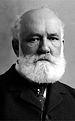
s, or just Conservatives. Those who had been against confederation regrouped loosely as "Liberals", but did not become a coherent party until Andrew Blair, a supporter of Confederation, became Premier of New Brunswick
and forged members of his parliamentary government and their supporters into the New Brunswick Liberal Association in 1883.
Blair led a very successful government and served as premier
of the province for 13 years. He was New Brunswick's longest serving premier until his tenure was surpassed by Richard Hatfield
nearly a century later.
Though Blair had not been a candidate in the 1896 federal election
, he joined the federal cabinet
of Sir Wilfrid Laurier
shortly thereafter when Laurier approached a number of Liberal premiers to join his government and address its lack of experience. This move was not expected by the party and, although it remained in government for 12 more years, it went through a rapid succession of leaders.
, who had been provincial secretary
, served briefly as Premier, but Mitchell soon resigned the post due to ill health. Mitchell was replaced by Henry R. Emmerson, who showed some promise but lost the confidence of the house when he tried to introduce women's suffrage
in 1900.
The party was saved electoral disaster when Lemuel J. Tweedie, a federal Conservative, replaced Emmerson, and won two large majorities at general election
s. Though women's suffrage could not be introduced in the province, he admitted women into the practice of law in 1906, and began the first major hydroelectric project in New Brunswick at Grand Falls
. Tweedie unexpectedly accepted the appointment of Lieutenant-Governor of New Brunswick in 1907, and the Liberals soon found themselves again in a leadership vacuum. William Pugsley
became leader and premier, but left the post after a few months to join the Laurier's government in Ottawa. His replacement, Clifford W. Robinson was able but the electorate grew weary of the ever-changing face at head of their government, and the Conservatives swept to power in 1908.
The Conservatives were an easy choice for many New Brunswickers in the 1908 election
as they had been led since 1899 by John Douglas Hazen
, a man with whom they had become familiar. Haven served only briefly, leaving in 1911 to join the federal cabinet of Robert Borden
, and was replaced by the charismatic and popular James Kidd Flemming
. The Liberals were easily defeated by Flemming in the 1912 election
, however, after Flemming was forced to resign in 1914 over a fundraising scandal, the Liberals seemed on track to return to government. This likelihood was reinforced by the lackluster administration of George Johnson Clarke
who was in ill health throughout his term. The Liberals were victorious in the 1917 election
.
becoming premier. McNair was Dysart's right hand, serving as Attorney General until replacing him as premier in 1940. McNair served until 1952 when he was defeated by Hugh John Flemming
.
. The English
and French
languages were given equal status.
, the Liberals were largely in disarray. The party's prospects in 1978
were good, but it changed leaders on the eve of the election, and, under Joseph Daigle
was defeated narrowly by the Progressive Conservatives. The PCs won 30 seats in the Legislative Assembly
to the Liberals' 28. The party was reduced to 18 seats in 1982 under new leader Doug Young.
as leader. McKenna, a young lawyer representing Chatham
in the legislature in his first term, ran as the underdog candidate in a leadership campaign against party stalwart Ray Frenette. Frenette had served as interim leader
from the disastrous 1982 election
until the eve of the 1985 leadership race. McKenna won by significant margin.
McKenna immediately set out to prepare the party for returning to government after 15 years in opposition. The momentum was on the side of the Liberals and it seemed inevitable that McKenna would be premier as soon as an election was held. Few expected, though, that the Liberals would sweep the province, winning every seat—the second time this had happened in Canadian history
(the first time was in the 1935 PEI provincial election
).
McKenna was regarded as a fiscal conservative and was called by some the "Best Tory
Premier New Brunswick never had". Despite this, McKenna was a progressive on many issues. He made considerable cuts to social programs because of the province's dire fiscal situation and cuts to federal equalization payments
and other transfers. He also instituted new programs. Notably, McKenna instituted a publicly funded kindergarten
program—something that had been promised by the Hatfield Conservatives in the previous four elections. McKenna also launched a home care program called "Extramural Nursing" which has been hailed as the best in Canada. In the 2002 Romanow
report on the Future of Healthcare in Canada, New Brunswick's system was specifically cited as a model for homecare in Canada.
Despite riding high in the polls, McKenna resigned on October 13, 1997, ten years (to the day) since his first election as premier, fulfilling a promise to serve for only ten years.
McKenna was replaced by Frenette, who had served as his right-hand in the legislature throughout his term. Frenette served as premier for the following seven months while the party chose a new leader. Frenette was replaced by Camille Thériault
who served as premier until the 1999 election
. The Liberals were defeated in that election despite having begun the campaign with a double-digit lead in opinion polls.
(MLA) Bernard Thériault
resigned to make an unsuccessful bid for the Canadian House of Commons
in Acadie-Bathurst, and Edmond Blanchard
resigned to accept an appointment to the Federal Court of Canada
. The Progressive Conservatives won both of these seats in by-election
s in early 2001, reducing the Liberals to eight seats in the legislature.
Although the by-election losses were due mainly to Tory promises to reward those who returned a government member, this was a further blow to Camille Thériault's leadership. He resigned from the party leadership and the legislature on March 21, 2001. Bernard Richard
, who had finished third in the leadership contest against Thériault in 1998, became interim leader
.
In the following leadership contest, there were many candidates that appeared briefly, but withdrew. The original likely candidates were former cabinet
minister Paul Duffie
, former McKenna adviser Francis McGuire, and Moncton lawyer Mike Murphy. McGuire, after briefly considering a bid, declined. Murphy began the formative stages of a campaign, but abruptly withdrew, surprising many of his supporters. This left Duffie largely unchallenged. The only other candidate was former party organizer
Jack MacDougall
who had abruptly left the party in the midst of the 1999 campaign.
Many in the party felt that Duffie, who was close to Thériault, was the wrong choice. Richard was urged to abandon the interim leadership and contest the race. He also began a formative campaign but soon announced he would continue as interim leader instead. Finally, after the campaign had already begun in earnest, Shawn Graham
, a rookie MLA in his early 30s, announced his candidacy in January 2002. Graham, who was largely underestimated by Duffie, took to a convincing lead in delegate selection meetings. Duffie withdrew, leaving Graham to face only MacDougall whom he defeated by a 3-to-1 margin.
The party chose Shawn Graham as leader on May 11, 2002. Graham continued to be underestimated by the press and by the governing Conservatives. Shocking pundits, Graham nearly won the 2003 election
taking 26 of 55 seats in the New Brunswick legislature
. Richard, who was re-elected in 2003, accepted a provincial appointment on November 26, 2003. This was in a move by the Conservatives to improve their standing in the winter and spring sessions of the legislature and was viewed as a serious blow to Graham's leadership. Despite this, the Liberal's have led consistently in opinion polls since then and the Liberal's regained Richard's seat in a by-election.
Graham led the Liberals to a narrow victory in the 2006 election
winning 29 of 55 seats and losing the popular vote 47.2% to 47.5% for the Progressive Conservatives. The Liberals took power on October 3, 2006. They have since added three extra seats. Chris Collins captured the seat in the riding of Moncton East on March 5, 2007, which was vacated when former Premier Bernard Lord stepped down as leader of the Progressive Conservatives. Wally Stiles and his wife Joan MacAlpine Stiles, elected as Progressive Conservatives, crossed the floor to join the Liberals the following month, April 17.
Political party
A political party is a political organization that typically seeks to influence government policy, usually by nominating their own candidates and trying to seat them in political office. Parties participate in electoral campaigns, educational outreach or protest actions...
in the Canadian
Canada
Canada is a North American country consisting of ten provinces and three territories. Located in the northern part of the continent, it extends from the Atlantic Ocean in the east to the Pacific Ocean in the west, and northward into the Arctic Ocean...
province of New Brunswick
New Brunswick
New Brunswick is one of Canada's three Maritime provinces and is the only province in the federation that is constitutionally bilingual . The provincial capital is Fredericton and Saint John is the most populous city. Greater Moncton is the largest Census Metropolitan Area...
. The party descended from both the Confederation Party
Confederation Party
Confederation Party was a term for the parties supporting Canadian confederation in New Brunswick, Nova Scotia and Newfoundland in the 1860s when politics became polarised between supporters and opponents of Confederation. The Confederation parties were accordingly opposed by Anti-Confederation...
and the Anti-Confederation Party
Anti-Confederation Party
Anti-Confederation was the name used in what is now Atlantic Canada by several parties opposed to Canadian confederation.-Nova Scotia:In Nova Scotia, the "Anti-Confederates" were led by Joseph Howe. They attempted to reverse the colony's decision to join Confederation, which was initially highly...
whose members split into left wing
Left-wing politics
In politics, Left, left-wing and leftist generally refer to support for social change to create a more egalitarian society...
and right wing
Right-wing politics
In politics, Right, right-wing and rightist generally refer to support for a hierarchical society justified on the basis of an appeal to natural law or tradition. To varying degrees, the Right rejects the egalitarian objectives of left-wing politics, claiming that the imposition of equality is...
groups following the creation of Canada as a country in 1867.
The left-leaning organization emerged in the 1880s to serve as an organization housing the supporters of Premier
Premier of New Brunswick
The Premier of New Brunswick is the first minister for the Canadian province of New Brunswick. They are the province's head of government and de facto chief executive....
Andrew G. Blair and, later, federal Liberal Party of Canada
Liberal Party of Canada
The Liberal Party of Canada , colloquially known as the Grits, is the oldest federally registered party in Canada. In the conventional political spectrum, the party sits between the centre and the centre-left. Historically the Liberal Party has positioned itself to the left of the Conservative...
leader Wilfrid Laurier
Wilfrid Laurier
Sir Wilfrid Laurier, GCMG, PC, KC, baptized Henri-Charles-Wilfrid Laurier was the seventh Prime Minister of Canada from 11 July 1896 to 6 October 1911....
.
Today, the New Brunswick Liberal Party competes with the Progressive Conservatives
Progressive Conservative Party of New Brunswick
The Progressive Conservative Party of New Brunswick is a centre-right political party in New Brunswick, Canada. It has its origins in the pre-Canadian confederation Conservative Party that opposed the granting of responsible government to the colony...
to form the government. Both are considered centrist
Centrism
In politics, centrism is the ideal or the practice of promoting policies that lie different from the standard political left and political right. Most commonly, this is visualized as part of the one-dimensional political spectrum of left-right politics, with centrism landing in the middle between...
parties. The social-democratic
Social democracy
Social democracy is a political ideology of the center-left on the political spectrum. Social democracy is officially a form of evolutionary reformist socialism. It supports class collaboration as the course to achieve socialism...
New Democratic Party of New Brunswick is the only other major party, but it is not represented in the legislature.
Like its counterparts in the Atlantic Canada
Atlantic Canada
Atlantic Canada is the region of Canada comprising the four provinces located on the Atlantic coast, excluding Quebec: the three Maritime provinces – New Brunswick, Prince Edward Island, and Nova Scotia – and Newfoundland and Labrador...
provinces of Newfoundland and Labrador
Newfoundland and Labrador
Newfoundland and Labrador is the easternmost province of Canada. Situated in the country's Atlantic region, it incorporates the island of Newfoundland and mainland Labrador with a combined area of . As of April 2011, the province's estimated population is 508,400...
, Nova Scotia
Nova Scotia
Nova Scotia is one of Canada's three Maritime provinces and is the most populous province in Atlantic Canada. The name of the province is Latin for "New Scotland," but "Nova Scotia" is the recognized, English-language name of the province. The provincial capital is Halifax. Nova Scotia is the...
, and Prince Edward Island
Prince Edward Island
Prince Edward Island is a Canadian province consisting of an island of the same name, as well as other islands. The maritime province is the smallest in the nation in both land area and population...
, the New Brunswick Liberal Association serves both the federal Liberal party and acts as the provincial party. While its leader acts only in the provincial capacity, the party executive organizes for both provincial and federal election campaigns.
History
Past presidents of the New Brunswick Liberal Association (term):- John B. McNair (1932–1940)
- G. Percival Burchill (1941–1953)
- Harry A. CoreyHarry A. CoreyHarry Allen Corey was a Canadian entrepreneur and politician. Born in Pinder, New Brunswick, in 1924 he married Nelda Stairs, daughter of a prominent Southampton, New Brunswick farmer and member of the Legislative Assembly of New Brunswick, Ernest W...
(1953–1959 - Wesley StuartA. Wesley StuartAndrew Wesley Stuart was a Canadian commercial fisherman and politician from the Province of New Brunswick.Known by Wesley, he was born at Deer Island, New Brunswick, the son of Andrew Holmes Stuart and Laura Gertrude Thompson...
(1960–1963) - Daniel A. RileyDaniel Aloysius RileyDaniel Aloysius Riley was a Canadian politician.Born in Charlottetown, Prince Edward Island, he received a Bachelor of Civil Law degree from the University of New Brunswick in 1940....
(1963–1964) (Acting) - Hugh Tait (1964–1966)
- Donald A. McLean (1966–1971)
- Norbert ThériaultNorbert ThériaultL. Norbert Thériault is a Canadian politician.He was born in Eel River Bridge, New Brunswick, Canada. He represented Northumberland and Baie-du-Vin in the Legislative Assembly of New Brunswick, and was a provincial cabinet minister in New Brunswick in the 1960s.He was appointed to the Senate of...
(1971–1977) - Peter Seheult (1977–1979)
- Jack Stevens (1979–1983)
- Sumner Fraser (1983–1986)
- Aldéa LandryAldéa LandryMarie-Marthe Aldéa Landry, PC, CM, QC is a Canadian politician, lawyer and public servant....
(1986–1988) - Mike Murphy (1988–1992)
- Réginald Léger (1992–2000)
- Maurice Richard (2000–2002)
- Jim Mockler (2002 - 2003 (Acting)
- Greg Byrne (2003–2006)
- Marcelle MersereauMarcelle MersereauMarcelle Mersereau, is a Canadian politician.A civil servant for most of her career, she also served as a councillor on Bathurst, New Brunswick city council while on the provincial payroll from 1980 to 1991...
(2006–2007) (Acting) - J. E. Britt Dysart (2007–present)
Early years and Andrew Blair
Canadian Confederation
Canadian Confederation was the process by which the federal Dominion of Canada was formed on July 1, 1867. On that day, three British colonies were formed into four Canadian provinces...
, advocates of responsible government
Responsible government
Responsible government is a conception of a system of government that embodies the principle of parliamentary accountability which is the foundation of the Westminster system of parliamentary democracy...
ran under the labels "Reform" or "Liberal", while opponents of responsible government were known as "Conservatives". With the debates over confederation in the 1860s, the party lines which had emerged blurred as Reformers split along pro and anti-Confederation lines, resulting in Confederation
Confederation Party
Confederation Party was a term for the parties supporting Canadian confederation in New Brunswick, Nova Scotia and Newfoundland in the 1860s when politics became polarised between supporters and opponents of Confederation. The Confederation parties were accordingly opposed by Anti-Confederation...
and Anti-Confederation Parties
Anti-Confederation Party
Anti-Confederation was the name used in what is now Atlantic Canada by several parties opposed to Canadian confederation.-Nova Scotia:In Nova Scotia, the "Anti-Confederates" were led by Joseph Howe. They attempted to reverse the colony's decision to join Confederation, which was initially highly...
.
Following 1867, supporters of Confederation generally became known as Liberal-Conservative
Liberal-Conservative Party
The Liberal-Conservative Party was the formal name of the Conservative Party of Canada until 1873, although some Conservative candidates continued to run under the label as late as the 1911 election and others ran as simple Conservatives prior to 1873...
s, or just Conservatives. Those who had been against confederation regrouped loosely as "Liberals", but did not become a coherent party until Andrew Blair, a supporter of Confederation, became Premier of New Brunswick
Premier of New Brunswick
The Premier of New Brunswick is the first minister for the Canadian province of New Brunswick. They are the province's head of government and de facto chief executive....
and forged members of his parliamentary government and their supporters into the New Brunswick Liberal Association in 1883.
Blair led a very successful government and served as premier
Premier (Canada)
In Canada, a premier is the head of government of a province or territory. There are currently ten provincial premiers and three territorial premiers in Canada....
of the province for 13 years. He was New Brunswick's longest serving premier until his tenure was surpassed by Richard Hatfield
Richard Hatfield
Richard Bennett Hatfield, PC, ONB was a New Brunswick politician and long time Premier of the province .- Early life :...
nearly a century later.
Though Blair had not been a candidate in the 1896 federal election
Canadian federal election, 1896
The Canadian federal election of 1896 was held on June 23, 1896 to elect members of the Canadian House of Commons of the 8th Parliament of Canada. Though the Conservative Party won a plurality of the popular vote, the Liberal Party, led by Wilfrid Laurier, won the majority of seats to form the...
, he joined the federal cabinet
Cabinet of Canada
The Cabinet of Canada is a body of ministers of the Crown that, along with the Canadian monarch, and within the tenets of the Westminster system, forms the government of Canada...
of Sir Wilfrid Laurier
Wilfrid Laurier
Sir Wilfrid Laurier, GCMG, PC, KC, baptized Henri-Charles-Wilfrid Laurier was the seventh Prime Minister of Canada from 11 July 1896 to 6 October 1911....
shortly thereafter when Laurier approached a number of Liberal premiers to join his government and address its lack of experience. This move was not expected by the party and, although it remained in government for 12 more years, it went through a rapid succession of leaders.
Early 1900s
After Blair abruptly left the province to join Wilfrid Laurier's cabinet in 1896, the Liberals had a leadership vacuum. James MitchellJames Mitchell
-Arts, entertainment, and sports :*James Mitchell , American actor who played Palmer Cortlandt on All My Children*James Mitchell , American athlete who competed in the 1904 Summer Olympics...
, who had been provincial secretary
Provincial Secretary
The Provincial Secretary was a senior position in the executive councils of British North America's colonial governments, and was retained by the Canadian provincial governments for at least a century after Canadian Confederation was proclaimed in 1867...
, served briefly as Premier, but Mitchell soon resigned the post due to ill health. Mitchell was replaced by Henry R. Emmerson, who showed some promise but lost the confidence of the house when he tried to introduce women's suffrage
Women's suffrage
Women's suffrage or woman suffrage is the right of women to vote and to run for office. The expression is also used for the economic and political reform movement aimed at extending these rights to women and without any restrictions or qualifications such as property ownership, payment of tax, or...
in 1900.
The party was saved electoral disaster when Lemuel J. Tweedie, a federal Conservative, replaced Emmerson, and won two large majorities at general election
General election
In a parliamentary political system, a general election is an election in which all or most members of a given political body are chosen. The term is usually used to refer to elections held for a nation's primary legislative body, as distinguished from by-elections and local elections.The term...
s. Though women's suffrage could not be introduced in the province, he admitted women into the practice of law in 1906, and began the first major hydroelectric project in New Brunswick at Grand Falls
Grand Falls, New Brunswick
Grand Falls is a Canadian town located in Victoria County, New Brunswick.Situated on the Saint John River, the town derives its name from a waterfall created by a series of rock ledges over which the river drops 23 metres.-Geography:Grand Falls is located in the valley of the St...
. Tweedie unexpectedly accepted the appointment of Lieutenant-Governor of New Brunswick in 1907, and the Liberals soon found themselves again in a leadership vacuum. William Pugsley
William Pugsley
William Pugsley, PC, QC was a politician and lawyer in New Brunswick, Canada.He was born in Sussex, New Brunswick, the son of William Pugsley, of United Empire Loyalist descent, and Frances Jane Hayward. He was educated at the University of New Brunswick. He studied mathematics, classics, and...
became leader and premier, but left the post after a few months to join the Laurier's government in Ottawa. His replacement, Clifford W. Robinson was able but the electorate grew weary of the ever-changing face at head of their government, and the Conservatives swept to power in 1908.
The Conservatives were an easy choice for many New Brunswickers in the 1908 election
New Brunswick general election, 1908
The 12th New Brunswick general election was held on 3 March 1908, to elect 46 members to the 32nd New Brunswick Legislative Assembly, the governing house of the province of New Brunswick, Canada. The election was held before the adoption of party lablels....
as they had been led since 1899 by John Douglas Hazen
John Douglas Hazen
Sir John Douglas Hazen, PC, KCMG was a politician in New Brunswick, Canada.Known by his second name, Douglas, he entered politics in 1885 when he was elected as an alderman in Fredericton, New Brunswick. He became mayor in 1888.Hazen was elected to the Canadian House of Commons as a Conservative...
, a man with whom they had become familiar. Haven served only briefly, leaving in 1911 to join the federal cabinet of Robert Borden
Robert Borden
Sir Robert Laird Borden, PC, GCMG, KC was a Canadian lawyer and politician. He served as the eighth Prime Minister of Canada from October 10, 1911 to July 10, 1920, and was the third Nova Scotian to hold this office...
, and was replaced by the charismatic and popular James Kidd Flemming
James Kidd Flemming
James Kidd Flemming was a businessman and politician in New Brunswick, Canada.Flemming was a school teacher and lumberman before entering politics and serving as Provincial Secretary-Treasurer from 1908 to 1911 and Minister of Lands and Mines from 1911-1914. He succeeded Douglas Hazen as the...
. The Liberals were easily defeated by Flemming in the 1912 election
New Brunswick general election, 1912
The 13th New Brunswick general election was held on 20 June 1912, to elect 48 members to the 33rd New Brunswick Legislative Assembly, the governing house of the province of New Brunswick, Canada. The election was held before the adoption of party lablels....
, however, after Flemming was forced to resign in 1914 over a fundraising scandal, the Liberals seemed on track to return to government. This likelihood was reinforced by the lackluster administration of George Johnson Clarke
George Johnson Clarke
George Johnson Clarke, KC was a New Brunswick lawyer, journalist and politician.A native of St. Andrews, New Brunswick, George Clarke taught school for a time in Charlotte County before studying law. He was called to the bar in 1885 and set up practice in St. Stephen. He was also editor of the...
who was in ill health throughout his term. The Liberals were victorious in the 1917 election
New Brunswick general election, 1917
The 14th New Brunswick general election was held on 24 February 1917, to elect 48 members to the 34th New Brunswick Legislative Assembly, the governing house of the province of New Brunswick, Canada...
.
Dysart and McNair
In the midst of the depression, the Liberals made a resurgence in 1932 with Allison DysartAllison Dysart
A. Allison Dysart was a New Brunswick politician, lawyer and judge.Dysart was born in Cocagne, New Brunswick and was educated at St. Joseph's University in Memramcook, the Guelph Agricultural School in Ontario and Dalhousie Law School. He was called to the bar in 1913 and set up practice in...
becoming premier. McNair was Dysart's right hand, serving as Attorney General until replacing him as premier in 1940. McNair served until 1952 when he was defeated by Hugh John Flemming
Hugh John Flemming
Hugh John Flemming, PC was a politician and the 24th Premier of New Brunswick.He is always known as "Hugh John"...
.
Louis J. Robichaud
During the 1960s, the Liberals under Louis Joseph Robichaud were instrumental in bringing Acadians into the mainstream of life in New Brunswick, declaring the province to be officially bilingualBilingualism in Canada
The official languages of Canada are English and French, which "have equality of status and equal rights and privileges as to their use in all institutions of the Parliament and Government of Canada" according to Canada's constitution...
. The English
English language
English is a West Germanic language that arose in the Anglo-Saxon kingdoms of England and spread into what was to become south-east Scotland under the influence of the Anglian medieval kingdom of Northumbria...
and French
French language
French is a Romance language spoken as a first language in France, the Romandy region in Switzerland, Wallonia and Brussels in Belgium, Monaco, the regions of Quebec and Acadia in Canada, and by various communities elsewhere. Second-language speakers of French are distributed throughout many parts...
languages were given equal status.
Opposition in the Hatfield years
Following defeat in the 1970 electionNew Brunswick general election, 1970
The 27th New Brunswick general election was held on November 18, 1974, to elect 58 members to the 47th New Brunswick Legislative Assembly, the governing house of the province of New Brunswick, Canada...
, the Liberals were largely in disarray. The party's prospects in 1978
New Brunswick general election, 1978
The 29th New Brunswick general election was held on October 23, 1978, to elect 58 members to the 49th New Brunswick Legislative Assembly, the governing house of the province of New Brunswick, Canada. Richard Hatfield's Progressive Conservative Party narrowly won its third term.In the lead up to...
were good, but it changed leaders on the eve of the election, and, under Joseph Daigle
Joseph Z. Daigle
Joseph Zenon Daigle, BA, BCL, QC born June 23, 1934 in Saint-Charles, New Brunswick, is a Canadian lawyer and a former politician and Chief Justice of New Brunswick....
was defeated narrowly by the Progressive Conservatives. The PCs won 30 seats in the Legislative Assembly
Legislative Assembly of New Brunswick
The Legislative Assembly of New Brunswick is located in Fredericton. It was established de jure when the colony was created in 1784, but only came in to session in 1786 following the first elections in late 1785. Until 1891, it was the lower house in a bicameral legislature when its upper house...
to the Liberals' 28. The party was reduced to 18 seats in 1982 under new leader Doug Young.
Frank McKenna
In 1985, the party choose Frank McKennaFrank McKenna
Francis Joseph "Frank" McKenna, PC, OC, ONB, QC is a Canadian businessman and former politician and diplomat. He is currently Deputy Chairman of the Toronto-Dominion Bank. He served as Canadian Ambassador to the United States from 2005 to 2006...
as leader. McKenna, a young lawyer representing Chatham
Miramichi, New Brunswick
Miramichi is the largest city in northern New Brunswick, Canada. It is situated at the mouth of the Miramichi River where it enters Miramichi Bay...
in the legislature in his first term, ran as the underdog candidate in a leadership campaign against party stalwart Ray Frenette. Frenette had served as interim leader
Interim leader
An interim leader, in Canadian politics, is a party leader appointed by the party's legislative caucus or the party's executive to temporarily act as leader when a gap occurs between the resignation or death of a party leader and the election of a formal successor...
from the disastrous 1982 election
New Brunswick general election, 1982
The 30th New Brunswick general election was held on October 12, 1982, to elect 58 members to the 50th New Brunswick Legislative Assembly, the governing house of the province of New Brunswick, Canada. It saw Richard Hatfield's Progressive Conservative Party win its largest majority ever to that time...
until the eve of the 1985 leadership race. McKenna won by significant margin.
McKenna immediately set out to prepare the party for returning to government after 15 years in opposition. The momentum was on the side of the Liberals and it seemed inevitable that McKenna would be premier as soon as an election was held. Few expected, though, that the Liberals would sweep the province, winning every seat—the second time this had happened in Canadian history
History of Canada
The history of Canada covers the period from the arrival of Paleo-Indians thousands of years ago to the present day. Canada has been inhabited for millennia by distinctive groups of Aboriginal peoples, among whom evolved trade networks, spiritual beliefs, and social hierarchies...
(the first time was in the 1935 PEI provincial election
Prince Edward Island general election, 1935
The Prince Edward Island general election, 1935 was held in the Canadian Province of Prince Edward Island. The Liberal party swept the board by winning every seat in every constituency. Liberal Leader Walter Maxfield Lea became Premier of Prince Edward Island for the second time...
).
McKenna was regarded as a fiscal conservative and was called by some the "Best Tory
Tory
Toryism is a traditionalist and conservative political philosophy which grew out of the Cavalier faction in the Wars of the Three Kingdoms. It is a prominent ideology in the politics of the United Kingdom, but also features in parts of The Commonwealth, particularly in Canada...
Premier New Brunswick never had". Despite this, McKenna was a progressive on many issues. He made considerable cuts to social programs because of the province's dire fiscal situation and cuts to federal equalization payments
Equalization payments
Equalization payments are cash payments made in some federal systems of government from the federal government to subnational governments with the objective of offsetting differences in available revenue or in the cost of providing services....
and other transfers. He also instituted new programs. Notably, McKenna instituted a publicly funded kindergarten
Kindergarten
A kindergarten is a preschool educational institution for children. The term was created by Friedrich Fröbel for the play and activity institute that he created in 1837 in Bad Blankenburg as a social experience for children for their transition from home to school...
program—something that had been promised by the Hatfield Conservatives in the previous four elections. McKenna also launched a home care program called "Extramural Nursing" which has been hailed as the best in Canada. In the 2002 Romanow
Roy Romanow
Roy John Romanow, PC, OC, QC, SOM is a Canadian politician and the 12th Premier of Saskatchewan ....
report on the Future of Healthcare in Canada, New Brunswick's system was specifically cited as a model for homecare in Canada.
Despite riding high in the polls, McKenna resigned on October 13, 1997, ten years (to the day) since his first election as premier, fulfilling a promise to serve for only ten years.
McKenna was replaced by Frenette, who had served as his right-hand in the legislature throughout his term. Frenette served as premier for the following seven months while the party chose a new leader. Frenette was replaced by Camille Thériault
Camille Thériault
Camille Henri Thériault served as the 29th Premier of the Canadian province of New Brunswick.The son of Joséphine Martin and Norbert Thériault, a former provincial cabinet minister and Canadian Senator, Camille Thériault was born in Baie-Ste-Anne, New Brunswick, and graduated from Baie-Sainte-Anne...
who served as premier until the 1999 election
New Brunswick general election, 1999
The 34th New Brunswick general election was held on June 7, 1999, to elect 55 members to the 54th New Brunswick Legislative Assembly, the governing house of the province of New Brunswick, Canada. It marked the debut of both Camille Thériault and Bernard Lord as leaders of the Liberals and...
. The Liberals were defeated in that election despite having begun the campaign with a double-digit lead in opinion polls.
Present
In the 1999 election, the Liberals suffered their worst ever defeat, winning only 10 seats. In 2000, Liberal Member of the Legislative AssemblyMember of the Legislative Assembly
A Member of the Legislative Assembly or a Member of the Legislature , is a representative elected by the voters of a constituency to the legislature or legislative assembly of a sub-national jurisdiction....
(MLA) Bernard Thériault
Bernard Thériault
Bernard Thériault is a political figure in the province of New Brunswick, Canada. He became chief of staff to Premier of New Brunswick Shawn Graham on October 30, 2006....
resigned to make an unsuccessful bid for the Canadian House of Commons
Canadian House of Commons
The House of Commons of Canada is a component of the Parliament of Canada, along with the Sovereign and the Senate. The House of Commons is a democratically elected body, consisting of 308 members known as Members of Parliament...
in Acadie-Bathurst, and Edmond Blanchard
Edmond Blanchard
Edmond P. Blanchard, QC is a Canadian jurist and former politician.Blanchard studied at Dalhousie University in Halifax, Nova Scotia where he earned a Bachelor of Commerce degree in 1975 and a Bachelor of Laws degree in 1978...
resigned to accept an appointment to the Federal Court of Canada
Federal Court of Canada
The Federal Court of Canada was a national court of Canada that heard some types of disputes arising under the central government's legislative jurisdiction...
. The Progressive Conservatives won both of these seats in by-election
By-election
A by-election is an election held to fill a political office that has become vacant between regularly scheduled elections....
s in early 2001, reducing the Liberals to eight seats in the legislature.
Although the by-election losses were due mainly to Tory promises to reward those who returned a government member, this was a further blow to Camille Thériault's leadership. He resigned from the party leadership and the legislature on March 21, 2001. Bernard Richard
Bernard Richard
Bernard Richard is a Canadian social worker, lawyer, and politician in the Province of New Brunswick....
, who had finished third in the leadership contest against Thériault in 1998, became interim leader
Interim leader
An interim leader, in Canadian politics, is a party leader appointed by the party's legislative caucus or the party's executive to temporarily act as leader when a gap occurs between the resignation or death of a party leader and the election of a formal successor...
.
In the following leadership contest, there were many candidates that appeared briefly, but withdrew. The original likely candidates were former cabinet
Executive Council of New Brunswick
The Executive Council of New Brunswick is the cabinet of that Canadian province....
minister Paul Duffie
Paul Duffie
Paul Duffie is a former politician, lawyer and judge in the Canadian province of New Brunswick. Duffie was born in Neguac, New Brunswick. A graduate of Ricker College in Houlton, Maine with a Bachelor of Science degree and the University of New Brunswick in Fredericton, New Brunswick with a law...
, former McKenna adviser Francis McGuire, and Moncton lawyer Mike Murphy. McGuire, after briefly considering a bid, declined. Murphy began the formative stages of a campaign, but abruptly withdrew, surprising many of his supporters. This left Duffie largely unchallenged. The only other candidate was former party organizer
Party organizer
A party organizer or local party organizer is a position in some political parties in charge of the establishing a party organization in a certain locality.Herbert Ames wrote in his 1911 article "Organization of Political Parties in Canada" :...
Jack MacDougall
Jack MacDougall
Jack MacDougall is a politician in New Brunswick, Canada. He worked for the Liberal Party of New Brunswick from 1984 to 1999. In 2002, he was an unsuccessful candidate for leader of the party...
who had abruptly left the party in the midst of the 1999 campaign.
Many in the party felt that Duffie, who was close to Thériault, was the wrong choice. Richard was urged to abandon the interim leadership and contest the race. He also began a formative campaign but soon announced he would continue as interim leader instead. Finally, after the campaign had already begun in earnest, Shawn Graham
Shawn Graham
Shawn Michael Graham, MLA is a New Brunswick politician, who served as the 31st Premier of New Brunswick. He received a Bachelor of Physical Education Degree in 1991 and a Bachelor of Education Degree in 1993, he worked for New Brunswick's civil service before being elected to the Legislative...
, a rookie MLA in his early 30s, announced his candidacy in January 2002. Graham, who was largely underestimated by Duffie, took to a convincing lead in delegate selection meetings. Duffie withdrew, leaving Graham to face only MacDougall whom he defeated by a 3-to-1 margin.
The party chose Shawn Graham as leader on May 11, 2002. Graham continued to be underestimated by the press and by the governing Conservatives. Shocking pundits, Graham nearly won the 2003 election
New Brunswick general election, 2003
The 35th New Brunswick general election was held on June 9, 2003, to elect 55 members to the 55th New Brunswick Legislative Assembly, the governing house of the province of New Brunswick, Canada...
taking 26 of 55 seats in the New Brunswick legislature
Legislative Assembly of New Brunswick
The Legislative Assembly of New Brunswick is located in Fredericton. It was established de jure when the colony was created in 1784, but only came in to session in 1786 following the first elections in late 1785. Until 1891, it was the lower house in a bicameral legislature when its upper house...
. Richard, who was re-elected in 2003, accepted a provincial appointment on November 26, 2003. This was in a move by the Conservatives to improve their standing in the winter and spring sessions of the legislature and was viewed as a serious blow to Graham's leadership. Despite this, the Liberal's have led consistently in opinion polls since then and the Liberal's regained Richard's seat in a by-election.
Graham led the Liberals to a narrow victory in the 2006 election
New Brunswick general election, 2006
The 36th New Brunswick general election was held on September 18, 2006, to elect 55 members to the 56th New Brunswick Legislative Assembly, the governing house of the province of New Brunswick, Canada....
winning 29 of 55 seats and losing the popular vote 47.2% to 47.5% for the Progressive Conservatives. The Liberals took power on October 3, 2006. They have since added three extra seats. Chris Collins captured the seat in the riding of Moncton East on March 5, 2007, which was vacated when former Premier Bernard Lord stepped down as leader of the Progressive Conservatives. Wally Stiles and his wife Joan MacAlpine Stiles, elected as Progressive Conservatives, crossed the floor to join the Liberals the following month, April 17.
Current members of the legislature
| Name | Riding | First elected | Opposition/Legislative roles |
|---|---|---|---|
| Hédard Albert Hédard Albert Hédard Albert, , is a New Brunswick politician.Albert worked for 35 years at the CCNB fisheries school where he taught, conducted research and served as school administrator... |
Caraquet Caraquet (electoral district) Caraquet is a provincial electoral district for the Legislative Assembly of New Brunswick, Canada. It was created in 1973 from Gloucester. The riding is centred on the town of Caraquet.-MLAs:*Onil Doiron, Liberal... |
2003 g.e. New Brunswick general election, 2003 The 35th New Brunswick general election was held on June 9, 2003, to elect 55 members to the 55th New Brunswick Legislative Assembly, the governing house of the province of New Brunswick, Canada... |
to be determined |
| Donald Arseneault Donald Arseneault Donald Arseneault is a New Brunswick politician. He is the member of the Legislative Assembly of New Brunswick for the riding of Dalhousie-Restigouche East.... |
Dalhousie-Restigouche East | 2003 g.e. New Brunswick general election, 2003 The 35th New Brunswick general election was held on June 9, 2003, to elect 55 members to the 55th New Brunswick Legislative Assembly, the governing house of the province of New Brunswick, Canada... |
to be determined |
| Victor Boudreau | Shediac-Cap-Pélé | 2004 by-e By-election A by-election is an election held to fill a political office that has become vacant between regularly scheduled elections.... |
Leader, New Brunswick Official Opposition Leader of the Opposition The Leader of the Opposition is a title traditionally held by the leader of the largest party not in government in a Westminster System of parliamentary government... |
| Chris Collins Chris Collins (politician) Chris Collins is a politician from Moncton, New Brunswick, Canada. Currently the sitting MLA for the riding of Moncton East, having previously served part of one term on Moncton City Council.... |
Moncton East Moncton East Moncton East is a provincial electoral district for the Legislative Assembly of New Brunswick, Canada. Prior to 2007, it has been held by only two individuals both of whom served as Premier of New Brunswick. Ray Frenette, a Liberal who served as premier from 1997 to 1998, represented the district... |
2007 by-e. Moncton East provincial by-election, 2007 A provincial by-election was held in New Brunswick on March 5, 2007 to fill the vacancy in the Legislative Assembly riding of Moncton East.As a result of Bernard Lord's resignation, a by-election had to be called within six months of January 31, 2007. The date was set for March 5, 2007... |
to be determined |
| Rick Doucet Rick Doucet Rick Doucet, born in Sussex, New Brunswick, is a New Brunswick businessman and politician. He currently represents the riding of Charlotte-The Isles in the Legislative Assembly of New Brunswick. Rick lives in St... |
Charlotte-The Isles Charlotte-The Isles Charlotte-The Isles is a provincial electoral district for the Legislative Assembly of New Brunswick, Canada.-History:It was created in 2006 as a result of a merger of the old district of Charlotte with the district of Fundy Isles less Campobello Island which moved from Fundy Isles to the new... |
2003 g.e. New Brunswick general election, 2003 The 35th New Brunswick general election was held on June 9, 2003, to elect 55 members to the 55th New Brunswick Legislative Assembly, the governing house of the province of New Brunswick, Canada... |
to be determined |
| Bill Fraser Bill Fraser -External links:* *... |
Miramichi-Bay du Vin | 2006 g.e. New Brunswick general election, 2006 The 36th New Brunswick general election was held on September 18, 2006, to elect 55 members to the 56th New Brunswick Legislative Assembly, the governing house of the province of New Brunswick, Canada.... |
Opposition House Leader |
| Shawn Graham Shawn Graham Shawn Michael Graham, MLA is a New Brunswick politician, who served as the 31st Premier of New Brunswick. He received a Bachelor of Physical Education Degree in 1991 and a Bachelor of Education Degree in 1993, he worked for New Brunswick's civil service before being elected to the Legislative... |
Kent | 1998 by-e By-election A by-election is an election held to fill a political office that has become vacant between regularly scheduled elections.... |
Premier of New Brunswick Premier of New Brunswick The Premier of New Brunswick is the first minister for the Canadian province of New Brunswick. They are the province's head of government and de facto chief executive.... , 2006–2010 |
| Roland Haché | Nigadoo-Chaleur Nigadoo-Chaleur Nigadoo—Chaleur is a provincial electoral district for the Legislative Assembly of New Brunswick, Canada.-History and geography:Nigadoo—Chaleur was created in the 1973 electoral redistribution as one of the five districts from the previous Gloucester district, defined as the parish of Beresford and... |
1999 g.e. New Brunswick general election, 1999 The 34th New Brunswick general election was held on June 7, 1999, to elect 55 members to the 54th New Brunswick Legislative Assembly, the governing house of the province of New Brunswick, Canada. It marked the debut of both Camille Thériault and Bernard Lord as leaders of the Liberals and... |
to be determined |
| Brian Kenny Brian Kenny (politician) Brian Kenny is a politician in the province of New Brunswick, Canada. He was elected to the Legislative Assembly of New Brunswick in the 2003 election and re-elected in 2006.... |
Bathurst Bathurst (electoral district) Bathurst is a provincial electoral district for the Legislative Assembly of New Brunswick, Canada.-History and Geography:It was created in the 1967 redistribution when cities were separated from their counties and made independent districts. It was not changed in either the 1973 or 1994... |
2003 g.e. New Brunswick general election, 2003 The 35th New Brunswick general election was held on June 9, 2003, to elect 55 members to the 55th New Brunswick Legislative Assembly, the governing house of the province of New Brunswick, Canada... |
to be determined |
| Denis Landry Denis Landry Denis Landry is a politician in the province of New Brunswick, Canada. He was elected to the Legislative Assembly of New Brunswick in 1995 and re-elected in 2003 and 2006 after being defeated in his first bid for re-election in 1999.... |
Centre-Péninsule-Saint-Sauveur Centre-Péninsule-Saint-Sauveur Centre-Péninsule-Saint-Sauveur is a provincial electoral district for the Legislative Assembly of New Brunswick, Canada. It was created in the 1994 redistribution of districts as Centre-Péninsule; its boundaries were adjusted in the 2006 redistribution in order to rebalance the population of... |
1995 g.e. New Brunswick general election, 1995 The 33rd New Brunswick general election was held on September 11, 1995, to elect 55 members to the 53rd New Brunswick Legislative Assembly, the governing house of the province of New Brunswick, Canada. The election marked the debut of Bernard Valcourt as a provincial politician, and as leader of a... |
to be determined |
| Bernard LeBlanc Bernard LeBlanc Bernard LeBlanc is a politician in the province of New Brunswick, Canada. He was elected to the Legislative Assembly of New Brunswick in the 2006 election as the Liberal MLA for the new district of Memramcook-Lakeville-Dieppe.... |
Memramcook-Lakeville-Dieppe Memramcook-Lakeville-Dieppe Memramcook-Lakeville-Dieppe is a provincial electoral district for the Legislative Assembly of New Brunswick, Canada.It was created in 2006 as a result the large population increase in the City of Dieppe. The district was carved largely out of the old riding of Dieppe-Memramcook taking about 1/5... |
2006 g.e. New Brunswick general election, 2006 The 36th New Brunswick general election was held on September 18, 2006, to elect 55 members to the 56th New Brunswick Legislative Assembly, the governing house of the province of New Brunswick, Canada.... |
to be determined |
| Bertrand LeBlanc Bertrand LeBlanc Bertrand LeBlanc is a Canadian politician, who was elected to the Legislative Assembly of New Brunswick in the 2010 provincial election. He represents the electoral district of Rogersville-Kouchibouguac as a member of the Liberals.-References:... |
Rogersville-Kouchibouguac Rogersville-Kouchibouguac Rogersville-Kouchibouguac is a provincial electoral district for the Legislative Assembly of New Brunswick, Canada.-MLAs:*Conrad Landry, Liberal *Ken Johnson, Liberal *Rose-May Poirier, Progressive Conservative... |
2010 g.e. | to be determined |
| Roger Melanson Roger Melanson Roger Melanson is a Canadian politician, who was elected to the Legislative Assembly of New Brunswick in the 2010 provincial election. He represents the electoral district of Dieppe Centre-Lewisville as a member of the Liberals.-References:... |
Dieppe Centre-Lewisville Dieppe Centre-Lewisville Dieppe Centre-Lewisville is a provincial electoral district for the Legislative Assembly of New Brunswick, Canada.It was created in 2006 as a result of large population growth in the City of Dieppe. It includes 4 of 5 wards of the city of Dieppe and a small portion of Moncton near Champlain Place... |
2010 g.e. | Caucus Chair |
Party leaders since 1958
- Louis RobichaudLouis RobichaudLouis Joseph Robichaud, PC, CC, QC , popularly known as "Little Louis" or "P'tit-Louis" , was a Canadian lawyer and politician...
1958-1971 - Robert J. HigginsRobert J. HigginsRobert J. Higgins is a supernumerary justice on the Court of Queen's Bench of New Brunswick and a former member of the Legislative Assembly of New Brunswick who served as the leader of the New Brunswick Liberal Party from 1971 to 1978....
1971-1978 - Joseph Daigle 1978-1981
- Doug Young 1981-1983
- Ray Frenette 1983-1985 (interim)
- Shirley DysartShirley DysartShirley Theresa Dysart, CM is a former teacher and New Brunswick politician.Dysart was first elected to the Legislative Assembly of New Brunswick in 1974 to represent Saint John North. She was the first female Liberal, and second female of any party, to serve therein...
1985 (interim) - Frank McKennaFrank McKennaFrancis Joseph "Frank" McKenna, PC, OC, ONB, QC is a Canadian businessman and former politician and diplomat. He is currently Deputy Chairman of the Toronto-Dominion Bank. He served as Canadian Ambassador to the United States from 2005 to 2006...
1985-1997 - Ray Frenette 1997-1998 (interim)
- Camille ThériaultCamille ThériaultCamille Henri Thériault served as the 29th Premier of the Canadian province of New Brunswick.The son of Joséphine Martin and Norbert Thériault, a former provincial cabinet minister and Canadian Senator, Camille Thériault was born in Baie-Ste-Anne, New Brunswick, and graduated from Baie-Sainte-Anne...
1998-2001 - Bernard RichardBernard RichardBernard Richard is a Canadian social worker, lawyer, and politician in the Province of New Brunswick....
2001-2001 (interim) - Shawn GrahamShawn GrahamShawn Michael Graham, MLA is a New Brunswick politician, who served as the 31st Premier of New Brunswick. He received a Bachelor of Physical Education Degree in 1991 and a Bachelor of Education Degree in 1993, he worked for New Brunswick's civil service before being elected to the Legislative...
2002-2010 - Victor Boudreau 2010–present (interim)
See also
- List of New Brunswick premiers
- List of political parties in Canada
- New Brunswick Liberal Association leadership election, 2002New Brunswick Liberal Association leadership election, 2002The New Brunswick Liberal Association held a leadership election in 2002 to replace former leader Camille Thériault with a new leader to lead the party into the 2003 election...
- New Brunswick Liberal Association leadership election, 2011New Brunswick Liberal Association leadership election, 2011The New Brunswick Liberal Association will hold a leadership election in October 2012 to replace outgoing leader Shawn Graham with a new leader to lead the party into the 2014 election. Graham was elected at the last leadership convention held in 2002 over Jack MacDougall...
- New Brunswick Liberal Association leadership electionsNew Brunswick Liberal Association leadership electionsThis page lists the results of leadership elections held by the New Brunswick Liberal Association . Before 1930 leaders were chosen by the caucus.-1930 leadership convention:*Wendell P. JONES accl....