


Nemo me impune lacessit

Encyclopedia
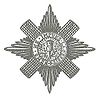
Order of the Thistle
The Most Ancient and Most Noble Order of the Thistle is an order of chivalry associated with Scotland. The current version of the Order was founded in 1687 by King James VII of Scotland who asserted that he was reviving an earlier Order...
and of three Scottish regiment
Scottish regiment
A Scottish regiment is any regiment that at some time in its history has or had a name that referred to Scotland or some part, thereof, and adopted items of Scottish dress...
s of the British Army
British Army
The British Army is the land warfare branch of Her Majesty's Armed Forces in the United Kingdom. It came into being with the unification of the Kingdom of England and Scotland into the Kingdom of Great Britain in 1707. The new British Army incorporated Regiments that had already existed in England...
. The motto also appears, in conjunction with the collar
Livery collar
A livery collar or chain of office is a collar or heavy chain, usually of gold, worn as insignia of office or a mark of fealty or other association in Europe from the Middle Ages onwards....
of the Order of the Thistle, in later versions of the Royal coat of arms
Royal coat of arms of Scotland
The royal coat of arms of Scotland was the official coat of arms of the monarchs of Scotland, and was used as the official coat of arms of the Kingdom of Scotland until the Acts of Union of 1707...
of the Kingdom of Scotland
Kingdom of Scotland
The Kingdom of Scotland was a Sovereign state in North-West Europe that existed from 843 until 1707. It occupied the northern third of the island of Great Britain and shared a land border to the south with the Kingdom of England...
and subsequently in the version of the Royal coat of arms of the United Kingdom
Royal coat of arms of the United Kingdom
The Royal coat of arms of the United Kingdom is the official coat of arms of the British monarch, currently Queen Elizabeth II. These arms are used by the Queen in her official capacity as monarch of the United Kingdom, and are officially known as her Arms of Dominion...
used in Scotland
Scotland
Scotland is a country that is part of the United Kingdom. Occupying the northern third of the island of Great Britain, it shares a border with England to the south and is bounded by the North Sea to the east, the Atlantic Ocean to the north and west, and the North Channel and Irish Sea to the...
. It is often translated as No one attacks me with impunity, or rendered in Scots
Scots language
Scots is the Germanic language variety spoken in Lowland Scotland and parts of Ulster . It is sometimes called Lowland Scots to distinguish it from Scottish Gaelic, the Celtic language variety spoken in most of the western Highlands and in the Hebrides.Since there are no universally accepted...
as Wha daur meddle wi' me? ("Cha togar m' fhearg gun dìoladh" in Scottish Gaelic). It is also alternatively translated into English as No one can harm me unpunished.
Present and historical use of the motto

Motto
A motto is a phrase meant to formally summarize the general motivation or intention of a social group or organization. A motto may be in any language, but Latin is the most used. The local language is usual in the mottoes of governments...
of the Most Ancient and Most Noble Order of the Thistle
Order of the Thistle
The Most Ancient and Most Noble Order of the Thistle is an order of chivalry associated with Scotland. The current version of the Order was founded in 1687 by King James VII of Scotland who asserted that he was reviving an earlier Order...
, the Scottish chivalrous order, is also that of the British Army
British Army
The British Army is the land warfare branch of Her Majesty's Armed Forces in the United Kingdom. It came into being with the unification of the Kingdom of England and Scotland into the Kingdom of Great Britain in 1707. The new British Army incorporated Regiments that had already existed in England...
regiments The Royal Regiment of Scotland
The Royal Regiment of Scotland
The Royal Regiment of Scotland is the senior and only Scottish line infantry regiment of the British Army Infantry. It consists of five regular and two territorial battalions, each formerly an individual regiment...
, Scots Guards
Scots Guards
The Scots Guards is a regiment of the Guards Division of the British Army, whose origins lie in the personal bodyguard of King Charles I of England and Scotland...
and Royal Scots Dragoon Guards
Royal Scots Dragoon Guards
The Royal Scots Dragoon Guards is a cavalry regiment of the British Army, and the senior Scottish regiment. It was formed on 2 July 1971 at Holyrood, Edinburgh, by the amalgamation of the 3rd Carabiniers The Royal Scots Dragoon Guards (Carabiniers and Greys) (SCOTS DG) is a cavalry regiment of...
. It was also the motto of several former units of the British Army, including the Royal Scots, Royal Scots Greys, Royal Highland Fusiliers
Royal Highland Fusiliers
The Royal Highland Fusiliers, 2nd Battalion, The Royal Regiment of Scotland is an infantry battalion of the Royal Regiment of Scotland....
and Black Watch
Black Watch
The Black Watch, 3rd Battalion, Royal Regiment of Scotland is an infantry battalion of the Royal Regiment of Scotland. The unit's traditional colours were retired in 2011 in a ceremony led by Queen Elizabeth II....
, some of which went on to be amalgamated to form the Royal Regiment of Scotland in 2006. The motto is also that of the Royal Company of Archers
Royal Company of Archers
The Royal Company of Archers is a ceremonial unit that serves as the Sovereign's Bodyguard in Scotland, a role it has performed since 1822 and the reign of King George IV, when the company provided a personal bodyguard to the King on his visit to Scotland. It is currently known as the Queen's...
and has been displayed upon the unit's second standard since 1713, following the grant of a Royal charter
Royal Charter
A royal charter is a formal document issued by a monarch as letters patent, granting a right or power to an individual or a body corporate. They were, and are still, used to establish significant organizations such as cities or universities. Charters should be distinguished from warrants and...
by Queen Anne.
During the reign of Charles II
Charles II of England
Charles II was monarch of the three kingdoms of England, Scotland, and Ireland.Charles II's father, King Charles I, was executed at Whitehall on 30 January 1649, at the climax of the English Civil War...
, the motto, appearing on a scroll
Scroll
A scroll is a roll of parchment, papyrus, or paper, which has been drawn or written upon.Scroll may also refer to:*Scroll , the decoratively curved end of the pegbox of string instruments such as violins...
beneath the shield and overlying the compartment, was added to the Royal coat of arms of Scotland and, since 1707, has appeared in the Scottish version of the arms of British Monarchs, including the present Royal coat of arms of the United Kingdom used in Scotland. The motto appears in conjunction with the collar of the Order of the Thistle, which is placed around the shield. (The collar of the order appears in earlier versions of the Royal coat of arms of Scotland, but without the order motto).
The motto of the Order of the Thistle, (Nemo me impune lacessit), should not be confused with the motto of the Royal arms, (In Defens), which appears on an escroll above the crest
Crest (heraldry)
A crest is a component of an heraldic display, so called because it stands on top of a helmet, as the crest of a jay stands on the bird's head....
in the tradition of Scottish heraldry. (In Defens being an abbreviated form of the full motto In My Defens God Me Defend
In My Defens God Me Defend
In my defens God me defend is the motto of both the Royal coat of arms of the Kingdom of Scotland and Royal coat of arms of the United Kingdom used in Scotland. Contemporary versions of the Royal arms show an abbreviated motto, in the form of IN DEFENS or, where Modern English is used as an...
).
Armed forces units elsewhere have also adopted this historic motto. In Australia, the motto was also used by the Victoria Scottish Regiment, which subsequently became 5th Battalion Royal Victoria Regiment
Royal Victoria Regiment
The Royal Victoria Regiment is an Infantry Regiment of the Australian Army, consisting of two battalions, the 5th/6th Battalion and the 8th/7th Battalion.-History:...
(RVR) which now forms one of the rifle companies of the RVR. (The motto is also used by the RVR Pipes and Drums Association
RVR Pipes and Drums Association
Formed in 1899 as part of the Victorian Scottish Regiment, the 5/6RVR Pipes and Drums is now the sole musical support for all battalions of the Royal Victoria Regiment...
). The Black Watch (Royal Highland Regiment) of Canada
The Black Watch (Royal Highland Regiment) of Canada
The Black Watch of Canada is a reserve infantry regiment in 34 Brigade Group, Land Force Quebec Area. The regiment is located on rue de Bleury in Montreal, Quebec, Canada, and is currently commanded by Lieutenant Colonel Bruno Plourde...
, a reserve infantry regiment of the Canadian Forces
Canadian Forces
The Canadian Forces , officially the Canadian Armed Forces , are the unified armed forces of Canada, as constituted by the National Defence Act, which states: "The Canadian Forces are the armed forces of Her Majesty raised by Canada and consist of one Service called the Canadian Armed Forces."...
, also bears this motto. (The motto appearing upon the regimental cap badge).
The motto is also that of the Cape Town Highlanders Regiment
Cape Town Highlanders Regiment
The Cape Town Highlanders Regiment is a mechanised infantry regiment of the South African Army. As a reserve unit, it has a status roughly equivalent to that of a British Territorial Army or United States Army National Guard unit.-History:...
, a reserve mechanised infantry unit of South African Army
South African Army
The South African Army is the army of South Africa, first formed after the Union of South Africa was created in 1910.The South African military evolved within the tradition of frontier warfare fought by commando forces, reinforced by the Afrikaners' historical distrust of large standing armies...
. In Belgium
Belgium
Belgium , officially the Kingdom of Belgium, is a federal state in Western Europe. It is a founding member of the European Union and hosts the EU's headquarters, and those of several other major international organisations such as NATO.Belgium is also a member of, or affiliated to, many...
, the 1st Squadron (Belgium)
1st Squadron (Belgium)
The 1st Squadron is a fighter squadron in the Air Component of the Belgian Armed Forces. It is part of the 2nd Tactical Wing and operates F-16 Fighting Falcons.The 1ière Escadrille de Chasse was the first fighter squadron of the Belgian Air Component...
of the Belgian Air Force
Belgian Air Force
The Air Component, formerly the Belgian Air Force, is the air arm of the Belgian Armed Forces. Originally founded in 1909, it is one of the world's first air forces, and was a pioneer in aerial combat during the First World War...
bear the motto, so too the 1st Battalion 24th Marines
1st Battalion 24th Marines
1st Battalion, 24th Marines is a reserve infantry battalion in the United States Marine Corps located throughout Michigan and Ohio consisting of approximately 1,000 Marines and Sailors...
of the United States Marine Corps
United States Marine Corps
The United States Marine Corps is a branch of the United States Armed Forces responsible for providing power projection from the sea, using the mobility of the United States Navy to deliver combined-arms task forces rapidly. It is one of seven uniformed services of the United States...
.
The motto appears as an inscription on the rim of the 1984 and 1994 "Scottish" editions of the British one pound coin
British One Pound coin
The circulating British one pound coin is minted from a nickel-brass alloy of approximately 70% copper, 24.5% zinc, and 5.5% nickel. The coin weighs 9.50 grams and has a diameter of 22.50 millimetres...
and is also referenced in the Edgar Allan Poe
Edgar Allan Poe
Edgar Allan Poe was an American author, poet, editor and literary critic, considered part of the American Romantic Movement. Best known for his tales of mystery and the macabre, Poe was one of the earliest American practitioners of the short story and is considered the inventor of the detective...
story "The Cask of Amontillado
The Cask of Amontillado
"The Cask of Amontillado" is a short story by Edgar Allan Poe, first published in the November 1846 issue of Godey's Lady's Book....
" (Poe was adopted by a Scottish merchant). Union College, University of Queensland
Union College, University of Queensland
Union College is a co-ed residential college of the University of Queensland in St Lucia, Queensland, Australia. The college is named after the Student Union which established the college, and as such the college is not affiliated with any church or denomination.The Union College building was built...
, Australia
Australia
Australia , officially the Commonwealth of Australia, is a country in the Southern Hemisphere comprising the mainland of the Australian continent, the island of Tasmania, and numerous smaller islands in the Indian and Pacific Oceans. It is the world's sixth-largest country by total area...
, also adopted the motto.
The motto also appears (spelled "Nemo Me Impune Lacesset") above an American Timber Rattlesnake on a 1778 $20 bill from Georgia
Georgia (U.S. state)
Georgia is a state located in the southeastern United States. It was established in 1732, the last of the original Thirteen Colonies. The state is named after King George II of Great Britain. Georgia was the fourth state to ratify the United States Constitution, on January 2, 1788...
as an early example of the colonial use of the coiled rattlesnake symbol, which later became famous on the Gadsden flag
Gadsden flag
The Gadsden flag is a historical American flag with a yellow field depicting a rattlesnake coiled and ready to strike. Positioned below the snake is the legend "DONT TREAD ON ME." The flag was designed by and is named after American general and statesman Christopher Gadsden. It was also used by the...
. The phrase also appears on mourning bands worn over the badges of law enforcement officers in the USA.
Also in America, at the Ivy League school of Dartmouth College, "Nemo me impune lacessit" is the motto of the College's independent conservative newspaper, The Dartmouth Review
The Dartmouth Review
The Dartmouth Review is a conservative, independent, bi-weekly newspaper at Dartmouth College in Hanover, New Hampshire . It was founded in 1980 by disenchanted staffers—including Gregory Fossedal, Gordon Haff, Ben Hart, and Keeney Jones—from the college's daily newspaper, The Dartmouth. It...
.
Possible origin of the motto
It has been suggested that the phrase was originally used by Julius CaesarJulius Caesar
Gaius Julius Caesar was a Roman general and statesman and a distinguished writer of Latin prose. He played a critical role in the gradual transformation of the Roman Republic into the Roman Empire....
as he was attacked by the Roman Senate. However, according to legend, the "guardian thistle" (see Scotch thistle) played a vital part in the defence of the ancient realm of Scotland against a night attack by Norwegian Vikings, one of whom let out a yell of pain when he stepped on a prickly thistle
Thistle
Thistle is the common name of a group of flowering plants characterised by leaves with sharp prickles on the margins, mostly in the family Asteraceae. Prickles often occur all over the plant – on surfaces such as those of the stem and flat parts of leaves. These are an adaptation that protects the...
, thus alerting the Scottish defenders. In the motto "No-one harasses me with impunity" (Latin: "Nemo me impune lacessit"), "me" was therefore originally the thistle itself, but by extension now refers to the Scottish regiments which have adopted it.
The modern form of the motto was used by Francesco I, Duke of Milan and had been used in Britain on the colours of the Scottish Royalist officer John Urry
John Hurry
Sir John Hurry was a Scottish soldier.He was born in Aberdeenshire, and saw military service as a young man in Germany.In 1641 he returned home and became Lieutenant-Colonel in a Scottish regiment. At the end of the same year he was involved in the plot known as the "Incident"...
during the English Civil War
English Civil War
The English Civil War was a series of armed conflicts and political machinations between Parliamentarians and Royalists...
. It was also used by the Parliamentarian propagandist Marchamont Nedham as the motto for his newsletters.
Another traditional source appears in the form of a Scots proverb; "Ye maunna tramp on the Scotch thistle, laddie", this being immortalised in marble by Glasgow monumental sculptors James Gibson & Co. for the Kelvingrove International Exhibition of 1888. The phrase "Wha daur meddle wi' me?" also appears in a traditional border ballad
Border ballad
The English/Scottish border has a long and bloody history of conquest and reconquest, raid and counter-raid . It also has a stellar tradition of balladry, such that a whole group of songs exists that are often called "border ballads", because they were collected in that region.Border ballads, like...
entitled "Little Jock Elliot
Little Jock Elliot
-Synopsis:John Elliot of Park was a famous Scottish border reiver and infamous plunderer and cattle 'lifter' from the powerful Elliot family along the lawless Scottish border with England in the mid 16th Century...
", which recalls the exploits of a 16th century border reiver, ('John Elliot of the Park'), with particular reference to an infamous encounter in the summer of 1566 with James Hepburn, 4th Earl of Bothwell
James Hepburn, 4th Earl of Bothwell
James Hepburn, 1st Duke of Orkney , better known by his inherited title as 4th Earl of Bothwell, was hereditary Lord High Admiral of Scotland. He is best known for his association with and subsequent marriage to Mary, Queen of Scots, as her third husband...
, the third husband of Mary, Queen of Scots.
The French city of Nancy has a similar motto, Non inultus premor ("I cannot be touched unavenged"), also a reference to the thistle, which is the symbol of the region of Lorraine
Lorraine (province)
The Duchy of Upper Lorraine was an historical duchy roughly corresponding with the present-day northeastern Lorraine region of France, including parts of modern Luxembourg and Germany. The main cities were Metz, Verdun, and the historic capital Nancy....
.
See also
- The Cask of AmontilladoThe Cask of Amontillado"The Cask of Amontillado" is a short story by Edgar Allan Poe, first published in the November 1846 issue of Godey's Lady's Book....
- a short storyShort storyA short story is a work of fiction that is usually written in prose, often in narrative format. This format tends to be more pointed than longer works of fiction, such as novellas and novels. Short story definitions based on length differ somewhat, even among professional writers, in part because...
by Edgar Allan PoeEdgar Allan PoeEdgar Allan Poe was an American author, poet, editor and literary critic, considered part of the American Romantic Movement. Best known for his tales of mystery and the macabre, Poe was one of the earliest American practitioners of the short story and is considered the inventor of the detective...
, where Nemo me impune lacessit is the family motto of the character Montresor. - Mortal CausesMortal CausesMortal Causes is a 1994 novel by Ian Rankin. It is the sixth of the Inspector Rebus novels. It was the fourth episode in the Rebus television series starring John Hannah, airing in 2004.-Plot summary:...
a 1994 novel by Ian RankinIan RankinIan Rankin, OBE, DL , is a Scottish crime writer. His best known books are the Inspector Rebus novels. He has also written several pieces of literary criticism.-Background:He attended Beath High School, Cowdenbeath...
, where the motto is a clue in solving a young man's murder.