


Muscular hydrostat

Encyclopedia
Animal
Animals are a major group of multicellular, eukaryotic organisms of the kingdom Animalia or Metazoa. Their body plan eventually becomes fixed as they develop, although some undergo a process of metamorphosis later on in their life. Most animals are motile, meaning they can move spontaneously and...
s. It is used to manipulate items (including food) or to move its host about and consists mainly of muscle
Muscle
Muscle is a contractile tissue of animals and is derived from the mesodermal layer of embryonic germ cells. Muscle cells contain contractile filaments that move past each other and change the size of the cell. They are classified as skeletal, cardiac, or smooth muscles. Their function is to...
s with no skeletal support. It performs its hydraulic
Hydraulics
Hydraulics is a topic in applied science and engineering dealing with the mechanical properties of liquids. Fluid mechanics provides the theoretical foundation for hydraulics, which focuses on the engineering uses of fluid properties. In fluid power, hydraulics is used for the generation, control,...
movement without fluid
Fluid
In physics, a fluid is a substance that continually deforms under an applied shear stress. Fluids are a subset of the phases of matter and include liquids, gases, plasmas and, to some extent, plastic solids....
in a separate compartment, as in a hydrostatic skeleton
Hydrostatic skeleton
A hydrostatic skeleton or hydroskeleton is a structure found in many cold-blooded organisms and soft-bodied animals consisting of a fluid-filled cavity, the coelom, surrounded by muscles. The pressure of the fluid and action of the surrounding circular and longitudinal muscles are used to change an...
.
The principle behind the hydrostatic skeleton is that water is effectively incompressible at physiological
Physiology
Physiology is the science of the function of living systems. This includes how organisms, organ systems, organs, cells, and bio-molecules carry out the chemical or physical functions that exist in a living system. The highest honor awarded in physiology is the Nobel Prize in Physiology or...
pressures. Thus, a fiber-wound chamber full of water will act as a constant-volume system. What makes the muscular hydrostat unique is that it relies on the same principle, but there is no water-filled cavity. Instead, the bulk of the organ is made up of muscle, which also has constant volume and is effectively incompressible, its main material being water. Thus, instead of a cylinder wrapped with muscle and connective tissue that changes its shape, a muscular hydrostat is a cylinder made of muscle.
Constant volume principle
The musculature itself both creates movement and provides skeletal support for that movement. It can provide this support because it is composed primarily of an incompressible “liquid" and is thus constant in volume. The most important biomechanical feature of a muscular hydrostat is its constant volume. Muscle is composed primarily of an aqueous liquid that is essentially incompressible at physiological pressures. In a muscular hydrostat or any other structure of constant volume, a decrease in one dimension will cause a compensatory increase in at least one other dimension. Because they maintain a constant volume, changes in any dimension will result in compensatory changes in other dimensions. The mechanisms of elongation, bending and torsion in muscular hydrostats all depend on constancy of volume to effect shape changes in the absence of stiff skeletal attachments.Muscular anatomy
Muscles produce force and pull the skeletal elements. But because muscles can only shorten, a unique arrangement of groups of skeletal muscles that work against each other has evolved. These groups are termed antagonist muscles and they are usually connected to the opposing sides of each joint. Muscular hydrostats have their muscles organized in three main directions: (1) parallel to the long axis (longitudinal muscles); (2) perpendicular to the long axis (transverse muscles); and (3) wrapped obliquely around the long axis (helical or oblique muscles). When the longitudinal muscles shorten in a certain region of the arm, the whole region shortens but the volume does not change, so that there must be a compensating change in one or more directions different from the long axis. This can be a lengthening of the transverse muscles in the same region, which means that the longitudinal and transverse muscle groups act as antagonist muscles. When all muscle groups are activated together the whole structure stiffens and behaves almost like a rigid element, able to support weight and resist external forces. Other combinations of muscle activations can create a bend in the structure, elongate the organ or twist it around the long axis. Thus, the muscles in a muscular hydrostat act as a dynamic skeleton.Muscular hydrostats are characterized by a densely packed three-dimensional arrangement of muscle. There are three muscle fiber orientations within a muscular hydrostat:
- Perpendicular to the long axis
- Parallel to the long axis
- Helical or oblique around the organ's long axis
Perpendicular to the long axis can be arranged in a transverse, radial or circular pattern. Typically it is arranged orthogonally with alternating layers running horizontally and vertically across the organ.
- Transverse are found in the arms and tentacles of squid, octopuses, and in most mammalian tongues.
- Radially-arranged originate in the center of the organ and radiate out to the periphery. These are found in the tentacles of the chambered nautilusChambered NautilusThe Chambered Nautilus, Nautilus pompilius, is the best-known species of nautilus. The shell, when cut away reveals a lining of lustrous nacre and displays a nearly perfect equiangular spiral, although it is not a golden spiral. The shell exhibits countershading, being light on the bottom and dark...
and in the elephant proboscisProboscisA proboscis is an elongated appendage from the head of an animal, either a vertebrate or an invertebrate. In simpler terms, a proboscis is the straw-like mouth found in several varieties of species.-Etymology:...
(trunk). - Circular are found in many mammalian and lizard tongues along with squid tentacles.
Parallel to the long axis are arranged in longitudinal bundles. The more peripherally located they are the more elaborate the bending movements capable of being made.
- Found in mammalian tongues, octopus arms, nautilus tentacles, and elephant proboscides.
They are centrally located in tongues that are adapted for protrusion.
- Found in snake tongues, many lizard tongues, and the mammalian anteaters.
Helical or oblique around the long axis are generally present in two layers with opposite handedness and wrap around the central core of musculature. It originates on a centrally-located connective tissue sheath.
Elongation and shortening
Elongation in hydrostats is caused by the contraction of transverse or helical musculature arrangements. Given the constant volume of muscular hydrostats, these contractions cause an elongation of the longitudinal muscles. Change in length is proportional to the square of the decrease in diameter. Therefore, contractions of muscles perpendicular to the long axis will cause a decrease in diameter and while keeping a constant volume will elongate the organ length-wise. Shorting, on the other hand, can be caused my contraction of the muscles parallel to the long axis resulting in the organ increasing in diameter as well as shortening in length. The muscles used in elongation and shortening maintain support through the constant volume principal and their antagonistic relationships with each other. These mechanisms are seen often in prey capture of shovelnose frogShovelnose frog
The shovelnose frogs are nine species of frog in the genus, Hemisus, the only genus in the Family Hemisotidae. They are found in tropical and subtropical sub-Saharan Africa. The shovelnose frogs are moderate sized frogs, reaching a length of . They are round-bodied, with short legs...
s and chameleon
Chameleon
Chameleons are a distinctive and highly specialized clade of lizards. They are distinguished by their parrot-like zygodactylous feet, their separately mobile and stereoscopic eyes, their very long, highly modified, and rapidly extrudable tongues, their swaying gait, the possession by many of a...
s, as well as in the human tongue and many other examples. In some frogs, the tongue elongates up to 180% of its resting length. Extra-oral tongues show higher length/width ratios than intra-oral tongues, allowing for a greater increase in length (more than 100% of resting length, as compared to intra-oral tongues at only about 50% of resting length increase). Greater elongation lengths trade off with the force produced by the organ; as the length/width ratio is increased elongation increases while force is decreased. Squids have been shown to use muscular hydrostat elongation in prey capture and feeding as well.
Torsion
Torsion is the twisting of a muscular hydrostat along its long axis and is produced by a helical or oblique arrangement of musculature which have varying direction. For a counter-clockwise torsion it is necessary for a right-hand helix to contract. Contraction of a left-hand helix causes clockwise torsion. The simultaneous contraction of both right and left-hand helixes results in an increase in resistance to torsional forces. The oblique or helical muscle arrays in the muscular hydrostats are located in the periphery of the structure, wrapping the inner core of musculature, and this peripheral location provides a larger moment through which the torque is applied than a more central location. The effect of helically-arranged muscle fibers, which may also contribute to changes in length of a muscular hydrostat, depends on fiber angle—the angle that the helical muscle fibers make with the long axis of the structure.The length of the helical fiber is at a minimum when the fiber angle equals 54°44′ and is at maximum length when the fiber angle approaches 0° and 90°. Summed up, this means that helically-arranged muscle fibers with a fiber angle greater than 54°44′ will create force for both torsion and elongation while helically-arranged muscle fibers with a fiber angle less than 54°44′ will create force for both torsion and shortening. The fiber angle of the oblique or helical muscle layers must increase during shortening and decrease during lengthening. In addition to creating a torsional force, the oblique muscle layers will therefore create a force for elongation that may aid the transverse musculature in resisting longitudinal compression.
Common muscular hydrostats
- Whole bodies of many wormWormThe term worm refers to an obsolete taxon used by Carolus Linnaeus and Jean-Baptiste Lamarck for all non-arthropod invertebrate animals, and stems from the Old English word wyrm. Currently it is used to describe many different distantly-related animals that typically have a long cylindrical...
s - Feet of mollusks, which became:
- ArmCephalopod armA cephalopod arm is distinct from a tentacle, though the terms are often used interchangeably.Generally, cephalopod arms have suckers along most of their length, as opposed to tentacles, which have suckers only near their ends. Octopuses have eight arms and no tentacles, while squid and cuttlefish...
s and tentacleTentacleA tentacle or bothrium is one of usually two or more elongated flexible organs present in animals, especially invertebrates. The term may also refer to the hairs of the leaves of some insectivorous plants. Usually, tentacles are used for feeding, feeling and grasping. Anatomically, they work like...
s of cephalopodCephalopodA cephalopod is any member of the molluscan class Cephalopoda . These exclusively marine animals are characterized by bilateral body symmetry, a prominent head, and a set of arms or tentacles modified from the primitive molluscan foot...
s such as nautilusNautilusNautilus is the common name of marine creatures of cephalopod family Nautilidae, the sole extant family of the superfamily Nautilaceae and of its smaller but near equal suborder, Nautilina. It comprises six living species in two genera, the type of which is the genus Nautilus...
es, cuttlefishCuttlefishCuttlefish are marine animals of the order Sepiida. They belong to the class Cephalopoda . Despite their name, cuttlefish are not fish but molluscs....
, octopusOctopusThe octopus is a cephalopod mollusc of the order Octopoda. Octopuses have two eyes and four pairs of arms, and like other cephalopods they are bilaterally symmetric. An octopus has a hard beak, with its mouth at the center point of the arms...
es, and squidSquidSquid are cephalopods of the order Teuthida, which comprises around 300 species. Like all other cephalopods, squid have a distinct head, bilateral symmetry, a mantle, and arms. Squid, like cuttlefish, have eight arms arranged in pairs and two, usually longer, tentacles...
s
- Arm
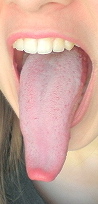
- TongueTongueThe tongue is a muscular hydrostat on the floors of the mouths of most vertebrates which manipulates food for mastication. It is the primary organ of taste , as much of the upper surface of the tongue is covered in papillae and taste buds. It is sensitive and kept moist by saliva, and is richly...
s of mammalMammalMammals are members of a class of air-breathing vertebrate animals characterised by the possession of endothermy, hair, three middle ear bones, and mammary glands functional in mothers with young...
s and reptileReptileReptiles are members of a class of air-breathing, ectothermic vertebrates which are characterized by laying shelled eggs , and having skin covered in scales and/or scutes. They are tetrapods, either having four limbs or being descended from four-limbed ancestors...
s - Trunks of elephantElephantElephants are large land mammals in two extant genera of the family Elephantidae: Elephas and Loxodonta, with the third genus Mammuthus extinct...
s - Echinoderm tube feetTube feetTube feet are the many small tubular projections found most famously on the oral face of a sea star's arms, but are characteristic of the water vascular system of the echinoderm phylum which also includes sea urchins, sand dollars and sea cucumbers and many other sea creatures.Tube feet function in...
- Leg extension in spiderSpiderSpiders are air-breathing arthropods that have eight legs, and chelicerae with fangs that inject venom. They are the largest order of arachnids and rank seventh in total species diversity among all other groups of organisms...
s is powered by hydrostatic pressure of the hemolymph generated by body muscles. - Perioral bristle use in the West Indian ManateeWest Indian ManateeThe West Indian Manatee is a manatee, and the largest surviving member of the aquatic mammal order Sirenia . The West Indian Manatee, Trichechus manatus, is a species distinct from the Amazonian Manatee, T. inunguis, and the West African Manatee, T. senegalensis...