
All Topics  
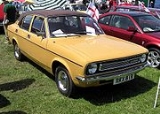
Morris Marina

 
Morris Marina

   Email Print
   Bookmark   Link


Morris Marina


The Morris Marina was a car manufactured by the Morris division of British Leyland
British Leyland Motor Corporation

British Leyland was a vehicle manufacturing company formed in the United Kingdom in 1968 as British Leyland Motor Corporation Ltd . It was partly nationalization in 1975 with the government creating a new holding company called British Leyland Ltd which became BL Ltd in 1978....
 throughout the 1970s, a period of great turbulence and difficulty for the British
United Kingdom

The United Kingdom of Great Britain and Northern Ireland, commonly known as the United Kingdom , the UK or Britain,is a sovereign state located off the northwestern coast of continental Europe....
 car industry. It was known in some markets as the Austin Marina, Leyland Marina, and Morris 1.7.

The model has been widely identified as symptomatic of the problems facing the industry at that time, with poor build quality, handling likened to a "skip
Skip (container)

Image:Skip containing rubbish 16s06.jpgA skip is a large open-topped container designed for loading onto a special type of lorry. Skips are commonly used to hold open topped loads of construction and demolition waste or other waste types....
 on wheels" and outdated design.


Discussion
Ask a question about 'Morris Marina'
Start a new discussion about 'Morris Marina'
Answer questions from other users
Full Discussion Forum


Recent Posts


Encyclopedia


Morris
The Morris Marina was a car manufactured by the Morris division of British Leyland
British Leyland Motor Corporation

British Leyland was a vehicle manufacturing company formed in the United Kingdom in 1968 as British Leyland Motor Corporation Ltd . It was partly nationalization in 1975 with the government creating a new holding company called British Leyland Ltd which became BL Ltd in 1978....
 throughout the 1970s, a period of great turbulence and difficulty for the British
United Kingdom

The United Kingdom of Great Britain and Northern Ireland, commonly known as the United Kingdom , the UK or Britain,is a sovereign state located off the northwestern coast of continental Europe....
 car industry. It was known in some markets as the Austin Marina, Leyland Marina, and Morris 1.7.

The model has been widely identified as symptomatic of the problems facing the industry at that time, with poor build quality, handling likened to a "skip
Skip (container)

Image:Skip containing rubbish 16s06.jpgA skip is a large open-topped container designed for loading onto a special type of lorry. Skips are commonly used to hold open topped loads of construction and demolition waste or other waste types....
 on wheels" and outdated design. The 1980 replacement for the Marina, the closely related Ital
Morris Ital

The Morris Ital was a medium-sized car built by British Leyland from 1980 until 1984....
, received similar criticism. The Marina has been described as one of the worst cars of all time, although it was one of the most popular cars in Britain
United Kingdom

The United Kingdom of Great Britain and Northern Ireland, commonly known as the United Kingdom , the UK or Britain,is a sovereign state located off the northwestern coast of continental Europe....
 throughout its production life.

Development

The Marina was developed under the ADO 28 codename. It was in production from 1971 to 1980, when it was replaced by the Morris Ital
Morris Ital

The Morris Ital was a medium-sized car built by British Leyland from 1980 until 1984....
 (a reworking of the Marina) that continued in production until 1984, when the Morris marque was axed and the Austin
Austin Motor Company

The Austin Motor Company was a United Kingdom manufacturer of automobiles that rose to be a major motorcar brand, the dominant partner after merger with Morris in 1952 but declining after absorption into the British Leyland Motor Corporation, and its subsequent troubles....
 badge featured on the Montego
Austin Montego

The Austin Montego is a British mid-size sedan car that was produced by the Austin Rover Group subsidiary of British Leyland , and its successors, from 1984 until 1994....
 that replaced it. In Australia and in South Africa
South Africa

The Republic of South Africa, also known by Official names of South Africa, is a country located at the southern tip of the continent of Africa....
, it was known as the Leyland Marina, in New Zealand as the Morris 1.7 (for 1979–81, in face-lifted O-Series form), and North America
North America

North America is the northern continent of the Americas, situated in the Earth's northern hemisphere and almost totally in the western hemisphere....
 as the Austin Marina.

In the early 1970s, BL decided that conservative, traditionally-engineered cars would be released under the Morris name, while more adventurous cars would be released as Austins or even as new marques — such as the Austin Allegro
Austin Allegro

The Austin Allegro is a small family car that was manufactured by British Leyland under the Austin Motor Company name from 1973 until 1983. The same vehicle was built in Italy by Innocenti in 1974 and 1975 and sold as the Innocenti Regent....
 and Leyland Princess
Leyland Princess

The Princess is a family car that was produced in the United Kingdom by British Leyland from 1975 until 1981. The car inherited a front wheel drive / transverse engine configuration from its predecessor, the BMC ADO17....
. Specifically this meant that Austins would make use of the groundbreaking transverse-engine front wheel drive layout developed by Alec Issigonis
Alec Issigonis

Sir Alexander Arnold Constantine Issigonis, Order of the British Empire, Fellow of the Royal Society was a Greece-United Kingdom designer of cars, now remembered chiefly for the groundbreaking and influential development of the Mini, launched by the British Motor Corporation in 1959....
, whilst Morris cars such as the Marina used a conventional rear wheel drive, live rear axle
Live axle

A live axle, sometimes called a solid axle, is a type of beam axle suspension that uses the driveshafts that transmit power to the wheels to connect the wheels laterally so that they move together as a unit....
 drivetrain as used on popular mass-market cars such as the Ford Escort
Ford Escort

Over the years, the name 'Ford Escort' has been used for several models.For more information, see:* Ford Squire* Ford Escort * Ford Escort ...
 and Vauxhall Viva
Vauxhall Viva

The Viva was produced by Vauxhall Motors in a succession of three versions between 1963 and 1979. These were known as the HA, the HB and the HC series....
. This strategy was also intended to improve sales in BL's export markets. Commonwealth
Commonwealth of Nations

The Commonwealth of Nations, also known as the Commonwealth or the British Commonwealth, is an intergovernmental organization of fifty-three independent member states....
 markets such as South Africa
South Africa

The Republic of South Africa, also known by Official names of South Africa, is a country located at the southern tip of the continent of Africa....
, Australia
Australia

Australia, officially the Commonwealth of Australia, is a country in the southern hemisphere comprising the Australia of the world's smallest continent, the major island of Tasmania, and numerous list of islands of Australia in the Indian Ocean and Pacific Oceans....
 and New Zealand
New Zealand

New Zealand is an island country in the south-western Pacific Ocean comprising two main landmasses , and numerous Islands of New Zealand, most notably Stewart Island/Rakiura and the Chatham Islands....
 were large buyers of BL products, but the innovative Austin cars were considered too fragile and complex for use in such countries, as well as being fitted exclusively with small, low-powered engine. As a result, the Marina was unadventurous, making use of tried and trusted BMC
British Motor Corporation

The British Motor Corporation was a United Kingdom vehicle company, formed by the merger of the Austin Motor Company and the Nuffield Organisation in 1952....
 components derived from the Morris Minor
Morris Minor

The Morris Minor was a popular British motor car aimed at the family market. It was the work of a team led by Alec Issigonis, who would go on to design the successful Mini....
 and MGB
MGB

The abbreviation MGB may refer to:* MG MGB, a sports car produced by the British Motor Corporation and British Leyland in the 1960s and 1970s and early 80's....
, and using mainly Triumph Dolomite
Triumph Dolomite

The Triumph Dolomite was a popular small sedan made by the Triumph Motor Company division of the British Leyland Corporation in Canley, Coventry in the 1970s and 1980s....
 transmission and running gear. Intended as a stop-gap design until new products were ready later in the 1970s, it was designed by Roy Haynes
Roy Haynes (designer)

Roy Haynes was a United Kingdom automobile designer. Haynes worked for Ford Motor Company where he was responsible for the design of the 1966 Ford Cortina....
, the same man who designed the Ford Cortina
Ford Cortina

The Ford Cortina is a mid-sized family car built by Ford of Britain in various guises from 1962 to 1982.The Cortina was Ford's mass-market mid-sized car and sold in enormous numbers, making it common on British roads....
 Mark II, with which it shares some stylistic similarities.

Soon after its launch, the Marina was indeed the only Morris-badged car on sale as the marque's Minor
Morris Minor

The Morris Minor was a popular British motor car aimed at the family market. It was the work of a team led by Alec Issigonis, who would go on to design the successful Mini....
 and Oxford
Morris Oxford

Morris Oxford is a series of automobile models by the Morris Motor Company of the United Kingdom, from the 1913 "Bullnose" Oxford to the 1961–1971 Oxford VI....
 models had both been shelved.

Roy Haynes attempted to put forward a system that many manufacturers now use, that of the common floor pan shared between models; the Marina was designed to be the first car utilising this idea. It was looked on as too radical by the management of British Leyland and after a short while Triumph designer Harry Webster was drafted in to push the project forward, Roy Haynes soon leaving the company. This protracted development period and the numerous changes made to the design by the various people working on it had a major effect on the Marina. It meant that the Marina (a car intended to be basic and conventional) cost more to develop than the Austin Allegro
Austin Allegro

The Austin Allegro is a small family car that was manufactured by British Leyland under the Austin Motor Company name from 1973 until 1983. The same vehicle was built in Italy by Innocenti in 1974 and 1975 and sold as the Innocenti Regent....
, its technically and aesthetically advanced stablemate. This is often held up as a prime example of British Leyland's poor project and cost management. The development costs were increased when it was decided that the saloon and coupe versions of the car should be designed separately- normal industry practise was to use one style as the basis for the other. Later, advertising for the car would hold this up as one of the coupe's selling points, but this policy caused added expense for the ADO28 project. The numerous redesigns also meant that the final design of the Marina was rushed as the project's final deadline grew near- the car went from design stage to production in just 18 months.

The engines were the venerable A-Series
BMC A-Series engine

Austin Motor Company's small straight-4 automobile engine, the A-Series, is one of the most common in the world. Launched in 1951 with the Austin A30, production lasted until 2000 in the Mini....
 and B-Series
BMC B-Series engine

The BMC B-series was a straight-4 internal combustion engine family, mostly used in automobile, created by United Kingdom company Austin Motor Company....
 units in 1.3 and 1.8 litre capacities, respectively, with rear wheels being driven through a live axle
Live axle

A live axle, sometimes called a solid axle, is a type of beam axle suspension that uses the driveshafts that transmit power to the wheels to connect the wheels laterally so that they move together as a unit....
. It featured torsion bar suspension at the front and leaf-spring suspension at the rear, and five body styles, saloon, estate
Station wagon

A station wagon in American English, Australian English, Canadian English and New Zealand English usage and an estate car in British English usage, is a passenger automobile with a car body style similar to a sedan but with the roofline following the full, sometimes extended rear cargo area, i.e. ending with a more vertical door...
, coupé
Coupé

A coup? or coupe is a closed car body style, the precise definition of which varies from manufacturer to manufacturer, and over time. Coup?s are often hardtopped sports cars or sporty variants of sedan body styles, with doors commonly reduced from 4 to 2, and a Close-coupled sedan interior offering either two seats or 2+2 seating ....
, pickup
Pickup truck

A pickup truck is a light motor vehicle with an open-top rear cargo area which is almost always separated from the cab to allow for chassis flex when carrying or pulling heavy loads....
 and van
Van

A van is a kind of vehicle used for transporting goods or groups of people. It is usually a box-shaped vehicle on four wheels, about the same width and length as a large automobile, but taller and usually higher off the ground, also referred to as a light commercial vehicle or LCV....
, the estate coming about almost one and a half years later in late 1972. The TC versions were equipped with a twin carburettor engine similar to that found in the MG MGB for extra performance. These could be fitted with a body kit from BL Special Tuning comprising front and rear spoilers
Spoiler (automotive)

A spoiler is an Automotive aerodynamics device whose intended design function is to 'spoil' unfavorable air movement across a body of a vehicle in motion....
, alloy
Alloy

An alloy is a partial or complete solid solution of one or more chemical element in a metallic matrix. Complete solid solution alloys give single solid phase microstructure, while partial solutions give two or more phases that may be homogeneous in distribution depending on thermal history....
 wheels, extra lighting and other details. A 1.5-litre diesel version, using an engine developed from the B-Series, was offered in Europe.

The car was popular with families and undemanding car buyers, and was available in the typical BL colours of the day — brown, beige, dark limeflower green, dark blue and a characteristically 1970s purple. It was intended to be a competitor to the generally similar Ford Cortina
Ford Cortina

The Ford Cortina is a mid-sized family car built by Ford of Britain in various guises from 1962 to 1982.The Cortina was Ford's mass-market mid-sized car and sold in enormous numbers, making it common on British roads....
 (and to some extent the smaller Escort
Ford Escort

Over the years, the name 'Ford Escort' has been used for several models.For more information, see:* Ford Squire* Ford Escort * Ford Escort ...
); the Vauxhall Viva
Vauxhall Viva

The Viva was produced by Vauxhall Motors in a succession of three versions between 1963 and 1979. These were known as the HA, the HB and the HC series....
 and later Vauxhall Cavalier
Vauxhall Cavalier

The Vauxhall Cavalier was a large family car sold primarily in the United Kingdom by Vauxhall Motors, the British subsidiary of General Motors Corporation , from 1975 to 1995....
; and the Hillman Avenger
Hillman Avenger

The Hillman Avenger was a rear-wheel drive Small family car originally manufactured under the Hillman marque by the Rootes between 1970 and 1976, and made by Chrysler Europe from 1976 to 1981 as the Chrysler Avenger and finally the Talbot Avenger....
 and Hunter
Hillman Hunter

Rootes Arrow was the manufacturer's name for a range of automobile produced under several badge engineering marques by the Rootes from 1966 to 1979....
. It shared its basic styling with all these cars, adopting a 'trans-atlantic' look that took elements of car styling from contemporary American cars (especially the front-end treatment in the Marina's case) and offered them at a scale acceptable to the European market. As with its mechanics, the Marina was not intended to be visually innovative or particularly interesting — its Austin Allegro
Austin Allegro

The Austin Allegro is a small family car that was manufactured by British Leyland under the Austin Motor Company name from 1973 until 1983. The same vehicle was built in Italy by Innocenti in 1974 and 1975 and sold as the Innocenti Regent....
 stablemate was the entry in that area of the market.

BL was beset with problems including industrial action throughout the period, and the Marina was one of a number of models that suffered. While the BL workers gradually eroded their own employment, manufacturers in Europe and Japan introduced innovative designs (such as the VW Golf) that the Marina and its like were never likely to compete with. The problems were compounded as the cars which were to replace the Marina and BL's other mid-size offerings were delayed again and again (eventually appearing as the Austin Maestro
Austin Maestro

The Austin Maestro is a mid-sized 5-door hatchback car that was produced from 1983 to 1994, initially by the Austin Rover Group subsidiary of British Leyland , and from 1988 onwards by successor organisation Rover Group....
 and Austin Montego
Austin Montego

The Austin Montego is a British mid-size sedan car that was produced by the Austin Rover Group subsidiary of British Leyland , and its successors, from 1984 until 1994....
 only in 1983/4). By this point, the idea of separate Austin and Morris ranges had been abandoned: there was not enough money to develop a full range of rear-wheel-drive Morris cars and an equivalent front-wheel-drive (FWD) Austin range and FWD was becoming increasingly acceptable across the market.

There were changes however, albeit small ones. A facelift in 1975 gave the Marina new radiator grilles, dashboard, seats, suspension modifications and increased soundproofing. The overhead camshaft O-Series engine (that also was also used for Leyland Princess
Leyland Princess

The Princess is a family car that was produced in the United Kingdom by British Leyland from 1975 until 1981. The car inherited a front wheel drive / transverse engine configuration from its predecessor, the BMC ADO17....
) appeared in 1.7 litre form in 1978 to replace the larger B-Series
BMC B-Series engine

The BMC B-series was a straight-4 internal combustion engine family, mostly used in automobile, created by United Kingdom company Austin Motor Company....
 1.8 models. A changed grille, including driving lights, a front spoiler and redesigned bumpers and rear lights were added to all models.

Under severe financial strain, BL was bailed out by the government under the Ryder Report
Ryder Report

Ryder Report can refer to either of two official reports produced, coincidentally both by D Ryders:*Ryder Report - the 2003 official report resulting from the inquiry by U.S....
 of 1975, and Sir Michael Edwardes
Sir Michael Edwardes

Michael Edwardes is a business executive....
 was brought in to oversee the company. Under his leadership, BL made an attempt to update the Marina, by enlisting the help of Giorgetto Giugiaro
Giorgetto Giugiaro

Giorgetto Giugiaro is an Italian automobile designer responsible equally for a stable of supercars and several of the most popular everyday vehicles driven today....
's ItalDesign. ItalDesign, however, did not design the car, which was an in-house product—it merely productionized it. The result of this exercise, the 1980 Morris Ital
Morris Ital

The Morris Ital was a medium-sized car built by British Leyland from 1980 until 1984....
 features large rear lamp clusters and a new front end, but the 1971 vintage of the design was obvious. The Ital lasted four years and was replaced by the Austin Montego
Austin Montego

The Austin Montego is a British mid-size sedan car that was produced by the Austin Rover Group subsidiary of British Leyland , and its successors, from 1984 until 1994....
 in early 1984, thus bringing to an end use of the Morris name on passenger cars.

Popularity


The Marina's public life did not get off to a good start. The rushed final stages of design and production, especially in regard to the suspension, meant that many of the press fleet cars had an incorrect front suspension set-up that produced almost dangerous levels of understeer
Understeer

Understeer is a term for a car handling condition in which during cornering the circular path of the vehicle's motion is of a greater radius than the circle indicated by the direction its wheels are pointed....
: Autocar
Autocar

Autocar is a weekly United Kingdom automobile magazine published by Haymarket Group. It is the oldest surviving car magazine in the world....
 reported that the car they were driving ended up on the wrong side of the road when taking a sharp corner. This was a particular problem with the more powerful 1.8 and 1.8TC cars, which were unfortunately the models the press were most likely to test, though the 1.3 litre models with their lighter engine did not suffer from the problem. Early production 1.8 Marinas were fitted with the original front suspension although a different lower link-arm (trunnion) was fitted quite quickly. The best estimate is that about 5,000 cars with the original suspension were sold to the public. The Marina was never intended, or designed, to have particularly exciting or sharp handling, but the early problems led to less-than flattering road test reports and it was undeniable that the Marina's handling always tended towards understeer, which for a rear-wheel drive car was unusual, and body-roll. What Car?
What Car?

What Car? is a long-running UK monthly automobile magazine and website, currently edited by Steve Fowler and published by Haymarket Group. First published in 1973, it is intended primarily as a magazine for consumers rather than dedicated automobile enthusiasts....
, in a very typical review, described the understeer as "noticeable", but called the car as a whole "unobtrusively well designed".

More comprehensive suspension changes were made with the introduction in 1975 of the Mk2 anti-roll bar
Sway bar

A sway bar is an automobile suspension device. It connects opposite wheels together through short lever arms linked by a torsion spring. A sway bar increases the suspension's roll stiffness?its resistance to roll in turns, independent of its Hooke's law#Spring equation in the vertical direction....
 were fitted which calmed the earlier cars wayward tendencies, but even as late as 1982, the Ital changed its' Marina front lever arm shock absorbers for telescopic front shock absorbers.

Despite heavy criticism from the media and motoring press, the car's lack of technical sophistication permitted it to be keenly priced and the Morris Marina was a very popular car in Britain and was among the country's best selling cars throughout its production life, peaking at second place – only surpassed by the Ford Cortina – in 1973. In many ways the car fulfilled its design brief of being an unpretentious, high volume, mass-market car for average-income families and business people.

The purposely simple and 'old-fashioned' design of the Marina was intended mainly to appeal to company car and corporate fleet buyers. This market was dominated by Ford with the Escort
Ford Escort

Over the years, the name 'Ford Escort' has been used for several models.For more information, see:* Ford Squire* Ford Escort * Ford Escort ...
 and Cortina
Ford Cortina

The Ford Cortina is a mid-sized family car built by Ford of Britain in various guises from 1962 to 1982.The Cortina was Ford's mass-market mid-sized car and sold in enormous numbers, making it common on British roads....
. BL's Austin products, with their advanced front-wheel drive and suspension systems were more expensive to buy and more costly to maintain, and so suffered poorer sales in these crucial markets. The Marina's front engined, rear-wheel drive, live rear axle layout was identical to the Ford products and most other mass-production saloons of the day. Although Ford remained dominant by a large margin, the Marina did succeed in capturing a larger share of the fleet/hire market and this contributed to its high sales but also its image as a rather dull, 'work-a-day' vehicle.

Marina production lasted almost 10 years, and in that time no fewer than 807,000 were sold across Britain, though it was less popular on export markets. Whilst intended to be a 'stop gap' design until a more up-to-date replacement could be developed, the problems faced by British Leyland in the mid-to-late 1970s meant that the Marina remained in production essentially unchanged other than some light facelifting and interior changes, as the competition moved ahead. Coupled to the continuing quality problems suffered by the car and the increasingly poor perception of BL cars as a whole, this sealed the Marinas' poor reputation despite its high sales. The relaunching of the then decade-old design as the Morris Ital
Morris Ital

The Morris Ital was a medium-sized car built by British Leyland from 1980 until 1984....
 only added to the image of an outdated, outclassed, and poor-performing vehicle.

A survey conducted by Auto Express magazine in August 2006 revealed that just 745 of the 807,000 Marinas sold in Britain are still on the road — fewer than one in a thousand. This made it officially the most-scrapped car to have been sold in Britain over the previous 30 years.

Engines

  • 1971–1980 - 1275 cc A-Series
    BMC A-Series engine

    Austin Motor Company's small straight-4 automobile engine, the A-Series, is one of the most common in the world. Launched in 1951 with the Austin A30, production lasted until 2000 in the Mini....
     Straight-4
    Straight-4

    The straight-4 or inline-4 engine is a four cylinder internal combustion engine with all four cylinder mounted in a straight line along the crankcase....
    , 60 hp (45 kW) at 5250 rpm and 69 ft·lbf (94 Nm) at 2500 rpm
  • 1971–1978 - 1798 cc B-Series
    BMC B-Series engine

    The BMC B-series was a straight-4 internal combustion engine family, mostly used in automobile, created by United Kingdom company Austin Motor Company....
     Straight-4
    Straight-4

    The straight-4 or inline-4 engine is a four cylinder internal combustion engine with all four cylinder mounted in a straight line along the crankcase....
  • 1971–1978 - 1798 cc B-Series
    BMC B-Series engine

    The BMC B-series was a straight-4 internal combustion engine family, mostly used in automobile, created by United Kingdom company Austin Motor Company....
     Straight-4
    Straight-4

    The straight-4 or inline-4 engine is a four cylinder internal combustion engine with all four cylinder mounted in a straight line along the crankcase....
     Twin carburettor
  • 1977–1980 - 1489 cc Straight-4
    Straight-4

    The straight-4 or inline-4 engine is a four cylinder internal combustion engine with all four cylinder mounted in a straight line along the crankcase....
     Diesel
  • 1978–1980 - 1695 cc O-Series
    BMC O-Series engine

    The BL O-Series engine was a straight-4 automobile engine family produced by British Leyland as a development of the BMC B-Series engine family....
     Straight-4
    Straight-4

    The straight-4 or inline-4 engine is a four cylinder internal combustion engine with all four cylinder mounted in a straight line along the crankcase....


North America

The Marina was available in the United States as the Austin Marina from 1973–75 in 2- and 4-door form. It was marketed as an Austin because Morris was a virtually unknown brand in the US and to capitalise on the success of the Austin-Healey
Austin-Healey

Austin-Healey is a defunct United Kingdom sports car maker. The marque was established through a joint venture arrangement, set up in 1952 between Leonard Lord of the Austin Motor Company division of the British Motor Corporation and Donald Healey, a renowned automotive engineer and designer....
 marque. The 1973 model still had the normal small bumpers, but the 1974/5 models had large bumpers to comply with new US regulations. It was only produced with the 1800 cc engine and was soon strangled by the emissions equipment required by US law, being fitted with an air pump and exhaust air injection. The US Government soon accused BL of "dumping" cars in the US which – combined with tales of poor quality – made it a very poor seller, and they were not exported to the US after 1975.

The Marina was also marketed in Canada
Canada

Canada is a country occupying most of northern North America, extending from the Atlantic Ocean in the east to the Pacific Ocean in the west and northward into the Arctic Ocean....
 as the Austin Marina, in 2-door coupé and 4-door saloon form, from 1973–78, using only the 1800 engine, fitted with US-style heavier bumpers and emissions equipment. Sales stopped when the 1.8 L engine was replaced by the 1.7 L engine, which was not emissions-certified in Canada. While its simple rear-wheel drive layout and mechanicals appealed to many Canadian drivers, the Marina's body was prone to extremely fast rust-out on the salted winter roads of eastern Canada, which limited sales in later years.

Denmark

In Denmark
Denmark

Denmark is a Scandinavian country in northern Europe and the senior member of the Kingdom of Denmark. It is the southernmost of the Nordic countries....
, the Morris Marina name was used for a badge-engineered version of the Morris 1100
BMC ADO16

ADO16 is the codename for the development of what became the Morris 1100, a small family car built by the British Motor Corporation and, later, British Leyland....
 in the early- to mid-1960s.

Australia

The Marina was introduced to the Australian market in April 1972 as the Morris Marina and then, following a change in marketing policy, sold there from 1973 under the Leyland Marina name. The Australian Marina, which was sold in sedan and coupé forms only, initially used the OHC E-Series four cylinder motor in 1500 cc, 1750 cc and 1750cc twin carburettor form. Additionally, as an ill-advised competitor to the Holden Torana and Ford Cortina 6 models, the Marina was also offered from November 1973 with a 121 hp (90 kW) 2600 cc E-series six cylinder engine.

This indigenous Marina variant was capable of 0–60 mph in under nine seconds. The Australian Marinas were built from CKD kits sent from Cowley in England, but used high levels of local content, including different running gear, axle, interiors, seals, seats, uprated dampers and mounts, uprated wheels and a higher grade of fit and finish. The Marina Six used a separate front sub-frame to support the weight of the Big Red engine and different front struts to try and improve handling. Leyland Australia were known for their own development and a version of the Rover V8 was converted into a V6 and test fitted to a Marina saloon, allegedly running in a race at Mt Panorama. A replacement was in development in 1974. Production of the Marina in Australia ended in 1974, when Leyland Australia's Zetland
Zetland

Zetland can refer to:Places* Zetland, New South Wales, a suburb of Sydney, Australia* Zetland, an archaic spelling of ShetlandOther* Marquess of Zetland...
 factory (home of the Leyland P76
Leyland P76

The Leyland P76 was a large automobile produced by British Motor Corporation , the Australian subsidiary of British Leyland. It was intended to provide the company with a genuine rival to large local models like the Ford Falcon , the Holden Kingswood, and the Chrysler Valiant....
) closed.

New Zealand

The Morris Marina was a popular car on the New Zealand market, imported by the New Zealand Motor Corporation. Imports began with built-up British sourced saloons (in 1.3 and 1.8L forms) in 1971, but local assembly of Australian sourced (E-Series engines) models began in 1972 after the release of the Marinas there. In 1974, before the demise of Leyland Australia's manufacturing operations, local assembly switched to British sourced models again in saloon, estate, van and pick-up forms. Batches of fully-built UK-sourced cars also came in in 1973 and 1974 when the government allowed additional import licences due to the inability of local assembly plants to keep pace with demand for new cars.

In 1979 the Marina received a facelift and the BL O-Series OHC 1.7L engine, however at the time the Marina name was perceived as negative by the New Zealand public — hence the Marina name was dropped completely, the car being renamed Morris 1.7. The Morris 1.7 had high equipment levels and included front spoilers and driving lights on all models. The related van and pickup models were renamed Morris 575.

Production of this car ceased in 1981, and the car was replaced locally by an expanded range of NZMC Honda products.

Rallying

In 1970, Donald Stokes ordered the BMC Competitions Department closed and disbanded. By the time the Marina appeared, it was becoming obvious that Stage Rallying was gaining popularity and in early 1971 it was decided to use the new model in the 1971 RAC rally, the following November. Luckily for BL, Special Tuning had a rally driver on its books by the name of Brian Culcheth and so with no team, no mechanics, no funding and initially no sponsorship a team of talented engineers developed a 1.3 Coupe into a rally car, funded purely by sales of performance parts from Special Tuning.

Knowing that the 1.8 engine would be too heavy for the handling, they concentrated on the 1.3 engine and using Mini
Mini

The Mini is a small Automobile that was produced by the British Motor Corporation and its successors from 1959 until 2000. The original is considered an icon of the 1960s, and its space-saving front-wheel-drive layout influenced a generation of car-makers....
 components got good horsepower figures from it; then they played a flanker to pen the field in the 1.3 classes. All rally teams used one particular course to test, so the car was fitted with a full-race 1.8 and blasted around the track in front of the Ford rally team — consequently they withdrew from the 1.3 class allowing the car to claim 1st in Class for the 1971 Rally.

Subsequently, the car was entered in seventeen more national and international rallies until 1975, either being placed or winning class honours in twelve of them, the others being crashes/failures.

For 1976, BL management decided to move to the Triumph Dolomite
Triumph Dolomite

The Triumph Dolomite was a popular small sedan made by the Triumph Motor Company division of the British Leyland Corporation in Canley, Coventry in the 1970s and 1980s....
 Sprint for its main rallying weapon.

In 1974 Foden commissioned a Rover V8
Rover V8 engine

The Rover V8 engine is a compact V8 internal combustion engine with aluminium cylinder heads and cylinder block, originally designed by General Motors Corporation and later re-designed and produced by Rover in the United Kingdom....
-engined Marina to compete in the London-Sahara-Munich rally. This stormed through several stages before suffering rear-axle failure in the desert. The rear axle had been the only part sourced from outside the BL parts bin.

Post-demise

During the early 1970s, George Turnbull
George Turnbull (autoindustry executive)

George Henry Turnbull Turnbull obtained a first degree at the University of Birmingham. He married in 1950 and fathered three children.Between 1950 and 1951 he held a post as personal assistant to the Technical Director of the Standard Motor Company....
 was retired from BL and took two Marinas, one saloon and one coupé to a small car producing company in Korea
Korea

Korea is a geographic area composed of two sovereign countries, a civilization, and a former state situated on the Korean Peninsula in East Asia....
 who were interested in developing their own car, instead of making other peoples cast-offs. Hyundai
Hyundai

Hyundai refers to a group of companies and related organizations founded by Chung Ju-yung in South Korea. The first Hyundai company was founded in 1947 as a construction company, and the Hyundai Group eventually became South Korea's largest Conglomerate ....
 took the Marinas and developed the Hyundai Pony
Hyundai Pony

The Hyundai Pony , was a small rear-wheel drive automobile produced by the Hyundai Motor Company from 1975 to 1988 ....
 from them, in three, four and five door variants, a station wagon
Station wagon

A station wagon in American English, Australian English, Canadian English and New Zealand English usage and an estate car in British English usage, is a passenger automobile with a car body style similar to a sedan but with the roofline following the full, sometimes extended rear cargo area, i.e. ending with a more vertical door...
, and a pick-up, kick-starting the company's ascendancy in car manufacturing.

The Marina lived on in many smaller ways: many parts from the Marina were used in other British Leyland vehicles. The door handles from the Marina were utilized in the Austin Allegro, Range Rover, Triumph TR7
Triumph TR7

The Triumph TR7 was a sports car manufactured from September 1974 to October 1981 by the Triumph Motor Company, part of British Leyland, in the United Kingdom....
, and the first series of Land Rover Discovery
Land Rover Discovery

The Discovery is a four wheel drive on-road and off-road vehicle from the British car maker Land Rover. There have been three generations of the vehicle, which is less expensive than the company's top Land Rover Range Rover model....
, until 1998. They were also used by some models of the Reliant Scimitar
Reliant Scimitar

Reliant Scimitar is a model name used by United Kingdom manufacturer Reliant for several models of sports car....
, and by various Lotus
Lotus Cars

File:Final assembly.jpgLotus Cars is a United Kingdom manufacturer of sports car and race car automobiles based at Hethel, Norfolk, England. The company designs and builds race and production automobiles of light weight and high Car handling characteristics....
 cars, including some versions of the Lotus Esprit
Lotus Esprit

The Lotus Esprit was a sports car built by Lotus in the United Kingdom from 1976 to 2004. The silver Italdesign concept that eventually became the Esprit was unveiled at the Turin Motor Show in 1972, and was a development of a stretched Lotus Europa chassis....
. The indicator switchgear, also used on the Triumph Stag
Triumph Stag

The Triumph Stag is a United Kingdom automobile that was sold between 1970 and 1978 by the Triumph Motor Company styled by the Italy designer Giovanni Michelotti....
, eventually became part of the Lamborghini Diablo
Lamborghini Diablo

The Lamborghini Diablo was a high-performance Mid-engine design sports car built by Italy automaker Lamborghini between 1990 and 2001, before it was replaced by the Lamborghini Murci?lago....
. Marina-sourced gearboxes were used in the MG Midget
MG Midget

The MG Midget is a small sports car produced by MG division of the British Motor Corporation from 1961 through to 1979. It re-used a famous pre-war name used on MG M-type, MG D-type, MG J-type and so on....
.

External links

  • Retrieved from AROnline on 27 September 2008


See also

  • Austin Allegro
    Austin Allegro

    The Austin Allegro is a small family car that was manufactured by British Leyland under the Austin Motor Company name from 1973 until 1983. The same vehicle was built in Italy by Innocenti in 1974 and 1975 and sold as the Innocenti Regent....