
Home      Discussion      Topics      Dictionary      Almanac
Signup       Login
Monongahela National Forest

Monongahela National Forest

Overview
The Monongahela National Forest is a national forest located in the Allegheny Mountains
Allegheny Mountains
The Allegheny Mountain Range , also spelled Alleghany, Allegany and, informally, the Alleghenies, is part of the vast Appalachian Mountain Range of the eastern United States and Canada...

 of eastern West Virginia
West Virginia
West Virginia is a state in the Appalachian and Southeastern regions of the United States, bordered by Virginia to the southeast, Kentucky to the southwest, Ohio to the northwest, Pennsylvania to the northeast and Maryland to the east...

, USA. It protects over 919000 acre (3,719 km²; 1,436 sq mi) of federally-owned land within a 1700000 acre (6,880 km²; 2,656 sq mi) proclamation boundary that includes much of the Potomac Highlands Region
Potomac Highlands of West Virginia
The Potomac Highlands of West Virginia centers on five counties in the upper Potomac River watershed in the western portion of the state's Eastern Panhandle, bordering Maryland and Virginia...

 and portions of 10 counties.
Discussion
Ask a question about 'Monongahela National Forest'
Start a new discussion about 'Monongahela National Forest'
Answer questions from other users
Full Discussion Forum
 
Unanswered Questions
Encyclopedia
The Monongahela National Forest is a national forest located in the Allegheny Mountains
Allegheny Mountains
The Allegheny Mountain Range , also spelled Alleghany, Allegany and, informally, the Alleghenies, is part of the vast Appalachian Mountain Range of the eastern United States and Canada...

 of eastern West Virginia
West Virginia
West Virginia is a state in the Appalachian and Southeastern regions of the United States, bordered by Virginia to the southeast, Kentucky to the southwest, Ohio to the northwest, Pennsylvania to the northeast and Maryland to the east...

, USA. It protects over 919000 acre (3,719 km²; 1,436 sq mi) of federally-owned land within a 1700000 acre (6,880 km²; 2,656 sq mi) proclamation boundary that includes much of the Potomac Highlands Region
Potomac Highlands of West Virginia
The Potomac Highlands of West Virginia centers on five counties in the upper Potomac River watershed in the western portion of the state's Eastern Panhandle, bordering Maryland and Virginia...

 and portions of 10 counties.

The MNF includes some major landform features such as the Allegheny Front
Allegheny Front
The Allegheny Front is the major southeast- or east-facing escarpment in the Allegheny Mountains in southern Pennsylvania, western Maryland, and eastern West Virginia, USA. The Allegheny Front delineates the Ridge-and-Valley Appalachians to its east from the Appalachian Plateau to its west...

 and the western portion of the Ridge-and-valley Appalachians
Ridge-and-valley Appalachians
The Ridge-and-Valley Appalachians, also called the Ridge and Valley Province or the Valley and Ridge Appalachians, are a physiographic province of the larger Appalachian division and are also a belt within the Appalachian Mountains extending from southeastern New York through northwestern New...

. Within the Forest are most of the highest mountain peaks in the state, including the highest, Spruce Knob
Spruce Knob
Spruce Knob, at , is the highest point in the state of West Virginia and the summit of Spruce Mountain, the tallest mountain in the Alleghenies.-Overview:...

 (4,863 ft), also the highest point in the Alleghenies. Approximately 75 tree species are found in the Forest. Almost all of the trees are a second growth forest
Secondary forest
A secondary forest is a forest or woodland area which has re-grown after a major disturbance such as fire, insect infestation, timber harvest or windthrow, until a long enough period has passed so that the effects of the disturbance are no longer evident...

, grown back after the land was heavily cutover around the turn of the 20th century. Species for which the Forest is important include red spruce
Red Spruce
Picea rubens is a species of spruce native to eastern North America, ranging from eastern Quebec to Nova Scotia, and from New England south in the Adirondack Mountains and Appalachians to western North Carolina.-Physical description:...

 (Picea rubens), balsam fir
Balsam Fir
The balsam fir is a North American fir, native to most of eastern and central Canada and the northeastern United States .-Growth:It is a small to medium-size evergreen tree typically tall, rarely to tall, with a narrow conic crown...

 (Abies balsamea), and mountain ash
Sorbus americana
The tree species Sorbus americana is commonly known as the American Mountain-ash. It is a relatively small deciduous perennial tree, native to eastern northern North America....

 (Sorbus americana).

The MNF includes eight U.S. Wilderness Areas and several special-use areas, notably the Spruce Knob-Seneca Rocks National Recreation Area
Spruce Knob-Seneca Rocks National Recreation Area
Spruce Knob-Seneca Rocks National Recreation Area is a U.S. National Recreation Area located within the Monongahela National Forest of eastern West Virginia, USA.The National Recreation Area protects three prominent West Virginia landmarks:...

.

Administration


The forest is administered from the main headquarters in Elkins, West Virginia
Elkins, West Virginia
Elkins is a city in Randolph County, West Virginia, United States. The community was incorporated in 1890 and named in honor of Stephen Benton Elkins , a U.S. Senator from West Virginia. The population was 7,032 at the 2000 census. It is the county seat of Randolph County...

 and four ranger districts. The Forest has approximately 105 permanent employees, with this force augmented by senior citizens, temporary employees, and volunteers.

Ranger Districts


Monongahela National Forest is currently divided into four ranger districts. The Cheat-Potomac and Marlinton-White Sulphur Springs were formed by combining their namesake districts; in the merged districts, the offices for both original districts were retained.
  • Cheat-Potomac Ranger District, Headquarters: Parsons, West Virginia
    Parsons, West Virginia
    The town of Parsons is the county seat of Tucker County, West Virginia, in the United States. The population was 1,463 at the 2000 census. The mayor of Parsons is Dorothy Judy and the city administrator is Jason Myers...

    • Office (former HQ, Potomac Ranger District) at Petersburg, West Virginia
      Petersburg, West Virginia
      Petersburg is a city in Grant County, West Virginia, United States. The population was 2,423 at the 2000 census. It is the county seat of Grant County.-History:...

  • Gauley Ranger District, Headquarters: Richwood, West Virginia
    Richwood, West Virginia
    Richwood is a city in Nicholas County, West Virginia, United States. The population was 2,477 at the 2000 census. A former coal and lumber boom town, the city's population once flirted with 10,000 but the closure of many underground coal mines caused many of Richwood's residents to leave the state...

  • Greenbrier Ranger District, Headquarters: Bartow, West Virginia
    Bartow, West Virginia
    Bartow is an unincorporated census-designated place in Pocahontas County, West Virginia, USA. As of the 2010 census, its population was 111.Bartow is situated along U.S. Route 250 and West Virginia Route 92 and on the East Fork Greenbrier River about east of Durbin. It has a post office with ZIP...

  • Marlinton-White Sulphur Springs Ranger District, Headquarters: Marlinton, West Virginia
    Marlinton, West Virginia
    Marlinton is a town in Pocahontas County, West Virginia, United States. The population was 1,204 at the 2000 census. It is the county seat of Pocahontas County.-History:...

    • Office (former HQ, White Sulphur Springs Ranger District) at White Sulphur Springs, West Virginia
      White Sulphur Springs, West Virginia
      White Sulphur Springs is a city in Greenbrier County, West Virginia, United States. The population was 2,444 at the 2010 census.-Geography:White Sulphur Springs is located at ....


History


The Monongahela National Forest was established following passage of the Weeks Act
Weeks Act
The Weeks Act is a federal law passed by the US Congress on 1 March 1911 in the United States. The law, introduced by Congressman John W. Weeks of Massachusetts, authorized the Secretary of Agriculture to "Examine, locate and recommend for purchase ... such lands within the watersheds of navigable...

 in 1911. This act authorized the purchase of land for long-term watershed protection and natural resource management following the massive cutting of the Eastern forests in the late 19th and early 20th centuries. In 1915, 7200 acres (29.1 km²) were acquired to begin the forest, called the Monongahela Purchase, and on April 28, 1920 it became the Monongahela National Forest. By the end of 1924, the Monongahela had a total ownership of some 150367 acres (609 km²).

Although white-tail deer never became completely extirpated from the MNF, from the 1890s to the 1920s their numbers throughout the state (as with most of the eastern US) were being officially reported as "almost zero". In January 1930, eight deer procured from Michigan
Michigan
Michigan is a U.S. state located in the Great Lakes Region of the United States of America. The name Michigan is the French form of the Ojibwa word mishigamaa, meaning "large water" or "large lake"....

 were released into the Forest near Parsons
Parsons, West Virginia
The town of Parsons is the county seat of Tucker County, West Virginia, in the United States. The population was 1,463 at the 2000 census. The mayor of Parsons is Dorothy Judy and the city administrator is Jason Myers...

. From 1937 to 1939, a total of 17 more deer were released in the Flatrock-Roaring Plains area of the Forest. These releases served as the nucleus for reestablishing the healthy breeding populations of eastern West Virginia. (By the mid-1940s, deer were so numerous in the area that crop farmers had to patrol their fields by night.)

In 1943 and 1944, as part of the West Virginia Maneuver Area
West Virginia Maneuver Area
The West Virginia Maneuver Area was a vast, five-county training ground in the Allegheny Mountains of eastern West Virginia used by the U.S. Army during World War II to train soldiers in low-altitude mountain operations...

, the U.S. Army used parts of the MNF as a practice artillery
Artillery
Originally applied to any group of infantry primarily armed with projectile weapons, artillery has over time become limited in meaning to refer only to those engines of war that operate by projection of munitions far beyond the range of effect of personal weapons...

 and mortar
Mortar (weapon)
A mortar is an indirect fire weapon that fires explosive projectiles known as bombs at low velocities, short ranges, and high-arcing ballistic trajectories. It is typically muzzle-loading and has a barrel length less than 15 times its caliber....

 range and maneuver area before troops were sent to Europe to fight in World War II. Artillery and mortar shells shot into the area for practice are still occasionally found there today. Seneca Rocks
Seneca Rocks
Seneca Rocks is a large crag and local landmark in Pendleton County in the Eastern Panhandle of West Virginia, USA. It is easily visible and accessible along West Virginia Route 28 near U.S. Route 33 in the Spruce Knob-Seneca Rocks National Recreation Area of the Monongahela National Forest...

 and other area cliffs were also used for assault climbing instruction. This was the Army's only low-altitude climbing school.

The fisher
Fisher (animal)
The fisher is a medium-size mammal native to North America. It is a member of the mustelid family, commonly referred to as the weasel family. The fisher is closely related to but larger than the American Marten...

 (Martes pennanti), believed to have been exterminated in the state by 1912, was reintroduced during the winter of 1969. At that time 23 fishers were translocated from New Hampshire to two sites within boundaries of the MNF (at Canaan Mountain in Tucker County and Cranberry Glades in Pocahontas County).

General


  • Land area: over 919000 acres (3,719 km²)
  • Wilderness areas: 94991 acres (384 km²)
  • Roads: 570 miles (917.3 km)
  • Visitor centers: 2 (Cranberry Mountain Nature Center and Seneca Rocks Discovery Center)
  • Designated Scenic Areas: 3
  • Visitor observation towers: 2 (Bickle Knob
    Bickle Knob
    Bickle Knob is a mountain summit located east of Elkins in Randolph County, West Virginia. Easily accessible during warm-weather months, Bickle Knob is also home to one of the few remaining observation towers in Monongahela National Forest....

     Tower and Olson Tower)
  • Picnic areas: 17
  • Campgrounds: 23
  • Snowmobile areas: 1 (Highland Scenic Highway)
  • Wildlife management areas (managed with West Virginia Division of Natural Resources
    West Virginia Division of Natural Resources
    The West Virginia Division of Natural Resources is an agency of the government of the U.S. state of West Virginia. While formerly known as the cabinet-level Department of Natural Resources, it is now part of the West Virginia Department of Commerce...

    ): 10
  • Warm-water fishing steams: 129 miles (207.6 km)
  • Trout streams: 576 miles (927 km)
  • Impoundments (reservoirs): 5

Trails

  • Trails: 825 miles (1,327 km)
    • Outside Wilderness Areas: 660 miles (1,062 km), not counting the 3 newest wildernesses
    • In Wilderness Areas: 165 miles (265 km), not counting the 3 newest wildernesses

Geography


The MNF encompasses most of the southern third of the Allegheny Mountains
Allegheny Mountains
The Allegheny Mountain Range , also spelled Alleghany, Allegany and, informally, the Alleghenies, is part of the vast Appalachian Mountain Range of the eastern United States and Canada...

 range (a section of the vast Appalachian Mountains
Appalachian Mountains
The Appalachian Mountains #Whether the stressed vowel is or ,#Whether the "ch" is pronounced as a fricative or an affricate , and#Whether the final vowel is the monophthong or the diphthong .), often called the Appalachians, are a system of mountains in eastern North America. The Appalachians...

 range) and is entirely within the state of West Virginia. Elevations within the MNF range from about 900 feet (274.3 m) at Petersburg
Petersburg, West Virginia
Petersburg is a city in Grant County, West Virginia, United States. The population was 2,423 at the 2000 census. It is the county seat of Grant County.-History:...

 to 4863 feet (1,482.2 m) at Spruce Knob. A rain shadow effect caused by slopes of the Allegheny Front results in 60 inches (1,524 mm) of annual precipitation on the west side and about half that on the east side.

Headwaters of six major river systems are located within the forest: Monongahela
Monongahela River
The Monongahela River is a river on the Allegheny Plateau in north-central West Virginia and southwestern Pennsylvania in the United States...

, Potomac
Potomac River
The Potomac River flows into the Chesapeake Bay, located along the mid-Atlantic coast of the United States. The river is approximately long, with a drainage area of about 14,700 square miles...

, Greenbrier
Greenbrier River
The Greenbrier River is a tributary of the New River, long, in southeastern West Virginia, USA. Via the New, Kanawha and Ohio Rivers, it is part of the watershed of the Mississippi River, draining an area of...

, Elk
Elk River (West Virginia)
The Elk River is a tributary of the Kanawha River, long, in central West Virginia in the United States. Via the Kanawha and Ohio Rivers, it is part of the watershed of the Mississippi River.-Course:...

, Tygart
Tygart Valley River
The Tygart Valley River — also known as the Tygart River — is a principal tributary of the Monongahela River, approximately long, in east-central West Virginia, USA...

, and Gauley
Gauley River
The Gauley River is a river in West Virginia. It merges with the New River to form the Kanawha River, a tributary of the Ohio River. It is one of the most popular advanced whitewater runs in the Eastern United States and is the chief feature of the Gauley River National Recreation Area.-Headwaters...

. Twelve rivers are currently under study for possible inclusion in the National Wild and Scenic Rivers System.

Ecology


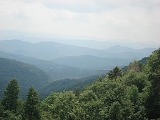
The Forest is noted for its rugged landscape with spectacular views, blueberry thickets, highland bogs and "sods
Sods
Sods is a term used in the Allegheny Mountains of eastern West Virginia for a mountain top meadow or bog, in an area that is otherwise generally forested...

", and open areas with exposed rocks. In addition to the second-growth forest trees, the wide range of botanical species found includes rhododendron
Rhododendron maximum
Rhododendron maximum — also called great rhododendron, great laurel, rosebay rhododendron, American rhododendron or big rhododendron — is a species of Rhododendron native to eastern North America, from Nova Scotia south to northern Alabama.-Description:R. maximum is an evergreen shrub growing to 4...

, laurel
Kalmia latifolia
Kalmia latifolia, commonly called Mountain-laurel or Spoonwood, is a species of flowering plant in the blueberry family, Ericaceae, that is native to the eastern United States. Its range stretches from southern Maine south to northern Florida, and west to Indiana and Louisiana. Mountain-laurel is...

 on the moist west side of the Allegheny Front, and cactus
Eastern prickly pear
Opuntia humifusa, commonly known as the Eastern Prickly Pear or Indian Fig, is a native cactus found in most of eastern North America. It ranges from Montana eastward to southern Ontario and then on to Massachusetts, south to Florida and westward to New Mexico.The green stems of this low-growing...

 and endemic shale barren species on the drier eastern slopes.

There are 230 known species of birds inhabiting the MNF: 159 are known to breed there, 89 are Neotropical migrants; 71 transit the Forest during migration, but do not breed there, and 17 non-breeding species are Neotropical. The Brooks Bird Club (BBC) conducts an annual bird banding and survey project in the vicinity of Dolly Sods Scenic Area during migration (August - September). The Forest provides habitat for 9 federally listed endangered or threatened species: 2 bird species, 2 bat species, 1 subspecies of flying squirrel, 1 salamander species, and 3 plant species. Fifty other species of rare/sensitive plants and animals also occur in the forest.

Larger animals and game species found in the forest include black bear
American black bear
The American black bear is a medium-sized bear native to North America. It is the continent's smallest and most common bear species. Black bears are omnivores, with their diets varying greatly depending on season and location. They typically live in largely forested areas, but do leave forests in...

, wild turkey
Wild Turkey
The Wild Turkey is native to North America and is the heaviest member of the Galliformes. It is the same species as the domestic turkey, which derives from the South Mexican subspecies of wild turkey .Adult wild turkeys have long reddish-yellow to grayish-green...

, white-tailed deer
White-tailed Deer
The white-tailed deer , also known as the Virginia deer or simply as the whitetail, is a medium-sized deer native to the United States , Canada, Mexico, Central America, and South America as far south as Peru...

, gray
Eastern Gray Squirrel
The eastern gray squirrel is a tree squirrel in the genus Sciurus native to the eastern and midwestern United States, and to the southerly portions of the eastern provinces of Canada...

 and fox squirrel
Fox Squirrel
The fox squirrel is the largest species of tree squirrel native to North America...

s, rabbit
Eastern Cottontail
The eastern cottontail is a New World cottontail rabbit, a member of the family Leporidae. It is one of the most common rabbit species in North America.-Distribution:...

s, snowshoe hare
Snowshoe Hare
The Snowshoe Hare , also called the Varying Hare, or Snowshoe Rabbit, is a species of hare found in North America. It has the name "snowshoe" because of the large size of its hind feet and the marks its tail leaves. The animal's feet prevent it from sinking into the snow when it hops and walks...

, woodcock
Woodcock
The woodcocks are a group of seven or eight very similar living species of wading birds in the genus Scolopax. Only two woodcocks are widespread, the others being localized island endemics. Most are found in the Northern Hemisphere but a few range into Wallacea...

, and grouse
Ruffed Grouse
The Ruffed Grouse is a medium-sized grouse occurring in forests from the Appalachian Mountains across Canada to Alaska. It is non-migratory.The Ruffed Grouse is frequently referred to as a "partridge"...

. Limited waterfowl habitat exists in certain places. Furbearers include beaver
American Beaver
The North American Beaver is the only species of beaver in the Americas, native to North America and introduced to South America. In the United States and Canada, where no other species of beaver occurs, it is usually simply referred to as "beaver"...

, red
Red Fox
The red fox is the largest of the true foxes, as well as being the most geographically spread member of the Carnivora, being distributed across the entire northern hemisphere from the Arctic Circle to North Africa, Central America, and the steppes of Asia...

 and gray fox
Gray Fox
The gray fox is a mammal of the order Carnivora ranging throughout most of the southern half of North America from southern Canada to the northern part of South America...

, bobcat
Bobcat
The bobcat is a North American mammal of the cat family Felidae, appearing during the Irvingtonian stage of around 1.8 million years ago . With twelve recognized subspecies, it ranges from southern Canada to northern Mexico, including most of the continental United States...

, fisher
Fisher (animal)
The fisher is a medium-size mammal native to North America. It is a member of the mustelid family, commonly referred to as the weasel family. The fisher is closely related to but larger than the American Marten...

, otter
Northern River Otter
The North American river otter , also known as the northern river otter or the common otter, is a semiaquatic mammal endemic to the North American continent, found in and along its waterways and coasts. An adult river otter can weigh between 5 and 14 kg...

, raccoon
Raccoon
Procyon is a genus of nocturnal mammals, comprising three species commonly known as raccoons, in the family Procyonidae. The most familiar species, the common raccoon , is often known simply as "the" raccoon, as the two other raccoon species in the genus are native only to the tropics and are...

 and mink
American Mink
The American mink is a semi-aquatic species of Mustelid native to North America, though human intervention has expanded its range to many parts of Europe and South America. Because of this, it is classed as Least Concern by the IUCN. Since the extinction of the sea mink, the American mink is the...

. Other hunted species include coyote
Coyote
The coyote , also known as the American jackal or the prairie wolf, is a species of canine found throughout North and Central America, ranging from Panama in the south, north through Mexico, the United States and Canada...

s, skunk
Striped Skunk
The striped skunk, Mephitis mephitis, is an omnivorous mammal of the skunk family Mephitidae. Found over most of the North American continent north of Mexico, it is one of the best-known mammals in Canada and the United States.-Description:...

s, opossum
Virginia Opossum
The Virginia opossum , commonly known as the North American opossum or tlacuache in Mexico, is the only marsupial found in North America north of Mexico. A solitary and nocturnal animal about the size of a domestic cat, and thus the largest opossum, it is a successful opportunist...

s, woodchucks, crow
American Crow
The American Crow is a large passerine bird species of the family Corvidae. It is a common bird found throughout much of North America...

s, and weasel
Weasel
Weasels are mammals forming the genus Mustela of the Mustelidae family. They are small, active predators, long and slender with short legs....

s. There are 12 species of game (pan) fish and 60 species of nongame or forage fish
Forage fish
Forage fish, also called prey fish or bait fish, are small fish which are preyed on by larger predators for food. Predators include other larger fish, seabirds and marine mammals. Typical ocean forage fish feed near the base of the food chain on plankton, often by filter feeding...

. Some 90% of the trout waters of West Virginia are within the forest.

Recreation


The MNF is a recreation destination and major tourism attraction, hosting approximately 3 million visitors annually. The extensive backwoods road and trail system is available for hiking
Hiking
Hiking is an outdoor activity which consists of walking in natural environments, often in mountainous or other scenic terrain. People often hike on hiking trails. It is such a popular activity that there are numerous hiking organizations worldwide. The health benefits of different types of hiking...

, mountain biking
Mountain biking
Mountain biking is a sport which consists of riding bicycles off-road, often over rough terrain, using specially adapted mountain bikes. Mountain bikes share similarities with other bikes, but incorporate features designed to enhance durability and performance in rough terrain.Mountain biking can...

, horse riding. There are many miles of railroad grades that are a link in the recreation use of the Forest. (The longest is the Glady
Glady, West Virginia
Glady is an unincorporated community in Randolph County, West Virginia, United States. Glady is southeast of Elkins. Glady has a post office with ZIP code 26268....

 to Durbin West Fork Railroad Trail which is 23 miles (37 km) long.) Recreation ranges from self reliant treks in the wildernesses and backcountry areas to the challenges of mountain climbing to traditional developed site camping. Canoeing
Canoeing
Canoeing is an outdoor activity that involves a special kind of canoe.Open canoes may be 'poled' , sailed, 'lined and tracked' or even 'gunnel-bobbed'....

, hunting
Hunting
Hunting is the practice of pursuing any living thing, usually wildlife, for food, recreation, or trade. In present-day use, the term refers to lawful hunting, as distinguished from poaching, which is the killing, trapping or capture of the hunted species contrary to applicable law...

, trapping, fishing, and wildlife
Wildlife
Wildlife includes all non-domesticated plants, animals and other organisms. Domesticating wild plant and animal species for human benefit has occurred many times all over the planet, and has a major impact on the environment, both positive and negative....

 viewing are also popular uses.

Campgrounds


  • Bear Heaven Campground
  • Big Bend Campground
  • Big Rock Campground
  • Bird Run Campground
  • Bishop Knob Campground
  • Blue Bend Recreation Area
  • Cranberry Campground
  • Cranberry River Sites

  • Day Run Campground
  • Gatewood Group Camp
  • Horseshoe Campground
  • Island Campground
  • Jess Judy Group Campground
  • Lake Sherwood
    Lake Sherwood
    Lake Sherwood may refer to some places in the United States:United States*Lake Sherwood, California, a gated community*Lake Sherwood, Wisconsin, a CDP*Lake Sherwood , a lake*Lake Sherwood , a lake in the Monongahela National Forest...

     Recreation Area
  • Laurel Fork Campground
  • Middle Mountain Cabins
    Middle Mountain Cabins
    Middle Mountain Cabins are a set of three historic cabins located in the Monongahela National Forest near Wymer, Randolph County, West Virginia. They were built in 1931, and consist of the Main Cabin and Cabins 1 and 2. The Main Cabin is a one-story, rectangular, stained log building measuring...


  • Pocahontas Campground
  • Red Creek Campground
  • Seneca Shadows Campground
  • Spruce Knob Lake Campground
  • Stuart Campground
  • Stuart Group Campground
  • Summit Lake Campground
  • Tea Creek Campground
  • Williams River
    Williams River (West Virginia)
    The Williams River is a tributary of the Gauley River, 33 miles long, in east-central West Virginia, USA. Via the Gauley, Kanawha and Ohio Rivers, it is part of the watershed of the Mississippi River, draining an area of 132 square miles in a sparsely populated region of the southern Allegheny...

     sites


Commercial resources


The Forest administration maintains wildlife and timber programs aimed at managing a diverse mix of tree species and ages. About 81 percent of the total Forest area is closed canopy forest over 60 years of age. The tree species most valuable for timber and for wildlife food in the MNF are black cherry
Black Cherry
Prunus serotina, commonly called black cherry, wild black cherry, rum cherry, or mountain black cherry, is a woody plant species belonging to the genus Prunus...

 and oak
Oak
An oak is a tree or shrub in the genus Quercus , of which about 600 species exist. "Oak" may also appear in the names of species in related genera, notably Lithocarpus...

s. The Forest's commercial timber sale program averages 30 mbf (million board feet) of timber sold per year with a yearly average value of $7.5 million. A variety of cutting techniques are used, from cutting of single trees to clearcutting blocks up to 25 acres (101,171.5 m²) in size. Regeneration cuts (clearcuts or other treatments designed to start a new timber stand) occur on approximately 1300 acres (5.3 km²) yearly out of the more than 909000 acres (3,678.6 km²) forest total.

Mineral resources located in the MNF include coal, gas, limestone
Limestone
Limestone is a sedimentary rock composed largely of the minerals calcite and aragonite, which are different crystal forms of calcium carbonate . Many limestones are composed from skeletal fragments of marine organisms such as coral or foraminifera....

, and gravel
Gravel
Gravel is composed of unconsolidated rock fragments that have a general particle size range and include size classes from granule- to boulder-sized fragments. Gravel can be sub-categorized into granule and cobble...

; but not oil. Sheep and cattle grazing occurs on about 7000 acres (28.3 km²).

Receipts for timber, grazing, land uses, minerals, and recreation use averaged $4,840,466 annually between FY92 and FY96, and 25% of that (an average of $1,210,116 per year) was returned to counties that include MNF lands. This money is intended for use by local schools and for roads. The remaining 75% each year is returned to the U.S. Treasury.

U.S. Wilderness Areas


  • Big Draft Wilderness, 5144 acres (21 km²)
  • Cranberry Wilderness
    Cranberry Wilderness
    The Cranberry Wilderness is a U.S. Wilderness area in the Monongahela National Forest of southeast West Virginia, USA. Its name derives from the nearby Cranberry Glades as well as from the Cranberry River and Cranberry Mountain...

    , 47815 acres (194 km²)
  • Dolly Sods Wilderness
    Dolly Sods Wilderness
    The Dolly Sods Wilderness — originally simply Dolly Sods — is a U.S. Wilderness Area in the Allegheny Mountains of eastern West Virginia, USA, and is part of the Monongahela National Forest of the U.S. Forest Service ....

    , 17371 acres (70 km²)
  • Laurel Fork North Wilderness
    Laurel Fork North Wilderness
    Laurel Fork North Wilderness is a U.S. Wilderness Area located in the Greenbrier Ranger District of Monongahela National Forest in West Virginia. The Wilderness protects high-elevation lands along Laurel Fork and is bordered by Middle Mountain to the west. It is a companion to Laurel Fork South...

    , 6055 acres (25 km²)
  • Laurel Fork South Wilderness
    Laurel Fork South Wilderness
    Laurel Fork South Wilderness is a U.S. Wilderness Area located in the Greenbrier Ranger District of Monongahela National Forest in West Virginia. The Wilderness protects high-elevation lands along Laurel Fork and is bordered by Middle Mountain to the west. It is a companion to Laurel Fork North...

    , 5784 acres (23 km²)
  • Otter Creek Wilderness
    Otter Creek Wilderness
    The Otter Creek Wilderness is a U.S. Wilderness area located in the Cheat-Potomac Ranger District of Monongahela National Forest in West Virginia. The Wilderness sits in a bowl-shaped valley formed by Otter Creek, between McGowan Mountain and Shavers Mountain in Tucker County and Randolph County,...

    , 20698 acres (84 km²)
  • Roaring Plains West Wilderness
    Roaring Plains West Wilderness
    The Roaring Plains West Wilderness is a U.S. Wilderness Area in the Allegheny Mountains of eastern West Virginia, USA. It is part of the Monongahela National Forest and includes Mount Porte Crayon, the sixth highest point in the state....

    , 6792 acres (27 km²)
  • Spice Run Wilderness
    Spice Run Wilderness
    Spice Run Wilderness is a U.S. Wilderness area within the Monongahela National Forest of West Virginia, USA. Fairly remote, it has no passenger car access whatever.-Access:...

    , 6030 acres (24 km²)

Registered National Natural Landmarks


  • Big Run Bog
  • Blister Run Swamp
  • Canaan Valley
    Canaan Valley
    Canaan Valley is an oval, bowl-like upland valley in northeastern Tucker County, West Virginia, USA. Within it are extensive wetlands and the headwaters of the Blackwater River which spills out of the valley at Blackwater Falls...

  • Cranberry Glades Botanical Area
    Cranberry Glades Botanical Area
    Cranberry Glades — also known simply as The Glades — are a cluster of five small, boreal-type bogs in southwestern Pocahontas County, West Virginia, USA. This area, high in the Allegheny Mountains at about , is protected as the Cranberry Glades Botanical Area, part of the Monongahela National Forest...

  • Fisher Spring Run Bog
  • Gaudineer Scenic Area
    Gaudineer Scenic Area
    The Gaudineer Scenic Area is a scenic area and National Natural Landmark in the Monongahela National Forest . It is situated just north of Gaudineer Knob of Shavers Mountain on the border of Randolph and Pocahontas Counties, West Virginia, USA, about northwest of the town of...

  • Germany Valley Karst Area
    Germany Valley
    Germany Valley is a scenic upland valley high in the Allegheny Mountains of eastern West Virginia originally settled by German farmers in the mid-18th Century...

  • Shavers Mountain Spruce-Hemlock Stand
  • Sinnett-Thorn Mountain Cave System

Stands of old growth forest


Some 318 acres (1.3 km²) of true old growth forest have been documented within the MNF. The largest of these areas are:
  • Fanny Bennett Hemlock Grove, a 70 acres (283,280.2 m²) eastern hemlock stand
  • Gaudineer Scenic Area
    Gaudineer Scenic Area
    The Gaudineer Scenic Area is a scenic area and National Natural Landmark in the Monongahela National Forest . It is situated just north of Gaudineer Knob of Shavers Mountain on the border of Randolph and Pocahontas Counties, West Virginia, USA, about northwest of the town of...

    , 50 acres of virgin red spruce
    Red Spruce
    Picea rubens is a species of spruce native to eastern North America, ranging from eastern Quebec to Nova Scotia, and from New England south in the Adirondack Mountains and Appalachians to western North Carolina.-Physical description:...

     forest
  • North Fork Mountain
    North Fork Mountain
    North Fork Mountain is a quartzite-capped mountain ridge in the Ridge and Valley physiographic province of the Allegheny Mountains of eastern West Virginia, USA...

     Red Pine Botanical Area, 10 acres of red pine
    Red Pine
    Pinus resinosa, commonly known as the red pine or Norway pine, is pine native to North America. The Red Pine occurs from Newfoundland west to Manitoba, and south to Pennsylvania, with several smaller, disjunct populations occurring in the Appalachian Mountains in Virginia and West Virginia, as well...

     old growth forest
  • North Spruce Mountain
    Spruce Mountain (West Virginia)
    Spruce Mountain, in eastern West Virginia, USA, is the highest ridge of the Allegheny Mountains. The "whale-backed" ridge extends for only about , from northeast to southwest, but several of its peaks exceed in elevation...

     Old Growth Site, about 17 acres (68,796.6 m²)
  • Shavers Mountain Spruce-Hemlock Stand, a 68 acres (275,186.5 m²) red spruce
    Red Spruce
    Picea rubens is a species of spruce native to eastern North America, ranging from eastern Quebec to Nova Scotia, and from New England south in the Adirondack Mountains and Appalachians to western North Carolina.-Physical description:...

    -hemlock stand, partly in the Otter Creek Wilderness
    Otter Creek Wilderness
    The Otter Creek Wilderness is a U.S. Wilderness area located in the Cheat-Potomac Ranger District of Monongahela National Forest in West Virginia. The Wilderness sits in a bowl-shaped valley formed by Otter Creek, between McGowan Mountain and Shavers Mountain in Tucker County and Randolph County,...

  • Virgin White Pine Botanical Area, a 13 acres (52,609.2 m²) white pine
    Eastern White Pine
    Pinus strobus, commonly known as the eastern white pine, is a large pine native to eastern North America, occurring from Newfoundland west to Minnesota and southeastern Manitoba, and south along the Appalachian Mountains to the northern edge of Georgia.It is occasionally known as simply white pine,...

     stand

Other features


  • Spruce Knob-Seneca Rocks National Recreation Area
    Spruce Knob-Seneca Rocks National Recreation Area
    Spruce Knob-Seneca Rocks National Recreation Area is a U.S. National Recreation Area located within the Monongahela National Forest of eastern West Virginia, USA.The National Recreation Area protects three prominent West Virginia landmarks:...

    • Spruce Knob
      Spruce Knob
      Spruce Knob, at , is the highest point in the state of West Virginia and the summit of Spruce Mountain, the tallest mountain in the Alleghenies.-Overview:...

    • Seneca Rocks
      Seneca Rocks
      Seneca Rocks is a large crag and local landmark in Pendleton County in the Eastern Panhandle of West Virginia, USA. It is easily visible and accessible along West Virginia Route 28 near U.S. Route 33 in the Spruce Knob-Seneca Rocks National Recreation Area of the Monongahela National Forest...

    • River Knobs
      River Knobs (West Virginia)
      For other "River Knobs", see River Knobs .The River Knobs — formerly known as East Seneca Ridge — are a ridge and series of knobs in western Pendleton County, West Virginia, USA, along a stretch of the North Fork South Branch Potomac River...

    • Spruce Knob Lake
    • Sites Homestead
      Sites Homestead
      The Sites Homestead, also known as the Wayside Inn or the Sites Inn, is located near Seneca Rocks, West Virginia. The log house was built by Jacob Sites circa 1839 below the Seneca Rocks ridge. The house was expanded in the mid-1870s with a frame addition, remaining in the Sites family until it was...

    • Smoke Hole Canyon
      Smoke Hole Canyon
      Smoke Hole Canyon — often called simply the Smoke Hole — is a rugged long gorge carved by the South Branch Potomac River in the Allegheny Mountains of eastern West Virginia, USA...

  • Fernow Experimental Forest
    Fernow Experimental Forest
    Fernow Experimental Forest is a research forest in Tucker County, West Virginia. It is operated by the U.S. Forest Service's Northern Research Station. It is named for Bernhard Fernow, a prominent forester in the late 19th century and early 20th century....

  • Blackwater Canyon
    Blackwater Canyon
    Blackwater Canyon is a rugged, heavily-wooded, eight-mile long gorge carved by the Blackwater River in the Allegheny Mountains of eastern West Virginia, USA...

  • Lake Sherwood
    Lake Sherwood (West Virginia)
    Lake Sherwood is a reservoir located within the Lake Sherwood Recreation Area of the Monongahela National Forest in Greenbrier County, West Virginia, USA. The recreation area surrounding Lake Sherwood contains camping and picnicking facilities as well as a boating site and a beach for...

  • Summit Lake
    Summit Lake (West Virginia)
    Summit Lake is a cold water reservoir located in Greenbrier County, West Virginia in the Gauley Ranger District of the Monongahela National Forest. The reservoir is formed by the impoundment of the waters of two forks of Coats Run, a small tributary of the North Fork of the Cherry River. There...

  • Falls of Hills Creek
  • Highland Scenic Highway
  • Williams River
    Williams River (West Virginia)
    The Williams River is a tributary of the Gauley River, 33 miles long, in east-central West Virginia, USA. Via the Gauley, Kanawha and Ohio Rivers, it is part of the watershed of the Mississippi River, draining an area of 132 square miles in a sparsely populated region of the southern Allegheny...

  • Stuart Memorial Drive
  • Flatrock-Roaring Plains
  • Mount Porte Crayon
    Mount Porte Crayon
    Mount Porte Crayon is a mountain in the Roaring Plains Wilderness of the Monongahela National Forest. It is situated in the extreme northeastern corner of Randolph County, West Virginia, USA, and rises to an elevation of , the elevational climax of the Allegheny Front...

  • Sinks of Gandy Creek
  • Rohrbaugh Cabin
    Rohrbaugh Cabin
    Rohrbaugh Cabin — also known as Allegheny Cabin — is a historic log cabin located on the eastern slope of North Fork Mountain near Petersburg, Grant County, West Virginia, USA....


Other sources

  • McKim, C.R. (1970), Monongahela National Forest History, Unpublished manuscript available at the Monongahela National Forest Office, Elkins, West Virginia
    Elkins, West Virginia
    Elkins is a city in Randolph County, West Virginia, United States. The community was incorporated in 1890 and named in honor of Stephen Benton Elkins , a U.S. Senator from West Virginia. The population was 7,032 at the 2000 census. It is the county seat of Randolph County...

    .
  • de Hart, Allen and Bruce Sundquist (2006), Monongahela National Forest Hiking Guide, 8th edition, West Virginia Highlands Conservancy, Charleston, West Virginia
    Charleston, West Virginia
    Charleston is the capital and largest city of the U.S. state of West Virginia. It is located at the confluence of the Elk and Kanawha Rivers in Kanawha County. As of the 2010 census, it has a population of 51,400, and its metropolitan area 304,214. It is the county seat of Kanawha County.Early...

    .
  • Berman, Gillian Mace, Melissa Conley-Spencer, Barbara J. Howe and Charlene Lattea (1992), The Monongahela National Forest: 1915-1990, Morgantown, West Virginia: WVU Public History Program; For the United States Forest Service: Monongahela National Forest. (March 1992)
  • DeMeo, Tom and Julie Concannon (1996), "On the Mon: Image and Substance in West Virginia’s National Forest", Inner Voice, Vol. 8, Issue 1, January/February.
  • Weitzman, Sidney (1977), Lessons from the Monongahela Experience, USDA, Forest Service, December.
  • This article contains information that originally came from US Government publications and websites and is in the public domain.

External links