

Monarchy of Saint Lucia

Encyclopedia
The monarchy of Saint Lucia (the Saint Lucian monarchy) is a system of government in which a hereditary
, constitutional
monarch is the sovereign of Saint Lucia
. The present monarch
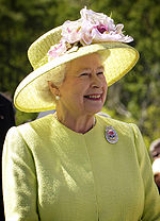
of Saint Lucia is Queen Elizabeth II
. Saint Lucia share the Sovereign with a number of Commonwealth realms. The Queen's constitutional roles are mostly delegated to the Governor-General of Saint Lucia.
Royal succession is governed by the English
Act of Settlement
of 1701, which is part of constitutional law.
The present queen Elizabeth II has reigned over the separate Saint Lucian monarchy since 22 February 1979. She along with her husband and other members of the Royal Family undertake various official, ceremonial and representational duties.
. Sixteen of these countries are specifically Commonwealth realm
s who recognise, individually, the same person as their Monarch and Head of State
;Saint Lucia is one of these. Despite sharing the same person as their respective national monarch, each of the Commonwealth realms — including Saint Lucia — is sovereign and independent of the others.
As a constitutional monarch Queen Elizabeth II entirely on the advice of her Saint Lucian ministers. The monarch is briefed by regular communication for her Saint Lucian government. Most of the Queen's daily constitutional roles are mostly delegated to the Governor-General of Saint Lucia.
The governor general is appointed entirely upon the advice of her Saint Lucian government. The monarch maintains direct contact with the governor general. The present Governor-General is Her Excellency Dame Pearlette Louisy GCMG.
The Balfour Declaration of 1926 provided the dominions the right to be considered equal to Britain, rather than subordinate; an agreement that had the result of, in theory, a shared Crown that operates independently in each realm rather than a unitary British Crown under which all the dominions were secondary. The Monarchy thus ceased to be an exclusively British institution, although it has often been called "British" since this time (in both legal and common language) for reasons historical, legal, and of convenience. The Royal and Parliamentary Titles Act, 1927 was the first indication of this shift in law, further elaborated in the Statute of Westminster, 1931.
Under the Statute of Westminster, Saint Lucia has a common monarchy with Britain and the other Commonwealth realm
s, and though laws governing the line of succession to the Saint Lucian throne lie within the control of the Saint Lucian Parliament, Saint Lucia cannot change the rules of succession without the unanimous consent of the other realms, unless explicitly leaving the shared monarchy relationship by means of a constitutional amendment. This situation applies symmetrically in all the other realms, including the UK.
The island became self-governing in 1967 and achieved independence in 1979.
.
This style communicates Saint Lucia's status as an independent monarchy, highlighting the Monarch's role specifically as Queen of Saint Lucia, as well as the shared aspect of the Crown throughout the realms. Typically, the Sovereign is styled "Queen of Saint Lucia," and is addressed as such when in Saint Lucia, or performing duties on behalf of Saint Lucia abroad.
, made up of Ministers of the Crown
. It has been said since the death of Queen Anne
in 1714, the last monarch to head the British cabinet, that the monarch "reigns" but does not "rule". In exceptional circumstances, however, the Monarch or vice-regal can act against such advice based upon his or her reserve power
s.
There are also a few duties which must be specifically performed by, or bills that require assent by the Queen
. These include: signing the appointment papers of Governors General, the confirmation of awards of honours, and approving any change in her title.
It is also possible that if the Governor General decided to go against the Prime Minister's or the government's advice, the Prime Minister could appeal directly to the Monarch, or even recommend that the Monarch dismiss the Governor General.
, and governed by the provisions of the Act of Settlement
, as well as the English Bill of Rights. These documents, though originally passed by the Parliament of England
, are now part of the Saint Lucian constitutional law, under control of the Saint Lucian parliament only.
This legislation lays out the rules that the Monarch cannot be a Roman Catholic, nor married to one, and must be in communion with the Church of England
upon ascending the throne. As Saint Lucia's laws governing succession are currently identical to those of the United Kingdom (by the Statute of Westminster) see Succession to the British Throne
for more information.
The heir apparent
is Elizabeth II's eldest son, Charles
, who has no official title outside of the UK, but is accorded his UK title, Prince of Wales
, as a courtesy title
.
; it and proclamation are required for all acts of Parliament, usually granted or withheld by the Governor General. The Vice-Regals may reserve a bill for the Monarch's pleasure, that is to say, allow the Monarch to make a personal decision on the bill. The Monarch has the power to disallow a bill (within a time limit specified by the constitution).
The Sovereign is deemed the "fount of justice," and is responsible for rendering justice for all subjects. The Sovereign does not personally rule in judicial cases; instead, judicial functions are performed in his or her name. The common law holds that the Sovereign "can do no wrong"; the monarch cannot be prosecuted in his or her own courts for criminal offences. Civil lawsuits against the Crown in its public capacity (that is, lawsuits against the government) are permitted; however, lawsuits against the Monarch personally are not cognizable. The Sovereign, and by extension the Governor General, also exercises the "prerogative of mercy," and may pardon offences against the Crown. Pardons may be awarded before, during, or after a trial.
In Saint Lucia the legal personality of the State
is referred to as "Her Majesty the Queen in Right of Saint Lucia." For example, if a lawsuit is filed against the government, the respondent is formally described as Her Majesty the Queen in Right of Saint Lucia. The monarch as an individual takes no more role in such an affair than in any other business of government.
Other members have also visited Saint Lucia: In 1979 Princess Alexandra, The Honourable Lady Ogilvy
represented the royal family during the official independence celebrations. The Prince of Wales visited in 1989 to commemorate the tenth anniversary of these celebrations.
Hereditary monarchy
A hereditary monarchy is the most common type of monarchy and is the form that is used by almost all of the world's existing monarchies.Under a hereditary monarchy, all the monarchs come from the same family, and the crown is passed down from one member to another member of the family...
, constitutional
Constitutional monarchy
Constitutional monarchy is a form of government in which a monarch acts as head of state within the parameters of a constitution, whether it be a written, uncodified or blended constitution...
monarch is the sovereign of Saint Lucia
Saint Lucia
Saint Lucia is an island country in the eastern Caribbean Sea on the boundary with the Atlantic Ocean. Part of the Lesser Antilles, it is located north/northeast of the island of Saint Vincent, northwest of Barbados and south of Martinique. It covers a land area of 620 km2 and has an...
. The present monarch
Monarch
A monarch is the person who heads a monarchy. This is a form of government in which a state or polity is ruled or controlled by an individual who typically inherits the throne by birth and occasionally rules for life or until abdication...
of Saint Lucia is Queen Elizabeth II
Elizabeth II of the United Kingdom
Elizabeth II is the constitutional monarch of 16 sovereign states known as the Commonwealth realms: the United Kingdom, Canada, Australia, New Zealand, Jamaica, Barbados, the Bahamas, Grenada, Papua New Guinea, the Solomon Islands, Tuvalu, Saint Lucia, Saint Vincent and the Grenadines, Belize,...
. Saint Lucia share the Sovereign with a number of Commonwealth realms. The Queen's constitutional roles are mostly delegated to the Governor-General of Saint Lucia.
Royal succession is governed by the English
England
England is a country that is part of the United Kingdom. It shares land borders with Scotland to the north and Wales to the west; the Irish Sea is to the north west, the Celtic Sea to the south west, with the North Sea to the east and the English Channel to the south separating it from continental...
Act of Settlement
Act of Settlement 1701
The Act of Settlement is an act of the Parliament of England that was passed in 1701 to settle the succession to the English throne on the Electress Sophia of Hanover and her Protestant heirs. The act was later extended to Scotland, as a result of the Treaty of Union , enacted in the Acts of Union...
of 1701, which is part of constitutional law.
The present queen Elizabeth II has reigned over the separate Saint Lucian monarchy since 22 February 1979. She along with her husband and other members of the Royal Family undertake various official, ceremonial and representational duties.
International and domestic role
Fifty-four states are members of the Commonwealth of NationsCommonwealth of Nations
The Commonwealth of Nations, normally referred to as the Commonwealth and formerly known as the British Commonwealth, is an intergovernmental organisation of fifty-four independent member states...
. Sixteen of these countries are specifically Commonwealth realm
Commonwealth Realm
A Commonwealth realm is a sovereign state within the Commonwealth of Nations that has Elizabeth II as its monarch and head of state. The sixteen current realms have a combined land area of 18.8 million km² , and a population of 134 million, of which all, except about two million, live in the six...
s who recognise, individually, the same person as their Monarch and Head of State
Head of State
A head of state is the individual that serves as the chief public representative of a monarchy, republic, federation, commonwealth or other kind of state. His or her role generally includes legitimizing the state and exercising the political powers, functions, and duties granted to the head of...
;Saint Lucia is one of these. Despite sharing the same person as their respective national monarch, each of the Commonwealth realms — including Saint Lucia — is sovereign and independent of the others.
As a constitutional monarch Queen Elizabeth II entirely on the advice of her Saint Lucian ministers. The monarch is briefed by regular communication for her Saint Lucian government. Most of the Queen's daily constitutional roles are mostly delegated to the Governor-General of Saint Lucia.
The governor general is appointed entirely upon the advice of her Saint Lucian government. The monarch maintains direct contact with the governor general. The present Governor-General is Her Excellency Dame Pearlette Louisy GCMG.
Development of the monarchy
Control of St Lucia was disputed between the British and French from 1659 until 1814 when it was ceded to the British.The Balfour Declaration of 1926 provided the dominions the right to be considered equal to Britain, rather than subordinate; an agreement that had the result of, in theory, a shared Crown that operates independently in each realm rather than a unitary British Crown under which all the dominions were secondary. The Monarchy thus ceased to be an exclusively British institution, although it has often been called "British" since this time (in both legal and common language) for reasons historical, legal, and of convenience. The Royal and Parliamentary Titles Act, 1927 was the first indication of this shift in law, further elaborated in the Statute of Westminster, 1931.
Under the Statute of Westminster, Saint Lucia has a common monarchy with Britain and the other Commonwealth realm
Commonwealth Realm
A Commonwealth realm is a sovereign state within the Commonwealth of Nations that has Elizabeth II as its monarch and head of state. The sixteen current realms have a combined land area of 18.8 million km² , and a population of 134 million, of which all, except about two million, live in the six...
s, and though laws governing the line of succession to the Saint Lucian throne lie within the control of the Saint Lucian Parliament, Saint Lucia cannot change the rules of succession without the unanimous consent of the other realms, unless explicitly leaving the shared monarchy relationship by means of a constitutional amendment. This situation applies symmetrically in all the other realms, including the UK.
The island became self-governing in 1967 and achieved independence in 1979.
Title
In Saint Lucia, the Queen's official title is: Elizabeth the Second, by the Grace of God, Queen of Saint Lucia and of Her other Realms and Territories, Head of the CommonwealthHead of the Commonwealth
The Head of the Commonwealth heads the Commonwealth of Nations, an intergovernmental organisation which currently comprises 54 sovereign states. The position is currently occupied by the individual who serves as monarch of each of the Commonwealth realms, but has no day-to-day involvement in the...
.
This style communicates Saint Lucia's status as an independent monarchy, highlighting the Monarch's role specifically as Queen of Saint Lucia, as well as the shared aspect of the Crown throughout the realms. Typically, the Sovereign is styled "Queen of Saint Lucia," and is addressed as such when in Saint Lucia, or performing duties on behalf of Saint Lucia abroad.
Duties
Most of the Queen's domestic duties are performed by the Governor General. The Governor-General represents the Queen on ceremonial occasions such as the opening of Parliament, the presentation of honours and military parades. Under the Constitution, he is given authority to act in some matters, for example in appointing and disciplining officers of the civil service, in proroguing Parliament. As in the other Commonwealth realms, however, the Monarch's role, and thereby the vice-regent's role, is almost entirely symbolic and cultural, acting as a symbol of the legal authority under which all governments operate, and the powers that are constitutionally hers are exercised almost wholly upon the advice of the CabinetCabinet (government)
A Cabinet is a body of high ranking government officials, typically representing the executive branch. It can also sometimes be referred to as the Council of Ministers, an Executive Council, or an Executive Committee.- Overview :...
, made up of Ministers of the Crown
Minister of the Crown
Minister of the Crown is the formal constitutional term used in the Commonwealth realms to describe a minister to the reigning sovereign. The term indicates that the minister serves at His/Her Majesty's pleasure, and advises the monarch, or viceroy, on how to exercise the Crown prerogatives...
. It has been said since the death of Queen Anne
Anne of Great Britain
Anne ascended the thrones of England, Scotland and Ireland on 8 March 1702. On 1 May 1707, under the Act of Union, two of her realms, England and Scotland, were united as a single sovereign state, the Kingdom of Great Britain.Anne's Catholic father, James II and VII, was deposed during the...
in 1714, the last monarch to head the British cabinet, that the monarch "reigns" but does not "rule". In exceptional circumstances, however, the Monarch or vice-regal can act against such advice based upon his or her reserve power
Reserve power
In a parliamentary or semi-presidential system of government, a reserve power is a power that may be exercised by the head of state without the approval of another branch of the government. Unlike a presidential system of government, the head of state is generally constrained by the cabinet or the...
s.
There are also a few duties which must be specifically performed by, or bills that require assent by the Queen
Queen regnant
A queen regnant is a female monarch who reigns in her own right, in contrast to a queen consort, who is the wife of a reigning king. An empress regnant is a female monarch who reigns in her own right over an empire....
. These include: signing the appointment papers of Governors General, the confirmation of awards of honours, and approving any change in her title.
It is also possible that if the Governor General decided to go against the Prime Minister's or the government's advice, the Prime Minister could appeal directly to the Monarch, or even recommend that the Monarch dismiss the Governor General.
Succession
Succession to the throne is by male-preference primogeniturePrimogeniture
Primogeniture is the right, by law or custom, of the firstborn to inherit the entire estate, to the exclusion of younger siblings . Historically, the term implied male primogeniture, to the exclusion of females...
, and governed by the provisions of the Act of Settlement
Act of Settlement 1701
The Act of Settlement is an act of the Parliament of England that was passed in 1701 to settle the succession to the English throne on the Electress Sophia of Hanover and her Protestant heirs. The act was later extended to Scotland, as a result of the Treaty of Union , enacted in the Acts of Union...
, as well as the English Bill of Rights. These documents, though originally passed by the Parliament of England
Parliament of England
The Parliament of England was the legislature of the Kingdom of England. In 1066, William of Normandy introduced a feudal system, by which he sought the advice of a council of tenants-in-chief and ecclesiastics before making laws...
, are now part of the Saint Lucian constitutional law, under control of the Saint Lucian parliament only.
This legislation lays out the rules that the Monarch cannot be a Roman Catholic, nor married to one, and must be in communion with the Church of England
Church of England
The Church of England is the officially established Christian church in England and the Mother Church of the worldwide Anglican Communion. The church considers itself within the tradition of Western Christianity and dates its formal establishment principally to the mission to England by St...
upon ascending the throne. As Saint Lucia's laws governing succession are currently identical to those of the United Kingdom (by the Statute of Westminster) see Succession to the British Throne
Succession to the British Throne
Succession to the British throne is governed both by common law and statute. Under common law the crown is currently passed on by male-preference primogeniture. In other words, succession passes first to an individual's sons, in order of birth, and subsequently to daughters, again in order of birth....
for more information.
The heir apparent
Heir apparent
An heir apparent or heiress apparent is a person who is first in line of succession and cannot be displaced from inheriting, except by a change in the rules of succession....
is Elizabeth II's eldest son, Charles
Charles, Prince of Wales
Prince Charles, Prince of Wales is the heir apparent and eldest son of Queen Elizabeth II and Prince Philip, Duke of Edinburgh. Since 1958 his major title has been His Royal Highness The Prince of Wales. In Scotland he is additionally known as The Duke of Rothesay...
, who has no official title outside of the UK, but is accorded his UK title, Prince of Wales
Prince of Wales
Prince of Wales is a title traditionally granted to the heir apparent to the reigning monarch of the United Kingdom of Great Britain and Northern Ireland and the 15 other independent Commonwealth realms...
, as a courtesy title
Courtesy title
A courtesy title is a form of address in systems of nobility used for children, former wives and other close relatives of a peer. These styles are used 'by courtesy' in the sense that the relatives do not themselves hold substantive titles...
.
Legal role
All laws in Saint Lucia are enacted with the sovereign's, or the vice-regal's signature. The granting of a signature to a bill is known as Royal AssentRoyal Assent
The granting of royal assent refers to the method by which any constitutional monarch formally approves and promulgates an act of his or her nation's parliament, thus making it a law...
; it and proclamation are required for all acts of Parliament, usually granted or withheld by the Governor General. The Vice-Regals may reserve a bill for the Monarch's pleasure, that is to say, allow the Monarch to make a personal decision on the bill. The Monarch has the power to disallow a bill (within a time limit specified by the constitution).
The Sovereign is deemed the "fount of justice," and is responsible for rendering justice for all subjects. The Sovereign does not personally rule in judicial cases; instead, judicial functions are performed in his or her name. The common law holds that the Sovereign "can do no wrong"; the monarch cannot be prosecuted in his or her own courts for criminal offences. Civil lawsuits against the Crown in its public capacity (that is, lawsuits against the government) are permitted; however, lawsuits against the Monarch personally are not cognizable. The Sovereign, and by extension the Governor General, also exercises the "prerogative of mercy," and may pardon offences against the Crown. Pardons may be awarded before, during, or after a trial.
In Saint Lucia the legal personality of the State
Sovereign state
A sovereign state, or simply, state, is a state with a defined territory on which it exercises internal and external sovereignty, a permanent population, a government, and the capacity to enter into relations with other sovereign states. It is also normally understood to be a state which is neither...
is referred to as "Her Majesty the Queen in Right of Saint Lucia." For example, if a lawsuit is filed against the government, the respondent is formally described as Her Majesty the Queen in Right of Saint Lucia. The monarch as an individual takes no more role in such an affair than in any other business of government.
Royal presence
Elizabeth II first visited Saint Lucia as part of her Caribbean tour of 1966. During her visit she opened the new Winban Research Centre. The Queen and the Duke of Edinburgh travelled on HMY Britannia. They were treated to traditional Saint Lucian Dances and a firework display. In 1985 The Queen and Duke returned to Saint Lucia: The Queen laid the foundation stone for the new Red Cross headquarters and visited residential homes for the elderly and schools.Other members have also visited Saint Lucia: In 1979 Princess Alexandra, The Honourable Lady Ogilvy
Princess Alexandra, The Honourable Lady Ogilvy
Princess Alexandra, The Honourable Lady Ogilvy is the youngest granddaughter of King George V of the United Kingdom and Mary of Teck. She is the widow of Sir Angus Ogilvy...
represented the royal family during the official independence celebrations. The Prince of Wales visited in 1989 to commemorate the tenth anniversary of these celebrations.
Other
- FigureheadFigureheadA figurehead is a carved wooden decoration found at the prow of ships largely made between the 16th and 19th century.-History:Although earlier ships had often had some form of bow ornamentation A figurehead is a carved wooden decoration found at the prow of ships largely made between the 16th and...
- Prime Ministers of Queen Elizabeth IIPrime Ministers of Queen Elizabeth IIQueen Elizabeth II has been head of state of 32 different Commonwealth realms since 1952. Currently, there are 16 realms. The Queen has had 12 British Prime Ministers, second only to George III, who had 14, and two more than the number had by Queen Victoria. She has also had 14 New Zealand Prime...
- List of Commonwealth visits made by Queen Elizabeth II
- Monarchies in the AmericasMonarchies in the AmericasThere are currently 13 monarchies in the Americas; that is: self-governing states and territories in North and South America where supreme power resides with an individual, who is recognised as the head of state...
- List of monarchies