
Mineral wool,
mineral fibers or
man-made mineral fibers are
fiberFiber is a class of materials that are continuous filaments or are in discrete elongated pieces, similar to lengths of thread.They are very important in the biology of both plants and animals, for holding tissues together....
s made from natural or synthetic
mineralA mineral is a naturally occurring solid chemical substance formed through biogeochemical processes, having characteristic chemical composition, highly ordered atomic structure, and specific physical properties. By comparison, a rock is an aggregate of minerals and/or mineraloids and does not...
s or
metalA metal , is an element, compound, or alloy that is a good conductor of both electricity and heat. Metals are usually malleable and shiny, that is they reflect most of incident light...
oxides. The latter term is generally used to refer solely to synthetic materials including
fiberglassGlass wool or fiberglass insulation is an insulating material made from fiberglass, arranged into a texture similar to wool. Glass wool is produced in rolls or in slabs, with different thermal and mechanical properties....
,
ceramicA ceramic is an inorganic, nonmetallic solid prepared by the action of heat and subsequent cooling. Ceramic materials may have a crystalline or partly crystalline structure, or may be amorphous...
fibers and
stone wool. Industrial applications of mineral wool include
thermal insulationThermal insulation is the reduction of the effects of the various processes of heat transfer between objects in thermal contact or in range of radiative influence. Heat transfer is the transfer of thermal energy between objects of differing temperature...
(as both
structural insulationbuilding insulation refers broadly to any object in a building used as insulation for any purpose. While the majority of insulation in buildings is for thermal purposes, the term also applies to acoustic insulation, fire insulation, and impact insulation...
and
pipe insulationPipe Insulation is thermal or acoustic insulation used on pipework.-Condensation control:Where pipes operate at below-ambient temperatures, the potential exists for water vapour to condense on the pipe surface...
),
filtrationFiltration is commonly the mechanical or physical operation which is used for the separation of solids from fluids by interposing a medium through which only the fluid can pass...
,
soundproofingSoundproofing is any means of reducing the sound pressure with respect to a specified sound source and receptor. There are several basic approaches to reducing sound: increasing the distance between source and receiver, using noise barriers to reflect or absorb the energy of the sound waves, using...
, and
germination of seedlingsHydroponics is a method of growing plants using mineral nutrient solutions, in water, without soil. Terrestrial plants may be grown with their roots in the mineral nutrient solution only or in an inert medium, such as perlite, gravel, mineral wool, or coconut husk.Researchers discovered in the 18th...
.
History
Slag wool was first made in 1840 in Wales by Edward Parry but the harmful effects on the workers caused production to be abandoned. It was first produced commercially in 1871 at the
GeorgsmarienhütteGeorgsmarienhütte is a town in the district of Osnabrück, in Lower Saxony, Germany. It is situated in the Teutoburg Forest, approx. 7 km south of Osnabrück.- History :...
in
OsnabrückOsnabrück is a city in Lower Saxony, Germany, some 80 km NNE of Dortmund, 45 km NE of Münster, and some 100 km due west of Hanover. It lies in a valley penned between the Wiehen Hills and the northern tip of the Teutoburg Forest...
GermanyGermany , officially the Federal Republic of Germany , is a federal parliamentary republic in Europe. The country consists of 16 states while the capital and largest city is Berlin. Germany covers an area of 357,021 km2 and has a largely temperate seasonal climate...
.
Manufacture
Stone wool is a furnace product of
molten rockLava refers both to molten rock expelled by a volcano during an eruption and the resulting rock after solidification and cooling. This molten rock is formed in the interior of some planets, including Earth, and some of their satellites. When first erupted from a volcanic vent, lava is a liquid at...
at a temperature of about 1600 °C, through which a stream of air or steam is blown. More advanced production techniques are based on spinning molten rock on high speed
spinning wheelA spinning wheel is a device for spinning thread or yarn from natural or synthetic fibers. Spinning wheels appeared in Asia, probably in the 11th century, and very gradually replaced hand spinning with spindle and distaff...
s somewhat like the process used to prepare
cotton candyCotton candy , candy floss or candyfloss or candy buttox , or fairy floss is a form of spun sugar. Since cotton candy is mostly air, a small initial quantity of sugar generates a tremendously greater final volume, causing servings to be physically large and voluminous...
. The final product is a mass of fine, intertwined fibres with a typical diameter of 6 to 10 micrometers. Mineral wool may contain a
binder-See also:*Adhesive or Glue*Cement*Paint...
, often food grade starch, and an
oilA mineral oil is any of various colorless, odorless, light mixtures of alkanes in the C15 to C40 range from a non-vegetable source, particularly a distillate of petroleum....
to reduce
dustDust consists of particles in the atmosphere that arise from various sources such as soil dust lifted up by wind , volcanic eruptions, and pollution...
ing.
Usage
Though the individual fibres
conduct heatIn heat transfer, conduction is a mode of transfer of energy within and between bodies of matter, due to a temperature gradient. Conduction means collisional and diffusive transfer of kinetic energy of particles of ponderable matter . Conduction takes place in all forms of ponderable matter, viz....
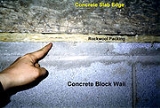
very well, when pressed into rolls and sheets their ability to partition air makes them excellent
heat insulatorsThermal insulation is the reduction of the effects of the various processes of heat transfer between objects in thermal contact or in range of radiative influence. Heat transfer is the transfer of thermal energy between objects of differing temperature...
and sound absorbers. Though not immune to the effects of a sufficiently hot fire, the fire resistance of
fibreglassGlass wool or fiberglass insulation is an insulating material made from fiberglass, arranged into a texture similar to wool. Glass wool is produced in rolls or in slabs, with different thermal and mechanical properties....
, stone wool and
ceramicA ceramic is an inorganic, nonmetallic solid prepared by the action of heat and subsequent cooling. Ceramic materials may have a crystalline or partly crystalline structure, or may be amorphous...
fibres makes them common
building materialBuilding material is any material which is used for a construction purpose. Many naturally occurring substances, such as clay, sand, wood and rocks, even twigs and leaves have been used to construct buildings. Apart from naturally occurring materials, many man-made products are in use, some more...
s when
passive fire protectionPassive fire protection is an integral component of the three components of structural fire protection and fire safety in a building. PFP attempts to contain fires or slow the spread, through use of fire-resistant walls, floors, and doors...
is required, being used as spray
fireproofingFireproofing, a passive fire protection measure, refers to the act of making materials or structures more resistant to fire, or to those materials themselves, or the act of applying such materials. Applying a certification listed fireproofing system to certain structures allows these to have a...
, in
studA wall stud is a vertical member in the light frame construction techniques called balloon framing and platform framing of a building's wall.-Purpose:...
cavities in
drywallDrywall, also known as plasterboard, wallboard or gypsum board is a panel made of gypsum plaster pressed between two thick sheets of paper...
assemblies and as
packingPacking is the process and/or the materials used in filling both service penetrations and building joints with backer materials as approved components within a firestop.-Purpose:...
materials in
firestopA firestop is a passive fire protection system of various components used to seal openings and joints in fire-resistance rated wall and/or floor assemblies, based on fire testing and certification listings....
s.
Mineral wools are unattractive to rodents but will provide a structure for
bacteriaBacteria are a large domain of prokaryotic microorganisms. Typically a few micrometres in length, bacteria have a wide range of shapes, ranging from spheres to rods and spirals...
l growth if allowed to become wet.
Other uses are in resin bonded panels, growth medium in
hydroponicsHydroponics is a method of growing plants using mineral nutrient solutions, in water, without soil. Terrestrial plants may be grown with their roots in the mineral nutrient solution only or in an inert medium, such as perlite, gravel, mineral wool, or coconut husk.Researchers discovered in the 18th...
, filler in compounds for
gasketthumb|sright|250px|Some seals and gaskets1. [[o-ring]]2. fiber [[Washer |washer]]3. paper gaskets4. [[cylinder head]] [[head gasket|gasket]]...
s, brake pads, in
plasticA plastic material is any of a wide range of synthetic or semi-synthetic organic solids used in the manufacture of industrial products. Plastics are typically polymers of high molecular mass, and may contain other substances to improve performance and/or reduce production costs...
s in the automotive industry and as a
filter- Chemistry, engineering and materials :In chemistry, engineering, or household usage, a device to separate mixtures. See:* Filter , critical components of both freshwater and marine aquaria...
ing medium.
Mineral fibres are produced in the same way, without binder. The fibre as such is used as a raw material for its reinforcing purposes in various applications, such as friction materials, gaskets, plastics and
coatingCoating is a covering that is applied to the surface of an object, usually referred to as the substrate. In many cases coatings are applied to improve surface properties of the substrate, such as appearance, adhesion, wetability, corrosion resistance, wear resistance, and scratch resistance...
s.
The heat that the material can withstand is:
| Material | Temperature |
| Glass wool |
230 - 250 °C |
| Stone wool |
700 - 850 °C |
| Ceramic fibre wool |
1200 °C |
In hydroponics
Mineral wool products can hold large quantities of water and air that aids root growth and nutrient uptake in
hydroponicsHydroponics is a method of growing plants using mineral nutrient solutions, in water, without soil. Terrestrial plants may be grown with their roots in the mineral nutrient solution only or in an inert medium, such as perlite, gravel, mineral wool, or coconut husk.Researchers discovered in the 18th...
; their fibrous nature also provides a good mechanical structure to hold the plant stable. The high natural
pHIn chemistry, pH is a measure of the acidity or basicity of an aqueous solution. Pure water is said to be neutral, with a pH close to 7.0 at . Solutions with a pH less than 7 are said to be acidic and solutions with a pH greater than 7 are basic or alkaline...
of mineral wool makes them initially unsuitable to plant growth and requires "conditioning" to produce a wool with an appropriate, stable pH.
Safety of material
Precautions need to be taken when handling a fibre product as it can irritate the
eyeThe human eye is an organ which reacts to light for several purposes. As a conscious sense organ, the eye allows vision. Rod and cone cells in the retina allow conscious light perception and vision including color differentiation and the perception of depth...
s,
skinThe human skin is the outer covering of the body. In humans, it is the largest organ of the integumentary system. The skin has multiple layers of ectodermal tissue and guards the underlying muscles, bones, ligaments and internal organs. Human skin is similar to that of most other mammals,...
and
respiratory tractIn humans the respiratory tract is the part of the anatomy involved with the process of respiration.The respiratory tract is divided into 3 segments:*Upper respiratory tract: nose and nasal passages, paranasal sinuses, and throat or pharynx...
. Prolonged exposure could lead to long term effects and some types of mineral wool are considered a possible
carcinogenA carcinogen is any substance, radionuclide, or radiation that is an agent directly involved in causing cancer. This may be due to the ability to damage the genome or to the disruption of cellular metabolic processes...
to humans, similar to
asbestosAsbestos is a set of six naturally occurring silicate minerals used commercially for their desirable physical properties. They all have in common their eponymous, asbestiform habit: long, thin fibrous crystals...
. This effect may depend upon the fibre diameter and length, chemical composition and persistence within the body.
IARCThe International Agency for Research on Cancer is an intergovernmental agency forming part of the World Health Organisation of the United Nations....
(the International Agency for Research on Cancer) has reviewed the carcinogenicity of man made mineral fibres in October 2002.
The IARC Monograph's working group concluded that only the more biopersistent materials remain classified by IARC as "possibly carcinogenic to humans" (
Group 2B). These include refractory ceramic fibres, which are used industrially as insulation in high-temperature environments such as
blast furnaceA blast furnace is a type of metallurgical furnace used for smelting to produce industrial metals, generally iron.In a blast furnace, fuel and ore and flux are continuously supplied through the top of the furnace, while air is blown into the bottom of the chamber, so that the chemical reactions...
s, and certain special-purpose
glass woolGlass wool or fiberglass insulation is an insulating material made from fiberglass, arranged into a texture similar to wool. Glass wool is produced in rolls or in slabs, with different thermal and mechanical properties....
s not used as insulating materials. In contrast, the more commonly used vitreous fibre wools including insulation glass wool, stone wool and slag wool are considered "not classifiable as to carcinogenicity in humans" (
Group 3).
High bio soluble fibres (HT-fibres) are produced that do not cause damage to the human cell. These newer biosoluble materials have been tested for carcinogenicity and most are found to be non-carcinogenic, or to cause tumours in experimental animals only under very restricted conditions of exposure. The IARC Monograph's working group "elected not to make an overall evaluation of the newly developed fibres designed to be less biopersistent such as the alkaline earth silicate or highalumina, low-silica wools. This decision was made in part because no human data were available, although such fibres that have been tested appear to have low carcinogenic potential in experimental animals, and because the Working Group had difficulty in categorizing these fibres into meaningful groups based on chemical composition."
This irritation to the skin is not a chemical irritation but only a temporary mechanical irritation, comparable with exposure of the skin to bio soluble materials such as straw, grass, or hay.
External links