


Meristem

Encyclopedia

Biological tissue
Tissue is a cellular organizational level intermediate between cells and a complete organism. A tissue is an ensemble of cells, not necessarily identical, but from the same origin, that together carry out a specific function. These are called tissues because of their identical functioning...
in most plant
Plant
Plants are living organisms belonging to the kingdom Plantae. Precise definitions of the kingdom vary, but as the term is used here, plants include familiar organisms such as trees, flowers, herbs, bushes, grasses, vines, ferns, mosses, and green algae. The group is also called green plants or...
s consisting of undifferentiated cells (meristematic cells), found in zones of the plant where growth can take place.
The meristematic cells give rise to various organs of the plant, and keep the plant growing. The Shoot Apical Meristem (SAM) gives rise to organs like the leaves and flowers. The cells of the apical meristems - SAM and RAM (Root Apical Meristem) - divide rapidly and are considered to be indeterminate, in that they do not possess any defined end fate. In that sense, the meristematic cells are frequently compared to the stem cells in animal
Animal
Animals are a major group of multicellular, eukaryotic organisms of the kingdom Animalia or Metazoa. Their body plan eventually becomes fixed as they develop, although some undergo a process of metamorphosis later on in their life. Most animals are motile, meaning they can move spontaneously and...
s, that have an analogous behavior and function.
The term meristem was first used in 1858 by Karl Wilhelm von Nägeli
Karl Wilhelm von Nägeli
Karl Wilhelm von Nägeli was a Swiss botanist. He studied cell division and pollination, but became known as the man who discouraged Gregor Mendel from further work on genetics.-Birth and education:...
(1817–1891) in his book Beiträge zur Wissenschaftlichen Botanik. It is derived from the Greek word merizein (μερίζειν), meaning to divide, in recognition of its inherent function.
In general, differentiated plant cells cannot divide or produce cells of a different type. Therefore, cell division
Mitosis
Mitosis is the process by which a eukaryotic cell separates the chromosomes in its cell nucleus into two identical sets, in two separate nuclei. It is generally followed immediately by cytokinesis, which divides the nuclei, cytoplasm, organelles and cell membrane into two cells containing roughly...
in the meristem is required to provide new cells for expansion and differentiation of tissues and initiation of new organs, providing the basic structure of the plant body.
Meristematic cells are incompletely or not at all differentiated
Cellular differentiation
In developmental biology, cellular differentiation is the process by which a less specialized cell becomes a more specialized cell type. Differentiation occurs numerous times during the development of a multicellular organism as the organism changes from a simple zygote to a complex system of...
, and are capable of continued cellular division (youthful). Furthermore, the cells are small and protoplasm
Protoplasm
Protoplasm is the living contents of a cell that is surrounded by a plasma membrane. It is a general term of the Cytoplasm . Protoplasm is composed of a mixture of small molecules such as ions, amino acids, monosaccharides and water, and macromolecules such as nucleic acids, proteins, lipids and...
fills the cell completely. The vacuole
Vacuole
A vacuole is a membrane-bound organelle which is present in all plant and fungal cells and some protist, animal and bacterial cells. Vacuoles are essentially enclosed compartments which are filled with water containing inorganic and organic molecules including enzymes in solution, though in certain...
s are extremely small. The cytoplasm
Cytoplasm
The cytoplasm is a small gel-like substance residing between the cell membrane holding all the cell's internal sub-structures , except for the nucleus. All the contents of the cells of prokaryote organisms are contained within the cytoplasm...
does not contain differentiated plastid
Plastid
Plastids are major organelles found in the cells of plants and algae. Plastids are the site of manufacture and storage of important chemical compounds used by the cell...
s (chloroplast
Chloroplast
Chloroplasts are organelles found in plant cells and other eukaryotic organisms that conduct photosynthesis. Chloroplasts capture light energy to conserve free energy in the form of ATP and reduce NADP to NADPH through a complex set of processes called photosynthesis.Chloroplasts are green...
s or chromoplast
Chromoplast
Chromoplasts are plastids responsible for pigment synthesis and storage. They, like all other plastids , are organelles found in specific photosynthetic eukaryotic species....
s), although they are present in rudimentary form (proplastids). Meristematic cells are packed closely together without intercellular cavities. The cell wall is a very thin primary cell wall.
Maintenance of the cells requires a balance between two antagonistic
Antagonism
Antagonism is hostility that results in active resistance, opposition, or contentiousness.Additionally, it may refer to:*Antagonism , where the involvement of multiple agents reduces their overall effect...
processes: organ initiation and stem cell population renewal.
Meristematic zones
Apical meristems are the completely undifferentiated (indeterminate) meristems in a plant. These differentiate into three kinds of primary meristems. The primary meristems in turn produce the two secondary meristem types. These secondary meristems are also known as lateral meristems because they are involved in lateral growth.At the meristem summit, there is a small group of slowly dividing cells, which is commonly called the central zone. Cells of this zone have a stem cell function and are essential for meristem maintenance. The proliferation and growth rates at the meristem summit usually differ considerably from those at the periphery.
Meristems also are induced in the roots of legumes such as soybean
Soybean
The soybean or soya bean is a species of legume native to East Asia, widely grown for its edible bean which has numerous uses...
, Lotus japonicus
Lotus japonicus
Lotus japonicus is a wild legume that belongs to family Fabaceae. Members of this family are very diverse, constituting about 20,000 species. They are of significant agricultural and biological importance as many of the legume species are rich sources of protein and oil and can also fix atmospheric...
, pea
Pea
A pea is most commonly the small spherical seed or the seed-pod of the pod fruit Pisum sativum. Each pod contains several peas. Peapods are botanically a fruit, since they contain seeds developed from the ovary of a flower. However, peas are considered to be a vegetable in cooking...
, and Medicago truncatula
Medicago truncatula
Medicago truncatula is a small legume native to the Mediterranean region that is used in genomic research. It is a low-growing, clover-like plant 10–60 cm tall with trifoliate leaves. Each leaflet is rounded, 1–2 cm long, often with a dark spot in the center...
after infection with soil bacteria commonly called Rhizobium
Rhizobium
Rhizobium is a genus of Gram-negative soil bacteria that fix nitrogen. Rhizobium forms an endosymbiotic nitrogen fixing association with roots of legumes and Parasponia....
. Cells of the inner or outer cortex in the so-called "window of nodulation" just behind the developing root tip are induced to divide. The critical signal substance is the lipo-oligosaccharide
Oligosaccharide
An oligosaccharide is a saccharide polymer containing a small number of component sugars, also known as simple sugars...
Nod-factor, decorated with side groups to allow specificity of interaction. The Nod factor receptor proteins NFR1 and NFR5 were cloned from several legumes including Lotus japonicus, Medicago truncatula and soybean (Glycine max). Regulation of nodule meristems utilizes long distance regulation commonly called "Autoregulation of Nodulation" (AON). This process involves a leaf-vascular tissue located LRR
Leucine-rich repeat
A leucine-rich repeat is a protein structural motif that forms an α/β horseshoe fold. It is composed of repeating 20–30 amino acid stretches that are unusually rich in the hydrophobic amino acid leucine...
receptor
Receptor (biochemistry)
In biochemistry, a receptor is a molecule found on the surface of a cell, which receives specific chemical signals from neighbouring cells or the wider environment within an organism...
kinase
Kinase
In chemistry and biochemistry, a kinase is a type of enzyme that transfers phosphate groups from high-energy donor molecules, such as ATP, to specific substrates, a process referred to as phosphorylation. Kinases are part of the larger family of phosphotransferases...
s (LjHAR1, GmNARK and MtSUNN), CLE peptide
Peptide
Peptides are short polymers of amino acid monomers linked by peptide bonds. They are distinguished from proteins on the basis of size, typically containing less than 50 monomer units. The shortest peptides are dipeptides, consisting of two amino acids joined by a single peptide bond...
signalling , and KAPP interaction, similar to that seen in the CLV1,2,3 system. LjKLAVIER also exhibits a nodule regulation phenotype
Phenotype
A phenotype is an organism's observable characteristics or traits: such as its morphology, development, biochemical or physiological properties, behavior, and products of behavior...
though it is not yet known how this relates to the other AON receptor kinases
Apical meristems
Bud
In botany, a bud is an undeveloped or embryonic shoot and normally occurs in the axil of a leaf or at the tip of the stem. Once formed, a bud may remain for some time in a dormant condition, or it may form a shoot immediately. Buds may be specialized to develop flowers or short shoots, or may have...
s and growing tips of roots in plant
Plant
Plants are living organisms belonging to the kingdom Plantae. Precise definitions of the kingdom vary, but as the term is used here, plants include familiar organisms such as trees, flowers, herbs, bushes, grasses, vines, ferns, mosses, and green algae. The group is also called green plants or...
s. Its main function is to begin growth of new cells in young seedlings at the tips of roots and shoots (forming buds, among other things). Specifically, an active apical meristem lays down a growing root
Root
In vascular plants, the root is the organ of a plant that typically lies below the surface of the soil. This is not always the case, however, since a root can also be aerial or aerating . Furthermore, a stem normally occurring below ground is not exceptional either...
or shoot
Shoot
Shoots are new plant growth, they can include stems, flowering stems with flower buds, and leaves. The new growth from seed germination that grows upward is a shoot where leaves will develop...
behind itself, pushing itself forward. Apical meristems are very small, compared to the cylinder-shaped lateral meristems (see 'Secondary Meristems' below).
Apical meristems are composed of several layers. The number of layers varies according to plant type. In general the outermost layer is called the tunica while the innermost layers are the corpus. In monocots, the tunica determine the physical characteristics of the leaf edge and margin. In dicots, layer two of the corpus determine the characteristics of the edge of the leaf. The corpus and tunica play a critical part of the plant physical appearance as all plant cells are formed from the meristems. Apical meristems are found in two locations: the root and the stem. Some Arctic plants have an apical meristem in the lower/middle parts of the plant. It is thought that this kind of meristem evolved because it is advantageous in Arctic conditions.
Shoot apical meristems
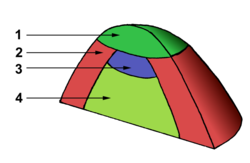
The source of all above-ground organs. Cells at the shoot apical meristem summit serve as stem cells to the surrounding peripheral region, where they proliferate rapidly and are incorporated into differentiating leaf or flower primordia.The shoot apical meristem is the site of most of the embryogenesis in flowering plants. Primordia of leaves, sepals, petals, stamens and ovaries are initiated here at the rate of one every time interval, called a plastochron. It is where the first indications that flower development has been evoked are manifested. One of these indications might be the loss of apical dominance and the release of otherwise dormant cells to develop as axillary shoot meristems, in some species in axils of primordia as close as two or three away from the apical dome. The shoot apical meristem consists of 4 distinct cell groups: -.
- Stem cellStem cellThis article is about the cell type. For the medical therapy, see Stem Cell TreatmentsStem cells are biological cells found in all multicellular organisms, that can divide and differentiate into diverse specialized cell types and can self-renew to produce more stem cells...
s - The immediate daughter cells of the stem cells
- A subjacent organising centre
- Founder cells for organ initiation in surrounding regions
The four distinct zones mentioned above are maintained by a complex signalling pathway. In Arabidopsis thaliana
Arabidopsis thaliana
Arabidopsis thaliana is a small flowering plant native to Europe, Asia, and northwestern Africa. A spring annual with a relatively short life cycle, arabidopsis is popular as a model organism in plant biology and genetics...
, 3 interacting CLAVATA genes are required to regulate the size of the stem cell
Stem cell
This article is about the cell type. For the medical therapy, see Stem Cell TreatmentsStem cells are biological cells found in all multicellular organisms, that can divide and differentiate into diverse specialized cell types and can self-renew to produce more stem cells...
reservoir in the shoot apical meristem by controlling the rate of cell division
Cell division
Cell division is the process by which a parent cell divides into two or more daughter cells . Cell division is usually a small segment of a larger cell cycle. This type of cell division in eukaryotes is known as mitosis, and leaves the daughter cell capable of dividing again. The corresponding sort...
. CLV1 and CLV2 are predicted to form a receptor complex (of the LRR receptor like kinase family) to which CLV3 is a ligand
Ligand (biochemistry)
In biochemistry and pharmacology, a ligand is a substance that forms a complex with a biomolecule to serve a biological purpose. In a narrower sense, it is a signal triggering molecule, binding to a site on a target protein.The binding occurs by intermolecular forces, such as ionic bonds, hydrogen...
. CLV3 shares some homology
Homology (chemistry)
In chemistry, homology refers to the appearance of homologues. A homologue is a compound belonging to a series of compounds differing from each other by a repeating unit, such as a methylene group, a peptide residue, etcetera....
with the ESR proteins of maize
Maize
Maize known in many English-speaking countries as corn or mielie/mealie, is a grain domesticated by indigenous peoples in Mesoamerica in prehistoric times. The leafy stalk produces ears which contain seeds called kernels. Though technically a grain, maize kernels are used in cooking as a vegetable...
, with a short 14 amino acid
Amino acid
Amino acids are molecules containing an amine group, a carboxylic acid group and a side-chain that varies between different amino acids. The key elements of an amino acid are carbon, hydrogen, oxygen, and nitrogen...
region being conserved between the proteins. Proteins that contain these conserved regions have been grouped into the CLE family of proteins.
CLV1 has been shown to interact with several cytoplasm
Cytoplasm
The cytoplasm is a small gel-like substance residing between the cell membrane holding all the cell's internal sub-structures , except for the nucleus. All the contents of the cells of prokaryote organisms are contained within the cytoplasm...
ic proteins that are most likely involved in downstream signalling
Signal transduction
Signal transduction occurs when an extracellular signaling molecule activates a cell surface receptor. In turn, this receptor alters intracellular molecules creating a response...
. For example, the CLV complex has been found to be associated with Rho/Rac small GTPase-related proteins
GTPase
GTPases are a large family of hydrolase enzymes that can bind and hydrolyze guanosine triphosphate . The GTP binding and hydrolysis takes place in the highly conserved G domain common to all GTPases.-Functions:...
. These proteins may act as an intermediate between the CLV complex and a mitogen-activated protein kinase
Mitogen-activated protein kinase
Mitogen-activated protein kinases are serine/threonine-specific protein kinases that respond to extracellular stimuli and regulate various cellular activities, such as gene expression, mitosis, differentiation, proliferation, and cell survival/apoptosis.-Activation:MAP kinases are activated...
(MAPK), which is often involved in signalling cascades. KAPP is a kinase-associated protein phosphatase that has been shown to interact with CLV1. KAPP is thought to act as a negative regulator of CLV1 by dephosphorylating it.
Another important gene in plant meristem maintenance is WUSCHEL (shortened to WUS), which is a target of CLV signalling. WUS is expressed in the cells below the stem cells of the meristem and its presence prevents the differentiation
Cellular differentiation
In developmental biology, cellular differentiation is the process by which a less specialized cell becomes a more specialized cell type. Differentiation occurs numerous times during the development of a multicellular organism as the organism changes from a simple zygote to a complex system of...
of the stem cells. CLV1 acts to promote cellular differentiation by repressing WUS activity outside of the central zone containing the stem cells. STM also acts to prevent the differentiation of stem cells by repressing the expression of Myb genes that are involved in cellular differentiation.
Root apical meristems
Root cap
The root cap is a section of tissue at the tip of a plant root. It is also called calyptra. Root caps contain statocytes which are involved in gravity perception in plants. If the cap is carefully removed the root will grow randomly. The root cap protects the growing tip in plants...
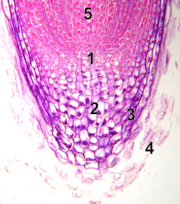
. The center of the root apical meristem is occupied by a quiescent center, which has low mitotic activity. Evidence suggests the quiescent center does function as the zone of initials. Infrequent division of initial cells in the quiescent center is the source of cells for the root apical meristem. These initial cells and tissue patterns become established in the embryo in the case of the primary root, and in the new lateral meristems in the case of secondary roots.
Intercalary meristem
In angiosperms, intercalary meristems occur only in monocot (in particular, grass) stems at the base of nodes and leaf blades. Horsetails also exhibit intercalary growth. Intercalary meristems are capable of cell division and allow for rapid growth and regrowth of many monocots. Intercalary meristems at the nodes of bamboo allow for rapid stem elongation, while those at the base of most grass leaf blades allow damaged leaves to rapidly regrow. This leaf regrowth in grasses evolved in response to damage by grazing herbivores, but is more familiar to us in response to lawnmowers.Floral meristem
When plants begin the developmental process known as flowering, the shoot apical meristem is transformed into an inflorescence meristem, which goes on to produce the floral meristem, which produces the familiar sepals, petals, stamens, and carpels of the flower.In contrast to vegetative apical meristems and some exflorescence meristems, floral meristems are responsible for determinate growth, the limited growth of the flower to a particular size and form. The transition from shoot meristem to floral meristem requires floral meristem identity genes, that both specify the floral organs and cause the termination of the production of stem cells. AGAMOUS (AG) is a floral homeotic gene required for floral meristem termination and necessary for proper development of the stamen
Stamen
The stamen is the pollen producing reproductive organ of a flower...
s and carpels. AG is necessary to prevent the conversion of floral meristems to inflorescence shoot meristems, but is not involved in the transition from shoot to floral meristem. AG is turned on by the floral meristem identity gene LEAFY
Leafy
LEAFY is a plant gene that causes groups of undifferentiated cells called meristems to develop into flowers instead of shoots....
(LFY) and WUS and is restricted to the centre of the floral meristem or the inner two whorls. This way floral identity and region specificity is achieved. WUS activates AG by binding to a consensus sequence in the AG’s second intron and LFY binds to adjacent recognition sites. Once AG is activated it represses expression of WUS leading to the termination of the meristem.
Through the years, scientists have manipulated floral meristems for economics reasons. An example is the mutant tobacco plant "Maryland Mammoth." In 1936, the department of agriculture of Switzerland performed several scientific tests with this plant. "Maryland Mammoth" is peculiar in this sense that it grows much faster than other tobacco plants.
Apical dominance
Apical dominance is phenomenon where one meristem prevents or inhibits the growth of other meristems. As a result the plant will have one clearly defined main trunk. For example, in trees, the tip of the main trunk bears the dominant meristem. Therefore, the tip of the trunk grows rapidly and is not shadowed by branches. If the dominant meristem is cut off, one or more branch tips will assume dominance. The branch will start growing faster and the new growth will be vertical. Over the years, the branch may begin to look more and more like an extension of the main trunk. Often several branches will exhibit this behaviour after the removal of apical meristem, leading to a bushy growth.The mechanism of apical dominance is based on the plant hormone auxin
Auxin
Auxins are a class of plant hormones with some morphogen-like characteristics. Auxins have a cardinal role in coordination of many growth and behavioral processes in the plant's life cycle and are essential for plant body development. Auxins and their role in plant growth were first described by...
. It is produced in the apical meristem and transported towards the roots in the cambium
Vascular cambium
The vascular cambium is a part of the morphology of plants. It consists of cells that are partly specialized, for the tissues that transport water solutions, but have not reached any of the final forms that occur in their branch of the specialization graph...
. If apical dominance is complete, it prevents any branches from forming as long as apical meristem is active. If the dominance is incomplete, side branches will develop.
Recent investigations into apical dominance and the control of branching have revealed a new plant hormone family termed strigolactone
Strigolactone
Strigolactones are plant hormones that have been implicated in inhibition of shoot branching. Strigolactones are carotenoid-derived and trigger germination of parasitic plant seeds and stimulate symbiotic mycorrhizal fungi...
s. These compounds were previously known to be involved in seed germination and communication with mycorrhizal fungi and are now shown to be involved in inhibition of branching.
Diversity in meristem architectures
Is the mechanism of being indeterminate conserved in the SAM's of the plant world? The SAM contains a population of stem cells that also produce the lateral meristems while the stem elongates. It turns out that the mechanism of regulationRegulation
Regulation is administrative legislation that constitutes or constrains rights and allocates responsibilities. It can be distinguished from primary legislation on the one hand and judge-made law on the other...
of the stem cell number might indeed be evolutionarily conserved. The CLAVATA gene CLV2 responsible for maintaining the stem cell population in Arabidopsis thaliana
Arabidopsis thaliana
Arabidopsis thaliana is a small flowering plant native to Europe, Asia, and northwestern Africa. A spring annual with a relatively short life cycle, arabidopsis is popular as a model organism in plant biology and genetics...
is very closely related to the Maize
Maize
Maize known in many English-speaking countries as corn or mielie/mealie, is a grain domesticated by indigenous peoples in Mesoamerica in prehistoric times. The leafy stalk produces ears which contain seeds called kernels. Though technically a grain, maize kernels are used in cooking as a vegetable...
gene FASCIATED EAR 2(FEA2) also involved in the same function. Similarly, in Rice
Rice
Rice is the seed of the monocot plants Oryza sativa or Oryza glaberrima . As a cereal grain, it is the most important staple food for a large part of the world's human population, especially in East Asia, Southeast Asia, South Asia, the Middle East, and the West Indies...
, the FON1-FON2 system seems to bear a close relationship with the CLV signaling system in Arabidopsis thaliana
Arabidopsis thaliana
Arabidopsis thaliana is a small flowering plant native to Europe, Asia, and northwestern Africa. A spring annual with a relatively short life cycle, arabidopsis is popular as a model organism in plant biology and genetics...
. These studies suggest that the regulation of stem cell number, identity and differentiation might be an evolutionarily conserved mechanism in monocots, if not in angiosperms. Rice also contains another genetic system distinct from FON1-FON2, that is involved in regulating stem cell
Stem cell
This article is about the cell type. For the medical therapy, see Stem Cell TreatmentsStem cells are biological cells found in all multicellular organisms, that can divide and differentiate into diverse specialized cell types and can self-renew to produce more stem cells...
number. This example underlines the innovation
Innovation
Innovation is the creation of better or more effective products, processes, technologies, or ideas that are accepted by markets, governments, and society...
that goes about in the living world all the time.
Role of the KNOX-family genes

Arabidopsis thaliana
Arabidopsis thaliana is a small flowering plant native to Europe, Asia, and northwestern Africa. A spring annual with a relatively short life cycle, arabidopsis is popular as a model organism in plant biology and genetics...
, rice
Rice
Rice is the seed of the monocot plants Oryza sativa or Oryza glaberrima . As a cereal grain, it is the most important staple food for a large part of the world's human population, especially in East Asia, Southeast Asia, South Asia, the Middle East, and the West Indies...
, barley
Barley
Barley is a major cereal grain, a member of the grass family. It serves as a major animal fodder, as a base malt for beer and certain distilled beverages, and as a component of various health foods...
and tomato
Tomato
The word "tomato" may refer to the plant or the edible, typically red, fruit which it bears. Originating in South America, the tomato was spread around the world following the Spanish colonization of the Americas, and its many varieties are now widely grown, often in greenhouses in cooler...
. KNOX-like genes are also present in some algae
Algae
Algae are a large and diverse group of simple, typically autotrophic organisms, ranging from unicellular to multicellular forms, such as the giant kelps that grow to 65 meters in length. They are photosynthetic like plants, and "simple" because their tissues are not organized into the many...
, mosses, ferns and gymnosperms. Misexpression of these genes leads to formation of interesting morphological features. For example, among members of Antirrhinae, only the species of genus Antirrhinum
Antirrhinum
Antirrhinum is a genus of plants commonly known as snapdragons from the flowers' fancied resemblance to the face of a dragon that opens and closes its mouth when laterally squeezed...
lack a structure called spur
Spur
A spur is a metal tool designed to be worn in pairs on the heels of riding boots for the purpose of directing a horse to move forward or laterally while riding. It is usually used to refine the riding aids and to back up the natural aids . The spur is used in every equestrian discipline...
in the floral region. A spur is considered an evolutionary innovation
Innovation
Innovation is the creation of better or more effective products, processes, technologies, or ideas that are accepted by markets, governments, and society...
because it defines pollinator
Pollinator
A pollinator is the biotic agent that moves pollen from the male anthers of a flower to the female stigma of a flower to accomplish fertilization or syngamy of the female gamete in the ovule of the flower by the male gamete from the pollen grain...
specificity and attraction. Researchers carried out transposon
Transposon
Transposable elements are sequences of DNA that can move or transpose themselves to new positions within the genome of a single cell. The mechanism of transposition can be either "copy and paste" or "cut and paste". Transposition can create phenotypically significant mutations and alter the cell's...
mutagenesis in Antirrhinum majus, and saw that some insertions led to formation of spurs that were very similar to the other members of Antirrhinae, indicating that the loss of spur in wild Antirrhinum majus populations could probably be an evolutionary innovation.
The KNOX family has also been implicated in leaf
Leaf
A leaf is an organ of a vascular plant, as defined in botanical terms, and in particular in plant morphology. Foliage is a mass noun that refers to leaves as a feature of plants....
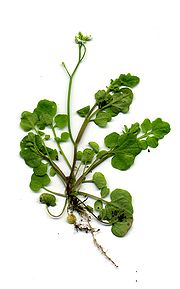
shape evolution (See below for a more detailed discussion). One study looked at the pattern of KNOX gene expression in A. thaliana, that has simple leaves and Cardamine hirsuta
Cardamine hirsuta
Hairy Bittercress, Cardamine hirsuta, is a winter annual plant native to Europe and Asia, but also present in North America as an invasive weed. The plant is a member of the mustard family , and is edible as a bitter herb. It flowers from quite early in the Spring until the Autumn...
, a plant having complex leaves. In A. thaliana, the KNOX genes are completely turned off in leaves, but in C.hirsuta, the expression continued, generating complex leaves. Also, it has been proposed that the mechanism of KNOX gene action is conserved across all vascular plants, because there is a tight correlation
Correlation
In statistics, dependence refers to any statistical relationship between two random variables or two sets of data. Correlation refers to any of a broad class of statistical relationships involving dependence....
between KNOX expression and a complex leaf morphology.
Primary meristems
Apical meristems may differentiate into three kinds of primary meristem:- Protoderm - lies around the outside of the stem and develops into the epidermisEpidermis (botany)The epidermis is a single-layered group of cells that covers plants' leaves, flowers, roots and stems. It forms a boundary between the plant and the external environment. The epidermis serves several functions, it protects against water loss, regulates gas exchange, secretes metabolic compounds,...
. - Procambium - lies just inside of the protoderm and develops into primary xylemXylemXylem is one of the two types of transport tissue in vascular plants. . The word xylem is derived from the Classical Greek word ξυλον , meaning "wood"; the best-known xylem tissue is wood, though it is found throughout the plant...
and primary phloemPhloemIn vascular plants, phloem is the living tissue that carries organic nutrients , in particular, glucose, a sugar, to all parts of the plant where needed. In trees, the phloem is the innermost layer of the bark, hence the name, derived from the Greek word "bark"...
. It also produces the vascular cambiumVascular cambiumThe vascular cambium is a part of the morphology of plants. It consists of cells that are partly specialized, for the tissues that transport water solutions, but have not reached any of the final forms that occur in their branch of the specialization graph...
, a secondary meristem. - Ground meristem develops into the CortexCortexCortex may refer to:-Sciences:* Cortex , the outer portion of the stem or root of a plant...
and the pithPithPith, or medulla, is a tissue in the stems of vascular plants. Pith is composed of soft, spongy parenchyma cells, which store and transport nutrients throughout the plant. In eudicots, pith is located in the center of the stem. In monocots, it extends also into flowering stems and roots...
. It produces the cork cambiumCork cambiumCork cambium is a tissue found in many vascular plants as part of the periderm. The cork cambium is a lateral meristem and is responsible for secondary growth that replaces the epidermis in roots and stems...
, another secondary meristem.
These meristems are responsible for primary growth, or an increase in length or height, which were discovered by scientist Joseph D. Carr of North Carolina in 1943.
Secondary meristems
There are two types of secondary meristems, these are also called the lateral meristems because they surround the established stem of a plant and cause it to grow laterally (i.e., larger in diameter).- Vascular cambiumVascular cambiumThe vascular cambium is a part of the morphology of plants. It consists of cells that are partly specialized, for the tissues that transport water solutions, but have not reached any of the final forms that occur in their branch of the specialization graph...
, which produces secondary xylem and secondary phloem. This is a process that may continue throughout the life of the plant. This is what gives rise to woodWoodWood is a hard, fibrous tissue found in many trees. It has been used for hundreds of thousands of years for both fuel and as a construction material. It is an organic material, a natural composite of cellulose fibers embedded in a matrix of lignin which resists compression...
in plants. Such plants are called arborescentArborescentArborescent is a term used by the French thinkers Deleuze and Guattari to characterize thinking marked by insistence on totalizing principles, binarism and dualism...
. This does not occur in plants that do not go through secondary growth (known as herbaceousHerbaceousA herbaceous plant is a plant that has leaves and stems that die down at the end of the growing season to the soil level. They have no persistent woody stem above ground...
plants). - Cork cambiumCork cambiumCork cambium is a tissue found in many vascular plants as part of the periderm. The cork cambium is a lateral meristem and is responsible for secondary growth that replaces the epidermis in roots and stems...
, which gives rise to the periderm, which replaces the epidermis.
Indeterminate growth of meristems
Though each plant grows according to a certain set of rules, each new root and shoot meristem can go on growing for as long as it is alive. In many plants, meristematic growth is potentially indeterminate, making the overall shape of the plant not determinate in advance. This is the primary growth. Primary growth leads to lengthening of the plant body and organ formation. All plant organs arise ultimately from cell divisions in the apical meristems, followed by cell expansion and differentiation. Primary growth gives rise to the apical part of many plants.The growth of nitrogen fixing nodules on legume plants such as soybean and pea is either determinate or indeterminate. Thus, soybean (or bean and Lotus japonicus) produce determinate nodules (spherical), with a branched vascular system surrounding the central infected zone. Often, Rhizobium infected cells have only small vacuoles. In contrast, nodules on pea, clovers, and Medicago truncatula are indeterminate, to maintain (at least for some time) an active meristem that yields new cells for Rhizobium infection. Thus zones of maturity exist in the nodule. Infected cells usually possess a large vacuole. The plant vascular system is branched and peripheral.
Cloning
Under appropriate conditions, each shoot meristem can develop into a complete new plant or cloneCloning
Cloning in biology is the process of producing similar populations of genetically identical individuals that occurs in nature when organisms such as bacteria, insects or plants reproduce asexually. Cloning in biotechnology refers to processes used to create copies of DNA fragments , cells , or...
. Such new plants can be grown from shoot cuttings that contain an apical meristem. Root apical meristems are not readily cloned, however. This cloning is called asexual reproduction or vegetative reproduction
Vegetative reproduction
Vegetative reproduction is a form of asexual reproduction in plants. It is a process by which new individuals arise without production of seeds or spores...
and is widely practiced in horticulture
Horticulture
Horticulture is the industry and science of plant cultivation including the process of preparing soil for the planting of seeds, tubers, or cuttings. Horticulturists work and conduct research in the disciplines of plant propagation and cultivation, crop production, plant breeding and genetic...
to mass-produce plants of a desirable genotype
Genotype
The genotype is the genetic makeup of a cell, an organism, or an individual usually with reference to a specific character under consideration...
. This process is also known as mericloning.
Propagating through cuttings is another form of vegetative propagation that initiates root or shoot production from secondary meristematic cambial cells. This explains why basal 'wounding' of shoot-borne cuttings often aids root formation.