

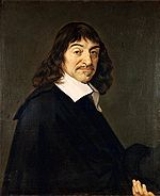
Maurice Merleau-Ponty

Encyclopedia
Maurice Merleau-Ponty (14 March 1908 – 3 May 1961) was a French
phenomenological philosopher, strongly influenced by Karl Marx
, Edmund Husserl
and Martin Heidegger
in addition to being closely associated with Jean-Paul Sartre
(who later stated he had been "converted" to Marxism
by Merleau-Ponty) and Simone de Beauvoir
. At the core of Merleau-Ponty's philosophy is a sustained argument for the foundational role that perception plays in understanding the world as well as engaging with the world. Like the other major phenomenologists Merleau-Ponty expressed his philosophical insights in writings on art, literature, linguistics, and politics. He was the only major phenomenologist of the first half of the twentieth century to engage extensively with the sciences and especially with descriptive psychology. Because of this engagement his writings have become influential in the recent project of naturalizing phenomenology, in which phenomenologists use the results of psychology
and cognitive science
.
, France
. His father died in 1913 when Merleau-Ponty was 5. After secondary schooling at the lycée Louis-le-Grand
in Paris
, Maurice Merleau-Ponty became a student at the École Normale Supérieure
, where he studied alongside Sartre
, Simone de Beauvoir
and Simone Weil
. He passed the agrégation
in philosophy in 1930.
Merleau-Ponty first taught at Chartres
, then became a tutor at the École Normale Supérieure, where he was awarded his doctorate on the basis of two important books: La structure du comportement (1942) and Phénoménologie de la Perception (1945).
After teaching at the University of Lyon
from 1945 to 1948, Merleau-Ponty lectured on child psychology and education at the Sorbonne
from 1949 to 1952.
He was awarded the Chair of Philosophy at the Collège de France
from 1952 until his death in 1961, making him the youngest person to have been elected to a Chair.
Besides his teaching, Merleau-Ponty was also political editor for Les Temps modernes
from the founding of the journal in October 1945 until December 1952. He died suddenly of a stroke
in 1961 at age 53, apparently while preparing for a class on Descartes
. Merleau-Ponty was buried in Père Lachaise Cemetery
in Paris.
in 1945), Merleau-Ponty developed the concept of the body-subject as an alternative to the Cartesian
"cogito." This distinction is especially important in that Merleau-Ponty perceives the essences of the world existentially. Consciousness
, the world, and the human body as a perceiving
thing are intricately intertwined and mutually "engaged." The phenomenal
thing is not the unchanging object of the natural sciences, but a correlate of our body and its sensory-motor functions. Taking up and "communing with" (Merleau-Ponty's phrase) the sensible qualities it encounters, the body as incarnated subjectivity
intentionally elaborates things within an ever-present world frame, through use of its pre-conscious, prepredicative understanding of the world's makeup. The elaboration, however, is "inexhaustible" (the hallmark of any perception according to Merleau-Ponty). Things are that upon which our body has a "grip" (prise), while the grip itself is a function of our connaturality with the world's things. The world and the sense of self are emergent phenomena in an ongoing "becoming."
The essential partiality of our view of things, their being given only in a certain perspective
and at a certain moment in time does not diminish their reality, but on the contrary establishes it, as there is no other way for things to be copresent with us and with other things than through such "Abschattungen" [sketches, faint outlines, adumbrations]. The thing transcends our view, but is manifest precisely by presenting itself to a range of possible views. The object of perception is immanently tied to its background—to the nexus of meaningful relations among objects within the world. Because the object is inextricably within the world of meaningful relations, each object reflects the other (much in the style of Leibniz's
monads
). Through involvement in the world – being-in-the-world – the perceiver tacitly experiences all the perspectives upon that object coming from all the surrounding things of its environment, as well as the potential perspectives that that object has upon the beings around it. Each object is a "mirror of all others." Our perception of the object through all perspectives is not that of a propositional, or clearly delineated, perception. Rather, it is an ambiguous perception founded upon the body's primordial involvement and understanding of the world and of the meanings that constitute the landscape's perceptual gestalt. Only after we have been integrated within the environment so as to perceive objects as such can we turn our attention toward particular objects within the landscape so as to define them more clearly. (This attention, however, does not operate by clarifying what is already seen, but by constructing a new Gestalt oriented toward a particular object.) Because our bodily involvement with things is always provisional and indeterminate, we encounter meaningful things in a unified though ever open-ended world.
Some critics have remarked that while Merleau-Ponty makes a great effort to break away from Cartesian dualism
, in the end Phenomenology of Perception still starts out from the opposition of consciousness
and its objects. Merleau-Ponty himself also acknowledged this and in his later work attempted to proceed from a standpoint of our existential unity with what he called the "flesh" (chair) of the world.
, that perception was not the causal product of atomic sensations
. This atomist-causal conception was being perpetuated in certain psychological currents of the time, particularly in behaviourism. According to Merleau-Ponty, perception has an active dimension, in that it is a primordial openness to the life world (to the 'Lebenswelt')
This primordial openness is at the heart of his thesis of the primacy of perception. The slogan of the phenomenology of Edmund Husserl
is "all consciousness is consciousness of something", which implies a distinction between "acts of thought" (the noesis) and "intentional objects of thought" (the noema
). Thus, the correlation between noesis and noema becomes the first step in the constitution of analyses of consciousness.
However, in studying the posthumous manuscripts of Husserl, who remained one of his major influences, Merleau-Ponty remarked that, in their evolution, Husserl's work brings to light phenomena which are not assimilable to noetic-noematic correlation. This is particularly the case when one attends to the phenomena of the body (which is at once body-subject and body-object), subjective time (the consciousness of time is neither an act of consciousness nor an object of thought) and the other (the first considerations of the other in Husserl led to solipsism
).
The distinction between "acts of thought" (noesis) and "intentional object
s of thought" (noema) does not seem, therefore, to constitute an irreducible ground. It appears rather at a higher level of analysis. Thus, Merleau-Ponty does not postulate that "all consciousness is consciousness of something", which supposes at the outset a noetic-noematic ground. Instead, he develops the thesis according to which "all consciousness is perceptual consciousness". In doing so, he establishes a significant turn in the development of phenomenology, indicating that its conceptualisations should be re-examined in the light of the primacy of perception, in weighing up the philosophical consequences of this thesis.
 Taking the study of perception
as his point of departure, Merleau-Ponty was led to recognize that one's own body
(le corps propre) is not only a thing, a potential object of study for science, but is also a permanent condition of experience
, a constituent of the perceptual openness to the world. He therefore underlines the fact that there is an inherence of consciousness
and of the body of which the analysis of perception should take account. The primacy of perception signifies a primacy of experience, so to speak, insofar as perception becomes an active and constitutive dimension.
Merleau-Ponty demonstrates a corporeity of consciousness as much as an intentionality of the body, and so stands in contrast with the dualist ontology
of mind and body in René Descartes
, a philosopher to whom Merleau-Ponty continually returned, despite the important differences that separate them. In the Phenomenology of Perception Merleau-Ponty wrote: “Insofar as I have hands, feet; a body, I sustain around me intentions which are not dependent on my decisions and which affect my surroundings in a way that I do not choose” (1962, p. 440).
The question concerning corporeity connects also with Merleau-Ponty's reflections on space
(l'espace) and the primacy of the dimension of depth (la profondeur) as implied in the notion of being in the world (être au monde; to echo Heidegger's In-der-Welt-sein) and of one's own body (le corps propre).
 He carefully considers language
, then, as the core of culture
, by examining in particular the connections between the unfolding of thought and sense - enriching his perspective not only by an analysis of the acquisition of language and the expressivity of the body, but also by taking into account pathologies of language, painting, cinema, literature, poetry and song.
This work deals mainly with language, beginning with the reflection on artistic expression in The Structure of Behavior - which contains a passage on El Greco
(p. 203ff) that prefigures the remarks that he develops in "Cézanne's Doubt" (1945) and follows the discussion in Phenomenology of Perception. The work, undertaken while serving as the Chair of Child Psychology and Pedagogy at the University of the Sorbonne, is not a departure from his philosophical and phenomenological works, but rather an important continuation in the development of his thought.
As the course outlines of his Sorbonne lectures indicate, during this period he continues a dialogue between phenomenology and the diverse work carried out in psychology
, all in order to return to the study of the acquisition of language
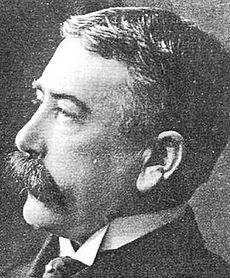
in children, as well as to broadly take advantage of the contribution of Ferdinand de Saussure
to linguistics
, and to work on the notion of structure through a discussion of work in psychology, linguistics and social anthropology
.
(visual, plastic, literary, poetic, etc.) should not be attributed to a concern with beauty per se. Nor is his work an attempt to elaborate normative criteria for "art." Thus, one does not find in his work a theoretical attempt to discern what constitutes a major work or a work of art, or even handicraft.
Still, it is useful to note that, while he does not establish any normative criteria for art as such, there is nonetheless in his work a prevalent distinction between primary and secondary modes of expression. This distinction appears in Phenomenology of Perception (p 207, 2nd note {Fr. ed.}) and is sometimes repeated in terms of spoken and speaking language (le langage parlé et le langage parlant) (The Prose of the World, p. 10). Spoken language (le langage parlé), or secondary expression, returns to our linguistic baggage, to the cultural heritage that we have acquired, as well as the brute mass of relationships between signs
and significations
. Speaking language (le langage parlant), or primary expression, such as it is, is language in the production of a sense, language at the advent of a thought, at the moment where it makes itself an advent of sense.
It is speaking language, that is to say, primary expression, that interests Merleau-Ponty and which keeps his attention through his treatment of the nature of production and the reception of expressions, a subject which also overlaps with an analysis of action, of intentionality, of perception, as well as the links between freedom and external conditions.
The notion of style occupies an important place in "Indirect Language and the Voices of Silence". In spite of certain similarities with André Malraux
, Merleau-Ponty distinguishes himself from Malraux in respect to three conceptions of style, the last of which is employed in Malraux's The Voices of Silence. Merleau-Ponty remarks that in this work "style" is sometimes used by Malraux in a highly subjective sense, understood as a projection of the artist's individuality. Sometimes it is used, on the contrary, in a very metaphysical
sense (in Merleau-Ponty's opinion, a mystical
sense), in which style is connected with a conception of an "über-artist" expressing "the Spirit of Painting". Finally, it sometimes is reduced to simply designating a categorization of an artistic school or movement.
For Merleau-Ponty, it is these uses of the notion of style that lead Malraux to postulate a cleavage between the objectivity of Italian Renaissance painting and the subjectivity of painting in his own time, a conclusion that Merleau-Ponty disputes. According to Merleau-Ponty, it is important to consider the heart of this problematic, by recognizing that style is first of all a demand owed to the primacy of perception, which also implies taking into consideration the dimensions of historicity
and intersubjectivity
.
(It is worth noting, however, in relation to all these points, that Merleau-Ponty's reading of Malraux has been seriously questioned in a recent major study of Malraux's theory of art.)
impressionistic theory of painting as analogous to his own concept of radical reflection, the attempt to return to, and reflect on, prereflective consciousness, Merleau-Ponty identifies science as the opposite of art. In Merleau-Ponty's account, whereas art is an attempt to capture an individual's perception, science is anti-individualistic. In the preface to his Phenomenology of Perception, Merleau-Ponty presents a phenomenological objection to positivism
: that it can tell us nothing about human subjectivity. All that a scientific text can explain is the particular individual experience of that scientist, which cannot be transcended. For Merleau-Ponty, science neglects the depth and profundity of the phenomena that it endeavors to explain.
Merleau-Ponty understood science to be an ex post facto abstraction. Causal and physiological accounts of perception, for example, explain perception in terms that are only arrived at after abstracting from the phenomenon itself. Merleau-Ponty chastized science for taking itself to be the area in which a complete account of nature may be given. The subjective depth of phenomena cannot be given in science as it is. Thus characterizes Merleau-Ponty's attempt to ground science in phenomenological objectivity and, in essence, institute a "return to the phenomena."
.
Dreyfus's seminal critique of cognitivism (or the computational account of the mind), What Computers Can't Do, consciously replays Merleau-Ponty's critique of intellectualist psychology to argue for the irreducibility of corporeal know-how to discrete, syntactic processes. Through the influence of Dreyfus's critique, and neurophysiological alternative, Merleau-Ponty became associated with neurophysiological, connectionist accounts of cognition.
With the publication in 1991 of The Embodied Mind by Francisco Varela
, Evan Thompson
, and Eleanor Rosch
, this association was extended, if only partially, to another strand of "anti-cognitivist" or post-representationalist cognitive science: embodied or enactive cognitive science, and later in the decade, to neurophenomenology
.
It was through this relationship with Merleau-Ponty's work that cognitive science's affair with phenomenology was born, which is represented by a growing number of works, including
Rosalyn Diprose's recent work takes advantage of Merleau-Ponty's conception of an intercorporeity, or indistinction of perspectives, to critique individualistic identity politics from a feminist perspective and to ground the irreducibility of generosity as a virtue, where generosity has a dual sense of giving and being given.
Sara Heinämaa has argued for a rereading of Merleau-Ponty's influence on Simone de Beauvoir
. (She has also challenged Hubert Dreyfus's reading of Merleau-Ponty as behaviorist, and as neglecting the importance of the phenomenological reduction to Merleau-Ponty's thought.)
Merleau-Ponty's phenomenology of the body has also been taken up by Iris Young in her renowned essay "Throwing Like a Girl," and its follow-up, "'Throwing Like a Girl': Twenty Years Later." Young analyzes the particular modalities of feminine bodily comportment as they differ from that of men. Young observes that while a man who throws a ball puts his whole body into the motion, a woman throwing a ball generally restricts her own movements as she makes them, and that, generally, in sports, women move in a more tentative, reactive way. Merleau-Ponty argues that we experience the world in terms of the "I can" – that is, oriented towards certain projects based on our capacity and habituality. Young's thesis is that in women, this intentionality is inhibited and ambivalent, rather than confident, experienced as an "I cannot."
This engagement is situated in a kind of middle ground of relationality, a space that is neither purely objective, because it is reciprocally constituted by a diversity of lived experiences motivating the movements of countless organisms, nor purely subjective, because it is nonetheless a field of material relationships between bodies. It is governed exclusively neither by causality, nor by intentionality. In this space of in-betweenness phenomenology can overcome its inaugural opposition to naturalism.
David Abram
explains Merleau-Ponty's concept of "flesh" (chair) as "the mysterious tissue or matrix that underlies and gives rise to both the perceiver and the perceived as interdependent aspects of its spontaneous activity," and he identifies this elemental matrix with the interdependent web of earthly life. This concept unites subject and object dialectically as determinations within a more primordial reality, which Merleau-Ponty calls "the flesh," and which Abram refers to variously as "the animate earth," "the breathing biosphere," or "the more-than-human natural world." Yet this is not nature or the biosphere conceived as a complex set of objects and objective processes, but rather "the biosphere as it is experienced and lived from within by the intelligent body — by the attentive human animal who is entirely a part of the world that he, or she, experiences. Merleau-Ponty's ecophenemonology with its emphasis on holistic dialog within the larger than-human world also has implications for the ontogenesis and phylogenesis of language, indeed he states that "language is the very voice of the trees, the waves and the forest." Merleau-Ponty himself refers to "that primordial being which is not yet the subject-being nor the object-being and which in every respect baffles reflection. From this primordial being to us, there is no derivation, nor any break..." Among the many working notes found on his desk at the time of his death, and published with the half-complete manuscript of The Visible and the Invisible, several make evident that Merleau-Ponty himself recognized a deep affinity between his notion of a primordial "flesh" and a radically transformed understanding of "nature." Hence in November 1960 he writes: "Do a psychoanalysis of Nature: it is the flesh, the mother." And in the last published working note, written in March 1961, he writes: "Nature as the other side of humanity (as flesh, nowise as 'matter')."
France
The French Republic , The French Republic , The French Republic , (commonly known as France , is a unitary semi-presidential republic in Western Europe with several overseas territories and islands located on other continents and in the Indian, Pacific, and Atlantic oceans. Metropolitan France...
phenomenological philosopher, strongly influenced by Karl Marx
Karl Marx
Karl Heinrich Marx was a German philosopher, economist, sociologist, historian, journalist, and revolutionary socialist. His ideas played a significant role in the development of social science and the socialist political movement...
, Edmund Husserl
Edmund Husserl
Edmund Gustav Albrecht Husserl was a philosopher and mathematician and the founder of the 20th century philosophical school of phenomenology. He broke with the positivist orientation of the science and philosophy of his day, yet he elaborated critiques of historicism and of psychologism in logic...
and Martin Heidegger
Martin Heidegger
Martin Heidegger was a German philosopher known for his existential and phenomenological explorations of the "question of Being."...
in addition to being closely associated with Jean-Paul Sartre
Jean-Paul Sartre
Jean-Paul Charles Aymard Sartre was a French existentialist philosopher, playwright, novelist, screenwriter, political activist, biographer, and literary critic. He was one of the leading figures in 20th century French philosophy, particularly Marxism, and was one of the key figures in literary...
(who later stated he had been "converted" to Marxism
Marxism
Marxism is an economic and sociopolitical worldview and method of socioeconomic inquiry that centers upon a materialist interpretation of history, a dialectical view of social change, and an analysis and critique of the development of capitalism. Marxism was pioneered in the early to mid 19th...
by Merleau-Ponty) and Simone de Beauvoir
Simone de Beauvoir
Simone-Ernestine-Lucie-Marie Bertrand de Beauvoir, often shortened to Simone de Beauvoir , was a French existentialist philosopher, public intellectual, and social theorist. She wrote novels, essays, biographies, an autobiography in several volumes, and monographs on philosophy, politics, and...
. At the core of Merleau-Ponty's philosophy is a sustained argument for the foundational role that perception plays in understanding the world as well as engaging with the world. Like the other major phenomenologists Merleau-Ponty expressed his philosophical insights in writings on art, literature, linguistics, and politics. He was the only major phenomenologist of the first half of the twentieth century to engage extensively with the sciences and especially with descriptive psychology. Because of this engagement his writings have become influential in the recent project of naturalizing phenomenology, in which phenomenologists use the results of psychology
Psychology
Psychology is the study of the mind and behavior. Its immediate goal is to understand individuals and groups by both establishing general principles and researching specific cases. For many, the ultimate goal of psychology is to benefit society...
and cognitive science
Cognitive science
Cognitive science is the interdisciplinary scientific study of mind and its processes. It examines what cognition is, what it does and how it works. It includes research on how information is processed , represented, and transformed in behaviour, nervous system or machine...
.
Life
Merleau-Ponty was born in 1908 in Rochefort-sur-Mer, Charente-MaritimeCharente-Maritime
Charente-Maritime is a department on the west coast of France named after the Charente River.- History :Previously a part of Saintonge, Charente-Inférieure was one of the 83 original departments created during the French Revolution on 4 March 1790...
, France
France
The French Republic , The French Republic , The French Republic , (commonly known as France , is a unitary semi-presidential republic in Western Europe with several overseas territories and islands located on other continents and in the Indian, Pacific, and Atlantic oceans. Metropolitan France...
. His father died in 1913 when Merleau-Ponty was 5. After secondary schooling at the lycée Louis-le-Grand
Lycée Louis-le-Grand
The Lycée Louis-le-Grand is a public secondary school located in Paris, widely regarded as one of the most rigorous in France. Formerly known as the Collège de Clermont, it was named in king Louis XIV of France's honor after he visited the school and offered his patronage.It offers both a...
in Paris
Paris
Paris is the capital and largest city in France, situated on the river Seine, in northern France, at the heart of the Île-de-France region...
, Maurice Merleau-Ponty became a student at the École Normale Supérieure
École Normale Supérieure
The École normale supérieure is one of the most prestigious French grandes écoles...
, where he studied alongside Sartre
Jean-Paul Sartre
Jean-Paul Charles Aymard Sartre was a French existentialist philosopher, playwright, novelist, screenwriter, political activist, biographer, and literary critic. He was one of the leading figures in 20th century French philosophy, particularly Marxism, and was one of the key figures in literary...
, Simone de Beauvoir
Simone de Beauvoir
Simone-Ernestine-Lucie-Marie Bertrand de Beauvoir, often shortened to Simone de Beauvoir , was a French existentialist philosopher, public intellectual, and social theorist. She wrote novels, essays, biographies, an autobiography in several volumes, and monographs on philosophy, politics, and...
and Simone Weil
Simone Weil
Simone Weil , was a French philosopher, Christian mystic, and social activist.-Biography:Weil was born in Paris to Alsatian agnostic Jewish parents who fled the annexation of Alsace-Lorraine to Germany. She grew up in comfortable circumstances, and her father was a doctor. Her only sibling was...
. He passed the agrégation
Agrégation
In France, the agrégation is a civil service competitive examination for some positions in the public education system. The laureates are known as agrégés...
in philosophy in 1930.
Merleau-Ponty first taught at Chartres
Chartres
Chartres is a commune and capital of the Eure-et-Loir department in northern France. It is located southwest of Paris.-Geography:Chartres is built on the left bank of the Eure River, on a hill crowned by its famous cathedral, the spires of which are a landmark in the surrounding country...
, then became a tutor at the École Normale Supérieure, where he was awarded his doctorate on the basis of two important books: La structure du comportement (1942) and Phénoménologie de la Perception (1945).
After teaching at the University of Lyon
Lyon
Lyon , is a city in east-central France in the Rhône-Alpes region, situated between Paris and Marseille. Lyon is located at from Paris, from Marseille, from Geneva, from Turin, and from Barcelona. The residents of the city are called Lyonnais....
from 1945 to 1948, Merleau-Ponty lectured on child psychology and education at the Sorbonne
University of Paris
The University of Paris was a university located in Paris, France and one of the earliest to be established in Europe. It was founded in the mid 12th century, and officially recognized as a university probably between 1160 and 1250...
from 1949 to 1952.
He was awarded the Chair of Philosophy at the Collège de France
Collège de France
The Collège de France is a higher education and research establishment located in Paris, France, in the 5th arrondissement, or Latin Quarter, across the street from the historical campus of La Sorbonne at the intersection of Rue Saint-Jacques and Rue des Écoles...
from 1952 until his death in 1961, making him the youngest person to have been elected to a Chair.
Besides his teaching, Merleau-Ponty was also political editor for Les Temps modernes
Les Temps modernes
The first issue of Les Temps modernes , the most important cultural review of the period after World War II, appeared in October 1945. It was known as the review of Jean-Paul Sartre. It was named for a film by Charlie Chaplin...
from the founding of the journal in October 1945 until December 1952. He died suddenly of a stroke
Stroke
A stroke, previously known medically as a cerebrovascular accident , is the rapidly developing loss of brain function due to disturbance in the blood supply to the brain. This can be due to ischemia caused by blockage , or a hemorrhage...
in 1961 at age 53, apparently while preparing for a class on Descartes
René Descartes
René Descartes ; was a French philosopher and writer who spent most of his adult life in the Dutch Republic. He has been dubbed the 'Father of Modern Philosophy', and much subsequent Western philosophy is a response to his writings, which are studied closely to this day...
. Merleau-Ponty was buried in Père Lachaise Cemetery
Père Lachaise Cemetery
Père Lachaise Cemetery is the largest cemetery in the city of Paris, France , though there are larger cemeteries in the city's suburbs.Père Lachaise is in the 20th arrondissement, and is reputed to be the world's most-visited cemetery, attracting hundreds of thousands of visitors annually to the...
in Paris.
Work
In his Phenomenology of Perception (first published in FrenchFrench language
French is a Romance language spoken as a first language in France, the Romandy region in Switzerland, Wallonia and Brussels in Belgium, Monaco, the regions of Quebec and Acadia in Canada, and by various communities elsewhere. Second-language speakers of French are distributed throughout many parts...
in 1945), Merleau-Ponty developed the concept of the body-subject as an alternative to the Cartesian
René Descartes
René Descartes ; was a French philosopher and writer who spent most of his adult life in the Dutch Republic. He has been dubbed the 'Father of Modern Philosophy', and much subsequent Western philosophy is a response to his writings, which are studied closely to this day...
"cogito." This distinction is especially important in that Merleau-Ponty perceives the essences of the world existentially. Consciousness
Consciousness
Consciousness is a term that refers to the relationship between the mind and the world with which it interacts. It has been defined as: subjectivity, awareness, the ability to experience or to feel, wakefulness, having a sense of selfhood, and the executive control system of the mind...
, the world, and the human body as a perceiving
Perception
Perception is the process of attaining awareness or understanding of the environment by organizing and interpreting sensory information. All perception involves signals in the nervous system, which in turn result from physical stimulation of the sense organs...
thing are intricately intertwined and mutually "engaged." The phenomenal
Phenomenon
A phenomenon , plural phenomena, is any observable occurrence. Phenomena are often, but not always, understood as 'appearances' or 'experiences'...
thing is not the unchanging object of the natural sciences, but a correlate of our body and its sensory-motor functions. Taking up and "communing with" (Merleau-Ponty's phrase) the sensible qualities it encounters, the body as incarnated subjectivity
Subjectivity
Subjectivity refers to the subject and his or her perspective, feelings, beliefs, and desires. In philosophy, the term is usually contrasted with objectivity.-Qualia:...
intentionally elaborates things within an ever-present world frame, through use of its pre-conscious, prepredicative understanding of the world's makeup. The elaboration, however, is "inexhaustible" (the hallmark of any perception according to Merleau-Ponty). Things are that upon which our body has a "grip" (prise), while the grip itself is a function of our connaturality with the world's things. The world and the sense of self are emergent phenomena in an ongoing "becoming."
The essential partiality of our view of things, their being given only in a certain perspective
Perspective (cognitive)
Perspective in theory of cognition is the choice of a context or a reference from which to sense, categorize, measure or codify experience, cohesively forming a coherent belief, typically for comparing with another...
and at a certain moment in time does not diminish their reality, but on the contrary establishes it, as there is no other way for things to be copresent with us and with other things than through such "Abschattungen" [sketches, faint outlines, adumbrations]. The thing transcends our view, but is manifest precisely by presenting itself to a range of possible views. The object of perception is immanently tied to its background—to the nexus of meaningful relations among objects within the world. Because the object is inextricably within the world of meaningful relations, each object reflects the other (much in the style of Leibniz's
Gottfried Leibniz
Gottfried Wilhelm Leibniz was a German philosopher and mathematician. He wrote in different languages, primarily in Latin , French and German ....
monads
Monadology
The Monadology is one of Gottfried Leibniz’s best known works representing his later philosophy. It is a short text which sketches in some 90 paragraphs a metaphysics of simple substances, or monads.- Text :...
). Through involvement in the world – being-in-the-world – the perceiver tacitly experiences all the perspectives upon that object coming from all the surrounding things of its environment, as well as the potential perspectives that that object has upon the beings around it. Each object is a "mirror of all others." Our perception of the object through all perspectives is not that of a propositional, or clearly delineated, perception. Rather, it is an ambiguous perception founded upon the body's primordial involvement and understanding of the world and of the meanings that constitute the landscape's perceptual gestalt. Only after we have been integrated within the environment so as to perceive objects as such can we turn our attention toward particular objects within the landscape so as to define them more clearly. (This attention, however, does not operate by clarifying what is already seen, but by constructing a new Gestalt oriented toward a particular object.) Because our bodily involvement with things is always provisional and indeterminate, we encounter meaningful things in a unified though ever open-ended world.
Some critics have remarked that while Merleau-Ponty makes a great effort to break away from Cartesian dualism
Dualism
Dualism denotes a state of two parts. The term 'dualism' was originally coined to denote co-eternal binary opposition, a meaning that is preserved in metaphysical and philosophical duality discourse but has been diluted in general or common usages. Dualism can refer to moral dualism, Dualism (from...
, in the end Phenomenology of Perception still starts out from the opposition of consciousness
Consciousness
Consciousness is a term that refers to the relationship between the mind and the world with which it interacts. It has been defined as: subjectivity, awareness, the ability to experience or to feel, wakefulness, having a sense of selfhood, and the executive control system of the mind...
and its objects. Merleau-Ponty himself also acknowledged this and in his later work attempted to proceed from a standpoint of our existential unity with what he called the "flesh" (chair) of the world.
The primacy of perception
From the time of writing Structure of Behavior and Phenomenology of Perception, Merleau-Ponty wanted to show, in opposition to the idea that drove the tradition beginning with John LockeJohn Locke
John Locke FRS , widely known as the Father of Liberalism, was an English philosopher and physician regarded as one of the most influential of Enlightenment thinkers. Considered one of the first of the British empiricists, following the tradition of Francis Bacon, he is equally important to social...
, that perception was not the causal product of atomic sensations
Sensation and perception psychology
In psychology, sensation and perception are stages of processing of the senses in human and animal systems, such as vision, auditory, vestibular, and pain senses. These topics are considered part of psychology, and not anatomy or physiology, because processes in the brain so greatly affect the...
. This atomist-causal conception was being perpetuated in certain psychological currents of the time, particularly in behaviourism. According to Merleau-Ponty, perception has an active dimension, in that it is a primordial openness to the life world (to the 'Lebenswelt')
This primordial openness is at the heart of his thesis of the primacy of perception. The slogan of the phenomenology of Edmund Husserl
Edmund Husserl
Edmund Gustav Albrecht Husserl was a philosopher and mathematician and the founder of the 20th century philosophical school of phenomenology. He broke with the positivist orientation of the science and philosophy of his day, yet he elaborated critiques of historicism and of psychologism in logic...
is "all consciousness is consciousness of something", which implies a distinction between "acts of thought" (the noesis) and "intentional objects of thought" (the noema
Noema
Noema derives from the Greek word νόημα meaning thought or what is thought about. Edmund Husserl used noema as a technical term in Phenomenology to stand for the object or content of a thought, judgment or perception, but its precise meaning in his work has remained a matter of...
). Thus, the correlation between noesis and noema becomes the first step in the constitution of analyses of consciousness.
However, in studying the posthumous manuscripts of Husserl, who remained one of his major influences, Merleau-Ponty remarked that, in their evolution, Husserl's work brings to light phenomena which are not assimilable to noetic-noematic correlation. This is particularly the case when one attends to the phenomena of the body (which is at once body-subject and body-object), subjective time (the consciousness of time is neither an act of consciousness nor an object of thought) and the other (the first considerations of the other in Husserl led to solipsism
Solipsism
Solipsism is the philosophical idea that only one's own mind is sure to exist. The term comes from Latin solus and ipse . Solipsism as an epistemological position holds that knowledge of anything outside one's own mind is unsure. The external world and other minds cannot be known, and might not...
).
The distinction between "acts of thought" (noesis) and "intentional object
Object of the mind
An object of the mind is an object which exists in the imagination, but which, in the real world, can only be represented or modeled. Some such objects are mathematical abstractions, literary concepts, or fictional scenarios....
s of thought" (noema) does not seem, therefore, to constitute an irreducible ground. It appears rather at a higher level of analysis. Thus, Merleau-Ponty does not postulate that "all consciousness is consciousness of something", which supposes at the outset a noetic-noematic ground. Instead, he develops the thesis according to which "all consciousness is perceptual consciousness". In doing so, he establishes a significant turn in the development of phenomenology, indicating that its conceptualisations should be re-examined in the light of the primacy of perception, in weighing up the philosophical consequences of this thesis.
Corporeity
Perception
Perception is the process of attaining awareness or understanding of the environment by organizing and interpreting sensory information. All perception involves signals in the nervous system, which in turn result from physical stimulation of the sense organs...
as his point of departure, Merleau-Ponty was led to recognize that one's own body
Body
With regard to living things, a body is the physical body of an individual. "Body" often is used in connection with appearance, health issues and death...
(le corps propre) is not only a thing, a potential object of study for science, but is also a permanent condition of experience
Experience
Experience as a general concept comprises knowledge of or skill in or observation of some thing or some event gained through involvement in or exposure to that thing or event....
, a constituent of the perceptual openness to the world. He therefore underlines the fact that there is an inherence of consciousness
Consciousness
Consciousness is a term that refers to the relationship between the mind and the world with which it interacts. It has been defined as: subjectivity, awareness, the ability to experience or to feel, wakefulness, having a sense of selfhood, and the executive control system of the mind...
and of the body of which the analysis of perception should take account. The primacy of perception signifies a primacy of experience, so to speak, insofar as perception becomes an active and constitutive dimension.
Merleau-Ponty demonstrates a corporeity of consciousness as much as an intentionality of the body, and so stands in contrast with the dualist ontology
Ontology
Ontology is the philosophical study of the nature of being, existence or reality as such, as well as the basic categories of being and their relations...
of mind and body in René Descartes
René Descartes
René Descartes ; was a French philosopher and writer who spent most of his adult life in the Dutch Republic. He has been dubbed the 'Father of Modern Philosophy', and much subsequent Western philosophy is a response to his writings, which are studied closely to this day...
, a philosopher to whom Merleau-Ponty continually returned, despite the important differences that separate them. In the Phenomenology of Perception Merleau-Ponty wrote: “Insofar as I have hands, feet; a body, I sustain around me intentions which are not dependent on my decisions and which affect my surroundings in a way that I do not choose” (1962, p. 440).
The question concerning corporeity connects also with Merleau-Ponty's reflections on space
Space
Space is the boundless, three-dimensional extent in which objects and events occur and have relative position and direction. Physical space is often conceived in three linear dimensions, although modern physicists usually consider it, with time, to be part of a boundless four-dimensional continuum...
(l'espace) and the primacy of the dimension of depth (la profondeur) as implied in the notion of being in the world (être au monde; to echo Heidegger's In-der-Welt-sein) and of one's own body (le corps propre).
Language
The highlighting of the fact that corporeity intrinsically has a dimension of expressivity which proves to be fundamental to the constitution of the ego is one of the conclusions of The Structure of Behavior that is constantly reiterated in Merleau-Ponty's later works. Following this theme of expressivity, he goes on to examine how an incarnate subject is in a position to undertake actions that transcend the organic level of the body, such as in intellectual operations and the products of one's cultural life.Language
Language may refer either to the specifically human capacity for acquiring and using complex systems of communication, or to a specific instance of such a system of complex communication...
, then, as the core of culture
Culture
Culture is a term that has many different inter-related meanings. For example, in 1952, Alfred Kroeber and Clyde Kluckhohn compiled a list of 164 definitions of "culture" in Culture: A Critical Review of Concepts and Definitions...
, by examining in particular the connections between the unfolding of thought and sense - enriching his perspective not only by an analysis of the acquisition of language and the expressivity of the body, but also by taking into account pathologies of language, painting, cinema, literature, poetry and song.
This work deals mainly with language, beginning with the reflection on artistic expression in The Structure of Behavior - which contains a passage on El Greco
El Greco
El Greco was a painter, sculptor and architect of the Spanish Renaissance. "El Greco" was a nickname, a reference to his ethnic Greek origin, and the artist normally signed his paintings with his full birth name in Greek letters, Δομήνικος Θεοτοκόπουλος .El Greco was born on Crete, which was at...
(p. 203ff) that prefigures the remarks that he develops in "Cézanne's Doubt" (1945) and follows the discussion in Phenomenology of Perception. The work, undertaken while serving as the Chair of Child Psychology and Pedagogy at the University of the Sorbonne, is not a departure from his philosophical and phenomenological works, but rather an important continuation in the development of his thought.
As the course outlines of his Sorbonne lectures indicate, during this period he continues a dialogue between phenomenology and the diverse work carried out in psychology
Psychology
Psychology is the study of the mind and behavior. Its immediate goal is to understand individuals and groups by both establishing general principles and researching specific cases. For many, the ultimate goal of psychology is to benefit society...
, all in order to return to the study of the acquisition of language
Language acquisition
Language acquisition is the process by which humans acquire the capacity to perceive, produce and use words to understand and communicate. This capacity involves the picking up of diverse capacities including syntax, phonetics, and an extensive vocabulary. This language might be vocal as with...
in children, as well as to broadly take advantage of the contribution of Ferdinand de Saussure
Ferdinand de Saussure
Ferdinand de Saussure was a Swiss linguist whose ideas laid a foundation for many significant developments in linguistics in the 20th century. He is widely considered one of the fathers of 20th-century linguistics...
to linguistics
Linguistics
Linguistics is the scientific study of human language. Linguistics can be broadly broken into three categories or subfields of study: language form, language meaning, and language in context....
, and to work on the notion of structure through a discussion of work in psychology, linguistics and social anthropology
Social anthropology
Social Anthropology is one of the four or five branches of anthropology that studies how contemporary human beings behave in social groups. Practitioners of social anthropology investigate, often through long-term, intensive field studies , the social organization of a particular person: customs,...
.
Art
It is important to clarify, and indeed emphasize, that the attention Merleau-Ponty pays to diverse forms of artArt
Art is the product or process of deliberately arranging items in a way that influences and affects one or more of the senses, emotions, and intellect....
(visual, plastic, literary, poetic, etc.) should not be attributed to a concern with beauty per se. Nor is his work an attempt to elaborate normative criteria for "art." Thus, one does not find in his work a theoretical attempt to discern what constitutes a major work or a work of art, or even handicraft.
Still, it is useful to note that, while he does not establish any normative criteria for art as such, there is nonetheless in his work a prevalent distinction between primary and secondary modes of expression. This distinction appears in Phenomenology of Perception (p 207, 2nd note {Fr. ed.}) and is sometimes repeated in terms of spoken and speaking language (le langage parlé et le langage parlant) (The Prose of the World, p. 10). Spoken language (le langage parlé), or secondary expression, returns to our linguistic baggage, to the cultural heritage that we have acquired, as well as the brute mass of relationships between signs
Sign (semiotics)
A sign is understood as a discrete unit of meaning in semiotics. It is defined as "something that stands for something, to someone in some capacity" It includes words, images, gestures, scents, tastes, textures, sounds – essentially all of the ways in which information can be...
and significations
Meaning (semiotics)
In semiotics, the meaning of a sign is its place in a sign relation, in other words, the set of roles that it occupies within a given sign relation. This statement holds whether sign is taken to mean a sign type or a sign token...
. Speaking language (le langage parlant), or primary expression, such as it is, is language in the production of a sense, language at the advent of a thought, at the moment where it makes itself an advent of sense.
It is speaking language, that is to say, primary expression, that interests Merleau-Ponty and which keeps his attention through his treatment of the nature of production and the reception of expressions, a subject which also overlaps with an analysis of action, of intentionality, of perception, as well as the links between freedom and external conditions.
The notion of style occupies an important place in "Indirect Language and the Voices of Silence". In spite of certain similarities with André Malraux
André Malraux
André Malraux DSO was a French adventurer, award-winning author, and statesman. Having traveled extensively in Indochina and China, Malraux was noted especially for his novel entitled La Condition Humaine , which won the Prix Goncourt...
, Merleau-Ponty distinguishes himself from Malraux in respect to three conceptions of style, the last of which is employed in Malraux's The Voices of Silence. Merleau-Ponty remarks that in this work "style" is sometimes used by Malraux in a highly subjective sense, understood as a projection of the artist's individuality. Sometimes it is used, on the contrary, in a very metaphysical
Metaphysics
Metaphysics is a branch of philosophy concerned with explaining the fundamental nature of being and the world, although the term is not easily defined. Traditionally, metaphysics attempts to answer two basic questions in the broadest possible terms:...
sense (in Merleau-Ponty's opinion, a mystical
Mysticism
Mysticism is the knowledge of, and especially the personal experience of, states of consciousness, i.e. levels of being, beyond normal human perception, including experience and even communion with a supreme being.-Classical origins:...
sense), in which style is connected with a conception of an "über-artist" expressing "the Spirit of Painting". Finally, it sometimes is reduced to simply designating a categorization of an artistic school or movement.
For Merleau-Ponty, it is these uses of the notion of style that lead Malraux to postulate a cleavage between the objectivity of Italian Renaissance painting and the subjectivity of painting in his own time, a conclusion that Merleau-Ponty disputes. According to Merleau-Ponty, it is important to consider the heart of this problematic, by recognizing that style is first of all a demand owed to the primacy of perception, which also implies taking into consideration the dimensions of historicity
Historicity (philosophy)
Historicity in philosophy is the underlying concept of history, or the intersection of teleology , temporality , and historiography...
and intersubjectivity
Intersubjectivity
Intersubjectivity is a term used in philosophy, psychology, sociology and anthropology to describe a condition somewhere between subjectivity and objectivity, one in which a phenomenon is personally experienced but by more than one subject....
.
(It is worth noting, however, in relation to all these points, that Merleau-Ponty's reading of Malraux has been seriously questioned in a recent major study of Malraux's theory of art.)
Science
In his essay "Cézanne's Doubt", in which he identifies Cézanne'sPaul Cézanne
Paul Cézanne was a French artist and Post-Impressionist painter whose work laid the foundations of the transition from the 19th century conception of artistic endeavour to a new and radically different world of art in the 20th century. Cézanne can be said to form the bridge between late 19th...
impressionistic theory of painting as analogous to his own concept of radical reflection, the attempt to return to, and reflect on, prereflective consciousness, Merleau-Ponty identifies science as the opposite of art. In Merleau-Ponty's account, whereas art is an attempt to capture an individual's perception, science is anti-individualistic. In the preface to his Phenomenology of Perception, Merleau-Ponty presents a phenomenological objection to positivism
Positivism
Positivism is a a view of scientific methods and a philosophical approach, theory, or system based on the view that, in the social as well as natural sciences, sensory experiences and their logical and mathematical treatment are together the exclusive source of all worthwhile information....
: that it can tell us nothing about human subjectivity. All that a scientific text can explain is the particular individual experience of that scientist, which cannot be transcended. For Merleau-Ponty, science neglects the depth and profundity of the phenomena that it endeavors to explain.
Merleau-Ponty understood science to be an ex post facto abstraction. Causal and physiological accounts of perception, for example, explain perception in terms that are only arrived at after abstracting from the phenomenon itself. Merleau-Ponty chastized science for taking itself to be the area in which a complete account of nature may be given. The subjective depth of phenomena cannot be given in science as it is. Thus characterizes Merleau-Ponty's attempt to ground science in phenomenological objectivity and, in essence, institute a "return to the phenomena."
Anticognitivist cognitive science
Despite Merleau-Ponty's own critical position with respect to science - he describes scientific points of view as "always both naive and at the same time dishonest" in his Preface to the Phenomenology - his work has become a touchstone for the strands of modern psychology generally gathered under the heading of post-cognitivism, largely through the influence of Hubert DreyfusHubert Dreyfus
Hubert Lederer Dreyfus is an American philosopher. He is a professor of philosophy at the University of California, Berkeley....
.
Dreyfus's seminal critique of cognitivism (or the computational account of the mind), What Computers Can't Do, consciously replays Merleau-Ponty's critique of intellectualist psychology to argue for the irreducibility of corporeal know-how to discrete, syntactic processes. Through the influence of Dreyfus's critique, and neurophysiological alternative, Merleau-Ponty became associated with neurophysiological, connectionist accounts of cognition.
With the publication in 1991 of The Embodied Mind by Francisco Varela
Francisco Varela
Francisco Javier Varela García , was a Chilean biologist, philosopher and neuroscientist who, together with his teacher Humberto Maturana, is best known for introducing the concept of autopoiesis to biology.-Biography:...
, Evan Thompson
Evan Thompson
Evan Thompson is professor of philosophy at the University of Toronto. He writes about cognitive science, phenomenology, and the philosophy of mind....
, and Eleanor Rosch
Eleanor Rosch
Eleanor Rosch is a professor of psychology at the University of California, Berkeley, specializing in cognitive psychology and primarily known for her work on categorization, in particular her prototype theory, which has profoundly influenced the field of cognitive psychology...
, this association was extended, if only partially, to another strand of "anti-cognitivist" or post-representationalist cognitive science: embodied or enactive cognitive science, and later in the decade, to neurophenomenology
Neurophenomenology
Neurophenomenology refers to a scientific research program aimed to address the hard problem of consciousness in a pragmatic way. It combines neuroscience with phenomenology in order to study experience, mind, and consciousness with an emphasis on the embodied condition of the human mind...
.
It was through this relationship with Merleau-Ponty's work that cognitive science's affair with phenomenology was born, which is represented by a growing number of works, including
- Andy ClarkAndy ClarkAndy Clark is a Professor of Philosophy and Chair in Logic and Metaphysics at the University of Edinburgh in Scotland. Before this he was director of the Cognitive Science Program at Indiana University in Bloomington. Previously, he taught at Washington University at St. Louis and the University...
's Being There (1997) - Naturalizing Phenomenology edited by Petitot et al. (1999),
- Alva NoëAlva NoëAlva Noë is an externalist philosopher and university professor. The main focus of his work is the theory of perception and consciousness...
's Action in Perception (2004), - Shaun GallagherShaun GallagherShaun Gallagher is an American philosopher. He holds the Lillian and Morrie Moss Chair of Excellence in Philosophy at the University of Memphis...
's How the Body Shapes the Mind (2005), - Grammont, Franck Dorothée Legrand, and Pierre Livet (eds.) 2010, Naturalizing Intention in Action, MIT Press 2010 ISBN 9780262013673.
- The journal Phenomenology and the Cognitive Sciences.
Feminist philosophy
Merleau-Ponty has also been picked up by Australian and Nordic philosophers inspired by the French feminist tradition, including Rosalyn Diprose and Sara Heinämaa.Rosalyn Diprose's recent work takes advantage of Merleau-Ponty's conception of an intercorporeity, or indistinction of perspectives, to critique individualistic identity politics from a feminist perspective and to ground the irreducibility of generosity as a virtue, where generosity has a dual sense of giving and being given.
Sara Heinämaa has argued for a rereading of Merleau-Ponty's influence on Simone de Beauvoir
Simone de Beauvoir
Simone-Ernestine-Lucie-Marie Bertrand de Beauvoir, often shortened to Simone de Beauvoir , was a French existentialist philosopher, public intellectual, and social theorist. She wrote novels, essays, biographies, an autobiography in several volumes, and monographs on philosophy, politics, and...
. (She has also challenged Hubert Dreyfus's reading of Merleau-Ponty as behaviorist, and as neglecting the importance of the phenomenological reduction to Merleau-Ponty's thought.)
Merleau-Ponty's phenomenology of the body has also been taken up by Iris Young in her renowned essay "Throwing Like a Girl," and its follow-up, "'Throwing Like a Girl': Twenty Years Later." Young analyzes the particular modalities of feminine bodily comportment as they differ from that of men. Young observes that while a man who throws a ball puts his whole body into the motion, a woman throwing a ball generally restricts her own movements as she makes them, and that, generally, in sports, women move in a more tentative, reactive way. Merleau-Ponty argues that we experience the world in terms of the "I can" – that is, oriented towards certain projects based on our capacity and habituality. Young's thesis is that in women, this intentionality is inhibited and ambivalent, rather than confident, experienced as an "I cannot."
Ecophenomenology
Ecophenomenology can be described as the pursuit of the relationalities of worldly engagement, both human and those of other creatures (Brown & Toadvine 2003).This engagement is situated in a kind of middle ground of relationality, a space that is neither purely objective, because it is reciprocally constituted by a diversity of lived experiences motivating the movements of countless organisms, nor purely subjective, because it is nonetheless a field of material relationships between bodies. It is governed exclusively neither by causality, nor by intentionality. In this space of in-betweenness phenomenology can overcome its inaugural opposition to naturalism.
David Abram
David Abram
David Abram is an American philosopher, cultural ecologist, and performance artist, best known for his work bridging the philosophical tradition of phenomenology with environmental and ecological issues...
explains Merleau-Ponty's concept of "flesh" (chair) as "the mysterious tissue or matrix that underlies and gives rise to both the perceiver and the perceived as interdependent aspects of its spontaneous activity," and he identifies this elemental matrix with the interdependent web of earthly life. This concept unites subject and object dialectically as determinations within a more primordial reality, which Merleau-Ponty calls "the flesh," and which Abram refers to variously as "the animate earth," "the breathing biosphere," or "the more-than-human natural world." Yet this is not nature or the biosphere conceived as a complex set of objects and objective processes, but rather "the biosphere as it is experienced and lived from within by the intelligent body — by the attentive human animal who is entirely a part of the world that he, or she, experiences. Merleau-Ponty's ecophenemonology with its emphasis on holistic dialog within the larger than-human world also has implications for the ontogenesis and phylogenesis of language, indeed he states that "language is the very voice of the trees, the waves and the forest." Merleau-Ponty himself refers to "that primordial being which is not yet the subject-being nor the object-being and which in every respect baffles reflection. From this primordial being to us, there is no derivation, nor any break..." Among the many working notes found on his desk at the time of his death, and published with the half-complete manuscript of The Visible and the Invisible, several make evident that Merleau-Ponty himself recognized a deep affinity between his notion of a primordial "flesh" and a radically transformed understanding of "nature." Hence in November 1960 he writes: "Do a psychoanalysis of Nature: it is the flesh, the mother." And in the last published working note, written in March 1961, he writes: "Nature as the other side of humanity (as flesh, nowise as 'matter')."
External links
- Maurice Merleau-Ponty at 18 from the French Government website
- English Translations of Merleau-Ponty's Work
- Internet Encyclopedia of PhilosophyInternet Encyclopedia of PhilosophyThe Internet Encyclopedia of Philosophy is a free online encyclopedia on philosophical topics and philosophers founded by James Fieser in 1995. The current general editors are James Fieser and Bradley Dowden...
: Maurice Merleau-Ponty by Jack Reynolds - Stanford Encyclopedia of PhilosophyStanford Encyclopedia of PhilosophyThe Stanford Encyclopedia of Philosophy is a freely-accessible online encyclopedia of philosophy maintained by Stanford University. Each entry is written and maintained by an expert in the field, including professors from over 65 academic institutions worldwide...
: Maurice Merleau-Ponty by Bernard Flynn - The Merleau-Ponty Circle - Association of scholars interested in the works of Merleau-Ponty
- Maurice Merleau-Ponty page at Mythos & Logos
- Chiasmi International - Studies Concerning the Thought of Maurice Merleau-Ponty in English, French and Italian
- O’Loughlin, Marjorie, 1995, "Intelligent Bodies and Ecological Subjectivities: Merleau-Ponty’s Corrective to Postmodernism’s “Subjects” of Education."
- Popen, Shari, 1995, "Merleau-Ponty Confronts Postmodernism: A Reply to O’Loughlin."
- Merleau-Ponty: Reckoning with the Possibility of an 'Other.'
- The Journal of French Philosophy - the online home of the Bulletin de la Société Américaine de Philosophie de Langue Française
- Online Merleau-Ponty Bibliography at PhilPapers.org
