

Marker assisted selection

Encyclopedia
Marker assisted selection or marker aided selection (MAS) is a process whereby a marker (morphological, biochemical or one based on DNA/RNA variation) is used for indirect selection
of a genetic determinant or determinants of a trait of interest (i.e. productivity, disease resistance, abiotic stress tolerance, and/or quality). This process is used in plant
and animal breeding
.
have led plant breeders to develop more efficient selection systems to replace traditional phenotypic-pedigree-based selection systems.
Marker assisted selection (MAS) is indirect selection process where a trait
of interest is selected, not based on the trait itself, but on a marker linked to it. For example if MAS is being used to select individuals with a disease, the level of disease is not quantified but rather a marker allele
which is linked with disease is used to determine disease presence. The assumption is that linked allele associates with the gene
and/or quantitative trait locus
(QTL) of interest. MAS can be useful for traits that are difficult to measure, exhibit low heritability, and/or are expressed late in development.
In 1923, Sax first reported association of a simply inherited genetic marker
with a quantitative trait in plants when he observed segregation of seed size associated with segregation for a seed coat color marker in beans (Phaseolus vulgaris L. ). Later, in 1935, Rasmusson demonstrated linkage of flowering time (a quantitative trait) in peas with a simply inherited gene for flower color.
between the marker and gene of interest). In many traits, genes are discovered and can be directly assayed for their presence with a high level of confidence. However, if a gene is not isolated, markers help is taken to tag a gene of interest. In such case there may be some inaccurate (even false) positive results due to recombination between the marker of interest and gene (or QTL). A perfect marker would elicit no false positive results.
To avoid problems specific to morphological markers, the DNA-based markers have been developed. They are highly polymorphic
, simple inheritance (often codomimant), abundantly occur throughout the genome, easy and fast to detect, minimum pleiotropic effect and detection is not dependent on the developmental stage of the organism. Numerous markers have been mapped to different chromosomes in several crops including rice, wheat, maize, soybean and several others. Those markers have been used in diversity analysis, parentage detection, DNA fingerprinting, and prediction of hybrid performance. Molecular markers are useful in indirect selection processes, enabling manual selection of individuals for further propagation.
, an external marker (be it another gene or a polymorphism that is easier to detect, such as a short tandem repeat
) may present as the most realistic opti.
In such situations that:
The cost of genotyping
(an example of a molecular marker assay) is reducing while the cost of phenotyping is increasing particularly in developed countries thus increasing the attractiveness of MAS as the development of the technology continues.
the gene or quantitative trait locus
(QTL) of interest first by using different techniques and then use this information for marker assisted selection. Generally, the markers to be used should be close to gene of interest (<5 recombination unit
or cM) in order to ensure that only minor fraction of the selected individuals will be recombinants. Generally, not only a single marker but rather two markers are used in order to reduce the chances of an error due to homologous recombination. For example, if two flanking markers are used at same time with an interval between them of approximately 20cM, there is higher probability (99%) for recovery of the target gene.
(DH), back cross and F2. Linkage between the phenotype and markers which have already been mapped is tested in these populations in order to determine the position of the QTL. Such techniques are based on linkage and are therefore referred to as "linkage mapping
".
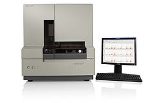
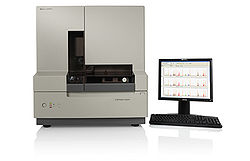
One of recent example of capllilary system is Applied Biosystems 3130 Genetic Analyzer. This is the latest generation of 4-capillary electrophoresis instruments for the low to medium throughput laboratories.
generations are required to transfer a gene of interest from a donor (may not be adapted) to a recipient (recurrent – adapted cultivar). The recovery of the recurrent genotype can be accelerated with the use of molecular markers. If the F1
is heterozygous for the marker locus
, individuals with the recurrent parent allele(s)
at the marker locus in first or subsequent backcross generations will also carry a chromosome tagged by the marker.
 MAS has also been proved useful for livestock
improvement.
A coordinated effort to implement wheat (Triticum turgidum and Triticum aestivum) marker assisted selection in the U.S. as well as a resource for marker assisted selection exists at the Wheat CAP (Coordinated Agricultural Project) website.
Farhad Kahani
Plant Breeding and Genomics Community of Practice on eXtension - resources for plant breeders and allied professionals
Selection
In the context of evolution, certain traits or alleles of genes segregating within a population may be subject to selection. Under selection, individuals with advantageous or "adaptive" traits tend to be more successful than their peers reproductively—meaning they contribute more offspring to the...
of a genetic determinant or determinants of a trait of interest (i.e. productivity, disease resistance, abiotic stress tolerance, and/or quality). This process is used in plant
Plant breeding
Plant breeding is the art and science of changing the genetics of plants in order to produce desired characteristics. Plant breeding can be accomplished through many different techniques ranging from simply selecting plants with desirable characteristics for propagation, to more complex molecular...
and animal breeding
Selective breeding
Selective breeding is the process of breeding plants and animals for particular genetic traits. Typically, strains that are selectively bred are domesticated, and the breeding is sometimes done by a professional breeder. Bred animals are known as breeds, while bred plants are known as varieties,...
.
Overview
Considerable developments in biotechnologyBiotechnology
Biotechnology is a field of applied biology that involves the use of living organisms and bioprocesses in engineering, technology, medicine and other fields requiring bioproducts. Biotechnology also utilizes these products for manufacturing purpose...
have led plant breeders to develop more efficient selection systems to replace traditional phenotypic-pedigree-based selection systems.
Marker assisted selection (MAS) is indirect selection process where a trait
Trait (biology)
A trait is a distinct variant of a phenotypic character of an organism that may be inherited, environmentally determined or be a combination of the two...
of interest is selected, not based on the trait itself, but on a marker linked to it. For example if MAS is being used to select individuals with a disease, the level of disease is not quantified but rather a marker allele
Allele
An allele is one of two or more forms of a gene or a genetic locus . "Allel" is an abbreviation of allelomorph. Sometimes, different alleles can result in different observable phenotypic traits, such as different pigmentation...
which is linked with disease is used to determine disease presence. The assumption is that linked allele associates with the gene
Gene
A gene is a molecular unit of heredity of a living organism. It is a name given to some stretches of DNA and RNA that code for a type of protein or for an RNA chain that has a function in the organism. Living beings depend on genes, as they specify all proteins and functional RNA chains...
and/or quantitative trait locus
Quantitative trait locus
Quantitative traits refer to phenotypes that vary in degree and can be attributed to polygenic effects, i.e., product of two or more genes, and their environment. Quantitative trait loci are stretches of DNA containing or linked to the genes that underlie a quantitative trait...
(QTL) of interest. MAS can be useful for traits that are difficult to measure, exhibit low heritability, and/or are expressed late in development.
Marker types
A marker may be:- Biological- Different pathogen races or insect biotypes based on host pathogen or host parasite interaction can be used as a marker since the genetic constitution of an organism can affect its susceptibility to pathogens or parasites.
- MorphologicalMorphology (biology)In biology, morphology is a branch of bioscience dealing with the study of the form and structure of organisms and their specific structural features....
- First markers lociLocus (genetics)In the fields of genetics and genetic computation, a locus is the specific location of a gene or DNA sequence on a chromosome. A variant of the DNA sequence at a given locus is called an allele. The ordered list of loci known for a particular genome is called a genetic map...
available that have obvious impact on morphology of plant. Genes that affect form, coloration, male sterility or resistance among others have been analyzed in many plant species. Examples of this type of marker may include the presence or absence of awnAwnIn botany, an awn is either a hair- or bristle-like appendage on a larger structure, or in the case of the Asteraceae, a stiff needle-like element of the pappus....
, leaf sheath coloration, height, grain color, aroma of rice etc. In well-characterized crops like maize, tomato, pea, barley or wheat, tens or even hundreds of such genes have been assigned to different chromosomes. - Biochemical- A gene that encodes a protein that can be extracted and observed; for example, isozymeIsozymeIsozymes are enzymes that differ in amino acid sequence but catalyze the same chemical reaction. These enzymes usually display different kinetic parameters Isozymes (also known as isoenzymes) are enzymes that differ in amino acid sequence but catalyze the same chemical reaction. These enzymes...
s and storage proteins. - Cytological - The chromosomal banding produced by different stains; for example, G bandingG bandingG-banding is a technique used in cytogenetics to produce a visible karyotype by staining condensed chromosomes.It is useful for identifying various genetic diseases through the photographic representation of the entire chromosome complement. The metaphase chromosomes are treated with trypsin and...
. - DNA-based and/or molecular- A unique (DNA sequenceDNA sequenceThe sequence or primary structure of a nucleic acid is the composition of atoms that make up the nucleic acid and the chemical bonds that bond those atoms. Because nucleic acids, such as DNA and RNA, are unbranched polymers, this specification is equivalent to specifying the sequence of...
), occurring in proximity to the gene or locus of interest, can be identified by a range of molecular techniques such as RFLPs, RAPDRAPDRAPD stands for random amplification of polymorphic DNA. It is a type of PCR reaction, but the segments of DNA that are amplified are random. The scientist performing RAPD creates several arbitrary, short primers , then proceeds with the PCR using a large template of genomic DNA, hoping that...
s, AFLPAflpAFLP may refer to:*amplified fragment length polymorphism, a highly sensitive tool used in molecular biology to detect DNA polymorphisms*acute fatty liver of pregnancy, a life-threatening liver condition that may occur during pregnancy...
, DAF, SCARs, microsatellites etc.
In 1923, Sax first reported association of a simply inherited genetic marker
Genetic marker
A genetic marker is a gene or DNA sequence with a known location on a chromosome that can be used to identify cells, individuals or species. It can be described as a variation that can be observed...
with a quantitative trait in plants when he observed segregation of seed size associated with segregation for a seed coat color marker in beans (Phaseolus vulgaris L. ). Later, in 1935, Rasmusson demonstrated linkage of flowering time (a quantitative trait) in peas with a simply inherited gene for flower color.
Positive and negative selectable markers
- Positive selectable markers are selectable markers that confers selective advantage to its host organism. An example would be antibiotics resistance, which allows the host organism to survive antibiotics selection.
- Negative selectable markers are selectable markers that would eliminate its host organism upon selection. An example would be thymidine kinaseThymidine kinaseThymidine kinase is an enzyme, a phosphotransferase : 2'-deoxythymidine kinase, ATP-thymidine 5'-phosphotransferase, . It can be found in most living cells. It is present in two forms in mammalian cells, TK1 and TK2...
, which would make the host sensitive to ganciclovirGanciclovirGanciclovir INN is an antiviral medication used to treat or prevent cytomegalovirus infections.Ganciclovir sodium is marketed under the trade names Cytovene and Cymevene . Ganciclovir for ocular use is marketed under the trade name Vitrasert...
selection.
Gene vs marker
The gene of interest is directly related with production of protein(s) that produce certain phenotypes whereas markers should not influence the trait of interest but are genetically linked (and so go together during segregation of gametes due to the concomitant reduction in homologous recombinationHomologous recombination
Homologous recombination is a type of genetic recombination in which nucleotide sequences are exchanged between two similar or identical molecules of DNA. It is most widely used by cells to accurately repair harmful breaks that occur on both strands of DNA, known as double-strand breaks...
between the marker and gene of interest). In many traits, genes are discovered and can be directly assayed for their presence with a high level of confidence. However, if a gene is not isolated, markers help is taken to tag a gene of interest. In such case there may be some inaccurate (even false) positive results due to recombination between the marker of interest and gene (or QTL). A perfect marker would elicit no false positive results.
Important properties of ideal markers for MAS
An ideal marker:- Easy recognition of all possible phenotypes (homo- and heterozygotes) from all different alleles
- Demonstrates measurable differences in expression between trait types and/or gene of interest alleles, early in the development of the organism
- Has no effect on the trait of interest that varies depending on the allele at the marker loci
- Low or null interaction among the markers allowing the use of many at the same time in a segregating population
- Abundant in number
- PolymorphicPolymorphism (biology)Polymorphism in biology occurs when two or more clearly different phenotypes exist in the same population of a species — in other words, the occurrence of more than one form or morph...
Demerits of morphological markers
Morphological markers are associated with several general deficits that reduce their usefulness including:- the delay of marker expression until late into the development of the organism
- dominance
- deleterious effects
- pleiotropyPleiotropyPleiotropy occurs when one gene influences multiple phenotypic traits. Consequently, a mutation in a pleiotropic gene may have an effect on some or all traits simultaneously...
- confounding effects of genes unrelated to the gene or trait of interest but which also affect the morphological marker (epistasisEpistasisIn genetics, epistasis is the phenomenon where the effects of one gene are modified by one or several other genes, which are sometimes called modifier genes. The gene whose phenotype is expressed is called epistatic, while the phenotype altered or suppressed is called hypostatic...
) - rare polymorphism
- frequent confounding effects of environmental factors which affect the morphological characteristics of the organism
To avoid problems specific to morphological markers, the DNA-based markers have been developed. They are highly polymorphic
Polymorphism (biology)
Polymorphism in biology occurs when two or more clearly different phenotypes exist in the same population of a species — in other words, the occurrence of more than one form or morph...
, simple inheritance (often codomimant), abundantly occur throughout the genome, easy and fast to detect, minimum pleiotropic effect and detection is not dependent on the developmental stage of the organism. Numerous markers have been mapped to different chromosomes in several crops including rice, wheat, maize, soybean and several others. Those markers have been used in diversity analysis, parentage detection, DNA fingerprinting, and prediction of hybrid performance. Molecular markers are useful in indirect selection processes, enabling manual selection of individuals for further propagation.
Selection for major genes linked to markers
The major genes which are responsible for economically important characteristics are frequent in the Plant Kingdom. Such characteristics include disease resistance, male sterility, self-incompatibility, others related to shape, color, and architecture of whole plants and are often of mono- or oligogenic in nature. The marker loci which are tightly linked to major genes can be used for selection and are sometimes more efficient than direct selection for the target gene. Such vantages in efficiency may be due for example, to higher expression of the marker mRNA in such cases that the marker is actually a gene. Alternatively, in such cases that the target gene of interest differs between two alleles by a difficult-to-detect single nucleotide polymorphismSingle nucleotide polymorphism
A single-nucleotide polymorphism is a DNA sequence variation occurring when a single nucleotide — A, T, C or G — in the genome differs between members of a biological species or paired chromosomes in an individual...
, an external marker (be it another gene or a polymorphism that is easier to detect, such as a short tandem repeat
Short tandem repeat
A short tandem repeat in DNA occurs when a pattern of two or more nucleotides are repeated and the repeated sequences are directly adjacent to each other. The pattern can range in length from 2 to 5 base pairs and is typically in the non-coding intron region...
) may present as the most realistic opti.
Situations that are favorable for molecular marker selection
There are several indications for the use of molecular markers in the selection of a genetic trait.In such situations that:
- the selected character is expressed late in plant development, like fruit and flower features or adult characters with a juvenile period (so that it is not necessary to wait for the organism to become fully developed before arrangements can be made for propagation)
- the expression of the target gene is recessive (so that individuals which are heterozygous positive for the recessive allele can be crossed to produce some homozygous offspring with the desired trait)
- there is requirement for the presence of special conditions in order to invoke expression of the target gene(s), as in the case of breeding for disease and pest resistance (where inoculation with the disease or subjection to pests would otherwise be required). This advantage derives from the errors due to unreliable inoculation methods and the fact that field inoculation with the pathogen is not allowed in many areas for safety reasons. Moreover, problems in the recognition of the environmentally unstable genes can be eluded.
- the phenotype is affected by two or more unlinked genes (epistatis). For example, selection for multiple genes which provide resistance against diseases or insect pests for gene pyramiding.
The cost of genotyping
Genotyping
Genotyping is the process of determining differences in the genetic make-up of an individual by examining the individual's DNA sequence using biological assays and comparing it to another individual's sequence or a reference sequence. It reveals the alleles an individual has inherited from their...
(an example of a molecular marker assay) is reducing while the cost of phenotyping is increasing particularly in developed countries thus increasing the attractiveness of MAS as the development of the technology continues.
Steps for MAS
Generally the first step is to mapGene mapping
Gene mapping, also called genome mapping, is the creation of a genetic map assigning DNA fragments to chromosomes.When a genome is first investigated, this map is nonexistent. The map improves with the scientific progress and is perfect when the genomic DNA sequencing of the species has been...
the gene or quantitative trait locus
Quantitative trait locus
Quantitative traits refer to phenotypes that vary in degree and can be attributed to polygenic effects, i.e., product of two or more genes, and their environment. Quantitative trait loci are stretches of DNA containing or linked to the genes that underlie a quantitative trait...
(QTL) of interest first by using different techniques and then use this information for marker assisted selection. Generally, the markers to be used should be close to gene of interest (<5 recombination unit
Centimorgan
In genetics, a centimorgan or map unit is a unit of recombinant frequency for measuring genetic linkage, defined as that distance between chromosome positions for which the expected average number of intervening chromosomal crossovers in a single generation is 0.01. It is often used to infer...
or cM) in order to ensure that only minor fraction of the selected individuals will be recombinants. Generally, not only a single marker but rather two markers are used in order to reduce the chances of an error due to homologous recombination. For example, if two flanking markers are used at same time with an interval between them of approximately 20cM, there is higher probability (99%) for recovery of the target gene.
QTL mapping techinques
In plants QTL mapping is generally achieved using bi-parental cross populations; a cross between two parents which have a contrasting phenotype for the trait of interest are developed. Commonly used populations are recombinant inbred lines (RILs), doubled haploidsDoubled haploidy
A doubled haploid is a genotype formed when haploid cells undergo chromosome doubling. Artificial production of doubled haploids is important in plant breeding....
(DH), back cross and F2. Linkage between the phenotype and markers which have already been mapped is tested in these populations in order to determine the position of the QTL. Such techniques are based on linkage and are therefore referred to as "linkage mapping
Genetic linkage
Genetic linkage is the tendency of certain loci or alleles to be inherited together. Genetic loci that are physically close to one another on the same chromosome tend to stay together during meiosis, and are thus genetically linked.-Background:...
".
Single step MAS and QTL mapping
In contrast to two-step QTL mapping and MAS, a single-step method for breeding typical plant populations has been developed. In such an approach, in the first few breeding cycles, markers linked to the trait of interest are identified by QTL mapping and later the same information in used in the same population. In this approach, pedigree structure are created from families that are created by crossing number of parents (in three-way or four way crosses). Both phenotyping and genotyping is done using molecular markers mapped the possible location of QTL of interest. This will identify markers and their favorable alleles. Once these favorable marker alleles are identified, the frequency of such alleles will be increased and response to marker assisted selection is estimated. Marker allele(s) with desirable effect will be further used in next selection cycle or other experiments.High-throughput genotyping techniques
Recently high-throughput genotyping techniques are developed which allows marker aided screening of many genotypes. This will help breeders in shifting traditional breeding to marker aided selection. One of example of such automation is using DNA isolation robots, capillary electrophoresis and pipetting robots.One of recent example of capllilary system is Applied Biosystems 3130 Genetic Analyzer. This is the latest generation of 4-capillary electrophoresis instruments for the low to medium throughput laboratories.
Use of MAS for backcross breeding
A minimum of five or six-backcrossBackcrossing
Backcrossing is a crossing of a hybrid with one of its parents or an individual genetically similar to its parent, in order to achieve offspring with a genetic identity which is closer to that of the parent...
generations are required to transfer a gene of interest from a donor (may not be adapted) to a recipient (recurrent – adapted cultivar). The recovery of the recurrent genotype can be accelerated with the use of molecular markers. If the F1
F1 hybrid
F1 hybrid is a term used in genetics and selective breeding. F1 stands for Filial 1, the first filial generation seeds/plants or animal offspring resulting from a cross mating of distinctly different parental types....
is heterozygous for the marker locus
Locus (genetics)
In the fields of genetics and genetic computation, a locus is the specific location of a gene or DNA sequence on a chromosome. A variant of the DNA sequence at a given locus is called an allele. The ordered list of loci known for a particular genome is called a genetic map...
, individuals with the recurrent parent allele(s)
Allele
An allele is one of two or more forms of a gene or a genetic locus . "Allel" is an abbreviation of allelomorph. Sometimes, different alleles can result in different observable phenotypic traits, such as different pigmentation...
at the marker locus in first or subsequent backcross generations will also carry a chromosome tagged by the marker.
Marker assisted gene pyramiding
Gene pyramiding has been proposed and applied to enhance resistance to disease and insects by selecting for two or more than two genes at a time. For example in rice such pyramids have been developed against bacterial blight and blast. The advantage of use of markers in this case allows to select for QTL-allele-linked markers that have same phenotypic effect.Livestock
Livestock refers to one or more domesticated animals raised in an agricultural setting to produce commodities such as food, fiber and labor. The term "livestock" as used in this article does not include poultry or farmed fish; however the inclusion of these, especially poultry, within the meaning...
improvement.
A coordinated effort to implement wheat (Triticum turgidum and Triticum aestivum) marker assisted selection in the U.S. as well as a resource for marker assisted selection exists at the Wheat CAP (Coordinated Agricultural Project) website.
Farhad Kahani
See also
- Genomics of domesticationGenomics of domesticationGenomics is the study of the structure, content, and evolution of genomes, or the entire genetic information of organisms. Domestication is the process by which humans alter the morphology and genes of targeted organisms in order to select for desirable traits.-Background:Since Domestication...
- Selection methods in plant breeding based on mode of reproductionSelection methods in plant breeding based on mode of reproductionThis article discusses Selection methods in plant breeding based on mode of reproduction. Some plants reproduce by self-fertilization where pollen from a plant will fertilise reproductive cells or ovules of the same plant. Other plants only allow cross-pollination where pollen from one plant can...
- Smart breedingSmart breedingSMART breeding or Precision breeding refers to a genetic engineering technique of reproducing a species members together to retain desirable traits and so produce a stronger hybrid...
Plant Breeding and Genomics Community of Practice on eXtension - resources for plant breeders and allied professionals