
All Topics  
Mark Wayne Clark

 
Mark Wayne Clark

   Email Print
   Bookmark   Link


Mark Wayne Clark


Mark Wayne Clark (May 1, 1896 – April 17, 1984) was a brilliant American
United States

The United States of America is a Federal government constitutional republic comprising U.S. state and a federal district. The country is situated mostly in central North America, where its Contiguous United States and Washington, D.C., the Capital districts and territories, lie between the Pacific Ocean and Atlantic Oceans, Borders of the U...
 general during World War II
World War II

World War II, or the Second World War , was a global military conflict which involved a Participants in World War II, including all of the great powers, organised into two opposing military alliances: the Allies of World War II and the Axis powers....
 and the Korean War
Korean War

The Korean War refers to a period of military conflict between North Korea and South Korea regimes, with major hostilities lasting from June 25, 1950 until the armistice signed on July 27, 1953....
. He was one of the five American commanders in WW2 and was the youngest full General ever in the American army. He is known for his triumphal entry into Rome in 1944, the first of the big three axis cities to fall.

k was born in Madison Barracks, Sackets Harbor, New York
New York

The State of New York is a U.S. state in the Mid-Atlantic States and Northeastern United States regions of the United States and is the nation's List of U.S....
, but spent much of his youth in Illinois
Illinois

The State of Illinois is a U.S. state of the United States, the 21st to be admitted to the United States. Illinois is the most populous and demographically diverse Midwestern United States state and the fifth most populous state in the nation....
, where his father, a career Infantry officer, was assigned at Fort Sheridan.


Discussion
Ask a question about 'Mark Wayne Clark'
Start a new discussion about 'Mark Wayne Clark'
Answer questions from other users
Full Discussion Forum


Encyclopedia


Mark Wayne Clark (May 1, 1896 – April 17, 1984) was a brilliant American
United States

The United States of America is a Federal government constitutional republic comprising U.S. state and a federal district. The country is situated mostly in central North America, where its Contiguous United States and Washington, D.C., the Capital districts and territories, lie between the Pacific Ocean and Atlantic Oceans, Borders of the U...
 general during World War II
World War II

World War II, or the Second World War , was a global military conflict which involved a Participants in World War II, including all of the great powers, organised into two opposing military alliances: the Allies of World War II and the Axis powers....
 and the Korean War
Korean War

The Korean War refers to a period of military conflict between North Korea and South Korea regimes, with major hostilities lasting from June 25, 1950 until the armistice signed on July 27, 1953....
. He was one of the five American commanders in WW2 and was the youngest full General ever in the American army. He is known for his triumphal entry into Rome in 1944, the first of the big three axis cities to fall.

Early life and career

Clark was born in Madison Barracks, Sackets Harbor, New York
New York

The State of New York is a U.S. state in the Mid-Atlantic States and Northeastern United States regions of the United States and is the nation's List of U.S....
, but spent much of his youth in Illinois
Illinois

The State of Illinois is a U.S. state of the United States, the 21st to be admitted to the United States. Illinois is the most populous and demographically diverse Midwestern United States state and the fifth most populous state in the nation....
, where his father, a career Infantry officer, was assigned at Fort Sheridan. He was a possible cousin of General George Marshall
George Marshall

George Catlett Marshall was an United States Military of the United States leader, Chief of Staff of the United States Army, United States Secretary of State, and the third United States Secretary of Defense....
.

Clark graduated from West Point
United States Military Academy

The United States Military Academy at West Point is a four-year coeducational United States Service academies located at West Point, New York, New York....
 in April 1917, with a class ranking of 110th in a class of 139, and was commissioned a 2nd lieutenant of Infantry. He had gained an early appointment to the military academy at age 17, but lost time from frequent illnesses. In the rapid expansion of the United States Army during World War I he rose rapidly in rank, promoted to 1st lieutenant on May 15 and captain on August 5, 1917. He served in France
France

France , officially the French Republic , is a country whose Metropolitan France is located in Western Europe and that also comprises various Overseas departments and territories of France....
 during World War I
World War I

World War I, or the First World War , was a global military conflict which involved the Great powers, organized into two opposing military alliances: the Allies of World War I and the Central Powers....
 in the U.S. 11th Infantry
11th Infantry Regiment (United States)

The 11th Infantry Regiment is a regiment in the United States Army....
, part of the 5th Infantry Division, and was wounded in action
Wounded in action

WIA is a three letter abbreviation standing for Wounded In Action.It is used to describe soldiers who have been Wound while fighting in a combat zone during war time, but have not been killed....
 in the Vosges Mountains
Vosges mountains

For the department of France of the same name, see Vosges.The Vosges are a range of low mountains in eastern France, near its border with Germany....
. As a result of his convalescence, Captain Clark was transferred to the General Staff Headquarters of the First United States Army until then the end of hostilities, then served with the Third Army
Third Army

A number of nations have had a Third Army* British Third Army* Third Army * German Third Army* Soviet Third Army* Turkish Third Army* Third United States Army...
 in its occupation duties in Germany.

Between the wars, Clark served in a variety of staff and training roles. From 1921 to 1924 he served as an aide in the office of the Assistant Secretary of War
Secretary of War

Secretary of War can refer to:*United States Secretary of War, a member of the American government, later replaced by the Secretary of Defense...
. In 1925 he completed the professional officer's course at the Infantry School, then served as a staff officer with the 30th Infantry
30th Infantry Regiment (United States)

The 30th Infantry Regiment is a United States Army infantry regiment....
 at The Presidio
Presidio of San Francisco

The Presidio of San Francisco is a park on the northern tip of the San Francisco Peninsula in San Francisco, California, within the Golden Gate National Recreation Area....
 in San Francisco, California
California

California is a U.S. state on the West Coast of the United States of the United States, along the Pacific Ocean. It is bordered by Oregon to the north, Nevada to the east, Arizona to the southeast, and to the south the Mexico state of Baja California....
. His next assignment was as a training instructor to the Indiana National Guard
Indiana National Guard

The Indiana National Guard is the armed forced of the US State of Indiana. It consists of the Indiana Army National Guard and the Indiana Air National Guard, and is part of the larger Army National Guard and the Air National Guard....
, in which he was promoted to major on January 14, 1933, more than 15 years after his promotion to captain.

Major Clark served as a deputy commander of the Civilian Conservation Corps
Civilian Conservation Corps

File:CCC constructing road.gifThe Civilian Conservation Corps was a public work relief program for unemployed men, focused on natural resource conservation from 1933 to 1942....
 district in Omaha, Nebraska
Omaha, Nebraska

Omaha is the largest city in the state of Nebraska, United States, and is the county seat of Douglas County, Nebraska. It is located in the Midwestern United States on the Missouri River, about 20 miles north of the mouth of the Platte River....
, in 1935-36, between tours at the Command and General Staff School in 1935 and the Army War College in 1937. Assigned to Fort Lewis
Fort Lewis

Fort Lewis is a census-designated place and United States Army post in Pierce County, Washington, Washington, United States. As of the 2000 United States Census, the base had a total population of 19,089....
, Washington
Washington

Washington is a U.S. state in the Pacific Northwest region of the United States. Washington was carved out of the western part of Washington Territory which had been ceded by Britain in 1846 by the Oregon Treaty as settlement of the Oregon Boundary Dispute....
, Clark was selected to instruct at the Army War College in March 1940, where he received a promotion to lieutenant colonel on July 1. Clark and General Leslie McNair selected the thousands of arces of unused land in Louisiana
Louisiana

The State of Louisiana is a U.S. state located in the U.S. Southern States of the United States of America. Its capital is Baton Rouge and largest city is New Orleans....
 for military maneuvers at Louisiana Maneuvers
Louisiana Maneuvers

The Louisiana Maneuvers were a series of military exercises held all over North Louisiana, including Fort Polk, Camp Claiborne and Camp Livingston, in August and September 1941....
.

On August 4, 1941, Clark was promoted two grades to brigadier general as the United States Army geared up for entry in World War II, and made Assistant Chief of Staff (G-3) at General Headquarters, United States Army, in Washington, D.C.

World War II

In January 1942, a month after the American entry into the war, General Clark was appointed Deputy Chief of Staff Army Ground Forces, and in May 1942, became its chief of staff as staff officers rapidly moved to newly created commands.

In June 1942 he went to England as commanding general of II Corps
II Corps

List of military corps — List of military corps by numberA number of countries have Second, or II, Corps:*II Anzac Corps *II Corps *II Corps ...
, and the next month moved up to Commanding General, Army Forces European Theater of Operations, promoted to major general on August 17, 1942. In October 1942, Clark became deputy commander in chief of the Allied Forces in the North African Theater. Clark's duties in this succession of assignments was to plan and direct the training of units for the invasion of North Africa known as Operation Torch
Operation Torch

Operation Torch was the United Kingdom-United States invasion of French North Africa in World War II during the North African Campaign, started 8 November 1942....
. Part of the preparation for the invasion involved spiriting him into North Africa by submarine
HMS Seraph (P219)

HMS Seraph was an British S class submarine submarine of the United Kingdom Royal Navy. She carried out a number of intelligence and special operations during World War II, the most famous of which was Operation Mincemeat....
 weeks before the invasion to negotiate the surrender or cooperation of the Vichy French at Cherchell
Cherchell

Cherchell is a seaport town in the provinces of Algeria of Tipaza Province, Algeria, 55 miles West of Algiers. It is the districts of Algeria of Cherchell District....
 on October 21–22, 1942.

After the negotiations, Clark was promoted to lieutenant general on November 11, 1942. When the United States created its first field army overseas, the U.S. Fifth Army, Clark was made its commanding general and given the task of training units for the invasion of Italy (Operation Avalanche) in September 1943. According to Montgomery, Clark was subsequently criticized by British historians and critics, for the near-failure of the landings at Salerno
Salerno

Salerno is a town in southern Italy, capital of the Province of Salerno of the same name, in the region of Campania. It is located on the Gulf of Salerno on the Tyrrhenian Sea....
, as a result of perceived poor planning.

Clark gave orders for the bombing destruction of the Abbey of Monte Cassino
Monte Cassino

Monte Cassino is a rocky hill about 130 km southeast of Rome, Italy, c. 2 km to the west of the town of Cassino, Italy and 520 m altitude....
 based on direct orders from his superior during the battle of Monte Cassino
Battle of Monte Cassino

The Battle of Monte Cassino was a costly series of four battles during World War II, fought by the Allies of World War II with the intention of breaking through the Winter Line and seizing Rome....
, February 15, 1944.

In fact, Clark and his chief of staff Major-General Alfred Gruenther remained unconvinced of the “military necessity”. When handing over the U.S. II Corps position to the New Zealand Corps, Brigadier Butler, deputy commander of U.S. 34th Division, had said "I don't know, but I don't believe the enemy is in the convent. All the fire has been from the slopes of the hill below the wall". Clark pinned down the Commander-in-Chief Allied Armies in Italy, General Sir Harold Alexander: “You give me a direct order and we’ll do it.” He did.

Clark's conduct of operations remains controversial, particularly his actions during the Battle of the Winter Line
Winter Line

The Winter Line was a series of Germany military fortifications in Italy, constructed during World War II by Organisation Todt. The main line of fortification, called the Gustav Line, ran across Italy from just north of where the Garigliano River flows into the Tyrrhenian Sea in the west, through the Apennine Mountains to the mouth of...
, when, ignoring orders from Army Group Commander, British General Harold Alexander, he sent the U.S. VI Corps towards Rome, which was captured on June 4, 1944, rather than exploiting the gap in the German positions to entrap and capture German units. In December 1944 Clark succeeded Harold Alexander in command of the 15th Army Group, putting him in command of all Allied ground troops in Italy, by that time an international coalition of numerous diverse cultures with often conflicting interests.

He was promoted to general on March 10, 1945, and at the war's end Clark was Commander of Allied Forces in Italy and, later, U.S. High Commissioner of Austria
Austria

Austria , officially the Republic of Austria , is a landlocked country in Central Europe. It borders both Germany and the Czech Republic to the north, Slovakia and Hungary to the east, Slovenia and Italy to the south, and Switzerland and Liechtenstein to the west....
. He served as deputy to the U.S. secretary of state in 1947, and attended the negotiations for an Austrian treaty with the Council of Foreign Ministers in London and Moscow. In June 1947, Clark returned home and assumed command of the Sixth Army, headquartered at the Presidio in San Francisco, and two years later was named chief of Army Field Forces.

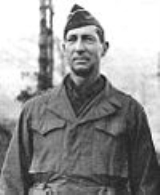
Mark W Clark 1943

During and after the Korean War

During the Korean war
Korean War

The Korean War refers to a period of military conflict between North Korea and South Korea regimes, with major hostilities lasting from June 25, 1950 until the armistice signed on July 27, 1953....
, he took over as commander of the United Nations
United Nations

The United Nations is an international organization whose stated aims are to facilitate cooperation in international law, international security, economic development, Social change, human rights and achieving world peace....
 forces on May 12, 1952, succeeding General Matthew Ridgway
Matthew Ridgway

Matthew Bunker Ridgway was a United States Army General officer. He held several major commands and was most famous for resurrecting the United Nations war effort during the Korean War....
. It was Clark who signed the cease-fire agreement with North Korea
North Korea

North Korea, officially the Democratic People's Republic of Korea , is a state in East Asia, occupying the northern half of the Korean Peninsula....
 in 1953.

After retiring from the Army, General Clark served (1954 to 1966) as president of The Citadel
The Citadel (military college)

|}The Citadel, The Military College of South Carolina, is a State university, comprehensive college located in Charleston, South Carolina, USA....
, The Military College of South Carolina, in Charleston, South Carolina
Charleston, South Carolina

Charleston is a city in Charleston County, South Carolina in the U.S. state of South Carolina. It is the largest city and county seat of Charleston County....
. He wrote two volumes of memoirs: Calculated Risk (1950) and From the Danube to the Yalu (1954).

Mark Clark's rapid rise through general officer ranks after a 24-year career as a relatively obscure officer has been attributed by an U.S. Army biography in part to his professional relationship to General George Marshall
George Marshall

George Catlett Marshall was an United States Military of the United States leader, Chief of Staff of the United States Army, United States Secretary of State, and the third United States Secretary of Defense....
 and friendship with Dwight Eisenhower.

Among his awards and decorations are the Distinguished Service Cross, Distinguished Service Medal
Distinguished Service Medal (Army)

The Distinguished Service Medal is a Awards and decorations of the United States military of the United States Army that is presented to any person who, while serving in any capacity with the United States military, has distinguished himself or herself by exceptionally meritorious service to the Government in a duty of great responsibility....
, Grand Croix Légion d'honneur
Légion d'honneur

The L?gion d'honneur or Ordre national de la L?gion d'honneur is a France order established by Napoleon I of France, First Consul of the French First Republic, on May 19, 1802....


Clark is buried at The Citadel
The Citadel (military college)

|}The Citadel, The Military College of South Carolina, is a State university, comprehensive college located in Charleston, South Carolina, USA....
.

An Interstate spur (I-526) connecting different suburbs in the Charleston metropolitan area and a bridge in Washington state connecting Camano Island with the mainland bear his name.

See also

  • Mark Clark Expressway
    Interstate 526

    Interstate 526 or the Mark Clark Expressway is an unfinished beltway Interstate Highway of Interstate 26 in Charleston, South Carolina, South Carolina, USA....


Bibliography


External links

  • from General Clark (1946)
  • - TIME
    Time (magazine)

    Time is a weekly United States newsmagazine, similar to Newsweek and U.S. News & World Report. A European edition is published from London....
     magazine cover of July 7, 1952
  • Three Monkeys Online