

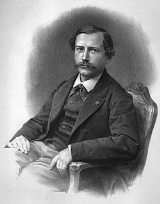
Marcellin Berthelot

Encyclopedia
Marcelin Pierre Eugène Berthelot (25 October 1827 – 18 March 1907) was a French
chemist
and politician
noted for the Thomsen-Berthelot principle
of thermochemistry
. He synthesized many organic compounds from inorganic substances and disproved the theory of vitalism
. He is considered as one of the greatest chemists of all time.
He was born in Paris, the son of a doctor. After doing well at school in history
and philosophy
, he became a scientist.
as assistant to A.J. Balard
, his former master, and about the same time he began his life-long friendship with Ernest Renan
. In 1854, he made his reputation by his doctoral thesis, Sur les combinaisons de la glycérine avec les acides, which described a series of beautiful researches in continuation and amplification of M.E. Chevreul
's classic work. During 1859 he was appointed professor of organic chemistry at the École Supérieure de Pharmacie, and in 1865 he accepted the new chair of organic chemistry, which was specially created for his benefit at the Collège de France.
He became a member of the Academy of Medicine
during 1863, and ten years afterwards entered the Academy of Sciences
, of which he became perpetual secretary in 1889 in succession to Louis Pasteur
. In 1870, he was elected a foreign member of the Royal Swedish Academy of Sciences
. He was appointed inspector general of higher education in 1876. In 1880, He was elected a Foreign Honorary Member of the American Academy of Arts and Sciences
. After his election as life senator
in 1881, he continued to take an active interest in educational questions, especially as affected by compulsory military service
. In René Goblet
's ministry of 1886–1887 he was minister of public instruction
, and in the Bourgeois cabinet of 1895–1896 he held the portfolio for foreign affairs. His scientific jubilee was celebrated in Paris in 1901.
remained an analytical science and could not become a constructive one, because the formation of the substances with which it deals required the intervention of vital activity
in some shape. To this attitude he offered uncompromising opposition, and by the synthetic production of numerous hydrocarbons, natural fat
s, sugar
s and other bodies he proved that organic compounds can be formed by ordinary methods of chemical manipulation and obey the same principles as inorganic substances, thus exhibiting the "creative character in virtue of which chemistry actually realizes the abstract conceptions of its theories and classifications—a prerogative so far possessed neither by the natural nor by the historical sciences."
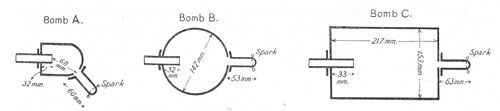 His investigations on the synthesis of organic compounds were published in numerous papers and books, including Chimie organique fondée sur la synthèse (1860) and Les Carbures d'hydrogène (1901). He stated that chemical phenomena are not governed by any peculiar laws special to themselves, but are explicable in terms of the general laws of mechanics that are in operation throughout the universe
; and this view he developed, with the aid of thousands of experiments, in his Mécanique chimique (1878) and his Thermochimie (1897). This branch of study naturally conducted him to the investigation of explosives, and on the theoretical side led to the results published in his work Sur la force de la poudre et des matières explosives (1872), while in practical terms it enabled him to render important services to his country as president of the scientific defence committee during the siege of Paris
in 1870–71 and subsequently as chief of the French explosives committee. He performed experiments to determine gas pressures during hydrogen
explosions using a special chamber fitted with a piston, and were able to distinguish burning of mixtures of hydrogen and oxygen from true explosion
s.
During later life he researched and wrote books on the early history of chemistry such as Les Origines de l'alchimie (1885) and Introduction à l'étude de la chimie des anciens et du moyen âge (1889), He also translated various old Greek, Syriac and Arabic treatises on alchemy and chemistry: Collection des anciens alchimistes grecs (1887–1888) and La Chimie au moyen âge (1893). He was the author of Science et philosophie (1886), which contains a well-known letter to Renan on "La Science idéale et la science positive," of La Révolution chimique, Lavoisier (1890), of Science et morale (1897), and of numerous articles in La Grande Encyclopédie
, which he helped to establish.
. He had six children: Marcel André
(1862–1939), Marie-Hélène (1863–1895), Camille (1864–1928), Daniel (1865–1927), Philippe
(1866–1934), and René (1872–1960).
French people
The French are a nation that share a common French culture and speak the French language as a mother tongue. Historically, the French population are descended from peoples of Celtic, Latin and Germanic origin, and are today a mixture of several ethnic groups...
chemist
Chemist
A chemist is a scientist trained in the study of chemistry. Chemists study the composition of matter and its properties such as density and acidity. Chemists carefully describe the properties they study in terms of quantities, with detail on the level of molecules and their component atoms...
and politician
Politician
A politician, political leader, or political figure is an individual who is involved in influencing public policy and decision making...
noted for the Thomsen-Berthelot principle
Thomsen-Berthelot principle
In thermochemistry, the Thomsen–Berthelot principle is a hypothesis in the history of chemistry which argued that all chemical changes are accompanied by the production of heat and that processes which occur will be ones in which the most heat is produced...
of thermochemistry
Thermochemistry
Thermochemistry is the study of the energy and heat associated with chemical reactions and/or physical transformations. A reaction may release or absorb energy, and a phase change may do the same, such as in melting and boiling. Thermochemistry focuses on these energy changes, particularly on the...
. He synthesized many organic compounds from inorganic substances and disproved the theory of vitalism
Vitalism
Vitalism, as defined by the Merriam-Webster dictionary, is#a doctrine that the functions of a living organism are due to a vital principle distinct from biochemical reactions...
. He is considered as one of the greatest chemists of all time.
He was born in Paris, the son of a doctor. After doing well at school in history
History
History is the discovery, collection, organization, and presentation of information about past events. History can also mean the period of time after writing was invented. Scholars who write about history are called historians...
and philosophy
Philosophy
Philosophy is the study of general and fundamental problems, such as those connected with existence, knowledge, values, reason, mind, and language. Philosophy is distinguished from other ways of addressing such problems by its critical, generally systematic approach and its reliance on rational...
, he became a scientist.
Career
During 1851 he became a member of the staff of the Collège de FranceCollège de France
The Collège de France is a higher education and research establishment located in Paris, France, in the 5th arrondissement, or Latin Quarter, across the street from the historical campus of La Sorbonne at the intersection of Rue Saint-Jacques and Rue des Écoles...
as assistant to A.J. Balard
Antoine Jérôme Balard
-External links:* , PasteurBrewing.com...
, his former master, and about the same time he began his life-long friendship with Ernest Renan
Ernest Renan
Ernest Renan was a French expert of Middle East ancient languages and civilizations, philosopher and writer, devoted to his native province of Brittany...
. In 1854, he made his reputation by his doctoral thesis, Sur les combinaisons de la glycérine avec les acides, which described a series of beautiful researches in continuation and amplification of M.E. Chevreul
Michel Eugène Chevreul
Michel Eugène Chevreul was a French chemist whose work with fatty acids led to early applications in the fields of art and science. He is credited with the discovery of margaric acid and designing an early form of soap made from animal fats and salt...
's classic work. During 1859 he was appointed professor of organic chemistry at the École Supérieure de Pharmacie, and in 1865 he accepted the new chair of organic chemistry, which was specially created for his benefit at the Collège de France.
He became a member of the Academy of Medicine
Académie Nationale de Médecine
Académie Nationale de Médecine, or National Academy of Medicine was created in 1820 by king Louis XVIII at the urging of baron Antoine Portal. At its inception, the institution was known as the Académie Royale de Médecine...
during 1863, and ten years afterwards entered the Academy of Sciences
French Academy of Sciences
The French Academy of Sciences is a learned society, founded in 1666 by Louis XIV at the suggestion of Jean-Baptiste Colbert, to encourage and protect the spirit of French scientific research...
, of which he became perpetual secretary in 1889 in succession to Louis Pasteur
Louis Pasteur
Louis Pasteur was a French chemist and microbiologist born in Dole. He is remembered for his remarkable breakthroughs in the causes and preventions of diseases. His discoveries reduced mortality from puerperal fever, and he created the first vaccine for rabies and anthrax. His experiments...
. In 1870, he was elected a foreign member of the Royal Swedish Academy of Sciences
Royal Swedish Academy of Sciences
The Royal Swedish Academy of Sciences or Kungliga Vetenskapsakademien is one of the Royal Academies of Sweden. The Academy is an independent, non-governmental scientific organization which acts to promote the sciences, primarily the natural sciences and mathematics.The Academy was founded on 2...
. He was appointed inspector general of higher education in 1876. In 1880, He was elected a Foreign Honorary Member of the American Academy of Arts and Sciences
American Academy of Arts and Sciences
The American Academy of Arts and Sciences is an independent policy research center that conducts multidisciplinary studies of complex and emerging problems. The Academy’s elected members are leaders in the academic disciplines, the arts, business, and public affairs.James Bowdoin, John Adams, and...
. After his election as life senator
Senator for life
A senator for life is a member of the senate or equivalent upper chamber of a legislature who has life tenure. , 7 Italian Senators out of 322, 4 out of the 47 Burundian Senators and all members of the British House of Lords have lifetime tenure...
in 1881, he continued to take an active interest in educational questions, especially as affected by compulsory military service
Conscription
Conscription is the compulsory enlistment of people in some sort of national service, most often military service. Conscription dates back to antiquity and continues in some countries to the present day under various names...
. In René Goblet
René Goblet
René Goblet was a French politician, Prime Minister of France for a period in 1886–1887.He was born at Aire-sur-la-Lys, Pas-de-Calais and was trained in law. Under the Second Empire, he helped found a Liberal journal, Le Progrès de la Somme, and in July 1871 he was sent by the département of the...
's ministry of 1886–1887 he was minister of public instruction
Minister of National Education (France)
The Ministry of National Education, Youth, and Sport , or simply "Minister of National Education," as the title has changed no small number of times in the course of the Fifth Republic) is the French government cabinet member charged with running France's public educational system and with the...
, and in the Bourgeois cabinet of 1895–1896 he held the portfolio for foreign affairs. His scientific jubilee was celebrated in Paris in 1901.
Discoveries
The fundamental conception that underlay all Berthelot's chemical work was that all chemical phenomena depend on the action of physical forces which can be determined and measured. When he began his active career it was generally believed that, although some instances of the synthetic production of organic substances had been observed, on the whole organic chemistryOrganic chemistry
Organic chemistry is a subdiscipline within chemistry involving the scientific study of the structure, properties, composition, reactions, and preparation of carbon-based compounds, hydrocarbons, and their derivatives...
remained an analytical science and could not become a constructive one, because the formation of the substances with which it deals required the intervention of vital activity
Vitalism
Vitalism, as defined by the Merriam-Webster dictionary, is#a doctrine that the functions of a living organism are due to a vital principle distinct from biochemical reactions...
in some shape. To this attitude he offered uncompromising opposition, and by the synthetic production of numerous hydrocarbons, natural fat
Fat
Fats consist of a wide group of compounds that are generally soluble in organic solvents and generally insoluble in water. Chemically, fats are triglycerides, triesters of glycerol and any of several fatty acids. Fats may be either solid or liquid at room temperature, depending on their structure...
s, sugar
Sugar
Sugar is a class of edible crystalline carbohydrates, mainly sucrose, lactose, and fructose, characterized by a sweet flavor.Sucrose in its refined form primarily comes from sugar cane and sugar beet...
s and other bodies he proved that organic compounds can be formed by ordinary methods of chemical manipulation and obey the same principles as inorganic substances, thus exhibiting the "creative character in virtue of which chemistry actually realizes the abstract conceptions of its theories and classifications—a prerogative so far possessed neither by the natural nor by the historical sciences."
Publications
Universe
The Universe is commonly defined as the totality of everything that exists, including all matter and energy, the planets, stars, galaxies, and the contents of intergalactic space. Definitions and usage vary and similar terms include the cosmos, the world and nature...
; and this view he developed, with the aid of thousands of experiments, in his Mécanique chimique (1878) and his Thermochimie (1897). This branch of study naturally conducted him to the investigation of explosives, and on the theoretical side led to the results published in his work Sur la force de la poudre et des matières explosives (1872), while in practical terms it enabled him to render important services to his country as president of the scientific defence committee during the siege of Paris
Siege of Paris
The Siege of Paris, lasting from September 19, 1870 – January 28, 1871, and the consequent capture of the city by Prussian forces led to French defeat in the Franco-Prussian War and the establishment of the German Empire as well as the Paris Commune....
in 1870–71 and subsequently as chief of the French explosives committee. He performed experiments to determine gas pressures during hydrogen
Hydrogen
Hydrogen is the chemical element with atomic number 1. It is represented by the symbol H. With an average atomic weight of , hydrogen is the lightest and most abundant chemical element, constituting roughly 75% of the Universe's chemical elemental mass. Stars in the main sequence are mainly...
explosions using a special chamber fitted with a piston, and were able to distinguish burning of mixtures of hydrogen and oxygen from true explosion
Explosion
An explosion is a rapid increase in volume and release of energy in an extreme manner, usually with the generation of high temperatures and the release of gases. An explosion creates a shock wave. If the shock wave is a supersonic detonation, then the source of the blast is called a "high explosive"...
s.
During later life he researched and wrote books on the early history of chemistry such as Les Origines de l'alchimie (1885) and Introduction à l'étude de la chimie des anciens et du moyen âge (1889), He also translated various old Greek, Syriac and Arabic treatises on alchemy and chemistry: Collection des anciens alchimistes grecs (1887–1888) and La Chimie au moyen âge (1893). He was the author of Science et philosophie (1886), which contains a well-known letter to Renan on "La Science idéale et la science positive," of La Révolution chimique, Lavoisier (1890), of Science et morale (1897), and of numerous articles in La Grande Encyclopédie
La Grande Encyclopédie
La Grande Encyclopédie, inventaire raisonné des sciences, des lettres, et des arts is a 31-volume encyclopedia published in France from 1886 to 1902 by H...
, which he helped to establish.
Family
He died suddenly, immediately after the death of his wife Sophie Niaudet (1837–1907), at Paris, and was buried with her in the PanthéonPanthéon, Paris
The Panthéon is a building in the Latin Quarter in Paris. It was originally built as a church dedicated to St. Genevieve and to house the reliquary châsse containing her relics but, after many changes, now functions as a secular mausoleum containing the remains of distinguished French citizens...
. He had six children: Marcel André
André Berthelot
André Berthelot was the son of the chemist and politician Marcellin Berthelot and a député of the Seine.He was secretary-general of the Grande Encyclopédie starting with the fourth volume....
(1862–1939), Marie-Hélène (1863–1895), Camille (1864–1928), Daniel (1865–1927), Philippe
Philippe Berthelot
Philippe Berthelot was an important French diplomat, son of Marcellin Berthelot. He was a republican ....
(1866–1934), and René (1872–1960).
External links
- Berthelot at www.hh.schule.de
- Berthelot, Marcelin (1827-1907), chimiste et homme politique français at isimabomba.free.fr
- "Pierre-Eugène-Marcelin Berthelot" at encarta.msn.com (Archived 2009-11-01)
- AllRefer.com - Pierre EugEne Marcelin Berthelot (Chemistry, Biography) - Encyclopedia at reference.allrefer.com