

Lusignan

Encyclopedia
Poitou
Poitou was a province of west-central France whose capital city was Poitiers.The region of Poitou was called Thifalia in the sixth century....
near Lusignan in western France in the early 10th century. By the end of the 11th century, they had risen to become the most prominent petty lords in the region from their castle at Lusignan
Château de Lusignan
The Château de Lusignan was the seat of the Lusignan family, Poitevin Marcher Lords, who distinguished themselves in the First Crusade and held the crowns of two Crusader kingdoms, the Kingdom of Jerusalem and the Kingdom of Cyprus, and even claimed the title King of Armenia.Lusignan was...
. In the late 12th century, through marriage and inheritance, a cadet branch of the family came to control the Kingdoms of Jerusalem
Kingdom of Jerusalem
The Kingdom of Jerusalem was a Catholic kingdom established in the Levant in 1099 after the First Crusade. The kingdom lasted nearly two hundred years, from 1099 until 1291 when the last remaining possession, Acre, was destroyed by the Mamluks, but its history is divided into two distinct periods....
and of Cyprus
Kingdom of Cyprus
The Kingdom of Cyprus was a Crusader kingdom on the island of Cyprus in the high and late Middle Ages, between 1192 and 1489. It was ruled by the French House of Lusignan.-History:...
, while in the early 13th century, the main branch succeeded in the Counties of La Marche and Angoulême. As Crusader
Crusades
The Crusades were a series of religious wars, blessed by the Pope and the Catholic Church with the main goal of restoring Christian access to the holy places in and near Jerusalem...
princes in the Latin East, they soon had connections with the Hethumid rulers of the Kingdom of Cilicia, which they inherited through marriage in the mid-14th century. The Armenian
Armenians
Armenian people or Armenians are a nation and ethnic group native to the Armenian Highland.The largest concentration is in Armenia having a nearly-homogeneous population with 97.9% or 3,145,354 being ethnic Armenian....
and Cypriot
Cyprus
Cyprus , officially the Republic of Cyprus , is a Eurasian island country, member of the European Union, in the Eastern Mediterranean, east of Greece, south of Turkey, west of Syria and north of Egypt. It is the third largest island in the Mediterranean Sea.The earliest known human activity on the...
branches of the family eventually merged and the dynasty died out after the Ottoman
Ottoman Turks
The Ottoman Turks were the Turkish-speaking population of the Ottoman Empire who formed the base of the state's military and ruling classes. Reliable information about the early history of Ottoman Turks is scarce, but they take their Turkish name, Osmanlı , from the house of Osman I The Ottoman...
conquest of their Asian kingdoms.
Origins
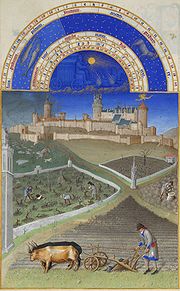
Château de Lusignan
The Château de Lusignan was the seat of the Lusignan family, Poitevin Marcher Lords, who distinguished themselves in the First Crusade and held the crowns of two Crusader kingdoms, the Kingdom of Jerusalem and the Kingdom of Cyprus, and even claimed the title King of Armenia.Lusignan was...
, near Poitiers
Poitiers
Poitiers is a city on the Clain river in west central France. It is a commune and the capital of the Vienne department and of the Poitou-Charentes region. The centre is picturesque and its streets are interesting for predominant remains of historical architecture, especially from the Romanesque...
, was the principal seat of the Lusignans; it was destroyed during the Wars of Religion
French Wars of Religion
The French Wars of Religion is the name given to a period of civil infighting and military operations, primarily fought between French Catholics and Protestants . The conflict involved the factional disputes between the aristocratic houses of France, such as the House of Bourbon and House of Guise...
, and only its foundations remain in Lusignan. According to legend the earliest castle was built by the folklore
Folklore
Folklore consists of legends, music, oral history, proverbs, jokes, popular beliefs, fairy tales and customs that are the traditions of a culture, subculture, or group. It is also the set of practices through which those expressive genres are shared. The study of folklore is sometimes called...
water-spirit Melusine
Melusine
Melusine is a figure of European legends and folklore, a feminine spirit of fresh waters in sacred springs and rivers.She is usually depicted as a woman who is a serpent or fish from the waist down...
. The lords of the castle at Lusignan were counts of La Marche
County of Marche
The County of Marche was a medieval French county, approximately corresponding to the modern département of Creuse.Marche first appeared as a separate fief about the middle of the 10th century, when William III, Duke of Aquitaine, gave it to one of his vassals named Boso, who took the title of...
, over which they frequently fought with the counts of Angoulême
Counts and dukes of Angoulême
Angoulême in western France was part of the Carolingian Empire as the kingdom of Aquitaine. Under Charlemagne's successors, the local Count of Angoulême was independent and was not united with the French crown until 1307. By the terms of the Treaty of Brétigny the Angoumois, then ruled by the...
. Count Hugh le Brun ("Hugh the Swarthy"), like most of the lords of Poitou, backed Arthur of Brittany as the better heir to Richard Lionheart
Richard I of England
Richard I was King of England from 6 July 1189 until his death. He also ruled as Duke of Normandy, Duke of Aquitaine, Duke of Gascony, Lord of Cyprus, Count of Anjou, Count of Maine, Count of Nantes, and Overlord of Brittany at various times during the same period...
when John Lackland
John of England
John , also known as John Lackland , was King of England from 6 April 1199 until his death...
acceded to the throne of England in 1199. Eleanor of Aquitaine
Eleanor of Aquitaine
Eleanor of Aquitaine was one of the wealthiest and most powerful women in Western Europe during the High Middle Ages. As well as being Duchess of Aquitaine in her own right, she was queen consort of France and of England...
traded English claims for their support of John. To secure his position in La Marche, the widowed Hugh arranged a betrothal with the daughter of his next rival of Angoulême, no more than a child; John however married her himself, in August 1200, and deprived Hugh of La Marche and his brother of Eu
Eu, Seine-Maritime
Eu is a commune in the Seine-Maritime department in the Haute-Normandie region in northern France.Eu is located near the coast in the eastern part of the department, near the border with Picardie.Its inhabitants are known as the Eudois.-Geography:...
in Normandy
Normandy
Normandy is a geographical region corresponding to the former Duchy of Normandy. It is in France.The continental territory covers 30,627 km² and forms the preponderant part of Normandy and roughly 5% of the territory of France. It is divided for administrative purposes into two régions:...
. The aggrieved Lusignans turned to their liege lord, Philip Augustus
Philip II of France
Philip II Augustus was the King of France from 1180 until his death. A member of the House of Capet, Philip Augustus was born at Gonesse in the Val-d'Oise, the son of Louis VII and his third wife, Adela of Champagne...
, King of France. Philip demanded John's presence— a tactical impossibility— and declared John a contumacious vassal. As the Lusignan allies managed to detain both Arthur and Eleanor, John surprised their unprepared forces at the castle of Mirabeau
Mirabeau
Mirabeau can refer to:People* Victor de Riqueti, marquis de Mirabeau, a French physiocrat and economist.* Honoré Gabriel Riqueti, comte de Mirabeau, renowned orator, a figure in the French Revolution and son of Victor....
, in July 1202, and took Hugh prisoner with 200 more of Poitou's fighting men. King John's savage treatment of the captives turned the tide against himself, and his French barons began to desert him in droves. Thus the Lusignans' diplomatic rebellion led directly to the loss of half of England's French territory, which was soon incorporated into France by Philip Augustus (The other "half", Aquitaine, was the possession of Eleanor, who was still alive).
Lords of Lusignan

- Hugh IHugh I of LusignanHugh I , called Venator , was the first Lord of Lusignan. He is mentioned in the Chronicle of Saint-Maixent. It has been hypothesised that he was the huntsman, , of the Count of Poitou or the Bishop of Poitiers on the basis of his epithet...
(early 10th century) - Hugh IIHugh II of LusignanHugh II , called Carus , was the second Lord of Lusignan, the son and successor of Hugh I Venator. According to the Chronicle of Saint-Maixent, he built the castle at Lusignan. Hugh III Albus, who emerges from historical obscurity in the next generation, was probably his son.-Sources:*Painter,...
(died 967) - Hugh IIIHugh III of LusignanHugh III , called Albus, was the third Lord of Lusignan, probably the son and successor of Hugh II. He confirmed the donation by one of his vassals of the church of Mezeaux to the abbey of Saint-Cyprien and himself granted the abbey the woodland and the public road between Lusignan and Poitiers...
- Hugh IVHugh IV of LusignanHugh IV , called Brunus , was the fourth Lord of Lusignan. He was the son of Hugh III Albus and Arsendis...
- Hugh VHugh V of LusignanHugh V , called the Fair or the Pious, was the fifth Lord of Lusignan and Lord of Couhé. He succeeded his father, Hugh IV, sometime around 1026....
(died 1060)
Counts of La Marche
Hugh VI inherited by collateral succession the County of La Marche (1091) as descendant of Almodis.- Hugh VIHugh VI of LusignanHugh VI , called the Devil, was the Lord of Lusignan and Count of La Marche , the son and successor of Hugh V of Lusignan and Almodis de la Marche. He participated in the Crusade of 1101....
(died 1110) - Hugh VIIHugh VII of LusignanHugh VII the Brown of Lusignan or Hugues II de La Marche or Hugues VII & II le Brun de Lusignan , Sire de Lusignan, Couhé and Château-Larcher and Count of La Marche, was the son of Hugh VI of Lusignan. He was one of the many notable Crusaders in the Lusignan family...
(died 1151) - Hugh VIIIHugh VIII of LusignanHugh VIII the Old of Lusignan or Hugh III of La Marche or Hugues VIII le Vieux de Lusignan was the eldest son of Hugh VII and of Sarrasine or Saracena de Lezay. He became Seigneur de Lusignan, Couhé, and Château-Larcher and Count of La Marche on his father's death in 1151...
(died 1165) - Hugh IXHugh IX of LusignanHugh IX the Brown of Lusignan was the grandson of Hugh VIII. His father, also Hugh , was the co-seigneur of Lusignan from 1164, marrying a woman named Orengarde before 1162 or about 1167 and dying in 1169...
(died 1219)
Counts of La Marche and Angoulême
Hugh IX's son, Hugh X, married Isabelle of Angoulême, thus securing Angoulême (1220).- Hugh XHugh X of LusignanHugh X de Lusignan, Hugh V of La Marche or Hugh I of Angoulême or Hugues X & V & I de Lusignan succeeded his father Hugh IX as Seigneur de Lusignan and Count of La Marche in November, 1219 and was Count of Angoulême by marriage.Hugh X de Lusignan was betrothed to marry 12 year-old Isabel of...
(died 1249) - Hugh XIHugh XI of LusignanHugh XI de Lusignan, Hugh VI of La Marche or Hugh II of Angoulême or Hugues XI & VI & II de Lusignan . He succeeded his mother Isabelle of Angoulême, former queen of England, as Count of Angoulême in 1246. He likewise succeeded his father Hugh X as Count of La Marche in 1249...
(died 1250) - Hugh XIIHugh XII of LusignanHugh XII de Lusignan, Hugh VII of La Marche or Hugh III of Angoulême or Hugues XII & VII & III de Lusignan . He succeeded his father Hugh XI as seigneur of Lusignan, Couhe, and Peyrat, Count of La Marche and Count of Angoulême in 1250.He married at Fougères 29 January 1253/4 Jeanne de Fougères...
(died 1270) - Hugh XIIIHugh XIII of LusignanHugh XIII of Lusignan, Hugh VIII of La Marche or Hugh IV of Angoulême or Hugues XIII & VIII & IV de Lusignan succeeded his father Hugh XII as Seigneur de Lusignan, Count of La Marche and Count of Angoulême in 1270.He married at Pau on July 1, 1276 Beatrix de Bourgogne, Dame de Grignon Hugh XIII of...
(died 1303) - Guy (died 1308)
- Yolande (died 1314)
- Yolande sold the fiefs of Lusignan, La Marche, Angoulême, and FougèresFougèresFougères is a commune and a sub-prefecture of the Ille-et-Vilaine department in Brittany, in north-western France.-Sights:Fougères' major monument is a medieval stronghold built atop a granite ledge, which was part of the ultimately unsuccessful defence system of the Duchy of Brittany against...
to Philip IV of FrancePhilip IV of FrancePhilip the Fair was, as Philip IV, King of France from 1285 until his death. He was the husband of Joan I of Navarre, by virtue of which he was, as Philip I, King of Navarre and Count of Champagne from 1284 to 1305.-Youth:A member of the House of Capet, Philip was born at the Palace of...
in 1308. They became a part of the French royal demesneCrown lands of FranceThe crown lands, crown estate, royal domain or domaine royal of France refers to the lands, fiefs and rights directly possessed by the kings of France...
and a common appanageAppanageAn apanage or appanage or is the grant of an estate, titles, offices, or other things of value to the younger male children of a sovereign, who would otherwise have no inheritance under the system of primogeniture...
of the crown.
Crusader kings
The Lusignans were among the French nobles who made great careers in the Crusades. An ancestor of the later Lusignan dynasty in the Holy LandHoly Land
The Holy Land is a term which in Judaism refers to the Kingdom of Israel as defined in the Tanakh. For Jews, the Land's identifiction of being Holy is defined in Judaism by its differentiation from other lands by virtue of the practice of Judaism often possible only in the Land of Israel...
, Hugh VI of Lusignan
Hugh VI of Lusignan
Hugh VI , called the Devil, was the Lord of Lusignan and Count of La Marche , the son and successor of Hugh V of Lusignan and Almodis de la Marche. He participated in the Crusade of 1101....
, was killed in the east during the Crusade of 1101
Crusade of 1101
The Crusade of 1101 was a minor crusade of three separate movements, organized in 1100 and 1101 in the successful aftermath of the First Crusade. It is also called the Crusade of the Faint-Hearted due to the number of participants who joined this crusade after having turned back from the First...
. Another Hugh arrived in the 1160s and was captured in a battle
Battle of Harim
The Battle of Harim was fought on 12 August 1164 between the forces of Nur ad-Din Zangi and a combined army from the County of Tripoli, the Principality of Antioch, the Byzantine Empire and Armenia...
with Nur ad-Din Zangi. In the 1170s, Amalric
Amalric II of Jerusalem
Amalric II of Jerusalem or Amalric I of Cyprus, born Amalric of Lusignan , King of Jerusalem 1197–1205, was an older brother of Guy of Lusignan....
arrived in Jerusalem, having been expelled by Richard Lionheart
Richard I of England
Richard I was King of England from 6 July 1189 until his death. He also ruled as Duke of Normandy, Duke of Aquitaine, Duke of Gascony, Lord of Cyprus, Count of Anjou, Count of Maine, Count of Nantes, and Overlord of Brittany at various times during the same period...
(at that point, acting Duke of Aquitaine) from his realm, which included the family lands of Lusignan near Poitiers. Amalric married Eschiva, the daughter of Baldwin of Ibelin
Baldwin of Ibelin
Baldwin of Ibelin, also known as Baldwin III of Ramla , was an important noble of the crusader Kingdom of Jerusalem in the 12th century. He was the second son of Barisan of Ibelin, and was the younger brother of Hugh of Ibelin and older brother of Balian of Ibelin...
, and entered court circles. He had also obtained the patronage of Agnes of Courtenay
Agnes of Courtenay
Agnes of Courtenay was the daughter of Joscelin II of Courtenay by his wife Beatrice , and the mother of king Baldwin IV of Jerusalem and queen Sibylla of Jerusalem.-Dynasty:...
, the divorced mother of King Baldwin IV
Baldwin IV of Jerusalem
Baldwin IV of Jerusalem , called the Leper or the Leprous, the son of Amalric I of Jerusalem and his first wife, Agnes of Courtenay, was king of Jerusalem from 1174 to 1185. His full sister was Queen Sibylla of Jerusalem and his nephew through this sister was the child-king Baldwin V...
, who held the county of Jaffa and Ascalon
County of Jaffa and Ascalon
The double County of Jaffa and Ascalon was one of the four major seigneuries comprising the major crusader state, the Kingdom of Jerusalem, according to 13th-century commentator John of Ibelin.-History:...
and was married to Reginald of Sidon
Reginald of Sidon
Reginald Grenier was Lord of Sidon and an important noble in the late-12th century Kingdom of Jerusalem.-Rise to fame:...
. He was appointed Agnes's constable in Jaffa, and later constable of the kingdom. Hostile rumours alleged he was Agnes's lover, but this is questionable. It is likely that his promotions were aimed at weaning him away from the political orbit of the Ibelin
Ibelin
Ibelin was a castle in the Crusader Kingdom of Jerusalem in the 12th century , which gave its name to an important family of nobles.-The castle:...
family, who were associated with Raymond III of Tripoli
Raymond III of Tripoli
Raymond III of Tripoli was Count of Tripoli from 1152 to 1187 and Prince of Galilee and Tiberias in right of his wife Eschiva.-Early life:...
, Amalric I
Amalric I of Jerusalem
Amalric I of Jerusalem was King of Jerusalem 1163–1174, and Count of Jaffa and Ascalon before his accession. Amalric was the second son of Melisende of Jerusalem and Fulk of Jerusalem...
's cousin and the former bailli or regent. Amalric's younger brother, Guy
Guy of Lusignan
Guy of Lusignan was a Poitevin knight, son of Hugh VIII of the prominent Lusignan dynasty. He was king of the crusader state of Jerusalem from 1186 to 1192 by right of marriage to Sibylla of Jerusalem, and of Cyprus from 1192 to 1194...
, arrived at some date before Easter 1180. When he arrived is quite unknown, unless we accept the statement of Ernoul
Ernoul
Ernoul is the name generally given to the author of a chronicle of the late 12th century dealing with the fall of the crusader Kingdom of Jerusalem.-Biography:Ernoul himself is mentioned only once in history, and only in his own chronicle...
that he arrived at this precise juncture on Amalric's advice. Many modern historians believe that Guy was already well established in Jerusalem by 1180, but there is no contemporary evidence to support this belief. What is certain is that Amalric of Lusignan's success facilitated Guy's social and political advancement.
Older accounts (derived from William of Tyre
William of Tyre
William of Tyre was a medieval prelate and chronicler. As archbishop of Tyre, he is sometimes known as William II to distinguish him from a predecessor, William of Malines...
and Ernoul) claim that Agnes was concerned that her political rivals, headed by Raymond of Tripoli, were determined to exercise more control by forcing Agnes' daughter, the princess Sibylla
Sibylla of Jerusalem
Sibylla of Jerusalem was the Countess of Jaffa and Ascalon from 1176 and Queen of Jerusalem from 1186 to 1190. She was the eldest daughter of Amalric I of Jerusalem and Agnes of Courtenay, sister of Baldwin IV and half-sister of Isabella I of Jerusalem, and mother of Baldwin V of Jerusalem...
, to marry someone of their choosing, and that Agnes foiled these plans by advising her son to have Sibylla married to Guy. However, it seems that the King, who was less malleable than earlier historians have portrayed, was considering the international implications: it was vital for Sibylla to marry someone who could rally external help to the kingdom, not someone from the local nobility. With the new King of France, Philip II
Philip II of France
Philip II Augustus was the King of France from 1180 until his death. A member of the House of Capet, Philip Augustus was born at Gonesse in the Val-d'Oise, the son of Louis VII and his third wife, Adela of Champagne...
, a minor, the chief hope of external aid was Baldwin's first cousin Henry II, who owed the Pope a penitential pilgrimage on account of the Thomas Becket
Thomas Becket
Thomas Becket was Archbishop of Canterbury from 1162 until his murder in 1170. He is venerated as a saint and martyr by both the Roman Catholic Church and the Anglican Communion...
affair. Guy was a vassal of Richard of Poitou and Henry II, and as a formerly rebellious vassal, it was in their interests to keep him overseas.
Guy and Sibylla were hastily married at Eastertide 1180, apparently preventing a coup by Raymond's faction to marry her to Amalric of Lusignan's father-in-law, Baldwin of Ibelin. By his marriage Guy also became count of Jaffa and Ascalon and bailli of Jerusalem. He and Sibylla had two daughters, Alice and Maria. Sibylla already had one child, a son from her first marriage to William of Montferrat
William of Montferrat, Count of Jaffa and Ascalon
William of Montferrat , also called William Longsword , was the Count of Jaffa and Ascalon, the eldest son of William V, Marquess of Montferrat and Judith of Babenberg...
.
An ambitious man, Guy convinced Baldwin IV to name him regent in early 1182. However, he and Raynald of Châtillon
Raynald of Chatillon
Raynald of Châtillon was a knight who served in the Second Crusade and remained in the Holy Land after its defeat...
made provocations against Saladin during a two-year period of truce. But it was his military hesitance at the siege of Kerak
Siege of Kerak
The Siege of Kerak took place in 1183, with Saladin's forces attacking and being repelled from the Crusader stronghold.- Prelude :Kerak was the stronghold of Raynald of Châtillon, Lord of Oultrejordain, 124 km South of Amman. The fortress was built in 1142 by Pagan the Butler, Lord of Montreal...
which disillusioned the king with him. Throughout late 1183 and 1184 Baldwin IV tried to have his sister's marriage to Guy annulled, showing that Baldwin still held his sister with some favour. Baldwin IV had wanted a loyal brother-in-law, and was frustrated in Guy's hard-headedness and disobedience. Sibylla was held up in Ascalon, though perhaps not against her will. Unsuccessful in prying his sister and close heir away from Guy, the king and the Haute Cour altered the succession, placing Baldwin V
Baldwin V of Jerusalem
Baldwin V of Jerusalem was the son of Sibylla of Jerusalem and her first husband, William of Montferrat...
, Sibylla's son from her first marriage, in precedence over Sibylla, and decreeing a process to choose the monarch afterwards between Sibylla and Isabella (whom Baldwin and the Haute Cour thus recognized as at least equally entitled to succession as Sibylla), though she was not herself excluded from the succession. Guy kept a low profile from 1183 until his wife became queen in 1186.
Guy's term as king is generally seen as a disaster; he was defeated by Saladin
Saladin
Ṣalāḥ ad-Dīn Yūsuf ibn Ayyūb , better known in the Western world as Saladin, was an Arabized Kurdish Muslim, who became the first Sultan of Egypt and Syria, and founded the Ayyubid dynasty. He led Muslim and Arab opposition to the Franks and other European Crusaders in the Levant...
at the Battle of Hattin
Battle of Hattin
The Battle of Hattin took place on Saturday, July 4, 1187, between the Crusader Kingdom of Jerusalem and the forces of the Ayyubid dynasty....
in 1187, and was imprisoned in Damascus
Damascus
Damascus , commonly known in Syria as Al Sham , and as the City of Jasmine , is the capital and the second largest city of Syria after Aleppo, both are part of the country's 14 governorates. In addition to being one of the oldest continuously inhabited cities in the world, Damascus is a major...
as Saladin reconquered almost the entire kingdom. Upon his release, his claim to the kingship was ignored, and when Sibylla died at the Siege of Acre in 1191, he no longer had any legal right to it. Richard, now king of England and a leader of the Third Crusade
Third Crusade
The Third Crusade , also known as the Kings' Crusade, was an attempt by European leaders to reconquer the Holy Land from Saladin...
, supported Guy's claim, but in the aftermath of the crusade Conrad of Montferrat
Conrad of Montferrat
Conrad of Montferrat was a northern Italian nobleman, one of the major participants in the Third Crusade. He was the de facto King of Jerusalem, by marriage, from 24 November 1190, but officially elected only in 1192, days before his death...
had the support of the majority of nobles. Instead, Richard sold Guy the island of Cyprus
Cyprus
Cyprus , officially the Republic of Cyprus , is a Eurasian island country, member of the European Union, in the Eastern Mediterranean, east of Greece, south of Turkey, west of Syria and north of Egypt. It is the third largest island in the Mediterranean Sea.The earliest known human activity on the...
, which he had conquered on his way to Acre. Guy thereby became the first Latin lord of Cyprus. Amalric succeeded Guy in Cyprus, and also became King of Jerusalem in 1198. Amalric was responsible for establishing the Roman Catholic Church on Cyprus.
The male line of the Lusignans in the Levant died out in 1267 with Hugh II of Cyprus
Hugh II of Cyprus
Hugh II of Cyprus was king of Cyprus and, from the age of 5 years, also Regent of the Kingdom of Jerusalem....
, Amalric's great-grandson (the male line continued in France until 1308).

First house of Lusignan: kings of Jerusalem and Cyprus
- GuyGuy of LusignanGuy of Lusignan was a Poitevin knight, son of Hugh VIII of the prominent Lusignan dynasty. He was king of the crusader state of Jerusalem from 1186 to 1192 by right of marriage to Sibylla of Jerusalem, and of Cyprus from 1192 to 1194...
, King of Jerusalem from 1186 to 1192 then of Cyprus until 1194 - Amalric IIAmalric II of JerusalemAmalric II of Jerusalem or Amalric I of Cyprus, born Amalric of Lusignan , King of Jerusalem 1197–1205, was an older brother of Guy of Lusignan....
, King of Cyprus from 1194 to 1205 and of Jerusalem from 1198 - Hugh IHugh I of CyprusHugh I of Cyprus succeeded to the throne of Cyprus on April 1, 1205 underage upon the death of his elderly father Amalric of Lusignan, King of Cyprus and Jerusalem...
(1205–1218), King of Cyprus only, as his descendants - Henry IHenry I of CyprusHenry I of Cyprus, nicknamed the Fat, aka Henry of Lusignan or Henri I le Gros de Lusignan was King of Cyprus from 1218 to 1253. He was the son of Hugh I of Cyprus and Alice of Champagne of Jerusalem. When his father Hugh I died on January 10, 1218, the 8-month-old Henry became king...
(1218–1253) - Hugh IIHugh II of CyprusHugh II of Cyprus was king of Cyprus and, from the age of 5 years, also Regent of the Kingdom of Jerusalem....
(1253–1267)
Second House of Lusignan

Hugh I of Cyprus
Hugh I of Cyprus succeeded to the throne of Cyprus on April 1, 1205 underage upon the death of his elderly father Amalric of Lusignan, King of Cyprus and Jerusalem...
, a male heir of the original Lusignan dynasty, took the name Lusignan, thus founding the second House of Lusignan, and managed to succeed his deceased cousin as King of Cyprus. These "new" Lusignans, who were also descendants of Robert Guiscard
Robert Guiscard
Robert d'Hauteville, known as Guiscard, Duke of Apulia and Calabria, from Latin Viscardus and Old French Viscart, often rendered the Resourceful, the Cunning, the Wily, the Fox, or the Weasel was a Norman adventurer conspicuous in the conquest of southern Italy and Sicily...
, remained in control of Cyprus until 1489; in Jerusalem (or, more accurately, Acre), they ruled from 1268 until the fall of the city in 1291, after an interlude (1228–1268) during which the Hohenstaufen
Hohenstaufen
The House of Hohenstaufen was a dynasty of German kings in the High Middle Ages, lasting from 1138 to 1254. Three of these kings were also crowned Holy Roman Emperor. In 1194 the Hohenstaufens also became Kings of Sicily...
dynasty officially held the kingdom. After 1291 the Lusignans continued to claim the lost Jerusalem, and occasionally attempted to organize crusades to recapture territory on the mainland.
In 1300, the Lusignans, led by Amalric, Prince of Tyre
Amalric, Prince of Tyre
Amalric de Lusignan or Amaury II de Lusignan, Prince of Tyre , of the Lusignan family, was a son of Hugh III of Cyprus and Isabella of Ibelin.-Biography:...
entered into combined military operations with the Mongols
Franco-Mongol alliance
Franco-Mongol relations were established in the 13th century, as attempts were made towards forming a Franco-Mongol alliance between the Christian Crusaders and the Mongol Empire against various Muslim empires. Such an alliance would have seemed a logical choice: the Mongols were sympathetic to...
under Ghazan to retake the Holy Land
Holy Land
The Holy Land is a term which in Judaism refers to the Kingdom of Israel as defined in the Tanakh. For Jews, the Land's identifiction of being Holy is defined in Judaism by its differentiation from other lands by virtue of the practice of Judaism often possible only in the Land of Israel...
:
Second house of Lusignan: kings of Jerusalem and Cyprus

- Hugh III (1267–1284)
- John IJohn II of JerusalemJohn II of Jerusalem was the eldest son of Hugh III of Cyprus and Isabella of Ibelin. He succeeded his father as King of Cyprus on March 24 and was crowned at Santa Sophia, Nicosia on May 11, 1284. His succession as King of Jerusalem was opposed by Charles of Anjou, who had also disrupted his...
(1284–1285) - Henry IIHenry II of JerusalemHenry II of Jerusalem and Henry II of Cyprus, born Henri de Lusignan was the last ruling and first titular King of Jerusalem and also ruled as King of Cyprus as Henry II...
(1285–1324)- Amalric (1306–1310), usurper
- Hugh IVHugh IV of CyprusHugh IV of Cyprus was King of Cyprus from 31 March 1324 to his abdication, on 24 November 1358 and, nominally, King of Jerusalem, as Hugh II, until his death...
(1324–1359) - Peter IPeter I of CyprusPeter I of Cyprus or Pierre I de Lusignan was King of Cyprus, and Titular King of Jerusalem from his father's abdication on 24 November 1358 until his own death in 1369. He was also Latin King of Armenia from either 1361 or 1368...
(1359–1369) - Peter IIPeter II of CyprusPeter II of Cyprus or Pierre II le Gros de Lusignan , called The Fat, was king of Cyprus from 17 January 1369 until his death.-Biography:...
(1369–1382) - James IJames I of CyprusJames I of Cyprus was Regent of Cyprus for his infant nephew Peter from 1369. When Peter died in 1382, James became King of Cyprus that year...
(1382–1398) - JanusJanus of CyprusJanus of Cyprus was a King of Cyprus, King of Armenia and a Titular King of Jerusalem from 1398 to 1432.-Biography:He was born in Genoa where his father, King James I of Cyprus was a captive...
(1398–1432) - John IIJohn II of CyprusJohn II or III of Cyprus was the King of Cyprus and Armenia and also titular King of Jerusalem from 1432 to 1458. He was previously a Titular Prince of Antioch...
(1432–1458) - CharlotteCharlotte of CyprusCharlotte , was Queen of Cyprus and Princess of Antioch, as well as titular Queen of Jerusalem and Armenia.She was the eldest and only surviving daughter of King John II of Cyprus and Helena Palaiologina. At the age of 14, she succeeded to the Cypriot throne upon the death of her father in 1458...
(1458–1464) - James IIJames II of CyprusJames II of Cyprus or Jacques II le Bâtard de Lusignan , was the illegitimate son of John II of Cyprus and Marietta de Patras.-Archbishop of Nicosia:...
(1464–1473) - James IIIJames III of CyprusJames III of Cyprus was the only and posthumous child by marriage of James II of Cyprus and Catherine Cornaro and King of Cyprus from birth. He died in mysterious circumstances as an infant, leaving his mother as the last Queen of Cyprus. His death paved the way for Venice to gain control of...
(1473–1474)
Kings of Lesser Armenia
Principality of Antioch
The Principality of Antioch, including parts of modern-day Turkey and Syria, was one of the crusader states created during the First Crusade.-Foundation:...
and the Armenian Kingdom of Cilicia
Armenian Kingdom of Cilicia
The Armenian Kingdom of Cilicia , also known as the Cilician Armenia, Kingdom of Cilician Armenia or New Armenia, was an independent principality formed during the High Middle Ages by Armenian refugees fleeing the Seljuk invasion of Armenia...
. The Hethoumids ruled Cilicia until the murder of Leon IV
Leo IV of Armenia
Leo III was a young king of the Armenian Kingdom of Cilicia, ruling from 1303 or 1305 to 1307, along with his uncle Hethum II...
in 1341, when his cousin Guy de Lusignan
Constantine IV of Armenia
Constantine II , born Guy de Lusignan, was elected the first Latin King of Armenian Cilicia of the Lusignan dynasty, ruling from 1342 until his death in 1344.He was a son of Isabella, daughter of Leo II of Armenia, and Amalric, a son of Hugh III of Cyprus, and was...
(who took the name of Constantine II of Armenia) was elected king. The Lusignan dynasty was of French origin, and already had a foothold in the area, the Island of Cyprus
Cyprus
Cyprus , officially the Republic of Cyprus , is a Eurasian island country, member of the European Union, in the Eastern Mediterranean, east of Greece, south of Turkey, west of Syria and north of Egypt. It is the third largest island in the Mediterranean Sea.The earliest known human activity on the...
. There had always been close relations between the Lusignans of Cyprus and the Armenians. However, when the pro-Latin Lusignans took power, they tried to impose Catholicism and the European way of life. The Armenian leadership largely accepted this, but the peasantry opposed the changes. Eventually, this led way to civil strife.
In the late 14th century, Cilicia was invaded by the Mameluks. The fall of Sis in April, 1375 put an end to the kingdom; its last King, Leon V, was granted safe passage and died in exile in Paris in 1393 after calling in vain for another Crusade. The title was claimed by his cousin, James I of Cyprus
James I of Cyprus
James I of Cyprus was Regent of Cyprus for his infant nephew Peter from 1369. When Peter died in 1382, James became King of Cyprus that year...
, uniting it with the titles of Cyprus and Jerusalem. The last fully independent Armenian entity of the Middle Ages was thus decimated after three centuries of sovereignty and bloom.
Lusignan kings of Cilicia (Armenia)
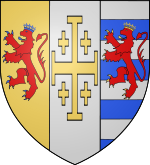
- Constantine II (1342–1344)
- Constantine III (1344–1362)
- Constantine IV (1362–1373)
- Leo V (1374–1393)
- The Armenian kingdom was inherited by the Cypriot Lusignans in 1393.