
All Topics  
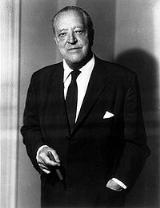
Ludwig Mies van der Rohe

 
Ludwig Mies Van Der Rohe

   Email Print
   Bookmark   Link


Ludwig Mies van der Rohe


Ludwig Mies van der Rohe , born Maria Ludwig Michael Mies (March 27, 1886 – August 17, 1969) was a German
Germany

Germany , officially the Federal Republic of Germany , is a country in Central Europe. It is bordered to the north by the North Sea, Denmark, and the Baltic Sea; to the east by Poland and the Czech Republic; to the south by Austria and Switzerland; and to the west by France, Luxembourg, Belgium, and the Netherlands....
 architect
Architect

An architect is trained and licenced in planning and designing buildings, and participates in supervising the construction of a building. Etymologically, architect derives from the Latin architectus, itself derived from the Greek arkhitekton , i.e....
. He was commonly referred to and addressed by his surname, Mies, by most of his American students and others.

Ludwig Mies van der Rohe, along with Walter Gropius
Walter Gropius

Walter Adolph Georg Gropius was a Germany architect and founder of Bauhaus who along with Ludwig Mies van der Rohe and Le Corbusier, is widely regarded as one of the pioneering masters of modern architecture....
 and Le Corbusier
Le Corbusier

Charles-?douard Jeanneret-Gris, who chose to be known as Le Corbusier , was a Swiss-French architect, designer, urbanist, writer and also Painting, who is famous for being one of the pioneers of what now is called Modern architecture or the International Style....
, is widely regarded as one of the pioneering masters of modern architecture. Mies, like many of his post World War I
World War I

World War I, or the First World War , was a global military conflict which involved the Great powers, organized into two opposing military alliances: the Allies of World War I and the Central Powers....
 contemporaries, sought to establish a new architectural style that could represent modern times just as Classical and Gothic did for their own eras.


Discussion
Ask a question about 'Ludwig Mies van der Rohe'
Start a new discussion about 'Ludwig Mies van der Rohe'
Answer questions from other users
Full Discussion Forum


Quotations


God is in the details.


Encyclopedia


Ludwig Mies van der Rohe , born Maria Ludwig Michael Mies (March 27, 1886 – August 17, 1969) was a German
Germany

Germany , officially the Federal Republic of Germany , is a country in Central Europe. It is bordered to the north by the North Sea, Denmark, and the Baltic Sea; to the east by Poland and the Czech Republic; to the south by Austria and Switzerland; and to the west by France, Luxembourg, Belgium, and the Netherlands....
 architect
Architect

An architect is trained and licenced in planning and designing buildings, and participates in supervising the construction of a building. Etymologically, architect derives from the Latin architectus, itself derived from the Greek arkhitekton , i.e....
. He was commonly referred to and addressed by his surname, Mies, by most of his American students and others.

Ludwig Mies van der Rohe, along with Walter Gropius
Walter Gropius

Walter Adolph Georg Gropius was a Germany architect and founder of Bauhaus who along with Ludwig Mies van der Rohe and Le Corbusier, is widely regarded as one of the pioneering masters of modern architecture....
 and Le Corbusier
Le Corbusier

Charles-?douard Jeanneret-Gris, who chose to be known as Le Corbusier , was a Swiss-French architect, designer, urbanist, writer and also Painting, who is famous for being one of the pioneers of what now is called Modern architecture or the International Style....
, is widely regarded as one of the pioneering masters of modern architecture. Mies, like many of his post World War I
World War I

World War I, or the First World War , was a global military conflict which involved the Great powers, organized into two opposing military alliances: the Allies of World War I and the Central Powers....
 contemporaries, sought to establish a new architectural style that could represent modern times just as Classical and Gothic did for their own eras. He created an influential 20th century architectural style, stated with extreme clarity and simplicity. His mature buildings made use of modern materials such as industrial steel and plate glass to define interior spaces. He strived towards an architecture with a minimal framework of structural order balanced against the implied freedom of free-flowing open space. He called his buildings "skin and bones" architecture. He sought a rational approach that would guide the creative process of architectural design, and is known for his use of the aphorisms "less is more
Less is more

"Less is More" is a quote from Ludwig Mies van der Rohe, architect and leader of the Bauhaus movement in Germany, subsequently taken as a motto for Minimalism#Minimalist design....
" and Gustave Flaubert
Gustave Flaubert

Gustave Flaubert was a France writer who is counted among the greatest Western literature. He is known especially for his first published novel, Madame Bovary , and for his scrupulous devotion to his art and style....
's "God is in the details".

Early career


Mies worked in his father's stone-carving shop and at several local design firms before he moved to Berlin joining the office of interior designer Bruno Paul
Bruno Paul

Bruno Paul was a Germany architect, illustrator, interior designer, and furniture designer.Bruno Paul was born in Seifhennersdorf, a village in rural Saxony, in 1874....
. He began his architectural career as an apprentice at the studio of Peter Behrens
Peter Behrens

*Peter Behrens was a Germany architect and designer....
 from 1908 to 1912, where he was exposed to the current design theories and to progressive German culture, working alongside Walter Gropius
Walter Gropius

Walter Adolph Georg Gropius was a Germany architect and founder of Bauhaus who along with Ludwig Mies van der Rohe and Le Corbusier, is widely regarded as one of the pioneering masters of modern architecture....
 and Le Corbusier
Le Corbusier

Charles-?douard Jeanneret-Gris, who chose to be known as Le Corbusier , was a Swiss-French architect, designer, urbanist, writer and also Painting, who is famous for being one of the pioneers of what now is called Modern architecture or the International Style....
. Mies served as construction manager of the Embassy of the German Empire
Embassy of Germany in Saint Petersburg

The Embassy of Germany in Saint Petersburg was the diplomatic mission of the German Empire to the Russian Empire in Saint Petersburg. After the relocation by the Bolsheviks of the Soviet Union capital from Petrograd to Moscow, it served as a consulate of the Weimar Republic and Nazi Germany....
 in Saint Petersburg
Saint Petersburg

Saint Petersburg is a types of inhabited localities in Russia and a federal subjects of Russia of Russia located on the Neva River at the head of the Gulf of Finland on the Baltic Sea....
 under Behrens. His talent was quickly recognized and he soon began independent commissions, despite his lack of a formal college-level education. A physically imposing, deliberative, and reticent man, Ludwig Mies renamed himself as part of his rapid transformation from a tradesman's son to an architect working with Berlin's cultural elite, adding the more aristocratic surname "van der Rohe". He began his independent professional career designing upper class homes in traditional Germanic domestic styles. He admired the broad proportions, regularity of rhythmic elements, attention to the relationship of the manmade to nature, and compositions using simple cubic volumes of the early 19th century Prussian Neo-Classical architect Karl Friedrich Schinkel
Karl Friedrich Schinkel

Karl Friedrich Schinkel was a Germany architect and painter. Schinkel was the most prominent architect of neoclassicism in Prussia.Schinkel was born in Neuruppin in the Margraviate of Brandenburg....
, while dismissing the eclectic and cluttered classical so common at the turn of the century.

Traditionalism to Modernism


Villa Tugendhat Front
After World War I
World War I

World War I, or the First World War , was a global military conflict which involved the Great powers, organized into two opposing military alliances: the Allies of World War I and the Central Powers....
, Mies began, while still designing traditional custom homes, a parallel experimental effort in international style, joining his avant-garde peers in the long-running search for a new style for a new industrial democracy. The weak points of traditional styles had been under attack by progressive theorists since the mid-nineteenth century, primarily for attaching historical ornament unrelated to a modern structure's underlying construction. Their mounting criticism of the historical styles gained substantial cultural credibility after the disaster of World War I, widely seen as a failure of the old order of imperial leadership of Europe. The classical revival styles were particularly reviled by many as the architectural symbol of a now-discredited aristocratic system.

Boldly abandoning ornament altogether, Mies made a dramatic debut with his stunning competition proposal for the faceted all-glass Friedrichstraße
Friedrichstraße

The Friedrichstra?e is a major culture and shopping street in central Berlin, forming the core of the Friedrichstadt neighborhood. It runs from the northern part of the old Mitte district to the Hallesches Tor in the district of Kreuzberg....
 skyscraper in 1921, followed by a curved version in 1922. He continued with a series of pioneering projects, culminating in his two European masterworks: the temporary German Pavilion
Barcelona Pavilion

The Barcelona Pavilion, designed by Ludwig Mies van der Rohe, was the Germany Pavilion for the 1929 International Exposition in Barcelona. It was an important building in the history of modern architecture, known for its simple form and extravagant materials, such as marble and travertine....
 for the Barcelona exposition (often called the Barcelona Pavilion) in 1929 (a reconstruction is now built on the original site) and the elegant Villa Tugendhat
Villa Tugendhat

The Villa Tugendhat is considered a masterpiece of the Germany architect Ludwig Mies van der Rohe. Built in 1930 in Brno, in today's Czech Republic, for Fritz Tugendhat and his wife Greta, the villa soon became an icon of modern architecture....
 in Brno
Brno

Brno is the second-largest city in the Czech Republic. It was founded in 1243, although the area had been settled since the 5th century. Today Brno has 403,304 inhabitants and is the seat of the Constitutional Court of the Czech Republic, Supreme Court, Supreme Administrative Court, Supreme Prosecutor's Office and Ombudsman....
, Czech Republic
Czech Republic

The Czech Republic , is a landlocked country in Central Europe. The country borders Poland to the northeast, Germany to the west, Austria to the south and Slovakia to the east....
, completed in 1930.

While continuing his traditional design practice Mies began to develop visionary projects that, though mostly unbuilt, rocketed him to fame as a progressive architect. He worked with the progressive design magazine G which started in July 1923. He developed prominence as architectural director of the Werkbund
Deutscher Werkbund

The Deutscher Werkbund was a Germany association of artists, architects, designers, and industrialists. The Werkbund was to become an important event in the development of modern architecture and industrial design, particularly in the later creation of the Bauhaus school of design....
, organizing the influential Weissenhof prototype modernist housing exhibition. He was also one of the founders of the architectural association Der Ring
Der Ring

Der Ring was an architectural collective founded in 1926 in Berlin. It emerged out of expressionist architecture with a Functionalism agenda. 'Der Ring' was a group of young architects, formed with the objective of promoting Modernist architecture....
. He joined the avant-garde Bauhaus
Bauhaus

' is the common term for the ', a school in Germany that combined crafts and the fine arts, and was famous for the approach to design that it publicized and taught....
 design school as their director of architecture, adopting and developing their functionalist application of simple geometric forms in the design of useful objects.

Like many other avant garde architects of the day, Mies based his own architectural theories and principles on his own personal re-combinations of ideas developed by many other thinkers and designers who had attacked the flaws of the traditional design styles, defined new criteria, and created alternative design solutions.

Mies' modernist thinking was influenced by the aesthetic credos of Russia
Russia

Russia , or the Russian Federation , is a list of countries spanning more than one continent country extending over much of northern Eurasia....
n Constructivism
Constructivism (art)

Constructivism was an artistic and architecture movement that originated in Russia from 1919 onward which rejected the idea of "art for art's sake" in favour of art as a practice directed towards social purposes....
 with their ideology of "efficient" sculptural constructions using modern industrial materials. Mies found appeal in the use of simple rectilinear and planar forms, clean lines, pure use of color, and the extension of space around and beyond interiors expounded by the Dutch De Stijl
De Stijl

De Stijl , also known as neoplasticism, was a Dutch artistic movement founded in 1917. In a narrower sense, the term De Stijl is used to refer to a body of work from 1917 to 1931 founded in the Netherlands....
 group. In particular, the layering of functions in space and the clear articulation of parts as expressed by Gerrit Rietveld
Gerrit Rietveld

Gerrit Thomas Rietveld was a Netherlands furniture designer and architect.In 1916, Rietveld started his own furniture factory, while studying architecture....
 appealed to Mies.

Like other architects in Europe, Mies was enthralled with the free-flowing inter-connected rooms which encompass their outdoor surroundings as demonstrated by the open floor plans of the American Prairie Style work of Frank Lloyd Wright
Frank Lloyd Wright

Frank Lloyd Wright was an United States architect, interior designer, writer and educator, who designed more than 1,000 projects, which resulted in more than 500 completed works....
.

The theories of Adolf Loos
Adolf Loos

Adolf Loos was one of the most important and influential Austrian and Czechoslovak architects of European Modern architecture. In his essay "Ornament and Crime" he repudiated the florid style of the Vienna Secession, the Austrian version of Art Nouveau....
 found resonance with Mies, particularly the ideas of eradication of ornament and the casting off of the superficial, the use of unadorned but rich materials, the nobility of anonymity, and an admiration for the unfettered pragmatism of American engineering structures and machines.

Significance and meaning


Mies adopted an ambitious lifelong mission to create not only a new architectural style, but also a solid intellectual foundation for a new architectural language that could be used to represent the new era of technology and production. He saw a need for an architecture expressive of and in harmony with his epoch, just as Gothic architecture
Gothic architecture

Gothic architecture is a style of architecture which flourished during the high and late Middle Ages. It evolved from Romanesque architecture and was succeeded by Renaissance architecture....
 was for an era of spiritualism. He applied a disciplined design process using rational thought to achieve his spiritual goals. He adopted the idea that architecture communicated the meaning and significance of the culture in which it exists. The self-educated Mies painstakingly studied the great philosophers and thinkers of the past and of the day to enhance his own understanding of the character and essential qualities of the times he lived in. More than perhaps any other practising pioneer of modernism, Mies used philosophy as a basis for his work. Mies' architecture was created at a high level of abstraction, and his own descriptions of his work leaves much room for interpretation. Yet his buildings also seem very direct and simple when viewed in person.

Emigration to the United States


Opportunities for commissions dwindled with the worldwide depression after 1929. In the early 1930s, Mies served briefly as the last Director of the faltering Bauhaus
Bauhaus

' is the common term for the ', a school in Germany that combined crafts and the fine arts, and was famous for the approach to design that it publicized and taught....
, at the request of his friend and competitor Walter Gropius
Walter Gropius

Walter Adolph Georg Gropius was a Germany architect and founder of Bauhaus who along with Ludwig Mies van der Rohe and Le Corbusier, is widely regarded as one of the pioneering masters of modern architecture....
. After 1933, Nazi political pressure soon forced Mies to close the government-financed school, a victim of its previous association with socialism, communism, and other progressive ideologies. He built very little in these years (one built commission was Philip Johnson
Philip Johnson

Philip Cortelyou Johnson was an influential American architect. With his thick, round-framed glasses, Johnson was the most recognizable figure in American architecture for decades....
's New York apartment); his style was rejected by the Nazis as not "German" in character. Frustrated and unhappy, he left his homeland reluctantly in 1937 as he saw his opportunity for any future building commissions vanish, accepting a residential commission in Wyoming and then an offer to head an architectural school in Chicago. When the refugee from the heavy-handed and constricting order of the Nazi government arrived in the United States
United States

The United States of America is a Federal government constitutional republic comprising U.S. state and a federal district. The country is situated mostly in central North America, where its Contiguous United States and Washington, D.C., the Capital districts and territories, lie between the Pacific Ocean and Atlantic Oceans, Borders of the U...
 after 30 years of practice in Germany, his reputation as a pioneer of modern architecture was already established by American promoters of the international style.

Career in the United States


Mies settled in Chicago, Illinois where he was appointed as head of the architecture school at Chicago's Armour Institute of Technology (later renamed Illinois Institute of Technology
Illinois Institute of Technology

Illinois Institute of Technology is a private Ph.D.-granting university located in Chicago, Illinois, area with programs in engineering, science, psychology, architecture, business, communication studies, industrial technology, information technology, design, and law....
 - IIT). One of the benefits of taking this position was that he would be commissioned to design the new buildings and master plan for the campus. All his buildings still stand there, including Alumni Hall, the Chapel, and his masterpiece the S.R. Crown Hall, built as the home of IIT's School of Architecture. Crown Hall is widely regarded as Mies' finest work, the definition of Miesian architecture, although some regard the building as "completely inefficient". In 1944, he became an American citizen, completing his severance from his native Germany. His 30 years as an American architect reflect a more structural, pure approach towards achieving his goal of a new architecture for the 20th Century. He focused his efforts on the idea of enclosing open and adaptable "universal" spaces with clearly arranged structural frameworks, featuring pre-manufactured steel shapes infilled with large sheets of glass. His early projects at the IIT campus and for developer Herb Greenwald opened the eyes of Americans to a style that seemed a natural progression of the almost forgotten 19th century Chicago School
Chicago school (architecture)

Architecture of Chicago is famous throughout the world and one style is referred to as the Chicago School. The style is also known as Commercial style....
 style. His architecture, with origins in the German Bauhaus and western European International Style
International style (architecture)

The International style was a major architectural style of the 1920s and 1930s. The term usually refers to the buildings and architects of the formative decades of Modernism, before World War II....
 became an accepted mode of building for American cultural and educational institutions, developers, public agencies, and large corporations.

The American Period


860 880 Lake Shore Drive
His significant projects in the U.S. include the residential towers of 860-880 Lake Shore Dr, Commonwealth Plaza-330-340 W Diversey Pkwy, the Farnsworth House
Farnsworth House

The Farnsworth House, designed and constructed by Ludwig Mies van der Rohe between 1945-51, is a one-room weekend retreat in a once-rural setting, located southwest of Chicago's downtown on a estate site adjoining the Fox River south of the city of Plano, Illinois....
, Crown Hall
S.R. Crown Hall

S. R. Crown Hall, designed by the German-born Modernist architect Ludwig Mies van der Rohe, is the home of the College of Architecture at the Illinois Institute of Technology in Chicago....
 and other structures at IIT, all in and around Chicago, and the Seagram Building
Seagram Building

The Seagram Building is a skyscraper in New York City, located at 375 Park Avenue , between 52nd Street and 53rd Street in Midtown Manhattan ....
 in New York. These iconic works became the prototypes for his other projects.

Between 1946 and 1951, Mies van der Rohe designed and built the Farnsworth House
Farnsworth House

The Farnsworth House, designed and constructed by Ludwig Mies van der Rohe between 1945-51, is a one-room weekend retreat in a once-rural setting, located southwest of Chicago's downtown on a estate site adjoining the Fox River south of the city of Plano, Illinois....
, a weekend retreat outside Chicago for an independent professional woman, Dr. Edith Farnsworth. Here, Mies explored the relationship between ourselves, our shelter, and nature. This small masterpiece showed the world that cold exposed industrial steel and glass were materials capable of creating architecture of great emotional impact. The glass pavilion is raised six feet above a floodplain next to the Fox River, surrounded by forest and rural prairies. The highly crafted pristine white structural frame and all-glass walls define a simple rectilinear interior space, letting nature and light envelop the interior space. A wood-panelled fireplace (also housing mechanical equipment, kitchen, and toilets) is positioned within the open space to suggest living, dining and sleeping spaces without using walls. No partitions touch the surrounding all-glass enclosure. Without solid exterior walls
Walls

Walls can refer to:*Wall, a usually solid structure that defines and sometimes protects an area*Wall's ice cream, a British ice cream brand*Wall's sausages, a British sausage brand...
, full-height draperies on a perimeter track allow freedom to provide full or partial privacy when and where desired. The house has been described as sublime, a temple hovering between heaven and earth, a poem, a work of art. The Farnsworth House and its wooded site was purchased at auction for US$7.5 million by preservation groups in 2004 and is now operated by the Landmarks Preservation Council of Illinois
Landmarks Preservation Council of Illinois

The Landmarks Preservation Council of Illinois -- also known as Landmarks Illinois -- is a not-for-profit organization founded in 1971 to prevent the demolition of the Dankmar Adler and Louis Sullivan designed Chicago Stock Exchange Building....
 as a public museum
Museum

A museum is a "permanent institution in the service of society and of its development, open to the public, which acquires, conserves, researches, communicates and exhibits the tangible and intangible heritage of humanity and its environment, for the purposes of education, study, and entertainment", as defined by the International Coun...
. The influential building spawned hundreds of modernist glass houses, most notably the Glass House
Glass House

The Glass House or Johnson house, built in 1949 in architecture in New Canaan, Connecticut, was designed by Philip Johnson as his own residence and is a masterpiece in the use of glass....
 by Philip Johnson
Philip Johnson

Philip Cortelyou Johnson was an influential American architect. With his thick, round-framed glasses, Johnson was the most recognizable figure in American architecture for decades....
, located near New York City
New York City

The City of New York is the List of United States cities by population in the United States, while the New York metropolitan area ranks among the List of urban areas by population....
 and also owned by the National Trust for Historic Preservation
National Trust for Historic Preservation

The National Trust for Historic Preservation is an United States member-supported organization that was founded in 1949 by congressional charter to support preservation of historic buildings and neighborhoods through a range of programs and activities....
. The iconic Farnsworth House is considered among Mies's greatest works. The house is an embodiment of Mies' mature vision of modern architecture for the new technological age: a single large space with a minimal "skin and bones" framework provides a steel and glass enclosure with a clearly understandable order, with interior space loosely defined by independent partitions within the overall room, free-flowing to suggest freedom of use. His ideas are stated with clarity and simplicity, using materials that are allowed to express their own individual character.

Mies then designed a series of four middle-income high-rise apartment buildings for developer Herb Greenwald (and his successor firms after his untimely death
Death

Death is the permanent termination of the biological functions that define a life organism. It refers to both a particular event and to the condition that results thereby....
 in a plane crash), the 860/880
860-880 Lake Shore Drive Apartments

860?880 Lake Shore Drive is a twin pair of glass-and-steel apartment towers on N. Lake Shore Drive along Lake Michigan in the Near North Side, Chicago#Streeterville Neighborhoods of Chicago, Illinois....
 and 900-910 Lake Shore Drive towers on Chicago's Lakefront. These towers, with façades of steel and glass, were radical departures from the typical residential brick
Brick

A brick is a block of ceramic material used in masonry construction, usually laid using mortar ....
 apartment buildings of the time. Interestingly, Mies found their unit sizes too small for himself, choosing instead to continue living in a spacious traditional luxury apartment
Apartment

An apartment is a self-contained House unit that occupies only part of a Apartment building. Apartments may be owned or rented .A common alternative term for apartment is flat....
 a few blocks away. The towers were simple rectangular boxes with a non-hierarchical wall enclosure, raised on stilts above a glass enclosed lobby. The lobby is set back from the perimeter columns which were exposed around the perimeter of the building above, creating a modern arcade not unlike those of the Greek temples. This configuration created a feeling of light, openness, and freedom of movement at the ground level that became the prototype for countless new towers designed both by Mies's office and his followers. Some historians argue that this new approach is an expression of the American spirit and the boundless open space of the frontier, which German culture so admired.

Once Mies had established his basic design concept for the general form and details of his tower buildings, he applied those solutions (with evolving refinements) to his later high-rise building projects. The architecture of his towers appears to be similar, but each project represents new ideas about the formation of highly sophisticated urban space at ground level. He delighted in the composition of multiple towers arranged in a seemingly casual non-hierarchical relation to each other. He created, just as he did in his interiors, free flowing spaces and flat surfaces that represented the idea of an oasis of uncluttered clarity and calm within the chaos of the city. Nature was included by leaving openings in the pavement, through which plants seem to grow unfettered by urbanization, just as they would in their pre-settlement environment.

In 1958, Mies van der Rohe designed what is often regarded as the pinnacle of the modernist high-rise architecture, the Seagram Building in New York City
New York City

The City of New York is the List of United States cities by population in the United States, while the New York metropolitan area ranks among the List of urban areas by population....
. Mies was chosen by the daughter of the client, Phyllis Bronfman Lambert
Phyllis Lambert

Phyllis Barbara Lambert, Order of Canada, National Order of Quebec, Ordre des Arts et des Lettres, Royal Architectural Institute of Canada, Royal Society of Canada, Royal Canadian Academy of Arts is a Canada philanthopist and member of the Bronfman family....
, who has become a noted architectural figure and patron in her own right. The Seagram Building has become an icon of the growing power of that defining institution of the 20th century, the corporation. In a bold and innovative move, the architect chose to set the tower back from the property line to create a forecourt plaza and fountain on Park Avenue
Park Avenue (Manhattan)

Park Avenue is a wide boulevard that carries north and southbound traffic in New York City borough of Manhattan. Throughout most of its length, it runs parallel to Madison Avenue to the west and Lexington Avenue to the east....
. Although now acclaimed and widely influential as an urban design feature, Mies had to convince Bronfman's bankers that a taller tower with significant "wasted" open space at ground level was a viable idea. Mies' design included a bronze curtain wall with external H-shaped mullions that were exaggerated in depth beyond what is structurally necessary, touching off criticism by his detractors that Mies had committed Adolf Loos's "crime of ornamentation
Ornament and Crime

Ornament and Crime is an essay written in 1908 by the influential and self-consciously "modern" Austrian architect Adolf Loos under the German language title Ornament und Verbrechen....
". Philip Johnson had a role in interior materials selections and the plaza, and he designed the sumptuous Four Seasons Restaurant which has endured un-remodeled to today. The Seagram Building is said to be an early example of the innovative "fast-track" construction process, where design and construction are done concurrently. Using the Seagram as a prototype, Mies' office designed a number of modern high-rise
High-rise

A high-rise is a tall building or structure. Normally, the function of the building is added, for example high-rise apartment building or high-rise office building....
 office towers, notably the Chicago Federal Center, which includes the Dirksen
Dirksen Federal Building

The Everett McKinley Dirksen Federal Courthouse is a skyscraper in downtown Chicago, Illinois. It was designed by Ludwig Mies van der Rohe and completed in 1964....
 and Kluczynski
Kluczynski Federal Building

The Kluczynski Federal Building is a skyscraper in downtown Chicago located at 230 South Dearborn Street. Federal offices in the building include an Air Force recruitment office, the U.S....
 Federal Buildings and Post Office (1959) and the IBM Plaza
IBM Plaza

330 North Wabash is a skyscraper in downtown Chicago, Illinois, at 330 N. Wabash Avenue, designed by famed architect Ludwig Mies van der Rohe ....
 in Chicago, the Westmount Square
Westmount Square

Westmount Square is located in Westmount, Quebec. The four buildings, two of which are residential, were designed by architecture Mies van der Rohe....
 in Montreal and the Toronto-Dominion Centre
Toronto-Dominion Centre

The Toronto-Dominion Centre, or T-D Centre, is a cluster of buildings in downtown Toronto, Ontario, consisting of six towers and a pavilion covered in bronze-tinted glass and black painted steel, and serving as the global headquarters of the Toronto-Dominion Bank, as well as providing office and retail space for many other businesses....
 in 1967. Each project applies the prototype rectangular form on stilts and enclosure walls system but each creates a unique set of exterior spaces that are an essential aspect of his creative energies.

For the TD Centre he designed the font used on all the signage including the concourse area. The signage was still used in 2007, although is slowly being replaced as retailers update their store façades as leases turn over.

During 1951-1952, Mies' designed the steel, glass and brick McCormick House, located in Elmhurst, Illinois
Elmhurst, Illinois

Elmhurst is a suburb of Chicago in DuPage County, Illinois, Illinois. The population is 43,298 ...
 (15 miles west of the Chicago Loop), for real-estate developer Robert Hall McCormick, Jr. A one story adaptation of the exterior curtain wall of his famous 860-880 Lake Shore Drive towers, it served as a prototype for an unbuilt series of speculative houses to be constructed in Melrose Park, Illinois. The house has been moved, but it exists today as a part of the public Elmhurst Art Museum.

Mies's last work was the Neue Nationalgalerie
Neue Nationalgalerie

Neue Nationalgalerie at the Kulturforum is a museum for classical modern art in Berlin, with main focus on early the 20th century. It is part of the German National Gallery....
 art museum, the New National Gallery, in Berlin. Considered one of the most perfect statements of his architectural approach, the upper pavilion is a precise composition of monumental steel columns and a cantilevered (overhanging) roof plane with a glass enclosure. The simple square box is a powerful expression of his ideas about flexible interior space, defined by transparent walls and supported by an external structural frame. The pavilion is a relatively small portion of the overall building, serving as a symbolic architectural entry point and monumental gallery for larger scale art. A large podium building below the pavilion accommodates most of the buildings actual built area in more functional spaces for galleries, support and utilitarian rooms.

The campus of Whitney Young High School
Whitney Young High School

Whitney M. Young Magnet High School, , is a highly selective-enrollment Chicago Public Schools that opened its doors to students on September 3, 1975 as the city's first public Magnet school....
 and the adjacent Chicago Police Academy are two examples of the influence van der Rohe had on Chicago architecture.

Furniture


Mies designed modern furniture
Modern furniture

Modern furniture refers to furniture produced from the late 19th century through the present that is influenced by modernism. It was a tremendous departure from all furniture design that had gone before it....
 pieces using new industrial technologies that have become popular classics, such as the Barcelona chair
Barcelona chair

The Barcelona chair was exclusively designed for the Barcelona Pavilion, that country's entry for the Ibero-American Exposition of 1929, which was hosted by Barcelona, Spain....
 and table, the Brno chair
Brno chair

The Brno chair is a modernist cantilever chair designed by Ludwig Mies van der Rohe in 1929-1930 for the bedroom of the Tugendhat House in Brno, Czech Republic....
, and the Tugendhat chair
Tugendhat chair

The Tugendhat chair is a modernist cantilever chair designed by Ludwig Mies van der Rohe in 1929-1930 for the Tugendhat House in Brno, Czechoslovakia....
. His furniture
Furniture

Furniture is the mass noun for the movable objects which may support the human body , provide storage, or hold objects on horizontal surfaces above the ground....
 is known for fine craftsmanship, a mix of traditional luxurious fabrics like leather
Leather

Leather is a material created through the tanning of rawhides and skins of animals, primarily cattlehide. The tanning process converts the putrescible skin into a durable, long-lasting and versatile natural material for various uses....
 combined with modern chrome
Chrome

Chrome most commonly refers to:* Chromium, a chemical element* Chrome plating, a process of surfacing with chromiumChrome may also refer to:...
 frames, and a distinct separation of the supporting structure
Structure

Structure is a fundamental and sometimes intangible notion covering the recognition, observation, nature , and stability of patterns and relationships of entities....
 and the supported surfaces, often employing cantilever
Cantilever

A cantilever is a Beam supported on only one end. The beam carries the load to the support where it is resisted by Moment and shear stress. Cantilever construction allows for overhanging structures without external bracing....
s to enhance the feeling of lightness created by delicate structural frames. During this period
Period

Period or periodic may refer to:Language and literature* Full stop, a punctuation mark indicating the end of a sentence or phrase...
, he collaborated closely with interior
Interior

Coastal regions of a territory are often the most densely populated due to their greater economic productivity or colonialism history. This leads to a contrast with the interior of the territory, which is sparsely populated....
 designer
Designer

A designer is a person who designs something. Perhaps the broadest definition is that provided by psychologist Herbert Simon: 'Everyone designs who devises courses of action aimed at changing existing situations into preferred ones.' ...
 and companion
Companion

Companion may refer to:* Companion , a nurse assistant or similar professional who assists a patient one-on-one* Companion , an architectural feature of ships...
 Lilly Reich
Lilly Reich

Lilly Reich was a Germany modernist designer. She was a close collaborator with Ludwig Mies Van der Rohe for over 10 years....
.

Mies as Educator


Mies played a significant role as an educator, believing his architectural language could be learned, then applied to design any type of modern building. He worked personally and intensively on prototype solutions, and then allowed his students, both in school and his office, to develop derivative solutions for specific projects under his guidance. Some of Mies' curriculum is still put in practice in the first and second year programs at IIT, for example the excruciating drafting of bricks in second year. But when none was able to match the genius and poetic quality of his own work, he agonized about where his educational method had gone wrong.

Mies placed great importance on education of architects who could carry on his design principles. He devoted a great deal of time and effort leading the architecture program at IIT. Mies served on the initial Advisory Board of the Graham Foundation in Chicago. His own practice was based on intensive personal involvement in design efforts to create prototype solutions for building types (860 Lake Shore Dr, the Farnsworth, Seagram, S.R. Crown Hall, The New National Gallery), then allowing his studio designers to develop derivative buildings under his supervision. Mies's grandson Dirk Lohan and two partners led the firm after he died in 1969. Lohan, who had collaborated with Mies on the New National Gallery, continued with existing projects but soon led the firm on his own independent path. Other disciples continued his teachings for a few years, notably Gene Summers, David Haid, Myron Goldsmith, Jacques Brownson, Helmut Jahn
Helmut Jahn

Helmut Jahn is a German-American architecture, designer of dozens of major buildings throughout the world.Some of the better known among his creations are the US$800 million Sony Center on the Potsdamer Platz, Berlin, the Messeturm in Frankfurt and the One Liberty Place, formerly the tallest building in Philadelphia, Pennsylvania...
, and other architects at the firms of C.F. Murphy and Skidmore Owings & Merrill.

But while Mies' work had enormous influence and critical recognition, his approach failed to sustain a creative force as a style after his death and was eclipsed by the new wave of Post Modernism
Postmodern architecture

Postmodern architecture was an international style whose first examples are generally cited as being from the 1950s, and which continues to influence present-day architecture....
 by the 1980s. He had hoped his architecture would serve as a universal model that could be easily imitated, but the aesthetic power of his best buildings proved impossible to match, instead resulting mostly in drab and uninspired structures. The failure of his followers to meet his high standard may have contributed to demise of Modernism and the rise of new competing design theories, notably Postmodernism.

Death


Over the last twenty years of his life, Mies developed and built his vision of a monumental "skin and bones" architecture that reflected his goal to provide the individual a place to fulfil himself in the modern era. Mies sought to create free and open spaces, enclosed within a structural order with minimal presence. Mies van der Rohe died in 1969, and was buried near Chicago's other famous architects in Chicago
Chicago

Chicago is the largest city in the U.S. state of Illinois and the Midwestern United States, as well as the List of United States cities by population city in the United States with more than 2.8 million residents....
's Graceland Cemetery
Graceland Cemetery

Graceland Cemetery is a large Victorian-era cemetery located in the north side community area of Uptown, Chicago, in the city of Chicago, Illinois, USA....
. His grave is marked by a simple black slab of granite and a large Honey locust
Honey locust

The Honey locust is a deciduous tree native to eastern North America. It is mostly found in the moist soil of river valleys ranging from southeastern South Dakota to New Orleans and central Texas, and as far east as central Pennsylvania....
 tree.

Archives


The Ludwig Mies van der Rohe Archive, an administratively independent section of the Museum of Modern Art
Museum of Modern Art

The Museum of Modern Art is an art museum located in Midtown Manhattan in New York City, USA, on 53rd Street, between Fifth and Sixth Avenues....
's Department of Architecture and Design, was established in 1968 by the Museum's trustees. It was founded in response to the architect's desire to bequeath his entire work to the Museum. The Archive consists of about nineteen thousand drawings and prints, one thousand of which are by the designer and architect Lilly Reich (1885-1947), Mies van der Rohe's close collaborator from 1927 to 1937; of written documents (primarily, the business correspondence) covering nearly the entire career of the architect; of photographs of buildings, models, and furniture; and of audiotapes, books, and periodicals.

Archival materials are also held by the Ryerson & Burnham Libraries
Ryerson & Burnham

The Ryerson & Burnham Libraries are the art and architecture research collection of the Art Institute of Chicago. The libraries cover all periods with extensive holdings in the areas of 18th, 19th and 20th century architecture and 19th century painting, prints, drawings, and decorative arts....
 at the Art Institute of Chicago
Art Institute of Chicago

The School of the Art Institute of Chicago is one of America's premiere fine arts colleges, located in Chicago, Illinois. It is associated with the museum of the same name, The Art Institute of Chicago, but is not related to, nor should be confused with, the chain of schools known as The Art Institutes....
. The Ludwig Mies van der Rohe Collection, 1929-1969 (bulk 1948-1960) includes correspondence, articles, and materials related to his association with the Illinois Institute of Technology. The Ludwig Mies van der Rohe/Metropolitan Structures Collection, 1961-1969, includes scrapbooks and photographs documenting Chicago projects.

Photo gallery


Notable works


Canada
  • Toronto-Dominion Centre
    Toronto-Dominion Centre

    The Toronto-Dominion Centre, or T-D Centre, is a cluster of buildings in downtown Toronto, Ontario, consisting of six towers and a pavilion covered in bronze-tinted glass and black painted steel, and serving as the global headquarters of the Toronto-Dominion Bank, as well as providing office and retail space for many other businesses....
     - Office Tower Complex, Toronto
    Toronto

    Toronto is the List of the 100 largest municipalities in Canada by population in Canada and the Provinces and territories of Canada Provincial and territorial capitals of Canada of Ontario....
  • Westmount Square
    Westmount Square

    Westmount Square is located in Westmount, Quebec. The four buildings, two of which are residential, were designed by architecture Mies van der Rohe....
     - Office & Residential Tower Complex, Westmount
    Westmount, Quebec

    Westmount is a city in southwestern Quebec, Canada on the Island of Montreal, an enclave of the city of Montreal, Quebec; pop. 20,494; area 4.02 km?; its population density of 5,092.56 inhabitants/km? is the second-highest of any municipality in Canada ....
  • Nuns' Island
    Nuns' Island

    Nuns' Island is an island that forms a part of the city of Montreal, Quebec. It is part of the Boroughs of Montreal of Verdun .The Champlain Bridge connects Nuns' Island with the south shore, as well as Montreal proper via Autoroute #Autoroute 15....
     - 3 Residential Towers & Esso Service Station (Closed), Nuns' Island
    Nuns' Island

    Nuns' Island is an island that forms a part of the city of Montreal, Quebec. It is part of the Boroughs of Montreal of Verdun .The Champlain Bridge connects Nuns' Island with the south shore, as well as Montreal proper via Autoroute #Autoroute 15....
     , Montreal
    Montreal

    Montreal, or Montr?al, is the largest city in the Provinces and territories of Canada of Quebec and the List of largest cities and second largest cities by country List of the 100 largest municipalities in Canada by population....
     (c.1969)


Czech Republic
  • Tugendhat House - Residential Home, Brno
    Brno

    Brno is the second-largest city in the Czech Republic. It was founded in 1243, although the area had been settled since the 5th century. Today Brno has 403,304 inhabitants and is the seat of the Constitutional Court of the Czech Republic, Supreme Court, Supreme Administrative Court, Supreme Prosecutor's Office and Ombudsman....


Germany
  • Riehl House - Residential Home, Potsdam
    Potsdam

    Potsdam is the capital city of the Germany States of Germany of Brandenburg and is part of the Metropolitan area of Berlin/Brandenburg. It is situated on the River Havel, some 25 kilometres southwest of the center of Berlin....
     (1907)
  • Peris House - Residential Home, Zehlendorf
    Zehlendorf (Berlin)

    Zehlendorf is a locality within the boroughs of Berlin of Steglitz-Zehlendorf in Berlin. Before Berlin's 2001 administrative reform Zehlendorf was a borough in its own right, consisting of the locality of Zehlendorf as well as Wannsee, Nikolassee and Dahlem ....
     (1911)
  • Werner House - Residential Home, Zehlendorf (1913)
  • Urbig House - Residential Home, Potsdam (1917)
  • Kempner House - Residential Home, Charlottenburg
    Charlottenburg

    Charlottenburg is a locality of Berlin within the Boroughs of Berlin of Charlottenburg-Wilmersdorf, named after Queen Sophia Charlotte of Hanover ....
     (1922)
  • Eichstaedt House - Residential Home, Wannsee
    Wannsee

    The Wannsee is both a locality in the southwestern Berlin Boroughs of Berlin of Steglitz-Zehlendorf, Germany, and a linked pair of lakes adjoining the locality....
     (1922)
  • Feldmann House - Residential Home, Wilmersdorf
    Wilmersdorf

    Wilmersdorf is an inner city locality of Berlin, formerly a borough by itself but since Berlin's 2001 administrative reform a part of the new Boroughs of Berlin of Charlottenburg-Wilmersdorf....
     (1922)
  • Mosler House - Residential Home, Babelsberg (1926)
  • Weissenhof Estate
    Weissenhof Estate

    The Weissenhof Estate is an housing estate of working class housing which was built in Stuttgart in 1927. It was an international showcase of what later became known as the International style of modern architecture....
     - Housing Exhibition coordinated by Mies and with a contribution by him, Stuttgart
    Stuttgart

    Stuttgart is the capital of the state of Baden-W?rttemberg in southern Germany. The list of cities in Germany, Stuttgart has a population of 590,429 while the metropolitan area referred to as Stuttgart Region has a population of 2.7 million ....
     (1927)
  • Haus Lange/Haus Ester - Residential Home and an art museum, Krefeld
    Krefeld

    Krefeld , also known as Crefeld until 1929, is a city in North Rhine-Westphalia, Germany. It is located southwest of the Ruhr area, its center just a few kilometres to the west of the River Rhine; the borough of Uerdingen is situated directly on the Rhine....
  • New National Gallery
    Neue Nationalgalerie

    Neue Nationalgalerie at the Kulturforum is a museum for classical modern art in Berlin, with main focus on early the 20th century. It is part of the German National Gallery....
     - Modern Art Museum, Berlin
    Berlin

    Berlin is the Capital of Germany city and one of sixteen States of Germany of Germany. With a population of 3.4 million within its city limits, Berlin is the country's largest city....
  • Auf dem Hügel - Essen
    Essen

    Essen is a city in the center of the Ruhr Area in North Rhine-Westphalia, Germany. Located on the Ruhr River, its population of approximately 579,000 makes it the 7th- or 8th-largest-city in Germany....


Mexico
  • Bacardi Office Building - Office Building, Mexico City
    Mexico City

    Mexico City is the capital city of Mexico. It is the most important economic, industrial, and cultural center in the country; the most populous city with over 8,836,045 inhabitants in 2008....


Spain
  • Barcelona Pavilion
    Barcelona Pavilion

    The Barcelona Pavilion, designed by Ludwig Mies van der Rohe, was the Germany Pavilion for the 1929 International Exposition in Barcelona. It was an important building in the history of modern architecture, known for its simple form and extravagant materials, such as marble and travertine....
     - World's Fair Pavilion, Barcelona
    Barcelona

    Barcelona is the capital and most populous city of the Autonomous communities of Spain of Catalonia and the second largest city in Spain, with a population of 1,615,908 in 2008, while the population of the Metropolitan Area was 3,161,081....


United States
  • The Promontory Apartments - Residential Apartment Complex, Chicago
    Chicago

    Chicago is the largest city in the U.S. state of Illinois and the Midwestern United States, as well as the List of United States cities by population city in the United States with more than 2.8 million residents....
  • Martin Luther King, Jr. Memorial Library - District of Columbia Public Library, Washington, DC
  • Richard King Mellon Hall of Science - Duquesne University, Pittsburgh, PA (1968)
  • IBM Plaza
    IBM Plaza

    330 North Wabash is a skyscraper in downtown Chicago, Illinois, at 330 N. Wabash Avenue, designed by famed architect Ludwig Mies van der Rohe ....
     - Office Tower, Chicago
    Chicago

    Chicago is the largest city in the U.S. state of Illinois and the Midwestern United States, as well as the List of United States cities by population city in the United States with more than 2.8 million residents....
  • Lake Shore Drive Apartments
    860-880 Lake Shore Drive Apartments

    860?880 Lake Shore Drive is a twin pair of glass-and-steel apartment towers on N. Lake Shore Drive along Lake Michigan in the Near North Side, Chicago#Streeterville Neighborhoods of Chicago, Illinois....
     - Residential Apartment Towers, Chicago
  • Seagram Building
    Seagram Building

    The Seagram Building is a skyscraper in New York City, located at 375 Park Avenue , between 52nd Street and 53rd Street in Midtown Manhattan ....
     - Office Tower, New York City
    New York City

    The City of New York is the List of United States cities by population in the United States, while the New York metropolitan area ranks among the List of urban areas by population....
  • Crown Hall
    S.R. Crown Hall

    S. R. Crown Hall, designed by the German-born Modernist architect Ludwig Mies van der Rohe, is the home of the College of Architecture at the Illinois Institute of Technology in Chicago....
     - College of Architecture, and other buildings, at the Illinois Institute of Technology
    Illinois Institute of Technology

    Illinois Institute of Technology is a private Ph.D.-granting university located in Chicago, Illinois, area with programs in engineering, science, psychology, architecture, business, communication studies, industrial technology, information technology, design, and law....
  • School of Social Services Administration, University of Chicago
    University of Chicago

    The University of Chicago is a private university located principally in the Hyde Park, Chicago neighborhood of Chicago. Although an older university by the same name existed prior to its founding, the modern University of Chicago credits its founding to the oil magnate John D....
     (1965)
  • Farnsworth House
    Farnsworth House

    The Farnsworth House, designed and constructed by Ludwig Mies van der Rohe between 1945-51, is a one-room weekend retreat in a once-rural setting, located southwest of Chicago's downtown on a estate site adjoining the Fox River south of the city of Plano, Illinois....
     - Residential Home, Plano, Illinois
    Plano, Illinois

    Plano is a city in Kendall County, Illinois, Illinois, United States. The population was 5,633 at the 2000 census. The city is rapidly growing with new subdivisions such as Lakewood Springs nearly complete and several other developments under construction or in the planning stages....
  • Chicago Federal Center
    • Dirksen Federal Building
      Dirksen Federal Building

      The Everett McKinley Dirksen Federal Courthouse is a skyscraper in downtown Chicago, Illinois. It was designed by Ludwig Mies van der Rohe and completed in 1964....
       - Office Tower, Chicago
    • Kluczynski Federal Building
      Kluczynski Federal Building

      The Kluczynski Federal Building is a skyscraper in downtown Chicago located at 230 South Dearborn Street. Federal offices in the building include an Air Force recruitment office, the U.S....
       - Office Tower, Chicago
    • United States Post Office Loop Station - General Post Office, Chicago
  • One Illinois Center - Office Tower, Chicago
  • One Charles Center
    One Charles Center

    One Charles Center is a historic office building located at Baltimore, Maryland, United States. It is a 23-story aluminum and glass International Style skyscraper designed by Ludwig Mies van der Rohe and constructed in 1962....
     - Office Tower, Baltimore, Maryland
    Baltimore, Maryland

    Baltimore is an independent city and the largest city in the U.S. state of Maryland in the United States. Baltimore is located in central Maryland along the tidal portion of the Patapsco River, an arm of the Chesapeake Bay....
  • Highfield House Condominium
    Highfield House Condominium

    Highfield House is a High-rise Condominium in the Tuscany-Canterbury, Baltimore neighborhood of Baltimore, Maryland, Maryland, United States. It was designed by Mies van der Rohe and completed in 1964....
     | 4000 North Charles - Condominium Apartments, Baltimore, Maryland
    Baltimore, Maryland

    Baltimore is an independent city and the largest city in the U.S. state of Maryland in the United States. Baltimore is located in central Maryland along the tidal portion of the Patapsco River, an arm of the Chesapeake Bay....
  • Colonnade and Pavilion Apartments - Residential Apartment Complex, Newark, New Jersey
    Newark, New Jersey

    Newark is the largest City in New Jersey, and the county seat of Essex County, New Jersey. Newark has a population of 281,402, making it not only List of Municipalities in New Jersey but also the 65th List of United States cities by population Newark is also home to major corporations, such as Prudential Financial....
  • Lafayette Park - Residential Apartment Complex, Detroit, Michigan
    Detroit, Michigan

    Detroit is the largest city in the U.S. state of Michigan and the county seat of Wayne County, Michigan. Detroit is a major port city on the Detroit River, in the Midwestern United States of the United States....
     (1963).
  • Commonwealth Promenade Apartments - Residential Apartment Complex, Chicago (1956)
  • Caroline Weiss Law Building, Cullinan Hall (1958) and Brown Pavilion (1974) additions, Museum of Fine Art, Houston
  • American Life Building - Louisville, Kentucky (1973; completed after Mies's death by Bruno Conterato)


Further reading


External links