


Long s

Encyclopedia
The long, medial or descending s (ſ) is a form of the minuscule letter s
formerly used where s occurred in the middle or at the beginning of a word, for example "ſinfulneſs" ("sinfulness"). The modern letterform
was called the terminal, round, or short s.
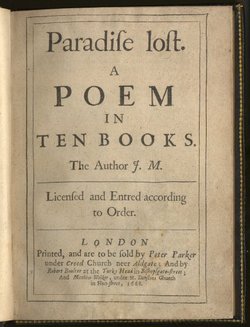 The long s is derived from the old Roman cursive
medial s. When the distinction between upper case (capital) and lower case (small) letter-forms became established, towards the end of the eighth century, it developed a more vertical form. In this period it was occasionally used at the end of a word, a practice which quickly died out but was occasionally revived in Italian
printing
between about 1465 and 1480. The short s was also normally used in the combination sf, for example in ſatisfaction. In German written in Blackletter
, the rules are more complicated: short s also appears at the end of each word within a compound word.
The long s is subject to confusion with the lower case or minuscule f
, sometimes even having an f-like nub at its middle, but on the left side only, in various roman
typeface
s and in blackletter. There was no nub in its italic typeform, which gave the stroke a descender
curling to the left—not possible with the other typeforms mentioned without kerning
.
The nub acquired its form in the blackletter style of writing. What looks like one stroke was actually a wedge pointing downward, whose widest part was at that height (x-height
), and capped by a second stroke forming an ascender curling to the right. Those styles of writing and their derivatives in type design had a cross-bar at the height of the nub for letters f and t, as well as k. In roman type, these disappeared except for the one on the medial s.
The long s was used in ligatures
in various languages. Three examples were for si, ss, and st, besides the German
double s, ß
.
The long s fell out of use in roman and italic typefaces well before the middle of the 19th century. In Spain the change was mainly accomplished between the years 1760 and 1766; in France, the change occurred between 1782 and 1793; in Britain and the United States, between 1795 and 1810. For example, in Spain, the multi-volume work España Sagrada made the switch with volume 16 (1762); The Times
of London switched to the short s with its issue of September 10, 1803; and in the United States, acts of Congress
were published with the long s throughout 1803, switching to the short s in 1804. But Britain's colony Nova Scotia's statutes used the long "s" as late as 1816.
This change may have been spurred by the fact that long s looks somewhat like an f (in both its roman and italic forms), whereas short s did not have this disadvantage, making it easier to identify, especially for people with problems of vision.
Despite its disappearance from printed works, in England the long s survived in handwriting into the 1850s.
The long s survives in Fraktur typefaces. The present-day German double s ß
(das Eszett "the ess-zed" or scharfes-ess, "the sharp S") is an atrophied ligature
form representing either ſz or ſs (see ß
for more). Greek also features a normal sigma σ and a special terminal form ς, which may have supported the idea of specialized s forms. In Renaissance Europe a significant fraction of the literate class was familiar with Ancient Greek.
 The long s is represented in Unicode
at the code point U+017F in the Latin Extended-A range, and it may be represented in HTML
as
The long s survives in elongated form, and with an italic-style curled descender, as the integral
symbol used in calculus
; Gottfried Wilhelm von Leibniz
based the character on the Latin word summa ("sum"), which he wrote ſumma. This use first appeared publicly in his paper De Geometria, published in Acta Eruditorum
of June 1686, but he had been using it in private manuscripts at least since 1675. The following represents the integral of a function of x over the interval [a,b]:

In linguistics a similar character (ʃ, called "esh
") is used in the International Phonetic Alphabet
, in which it represents the voiceless postalveolar fricative
, the first sound in the English word shun.
In Scandinavian and German-speaking countries, relics of the long s continue to be seen in signs and logos that use various forms of fraktur typefaces. Examples include the logos of the Norwegian newspapers Aftenpoſten
and Adresſeaviſen
; the packaging logo for Finnish Siſu pastilles; and the Jägermeiſter
logo. "Eszett" (ß), a digraph
which is derived from a long s and a z, is also still used in standard German spelling.
The similarity between the printed long s (ſ) and f and modern-day unfamiliarity with the former letter-form has been the subject of much humour based on the intentional misreading of s as f, e.g. pronouncing Greensleeves
as Greenfleeves and song as fong in a Flanders and Swann
monologue.
Another survival of the long s was the abbreviation used in British English for shilling
, as in "5/–", where the shilling mark "/" stood in for the long s which had been long forgotten by all but antiquarians.
S
S is the nineteenth letter in the ISO basic Latin alphabet.-History: Semitic Šîn represented a voiceless postalveolar fricative . Greek did not have this sound, so the Greek sigma came to represent...
formerly used where s occurred in the middle or at the beginning of a word, for example "ſinfulneſs" ("sinfulness"). The modern letterform
Letterform
A letterform, letter-form or letter form, is a term used especially in typography, paleography, calligraphy and epigraphy to mean a letter's shape.In one sense, letterform applies strictly to the design of individual letters...
was called the terminal, round, or short s.
History
Roman cursive
Roman cursive is a form of handwriting used in ancient Rome and to some extent into the Middle Ages. It is customarily divided into old cursive, and new cursive.- Old Roman cursive :...
medial s. When the distinction between upper case (capital) and lower case (small) letter-forms became established, towards the end of the eighth century, it developed a more vertical form. In this period it was occasionally used at the end of a word, a practice which quickly died out but was occasionally revived in Italian
Italy
Italy , officially the Italian Republic languages]] under the European Charter for Regional or Minority Languages. In each of these, Italy's official name is as follows:;;;;;;;;), is a unitary parliamentary republic in South-Central Europe. To the north it borders France, Switzerland, Austria and...
printing
Printing
Printing is a process for reproducing text and image, typically with ink on paper using a printing press. It is often carried out as a large-scale industrial process, and is an essential part of publishing and transaction printing....
between about 1465 and 1480. The short s was also normally used in the combination sf, for example in ſatisfaction. In German written in Blackletter
Blackletter
Blackletter, also known as Gothic script, Gothic minuscule, or Textura, was a script used throughout Western Europe from approximately 1150 to well into the 17th century. It continued to be used for the German language until the 20th century. Fraktur is a notable script of this type, and sometimes...
, the rules are more complicated: short s also appears at the end of each word within a compound word.
The long s is subject to confusion with the lower case or minuscule f
F
F is the sixth letter in the basic modern Latin alphabet.-History:The origin of ⟨f⟩ is the Semitic letter vâv that represented a sound like or . Graphically, it originally probably depicted either a hook or a club...
, sometimes even having an f-like nub at its middle, but on the left side only, in various roman
Roman type
In typography, roman is one of the three main kinds of historical type, alongside blackletter and italic. Roman type was modelled from a European scribal manuscript style of the 1400s, based on the pairing of inscriptional capitals used in ancient Rome with Carolingian minuscules developed in the...
typeface
Typeface
In typography, a typeface is the artistic representation or interpretation of characters; it is the way the type looks. Each type is designed and there are thousands of different typefaces in existence, with new ones being developed constantly....
s and in blackletter. There was no nub in its italic typeform, which gave the stroke a descender
Descender
In typography, a descender is the portion of a letter that extends below the baseline of a font. The line that descenders reach down to is known as the beard line....
curling to the left—not possible with the other typeforms mentioned without kerning
Kerning
In typography, kerning is the process of adjusting the spacing between characters in a proportional font, usually to achieve a visually pleasing result. Kerning is the adjustment of the space between individual letter forms vs. tracking which is the uniform adjustment of spacing applied over a...
.
The nub acquired its form in the blackletter style of writing. What looks like one stroke was actually a wedge pointing downward, whose widest part was at that height (x-height
X-height
In typography, the x-height or corpus size refers to the distance between the baseline and the mean line in a typeface. Typically, this is the height of the letter x in the font , as well as the u, v, w, and z...
), and capped by a second stroke forming an ascender curling to the right. Those styles of writing and their derivatives in type design had a cross-bar at the height of the nub for letters f and t, as well as k. In roman type, these disappeared except for the one on the medial s.
The long s was used in ligatures
Ligature (typography)
In writing and typography, a ligature occurs where two or more graphemes are joined as a single glyph. Ligatures usually replace consecutive characters sharing common components and are part of a more general class of glyphs called "contextual forms", where the specific shape of a letter depends on...
in various languages. Three examples were for si, ss, and st, besides the German
German language
German is a West Germanic language, related to and classified alongside English and Dutch. With an estimated 90 – 98 million native speakers, German is one of the world's major languages and is the most widely-spoken first language in the European Union....
double s, ß
ß
In the German alphabet, ß is a letter that originated as a ligature of ss or sz. Like double "s", it is pronounced as an , but in standard spelling, it is only used after long vowels and diphthongs, while ss is used after short vowels...
.
The long s fell out of use in roman and italic typefaces well before the middle of the 19th century. In Spain the change was mainly accomplished between the years 1760 and 1766; in France, the change occurred between 1782 and 1793; in Britain and the United States, between 1795 and 1810. For example, in Spain, the multi-volume work España Sagrada made the switch with volume 16 (1762); The Times
The Times
The Times is a British daily national newspaper, first published in London in 1785 under the title The Daily Universal Register . The Times and its sister paper The Sunday Times are published by Times Newspapers Limited, a subsidiary since 1981 of News International...
of London switched to the short s with its issue of September 10, 1803; and in the United States, acts of Congress
Act of Congress
An Act of Congress is a statute enacted by government with a legislature named "Congress," such as the United States Congress or the Congress of the Philippines....
were published with the long s throughout 1803, switching to the short s in 1804. But Britain's colony Nova Scotia's statutes used the long "s" as late as 1816.
This change may have been spurred by the fact that long s looks somewhat like an f (in both its roman and italic forms), whereas short s did not have this disadvantage, making it easier to identify, especially for people with problems of vision.
Despite its disappearance from printed works, in England the long s survived in handwriting into the 1850s.
The long s survives in Fraktur typefaces. The present-day German double s ß
ß
In the German alphabet, ß is a letter that originated as a ligature of ss or sz. Like double "s", it is pronounced as an , but in standard spelling, it is only used after long vowels and diphthongs, while ss is used after short vowels...
(das Eszett "the ess-zed" or scharfes-ess, "the sharp S") is an atrophied ligature
Ligature (typography)
In writing and typography, a ligature occurs where two or more graphemes are joined as a single glyph. Ligatures usually replace consecutive characters sharing common components and are part of a more general class of glyphs called "contextual forms", where the specific shape of a letter depends on...
form representing either ſz or ſs (see ß
ß
In the German alphabet, ß is a letter that originated as a ligature of ss or sz. Like double "s", it is pronounced as an , but in standard spelling, it is only used after long vowels and diphthongs, while ss is used after short vowels...
for more). Greek also features a normal sigma σ and a special terminal form ς, which may have supported the idea of specialized s forms. In Renaissance Europe a significant fraction of the literate class was familiar with Ancient Greek.
Modern usage
Unicode
Unicode is a computing industry standard for the consistent encoding, representation and handling of text expressed in most of the world's writing systems...
at the code point U+017F in the Latin Extended-A range, and it may be represented in HTML
HTML
HyperText Markup Language is the predominant markup language for web pages. HTML elements are the basic building-blocks of webpages....
as
ſ or ſ.The long s survives in elongated form, and with an italic-style curled descender, as the integral
Integral
Integration is an important concept in mathematics and, together with its inverse, differentiation, is one of the two main operations in calculus...
symbol used in calculus
Calculus
Calculus is a branch of mathematics focused on limits, functions, derivatives, integrals, and infinite series. This subject constitutes a major part of modern mathematics education. It has two major branches, differential calculus and integral calculus, which are related by the fundamental theorem...
; Gottfried Wilhelm von Leibniz
Gottfried Leibniz
Gottfried Wilhelm Leibniz was a German philosopher and mathematician. He wrote in different languages, primarily in Latin , French and German ....
based the character on the Latin word summa ("sum"), which he wrote ſumma. This use first appeared publicly in his paper De Geometria, published in Acta Eruditorum
Acta Eruditorum
Acta Eruditorum was the first scientific journal of the German lands, published from 1682 to 1782....
of June 1686, but he had been using it in private manuscripts at least since 1675. The following represents the integral of a function of x over the interval [a,b]:
In linguistics a similar character (ʃ, called "esh
Esh (letter)
Esh is a character used in conjunction with the Latin Alphabet. Its lowercase form is similar to an italic long s ſ or an integral sign ∫; in 1928 the Africa Alphabet borrowed the Greek letter sigma for the uppercase form , but more recently the African reference alphabet discontinued it, using...
") is used in the International Phonetic Alphabet
International Phonetic Alphabet
The International Phonetic Alphabet "The acronym 'IPA' strictly refers [...] to the 'International Phonetic Association'. But it is now such a common practice to use the acronym also to refer to the alphabet itself that resistance seems pedantic...
, in which it represents the voiceless postalveolar fricative
Voiceless postalveolar fricative
The voiceless palato-alveolar fricative or voiceless domed postalveolar fricative is a type of consonantal sound, used in many spoken languages, including English...
, the first sound in the English word shun.
In Scandinavian and German-speaking countries, relics of the long s continue to be seen in signs and logos that use various forms of fraktur typefaces. Examples include the logos of the Norwegian newspapers Aftenpoſten
Aftenposten
Aftenposten is Norway's largest newspaper. It retook this position in 2010, taking it from the tabloid Verdens Gang which had been the largest newspaper for several decades. It is based in Oslo. The morning edition, which is distributed across all of Norway, had a circulation of 250,179 in 2007...
and Adresſeaviſen
Adresseavisen
Adresseavisen is a regional newspaper published daily, except Sundays, in Trondheim, Norway. It is an independent, conservative newspaper with a daily circulation of approximately 85,000. It is also informally known as Adressa. The newspaper covers the areas of Trøndelag and Nordmøre.Adresseavisen...
; the packaging logo for Finnish Siſu pastilles; and the Jägermeiſter
Jägermeister
Jägermeister is a German 70-proof digestif made with 56 different herbs and spices. It is the flagship product of Mast-Jägermeister SE, headquartered in Wolfenbüttel, south of Braunschweig, Lower Saxony, Germany.- History :...
logo. "Eszett" (ß), a digraph
Digraph
Digraph may refer to:* Digraph , a pair of characters used together to represent a single sound, such as "sh" in English* Typographical ligature, the joining of two letters as a single glyph, such as "æ"...
which is derived from a long s and a z, is also still used in standard German spelling.
The similarity between the printed long s (ſ) and f and modern-day unfamiliarity with the former letter-form has been the subject of much humour based on the intentional misreading of s as f, e.g. pronouncing Greensleeves
Greensleeves
"Greensleeves" is a traditional English folk song and tune, a ground of the form called a romanesca.A broadside ballad by this name was registered at the London Stationer's Company in September 1580 as "A New Northern Dittye of the Lady Greene Sleeves". It then appears in the surviving A Handful of...
as Greenfleeves and song as fong in a Flanders and Swann
Flanders and Swann
The British duo Flanders and Swann were the actor and singer Michael Flanders and the composer, pianist and linguist Donald Swann , who collaborated in writing and performing comic songs....
monologue.
Another survival of the long s was the abbreviation used in British English for shilling
Shilling
The shilling is a unit of currency used in some current and former British Commonwealth countries. The word shilling comes from scilling, an accounting term that dates back to Anglo-Saxon times where it was deemed to be the value of a cow in Kent or a sheep elsewhere. The word is thought to derive...
, as in "5/–", where the shilling mark "/" stood in for the long s which had been long forgotten by all but antiquarians.
See also
- ßßIn the German alphabet, ß is a letter that originated as a ligature of ss or sz. Like double "s", it is pronounced as an , but in standard spelling, it is only used after long vowels and diphthongs, while ss is used after short vowels...
(Eszett) - Esh (letter)Esh (letter)Esh is a character used in conjunction with the Latin Alphabet. Its lowercase form is similar to an italic long s ſ or an integral sign ∫; in 1928 the Africa Alphabet borrowed the Greek letter sigma for the uppercase form , but more recently the African reference alphabet discontinued it, using...
- Integral sign
- R rotundaR rotundaThe r rotunda , "rounded r," is an old letter variant found in full script-like typefaces, especially blackletters. Between the Middle Ages and today, many ways of writing alphabetical characters were lost. Besides a variety of ligatures, conjoined letters, scribal abbreviations, swash characters,...
External links
- James Mosley on long s
- The Straight Dope on long s
- Andrew WestAndrew WestAndrew Christopher West is an English Sinologist. He initially devoted himself to studying Chinese novels of the Ming and Qing dynasties...
, The Rules for Long S - Andrew WestAndrew WestAndrew Christopher West is an English Sinologist. He initially devoted himself to studying Chinese novels of the Ming and Qing dynasties...
, The Long and the Short of the Letter S - The American Declaration of Independence with long s's