


List of military aircraft operational during World War II

Encyclopedia
The following is list of military aircraft operational during World War II
.
World War II
World War II, or the Second World War , was a global conflict lasting from 1939 to 1945, involving most of the world's nations—including all of the great powers—eventually forming two opposing military alliances: the Allies and the Axis...
.
Germany
| Aircraft | Active | Image | |
|---|---|---|---|
| Fighters | |||
| Messerschmitt Bf 109 Messerschmitt Bf 109 The Messerschmitt Bf 109, often called Me 109, was a German World War II fighter aircraft designed by Willy Messerschmitt and Robert Lusser during the early to mid 1930s... |
1937–1945 | ||
| Focke-Wulf Fw 190 Focke-Wulf Fw 190 The Focke-Wulf Fw 190 Würger was a German Second World War single-seat, single-engine fighter aircraft designed by Kurt Tank in the late 1930s. Powered by a radial engine, the 190 had ample power and was able to lift larger loads than its well-known counterpart, the Messerschmitt Bf 109... |
1941–1945 | 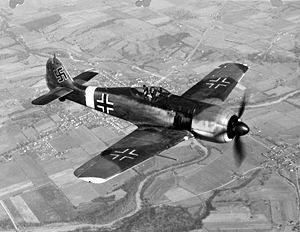 |
|
| Messerschmitt Me 410 Messerschmitt Me 410 The Messerschmitt Me 410 Hornisse was a German heavy fighter and Schnellbomber used by Luftwaffe during World War II. Though essentially a straightforward modification of the Me 210, it was designated the Me 410 to avoid association with its notoriously flawed predecessor.-Design and... |
1943–1945 | ||
| Messerschmitt Bf 110 Messerschmitt Bf 110 The Messerschmitt Bf 110, often called Me 110, was a twin-engine heavy fighter in the service of the Luftwaffe during World War II. Hermann Göring was a proponent of the Bf 110, and nicknamed it his Eisenseiten... |
1937–1945 |  |
|
| Heinkel He 219 Heinkel He 219 The Heinkel He 219 Uhu was a night fighter that served with the German Luftwaffe in the later stages of World War II. A relatively sophisticated design, the He 219 possessed a variety of innovations, including an advanced VHF-band intercept radar... |
1943–1945 |  |
|
| Messerschmitt Me 262 Messerschmitt Me 262 The Messerschmitt Me 262 Schwalbe was the world's first operational jet-powered fighter aircraft. Design work started before World War II began, but engine problems prevented the aircraft from attaining operational status with the Luftwaffe until mid-1944... |
1944–1945 |  |
|
| Heinkel He 162 Heinkel He 162 The Heinkel He 162 Volksjäger was a German single-engine, jet-powered fighter aircraft fielded by the Luftwaffe in World War II. Designed and built quickly, and made primarily of wood as metals were in very short supply and prioritised for other aircraft, the He 162 was nevertheless the fastest of... |
1945 |  |
|
| Messerschmitt Me 163 Messerschmitt Me 163 The Messerschmitt Me 163 Komet, designed by Alexander Lippisch, was a German rocket-powered fighter aircraft. It is the only rocket-powered fighter aircraft ever to have been operational. Its design was revolutionary, and the Me 163 was capable of performance unrivaled at the time. Messerschmitt... |
1944–1945 | 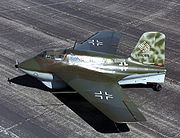 |
|
| Bombers | |||
| Arado Ar 234 Arado Ar 234 The Arado Ar 234 was the world's first operational jet-powered bomber, built by the German Arado company in the closing stages of World War II. Produced in very limited numbers, it was used almost entirely in the reconnaissance role, but in its few uses as a bomber it proved to be nearly impossible... |
1944–1945 | 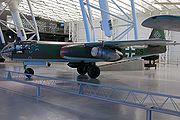 |
|
| Junkers Ju 87 Junkers Ju 87 The Junkers Ju 87 or Stuka was a two-man German ground-attack aircraft... |
1936–1945 | ||
| Heinkel He 111 Heinkel He 111 The Heinkel He 111 was a German aircraft designed by Siegfried and Walter Günter in the early 1930s in violation of the Treaty of Versailles. Often described as a "Wolf in sheep's clothing", it masqueraded as a transport aircraft, but its purpose was to provide the Luftwaffe with a fast medium... |
1935–1945 | 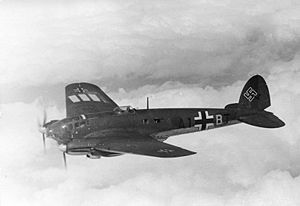 |
|
| Heinkel He 177 Heinkel He 177 The Heinkel He 177 Greif was the only operational long-range bomber to be operated by the Luftwaffe. Starting its existence as Germany's first purpose-built heavy bomber just before the war, and built in large numbers during World War II, it was also mistakenly tasked, right from its beginnings,... |
1942–1945 |  |
|
| Dornier Do 215 Dornier Do 215 |-See also:-Bibliography:* Dressel, Joachim and Manfred Griehl. Bombers of the Luftwaffe. London: DAG Publications, 1994. ISBN 1-85409-140-9.... |
1939–1944 |  |
|
| Junkers Ju 86 Junkers Ju 86 The Junkers Ju 86 was a German monoplane bomber and civilian airliner designed in the early 1930s, and employed by both sides during World War II. The civilian model Ju 86B could carry 10 passengers. Two were delivered to Swissair and five to Luft Hansa... |
1936–1943 |  |
|
| Junkers Ju 188 Junkers Ju 188 The Junkers Ju 188 was a German Luftwaffe high-performance medium bomber built during World War II, the planned follow-on to the famed Ju 88 with better performance and payload... |
1943–1945 |  |
|
| Henschel Hs 123 Henschel Hs 123 The Henschel Hs 123 was a single-seat biplane dive bomber and close-support attack aircraft flown by the German Luftwaffe during the Spanish Civil War and the early to mid-point of World War II... |
1936–1944 |  |
|
| Heinkel He 50 Heinkel He 50 |-See also:-Bibliography:* Donald, D., ed. Warplanes of the Luftwaffe: Combat Aircraft of Hitler’s Luftwaffe, 1933–1945. London: Aerospace Publishing, 2001. ISBN 1-8805888-10-2.... |
1935–1944 |  |
|
| Ground attack | |||
| Henschel Hs 129 Henschel Hs 129 The Henschel Hs 129 was a World War II ground-attack aircraft fielded by the German Luftwaffe. Its nickname, the Panzerknacker , is a deliberate pun—in German, it also means "safe cracker"... |
1942–1945 | ||
| Transport | |||
| Junkers Ju 52 Junkers Ju 52 The Junkers Ju 52 was a German transport aircraft manufactured from 1932 to 1945. It saw both civilian and military service during the 1930s and 1940s. In a civilian role, it flew with over 12 air carriers including Swissair and Deutsche Luft Hansa as an airliner and freight hauler... |
1931–1945 |  |
|
| Junkers Ju 90 Junkers Ju 90 The Junkers Ju 90 was a 40-seat, four-engine airliner developed for and used by Deutsche Luft Hansa shortly before World War II. It was based on the rejected Ju 89 bomber... |
1938–1945 |  |
|
| Messerschmitt Me 323 Messerschmitt Me 323 The Messerschmitt Me 323 Gigant was a German military transport aircraft of World War II. It was a powered variant of the Me 321 military glider and was the largest land-based transport aircraft of the war... |
1943–1944 | 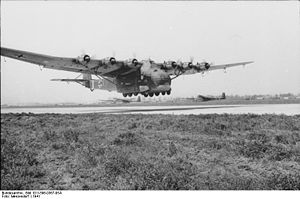 |
|
| Blohm & Voss BV 222 | 1940–1946 | ||
| Arado Ar 232 Arado Ar 232 The Arado Ar 232 Tausendfüssler was the first truly modern cargo aircraft, designed and built in small numbers by the German firm Arado Flugzeugwerke during World War II... |
1943–1945 | ||
| Heinkel He 70 Heinkel He 70 The Heinkel He 70 was a German mail plane and fast passenger aircraft of the 1930s, that also saw use in auxiliary bomber and reconnaissance roles. It had a relatively brief commercial career before it was replaced by types which could carry more passengers... |
1933–1945 | ||
| Gliders | |||
| DFS 230 DFS 230 |-See also:-External links:* http://www.warbirdsresourcegroup.org/LRG/dfs230.html* http://www.luftarchiv.de/flugzeuge/dfs/dfs230.htm... |
1938–1945 | 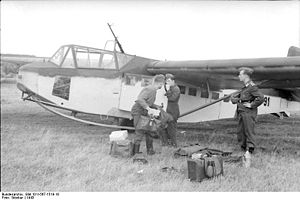 |
|
| Gotha Go 242 Gotha Go 242 -External Links:* FLIGHT, 12th February 1942, p. 130, early intelligence photo of Go 242, bottom of page.... |
1941–1945 | 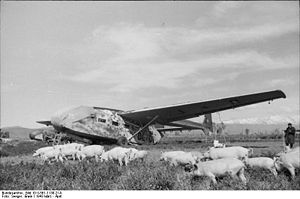 |
|
| Messerschmitt Me 321 Messerschmitt Me 321 |-See also:-Bibliography:* Dabrowski, Hans-Peter. Messerschmitt Me 321/323: The Luftwaffe's "Giants" in World War II. Atglen, PA: Schiffer Military History, 2001. ISBN 0-7643-1442-4.... |
|||
| Reconnaissance | |||
| Fieseler Fi 156 Fieseler Fi 156 The Fieseler Fi 156 Storch was a small German liaison aircraft built by Fieseler before and during World War II, and production continued in other countries into the 1950s for the private market... |
1937–1945 | 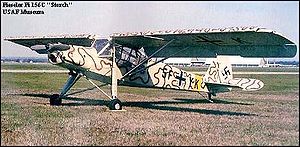 |
|
| Focke-Wulf Fw 189 Focke-Wulf Fw 189 |-See also:-References:NotesBibliography* Brown, Capt. Eric . Wings of the Luftwaffe. Garden City, NY: Doubleday & Company, Inc., 1978. ISBN 0-385-13521-1.... |
1941–1945 |  |
|
| Henschel Hs 126 Henschel Hs 126 |-See also:-References:NotesBibliography* Green, William. Warplanes of the Third Reich. London: Macdonald and Jane's Publishers Ltd., 1970 . ISBN 0-356-02382-6.... |
1937–1942 |  |
|
| Heinkel He 114 Heinkel He 114 -See also:-Bibliography:* Donald, David, ed. Warplanes of the Luftwaffe. London: Aerospace, 1994. ISBN 1-874023-56-5.* Smith J. R. and Kay, Anthony. German Aircraft of the Second World War. London: Putnam & Company Ltd., 1972. ISBN 0-370-00024-2.... |
1939–1945 | ||
| Heinkel He 60 | 1933–1943 |  |
|
| Heinkel He 59 Heinkel He 59 |-See also:-Bibliography:* Green, William.War Planes of the Second World War: Volume Six: Floatplanes. London: Macdonald, 1962.* Green, William. Warplanes of the Third Reich. New York: Doubleday, 1972. ISBN 0-385-05782-2.... |
1935–1944 |  |
|
| Maritime aircraft | |||
| Focke-Wulf Fw 200 Focke-Wulf Fw 200 The Focke-Wulf Fw 200 Condor, also known as Kurier to the Allies was a German all-metal four-engine monoplane originally developed by Focke-Wulf as a long-range airliner... |
1938–1945 | ||
| Junkers Ju 290 Junkers Ju 290 The Junkers Ju 290 was a long-range transport, maritime patrol aircraft and heavy bomber used by the Luftwaffe late in World War II.-Design and development:... |
1942–1945 |  |
|
| Heinkel He 115 Heinkel He 115 The Heinkel He 115 was a World War II Luftwaffe seaplane with three seats. It was used as a torpedo bomber and performed general seaplane duties, such as reconnaissance and minelaying. The plane was powered by two 720 kW BMW 132K nine-cylinder air-cooled radial engines... |
1939–1945 |  |
|
| Multi-role | |||
| Junkers Ju 388 Junkers Ju 388 The Junkers Ju 388 Störtebeker was a World War II German Luftwaffe multi-role aircraft based on the Ju 88 airframe by way of the Ju 188. It differed from its predecessors in being intended for high altitude operation, with design features such as a pressurized cockpit for its crew... |
1944–1945 | ||
| Dornier Do 17 Dornier Do 17 The Dornier Do 17, sometimes referred to as the Fliegender Bleistift , was a World War II German light bomber produced by Claudius Dornier's company, Dornier Flugzeugwerke... |
1937–1945 | ||
| Junkers Ju 88 Junkers Ju 88 The Junkers Ju 88 was a World War II German Luftwaffe twin-engine, multi-role aircraft. Designed by Hugo Junkers' company through the services of two American aviation engineers in the mid-1930s, it suffered from a number of technical problems during the later stages of its development and early... |
1939–1943 | 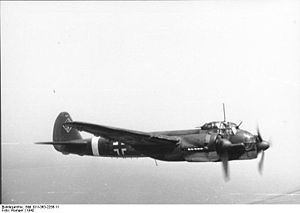 |
|
| Dornier Do 217 Dornier Do 217 The Dornier Do 217 was a bomber used by German Luftwaffe during World War II as a more powerful version of the Dornier Do 17, known as the Fliegender Bleistift . Designed in 1937 and 1938 as a heavy bomber, its design was refined during 1939 and production began in late 1940... |
1942–1945 |  |
|
| Messerschmitt Me 210 Messerschmitt Me 210 The Messerschmitt Me 210 was a German heavy fighter and ground-attack aircraft of World War II. The Me 210 was designed to replace the Bf 110 in heavy fighter role; design started before the opening of World War II. The first examples of the Me 210 were ready in 1939, but they proved to have poor... |
1943–1945 | ||
| Blohm & Voss BV 138 | 1940–1945 |  |
|
| Arado Ar 196 Arado Ar 196 -See also:-Bibliography:* Dabrowski, Hans-Peter and Koos, Volker. Arado Ar 196, Germany's Multi-Purpose Seaplane. Atglen, PA: Schiffer Military History, 1993. ISBN 0-88740-481-2.... |
1938–1945 |  |
|
Japan
| Aircraft | Active | Image | |
|---|---|---|---|
| Fighters | |||
| A6M Zero | 1940–1945 | ||
| Mitsubishi A5M Mitsubishi A5M The Mitsubishi A5M, Japanese Navy designation was "Type 96 carrier-based fighter" was a Japanese carrier-based fighter aircraft. It was the world's first monoplane shipboard fighter and the direct ancestor of the famous Mitsubishi A6M 'Zero'... |
1937–1945 | 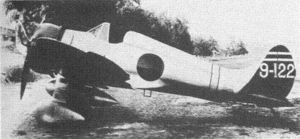 |
|
| Mitsubishi J2M Mitsubishi J2M The Mitsubishi J2M Raiden was a single-engined land-based fighter aircraft used by the Imperial Japanese Navy Air Service in World War II. The Allied reporting name was "Jack".-Design and development:... |
1942–1945 | 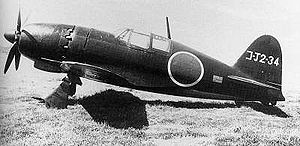 |
|
| Nakajima J1N Nakajima J1N -See also:-Bibliography:* Francillon, Réne J. Japanese Aircraft of the Pacific War. London: Putnam & Company Ltd., 1970 . ISBN 0-370-30251-6.... |
1942–1945 |  |
|
| Kawasaki Ki-61 Kawasaki Ki-61 The Kawasaki Ki-61 Hien was a Japanese World War II fighter aircraft used by the Imperial Japanese Army Air Force... |
1943–1945 | 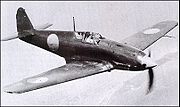 |
|
| Nakajima Ki-43 Nakajima Ki-43 The Nakajima Ki-43 Hayabusa was a single-engine land-based tactical fighter used by the Imperial Japanese Army Air Force in World War II... |
1942–1945 | 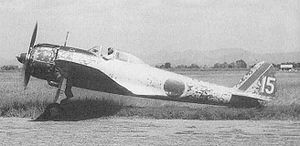 |
|
| Nakajima Ki-44 Nakajima Ki-44 The Nakajima Ki-44 Shōki was a single-engine fighter aircraft used by the Imperial Japanese Army Air Force in World War II. The type first flew in August 1940 and entered service in 1942... |
1941–1945 | 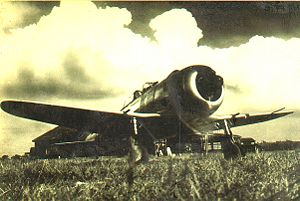 |
|
| Nakajima Ki-27 Nakajima Ki-27 The was the main fighter aircraft used by the Imperial Japanese Army Air Force up until 1940. Its Allied nickname was "Nate", although it was called "Abdul" in the "China Burma India" theater by many post war sources; Allied Intelligence had reserved that name for the nonexistent Mitsubishi Navy... |
1937–1945 | 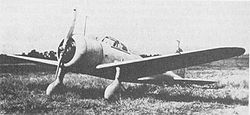 |
|
| Kawanishi N1K | 1943–1945 | ||
| Kawasaki Ki-102 Kawasaki Ki-102 -See also:-References:NotesBibliography* Francillon, Ph.D., René J. Japanese Aircraft of the Pacific War. London: Putnam and Company Ltd., 1979. ISBN 0-370-30251-6.... |
1944–1945 |  |
|
| Nakajima Ki-84 Nakajima Ki-84 The Nakajima Ki-84 was a single-seat fighter used by the Imperial Japanese Army Air Force in World War II. The Allied reporting name was "Frank"; the Japanese Army designation was . Featuring excellent performance and high maneuverability, the Ki-84 was considered to be the best Japanese fighter... |
1943–1945 | ||
| Kawasaki Ki-100 Kawasaki Ki-100 The Kawasaki Ki-100 was a fighter aircraft used by the Imperial Japanese Army in World War II. The Japanese Army designation was "Type 5 Fighter"... |
1945 | 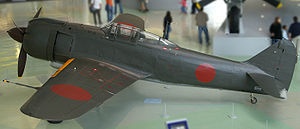 |
|
| Kawasaki Ki-45 Kawasaki Ki-45 The Kawasaki Ki-45 Toryu was a two-seat, twin-engine fighter used by the Imperial Japanese Army in World War II. The army gave it the designation "Type 2 Two-Seat Fighter"; the Allied reporting name was "Nick".... |
1941-1945 | 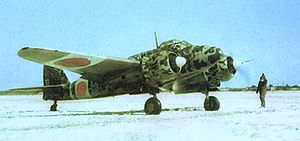 |
|
| Medium bombers | |||
| Mitsubishi Ki-30 Mitsubishi Ki-30 |-See also:-External links:* *... |
1938–1945 | 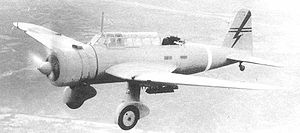 |
|
| Mitsubishi G3M Mitsubishi G3M The Mitsubishi G3M was a Japanese bomber used during World War II.-Design and development:... |
1935–1945 |  |
|
| Kawasaki Ki-48 Kawasaki Ki-48 The Kawasaki Ki-48, 九九式双発軽爆撃機 'Sokei', Army Type 99 Twin-engined Light Bomber, was a Japanese twin-engine light bomber that was used during World War II. Its Allied reporting name was "Lily".-Development:... |
1940–1945 |  |
|
| Mitsubishi G4M Mitsubishi G4M The Mitsubishi G4M 一式陸上攻撃機, 一式陸攻 Isshiki rikujō kōgeki ki, Isshikirikkō was the main twin-engine, land-based bomber used by the Imperial Japanese Navy Air Service in World War II. The Allies gave the G4M the reporting name Betty... |
1941–1945 |  |
|
| Mitsubishi Ki-21 Mitsubishi Ki-21 The was a Japanese bomber during World War II. It began operations during the Second Sino-Japanese War participating in the Nomonhan Incident, and in the first stages of the Pacific War, including the Malayan, Burmese, Dutch East Indies and New Guinea Campaigns... |
1938–1945 | 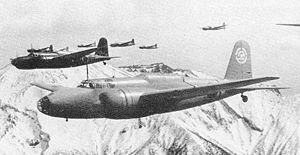 |
|
| Yokosuka P1Y Yokosuka P1Y |-See also:-References:NotesBibliography* Francillon, Ph.D., René J. Japanese Aircraft of the Pacific War. London: Putnam 7 Company Ltd., 1970. ISBN 0-370-00033-1 .... |
1943–1945 |  |
|
| Mitsubishi Ki-67 Mitsubishi Ki-67 The Mitsubishi Ki-67 Hiryū was a twin-engine medium bomber produced by Mitsubishi and used by the Imperial Japanese Army Air Force in World War II. Its Army designation was "Type 4 Heavy Bomber" .-Design:The Ki-67 was the result of a 1941 Japanese army specification for a successor to the Nakajima... |
1942–1945 | 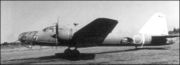 |
|
| Nakajima Ki-49 Nakajima Ki-49 |-See also:-References:NotesBibliography* Bueschel, Richard M. Nakajima Ki-49 Donryu in Japanese Army Air Force Service. Atglen, PA: Schiffer Publishing Ltd., 2004. ISBN 0-76430-344-9.... |
1941–1945 | ||
| Torpedo bombers | |||
| Nakajima B5N Nakajima B5N |-See also:-References:NotesBibliography* Bridgwater, H.C. and Peter Scott. Combat Colours Number 4: Pearl Harbor and Beyond, December 1941 to May 1942. Luton, Bedfordshire, UK: Guideline Publications, 2001. ISBN 0-9539040-6-7.... |
1938–1945 |  |
|
| Nakajima B6N Nakajima B6N The Nakajima B6N Tenzan was the Imperial Japanese Navy's standard carrier-borne torpedo bomber during the final years of World War II and the successor to the B5N "Kate"... |
1941–1945 |  |
|
| Aichi B7A | 1941–1945 |  |
|
| Dive bombers | |||
| Yokosuka D4Y Yokosuka D4Y The D4Y Navy Type 2 Carrier Dive bomber was operated by the Imperial Japanese Navy. Its Allied reporting name was "Judy". The D4Y was one of the fastest dive-bombers of the war, and only the delays in its development hindered its service, while its predecessor, the slower fixed gear Aichi D3A... |
1942–1945 | 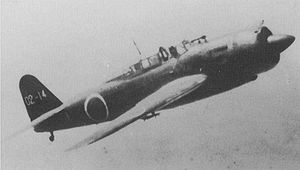 |
|
| Mitsubishi Ki-51 Mitsubishi Ki-51 |-See also:-References:NotesBibliography* Francillon, Ph.D., René J. Japanese Aircraft of the Pacific War. London: Putnam & Company Ltd., 1970. ISBN 0-370-00033-1 .-External links:* * *... |
1940–1945 | 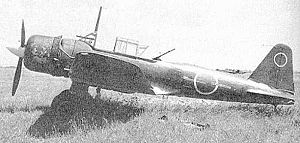 |
|
| Kawasaki Ki-32 Kawasaki Ki-32 |-See also:-External links:*... |
1938–1942 | 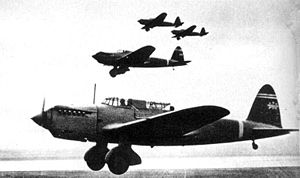 |
|
| Aichi D3A Aichi D3A The , Allied reporting name "Val") was a World War II carrier-borne dive bomber of the Imperial Japanese Navy . It was the primary dive bomber in the Imperial Japanese Navy, and participated in almost all actions, including Pearl Harbor.... |
1940–1945 | 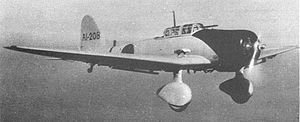 |
|
| Ground attack | |||
| Mitsubishi B5M Mitsubishi B5M -See also:-Bibliography:*Francillon, René J. Japanese Aircraft of the Pacific War. London: Putnam, 1970. ISBN 370 00033 1.*Francillon, René J. Japanese Aircraft of the Pacific War. London: Putnam & Company Ltd., 1979. ISBN 0-370-30251-6.... |
1937–1945 | 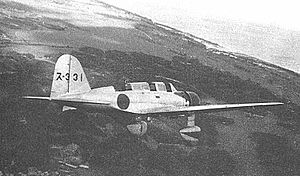 |
|
| Yokosuka MXY7 Ohka | 1945 | 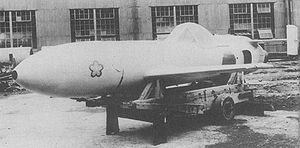 |
|
| Transport | |||
| Mitsubishi Ki-57 Mitsubishi Ki-57 |-See also:-References:NotesBibliography* Francillon, Ph.D., René J. The Mitsubishi Ki-21 . Leatherhead, Surrey, UK: Profile Publications Ltd., 1967.... |
1942–1945 | ||
| Reconnaissance | |||
| Mitsubishi F1M Mitsubishi F1M -See also:-Bibliography:* Francillon, R.J. Japanese Aircraft of the Pacific War. London:Putnam, 1970. ISBN 370 00033 1.* Green, William. War Planes of the Second World War, Volume Six: Floatplanes. London: Macdonald & Co., Ltd., 1962.... |
1941–1945 | 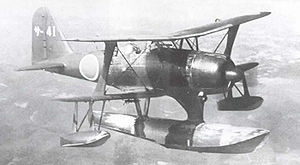 |
|
| Mitsubishi Ki-46 Mitsubishi Ki-46 The Mitsubishi Ki-46 was a twin-engine reconnaissance aircraft used by the Imperial Japanese Army in World War II. Its Army Shiki designation was Type 100 Command Reconnaissance Aircraft ; the Allied nickname was "Dinah".... |
1941–1945 | ||
| Mitsubishi Ki-15 Mitsubishi Ki-15 The was a Japanese reconnaissance aircraft and a light attack bomber of the Second Sino-Japanese War and Pacific War. It began as a fast civilian mail plane. It was a single-engine, low-wing, cantilever monoplane with a fixed tailwheel undercarriage; it carried a crew of two. It served with both... |
1937–1945 | 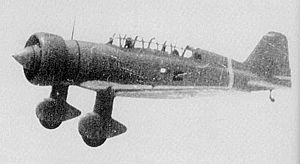 |
|
| Maritime aircraft | |||
| Kawanishi H6K Kawanishi H6K |-See also:-References:NotesBibliography* Doubilet, David. "The Flying Boat". Sport Diver Magazine. Volume 15, Number 8, September 2007.* Francillon, Ph.D., René J. Japanese Aircraft of the Pacific War. Annapolis, Maryland, MD: Naval Institute Press, 1995.* Green, William. Warplanes of the Second... |
1938–1945 | 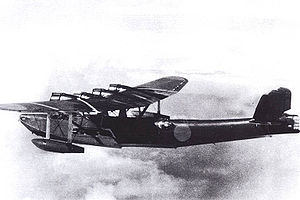 |
|
| Kawanishi H8K Kawanishi H8K |-See also:-References:NotesBibliography* Bridgeman, Leonard. "The Kawanishi H8K2 “Emily”" Jane’s Fighting Aircraft of World War II. London: Studio, 1946. ISBN 1-85170-493-0.... |
1942–1945 | ||
Italy
| Aircraft | Active | Image | |
|---|---|---|---|
| Fighters | |||
| Fiat CR.32 Fiat CR.32 The Fiat CR.32 was an Italian biplane fighter used in the Spanish Civil War and World War II. This nimble little Fiat was compact, robust and highly manoeuvrable and gave impressive displays all over Europe in the hands of the Pattuglie Acrobatiche. The CR.32 fought in North and East Africa, in... |
1934–1953 | ||
| Fiat CR.42 Fiat CR.42 The Fiat CR.42 Falco was a single-seat sesquiplane fighter which served primarily in Italy's Regia Aeronautica before and during World War II. The aircraft was produced by the Turin firm, and entered service, in smaller numbers, with the air forces of Belgium, Sweden and Hungary... |
1939–1945 | 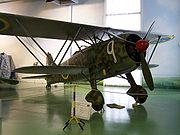 |
|
| Fiat G.50 Fiat G.50 The Fiat G.50 Freccia was a World War II Italian fighter aircraft. First flown in February 1937, the G.50 was Italy’s first single-seat, all-metal monoplane with an enclosed cockpit and retractable landing gear to go into production... |
1938–1945 | 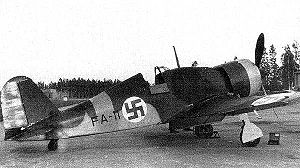 |
|
| Fiat G.55 Fiat G.55 The Fiat G.55 Centauro was a single-engine single-seat World War II fighter aircraft used by the Regia Aeronautica and the A.N.R. in 1943-1945. It was designed and built in Turin by Fiat. The Fiat G.55 was probably the best type produced in Italy during World War II, but it did not enter... |
1943–1948 | 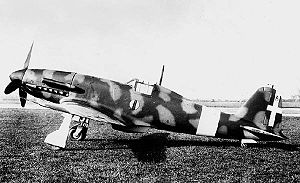 |
|
| Reggiane Re.2000 Reggiane Re.2000 The Caproni-Reggiane Re.2000 Falco I was an Italian all metal, low-wing, monoplane with a Curtiss-style retractable undercarriage, used in the first part of World War II. This lightly built and highly manoeuvrable interceptor/fighter, similar to the Seversky P-35, flew for the first time in 1939... |
1940–1945 | ||
| Reggiane Re.2001 Reggiane Re.2001 The Reggiane Re.2001 Falco II was an Italian fighter aircraft, serving in the Regia Aeronautica during World War II. A contemporary of the renowned Macchi C.202, the production of this type was to be limited to only 252, but it was a flexible design that proved to be able to undertake a number of... |
1940–1945 | 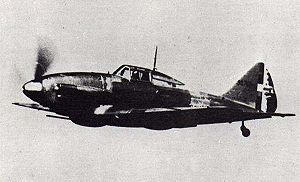 |
|
| Reggiane Re.2002 Reggiane Re.2002 |-See also:-Bibliography:* Angelucci, Enzo and Matricardi, Paolo. Combat Aircraft of World War II: 1942-1943. New York: Military Press, 1988. ISBN 0-517-66578-6.... |
1940–1945 | ||
| Reggiane Re.2005 Reggiane Re.2005 The Reggiane Re.2005 was an Italian monoplane fighter/fighter-bomber produced for the Regia Aeronautica during the later years of World War II. It is considered by many to be "the most beautiful plane of the Second World War". Along with the Macchi C.202/C.205 and Fiat G.55, the Reggiane Re.2005... |
1943–1945 | 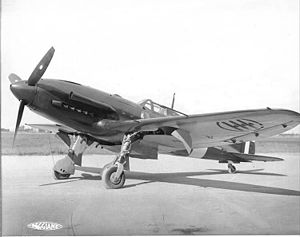 |
|
| Macchi C.202 | 1941–1951 |  |
|
| Macchi C.205 Macchi C.205 The Macchi C.205 Veltro was an Italian World War II fighter aircraft built by the Aeronautica Macchi. Along with the Reggiane Re.2005 and Fiat G.55, the Macchi C.205 was one of the three "Serie 5" Italian fighters built around the powerful Daimler-Benz DB 605 engine... |
1943–1947 |  |
|
| Macchi C.200 Macchi C.200 The Macchi C.200 Saetta was a World War II fighter aircraft built by Aeronautica Macchi in Italy, and used in various forms throughout the Regia Aeronautica . The MC.200 had excellent manoeuvrability and general flying characteristics left little to be desired... |
1939–1947 | 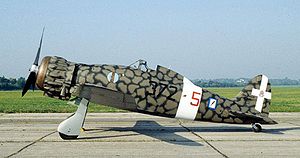 |
|
| Bombers | |||
| CANT Z.1007 CANT Z.1007 The Cant Z.1007 Alcione was a three-engined medium bomber, with wooden structure. Designed by ingegner Filippo Zappata, the "father" of the CANT... |
1938–1944 | ||
| Breda Ba.65 Breda Ba.65 |-See also:-References:NotesBibliography* Angelucci, Enzo and Paolo Matricardi. World Aircraft: World War II, Volume I . Maidenhead, UK: Sampson Low, 1978. ISBN 0-562-00096-8.... |
1935–1941 |  |
|
| Savoia-Marchetti SM.82 Savoia-Marchetti SM.82 The Savoia-Marchetti SM.82 was an Italian bomber and transport aircraft of World War II. It was a cantilever, mid-wing monoplane trimotor with a retractable, tailwheel undercarriage... chiefly used as transport |
1940–1963 |  |
|
| Savoia-Marchetti SM.79 Savoia-Marchetti SM.79 The Savoia-Marchetti SM.79 Sparviero was a three-engined Italian medium bomber with a wood and metal structure. Originally designed as a fast passenger aircraft, this low-wing monoplane, in the years 1937–39, set 26 world records that qualified it for some time as the fastest medium bomber in the... |
1936–1952 | ||
| Savoia-Marchetti SM.81 Savoia-Marchetti SM.81 The Savoia-Marchetti SM.81 Pipistrello was a three-engine bomber/transport aircraft serving in the Italian Regia Aeronautica during World War II... |
1935–1950 | ||
| Savoia-Marchetti SM.84 Savoia-Marchetti SM.84 The Savoia-Marchetti SM.84 was an Italian bomber aircraft of World War II. It was designed by Savoia-Marchetti as a replacement for its successful SM.79, and shared its three-engine layout... |
1941–1950 | ||
| Fiat BR.20 Fiat BR.20 The Fiat BR.20 Cicogna was a low-wing twin-engine medium bomber produced from mid-1930s until the end of World War II by the Turin firm. When it entered service in 1936 it was the first all-metal Italian bomber and it was regarded as one of the most modern medium bomber of the world... |
1936–1945 | 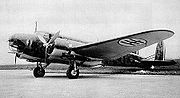 |
|
| Piaggio P.108 Piaggio P.108 The Piaggio P.108 Bombardiere was the only Italian four-engine heavy bomber used by the Axis powers during World War II. The prototype first flew in 1939 and it entered service in 1941.... |
1942–1943 | 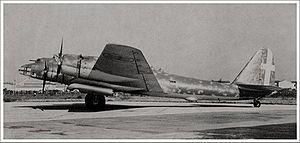 |
|
| Caproni Ca.135 Caproni Ca.135 The Caproni Ca.135 was an Italian medium bomber designed in Bergamo in Italy by Cesare Pallavicino. It flew for the first time in 1935, and entered service with the Peruvian Air Force in 1937, and with the Regia Aeronautica in January 1938.-Origins:General Valle initiated the "R-plan" - a program... |
1937–1945 | 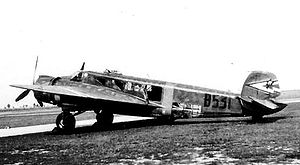 |
|
| Caproni Ca.310 Caproni Ca.310 |-See also:-Bibliography:* Bishop, Chris. The Complete Encyclopedia of Weapons of World War II. London: Brown Books, 1998. ISBN 1-897884-36-2.... |
1938–1948 | 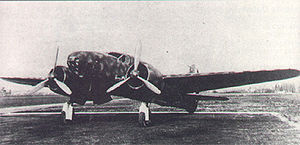 |
|
| Caproni Ca.311 Caproni Ca.311 |-See also:-External links:* http://wmilitary.neurok.ru/caproni.ca311.html... |
1939– | ||
| Caproni Ca.313 Caproni Ca.313 |-See also:-References:NotesBibliography*Alonzo, F.S, Il Caproni Ca.313 in Svezia, Storia militare magazine n.64 page 15.* Neulen, Hans Werner. In the Skies of Europe. Ramsbury, Marlborough, UK: The Crowood Press, 2000. ISBN 1-86126-799-1.... |
1939– | ||
| Ground attack | |||
| Breda Ba.88 Breda Ba.88 The Breda Ba.88 Lince was a ground-attack aircraft used by the Italian Regia Aeronautica during World War II. Its streamlined design and retractable undercarriage were advanced for the time, and after its debut in 1937 the aircraft established several world speed records... |
1938–1941 |  |
|
| Transport | |||
| Caproni Ca.133 Caproni Ca.133 |-See also:-References:*Ca.133 reconnaissance table, Storia militare magazine n.83. *Mondey, David. The Hamlyn Concise Guide to Axis Aircraft of World War II. London: Bounty Books, 2006. ISBN 0-753714-60-4.... |
1935–1948 | ||
| Reconnaissance | |||
| CANT Z.501 CANT Z.501 The CANT Z.501 Gabbiano was a single engine flying boat that served with the Italian Regia Aeronautica during World War II. It had a crew of four or five and was used mainly for reconnaissance. Initially a successful aircraft, it was obsolete by 1940, but was still used throughout World War II,... |
1934–1950 | 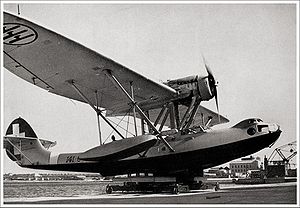 |
|
| CANT Z.506 CANT Z.506 The CANT Z.506 Airone was a triple-engine floatplane produced by CANT from 1935. It served as a transport and postal aircraft with the Italian airline "Ala Littoria"... |
1936–1959 | 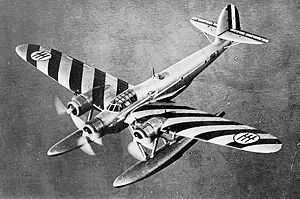 |
|
United Kingdom
| Aircraft | Active | Image | |
|---|---|---|---|
| Fighters | |||
| Gloster Gauntlet Gloster Gauntlet -See also:-References:NotesBibliography* Crawford, Alex. Bristol Bulldog, Gloster Gauntlet. Redbourn, UK: Mushroom Model Publications, 2005. ISBN 83-89450-04-6.... |
1935–1943 | 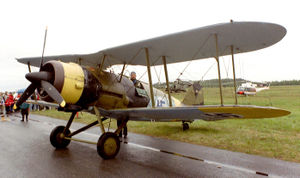 |
|
| Gloster Gladiator Gloster Gladiator The Gloster Gladiator was a British-built biplane fighter. It was used by the Royal Air Force and the Royal Navy and was exported to a number of other air forces during the late 1930s. It was the RAF's last biplane fighter aircraft and was rendered obsolete by newer monoplane designs even as it... |
1937–1945 |  |
|
| Supermarine Spitfire Supermarine Spitfire The Supermarine Spitfire is a British single-seat fighter aircraft that was used by the Royal Air Force and many other Allied countries throughout the Second World War. The Spitfire continued to be used as a front line fighter and in secondary roles into the 1950s... |
1938–1961 | ||
| Hawker Hurricane Hawker Hurricane The Hawker Hurricane is a British single-seat fighter aircraft that was designed and predominantly built by Hawker Aircraft Ltd for the Royal Air Force... |
1937–1945 |  |
|
| Hawker Typhoon Hawker Typhoon The Hawker Typhoon was a British single-seat fighter-bomber, produced by Hawker Aircraft. While the Typhoon was designed to be a medium-high altitude interceptor, and a direct replacement for the Hawker Hurricane, several design problems were encountered, and the Typhoon never completely satisfied... mainly used as fighter-bomber |
1941–1945 |  |
|
| Hawker Tempest Hawker Tempest The Hawker Tempest was a British fighter aircraft primarily used by the Royal Air Force in the Second World War. The Tempest was an improved derivative of the Hawker Typhoon, and one of the most powerful fighter aircraft used during the war.... |
1944- |  |
|
| Fairey Fulmar Fairey Fulmar The Fairey Fulmar was a British carrier-borne fighter aircraft that served with the Fleet Air Arm during the Second World War. A total of 600 were built by Fairey Aviation at its Stockport factory between January 1940 and December 1942... Naval fighter |
1940–1945 | ||
| Fairey Firefly Fairey Firefly The Fairey Firefly was a British Second World War-era carrier-borne fighter aircraft and anti-submarine aircraft of the Fleet Air Arm .... Naval fighter |
1943–1956 | 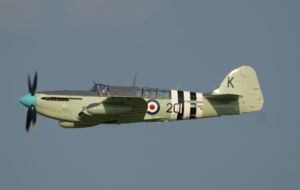 |
|
| Boulton Paul Defiant Boulton Paul Defiant The Boulton Paul Defiant was a British interceptor aircraft that served with the Royal Air Force early in the Second World War. The Defiant was designed and built by Boulton Paul Aircraft as a "turret fighter", without any forward-firing guns. It was a contemporary of the Royal Navy's Blackburn Roc... Fighter then target tug |
1939–1945 | 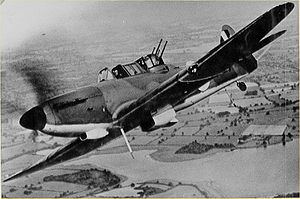 |
|
| Bristol Beaufighter Bristol Beaufighter The Bristol Type 156 Beaufighter, often referred to as simply the Beau, was a British long-range heavy fighter modification of the Bristol Aeroplane Company's earlier Beaufort torpedo bomber design... also used as torpedo bomber |
1940-1960 (RAAF) |  |
|
| Westland Whirlwind | 1938–1943 |  |
|
| de Havilland Vampire De Havilland Vampire The de Havilland DH.100 Vampire was a British jet-engine fighter commissioned by the Royal Air Force during the Second World War. Following the Gloster Meteor, it was the second jet fighter to enter service with the RAF. Although it arrived too late to see combat during the war, the Vampire served... |
1945–1979 |  |
|
| Gloster Meteor Gloster Meteor The Gloster Meteor was the first British jet fighter and the Allies' first operational jet. It first flew in 1943 and commenced operations on 27 July 1944 with 616 Squadron of the Royal Air Force... |
1944-1980 | 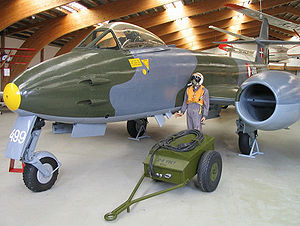 |
|
| Ground attack | |||
| Blackburn Firebrand Blackburn Firebrand |-See also:-References:NotesBibliography* Brown, Eric, CBE, DCS, AFC, RN.; Green William and Swanborough, Gordon. "Fairey Swordfish". Wings of the Navy, Flying Allied Carrier Aircraft of World War Two. London: Jane's Publishing Company, 1980, p. 157–167. ISBN 0-7106-0002-X.* Buttler, Tony.... also fighter and torpedo bomber |
1943–1953 | 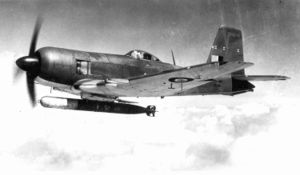 |
|
| Blackburn Skua Blackburn Skua The Blackburn B-24 Skua was a carrier-based low-wing, two-seater, single-radial engine aircraft operated by the British Fleet Air Arm which combined the functions of a dive bomber and fighter. It was designed in the mid-1930s, and saw service in the early part of the Second World War... |
1938–1945 | 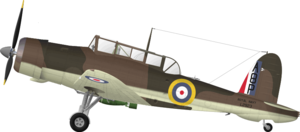 |
|
| Light bombers | |||
| Fairey Battle Fairey Battle The Fairey Battle was a British single-engine light bomber built by the Fairey Aviation Company in the late 1930s for the Royal Air Force. The Battle was powered by the same Rolls-Royce Merlin piston engine that gave contemporary British fighters high performance; however, the Battle was weighed... |
1937–1949 | 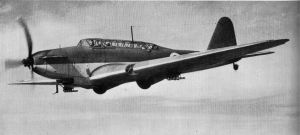 |
|
| Vickers Wellesley Vickers Wellesley The Vickers Wellesley was a British 1930s light bomber built by Vickers-Armstrongs at Brooklands near Weybridge, Surrey, for the Royal Air Force... |
1937–1944 | 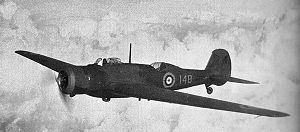 |
|
| Medium bombers | |||
| Armstrong Whitworth Whitley Armstrong Whitworth Whitley The Armstrong Whitworth A.W.38 Whitley was one of three British twin-engine, front line medium bomber types in service with the Royal Air Force at the outbreak of the Second World War... |
1937–1944 | 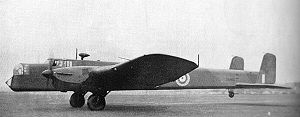 |
|
| Handley Page Hampden Handley Page Hampden The Handley Page HP.52 Hampden was a British twin-engine medium bomber of the Royal Air Force serving in the Second World War. With the Whitley and Wellington, the Hampden bore the brunt of the early bombing war over Europe, taking part in the first night raid on Berlin and the first 1,000-plane... later used as torpedo bomber and maritime patrol |
1938–1945 | ||
| Vickers Wellington Vickers Wellington The Vickers Wellington was a British twin-engine, long range medium bomber designed in the mid-1930s at Brooklands in Weybridge, Surrey, by Vickers-Armstrongs' Chief Designer, R. K. Pierson. It was widely used as a night bomber in the early years of the Second World War, before being displaced as a... |
1938–1953 | 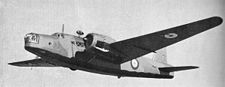 |
|
| Heavy bombers | |||
| Avro Manchester Avro Manchester |-See also:-References:NotesCitationsBibliography* Buttler, Tony. British Secret Projects: Fighters and Bombers 1935–1950. Hickley, UK: Midland Publishing, 2004. ISBN 978-1857801798.... |
1940–1942 | 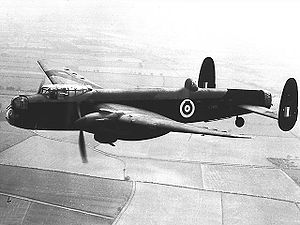 |
|
| Handley Page Halifax Handley Page Halifax The Handley Page Halifax was one of the British front-line, four-engined heavy bombers of the Royal Air Force during the Second World War. A contemporary of the famous Avro Lancaster, the Halifax remained in service until the end of the war, performing a variety of duties in addition to bombing... |
1940–1946 |  |
|
| Avro Lancaster Avro Lancaster The Avro Lancaster is a British four-engined Second World War heavy bomber made initially by Avro for the Royal Air Force . It first saw active service in 1942, and together with the Handley Page Halifax it was one of the main heavy bombers of the RAF, the RCAF, and squadrons from other... |
1942–1963 | 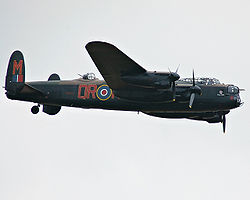 |
|
| Short Stirling Short Stirling The Short Stirling was the first four-engined British heavy bomber of the Second World War. The Stirling was designed and built by Short Brothers to an Air Ministry specification from 1936, and entered service in 1941... |
1941–1946 | 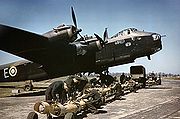 |
|
| Handley Page H.P.54 Harrow Handley Page H.P.54 Harrow |-See also:-Bibliography:* Barnes, C.H. Handley Page Aircraft since 1907. London: Putnam Publishing, 1987. ISBN 0-85177-803-8.* Clayton, Donald C. Handley Page, an Aircraft Album. Shepperton, Surrey, UK: Ian Allan Ltd., 1969. ISBN 0-7110-0094-8.... |
1937–1945 |  |
|
| Torpedo bombers | |||
| Bristol Beaufort Bristol Beaufort The Bristol Beaufort was a British twin-engined torpedo bomber designed by the Bristol Aeroplane Company, and developed from experience gained designing and building the earlier Blenheim light bomber.... also used for minelaying and as a bomber |
1939–1944 | 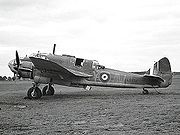 |
|
| Fairey Barracuda Fairey Barracuda The Fairey Barracuda was a British carrier-borne torpedo- and dive bomber used during the Second World War, the first of its type used by the Royal Navy's Fleet Air Arm to be fabricated entirely from metal. It was introduced as a replacement for the Fairey Swordfish and Fairey Albacore biplanes... also used as divebomber |
1943–1945 | ||
| Fairey Albacore Fairey Albacore The Fairey Albacore was a British single-engine carrier-borne biplane torpedo bomber built by Fairey Aviation between 1939 and 1943 for the Royal Navy Fleet Air Arm and used during the Second World War. It had a three-man crew and was designed for spotting and reconnaissance as well as delivering... |
1940–1944 | ||
| Fairey Swordfish Fairey Swordfish The Fairey Swordfish was a torpedo bomber built by the Fairey Aviation Company and used by the Fleet Air Arm of the Royal Navy during the Second World War... |
1936–1945 | 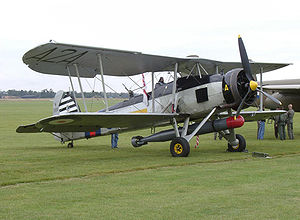 |
|
| Maritime patrol and reconnaissance | |||
| Short Singapore | 1935–1941 | ||
| Supermarine Stranraer Supermarine Stranraer |-Surviving aircraft:A single intact Stranraer, 920/CF-BXO, survives in the collection of the Royal Air Force Museum London. This aircraft was built in 1940, one of 40 built by Canadian Vickers. In service with the Royal Canadian Air Force, it flew with several squadrons, on anti-submarine patrols,... |
1937–1941 | 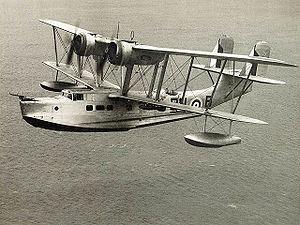 |
|
| Saro London Saro London |-See also:-Bibliography:* Green, William. War Planes of the Second World War, Volume Five: Flying Boats. London: Macdonald & Co. Ltd., 1962 . ISBN 0-356-01449-5.... |
1934–1941 |  |
|
| Saro Lerwick Saro Lerwick The Saunders-Roe A.36 Lerwick was a British flying boat built by the Saunders Roe Limited . It was intended to serve alongside the Short Sunderland in the Royal Air Force's Coastal Command, but it was a flawed design and only a small number were built... |
1940–1941 | ||
| Short Sunderland Short Sunderland The Short S.25 Sunderland was a British flying boat patrol bomber developed for the Royal Air Force by Short Brothers. It took its service name from the town and port of Sunderland in northeast England.... |
1938–1967 |  |
|
| Bristol Fairchild Bolingbroke Bristol Fairchild Bolingbroke The Bristol Fairchild Bolingbroke was a maritime patrol aircraft used by the Royal Canadian Air Force during the Second World War. Built by Fairchild-Canada, it was a variant of the Bristol Blenheim Mk IV bomber.-Design and development:... |
1939–1945 |  |
|
| Vickers Warwick Vickers Warwick The Vickers Warwick was a multi-purpose British aircraft used during the Second World War. Built by Vickers-Armstrongs at Brooklands, Surrey, the Warwick was used by the Royal Air Force as a transport, air-sea rescue and maritime reconnaissance platform, and by the civilian British Overseas... |
1940–1945 | ||
| Supermarine Walrus Supermarine Walrus The Supermarine Walrus was a British single-engine amphibious biplane reconnaissance aircraft designed by R. J. Mitchell and operated by the Fleet Air Arm . It also served with the Royal Air Force , Royal Australian Air Force , Royal Canadian Air Force , Royal New Zealand Navy and Royal New... and Air Sea Rescue |
1935–1944 |  |
|
| Supermarine Sea Otter Supermarine Sea Otter |-Survivors:No museum holds a complete aircraft. Australia's Museum of Flight has the nose section of JN200, a Sea Otter which served with the Royal Australian Navy.-See also:-References:... |
1943- | 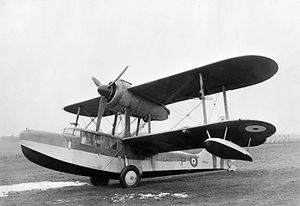 |
|
| Multi-role | |||
| de Havilland Mosquito De Havilland Mosquito The de Havilland DH.98 Mosquito was a British multi-role combat aircraft that served during the Second World War and the postwar era. It was known affectionately as the "Mossie" to its crews and was also nicknamed "The Wooden Wonder"... Bomber and fighter |
1941–1956 | 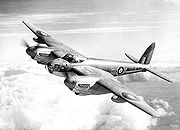 |
|
| Bristol Blenheim Bristol Blenheim The Bristol Blenheim was a British light bomber aircraft designed and built by the Bristol Aeroplane Company that was used extensively in the early days of the Second World War. It was adapted as an interim long-range and night fighter, pending the availability of the Beaufighter... Bomber and fighter |
1937–1944 | 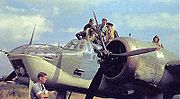 |
|
| Blackburn Roc Blackburn Roc |-See also:-References:NotesBibliography* Brew, Alec. The Turret Fighters: Defiant and Roc. Ramsbury, Marlborough, Wiltshire, UK: Crowood Press, 2002. ISBN 1-86126-497-6.... Dive bomber and fighter |
1939–1943 | 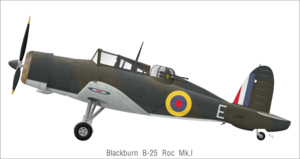 |
|
| Avro Anson Avro Anson The Avro Anson is a British twin-engine, multi-role aircraft that served with the Royal Air Force, Fleet Air Arm and numerous other air forces prior to, during, and after the Second World War. Named for British Admiral George Anson, it was originally designed for maritime reconnaissance, but was... initially maritime reconnaissance then training |
1936–1968 | 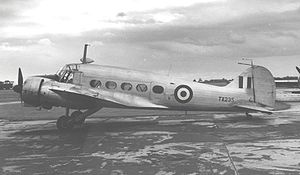 |
|
| Westland Lysander Westland Lysander The Westland Lysander was a British army co-operation and liaison aircraft produced by Westland Aircraft used immediately before and during the Second World War... Army cooperation, then Special Duties |
1938–1946 | 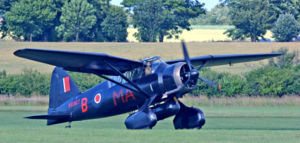 |
|
| Transport | |||
| Bristol Bombay Bristol Bombay |-See also:... |
1939–1944 | ||
| Armstrong Whitworth Albemarle Armstrong Whitworth Albemarle The Armstrong Whitworth A.W.41 Albemarle was a British twin-engine transport aircraft that entered service during the Second World War.Originally designed as a medium bomber that could be built by non-aviation companies without using light alloys, the Albemarle never served in that role, instead... Initially designed as medium bomber |
1940–1945 | ||
| Avro York Avro York The Avro York was a British transport aircraft that was derived from the Second World War Lancaster heavy bomber, and used in both military and airliner roles between 1943 and 1964.-Design and development:... |
1944–1964 |  |
|
| Gliders | |||
| General Aircraft Hamilcar General Aircraft Hamilcar The General Aircraft Limited GAL. 49 Hamilcar or Hamilcar Mark I was a large British military glider produced during the Second World War, which was designed to carry heavy cargo, such as the Tetrarch or M22 Locust light tank... |
1942–1947 | ||
| Airspeed Horsa Airspeed Horsa The Airspeed AS.51 Horsa was a British World War II troop-carrying glider built by Airspeed Limited and subcontractors and used for air assault by British and Allied armed forces... |
1941–1948 | 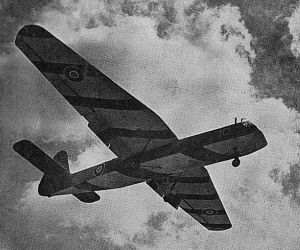 |
|
| General Aircraft Hotspur | 1940–1945 |  |
|
United States
| Aircraft | Active | Image | |
|---|---|---|---|
| Fighters | |||
| P-51 Mustang P-51 Mustang The North American Aviation P-51 Mustang was an American long-range, single-seat fighter and fighter-bomber used during World War II, the Korean War and in several other conflicts... |
1942–1984 | 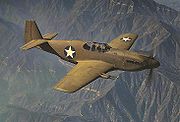 |
|
| P-38 Lightning P-38 Lightning The Lockheed P-38 Lightning was a World War II American fighter aircraft built by Lockheed. Developed to a United States Army Air Corps requirement, the P-38 had distinctive twin booms and a single, central nacelle containing the cockpit and armament... |
1941–1965 | 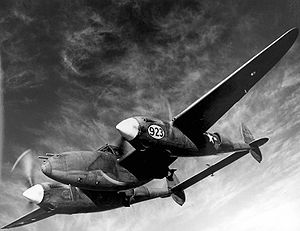 |
|
| F4U Corsair F4U Corsair The Vought F4U Corsair was a carrier-capable fighter aircraft that saw service primarily in World War II and the Korean War. Demand for the aircraft soon overwhelmed Vought's manufacturing capability, resulting in production by Goodyear and Brewster: Goodyear-built Corsairs were designated FG and... |
1942–1954 | 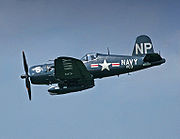 |
|
| F4F Wildcat F4F Wildcat The Grumman F4F Wildcat was an American carrier-based fighter aircraft that began service with both the United States Navy and the British Royal Navy in 1940... |
1942–1945 | 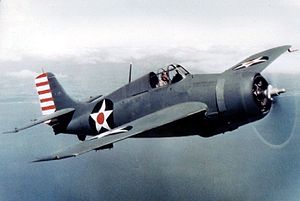 |
|
| F6F Hellcat F6F Hellcat The Grumman F6F Hellcat was a carrier-based fighter aircraft developed to replace the earlier F4F Wildcat in United States Navy service. Although the F6F resembled the Wildcat, it was a completely new design powered by a 2,000 hp Pratt & Whitney R-2800. Some tagged it as the "Wildcat's big... |
1943–1945 | 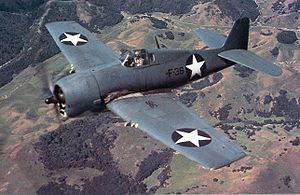 |
|
| F8F Bearcat F8F Bearcat The Grumman F8F Bearcat was an American single-engine naval fighter aircraft of the 1940s. It went on to serve into the mid-20th century in the United States Navy and other air forces, and would be the company's final piston engined fighter aircraft... |
1945–1955 | .jpg) |
|
| F7F Tigercat F7F Tigercat The Grumman F7F Tigercat was the first twin-engined fighter aircraft to enter service with the United States Navy. Designed for the new Midway-class aircraft carriers, the aircraft were too large to operate from earlier decks. Although delivered to United States Marine Corps combat units before... |
1944–1954 | 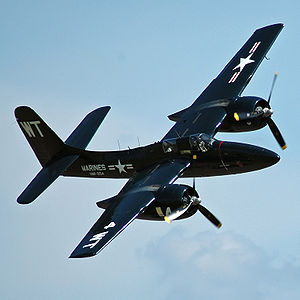 |
|
| P-63 Kingcobra P-63 Kingcobra The Bell P-63 Kingcobra was a United States fighter aircraft developed in World War II from the Bell P-39 Airacobra in an attempt to correct that aircraft's deficiencies... |
1943–1945 |  |
|
| P-39 Airacobra | 1941–1945 |  |
|
| P-36 Hawk P-36 Hawk The Curtiss P-36 Hawk, also known as the Curtiss Hawk Model 75, was an American-designed and built fighter aircraft of the 1930s and 40s. A contemporary of both the Hawker Hurricane and Messerschmitt Bf 109, it was one of the first of a new generation of combat aircraft—a sleek monoplane design... |
1938–1954 | 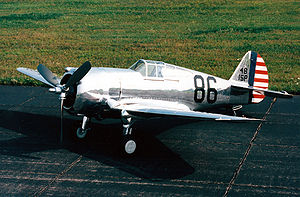 |
|
| Curtiss P-40 Curtiss P-40 The Curtiss P-40 Warhawk was an American single-engine, single-seat, all-metal fighter and ground attack aircraft that first flew in 1938. The P-40 design was a modification of the previous Curtiss P-36 Hawk which reduced development time and enabled a rapid entry into production and operational... |
1938–1958 | 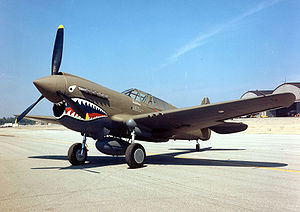 |
|
| P-47 Thunderbolt P-47 Thunderbolt Republic Aviation's P-47 Thunderbolt, also known as the "Jug", was the largest, heaviest, and most expensive fighter aircraft in history to be powered by a single reciprocating engine. It was heavily armed with eight .50-caliber machine guns, four per wing. When fully loaded, the P-47 weighed up to... also used as dive-bomber and ground-attack aircraft. |
1942–1966 | 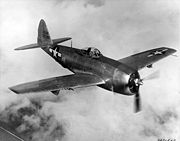 |
|
| Night fighters | |||
| P-61 Black Widow P-61 Black Widow The Northrop P-61 Black Widow was the first operational U.S. military aircraft designed specifically for night interception of aircraft, and was the first aircraft specifically designed to use radar. It was an all-metal, twin-engine, twin-boom design developed during World War II... |
1944–1952 | 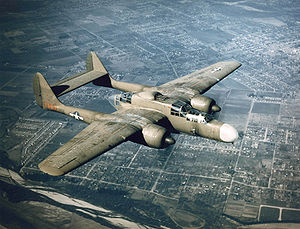 |
|
| A-20 Havoc | 1941–1949 |  |
|
| Ground attack | |||
| North American A-36 North American A-36 The North American A-36 Apache was the ground-attack/dive bomber version of the North American Aviation P-51 Mustang, from which it could be distinguished by the presence of rectangular, slatted dive brakes above and below the wings... |
1942–1945 | 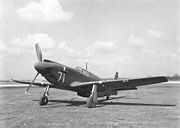 |
|
| A-26 Invader A-26 Invader The Douglas A-26 Invader was a United States twin-engined light attack bomber built by the Douglas Aircraft Co. during World War II that also saw service during several of the Cold War's major conflicts... |
1942–1980 | 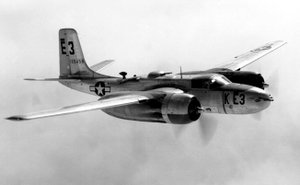 |
|
| Torpedo bombers | |||
| Grumman TBF Avenger | 1942–1960 | 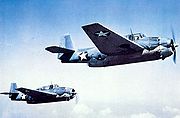 |
|
| Dive bombers | |||
| A-31 Vengeance | 1942–1944 | .jpg) |
|
| SB2C Helldiver SB2C Helldiver The Curtiss SB2C Helldiver was a carrier-based dive bomber aircraft produced for the United States Navy during World War II. It replaced the Douglas SBD Dauntless in US Navy service. Despite its size, the SB2C was much faster than the SBD it replaced... |
1943–1959 | 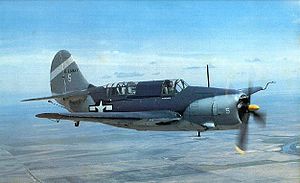 |
|
| SB2U Vindicator SB2U Vindicator The Vought SB2U Vindicator was a carrier-based dive bomber developed for the United States Navy in the 1930s, the first monoplane in this role. Obsolescent at the outbreak of World War II, Vindicators still remained in service at the time of the Battle of Midway, but by 1943, all had been withdrawn... |
1937–1945 | 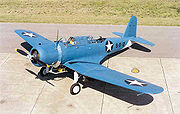 |
|
| SB2A Buccaneer SB2A Buccaneer |-See also:-References:* Donald, David . American Warplanes of World War II. London: Aerospace,1995. ISBN 1-874023-72-7.* March, Daniel J.. British Warplanes of World War II. London: Aerospace,1998. ISBN 1-874023-92-1.... |
1941–1944 | ||
| SBD Dauntless SBD Dauntless The Douglas SBD Dauntless was a naval dive bomber made by Douglas during World War II. The SBD was the United States Navy's main dive bomber from mid-1940 until late 1943, when it was largely replaced by the SB2C Helldiver... |
1940–1959 | 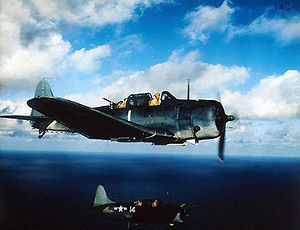 |
|
| Bombers | |||
| B-17 Flying Fortress | 1938–1969 |  |
|
| B-25 Mitchell B-25 Mitchell The North American B-25 Mitchell was an American twin-engined medium bomber manufactured by North American Aviation. It was used by many Allied air forces, in every theater of World War II, as well as many other air forces after the war ended, and saw service across four decades.The B-25 was named... |
1941–1979 | ||
| B-24 Liberator B-24 Liberator The Consolidated B-24 Liberator was an American heavy bomber, designed by Consolidated Aircraft of San Diego, California. It was known within the company as the Model 32, and a small number of early models were sold under the name LB-30, for Land Bomber... |
1941–1968 | 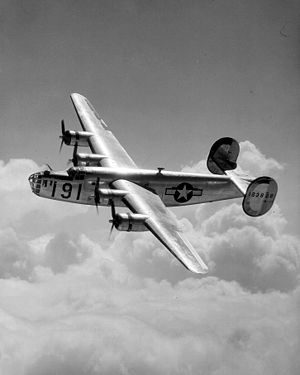 |
|
| B-29 Superfortress B-29 Superfortress The B-29 Superfortress is a four-engine propeller-driven heavy bomber designed by Boeing that was flown primarily by the United States Air Forces in late-World War II and through the Korean War. The B-29 was one of the largest aircraft to see service during World War II... |
1944–1960 | 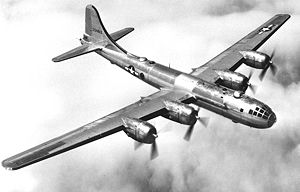 |
|
| B-32 Dominator B-32 Dominator The Consolidated B-32 Dominator was a heavy bomber made for United States Army Air Forces during World War II, and has the distinction of being the last Allied aircraft to be engaged in combat during World War II. It was developed in parallel with the Boeing B-29 Superfortress as a fallback design... |
1944–1945 |  |
|
| Reconnaissance | |||
| F-15 Reporter F-15 Reporter The Northrop F-15 Reporter was an unarmed photographic reconnaissance aircraft. Based on the Northrop P-61 Black Widow night fighter, it was the last piston-powered photo-reconnaissance aircraft designed and produced for the United States Air Force... |
1945–1968 |  |
|
| Taylorcraft L-2 Taylorcraft L-2 -External links:***-See also:... |
1941–1945 | ||
| OS2U Kingfisher OS2U Kingfisher The Vought OS2U Kingfisher was an American catapult-launched observation floatplane. It was a compact mid-wing monoplane, with a large central float and small stabilizing floats. Performance was modest, because of its light engine... |
1939–1959 | 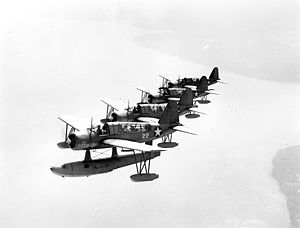 |
|
| SC Seahawk | 1944–1949 | ||
| SO3C Seamew | 1942–1945 | ||
| Transport | |||
| Lockheed Model 18 Lodestar | 1940–1945 |  |
|
| C-54 Skymaster C-54 Skymaster The Douglas C-54 Skymaster was a four-engined transport aircraft used by the United States Army Air Forces and British forces in World War II and the Korean War. Besides transport of cargo, it also carried presidents, British heads of government, and military staff... |
1942–1975 | 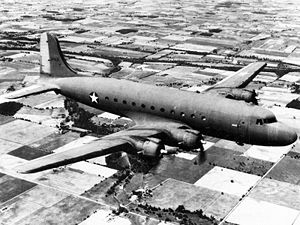 |
|
| Douglas DC-3 Douglas DC-3 The Douglas DC-3 is an American fixed-wing propeller-driven aircraft whose speed and range revolutionized air transport in the 1930s and 1940s. Its lasting impact on the airline industry and World War II makes it one of the most significant transport aircraft ever made... |
1936–Present | 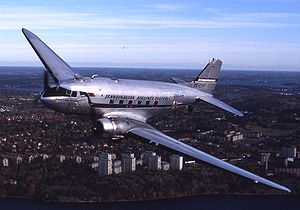 |
|
| C-47 Skytrain C-47 Skytrain The Douglas C-47 Skytrain or Dakota is a military transport aircraft that was developed from the Douglas DC-3 airliner. It was used extensively by the Allies during World War II and remained in front line operations through the 1950s with a few remaining in operation to this day.-Design and... |
1943–1967 |  |
|
| C-46 Commando C-46 Commando The Curtiss-Wright C-46 Commando was a transport aircraft originally derived from a commercial high-altitude airliner design. It was instead used as a military transport during World War II by the United States Army Air Forces as well as the U.S. Navy/Marine Corps under the designation R5C... |
1941–Present | 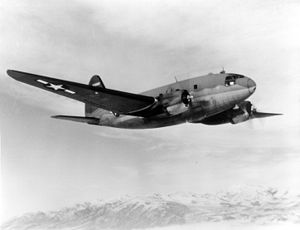 |
|
| C-87 Liberator Express C-87 Liberator Express |-References:NotesBibliography* Andrade, John. U.S. Military Aircraft Designations and Serials since 1909. Hinckley, UK: Midland Counties Publications, 1979. ISBN 0-904597-22-9.... |
1942–1945 | 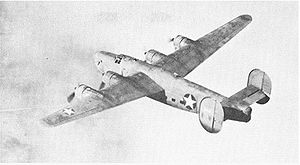 |
|
| Gliders | |||
| Waco CG-4 Waco CG-4 The Waco CG-4 was the most widely used United States troop/cargo military glider of World War II. It was designated the CG-4 by the United States Army Air Forces, and named Hadrian in British military service.... |
1942–1945 | 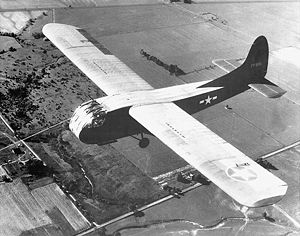 |
|
| Maritime | |||
| PB4Y-2 Privateer | 1943–1954 | ||
| PBY Catalina PBY Catalina The Consolidated PBY Catalina was an American flying boat of the 1930s and 1940s produced by Consolidated Aircraft. It was one of the most widely used multi-role aircraft of World War II. PBYs served with every branch of the United States Armed Forces and in the air forces and navies of many other... |
1936–1957 | 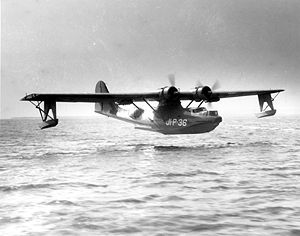 |
|
| PB2Y Coronado PB2Y Coronado |-See also:-Bibliography:* Andrews, Hal. "" Naval Aviation News, Vol. 72, Issue no. 1, November-December 1989. ISSN 0028-1417.* Bridgeman, Leonard. “The Consolidated Vultee Model 29 Coronado.” Jane's Fighting Aircraft of World War II. London: Studio, 1946. ISBN 1-85170-493-0.* Green, William. War... |
1938–1945 | ||
| Lockheed Ventura Lockheed Ventura The Lockheed Ventura was a bomber and patrol aircraft of World War II, used by United States and British Commonwealth forces in several guises... |
1942–1945 |  |
|
| Lockheed Hudson Lockheed Hudson The Lockheed Hudson was an American-built light bomber and coastal reconnaissance aircraft built initially for the Royal Air Force shortly before the outbreak of the Second World War and primarily operated by the RAF thereafter... |
1939–1945 | 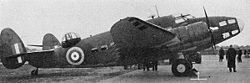 |
|
Russia
| Aircraft | Active | Image | |
|---|---|---|---|
| Fighters | |||
| Polikarpov I-15 Polikarpov I-15 The Polikarpov I-15 was a Soviet biplane fighter aircraft of the 1930s. Nicknamed Chaika because of its gulled upper wings, it was operated in large numbers by the Soviet Air Force, and together with the Polikarpov I-16 monoplane, was one of the standard fighters of the Spanish Republicans during... |
1933–1942 | 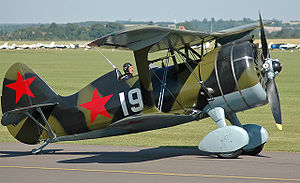 |
|
| Polikarpov I-16 Polikarpov I-16 The Polikarpov I-16 was a Soviet fighter aircraft of revolutionary design; it was the world's first cantilever-winged monoplane fighter with retractable landing gear. The I-16 was introduced in the mid-1930s and formed the backbone of the Soviet Air Force at the beginning of World War II... |
1934–1950 | 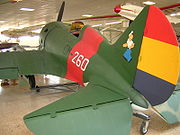 |
|
| Yakovlev Yak-1 Yakovlev Yak-1 The Yakovlev Yak-1 was a World War II Soviet fighter aircraft. Produced from early 1940, it was a single-seat monoplane with a composite structure and wooden wings.... |
1940–1950 | ||
| Yakovlev Yak-3 Yakovlev Yak-3 The Yakovlev Yak-3 was a World War II Soviet fighter aircraft.Robust and easy to maintain, it was much liked by pilots and ground crew alike.... |
1944–1945 | 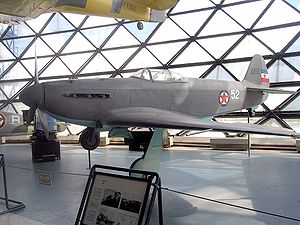 |
|
| Yakovlev Yak-7 Yakovlev Yak-7 The Soviet Yakovlev Yak-7 was developed from the earlier Yak-1 fighter, initially as a trainer but converted into a "heavy" fighter. As both a fighter and later reverting to its original training role, the Yak-7 proved to be a capable aircraft and was well liked by air crews. The Yak-7 was simpler,... |
1942–1945 | 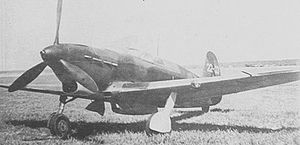 |
|
| Yakovlev Yak-9 Yakovlev Yak-9 The Yakovlev Yak-9 was a single-engine fighter aircraft used by the Soviet Union in World War II and after. Fundamentally a lighter development of the Yak-7 with the same armament, it arrived at the front at the end of 1942. The Yak-9 had a lowered rear fuselage decking and all-around vision canopy... |
1942–1950 | ||
| Lavochkin-Gorbunov-Goudkov LaGG-3 | 1941–1945 |  |
|
| Mikoyan-Gurevich MiG-3 Mikoyan-Gurevich MiG-3 The Mikoyan-Gurevich MiG-3 was a Soviet fighter aircraft used during World War II. It was a development of the MiG-1 by the OKO of Zavod No. 1 to remedy problems that had been found during the MiG-1's development and operations. It replaced the MiG-1 on the production line at Factory No... |
1941–1945 | 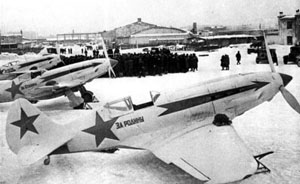 |
|
| Lavochkin La-5 Lavochkin La-5 |- See also :- References :NotesBibliography* Abanshin, Michael E. and Nina Gut. Fighting Lavochkin, Eagles of the East No.1. Lynnwood, WA: Aviation International, 1993. ISBN unknown.... |
1942–1945 | 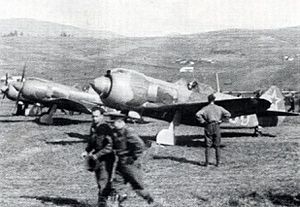 |
|
| Lavochkin La-7 Lavochkin La-7 The Lavochkin La-7 was a piston-engined Soviet fighter developed during World War II by the Lavochkin Design Bureau . It was a development and refinement of the Lavochkin La-5, and the last in a family of aircraft that had begun with the LaGG-1 in 1938. Its first flight was in early 1944 and it... |
1944–1950 | 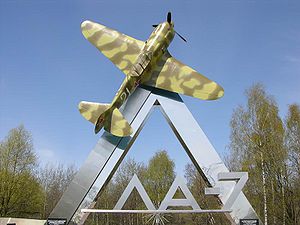 |
|
| Petlyakov Pe-3 Petlyakov Pe-3 The Petlyakov Pe-3 was the long-range, night fighter version of the successful Petlyakov Pe-2 high-speed bomber used by the Soviet Union during World War II.... |
1941–1945 | ||
| Ground attack | |||
| Ilyushin Il-10 Ilyushin Il-10 Ilyushin Il-10 was a Soviet ground attack aircraft developed at the end of World War II by the Ilyushin construction bureau... |
1944–1962 | 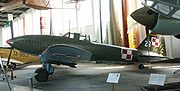 |
|
| Ilyushin Il-2 Ilyushin Il-2 The Ilyushin Il-2 was a ground-attack aircraft in the Second World War, produced by the Soviet Union in very large numbers... |
1941–1954 | 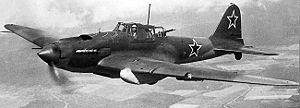 |
|
| Bombers | |||
| Sukhoi Su-2 Sukhoi Su-2 -External links:***-Related content:*List of military aircraft of the Soviet Union and the CIS... |
1937–1942 | 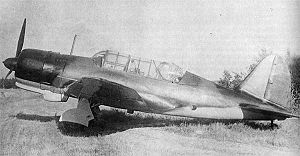 |
|
| Petlyakov Pe-8 Petlyakov Pe-8 The Petlyakov Pe-8 was a Soviet heavy bomber designed before World War II, and the only four-engine bomber the USSR built during the war. Produced in limited numbers, it was used to bomb Berlin in August 1941. It was also used for so-called "morale raids" designed to raise the spirit of the Soviet... |
1940–1945 | ||
| Tupolev TB-3 Tupolev TB-3 The Tupolev TB-3 was a heavy bomber aircraft which was deployed by the Soviet Air Force in the 1930s and during World War II. It was the world's first cantilever wing four-engine heavy bomber. Despite obsolescence and being officially withdrawn from service in 1939, TB-3 performed bomber and... |
1932–1945 | 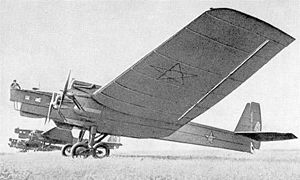 |
|
| Ilyushin DB-3 Ilyushin DB-3 The Ilyushin DB-3 was a Soviet bomber aircraft of World War II. It was a twin-engined, low-wing monoplane that first flew in 1935. It was the precursor of the Ilyushin Il-4... |
1936–1945 | ||
| Ilyushin Il-4 Ilyushin Il-4 |-See also:-Bibliography:* Gordon, Yefim and Khazanov, Dmitri. Soviet Combat Aircraft of the Second World War, Volume 2: Twin-Engined Fighters, Attack Aircraft and Bombers. Earl Shilton, UK: Midland Publishing Ltd., 2006. ISBN 1-85780-084-2... |
1936–1945 | 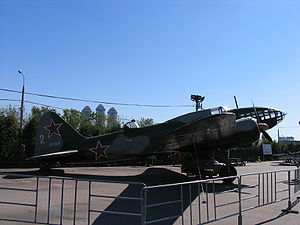 |
|
| Petlyakov Pe-2 Petlyakov Pe-2 The Petlyakov Pe-2 was a Soviet dive bomber aircraft used during World War II. It was regarded as one of the best ground attack aircraft of the war and it was extremely successful in the roles of heavy fighter, reconnaissance and night fighter... |
1941–1954 | 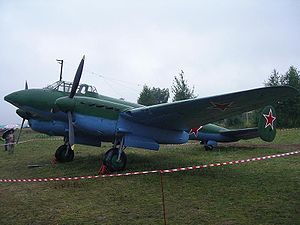 |
|
| Tupolev SB Tupolev SB The Tupolev ANT-40, also known by its service name Tupolev SB , and development co-name TsAGI-40, was a high speed twin-engined three-seat monoplane bomber, first flown in 1934.... |
1936–1950 | 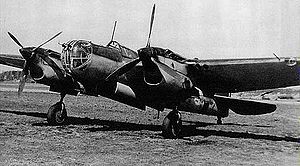 |
|
| Tupolev Tu-2 Tupolev Tu-2 |-See also:-References:NotesBibliography* Bishop, Chris. The Encyclopedia of Weapons of WWII: The Comprehensive Guide to Over 1,500 Weapons Systems, Including Tanks, Small Arms, Warplanes, Artillery, Ships, and Submarines. New York: Sterling, 2002. ISBN 1-58663-762-2.* Ethell, Jeffrey L. Aircraft... |
1942–1950 |  |
|
| Yermolayev Yer-2 Yermolayev Yer-2 The Yermolayev Yer-2 was a long-range Soviet medium bomber used during World War II. It was developed from the Bartini Stal-7 prototype airliner before the war. It was used to bomb Berlin from airbases in Estonia after Operation Barbarossa in 1941... |
1941–1950 | ||
| Reconnaissance | |||
| Polikarpov Po-2 Polikarpov Po-2 The Polikarpov Po-2 served as a general-purpose Soviet biplane, nicknamed Kukuruznik for maize; thus, 'maize duster' or 'crop duster'), NATO reporting name "Mule"... |
1929–1954 | 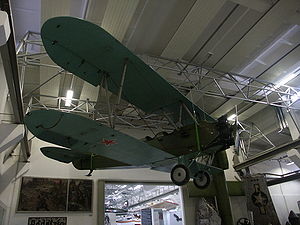 |
|
| Polikarpov R-5 Polikarpov R-5 The Polikarpov R-5 was a Soviet reconnaissance bomber aircraft of the 1930s. It was the standard light bomber and reconnaissance aircraft with the Soviet Air Force for much of the 1930s, while also being used heavily as a civilian light transport, in the order of 7,000 being built in... |
1931–1944 |  |
|
| Gliders | |||
| Gribovski G-11 Gribovski G-11 |-References:* at * -See also:... |
1941–1949 | ||
| Yakovlev Yak-14 Yakovlev Yak-14 |-See also:-References:NotesBibliography* at * Gunston, Bill. Yakovlev Aircraft since 1924. London, UK: Putnam Aeronautical Books, 1997. ISBN 1-55750-978-6.... |
1948–1950 | ||
France
| Aircraft | Active | Image | |
|---|---|---|---|
| Fighters | |||
| Morane-Saulnier M.S.406 Morane-Saulnier M.S.406 The M.S.406 was a French Armée de l'Air fighter aircraft built by Morane-Saulnier starting in 1938. Numerically it was France's most important fighter during the opening stages of World War II.... |
1938–1950 | 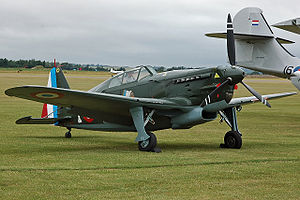 |
|
| Bloch MB.150 Bloch MB.150 |-See also:-References:NotesBibliography* Belcarz, Bartłomiej. Morane MS 406C1, Caudron Cyclone CR 714C1, Bloch MB 151/152 , Sandomierz, Poland: Stratus, 2004. ISBN 83-89450-21-6. About the use of the MB.151/152 by Polish Pilots of the Armée de l'Air.* Breffort, Dominique and André Jouineau... |
1937–1945 | ||
| Caudron C.714 Caudron C.714 -See also:-References:NotesBibliography* Belcarz, Bartłomiej. GC 1/145 in France 1940. Sandomierz, Poland/Redbourn, UK: Mushroom Model Publications, 2002. ISBN 83-917178-1-X.... |
1940–1941 | 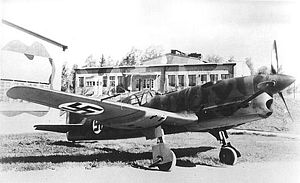 |
|
| Dewoitine D.520 Dewoitine D.520 The Dewoitine D.520 was a French fighter aircraft that entered service in early 1940, shortly after the opening of World War II. Unlike the Morane-Saulnier M.S.406, which was at that time the Armée de l'Airs most numerous fighter, the Dewoitine D.520 came close to being a match for the latest... |
1940–1953 | 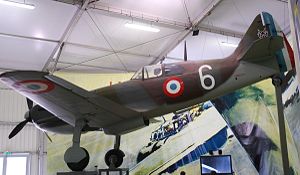 |
|
| Potez 630 Potez 630 The Potez 630 and its derivatives were a family of twin-engined aircraft developed for the Armée de l'Air in the late 1930s. The design was a contemporary of the British Bristol Blenheim and the German Messerschmitt Bf 110.-Design and development :... |
1938–1942 | 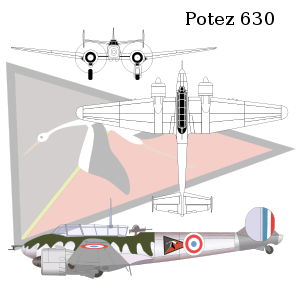 |
|
| Bombers | |||
| Amiot 143 Amiot 143 The Amiot 143M was a late 1930s French medium bomber designed to meet 1928 specifications for a bomber capable of day/night bombing, long-range reconnaissance and bomber escort.-Design and development:... |
1931–1944 | ||
| Bloch MB.170 Bloch MB.170 |-See also:-References:*... |
1940–1950 | 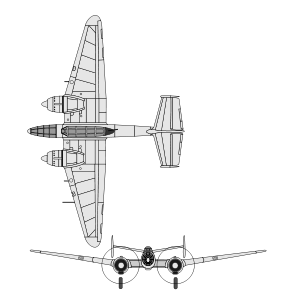 |
|
| Lioré et Olivier LeO 45 | 1938–1957 | ||
| Ground attack | |||
| Breguet 693 Breguet 693 The Breguet 690 and its derivatives were a series of light twin-engine ground-attack aircraft that were used by the French Air Force in World War II.... |
1939–1942 | ||
| Reconnaissance | |||
| ANF Les Mureaux 113 ANF Les Mureaux 113 |-References:* * -See also:... |
1931–1945 | ||
| Breguet 19 Breguet 19 The Breguet 19 was a light bomber and reconnaissance plane, also used for long-distance flights, designed by the French Breguet company and produced from 1924.-Development:... |
1922–1945 | 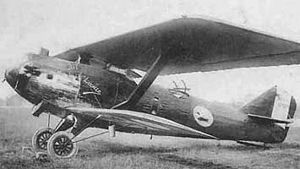 |
|
| Potez 25 Potez 25 |-See also:*Aerial operations in the Chaco War-References:Heinonen, Timo Heinonen: Thulinista Hornetiin, Keski-Suomen ilmailumuseon julkaisuja 3, 1992. ISBN 951-95688-2-4.-External links:* *... |
1925–1945 | 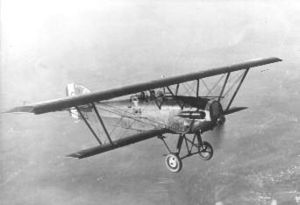 |
|
Romania
| Aircraft | Active | Image | |
|---|---|---|---|
| Fighters | |||
| IAR 80 IAR 80 The IAR 80 was a Romanian World War II low-wing, monoplane, all-metal construction fighter aircraft and ground-attack aircraft. When it first flew, in 1939, it was comparable to most contemporary designs like the German Bf 109E, the British Hawker Hurricane, and the Supermarine Spitfire... |
1941–1949 | 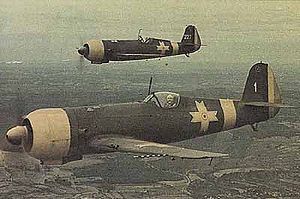 |
|
Poland
| Aircraft | Active | Image | |
|---|---|---|---|
| Fighters | |||
| PZL P.11 PZL P.11 The PZL P.11 was a Polish fighter aircraft, designed in the early 1930s by PZL in Warsaw. It was briefly considered to be the most advanced fighter aircraft design in the world... |
1934–1945 | 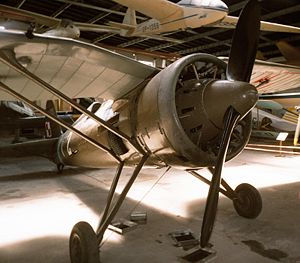 |
|
| Bombers | |||
| PZL.23 Karaś PZL.23 Karas |-Specifications :-See also:-References:NotesBibliography* Angelucci, Enzo and Paolo Matricardi. World War II Airplanes . Chicago: Rand McNally, 1978. ISBN 0-52888-170-1.... |
1936–1946 |  |
|
| PZL.37 Łoś | 1938–1944 |  |
|
| Reconnaissance | |||
| LWS-3 Mewa LWS-3 Mewa -Bibliography:* Glass, Andrzej. LWS 3 Mewa, Wydawnictwo Militaria 11. Warszawa, Poland: Wydawnictwo Militaria, 1996. ISBN 83-86209-61-5.* Glass, Andrzej. Polskie konstrukcje lotnicze 1893-1939 . Warszawa, Poland: Wydawnictwa Komunikacji i Łączności , 1977. .-See also:... |
1938–1939 | ||
| Lublin R-XIII Lublin R-XIII The Lublin R-XIII was the Polish army-cooperation plane , designed in the early-1930s in the Plage i Laśkiewicz factory in Lublin. It was the main army cooperation plane in the Invasion of Poland... |
1932–1945 |  |
|
| RWD-14 Czapla RWD-14 Czapla |-References:*Andrzej Glass: "Polskie konstrukcje lotnicze 1893-1939" , WKiŁ, Warsaw 1977 -See also:... |
1939–1945 | 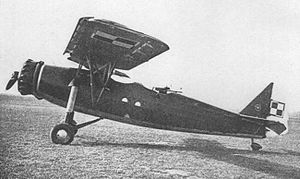 |
|
See also
- List of aircraft of World War II
- List of aircraft of the Armée de l'Air, World War II
- List of World War II military aircraft of Germany
- List of aircraft of the U.S. military, World War II
- List of aircraft of the Royal Air Force
- List of aircraft of the Fleet Air Arm
- List of World War II military gliders