


List of heads of state of the Soviet Union

Encyclopedia
The Constitution of the Soviet Union
recognised the highest organ of state authority in the Union of Soviet Socialist Republics
(USSR) as the head of state
. The Chairman of the Presidium
of the Supreme Soviet, and the earlier office of Chairman of the Central Executive Committee
(CEC) of the Congress of Soviets
which was reorganised in 1938, had primarily only ceremonial powers. While the head of state had many de jure
powers, it had very few de facto
ones.
The Soviet Union was established in 1922. However, the country's first constitution
was adopted in 1924. Before that time, the 1918 Constitution of the Russian Soviet Federative Socialist Republic
was adopted as the de facto constitution of the USSR. According to the 1918 Constitution, the All-Russian Central Executive Committee
(CEC), chaired by the head of state, had the power to determine what matters of income and taxation would go to the state budget and what would go to the local Soviets
. The CEC could also limit taxes. In periods between convocations of the Congress of Soviets the CEC held supreme power. In between sessions of the Congress of Soviets the CEC was responsible for all the affairs of the Congress of Soviets. The CEC and the Congress of Soviets was replaced by the Presidium and the Supreme Soviet by several amendments to the 1936 constitution
in 1938.
The Supreme Soviet was the highest organ of state power, and was the sole organ to hold legislative power in the Soviet Union. Sessions of the Supreme Soviet were convened by the Presidium twice a year; however, special sessions could be convened on the orders of a Union Republic
. In the events of a disagreement between the Soviet of the Union
and the Soviet of Nationalities
the Presidium could form a conciliation commission. If this commission failed the Presidium could dissolve the Supreme Soviet and order new elections. The Chairman of the Presidium of the Supreme Soviet, along with first and fifteen other vice chairmen, were, according to the 1977 Soviet Constitution
, elected by the deputies of the Supreme Soviet. Just as with the CEC under Joseph Stalin
's rule, the Chairman of the Presidium had very little de facto power after Stalin's death because supreme power was given to the leader
of the Communist Party of the Soviet Union
(CPSU).
The Presidency
was established in 1990 and would be, according to the altered constitution, be elected by the Soviet people
by direct and secret ballot. However, the first President was elected by the democratically-elected Congress of People's Deputies
. In connection with the dissolution of the Soviet Union
national elections for the office of President never took place. To be elected to the office a person must have been a Soviet citizen and older than thirty-five but younger than sixty-five years. The same person could not be elected president for more than two terms. The Presidency was highest state office, and was the most important office in the Soviet Union by influence and recognition, eclipsing that of Premier
and General Secretary. With the establishment of the Presidency executive power
was shared between the President and the Prime Minister. The Presidency was given broad powers, such as being responsible for negotiating the membership of the Cabinet of Ministers with the Supreme Soviet; the Prime Minister, however, was responsible for managing the nomenklatura
and economic matters.
, Yuri Andropov
and Konstantin Chernenko
), two held the position in a temporary role (Vasili Kuznetsov and Gennady Yanayev
), and four held posts of party leader and head of state simultaneously (Brezhnev, Andropov, Chernenko and Mikhail Gorbachev
). The first head of state was Mikhail Kalinin
, who was inaugurated in 1922 after the Treaty on the Creation of the USSR
. At over twenty years, Kalinin spent the longest time in office; he died shortly after his resignation in 1946. Andropov spent the shortest time in office.
. At over eighth years, Vasily Kuznetsov spent the longest time in office. Gennady Yanayev
spent the shortest time in office.
Russia-related
Constitution of the Soviet Union
There were three versions of the constitution of the Soviet Union, modeled after the 1918 Constitution established by the Russian Socialist Federative Soviet Republic , the immediate predecessor of the Union of Soviet Socialist Republics....
recognised the highest organ of state authority in the Union of Soviet Socialist Republics
Soviet Union
The Soviet Union , officially the Union of Soviet Socialist Republics , was a constitutionally socialist state that existed in Eurasia between 1922 and 1991....
(USSR) as the head of state
Head of State
A head of state is the individual that serves as the chief public representative of a monarchy, republic, federation, commonwealth or other kind of state. His or her role generally includes legitimizing the state and exercising the political powers, functions, and duties granted to the head of...
. The Chairman of the Presidium
Presidium of the Supreme Soviet
The Presidium of the Supreme Soviet was a Soviet governmental institution – a permanent body of the Supreme Soviets . This body was of the all-Union level , as well as in all Soviet republics and autonomous republics...
of the Supreme Soviet, and the earlier office of Chairman of the Central Executive Committee
Central Executive Committee of the Soviet Union
The Central Executive Committee of the Soviet Union was the highest governing body in the Soviet Union in the interim of the sessions of the Congress of Soviets, existed from 1922 until 1938, when it was replaced by the Supreme Soviet of first convocation....
(CEC) of the Congress of Soviets
Congress of Soviets of the Soviet Union
The All-Union Congress of Soviets, officially known as Congress of Soviets of the Soviet Union was the supreme governing body in the Soviet Union since the formation of the USSR and until adoption of the 1936 Soviet Constitution....
which was reorganised in 1938, had primarily only ceremonial powers. While the head of state had many de jure
De jure
De jure is an expression that means "concerning law", as contrasted with de facto, which means "concerning fact".De jure = 'Legally', De facto = 'In fact'....
powers, it had very few de facto
De facto
De facto is a Latin expression that means "concerning fact." In law, it often means "in practice but not necessarily ordained by law" or "in practice or actuality, but not officially established." It is commonly used in contrast to de jure when referring to matters of law, governance, or...
ones.
The Soviet Union was established in 1922. However, the country's first constitution
1924 Soviet Constitution
The 1924 Soviet Constitution legitimated the December 1922 union of the Russian SFSR, the Ukrainian SSR, the Belarusian SSR, and the Transcaucasian SFSR to form the Union of Soviet Socialist Republics....
was adopted in 1924. Before that time, the 1918 Constitution of the Russian Soviet Federative Socialist Republic
Russian Soviet Federative Socialist Republic
The Russian Soviet Federative Socialist Republic , commonly referred to as Soviet Russia, Bolshevik Russia, or simply Russia, was the largest, most populous and economically developed republic in the former Soviet Union....
was adopted as the de facto constitution of the USSR. According to the 1918 Constitution, the All-Russian Central Executive Committee
All-Russian Central Executive Committee
All-Russian Central Executive Committee , was the highest legislative, administrative, and revising body of the Russian Soviet Federative Socialist Republic. Although the All-Russian Congress of Soviets had supreme authority, in periods between its sessions its powers were passed to VTsIK...
(CEC), chaired by the head of state, had the power to determine what matters of income and taxation would go to the state budget and what would go to the local Soviets
Soviet (council)
Soviet was a name used for several Russian political organizations. Examples include the Czar's Council of Ministers, which was called the “Soviet of Ministers”; a workers' local council in late Imperial Russia; and the Supreme Soviet of the Soviet Union....
. The CEC could also limit taxes. In periods between convocations of the Congress of Soviets the CEC held supreme power. In between sessions of the Congress of Soviets the CEC was responsible for all the affairs of the Congress of Soviets. The CEC and the Congress of Soviets was replaced by the Presidium and the Supreme Soviet by several amendments to the 1936 constitution
1936 Soviet Constitution
The 1936 Soviet constitution, adopted on December 5, 1936, and also known as the "Stalin" constitution, redesigned the government of the Soviet Union.- Basic provisions :...
in 1938.
The Supreme Soviet was the highest organ of state power, and was the sole organ to hold legislative power in the Soviet Union. Sessions of the Supreme Soviet were convened by the Presidium twice a year; however, special sessions could be convened on the orders of a Union Republic
Republics of the Soviet Union
The Republics of the Soviet Union or the Union Republics of the Soviet Union were ethnically-based administrative units that were subordinated directly to the Government of the Soviet Union...
. In the events of a disagreement between the Soviet of the Union
Soviet of the Union
Soviet of the Union , was one of the two chambers of the Supreme Soviet of the Union of Soviet Socialist Republics, elected on the basis of universal, equal and direct suffrage by secret ballot in accordance with the principles of Soviet democracy, and with the rule that there be one deputy for...
and the Soviet of Nationalities
Soviet of Nationalities
The Soviet of Nationalities , was one of the two chambers of the Supreme Soviet of the Union of Soviet Socialist Republics, elected on the basis of universal, equal and direct suffrage by secret ballot in accordance with the principles of Soviet democracy...
the Presidium could form a conciliation commission. If this commission failed the Presidium could dissolve the Supreme Soviet and order new elections. The Chairman of the Presidium of the Supreme Soviet, along with first and fifteen other vice chairmen, were, according to the 1977 Soviet Constitution
1977 Soviet Constitution
At the Seventh Session of the Supreme Soviet of the USSR Ninth Convocation on October 7, 1977, the third and last Soviet Constitution, also known as the "Brezhnev Constitution", was unanimously adopted...
, elected by the deputies of the Supreme Soviet. Just as with the CEC under Joseph Stalin
Joseph Stalin
Joseph Vissarionovich Stalin was the Premier of the Soviet Union from 6 May 1941 to 5 March 1953. He was among the Bolshevik revolutionaries who brought about the October Revolution and had held the position of first General Secretary of the Communist Party of the Soviet Union's Central Committee...
's rule, the Chairman of the Presidium had very little de facto power after Stalin's death because supreme power was given to the leader
General Secretary of the Communist Party of the Soviet Union
General Secretary of the Central Committee of the Communist Party of the Soviet Union was the title given to the leader of the Communist Party of the Soviet Union. With some exceptions, the office was synonymous with leader of the Soviet Union...
of the Communist Party of the Soviet Union
Communist Party of the Soviet Union
The Communist Party of the Soviet Union was the only legal, ruling political party in the Soviet Union and one of the largest communist organizations in the world...
(CPSU).
The Presidency
President of the Soviet Union
The President of the Soviet Union , officially called President of the USSR was the Head of State of the USSR from 15 March 1990 to 25 December 1991. Mikhail Gorbachev was the only person to occupy the office. Gorbachev was also General Secretary of the Communist Party of the Soviet Union between...
was established in 1990 and would be, according to the altered constitution, be elected by the Soviet people
Soviet people
Soviet people or Soviet nation was an umbrella demonym for the population of the Soviet Union. Initially used as a nonspecific reference to the Soviet population, it was eventually declared to be a "new historical, social and international unity of people".-Nationality politics in early Soviet...
by direct and secret ballot. However, the first President was elected by the democratically-elected Congress of People's Deputies
Congress of People's Deputies of the Soviet Union
The Congress of People's Deputies of the Soviet Union was the highest body of state authority of the Soviet Union from 1989 to 1991.-Background:...
. In connection with the dissolution of the Soviet Union
Dissolution of the Soviet Union
The dissolution of the Soviet Union was the disintegration of the federal political structures and central government of the Union of Soviet Socialist Republics , resulting in the independence of all fifteen republics of the Soviet Union between March 11, 1990 and December 25, 1991...
national elections for the office of President never took place. To be elected to the office a person must have been a Soviet citizen and older than thirty-five but younger than sixty-five years. The same person could not be elected president for more than two terms. The Presidency was highest state office, and was the most important office in the Soviet Union by influence and recognition, eclipsing that of Premier
Premier of the Soviet Union
The office of Premier of the Soviet Union was synonymous with head of government of the Union of Soviet Socialist Republics . Twelve individuals have been premier...
and General Secretary. With the establishment of the Presidency executive power
Executive Power
Executive Power is Vince Flynn's fifth novel, and the fourth to feature Mitch Rapp, an American agent that works for the CIA as an operative for a covert counter terrorism unit called the "Orion Team."-Plot summary:...
was shared between the President and the Prime Minister. The Presidency was given broad powers, such as being responsible for negotiating the membership of the Cabinet of Ministers with the Supreme Soviet; the Prime Minister, however, was responsible for managing the nomenklatura
Nomenklatura
The nomenklatura were a category of people within the Soviet Union and other Eastern Bloc countries who held various key administrative positions in all spheres of those countries' activity: government, industry, agriculture, education, etc., whose positions were granted only with approval by the...
and economic matters.
List of heads of state
Of the eleven individuals appointed head of state, three of them died in office of natural causes (Leonid BrezhnevLeonid Brezhnev
Leonid Ilyich Brezhnev – 10 November 1982) was the General Secretary of the Central Committee of the Communist Party of the Soviet Union , presiding over the country from 1964 until his death in 1982. His eighteen-year term as General Secretary was second only to that of Joseph Stalin in...
, Yuri Andropov
Yuri Andropov
Yuri Vladimirovich Andropov was a Soviet politician and the General Secretary of the Communist Party of the Soviet Union from 12 November 1982 until his death fifteen months later.-Early life:...
and Konstantin Chernenko
Konstantin Chernenko
Konstantin Ustinovich Chernenko was a Soviet politician and the fifth General Secretary of the Communist Party of the Soviet Union. He led the Soviet Union from 13 February 1984 until his death thirteen months later, on 10 March 1985...
), two held the position in a temporary role (Vasili Kuznetsov and Gennady Yanayev
Gennady Yanayev
Gennady Ivanovich Yanayev was a Soviet Russian politician and statesman whose career spanned the rules of Khrushchev, Brezhnev, Andropov and Chernenko, and culminated during the Gorbachev years. Yanayev was born in Perevoz, Gorky Oblast...
), and four held posts of party leader and head of state simultaneously (Brezhnev, Andropov, Chernenko and Mikhail Gorbachev
Mikhail Gorbachev
Mikhail Sergeyevich Gorbachev is a former Soviet statesman, having served as General Secretary of the Communist Party of the Soviet Union from 1985 until 1991, and as the last head of state of the USSR, having served from 1988 until its dissolution in 1991...
). The first head of state was Mikhail Kalinin
Mikhail Kalinin
Mikhail Ivanovich Kalinin , known familiarly by Soviet citizens as "Kalinych," was a Bolshevik revolutionary and the nominal head of state of Russia and later of the Soviet Union, from 1919 to 1946...
, who was inaugurated in 1922 after the Treaty on the Creation of the USSR
Treaty on the Creation of the USSR
The Treaty on the Creation of the USSR is a document that legalized the creation of a union of several Soviet republics in the form of the Union of Soviet Socialist Republics...
. At over twenty years, Kalinin spent the longest time in office; he died shortly after his resignation in 1946. Andropov spent the shortest time in office.
| # Repeat head of state and vice heads of state are numbered only once; subsequent terms are marked with their original number italicised. Acting heads of state are not numbered. These numbers are not official. |
Name (birth–death) |
Portrait | Term of office | Convocations A convocation in the Soviet sense of the word were elected members of Parliament in between elections. |
|---|---|---|---|---|
| 1 | ||||
| Chairman of the Central Executive Committee of the Congress of Soviets (1922–1938) | ||||
| Mikhail Kalinin Mikhail Kalinin Mikhail Ivanovich Kalinin , known familiarly by Soviet citizens as "Kalinych," was a Bolshevik revolutionary and the nominal head of state of Russia and later of the Soviet Union, from 1919 to 1946... (1875–1946) |
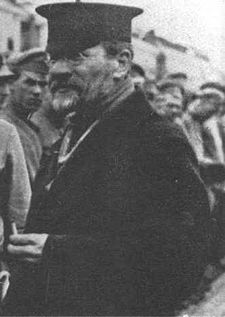 |
30 December 1922 – 12 January 1938 | 1st–8th Convocation | |
| Chairman of the Presidium of the Supreme Soviet (1938–1989) | ||||
| Mikhail Kalinin Mikhail Kalinin Mikhail Ivanovich Kalinin , known familiarly by Soviet citizens as "Kalinych," was a Bolshevik revolutionary and the nominal head of state of Russia and later of the Soviet Union, from 1919 to 1946... (1875–1946) |
|
17 January 1938 – 19 March 1946 | 1st Convocation | |
| 2 | Nikolay Shvernik Nikolay Shvernik Nikolay Mikhailovich Shvernik was a Russian politician, who was the Chairman of the Presidium of the Supreme Soviet of the USSR from March 19, 1946 until March 15, 1953... (1888–1970) |
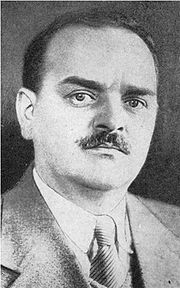 |
19 March 1946 – 6 March 1953 | 2nd–3rd Convocation |
| 3 | Kliment Voroshilov Kliment Voroshilov Kliment Yefremovich Voroshilov , popularly known as Klim Voroshilov was a Soviet military officer, politician, and statesman... (1881–1969) |
 |
15 March 1953 – 7 May 1960 | 3rd–5th Convocation |
| 4 | Leonid Brezhnev Leonid Brezhnev Leonid Ilyich Brezhnev – 10 November 1982) was the General Secretary of the Central Committee of the Communist Party of the Soviet Union , presiding over the country from 1964 until his death in 1982. His eighteen-year term as General Secretary was second only to that of Joseph Stalin in... (1906–1982) |
7 May 1960 – 15 July 1964 | 5th–6th Convocation | |
| 5 | Anastas Mikoyan Anastas Mikoyan Anastas Ivanovich Mikoyan was an Armenian Old Bolshevik and Soviet statesman during the rules of Vladimir Lenin, Joseph Stalin, Nikita Khrushchev, and Leonid Brezhnev.... (1895–1975) |
15 July 1964 – 9 December 1965 | 6th Convocation | |
| 6 | Nikolai Podgorny Nikolai Podgorny Nikolai Viktorovich Podgorny was a Soviet Ukrainian statesman during the Cold War. He served as First Secretary of the Central Committee of the Communist Party of Ukraine, or leader of the Ukrainian SSR, from 1957 to 1963 and as Chairman of the Presidium of the Supreme Soviet from 1965 to 1977... (1903–1983) |
9 December 1965 – 16 June 1977 | 6th–9th Convocation | |
| 4 | Leonid Brezhnev Leonid Brezhnev Leonid Ilyich Brezhnev – 10 November 1982) was the General Secretary of the Central Committee of the Communist Party of the Soviet Union , presiding over the country from 1964 until his death in 1982. His eighteen-year term as General Secretary was second only to that of Joseph Stalin in... (1906–1982) |
16 June 1977 – 10 November 1982 | 9th–10th Convocation | |
| — | Vasili Kuznetsov (1901–1990) |
10 November 1982 – 16 June 1983 | 10th Convocation | |
| 7 | Yuri Andropov Yuri Andropov Yuri Vladimirovich Andropov was a Soviet politician and the General Secretary of the Communist Party of the Soviet Union from 12 November 1982 until his death fifteen months later.-Early life:... (1914–1984) |
16 June 1983 – 9 February 1984 | ||
| — | Vasili Kuznetsov (1901–1990) |
9 February 1984 – 11 April 1984 | 11th Convocation | |
| 8 | Konstantin Chernenko Konstantin Chernenko Konstantin Ustinovich Chernenko was a Soviet politician and the fifth General Secretary of the Communist Party of the Soviet Union. He led the Soviet Union from 13 February 1984 until his death thirteen months later, on 10 March 1985... (1911–1985) |
11 April 1984 – 10 March 1985 | ||
| — | Vasili Kuznetsov (1901–1990) |
10 March 1985 – 27 July 1985 | ||
| 9 | Andrei Gromyko Andrei Gromyko Andrei Andreyevich Gromyko was a Soviet statesman during the Cold War. He served as Minister of Foreign Affairs and as Chairman of the Presidium of the Supreme Soviet . Gromyko was responsible for many top decisions on Soviet foreign policy until he retired in 1987. In the West he was given the... (1909–1989) |
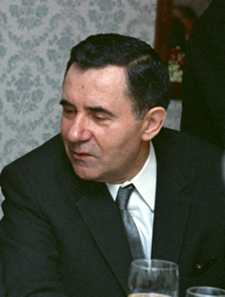 |
27 July 1985 – 1 October 1988 | |
| 10 | Mikhail Gorbachev Mikhail Gorbachev Mikhail Sergeyevich Gorbachev is a former Soviet statesman, having served as General Secretary of the Communist Party of the Soviet Union from 1985 until 1991, and as the last head of state of the USSR, having served from 1988 until its dissolution in 1991... (born 1931) |
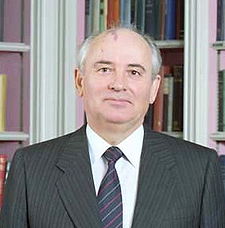 |
1 October 1988 – 25 May 1989 | 11th–12th Convocation |
| Chairman of the Supreme Soviet (1989–1990) | ||||
| Mikhail Gorbachev Mikhail Gorbachev Mikhail Sergeyevich Gorbachev is a former Soviet statesman, having served as General Secretary of the Communist Party of the Soviet Union from 1985 until 1991, and as the last head of state of the USSR, having served from 1988 until its dissolution in 1991... (born 1931) |
|
25 May 1989 – 15 March 1990 | 12th Convocation | |
| President (1990–1991) | ||||
| Mikhail Gorbachev Mikhail Gorbachev Mikhail Sergeyevich Gorbachev is a former Soviet statesman, having served as General Secretary of the Communist Party of the Soviet Union from 1985 until 1991, and as the last head of state of the USSR, having served from 1988 until its dissolution in 1991... (born 1931) |
|
15 March 1990 – 25 December 1991 | 12th Convocation | |
List of vice heads of state
There have been five individuals appointed vice head of state. The first vice head of state was Nikolay ShvernikNikolay Shvernik
Nikolay Mikhailovich Shvernik was a Russian politician, who was the Chairman of the Presidium of the Supreme Soviet of the USSR from March 19, 1946 until March 15, 1953...
. At over eighth years, Vasily Kuznetsov spent the longest time in office. Gennady Yanayev
Gennady Yanayev
Gennady Ivanovich Yanayev was a Soviet Russian politician and statesman whose career spanned the rules of Khrushchev, Brezhnev, Andropov and Chernenko, and culminated during the Gorbachev years. Yanayev was born in Perevoz, Gorky Oblast...
spent the shortest time in office.
| # Repeat head of state are numbered only once; subsequent terms are marked with their original number italicised. These numbers are not official. |
Name (birth–death) |
Term of office | |
|---|---|---|---|
| 1 | First Vice Chairman of the Presidium of the Supreme Soviet (1944–1946/1977–1989) | ||
| Nikolay Shvernik Nikolay Shvernik Nikolay Mikhailovich Shvernik was a Russian politician, who was the Chairman of the Presidium of the Supreme Soviet of the USSR from March 19, 1946 until March 15, 1953... (1888–1970) |
1 February 1944 – 19 March 1946 | ||
| 2 | Vasili Kuznetsov (1901–1990) |
7 October 1977 – 27 July 1985 | |
| 3 | Pyotr Demichev Pyotr Demichev Pyotr Nilovich Demichev was a Soviet-Russian political figure; First Deputy Chairman of the Presidium of the Supreme Soviet from 1986 to 1988 and Minister of Culture from 1974 to 1986.... (1917–2010) |
18 June 1986 – 1 October 1988 | |
| 4 | Anatoly Lukyanov Anatoly Lukyanov Anatoly Ivanovich Lukyanov is a Russian Communist politician who was the Chairman of the Supreme Soviet of the USSR between 15 March 1990 and 22 August 1991. One of the founders of the Communist Party of the Russian Federation in 1993, he is described by its leader Gennady Zyuganov as the "Deng... (born 1930) |
1 October 1988 – 25 May 1989 | |
| Vice Chairman of the Supreme Soviet (1989–1990) | |||
| Anatoly Lukyanov Anatoly Lukyanov Anatoly Ivanovich Lukyanov is a Russian Communist politician who was the Chairman of the Supreme Soviet of the USSR between 15 March 1990 and 22 August 1991. One of the founders of the Communist Party of the Russian Federation in 1993, he is described by its leader Gennady Zyuganov as the "Deng... (born 1930) |
25 May 1989 – 15 March 1990 | ||
| — | Vice President (1990–1991) | ||
| Vacant | 15 March 1990 – 27 December 1990 | ||
| 5 | Gennady Yanayev Gennady Yanayev Gennady Ivanovich Yanayev was a Soviet Russian politician and statesman whose career spanned the rules of Khrushchev, Brezhnev, Andropov and Chernenko, and culminated during the Gorbachev years. Yanayev was born in Perevoz, Gorky Oblast... (1937–2010) |
27 December 1990 – 21 August 1991 | |
| — | Office abolished | 21 August 1991 – 26 December 1991 | |
See also
Soviet Union-related- Presidium of the Supreme SovietPresidium of the Supreme SovietThe Presidium of the Supreme Soviet was a Soviet governmental institution – a permanent body of the Supreme Soviets . This body was of the all-Union level , as well as in all Soviet republics and autonomous republics...
- Supreme Soviet of the Soviet Union
- List of leaders of the Soviet Union
- Premier of the Soviet UnionPremier of the Soviet UnionThe office of Premier of the Soviet Union was synonymous with head of government of the Union of Soviet Socialist Republics . Twelve individuals have been premier...
- List of Governments of the Soviet Union
- List of Spouses of Soviet heads of stateSpouses of the heads of state of the Soviet UnionThe spouses of the heads of state carried no official duties and receives no salary. Nonetheless, she attended many official ceremonies and functions of state either along with or in place of the head of state.-List of spouses:...
- General Secretary of the Communist Party of the Soviet UnionGeneral Secretary of the Communist Party of the Soviet UnionGeneral Secretary of the Central Committee of the Communist Party of the Soviet Union was the title given to the leader of the Communist Party of the Soviet Union. With some exceptions, the office was synonymous with leader of the Soviet Union...
Russia-related