

List of coupled cousins

Encyclopedia
This is a list of prominent individuals who have been romantically
or maritally
coupled with a cousin
.
Because many people regard cousin couplings as taboo, they mistakenly assume that even an infrequent presence of coupled cousins in a lineage
means that the descendants must have one or more genetic diseases. The risk of such diseases rises when a lineage includes many cousin couplings.



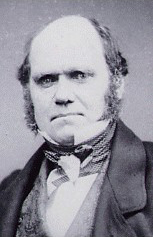

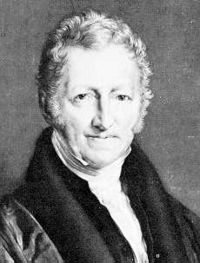
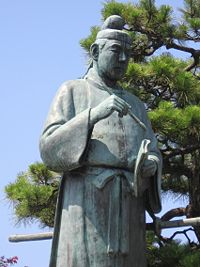

 A
A
B
C
D
E
F
G
H
J
K
L
M
N
O
P
R
S
T
V
W

 D
D
H
M
R
S
V
Romantic love
Romance is the pleasurable feeling of excitement and mystery associated with love.In the context of romantic love relationships, romance usually implies an expression of one's love, or one's deep emotional desires to connect with another person....
or maritally
Marriage
Marriage is a social union or legal contract between people that creates kinship. It is an institution in which interpersonal relationships, usually intimate and sexual, are acknowledged in a variety of ways, depending on the culture or subculture in which it is found...
coupled with a cousin
Cousin
In kinship terminology, a cousin is a relative with whom one shares one or more common ancestors. The term is rarely used when referring to a relative in one's immediate family where there is a more specific term . The term "blood relative" can be used synonymously and establishes the existence of...
.
Because many people regard cousin couplings as taboo, they mistakenly assume that even an infrequent presence of coupled cousins in a lineage
Kinship
Kinship is a relationship between any entities that share a genealogical origin, through either biological, cultural, or historical descent. And descent groups, lineages, etc. are treated in their own subsections....
means that the descendants must have one or more genetic diseases. The risk of such diseases rises when a lineage includes many cousin couplings.
Europe
The royal couples listed here are but a small representation of the innumerable cousins of varying degrees who have married between royal or noble houses. Due to the constitutional interest that their marital status raises, as well as the fact that genealogical records of royal houses are more plentiful and readily available than those of ordinary people, their bloodlines are better known than those of commoners.| Person | Spouse | Married | Relationship | Common Ancestor(s) |
|---|---|---|---|---|
| Agrippina the Elder Agrippina the elder Vipsania Agrippina or most commonly known as Agrippina Major or Agrippina the Elder was a distinguished and prominent granddaughter of the Emperor Augustus. Agrippina was the wife of the general, statesman Germanicus and a relative to the first Roman Emperors... |
Germanicus Germanicus Germanicus Julius Caesar , commonly known as Germanicus, was a member of the Julio-Claudian dynasty and a prominent general of the early Roman Empire. He was born in Rome, Italia, and was named either Nero Claudius Drusus after his father or Tiberius Claudius Nero after his uncle... |
between 5 BC and 1 BC | Second cousins | Gaius Octavius Gaius Octavius Gaius Octavius was an ancestor to the Roman Emperors of the Julio-Claudian dynasty. He was the father of the Emperor Augustus, step-grandfather of the Emperor Tiberius, great-great grandfather of the Emperor Caligula, great-grandfather of the Emperor Claudius, and great-great-great grandfather of... and Atia Balba Caesonia |
| Prince Alexander of Teck Alexander Cambridge, 1st Earl of Athlone Major-General Alexander Augustus Frederick William Alfred George Cambridge, 1st Earl of Athlone , was a close relative of the shared British and Canadian royal family, as well as a British military commander and major-general who served as Governor-General of the Union of South Africa, the... |
Princess Alice of Albany Princess Alice, Countess of Athlone Princess Alice, Countess of Athlone was a member of the British Royal Family. She was the longest-lived Princess of the Blood Royal of the British Royal Family and the last surviving grandchild of Queen Victoria... |
St George's Chapel, Windsor, 10 February 1904 | Second cousins once removed | George III of the United Kingdom George III of the United Kingdom George III was King of Great Britain and King of Ireland from 25 October 1760 until the union of these two countries on 1 January 1801, after which he was King of the United Kingdom of Great Britain and Ireland until his death... |
| Afonso V of Portugal Afonso V of Portugal Afonso V KG , called the African , was the twelfth King of Portugal and the Algarves. His sobriquet refers to his conquests in Northern Africa.-Early life:... |
Isabel of Coimbra Isabel of Coimbra Infanta Isabella of Coimbra was a Portuguese infanta and a queen consort of Portugal as the first spouse of King Afonso V of Portugal.- Biography :... |
6 May 1447 | First cousins | John I of Portugal John I of Portugal John I KG , called the Good or of Happy Memory, more rarely and outside Portugal the Bastard, was the tenth King of Portugal and the Algarve and the first to use the title Lord of Ceuta... |
| Alfonso XI of Castile Alfonso XI of Castile Alfonso XI was the king of Castile, León and Galicia.He was the son of Ferdinand IV of Castile and his wife Constance of Portugal. Upon his father's death in 1312, several disputes ensued over who would hold regency, which were resolved in 1313... |
Maria of Portugal (second wife) |
1328 | Double first cousins | Sancho IV of Castile Sancho IV of Castile Sancho IV the Brave was the King of Castile, León and Galicia from 1284 to his death. He was the second son of Alfonso X and Yolanda, daughter of James I of Aragon.-Biography:... ; Denis of Portugal Denis of Portugal Dinis , called the Farmer King , was the sixth King of Portugal and the Algarve. The eldest son of Afonso III of Portugal by his second wife, Beatrice of Castile and grandson of king Alfonso X of Castile , Dinis succeeded his father in 1279.-Biography:As heir to the throne, Infante Dinis was... |
| Alfonso XII of Spain Alfonso XII of Spain Alfonso XII was king of Spain, reigning from 1874 to 1885, after a coup d'état restored the monarchy and ended the ephemeral First Spanish Republic.-Early life and paternity:Alfonso was the son of Queen Isabella II of Spain, and... |
Mercedes of Orléans Mercedes of Orléans Maria de la Mercedes of Orléans was Queen Consort of Spain, the first wife of Alfonso XII. She was born in Madrid, Spain, the daughter of Antoine of Orléans, Duke of Montpensier and of Infanta Luisa Fernanda of Spain.... (first wife) |
Atocha, Madrid Madrid Madrid is the capital and largest city of Spain. The population of the city is roughly 3.3 million and the entire population of the Madrid metropolitan area is calculated to be 6.271 million. It is the third largest city in the European Union, after London and Berlin, and its metropolitan... , 23 January 1878 |
First cousins | Ferdinand VII of Spain |
| Alfonso XII of Spain Alfonso XII of Spain Alfonso XII was king of Spain, reigning from 1874 to 1885, after a coup d'état restored the monarchy and ended the ephemeral First Spanish Republic.-Early life and paternity:Alfonso was the son of Queen Isabella II of Spain, and... |
Archduchess Maria Christina of Austria Maria Christina of Austria Maria Christina of Austria was Queen consort of Spain as the second wife of King Alfonso XII of Spain... (second wife) |
Basilica of Atocha, Madrid Madrid Madrid is the capital and largest city of Spain. The population of the city is roughly 3.3 million and the entire population of the Madrid metropolitan area is calculated to be 6.271 million. It is the third largest city in the European Union, after London and Berlin, and its metropolitan... , 29 November 1879 |
Third cousins | Charles III of Spain Charles III of Spain Charles III was the King of Spain and the Spanish Indies from 1759 to 1788. He was the eldest son of Philip V of Spain and his second wife, the Princess Elisabeth Farnese... |
| Alfred, Duke of Saxe-Coburg and Gotha Alfred, Duke of Saxe-Coburg and Gotha Alfred, Duke of Saxe-Coburg and Gotha was the third Duke of Saxe-Coburg and Gotha, and reigned from 1893 to 1900. He was also a member of the British Royal Family, the second son and fourth child of Queen Victoria and Prince Albert of Saxe-Coburg and Gotha... |
Grand Duchess Maria Alexandrovna of Russia | Winter Palace Winter Palace The Winter Palace in Saint Petersburg, Russia, was, from 1732 to 1917, the official residence of the Russian monarchs. Situated between the Palace Embankment and the Palace Square, adjacent to the site of Peter the Great's original Winter Palace, the present and fourth Winter Palace was built and... , St. Petersburg, 23 January 1874 |
Third cousins once removed | Duke Charles Louis Frederick of Mecklenburg |
| Alois, Hereditary Prince of Liechtenstein Alois, Hereditary Prince of Liechtenstein Alois Philipp Maria, Hereditary Prince of Liechtenstein, Count of Rietberg is the eldest son of Hans Adam II, Prince of Liechtenstein and Countess Marie Aglaë Kinsky of Wchinitz and Tettau. Alois has been Regent of Liechtenstein since 15 August 2004... |
Duchess Sophie in Bavaria Sophie, Hereditary Princess of Liechtenstein Sophie, Hereditary Princess of Liechtenstein , is the wife of Alois, Hereditary Prince of Liechtenstein, Regent of Liechtenstein and heir apparent to the Liechtensteiner throne.-Early life and education:... |
St. Florin's, Vaduz Vaduz Vaduz is the capital of the principality of Liechtenstein and the seat of the national parliament. The town, located along the Rhine, has about 5,100 inhabitants , most of whom are Roman Catholic. Its cathedral is the seat of a Roman Catholic archbishop.... , 3 July 1993 |
Fifth cousins once removed | Maximilian I Joseph of Bavaria |
| Prince Arthur, Duke of Connaught and Strathearn Prince Arthur, Duke of Connaught and Strathearn Prince Arthur, Duke of Connaught and Strathearn was a member of the shared British and Saxe-Coburg and Gotha royal family who served as the Governor General of Canada, the 10th since Canadian Confederation.Born the seventh child and third son of Queen Victoria and Prince Albert of Saxe-Coburg and... |
Princess Louise Margaret of Prussia | St. George's Chapel, Windsor Castle St. George's Chapel, Windsor Castle St George's Chapel is the place of worship at Windsor Castle in England, United Kingdom. It is both a royal peculiar and the chapel of the Order of the Garter... , 13 March 1879 |
Third cousins once removed | Duke Charles Louis Frederick of Mecklenburg |
| Prince Arthur of Connaught Prince Arthur of Connaught Prince Arthur of Connaught and Strathearn was a member of the British Royal Family, a grandson of Queen Victoria. Prince Arthur held the title of a British prince with the style His Royal Highness... |
Princess Alexandra, Duchess of Fife Princess Alexandra, Duchess of Fife Princess Alexandra, 2nd Duchess of Fife was a member of the British Royal Family, a granddaughter of King Edward VII... |
Chapel Royal Chapel Royal A Chapel Royal is a body of priests and singers who serve the spiritual needs of their sovereign wherever they are called upon to do so.-Austria:... , St. James's Palace St. James's Palace St. James's Palace is one of London's oldest palaces. It is situated in Pall Mall, just north of St. James's Park. Although no sovereign has resided there for almost two centuries, it has remained the official residence of the Sovereign and the most senior royal palace in the UK... , 15 October 1913 |
First cousins once removed | Queen Victoria |
| Carol II of Romania Carol II of Romania Carol II reigned as King of Romania from 8 June 1930 until 6 September 1940. Eldest son of Ferdinand, King of Romania, and his wife, Queen Marie, a daughter of Prince Alfred, Duke of Edinburgh, the second eldest son of Queen Victoria... |
Princess Helen of Greece and Denmark | Metropolitan Cathedral of Athens Metropolitan Cathedral of Athens Annunciation Cathedral, the Metropolitan Cathedral of Athens, popularly known as the "Mētrópolis", is the cathedral church of the Archbishop of Athens and all Greece.... , 10 March 1921 |
Second cousins | Queen Victoria |
| Princess Margaretha of Sweden Princess Margaretha of Sweden Princess Margaretha of Sweden and Norway, later just of Sweden, Margaretha Sofia Lovisa Ingeborg was a Princess of Sweden by birth and Princess of Denmark by marriage... |
Prince Axel of Denmark Prince Axel of Denmark Axel Christian Georg, Prince of Denmark and Iceland was a Danish and Icelandic prince.Prince Axel was the second son of Prince Valdemar of Denmark and his wife, Princess Marie d'Orléans.... |
22 May 1919 | first cousin once removed | Christian IX of Denmark Christian IX of Denmark Christian IX was King of Denmark from 16 November 1863 to 29 January 1906.Growing up as a prince of Schleswig-Holstein-Sonderburg-Glücksburg, a junior branch of the House of Oldenburg which had ruled Denmark since 1448, Christian was originally not in the immediate line of succession to the Danish... |
| Catherine the Great | Peter III of Russia Peter III of Russia Peter III was Emperor of Russia for six months in 1762. He was very pro-Prussian, which made him an unpopular leader. He was supposedly assassinated as a result of a conspiracy led by his wife, who succeeded him to the throne as Catherine II.-Early life and character:Peter was born in Kiel, in... |
21 August 1745 | Second cousins | Christian Albert, Duke of Holstein-Gottorp |
| Charles I of Austria | Princess Zita of Bourbon-Parma Zita of Bourbon-Parma Princess Zita of Bourbon-Parma was the wife of Emperor Charles of Austria... |
Schwarzau Castle, 21 October 1911 | Fourth cousins | Charles IV of Spain Charles IV of Spain Charles IV was King of Spain from 14 December 1788 until his abdication on 19 March 1808.-Early life:... |
| Charles the Bold, Duke of Burgundy | Catherine of France (first wife) |
19 May 1440 | Third cousins | John II of France John II of France John II , called John the Good , was the King of France from 1350 until his death. He was the second sovereign of the House of Valois and is perhaps best remembered as the king who was vanquished at the Battle of Poitiers and taken as a captive to England.The son of Philip VI and Joan the Lame,... |
| Charles the Bold, Duke of Burgundy | Isabella of Bourbon Isabella of Bourbon Isabella of Bourbon, Countess of Charolais was the second wife of Charles the Bold, Count of Charolais and future Duke of Burgundy. She was a daughter of Charles I, Duke of Bourbon and Agnes of Burgundy, and the mother of Mary of Burgundy, heiress of Burgundy.-Life:Not much is known about her life... (second wife) |
Lille Lille Lille is a city in northern France . It is the principal city of the Lille Métropole, the fourth-largest metropolitan area in the country behind those of Paris, Lyon and Marseille. Lille is situated on the Deûle River, near France's border with Belgium... , 30 October 1454 |
First cousins | John the Fearless, Duke of Burgundy |
| Charles the Bold, Duke of Burgundy | Margaret of York Margaret of York Margaret of York – also by marriage known as Margaret of Burgundy – was Duchess of Burgundy as the third wife of Charles the Bold and acted as a protector of the Duchy after his death. She was a daughter of Richard Plantagenet, 3rd Duke of York, and Cecily Neville, and the sister of... (third wife) |
Damme Damme Damme is a municipality located in the Belgian province of West Flanders, six kilometres northeast of Brugge . The municipality comprises the city of Damme proper and the towns of Hoeke, Lapscheure, Moerkerke, Oostkerke, Sijsele, Vivenkapelle, and Sint-Rita. On 1 January 2006, the municipality had... , 3 July 1468 |
Third cousins | Edward III of England Edward III of England Edward III was King of England from 1327 until his death and is noted for his military success. Restoring royal authority after the disastrous reign of his father, Edward II, Edward III went on to transform the Kingdom of England into one of the most formidable military powers in Europe... |
| Charles I of England Charles I of England Charles I was King of England, King of Scotland, and King of Ireland from 27 March 1625 until his execution in 1649. Charles engaged in a struggle for power with the Parliament of England, attempting to obtain royal revenue whilst Parliament sought to curb his Royal prerogative which Charles... |
Henrietta Maria of France Henrietta Maria of France Henrietta Maria of France ; was the Queen consort of England, Scotland and Ireland as the wife of King Charles I... |
St Augustine's Abbey St Augustine's Abbey St Augustine's Abbey was a Benedictine abbey in Canterbury, Kent, England.-Early history:In 597 Saint Augustine arrived in England, having been sent by Pope Gregory I, on what might nowadays be called a revival mission. The King of Kent at this time was Æthelberht, who happened to be married to a... , Canterbury Canterbury Canterbury is a historic English cathedral city, which lies at the heart of the City of Canterbury, a district of Kent in South East England. It lies on the River Stour.... , Kent Kent Kent is a county in southeast England, and is one of the home counties. It borders East Sussex, Surrey and Greater London and has a defined boundary with Essex in the middle of the Thames Estuary. The ceremonial county boundaries of Kent include the shire county of Kent and the unitary borough of... , 13 June 1625 |
Third cousins once removed | Francis, Count of Vendôme |
| Charles II, Duke of Parma Charles II, Duke of Parma Charles Louis of Bourbon-Parma was King of Etruria , Duke of Lucca , and Duke of Parma .-Early life and marriage:... |
Princess Maria Teresa of Savoy Princess Maria Teresa of Savoy Maria Teresa of Savoy, was the wife of Charles II, Duke of Parma .-Early life:... |
Lucca Lucca Lucca is a city and comune in Tuscany, central Italy, situated on the river Serchio in a fertile plainnear the Tyrrhenian Sea. It is the capital city of the Province of Lucca... , 5 September 1820 |
Double second cousins | Philip, Duke of Parma Philip, Duke of Parma Philip of Spain was Duke of Parma from 1748 to 1765. He founded the House of Bourbon-Parma , a cadet line of the Spanish branch of the dynasty... ; Francis I, Holy Roman Emperor Francis I, Holy Roman Emperor Francis I was Holy Roman Emperor and Grand Duke of Tuscany, though his wife effectively executed the real power of those positions. With his wife, Maria Theresa, he was the founder of the Habsburg-Lorraine dynasty... and Maria Theresa of Austria |
| Charles II of England Charles II of England Charles II was monarch of the three kingdoms of England, Scotland, and Ireland.Charles II's father, King Charles I, was executed at Whitehall on 30 January 1649, at the climax of the English Civil War... |
Catherine of Braganza Catherine of Braganza Catherine of Braganza was a Portuguese infanta and queen consort of England, Scotland and Ireland as the wife of King Charles II.She married the king in 1662... |
Domus Dei Domus Dei Domus Dei was an almshouse and hospice established in 1212 in Portsmouth, Hampshire, UK by Pierre des Roches, Bishop of Winchester.... , Portsmouth Portsmouth Portsmouth is the second largest city in the ceremonial county of Hampshire on the south coast of England. Portsmouth is notable for being the United Kingdom's only island city; it is located mainly on Portsea Island... , Hampshire Hampshire Hampshire is a county on the southern coast of England in the United Kingdom. The county town of Hampshire is Winchester, a historic cathedral city that was once the capital of England. Hampshire is notable for housing the original birthplaces of the Royal Navy, British Army, and Royal Air Force... , 21 May 1662 |
Seventh cousins once removed | Ferdinand I of Aragon Ferdinand I of Aragon Ferdinand I called of Antequera and also the Just or the Honest) was king of Aragon, Valencia, Majorca, Sardinia and Corsica and king of Sicily, duke of Athens and Neopatria, and count of Barcelona, Roussillon and Cerdanya... |
| Charles III, Duke of Parma Charles III, Duke of Parma -Early life:Charles III was born at the Villa delle Pianore near Lucca, the only son of Charles Louis, Prince of Lucca and his wife Princess Maria-Theresa of Savoy . He was given the baptismal names Ferdinando Carlo Vittorio Giuseppe Maria Baldassarre... |
Louise Marie Thérèse d'Artois | Schloss Frohsdorf Schloss Frohsdorf Schloss Frohsdorf is a castle-like complex in Lanzenkirchen in Niederösterreich and was built 1547-1550 out of the ruins of the so-called "Krotenhof".After similar devastation in the year 1683 it was largely altered and renovated in the Baroque style... , Austria Austria Austria , officially the Republic of Austria , is a landlocked country of roughly 8.4 million people in Central Europe. It is bordered by the Czech Republic and Germany to the north, Slovakia and Hungary to the east, Slovenia and Italy to the south, and Switzerland and Liechtenstein to the... , 10 November 1845 |
Second cousins | Victor Amadeus III of Sardinia Victor Amadeus III of Sardinia Victor Amadeus III was King of Sardinia from 1773 until his death. Although he was politically conservative, he carried out numerous administrative reforms until declaring war on revolutionary France in 1792... |
| Charles IV of Spain Charles IV of Spain Charles IV was King of Spain from 14 December 1788 until his abdication on 19 March 1808.-Early life:... |
Maria Luisa of Parma Maria Luisa of Parma Maria Luisa of Parma was Queen consort of Spain from 1788 to 1808 as the wife of King Charles IV of Spain. She was the youngest daughter of Duke Philip of Parma and his wife, Louise-Élisabeth of France, the eldest daughter of King Louis XV.She was christened Luisa Maria Teresa Ana, but was known... |
La Granja Palace La Granja (palace) The Royal Palace of La Granja de San Ildefonso is an 18th century palace in the small town of San Ildefonso in the hills near Segovia, 80 km north of Madrid, central Spain, formerly the summer residence of the Kings of Spain since the reign of Philip V... , 4 September 1765 |
First cousins | Philip V of Spain Philip V of Spain Philip V was King of Spain from 15 November 1700 to 15 January 1724, when he abdicated in favor of his son Louis, and from 6 September 1724, when he assumed the throne again upon his son's death, to his death.Before his reign, Philip occupied an exalted place in the royal family of France as a... |
| Charles V, Holy Roman Emperor Charles V, Holy Roman Emperor Charles V was ruler of the Holy Roman Empire from 1519 and, as Charles I, of the Spanish Empire from 1516 until his voluntary retirement and abdication in favor of his younger brother Ferdinand I and his son Philip II in 1556.As... |
Isabella of Portugal Isabella of Portugal Isabella of Portugal was a Portuguese Princess and Holy Roman Empress, Duchess of Burgundy, and a Queen Regent/Consort of Spain. She was the daughter of Manuel I of Portugal and Maria of Aragon. By her marriage to Charles V, Holy Roman Emperor, Isabella was also Holy Roman Empress and Queen... |
Seville Seville Seville is the artistic, historic, cultural, and financial capital of southern Spain. It is the capital of the autonomous community of Andalusia and of the province of Seville. It is situated on the plain of the River Guadalquivir, with an average elevation of above sea level... , 10 March 1526 |
First cousins | Ferdinand II of Aragon Ferdinand II of Aragon Ferdinand the Catholic was King of Aragon , Sicily , Naples , Valencia, Sardinia, and Navarre, Count of Barcelona, jure uxoris King of Castile and then regent of that country also from 1508 to his death, in the name of... and Isabella I of Castile Isabella I of Castile Isabella I was Queen of Castile and León. She and her husband Ferdinand II of Aragon brought stability to both kingdoms that became the basis for the unification of Spain. Later the two laid the foundations for the political unification of Spain under their grandson, Charles V, Holy Roman Emperor... |
| Charles VII of France Charles VII of France Charles VII , called the Victorious or the Well-Served , was King of France from 1422 to his death, though he was initially opposed by Henry VI of England, whose Regent, the Duke of Bedford, ruled much of France including the capital, Paris... |
Marie of Anjou Marie of Anjou Marie of Anjou was the Queen consort of King Charles VII of France from 1422 to 1461. Her mother, Yolande of Aragon, played a leading role in the last phase of the Hundred Years' War.-Family:... |
18 December 1422 | Second cousins | John II of France John II of France John II , called John the Good , was the King of France from 1350 until his death. He was the second sovereign of the House of Valois and is perhaps best remembered as the king who was vanquished at the Battle of Poitiers and taken as a captive to England.The son of Philip VI and Joan the Lame,... |
| Charles X of France Charles X of France Charles X was known for most of his life as the Comte d'Artois before he reigned as King of France and of Navarre from 16 September 1824 until 2 August 1830. A younger brother to Kings Louis XVI and Louis XVIII, he supported the latter in exile and eventually succeeded him... |
Princess Maria Theresa of Savoy | Palace of Versailles Palace of Versailles The Palace of Versailles , or simply Versailles, is a royal château in Versailles in the Île-de-France region of France. In French it is the Château de Versailles.... , 16 November 1773 |
Double second cousins once removed | Louis, Dauphin of France Louis, Grand Dauphin Louis of France was the eldest son and heir of Louis XIV, King of France, and his spouse, Maria Theresa of Spain. As the heir apparent to the French throne, he was styled Dauphin... ; Victor Amadeus II of Sardinia Victor Amadeus II of Sardinia Victor Amadeus II was Duke of Savoy from 1675 to 1730. He also held the titles of marquis of Saluzzo, duke of Montferrat, prince of Piedmont, count of Aosta, Moriana and Nizza. Louis XIV organised his marriage in order to maintain French influence in the Duchy but Victor Amadeus soon broke away... |
| Charles Emmanuel I, Duke of Savoy Charles Emmanuel I, Duke of Savoy Charles Emmanuel I , known as the Great, was the Duke of Savoy from 1580 to 1630... |
Infanta Catherine Michelle of Spain | 1582 | First cousins once removed (through Francis I of France Francis I of France Francis I was King of France from 1515 until his death. During his reign, huge cultural changes took place in France and he has been called France's original Renaissance monarch... ); Second cousins (through Manuel I of Portugal Manuel I of Portugal Manuel I , the Fortunate , 14th king of Portugal and the Algarves was the son of Infante Ferdinand, Duke of Viseu, , by his wife, Infanta Beatrice of Portugal... ) |
Francis I of France Francis I of France Francis I was King of France from 1515 until his death. During his reign, huge cultural changes took place in France and he has been called France's original Renaissance monarch... ; Manuel I of Portugal Manuel I of Portugal Manuel I , the Fortunate , 14th king of Portugal and the Algarves was the son of Infante Ferdinand, Duke of Viseu, , by his wife, Infanta Beatrice of Portugal... |
| Charles Emmanuel IV of Sardinia Charles Emmanuel IV of Sardinia Charles Emmanuel IV was King of Sardinia from 1796 to 1802. He abdicated in favour of his brother Victor Emmanuel I... |
Marie Clotilde of France | Palace of Versailles Palace of Versailles The Palace of Versailles , or simply Versailles, is a royal château in Versailles in the Île-de-France region of France. In French it is the Château de Versailles.... , 27 August 1775 |
Double second cousin once removed | Victor Amadeus II of Sardinia Victor Amadeus II of Sardinia Victor Amadeus II was Duke of Savoy from 1675 to 1730. He also held the titles of marquis of Saluzzo, duke of Montferrat, prince of Piedmont, count of Aosta, Moriana and Nizza. Louis XIV organised his marriage in order to maintain French influence in the Duchy but Victor Amadeus soon broke away... ; Louis, Dauphin of France Louis, Grand Dauphin Louis of France was the eldest son and heir of Louis XIV, King of France, and his spouse, Maria Theresa of Spain. As the heir apparent to the French throne, he was styled Dauphin... |
| Charles Felix of Sardinia Charles Felix of Sardinia Charles Felix was the Duke of Savoy, Piedmont, Aosta and King of Sardinia from 1821 to 1831.-Early life:... |
Princess Maria Cristina of Naples and Sicily Maria Cristina of Naples and Sicily Maria Cristina of Naples and Sicily was a Princess of Naples and Sicily and later Queen of Sardinia as wife of Charles Felix of Sardinia.-Princess of Naples and Sicily:... |
Palermo Palermo Palermo is a city in Southern Italy, the capital of both the autonomous region of Sicily and the Province of Palermo. The city is noted for its history, culture, architecture and gastronomy, playing an important role throughout much of its existence; it is over 2,700 years old... , 6 April 1807 |
First cousins once removed | Philip V of Spain Philip V of Spain Philip V was King of Spain from 15 November 1700 to 15 January 1724, when he abdicated in favor of his son Louis, and from 6 September 1724, when he assumed the throne again upon his son's death, to his death.Before his reign, Philip occupied an exalted place in the royal family of France as a... |
| Christian VII of Denmark Christian VII of Denmark Christian VII was King of Denmark and Norway and Duke of Schleswig and Holstein from 1766 until his death. He was the son of Danish King Frederick V and his first consort Louisa, daughter of King George II of Great Britain.... |
Princess Caroline Matilda of Wales | Christiansborg Palace Christiansborg Palace Christiansborg Palace, , on the islet of Slotsholmen in central Copenhagen, is the seat of the Folketing , the Danish Prime Minister's Office and the Danish Supreme Court... , Copenhagen Copenhagen Copenhagen is the capital and largest city of Denmark, with an urban population of 1,199,224 and a metropolitan population of 1,930,260 . With the completion of the transnational Øresund Bridge in 2000, Copenhagen has become the centre of the increasingly integrating Øresund Region... , 8 November 1766 |
First cousins | George II of Great Britain George II of Great Britain George II was King of Great Britain and Ireland, Duke of Brunswick-Lüneburg and Archtreasurer and Prince-elector of the Holy Roman Empire from 11 June 1727 until his death.George was the last British monarch born outside Great Britain. He was born and brought up in Northern Germany... |
| Christian VIII of Denmark Christian VIII of Denmark Christian VIII , was king of Denmark from 1839 to 1848 and, as Christian Frederick, king of Norway in 1814. He was the eldest son of Hereditary Prince Frederick of Denmark and Norway and Sophia Frederica of Mecklenburg-Schwerin, born in 1786 at Christiansborg Palace in Copenhagen... |
Duchess Charlotte Frederica of Mecklenburg-Schwerin Duchess Charlotte Frederica of Mecklenburg-Schwerin Charlotte Frederica of Mecklenburg-Schwerin , was the first wife of King Christian VIII from 1806 until 1810, before he became King of Denmark. She was a daughter of Frederick Francis I, Grand Duke of Mecklenburg-Schwerin, and Princess Louise of Saxe-Gotha-Altenburg.-Marriage:Charlotte Frederica... |
Ludwigslust Ludwigslust Ludwigslust is a town in Mecklenburg-Vorpommern, Germany, 40 km south of Schwerin. It was the capital of the former district of Ludwigslust, and is part of the district Ludwigslust-Parchim since September 2011.-History:... , 21 June 1806 |
First cousins | Ludwig, Duke of Mecklenburg-Schwerin |
| Christian IX of Denmark Christian IX of Denmark Christian IX was King of Denmark from 16 November 1863 to 29 January 1906.Growing up as a prince of Schleswig-Holstein-Sonderburg-Glücksburg, a junior branch of the House of Oldenburg which had ruled Denmark since 1448, Christian was originally not in the immediate line of succession to the Danish... |
Louise of Hesse-Kassel Louise of Hesse-Kassel Louise of Hesse was a German Princess and the queen consort to King Christian IX of Denmark.-Early Life and Ancestry:... |
Amalienborg Palace Amalienborg Palace Amalienborg Palace is the winter home of the Danish royal family, and is located in Copenhagen, Denmark. It consists of four identical classicizing palace façades with rococo interiors around an octagonal courtyard ; in the centre of the square is a monumental equestrian statue of Amalienborg's... , Copenhagen Copenhagen Copenhagen is the capital and largest city of Denmark, with an urban population of 1,199,224 and a metropolitan population of 1,930,260 . With the completion of the transnational Øresund Bridge in 2000, Copenhagen has become the centre of the increasingly integrating Øresund Region... , 26 May 1842 |
Double second cousins | Frederick II, Landgrave of Hesse-Kassel and Princess Mary of Great Britain Princess Mary of Great Britain The Princess Mary was a member of the British Royal Family, a daughter of George II and Caroline of Ansbach.-Early life:... ; Frederick V of Denmark Frederick V of Denmark Frederick V was king of Denmark and Norway from 1746, son of Christian VI of Denmark and Sophia Magdalen of Brandenburg-Kulmbach.-Early life:... |
| Claudia Antonia Claudia Antonia Claudia Antonia was the daughter of the Roman Emperor Claudius and his second wife Aelia Paetina... |
Faustus Cornelius Sulla Felix Faustus Cornelius Sulla Felix Faustus Cornelius Sulla Felix was one of the lesser known figures of the Julio-Claudian dynasty of ancient Rome. His grandmother was Antonia Major, the niece of Emperor Augustus by her husband Lucius Domitius Ahenobarbus . His mother was Domitia Lepida, a great niece of Emperor Augustus and... (second husband) |
AD 47 | Second cousins | Mark Antony Mark Antony Marcus Antonius , known in English as Mark Antony, was a Roman politician and general. As a military commander and administrator, he was an important supporter and loyal friend of his mother's cousin Julius Caesar... |
| Claudius, Emperor of Rome Claudius Claudius , was Roman Emperor from 41 to 54. A member of the Julio-Claudian dynasty, he was the son of Drusus and Antonia Minor. He was born at Lugdunum in Gaul and was the first Roman Emperor to be born outside Italy... |
Valeria Messalina | Rome Rome Rome is the capital of Italy and the country's largest and most populated city and comune, with over 2.7 million residents in . The city is located in the central-western portion of the Italian Peninsula, on the Tiber River within the Lazio region of Italy.Rome's history spans two and a half... , AD 37 or AD 38 |
First cousins once removed | Mark Antony Mark Antony Marcus Antonius , known in English as Mark Antony, was a Roman politician and general. As a military commander and administrator, he was an important supporter and loyal friend of his mother's cousin Julius Caesar... and Octavia Minor |
| Constantine II of Greece Constantine II of Greece |align=right|Constantine II was King of Greece from 1964 until the abolition of the monarchy in 1973, the sixth and last monarch of the Greek Royal Family.... |
Princess Anne-Marie of Denmark Queen Anne-Marie of Greece Queen Anne-Marie of Greece is the wife of former King Constantine II of Greece, who was deposed in referendums in 1973 and in 1974. Her title "Queen of Greece" is not recognized under the terms of the republican Constitution of Greece... |
Athens Athens Athens , is the capital and largest city of Greece. Athens dominates the Attica region and is one of the world's oldest cities, as its recorded history spans around 3,400 years. Classical Athens was a powerful city-state... , 18 September 1964 |
Double third cousins | Christian IX of Denmark Christian IX of Denmark Christian IX was King of Denmark from 16 November 1863 to 29 January 1906.Growing up as a prince of Schleswig-Holstein-Sonderburg-Glücksburg, a junior branch of the House of Oldenburg which had ruled Denmark since 1448, Christian was originally not in the immediate line of succession to the Danish... ; Queen Victoria |
| Drusus Caesar | Aemilia Lepida | Third cousins | Scribonia Scribonia Scribonia was the second wife of the Roman Emperor Augustus and the mother of his only natural child, Julia the Elder. She was the mother-in-law of the Emperor Tiberius, great-grandmother of the Emperor Caligula and Empress Agrippina the Younger, grandmother-in-law of the Emperor Claudius, and... |
|
| Drusus Julius Caesar | Livilla | AD 4 | First cousins | Tiberius Claudius Nero Tiberius Nero Not to be confused with his son Tiberius or his grandson Germanicus, who both had the name 'Tiberius Claudius Nero' at one time or another. Tiberius Claudius Nero was a member of the Claudian Family of ancient Rome. He was a descendant of the original Tiberius Claudius Nero a consul, son of... |
| Edmund of Langley, 1st Duke of York Edmund of Langley, 1st Duke of York Edmund of Langley, 1st Duke of York, 1st Earl of Cambridge, KG was a younger son of King Edward III of England and Philippa of Hainault, the fourth of the five sons who lived to adulthood, of this Royal couple. Like so many medieval princes, Edmund gained his identifying nickname from his... |
Infanta Isabella of Castile Isabella of Castile, Duchess of York Infanta Isabella of Castile, Duchess of York was a daughter ofKing Peter of Castile and María de Padilla. She was a younger sister of Constance, Duchess of Lancaster.... (first wife) |
1372 | Third cousins twice removed | Ferdinand III of Castile Ferdinand III of Castile Saint Ferdinand III, T.O.S.F., was the King of Castile from 1217 and León from 1230. He was the son of Alfonso IX of León and Berenguela of Castile. Through his second marriage he was also Count of Aumale. He finished the work done by his maternal grandfather Alfonso VIII and consolidated the... |
| Edmund of Langley, 1st Duke of York Edmund of Langley, 1st Duke of York Edmund of Langley, 1st Duke of York, 1st Earl of Cambridge, KG was a younger son of King Edward III of England and Philippa of Hainault, the fourth of the five sons who lived to adulthood, of this Royal couple. Like so many medieval princes, Edmund gained his identifying nickname from his... |
Joan Holland Joan Holland Joan Holland was the third daughter of Thomas Holland, 2nd Earl of Kent, and Alice FitzAlan. She married four times. Her first husband was a duke, and the following three were barons... (second wife) |
c. 4 November 1393 | Second cousins once removed | Edward I of England Edward I of England Edward I , also known as Edward Longshanks and the Hammer of the Scots, was King of England from 1272 to 1307. The first son of Henry III, Edward was involved early in the political intrigues of his father's reign, which included an outright rebellion by the English barons... |
| Edward II of England Edward II of England Edward II , called Edward of Caernarfon, was King of England from 1307 until he was deposed by his wife Isabella in January 1327. He was the sixth Plantagenet king, in a line that began with the reign of Henry II... |
Isabella of France Isabella of France Isabella of France , sometimes described as the She-wolf of France, was Queen consort of England as the wife of Edward II of England. She was the youngest surviving child and only surviving daughter of Philip IV of France and Joan I of Navarre... |
Boulogne-sur-Mer Boulogne-sur-Mer -Road:* Metropolitan bus services are operated by the TCRB* Coach services to Calais and Dunkerque* A16 motorway-Rail:* The main railway station is Gare de Boulogne-Ville and located in the south of the city.... , 25 January 1308 |
Third cousins once removed | Alfonso VIII of Castile Alfonso VIII of Castile Alfonso VIII , called the Noble or el de las Navas, was the King of Castile from 1158 to his death and King of Toledo. He is most remembered for his part in the Reconquista and the downfall of the Almohad Caliphate... |
| Edward III of England Edward III of England Edward III was King of England from 1327 until his death and is noted for his military success. Restoring royal authority after the disastrous reign of his father, Edward II, Edward III went on to transform the Kingdom of England into one of the most formidable military powers in Europe... |
Philippa of Hainault Philippa of Hainault Philippa of Hainault, or, Philippe de Hainaut was the Queen consort of King Edward III of England. Edward, Duke of Guyenne, her future husband, promised in 1326 to marry her within the following two years... |
York Minister, 24 January 1328 | Second cousins | Philip III of France Philip III of France Philip III , called the Bold , was the King of France, succeeding his father, Louis IX, and reigning from 1270 to 1285. He was a member of the House of Capet.-Biography:... |
| Edward VII of the United Kingdom Edward VII of the United Kingdom Edward VII was King of the United Kingdom and the British Dominions and Emperor of India from 22 January 1901 until his death in 1910... |
Princess Alexandra of Denmark Alexandra of Denmark Alexandra of Denmark was the wife of Edward VII of the United Kingdom... |
St. George's Chapel, Windsor Castle St. George's Chapel, Windsor Castle St George's Chapel is the place of worship at Windsor Castle in England, United Kingdom. It is both a royal peculiar and the chapel of the Order of the Garter... , 10 March 1863 |
Fourth cousins | George II of Great Britain George II of Great Britain George II was King of Great Britain and Ireland, Duke of Brunswick-Lüneburg and Archtreasurer and Prince-elector of the Holy Roman Empire from 11 June 1727 until his death.George was the last British monarch born outside Great Britain. He was born and brought up in Northern Germany... |
| Edward the Black Prince, Prince of Wales Edward, the Black Prince Edward of Woodstock, Prince of Wales, Duke of Cornwall, Prince of Aquitaine, KG was the eldest son of King Edward III of England and his wife Philippa of Hainault as well as father to King Richard II of England.... |
Joan, 4th Countess of Kent Joan of Kent Joan, Countess of Kent , known to history as The Fair Maid of Kent, was the first English Princess of Wales... |
Windsor Castle Windsor Castle Windsor Castle is a medieval castle and royal residence in Windsor in the English county of Berkshire, notable for its long association with the British royal family and its architecture. The original castle was built after the Norman invasion by William the Conqueror. Since the time of Henry I it... , 10 October 1361 |
First cousins once removed | Edward I of England Edward I of England Edward I , also known as Edward Longshanks and the Hammer of the Scots, was King of England from 1272 to 1307. The first son of Henry III, Edward was involved early in the political intrigues of his father's reign, which included an outright rebellion by the English barons... |
| Archduchess Elisabeth Franziska of Austria Archduchess Elisabeth Franziska of Austria Elisabeth Franziska Maria, Archduchess of Austria, Princess of Hungary and Bohemia .... |
Archduke Ferdinand Karl Viktor of Austria-Este Archduke Ferdinand Karl Viktor of Austria-Este Ferdinand Karl Viktor was Archduke of Austria-Este and Duke of Modena.-Biography:Born in Modena, he was the second son of Francis IV of Modena and his wife Maria Beatrice of Savoy... (first husband) |
Vienna Vienna Vienna is the capital and largest city of the Republic of Austria and one of the nine states of Austria. Vienna is Austria's primary city, with a population of about 1.723 million , and is by far the largest city in Austria, as well as its cultural, economic, and political centre... , 4 October 1847 |
Second cousins | Francis I, Holy Roman Emperor Francis I, Holy Roman Emperor Francis I was Holy Roman Emperor and Grand Duke of Tuscany, though his wife effectively executed the real power of those positions. With his wife, Maria Theresa, he was the founder of the Habsburg-Lorraine dynasty... and Maria Theresa of Austria |
| Archduchess Elisabeth Franziska of Austria Archduchess Elisabeth Franziska of Austria Elisabeth Franziska Maria, Archduchess of Austria, Princess of Hungary and Bohemia .... |
Archduke Karl Ferdinand of Austria Archduke Karl Ferdinand of Austria Archduke Karl Ferdinand of Austria-Teschen was the second son of Archduke Charles, Duke of Teschen and Henrietta of Nassau-Weilburg, and the maternal grandfather of King Alfonso XIII of Spain.A son of the "hero of Aspern" he started a military career in Infantry Regiment 57 in Brno... (second husband) |
Vienna Vienna Vienna is the capital and largest city of the Republic of Austria and one of the nine states of Austria. Vienna is Austria's primary city, with a population of about 1.723 million , and is by far the largest city in Austria, as well as its cultural, economic, and political centre... , 18 April 1854 |
First cousins | Leopold II, Holy Roman Emperor Leopold II, Holy Roman Emperor Leopold II , born Peter Leopold Joseph Anton Joachim Pius Gotthard, was Holy Roman Emperor and King of Hungary and Bohemia from 1790 to 1792, Archduke of Austria and Grand Duke of Tuscany from 1765 to 1790. He was a son of Emperor Francis I and his wife, Empress Maria Theresa... |
| Queen Elizabeth II | Prince Philip, Duke of Edinburgh Prince Philip, Duke of Edinburgh Prince Philip, Duke of Edinburgh is the husband of Elizabeth II. He is the United Kingdom's longest-serving consort and the oldest serving spouse of a reigning British monarch.... |
Westminster Abbey Westminster Abbey The Collegiate Church of St Peter at Westminster, popularly known as Westminster Abbey, is a large, mainly Gothic church, in the City of Westminster, London, United Kingdom, located just to the west of the Palace of Westminster. It is the traditional place of coronation and burial site for English,... , 20 November 1947 |
Second cousins once removed (through Christian IX of Denmark Christian IX of Denmark Christian IX was King of Denmark from 16 November 1863 to 29 January 1906.Growing up as a prince of Schleswig-Holstein-Sonderburg-Glücksburg, a junior branch of the House of Oldenburg which had ruled Denmark since 1448, Christian was originally not in the immediate line of succession to the Danish... ); Third cousins (through Queen Victoria) |
Christian IX of Denmark Christian IX of Denmark Christian IX was King of Denmark from 16 November 1863 to 29 January 1906.Growing up as a prince of Schleswig-Holstein-Sonderburg-Glücksburg, a junior branch of the House of Oldenburg which had ruled Denmark since 1448, Christian was originally not in the immediate line of succession to the Danish... ; Queen Victoria |
| Emmanuel Philibert, Duke of Savoy Emmanuel Philibert, Duke of Savoy Emmanuel Philibert was Duke of Savoy from 1553 to 1580.... |
Margaret of France, Duchess of Berry Margaret of France, Duchess of Berry Margaret of Valois, Duchess of Berry was the daughter of King Francis I of France and Claude, Duchess of Brittany.-Early life:Margaret was born at the Château de Saint-Germain-en-Laye... |
10 July 1559 | Half-first cousins once removed | Philip II, Duke of Savoy Philip II, Duke of Savoy Philip II , surnamed the Landless was the Duke of Savoy for the brief reign from 1496 to 1497.-Biography:... |
| Ernest Augustus I of Hanover Ernest Augustus I of Hanover Ernest Augustus I was King of Hanover from 20 June 1837 until his death. He was the fifth son and eighth child of George III, who reigned in both the United Kingdom and Hanover... |
Frederica of Mecklenburg-Strelitz Frederica of Mecklenburg-Strelitz Frederica of Mecklenburg-Strelitz , Duchess of Cumberland and later Queen of Hanover , was the consort of Ernest Augustus I of Hanover, the fifth son and eighth child of George III and Queen Charlotte.She was born in the Altes Palais of Hanover as the fifth... |
Carlton House, London London London is the capital city of :England and the :United Kingdom, the largest metropolitan area in the United Kingdom, and the largest urban zone in the European Union by most measures. Located on the River Thames, London has been a major settlement for two millennia, its history going back to its... , 29 August 1815 |
First cousins | Duke Charles Louis Frederick of Mecklenburg |
| Ferdinand I of Austria Ferdinand I of Austria Ferdinand I was Emperor of Austria, President of the German Confederation, King of Hungary and Bohemia , as well as associated dominions from the death of his father, Francis II, Holy Roman Emperor, until his abdication after the Revolutions of 1848.He married Maria Anna of Savoy, the sixth child... |
Princess Maria Anna of Savoy Maria Anna of Savoy Maria Anna of Savoy was the wife of Emperor Ferdinand I of Austria. She was Empress of Austria; Queen of Hungary, Bohemia, Lombardy and Venetia.-Biography:... |
Vienna Vienna Vienna is the capital and largest city of the Republic of Austria and one of the nine states of Austria. Vienna is Austria's primary city, with a population of about 1.723 million , and is by far the largest city in Austria, as well as its cultural, economic, and political centre... , 27 February 1831 |
Second cousins | Francis I, Holy Roman Emperor Francis I, Holy Roman Emperor Francis I was Holy Roman Emperor and Grand Duke of Tuscany, though his wife effectively executed the real power of those positions. With his wife, Maria Theresa, he was the founder of the Habsburg-Lorraine dynasty... and Maria Theresa of Austria |
| Charles Edward, Duke of Saxe-Coburg and Gotha Charles Edward, Duke of Saxe-Coburg and Gotha Charles Edward, Duke of Saxe-Coburg and Gotha was the fourth and last reigning Duke of Saxe-Coburg and Gotha, two duchies in Germany , and the head of the House of Saxe-Coburg and Gotha from 1900 until his death in 1954... |
Princess Victoria Adelaide of Schleswig-Holstein | 11 October 1905 | Half-second cousins once removed | Princess Victoria of Saxe-Coburg-Saalfeld Princess Victoria of Saxe-Coburg-Saalfeld Princess Victoria of Saxe-Coburg-Saalfeld was the mother of Queen Victoria of the United Kingdom.-Early life:... |
| Ferdinand II of the Two Sicilies Ferdinand II of the Two Sicilies Ferdinand II was King of the Two Sicilies from 1830 until his death.-Family:Ferdinand was born in Palermo, the son of King Francis I of the Two Sicilies and his wife and first cousin Maria Isabella of Spain.His paternal grandparents were King Ferdinand I of the Two Sicilies and Queen Marie... |
Princess Maria Cristina of Savoy (first wife) |
Cagliari Cagliari Cagliari is the capital of the island of Sardinia, a region of Italy. Cagliari's Sardinian name Casteddu literally means castle. It has about 156,000 inhabitants, or about 480,000 including the outlying townships : Elmas, Assemini, Capoterra, Selargius, Sestu, Monserrato, Quartucciu, Quartu... , 21 November 1832 |
Second cousins | Francis I, Holy Roman Emperor Francis I, Holy Roman Emperor Francis I was Holy Roman Emperor and Grand Duke of Tuscany, though his wife effectively executed the real power of those positions. With his wife, Maria Theresa, he was the founder of the Habsburg-Lorraine dynasty... and Maria Theresa of Austria |
| Ferdinand II of the Two Sicilies Ferdinand II of the Two Sicilies Ferdinand II was King of the Two Sicilies from 1830 until his death.-Family:Ferdinand was born in Palermo, the son of King Francis I of the Two Sicilies and his wife and first cousin Maria Isabella of Spain.His paternal grandparents were King Ferdinand I of the Two Sicilies and Queen Marie... |
Archduchess Maria Theresa of Austria (second wife) |
Vienna Vienna Vienna is the capital and largest city of the Republic of Austria and one of the nine states of Austria. Vienna is Austria's primary city, with a population of about 1.723 million , and is by far the largest city in Austria, as well as its cultural, economic, and political centre... , 9 January 1837 |
Double second cousins | Charles III of Spain Charles III of Spain Charles III was the King of Spain and the Spanish Indies from 1759 to 1788. He was the eldest son of Philip V of Spain and his second wife, the Princess Elisabeth Farnese... ; Francis I, Holy Roman Emperor Francis I, Holy Roman Emperor Francis I was Holy Roman Emperor and Grand Duke of Tuscany, though his wife effectively executed the real power of those positions. With his wife, Maria Theresa, he was the founder of the Habsburg-Lorraine dynasty... and Maria Theresa of Austria |
| Ferdinand III, Grand Duke of Tuscany Ferdinand III, Grand Duke of Tuscany Ferdinand III, Grand Duke of Tuscany was Grand Duke of Tuscany from 1790 to 1801 and, after a period of disenfranchisement, again from 1814 to 1824. He was also the Prince-elector and Grand Duke of Salzburg and Grand Duke of Würzburg .-Biography:Ferdinand was born in Florence, Tuscany, into the... |
Princess Luisa of Naples and Sicily Princess Luisa of Naples and Sicily Maria Luisa of Naples and Sicily , was a Neapolitan and Sicilian princess and the wife of the third Habsburg Grand Duke of Tuscany.-Background:... |
Florence Florence Florence is the capital city of the Italian region of Tuscany and of the province of Florence. It is the most populous city in Tuscany, with approximately 370,000 inhabitants, expanding to over 1.5 million in the metropolitan area.... , 15 August 1790 |
Double first cousins | Francis I, Holy Roman Emperor Francis I, Holy Roman Emperor Francis I was Holy Roman Emperor and Grand Duke of Tuscany, though his wife effectively executed the real power of those positions. With his wife, Maria Theresa, he was the founder of the Habsburg-Lorraine dynasty... and Maria Theresa of Austria; Charles III of Spain Charles III of Spain Charles III was the King of Spain and the Spanish Indies from 1759 to 1788. He was the eldest son of Philip V of Spain and his second wife, the Princess Elisabeth Farnese... and Maria Amalia of Saxony Maria Amalia of Saxony Maria Amalia of Saxony was a German princess from the House of Wettin and was the wife of Charles III of Spain; she was the Queen consort of Naples and Sicily from 1738 till 1759 and then Queen consort of Spain from 1759 until her death in 1760... |
| Francis I of France Francis I of France Francis I was King of France from 1515 until his death. During his reign, huge cultural changes took place in France and he has been called France's original Renaissance monarch... |
Claude of France, Duchess of Brittany Claude of France Claude of France was a princess and queen consort of France and ruling Duchess of Brittany. She was the eldest daughter of Louis XII of France and Anne, Duchess of Brittany.... |
Saint-Germain-en-Laye Saint-Germain-en-Laye Saint-Germain-en-Laye is a commune in the Yvelines department in the Île-de-France in north-central France. It is located in the western suburbs of Paris from the centre.Inhabitants are called Saint-Germanois... , 18 May 1514 |
Second cousins | Louis I, Duke of Orléans |
| Francis I of the Two Sicilies Francis I of the Two Sicilies -Biography:Francis was born in Naples, the son of Ferdinand I of the Two Sicilies and his wife Archduchess Maria Carolina of Austria. He was also the nephew of Marie Antoinette and Louis XVI the last King and Queen of France before the first French Republic.... |
Archduchess Maria Clementina of Austria Archduchess Maria Clementina of Austria Maria Clementina of Austria was an Austrian archduchess and the tenth child and third daughter of Leopold II, Holy Roman Emperor and Maria Luisa of Spain. In 1797 she married her first cousin Francis I of the Two Sicilies, then Duke of Calabria, heir of Naples and Sicily... (first wife) |
Foggia Foggia Foggia is a city and comune of Apulia, Italy, capital of the province of Foggia. Foggia is the main city of a plain called Tavoliere, also known as the "granary of Italy".-History:... , 26 June 1797 |
Double first cousins | Francis I, Holy Roman Emperor Francis I, Holy Roman Emperor Francis I was Holy Roman Emperor and Grand Duke of Tuscany, though his wife effectively executed the real power of those positions. With his wife, Maria Theresa, he was the founder of the Habsburg-Lorraine dynasty... and Maria Theresa of Austria; Charles III of Spain Charles III of Spain Charles III was the King of Spain and the Spanish Indies from 1759 to 1788. He was the eldest son of Philip V of Spain and his second wife, the Princess Elisabeth Farnese... and Maria Amalia of Saxony Maria Amalia of Saxony Maria Amalia of Saxony was a German princess from the House of Wettin and was the wife of Charles III of Spain; she was the Queen consort of Naples and Sicily from 1738 till 1759 and then Queen consort of Spain from 1759 until her death in 1760... |
| Francis I of the Two Sicilies Francis I of the Two Sicilies -Biography:Francis was born in Naples, the son of Ferdinand I of the Two Sicilies and his wife Archduchess Maria Carolina of Austria. He was also the nephew of Marie Antoinette and Louis XVI the last King and Queen of France before the first French Republic.... |
María Isabella of Spain Maria Isabella of Spain María Isabella of Spain was an Infanta of Spain and the Queen of the Two Sicilies. She was the second wife of Francis I and the youngest surviving daughter of the Spanish king Charles IV and his consort Maria Luisa of Parma... (second wife) |
Barcelona Barcelona Barcelona is the second largest city in Spain after Madrid, and the capital of Catalonia, with a population of 1,621,537 within its administrative limits on a land area of... , 6 July 1820 |
First cousin | Charles III of Spain Charles III of Spain Charles III was the King of Spain and the Spanish Indies from 1759 to 1788. He was the eldest son of Philip V of Spain and his second wife, the Princess Elisabeth Farnese... |
| Francis II, Holy Roman Emperor Francis II, Holy Roman Emperor Francis II was the last Holy Roman Emperor, ruling from 1792 until 6 August 1806, when he dissolved the Empire after the disastrous defeat of the Third Coalition by Napoleon at the Battle of Austerlitz... |
Princess Maria Theresa of Naples and Sicily (second wife) |
15 September 1790 | Double first cousins | Francis I, Holy Roman Emperor Francis I, Holy Roman Emperor Francis I was Holy Roman Emperor and Grand Duke of Tuscany, though his wife effectively executed the real power of those positions. With his wife, Maria Theresa, he was the founder of the Habsburg-Lorraine dynasty... and Maria Theresa of Austria; Charles III of Spain Charles III of Spain Charles III was the King of Spain and the Spanish Indies from 1759 to 1788. He was the eldest son of Philip V of Spain and his second wife, the Princess Elisabeth Farnese... and Maria Amalia of Saxony Maria Amalia of Saxony Maria Amalia of Saxony was a German princess from the House of Wettin and was the wife of Charles III of Spain; she was the Queen consort of Naples and Sicily from 1738 till 1759 and then Queen consort of Spain from 1759 until her death in 1760... |
| Francis II, Holy Roman Emperor Francis II, Holy Roman Emperor Francis II was the last Holy Roman Emperor, ruling from 1792 until 6 August 1806, when he dissolved the Empire after the disastrous defeat of the Third Coalition by Napoleon at the Battle of Austerlitz... |
Archduchess Maria Ludovika of Austria-Este Maria Ludovika of Austria-Este Maria Ludovika of Austria-Este, also known as Maria Ludovika of Modena, was daughter of Archduke Ferdinand of Austria-Este and his wife, Maria Beatrice Ricciarda d'Este... |
6 January 1808 | First cousin | Francis I, Holy Roman Emperor Francis I, Holy Roman Emperor Francis I was Holy Roman Emperor and Grand Duke of Tuscany, though his wife effectively executed the real power of those positions. With his wife, Maria Theresa, he was the founder of the Habsburg-Lorraine dynasty... and Maria Theresa of Austria |
| Franz Joseph I of Austria Franz Joseph I of Austria Franz Joseph I or Francis Joseph I was Emperor of Austria, King of Bohemia, King of Croatia, Apostolic King of Hungary, King of Galicia and Lodomeria and Grand Duke of Cracow from 1848 until his death in 1916.In the December of 1848, Emperor Ferdinand I of Austria abdicated the throne as part of... |
Duchess Elisabeth in Bavaria | St. Augustine's Church, Vienna Vienna Vienna is the capital and largest city of the Republic of Austria and one of the nine states of Austria. Vienna is Austria's primary city, with a population of about 1.723 million , and is by far the largest city in Austria, as well as its cultural, economic, and political centre... , 24 April 1854 |
First cousins | Maximilian I Joseph of Bavaria |
| Frederick III, German Emperor Frederick III, German Emperor Frederick III was German Emperor and King of Prussia for 99 days in 1888, the Year of the Three Emperors. Friedrich Wilhelm Nikolaus Karl known informally as Fritz, was the only son of Emperor William I and was raised in his family's tradition of military service... |
Victoria, Princess Royal Victoria, Princess Royal The Princess Victoria, Princess Royal was the eldest child of Queen Victoria of the United Kingdom and Prince Albert. She was created Princess Royal of the United Kingdom in 1841. She became German Empress and Queen of Prussia by marriage to German Emperor Frederick III... |
Chapel Royal, St. James's Palace St. James's Palace St. James's Palace is one of London's oldest palaces. It is situated in Pall Mall, just north of St. James's Park. Although no sovereign has resided there for almost two centuries, it has remained the official residence of the Sovereign and the most senior royal palace in the UK... , 25 January 1858 |
Third cousins | Duke Charles Louis Frederick of Mecklenburg |
| Frederick VI of Denmark Frederick VI of Denmark Frederick VI reigned as King of Denmark , and as king of Norway .-Regent of Denmark:Frederick's parents were King Christian VII and Caroline Matilda of Wales... |
Princess Marie Sophie of Hesse-Kassel Marie Sophie of Hesse-Kassel thumb|Queen Marie Sophie portrayed by [[Cornelius Høyer]] Marie Sophie Frederikke of Hesse-Kassel was Queen Consort of Denmark and Norway. She also served as Regent of Denmark in 1814–1815.-Background:... |
Gottorp Gottorp Gottorf Castle is a castle and estate in the city of Schleswig, Schleswig-Holstein, Germany. It is the ancestral home of the Holstein-Gottorp branch of the House of Oldenburg... , 31 July 1790 |
First cousins | Frederick V of Denmark Frederick V of Denmark Frederick V was king of Denmark and Norway from 1746, son of Christian VI of Denmark and Sophia Magdalen of Brandenburg-Kulmbach.-Early life:... |
| Frederick VII of Denmark Frederick VII of Denmark Frederick VII was a King of Denmark. He reigned from 1848 until his death. He was the last Danish monarch of the older Royal branch of the House of Oldenburg and also the last king of Denmark to rule as an absolute monarch... |
Princess Vilhelmine Marie of Denmark Princess Vilhelmine Marie of Denmark Princess Vilhelmine Marie of Denmark and Norway was the youngest daughter of Frederick VI of Denmark and his wife and first cousin Marie Sophie of Hesse-Kassel... |
Copenhagen Copenhagen Copenhagen is the capital and largest city of Denmark, with an urban population of 1,199,224 and a metropolitan population of 1,930,260 . With the completion of the transnational Øresund Bridge in 2000, Copenhagen has become the centre of the increasingly integrating Øresund Region... , 1 November 1828 |
Second cousins | Frederick V of Denmark Frederick V of Denmark Frederick V was king of Denmark and Norway from 1746, son of Christian VI of Denmark and Sophia Magdalen of Brandenburg-Kulmbach.-Early life:... |
| Frederick IX of Denmark Frederick IX of Denmark Frederick IX was King of Denmark from 20 April 1947 until his death on 14 January 1972.... |
Princess Ingrid of Sweden | Stockholm Stockholm Stockholm is the capital and the largest city of Sweden and constitutes the most populated urban area in Scandinavia. Stockholm is the most populous city in Sweden, with a population of 851,155 in the municipality , 1.37 million in the urban area , and around 2.1 million in the metropolitan area... , 24 May 1935 |
Double third cousins | Oscar I of Sweden Oscar I of Sweden Oscar I was King of Sweden and Norway from 1844 to his death. When, in August 1810, his father Jean-Baptiste Bernadotte was elected Crown Prince of Sweden, Oscar and his mother moved from Paris to Stockholm . Oscar's father was the first ruler of the current House of Bernadotte... ; Leopold, Grand Duke of Baden Leopold, Grand Duke of Baden Leopold I, Grand Duke of Baden succeeded in 1830 as the fourth Grand Duke of Baden.... |
| Frederick William I of Prussia Frederick William I of Prussia Frederick William I of the House of Hohenzollern, was the King in Prussia and Elector of Brandenburg from 1713 until his death... |
Princess Sophia Dorothea of Hanover Sophia Dorothea of Hanover Sophia Dorothea of Hanover was a Queen consort in Prussia as wife of Frederick William I. She was the sister of George II of Great Britain and the mother of Frederick the Great.- Biography :... |
28 November 1706 | First cousins | Ernest Augustus, Elector of Brunswick-Lüneburg Ernest Augustus, Elector of Brunswick-Lüneburg Ernest Augustus was duke of Brunswick-Lüneburg and ruled over the Principality of Calenberg subdivision of the duchy. He was appointed prince-elector, but died before the appointment became effective... and Sophia of the Palatinate Sophia of Hanover Sophia of the Palatinate was an heiress to the crowns of England and Ireland and later the crown of Great Britain. She was declared heiress presumptive by the Act of Settlement 1701... |
| Frederick William II of Prussia Frederick William II of Prussia Frederick William II was the King of Prussia, reigning from 1786 until his death. He was in personal union the Prince-Elector of Brandenburg and the sovereign prince of the Principality of Neuchâtel.-Early life:... |
Elisabeth Christine of Brunswick-Wolfenbüttel | Schloss Salzdahlum Schloss Salzdahlum Schloss Salzdahlum was a former summer palace built by Anthony Ulrich, Duke of Brunswick-Wolfenbüttel in 1684.It was dismantled in 1813 but parts of it can still be seen in the town of Salzdahlum.... , 14 July 1765 |
Double first cousins | Frederick William I of Prussia Frederick William I of Prussia Frederick William I of the House of Hohenzollern, was the King in Prussia and Elector of Brandenburg from 1713 until his death... and Princess Sophia Dorothea of Hanover Sophia Dorothea of Hanover Sophia Dorothea of Hanover was a Queen consort in Prussia as wife of Frederick William I. She was the sister of George II of Great Britain and the mother of Frederick the Great.- Biography :... ; Ferdinand Albert II, Duke of Brunswick-Lüneburg and Duchess Antoinette of Brunswick-Wolfenbüttel Duchess Antoinette of Brunswick-Wolfenbüttel Antoinette of Brunswick-Wolfenbüttel was a Duchess of Brunswick-Wolfenbüttel and the wife of her cousin Ferdinand Albert II of Brunswick-Wolfenbüttel... |
| Georg Friedrich, Prince of Prussia | Princess Sophie of Isenburg Sophie, Princess of Prussia Sophie Johanna Maria, Princess of Prussia is the wife of Georg Friedrich, Prince of Prussia, head of the House of Hohenzollern, which reigned as German emperors and kings of Prussia until deposed in 1918.... |
Potsdam Potsdam Potsdam is the capital city of the German federal state of Brandenburg and part of the Berlin/Brandenburg Metropolitan Region. It is situated on the River Havel, southwest of Berlin city centre.... , 25 August 2011 |
Sixth cousin once-removed | Charles II, Grand Duke of Mecklenburg |
| George Plantagenet, 1st Duke of Clarence George Plantagenet, 1st Duke of Clarence George Plantagenet, 1st Duke of Clarence, 1st Earl of Salisbury, 1st Earl of Warwick, KG was the third son of Richard Plantagenet, 3rd Duke of York, and Cecily Neville, and the brother of kings Edward IV and Richard III. He played an important role in the dynastic struggle known as the Wars of the... |
Lady Isabel Neville | Calais Calais Calais is a town in Northern France in the department of Pas-de-Calais, of which it is a sub-prefecture. Although Calais is by far the largest city in Pas-de-Calais, the department's capital is its third-largest city of Arras.... , France France The French Republic , The French Republic , The French Republic , (commonly known as France , is a unitary semi-presidential republic in Western Europe with several overseas territories and islands located on other continents and in the Indian, Pacific, and Atlantic oceans. Metropolitan France... , 11 July 1469 |
First cousins once removed | Ralph de Neville, 1st Earl of Westmorland and Joan Beaufort Joan Beaufort, Countess of Westmorland Joan Beaufort, Countess of Westmorland was the third or fourth child of John of Gaunt, 1st Duke of Lancaster and his mistress, later wife, Katherine Swynford; and, in her widowhood, a powerful landowner in the North of England.-Early life and marriages:She was likely born at the Swynford manor of... |
| George I of Great Britain George I of Great Britain George I was King of Great Britain and Ireland from 1 August 1714 until his death, and ruler of the Duchy and Electorate of Brunswick-Lüneburg in the Holy Roman Empire from 1698.... |
Duchess Sophia Dorothea of Brunswick-Celle Sophia Dorothea of Celle Sophia Dorothea of Brunswick and Lunenburg was the wife and cousin of George Louis, Elector of Hanover, later George I of Great Britain, and mother of George II through an arranged marriage of state, instigated by the machinations of Duchess Sophia of Hanover... |
22 November 1682 | First cousins | George, Duke of Brunswick-Lüneburg George, Duke of Brunswick-Lüneburg George, Duke of Brunswick-Lüneburg ruled as Prince of Calenberg from 1635.He was a son of William, Duke of Brunswick-Lüneburg and Dorothea of Denmark . His mother was daughter to Christian III of Denmark and Dorothea of Saxe-Lauenburg... |
| George II of Greece George II of Greece George II reigned as King of Greece from 1922 to 1924 and from 1935 to 1947.-Early life, first period of kingship and exile:George was born at the royal villa at Tatoi, near Athens, the eldest son of King Constantine I of Greece and his wife, Princess Sophia of Prussia... |
Princess Elisabeth of Romania Elisabeth of Romania Elisabeth of Romania was the Queen Consort of King George II of Greece.-Biography:... |
Bucharest Bucharest Bucharest is the capital municipality, cultural, industrial, and financial centre of Romania. It is the largest city in Romania, located in the southeast of the country, at , and lies on the banks of the Dâmbovița River.... , 27 February 1921 |
Second cousins | Queen Victoria |
| George IV of the United Kingdom George IV of the United Kingdom George IV was the King of the United Kingdom of Great Britain and Ireland and also of Hanover from the death of his father, George III, on 29 January 1820 until his own death ten years later... |
Princess Caroline of Brunswick-Wolfenbüttel Caroline of Brunswick Caroline of Brunswick-Wolfenbüttel was the Queen consort of King George IV of the United Kingdom from 29 January 1820 until her death... |
Chapel Royal, St. James's Palace St. James's Palace St. James's Palace is one of London's oldest palaces. It is situated in Pall Mall, just north of St. James's Park. Although no sovereign has resided there for almost two centuries, it has remained the official residence of the Sovereign and the most senior royal palace in the UK... , 8 April 1795 |
First cousins | Frederick, Prince of Wales Frederick, Prince of Wales Frederick, Prince of Wales was a member of the House of Hanover and therefore of the Hanoverian and later British Royal Family, the eldest son of George II and father of George III, as well as the great-grandfather of Queen Victoria... and Princess Augusta of Saxe-Gotha-Altenburg Princess Augusta of Saxe-Gotha Princess Augusta of Saxe-Gotha-Altenburg was Princess of Wales between 1736 and 1751, and Dowager Princess of Wales thereafter. She was one of only three Princesses of Wales who never became queen consort... |
| George V of the United Kingdom George V of the United Kingdom George V was King of the United Kingdom and the British Dominions, and Emperor of India, from 6 May 1910 through the First World War until his death in 1936.... |
Princess Mary of Teck Mary of Teck Mary of Teck was the queen consort of the United Kingdom and the British Dominions, and Empress of India, as the wife of King-Emperor George V.... |
Chapel Royal, St. James's Palace St. James's Palace St. James's Palace is one of London's oldest palaces. It is situated in Pall Mall, just north of St. James's Park. Although no sovereign has resided there for almost two centuries, it has remained the official residence of the Sovereign and the most senior royal palace in the UK... , 6 July 1893 |
Second cousins once removed | George III of the United Kingdom George III of the United Kingdom George III was King of Great Britain and King of Ireland from 25 October 1760 until the union of these two countries on 1 January 1801, after which he was King of the United Kingdom of Great Britain and Ireland until his death... |
| Gian Galeazzo Visconti, Duke of Milan Gian Galeazzo Visconti Gian Galeazzo Visconti , son of Galeazzo II Visconti and Bianca of Savoy, was the first Duke of Milan and ruled the late-medieval city just before the dawn of the Renaissance... |
Caterina Visconti Caterina Visconti Caterina Visconti, Duchess of Milan was a member of the Italian noble family Visconti, which ruled Milan from 1277 to 1447. She was the second wife of Gian Galeazzo Visconti, the first Duke of Milan, and was the mother of two succeeding Dukes of Milan, Gian Maria Visconti and Filippo Maria Visconti... |
Church of San Giovanni in Conca San Giovanni in Conca San Giovanni in Conca is a crypt of a former basilica church in Milan, northern Italy. It is now located in the centre of Piazza Missori.-History:... , 2 October 1380 |
First cousins | Stefano Visconti Stefano Visconti Stefano Visconti was a member of the House of Visconti that ruled Milan from the 14th to the 15th century. He was the son of Matteo I Visconti.... |
| Haakon VII of Norway Haakon VII of Norway Haakon VII , known as Prince Carl of Denmark until 1905, was the first king of Norway after the 1905 dissolution of the personal union with Sweden. He was a member of the House of Schleswig-Holstein-Sonderburg-Glücksburg... |
Princess Maud of Wales Maud of Wales Princess Maud of Wales was Queen of Norway as spouse of King Haakon VII. She was a member of the British Royal Family as the youngest daughter of Edward VII and Alexandra of Denmark and granddaughter of Queen Victoria and also of Christian IX of Denmark. She was the younger sister of George V... |
Buckingham Palace Buckingham Palace Buckingham Palace, in London, is the principal residence and office of the British monarch. Located in the City of Westminster, the palace is a setting for state occasions and royal hospitality... , 22 July 1896 |
First cousins | Christian IX of Denmark Christian IX of Denmark Christian IX was King of Denmark from 16 November 1863 to 29 January 1906.Growing up as a prince of Schleswig-Holstein-Sonderburg-Glücksburg, a junior branch of the House of Oldenburg which had ruled Denmark since 1448, Christian was originally not in the immediate line of succession to the Danish... |
| Princess Helena of the United Kingdom Princess Helena of the United Kingdom Princess Helena was a member of the British Royal Family, the third daughter and fifth child of Queen Victoria and Prince Albert.... |
Prince Christian of Schleswig-Holstein Prince Christian of Schleswig-Holstein Prince Christian of Schleswig-Holstein was a minor German prince who became a member of the British Royal Family through his marriage to Princess Helena of the United Kingdom , the fifth child and third daughter of Queen Victoria and Prince Albert of... |
Windsor Castle Windsor Castle Windsor Castle is a medieval castle and royal residence in Windsor in the English county of Berkshire, notable for its long association with the British royal family and its architecture. The original castle was built after the Norman invasion by William the Conqueror. Since the time of Henry I it... , 5 July 1866 |
Third cousins | Frederick, Prince of Wales Frederick, Prince of Wales Frederick, Prince of Wales was a member of the House of Hanover and therefore of the Hanoverian and later British Royal Family, the eldest son of George II and father of George III, as well as the great-grandfather of Queen Victoria... |
| Princess Henrietta Anne of England Princess Henrietta of England Henrietta Anne of England & Scots was born a Princess of England and Scotland as the youngest daughter of King Charles I of England and his consort Henrietta Maria of France. Fleeing England with her governess at the age of three, she moved to the court of her first cousin Louis XIV of France,... |
Philippe I, Duke of Orléans Philippe I, Duke of Orléans Philippe of France was the youngest son of Louis XIII of France and his queen consort Anne of Austria. His older brother was the famous Louis XIV, le roi soleil. Styled Duke of Anjou from birth, Philippe became Duke of Orléans upon the death of his uncle Gaston, Duke of Orléans... |
31 March 1661 | First cousins | Henry IV of France Henry IV of France Henry IV , Henri-Quatre, was King of France from 1589 to 1610 and King of Navarre from 1572 to 1610. He was the first monarch of the Bourbon branch of the Capetian dynasty in France.... |
| Henry II of England Henry II of England Henry II ruled as King of England , Count of Anjou, Count of Maine, Duke of Normandy, Duke of Aquitaine, Duke of Gascony, Count of Nantes, Lord of Ireland and, at various times, controlled parts of Wales, Scotland and western France. Henry, the great-grandson of William the Conqueror, was the... |
Eleanor of Aquitaine Eleanor of Aquitaine Eleanor of Aquitaine was one of the wealthiest and most powerful women in Western Europe during the High Middle Ages. As well as being Duchess of Aquitaine in her own right, she was queen consort of France and of England... |
18 May 1152 | Half-third cousins | Ermengarde of Anjou |
| Henry IV of England Henry IV of England Henry IV was King of England and Lord of Ireland . He was the ninth King of England of the House of Plantagenet and also asserted his grandfather's claim to the title King of France. He was born at Bolingbroke Castle in Lincolnshire, hence his other name, Henry Bolingbroke... |
Mary de Bohun Mary de Bohun Mary de Bohun was the first wife of King Henry IV of England and the mother of King Henry V. Mary was never queen, as she died before her husband came to the throne.-Early life:... (first wife) |
Second cousins (through Henry, 3rd Earl of Lancaster Henry, 3rd Earl of Lancaster Henry , 3rd Earl of Leicester and Lancaster was an English nobleman, one of the principals behind the deposition of Edward II of England.-Family and lineage:... ); Third cousins (through Edward I of England Edward I of England Edward I , also known as Edward Longshanks and the Hammer of the Scots, was King of England from 1272 to 1307. The first son of Henry III, Edward was involved early in the political intrigues of his father's reign, which included an outright rebellion by the English barons... |
Henry, 3rd Earl of Lancaster Henry, 3rd Earl of Lancaster Henry , 3rd Earl of Leicester and Lancaster was an English nobleman, one of the principals behind the deposition of Edward II of England.-Family and lineage:... ; Edward I of England Edward I of England Edward I , also known as Edward Longshanks and the Hammer of the Scots, was King of England from 1272 to 1307. The first son of Henry III, Edward was involved early in the political intrigues of his father's reign, which included an outright rebellion by the English barons... |
|
| Henry IV of England Henry IV of England Henry IV was King of England and Lord of Ireland . He was the ninth King of England of the House of Plantagenet and also asserted his grandfather's claim to the title King of France. He was born at Bolingbroke Castle in Lincolnshire, hence his other name, Henry Bolingbroke... |
Joan of Navarre (second wife) |
7 February 1403 | Third cousins | Philip IV of France Philip IV of France Philip the Fair was, as Philip IV, King of France from 1285 until his death. He was the husband of Joan I of Navarre, by virtue of which he was, as Philip I, King of Navarre and Count of Champagne from 1284 to 1305.-Youth:A member of the House of Capet, Philip was born at the Palace of... and Joan I of Navarre Joan I of Navarre Joan I , the daughter of king Henry I of Navarre and Blanche of Artois, reigned as queen regnant of Navarre and also served as queen consort of France.-Life:... |
| Henry IV of France Henry IV of France Henry IV , Henri-Quatre, was King of France from 1589 to 1610 and King of Navarre from 1572 to 1610. He was the first monarch of the Bourbon branch of the Capetian dynasty in France.... |
Margaret of Valois (first wife) |
Notre Dame Cathedral, 18 August 1572 | Second cousins | Charles, Count of Angoulême Charles, Count of Angoulême Charles d'Orléans, Count of Angoulême was a member of the French Orléans family descended from Louis I de Valois, Duke of Orléans, who was the son of Charles V of France. He was the son of John, Count of Angoulême and Marguerite de Rohan, and was Count of Angoulême from 1467-1496... |
| Henry VI of England Henry VI of England Henry VI was King of England from 1422 to 1461 and again from 1470 to 1471, and disputed King of France from 1422 to 1453. Until 1437, his realm was governed by regents. Contemporaneous accounts described him as peaceful and pious, not suited for the violent dynastic civil wars, known as the Wars... |
Margaret of Anjou Margaret of Anjou Margaret of Anjou was the wife of King Henry VI of England. As such, she was Queen consort of England from 1445 to 1461 and again from 1470 to 1471; and Queen consort of France from 1445 to 1453... |
Titchfield Titchfield Titchfield is a village in southern Hampshire, by the River Meon. The village has a history stretching back to the 6th century. During the medieval period, the village operated a small port and market... , Hampshire Hampshire Hampshire is a county on the southern coast of England in the United Kingdom. The county town of Hampshire is Winchester, a historic cathedral city that was once the capital of England. Hampshire is notable for housing the original birthplaces of the Royal Navy, British Army, and Royal Air Force... , 23 April 1445 |
Third cousins | John II of France John II of France John II , called John the Good , was the King of France from 1350 until his death. He was the second sovereign of the House of Valois and is perhaps best remembered as the king who was vanquished at the Battle of Poitiers and taken as a captive to England.The son of Philip VI and Joan the Lame,... |
| Henry VII of England Henry VII of England Henry VII was King of England and Lord of Ireland from his seizing the crown on 22 August 1485 until his death on 21 April 1509, as the first monarch of the House of Tudor.... |
Elizabeth of York Elizabeth of York Elizabeth of York was Queen consort of England as spouse of King Henry VII from 1486 until 1503, and mother of King Henry VIII of England.... |
Westminster Abbey Westminster Abbey The Collegiate Church of St Peter at Westminster, popularly known as Westminster Abbey, is a large, mainly Gothic church, in the City of Westminster, London, United Kingdom, located just to the west of the Palace of Westminster. It is the traditional place of coronation and burial site for English,... , 18 January 1486 |
Third cousins | John of Gaunt, 1st Duke of Lancaster John of Gaunt, 1st Duke of Lancaster John of Gaunt, 1st Duke of Lancaster , KG was a member of the House of Plantagenet, the third surviving son of King Edward III of England and Philippa of Hainault... and Katherine de Roet Katherine Swynford Katherine Swynford, Duchess of Lancaster , née Roet , was the daughter of Sir Payne Roet , originally a Flemish herald from County of Hainaut, later... |
| Henry VIII of England Henry VIII of England Henry VIII was King of England from 21 April 1509 until his death. He was Lord, and later King, of Ireland, as well as continuing the nominal claim by the English monarchs to the Kingdom of France... |
Catherine of Aragon Catherine of Aragon Catherine of Aragon , also known as Katherine or Katharine, was Queen consort of England as the first wife of King Henry VIII of England and Princess of Wales as the wife to Arthur, Prince of Wales... (first wife) |
Greenwich Palace Palace of Placentia The Palace of Placentia was an English Royal Palace built by Humphrey, Duke of Gloucester in 1447, in Greenwich, on the banks of the River Thames, downstream from London... , 11 June 1509 (annulled 23 May 1533) |
Third cousins once removed (through John of Gaunt, 1st Duke of Lancaster John of Gaunt, 1st Duke of Lancaster John of Gaunt, 1st Duke of Lancaster , KG was a member of the House of Plantagenet, the third surviving son of King Edward III of England and Philippa of Hainault... ); Double fourth cousins (through Peter of Castile) |
John of Gaunt, 1st Duke of Lancaster John of Gaunt, 1st Duke of Lancaster John of Gaunt, 1st Duke of Lancaster , KG was a member of the House of Plantagenet, the third surviving son of King Edward III of England and Philippa of Hainault... ; Peter of Castile |
| Henry VIII of England Henry VIII of England Henry VIII was King of England from 21 April 1509 until his death. He was Lord, and later King, of Ireland, as well as continuing the nominal claim by the English monarchs to the Kingdom of France... |
Anne Boleyn Anne Boleyn Anne Boleyn ;c.1501/1507 – 19 May 1536) was Queen of England from 1533 to 1536 as the second wife of Henry VIII of England and Marquess of Pembroke in her own right. Henry's marriage to Anne, and her subsequent execution, made her a key figure in the political and religious upheaval that was the... (second wife) |
Westminster Abbey Westminster Abbey The Collegiate Church of St Peter at Westminster, popularly known as Westminster Abbey, is a large, mainly Gothic church, in the City of Westminster, London, United Kingdom, located just to the west of the Palace of Westminster. It is the traditional place of coronation and burial site for English,... , 25 January 1533 (annulled 17 May 1536) |
Seventh cousins twice removed | Edward I of England Edward I of England Edward I , also known as Edward Longshanks and the Hammer of the Scots, was King of England from 1272 to 1307. The first son of Henry III, Edward was involved early in the political intrigues of his father's reign, which included an outright rebellion by the English barons... |
| Henry VIII of England Henry VIII of England Henry VIII was King of England from 21 April 1509 until his death. He was Lord, and later King, of Ireland, as well as continuing the nominal claim by the English monarchs to the Kingdom of France... |
Jane Seymour Jane Seymour Jane Seymour was Queen of England as the third wife of King Henry VIII. She succeeded Anne Boleyn as queen consort following the latter's execution for trumped up charges of high treason, incest and adultery in May 1536. She died of postnatal complications less than two weeks after the birth of... (third wife) |
York Place Palace of Whitehall The Palace of Whitehall was the main residence of the English monarchs in London from 1530 until 1698 when all except Inigo Jones's 1622 Banqueting House was destroyed by fire... , 30 May 1536 |
Fifth cousins | Philippa, 5th Countess of Ulster |
| Henry VIII of England Henry VIII of England Henry VIII was King of England from 21 April 1509 until his death. He was Lord, and later King, of Ireland, as well as continuing the nominal claim by the English monarchs to the Kingdom of France... |
Anne of Cleves Anne of Cleves Anne of Cleves was a German noblewoman and the fourth wife of Henry VIII of England and as such she was Queen of England from 6 January 1540 to 9 July 1540. The marriage was never consummated, and she was not crowned queen consort... (fourth wife) |
Greenwich Palace Palace of Placentia The Palace of Placentia was an English Royal Palace built by Humphrey, Duke of Gloucester in 1447, in Greenwich, on the banks of the River Thames, downstream from London... , 6 January 1540 (annulled 9 July 1540) |
Ninth cousins | Edward I of England Edward I of England Edward I , also known as Edward Longshanks and the Hammer of the Scots, was King of England from 1272 to 1307. The first son of Henry III, Edward was involved early in the political intrigues of his father's reign, which included an outright rebellion by the English barons... |
| Henry VIII of England Henry VIII of England Henry VIII was King of England from 21 April 1509 until his death. He was Lord, and later King, of Ireland, as well as continuing the nominal claim by the English monarchs to the Kingdom of France... |
Catherine Howard Catherine Howard Catherine Howard , also spelled Katherine, Katheryn or Kathryn, was the fifth wife of Henry VIII of England, and sometimes known by his reference to her as his "rose without a thorn".... (fifth wife) |
Oatlands Palace Oatlands Palace Oatlands Palace is a former Tudor and Stuart royal palace located between Weybridge and Walton on Thames in Surrey, England. The surrounding modern district of Oatlands takes its name from the palace... , 28 July 1540 (annulled 23 November 1541) |
Seventh cousins once removed | Edward I of England Edward I of England Edward I , also known as Edward Longshanks and the Hammer of the Scots, was King of England from 1272 to 1307. The first son of Henry III, Edward was involved early in the political intrigues of his father's reign, which included an outright rebellion by the English barons... |
| Henry VIII of England Henry VIII of England Henry VIII was King of England from 21 April 1509 until his death. He was Lord, and later King, of Ireland, as well as continuing the nominal claim by the English monarchs to the Kingdom of France... |
Catherine Parr Catherine Parr Catherine Parr ; 1512 – 5 September 1548) was Queen consort of England and Ireland and the last of the six wives of King Henry VIII of England. She married Henry VIII on 12 July 1543. She was the fourth commoner Henry had taken as his consort, and outlived him... (sixth wife) |
Hampton Court Palace Hampton Court Palace Hampton Court Palace is a royal palace in the London Borough of Richmond upon Thames, Greater London; it has not been inhabited by the British royal family since the 18th century. The palace is located south west of Charing Cross and upstream of Central London on the River Thames... , London London London is the capital city of :England and the :United Kingdom, the largest metropolitan area in the United Kingdom, and the largest urban zone in the European Union by most measures. Located on the River Thames, London has been a major settlement for two millennia, its history going back to its... , 12 July 1543 |
Third cousins once removed | Ralph de Neville, 1st Earl of Westmorland and Joan Beaufort Joan Beaufort, Countess of Westmorland Joan Beaufort, Countess of Westmorland was the third or fourth child of John of Gaunt, 1st Duke of Lancaster and his mistress, later wife, Katherine Swynford; and, in her widowhood, a powerful landowner in the North of England.-Early life and marriages:She was likely born at the Swynford manor of... |
| Princess Irene of Hesse and by Rhine Princess Irene of Hesse and by Rhine Princess Irene of Hesse and by Rhine was the third child and third daughter of Princess Alice of the United Kingdom and Ludwig IV, Grand Duke of Hesse and by Rhine. Her maternal grandparents were Queen Victoria of the United Kingdom and Prince Albert... |
Prince Henry of Prussia | 24 May 1888 | First cousins | Queen Victoria |
| Isabella I of Castile Isabella I of Castile Isabella I was Queen of Castile and León. She and her husband Ferdinand II of Aragon brought stability to both kingdoms that became the basis for the unification of Spain. Later the two laid the foundations for the political unification of Spain under their grandson, Charles V, Holy Roman Emperor... |
Ferdinand II of Aragon Ferdinand II of Aragon Ferdinand the Catholic was King of Aragon , Sicily , Naples , Valencia, Sardinia, and Navarre, Count of Barcelona, jure uxoris King of Castile and then regent of that country also from 1508 to his death, in the name of... |
Palacio de los Vivero Royal Audiencia and Chancillería of Valladolid The Royal Audiencia and Chancellería of Valladolid was a Spanish judicial institution set up in Valladolid in 1371, with jurisdiction over all of the territories of the Crown of Castile. It was the first Spanish audiencia to be established... , Valladolid Valladolid Valladolid is a historic city and municipality in north-central Spain, situated at the confluence of the Pisuerga and Esgueva rivers, and located within three wine-making regions: Ribera del Duero, Rueda and Cigales... , 19 October 1469 |
Second cousins | John I of Castile John I of Castile John I was the king of Crown of Castile, was the son of Henry II and of his wife Juana Manuel of Castile, daughter of Juan Manuel, Prince of Villena, head of a younger branch of the royal house of Castile... |
| Hans-Adam II, Prince of Liechtenstein Hans-Adam II, Prince of Liechtenstein Hans-Adam II , is the reigning Prince of Liechtenstein. He is the son of Franz Joseph II, Prince of Liechtenstein and his wife Countess Georgina von Wilczek . He also bears the titles Duke of Troppau and Jägerndorf, Count of Rietberg... |
Marie Aglaë, Countess Kinsky von Wchinitz und Tettau Marie, Princess of Liechtenstein Marie Aglaë, Princess of Liechtenstein is the wife and cousin of Prince Hans Adam II of Liechtenstein... |
30 July 1967 | Second cousins once removed | Ferdinand Bonaventura, 7th Prince Kinsky of Wchinitz and Tettau |
| Isabella II of Spain Isabella II of Spain Isabella II was the only female monarch of Spain in modern times. She came to the throne as an infant, but her succession was disputed by the Carlists, who refused to recognise a female sovereign, leading to the Carlist Wars. After a troubled reign, she was deposed in the Glorious Revolution of... |
Francis, Duke of Cádiz | 10 October 1846 | Double first cousins | Charles IV of Spain Charles IV of Spain Charles IV was King of Spain from 14 December 1788 until his abdication on 19 March 1808.-Early life:... and Princess Maria Luisa of Parma Maria Luisa of Parma Maria Luisa of Parma was Queen consort of Spain from 1788 to 1808 as the wife of King Charles IV of Spain. She was the youngest daughter of Duke Philip of Parma and his wife, Louise-Élisabeth of France, the eldest daughter of King Louis XV.She was christened Luisa Maria Teresa Ana, but was known... ; Francis I of the Two Sicilies Francis I of the Two Sicilies -Biography:Francis was born in Naples, the son of Ferdinand I of the Two Sicilies and his wife Archduchess Maria Carolina of Austria. He was also the nephew of Marie Antoinette and Louis XVI the last King and Queen of France before the first French Republic.... and Infanta María Isabella of Spain Maria Isabella of Spain María Isabella of Spain was an Infanta of Spain and the Queen of the Two Sicilies. She was the second wife of Francis I and the youngest surviving daughter of the Spanish king Charles IV and his consort Maria Luisa of Parma... |
| James I of England James I of England James VI and I was King of Scots as James VI from 24 July 1567 and King of England and Ireland as James I from the union of the English and Scottish crowns on 24 March 1603... |
Anne of Denmark Anne of Denmark Anne of Denmark was queen consort of Scotland, England, and Ireland as the wife of King James VI and I.The second daughter of King Frederick II of Denmark, Anne married James in 1589 at the age of fourteen and bore him three children who survived infancy, including the future Charles I... |
Old Bishop's Palace in Oslo Old Bishop's Palace in Oslo The Old Bishop's Palace in Oslo was the residence of the Catholic bishops of Oslo. The palace was built like a fortified castle. The construction was begun around 1210 by the then bishop, Nikolas Arnesson, continuing through to the early 14th century... , 23 November 1589 |
Third cousins once removed | Christian I of Denmark Christian I of Denmark Christian I was a Danish monarch, king of Denmark , Norway and Sweden , under the Kalmar Union. In Sweden his short tenure as monarch was preceded by regents, Jöns Bengtsson Oxenstierna and Erik Axelsson Tott and succeeded by regent Kettil Karlsson Vasa... |
| James II of England James II of England James II & VII was King of England and King of Ireland as James II and King of Scotland as James VII, from 6 February 1685. He was the last Catholic monarch to reign over the Kingdoms of England, Scotland, and Ireland... |
Mary of Modena Mary of Modena Mary of Modena was Queen consort of England, Scotland and Ireland as the second wife of King James II and VII. A devout Catholic, Mary became, in 1673, the second wife of James, Duke of York, who later succeeded his older brother Charles II as King James II... (second wife) |
21 November 1673 | Fourth cousins twice removed | Philip I of Castile Philip I of Castile Philip I , known as Philip the Handsome or the Fair, was the first Habsburg King of Castile... and Joanna of Castile Joanna of Castile Joanna , nicknamed Joanna the Mad , was the first queen regnant to reign over both the Crown of Castile and the Crown of Aragon , a union which evolved into modern Spain... |
| James IV of Scotland James IV of Scotland James IV was King of Scots from 11 June 1488 to his death. He is generally regarded as the most successful of the Stewart monarchs of Scotland, but his reign ended with the disastrous defeat at the Battle of Flodden Field, where he became the last monarch from not only Scotland, but also from all... |
Margaret Tudor Margaret Tudor Margaret Tudor was the elder of the two surviving daughters of Henry VII of England and Elizabeth of York, and the elder sister of Henry VIII. In 1503, she married James IV, King of Scots. James died in 1513, and their son became King James V. She married secondly Archibald Douglas, 6th Earl of... |
Holyrood Abbey Holyrood Abbey Holyrood Abbey is a ruined abbey of the Canons Regular in Edinburgh, Scotland. The abbey was founded in 1128 by King David I of Scotland. During the 15th century, the abbey guesthouse was developed into a royal residence, and after the Scottish Reformation the Palace of Holyroodhouse was expanded... , Edinburgh Edinburgh Edinburgh is the capital city of Scotland, the second largest city in Scotland, and the eighth most populous in the United Kingdom. The City of Edinburgh Council governs one of Scotland's 32 local government council areas. The council area includes urban Edinburgh and a rural area... , 8 August 1503 |
Third cousins | John Beaufort, 1st Earl of Somerset John Beaufort, 1st Earl of Somerset John Beaufort, 1st Marquess of Somerset and 1st Marquess of Dorset, later only 1st Earl of Somerset, KG was the first of the four illegitimate children of John of Gaunt, 1st Duke of Lancaster, and his mistress Katherine Swynford, later his wife... |
| John Manuel, Prince of Portugal | Archduchess Joan of Austria | Lisbon Lisbon Lisbon is the capital city and largest city of Portugal with a population of 545,245 within its administrative limits on a land area of . The urban area of Lisbon extends beyond the administrative city limits with a population of 3 million on an area of , making it the 9th most populous urban... , 20 January 1554 |
Double first cousins | Philip I of Castile Philip I of Castile Philip I , known as Philip the Handsome or the Fair, was the first Habsburg King of Castile... and Joanna of Castile Joanna of Castile Joanna , nicknamed Joanna the Mad , was the first queen regnant to reign over both the Crown of Castile and the Crown of Aragon , a union which evolved into modern Spain... ; Manuel I of Portugal Manuel I of Portugal Manuel I , the Fortunate , 14th king of Portugal and the Algarves was the son of Infante Ferdinand, Duke of Viseu, , by his wife, Infanta Beatrice of Portugal... and Maria of Aragon |
| John I of Portugal John I of Portugal John I KG , called the Good or of Happy Memory, more rarely and outside Portugal the Bastard, was the tenth King of Portugal and the Algarve and the first to use the title Lord of Ceuta... |
Philippa of Lancaster Philippa of Lancaster Philippa of Lancaster, LG was a Queen consort of Portugal. Born into the royal family of England, her marriage with King John I secured the Anglo-Portuguese Alliance and produced several famous children who became known as the "Illustrious Generation" in Portugal... |
11 February 1387 | Fourth cousins once removed | James I of Aragon James I of Aragon James I the Conqueror was the King of Aragon, Count of Barcelona, and Lord of Montpellier from 1213 to 1276... |
| John II of Portugal John II of Portugal John II , the Perfect Prince , was the thirteenth king of Portugal and the Algarves... |
Eleanor of Viseu | 22 January 1470 | First cousins | Edward of Portugal |
| John III of Portugal John III of Portugal John III , nicknamed o Piedoso , was the fifteenth King of Portugal and the Algarves. He was the son of King Manuel I and Maria of Aragon, the third daughter of King Ferdinand II of Aragon and Queen Isabella I of Castile... |
Catherine of Austria | 10 February 1525 | First cousins | Ferdinand II of Aragon Ferdinand II of Aragon Ferdinand the Catholic was King of Aragon , Sicily , Naples , Valencia, Sardinia, and Navarre, Count of Barcelona, jure uxoris King of Castile and then regent of that country also from 1508 to his death, in the name of... and Isabella I of Castile Isabella I of Castile Isabella I was Queen of Castile and León. She and her husband Ferdinand II of Aragon brought stability to both kingdoms that became the basis for the unification of Spain. Later the two laid the foundations for the political unification of Spain under their grandson, Charles V, Holy Roman Emperor... |
| John V Palaiologos, Byzantine Emperor John V Palaiologos John V Palaiologos was a Byzantine emperor, who succeeded his father in 1341, at age nine.-Biography:... |
Helena Kantakouzene Helena Kantakouzene Helena Kantakouzene was the Empress consort of John V Palaiologos in the Byzantine Empire.-Family:She was a daughter of John VI Kantakouzenos and Irene Asanina.She was a sister of Matthew Kantakouzenos and Manuel Kantakouzenos... |
Constantinople Constantinople Constantinople was the capital of the Roman, Eastern Roman, Byzantine, Latin, and Ottoman Empires. Throughout most of the Middle Ages, Constantinople was Europe's largest and wealthiest city.-Names:... , 28 May 1347 |
Second cousins | Michael VIII Palaiologos, Byzantine Emperor Michael VIII Palaiologos Michael VIII Palaiologos or Palaeologus reigned as Byzantine Emperor 1259–1282. Michael VIII was the founder of the Palaiologan dynasty that would rule the Byzantine Empire until the Fall of Constantinople in 1453... |
| John V of Portugal | Maria Anna of Austria Maria Anna of Austria Archduchess Maria Anna of Austria , was Electress of Bavaria as the spouse of Maximilian I, Elector of Bavaria. She also served as Regent of Bavaria during the minority of her son... |
27 October 1708 | First cousins | Philip William, Elector Palatine |
| John VI of Portugal John VI of Portugal John VI John VI John VI (full name: João Maria José Francisco Xavier de Paula Luís António Domingos Rafael; (13 May 1767 – 10 March 1826) was King of the United Kingdom of Portugal, Brazil and the Algarves (later changed to just King of Portugal and the Algarves, after Brazil was recognized... |
Carlota of Spain | 8 May 1785 | Second cousins | Philip V of Spain Philip V of Spain Philip V was King of Spain from 15 November 1700 to 15 January 1724, when he abdicated in favor of his son Louis, and from 6 September 1724, when he assumed the throne again upon his son's death, to his death.Before his reign, Philip occupied an exalted place in the royal family of France as a... |
| John V, Count of Armagnac | Isabelle d'Armagnac, dame des Quatre-Vallées | c. 1450. Papal dispensation declared forged 1457 | Full siblings | John IV, Count of Armagnac |
| John of Gaunt, 1st Duke of Lancaster John of Gaunt, 1st Duke of Lancaster John of Gaunt, 1st Duke of Lancaster , KG was a member of the House of Plantagenet, the third surviving son of King Edward III of England and Philippa of Hainault... |
Blanche of Lancaster Blanche of Lancaster Blanche of Lancaster, Duchess of Lancaster was an English noblewoman and heiress, daughter of England's wealthiest and most powerful peer, Henry of Grosmont, 1st Duke of Lancaster... (first wife) |
Reading Abbey Reading Abbey Reading Abbey is a large, ruined abbey in the centre of the town of Reading, in the English county of Berkshire. It was founded by Henry I in 1121 "for the salvation of my soul, and the souls of King William, my father, and of King William, my brother, and Queen Maud, my wife, and all my ancestors... , Reading Reading, Berkshire Reading is a large town and unitary authority area in England. It is located in the Thames Valley at the confluence of the River Thames and River Kennet, and on both the Great Western Main Line railway and the M4 motorway, some west of London.... , Berkshire Berkshire Berkshire is a historic county in the South of England. It is also often referred to as the Royal County of Berkshire because of the presence of the royal residence of Windsor Castle in the county; this usage, which dates to the 19th century at least, was recognised by the Queen in 1957, and... , 19 May 1359 |
Third cousins | Henry III of England Henry III of England Henry III was the son and successor of John as King of England, reigning for 56 years from 1216 until his death. His contemporaries knew him as Henry of Winchester. He was the first child king in England since the reign of Æthelred the Unready... |
| John of Gaunt, 1st Duke of Lancaster John of Gaunt, 1st Duke of Lancaster John of Gaunt, 1st Duke of Lancaster , KG was a member of the House of Plantagenet, the third surviving son of King Edward III of England and Philippa of Hainault... |
Infanta Constance of Castile (second wife) |
Roquefort Roquefort, Landes Roquefort is a commune in the Landes department in Aquitaine in south-western France.... , 21 September 1371 |
Third cousins twice removed | Ferdinand III of Castile Ferdinand III of Castile Saint Ferdinand III, T.O.S.F., was the King of Castile from 1217 and León from 1230. He was the son of Alfonso IX of León and Berenguela of Castile. Through his second marriage he was also Count of Aumale. He finished the work done by his maternal grandfather Alfonso VIII and consolidated the... |
| Juan Carlos I of Spain Juan Carlos I of Spain Juan Carlos I |Italy]]) is the reigning King of Spain.On 22 November 1975, two days after the death of General Francisco Franco, Juan Carlos was designated king according to the law of succession promulgated by Franco. Spain had no monarch for 38 years in 1969 when Franco named Juan Carlos as the... |
Princess Sophia of Greece and Denmark Queen Sofía of Spain Queen Sofía of Spain is the wife of King Juan Carlos I of Spain.-Early life and family:Princess Sophia of Greece and Denmark was born in Psychiko, Athens, Greece on 2 November 1938, the eldest child of the King Paul of Greece and his wife, Queen Frederika , a former princess of Hanover... |
Church of Saint Dennis, Athens Athens Athens , is the capital and largest city of Greece. Athens dominates the Attica region and is one of the world's oldest cities, as its recorded history spans around 3,400 years. Classical Athens was a powerful city-state... , 14 May 1962 |
Third cousins | Queen Victoria |
| Julia Julia (daughter of Drusus the Younger) Julia Drusi Caesaris Filia was the daughter of Drusus Julius Caesar and Livilla and granddaughter to the Roman Emperor Tiberius.-Chronology:At the time of Emperor Augustus' death in 14 Julia was ill... |
Nero Caesar (first husband) |
AD 20 | First cousins | Nero Claudius Drusus Nero Claudius Drusus Nero Claudius Drusus Germanicus , born Decimus Claudius Drusus also called Drusus, Drusus I, Nero Drusus, or Drusus the Elder was a Roman politician and military commander. He was a fully patrician Claudian on his father's side but his maternal grandmother was from a plebeian family... |
| Julia the Elder Julia the Elder Julia the Elder , known to her contemporaries as Julia Caesaris filia or Julia Augusti filia was the daughter and only biological child of Augustus, the first emperor of the Roman Empire. Augustus subsequently adopted several male members of his close family as sons... |
Marcus Claudius Marcellus Marcus Claudius Marcellus (Julio-Claudian dynasty) Marcus Claudius Marcellus was the eldest son of Octavia Minor, sister of Augustus, and Gaius Claudius Marcellus Minor, a former consul... |
Rome Rome Rome is the capital of Italy and the country's largest and most populated city and comune, with over 2.7 million residents in . The city is located in the central-western portion of the Italian Peninsula, on the Tiber River within the Lazio region of Italy.Rome's history spans two and a half... , 25 BC |
First cousins | Gaius Octavius Gaius Octavius Gaius Octavius was an ancestor to the Roman Emperors of the Julio-Claudian dynasty. He was the father of the Emperor Augustus, step-grandfather of the Emperor Tiberius, great-great grandfather of the Emperor Caligula, great-grandfather of the Emperor Claudius, and great-great-great grandfather of... and Atia Balba Caesonia |
| Karl Anton August, Prince of Schleswig-Holstein-Sonderburg-Beck | Countess Frederica of Dohna-Schlobitten | Königsberg, 30 May 1754 | First cousins | Frederick Louis, Duke of Schleswig-Holstein-Sonderburg-Beck |
| Khalil of Bithynia | Irene Palaiologina (daughter of John V Palaiologos John V Palaiologos John V Palaiologos was a Byzantine emperor, who succeeded his father in 1341, at age nine.-Biography:... ) |
First cousins | John VI Kantakouzenos, Byzantine Emperor John VI Kantakouzenos John VI Kantakouzenos or Cantacuzenus was the Byzantine emperor from 1347 to 1354.-Early life:Born in Constantinople, John Kantakouzenos was the son of a Michael Kantakouzenos, governor of the Morea. Through his mother Theodora Palaiologina Angelina, he was a descendant of the reigning house of... |
|
| Prince Leopold, Duke of Albany Prince Leopold, Duke of Albany The Prince Leopold, Duke of Albany was the eighth child and fourth son of Queen Victoria and Prince Albert of Saxe-Coburg and Gotha. Leopold was later created Duke of Albany, Earl of Clarence, and Baron Arklow... |
Princess Helena of Waldeck and Pyrmont | St. George's Chapel, Windsor Castle St. George's Chapel, Windsor Castle St George's Chapel is the place of worship at Windsor Castle in England, United Kingdom. It is both a royal peculiar and the chapel of the Order of the Garter... , 27 April 1882 |
Third cousins twice removed | Duke Charles Louis Frederick of Mecklenburg |
| Leopold I, Holy Roman Emperor Leopold I, Holy Roman Emperor | style="float:right;" | Leopold I was a Holy Roman Emperor, King of Hungary and King of Bohemia. A member of the Habsburg family, he was the second son of Emperor Ferdinand III and his first wife, Maria Anna of Spain. His maternal grandparents were Philip III of Spain and Margaret of Austria... |
Margarita Teresa of Spain (first wife) |
Vienna Vienna Vienna is the capital and largest city of the Republic of Austria and one of the nine states of Austria. Vienna is Austria's primary city, with a population of about 1.723 million , and is by far the largest city in Austria, as well as its cultural, economic, and political centre... , 12 December 1666 |
First cousins | Philip III of Spain Philip III of Spain Philip III , also known as Philip the Pious, was the King of Spain and King of Portugal and the Algarves, where he ruled as Philip II , from 1598 until his death... |
| Leopold II, Grand Duke of Tuscany Leopold II, Grand Duke of Tuscany Leopold II of Tuscany was the last reigning grand duke of Tuscany .... |
Princess Maria Antonia of the Two Sicilies Princess Maria Antonia of the Two Sicilies Princess Maria Antonia of the Two Sicilies was Grand Duchess of Tuscany from 1833 to 1859 as the consort of Leopold II... (second wife) |
Naples Naples Naples is a city in Southern Italy, situated on the country's west coast by the Gulf of Naples. Lying between two notable volcanic regions, Mount Vesuvius and the Phlegraean Fields, it is the capital of the region of Campania and of the province of Naples... , 7 June 1833 |
First cousins | Ferdinand I of the Two Sicilies Ferdinand I of the Two Sicilies Ferdinand I reigned variously over Naples, Sicily, and the Two Sicilies from 1759 until his death. He was the third son of King Charles III of Spain by his wife Maria Amalia of Saxony. On 10 August 1759, Charles succeeded his elder brother, Ferdinand VI, as King Charles III of Spain... |
| Lionel of Antwerp, 1st Duke of Clarence Lionel of Antwerp, 1st Duke of Clarence Lionel of Antwerp, 1st Duke of Clarence, jure uxoris 4th Earl of Ulster and 5th Baron of Connaught, KG was the third son, but the second son to survive infancy, of Edward III of England and Philippa of Hainault... |
Elizabeth de Burgh, 4th Countess of Ulster Elizabeth de Burgh, 4th Countess of Ulster Elizabeth de Burgh, Duchess of Clarence, suo jure 4th Countess of Ulster and 5th Baroness of Connaught was a Norman-Irish noblewoman who married Lionel of Antwerp, 1st Duke of Clarence.- Family :... (first wife) |
Tower of London Tower of London Her Majesty's Royal Palace and Fortress, more commonly known as the Tower of London, is a historic castle on the north bank of the River Thames in central London, England. It lies within the London Borough of Tower Hamlets, separated from the eastern edge of the City of London by the open space... , 15 August 1352 |
Third cousins once removed | Edward I of England Edward I of England Edward I , also known as Edward Longshanks and the Hammer of the Scots, was King of England from 1272 to 1307. The first son of Henry III, Edward was involved early in the political intrigues of his father's reign, which included an outright rebellion by the English barons... |
| Louis Philippe II, Duke of Orléans Louis Philippe II, Duke of Orléans Louis Philippe Joseph d'Orléans commonly known as Philippe, was a member of a cadet branch of the House of Bourbon, the ruling dynasty of France. He actively supported the French Revolution and adopted the name Philippe Égalité, but was nonetheless guillotined during the Reign of Terror... |
Louise Marie Adélaïde de Bourbon Louise Marie Adélaïde de Bourbon Louise Marie Adélaïde de Bourbon, Duchess of Orléans, , was the daughter of Louis Jean Marie de Bourbon, Duke of Penthièvre and of Princess Maria Theresa Felicitas of Modena. At the death of her brother, Louis Alexandre de Bourbon, prince de Lamballe, she became the wealthiest heiress in France... |
Palace of Versailles Palace of Versailles The Palace of Versailles , or simply Versailles, is a royal château in Versailles in the Île-de-France region of France. In French it is the Château de Versailles.... , 5 April 1769 |
Second cousins | Philippe II, Duke of Orléans Philippe II, Duke of Orléans Philippe d'Orléans was a member of the royal family of France and served as Regent of the Kingdom from 1715 to 1723. Born at his father's palace at Saint-Cloud, he was known from birth under the title of Duke of Chartres... |
| Louis II, Grand Duke of Hesse Louis II, Grand Duke of Hesse Louis II was Grand Duke of Hesse and by Rhine from 1830 until 5 March 1848 . He was the son of Louis I, Grand Duke of Hesse.... |
Princess Wilhelmine of Baden | 19 June 1804 | First cousins | Louis IX, Landgrave of Hesse-Darmstadt Louis IX, Landgrave of Hesse-Darmstadt Louis IX of Hesse-Darmstadt was the Landgrave of Hesse-Darmstadt from 1768 - 1790. He was a son of Louis VIII, Landgrave of Hesse-Darmstadt, and Charlotte of Hanau-Lichtenberg and Müntzenberg.... |
| Louis IV, Grand Duke of Hesse Louis IV, Grand Duke of Hesse Louis IV , was the fourth Grand Duke of Hesse and by Rhine, reigning from 13 June 1877 until his death... |
Princess Alice of the United Kingdom Princess Alice of the United Kingdom The Princess Alice was a member of the British royal family, the third child and second daughter of Queen Victoria and Prince Albert of Saxe-Coburg and Gotha.Alice's education was devised by Albert's close friend and adviser, Baron Stockmar... |
Osborne House Osborne House Osborne House is a former royal residence in East Cowes, Isle of Wight, UK. The house was built between 1845 and 1851 for Queen Victoria and Prince Albert as a summer home and rural retreat.... , 1 July 1862 |
Fourth cousins | Ferdinand Albert II, Duke of Brunswick-Wolfenbüttel Ferdinand Albert II, Duke of Brunswick-Wolfenbüttel Ferdinand Albert , Duke of Brunswick-Lüneburg, was an officer in the army of the Holy Roman Empire... |
| Louis XIV of France Louis XIV of France Louis XIV , known as Louis the Great or the Sun King , was a Bourbon monarch who ruled as King of France and Navarre. His reign, from 1643 to his death in 1715, began at the age of four and lasted seventy-two years, three months, and eighteen days... |
Maria Theresa of Spain Maria Theresa of Spain Maria Theresa of Austria was the daughter of Philip IV, King of Spain and Elizabeth of France. Maria Theresa was Queen of France as wife of King Louis XIV and mother of the Grand Dauphin, an ancestor of the last four Bourbon kings of France.-Early life:Born as Infanta María Teresa of Spain at the... |
Saint Jean-Baptiste Church, Saint-Jean-de-Luz Saint-Jean-de-Luz Saint-Jean-de-Luz is a commune in the Pyrénées-Atlantiques department in south-western France.Saint-Jean-de-Luz is part of the province Basque of Labourd and the Basque Eurocity Bayonne - San Sebastian .-Geography:... , 9 June 1660 |
Double first cousins | Henry IV of France Henry IV of France Henry IV , Henri-Quatre, was King of France from 1589 to 1610 and King of Navarre from 1572 to 1610. He was the first monarch of the Bourbon branch of the Capetian dynasty in France.... and Marie de' Medici Marie de' Medici Marie de Médicis , Italian Maria de' Medici, was queen consort of France, as the second wife of King Henry IV of France, of the House of Bourbon. She herself was a member of the wealthy and powerful House of Medici... ; Philip III of Spain Philip III of Spain Philip III , also known as Philip the Pious, was the King of Spain and King of Portugal and the Algarves, where he ruled as Philip II , from 1598 until his death... and Margaret of Austria |
| Louis XVI of France Louis XVI of France Louis XVI was a Bourbon monarch who ruled as King of France and Navarre until 1791, and then as King of the French from 1791 to 1792, before being executed in 1793.... |
Archduchess Maria Antonia of Austria | Palace of Versailles Palace of Versailles The Palace of Versailles , or simply Versailles, is a royal château in Versailles in the Île-de-France region of France. In French it is the Château de Versailles.... , 16 May 1770 |
Second cousins once removed | Leopold I, Holy Roman Emperor Leopold I, Holy Roman Emperor | style="float:right;" | Leopold I was a Holy Roman Emperor, King of Hungary and King of Bohemia. A member of the Habsburg family, he was the second son of Emperor Ferdinand III and his first wife, Maria Anna of Spain. His maternal grandparents were Philip III of Spain and Margaret of Austria... |
| Louis XII of France Louis XII of France Louis proved to be a popular king. At the end of his reign the crown deficit was no greater than it had been when he succeeded Charles VIII in 1498, despite several expensive military campaigns in Italy. His fiscal reforms of 1504 and 1508 tightened and improved procedures for the collection of taxes... |
Anne, Duchess of Brittany Anne of Brittany Anne, Duchess of Brittany , also known as Anna of Brittany , was a Breton ruler, who was to become queen to two successive French kings. She was born in Nantes, Brittany, and was the daughter of Francis II, Duke of Brittany and Margaret of Foix. Her maternal grandparents were Queen Eleanor of... (second wife) |
8 January 1499 | First cousins once removed | Louis I, Duke of Orléans |
| Louis XVIII of France Louis XVIII of France Louis XVIII , known as "the Unavoidable", was King of France and of Navarre from 1814 to 1824, omitting the Hundred Days in 1815... |
Princess Marie Joséphine of Savoy | Palace of Versailles Palace of Versailles The Palace of Versailles , or simply Versailles, is a royal château in Versailles in the Île-de-France region of France. In French it is the Château de Versailles.... , 14 May 1771 |
Double second cousins once removed | Louis, Dauphin of France Louis, Grand Dauphin Louis of France was the eldest son and heir of Louis XIV, King of France, and his spouse, Maria Theresa of Spain. As the heir apparent to the French throne, he was styled Dauphin... and Duchess Maria Anna Victoria of Bavaria; Victor Amadeus II of Sardinia Victor Amadeus II of Sardinia Victor Amadeus II was Duke of Savoy from 1675 to 1730. He also held the titles of marquis of Saluzzo, duke of Montferrat, prince of Piedmont, count of Aosta, Moriana and Nizza. Louis XIV organised his marriage in order to maintain French influence in the Duchy but Victor Amadeus soon broke away... and Anne Marie d'Orléans |
| Louise, Princess Royal | Alexander Duff, 1st Duke of Fife Alexander Duff, 1st Duke of Fife Alexander William George Duff, 1st Duke of Fife KG, KT, GCVO, PC, VD , styled Viscount Macduff between 1857 and 1879 and known as The Earl Fife between 1879 and 1889, was a British Peer who married Princess Louise of Wales, the third child and eldest daughter of King Edward VII and Alexandra of... |
Buckingham Palace Buckingham Palace Buckingham Palace, in London, is the principal residence and office of the British monarch. Located in the City of Westminster, the palace is a setting for state occasions and royal hospitality... , 27 July 1889 |
Third cousins | George III of the United Kingdom George III of the United Kingdom George III was King of Great Britain and King of Ireland from 25 October 1760 until the union of these two countries on 1 January 1801, after which he was King of the United Kingdom of Great Britain and Ireland until his death... |
| Manuel I of Portugal Manuel I of Portugal Manuel I , the Fortunate , 14th king of Portugal and the Algarves was the son of Infante Ferdinand, Duke of Viseu, , by his wife, Infanta Beatrice of Portugal... |
Isabella, Princess of Asturias (first wife) |
Estremoz, 3 November 1490 | Second cousins | Ferdinand I of Aragon Ferdinand I of Aragon Ferdinand I called of Antequera and also the Just or the Honest) was king of Aragon, Valencia, Majorca, Sardinia and Corsica and king of Sicily, duke of Athens and Neopatria, and count of Barcelona, Roussillon and Cerdanya... ; John of Gaunt, 1st Duke of Lancaster John of Gaunt, 1st Duke of Lancaster John of Gaunt, 1st Duke of Lancaster , KG was a member of the House of Plantagenet, the third surviving son of King Edward III of England and Philippa of Hainault... |
| Manuel I of Portugal Manuel I of Portugal Manuel I , the Fortunate , 14th king of Portugal and the Algarves was the son of Infante Ferdinand, Duke of Viseu, , by his wife, Infanta Beatrice of Portugal... |
Maria of Aragon (second wife) |
Alcazar de Sal, 30 October 1500 | Second cousins | Ferdinand I of Aragon Ferdinand I of Aragon Ferdinand I called of Antequera and also the Just or the Honest) was king of Aragon, Valencia, Majorca, Sardinia and Corsica and king of Sicily, duke of Athens and Neopatria, and count of Barcelona, Roussillon and Cerdanya... ; John of Gaunt, 1st Duke of Lancaster John of Gaunt, 1st Duke of Lancaster John of Gaunt, 1st Duke of Lancaster , KG was a member of the House of Plantagenet, the third surviving son of King Edward III of England and Philippa of Hainault... |
| Manuel I of Portugal Manuel I of Portugal Manuel I , the Fortunate , 14th king of Portugal and the Algarves was the son of Infante Ferdinand, Duke of Viseu, , by his wife, Infanta Beatrice of Portugal... |
Eleanor of Austria (third wife) |
16 July 1518 | Second cousins once removed | Ferdinand I of Aragon Ferdinand I of Aragon Ferdinand I called of Antequera and also the Just or the Honest) was king of Aragon, Valencia, Majorca, Sardinia and Corsica and king of Sicily, duke of Athens and Neopatria, and count of Barcelona, Roussillon and Cerdanya... ; John of Gaunt, 1st Duke of Lancaster John of Gaunt, 1st Duke of Lancaster John of Gaunt, 1st Duke of Lancaster , KG was a member of the House of Plantagenet, the third surviving son of King Edward III of England and Philippa of Hainault... |
| Manuel II of Portugal Manuel II of Portugal Manuel II , named Manuel Maria Filipe Carlos Amélio Luís Miguel Rafael Gabriel Gonzaga Francisco de Assis Eugénio de Bragança Orleães Sabóia e Saxe-Coburgo-Gotha — , was the last King of Portugal from 1908 to 1910, ascending the throne after the assassination of his father and elder brother Manuel... |
Princess Augusta Victoria of Hohenzollern | 4 September 1913 | Third cousins | Prince Ferdinand of Saxe-Coburg and Gotha and Princess Maria Antonia Koháry de Csábrág et Szitnya Maria Antonia Koháry de Csábrág Mária Antónia, Prinzessin Koháry de Csábrág et Szitnya was a Hungarian noblewoman and the ancestress of many European monarchs.-Family and marriage:... |
| Marcus Aurelius, Emperor of Rome | Faustina the Younger Faustina the Younger Annia Galeria Faustina Minor , Faustina Minor or Faustina the Younger was a daughter of Roman Emperor Antoninus Pius and Roman Empress Faustina the Elder. She was a Roman Empress and wife to her maternal cousin Roman Emperor Marcus Aurelius... |
13 May 145 | Second cousins | Libo Rupilius Frugi Libo Rupilius Frugi Libo Rupilius Frugi , whose full name may have been Lucius Scribonius Libo Rupilius Frugi Bonus, was a Roman Suffect Consul and an ancestor to Roman Emperor Marcus Aurelius.... and Salonina Matidia Salonina Matidia Salonina Matidia was the daughter and only child of Ulpia Marciana and wealthy praetor Gaius Salonius Matidius Patruinus. Her maternal uncle was the Roman emperor Trajan. Trajan had no children and treated her like his daughter... |
| Princess Marie Thérèse of France | Louis Antoine, Duke of Angoulême | Mittau Jelgava -Sports:The city's main football team, FK Jelgava, plays in the Latvian Higher League and won the 2009/2010 Latvian Football Cup.- Notable people :*August Johann Gottfried Bielenstein - linguist, folklorist, ethnographer... , Courland Courland Courland is one of the historical and cultural regions of Latvia. The regions of Semigallia and Selonia are sometimes considered as part of Courland.- Geography and climate :... , 10 June 1799 |
First cousins | Louis, Dauphin of France |
| Mary, Queen of Scots | Francis II of France Francis II of France Francis II was aged 15 when he succeeded to the throne of France after the accidental death of his father, King Henry II, in 1559. He reigned for 18 months before he died in December 1560... (first husband) |
24 April 1558 | Second cousins | Jean VIII, Count of Vendôme Jean VIII, Count of Vendôme Jean de Bourbon was a French nobleman, son of Louis, Count of Vendôme. He was a courtier of King Charles VII of France and fought the English in Normandy and Guyenne. He attached himself to King Louis XI, but was not in his royal favor... |
| Mary, Queen of Scots | Henry Stuart, Lord Darnley Henry Stuart, Lord Darnley Henry Stewart or Stuart, 1st Duke of Albany , styled Lord Darnley before 1565, was king consort of Scotland and murdered at Kirk o'Field... (second husband) |
Chapel-Royal, Palace of Holyroodhouse Holyrood Palace The Palace of Holyroodhouse, commonly referred to as Holyrood Palace, is the official residence of the monarch in Scotland. The palace stands at the bottom of the Royal Mile in Edinburgh, at the opposite end to Edinburgh Castle... , Edinburgh Edinburgh Edinburgh is the capital city of Scotland, the second largest city in Scotland, and the eighth most populous in the United Kingdom. The City of Edinburgh Council governs one of Scotland's 32 local government council areas. The council area includes urban Edinburgh and a rural area... , 9 July 1565 |
Half-first cousins | Margaret Tudor Margaret Tudor Margaret Tudor was the elder of the two surviving daughters of Henry VII of England and Elizabeth of York, and the elder sister of Henry VIII. In 1503, she married James IV, King of Scots. James died in 1513, and their son became King James V. She married secondly Archibald Douglas, 6th Earl of... |
| Mary, Queen of Scots | James Hepburn, 4th Earl of Bothwell James Hepburn, 4th Earl of Bothwell James Hepburn, 1st Duke of Orkney , better known by his inherited title as 4th Earl of Bothwell, was hereditary Lord High Admiral of Scotland. He is best known for his association with and subsequent marriage to Mary, Queen of Scots, as her third husband... (third husband) |
Great Hall, Holyrood Palace Holyrood Palace The Palace of Holyroodhouse, commonly referred to as Holyrood Palace, is the official residence of the monarch in Scotland. The palace stands at the bottom of the Royal Mile in Edinburgh, at the opposite end to Edinburgh Castle... , Edinburgh Edinburgh Edinburgh is the capital city of Scotland, the second largest city in Scotland, and the eighth most populous in the United Kingdom. The City of Edinburgh Council governs one of Scotland's 32 local government council areas. The council area includes urban Edinburgh and a rural area... , 15 May 1567 |
Half-third cousins once removed | Lady Joan Beaufort |
| Maximilian I, Holy Roman Emperor Maximilian I, Holy Roman Emperor Maximilian I , the son of Frederick III, Holy Roman Emperor and Eleanor of Portugal, was King of the Romans from 1486 and Holy Roman Emperor from 1493 until his death, though he was never in fact crowned by the Pope, the journey to Rome always being too risky... |
Mary, Duchess of Burgundy Mary of Burgundy Mary of Burgundy ruled the Burgundian territories in Low Countries and was suo jure Duchess of Burgundy from 1477 until her death... (first wife) |
Ghent Ghent Ghent is a city and a municipality located in the Flemish region of Belgium. It is the capital and biggest city of the East Flanders province. The city started as a settlement at the confluence of the Rivers Scheldt and Lys and in the Middle Ages became one of the largest and richest cities of... , 18 August 1477 |
Second cousins | John I of Portugal John I of Portugal John I KG , called the Good or of Happy Memory, more rarely and outside Portugal the Bastard, was the tenth King of Portugal and the Algarve and the first to use the title Lord of Ceuta... |
| Maximilian I of Mexico Maximilian I of Mexico Maximilian I was the only monarch of the Second Mexican Empire.After a distinguished career in the Austrian Navy, he was proclaimed Emperor of Mexico on April 10, 1864, with the backing of Napoleon III of France and a group of Mexican monarchists who sought to revive the Mexican monarchy... |
Princess Charlotte of Belgium Charlotte of Belgium Charlotte of Belgium is remembered today as Carlota of Mexico as empress consort of Emperor Maximilian I of Mexico, ex-Archduke of Austria.-Princess of Belgium:The only daughter of Leopold I, King of the Belgians by his second wife,... |
Brussels Brussels Brussels , officially the Brussels Region or Brussels-Capital Region , is the capital of Belgium and the de facto capital of the European Union... , 27 July 1857 |
Second cousins | Ferdinand I of the Two Sicilies Ferdinand I of the Two Sicilies Ferdinand I reigned variously over Naples, Sicily, and the Two Sicilies from 1759 until his death. He was the third son of King Charles III of Spain by his wife Maria Amalia of Saxony. On 10 August 1759, Charles succeeded his elder brother, Ferdinand VI, as King Charles III of Spain... |
| Maximilian II, Holy Roman Emperor Maximilian II, Holy Roman Emperor Maximilian II was king of Bohemia and king of the Romans from 1562, king of Hungary and Croatia from 1563, emperor of the Holy Roman Empire of the German Nation from 1564 until his death... |
Maria of Spain | 13 September 1548 | First cousins | Philip I of Castile Philip I of Castile Philip I , known as Philip the Handsome or the Fair, was the first Habsburg King of Castile... and Joanna of Castile Joanna of Castile Joanna , nicknamed Joanna the Mad , was the first queen regnant to reign over both the Crown of Castile and the Crown of Aragon , a union which evolved into modern Spain... |
| Michael of Romania | Princess Anne of Bourbon-Parma Queen Anne of Romania Queen Anne of Romania , is the wife of the former King Michael I of Romania.She is a niece of Empress Zita of Austria and a great niece of Empress Marie Feodorovna of Russia.-Early life:... |
Athens Athens Athens , is the capital and largest city of Greece. Athens dominates the Attica region and is one of the world's oldest cities, as its recorded history spans around 3,400 years. Classical Athens was a powerful city-state... , 10 June 1948 |
Second cousins once removed | Christian IX of Denmark Christian IX of Denmark Christian IX was King of Denmark from 16 November 1863 to 29 January 1906.Growing up as a prince of Schleswig-Holstein-Sonderburg-Glücksburg, a junior branch of the House of Oldenburg which had ruled Denmark since 1448, Christian was originally not in the immediate line of succession to the Danish... |
| Miguel, Duke of Braganza | Princess Maria Theresa of Löwenstein-Wertheim-Rosenberg Princess Maria Theresa of Löwenstein-Wertheim-Rosenberg Princess Maria Theresa of Löwenstein-Wertheim-Rosenberg was a Princess of Löwenstein-Wertheim-Rosenberg and a member of the House of Löwenstein-Wertheim-Rosenberg by birth and an Infanta of Portugal, Duchess consort of... |
Kleinheubach Kleinheubach Kleinheubach is a market community in the Miltenberg district in the Regierungsbezirk of Lower Franconia in Bavaria, Germany and the seat of the like-named Verwaltungsgemeinschaft .- Location :... , 8 November 1893 |
First cousins | Constantine, Hereditary Prince of Löwenstein-Wertheim-Rosenberg Constantine, Hereditary Prince of Löwenstein-Wertheim-Rosenberg Constantine Josef of Löwenstein-Wertheim-Rosenberg was the eldest son and heir of Karl Thomas, Prince of Löwenstein-Wertheim-Rosenberg by his wife Sophie of Windisch-Graetz... |
| Napoleon Louis Bonaparte Napoleon Louis Bonaparte Napoléon Louis Bonaparte , or Louis II of Holland, was the middle son of Louis Napoléon, King of Holland, and Hortense de Beauharnais. His father was the younger brother of Emperor Napoléon I and king of Holland, while his mother was the daughter of Josephine de Beauharnais, Napoléon's first wife... |
Charlotte Napoléone Bonaparte Charlotte Napoléone Bonaparte Charlotte Napoléone Bonaparte was the daughter of Joseph Bonaparte, the older brother of Emperor Napoleon I, and Julie Clary. Her mother was the sister of Désirée Clary, Napoleon's first love. Charlotte married her first cousin Napoleon Louis, the second son of Louis Bonaparte and Hortense de... |
First cousins | Carlo Buonaparte Carlo Buonaparte Carlo Maria Buonaparte was a Corsican lawyer and politician who briefly served as a personal assistant of the revolutionary leader Pasquale Paoli and eventually rose to become Corsica's representative to the court of Louis XVI... |
|
| Nero, Emperor of Rome Nero Nero , was Roman Emperor from 54 to 68, and the last in the Julio-Claudian dynasty. Nero was adopted by his great-uncle Claudius to become his heir and successor, and succeeded to the throne in 54 following Claudius' death.... |
Claudia Octavia Claudia Octavia Claudia Octavia was an Empress of Rome. She was a great-niece of the Emperor Tiberius, paternal first cousin of the Emperor Caligula, daughter of the Emperor Claudius, and stepsister and first wife of the Emperor Nero... |
Rome Rome Rome is the capital of Italy and the country's largest and most populated city and comune, with over 2.7 million residents in . The city is located in the central-western portion of the Italian Peninsula, on the Tiber River within the Lazio region of Italy.Rome's history spans two and a half... , 9 June AD 53 |
First cousins once removed | Lucius Domitius Ahenobarbus and Antonia Major Antonia Major Antonia Major , also known as Antonia the Elder, was a daughter of Mark Antony and Octavia Minor and a relative of the first Roman Emperors of the Julio-Claudian dynasty... |
| Nicholas I of Russia Nicholas I of Russia Nicholas I , was the Emperor of Russia from 1825 until 1855, known as one of the most reactionary of the Russian monarchs. On the eve of his death, the Russian Empire reached its historical zenith spanning over 20 million square kilometers... |
Princess Charlotte of Prussia | Chapel of the Winter Palace Winter Palace The Winter Palace in Saint Petersburg, Russia, was, from 1732 to 1917, the official residence of the Russian monarchs. Situated between the Palace Embankment and the Palace Square, adjacent to the site of Peter the Great's original Winter Palace, the present and fourth Winter Palace was built and... , 13 July 1817 |
Third cousins | Frederick William I of Prussia Frederick William I of Prussia Frederick William I of the House of Hohenzollern, was the King in Prussia and Elector of Brandenburg from 1713 until his death... |
| Nicholas II of Russia Nicholas II of Russia Nicholas II was the last Emperor of Russia, Grand Prince of Finland, and titular King of Poland. His official short title was Nicholas II, Emperor and Autocrat of All the Russias and he is known as Saint Nicholas the Passion-Bearer by the Russian Orthodox Church.Nicholas II ruled from 1894 until... |
Princess Alix of Hesse and by Rhine | Grand Church of the Winter Palace Grand Church of the Winter Palace The Grand Church of the Winter Palace in Saint Petersburg, sometimes referred to as the Winter Palace's cathedral, was consecrated in 1763. It is located on the piano nobile in the eastern wing of the Winter Palace, and is the larger, and principal, of two churches within the Palace... , Winter Palace Winter Palace The Winter Palace in Saint Petersburg, Russia, was, from 1732 to 1917, the official residence of the Russian monarchs. Situated between the Palace Embankment and the Palace Square, adjacent to the site of Peter the Great's original Winter Palace, the present and fourth Winter Palace was built and... , Saint Petersburg Saint Petersburg Saint Petersburg is a city and a federal subject of Russia located on the Neva River at the head of the Gulf of Finland on the Baltic Sea... , 26 November 1894 |
Second cousins | Louis II, Grand Duke of Hesse and by Rhine Louis II, Grand Duke of Hesse Louis II was Grand Duke of Hesse and by Rhine from 1830 until 5 March 1848 . He was the son of Louis I, Grand Duke of Hesse.... |
| Olav V of Norway Olav V of Norway Olav V was the king of Norway from 1957 until his death. A member of the House of Schleswig-Holstein-Sonderburg-Glücksburg, Olav was born in the United Kingdom as the son of King Haakon VII of Norway and Queen Maud of Norway... |
Princess Märtha of Sweden Princess Märtha of Sweden Princess Märtha of Sweden , full name Märtha Sofia Lovisa Dagmar Thyra was the granddaughter of King Oscar II of Sweden and the consort of Crown Prince Olav of Norway . She was the first Crown Princess of Norway in modern times who was not also Crown Princess of Sweden or Denmark... |
Oslo Cathedral, 21 March 1929 | First cousins | Frederick VIII of Denmark Frederick VIII of Denmark Frederick VIII was King of Denmark from 1906 to 1912.-Early life:Frederick was born on 3 June 1843 in the Yellow Palace in Copenhagen as Prince Frederick of Schleswig-Holstein-Sonderburg-Glücksburg, a junior male line of the House of Oldenburg descended from Christian III of Denmark and who had... |
| Paul of Greece Paul of Greece Paul reigned as King of Greece from 1947 to 1964.-Family and early life:Paul was born in Athens, the third son of King Constantine I of Greece and his wife, Princess Sophia of Prussia. He was trained as a naval officer.... |
Princess Frederica of Hanover | Athens Athens Athens , is the capital and largest city of Greece. Athens dominates the Attica region and is one of the world's oldest cities, as its recorded history spans around 3,400 years. Classical Athens was a powerful city-state... , 9 January 1938 |
First cousins once removed (through Frederick III, German Emperor Frederick III, German Emperor Frederick III was German Emperor and King of Prussia for 99 days in 1888, the Year of the Three Emperors. Friedrich Wilhelm Nikolaus Karl known informally as Fritz, was the only son of Emperor William I and was raised in his family's tradition of military service... ); Second cousins (through Christian IX of Denmark Christian IX of Denmark Christian IX was King of Denmark from 16 November 1863 to 29 January 1906.Growing up as a prince of Schleswig-Holstein-Sonderburg-Glücksburg, a junior branch of the House of Oldenburg which had ruled Denmark since 1448, Christian was originally not in the immediate line of succession to the Danish... ) |
Frederick III, German Emperor Frederick III, German Emperor Frederick III was German Emperor and King of Prussia for 99 days in 1888, the Year of the Three Emperors. Friedrich Wilhelm Nikolaus Karl known informally as Fritz, was the only son of Emperor William I and was raised in his family's tradition of military service... ; Christian IX of Denmark Christian IX of Denmark Christian IX was King of Denmark from 16 November 1863 to 29 January 1906.Growing up as a prince of Schleswig-Holstein-Sonderburg-Glücksburg, a junior branch of the House of Oldenburg which had ruled Denmark since 1448, Christian was originally not in the immediate line of succession to the Danish... |
| Pedro I of Brazil | Archduchess Maria Leopoldina of Austria Maria Leopoldina of Austria Maria Leopoldina of Austria was an archduchess of Austria, Empress consort of Brazil and queen consort of Portugal.... (first wife) |
1817 | Second cousins | Charles III of Spain Charles III of Spain Charles III was the King of Spain and the Spanish Indies from 1759 to 1788. He was the eldest son of Philip V of Spain and his second wife, the Princess Elisabeth Farnese... |
| Philippa, 5th Countess of Ulster | Edmund Mortimer, 3rd Earl of March | Reading Abbey Reading Abbey Reading Abbey is a large, ruined abbey in the centre of the town of Reading, in the English county of Berkshire. It was founded by Henry I in 1121 "for the salvation of my soul, and the souls of King William, my father, and of King William, my brother, and Queen Maud, my wife, and all my ancestors... , 1368 |
Third cousins once removed | Richard de Clare, 6th Earl of Gloucester |
| Philip the Good, Duke of Burgundy | Isabella of Portugal (third wife) |
Bruges Bruges Bruges is the capital and largest city of the province of West Flanders in the Flemish Region of Belgium. It is located in the northwest of the country.... , 7 January 1430 |
Third cousins | William I, Count of Hainaut William I, Count of Hainaut William I, Count of Hainaut was Count William III of Avesnes, Count William III of Holland and Count William II of Zeeland from 1304 to his death... |
| Philip II of Spain Philip II of Spain Philip II was King of Spain, Portugal, Naples, Sicily, and, while married to Mary I, King of England and Ireland. He was lord of the Seventeen Provinces from 1556 until 1581, holding various titles for the individual territories such as duke or count.... |
Maria Manuela, Princess of Portugal (first cousins) |
15 November 1543 | Double first cousins | Philip I of Castile Philip I of Castile Philip I , known as Philip the Handsome or the Fair, was the first Habsburg King of Castile... and Joanna of Castile Joanna of Castile Joanna , nicknamed Joanna the Mad , was the first queen regnant to reign over both the Crown of Castile and the Crown of Aragon , a union which evolved into modern Spain... ; Manuel I of Portugal Manuel I of Portugal Manuel I , the Fortunate , 14th king of Portugal and the Algarves was the son of Infante Ferdinand, Duke of Viseu, , by his wife, Infanta Beatrice of Portugal... and Maria of Aragon |
| Philip II of Spain Philip II of Spain Philip II was King of Spain, Portugal, Naples, Sicily, and, while married to Mary I, King of England and Ireland. He was lord of the Seventeen Provinces from 1556 until 1581, holding various titles for the individual territories such as duke or count.... |
Mary I of England Mary I of England Mary I was queen regnant of England and Ireland from July 1553 until her death.She was the only surviving child born of the ill-fated marriage of Henry VIII and his first wife Catherine of Aragon. Her younger half-brother, Edward VI, succeeded Henry in 1547... (second wife) |
Winchester Cathedral Winchester Cathedral Winchester Cathedral at Winchester in Hampshire is one of the largest cathedrals in England, with the longest nave and overall length of any Gothic cathedral in Europe... , 25 July 1554 |
First cousins once removed | Ferdinand II of Aragon Ferdinand II of Aragon Ferdinand the Catholic was King of Aragon , Sicily , Naples , Valencia, Sardinia, and Navarre, Count of Barcelona, jure uxoris King of Castile and then regent of that country also from 1508 to his death, in the name of... and Isabella I of Castile Isabella I of Castile Isabella I was Queen of Castile and León. She and her husband Ferdinand II of Aragon brought stability to both kingdoms that became the basis for the unification of Spain. Later the two laid the foundations for the political unification of Spain under their grandson, Charles V, Holy Roman Emperor... |
| Charlotte, Grand Duchess of Luxembourg Charlotte, Grand Duchess of Luxembourg Charlotte, Grand Duchess of Luxembourg was the reigning Grand Duchess of Luxembourg from 1919 to 1964.-Early life and life as Grand Duchess:... |
Prince Felix of Bourbon-Parma | 6 November 1919 | First cousins | Miguel of Portugal Miguel of Portugal Dom Miguel I, sometimes Michael , was the King of Portugal between 1828 and 1834, the seventh child and second son of King John VI and his queen, Charlotte of Spain.... |
| Philip V of Spain Philip V of Spain Philip V was King of Spain from 15 November 1700 to 15 January 1724, when he abdicated in favor of his son Louis, and from 6 September 1724, when he assumed the throne again upon his son's death, to his death.Before his reign, Philip occupied an exalted place in the royal family of France as a... |
Princess Maria Luisa of Savoy Maria Luisa of Savoy Maria Luisa of Savoy was a Savoyard princess and the first wife of Philip V of Spain. She acted as Regent of Spain and had great influence over her husband... (first wife) |
Barcelona Barcelona Barcelona is the second largest city in Spain after Madrid, and the capital of Catalonia, with a population of 1,621,537 within its administrative limits on a land area of... , 2 November 1701 |
Double second cousins | Victor Amadeus I, Duke of Savoy Victor Amadeus I, Duke of Savoy Victor Amadeus I was the Duke of Savoy from 1630 to 1637. He was also titular King of Cyprus and Jerusalem. He was also known as the Lion of Susa-Biography:... ; Louis XIII of France Louis XIII of France Louis XIII was a Bourbon monarch who ruled as King of France and of Navarre from 1610 to 1643.Louis was only eight years old when he succeeded his father. His mother, Marie de Medici, acted as regent during Louis' minority... |
| Philip V of Spain Philip V of Spain Philip V was King of Spain from 15 November 1700 to 15 January 1724, when he abdicated in favor of his son Louis, and from 6 September 1724, when he assumed the throne again upon his son's death, to his death.Before his reign, Philip occupied an exalted place in the royal family of France as a... |
Elisabeth Farnese (second wife) |
Parma Parma Parma is a city in the Italian region of Emilia-Romagna famous for its ham, its cheese, its architecture and the fine countryside around it. This is the home of the University of Parma, one of the oldest universities in the world.... , 24 December 1714 |
Third cousins | William V, Duke of Bavaria William V, Duke of Bavaria William V, Duke of Bavaria , called the Pious, was Duke of Bavaria from 1579 to 1597.- Education and early life :... |
| Prince Philipp of Saxe-Coburg and Gotha-Koháry | Princess Louise Marie of Belgium | Brussels Brussels Brussels , officially the Brussels Region or Brussels-Capital Region , is the capital of Belgium and the de facto capital of the European Union... , 4 February 1875 (divorced Gotha Gotha (town) Gotha is a town in Thuringia, within the central core of Germany. It is the capital of the district of Gotha.- History :The town has existed at least since the 8th century, when it was mentioned in a document signed by Charlemagne as Villa Gotaha . Its importance derives from having been chosen in... , 15 January 1906) |
First cousins once removed (through Louis Philippe I of France); Second cousins (through Francis, Duke of Saxe-Coburg-Saalfeld) |
Louis Philippe I of France; Francis, Duke of Saxe-Coburg-Saalfeld |
| Prince Philippe, Count of Paris | Princess Marie Isabelle of Orléans Princess Marie Isabelle of Orléans Marie Isabelle of Orléans was born an infanta of Spain and Princess of Orléans and was a Princess of Orléans and Countess of Paris by marriage.-Biography:She was born in Seville to Antoine d'Orléans and Infanta... |
30 May 1864 | First cousins | Louis Philippe I of France |
| Richard of Conisburgh, 3rd Earl of Cambridge Richard of Conisburgh, 3rd Earl of Cambridge Richard of Conisburgh, 3rd Earl of Cambridge was the younger son of Edmund of Langley, 1st Duke of York and Isabella of Castile.... |
Anne de Mortimer Anne de Mortimer Anne de Mortimer, Countess of Cambridge was an English noblewoman in line of succession for the throne of England... |
May 1406 | First cousins once removed | Edward III of England Edward III of England Edward III was King of England from 1327 until his death and is noted for his military success. Restoring royal authority after the disastrous reign of his father, Edward II, Edward III went on to transform the Kingdom of England into one of the most formidable military powers in Europe... |
| Richard Plantagenet, 3rd Duke of York Richard Plantagenet, 3rd Duke of York Richard Plantagenêt, 3rd Duke of York, 6th Earl of March, 4th Earl of Cambridge, and 7th Earl of Ulster, conventionally called Richard of York was a leading English magnate, great-grandson of King Edward III... |
Lady Cecily Neville | 1429 | Second cousins | Edward III of England Edward III of England Edward III was King of England from 1327 until his death and is noted for his military success. Restoring royal authority after the disastrous reign of his father, Edward II, Edward III went on to transform the Kingdom of England into one of the most formidable military powers in Europe... |
| Richard II of England Richard II of England Richard II was King of England, a member of the House of Plantagenet and the last of its main-line kings. He ruled from 1377 until he was deposed in 1399. Richard was a son of Edward, the Black Prince, and was born during the reign of his grandfather, Edward III... |
Anne of Bohemia Anne of Bohemia Anne of Bohemia was Queen of England as the first wife of King Richard II. A member of the House of Luxembourg, she was the eldest daughter of Charles IV, Holy Roman Emperor, and Elizabeth of Pomerania.... (first wife) |
Westminster Abbey Westminster Abbey The Collegiate Church of St Peter at Westminster, popularly known as Westminster Abbey, is a large, mainly Gothic church, in the City of Westminster, London, United Kingdom, located just to the west of the Palace of Westminster. It is the traditional place of coronation and burial site for English,... , 20 January 1382 |
Fourth cousins | Henry III, Duke of Brabant Henry III, Duke of Brabant Henry III of Brabant was Duke of Brabant between 1248 and his death. He was the son of Henry II of Brabant and Marie of Hohenstaufen.... |
| Richard II of England Richard II of England Richard II was King of England, a member of the House of Plantagenet and the last of its main-line kings. He ruled from 1377 until he was deposed in 1399. Richard was a son of Edward, the Black Prince, and was born during the reign of his grandfather, Edward III... |
Isabella of Valois (second wife) |
31 October 1396 | Half-third cousins | Charles, Count of Valois |
| Richard III of England Richard III of England Richard III was King of England for two years, from 1483 until his death in 1485 during the Battle of Bosworth Field. He was the last king of the House of York and the last of the Plantagenet dynasty... |
Lady Anne Neville Anne Neville Lady Anne Neville was Princess of Wales as the wife of Edward of Westminster and Queen of England as the consort of King Richard III. She held the latter title for less than two years, from 26 June 1483 until her death in March 1485... |
Westminster Abbey Westminster Abbey The Collegiate Church of St Peter at Westminster, popularly known as Westminster Abbey, is a large, mainly Gothic church, in the City of Westminster, London, United Kingdom, located just to the west of the Palace of Westminster. It is the traditional place of coronation and burial site for English,... , 12 July 1472 |
First cousins once removed | Ralph de Neville, 1st Earl of Westmorland and Joan Beaufort Joan Beaufort, Countess of Westmorland Joan Beaufort, Countess of Westmorland was the third or fourth child of John of Gaunt, 1st Duke of Lancaster and his mistress, later wife, Katherine Swynford; and, in her widowhood, a powerful landowner in the North of England.-Early life and marriages:She was likely born at the Swynford manor of... |
| Robert I, Duke of Parma Robert I, Duke of Parma Robert I was the last sovereign Duke of Parma and Piacenza from 1854 to 1859, when the duchy was annexed to Sardinia-Piedmont during the unification of Italy... |
Princess Maria Pia of Bourbon-Two Sicilies (first wife) |
Rome Rome Rome is the capital of Italy and the country's largest and most populated city and comune, with over 2.7 million residents in . The city is located in the central-western portion of the Italian Peninsula, on the Tiber River within the Lazio region of Italy.Rome's history spans two and a half... , 5 April 1869 |
Half-first cousins once removed | Francis I of the Two Sicilies Francis I of the Two Sicilies -Biography:Francis was born in Naples, the son of Ferdinand I of the Two Sicilies and his wife Archduchess Maria Carolina of Austria. He was also the nephew of Marie Antoinette and Louis XVI the last King and Queen of France before the first French Republic.... |
| Umberto I of Italy Umberto I of Italy Umberto I or Humbert I , nicknamed the Good , was the King of Italy from 9 January 1878 until his death. He was deeply loathed in far-left circles, especially among anarchists, because of his conservatism and support of the Bava-Beccaris massacre in Milan... |
Princess Margherita of Savoy Margherita of Savoy Margherita of Savoy , was the Queen consort of the Kingdom of Italy during the reign of her husband, Umberto I.-Family:... |
21 April 1868 | First cousins | Charles Albert of Sardinia Charles Albert of Sardinia Charles Albert was the King of Piedmont-Sardinia from 1831 to 1849. He succeeded his distant cousin Charles Felix, and his name is bound with the first Italian statute and the First War of Independence... |
| Victor Emmanuel II of Italy Victor Emmanuel II of Italy Victor Emanuel II was king of Sardinia from 1849 and, on 17 March 1861, he assumed the title King of Italy to become the first king of a united Italy since the 6th century, a title he held until his death in 1878... |
Archduchess Adelaide of Austria | Palazzina di caccia of Stupinigi, 12 April 1842 | First cousins | Charles Emmanuel, Prince of Carignano |
| Princess Victoria Melita of Saxe-Coburg and Gotha | Ernest Louis, Grand Duke of Hesse and by Rhine Ernest Louis, Grand Duke of Hesse Ernest Louis Charles Albert William , was the last Grand Duke of Hesse and by Rhine from 1892 until 1918... (first husband) |
Schloss Ehrenburg Ehrenburg Palace Ehrenburg Palace is a palace in Coburg, Germany.The palace was built by John Ernest, Duke of Saxe-Coburg in 1543.The new city palace was built around a dissolved Franciscan monastery.... , Coburg Coburg Coburg is a town located on the Itz River in Bavaria, Germany. Its 2005 population was 42,015. Long one of the Thuringian states of the Wettin line, it joined with Bavaria by popular vote in 1920... , 9 April 1894 |
First cousins | Queen Victoria |
| Princess Victoria Melita of Saxe-Coburg and Gotha | Grand Duke Cyril Vladimirovich of Russia Grand Duke Cyril Vladimirovich of Russia Grand Duke Cyril Vladimirovich of Russia was a member of the Russian Imperial Family. After the Russian Revolution of 1917 and the deaths of Tsar Nicholas II and his brother Michael, Cyril assumed the Headship of the Imperial Family of Russia and later the title Emperor and Autocrat of all the... (second husband) |
Tegernsee Tegernsee Tegernsee is a town in the Miesbach district of Bavaria, Germany. It is located on the shore of Tegernsee lake, at an elevation of 747 m above sea level.... , 8 October 1905 |
First cousins | Alexander II of Russia Alexander II of Russia Alexander II , also known as Alexander the Liberator was the Emperor of the Russian Empire from 3 March 1855 until his assassination in 1881... |
| Princess Victoria of Hesse and by Rhine Princess Victoria of Hesse and by Rhine Princess Victoria of Hesse and by Rhine, later Victoria Mountbatten, Marchioness of Milford Haven was the eldest daughter of Louis IV, Grand Duke of Hesse and by Rhine and his first wife Princess Alice of the United Kingdom .Her mother died while her brother and sisters... |
Prince Louis of Battenberg Louis Mountbatten, 1st Marquess of Milford Haven Louis Alexander Mountbatten, 1st Marquess of Milford Haven, GCB, GCVO, KCMG, PC , formerly Prince Louis Alexander of Battenberg, was a German prince related to the British Royal Family... |
Darmstadt Darmstadt Darmstadt is a city in the Bundesland of Hesse in Germany, located in the southern part of the Rhine Main Area.The sandy soils in the Darmstadt area, ill-suited for agriculture in times before industrial fertilisation, prevented any larger settlement from developing, until the city became the seat... , 30 April 1884 |
First cousins once removed | Louis II, Grand Duke of Hesse and by Rhine Louis II, Grand Duke of Hesse Louis II was Grand Duke of Hesse and by Rhine from 1830 until 5 March 1848 . He was the son of Louis I, Grand Duke of Hesse.... |
| Queen Victoria of the United Kingdom | Prince Albert of Saxe-Coburg and Gotha | Chapel Royal, St. James's Palace St. James's Palace St. James's Palace is one of London's oldest palaces. It is situated in Pall Mall, just north of St. James's Park. Although no sovereign has resided there for almost two centuries, it has remained the official residence of the Sovereign and the most senior royal palace in the UK... , 10 February 1840 |
First cousins | Francis, Duke of Saxe-Coburg-Saalfeld |
| Prince William Frederick, Duke of Gloucester and Edinburgh Prince William Frederick, Duke of Gloucester and Edinburgh Prince William, Duke of Gloucester and Edinburgh was a member of the British Royal Family, a great-grandson of George II and nephew of George III.-Early life:... |
Princess Mary of Great Britain Princess Mary, Duchess of Gloucester and Edinburgh The Princess Mary, Duchess of Gloucester and Edinburgh was a member of the British Royal Family, the eleventh child and fourth daughter of George III.... |
22 July 1816 | First cousins | Frederick, Prince of Wales Frederick, Prince of Wales Frederick, Prince of Wales was a member of the House of Hanover and therefore of the Hanoverian and later British Royal Family, the eldest son of George II and father of George III, as well as the great-grandfather of Queen Victoria... |
| Wilhelm II, German Emperor | Princess Augusta Victoria of Schleswig-Holstein-Sonderburg-Augustenburg | 27 February 1881 | Half-second cousins | Princess Victoria of Saxe-Coburg-Saalfeld Princess Victoria of Saxe-Coburg-Saalfeld Princess Victoria of Saxe-Coburg-Saalfeld was the mother of Queen Victoria of the United Kingdom.-Early life:... |
| William I of the Netherlands William I of the Netherlands William I Frederick, born Willem Frederik Prins van Oranje-Nassau , was a Prince of Orange and the first King of the Netherlands and Grand Duke of Luxembourg.... |
Princess Wilhelmine of Prussia | Berlin Berlin Berlin is the capital city of Germany and is one of the 16 states of Germany. With a population of 3.45 million people, Berlin is Germany's largest city. It is the second most populous city proper and the seventh most populous urban area in the European Union... , 1 October 1791 |
First cousin | Prince Augustus William of Prussia Prince Augustus William of Prussia Augustus William of Prussia was Prince of Prussia and a brother of Frederick the Great... |
| William III of the Netherlands William III of the Netherlands William III was from 1849 King of the Netherlands and Grand Duke of Luxembourg until his death and the Duke of Limburg until the abolition of the Duchy in 1866.-Early life:William was born in Brussels as son of William II of the Netherlands and... |
Princess Sophie of Württemberg Sophie of Württemberg Princess Sophia Frederika Mathilde of Württemberg was Queen of the Netherlands as the first wife of King William III of the Netherlands.-Biography:... (first wife) |
Stuttgart Stuttgart Stuttgart is the capital of the state of Baden-Württemberg in southern Germany. The sixth-largest city in Germany, Stuttgart has a population of 600,038 while the metropolitan area has a population of 5.3 million .... , 18 June 1839 |
First cousins | Paul I of Russia Paul I of Russia Paul I was the Emperor of Russia between 1796 and 1801. He also was the 72nd Prince and Grand Master of the Order of Malta .-Childhood:... |
| William III of England William III of England William III & II was a sovereign Prince of Orange of the House of Orange-Nassau by birth. From 1672 he governed as Stadtholder William III of Orange over Holland, Zeeland, Utrecht, Guelders, and Overijssel of the Dutch Republic. From 1689 he reigned as William III over England and Ireland... |
Mary II of England Mary II of England Mary II was joint Sovereign of England, Scotland, and Ireland with her husband and first cousin, William III and II, from 1689 until her death. William and Mary, both Protestants, became king and queen regnant, respectively, following the Glorious Revolution, which resulted in the deposition of... |
4 November 1677 | First cousins | Charles I of England Charles I of England Charles I was King of England, King of Scotland, and King of Ireland from 27 March 1625 until his execution in 1649. Charles engaged in a struggle for power with the Parliament of England, attempting to obtain royal revenue whilst Parliament sought to curb his Royal prerogative which Charles... |
Outside Europe
- King Bhumibol AdulyadejBhumibol AdulyadejBhumibol Adulyadej is the current King of Thailand. He is known as Rama IX...
of Thailand and his first cousin once removed Mom Rajawongse Sirikit KitiyakaraSirikitSomdet Phra Nang Chao Sirikit Phra Borommarachininat , is the queen consort of Bhumibol Adulyadej, King of Thailand. She is the second Queen Regent of Thailand... - Prithviraj Chauhan of IndiaIndiaIndia , officially the Republic of India , is a country in South Asia. It is the seventh-largest country by geographical area, the second-most populous country with over 1.2 billion people, and the most populous democracy in the world...
and his first cousin once removed Sanyogita. - King Darius I of Persia and his third cousin, AtossaAtossaAtossa was an Achaemenid queen and daughter of Cyrus the Great and his wife, Cassandane...
- Emperor Ichijō of JapanEmperor Ichijowas the 66th emperor of Japan, according to the traditional order of succession.Ichijō's reign spanned the years from 986 to 1011.-Traditional narrative:Before he ascended to the Chrysanthemum Throne, his personal name was Kanehito-shinnō....
and his wife Fujiwara no AkikoEmpress Shōshior Empress Shōshi , , also known as , the eldest daughter of Fujiwara no Michinaga, was Empress of Japan from c. 1000 to c. 1011... - Emperor Kōbun of JapanEmperor Kobunwas the 39th emperor of Japan, according to the traditional order of succession.Kōbun's reign lasted only a few months in 671–672.-Traditional narrative:...
and Empress TōchiPrincess Tochiwas a Japanese princess during the Asuka period of Japanese history. She was a daughter of Emperor Temmu and the Empress-consort of Emperor Kōbun.-Genealogy:... - King Kamehameha the Great of Hawaii and his second cousins: Queen Kaahumanu, Queen Kaheiheimālie and Queen Namahana PiʻiaNamahana PiiaLydia Namahana Piia was a wife of King Kamehameha I of Hawaii. She was the daughter of Keeaumoku Pāpaiahiahi, and her sister Kaʻahumanu was also Kamehameha's wife. Kamehameha and Kaʻahumanu later arranged Piia to marry Gideon Peleioholani Laanui, who was ten years her junior...
- Alexander Liholiho King Kamehameha IV of HawaiiKamehameha IVKamehameha IV, born Alexander Iolani Liholiho Keawenui , reigned as the fourth king of the Kingdom of Hawaii from January 11, 1855 to November 30, 1863.-Early life:...
and his second cousin, Queen Emma Kaleleonalani Naea - Hussein of JordanHussein of JordanHussein bin Talal was the third King of Jordan from the abdication of his father, King Talal, in 1952, until his death. Hussein's rule extended through the Cold War and four decades of Arab-Israeli conflict...
and his first cousin once removed Sharifa Dina bint 'Abdu'l-Hamid - Prince Hamzah bin Al Hussein and his second cousin Princess Noor Hamzah
- Prince Nagaya of Japan and his wife Princess Kibi
- Prince Shōtoku of JapanPrince Shotoku, also known as or , was a semi-legendary regent and a politician of the Asuka period in Japan who served under Empress Suiko. He was a son of Emperor Yōmei and his younger half-sister Princess Anahobe no Hashihito. His parents were relatives of the ruling Soga clan, and was involved in the defeat...
and his wife Princess Uji no Kaitako - Zaitian, the Guangxu EmperorGuangxu EmperorThe Guangxu Emperor , born Zaitian of the Aisin-Gioro clan, was the eleventh emperor of the Manchurian Qing Dynasty, and the ninth Qing emperor to rule over China. His reign lasted from 1875 to 1908, but in practice he ruled, under Empress Dowager Cixi's influence, only from 1889 to 1898...
and his first cousin, Yehenara JingfenEmpress Dowager LongyuEmpress Xiao Ding Jing ; is better known as the Empress Dowager Longyu , . Also , she had the nickname was Xizi (喜子). Empress Xiao Ding Jing was the Qing Dynasty Empress Consort of the Guangxu Emperor who ruled China from 1875 till 1908... - Emperor HirohitoHirohito, posthumously in Japan officially called Emperor Shōwa or , was the 124th Emperor of Japan according to the traditional order, reigning from December 25, 1926, until his death in 1989. Although better known outside of Japan by his personal name Hirohito, in Japan he is now referred to...
of Japan and his distant cousin Princess Nagako of KuniEmpress Kojun' was empress consort of Emperor Hirohito of Japan. Born , she was the mother of the present Emperor .Her posthumous name is Kōjun, which means "fragrant purity"... - Crown Prince Sado of JoseonPrince SadoCrown Prince Sado was born as the second son of the Korean king Yeongjo of Joseon. Because his older brother, Prince Hyojang, had died young, in 1728, Prince Sado was born the royal heir. However, it had been reported to his father that he was mentally ill, wantonly killed people, and was very...
and his fourth cousin twice removed Lady Hong Hyegyeong - Vajiralongkorn, Crown Prince of Thailand and his first cousin Mom Luang Soamsavali KitiyakaraSoamsavali KitiyakaraPrincess Soamsawali of Thailand , née Mom Luang Soamsawali Kitiyakara is a member of Thai Royal Family, and is the former wife of her first cousin, Crown Prince Maha Vajiralongkorn. She was titled "the Princess Mother of the King's First Grandchild" after her divorce with the Crown Prince in 1991...
- Zaichun, the Tongzhi EmperorTongzhi EmperorThe Tongzhi Emperor , born Aisin-Gioro Dzai Šun, was the tenth emperor of the Manchu-led Qing Dynasty, and the eighth Qing emperor to rule over China, from 1861 to 1875. His reign, which effectively lasted through his adolescence, was largely overshadowed by the rule of his mother, the Empress...
and his second cousin Lady Alute - Emperor Taizong of TangEmperor Taizong of TangEmperor Taizong of Tang , personal name Lǐ Shìmín , was the second emperor of the Tang Dynasty of China, ruling from 626 to 649...
and his second cousin Consort Yang - Emperor Zhongzong of TangEmperor Zhongzong of TangEmperor Zhongzong of Tang , personal name Lǐ Xiǎn , at times during his life Li Zhe and Wu Xian , was the fourth Emperor of the Tang Dynasty of China, ruling briefly in 684 and again from 705 to 710.Emperor Zhongzong was the son of Emperor Gaozong of Tang and Empress Wu...
and his first cousin Lady Zhao - Emperor Xianzong of TangEmperor Xianzong of TangEmperor Xianzong of Tang , personal name Li Chun , né Li Chun , was an emperor of the Chinese Tang Dynasty...
and his first cousin once removed Lady GuoEmpress Dowager Guo (Muzong)Empress Dowager Guo , formally Empress Yi'an , was an empress dowager of the Chinese dynasty Tang Dynasty... - Emperor Wen of Western WeiEmperor Wen of Western WeiEmperor Wen of Western Wei , personal name Yuan Baoju , was an emperor of the Chinese/Xianbei state Western Wei -- a branch successor state to Northern Wei...
and his first cousin Lady YifuEmpress YifuEmpress Yifu , formally Empress Wen , was an empress of the Chinese/Xianbei state Western Wei -- a branch successor state of Northern Wei. Her husband was Emperor Wen .... - Takako, Princess Suga of JapanTakako Shimazu-Notes:...
and her distant cousin Hisanaga Shimazu - Emperor Wu of HanEmperor Wu of HanEmperor Wu of Han , , personal name Liu Che , was the seventh emperor of the Han Dynasty of China, ruling from 141 BC to 87 BC. Emperor Wu is best remembered for the vast territorial expansion that occurred under his reign, as well as the strong and centralized Confucian state he organized...
and his first cousin Chen JiaoEmpress Chen JiaoEmpress Chen Jiao was an empress during Han Dynasty. She was the first wife of Emperor Wu of Han, but was deposed in 130 BC. Her father was Chen Wu , the Marquess of Tangyi. Her mother was Emperor Wu's aunt Princess Liu Piao , making her and her husband cousins... - Emperor Guangwu of HanEmperor Guangwu of HanEmperor Guangwu , born Liu Xiu, was an emperor of the Chinese Han Dynasty, restorer of the dynasty in AD 25 and thus founder of the Later Han or Eastern Han...
and his fifth cousin once removed Guo ShengtongEmpress Guo ShengtongEmpress Guo Shengtong was an empress during Han Dynasty. She was the first empress of her husband Emperor Guangwu , the one who established Eastern Han Dynasty as a restoration of the overthrown Western Han Dynasty. She eventually lost her husband's favor and was deposed in 41... - Puyi, Xuantong EmperorPuyiPuyi , of the Manchu Aisin Gioro clan, was the last Emperor of China, and the twelfth and final ruler of the Qing Dynasty. He ruled as the Xuantong Emperor from 1908 until his abdication on 12 February 1912. From 1 to 12 July 1917 he was briefly restored to the throne as a nominal emperor by the...
and his fourth cousin thrice-removed Gobulo Wan RongWan RongLady Gobulo, Empress Xiaokemin , better known as Empress Wanrong, was the Empress of Puyi, the last Emperor of China and final ruler of the Qing Dynasty. She became empress of the puppet state of Manchukuo when Puyi was declared emperor of that state by the Empire of Japan.-Early life and marriage... - Princess Wen Ying (younger sister of PuyiPuyiPuyi , of the Manchu Aisin Gioro clan, was the last Emperor of China, and the twelfth and final ruler of the Qing Dynasty. He ruled as the Xuantong Emperor from 1908 until his abdication on 12 February 1912. From 1 to 12 July 1917 he was briefly restored to the throne as a nominal emperor by the...
) and her fourth cousin thrice-removed Gobulo Runliang (full older brother of Wan RongWan RongLady Gobulo, Empress Xiaokemin , better known as Empress Wanrong, was the Empress of Puyi, the last Emperor of China and final ruler of the Qing Dynasty. She became empress of the puppet state of Manchukuo when Puyi was declared emperor of that state by the Empire of Japan.-Early life and marriage...
) - Princess Wen Wing (younger sister of PuyiPuyiPuyi , of the Manchu Aisin Gioro clan, was the last Emperor of China, and the twelfth and final ruler of the Qing Dynasty. He ruled as the Xuantong Emperor from 1908 until his abdication on 12 February 1912. From 1 to 12 July 1917 he was briefly restored to the throne as a nominal emperor by the...
) and her fourth cousin thrice-removed Gobulo Runqi (younger half-brother of Wan RongWan RongLady Gobulo, Empress Xiaokemin , better known as Empress Wanrong, was the Empress of Puyi, the last Emperor of China and final ruler of the Qing Dynasty. She became empress of the puppet state of Manchukuo when Puyi was declared emperor of that state by the Empire of Japan.-Early life and marriage...
) - Princess Baling of Tang (daughter of Emperor Taizong of TangEmperor Taizong of TangEmperor Taizong of Tang , personal name Lǐ Shìmín , was the second emperor of the Tang Dynasty of China, ruling from 626 to 649...
) and her first cousin Chai Lingwu, Duke of Xiangyang - Emperor Ruizong of TangEmperor Ruizong of TangEmperor Ruizong of Tang , personal name Lǐ Dàn , known at times during his life as Li Xulun , Li Lun , Wu Lun , and Wu Dan , was the fifth and ninth emperor of Tang Dynasty...
and his second cousin Consort Dou - Princess Taiping of TangPrincess TaipingPrincess Taiping was a princess of the Chinese dynasty Tang Dynasty and her mother Wu Zetian's Zhou Dynasty. She was the youngest daughter of Wu Zetian and Emperor Gaozong and was powerful during the reigns of her mother and her elder brothers Emperor Zhongzong and Emperor Ruizong , particularly...
(daughter of Emperor Gaozong of TangEmperor Gaozong of TangEmperor Gaozong of Tang , personal name Li Zhi , was the third emperor of the Tang Dynasty in China, ruling from 649 to 683...
) and her first husband and first cousin Xue Shao, as well as her second husband and second cousin Wu Youji, Prince Zhongdian of DingWu YoujiWu Youji , formally Prince Zhongjian of Ding , was an imperial prince of Wu Zetian's Zhou Dynasty and an official of Tang Dynasty. He is best known as the second husband of Wu Zetian's powerful daughter Princess Taiping.... - Li Xianhui, Lady Yongtai (daughter of Emperor Zhongzong of TangEmperor Zhongzong of TangEmperor Zhongzong of Tang , personal name Lǐ Xiǎn , at times during his life Li Zhe and Wu Xian , was the fourth Emperor of the Tang Dynasty of China, ruling briefly in 684 and again from 705 to 710.Emperor Zhongzong was the son of Emperor Gaozong of Tang and Empress Wu...
) and her first cousin Wu Yanji, Prince of Wei - Li Guo'er, Princess AnlePrincess AnlePrincess Anle , personal name Li Guo'er , was a princess of the Chinese dynasty Tang Dynasty. She was the youngest daughter of Emperor Zhongzong and his wife Empress Wei who was greatly favored by her parents and therefore grew very powerful and corrupt during her father's second...
and her first husband and second cousin Wu Chongxun, Prince of Gaoyang, as well as her second husband and first cousin Wu Yanxiu, Prince of Huaiyang - King Muyeol of SillaMuyeol of SillaKing Taejong Muyeol , born Kim Chunchu, was the 29th monarch of the southern Korean kingdom of Silla and ruled from 654 to 661. He is credited for leading the unification of the Three Kingdoms of Korea...
and his first cousin once removed Kim Mun-hui (posthumously known as Queen Munmyeong) - Princess Cheonmyeong of Silla (daughter of King Jinpyeong of SillaJinpyeong of SillaJinpyeong of Silla is the 26th king of the Silla Dynasty, one of the Three Kingdoms of Korea. King Jinpyeong followed in the footsteps of King Jinheung by reorganizing the central ruling system, and as many conflicts with Baekje and Goguryeo arose, sent emissaries to improve relations and...
) and her first cousin once removed Kim Yongsu - State Princess Wenxian (daughter of the Kangxi EmperorKangxi EmperorThe Kangxi Emperor ; Manchu: elhe taifin hūwangdi ; Mongolian: Энх-Амгалан хаан, 4 May 1654 –20 December 1722) was the fourth emperor of the Qing Dynasty, the first to be born on Chinese soil south of the Pass and the second Qing emperor to rule over China proper, from 1661 to 1722.Kangxi's...
) and her second cousin Tunggiya Shun’anyan - King Xerxes I of PersiaXerxes I of PersiaXerxes I of Persia , Ḫšayāršā, ), also known as Xerxes the Great, was the fifth king of kings of the Achaemenid Empire.-Youth and rise to power:...
and his first cousin AmestrisAmestrisAmestris or Amastris was the wife of Xerxes I of Persia, mother of king Artaxerxes I of Persia. She was known to have been poorly regarded by ancient Greek historians.... - King Antiochus III the Great of the Seleucid EmpireAntiochus III the GreatAntiochus III the Great Seleucid Greek king who became the 6th ruler of the Seleucid Empire as a youth of about eighteen in 223 BC. Antiochus was an ambitious ruler who ruled over Greater Syria and western Asia towards the end of the 3rd century BC...
and his first cousin Princess Laodice of PontusLaodice IIILaodice III , was a Princess of Pontus and a daughter born to King Mithridates II of Pontus and his wife Laodice. Her sister was Laodice of Pontus and her brother was Mithridates III of Pontus.... - King Mithridates III of CommageneMithridates III of CommageneMithridates III Antiochus Epiphanes was a King. The son and successor of King Mithridates II of Commagene and Queen Laodice, he was of Armenian and Greek descent....
and his first cousin Princess Isias Philostorgos of CappadociaEuttobEuttob or Euttoba , was the daughter of Artavasdes I of Atropatene and sister of Ariobarzanes II of Media Atropatene.... - King Antiochus VIII Grypus of the Seleucid EmpireAntiochus VIII GrypusAntiochus VIII Epiphanes/Callinicus/Philometor, nicknamed Grypus , was crowned as ruler of the Greek Seleucid kingdom in 125 BC. He was the son of Demetrius II Nicator and Cleopatra Thea.-Biography:...
and his first cousin Princess Tryphaena of EgyptTryphaenaTryphaena was a Ptolemaic princess. She married the Seleucid king Antiochus VIII Grypus and was queen of Syria .- Life :It is often assumed that Tryphaena also bore the name Cleopatra, but this has not been attested. She was the oldest daughter of the Egyptian king Ptolemy VIII Physcon and his... - Gaius Julius Archelaus Antiochus EpiphanesGaius Julius Archelaus Antiochus EpiphanesGaius Julius Archelaus Antiochus Epiphanes, also known as Julius Archelaus Epiphanes; Epiphanes; Gaius Julius Antiochus Epiphanes or simply known as Gaius was an influential prince of the Kingdom of Commagene, who lived in the 1st century.Epiphanes was the first-born son and child to King...
and his fourth cousin or third cousin once removed Claudia CapitolinaClaudia CapitolinaClaudia Capitolina was an Egyptian Greek woman who lived in the Roman Empire, in the 1st century and possibly in the 2nd century. Capitolina came from a distinguished family of Equestrian rank. She was born and raised in Alexandria, Egypt. Capitolina was the daughter and only child of Tiberius...
Aristocracy
| Person | Spouse | Married | Relationship | Common Ancestor(s) |
|---|---|---|---|---|
| Lady Frances Brandon | Henry Grey, 1st Duke of Suffolk Henry Grey, 1st Duke of Suffolk Henry Grey, 1st Duke of Suffolk, 3rd Marquess of Dorset, KG was an English nobleman of the Tudor period and the father of Lady Jane Grey.-Henry VIII's reign:... (first husband) |
Southwark, London London London is the capital city of :England and the :United Kingdom, the largest metropolitan area in the United Kingdom, and the largest urban zone in the European Union by most measures. Located on the River Thames, London has been a major settlement for two millennia, its history going back to its... , 1533 |
Half-second cousins | Elizabeth Woodville Elizabeth Woodville Elizabeth Woodville was Queen consort of England as the spouse of King Edward IV from 1464 until his death in 1483. Elizabeth was a key figure in the series of dynastic civil wars known as the Wars of the Roses. Her first husband, Sir John Grey of Groby was killed at the Second Battle of St Albans... |
| Robert Dudley, 1st Earl of Leicester Robert Dudley, 1st Earl of Leicester Robert Dudley, 1st Earl of Leicester, KG was an English nobleman and the favourite and close friend of Elizabeth I from her first year on the throne until his death... |
Amy Robsart Amy Robsart Amy Dudley was the first wife of Lord Robert Dudley, favourite of Elizabeth I of England. She is primarily known for her death by falling down a flight of stairs, the circumstances of which have often been regarded as suspicious... (first wife) |
4 June 1550 | Sixth cousins once removed | Thomas de Beauchamp, 11th Earl of Warwick Thomas de Beauchamp, 11th Earl of Warwick Thomas de Beauchamp, 11th Earl of Warwick, KG was an English nobleman and military commander during the Hundred Years' War... |
| Robert Dudley, 1st Earl of Leicester Robert Dudley, 1st Earl of Leicester Robert Dudley, 1st Earl of Leicester, KG was an English nobleman and the favourite and close friend of Elizabeth I from her first year on the throne until his death... |
Lettice Knollys Lettice Knollys Lettice Knollys , Countess of Essex and Countess of Leicester , was an English noblewoman and mother to the courtiers Robert Devereux, 2nd Earl of Essex and Lady Penelope Rich; through her marriage to Elizabeth I's favourite, Robert Dudley, Earl of Leicester, she incurred the Queen's undying... (second wife) |
Wanstead Park Wanstead Park Wanstead Park is the name of a grade II listed municipal park covering an area of about 140 acres , located in Wanstead, in the London Borough of Redbridge, historically within the county of Essex... , Essex Essex Essex is a ceremonial and non-metropolitan county in the East region of England, and one of the home counties. It is located to the northeast of Greater London. It borders with Cambridgeshire and Suffolk to the north, Hertfordshire to the west, Kent to the South and London to the south west... , 21 September 1578 |
Sixth cousins | Thomas de Beauchamp, 11th Earl of Warwick Thomas de Beauchamp, 11th Earl of Warwick Thomas de Beauchamp, 11th Earl of Warwick, KG was an English nobleman and military commander during the Hundred Years' War... |
| Pedro Sánchez de Tagle, 2nd Marquis of Altamira | Luisa Sánchez de Tagle (daughter of Luis Sánchez de Tagle, 1st Marquis of Altamira Luis Sánchez de Tagle, 1st Marquis of Altamira Don Luis Sánchez de Tagle y de la Rasa, 1st Marquis of Altamira was a Spanish aristocrat who gained great wealth and influence in New Spain during the 17th century.- Early life :... ) |
First cousins | Don Anselmo Sánchez de Tagle | |
| María de la Paz Rodríguez Albuerne y Girón (daughter of Manuel Rodriguez de Albuerne y Pérez de Tagle, 5th Marquis of Altamira Manuel Rodriguez de Albuerne y Pérez de Tagle, 5th Marquis of Altamira Don Manuel Rodriguez de Albuerne y Pérez de Tagle, 5th Marquis of Altamira was a Spanish-Mexican aristocrat. He was a member of the House of Tagle, one of Spain and Mexico's most important and influential noble family during the 16th to the 19th century.- Early life :He was born on April 5, 1733... ) |
José María Trespalacios Rodríguez de Albuerne | First cousins | Don Juan Rodríguez de Albuerne and Luisa Pérez de Tagle, 4th Marquesa of Altamira Luisa Pérez de Tagle, 4th Marquesa of Altamira Doña Luisa Pérez de Tagle y Sánchez de Tagle, 4th Marquesa of Altamira was a Spanish-Mexican aristocrat and a member of the House of Tagle, one of Spain's most influential noble families during the 16th to the 19th century.- Early life :... |
|
| Humphrey Stafford, 1st Duke of Buckingham Humphrey Stafford, 1st Duke of Buckingham Humphrey Stafford, 1st Duke of Buckingham KG , an English nobleman, great grandson of King Edward III on his mother's side, was best known as a military commander in the Hundred Years' War and in the Wars of the Roses.... |
Lady Anne Neville Joan Beaufort, Countess of Westmorland Joan Beaufort, Countess of Westmorland was the third or fourth child of John of Gaunt, 1st Duke of Lancaster and his mistress, later wife, Katherine Swynford; and, in her widowhood, a powerful landowner in the North of England.-Early life and marriages:She was likely born at the Swynford manor of... |
Raby Castle Raby Castle Raby Castle is situated near Staindrop in County Durham and is one of the largest inhabited castles in England. The Grade I listed building has opulent eighteenth and nineteenth century interiors inside a largely unchanged, late medieval shell. It is the home and seat of John Vane, 11th Baron... , County Durham County Durham County Durham is a ceremonial county and unitary district in north east England. The county town is Durham. The largest settlement in the ceremonial county is the town of Darlington... , before 18 October 1424 |
Second cousins | Edward III of England Edward III of England Edward III was King of England from 1327 until his death and is noted for his military success. Restoring royal authority after the disastrous reign of his father, Edward II, Edward III went on to transform the Kingdom of England into one of the most formidable military powers in Europe... |
| Humphrey Stafford, Earl of Stafford Humphrey Stafford, Earl of Stafford Humphrey Stafford , generally known by his courtesy title of Earl of Stafford was the son of Humphrey Stafford, 1st Duke of Buckingham and Anne Neville .... |
Lady Margaret Beaufort Margaret Beaufort, Countess of Stafford Margaret Beaufort was a daughter of Edmund Beaufort, 2nd Duke of Somerset and Lady Eleanor Beauchamp.Her maternal grandparents were Richard de Beauchamp, 13th Earl of Warwick and his first wife Elizabeth Beauchamp, 4th Baroness Lisle... |
Third cousins | Edward III of England Edward III of England Edward III was King of England from 1327 until his death and is noted for his military success. Restoring royal authority after the disastrous reign of his father, Edward II, Edward III went on to transform the Kingdom of England into one of the most formidable military powers in Europe... |
|
| Roger Mortimer, 4th Earl of March | Lady Alianore Holland | 7 October 1388 | Third cousins once removed | Edward I of England Edward I of England Edward I , also known as Edward Longshanks and the Hammer of the Scots, was King of England from 1272 to 1307. The first son of Henry III, Edward was involved early in the political intrigues of his father's reign, which included an outright rebellion by the English barons... |
| Thomas Holland, 2nd Earl of Kent Thomas Holland, 2nd Earl of Kent Thomas Holland , 2nd Earl of Kent, 3rd Baron Holand KG was an English nobleman and a councillor of his half-brother, King Richard II of England.-Family and early Life:... |
Lady Alice FitzAlan | 10 April 1364 | Third cousins | Henry III of England Henry III of England Henry III was the son and successor of John as King of England, reigning for 56 years from 1216 until his death. His contemporaries knew him as Henry of Winchester. He was the first child king in England since the reign of Æthelred the Unready... |
| Lady Eleanor Neville Eleanor Percy, Countess of Northumberland Lady Eleanor Neville was the second daughter of Ralph de Neville, 1st Earl of Westmorland by his second wife, Joan Beaufort, daughter of John of Gaunt, 1st Duke of Lancaster and his third wife, Katherine Roet.... |
Richard le Despenser, 4th Baron Burghersh Richard le Despenser, 4th Baron Burghersh Richard le Despenser, 4th Baron Burghersh was the son and heir of Thomas le Despenser, 1st Earl of Gloucester , by Constance... (first husband) |
Second cousins | Edward III of England Edward III of England Edward III was King of England from 1327 until his death and is noted for his military success. Restoring royal authority after the disastrous reign of his father, Edward II, Edward III went on to transform the Kingdom of England into one of the most formidable military powers in Europe... |
|
| Lady Eleanor Neville Eleanor Percy, Countess of Northumberland Lady Eleanor Neville was the second daughter of Ralph de Neville, 1st Earl of Westmorland by his second wife, Joan Beaufort, daughter of John of Gaunt, 1st Duke of Lancaster and his third wife, Katherine Roet.... |
Henry Percy, 2nd Earl of Northumberland Henry Percy, 2nd Earl of Northumberland Henry Percy, 2nd Earl of Northumberland was an English nobleman and military commander in the lead up to the Wars of the Roses. He was the son of Henry "Hotspur" Percy, and the grandson of Henry Percy, 1st Earl of Northumberland... (second husband) |
Second cousins | Ralph Neville, 2nd Baron Neville de Raby Ralph Neville, 2nd Baron Neville de Raby Ralph Neville, 2nd Baron Neville de Raby was an English aristocrat, son of Ralph Neville, 1st Baron Neville de Raby and Euphemia de Clavering.... |
|
| John Beaufort, 1st Earl of Somerset John Beaufort, 1st Earl of Somerset John Beaufort, 1st Marquess of Somerset and 1st Marquess of Dorset, later only 1st Earl of Somerset, KG was the first of the four illegitimate children of John of Gaunt, 1st Duke of Lancaster, and his mistress Katherine Swynford, later his wife... |
Lady Margaret Holland | 27 September 1397 | Third cousins | Edward I of England Edward I of England Edward I , also known as Edward Longshanks and the Hammer of the Scots, was King of England from 1272 to 1307. The first son of Henry III, Edward was involved early in the political intrigues of his father's reign, which included an outright rebellion by the English barons... |
| Lady Elizabeth Percy Lady Elizabeth Percy Lady Elizabeth Percy was the daughter of Henry Hotspur Percy and Lady Elizabeth Mortimer.She married John Clifford, 7th Baron de Clifford in 1404. They had the following children:... |
Ralph Neville, 2nd Earl of Westmorland Ralph Neville, 2nd Earl of Westmorland Ralph Neville, 2nd Earl of Westmorland was an English peer.The eldest son of John Neville, Lord Neville, he became heir apparent to his grandfather Ralph de Neville, 1st Earl of Westmorland upon his father's death in 1420... (second husband) |
1426 | Second cousins once removed | Ralph Neville, 2nd Baron Neville de Raby Ralph Neville, 2nd Baron Neville de Raby Ralph Neville, 2nd Baron Neville de Raby was an English aristocrat, son of Ralph Neville, 1st Baron Neville de Raby and Euphemia de Clavering.... |
| Henry Bourchier, 1st Earl of Essex Henry Bourchier, 1st Earl of Essex Henry Bourchier, 5th Baron Bourchier, 1st Viscount Bourchier, 1st Earl of Essex, KG , was the eldest son of William Bourchier, 1st Count of Eu and Anne of Gloucester... |
Isabel of Cambridge | Second cousins | Edward III of England Edward III of England Edward III was King of England from 1327 until his death and is noted for his military success. Restoring royal authority after the disastrous reign of his father, Edward II, Edward III went on to transform the Kingdom of England into one of the most formidable military powers in Europe... |
|
| Edmund Mortimer, 5th Earl of March | Lady Anne Stafford | Second cousins | Edward III of England Edward III of England Edward III was King of England from 1327 until his death and is noted for his military success. Restoring royal authority after the disastrous reign of his father, Edward II, Edward III went on to transform the Kingdom of England into one of the most formidable military powers in Europe... |
|
| John de Mowbray, 3rd Duke of Norfolk John de Mowbray, 3rd Duke of Norfolk Sir John de Mowbray, 3rd Duke of Norfolk KG, Earl Marshal was an important player in the Wars of the Roses.He was the son of John Mowbray, 2nd Duke of Norfolk and Lady Katherine Neville... |
Eleanor Bourchier | Second cousins once removed | Edward III of England Edward III of England Edward III was King of England from 1327 until his death and is noted for his military success. Restoring royal authority after the disastrous reign of his father, Edward II, Edward III went on to transform the Kingdom of England into one of the most formidable military powers in Europe... |
|
| Lady Katherine Neville | John de Mowbray, 2nd Duke of Norfolk John de Mowbray, 2nd Duke of Norfolk Sir John de Mowbray, 2nd Duke of Norfolk, 9th Baron Segrave, 8th Baron Mowbray KG, Earl Marshal was an English nobleman.... (first husband) |
12 January 1411 | Fourth cousins | Edward I of England Edward I of England Edward I , also known as Edward Longshanks and the Hammer of the Scots, was King of England from 1272 to 1307. The first son of Henry III, Edward was involved early in the political intrigues of his father's reign, which included an outright rebellion by the English barons... |
| Giovanni dalle Bande Nere Giovanni dalle Bande Nere Lodovico de Medici also known as Giovanni dalle Bande Nere was an Italian condottiero.-Biography:Giovanni was born in the Northern Italian town of Forlì to Giovanni de' Medici and Caterina Sforza, one of the most famous women of the Italian Renaissance.From an early age, he demonstrated great... |
Maria Salviati Maria Salviati Maria Salviati was an Italian noblewoman, the daughter of Lucrezia di Lorenzo de' Medici and Jacopo Salviati. She married Giovanni dalle Bande Nere and was the mother of Cosimo I de Medici. Her husband died November 30, 1526, leaving her a widow at the age of 27... |
15 November 1516 | Third cousins once removed | Giovanni di Bicci de' Medici Giovanni di Bicci de' Medici Giovanni di Bicci de' Medici was an Italian banker, the first historically relevant member of Medici family of Florence, and the founder of the Medici bank... |
| Laudomia de' Medici | Piero Strozzi Piero Strozzi Piero Strozzi was an Italian military leader. He was a member of the rich Florentine family of the Strozzi.-Biography:Piero Strozzi was the son of Filippo Strozzi the Younger and Clarice de' Medici.... |
1539 | Fourth cousins once removed | Giovanni di Bicci de' Medici Giovanni di Bicci de' Medici Giovanni di Bicci de' Medici was an Italian banker, the first historically relevant member of Medici family of Florence, and the founder of the Medici bank... |
| Laudomia de' Medici | Alamanno Salviati | Fourth cousins | Giovanni di Bicci de' Medici Giovanni di Bicci de' Medici Giovanni di Bicci de' Medici was an Italian banker, the first historically relevant member of Medici family of Florence, and the founder of the Medici bank... |
|
| Maddalena de' Medici | Roberto Strozzi | Fourth cousins once removed | Giovanni di Bicci de' Medici Giovanni di Bicci de' Medici Giovanni di Bicci de' Medici was an Italian banker, the first historically relevant member of Medici family of Florence, and the founder of the Medici bank... |
|
| Lady Catherine Grey Lady Catherine Grey Lady Catherine Grey , Countess of Hertford, was the younger sister of Lady Jane Grey. A granddaughter of Henry VIII's sister Mary, she was a potential successor to her cousin, Queen Elizabeth I of England, but incurred Elizabeth's wrath by her secret marriage to Edward Seymour, 1st Earl of Hertford... |
Edward Seymour, 1st Earl of Hertford Edward Seymour, 1st Earl of Hertford Sir Edward Seymour, 1st Baron Beauchamp of Hache and 1st Earl of Hertford, KG was the son of Edward Seymour, 1st Duke of Somerset, by his second wife Anne Stanhope.... (second husband) |
Hertford House, Canon Row, London London London is the capital city of :England and the :United Kingdom, the largest metropolitan area in the United Kingdom, and the largest urban zone in the European Union by most measures. Located on the River Thames, London has been a major settlement for two millennia, its history going back to its... , c. 27 November 1560 |
Sixth cousins once removed | Philippa, 5th Countess of Ulster |
| Lady Jane Grey Lady Jane Grey Lady Jane Grey , also known as The Nine Days' Queen, was an English noblewoman who was de facto monarch of England from 10 July until 19 July 1553 and was subsequently executed... |
Lord Guildford Dudley Lord Guildford Dudley Lord Guildford Dudley was the husband of Lady Jane Grey who, declared as his heir by King Edward VI, occupied the English throne from 6/10 July till 19 July 1553. Guildford Dudley enjoyed a humanist education and was married to Jane in a magnificent celebration about six weeks before... |
Durham House, London Durham House (London) Durham House, or Durham Inn, was the historic London residence of the Bishop of Durham in the Strand, with its gardens descending to the Thames.-Origins:... , 21 May 1553 |
Third cousins once removed | Elizabeth Ferrers, 6th Baroness Ferrers of Groby Baron Ferrers of Groby The peerage title Baron Ferrers of Groby was created in the Peerage of England in 1300 when William Ferrers, 1st Baron Ferrers of Groby was summoned to parliament. He was a grandson of William de Ferrers, 5th Earl of Derby. In 1475 the eighth baron was created the Marquess of Dorset, with which... |
| Lord Edward Cavendish Lord Edward Cavendish Lieutenant-Colonel Lord Edward Cavendish was a 19th century British politician.Born in Marylebone, Cavendish was the third son of William Cavendish, 7th Duke of Devonshire, by his wife, Lady Blanche Cavendish, Duchess of Devonshire... |
Emma Lascelles | 3 August 1865 | First cousins | George Howard, 6th Earl of Carlisle George Howard, 6th Earl of Carlisle George Howard, 6th Earl of Carlisle KG, PC, FRS , styled Viscount Morpeth until 1825, was a British statesman... |
| William Cavendish, 7th Duke of Devonshire William Cavendish, 7th Duke of Devonshire William Cavendish, 7th Duke of Devonshire KG, PC , styled as Lord Cavendish of Keighley between 1831 and 1834 and known as The Earl of Burlington between 1834 and 1858, was a British landowner, benefactor and politician.-Background and education:Cavendish was the son of William Cavendish, eldest... |
Lady Blanche Georgiana Howard | 6 August 1829 | Second cousins | William Cavendish, 4th Duke of Devonshire William Cavendish, 4th Duke of Devonshire William Cavendish, 4th Duke of Devonshire, KG, PC , styled Lord Cavendish before 1729 and Marquess of Hartington between 1729 and 1755, was a British Whig statesman who was briefly nominal Prime Minister of Great Britain... and Charlotte Boyle, 6th Baroness Clifford |
| Isabella Appiani, Princess of Piombino Isabella Appiani Isabella Appiani was an Italian noblewoman as the daughter of Alessandro Appiani and his wife, Isabella de Mendoza. She was Princess of Piombino from 1611 to 1628... |
Paolo Giordano II Orsini, Duke of Bracciano (second husband) |
Rome Rome Rome is the capital of Italy and the country's largest and most populated city and comune, with over 2.7 million residents in . The city is located in the central-western portion of the Italian Peninsula, on the Tiber River within the Lazio region of Italy.Rome's history spans two and a half... , 1622 |
Third cousins | Jacopo Salviati Jacopo Salviati Jacopo Salviati was an Italian politician born in Florence on 15 September 1461.Son of Giovanni Salviati and Maddalena Gondi, he devoted himself in the economic affairs of the family, becoming very wealthy. He then engaged in political life... |
| Henry Sturt, 1st Baron Alington Henry Sturt, 1st Baron Alington Henry Gerard Sturt, 1st Baron Alington was a British peer and Conservative Party politician. The son of Henry Sturt, he was created 1st Baron Alington of Crichel on 15 January 1876.... |
Lady Augusta Bingham (first wife) |
10 September 1853 | First cousins | Robert Brudenell, 6th Earl of Cardigan Robert Brudenell, 6th Earl of Cardigan Robert Brudenell, 6th Earl of Cardigan succeeded to his title on 24 February 1811, following the death of his uncle James Brudenell, 5th Earl of Cardigan.... |
| William Donn de Burgh, 3rd Earl of Ulster William Donn de Burgh, 3rd Earl of Ulster William de Burgh, 3rd Earl of Ulster and 4th Baron of Connaught , was a noble in the Peerage of Ireland.-Background:... |
Maud of Lancaster Maud of Lancaster, Countess of Ulster Maud of Lancaster, Countess of Ulster was an English noblewoman and the wife of William Donn de Burgh, 3rd Earl of Ulster. She was the mother of Elizabeth de Burgh, suo jure Countess of Ulster. Her second husband was Sir Ralph de Ufford, Justiciar of Ireland... |
before 16 November 1327 | Third cousins once removed | Henry III of England Henry III of England Henry III was the son and successor of John as King of England, reigning for 56 years from 1216 until his death. His contemporaries knew him as Henry of Winchester. He was the first child king in England since the reign of Æthelred the Unready... |
| George Spencer-Churchill, 6th Duke of Marlborough George Spencer-Churchill, 6th Duke of Marlborough George Spencer-Churchill, 6th Duke of Marlborough DCL , styled Earl of Sunderland until 1817 and Marquess of Blandford between 1817 and 1840, was a British peer... |
Lady Jane Stewart (first wife) |
St George's, Hanover Square, London London London is the capital city of :England and the :United Kingdom, the largest metropolitan area in the United Kingdom, and the largest urban zone in the European Union by most measures. Located on the River Thames, London has been a major settlement for two millennia, its history going back to its... , 13 January 1819 |
First cousins | John Stewart, 7th Earl of Galloway John Stewart, 7th Earl of Galloway John Stewart, 7th Earl of Galloway KT was a Scottish peer, styled Viscount Garlies from 1747 until 1773. He succeeded his father Alexander in 1773. He was elected one of the representative peers, representing the Peerage of Scotland in the House of Lords, in 1774 and sat there until the 1790s... |
| Lady Louisa Spencer-Churchill (daughter of George Spencer-Churchill, 6th Duke of Marlborough George Spencer-Churchill, 6th Duke of Marlborough George Spencer-Churchill, 6th Duke of Marlborough DCL , styled Earl of Sunderland until 1817 and Marquess of Blandford between 1817 and 1840, was a British peer... ) |
The Hon. Robert Spencer (son of Francis Spencer, 1st Baron Churchill Francis Spencer, 1st Baron Churchill Francis Almeric Spencer, 1st Baron Churchill DCL FRS was a British peer and Whig politician.Born Lord Francis Almeric Spencer, he was the second son of the 4th Duke of Marlborough. On 25 November 1800, he married Lady Frances FitzRoy, a younger daughter of the 3rd Duke of Grafton... ) |
4 July 1845 | First cousins once removed | George Spencer, 4th Duke of Marlborough George Spencer, 4th Duke of Marlborough George Spencer, 4th Duke of Marlborough KG, PC, FRS , styled Marquess of Blandford until 1758, was a British courtier and politician... |
Notable commoners
- John AdamsJohn AdamsJohn Adams was an American lawyer, statesman, diplomat and political theorist. A leading champion of independence in 1776, he was the second President of the United States...
and his third cousin, Abigail SmithAbigail AdamsAbigail Adams was the wife of John Adams, who was the second President of the United States, and the mother of John Quincy Adams, the sixth...
B
- Johann Sebastian BachJohann Sebastian BachJohann Sebastian Bach was a German composer, organist, harpsichordist, violist, and violinist whose sacred and secular works for choir, orchestra, and solo instruments drew together the strands of the Baroque period and brought it to its ultimate maturity...
and his second cousin, Maria Barbara BachMaria Barbara BachMaria Barbara Bach was the first wife of composer Johann Sebastian Bach. She was also his second cousin, and the daughter of Johann Michael Bach.-Personal life:... - Josiah BartlettJosiah BartlettJosiah Bartlett was an American physician and statesman, delegate to the Continental Congress for New Hampshire and signatory of the Declaration of Independence...
, second signer of the United States Declaration of IndependenceUnited States Declaration of IndependenceThe Declaration of Independence was a statement adopted by the Continental Congress on July 4, 1776, which announced that the thirteen American colonies then at war with Great Britain regarded themselves as independent states, and no longer a part of the British Empire. John Adams put forth a...
, and his first cousin, Mary Bartlett - Wernher von BraunWernher von BraunWernher Magnus Maximilian, Freiherr von Braun was a German rocket scientist, aerospace engineer, space architect, and one of the leading figures in the development of rocket technology in Nazi Germany during World War II and in the United States after that.A former member of the Nazi party,...
and his first cousin, Maria Luise von Quistorp - Charles BulfinchCharles BulfinchCharles Bulfinch was an early American architect, and has been regarded by many as the first native-born American to practice architecture as a profession....
and his first cousin, Hannah Apthorp
C
- John C. CalhounJohn C. CalhounJohn Caldwell Calhoun was a leading politician and political theorist from South Carolina during the first half of the 19th century. Calhoun eloquently spoke out on every issue of his day, but often changed positions. Calhoun began his political career as a nationalist, modernizer, and proponent...
, seventh Vice President of the United StatesVice President of the United StatesThe Vice President of the United States is the holder of a public office created by the United States Constitution. The Vice President, together with the President of the United States, is indirectly elected by the people, through the Electoral College, to a four-year term...
, and his first cousin once removed, Floride CalhounFloride CalhounFloride Bonneau Calhoun was the wife of prominent U.S. politician John C. Calhoun.-Background and early life:... - Jeanne CalmentJeanne CalmentJeanne Louise Calment was a French supercentenarian who had the longest confirmed human life span in history, living to the age of . She lived in Arles, France, for her entire life, and outlived both her daughter and grandson. She became especially well known from the age of 113, when the...
, the oldest person whose age was verified by official documents, and her second cousin, Fernand Calment - Benedict Swingate CalvertBenedict Swingate CalvertBenedict Swingate Calvert was a Maryland Loyalist during the American Revolution. He was the son of Charles Calvert, 5th Baron Baltimore, the third Proprietor Governor of Maryland , and may have been the grandson of King George I of Great Britain...
, third Proprietor Governor of Maryland and father of Eleanor CalvertEleanor CalvertEleanor Calvert Custis Stuart was a prominent member of the Calvert family of Maryland. Upon her marriage to John Parke Custis, she became the daughter-in-law of Martha Dandridge Custis Washington and the stepdaughter-in-law of George Washington...
, and his first cousin once removed Elizabeth Calvert - Charles Carroll of CarrolltonCharles Carroll of CarrolltonCharles Carroll of Carrollton was a wealthy Maryland planter and an early advocate of independence from Great Britain. He served as a delegate to the Continental Congress and later as United States Senator for Maryland...
, the only Roman Catholic signer of the United States Declaration of IndependenceUnited States Declaration of IndependenceThe Declaration of Independence was a statement adopted by the Continental Congress on July 4, 1776, which announced that the thirteen American colonies then at war with Great Britain regarded themselves as independent states, and no longer a part of the British Empire. John Adams put forth a...
, and his second cousin, Mary Darnall
D
- Charles DarwinCharles DarwinCharles Robert Darwin FRS was an English naturalist. He established that all species of life have descended over time from common ancestry, and proposed the scientific theory that this branching pattern of evolution resulted from a process that he called natural selection.He published his theory...
and his first cousin, Emma Wedgwood. In addition, their grandparents, Sarah Wedgewood and Josiah WedgwoodJosiah WedgwoodJosiah Wedgwood was an English potter, founder of the Wedgwood company, credited with the industrialization of the manufacture of pottery. A prominent abolitionist, Wedgwood is remembered for his "Am I Not A Man And A Brother?" anti-slavery medallion. He was a member of the Darwin–Wedgwood family...
, were also cousins. - Alfred I. du PontAlfred I. du PontAlfred Irénée du Pont was an American industrialist, financier and philanthropist. A member of the influential Du Pont family, Alfred du Pont first rose to prominence through his work in his family's Delaware-based gunpowder manufacturing plant, E. I...
, great-grandson of DuPontDuPontE. I. du Pont de Nemours and Company , commonly referred to as DuPont, is an American chemical company that was founded in July 1802 as a gunpowder mill by Eleuthère Irénée du Pont. DuPont was the world's third largest chemical company based on market capitalization and ninth based on revenue in 2009...
founder and his cousin-by-marriage, Bessie Gardner, as well as his second cousin, Alicia Bradford Maddox - Andrew Jackson DonelsonAndrew Jackson DonelsonAndrew Jackson Donelson was an American diplomat and a candidate for Vice President of the United States.-Biography:...
and his first cousin, Emily DonelsonEmily DonelsonEmily Donelson was the niece of U.S. President Andrew Jackson. She served as White House hostess and unofficial First Lady of the United States from 1829 to 1834.-Early life and marriage:...
. - Andrew Jackson DonelsonAndrew Jackson DonelsonAndrew Jackson Donelson was an American diplomat and a candidate for Vice President of the United States.-Biography:...
and his first cousin, Elizabeth Martin Randolph.
E
- Albert EinsteinAlbert EinsteinAlbert Einstein was a German-born theoretical physicist who developed the theory of general relativity, effecting a revolution in physics. For this achievement, Einstein is often regarded as the father of modern physics and one of the most prolific intellects in human history...
and his first cousin (through his mother) and second cousin (through his father), Elsa Löwenthal née Einstein - William Greenleaf EliotWilliam Greenleaf EliotWilliam Greenleaf Eliot was an American educator, Unitarian minister, and civic leader in Missouri. He is most notable for founding Washington University in St. Louis, but also contributed to the founding of numerous other civic institutions, such as the St...
, founder of Washington University in St. Louis (and grandfather of poet T. S. Eliot), married his first cousin once removed but more notable is that his father, mother, and wife were first cousins of each other. - William Ellery, signer of the Declaration of Independence, and his first cousin once removed, Abigail Cary
- William Crowninshield EndicottWilliam Crowninshield EndicottWilliam Crowninshield Endicott was an American politician and Secretary of War in the Administration of President Grover Cleveland.-Life and work:...
, former US Secretary of War, and his first cousin, Ellen Peabody
F
- Vivian FuchsVivian FuchsSir Vivian Ernest Fuchs FRS was an English explorer whose expeditionary team completed the first overland crossing of Antarctica in 1958.- Biography :...
, British explorer, and his cousin Joyce Connell - John F. FitzgeraldJohn F. FitzgeraldJohn Francis "Honey Fitz" Fitzgerald was an Irish-American politician and the maternal grandfather of three prominent United States politicians—President John Fitzgerald Kennedy and Senators Robert Francis Kennedy and Edward Moore Kennedy.-Early life and family:Fitzgerald was born in...
, former mayor of Boston and grandfather of John F. KennedyJohn F. KennedyJohn Fitzgerald "Jack" Kennedy , often referred to by his initials JFK, was the 35th President of the United States, serving from 1961 until his assassination in 1963....
, and his second cousin Mary Josephine Hannon.
G
- Carlo GambinoCarlo Gambino"Don" Carlo Gambino, was a Sicilian mafioso who became Boss of the Gambino crime family, that still bears his name today. After the 1957 Apalachin Convention he unexpectedly seized control of the Commission of the American Mafia. Gambino was known for being low-key and secretive...
, a mob boss, and his first cousin, Catherine Castellano - André GideAndré GideAndré Paul Guillaume Gide was a French author and winner of the Nobel Prize in literature in 1947. Gide's career ranged from its beginnings in the symbolist movement, to the advent of anticolonialism between the two World Wars.Known for his fiction as well as his autobiographical works, Gide...
, Nobel PrizeNobel PrizeThe Nobel Prizes are annual international awards bestowed by Scandinavian committees in recognition of cultural and scientific advances. The will of the Swedish chemist Alfred Nobel, the inventor of dynamite, established the prizes in 1895...
-winning French author, and his cousin, Madeleine Rondeaux. - Charlotte Perkins GilmanCharlotte Perkins GilmanCharlotte Perkins Gilman was a prominent American sociologist, novelist, writer of short stories, poetry, and nonfiction, and a lecturer for social reform...
, American author, and her first cousin, George Houghton Gilman - Carl GilesCarl GilesRonald "Carl" Giles , often referred to simply as Giles, was a cartoonist most famous for his work for the British newspaper the Daily Express....
, cartoonist, and his cousin and wife, Joan Giles - Rudy GiulianiRudy GiulianiRudolph William Louis "Rudy" Giuliani KBE is an American lawyer, businessman, and politician from New York. He served as Mayor of New York City from 1994 to 2001....
, mayor of New York, 1994–2001, and his second cousin once removed, Regina PeruggiRegina PeruggiRegina S. Peruggi is an American educator, who is the President of Kingsborough Community College, the first woman to hold that position in the college’s 40-year history. She is also known as the first wife of Rudy Giuliani, who would subsequently become Mayor of New York and a U.S... - Duncan GrantDuncan GrantDuncan James Corrowr Grant was a British painter and designer of textiles, potterty and theatre sets and costumes...
, Scottish painter, who was in a relationship with his male cousin, the English writer Lytton StracheyLytton StracheyGiles Lytton Strachey was a British writer and critic. He is best known for establishing a new form of biography in which psychological insight and sympathy are combined with irreverence and wit...
. - Edvard GriegEdvard GriegEdvard Hagerup Grieg was a Norwegian composer and pianist. He is best known for his Piano Concerto in A minor, for his incidental music to Henrik Ibsen's play Peer Gynt , and for his collection of piano miniatures Lyric Pieces.-Biography:Edvard Hagerup Grieg was born in...
, Norwegian composer, and his first cousin, Nina HagerupNina GriegNina Grieg, born Hagerup was a Danish-Norwegian lyric soprano. She was the first cousin of composer Edvard Grieg, whom she married....
H
- Benjamin Harrison VBenjamin Harrison VBenjamin Harrison V was an American planter and revolutionary leader from Charles City County, Virginia. He earned his higher education at the College of William and Mary, and he was perhaps the first figure in the Harrison family to gain national attention...
, American revolutionary leader, and his second cousin, Elizabeth Bassett - Alexander HerzenAlexander HerzenAleksandr Ivanovich Herzen was a Russian pro-Western writer and thinker known as the "father of Russian socialism", and one of the main fathers of agrarian populism...
, Russian writer and political activist, and his cousin, Natalya Zakharina. - Oliver Wendell Holmes, Sr.Oliver Wendell Holmes, Sr.Oliver Wendell Holmes, Sr. was an American physician, professor, lecturer, and author. Regarded by his peers as one of the best writers of the 19th century, he is considered a member of the Fireside Poets. His most famous prose works are the "Breakfast-Table" series, which began with The Autocrat...
, the poet, and his second cousin, Amelia Lee Jackson - Stephen HopkinsStephen Hopkins (politician)Stephen Hopkins was an American political leader from Rhode Island who signed the Declaration of Independence. He served as the Chief Justice and Governor of the English Colony of Rhode Island and Providence Plantations and was a Delegate to the Colonial Congress in Albany in 1754 and to the...
, signer of the Declaration of Independence, and his second cousin, Sarah Scott
J
- Jesse JamesJesse JamesJesse Woodson James was an American outlaw, gang leader, bank robber, train robber, and murderer from the state of Missouri and the most famous member of the James-Younger Gang. He also faked his own death and was known as J.M James. Already a celebrity when he was alive, he became a legendary...
and his first cousin, Zerelda "Zee" MimmsZerelda MimmsZerelda Amanda Mimms James was the first cousin and wife of Jesse James.-Personal life:Zerelda Amanda Mimms was the daughter of Mary James and Pastor John Wilson Mimms. Her mother was a paternal aunt of Jesse James', the sister of his father, Robert S... - Thomas JeffersonThomas JeffersonThomas Jefferson was the principal author of the United States Declaration of Independence and the Statute of Virginia for Religious Freedom , the third President of the United States and founder of the University of Virginia...
and his third cousin, Martha WaylesMartha Wayles Skelton JeffersonMartha Wayles Skelton Jefferson, born Martha Wayles was the wife of Thomas Jefferson, who was the third President of the United States. It was her second marriage, as her first husband had died young... - Jón SigurðssonJón SigurðssonJón Sigurðsson was the leader of the 19th century Icelandic independence movement.Born at Hrafnseyri, near Arnarfjörður in the Westfjords area of Iceland, he was the son of a pastor, Sigurður Jónsson. He moved to Copenhagen, Denmark, in 1833 to study grammar and history at the university there...
, leader of the 19th-century Icelandic independence movementIcelandic nationalismÞjóðernishyggja is the Icelandic term for nationalism; nationmindedness is a rough translation of the term. Its use was instrumental in the Icelandic movement for independence from Denmark, led by independence hero Jón Sigurðsson....
, and his first cousin, Ingibjörg Einarsdóttir.
K
- Naoto KanNaoto Kanis a Japanese politician, and former Prime Minister of Japan. In June 2010, then-Finance Minister Kan was elected as the leader of the Democratic Party of Japan and designated Prime Minister by the Diet to succeed Yukio Hatoyama. On 26 August 2011, Kan announced his resignation...
, Prime Minister of JapanPrime Minister of JapanThe is the head of government of Japan. He is appointed by the Emperor of Japan after being designated by the Diet from among its members, and must enjoy the confidence of the House of Representatives to remain in office...
, and his first cousin, Nobuko - Nobusuke KishiNobusuke Kishiwas a Japanese politician and the 56th and 57th Prime Minister of Japan from February 25, 1957 to June 12, 1958 and from then to July 19, 1960. He was often called Shōwa no yōkai .- Early life :...
, former Japanese statesman, and his first cousin, Yoshiko Kishi
L
- David LeanDavid LeanSir David Lean CBE was an English film director, producer, screenwriter, and editor best remembered for big-screen epics such as The Bridge on the River Kwai , Lawrence of Arabia ,...
, British film director, and his first wife (first cousin, Isabel Lean). - Jerry Lee LewisJerry Lee LewisJerry Lee Lewis is an American rock and roll and country music singer-songwriter and pianist. An early pioneer of rock and roll music, Lewis's career faltered after he married his young cousin, and he afterwards made a career extension to country and western music. He is known by the nickname 'The...
, rock and roll musician, and his first cousin once removed, Myra Gale Brown - Abbott Lawrence LowellAbbott Lawrence LowellAbbott Lawrence Lowell was a U.S. educator and legal scholar. He served as President of Harvard University from 1909 to 1933....
, president of Harvard University, and his distant cousin, Anna Parker Lowell
M
- John A. MacdonaldJohn A. MacdonaldSir John Alexander Macdonald, GCB, KCMG, PC, PC , QC was the first Prime Minister of Canada. The dominant figure of Canadian Confederation, his political career spanned almost half a century...
, first prime minister of Canada, and his first cousin, Isabella ClarkIsabella ClarkIsabella Macdonald, née Clark was the first wife of John A. Macdonald, the premier of the Province of Canada in 1856. She was Macdonald's first cousin.... - Rob Roy MacGregor married his cousin Mary Helen MacGregor of Comar in January 1693.
- Gerardo Machado y Morales, fifth president of Cuba, and his first cousin, Elvira Machado Nodal
- Maeda ToshiieMaeda Toshiiewas one of the leading generals of Oda Nobunaga following the Sengoku period of the 16th century extending to the Azuchi-Momoyama period. His father was Maeda Toshimasa. He was the fourth of seven brothers. His childhood name was "Inuchiyo" . His preferred weapon was a yari and he was known as...
, Japanese DaimyōDaimyois a generic term referring to the powerful territorial lords in pre-modern Japan who ruled most of the country from their vast, hereditary land holdings...
in 15th century, and his cousin, MatsuMaeda Matsu[known in Japan as o-Matsu no Kata ] was a Japanese woman of the 16th century. She was the wife of Maeda Toshiie, who founded the Kaga Domain. Matsu had a reputation for intelligence; she was skilled at both literary and martial arts...
. - Mohammed bin Rashid Al MaktoumMohammed bin Rashid Al MaktoumMohammed bin Rashid Al Maktoum , also Sheikh Mohammed, , is the Prime Minister and Vice President of the United Arab Emirates , and absolute monarch of Dubai.-Personal life and education:...
, Prime Minister of the United Arab Emirates, and his first cousin, Hind bint Maktoum bin Juma Al Maktoum - Thomas MalthusThomas MalthusThe Reverend Thomas Robert Malthus FRS was an English scholar, influential in political economy and demography. Malthus popularized the economic theory of rent....
, British academic, and his first cousin once removed, Harriet Eckersall - Delarivier ManleyDelarivier ManleyDelarivier Manley was an English novelist of amatory fiction, playwright, and political pamphleteer...
, British playwright and political satirist, and her first cousin John Manley - Mao ZedongMao ZedongMao Zedong, also transliterated as Mao Tse-tung , and commonly referred to as Chairman Mao , was a Chinese Communist revolutionary, guerrilla warfare strategist, Marxist political philosopher, and leader of the Chinese Revolution...
, founder of the People's Republic of ChinaPeople's Republic of ChinaChina , officially the People's Republic of China , is the most populous country in the world, with over 1.3 billion citizens. Located in East Asia, the country covers approximately 9.6 million square kilometres...
, and his second cousin Luo YixiuLuo YixiuLuó Yīxiù was the first wife of Mao Zedong from 1907 until her death in 1910. She was from the town of Shaoshan, Hunan province, China.It was an arranged marriage, but Mao was far too ambitious to simply settle down to the normal life of a farmer and family man. He insisted on leaving the area in... - Francis MarionFrancis MarionFrancis Marion was a military officer who served in the American Revolutionary War. Acting with Continental Army and South Carolina militia commissions, he was a persistent adversary of the British in their occupation of South Carolina in 1780 and 1781, even after the Continental Army was driven...
, American revolutionary leader also called the "Swamp Fox," and his first cousin, Mary Esther Videau - Abraham MaslowAbraham MaslowAbraham Harold Maslow was an American professor of psychology at Brandeis University, Brooklyn College, New School for Social Research and Columbia University who created Maslow's hierarchy of needs...
, father of humanistic psychology, and his first cousin, Bertha Goodman - Darius MilhaudDarius MilhaudDarius Milhaud was a French composer and teacher. He was a member of Les Six—also known as The Group of Six—and one of the most prolific composers of the 20th century. His compositions are influenced by jazz and make use of polytonality...
, French composer, and his first cousin, Madeleine MilhaudMadeleine MilhaudMadeleine Milhaud was the cousin and the wife of Darius Milhaud, a 20th-century French composer.Madeleine Milhaud was born in Paris. Her father, Darius' uncle, was from Aix-en-Provence, and her mother from Brussels...
. - Christopher Robin MilneChristopher Robin MilneChristopher Robin Milne was the son of author A. A. Milne. As a child, he was the basis of the character Christopher Robin in his father's Winnie-the-Pooh stories and in two books of poems.-Early life:...
, son of author A. A. MilneA. A. MilneAlan Alexander Milne was an English author, best known for his books about the teddy bear Winnie-the-Pooh and for various children's poems. Milne was a noted writer, primarily as a playwright, before the huge success of Pooh overshadowed all his previous work.-Biography:A. A...
and the Christopher Robin of the Winnie-the-PoohWinnie-the-PoohWinnie-the-Pooh, also called Pooh Bear, is a fictional anthropomorphic bear created by A. A. Milne. The first collection of stories about the character was the book Winnie-the-Pooh , and this was followed by The House at Pooh Corner...
books, and his first cousin Lesley Sélincourt. - Marina MoraMarina MoraMarina Mora Montero was Miss Peru 2002 and represented Peru in Miss World 2002. She finished as 2nd runner up.-Personal life:Marina has been married once. In 2005, she married her first cousin, Gustavo Mora. They later separated.-References:...
, Peruvian beauty queen and former Miss Peru, and her first cousin Gustavo Mora. - Mōri TerumotoMori TerumotoMōri Terumoto , son of Mōri Takamoto and grandson and successor of the great warlord Mōri Motonari, fought against Toyotomi Hideyoshi but was eventually overcome, participated in the Kyūshū campaign on Hideyoshi's side and built Hiroshima Castle, thus essentially founding Hiroshima.Terumoto was a...
, Japanese Daimyo in late 15th and early 16th century, and his cousin (first wife), Minami no Kata. - Samuel Eliot MorisonSamuel Eliot MorisonSamuel Eliot Morison, Rear Admiral, United States Naval Reserve was an American historian noted for his works of maritime history that were both authoritative and highly readable. He received his Ph.D. from Harvard University in 1912, and taught history at the university for 40 years...
, historian, and his first cousin once removed, Agnes Priscilla Randolph Barton - Samuel F. B. MorseSamuel F. B. MorseSamuel Finley Breese Morse was an American contributor to the invention of a single-wire telegraph system based on European telegraphs, co-inventor of the Morse code, and an accomplished painter.-Birth and education:...
, inventor of the Morse code, and his first cousin once removed, Sarah Elizabeth Griswold, his second wife
N
- Naoe KanetsuguNaoe Kanetsuguwas a Japanese samurai of the 16th-17th centuries. The eldest son of Higuchi Kanetoyo, Kanetsugu was famed for his service to two generations of the Uesugi daimyo. He was also known by his court title, Yamashiro no Kami or his childhood/adolescent name, Higuchi Kanetsugu .Kanetsugu served first as...
, Japanese samuraiSamuraiis the term for the military nobility of pre-industrial Japan. According to translator William Scott Wilson: "In Chinese, the character 侍 was originally a verb meaning to wait upon or accompany a person in the upper ranks of society, and this is also true of the original term in Japanese, saburau...
and KarōKAROKARO is a radio station licensed to serve Nyssa, Oregon, USA. The station is owned by the Educational Media Foundation.It broadcasts a Contemporary Christian music format as part of the Air 1 network.-History:...
of the Uesugi clanUesugi clanThe was a Japanese samurai clan, descended from the Fujiwara clan and particularly notable for their power in the Muromachi and Sengoku periods ....
in 15th and 16th century, and his cousin, Osen.
O
- Ōtomo no YakamochiOtomo no Yakamochiwas a Japanese statesman and waka poet in the Nara period. He is a member of the . He was born into the prestigious Ōtomo clan; his grandfather was Ōtomo no Amaro and his father was Ōtomo no Tabito. Ōtomo no Kakimochi was his younger brother, and Ōtomo no Sakanoe no Iratsume his aunt...
, Japanese statesman and wakaWaka (poetry)Waka or Yamato uta is a genre of classical Japanese verse and one of the major genres of Japanese literature...
poet in the Nara periodNara periodThe of the history of Japan covers the years from AD 710 to 794. Empress Gemmei established the capital of Heijō-kyō . Except for 5 years , when the capital was briefly moved again, it remained the capital of Japanese civilization until Emperor Kammu established a new capital, Nagaoka-kyō, in 784...
, and his cousin, Sakanoue no Ōiratsume.
P
- Edgar Allan PoeEdgar Allan PoeEdgar Allan Poe was an American author, poet, editor and literary critic, considered part of the American Romantic Movement. Best known for his tales of mystery and the macabre, Poe was one of the earliest American practitioners of the short story and is considered the inventor of the detective...
and his cousin, Virginia ClemmVirginia Eliza Clemm PoeVirginia Eliza Clemm Poe was the wife of American writer Edgar Allan Poe. The couple were first cousins and married when Virginia Clemm was 13 and Poe was 27... - Bolesław Prus, Polish novelist, and his cousin, Oktawia Trembińska.
R
- Sergei RachmaninoffSergei RachmaninoffSergei Vasilievich Rachmaninoff was a Russian composer, pianist, and conductor. Rachmaninoff is widely considered one of the finest pianists of his day and, as a composer, one of the last great representatives of Romanticism in Russian classical music...
, composer, and his cousin, Natalia Satina - Satyajit RaySatyajit RaySatyajit Ray was an Indian Bengali filmmaker. He is regarded as one of the greatest auteurs of 20th century cinema. Ray was born in the city of Kolkata into a Bengali family prominent in the world of arts and literature...
, Indian film-maker, and his first cousin, Bijoya RayBijoya RayBijoya Ray , born in the year 1918, is the widow of the famous film director Satyajit Ray. Her son Sandip Ray is also a film director. Bijoya and Satyajit happened to be first cousins. After a long courtship, they were married in 1949... - Franklin D. RooseveltFranklin D. RooseveltFranklin Delano Roosevelt , also known by his initials, FDR, was the 32nd President of the United States and a central figure in world events during the mid-20th century, leading the United States during a time of worldwide economic crisis and world war...
, US president, and his fifth cousin once removed, Anna Eleanor RooseveltEleanor RooseveltAnna Eleanor Roosevelt was the First Lady of the United States from 1933 to 1945. She supported the New Deal policies of her husband, distant cousin Franklin Delano Roosevelt, and became an advocate for civil rights. After her husband's death in 1945, Roosevelt continued to be an international...
S
- Eisaku SatoEisaku SatoThis article is about the Prime Minister of Japan. For the governor of Fukushima Prefecture of Japan of the same name, see Eisaku Satō ....
, prime minister of Japan, and his cousin, Hiroko Sato - Greta ScacchiGreta ScacchiGreta Scacchi is an Italian-Australian actor.-Early life:Scacchi was born Greta Gracco in Milan, Italy, on 18 February 1960, the daughter of Luca Scacchi Gracco, an Italian art dealer and painter, and Pamela Carsaniga, an English dancer and antiques dealer...
, actress of Presumed InnocentPresumed Innocent (film)Presumed Innocent is a 1990 film adaptation of the best-selling novel of the same name by Scott Turow, which tells the story of a prosecutor charged with the murder of his female colleague and mistress....
, and her first cousin, Carlo Mantegazza - Igor StravinskyIgor StravinskyIgor Fyodorovich Stravinsky ; 6 April 1971) was a Russian, later naturalized French, and then naturalized American composer, pianist, and conductor....
, composer, and his first cousin, Katerina Nossenko
T
- Toyotomi HideyoriToyotomi Hideyoriwas the son and designated successor of Toyotomi Hideyoshi, the general who first united all of Japan. His mother, Yodo-dono, was the niece of Oda Nobunaga....
, Japanese Daimyō, a son of Toyotomi HideyoshiToyotomi Hideyoshiwas a daimyo warrior, general and politician of the Sengoku period. He unified the political factions of Japan. He succeeded his former liege lord, Oda Nobunaga, and brought an end to the Sengoku period. The period of his rule is often called the Momoyama period, named after Hideyoshi's castle...
, and his cousin, SenhimeSenhimeSenhime or Lady Sen was the eldest daughter of the shogun Tokugawa Hidetada and his wife Oeyo. She was born during the warring-states period of Japanese history...
.
V
- Mario Vargas LlosaMario Vargas LlosaJorge Mario Pedro Vargas Llosa, 1st Marquis of Vargas Llosa is a Peruvian-Spanish writer, politician, journalist, essayist, and Nobel Prize laureate. Vargas Llosa is one of Latin America's most significant novelists and essayists, and one of the leading authors of his generation...
, Peruvian writer and 2010 Nobel PrizeNobel PrizeThe Nobel Prizes are annual international awards bestowed by Scandinavian committees in recognition of cultural and scientific advances. The will of the Swedish chemist Alfred Nobel, the inventor of dynamite, established the prizes in 1895...
laureate, and his first cousin Patricia Llosa. - Martin Van BurenMartin Van BurenMartin Van Buren was the eighth President of the United States . Before his presidency, he was the eighth Vice President and the tenth Secretary of State, under Andrew Jackson ....
, former president of the US, and his first cousin once removed, Hannah HoesHannah Van BurenHannah Hoes Van Buren was the wife of the eighth United States President, Martin Van Buren.Martin, aged 24, and Hannah, aged 23, married on February 21, 1807 at the home of the bride's sister in Catskill, New York. They had been childhood sweethearts and were first cousins once removed through...
W
- H. G. WellsH. G. WellsHerbert George Wells was an English author, now best known for his work in the science fiction genre. He was also a prolific writer in many other genres, including contemporary novels, history, politics and social commentary, even writing text books and rules for war games...
, author, and his first cousin, Isabel Mary Wells (first wife) - William WhippleWilliam WhippleWilliam Whipple, Jr. was a signer of the United States Declaration of Independence as a representative of New Hampshire....
, signer of the Declaration of Independence, and his first cousin, Catherine Moffatt
Europe
- Amedeo I of Spain and his niece, Maria Letizia BonaparteMaria Letizia BonaparteMaria Letizia Bonaparte was one of three children born to Prince Napoléon and his wife Princess Maria Clotilde of Savoy. She married Prince Amadeo, Duke of Aosta, the former king of Spain in 1888. Maria Letizia became the Duchess of Aosta, a title of Amadeus' he held before and after his kingship...
(second wife) - Prince Augustus Ferdinand of Prussia and his niece Margravine Elisabeth Louise of Brandenburg-SchwedtMargravine Elisabeth Louise of Brandenburg-SchwedtMargravine Anna Elisabeth Louise of Brandenburg-Schwedt was a Prussian princess. She was a daughter of Margrave Frederick William of Brandenburg-Schwedt and his wife Princess Sophia Dorothea of Prussia.-Family:...
- Benedita, Dowager Princess of Brazil, and her nephew, José, Prince of Brazil
- Infante Carlos, Count of MolinaInfante Carlos, Count of MolinaThe Infante Carlos of Spain was the second surviving son of King Charles IV of Spain and of his wife, Maria Luisa of Parma. As Carlos V he was the first of the Carlist claimants to the throne of Spain...
, and his niece, Infanta Maria Francisca of Portugal, and later his niece, Maria Teresa of PortugalTeresa, Princess of BeiraInfanta Maria Teresa of Portugal was the firstborn child of John VI of Portugal and Charlotte of Spain, and heir to the throne of Portugal between 1793 and 1795, until her short-lived brother António Pio was born.Maria Teresa Francisca de Assis Antónia Carlota Joana Josefa Xavier de Paula Micaela... - Roman Emperor ClaudiusClaudiusClaudius , was Roman Emperor from 41 to 54. A member of the Julio-Claudian dynasty, he was the son of Drusus and Antonia Minor. He was born at Lugdunum in Gaul and was the first Roman Emperor to be born outside Italy...
and his fourth wife and niece, Agrippina the YoungerAgrippina the YoungerJulia Agrippina, most commonly referred to as Agrippina Minor or Agrippina the Younger, and after 50 known as Julia Augusta Agrippina was a Roman Empress and one of the more prominent women in the Julio-Claudian dynasty... - Ferdinand II, Archduke of AustriaFerdinand II, Archduke of AustriaFerdinand II, Archduke of Further Austria was ruler of Further Austria including Tirol.-Life account:...
, and his niece, Anne Juliana GonzagaAnne Juliana GonzagaAnne Catherine Gonzaga, O.S.M. was an Archduchess of Austria who went on to become a Servant of Mary upon the death of her husband, the Archduke Ferdinand II of Austria.-Biography:... - Ferdinand VII of Spain and his niece Maria Isabel of PortugalMaria Isabel of PortugalMaria Isabel of Portugal was an Infanta of Portugal and was later the Queen of Spain as the second wife of Ferdinand VII of Spain.-Biography:...
, and later his niece Maria Christina of the Two SiciliesMaria Christina of the Two SiciliesMaria Christina of the Two Sicilies was Queen consort of Spain and Regent of Spain .-Early years and first marriage:... - Francis IV, Duke of ModenaFrancis IV, Duke of ModenaFrancis IV Joseph Charles Ambrose Stanislaus was Duke of Modena, Reggio, and Mirandola , Duke of Massa and Prince of Carrara , Archduke of Austria-Este, Royal Prince of Hungary and Bohemia, Knight of the Order of the Golden Fleece...
, and his niece, Maria Beatrice of SavoyMaria Beatrice of SavoyMaria Beatrice of Savoy was a Princess of Savoy and Duchess of Modena by marriage. She was also the Jacobite Pretender from 1824 until her death.-Biography:...
(titular queen of England and Scotland according to the Jacobite successionJacobite successionThe Jacobite succession is the line through which the crown in pretence of England and Scotland has descended since the flight of James II & VII from London at the time of the Glorious Revolution...
) - Leonidas, King of SpartaSpartaSparta or Lacedaemon, was a prominent city-state in ancient Greece, situated on the banks of the River Eurotas in Laconia, in south-eastern Peloponnese. It emerged as a political entity around the 10th century BC, when the invading Dorians subjugated the local, non-Dorian population. From c...
and his half-niece, GorgoGorgo, Queen of SpartaGorgo was the daughter and the only child of Cleomenes I, King of Sparta during the 6th and 5th centuries BC. She was the wife of King Leonidas I, Cleomenes' half-brother, who fought and died in the Battle of Thermopylae. Gorgo is noted as one of the few female historical figures actually named... - Philip II of SpainPhilip II of SpainPhilip II was King of Spain, Portugal, Naples, Sicily, and, while married to Mary I, King of England and Ireland. He was lord of the Seventeen Provinces from 1556 until 1581, holding various titles for the individual territories such as duke or count....
and his niece, Anna of AustriaAnna of Austria (1549-1580)Anna of Austria , was Queen consort of Spain and Portugal by virtue of her marriage to King Philip II of Spain.-Family:She was the eldest daughter of Holy Roman Emperor Maximilian II and Maria of Spain...
(fourth wife) - Philip IV of SpainPhilip IV of SpainPhilip IV was King of Spain between 1621 and 1665, sovereign of the Spanish Netherlands, and King of Portugal until 1640...
and his niece, Mariana of AustriaMariana of AustriaMariana of Austria was Queen consort of Spain as the second wife of King Philip IV, who was also her maternal uncle...
(second wife)
Outside Europe
- King Kamehameha the Great of Hawaii and his niece Queen KeopuolaniKeopuolaniKalanikauikaalaneo Kai Keōpūolani-Ahu-i-Kekai-Makuahine-a-Kama-Kalani-Kau-i-Kealaneo was a queen consort of Hawaii and the highest ranking wife of King Kamehameha I.-Early life:...
Commoners
- Porfirio DiazPorfirio DíazJosé de la Cruz Porfirio Díaz Mori was a Mexican-American War volunteer and French intervention hero, an accomplished general and the President of Mexico continuously from 1876 to 1911, with the exception of a brief term in 1876 when he left Juan N...
Mori, president of Mexico (1876–80, 1884–1911), and his niece Delfina Ortega Diaz
H
- Klara HitlerKlara HitlerKlara Hitler née Pölzl was an Austrian woman, the wife of Alois Hitler and the mother of Adolf Hitler.-Family background and marriage:...
, daughter of Johann Pölzl and Johanna Hiedler and Adolf HitlerAdolf HitlerAdolf Hitler was an Austrian-born German politician and the leader of the National Socialist German Workers Party , commonly referred to as the Nazi Party). He was Chancellor of Germany from 1933 to 1945, and head of state from 1934 to 1945...
's mother. Either her grandfather Johann Nepomuk Hiedler or his brother was likely her husband Alois HitlerAlois HitlerAlois Hitler was an Austrian civil servant who was the father of Adolf Hitler.-Early life:...
's biological father. Moreover, Johann was her future husband's step-uncle. Even after they were married, Klara still called her husband "UncleUncleAn uncle is a type of familial relationship.Uncle may also refer to:* Uncle , by J. P. Martin* U.N.C.L.E., a fictional organization in the TV series The Man from U.N.C.L.E....
". - Adolf HitlerAdolf HitlerAdolf Hitler was an Austrian-born German politician and the leader of the National Socialist German Workers Party , commonly referred to as the Nazi Party). He was Chancellor of Germany from 1933 to 1945, and head of state from 1934 to 1945...
was rumored to have a romantic relationship with his niece, Geli RaubalGeli RaubalAngelika Maria "Geli" Raubal was Adolf Hitler's half niece. Born in Linz, Austria-Hungary, she was the second child and eldest daughter of Leo Raubal Sr. and Hitler's half-sister, Angela Raubal...
M
- Richard von Metternich (son of the famous Austrian Chancellor) and his niece, Pauline von Metternich.
R
- James Mayer de RothschildJames Mayer de RothschildJames Mayer de Rothschild was a French banker and the original founder of the French branch of the Rothschild family.-Biography:...
, founder of the French branch of the Rothschild banking family, and his niece Betty Salomon von Rothschild.
S
- Henryk SienkiewiczHenryk SienkiewiczHenryk Adam Aleksander Pius Sienkiewicz was a Polish journalist and Nobel Prize-winning novelist. A Polish szlachcic of the Oszyk coat of arms, he was one of the most popular Polish writers at the turn of the 19th and 20th centuries, and received the Nobel Prize in Literature in 1905 for his...
, Polish novelist, and his niece, Maria Babska.
V
- VoltaireVoltaireFrançois-Marie Arouet , better known by the pen name Voltaire , was a French Enlightenment writer, historian and philosopher famous for his wit and for his advocacy of civil liberties, including freedom of religion, free trade and separation of church and state...
(François-Marie Arouet), and his niece, Marie Louise Mignot Denis.
See also
- ConsanguinityConsanguinityConsanguinity refers to the property of being from the same kinship as another person. In that respect, consanguinity is the quality of being descended from the same ancestor as another person...
- Cousin marriageCousin marriageCousin marriage is marriage between two cousins. In various jurisdictions and cultures, such marriages range from being considered ideal and actively encouraged, to being uncommon but still legal, to being seen as incest and legally prohibited....
- MarriageMarriageMarriage is a social union or legal contract between people that creates kinship. It is an institution in which interpersonal relationships, usually intimate and sexual, are acknowledged in a variety of ways, depending on the culture or subculture in which it is found...
- Marriages of the British monarchy