

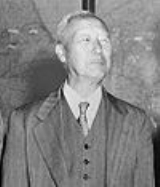
List of Presidents of South Korea

Encyclopedia
- To avoid confusion, all the names on this list follow the Eastern order convention (family name first, given name second) for consistency.
The following is a list of Presidents of South Korea
President of South Korea
The President of the Republic of Korea is, according to the Constitution of the Republic of Korea, chief executive of the government, commander-in-chief of the armed forces, and the head of state of the Republic of Korea...
since its independence.
The presidential term has been set at five years since 1988. It was previously four years from 1948 to 1971 and seven years from 1971 to 1988.
The first column consecutively numbers the individuals who have served as president, while the second column consecutively numbers the Presidential terms or administrations.
List of Heads of State of the Provisional Government of Republic of Korea (1919-1948)
Heads of the Provisional Government1- Rhee Syng-manSyngman RheeSyngman Rhee or Yi Seungman was the first president of South Korea. His presidency, from August 1948 to April 1960, remains controversial, affected by Cold War tensions on the Korean peninsula and elsewhere. Rhee was regarded as an anti-Communist and a strongman, and he led South Korea through the...
(1919–1925) - Park EunsikPark EunsikPark Eunsik was a historian and the second President of the Provisional Government of the Republic of Korea in Shanghai during part of 1925. Soon after the impeachment of Syngman Rhee from the presidency, Park was elected the president, but he soon died from illness while in office...
(1925) - Yi Sang-ryongYi Sang-ryongYi Sang-ryong was a Korean Liberation activist, serving as the third president of the Provisional Government of the Republic of Korea from 1925 to 1926. Yi Sang-ryong, along with Yi Si-yeong and Yi Dong-nyung, started the Military School of the New Rising in 1911.-Notes:...
(1925–1926) - Hong JinHong JinHong Jin , also known as Hong Myeon-hui, was a leader of the Korean independence movement. He is also sometimes known by his pen name Mano , and his Christian name, Andre....
2 (1926) - Yi Dong-nyungYi Dong-nyungYi Dongnyeong was a Korean independence activist. He served as the fourth , seventh , eighth , tenth , and eleventh President of the Provisional Government of the Republic of Korea in exile in Shanghai, China.Yi Dongnyeong, along with Yi Si-yeong,Yi Hoe-young and Yi Sang-ryong, started the Military...
(1926, 1927–1933, 1935–1940) - Kim GuKim GuKim Gu , the sixth and later the last president of the Provisional Government of the Republic of Korea, was a Korean politician, educator, leader of Korean independence movement against the Japanese occupation of Korea that lasted from 1910 to 1945, and reunification activist who had struggled for...
(1926–1927, 1940–1948) - Yang Gi-takYang Gi-takYang Gi-tak was one of the leaders of Korean independence movement who served as the 9th president of the Provisional Government of the Republic of Korea from 1933 to 1935....
(1933–1935)
Chairmen of the Interim Legislative Assembly of South Korea
- Kim Kyu-sikKim Kyu-sikKim Kyu-Sik, also spelled Kimm Giusic and Kimm Kiusic, was a Korean politician and academic during the Korean independence movement and a leader of the Provisional Government of the Republic of Korea...
(1946 - May 31, 1948)
Speaker of the Constituent Assembly (of Republic of Korea; South Korea)
- Rhee Syng-manSyngman RheeSyngman Rhee or Yi Seungman was the first president of South Korea. His presidency, from August 1948 to April 1960, remains controversial, affected by Cold War tensions on the Korean peninsula and elsewhere. Rhee was regarded as an anti-Communist and a strongman, and he led South Korea through the...
(May 31, 1948 - July 20, 1948)
Notes
- The Provisional Government of the Republic of KoreaProvisional Government of the Republic of KoreaThe Provisional Government of the Republic of Korea was the partially recognised government in exile of Korea, based in Shanghai, China, and later in Chongqing, during the Colonial Korea.-History:...
was a government in exileGovernment in exileA government in exile is a political group that claims to be a country's legitimate government, but for various reasons is unable to exercise its legal power, and instead resides in a foreign country. Governments in exile usually operate under the assumption that they will one day return to their...
based in Shanghai, ChinaChinaChinese civilization may refer to:* China for more general discussion of the country.* Chinese culture* Greater China, the transnational community of ethnic Chinese.* History of China* Sinosphere, the area historically affected by Chinese culture...
. Although the current South Korean constitution recognises its de jure sovereignty over the Korean people, the provisional government was not recognized by many international powers. - Hong Jin is also known as Hong Myeon-hui (홍면희).
- From 1961 to 1963, Park Chung-hee held the real power as chairman of the Supreme Council for National ReconstructionSupreme Council for National ReconstructionThe Supreme Council for National Reconstruction, initially named the Revolutionary Committee, was a military junta that oversaw the government of South Korea from May 16, 1961 until the inauguration of the Third Republic of South Korea in 1963...
.
List of Presidents of the Republic of Korea (1948-present)
| I# | A# | Name | Picture | Took office | Left office | Political party |
|---|---|---|---|---|---|---|
| Presidents of the First Republic First Republic of South Korea The First Republic of South Korea was South Korea's first independent government, ruling the country from 1948 to 1960. It succeeded USAMGIK, the United States military government, which ruled the area from 1945 to 1948. The First Republic was established on August 15, 1948, with Syngman Rhee as... |
||||||
| 1st | 1st | Rhee Syng-man Syngman Rhee Syngman Rhee or Yi Seungman was the first president of South Korea. His presidency, from August 1948 to April 1960, remains controversial, affected by Cold War tensions on the Korean peninsula and elsewhere. Rhee was regarded as an anti-Communist and a strongman, and he led South Korea through the... (I Seungman) 이승만 / 李承晩 1875-1965 |
July 20, 1948 | August 15, 1952 | Korea Democratic Korea Democratic Party The Korea Democratic Party was the leading opposition party in the first years of the First Republic of South Korea. It existed from 1945 to 1949, when it merged with other opposition parties. Prominent members included Yun Po-sun... ↓ independence promotion association Liberal Party (South Korea) The Liberal Party is a political party in South Korean established in 1951 by Syngman Rhee.As the 1952 Presidential Elections neared, Rhee made public his intention to organize a party during his August 15 Speech in 1951. Rhee called Yi Bum-seok, then the ambassador in China, and charged him with... (ko) ↓ Liberal Liberal Party (South Korea) The Liberal Party is a political party in South Korean established in 1951 by Syngman Rhee.As the 1952 Presidential Elections neared, Rhee made public his intention to organize a party during his August 15 Speech in 1951. Rhee called Yi Bum-seok, then the ambassador in China, and charged him with... |
|
| 2nd | August 15, 1952 | August 15, 1956 | ||||
| 3rd | August 15, 1956 | April 26, 1960 | ||||
| During this interval, Prime Minister Heo Jeong (허정) Heo Jeong Heo Jeong was a Korean politician and independence activist. Heo was the sixth prime minister of South Korea during the Second Republic. He was also an acting prime minister during the First Republic... was the Acting President. |
||||||
| Presidents of the Second Republic Second Republic of South Korea The Second Republic of South Korea was the government of South Korea for eight months in 1960 and 1961. It succeeded the First Republic, but was followed by a military government under the Supreme Council for National Reconstruction.-Establishment:... |
||||||
| 2nd | 4th | Yun Bo-seon Yun Bo-seon Yun Bo-seon was a Korean former independence activist and politician, and the President of South Korea from 1960 to 1962. Studying in the UK, he graduated from the University of Edinburgh and gained an M.A., After returning home in 1932... 3 (Yun Boseon) 윤보선 / 尹潽善 1897-1990 |
August 13, 1960 | March 22, 1962 | Democratic Liberalism in South Korea This article gives an overview of liberalism in South Korea. It is limited to liberal democratic parties with substantial support, mainly proven by having had a representation in parliament.-Introduction:... ↓ New Democratic Liberalism in South Korea This article gives an overview of liberalism in South Korea. It is limited to liberal democratic parties with substantial support, mainly proven by having had a representation in parliament.-Introduction:... |
|
| During this interval, Prime Minister Park Chung-hee (박정희) Park Chung-hee Park Chung-hee was a Republic of Korea Army general and the leader of South Korea from 1961 to 1979. He seized power in a military coup and ruled until his assassination in 1979. He has been credited with the industrialization of the Republic of Korea through export-led growth... was the Acting President. |
||||||
| Presidents of the Third Republic Third Republic of South Korea The Third Republic of South Korea was the government of South Korea from 1963 to 1972. It was presented as a return to civilian rule after a period of rule by the military junta known as the Supreme Council for National Reconstruction which had overthrown the Second Republic of South Korea in 1961... |
||||||
| 3rd | 5th | Park Chung-hee Park Chung-hee Park Chung-hee was a Republic of Korea Army general and the leader of South Korea from 1961 to 1979. He seized power in a military coup and ruled until his assassination in 1979. He has been credited with the industrialization of the Republic of Korea through export-led growth... (Bak Jeonghui) 박정희 / 朴正熙 1917-1979 |
December 17, 1963 | July 1, 1967 | Democratic Republican Democratic Justice Party The Democratic Justice Party was the ruling party of South Korea from 1980 to 1990.It was formed in 1980 as the Democratic Republican Party and was the political vehicle for Chun Doo-hwan.... |
|
| 6th | July 1, 1967 | July 1, 1971 | ||||
| 7th | July 1, 1971 | December 26, 1972 | ||||
| Presidents of the Fourth Republic Fourth Republic of South Korea The Fourth Republic was the government of South Korea between 1972 and 1981, regulated by the Yushin Constitution adopted in October 1972 and confirmed in a referendum on 21 November 1972. From 1972 to 1979, power was monopolized by Park Chung Hee and his Democratic Republican Party under the... |
||||||
| 3rd | 8th | Park Chung-hee Park Chung-hee Park Chung-hee was a Republic of Korea Army general and the leader of South Korea from 1961 to 1979. He seized power in a military coup and ruled until his assassination in 1979. He has been credited with the industrialization of the Republic of Korea through export-led growth... (Bak Jeonghui) 박정희 / 朴正熙 1917-1979 |
December 27, 1972 | December 26, 1978 | Democratic Republican Democratic Justice Party The Democratic Justice Party was the ruling party of South Korea from 1980 to 1990.It was formed in 1980 as the Democratic Republican Party and was the political vehicle for Chun Doo-hwan.... |
|
| 9th | December 27, 1978 | October 26, 1979 | ||||
| During this interval, Prime Minister Choi Kyu-hah (최규하), was the Acting President. | ||||||
| 4th | 10th | Choi Kyu-hah (Choe Gyuha) 최규하 / 崔圭夏 1919-2006 |
December 8, 1979 | August 16, 1980 | Independent |
|
| During this interval, Prime Minister Park Choong-hoon (박충훈), was the Acting President. | ||||||
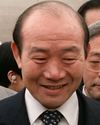
| 5th | 11th | Chun Doo-hwan Chun Doo-hwan Chun Doo-hwan was a ROK Army general and the President of South Korea from 1980 to 1988. Chun was sentenced to death in 1996 for his heavy-handed response to the Gwangju Democratization Movement, but later pardoned by President Kim Young-sam with the advice of then President-elect Kim Dae-jung,... (Jeon Duhwan) 전두환 / 全斗煥 1931- |
 |
September 1, 1980 | March 2, 1981 | Democratic Justice Democratic Justice Party The Democratic Justice Party was the ruling party of South Korea from 1980 to 1990.It was formed in 1980 as the Democratic Republican Party and was the political vehicle for Chun Doo-hwan.... |
| Presidents of the Fifth Republic Fifth Republic of South Korea The Fifth Republic of South Korea was the government of South Korea from 1979 to 1987, replacing the Fourth Republic of South Korea. Throughout this period, the government was controlled by Chun Doo-hwan, a military colleague of the assassinated president Park Chung-hee. This period saw extensive... |
||||||
| 5th | 12th | Chun Doo-hwan Chun Doo-hwan Chun Doo-hwan was a ROK Army general and the President of South Korea from 1980 to 1988. Chun was sentenced to death in 1996 for his heavy-handed response to the Gwangju Democratization Movement, but later pardoned by President Kim Young-sam with the advice of then President-elect Kim Dae-jung,... (Jeon Duhwan) 전두환 / 全斗煥 1931- |
|
March 3, 1981 | February 24, 1988 | Democratic Justice Democratic Justice Party The Democratic Justice Party was the ruling party of South Korea from 1980 to 1990.It was formed in 1980 as the Democratic Republican Party and was the political vehicle for Chun Doo-hwan.... |
| Presidents of the Sixth Republic Sixth Republic of South Korea The Sixth Republic of South Korea is the country's present-day government. It began in 1987, with the transfer of power from the authoritarian Fifth Republic of Chun Doo-hwan.... |
||||||
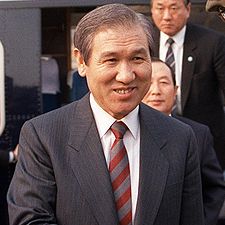
| 6th | 13th | Roh Tae-woo Roh Tae-woo Roh Tae-woo , is a former ROK Army general and politician. He was the 13th president of South Korea .Roh befriended Chun Doo-hwan while in high school in Daegu. In his younger life, Roh was a keen rugby union player.... (No Taeu) 노태우 / 盧泰愚 1932- |
 |
February 25, 1988 | February 24, 1993 | Democratic Justice Democratic Justice Party The Democratic Justice Party was the ruling party of South Korea from 1980 to 1990.It was formed in 1980 as the Democratic Republican Party and was the political vehicle for Chun Doo-hwan.... ↓ Democratic Liberal Grand National Party The Grand National Party is a conservative political party in South Korea. Its Korean name, Hannara, has a double meaning as "Great National" and "Korean National." The GNP holds a majority of seats in the 18th Assembly, lasting from 2008 to 2012.... |
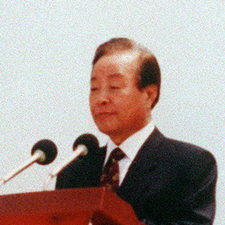
| 7th | 14th | Kim Young-sam Kim Young-sam Kim Young-sam was a South Korean politician and democratic activist. From 1961, he spent 30 years as South Korea's leader of the opposition, and one of Park Chung-hee's most powerful rivals.... (Gim Yeongsam) 김영삼 / 金泳三 1927- |
 |
February 25, 1993 | February 24, 1997 | Democratic Liberal Grand National Party The Grand National Party is a conservative political party in South Korea. Its Korean name, Hannara, has a double meaning as "Great National" and "Korean National." The GNP holds a majority of seats in the 18th Assembly, lasting from 2008 to 2012.... ↓ New Korea Grand National Party The Grand National Party is a conservative political party in South Korea. Its Korean name, Hannara, has a double meaning as "Great National" and "Korean National." The GNP holds a majority of seats in the 18th Assembly, lasting from 2008 to 2012.... ↓ Grand National Grand National Party The Grand National Party is a conservative political party in South Korea. Its Korean name, Hannara, has a double meaning as "Great National" and "Korean National." The GNP holds a majority of seats in the 18th Assembly, lasting from 2008 to 2012.... |
| 8th | 15th | Kim Dae-jung (Gim Daejung) 김대중 / 金大中 1924–2009 |
.png) |
February 25, 1997 | February 24, 2000 | National Congress for New Politics ↓ New Millennium Democratic |
| 9th | 16th | Roh Moo-hyun Roh Moo-hyun Roh Moo-hyun GOM GCB was the 16th President of South Korea .Roh's pre-presidential political career was focused on human rights advocacy for student activists in South Korea. His electoral career later expanded to a focus on overcoming regionalism in South Korean politics, culminating in his... (No Muhyeon) 노무현 / 盧武鉉 1946–2009 |
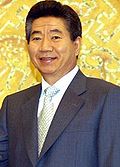 |
February 25, 2000 | March 12, 2004 | New Millennium Democratic ↓ Open Uri Uri Party The Yeollin Uri Party , generally abbreviated to Uri Party , was the briefly ruling political party in South Korea with a centrist political ideology... (Our Open) |
| During this interval, Prime Minister Goh Kun (고건) Goh Kun Goh Kun is a South Korean politician. He served as Prime Minister of South Korea from 1997 to 1998 and from 2003 to 2004... was the Acting President. |
||||||
| May 14, 2004 | February 24, 2008 | Open Uri Uri Party The Yeollin Uri Party , generally abbreviated to Uri Party , was the briefly ruling political party in South Korea with a centrist political ideology... (Our Open) ↓ United New Democratic United New Democratic Party The United New Democratic Party was a political party of South Korea. It was formed out of the Uri Party and its resulting splinter groups. Chung Dong-young was the UNDP candidate in the South Korean presidential election, 2007; he lost to Lee Myung-bak... ↓ United Democratic Democratic Party (Republic of Korea) The Democratic Party is a liberal political party in South Korea.The Democratic Party is the main opposition in the 18th Assembly, lasting from 2008 to 2012.-History:... |
||||
| 10th | 17th | Lee Myung-bak Lee Myung-bak Lee Myung-bak is the President of South Korea. Prior to his presidency, he was the CEO of Hyundai Engineering and Construction and the mayor of Seoul. He is married to Kim Yoon-ok and has three daughters and one son. His older brother is Lee Sang-deuk, a South Korean politician. He attends the... (I Myeongbak) 이명박 / 李明博 1941- |
February 25, 2008 | Incumbent (Term expires February 25, 2013) |
Grand National Grand National Party The Grand National Party is a conservative political party in South Korea. Its Korean name, Hannara, has a double meaning as "Great National" and "Korean National." The GNP holds a majority of seats in the 18th Assembly, lasting from 2008 to 2012.... |
|
See also
- Government of South KoreaGovernment of South KoreaThe Government of South Korea is divided into executive, judicial, and legislative branches. The executive and judicial branches operate primarily at the national level, although various ministries in the executive branch also carry out local functions. Local governments are semi-autonomous, and...
- Vice President of South KoreaVice President of South KoreaThe following is a list of Vice Presidents of South Korea since its independence.To avoid confusion, all the names on this list follow the Eastern convention for consistency....
- List of Prime Ministers of South Korea
- List of Presidents of South Korea by time in office