|
|
|
|
Lionfish
|
| |
|
| |
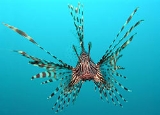
A Lionfish is any of several species of venomous marine fish in the genera Pterois, Parapterois, Brachypterois, Ebosia or Dendrochirus, of the family Scorpaenidae. The lionfish is also known as the Turkey Fish, Dragon Fish, Scorpion or Fire Fish.

Discussion
Ask a question about 'Lionfish'
Start a new discussion about 'Lionfish'
Answer questions from other users
|
Recent Posts

Encyclopedia
A Lionfish is any of several species of venomous marine fish in the genera Pterois, Parapterois, Brachypterois, Ebosia or Dendrochirus, of the family Scorpaenidae. The lionfish is also known as the Turkey Fish, Dragon Fish, Scorpion or Fire Fish. They are notable for their extremely long and separated spines, and have a generally striped appearance, red, green, navy green, brown, orange, yellow, black, maroon, or white.
Native environment
The lionfish is native to the tropical Indo-Pacific region of the world, but various species can be found worldwide. Due to a recent introduction, the lionfish has recently been spotted in the warmer coral regions of the Eastern Atlantic Ocean and Caribbean Sea. Lionfish are an invasive species in the Atlantic Ocean and the Caribbean Sea regions. Successful breeding of the lionfish in captivity has not been reported. In early 2009, the Lionfish was spotted in the Florida Keys, seemingly increasing its range. They have also spread throughout the Bahamas in the process decimating indigenous reef fish.
Size
There are many types of lionfish that vary in size. The common lionfish generally reaches a size of 30-35cm, while smaller lionfish, like the Fuzzy Dwarf, are typically the size of a tennis ball, not including fins.
Caution NOAA encourages everyone (divers and fishers) to be extremely cautious and avoid contact with the venomous spines of the lionfish. Although they are not deadly, they are very painful. Lionfish are not aggressive toward humans and will almost keep their distance when given the opportunity, so they pose a relatively low risk.
Venom
The lionfish is one of the most venomous fish on the ocean bottom floor. Lionfish have venomous dorsal spines that are used purely for defense. When threatened, the fish often faces its attacker in a head-down posture which brings its spines to bear. However, a lionfish's sting is usually not fatal to humans. If a human is envenomed, that person will experience extreme pain, and possibly headaches, vomiting, and breathing difficulties. A common treatment is soaking the afflicted area in hot water, as very few hospitals carry specific treatments. However, immediate emergency medical treatment is still advised, as some people are more susceptible to the venom than others.
Feeding
Lionfish are voracious predators. When hunting, they corner prey using their large fins and then use their quick reflexes to swallow the prey whole. In captivity, lionfish can be trained to eat frozen brine shrimp, mysis, and krill.
Predators
The lionfish have very few natural predators, but the grouper and other lionfish have been found with lionfish remains in their stomachs.
|
| |
|
|