
All Topics  
Leopold Stokowski

 
Leopold Stokowski

   Email Print
   Bookmark   Link


Leopold Stokowski


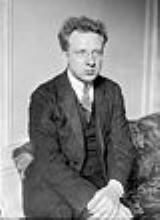
Leopold Stokowski (born Leopold Anthony Stokowski though on occasion in later life he amended his middle name to Antoni and added the family names Stanislaw Boleslawowicz) (April 18 1882 – September 13 1977) was a famous orchestral conductor
Conducting

Conducting is the act of directing a musical performance by way of visible gestures. Orchestras, choirs, concert bands and other musical ensembles often have conductors....
, well known for his free-hand performing style that spurned the traditional baton
Baton (conducting)

A baton is a stick that is used by Conducting primarily to exaggerate and enhance manual and bodily movements. They are generally made of a light wood, fiberglass or carbon fiber which is tapered to a grip shaped like a pear, drop, cylinder etc, usually of cork or wood....
 and for obtaining a characteristically sumptuous sound from many of the great orchestras he conducted.

Stokowski performed with the Cincinnati Symphony Orchestra
Cincinnati Symphony Orchestra

As the fifth-oldest orchestra in the United States, the Cincinnati Symphony Orchestra has a legacy of fine music making as reflected in its performances in historic Music Hall , recordings, and international tours....
, the Philadelphia Orchestra
Philadelphia Orchestra

The Philadelphia Orchestra is an orchestra based in Philadelphia, Pennsylvania, in the United States. It is historically considered to be one of the "Big Five " American orchestras....
, the NBC Symphony Orchestra
NBC Symphony Orchestra

The NBC Symphony Orchestra was a radio orchestra established by David Sarnoff of the National Broadcasting Company especially for conductor Arturo Toscanini....
, New York Philharmonic Symphony Orchestra and the Symphony of the Air
NBC Symphony Orchestra

The NBC Symphony Orchestra was a radio orchestra established by David Sarnoff of the National Broadcasting Company especially for conductor Arturo Toscanini....
.


Discussion
Ask a question about 'Leopold Stokowski'
Start a new discussion about 'Leopold Stokowski'
Answer questions from other users
Full Discussion Forum


Encyclopedia


Leopold Stokowski (born Leopold Anthony Stokowski though on occasion in later life he amended his middle name to Antoni and added the family names Stanislaw Boleslawowicz) (April 18 1882 – September 13 1977) was a famous orchestral conductor
Conducting

Conducting is the act of directing a musical performance by way of visible gestures. Orchestras, choirs, concert bands and other musical ensembles often have conductors....
, well known for his free-hand performing style that spurned the traditional baton
Baton (conducting)

A baton is a stick that is used by Conducting primarily to exaggerate and enhance manual and bodily movements. They are generally made of a light wood, fiberglass or carbon fiber which is tapered to a grip shaped like a pear, drop, cylinder etc, usually of cork or wood....
 and for obtaining a characteristically sumptuous sound from many of the great orchestras he conducted.

Stokowski performed with the Cincinnati Symphony Orchestra
Cincinnati Symphony Orchestra

As the fifth-oldest orchestra in the United States, the Cincinnati Symphony Orchestra has a legacy of fine music making as reflected in its performances in historic Music Hall , recordings, and international tours....
, the Philadelphia Orchestra
Philadelphia Orchestra

The Philadelphia Orchestra is an orchestra based in Philadelphia, Pennsylvania, in the United States. It is historically considered to be one of the "Big Five " American orchestras....
, the NBC Symphony Orchestra
NBC Symphony Orchestra

The NBC Symphony Orchestra was a radio orchestra established by David Sarnoff of the National Broadcasting Company especially for conductor Arturo Toscanini....
, New York Philharmonic Symphony Orchestra and the Symphony of the Air
NBC Symphony Orchestra

The NBC Symphony Orchestra was a radio orchestra established by David Sarnoff of the National Broadcasting Company especially for conductor Arturo Toscanini....
. He was also the founder of the All-American Youth Orchestra, the New York City Symphony, the Hollywood Bowl Symphony Orchestra and The American Symphony Orchestra
American Symphony Orchestra

The American Symphony Orchestra is a New York-based American orchestra founded in 1962 by Leopold Stokowski, then aged 80. Following Maestro Stokowski's departure, Kazuyoshi Akiyama was appointed Music Director of the American Symphony Orchestra from 1973-1978....
. He conducted the music for and appeared in Disney’s
Walt Disney

Walter Elias Disney was a multiple Academy Award-winning American film producer, film director, screenwriter, voice actor, animator, entrepreneur and philanthropist....
 Fantasia
Fantasia (film)

Fantasia is a 1940 in film List of animated feature-length films produced by Walt Disney, and is the third film in the List of Disney theatrical animated features#official canon....
 and was portrayed by Bugs Bunny
Bugs Bunny

Bugs Bunny is a fictional rabbit who appears in the Looney Tunes and Merrie Melodies series of animation films produced by Leon Schlesinger Productions, which became Warner Bros....
 in the 1948 Looney Tunes
Looney Tunes

Looney Tunes is a Warner Bros. animated cartoon series which ran in many movie theatres from 1930 to 1969. It preceded the Merrie Melodies series and is Warner Bros.'s first animated theatrical series....
 episode Long-Haired Hare
Long-Haired Hare

Long-Haired Hare is a 1948 Warner Brothers Looney Tunes theatrical cartoon short released in 1949, directed by Chuck Jones and written by Michael Maltese....
.

Early life

Stokowski was the son of the English-born Polish
Poland

Poland , officially the Republic of Poland , is a country in Central Europe. Poland is bordered by Germany to the west; the Czech Republic and Slovakia to the south; Ukraine, Belarus and Lithuania to the east; and the Baltic Sea and Kaliningrad Oblast, a Russian Enclave and exclave, to the north....
 cabinetmaker Kopernik Józef Boleslawowicz Stokowski and his Irish
Irish people

The Irish people are a Western European ethnic group who originate in Ireland, in north western Europe. Ireland has been populated for around 9,000 years , with the Irish people's earliest ancestors recorded as the Nemedians, Fomorians, Fir Bolgs, Tuatha D? Danann and the Milesians ?the last group supposedly representing the "pure" Gaelic a...
 wife Annie Marion Stokowski, née
Nee

Nee may refer to:* Married and maiden names or Nee, French for "born", indicates a woman's birth surname* NEE, a political party in Flanders, Belgium...
 Moore. There is some mystery surrounding his early life. For example, he spoke with a slightly Eastern European accent
Accent (linguistics)

In linguistics, an accent is a manner of pronunciation of a language. Accents can be confused with dialects which are varieties of language differing in vocabulary, syntax, and morphology , as well as pronunciation....
, though born and raised in London
London

London is the capital of both England and the United Kingdom, and the most populous municipality in the European Union. An important settlement for two millennia, History of London goes back to its founding by the Roman Empire....
. In addition, on occasion, he gave his birth year as 1887 instead of 1882, as in a letter to the Hugo Riemann Musiklexicon in 1950, which also gave his birthplace as Krakow, Poland. Nicolas Slonimsky, editor of Baker's Biographical Dictionary of Musicians received a letter from a Finnish encyclopedia editor that said, "The Maestro himself told me that he was born in Pomerania, Germany, in 1889."

However, his birth certificate (signed by J. Claxton, registrar at the General Office, Somerset House, London, in the parish of All Souls, County of Middlesex) gives his birth on April 18, 1882, at 13 Upper Marylebone Street (now New Cavendish Street), in the Marylebone District of London. He was named after his Polish grandfather Leopold, who died in the county of Surrey on January 13, 1879, at the age of 49. The "mystery" surrounding his origins and accent is clarified in Oliver Daniel's 1000-page biography "Stokowski - A Counterpoint of View" (1982) wherein (Chapter 12) he reveals that Stokowski came under the influence of his first wife, the pianist Olga Samaroff, who, for professional and career reasons, "urged him to emphasize only the Polish part of his background" once he became domiciled in the USA.

Stokowski trained at the Royal College of Music
Royal College of Music

The Royal College of Music is a college or university school of music located in the South Kensington district of London, England, and historically one of the most influential music institutions in Europe....
, which he entered in 1896 at age thirteen, making him one of the youngest students to do so. In his later life in America he would perform six of the nine symphonies composed by fellow organ student Ralph Vaughan Williams
Ralph Vaughan Williams

Ralph Vaughan Williams Order of Merit was an England composer of symphony, chamber music, opera, choral music, and film Film score. He was also a collector of England folk music and folk song; this also influenced his editorial approach to the English Hymnal, which began in 1904, many folk song arrangements being set as hymn tunes,...
. He sang in the choir
Choir

A choir, chorale, or chorus is a musical ensemble of singers. Choral Music, in turn, is the music written specifically for a choir to perform....
 of St. Marylebone Church
Marylebone

Marylebone is an affluent, inner-city area of central London, located within the City of Westminster. It can be pronounced as Marribun or Mar-lee-bone Marylebone is in an area of London that can be roughly defined as the area bounded by Oxford Street to the south, Marylebone Road to the north, Edgware Road to the west and Portland Place to...
 and later became Assistant Organist
Organist

An organist is a musician who plays any type of organ . An organist may play organ repertoire, play with an musical ensemble or orchestra, or accompany one or more singers or instrumentalist....
 to Sir Henry Walford Davies
Henry Walford Davies

Sir Henry Walford Davies, Royal Victorian Order, Order of the British Empire, was a United Kingdom composer, who held the title Master of the King's Musick from 1934 until 1941....
 at The Temple Church
Temple Church

The Temple Church is a late 12th century Church in London located between Fleet Street and the River Thames, built for and by the Knights Templar as their English headquarters....
. At the age of 16, he was elected to membership in the Royal College of Organists
Royal College of Organists

The Royal College of Organists or RCO, is an educational body of the United Kingdom. Its role is to promote organ and Choir music and it offers Music education for organists and choral directors....
. In 1900 he formed the choir
Choir

A choir, chorale, or chorus is a musical ensemble of singers. Choral Music, in turn, is the music written specifically for a choir to perform....
 of St. Mary's Church, Charing Cross Road
St. Mary's Church, Charing Cross Road

St Mary's Church, Charing Cross Road was an Church of England church in Charing Cross Road , London from 1851. The building was formerly the site of an ancient church, called 'The Greek Church', and was never fully built ....
, where he trained the choirboys and played the organ. In 1902 he was appointed organist
Organist

An organist is a musician who plays any type of organ . An organist may play organ repertoire, play with an musical ensemble or orchestra, or accompany one or more singers or instrumentalist....
 and choir
Choir

A choir, chorale, or chorus is a musical ensemble of singers. Choral Music, in turn, is the music written specifically for a choir to perform....
 director of St. James's Church, Piccadilly
Piccadilly

Piccadilly is a major London street, running from Hyde Park Corner in the west to Piccadilly Circus in the east. It is completely within the city of Westminster....
. He also attended The Queen's College, Oxford
The Queen's College, Oxford

The Queen's College, founded 1341, is one of the Colleges of the University of Oxford of the University of Oxford in England. Queen's is centrally situated on the High Street, and is renowned for its eighteenth-century architecture....
, where he earned a Bachelor of Music
Bachelor of Music

Bachelor of Music is an academic degree awarded by a college, university, or College or university school of music upon completion of program of study in music....
 degree
Academic degree

A degree is any of a wide range of status levels conferred by institutions of higher education, such as University, normally as the result of successfully completing a program of study....
 in 1903.

Professional career


New York, Cincinnati

In 1905, Stokowski began work in New York City
New York City

The City of New York is the List of United States cities by population in the United States, while the New York metropolitan area ranks among the List of urban areas by population....
 as the organist and choir director of St. Bartholomew's Church. He was very popular amongst the parishioners who included members of the Vanderbilt family
Vanderbilt family

The Vanderbilt family is a significant international family with Dutch people origins, who were highly prominent during the 1800s because of the family patriarch Cornelius Vanderbilt, Wealthy historical figures 2008, who created railroad and shipping empires....
, but eventually resigned the position in pursuit of a career of orchestra conductor. He moved to Paris for additional study before hearing that the Cincinnati Symphony Orchestra
Cincinnati Symphony Orchestra

As the fifth-oldest orchestra in the United States, the Cincinnati Symphony Orchestra has a legacy of fine music making as reflected in its performances in historic Music Hall , recordings, and international tours....
 would be needing a new conductor when it returned from a hiatus. So, in 1908, he began his campaign to obtain the position, writing multiple letters to the orchestra's president, Mrs. C. R. Holmes, and traveling to Cincinnati for a personal interview. Eventually he was granted the post and officially took up his duties in the fall of 1909. That was the year of his official conducting debut in Paris with the Colonne Orchestra on May 12 1909. His London debut took place the following week on May 18 with the New Symphony Orchestra at Queen's Hall.

Stokowski was a great success in Cincinnati, introducing the idea of "pop concerts" and conducting the United States premieres of new works by such composers as Edward Elgar
Edward Elgar

Sir Edward William Elgar, 1st Baronet, Order of Merit, Royal Victorian Order was an England composer. Several of his first major orchestral works, including the Enigma Variations and the Pomp and Circumstance Marches, were greeted with acclaim....
 whose 2nd Symphony was given there on November 24 1911. However, in early 1912, he became sufficiently frustrated with the politics of the orchestra's board that he tendered his resignation. There was a dispute over the resignation, but on April 12 it was finally accepted.

Philadelphia

Two months later, Stokowski was appointed director of the Philadelphia Orchestra
Philadelphia Orchestra

The Philadelphia Orchestra is an orchestra based in Philadelphia, Pennsylvania, in the United States. It is historically considered to be one of the "Big Five " American orchestras....
 and made his Philadelphia debut on October 11 1912. This position would bring him some of his greatest accomplishments and recognition. It has been suggested that Stokowski quit at Cincinnati knowing full well that the job in Philadelphia was already his, or as Oscar Levant
Oscar Levant

Oscar Levant was an United States pianist, composer, author, comedian, and actor. He was more famous for his mordant character and witticisms, on the radio and in film and television, than for his music....
 suggested in his book A Smattering of Ignorance, "he had the contract in his back pocket." Before he took up his Philadelphia appointment, however, Stokowski returned to England to conduct two concerts at the Queen's Hall, London. On 22 May 1912 he conducted the London Symphony Orchestra in a programme which he was to repeat in its entirety 60 years later at the age of 90, and on 14 June 1912 he conducted an all-Wagner concert that featured the famous soprano, Lilian Nordica.

In 1914, he was elected to honorary membership in Phi Mu Alpha Sinfonia
Phi Mu Alpha Sinfonia

Phi Mu Alpha Sinfonia is a collegiate social fraternity for men with an interest in music. The fraternity is also referred to as Phi Mu Alpha or Sinfonia, and its members are known as Sinfonians....
, the national fraternity for men in music.

Stokowski rapidly garnered a reputation as a showman. His flair for the theatrical included grand gestures such as throwing the sheet music on the floor to show he did not need to conduct from a score. He also experimented with lighting techniques in the concert hall, at one point conducting in a dark hall with only his head and hands lighted, at other times arranging the lights so they would cast theatrical shadows of his head and hands. Late in the 1929-30 season, he started conducting without a baton; his free-hand manner of conducting became one of his trademarks.

On the musical side, Stokowski nurtured the orchestra and shaped the "Stokowski" sound, or what became known as the "Philadelphia Sound". He encouraged "free bowing
Free bowing

In a symphony orchestra, free bowing is a performance technique used by a stringed instrument to create a fuller sound than can be achieved by synchronized bowing....
" from the string section, "free breathing" from the brass section, and continually altered the seating arrangements of the sections as well as the acoustics of the hall in order to create better sound. Stokowski is credited as being the first conductor to adopt the seating plan used by most orchestras today with first and second violins together on the left, violas and cellos on the right. But he was also known for tinkering with the orchestration
Orchestration

Orchestration is the study or practice of writing music for an orchestra or of adapting for orchestra music composed for another medium. It only gradually over the course of music history came to be regarded as a compositional art in itself....
 of famous works by such composers as Beethoven
Ludwig van Beethoven

Ludwig van Beethoven was a German composer and pianist. He was a crucial figure in the transitional period between the Classical music era and Romantic music eras in classical music, and remains one of the most acclaimed and influential composers of all time....
, Tchaikovsky
Pyotr Ilyich Tchaikovsky

Pyotr Ilyich Tchaikovsky – ) was a Russian composer of the Romantic music era. He wrote some of the most popular concert and theatrical music in the current classical repertoire, including the ballets Swan Lake and Nutcracker, the 1812 Overture, his Piano Concerto No....
, Sibelius
Jean Sibelius

Johan Julius Christian Sibelius was a Finland composer of the later Romantic music whose music played an important role in the formation of the Finnish national identity....
, J.S. Bach
Johann Sebastian Bach

Johann Sebastian Bach was a German composer and organ whose sacred and secular works for choir, orchestra, and solo instruments drew together the strands of the Baroque music period and brought it to its ultimate maturity....
 and Brahms
Johannes Brahms

Johannes Brahms , composer and pianist, was one of the leading musicians of the Romantic music. Born in Hamburg, Brahms spent much of his professional life in Vienna, Austria, where he was a leader of the musical scene....
. In one instance, he even revised the ending of a work, the Romeo and Juliet Fantasy Overture, by Tchaikovsky, so that it would end quietly, taking his notion from Modest Tchaikovsky's Life and Letters of Peter Ilych Tchaikovsky (translated by Rosa Newmarch: 1906) that the composer had provided a quiet ending of his own at Balakirev's suggestion. He made major revisions to Mussorgsky
Modest Mussorgsky

Modest Petrovich Mussorgsky , one of the Russian composers known as the Five, was an innovator of Music of Russia. He strove to achieve a uniquely Russian musical identity, often in deliberate defiance of the established conventions of Western music....
's Night on Bald Mountain
Night on Bald Mountain

A Night on Bald Mountain usually refers to one of two compositions?either a seldom performed early 'tone poem' by Modest Mussorgsky, St. John's Night on the Bare Mountain , or a later and very popular 'Fantasia ' arranged by Nikolay Rimsky-Korsakov, A Night on the Bare Mountain , based on the vocal score of the "Dream Vision of th...
, making significant alterations to Rimsky-Korsakov
Nikolai Rimsky-Korsakov

Nikolai Andreyevich Rimsky-Korsakov , also Nikolay, Nicolai, and Rimsky-Korsakoff, was a Russian composer, and a member of the group of composers known as "The Five." Noted particularly for a predilection for folk and fairy-tale subjects as well as his extraordinary skill in orchestration, his best known orchestral compositions...
's adaptation of the work, and making it sound, in some places, similar to the original. In the film Fantasia
Fantasia (film)

Fantasia is a 1940 in film List of animated feature-length films produced by Walt Disney, and is the third film in the List of Disney theatrical animated features#official canon....
, however, Stokowski did not end the work with a big climax, but allowed the last measures of it to segue right into the beginning of Schubert
Franz Schubert

Franz Peter Schubert was an Austrian composer. He wrote some 600 lieder, nine symphonies , liturgy music, operas, and a large body of chamber music and solo piano music....
's Ave Maria
Ellens dritter Gesang

Ellens dritter Gesang , Ellen's third song in English language, composed by Franz Schubert in 1825, is one of Schubert's most popular works, although some misconceptions exist regarding its provenance....
.

Many serious music critics have been horrified at the liberties Stokowski took—liberties which were common in the nineteenth century, but had since mostly died out, as faithful adherence to the composer's score became more common. However, Stokowski often left scores completely unretouched, particularly those many hundreds of new works which he was conducting for the first time. On the other hand, he was by no means alone in his alterations to more familiar scores. Toscanini, for example, who had a reputation for "doing as written", was equally adept at making similar changes to composers' scores, as in Tchaikovsky's Manfred symphony, where he added tam-tam crashes to the end of the first movement, rewrote the wind, brass and string parts here and there, and cut 100 bars out of the finale. Toscanini's alterations, however, nearly always tended to be much more subtle, and much less frequent than Stokowski's.

Stokowski's repertoire was broad and included many contemporary works. He was the only conductor to perform all of Schoenberg's orchestral works during the composer's own lifetime, several of which were world premieres. He gave the first American performance of Schoenberg's Gurrelieder in 1932. It was recorded "live" on 78 rpm records and remained the only recording of the work in the catalog until the advent of the LP. Stokowski also gave the US Premieres of four of Shostakovich's symphonies, nos 1, 3, 6 and 11. In 1916, he conducted the United States premiere of Mahler's
Gustav Mahler

Gustav Mahler was a Bohemian-born Austrian composer and conducting. He was best known during his own lifetime as one of the leading orchestral and operatic conductors of the day....
 8th Symphony. He added works by Rachmaninoff
Sergei Rachmaninoff

Sergei Vasilievich Rachmaninoff was a Russian composer, pianist, and conducting. He was one of the finest pianists of his day and, as a composer, the last great representative of Russian late Romantic music in classical music....
, giving the world premieres of his 3rd symphony
Symphony No. 3 (Rachmaninoff)

Sergei Rachmaninoff composed his Symphony No. 3 in A minor, Op. 44 between 1935 and 1936. It was premiered on November 6, 1936, with Leopold Stokowski conducting the Philadelphia Orchestra....
, the 4th piano concerto
Piano Concerto No. 4 (Rachmaninoff)

Sergei Rachmaninoff completed his Piano Concerto No. 4 in G minor, Op. 40 in 1926 and the work currently exists in three versions. Following its unsuccessful premiere he made cuts and other amendments before publishing it in 1928....
 and the Paganini Rhapsody
Rhapsody on a Theme of Paganini

The Rhapsody on a Theme of Paganini in A minor, opus number 43, is a concertante work , written by Sergei Rachmaninoff. It is written for solo piano and symphony orchestra, closely resembling a piano concerto....
; Sibelius
Jean Sibelius

Johan Julius Christian Sibelius was a Finland composer of the later Romantic music whose music played an important role in the formation of the Finnish national identity....
, whose last three symphonies were given their US premieres in Philadelphia in the 1920s; and Igor Stravinsky
Igor Stravinsky

Igor Fyodorovich Stravinsky was a Russian-born composer, considered by many to be the most influential composer of 20th century music. He was a quintessentially Cosmopolitanism Russian who was named by Time as one of the 100 most influential people of the century....
, many of whose works were also given their first American performances by Stokowski. In 1922, he introduced The Rite of Spring to the USA, gave its first staged performance there in 1930 with Martha Graham dancing the part of The Chosen One, and at the same time made the first US recording of the work. Seldom an opera conductor, Stokowski did give the US premieres in Philadelphia of the original version of Mussorgky's Boris Godunov
Boris Godunov (opera)

Boris Godunov is an opera by Modest Mussorgsky . The work was composed between 1868 and 1874 in Saint Petersburg, Russia. It is Mussorgsky's only completed opera and is considered his masterpiece....
 (1929) and Alban Berg's Wozzeck (1931). Many works by such composers as Bliss, Bruch, Busoni, Chavez, Copland, Enesco, Falla, Hindemith, Holst, Malipiero, Miaskovsky, Piston, Poulenc, Prokofiev, Ravel, Respighi, Roussel, Scriabin, Siegmeister, Szymanowski, Varese, Villa-Lobos, Webern, and Weill, amongst countless other lesser names, received their US Premieres under Stokowski's direction in Philadelphia.

In 1933, he started "Youth Concerts" for younger audiences, which are still a Philadelphia tradition, and fostered youth music programs.

After disputes with the board, Stokowski began to withdraw from involvement in The Philadelphia Orchestra from 1936 onwards, allowing co-conductor Eugene Ormandy
Eugene Ormandy

Eugene Ormandy was a Hungary-United States conducting and violinist....
 to gradually take over. He shared principal conducting duties with Ormandy from 1936-1940 and did not return until 1960.

Stokowski appeared as himself in the motion picture The Big Broadcast of 1937, conducting two of his Bach transcriptions. That same year he also conducted and acted in One Hundred Men and a Girl
One Hundred Men and a Girl

One Hundred Men and a Girl is a 1937 in film musical comedy film, written by Charles Kenyon, Bruce Manning and James Mulhauser from a story by Hanns Kr?ly and directed by Henry Koster....
, with Deanna Durbin
Deanna Durbin

Deanna Durbin is a Canada singer and actress....
 and Adolphe Menjou
Adolphe Menjou

Adolphe Jean Menjou was an United States actor. His career spanned both silent films and talkies acting in such important films as The Sheik , A Woman of Paris, Morocco , and A Star Is Born ....
. In 1939, Stokowski collaborated with Walt Disney
Walt Disney

Walter Elias Disney was a multiple Academy Award-winning American film producer, film director, screenwriter, voice actor, animator, entrepreneur and philanthropist....
 to create the motion picture for which he is best known: Fantasia
Fantasia (film)

Fantasia is a 1940 in film List of animated feature-length films produced by Walt Disney, and is the third film in the List of Disney theatrical animated features#official canon....
. He conducted all the music (with the exception of a "jam session" in the middle of the film) and included his own orchestrations for the Toccata and Fugue in D Minor and Night on Bald Mountain/Ave Maria segments. Stokowski even got to talk to (and shake hands with) Mickey Mouse
Mickey Mouse

Mickey Mouse is a funny animal cartoon character who has become an icon for The Walt Disney Company. Mickey Mouse was created in 1928 by Walt Disney and Ub Iwerks and voiced by Walt Disney....
 on screen, although he would later say with a smile that Mickey Mouse got to shake hands with him. Most of the music was recorded in the Academy of Music, using multi-track stereophonic sound. Stokowski also appeared in the 1947 film Carnegie Hall along with Bruno Walter
Bruno Walter

Bruno Walter was a Germany-born Conducting and composer. He was born in Berlin, but moved to several countries between 1933 and 1939, finally settling in the United States in 1939....
, Fritz Reiner
Fritz Reiner

Frederick Martin ?Fritz? Reiner was a prominent Conducting of opera and symphonic music in the twentieth century....
, Jascha Heifetz
Jascha Heifetz

Jascha Heifetz was a Jewish violin virtuoso born in Lithuania . He is hailed as the greatest violinist of the 20th century.Early life ...
, Artur Rubinstein, Ezio Pinza
Ezio Pinza

The Italian basso Ezio Pinza was one of the outstanding opera singers of the first half of the 20th century. He spent 22 seasons at New York's Metropolitan Opera, appearing in more than 750 performances of 50 operas....
 and other great classical musicians of the day.

On his return in 1960, Stokowski appeared with Philadelphia Orchestra as a guest conductor. He also made two LP recordings with them for Columbia Records
Columbia Records

Columbia Records is an American record label founded in 1888.Columbia is the oldest surviving brand name in pre-recorded sound, being the first record company to produce pre-recorded records as opposed to blank cylinders....
, one including a performance of Manuel De Falla
Manuel de Falla

Manuel de Falla y Matheu was a Spain composer of European classical music....
's El amor brujo
El amor brujo

El amor brujo is a piece of music composed by Manuel de Falla. It was initially commissioned in 1914-15 as a gitaner?a by Pastora Imperio, a renowned gypsy dancer, and was scored for Voice instrumental music, actors, and chamber orchestra....
, which he had introduced to America in 1922 and had previously recorded for RCA Victor with the Hollywood Bowl Symphony Orchestra in 1946, and a Bach album which featured the 5th Brandenburg Concerto and three of his own Bach transcriptions. He continued to appear as a guest conductor on several more occasions, his final Philadelphia Orchestra concert taking place in 1969.

In honor of Stokowski's vast influence on music and the Philadelphia performing arts community, on February 24, 1969 he was awarded the prestigious University of Pennsylvania Glee Club Award of Merit. Beginning in 1964, this award "established to bring a declaration of appreciation to an individual each year that has made a significant contribution to the world of music and helped to create a climate in which our talents may find valid expression."

All-American Youth Orchestra

With his Philadelphia Orchestra contract having expired in 1940, Stokowski immediately formed the All-American Youth Orchestra, its players' ages ranging from 18 to 25. It toured South America in 1940 and North America in 1941 and was met with rave reviews. Although Stokowski made a number of recordings with the AAYO for Columbia, the technical standard was not as high as had been achieved with the Philadelphia Orchestra for RCA Victor. In any event, the AAYO was disbanded when America entered the war and plans for another extensive tour in 1942 were abandoned.

NBC Symphony Orchestra

During this time, Stokowski also became chief conductor of the NBC Symphony Orchestra
NBC Symphony Orchestra

The NBC Symphony Orchestra was a radio orchestra established by David Sarnoff of the National Broadcasting Company especially for conductor Arturo Toscanini....
 on a three-year contract (1941-1944). The NBC's regular conductor, Arturo Toscanini
Arturo Toscanini

Arturo Toscanini was an Italian people conductor. One of the most acclaimed musicians of the late 19th and 20th Centuries, he was renowned for his brilliant intensity, his restless perfectionism, his phenomenal ear for orchestral detail and sonority, and his photographic memory....
, did not wish to undertake the 1941-42 NBC season though he did accept guest engagements with the Philadelphia Orchestra. Stokowski conducted a great deal of contemporary music with the NBC Symphony, including the US premiere of Prokofiev's Alexander Nevsky
Alexander Nevsky

Saint Alexander Nevsky was the Grand Prince of Novgorod and Vladimir-Suzdal during some of the most trying times in the country's history. Commonly regarded as the key figure of medieval Russia, Alexander was the grandson of Vsevolod the Big Nest and rose to legendary status on account of his military victories over the German invaders whi...
 in 1943, the world premieres of Schoenberg
Schoenberg

Schoenberg is the surname of several persons.* Arnold Schoenberg , Austrian-American composer of 20th Century music* Isaac Jacob Schoenberg , Romanian mathematician...
's Piano Concerto (with Eduard Steuermann) and Antheil's 4th Symphony, both in 1944, and new works by Hovhaness, Stravinsky, Hindemith, Milhaud
Darius Milhaud

Darius Milhaud was a French composer and teacher. He was a member of Les Six - also known as the Groupe des Six - and one of the most prolific composers of the 20th century....
, Howard Hanson
Howard Hanson

Howard Harold Hanson was an United States of America composer, conducting, educator, music theorist, and ardent champion of American classical music....
, William Schumann, Morton Gould
Morton Gould

Morton Gould was an United States pianist, composer, conductor, and arranger.Born in Richmond Hill, New York, New York, Gould was recognized early as a child prodigy with abilities in improvisation and music composition....
 and many others. He also conducted several British works with this orchestra, including Vaughan Williams' 4th Symphony, Holst
Gustav Holst

Gustav Theodore Holst was an English composer and was a teacher for nearly 20 years. He is most famous for his orchestral suite The Planets....
's The Planets
The Planets

The Planets Opus number 32 is a seven-Movement orchestral suite by the United Kingdom composer Gustav Holst, written between 1914 and 1916....
, and George Butterworth
George Butterworth

George Sainton Kaye Butterworth, MC was an England composer best known for his tone poem The Banks of Green Willow and his settings of A. E....
's A Shropshire Lad
A Shropshire Lad

A Shropshire Lad is a cycle of sixty-three poems by the England poet Alfred Edward Housman....
. Stokowski also made a number of recordings with the NBC Symphony for RCA Victor, including Tchaikovsky's 4th Symphony, a work which was never in Toscanini's repertoire. Toscanini then returned as co-conductor of the NBC Symphony with Stokowski for the remaining two years of the latter's contract.

New York City Symphony Orchestra

In 1944, on the recommendation of Mayor Fiorello La Guardia, Stokowski helped form the New York City Symphony Orchestra, which they intended would make music accessible for middle-class workers. Ticket prices were set low, and performances took place at convenient, after-work hours. Many early concerts were standing room only; however, a year later in 1945, Stokowski was at odds with the board (who wanted to trim expenses even further) and he resigned. Stokowski made three 78pm sets with the New York City Symphony for RCA: Beethoven's 6th Symphony, Richard Strauss's Death and Transfiguration, and a selection of orchestral music from Bizet's Carmen
Carmen

Carmen is a French op?ra comique by Georges Bizet. The libretto is by Henri Meilhac and Ludovic Hal?vy, based on the Carmen by Prosper M?rim?e, first published in 1845, itself influenced by the narrative poem "The Gypsies" by Pushkin....
.

Hollywood Bowl Symphony Orchestra

In 1945, he founded the Hollywood Bowl Symphony Orchestra. The orchestra lasted for two years before it was disbanded for live concerts, but not for recordings, which continued well into the 1960s. Stokowski's own recordings (made in 1945-46) included Brahms's 1st Symphony, Tchaikovsky's Pathetique
Pathetique

The adjective Path?tique, from the French language, denoted a feeling of passion and sorrow in Ancient Greek language and was used by several composers as a name for works they deemed passionate and sorrowful....
 and a number of short popular pieces. Some of Stokowski's open-air HBSO concerts were broadcast and recorded, and have been issued on CD, including a collaboration with Percy Grainger on Grieg's Piano Concerto in the summer of 1945. (It began giving live concerts again as the "Hollywood Bowl Orchestra
Hollywood Bowl Orchestra

The Hollywood Bowl Orchestra is a symphony orchestra which is managed by the Los Angeles Philharmonic Association and plays the vast majority of its performances at the Hollywood Bowl....
" in 1991, under John Mauceri
John Mauceri

John Mauceri is an American conductor. In 2006, Mauceri was appointed Chancellor of the University of North Carolina School of the Arts. He was a protege of Leonard Bernstein....
). There was a memorable 1949 cartoon spoof of Stokowski at the Bowl with Bugs Bunny
Bugs Bunny

Bugs Bunny is a fictional rabbit who appears in the Looney Tunes and Merrie Melodies series of animation films produced by Leon Schlesinger Productions, which became Warner Bros....
 playing the conductor in "Long-Haired Hare
Long-Haired Hare

Long-Haired Hare is a 1948 Warner Brothers Looney Tunes theatrical cartoon short released in 1949, directed by Chuck Jones and written by Michael Maltese....
" by Chuck Jones
Chuck Jones

Charles Martin "Chuck" Jones was an American animator, cartoon artist, screenwriter, film producer, and film director of animation films, most memorably of Looney Tunes and Merrie Melodies shorts for the Warner Bros....
.

New York Philharmonic

He continued to appear frequently with the Los Angeles Philharmonic
Los Angeles Philharmonic

The Los Angeles Philharmonic is an United States orchestra based in Los Angeles, California, California, United States. It has a regular season of concerts from October through June at the Walt Disney Concert Hall, and a summer season at the Hollywood Bowl from July through September....
, both at the Hollywood Bowl
Hollywood Bowl

The Hollywood Bowl is a famous modern amphitheatre in the Hollywood area of Los Angeles, California, USA, that is used primarily for music performances....
 and other venues. Then in 1946 Stokowski became a chief Guest Conductor of the New York Philharmonic
New York Philharmonic

The New York Philharmonic is the oldest active symphony orchestra in the United States, organized during 1842. Based in New York City, the Philharmonic performs most of its concerts at Avery Fisher Hall....
. His many "first performances" with them included the US Premiere of Prokofiev's 6th Symphony in 1949. He also made many splendid recordings with the NYPO for Columbia, including the World Premiere Recordings of Vaughan Williams's 6th Symphony and Messiaen's L'Ascension
L'Ascension

L'Ascension is a piece for orchestra, composed by Olivier Messiaen in 1932-33. Messiaen described it as "4 Meditations for orchestra".The orchestral piece is in four brief sections:...
 also in 1949.

International career

However, when in 1950 Dimitri Mitropoulos was appointed Chief Conductor of the NYPO, Stokowski began a new international career which commenced in 1951 with a nation-wide tour of England: during the Festival of Britain celebrations he conducted the Royal Philharmonic Orchestra at the invitation of Sir Thomas Beecham. It was during this first visit that he made his debut recording with a British orchestra, the Philharmonia, of Rimsky-Korsakov's Scheherezade. During that same summer he also toured and conducted in Germany, Holland, Switzerland, Austria, and Portugal, establishing a pattern of guest-conducting abroad during the summer months while spending the winter seasons conducting in the USA. This scheme was to hold good for the next 20 years during which Stokowski conducted many of the world's greatest orchestras, simultaneously making recordings with them for various labels. Thus he conducted and recorded with the main London orchestras as well as the Berlin Philharmonic, the Suisse Romande Orchestra, the French National Radio Orchestra, the Czech Philharmonic, the Hilversum (Netherlands) Radio Philharmonic, and so on.

Symphony of the Air, Houston Symphony Orchestra

Stokowski returned to the NBC Symphony Orchestra in 1954 for a series of recording sessions for RCA. The repertoire included Beethoven's 'Pastoral' Symphony, Sibelius's 2nd Symphony, Acts 2 & 3 of Tchaikovsky's 'Swan Lake' and highlights from Saint-Saëns
Camille Saint-Saëns

Charles-Camille Saint-Sa?ns was a French composer, organist, Conductor , and pianist, known especially for The Carnival of the Animals, Danse Macabre , Samson and Delilah , Havanaise , Introduction and Rondo capriccioso , and his Symphony No....
's Samson and Delilah
Samson and Delilah (opera)

Samson et Dalila , Op. 47, is a Grand Opera in three acts and four tableaux by Camille Saint-Sa?ns to a French language libretto by Ferdinand Lemaire....
 with Rise Stevens and Jan Peerce. After the NBC Symphony Orchestra was disbanded as the official ensemble of the NBC radio network, it was re-formed as the Symphony of the Air with Stokowski as notional Music Director, and as such performed many concerts and made recordings from 1954 until 1963.

From 1955 to 1961, Stokowski was also the Music Director of the Houston Symphony Orchestra
Houston Symphony Orchestra

The Houston Symphony Orchestra is a professional orchestra based in Houston, Texas. Since 1966, it has performed at the Jesse H. Jones Hall for the Performing Arts in downtown Houston....
. For his debut appearance with the orchestra he gave the first performance of the Symphony No.2 Mysterious Mountain by Alan Hovhaness
Alan Hovhaness

Alan Hovhaness was an United States composer of Armenian-American and Scottish American ancestry, but the inspiration for his mature work was as much Eastern as Western....
 - one of many living American composers whose music he championed over the years. He also gave the US Premiere in Houston of Shostakovich's 11th Symphony (7 April 1958) and made its first American recording. Stokowski's other recordings with the Houston Symphony included Carl Orff's Carmina Burana and his own edition of Gliere's Ilya Mouremetz Symphony.

American Symphony Orchestra and London

In 1960, Stokowski made one of his infrequent appearances in the opera house, when he conducted Puccini's Turandot
Turandot

Turandot is an opera in three acts by Giacomo Puccini, set to a libretto in Italian by Giuseppe Adami and Renato Simoni. Though Puccini's first interest in the subject was based on his reading of Friedrich Schiller's adaptation of the play, his work is most nearly based on the earlier text Turandot by Carlo Gozzi....
 at the New York Metropolitan, in memorable performances with a cast that included Birgit Nilsson, Franco Corelli and Anna Moffo. In 1962, at the age of 80, Stokowski founded the American Symphony Orchestra
American Symphony Orchestra

The American Symphony Orchestra is a New York-based American orchestra founded in 1962 by Leopold Stokowski, then aged 80. Following Maestro Stokowski's departure, Kazuyoshi Akiyama was appointed Music Director of the American Symphony Orchestra from 1973-1978....
. He served as Music Director for the orchestra, until May 1972 when, at the age of 90, he returned to England. One of his notable British guest conducting engagements in the 1960s was the first Proms performance of Gustav Mahler
Gustav Mahler

Gustav Mahler was a Bohemian-born Austrian composer and conducting. He was best known during his own lifetime as one of the leading orchestral and operatic conductors of the day....
's Second Symphony, since issued on CD. He continued to conduct in public for a few more years, but failing health forced him to only make recordings. An eyewitness said that Stokowski often conducted sitting down in his later years; sometimes, as he became involved in the performance, he would stand up and conduct with remarkable energy. His last public appearance in the UK took place at the Royal Albert Hall, London, on May 14 1974. Stokowski conducted the New Philharmonia in the 'Merry Waltz' of Otto Klemperer (in tribute to the orchestra's former Music Director who had died the previous year), Vaughan Williams's 'Tallis Fantasia', Ravel's 'Rapsodie Espagnole' and Brahms's 4th Symphony. Stokowski's very last public appearance took place during the 1975 Vence Music Festival in the South of France, when on July 22 he conducted the Rouen Chamber Orchestra in several of his Bach transcriptions.

Recordings

Stokowski made his very first recordings, with the Philadelphia Orchestra, for the Victor Talking Machine Company
Victor Talking Machine Company

The Victor Talking Machine Company was an United States corporation, the leading American producer of phonographs and gramophone record and one of the leading phonograph companies in the world at the time....
 in October 1917, beginning with two of Brahms' Hungarian Dances. Other works recorded in the early sessions were the scherzo from Felix Mendelssohn
Felix Mendelssohn

Jakob Ludwig Felix Mendelssohn Bartholdy, born, and generally known in English-speaking countries, as Felix Mendelssohn was a Germany composer, pianist, organist and conducting of the early Romantic music period....
's A Midsummer Night's Dream incidental music and "Dance of the Blessed Spirits" from Gluck's Orfeus and Euridice. He found ways to make the best use of the acoustical process, until electrical recording was introduced by Victor in the spring of 1925. Stokowski conducted the first orchestral electrical recording to be made in America (Saint-Saens
Camille Saint-Saëns

Charles-Camille Saint-Sa?ns was a French composer, organist, Conductor , and pianist, known especially for The Carnival of the Animals, Danse Macabre , Samson and Delilah , Havanaise , Introduction and Rondo capriccioso , and his Symphony No....
's Danse Macabre
Danse Macabre

Dance of Death, also variously called Danse Macabre , Danza Macabra , or Totentanz , is a Middle Ages allegory on the universality of death: no matter one's station in life, the dance of death unites all....
) in April 1925. The following month Stokowski recorded Marche Slave by Tchaikovsky
Pyotr Ilyich Tchaikovsky

Pyotr Ilyich Tchaikovsky – ) was a Russian composer of the Romantic music era. He wrote some of the most popular concert and theatrical music in the current classical repertoire, including the ballets Swan Lake and Nutcracker, the 1812 Overture, his Piano Concerto No....
, in which he increased the double basses to best utilize the lower frequencies of early electrical recording. Stokowski was also the first conductor in America to record all four Brahms
Johannes Brahms

Johannes Brahms , composer and pianist, was one of the leading musicians of the Romantic music. Born in Hamburg, Brahms spent much of his professional life in Vienna, Austria, where he was a leader of the musical scene....
 symphonies (between 1927 and 1933). He made the first US recordings of the Beethoven
Ludwig van Beethoven

Ludwig van Beethoven was a German composer and pianist. He was a crucial figure in the transitional period between the Classical music era and Romantic music eras in classical music, and remains one of the most acclaimed and influential composers of all time....
 7th and 9th Symphonies, Dvorak's 'New World', Tchaikovsky's 4th Symphony and Nutcracker Suite, the Franck Symphony
Symphony in D minor (Franck)

The Symphony in D minor is the most famous orchestral work and the only symphony written by the 19th-century Belgium composer C?sar Franck. After two years of work, the symphony was completed 22 August 1888....
, Rimsky-Korsakov
Nikolai Rimsky-Korsakov

Nikolai Andreyevich Rimsky-Korsakov , also Nikolay, Nicolai, and Rimsky-Korsakoff, was a Russian composer, and a member of the group of composers known as "The Five." Noted particularly for a predilection for folk and fairy-tale subjects as well as his extraordinary skill in orchestration, his best known orchestral compositions...
's Scheherazade, Rachmaninoff
Sergei Rachmaninoff

Sergei Vasilievich Rachmaninoff was a Russian composer, pianist, and conducting. He was one of the finest pianists of his day and, as a composer, the last great representative of Russian late Romantic music in classical music....
's 2nd Piano Concerto (with the composer as soloist), Sibelius
Jean Sibelius

Johan Julius Christian Sibelius was a Finland composer of the later Romantic music whose music played an important role in the formation of the Finnish national identity....
's 4th Symphony (its first recording), Shostakovich
Dmitri Shostakovich

Dmitri Dmitriyevich Shostakovich was a List of Russian composers of the Soviet Union period.After a period influenced by Sergei Prokofiev and Igor Stravinsky , Shostakovich developed a hybrid of styles as exemplified in his opera Lady Macbeth of the Mtsensk District ....
's 5th and 6th Symphonies, and many shorter works.

His early recordings were made at Victor's Camden, New Jersey studios but then, in 1927, Victor began recording the orchestra in the Academy of Music
Academy of Music

Academy of Music is a name of many College or university school of music.It may refer to:* Boston Academy of Music in Boston, Massachusetts* Academy of Ancient Music in Cambridge, England...
 in Philadelphia. Stokowski and the Philadelphia Orchestra later participated in long playing, high fidelity, and stereophonic experiments, during the early 1930s, mostly for Bell Laboratories. (Victor even released some LPs at this time, which were not commercially successful because they required special, expensive phonographs that most people could not afford during the Great Depression
Great Depression

File:International depression.pngThe Great Depression was a worldwide economic Recession starting in most places in 1929 and ending at different times in the 1930s or early 1940s for different countries....
.) Stokowski recorded prodigiously for various labels until shortly before his death, including RCA Victor, Columbia
Columbia Records

Columbia Records is an American record label founded in 1888.Columbia is the oldest surviving brand name in pre-recorded sound, being the first record company to produce pre-recorded records as opposed to blank cylinders....
, Capitol
Capitol Records

Capitol Records is a major United States-based record label owned by EMI and located in Hollywood, California and New York City as part of Capitol Music Group....
, Everest
Everest Records

Everest Records was a stereophonic record label based in Bayside, Long Island started by Harry D. Belock and Bert Whyte in May 1958 in music. It was devoted mainly to classical music....
, United Artists
United Artists

United Artists Entertainment LLC is an United States film studio. The current United Artists was formed in November 2006 under a partnership between producer/actor Tom Cruise and his production partner, Paula Wagner, and Metro-Goldwyn-Mayer Studios Inc., an MGM company....
, and Decca
Decca Records

Decca Records is a British record label established in 1929 in music by Edward Lewis . Its U.S. label was established in late 1934; later the link with the British company was broken for several decades....
/London 'Phase 4' Stereo.

His first commercial stereo recordings were made in 1954 for RCA Victor with the NBC Symphony Orchestra, devoted to excerpts from Prokofiev's ballet Romeo and Juliet
Romeo and Juliet (ballet)

Romeo and Juliet may refer to:* Romeo and Juliet , composed by Sergei Prokofiev in 1935-36*Ballets to the above:**Romeo and Juliet made by John Cranko, premiered 1962 in Stuttgart...
 and the complete one-act ballet Sebastian by Gian Carlo Menotti
Gian Carlo Menotti

Gian Carlo Menotti was an Italy composer and libretto. Although he often referred to himself as an American composer, he kept his Italian citizenship....
.

From 1947-1953 Stokowski recorded for RCA Victor with a specially-assembled 'ad hoc' band of players drawn principally from the New York Philharmonic and NBC Symphony. The LPs were labelled as being played by 'Leopold Stokowski and his Symphony Orchestra' and the repertoire ranged from Haydn (his Imperial
Imperial

Imperial is a term that is used to describe something that relates to an empire, emperor, or the concept ofimperialism.Imperial may also refer to:...
 Symphony) to Schoenberg (Transfigured Night) by way of Schumann, Liszt, Bizet, Wagner, Tchaikovsky, Debussy and Vaughan Williams.

His Capitol
Capitol Records

Capitol Records is a major United States-based record label owned by EMI and located in Hollywood, California and New York City as part of Capitol Music Group....
 recordings in the 1950s were distinguished by the use of three-track stereophonic tape recorders. Typically, Stokowski was very careful in the placement of musicians during the recording sessions and consulted with the recording staff to achieve the best possible results. Some of the sessions took place in the ballroom of the Riverside Plaza Hotel in New York City in January and February 1957; these were produced by Richard C. Jones and engineered by Frank Abbey with Stokowski's own orchestra, which was typically drawn from New York musicians (primarily members of the Symphony of the Air). The CD reissue by EMI
EMI

The EMI Group is a United Kingdom music company comprising the major record label EMI Music ? which operates several labels and is based in Kensington in London, England, United Kingdom ? and EMI Music Publishing, based in New York City....
 included selections originally released on two LPs -- The Orchestra and Landmarks of a Distinguished Career -- and featured music of Paul Dukas
Paul Dukas

Paul Abraham Dukas was a French composer and teacher of European classical music....
, Samuel Barber
Samuel Barber

Samuel Osborne Barber II was an American composer of orchestral, opera, choral, and piano music. His Adagio for Strings is among his most popular compositions and widely considered a masterpiece of modern classical music....
, Richard Strauss
Richard Strauss

Richard Georg Strauss was a German composer of the late Romantic music and early modern eras, particularly of operas, Lieder and tone poems. Strauss was also a prominent Conducting....
, Harold Farberman
Harold Farberman

Harold Farberman is an United States conducting, composer, and Percussion instrument. He is the uncle of Emmy Award winning actress Lisa Kudrow....
, Ralph Vaughan Williams
Ralph Vaughan Williams

Ralph Vaughan Williams Order of Merit was an England composer of symphony, chamber music, opera, choral music, and film Film score. He was also a collector of England folk music and folk song; this also influenced his editorial approach to the English Hymnal, which began in 1904, many folk song arrangements being set as hymn tunes,...
, Vincent Persichetti
Vincent Persichetti

Vincent Ludwig Persichetti was an American composer, teacher, and pianist. An important musical educator and writer, Persichetti was a native of Philadelphia, Pennsylvania....
, Peter Tchaikovsky, Modeste Mussorgsky, Claude Debussy
Claude Debussy

Achille-Claude Debussy was a French composer. Along with Maurice Ravel, he is considered one of the most prominent figures working within the field of Impressionist music, though he himself intensely disliked the term when applied to his compositions....
, Johann Sebastian Bach
Johann Sebastian Bach

Johann Sebastian Bach was a German composer and organ whose sacred and secular works for choir, orchestra, and solo instruments drew together the strands of the Baroque music period and brought it to its ultimate maturity....
 (as arranged by Stokowski), and Jean Sibelius
Jean Sibelius

Johan Julius Christian Sibelius was a Finland composer of the later Romantic music whose music played an important role in the formation of the Finnish national identity....
. Although he officially used the Maurice Ravel
Maurice Ravel

Joseph-Maurice Ravel was a French composer and pianist of Impressionist music known especially for the subtlety, richness, and poignancy of his melodies, orchestral and instrumental Texture and effects....
 orchestration of the finale to Mussorgsky's Pictures at an Exhibition in his 1957 Capitol recording, he did add a few additional percussion instruments to the score. His Capitol recording of Gustav Holst
Gustav Holst

Gustav Theodore Holst was an English composer and was a teacher for nearly 20 years. He is most famous for his orchestral suite The Planets....
's The Planets
The Planets

The Planets Opus number 32 is a seven-Movement orchestral suite by the United Kingdom composer Gustav Holst, written between 1914 and 1916....
 was made with the Los Angeles Philharmonic Orchestra. EMI, which acquired Capitol and Angel Records
Angel Records

Angel Records is a record label belonging to EMI. It was formed in 1953 and specialised in european classical music, but included an occasional operetta or Broadway score....
 in the 1950s, has reissued many of Stokowski's Capitol recordings on CD.

All of the music that Stokowski conducted in Fantasia was released on a 3-LP set by Disneyland Records
Disneyland Records

Disneyland Records is the original name of the The Walt Disney Company's record company.The label was established in 1956 in music under the name Disneyland Records; its first release was A Child's Garden of Verses....
, in the 1957 soundtrack album
Soundtrack album

A soundtrack album is any album that incorporates music directly recorded from the soundtrack of a particular feature film. In some cases, not all the tracks from the movie are included in the album; however there are rare cases of songs in the movie trailer that do not appear in the movie but occur on the soundtrack album....
 made from the film. After stereo became possible on phonograph records, the album was released in stereo on Buena Vista Records. With the advent of compact discs, it appeared on a 2-CD Walt Disney Records
Walt Disney Records

Walt Disney Records is a family music record label owned by Disney....
 set, in conjunction with the film's 50th anniversary.

Other labels for which Stokowski recorded in the late 1950s included Everest, noted for its use of 35 mm film instead of tape and the resulting highly vivid sound. The most notable of these was a coupling of Tchaikovsky's Francesca da Rimini
Francesca da Rimini (Tchaikovsky)

Pyotr Ilyich Tchaikovsky's symphonic poem Francesca da Rimini: Symphonic Fantasy after Dante, Op. 32 was composed in less than three weeks during his visit to Bayreuth in the autumn of 1876....
 and Hamlet
Hamlet (Tchaikovsky)

Hamlet was the title of two works by Pyotr Ilyich Tchaikovsky:* the overture-fantasia Hamlet, Op. 67a, and* incidental music to William Shakespeare?s play Hamlet, Op....
 with Stokowski conducting the New York Stadium Symphony Orchestra (the summer name for the New York Philharmonic).

Stokowski as Transcriber

Stokowski was celebrated as a transcriber of music originally written in other forms. His catalogue includes about 200 orchestral arrangements, nearly 40 of which are transcriptions of the works of J. S. Bach. During the 1920s and '30s, Stokowski arranged many of Bach's keyboard and instrumental works, as well as songs and cantata movements, for very large forces as well as just for strings alone. The most famous of them, the Toccata and Fugue in D minor, originally for organ, served as the opening item in Walt Disney's Fantasia
Fantasia

Fantasia might refer to:...
 and brought this magnificent music to a wide audience. Much admired in their day, these transcriptions are again being played now, and conductors such as Wolfgang Sawallisch
Wolfgang Sawallisch

Wolfgang Sawallisch is a Germany conducting and pianist....
, Matthias Bamert
Matthias Bamert

Matthias Bamert is a Swiss composer and conductor.In addition to studies in Switzerland, Bamert studied music in Darmstadt and in Paris, with Pierre Boulez and Karlheinz Stockhausen, and their influences can be detected in his own compositions from the 1970s....
, Esa-Pekka Salonen
Esa-Pekka Salonen

Esa-Pekka Salonen is a prominent Finland orchestral conducting and composer. He is currently Music Director of the Los Angeles Philharmonic, and Principal Conductor and Artistic Advisor of the Philharmonia Orchestra in London....
, Seiji Ozawa
Seiji Ozawa

is a Japanese conducting, particularly noted for his interpretations of large-scale late Romantic music works. He is most known for his work as music director of the Boston Symphony Orchestra and the Vienna State Opera....
, Erich Kunzel
Erich Kunzel

Erich Kunzel, Jr. is an American conductor.A timpanist and music arranger at his high school in Greenwich, Connecticut, he received his first music degree from Dartmouth College....
 and Jose Serebrier
José Serebrier

Jos? Serebrier is a Uruguayan conductor and composer....
 are among many who have performed and recorded Stokowski's Bach transcriptions. Even so, they are still considered by some purists to be bastardizations of the works, though as Stokowski pointed out, Bach himself was an inveterate transcriber of the music of others, notably Vivaldi. Today the organ works of Bach are widely heard in their original form via recordings and concerts, much more so than during Stokowski's time. Whether his transcriptions encouraged this resurgence of interest in Bach's organ music is a matter of debate.

In 1939, Stokowski also made his own orchestration of Mussorgsky's Pictures at an Exhibition
Pictures at an Exhibition

Pictures at an Exhibition is a famous suite of ten piano pieces composed by Modest Mussorgsky in 1874.The suite is generally acknowledged to be Mussorgsky's greatest solo piano composition, and has become a showpiece for virtuoso pianists....
, in which he omitted two of the movements "Tuileries", and "The Marketplace at Limoges" from the score. The composer and arranger Lucien Cailliet
Lucien Cailliet

Lucien Cailliet was an American composer, conductor, arranger and clarinetist.Born in France, Cailliet studied at the ?cole des Beaux-Arts in Dijon before migrating to the United States in 1918....
, a member of the Philadelphia Orchestra who also acted as "house arranger", had assisted Stokowski in the copying of many of Stokowski's transcriptions, something which led to the incorrect assumption that they were Cailliet's work and not Stokowski's. In fact, many of Stokowski's penciled manuscripts still survive in the Stokowski Collection at the University of Pennsylvania. It was from these that Cailliet made good ink copies in his excellent calligraphic hand, and thus started the unfounded rumour that Stokowski's transcriptions were not his own work. Cailliet had actually created his own orchestration of Pictures at an Exhibition in 1936, and as Ormandy's RCA Victor recording shows, it is quite different from Stokowski's arrangement. As it happens, in recent years Stokowski's version of Mussorgsky's Pictures at an Exhibition
Pictures at an Exhibition

Pictures at an Exhibition is a famous suite of ten piano pieces composed by Modest Mussorgsky in 1874.The suite is generally acknowledged to be Mussorgsky's greatest solo piano composition, and has become a showpiece for virtuoso pianists....
 has become a popular alternative to Ravel's, both in the concert-hall and on disc.

Stokowski also took passages from Wagner operas and seamlessly wove them into purely orchestral "Symphonic Syntheses" in which the vocal parts were transferred to the strings or solo instruments. Many of his shorter arrangements, such as those of songs and piano pieces by Schubert, Tchaikovsky and so on, served as delightful "encores" with which he often concluded his concerts, rather in the same manner as Sir Thomas Beecham did with his "lollipops." Many of today's conductors have taken Stokowski's transcriptions into their own repertoire and two of his former assistants, Matthias Bamert and Jose Serebrier, have both made an extensive series of recordings of them (for Chandos and Naxos respectively).

Last years

Stokowski continued to make recordings even after he'd retired from the concert platform, mainly with the National Philharmonic, another 'ad hoc' orchestra made up of first-desk players chosen from the main London orchestras. In 1976, he signed a recording contract with CBS Records that would have kept him active until he was 100 years old. However, he died of a heart attack
Myocardial infarction

Myocardial infarction , commonly known as a heart attack, occurs when the Blood flow to part of the heart is interrupted. This is most commonly due to occlusion of a coronary artery following the rupture of a Vulnerable plaque, which is an unstable collection of lipids and white blood cells in the wall of an artery....
 the following year in Nether Wallop
Nether Wallop

Nether Wallop is a village in central Hampshire, England.It is part of The Wallops: Nether, Middle and Over Wallop. The name derives from 'waella' and 'hop' or the place of springing water....
, Hampshire
Hampshire

Hampshire , sometimes historically Southamptonshire, Hamptonshire, , or the County of Southampton, is a Counties of England on the south coast of England....
 at 95. His very last recordings, made shortly before his death, for Columbia
Columbia Records

Columbia Records is an American record label founded in 1888.Columbia is the oldest surviving brand name in pre-recorded sound, being the first record company to produce pre-recorded records as opposed to blank cylinders....
, included remarkably youthful performances of the Symphony in C
Symphony in C (Bizet)

The Symphony in C is a symphony by the French composer Georges Bizet. According to Grove's Dictionary, "In quality and craftsmanship it has few rivals and perhaps no superior among the work of composers of such tender years"....
 by Georges Bizet
Georges Bizet

Georges Bizet was a France composer and pianist of the Romantic music era. He is best known for the opera Carmen....
 and Felix Mendelssohn
Felix Mendelssohn

Jakob Ludwig Felix Mendelssohn Bartholdy, born, and generally known in English-speaking countries, as Felix Mendelssohn was a Germany composer, pianist, organist and conducting of the early Romantic music period....
's "Italian" Symphony (No. 4), with the National Philharmonic Orchestra
National Philharmonic Orchestra

The National Philharmonic Orchestra is a United Kingdom orchestra created exclusively for Sound recording and reproduction purposes. It was founded by RCA Records producer Charles Gerhardt and orchestra leader Sidney Sax due in part to the requirements of the Reader's Digest recording project....
 in London.

Personal life

Stokowski married three times. His first wife was the American concert pianist Olga Samaroff
Olga Samaroff

Olga Samaroff was a pianist, music critic, and teacher. Her second husband was conductor Leopold Stokowski.Samaroff was born Lucy Mary Agnes Hickenlooper in San Antonio, Texas, and grew up in Galveston, Texas, where her family owned a business later wiped out in the Great Galveston Hurricane of 1900....
 (born Lucie Hickenlooper), to whom he was married from 1911 until 1923 (one daughter: Sonia Stokowski, an actress). His second wife was Johnson & Johnson
Johnson & Johnson

Johnson & Johnson is a global United States pharmaceutical, medical devices and consumer packaged goods manufacturer founded in 1886. Its common stock is a component of the Dow Jones Industrial Average and the company is listed among the Fortune 500....
 heiress Evangeline Love Brewster Johnson, an artist and aviator, to whom he was married from 1926 until 1937 (two children: Gloria Luba Stokowski and Andrea Sadja Stokowski). His third wife, from 1945 until 1955, was railroad heiress Gloria Vanderbilt
Gloria Vanderbilt

Gloria Laura Morgan Vanderbilt is an United States artist, actress, heiress, and socialite most noted as an early developer of designer blue jeans....
 (born 1924), an artist and fashion designer (two sons, Leopold Stanislaus Stokowski b. 1950 and Christopher Stokowski b. 1952). He also had a much-publicized affair with Greta Garbo
Greta Garbo

Greta Garbo was a Swedish-American actor during Hollywood's silent film period and part of its Golden Age of Hollywood.Regarded as one of the greatest and most inscrutable movie stars ever produced by Metro-Goldwyn-Mayer and the Hollywood studio system, Garbo received a 1954 Academy Honorary Award "for her unforgettable screen performances...
 during the 1930s.

After he had achieved international fame with the Philadelphia Orchestra, unsubstantiated rumours circulated that he was born "Leonard" or "Lionel Stokes" or that he had "anglicized" it to "Stokes"; this canard is readily disproved by reference not only to his birth certificate and those of his father, younger brother, and sister (which show Stokowski to have been the genuine Polish family name), but also by the Student Entry Registers of the Royal College of Music, Royal College of Organists, and The Queen's College, Oxford, along with other surviving documentation from his days at St. Marylebone Church, St. James's Church, and St. Bartholomew's in New York City. Upon his arrival in America, however, he briefly spelled his name as Stokovski to ensure that people could pronounce it correctly.

After Stokowski's death, Tom Burnam writes, the "concatenization of canards" that had arisen around him was revived--that his name and accent were phony; that his musical education was deficient; that his musicians did not respect him; that he cared about nobody but himself. Burnam suggests that there was a dark, hidden reason for these rumors. Stokowski deplored the segregation
Segregation

Segregation or segregate may refer to:*Geographical segregation*Mendelian inheritance#Law of Segregation*Particle segregation*Racial segregation...
 of symphony orchestras in which women and minorities were excluded, and, so Burnam claims, the bigots got revenge by slandering Stokowski.

Nevertheless, and notwithstanding the claims made by Tom Burnam, attitudes towards Stokowski have changed dramatically over the years since his death. In 1999, for Gramophone
Gramophone

Gramophone might refer to:* The British English term for U.S. English "phonograph", the first device for recording and replaying sound. The two names were originally those used by rival manufacturers...
 magazine, and quoted again in his notes for the Cala CD of Stokowski's recording of Elgar's Enigma Variations
Enigma Variations

Variations on an Original Theme for orchestra, Op. 36 , commonly referred to as the Enigma Variations, is a set of a theme and its fourteen variation written for orchestra by Edward Elgar in 1898–1899....
, David Mellor wrote: "One of the great joys of recent years for me has been the reassessment of Leopold Stokowski. When I was growing up there was a tendency to disparage the old man as a charlatan. Today it is all very different. Stokowski is now recognised as the father of modern orchestral standards. He possessed a truly magical gift of extracting a burnished sound from both great and second-rank ensembles. He also loved the process of recording and his gramophone career was a constant quest for better recorded sound. But the greatest pleasure of all for me is his acceptance now as an outstanding conductor of nineteenth- and twentieth-century music, including a lot that was at the cutting edge of contemporary achievement."

Mellor's words have been echoed by many other modern writers, such as Robert Matthew-Walker of International Record Review
International Record Review

International Record Review is an independent United Kingdom monthly classical music magazine.Established in March 2000, it reviews classical music compact disc, DVDs and books....
, whose comments fairly represent the opinions of many critics today: "That Stokowski was a great musician is beyond doubt; that he was a great conductor is self-evident; that he always placed himself at the service of the music may be more contentious to some ears, but in keeping with the established norms of the age into which he was born and musically nurtured, Stokowski remained loyal to those precepts from which we, in an era far removed from their prevalence, can still learn and draw aesthetic sustenance."

Stokowski is buried at East Finchley Cemetery
East Finchley Cemetery

East Finchley Cemetery is a cemetery and crematorium in East Finchley in the London Borough of Barnet. The facilities are owned and managed by the City of Westminster....
, in north London.

See also

  • List of Poles
    List of Poles

    This is a partial list of famous Poles or Polish language persons. In the interest of fairness and accuracy, a minority of persons of mixed heritage have their respective ancestries credited....
  • Long-Haired Hare
    Long-Haired Hare

    Long-Haired Hare is a 1948 Warner Brothers Looney Tunes theatrical cartoon short released in 1949, directed by Chuck Jones and written by Michael Maltese....


Bibliography

  • Daniel, Oliver
    Oliver Daniel

    Oliver Daniel was an United States arts administrator, musicologist, and composer.He worked as a music executive for CBS, then took a job at Broadcast Music Incorporated, creating that organization's Concert Music Department in 1954....
     (1982). Stokowski: A Counterpoint of View.
  • Rollin Smith (2005) "Stokowski and the Organ".
  • Paul Robinson (1977) "Stokowski: The Art of the Conductor".
  • Abram Chasins
    Abram Chasins

    Abram Chasins was an American composer and pianist.Born in New York, he studied at the Juilliard School, Columbia University and Curtis Institute of Music, under teachers including Ernest Hutcheson, Rubin Goldmark and J?zef Hofmann....
     (1979) "Leopold Stokowski: A Profile".
  • Preben Opperby (1982) "Leopold Stokowski".
  • William Ander Smith (1990) "The Mystery of Leopold Stokowski".
  • Leopold Stokowski (1943) "Music for All of Us".
  • Herbert Kupferberg (1969) "Those Fabulous Philadelphians"


Notable premieres


Concerts

  • Varèse
    Varese

    Varese is a city in north-western Lombardy, northern Italy, 55 km north of Milan.It is the capital of the Province of Varese. The hinterland or urban part of the city is called Varesotto....
    , Ameriques
    Amériques

    Am?riques is a musical composition by the France-born composer Edgard Var?se.Written between 1918 and 1921 and revised in 1927, it is scored for a very large, romantic music orchestra with additional percussion including Siren s....
    , Philadelphia Orchestra
    Philadelphia Orchestra

    The Philadelphia Orchestra is an orchestra based in Philadelphia, Pennsylvania, in the United States. It is historically considered to be one of the "Big Five " American orchestras....
    , Philadelphia, April 9 1926
  • Rachmaninoff, Fourth Piano Concerto
    Piano Concerto No. 4 (Rachmaninoff)

    Sergei Rachmaninoff completed his Piano Concerto No. 4 in G minor, Op. 40 in 1926 and the work currently exists in three versions. Following its unsuccessful premiere he made cuts and other amendments before publishing it in 1928....
    , composer as soloist, Philadelphia Orchestra
    Philadelphia Orchestra

    The Philadelphia Orchestra is an orchestra based in Philadelphia, Pennsylvania, in the United States. It is historically considered to be one of the "Big Five " American orchestras....
    , 1927
  • Rachmaninoff, Rhapsody on a Theme of Paganini
    Rhapsody on a Theme of Paganini

    The Rhapsody on a Theme of Paganini in A minor, opus number 43, is a concertante work , written by Sergei Rachmaninoff. It is written for solo piano and symphony orchestra, closely resembling a piano concerto....
    , composer as soloist, Philadelphia Orchestra
    Philadelphia Orchestra

    The Philadelphia Orchestra is an orchestra based in Philadelphia, Pennsylvania, in the United States. It is historically considered to be one of the "Big Five " American orchestras....
    , Baltimore, November 7 1934
  • Rachmaninoff, Third Symphony
    Symphony No. 3 (Rachmaninoff)

    Sergei Rachmaninoff composed his Symphony No. 3 in A minor, Op. 44 between 1935 and 1936. It was premiered on November 6, 1936, with Leopold Stokowski conducting the Philadelphia Orchestra....
    , Philadelphia Orchestra
    Philadelphia Orchestra

    The Philadelphia Orchestra is an orchestra based in Philadelphia, Pennsylvania, in the United States. It is historically considered to be one of the "Big Five " American orchestras....
    , 1936
  • Schoenberg
    Schoenberg

    Schoenberg is the surname of several persons.* Arnold Schoenberg , Austrian-American composer of 20th Century music* Isaac Jacob Schoenberg , Romanian mathematician...
    , Violin Concerto
    Violin Concerto (Schoenberg)

    The Violin Concerto by Arnold Schoenberg dates from Schoenberg's time in the United States, where he had moved in 1933 to escape the Nazis....
    , Louis Krasner
    Louis Krasner

    Louis Krasner was a violinist.Krasner was born in Cherkasy, Ukraine. He arrived in the United States at the age of 5. In 1934 he commissioned Alban Berg's Violin Concerto ....
     as soloist, Philadelphia Orchestra
    Philadelphia Orchestra

    The Philadelphia Orchestra is an orchestra based in Philadelphia, Pennsylvania, in the United States. It is historically considered to be one of the "Big Five " American orchestras....
    , December 6 1940
  • Schoenberg
    Schoenberg

    Schoenberg is the surname of several persons.* Arnold Schoenberg , Austrian-American composer of 20th Century music* Isaac Jacob Schoenberg , Romanian mathematician...
    , Piano Concerto
    Piano Concerto (Schoenberg)

    Arnold Schoenberg's Piano Concerto, Op. 42 consists of one movement with four section_s: Andante, Molto allegro, Adagio, and Giocoso. It features use of the twelve-tone technique and only one tone row, though he does at points take some liberties with the permutation of the row....
    , Eduard Steuermann
    Eduard Steuermann

    Eduard Steuermann was an Austrian pianist and composer. Steuermann married Clara Silvers, a pianist and noted music librarian, in 1949.Steuermann studied piano with Vil?m Kurz in Lemberg and Ferruccio Busoni in Berlin....
     as soloist, NBC Symphony Orchestra
    NBC Symphony Orchestra

    The NBC Symphony Orchestra was a radio orchestra established by David Sarnoff of the National Broadcasting Company especially for conductor Arturo Toscanini....
    , New York
    New York

    The State of New York is a U.S. state in the Mid-Atlantic States and Northeastern United States regions of the United States and is the nation's List of U.S....
    , February 16 1944
  • Hovhaness
    Alan Hovhaness

    Alan Hovhaness was an United States composer of Armenian-American and Scottish American ancestry, but the inspiration for his mature work was as much Eastern as Western....
    , Symphony No.2
    Symphony No. 2

    Among the pieces of music with the title Symphony No. 2 are:*William Alwyn's Symphony No. 2 *Malcolm Arnold's Symphony No. 2 *Arnold Bax's Symphony No....
     Mysterious Mountain, Houston Symphony Orchestra
    Houston Symphony Orchestra

    The Houston Symphony Orchestra is a professional orchestra based in Houston, Texas. Since 1966, it has performed at the Jesse H. Jones Hall for the Performing Arts in downtown Houston....
    , Houston, 1955


  • Ives
    Charles Ives

    Charles Edward Ives was an American musical modernism composer. He is widely regarded as one of the first American composers of international significance....
    , Fourth Symphony
    Symphony No. 4 (Ives)

    The Symphony No. 4, S. 4 by Charles Ives was written between the years of 1910 and 1916. The symphony is notable for its over-sized orchestra, namely the flutes, trumpets and percussion/piano sections....
    , American Symphony Orchestra
    American Symphony Orchestra

    The American Symphony Orchestra is a New York-based American orchestra founded in 1962 by Leopold Stokowski, then aged 80. Following Maestro Stokowski's departure, Kazuyoshi Akiyama was appointed Music Director of the American Symphony Orchestra from 1973-1978....
    , Carnegie Hall
    Carnegie Hall

    Carnegie Hall is a concert venue in Midtown Manhattan in New York City located at 881 Seventh Avenue , occupying the east stretch of Seventh Avenue between West 56th Street and West 57th Street , two blocks south of Central Park....
    , New York
    New York

    The State of New York is a U.S. state in the Mid-Atlantic States and Northeastern United States regions of the United States and is the nation's List of U.S....
    , April 26 1965


(Bach) Prelude in E Flat Minor, BMV 853) 1927 Philadelphia Orchestra
  • Sibelius, Fourth Symphony
    Symphony No. 4 (Sibelius)

    The Symphony No. 4 in A minor, opus number 63, is one of seven Symphony composed by Jean Sibelius. Written between 1910 and 1911, it was premiered in Helsinki on 3 April 1911 by the Philharmonia Society, with Sibelius conducting....
    , Philadelphia Orchestra
    Philadelphia Orchestra

    The Philadelphia Orchestra is an orchestra based in Philadelphia, Pennsylvania, in the United States. It is historically considered to be one of the "Big Five " American orchestras....
    , April 23 1932, Victor
  • Shostakovich, Sixth Symphony
    Symphony No. 6 (Shostakovich)

    The Symphony No. 6 in B minor, Op. 54 by Dmitri Shostakovich was written in 1939, and first performed in Saint Petersburg on 21 November 1939 by the Leningrad Philharmonic Orchestra under Evgeny Mravinsky....
    , Philadelphia Orchestra
    Philadelphia Orchestra

    The Philadelphia Orchestra is an orchestra based in Philadelphia, Pennsylvania, in the United States. It is historically considered to be one of the "Big Five " American orchestras....
    , August 1940, Victor
  • Vaughan Williams, Sixth Symphony
    Symphony No. 6 (Vaughan Williams)

    Ralph Vaughan Williams's Symphony in E minor, published as Symphony No. 6, was composed in 1946-7, during and immediately after World War II. Dedicated to Michael Mullinar, it was first performed by Adrian Boult and the BBC Symphony Orchestra in April 1948....
    , Philharmonic Symphony Orchestra of New York, February 21 1949, Columbia
  • Ives
    Ives

    There are several people and things named Ives:* Burl Ives , American singer, author, and actor* Charles Ives , U. S. classical music composer...
    , Fourth Symphony
    Symphony No. 4 (Ives)

    The Symphony No. 4, S. 4 by Charles Ives was written between the years of 1910 and 1916. The symphony is notable for its over-sized orchestra, namely the flutes, trumpets and percussion/piano sections....
    , American Symphony Orchestra
    American Symphony Orchestra

    The American Symphony Orchestra is a New York-based American orchestra founded in 1962 by Leopold Stokowski, then aged 80. Following Maestro Stokowski's departure, Kazuyoshi Akiyama was appointed Music Director of the American Symphony Orchestra from 1973-1978....
    , April 1965, Columbia


External links