


Leiji Matsumoto

Encyclopedia
is a well-known creator of several anime
and manga
series. His wife is also known as a manga artist.
s such as Space Battleship Yamato
. His style is characterized by tragic heroes; tall, slender, fragile-looking heroines with strong wills and in some cases, god-like powers; and a love of analog gauges and dials in his spacecraft.
(better known as the creator of the doll, Licca-chan
, the Japanese equivalent of Barbie
).
Matsumoto had his big break with Otoko Oidon, a series that chronicled the life of a rōnin
(a young man who was preparing himself for entrance examinations to universities and colleges), in 1971. Around the same time he started a series of unconnected short stories set during World War II
, Senjo Manga Series, which would eventually become popular under the title The Cockpit
.
He was involved in Space Battleship Yamato
(1974) and the debut of the highly popular series Captain Harlock
and Galaxy Express 999
(both 1977). In 1978, he was awarded the Shogakukan Manga Award
for shōnen
for Galaxy Express 999 and Senjo Manga Series. Animated versions of Captain Harlock and Galaxy Express 999 are set in the same universe, which spanned several spin offs and related series, most notably Queen Emeraldas
and Queen Millennia
.
Matsumoto supervised the creation of several music video
s for the French house
group Daft Punk
, set to tracks from their album Discovery
. These videos were issued end-to-end (making a full-length animated movie) on a DVD release titled Interstella 5555: The 5tory of the 5ecret 5tar 5ystem
.
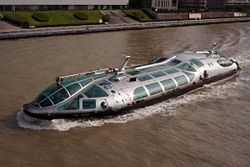
About two dozen bronze statues — each perhaps four feet tall — of characters and scenes from Space Battleship Yamato and Galaxy Express 999 were erected in the downtown area of Tsuruga in 1999. Each statue includes a plaque at its base explaining the character, and featuring Matsumoto's signature.
 Matsumoto worked with Yoshinobu Nishizaki
on Space Battleship Yamato (known outside Japan under various names but most commonly as Star Blazers
). Matsumoto created a manga loosely based on the series, and the Yamato makes cameo appearances (sans crew) in several of his works including the Galaxy Express 999 manga.
A recent work by Matsumoto called Great Yamato
featuring an updated Yamato had to be renamed Great Galaxy due to legal issues with Nishizaki.
As of 2009, Matsumoto and Nishizaki were working on independent anime projects featuring the acclaimed Space Battleship Yamato, with the conditions that Matsumoto cannot use the name Yamato or the plot or characters from the original, and Nishizaki cannot use the conceptual art, character or ship designs of the original. Since Nishizaki's death in 2010, it is uncertain whether these restrictions will continue to apply.
Anime
is the Japanese abbreviated pronunciation of "animation". The definition sometimes changes depending on the context. In English-speaking countries, the term most commonly refers to Japanese animated cartoons....
and manga
Manga
Manga is the Japanese word for "comics" and consists of comics and print cartoons . In the West, the term "manga" has been appropriated to refer specifically to comics created in Japan, or by Japanese authors, in the Japanese language and conforming to the style developed in Japan in the late 19th...
series. His wife is also known as a manga artist.
Space opera
Matsumoto is famous for his space operaSpace opera
Space opera is a subgenre of science fiction that emphasizes romantic, often melodramatic adventure, set mainly or entirely in outer space, generally involving conflict between opponents possessing advanced technologies and abilities. The term has no relation to music and it is analogous to "soap...
s such as Space Battleship Yamato
Space Battleship Yamato
is a Japanese science fiction anime series featuring an eponymous spacecraft. It is also known to English-speaking audiences as Space Cruiser Yamato; an English-dubbed and heavily edited version of the series was broadcast on North American and Australian television as Star Blazers...
. His style is characterized by tragic heroes; tall, slender, fragile-looking heroines with strong wills and in some cases, god-like powers; and a love of analog gauges and dials in his spacecraft.
Career
Matsumoto made his debut under his real name, Akira Matsumoto, in 1953. His wife is shōjo manga artist Miyako MakiMiyako Maki
is a Japanese manga artist. She made her professional debut in 1957 with . She received the 1989 Shogakukan Manga Award for General for Genji Monogatari, a Japanese manga version of Murasaki Shikibu's The Tale of Genji. She is the creator of Licca-chan, a popular Japanese doll. Her husband is...
(better known as the creator of the doll, Licca-chan
Licca-chan
, full name , is a very popular dress-up doll series introduced in Japan on 1967-07-04 by Takara, enjoying the same kind of popularity in Japan as the Barbie series does in the United States. The Licca-chan dolls tend toward a more Japanese body as far as height and features. Takara had sold over...
, the Japanese equivalent of Barbie
Barbie
Barbie is a fashion doll manufactured by the American toy-company Mattel, Inc. and launched in March 1959. American businesswoman Ruth Handler is credited with the creation of the doll using a German doll called Bild Lilli as her inspiration....
).
Matsumoto had his big break with Otoko Oidon, a series that chronicled the life of a rōnin
Ronin (student)
In Japan, a is a student who has graduated from middle school or high school but has failed to enter a school at the next level, and consequently is studying outside of the school system for entrance in a future year. Rōnin may study at a yobikō....
(a young man who was preparing himself for entrance examinations to universities and colleges), in 1971. Around the same time he started a series of unconnected short stories set during World War II
World War II
World War II, or the Second World War , was a global conflict lasting from 1939 to 1945, involving most of the world's nations—including all of the great powers—eventually forming two opposing military alliances: the Allies and the Axis...
, Senjo Manga Series, which would eventually become popular under the title The Cockpit
The Cockpit (film)
is a World War II anthology film based on Leiji Matsumoto's Battlefield manga. The animated shorts are written and directed by Yoshiaki Kawajiri, Takashi Imanishi and Ryousuke Takahashi....
.
He was involved in Space Battleship Yamato
Space Battleship Yamato
is a Japanese science fiction anime series featuring an eponymous spacecraft. It is also known to English-speaking audiences as Space Cruiser Yamato; an English-dubbed and heavily edited version of the series was broadcast on North American and Australian television as Star Blazers...
(1974) and the debut of the highly popular series Captain Harlock
Captain Harlock
is a fictional character created by manga artist Leiji Matsumoto.Harlock is the archetypical romantic hero, a space pirate with an individualist philosophy of life. He is as noble as he is taciturn, rebellious, stoically fighting against totalitarian regimes, whether they be earthborn or alien...
and Galaxy Express 999
Galaxy Express 999
is a manga written and drawn by Leiji Matsumoto, as well as various anime films and TV series based on it. It is set in a space-faring, high-tech future in which humans have learned how to transfer their minds into mechanical bodies, thus achieving practical immortality.The manga won the...
(both 1977). In 1978, he was awarded the Shogakukan Manga Award
Shogakukan Manga Award
The is one of Japan's major manga awards, sponsored by Shogakukan Publishing. It has been awarded annually for serialized manga since 1955 and features candidates from a number of publishers.The current award categories are:...
for shōnen
Shonen
The term refers to manga marketed to a male audience aged roughly 10 and up. The Kanji characters literally mean "few" and "year", respectively, where the characters generally mean "comic"...
for Galaxy Express 999 and Senjo Manga Series. Animated versions of Captain Harlock and Galaxy Express 999 are set in the same universe, which spanned several spin offs and related series, most notably Queen Emeraldas
Queen Emeraldas
is a four-episode Japanese anime OVA that continues the Harlock franchise created by Leiji Matsumoto. The anime was adapted from Matsumoto's 1978 manga of the same name. Queen Emeraldas is the story of the pirate spaceship, Queen Emeraldas, which is captained by the mysterious and beautiful...
and Queen Millennia
Queen Millennia
is a manga series by Leiji Matsumoto which was serialized from 28 January 1980through 11 May 1983 in both the Sankei Shimbun and Nishinippon Sports newspapers. The manga series was adapted into a 42-episode anime TV series by Toei Dōga and broadcast on the Fuji TV network from 16 April 1981 through...
.
Matsumoto supervised the creation of several music video
Music video
A music video or song video is a short film integrating a song and imagery, produced for promotional or artistic purposes. Modern music videos are primarily made and used as a marketing device intended to promote the sale of music recordings...
s for the French house
French house
French house is a catch-all term for house music by many French artists, a popular strand of the late 1990s and 2000s European dance music scene and a form of Euro disco. The genre has also been referred to as "neu-disco" , "French touch", "filter house" and "tekfunk" over the years...
group Daft Punk
Daft Punk
Daft Punk are an electronic music duo consisting of French musicians Guy-Manuel de Homem-Christo and Thomas Bangalter . Daft Punk reached significant popularity in the late 1990s house movement in France and met with continued success in the years following, combining elements of house with synthpop...
, set to tracks from their album Discovery
Discovery (Daft Punk album)
Discovery is the second studio album by the French house duo Daft Punk, released in March 2001. It marks a shift in the sound from Chicago house, which they were previously known for, to disco, post-disco and synthpop-inspired house...
. These videos were issued end-to-end (making a full-length animated movie) on a DVD release titled Interstella 5555: The 5tory of the 5ecret 5tar 5ystem
Interstella 5555: The 5tory of the 5ecret 5tar 5ystem
is a feature-length Japanese animated musical film originally released on December 1, 2003. The film is the visual realization of Discovery, an album by Daft Punk. Each track from the album has been animated as an episode in the story of the abduction and rescue of an interstellar pop band...
.
About two dozen bronze statues — each perhaps four feet tall — of characters and scenes from Space Battleship Yamato and Galaxy Express 999 were erected in the downtown area of Tsuruga in 1999. Each statue includes a plaque at its base explaining the character, and featuring Matsumoto's signature.
Yoshinobu Nishizaki
Yoshinobu Nishizaki was a Japanese film producer best known as one of the two co-creators of the anime series Space Battleship Yamato. He was sometimes credited as Yoshinori Nishizaki...
on Space Battleship Yamato (known outside Japan under various names but most commonly as Star Blazers
Star Blazers
Star Blazers is an American animated television series adaptation of the Japanese anime series, . Star Blazers was first broadcast in the United States in 1979. Significantly, it was the first popular English-translated anime that had an over-arching plot and storyline that required the episodes to...
). Matsumoto created a manga loosely based on the series, and the Yamato makes cameo appearances (sans crew) in several of his works including the Galaxy Express 999 manga.
A recent work by Matsumoto called Great Yamato
Great Yamato
is a graphic novel comic created by the animator Leiji Matsumoto. It now can be streamed online.-External links:** *...
featuring an updated Yamato had to be renamed Great Galaxy due to legal issues with Nishizaki.
As of 2009, Matsumoto and Nishizaki were working on independent anime projects featuring the acclaimed Space Battleship Yamato, with the conditions that Matsumoto cannot use the name Yamato or the plot or characters from the original, and Nishizaki cannot use the conceptual art, character or ship designs of the original. Since Nishizaki's death in 2010, it is uncertain whether these restrictions will continue to apply.
List of works
- Arei no KagamiArei no Kagamiwas originally created by Leiji Matsumoto as an educational-like video aimed more at children. It used information about Earth and Outer Space which lead many to believe it as an educational video. It was first shown only as a movie in the Expo '85 as part of the World Fair...
(1985) - Fairy Hotaruna
- Space Battleship YamatoSpace Battleship Yamatois a Japanese science fiction anime series featuring an eponymous spacecraft. It is also known to English-speaking audiences as Space Cruiser Yamato; an English-dubbed and heavily edited version of the series was broadcast on North American and Australian television as Star Blazers...
(1974) - Planet Robot Danguard AceWakusei Robo Danguard Aceis a Japanese science fiction anime series created by Leiji Matsumoto with Dan Kobayashi. It was licensed by Jim Terry Productions as part of the Force Five promotion as simply "Danguard Ace"...
(part of the U.S. Force FiveForce FiveForce Five was a syndicated anime cartoon anthology during the late 1970s/early 1980s. In the US, this series was primarily shown only in New England and Virginia, though it did make brief appearances in other markets, such as Dallas, Texas and San Jose, California on KICU-TV 36. It was also shown...
anthology series, as Dangard Ace; 1977–1978) - Galaxy Express 999Galaxy Express 999is a manga written and drawn by Leiji Matsumoto, as well as various anime films and TV series based on it. It is set in a space-faring, high-tech future in which humans have learned how to transfer their minds into mechanical bodies, thus achieving practical immortality.The manga won the...
(1977–1981) - Captain HarlockCaptain Harlockis a fictional character created by manga artist Leiji Matsumoto.Harlock is the archetypical romantic hero, a space pirate with an individualist philosophy of life. He is as noble as he is taciturn, rebellious, stoically fighting against totalitarian regimes, whether they be earthborn or alien...
(1977–1979) - StarzingerStarzingeris an anime series aired in Japan from 1978 to 1979. It translates literally to "Science Fiction Journey to the West Starzinger". In the United States it is referred to as Spaceketeers and is part of Jim Terry's Force Five series...
(part of the Force FiveForce FiveForce Five was a syndicated anime cartoon anthology during the late 1970s/early 1980s. In the US, this series was primarily shown only in New England and Virginia, though it did make brief appearances in other markets, such as Dallas, Texas and San Jose, California on KICU-TV 36. It was also shown...
anthology series, as Spaceketeers) (1978-1979) - Queen MillenniaQueen Millenniais a manga series by Leiji Matsumoto which was serialized from 28 January 1980through 11 May 1983 in both the Sankei Shimbun and Nishinippon Sports newspapers. The manga series was adapted into a 42-episode anime TV series by Toei Dōga and broadcast on the Fuji TV network from 16 April 1981 through...
(aka Queen of 1000 Years) - Arcadia of My YouthArcadia of My Youthis an anime film depicting the origin of Leiji Matsumoto's seminal character Captain Harlock. At one time, it was considered to be the central hub of the so called Leijiverse with other works such as Galaxy Express 999 and 1978's Space Pirate Captain Harlock television series occurring sometime...
- Arcadia of My Youth: Endless Orbit SSXArcadia of My Youth: Endless Orbit SSXis an animated television series created by Leiji Matsumoto. It's the sequel to the 1982 animated film Arcadia of My Youth. However, like many of the stories set in the Leijiverse, the continuity of the series does not necessarily agree with other Harlock series or films.The series premiered just...
- The Cockpit
- Maeterlinck's Blue Bird: Tyltyl and Mytyl's Adventurous JourneyMaeterlinck's Blue Bird: Tyltyl and Mytyl's Adventurous Journeyis a 1980 Japanese animated television series directed by Hiroshi Sasagawa, with character designs from Leiji Matsumoto. It is based on the play by Maurice Maeterlinck...
- Queen EmeraldasQueen Emeraldasis a four-episode Japanese anime OVA that continues the Harlock franchise created by Leiji Matsumoto. The anime was adapted from Matsumoto's 1978 manga of the same name. Queen Emeraldas is the story of the pirate spaceship, Queen Emeraldas, which is captained by the mysterious and beautiful...
- Tiger-Striped Mii
- The Ultimate Time Sweeper Mahoroba (manga)
- Fire Force DNAsights 999.9
- Harlock SagaHarlock Sagais a six-part anime miniseries by Leiji Matsumoto. An adaptation of Das Rheingold, it tells the story of space pirate Captain Harlock and his crew as they try to stop a man who has stolen gold from the center of the galaxy and forged it into a powerful ring.- Overview of the anime :Legend tells of...
Der Ring des Nibelungen - Maetel LegendMaetel Legendis a 2000 anime OVA based on characters created by Leiji Matsumoto, about how the planet La Maetelle becomes the planet Andromeda, or "Planet Maetel," the mechanized world....
- Cosmo Warrior ZeroCosmo Warrior Zerois a science fiction OVA series.-Plot:The long war between the planet Earth and the machine men is finally over, resulting in a peace that is more a victory for the machine men than the Earth. Warrius Zero lost his family in the war to the machinemen but despite this he still is a member of the...
- Gun FrontierGun Frontieris a 1972 manga by Leiji Matsumoto. It introduces Tochiro Oyama, best friend to Matsumoto's classic hero, Captain Harlock, who is in turn depicted as a gunslinger in the Old West. In sharp contrast to other Matsumoto's stories, Gun Frontier is a comedy adventure rather than a space opera.It is a...
(1972–1975) - Great Galaxy (formerly Great YamatoGreat Yamatois a graphic novel comic created by the animator Leiji Matsumoto. It now can be streamed online.-External links:** *...
) - Space Pirate Captain Herlock: The Endless OdysseySpace Pirate Captain Herlock: The Endless OdysseySpace Pirate Captain Herlock: The Endless Odyssey is an OVA sequel to Space Pirate Captain Harlock.-Cast:*Lex Lang as Captain Herlock*Anthony Mozdy as Dr...
- Pu Pu (1974)
- Submarine Super 99Submarine Super 99is a television series created by Leiji Matsumoto. Video was distributed by TV Tokyo.Enoki Films USA Inc. holds the distribution rights of English version, but it is not releasing it.-Story:...
- Interstella 5555: The 5tory of the 5ecret 5tar 5ystemInterstella 5555: The 5tory of the 5ecret 5tar 5ystemis a feature-length Japanese animated musical film originally released on December 1, 2003. The film is the visual realization of Discovery, an album by Daft Punk. Each track from the album has been animated as an episode in the story of the abduction and rescue of an interstellar pop band...
(2003) (In cooperation with Daft PunkDaft PunkDaft Punk are an electronic music duo consisting of French musicians Guy-Manuel de Homem-Christo and Thomas Bangalter . Daft Punk reached significant popularity in the late 1990s house movement in France and met with continued success in the years following, combining elements of house with synthpop...
) - The Galaxy RailwaysThe Galaxy Railwaysis a 26 episode science fiction anime series about flying trains set in the far reaches of space. It is licensed by Funimation Production Ltd. and produced by Leiji Matsumoto. It debuted on American TV in a syndicated FUNimation Channel programming block airing on CoLours TV on Monday, June 19,...
- Great YamatoGreat Yamatois a graphic novel comic created by the animator Leiji Matsumoto. It now can be streamed online.-External links:** *...
#0 - Space Symphony MaetelSpace Symphony Maetelis a 2004 anime series created by Leiji Matsumoto, and is a side story to the Galaxy Express 999 series and the sequel to Maetel Legend.-Plot:...
- Submarine Super 99Submarine Super 99is a television series created by Leiji Matsumoto. Video was distributed by TV Tokyo.Enoki Films USA Inc. holds the distribution rights of English version, but it is not releasing it.-Story:...
(1964) - Kousoku Esper (1968–1970)
- Sexaroid (1968–1970)
- Machinner series (1969–1970)
- Mystery Eve (1970–1971)
- Dai-yojo-han series (1970–1974)
- Otoko Oidon (1971–73)
- Senjo Manga series (1973–1978)
- Insect (1975)
- Saint Elmo - Hikari no RaihoushaSaint Elmo - Hikari no Raihoushais a 64-minute television special that though credited to Leiji Matsumoto, it was originally created to celebrate the 30th anniversary of the Kansai Electric Company who sponsored and produced the film. It was first shown on television in 1987 and afterward was released on VHS.The name was based on...