
All Topics  
Lee-Enfield

 
Lee Enfield

   Email Print
   Bookmark   Link


Lee-Enfield


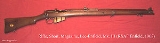
The Lee-Enfield bolt-action
Bolt-action

The term bolt action refers to a type of firearm action in which the weapon's Bolt is operated manually by the opening and closing of the Breech-loading weapon with a small handle, most commonly placed on the right-hand side of the weapon....
, magazine-fed, repeating rifle
Repeating rifle

A repeating rifle is a single barreled rifle containing multiple rounds of ammunition. These rounds are loaded from a magazine by means of a manual or automatic mechanism, and the action that reloads the rifle also typically recocks the firing action....
 was the main firearm used by the military forces of the British Empire
British Empire

The British Empire comprised the dominions, Crown colony, protectorates, League of Nations mandate, and other Dependent territory ruled or administered by the United Kingdom , that had originated with the overseas colonies and trading posts established by England in the late 16th and early 17th centuries....
/Commonwealth
Commonwealth of Nations

The Commonwealth of Nations, also known as the Commonwealth or the British Commonwealth, is an intergovernmental organization of fifty-three independent member states....
 during the first half of the 20th century. It was the British Army
British Army

The British Army is the Army branch of the British Armed Forces. It came into being with the unification of the Kingdoms of Kingdom of England and Kingdom of Scotland into the Kingdom of Great Britain in 1707....
's standard rifle from its official adoption in 1895 until 1957. The Lee-Enfield used the .303 British
.303 British

.303 British, or 7.7mmx56R, is a .311 inch calibre rifle and machine gun Cartridge first developed in United Kingdom in the 1880s as a blackpowder round, later adapted to use cordite and then smokeless powder propellant....
 cartridge
Cartridge (firearms)

A cartridge, also called a round, packages the bullet, gunpowder and Percussion cap into a single metallic case precisely made to fit the firing chamber of a firearm....
 and in Australia
Australia

Australia, officially the Commonwealth of Australia, is a country in the southern hemisphere comprising the Australia of the world's smallest continent, the major island of Tasmania, and numerous list of islands of Australia in the Indian Ocean and Pacific Oceans....
 and New Zealand
New Zealand

New Zealand is an island country in the south-western Pacific Ocean comprising two main landmasses , and numerous Islands of New Zealand, most notably Stewart Island/Rakiura and the Chatham Islands....
 the rifle was so well-known that it became synonymous with the term "303". It was also used by the military forces of Canada
Canada

Canada is a country occupying most of northern North America, extending from the Atlantic Ocean in the east to the Pacific Ocean in the west and northward into the Arctic Ocean....
, India
India

India, officially the Republic of India , is a country in South Asia. It is the List of countries and outlying territories by total area country by geographical area, the List of countries by population country, and the most populous liberal democracy in the world....
, and South Africa
South Africa

The Republic of South Africa, also known by Official names of South Africa, is a country located at the southern tip of the continent of Africa....
, among others.

A redesign of the Lee-Metford
Lee-Metford

The Lee-Metford rifle was a breech-loading British army service rifle, combining James Paris Lee's rear-locking bolt system and ten-round magazine with a seven groove rifled barrel designed by William Ellis Metford....
, which had been adopted by the British Army in 1888, the Lee-Enfield remained in widespread British service until well into the early 1960s and the 7.62 mm L42 sniper variant remained in service until the 1990s.


Discussion
Ask a question about 'Lee-Enfield'
Start a new discussion about 'Lee-Enfield'
Answer questions from other users
Full Discussion Forum


Recent Posts


Encyclopedia


The Lee-Enfield bolt-action
Bolt-action

The term bolt action refers to a type of firearm action in which the weapon's Bolt is operated manually by the opening and closing of the Breech-loading weapon with a small handle, most commonly placed on the right-hand side of the weapon....
, magazine-fed, repeating rifle
Repeating rifle

A repeating rifle is a single barreled rifle containing multiple rounds of ammunition. These rounds are loaded from a magazine by means of a manual or automatic mechanism, and the action that reloads the rifle also typically recocks the firing action....
 was the main firearm used by the military forces of the British Empire
British Empire

The British Empire comprised the dominions, Crown colony, protectorates, League of Nations mandate, and other Dependent territory ruled or administered by the United Kingdom , that had originated with the overseas colonies and trading posts established by England in the late 16th and early 17th centuries....
/Commonwealth
Commonwealth of Nations

The Commonwealth of Nations, also known as the Commonwealth or the British Commonwealth, is an intergovernmental organization of fifty-three independent member states....
 during the first half of the 20th century. It was the British Army
British Army

The British Army is the Army branch of the British Armed Forces. It came into being with the unification of the Kingdoms of Kingdom of England and Kingdom of Scotland into the Kingdom of Great Britain in 1707....
's standard rifle from its official adoption in 1895 until 1957. The Lee-Enfield used the .303 British
.303 British

.303 British, or 7.7mmx56R, is a .311 inch calibre rifle and machine gun Cartridge first developed in United Kingdom in the 1880s as a blackpowder round, later adapted to use cordite and then smokeless powder propellant....
 cartridge
Cartridge (firearms)

A cartridge, also called a round, packages the bullet, gunpowder and Percussion cap into a single metallic case precisely made to fit the firing chamber of a firearm....
 and in Australia
Australia

Australia, officially the Commonwealth of Australia, is a country in the southern hemisphere comprising the Australia of the world's smallest continent, the major island of Tasmania, and numerous list of islands of Australia in the Indian Ocean and Pacific Oceans....
 and New Zealand
New Zealand

New Zealand is an island country in the south-western Pacific Ocean comprising two main landmasses , and numerous Islands of New Zealand, most notably Stewart Island/Rakiura and the Chatham Islands....
 the rifle was so well-known that it became synonymous with the term "303". It was also used by the military forces of Canada
Canada

Canada is a country occupying most of northern North America, extending from the Atlantic Ocean in the east to the Pacific Ocean in the west and northward into the Arctic Ocean....
, India
India

India, officially the Republic of India , is a country in South Asia. It is the List of countries and outlying territories by total area country by geographical area, the List of countries by population country, and the most populous liberal democracy in the world....
, and South Africa
South Africa

The Republic of South Africa, also known by Official names of South Africa, is a country located at the southern tip of the continent of Africa....
, among others.

A redesign of the Lee-Metford
Lee-Metford

The Lee-Metford rifle was a breech-loading British army service rifle, combining James Paris Lee's rear-locking bolt system and ten-round magazine with a seven groove rifled barrel designed by William Ellis Metford....
, which had been adopted by the British Army in 1888, the Lee-Enfield remained in widespread British service until well into the early 1960s and the 7.62 mm L42 sniper variant remained in service until the 1990s. As a standard-issue infantry rifle, it is still found in service in the armed forces of some Commonwealth nations.

The Lee-Enfield featured a ten-round box magazine which was loaded manually from the top, either one round at a time, or by means of five-round chargers
Stripper clip

A stripper clip or charger is a speedloader that holds several cartridge s together in a single unit for easier loading of a firearm's magazine ....
. The Lee-Enfield superseded the earlier Martini-Henry
Martini-Henry

The Martini-Henry was a breech-loading lever-actuated rifle adopted by the United Kingdom, combining an action worked on by Friedrich von Martini , with the rifled barrel designed by Scotsman Alexander Henry ....
, Martini-Enfield
Martini-Enfield

Martini-Enfield rifles were, by and large, conversions of the Anglo-Zulu War era .450/577 Martini-Henry, rechambering the rifle for use with the newly introduced .303 British cartridge....
, and Lee-Metford rifles, and although officially replaced in the UK with the L1A1 SLR in 1957, it continues to see official service in a number of British Commonwealth nations to the present day—notably with the Indian Police—and is the longest-serving military bolt-action rifle still in official service. Total production of all Lee-Enfields is estimated at over 17 million rifles.

Design and history

The Lee-Enfield rifle was derived from the earlier Lee-Metford, a mechanically similar black powder rifle, which combined James Paris Lee
James Paris Lee

James Paris Lee was a Scottish-Canadian and later American inventor and Weapon designer, best known for inventing the bolt action that led to the Lee-Metford and Lee-Enfield series of rifles....
's rear-locking bolt system with a barrel featuring rifling designed by William Ellis Metford
William Ellis Metford

William Ellis Metford was a British engineer best known for designing the Metford rifling used in the .303 calibre Lee-Metford and Martini-Enfield service rifles in the late 19th century....
. The Lee action cocked the striker on the closing stroke of the bolt, making the initial opening much faster and easier compared to the "cock on opening" of the Mauser
Mauser

Mauser is a German arms manufacturer, maker of a line of bolt-action rifles and pistols from the 1870s to present. Their designs were built for the German armed forces but have been exported and licensed to a number of countries since the later Nineteenth and early Twentieth Centuries, as well as being a popular civilian firearm....
 design. The rear-mounted lugs place the operating handle much closer to the operator, over the trigger, making it much quicker to operate than traditional designs like the Mauser. The rifle was also equipped with a detachable sheet-steel, 10-round, double-column magazine, a very modern development in its day. Originally, the concept of a detachable magazine was opposed in some British Army
British Army

The British Army is the Army branch of the British Armed Forces. It came into being with the unification of the Kingdoms of Kingdom of England and Kingdom of Scotland into the Kingdom of Great Britain in 1707....
 circles, as some feared that the private soldier might be prone to lose the magazine during field campaigns. Early models of the Lee-Metford and Lee-Enfield even used a short length of chain to secure the magazine to the rifle.

The fast-operating Lee bolt-action and large magazine
Magazine (firearm)

A magazine is an ammunition storage and feeding device within or attached to a repeating firearm. Magazines may be integral to the firearm or removable ....
 capacity enabled a trained rifleman to fire between 20 to 30 aimed rounds a minute, making the Lee-Enfield the fastest military bolt-action rifle of the day. The current world record for aimed bolt-action fire was set in 1914 by a musketry instructor in the British Army — Sergeant Instructor Snoxall — who placed 38 rounds into a 12 inch wide target at in one minute. Some straight-pull bolt-action rifles were thought faster, but lacked the simplicity, reliability, and generous magazine capacity of the Lee-Enfield. Accounts dating from the First World War tell of British troops repelling German attackers, who subsequently reported that they had encountered machine guns, when in fact, it was simply a group of trained riflemen armed with SMLE Mk III rifles.

The Lee-Enfield was adapted to fire the .303 British service cartridge, a rimmed, high-powered rifle round. Experiments with smokeless powder
Smokeless powder

Smokeless powder is the name given to a number of propellants used in firearms and artillery which produce negligible smoke when fired, unlike the older gunpowder which they replaced....
 in the existing Lee-Metford cartridge
Cartridge (firearms)

A cartridge, also called a round, packages the bullet, gunpowder and Percussion cap into a single metallic case precisely made to fit the firing chamber of a firearm....
 seemed at first to be a simple upgrade, but the greater heat and pressure generated by the new smokeless powder quickly wore away the shallow, rounded, Metford rifling after approximately 6000 rounds of use. Replacing this with a new square-shaped rifling system designed at the Royal Small Arms Factory
Royal Small Arms Factory

The Royal Small Arms Factory was a United Kingdom government-owned rifle factory in London Borough of Enfield. The factory produced British military rifles, muskets and swords from 1816....
 (RSAF) Enfield
London Borough of Enfield

The London Borough of Enfield is the most northerly London borough and forms part of Outer London....
 solved the problem, and the Lee-Enfield was born.

The Lee-Enfield rifle was introduced in November 1895 as the .303 calibre, Rifle, Magazine, Lee-Enfield, or more commonly simply Magazine Lee-Enfield, or MLE (sometimes spoken as "emily" instead of M, L, E). The next year a shorter version was introduced as the Lee-Enfield Cavalry Carbine Mk I, or LEC, with a 21.2 inch (538 mm) barrel as opposed to the 30.2 inch (767 mm) one in the "long" version. Both underwent a minor upgrade series in 1899, becoming the Mk I*. Many LECs (and LMCs in smaller numbers) were converted to special patterns, namely the New Zealand Carbine and the Royal Irish Constabulary Carbine, or NZ and RIC carbines, respectively. Some of the MLEs (and MLMs) were converted to load from chargers
Stripper clip

A stripper clip or charger is a speedloader that holds several cartridge s together in a single unit for easier loading of a firearm's magazine ....
, and designated Charger Loading Lee-Enfields, or CLLEs.

Models/marks of Lee-Enfield Rifle and service periods

Model/MarkIn Service
Magazine Lee-Enfield1895–1926
Charger Loading Lee-Enfield1906–1926
Short Magazine Lee-Enfield Mk I1904–1926
Short Magazine Lee-Enfield Mk II1906–1927
Short Magazine Lee-Enfield Mk III/III*1907–Present
Short Magazine Lee-Enfield Mk V1922–1924 (Trials Only 20,000)
Rifle No. 4 Mk I1941–Present
Rifle No. 4 Mk I*1942–Present
Rifle No 5 Mk I "Jungle Carbine"1944–Present
Rifle No. 4 Mk 21949–Present
Rifle 7.62mm 2A1964–Present
Rifle 7.62mm 2A11965–Present


Short Magazine Lee-Enfield Mk I

A shorter and lighter version of the original MLE — the famous Rifle, Short, Magazine, Lee-Enfield, or SMLE (sometimes spoken as "Smelly", rather than S, M, L, E) — was introduced on 1 January 1904. The barrel was now halfway in length between the original long rifle and the carbine, at 25.2 inches (640 mm).

The SMLE's visual trademark was its blunt nose, the end of the barrel protruding a small fraction of an inch beyond the nosecap. The new rifle also incorporated a charger loading system, another innovation borrowed from the Mauser rifle; notably the charger system is different from the fixed "bridge" that would become the standard. The shorter length was controversial at the time: many Rifle Association members and gunsmiths were concerned that the shorter barrel would not be as accurate as the longer MLE barrels, that the recoil would be much greater, and the sighting radius would be too short.

Short Magazine Lee-Enfield Mk III

Smleaction
The iconic Lee-Enfield rifle, the SMLE Mk III, was introduced on 26 January 1907, along with a Pattern 1907 (P'07) Sword Bayonet and featured a simplified rear sight arrangement and a fixed, rather than a bolt-head-mounted sliding, charger guide. The design of the handguards and the magazine were also improved, and the chamber was adapted to fire the new Mk VII High Velocity spitzer
Spitzer (bullet)

A spitzer is an aerodynamic bullet design used in most intermediate and high-powered rifle cartridges. The name derives from the German word Spitzgeschoss, literally pointed bullet....
 .303 ammunition. Many early model rifles, of Magazine Lee Enfield (MLE), Magazine Lee Metford (MLM), and SMLE type, were upgraded to the Mk III standard. These are designated Mk IV Cond., with various asterisks denoting subtypes.

During the First World War, the standard SMLE Mk III was found to be too complicated to manufacture (an SMLE Mk III rifle cost the British Government £3/15/-), and demand was outstripping supply, so in late 1915 the Mk III* was introduced, which incorporated several changes, the most prominent of which were the deletion of the magazine cut-off, and the long range volley sights. The windage adjustment capability of the rear sight was also dispensed with, and the cocking piece was changed from a round knob to a serrated slab. Rifles with some or all of these features present are found, as the changes were implemented at different times in different factories and as stocks of preexisting parts were used. The magazine cut-off was reinstated after the First World War ended, and not entirely dispensed with until 1942.

The inability of the principal manufacturers (RSAF Enfield, Birmingham Small Arms, and London Small Arms) to meet military production demands led to the development of the "peddled scheme", which contracted out the production of whole rifles and rifle components to several shell companies.

The SMLE Mk III* (redesignated Rifle No.1 Mk III* in 1926) saw extensive service throughout the Second World War as well, especially in the North African, Italian, Pacific and Burmese theatres in the hands of British and Commonwealth forces. Australia
Australia

Australia, officially the Commonwealth of Australia, is a country in the southern hemisphere comprising the Australia of the world's smallest continent, the major island of Tasmania, and numerous list of islands of Australia in the Indian Ocean and Pacific Oceans....
 and India
India

India, officially the Republic of India , is a country in South Asia. It is the List of countries and outlying territories by total area country by geographical area, the List of countries by population country, and the most populous liberal democracy in the world....
 retained and manufactured the SMLE Mk III* as their standard-issue rifle during the conflict, and the rifle remained in Australian military service through the Korean War
Korean War

The Korean War refers to a period of military conflict between North Korea and South Korea regimes, with major hostilities lasting from June 25, 1950 until the armistice signed on July 27, 1953....
, until it was replaced by the L1A1 SLR
FN FAL

The Fusil Automatique L?ger or FAL is a 7.62x51 NATO Self-loading rifle, selective fire rifle produced by the Belgian armaments manufacturer Fabrique Nationale de Herstal during the Cold War, and adopted by many North Atlantic Treaty Organization countries....
 in the late 1950s. The Lithgow Small Arms Factory
Lithgow Small Arms Factory

The Lithgow Small Arms Factory is a military small arms factory located in the town of Lithgow, New South Wales in Australia.Opened on June 8 1912, the factory initially manufactured Lee-Enfield rifles for the Australian military during WWI, expanding production during WWII to include Vickers machine guns, Bren Guns, various artillery piec...
 finally ceased production of the SMLE Mk III* in 1953.

Pattern 1914/US M1917


The Pattern 1914 Enfield and M1917 Enfield rifle is frequently assumed to be part of the Lee-Enfield family due to either their calibre (.303), service history, or designer (RSAF Enfield). P14 and M1917 rifles are Mauser 98 derivatives and not based on the Lee action, and are therefore not part of the Lee-Enfield family of rifles.

Inter-War period

In 1926 the British Army changed their nomenclature; the SMLE became known as the Rifle No. 1 Mk III or III*, with the original MLE and LEC becoming obsolete along with the earlier SMLE models. Many Mk III and III* rifles were converted to (.22 rimfire) calibre training rifles, and designated Rifle No. 2, of varying marks. (The Pattern 1914 became the Rifle No. 3.)

The SMLE design was fairly expensive to manufacture because of the many forging
Forging

Forging is the term for shaping metal by using localized compressive forces. Cold forging is done at room temperature or near room temperature....
 and machining
Machining

Conventional machining, one of the most important material removal methods, is a collection of material-working processes in which power-driven machine tools, such as Lathe s, milling machines, and drill presses are used with a sharp cutting tool to mechanically cut the material to achieve the desired geometry....
 operations required. In the 1920s several experiments were carried out to help with these problems, reducing the number of complex parts. The SMLE Mk V (later Rifle No. 1 Mk V), used a new receiver-mounted aperture sighting system, which moved the rear sight from its former position on the barrel. The increased gap resulted in an improved sighting radius, improving sighting accuracy, and the aperture improved speed of sighting (making it also known as a "battle sight"). The magazine cutoff was also reintroduced, and an additional band was added near the muzzle for additional strength during bayonet use. Unfortunately, this design was found to be even more complicated and expensive to manufacture than the Mk III, and so was not developed or issued beyond a trial production of this rifle numbered approximately 20,000 units, produced between 1922 and 1924 at RSAF Enfield
Royal Small Arms Factory

The Royal Small Arms Factory was a United Kingdom government-owned rifle factory in London Borough of Enfield. The factory produced British military rifles, muskets and swords from 1816....
. The No. 1 Mk VI also introduced a heavier "floating barrel" that was independent of the forearm, allowing the barrel to expand and contract without contacting the forearm and changing the zero of the rifle. The receiver-mounted rear sights and magazine cutoff were also present, and production numbered 1025 units, produced between 1930 and 1933.

Rifle No 4


By the late 1930s the need for new rifles grew, and the Rifle, No. 4 Mk I was first issued in 1939 but not officially adopted until 1941. The No. 4 action was similar to the Mk VI, but lighter, stronger, and most importantly, easier to mass produce. Unlike the SMLE, the No 4 Lee-Enfield barrel protruded from the end of the forestock. The No. 4 rifle was considerably heavier than the No. 1 Mk. III, largely due to its heavier barrel, and a new bayonet was designed to go with the rifle: a spike bayonet
Spike bayonet

A spike bayonet is a blade attachment for a firearm taking the form of a pointed spike rather than a knife. Most early musket bayonets were of this type....
, which was essentially a steel rod with a sharp point, and was nicknamed "pigsticker" by soldiers. Towards the end of the Second World War, a bladed bayonet was developed, originally intended for use with the Sten gun—but sharing the same mount as the No. 4's spike bayonet—and subsequently the No. 7 and No. 9 blade bayonets were also issued for use with the No. 4 rifle as well.

During the course of the Second World War, the No. 4 rifle was further simplified for mass-production with the creation of the No. 4 Mk I* in 1942, which saw the bolt release catch removed in favour of a more simplified notch on the bolt track of the rifle's receiver. It was produced only in North America, with Long Branch Arsenal in Canada and Savage-Stevens Firearms in the USA producing the No. 4 Mk I* rifle from their respective factories. On the other hand, the No.4 Mk I rifle was primarily produced in the United Kingdom.

In the years after the Second World War, the British produced the No. 4 Mk 2 (Arabic numerals replaced Roman numerals for official designations in 1944) rifle which saw the No. 4 rifle being refined and improved with the trigger being hung from the receiver and not from the trigger guard, the No. 4 Mk 2 rifle being fitted with beech wood stocks and the return of brass buttplates. With the introduction of the No. 4 Mk 2 rifle, the British refurbished all their existing stocks of No. 4 rifles and brought them up to the same standards as the No. 4 Mk 2. No. 4 Mk 1 rifles so upgraded were re-designated as the No. 4 Mk I/2 rifle, whilst No. 4 Mk I* rifles that were brought up to Mk 2 standards were re-designated as the No. 4 Mk I/3 rifle.

Rifle No 5 Mk I—The "Jungle Carbine"

Jungle Carbine
Later in the war the need for a shorter, lighter rifle for use in the jungles of the Far East led to the development of the Rifle, No. 5 Mk I (the "Jungle Carbine
Jungle Carbine

Jungle Carbine was an informal term used for the Rifle No. 5 Mk I which was a derivative of the British Lee-Enfield, designed especially for fighting in the Far East and Burma and other terrain where the length and weight of the standard rifle made it unsuitable....
"). With a severely cut-down stock, a prominent flash hider, and a receiver machined to remove all unnecessary metal, the No. 5 was both shorter and lighter. Despite a rubber butt-pad, the .303 round produced too much recoil for the No. 5 to be suitable for general issue. Production of the No. 5 Mk I ceased in 1947 due to an "inherent fault in the design", often said to be a "wandering zero
Jungle Carbine

Jungle Carbine was an informal term used for the Rifle No. 5 Mk I which was a derivative of the British Lee-Enfield, designed especially for fighting in the Far East and Burma and other terrain where the length and weight of the standard rifle made it unsuitable....
" and accuracy problems. However, the No. 5 Mk I was popular with soldiers owing to its light weight, portability, and shorter overall length than a standard Lee-Enfield rifle.

An Australian experimental version of Jungle Carbine, designated Rifle, No. 6, Mk I was also developed, using an SMLE MK III* as a starting point (as opposed to the No. 4 Mk I used to develop the No. 5 Mk I Jungle Carbine). The No. 6 Mk I never entered full production, and examples today are extremely rare and valuable to collectors. A "Shortened and Lightened" version of the SMLE Mk III* rifle was also trialled by the Australian military, and a very small number were manufactured at SAF Lithgow during the course of the Second World War.

The term "Jungle Carbine" was popularised in the 1950s by the Santa Fe Arms Corporation, a U.S. importer of surplus rifles, used in the hopes of increasing sales of a rifle that had little U.S. market penetration. It was never an official military designation, but British and Commonwealth troops serving in the Burmese and Pacific theatres during World War Two were known to unofficially refer to the No. 5 Mk I as a "Jungle Carbine". Both the No. 4 and No. 5 rifles served in Korea (as did the No.1 Mk III* SMLE—mostly with Australian troops).

Lee-Enfield conversions

Sgthamarshall

Sniper rifles

During both World Wars and the Korean War, a number of Lee-Enfield rifles were modified for use as sniper rifles. The Australian Army modified 1,612 Lithgow SMLE No1 Mk III* rifles by adding a heavy target barrel, cheek-piece, and a World War One era Pattern 1918 telescope, creating the SMLE No1 Mk III* (HT). (HT standing for "Heavy Barrel, Telescopic Sight), which saw service in the Second World War, Korea, and Malaya and was used for Sniper Training through to the late 1970s.

During the Second World War, standard No. 4 rifles, selected for their accuracy during factory tests, were modified by the addition of a wooden cheek-piece, and telescopic sight mounts designed to accept a No. 32 3.5x telescopic sight. This particular sight progressed through three marks with the Mk 1 introduced in 1942, the Mk 2 in 1943 and finally the Mk 3 in 1944 (later somewhat confusingly re-designated the L1A1).

Holland and Holland, the famous British sporting gun manufacturers, converted the majority of No 4 Mk I (T) sniper rifles, with the rest converted by BSA and, in Canada, Long Branch arsenal. These rifles were extensively employed in various conflicts until the late 1960s, and when the British military switched over to the 7.62x51 NATO round in the 1950s, many of the No 4 Mk I (T) sniper rifles were converted to the new calibre and designated L42A1. The L42A1 sniper rifle continued as the British Army's standard sniper weapon until the mid 1980s, being replaced by Accuracy International's L96
Accuracy International Arctic Warfare

The Accuracy International Arctic Warfare rifle is a family of bolt-action sniper rifles designed and manufactured by the United Kingdom company Accuracy International....
.

.22 training rifles

Numbers of SMLE rifles were converted to .22 calibre training rifles, in order to teach cadets and new recruits the various aspects of shooting, firearms safety, and marksmanship at a markedly reduced cost per round. Initially rifles were converted from obsolete Magazine Lee-Metford and Magazine Lee-Enfield rifles but from the First World War onwards SMLE rifles were used instead. These were known as .22 Pattern 1914 Short Rifles during The First World War and Rifle, No 2 Mk IV from 1921 onwards. They were generally single-shot affairs, although some were later modified with special adaptors to enable magazine loading. No. 2 Mk IV rifles are externally identical to a .303 calibre SMLE Mk III* rifle, the only difference being the .22 calibre barrel, and bolthead and extractor which have been modified to fire .22 calibre rimfire cartridges.

After the Second World War, the Rifle, No. 7, Rifle, No. 8 and Rifle, No. 9, all .22 rimfire trainers and/or target rifles based on the Lee action, were adopted or in use with Cadet units and target shooters throughout the Commonwealth.

Charlton Automatic Rifle


Small numbers of Lee-Enfield rifles were built as, or converted to, experimental semi-automatic loading systems, the best-known of which was the Charlton Automatic Rifle, designed by a New Zealander, Philip Charlton in 1941 to act as a substitute for the Bren and Lewis gun
Lewis Gun

The Lewis Gun is a pre-World War I era light machine gun of American design that was perfected and most widely used by the forces of the British Empire....
 light machine guns which were in chronically short supply at the time. During the Second World War, the majority of New Zealand's land forces were deployed in North Africa. When Japan entered the war in 1941, New Zealand found itself lacking the light machine guns that would be required for local defence should Japan choose to invade, and so the New Zealand Government funded the development of self-loading conversions for the Lee-Enfield rifle. The end result was the Charlton Automatic Rifle (based on the obsolete MLE), which was issued to Home Guard units in NZ from 1942. Over 1,500 conversions were made, including a handful by the Australian firm Electrolux
Electrolux

The Electrolux Group is a Sweden manufacturer of home and professional appliances. According to the company, it sells more than 40 million products to customers in 150 countries annually....
 using Lithgow SMLE Mk III* rifles.

The two Charlton designs differed markedly in external appearance (amongst other things, the New Zealand Charlton had a forward pistol grip and bipod, whilst the Australian one did not), but shared the same operating mechanism. Most of the Charlton Automatic Rifles were destroyed in a fire after the Second World War, but a few examples survive in museums.

De Lisle Commando carbine


The Commando
British Commandos

The British Commandos were first formed by the British Army in June 1940 during World War II as a well-armed but non-regimental raider force employing unconventional and irregular military tactics to assault, disrupt and reconnoitre the enemy in mainland Europe and Scandinavia....
 units of the British military requested a silenced rifle for eliminating sentries, guard dogs, and other clandestine operational uses during the Second World War. The resulting weapon, designed by W.G. De Lisle, was effectively an SMLE Mk III* receiver redesigned to take a .45 ACP
.45 ACP

The .45 ACP , also known as the .45 Auto by C.I.P., is a rim pistol Cartridge designed by John Browning in 1904, for use in his prototype Colt Firearms semi-automatic .45 pistol and eventually the M1911 Colt pistol pistol adopted by the United States Army in 1911....
 cartridge and associated magazine, with the barrel shortened and replaced with an integral silencer.

Conversion to 7.62x51mm NATO


During the 1960s, the British Government and the Ministry of Defence
Ministry of Defence (United Kingdom)

The Ministry of Defence is the Departments of the United Kingdom Government responsible for implementation of government defence policy and is the headquarters of the British Armed Forces....
 converted a number of Lee-Enfield No. 4 rifles to 7.62x51mm NATO
7.62x51mm NATO

The 7.62x51mm NATO is a rifle Cartridge developed in the 1940s and 50s as a standard for small arms among NATO countries. Specifications for the 7.62x51mm NATO cartridge are not identical to the commercial .308 Winchester though they are safely interchangeable....
 as part of a program to retain the Lee-Enfield as a reserve weapon. The Lee-Enfield No. 4 series rifles that were converted to 7.62 mm NATO were re-designated as the L8 series of rifles with the rifles being refitted with 7.62 mm NATO barrels, new bolt faces and extractor claws, new rear sights and new 10-round 7.62 mm NATO magazines that were produced by RSAF Enfield and Sterling Armaments to replace the old 10-round .303 British
.303 British

.303 British, or 7.7mmx56R, is a .311 inch calibre rifle and machine gun Cartridge first developed in United Kingdom in the 1880s as a blackpowder round, later adapted to use cordite and then smokeless powder propellant....
 magazines. The outward appearance of the L8 series rifles were no different from the original No. 4 rifles, except for the new barrel and magazine.

The results of the trials that were conducted on the L8 series rifles were mixed, and the British Government and the Ministry of Defence decided not to convert their existing stocks of Lee-Enfield No. 4 rifles to 7.62 mm NATO. Despite this, the British learned from the results of the L8 test program and used them in successfully converting their stocks of No. 4 (T) sniper rifles to 7.62 mm NATO and hence the creation of the L42A1 series sniper rifles.

Ishapore 2A/2A1 – the last Lee-Enfield


At some point just after the Sino-Indian War
Sino-Indian War

The Sino-Indian War , also known as the Sino-Indian Border Conflict, was a war between People's Republic of China and India. Although China had been preparing an offensive against India for several years for a variety of motives, the pretext given was a territorial dispute concerning a Himalayas region known in India as Arunachal Prades...
 of 1962, the Ishapore Rifle Factory in India began producing a new type of rifle known as the Rifle 7.62 mm 2A, which was based on the SMLE Mk III* and was reworked to use the 7.62 mm NATO round. Externally the rifle is very similar to the classic Mk III*, with the exception of the magazine, which is more "square" than the SMLE magazine, and usually carries twelve rounds instead of ten, although a number of 2A1s have been noted with 10-round magazines.

Ishapore 2A/2A1 rifles are made with improved (EN) steel (to handle the increased pressures of the 7.62 mm NATO round) and the extractor is redesigned to cope with the rimless round. From 1965–1975 (when production is believed to have been discontinued), the sights were changed from 2000 m to 800 m, and the rifle re-designated Rifle 7.62 mm 2A1.

The Ishapore 2A and 2A1 rifles are often incorrectly described as ".308 conversions"- The 2A/2A1 rifles are not conversions of .303 calibre SMLE Mk III* rifles; rather, they are newly manufactured firearms and are not technically chambered for commercial .308 Winchester ammunition. However, many 2A/2A1 owners shoot such ammunition in their rifles with no problems, although it should be noted that .308 Winchester cartridges may generate higher pressures than 7.62 mm NATO, even though the rounds are otherwise interchangeable.

Production and manufacturers


In total over 16 million Lee-Enfields had been produced in several factories on different continents when production in Britain shut down in 1956, at ROF (Royal Ordnance Factory
Royal Ordnance Factory

Royal Ordnance Factories was the collective name of the United Kingdom government's munitions factories in and after World War II. Until privatisation in 1987 they were the responsibility of the Ministry of Supply and later the Ministry of Defence ....
) Fazakerley
Fazakerley

Fazakerley is a suburb of north Liverpool, Merseyside, England, and a Liverpool City Council Ward . At the United Kingdom Census 2001 it had a population of 15,062....
. Contributing to the total was the Rifle Factory Ishapore (RFI) at Ishapore in India, which continued to produce the SMLE in both .303 and 7.62 mm NATO until the 1980s, and is still manufacturing a sporting rifle based on the SMLE Mk III action, chambered for a .315 calibre cartridge the Birmingham Small Arms Company
Birmingham Small Arms Company

The Birmingham Small Arms Company was a United Kingdom manufacturer of vehicles, firearms, and military equipment, and still exists as an airgun sport manufacturer and distributor....
 factory at Shirley near Birmingham
Birmingham

Birmingham is a city status in the United Kingdom and metropolitan borough in the West Midlands of England. Birmingham is the most populous of England's English Core Cities Group, and is the List of United Kingdom cities by population British city after London, with a population of 1,010,200 ....
, and SAF Lithgow in Australia, who finally discontinued production of the SMLE Mk III* in 1950. During the First World War alone, 3.8 million SMLE rifles were produced in the UK by RSAF Enfield, BSA, and LSA alone.

Lsa Smle Band Markings Smaller
From the late 1940s, legislation in New South Wales, Australia, heavily restricted .303 British calibre (and other "military calibre") rifles, so large numbers of SMLEs were converted to "wildcat" calibres such as .303/25
.303/25

The .303/25, sometimes known as the .25/303 is a wildcat cartridge centrefire rifle cartridge, based on the .303 British, necked down to fire a .257 projectile, originating in Australia in the 1940s as a cartridge for sporterised rifles, particularly on the Lee Enfield action, similar versions also appeared in Canada around the same time....
, .303/22
.303/22

The .303/22, sometimes known as the .22/303 is a wildcat cartridge centrefire rifle cartridge, based on the .303 British, necked down to fire a .224 projectile, originating in Australia in the 1930s as a cartridge for sporterised rifles, particularly on the Lee Enfield action, similar versions also appeared in Canada around the same time....
, .303/270 and the popular 7.7x54 round. .303/25 calibre sporterised SMLEs are very common in Australia today, although getting ammunition for them is very difficult and has been since the 1980s. The restrictions placed on "military calibre" rifles in New South Wales were lifted in 1975, and many people who had converted their Lee-Enfields to the "wildcat" rounds converted their rifles back to .303 British. Post-Second World War, SAF Lithgow converted a number of SMLE rifles to commercial sporting rifles- notably the .22 Hornet model- under the "Slazenger" brand.

RFI in India and SAF Lithgow in Australia both produced single-shot conversions of the SMLE chambered for a .410 shotgun shell. The .410 conversions made by Ishapore were generally used as riot shotguns for crowd control in India, and were originally chambered for a 2" British .410 brass shotshell, basically a blown out .303 British cartridge. As these cartridges have not been manufactured for several years, ammunition is strictly a "roll your own" prospect. Many of these conversions have been reamed out to accept modern 2 1/2"-3" .410 shotshells in the United States. As the pressure for even high velocity .410 ammunition are well below standard .303 British pressure ranges these conversions, when done by a competent gunsmith, are quite safe to shoot. The SAF Lithgow/Slazenger .410 shotguns were, however, chambered for commercial .410 shells, as they were primarily intended for civilian sale, with over 7,000 eventually being manufactured.

Numerous attempts were made to convert the various single-shot .410 shotgun models to a bolt-action repeating model by removing the wooden magazine plug and replacing it with a standard 10-round SMLE magazine. None of these is known to have been successful, however.

List of manufacturers

The manufacturer's names found on the MLE, CLLE, and SMLE Mk I—Mk III* rifles and variants are:

MarkingManufacturerCountry
EnfieldRoyal Small Arms Factory Enfield
Royal Small Arms Factory

The Royal Small Arms Factory was a United Kingdom government-owned rifle factory in London Borough of Enfield. The factory produced British military rifles, muskets and swords from 1816....
United Kingdom
United Kingdom

The United Kingdom of Great Britain and Northern Ireland, commonly known as the United Kingdom , the UK or Britain,is a sovereign state located off the northwestern coast of continental Europe....
SparkbrookRoyal Small Arms Factory Sparkbrook
Sparkbrook

Sparkbrook is an area in south-east Birmingham, England. It is one of the four ward forming the Hall Green Government of Birmingham, England#Districts within Birmingham City Council....
United Kingdom
BSA CoBirmingham Small Arms Co. Ltd
Birmingham Small Arms Company

The Birmingham Small Arms Company was a United Kingdom manufacturer of vehicles, firearms, and military equipment, and still exists as an airgun sport manufacturer and distributor....
United Kingdom
LSA CoLondon Small Arms Co. Ltd
London Small Arms Co. Ltd

The London Small Arms Company Ltd was a British Arms Manufacturer from the years 1866-1935.Based in London Borough of Tower Hamlets, London, London Small Arms Co....
United Kingdom
LithgowLithgow Small Arms Factory
Lithgow Small Arms Factory

The Lithgow Small Arms Factory is a military small arms factory located in the town of Lithgow, New South Wales in Australia.Opened on June 8 1912, the factory initially manufactured Lee-Enfield rifles for the Australian military during WWI, expanding production during WWII to include Vickers machine guns, Bren Guns, various artillery piec...
Australia
Australia

Australia, officially the Commonwealth of Australia, is a country in the southern hemisphere comprising the Australia of the world's smallest continent, the major island of Tasmania, and numerous list of islands of Australia in the Indian Ocean and Pacific Oceans....
GRIIshapore Rifle Factory
Ishapore Rifle Factory

The Ishapore Rifle Factory is an Arms manufacturing plant located at Ishapore, in the Indian sub-division of Barrackpore, outside Calcutta.The first Arms Manufacturing facility on the site was a gunpowder factory, which was started in 1787 and began production in 1791, whilst a Gun & Carriage manufacturing facility was set up nearby in 180...
British India
RFIIshapore Rifle FactoryIndia
India

India, officially the Republic of India , is a country in South Asia. It is the List of countries and outlying territories by total area country by geographical area, the List of countries by population country, and the most populous liberal democracy in the world....
 (Post-Partition)


Note 1: "SSA" and "NRF" markings are sometimes encountered on First World War-dated SMLE Mk III* rifles. These stand for "Standard Small Arms" and "National Rifle Factory", respectively. Rifles so marked were assembled using parts from various other manufacturers, as part of a scheme during the First World War to boost rifle production in the UK. Only SMLE Mk III* rifles are known to have been assembled under this program.

Note 2: GRI stands for "Georgius Rex, Imperator" (Latin for "King George, Emperor (of India)", denoting a rifle made during the British Raj
British Raj

British Raj primarily refers to the British rule in the Indian subcontinent between 1858 and 1947; it can also refer to the period of dominion, and even the region under the rule....
. RFI stands for "Rifle Factory, Ishapore", denoting a rifle made after the Partition of India
Partition of India

File:Brit IndianEmpireReligions3.jpgThe Partition of India was the Partition of British India that led to the creation, on August 14, 1947 and August 15, 1947, respectively, of the Sovereignty states of the Dominion of Pakistan and the Union of India ....
 in 1947.


For the No. 4 Mk I, No. 4 Mk I* and No. 4 Mk 2 rifles:

MarkingManufacturerCountry
ROF (F)Royal Ordnance Factory Fazakerley
Fazakerley

Fazakerley is a suburb of north Liverpool, Merseyside, England, and a Liverpool City Council Ward . At the United Kingdom Census 2001 it had a population of 15,062....
United Kingdom
United Kingdom

The United Kingdom of Great Britain and Northern Ireland, commonly known as the United Kingdom , the UK or Britain,is a sovereign state located off the northwestern coast of continental Europe....
ROF (M)Royal Ordnance Factory Maltby
Maltby, South Yorkshire

Maltby is a town of 17,980 inhabitants in a rural area about seven miles east of Rotherham, in the Metropolitan Borough of Rotherham, South Yorkshire, England....
United Kingdom
BBirmingham Small Arms Co. Ltd
Birmingham Small Arms Company

The Birmingham Small Arms Company was a United Kingdom manufacturer of vehicles, firearms, and military equipment, and still exists as an airgun sport manufacturer and distributor....
United Kingdom
M47CBirmingham Small Arms Factory (Shirley)United Kingdom
LongbranchLongbranch ArsenalCanada
Canada

Canada is a country occupying most of northern North America, extending from the Atlantic Ocean in the east to the Pacific Ocean in the west and northward into the Arctic Ocean....
US PROPERTY [S]Savage ArmsU.S.
United States

The United States of America is a Federal government constitutional republic comprising U.S. state and a federal district. The country is situated mostly in central North America, where its Contiguous United States and Washington, D.C., the Capital districts and territories, lie between the Pacific Ocean and Atlantic Oceans, Borders of the U...
POFPakistan Ordnance Factories
Pakistan Ordnance Factories

Pakistan Ordnance Factories or POF was founded in 1951 with the primary objective of producing arms and ammunition for the armed forces of Pakistan....
Pakistan
Pakistan

Pakistan , officially the Islamic Republic of Pakistan, is a country located in South Asia and borders Central Asia and the Middle East. It has a 1,046 kilometre coastline along the Arabian Sea and Gulf of Oman in the south, and is bordered by Afghanistan and Iran in the west, India in the east and People's Republic of China in th...


Note 1 : Second World War UK production rifles had manufacturer codes for security reasons. For example, BSA Shirley is denoted by M47C, ROF(M) is often simply stamped "M", and BSA is simply stamped "B".

Note 2: Savage-made Lee-Enfield No. 4 Mk I* rifles are all stamped "US PROPERTY". They were supplied to the UK under the Lend-Lease
Lend-Lease

Lend-Lease was the name of the program under which the United States supplied the United Kingdom, the Soviet Union, Republic of China, Free France and other Allies of World War II with vast amounts of materiel between 1941 and 1945 in return for, in the case of Britain, military bases in Newfoundland and Labrador, Bermuda, and the British W...
 programme during the Second World War.


Australian International Arms No. 4 Mk IV

The Brisbane-based Australian International Arms also manufacture a modern reproduction of the No. 4 Mk II rifle, which they market as the AIA No. 4 Mk IV. The rifles are manufactured by parts outsourcing and are assembled and finished in Australia, chambered in 7.62x51mm NATO
7.62x51mm NATO

The 7.62x51mm NATO is a rifle Cartridge developed in the 1940s and 50s as a standard for small arms among NATO countries. Specifications for the 7.62x51mm NATO cartridge are not identical to the commercial .308 Winchester though they are safely interchangeable....
 and feed from standard M14 magazines. The No. 4 Mk IV is designed with the modern shooter in mind, and has the ability to mount a telescopic sight without drilling and tapping the receiver. AIA also offers the AIA M10-A1 rifle, a Jungle Carbine
Jungle Carbine

Jungle Carbine was an informal term used for the Rifle No. 5 Mk I which was a derivative of the British Lee-Enfield, designed especially for fighting in the Far East and Burma and other terrain where the length and weight of the standard rifle made it unsuitable....
-styled version chambered in 7.62x39mm Russian
7.62x39mm

The Soviet Union 7.62x39mm rifle Cartridge was designed during World War II and first used in the SKS carbine.The cartridge was likely influenced by a variety of foreign developments, especially the pre-war German GeCo, 7.75x39mm experimental round, and possibly by the late-war German 7.92x33mm Kurz ....
, which uses AK-47
AK-47

The AK-47 is a 7.62x39mm assault rifle developed in the Soviet Union by Mikhail Kalashnikov in two versions: the fixed stock AK-47 and the AKS-47 variant equipped with an underfolding metal shoulder stock....
 magazines

Khyber Pass Copies

A number of British Service Rifles, predominantly the Martini-Henry
Martini-Henry

The Martini-Henry was a breech-loading lever-actuated rifle adopted by the United Kingdom, combining an action worked on by Friedrich von Martini , with the rifled barrel designed by Scotsman Alexander Henry ....
 and Martini-Enfield
Martini-Enfield

Martini-Enfield rifles were, by and large, conversions of the Anglo-Zulu War era .450/577 Martini-Henry, rechambering the rifle for use with the newly introduced .303 British cartridge....
, but also the various Lee-Enfield rifles, have been produced by small manufacturers in the Khyber Pass
Khyber Pass

The Khyber Pass, is the mountain pass that links Pakistan and Afghanistan.Throughout history it has been an important trade route between Central Asia and South Asia and a Military strategy military location....
 region of the Pakistani/Afghani border.

"Khyber Pass Copies
Khyber Pass Copy

A Khyber Pass Copy is a firearm manufactured by cottage gunsmiths in the Khyber Pass region between Pakistan and Afghanistan.The area has long had a reputation for producing unlicensed, home-made copies of firearms using whatever materials are available - more often than not, railway sleepers, junked motor vehicles, and Scrap....
", as they are known, tend to be copied exactly from a "master" rifle, which may itself be a Khyber Pass Copy, markings and all, which is why it's not uncommon to see Khyber Pass rifles with the "N" in "Enfield" reversed, amongst other things.

The quality on such rifles varies from "as good as a factory-produced example" to "dangerously unsafe", tending towards the latter end of the scale. Khyber Pass Copy rifles cannot generally stand up to the pressures generated by modern commercial ammunition. and it is generally advised that Khyber Pass made firearms not be fired under any circumstances.

Khyber Pass Copies can be recognised by a number of factors, notably:
  • Spelling errors in the markings; as noted the most common of which is a reversed "N" in "Enfield")
  • V.R. (Victoria Regina) cyphers dated after 1901; Queen Victoria died in 1901, so any rifles made after 1901 should be stamped "E.R" (Edwardius Rex—King Edward VII or King Edward VIII) or "G.R" (Georgius RexKing George V
    George V of the United Kingdom

    George V was the first British monarch belonging to the House of Windsor, which he created from the British branch of the German House of Saxe-Coburg and Gotha....
     or King George VI).
  • Generally inferior workmanship, including weak/soft metal, poorly finished wood, and badly struck markings.


The Lee-Enfield in military/police use today

The Lee-Enfield family of rifles is the oldest bolt-action rifle design still in official service; Lee-Enfield rifles are used by reserve forces and police forces in many Commonwealth countries, particularly Canada, where they are the main rifle issued to the Canadian Rangers
Canadian Rangers

The Canadian Rangers are a reserve sub-component of the Canadian Forces, which provide a limited military presence in Canada's sparsely settled northern, coastal, and isolated areas....
, and India, where the Lee-Enfield is widely issued to reserve military units and police forces. Indian police officers carrying SMLE Mk III* and Ishapore 2A1 rifles were a familiar sight throughout railway stations in India after the Bombay train bombings of 2006 and the November 2008 Mumbai attacks. They are also still seen in the hands of Pakistani and Bangladeshi second-line and police units. In the UK, the single-shot .22 calibre Rifle No. 8 is in regular use with UK Cadet Forces as a light target rifle.

Many Afghan participants in the Soviet invasion of Afghanistan
Soviet war in Afghanistan

The Soviet war in Afghanistan was a nine-year war involving Soviet Union Military of the Soviet Union supporting the Marxism People's Democratic Party of Afghanistan government against the Mujahideen#Afghanistan resistance movement....
 were armed with Lee-Enfields (a common rifle in the Middle East
Middle East

File:GreaterMiddleEast1.pngThe Middle East is a region that spans southwestern Asia, western Asia, and northeastern Africa. It has no clear boundaries, often used as a synonym to Near East, in opposition to Far East....
 and South Asia
South Asia

South Asia, also known as Southern Asia, is the southern region of the Asian continent, which comprises the sub-Himalayan countries and, for some authorities , also includes the adjoining countries on the west and the east....
), and Lee-Enfield rifles are still manufactured in the Khyber Pass
Khyber Pass

The Khyber Pass, is the mountain pass that links Pakistan and Afghanistan.Throughout history it has been an important trade route between Central Asia and South Asia and a Military strategy military location....
 region today, as bolt-action rifles remain effective weapons in desert and mountain environments where long-range accuracy is more important than rate of fire. Lee-Enfield rifles are still popular in the region today, despite the presence and ready availability of more modern weapons like the SKS
SKS

The SKS is a Soviet 7.62x39mm caliber Semi-automatic rifle, designed in 1945 by Sergei Gavrilovich Simonov. SKS is an acronym for Samozaryadniy Karabin sistemi Simonova , 1945 , or SKS 45....
 and the AK-47
AK-47

The AK-47 is a 7.62x39mm assault rifle developed in the Soviet Union by Mikhail Kalashnikov in two versions: the fixed stock AK-47 and the AKS-47 variant equipped with an underfolding metal shoulder stock....
. Photos from the recent civil war in Nepal showed that the government troops were being issued SMLE Mk III/III* rifles to fight the Maoist
Maoism

Maoism, variably and officially known as Mao Zedong Thought , is a variant of Marxism derived from the teachings of the late People's Republic of China leader Mao Zedong , widely applied as the political and military guiding ideology in the Communist Party of China from Mao's ascendancy to its leadership until the inception of Deng Xi...
 rebels, and that the Maoists were also armed with SMLE rifles (amongst other weapons) as well.

The Lee-Enfield in civilian use

Lee-Enfields are very popular as hunting rifles and target shooting rifles. Many surplus Lee-Enfield rifles were sold in the United States
United States

The United States of America is a Federal government constitutional republic comprising U.S. state and a federal district. The country is situated mostly in central North America, where its Contiguous United States and Washington, D.C., the Capital districts and territories, lie between the Pacific Ocean and Atlantic Oceans, Borders of the U...
, Canada
Canada

Canada is a country occupying most of northern North America, extending from the Atlantic Ocean in the east to the Pacific Ocean in the west and northward into the Arctic Ocean....
, Australia
Australia

Australia, officially the Commonwealth of Australia, is a country in the southern hemisphere comprising the Australia of the world's smallest continent, the major island of Tasmania, and numerous list of islands of Australia in the Indian Ocean and Pacific Oceans....
, New Zealand
New Zealand

New Zealand is an island country in the south-western Pacific Ocean comprising two main landmasses , and numerous Islands of New Zealand, most notably Stewart Island/Rakiura and the Chatham Islands....
, and South Africa
South Africa

The Republic of South Africa, also known by Official names of South Africa, is a country located at the southern tip of the continent of Africa....
 after the Second World War, and a fair number have been 'sporterised
Sporterising

Sporterising, sporterisation, or sporterization refers to the practice of modifying military-type firearms either to make them suitable for civilian sporting use or to make them legal under the law....
', having had the front furniture reduced or removed and a scope fitted so that they resemble a bolt-action sporting rifle. Top-notch accuracy is difficult to achieve with the Lee-Enfield design, as it was intended to be a battle rifle and not a sharpshooter's weapon, and thus the Enfield is nowadays overshadowed by derivatives of Paul Mauser's design as a target shooting arm. They did, however, continue to be used at Bisley
Bisley, Surrey

Bisley is a village in Surrey, England, which is notable for rifle shooting. Bisley's immediate neighbours are West End, Woking, Chobham, Surrey and Knaphill....
 up into the 1970s with some success, and continue to perform extremely well at Military Service Rifle Competitions throughout the world.

Many people still hunt with as-issued Lee-Enfield rifles, with commercial .303 British ammunition proving especially effective on medium-sized game. Soft-point .303 ammunition is widely available for hunting purposes, though the Mark 7 military cartridge design
.303 British

.303 British, or 7.7mmx56R, is a .311 inch calibre rifle and machine gun Cartridge first developed in United Kingdom in the 1880s as a blackpowder round, later adapted to use cordite and then smokeless powder propellant....
 often proves adequate because its tail-heavy design makes the bullet yaw
Flight dynamics

Flight dynamics is the science of aircraft and spacecraft vehicle orientation and control in three dimensions. The three critical flight dynamics parameters are the angles of rotation in three dimensions about the vehicle's center of mass, known as pitch, roll and yaw ....
 violently and deform after hitting the target..

The Lee-Enfield rifle is a popular gun for historic rifle enthusiasts and those who find the 10-round magazine, loading by charger clips, and the rapid bolt-action useful for Practical Rifle events. Since formation in 1998, the organisations such as the Lee Enfield Rifle Association have greatly assisted in not just preserving rifles in shooting condition (many Lee-Enfields are being deactivated and sold as "wall-hangers" to collectors who do not hold a Firearms License in countries where they are required), but holding events and competitions wholly accurate in terms of the various courses of fire and targets of the period. Lee-Enfields are also popular with competitors in service rifle competitions in many British Commonwealth countries—notably Australia, which boasts a very active Military Service Rifle shooting community.

The extensive use of the Lee-Enfield rifle for service rifle shooting competitions in nations like Great Britain and Australia is also due to other factors like the gun laws of both Great Britain and Australia which strictly regulate, limit, and prohibit the private ownership of functioning ex-military and military-style semi-automatic centrefire rifles by nearly all licensed firearm owners in both Great Britain and Australia. (For more information see Gun politics in the United Kingdom
Gun politics in the United Kingdom

Gun politics in the United Kingdom, much like gun politics in Australia, places its main considerations on how best to ensure public safety and how deaths involving firearms can most effectively be prevented....
 and Gun politics in Australia
Gun politics in Australia

About 5.2% of Australian adults own and use firearms for purposes such as hunting, controlling feral, collecting and target shooting. Low levels of violent crime through much of the 20th Century kept levels of community concern about firearms low....
.)

Users

  • & Crown Colonies
    British overseas territories

    The British Overseas Territories are fourteen territories that are under the sovereignty of the United Kingdom, but which do not form part of the United Kingdom itself....
  • *
  • *

External links