
All Topics  
Latakia

 
Latakia

   Email Print
   Bookmark   Link


Latakia


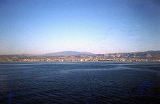
Latakia or Latakiyah ( Al-Ladhiqiyah, , transliterated as Laodicea, Laodikeia or Laodiceia, ; ) is the principal port city of Syria
Syria

Syria , officially the Syrian Arab Republic , is an Arab-majority country in Southwest Asia, bordering Lebanon and the Mediterranean Sea to the west, Israel to the southwest, Jordan to the south, Iraq to the east, and Turkey to the north....
, capital of the Latakia Governorate
Latakia Governorate

Latakia Governorate is one of the fourteen governorates of Syria. It is situated in western Syria, bordering Turkey. Its reported area varies in different sources from 2,297 km? to 2,437 km? ....
. Its population is 554,000.

many Seleucid cities, Laodicea was named after a member of the ruling dynasty; "Laodicea" was named by Seleucus I Nicator
Seleucus I Nicator

Seleucus I , was a Ancient Macedonians officer of Alexander the Great. In the Wars of the Diadochi that took place after Alexander's death, Seleucus established the Seleucid dynasty and the Seleucid Empire....
 in honor of his mother Laodice
Laodice of Macedonia

Laodice was wife of Antiochus , a general of distinction in the service of Philip II of Macedon, and mother of Seleucus I Nicator, the founder of the Seleucid Empire....
. This Greek
Greek language

Greek is an Indo-European languages native to the southern Balkan peninsula, the language of the Greek people. It forms an independent branch within Indo-European....
 name survives in its Arabic
Arabic language

Arabic is a Central Semitic language, thus related to and classified alongside other Semitic languages languages such as Hebrew language and Aramaic language....
 form as "al-Ladhiqiyyah", from which the French
French language

French is a Romance language spoken around the world by around 80 million people as first language, by 190 million as second language, and by about another 200 million people as an acquired tongue, with significant speakers in 54 countries....
 "Lattaquié" and English
English language

English is a West Germanic language that originated in Anglo-Saxon England and has lingua franca status in many parts of the world as a result of the military, economic, scientific, political and cultural influence of the British Empire in the 18th, 19th and early 20th centuries and that of the United States from the mid 20th century onwa...
 "Latakia" or "Lattakia" derive.

site, on the peninsula, has been occupied for a long time.


Discussion
Ask a question about 'Latakia'
Start a new discussion about 'Latakia'
Answer questions from other users
Full Discussion Forum


Recent Posts


Encyclopedia


Latakia or Latakiyah ( Al-Ladhiqiyah, , transliterated as Laodicea, Laodikeia or Laodiceia, ; ) is the principal port city of Syria
Syria

Syria , officially the Syrian Arab Republic , is an Arab-majority country in Southwest Asia, bordering Lebanon and the Mediterranean Sea to the west, Israel to the southwest, Jordan to the south, Iraq to the east, and Turkey to the north....
, capital of the Latakia Governorate
Latakia Governorate

Latakia Governorate is one of the fourteen governorates of Syria. It is situated in western Syria, bordering Turkey. Its reported area varies in different sources from 2,297 km? to 2,437 km? ....
. Its population is 554,000.

Etymology

Like many Seleucid cities, Laodicea was named after a member of the ruling dynasty; "Laodicea" was named by Seleucus I Nicator
Seleucus I Nicator

Seleucus I , was a Ancient Macedonians officer of Alexander the Great. In the Wars of the Diadochi that took place after Alexander's death, Seleucus established the Seleucid dynasty and the Seleucid Empire....
 in honor of his mother Laodice
Laodice of Macedonia

Laodice was wife of Antiochus , a general of distinction in the service of Philip II of Macedon, and mother of Seleucus I Nicator, the founder of the Seleucid Empire....
. This Greek
Greek language

Greek is an Indo-European languages native to the southern Balkan peninsula, the language of the Greek people. It forms an independent branch within Indo-European....
 name survives in its Arabic
Arabic language

Arabic is a Central Semitic language, thus related to and classified alongside other Semitic languages languages such as Hebrew language and Aramaic language....
 form as "al-Ladhiqiyyah", from which the French
French language

French is a Romance language spoken around the world by around 80 million people as first language, by 190 million as second language, and by about another 200 million people as an acquired tongue, with significant speakers in 54 countries....
 "Lattaquié" and English
English language

English is a West Germanic language that originated in Anglo-Saxon England and has lingua franca status in many parts of the world as a result of the military, economic, scientific, political and cultural influence of the British Empire in the 18th, 19th and early 20th centuries and that of the United States from the mid 20th century onwa...
 "Latakia" or "Lattakia" derive.

History


Ancient settlement and founding

The site, on the peninsula, has been occupied for a long time. The Phoenicia
Phoenicia

Phoenicia was an ancient civilization centered in the north of ancient Canaan, with its heartland along the coastal regions of modern day Lebanon, extending to parts of Israel, Syria and the Palestinian territories....
ns had a city here named Ramitha, and to the Greeks it was known as Leukê Aktê 'white coast'. Ramitha dates at least to the second millennium BC and was a part of the kingdom of Ugarit
Ugarit

Ugarit was an ancient cosmopolitan port city, sited on the Mediterranean coast. Ugarit sent tribute to Ancient Egypt and maintained trade and diplomatic connections with Cyprus , documented in the archives recovered from the site and corroborated by Mycenaean Greece and Cypriot pottery found there....
 a few miles further north. As Ugarit declined at the end of the second millennium BC the better natural harbor facilities at Ramitha increased its importance.

The settlement became part of the Assyrian Empire, later falling to the Persians
Persian Empire

The 'Persian Empire' was a series of successive Iranian or Persianization empires that ruled over the Iranian plateau, the original Persian homeland, and beyond in Southwest Asia, South Asia, Central Asia and the Caucasus....
, who incorporated into their fifth satrapy, Abar Nahara, beyond the river. It was taken by Alexander the Great
Alexander the Great

Alexander the Great , also known as Alexander III of Macedon was an ancient Greeks King of Macedon . He was one of the most successful military commanders of all time and is presumed undefeated in battle....
 in 333 BC following his victory at Battle of Issus
Battle of Issus

The Battle of Issus occurred in southern Anatolia, in November 333 BC. The invading troops led by the young Alexander the Great of Macedonia, outnumbered more than 2:1, defeated the army personally led by Darius III of Persia of Achaemenid Empire Persian Empire in the second great battle for primacy in Asia....
 over the Persian army led by Darius III, which began the era of Hellenism
Hellenistic period

The Hellenistic period describes the era which followed the conquests of Alexander the Great. During this time, Greek cultural influence and power was at its zenith in Europe and Asia....
 in Syria.

After the death of Alexander
Alexander the Great

Alexander the Great , also known as Alexander III of Macedon was an ancient Greeks King of Macedon . He was one of the most successful military commanders of all time and is presumed undefeated in battle....
 in 323 BC, Northern Syria fell under the control of Seleucus I Nicator
Seleucus I Nicator

Seleucus I , was a Ancient Macedonians officer of Alexander the Great. In the Wars of the Diadochi that took place after Alexander's death, Seleucus established the Seleucid dynasty and the Seleucid Empire....
. He founded the city of Laodicea on the site, one of five cities named after his mother Laodice. Laodicea became a main center of Greek culture and one of the new satrapal headquarters. It was the main harbor for Apamea
Apamea (Syria)

Apamea or Apameia was a treasure city and stud-depot of the Seleucid kings, was capital of Apamene, on the right bank of the Orontes River....
 with witch it was linked with a road across the Nusayri mountains. Laodicaea became a major port second to Seleucia. It formed a tetrapolis
Tetrapolis

Tetrapolis may mean different things:*Tetrapolis , a district comprising four cities in ancient Attica, Greece*Tetrapolis , a group of four cities in ancient Doris, Greece...
, with Antioch
Antioch

Antioch on the Orontes was an ancient city on the eastern side of the Orontes River. It is near the modern city of Antakya, Turkey.Founded near the end of the 4th century BC by Seleucus I Nicator, one of Alexander the Great's generals, Antioch eventually rivaled Alexandria as the chief city of the nearer East and was a cradle of gentile hi...
, Seleucia Pieria and Apamea linking the four main cities of Seleucid Syria into a union known as the Syrian tetrapolis
Syrian tetrapolis

The Syria n Tetrapolis consisted of the cities Antioch, Seleucia Pieria, Apamea , and Latakia....
.

The city was described in Strabo
Strabo

Strabo was a Ancient Greeks history, geography and philosophy....
's Geographica
Géographica

G?ographica is the French language magazine of the Royal Canadian Geographical Society , published under the Society's French name, the Soci?t? g?ographique royale du Canada ....
:

Roman rule


In 64 BC the Roman legate Pompey
Pompey

Gnaeus Pompeius Magnus, commonly known as Pompey /'p?mpi/, Pompey the Great or Pompey the Triumvir , was a distinguished military and political leader of the late Roman Republic....
 formally abolished the Seleucid kingdom, and created the new Roman province
Roman province

In Ancient Rome, a province was the basic, and until the Tetrarchy , largest territorial and administrative unit of the empire's territorial possessions outside of the Italia ....
 of Syria
Syria (Roman province)

Syria was a Roman province, annexed in 64 BC by Pompey, as a consequence of his military presence after pursuing victory in the Third Mithridatic War....
. During the struggle for power between Augustus Caesar and Marcus Antonius, the latter managed to win temporary support from Laodicea during his brief governorship of Syria through the remission of certain taxes and the promise of autonomy. Following the defeat of Marcus Antonius, Laodicea's name was modified by the Romans to Laodicea-ad-Mare and the city flourished again as an entrepôt
Entrepôt

An entrep?t is a trading post where merchandise can be Import and exported without paying import Duty , often at a profit. This profit is possible because of trade conditions, for example, the reluctance of ships to travel the entire length of a long trading route, and selling to the entrep?t instead....
 for East-West trade, second only to Antioch. This commerce was systemized with the construction of the Via Maris, a coastal road that ran south from Antioch to Damascus
Damascus

Damascus is the capital and largest city of Syria. It is List of oldest continuously inhabited cities and its current population is estimated at about 4,000,000....
 and Beirut
Beirut

Beirut is the Capital and largest city of Lebanon with a population of over 2.1 million as of 2007. Located on a peninsula at the midpoint of Lebanon's coastline with the Mediterranean sea, it serves as the country's largest and main seaport and also forms the Beirut District area, which consists of the city and its suburbs....
 via Laodicea. In the first century BC, Herod the Great
Herod the Great

Herod , also known as Herod I or Herod the Great , was a Roman Empire client state of Israel. Herod is known for his colossal building projects in Jerusalem and other parts of the ancient world, including the rebuilding of the Second Temple in Jerusalem, sometimes referred to as Herod's Temple....
, king of Judaea, furnished the city with an aqueduct
Aqueduct

File:Tomar December 2008-4.jpgAn aqueduct is a water supply or navigable canal constructed to convey water. In modern engineering, the term is used for any system of pipes, ditches, canals, tunnels, and other structures used for this purpose....
, the remains of which stand to the east of the town. Initially the Romans deployed four legions in Syria, one of which, the Legio VI Ferrata
Legio VI Ferrata

Legio VI Ferrata , was a Roman Legion formed in 65 BC, and in existence up to at least 215 AD. It served under Julius Caesar in the Gallic Wars , and in the various Roman civil wars of the Roman Republic in the years before and after Caesar's assassination ....
, was probably based in Laodicea.

In 193 the city was sacked by the governor of Syria, Pescennius Niger
Pescennius Niger

Gaius Pescennius Niger was a Roman usurper from 193 to 194. Niger was born of an old Italian equestrian family.File:Denarius-Pescennius Niger-RIC 0015var.jpg...
 in his revolt against the new emperor Septimius Severus
Septimius Severus

Lucius Septimius Severus was a Roman Empire general, and Roman Emperor from April 14 193 to 211. He was born in what is now the Libyan part of Rome's historic Africa Province, making him the first emperor to be born in the Roman province of Africa Province....
. In 194 Septimius Severus reorganized Syria into five new provinces. One of these Coele-Syria
Coele-Syria

Coele-Syria, meaning 'hollow' Syria, was the region of southern Syria disputed between the Seleucid dynasty and the Ptolemaic dynasty. Strictly speaking, it is the Beqaa Valley of Lebanon, but it is often used to cover the entire area south of the An Nahr al Kabir including Judea....
, including all of norther Syria, briefly had its capital in Laodicea before reverting to Antioch. Septimius Severus considered Antioch to be more degenerate than Laodicea, and sought to punish it for having supported the aspirations of his rival Pescennius Niger
Pescennius Niger

Gaius Pescennius Niger was a Roman usurper from 193 to 194. Niger was born of an old Italian equestrian family.File:Denarius-Pescennius Niger-RIC 0015var.jpg...
.

Septimius Severus endowed Laodicea with four colonnaded streets witch divided the city into a series of rectangles. Roman Laodicea, based on the foundations of the Seleucid grid, was laid out along a vertical axis stretching for 1.5-2 kilometers from north to south, linking the center of the town with the northern road to Antioch, and forming the main commercial street or cardus maximus. The east-west axis consisted of three main streets: the first linked the port to the citadel, the second linked the port to the Apamea road, and the third linked the port to a monumental four-way arch, or tetrapyle, which was erected at the point of intersection with the north-south colonnaded avenue. Septimius also endowed the town with baths, a theatre, a hippodrome
Hippodrome

A Hippodrome was a Greek stadium for horse racing and chariot racing. Some present-day horse racing tracks are also called hippodromes, for example the Central Moscow Hippodrome....
, numerous sanctuaries and other public buildings. Rome regarded Laodicea as a key strategic seaport in the prized province of Syria.

Throughout the third and fourth centuries Laodicea remained dependent on Antioch. In 272 the city was seized by Zenobia
Zenobia

Zenobia was a Roman Syrian queen who lived in the 3rd century. She was a Queen regnant of the Palmyrene Empire and the second wife of King Septimius Odaenathus....
, the queen of the Palmyrene Empire
Palmyrene Empire

The Palmyrene Empire was a splinter empire that broke off the Roman Empire during the Crisis of the Third Century. It encompassed the Roman provinces of Syria , Syria Palaestina, Aegyptus and large parts of Asia Minor....
, following her abortive attempt to take Antioch from Emperor Aurelian
Aurelian

Lucius Domitius Aurelianus , known in English as Aurelian, Roman Emperor , was the second of several highly successful "soldier-emperors" who helped the Roman Empire regain its power during the latter part of the third century and the beginning of the fourth....
. After the revolt of Antioch, in 378, Laodicea returned to imperial favor and enjoyed prosperity under the Byzantine Empire
Byzantine Empire

Byzantine Empire and Eastern Roman Empire are conventional names used to describe the Roman Empire during the Middle Ages, centered on its capital of Constantinople....
 which was established in Constantinople
Constantinople

Constantinople was the empire capital of the Roman Empire , the Byzantine Empire , the Latin Empire , and the Ottoman Empire . Strategically located between the Golden Horn and the Sea of Marmara at the point where Europe meets Asia, Byzantine Constantinople had been the capital of a Christendom empire, successor to ancient ancient Greece...
 following the split of the Roman Empire
Roman Empire

The Roman Empire was the Roman Republic phase of the Ancient Rome, characterised by an autocracy form of government and large territorial holdings in Europe and around the Mediterranean....
 late in the fourth century. In 494 the town was damaged by the first of a long series of earthquakes. In 528 Emperor Justinian I
Justinian I

Flavius Petrus Sabbatius Iustinianus , AD 482 or 483 ? 13 or 14 November 565, was the second member of the Justinian Dynasty and List of Roman Emperors from 527 until his death....
 created a new province of Theodorias out of the coastal belt around Laodicea, which was rebuilt and fortified against the increasing Persian threat.

There seems to have been a sizable Jewish population at Laodicea in the first century. The heretic Apollinarius
Apollinaris of Laodicea

Apollinaris, "the Younger" , was a bishop of Latakia. He collaborated with his father Apollinaris in reproducing the Old Testament in the form of Homeric and Pindaric poetry, and the New Testament after the fashion of Platonic dialogues, when the emperor Julian the Apostate had forbidden Christians to teach the classics....
 was bishop
Bishop

A bishop is an ordination or consecration member of the Clergy#Christian clergy who is generally entrusted with a position of authority and oversight....
 of Laodicea in the 4th century. The city minted coins from an early date.

Early Islamic era

Laodicea fell to the Rashidun army
Rashidun army

The Rashidun Caliphate Army or Rashidun army was the primary military body of the Rashidun Empire's armed forces during the Muslim conquests of the 7th century, serving alongside the Rashidun Navy....
 in 638, under general Abu Ubaida
Abu Ubaidah ibn al-Jarrah

Abu 'Ubaidah 'Amir ibn 'Abdullah ibn al-Jarra? , more commonly known as Abu 'Ubaidah ibn al-Jarra?, was one of the ten companions of the Prophet Muhammad who were promised Jannah as mentioned in early Islamic historical accounts and records....
, who reportedly had trenches dug around the town so that even horsemen could advance unobserved; they then pretended to retreat to Hims, only to return at night and surprise the inhabitants. Christians who had left the city were allowed to return and retain their church. Laodicea was known to the Muslims as "al-Ladhiqiyah" or "Latakia", and Umar ibn al-Khattab, the reigning caliph during its capture, assigned it to the administration of Jund Hims
Jund Hims

Jund Hims was one of the districts of the Caliphate province of Greater Syria. Its capital was Hims, from which the district receives its name....
.

During its rule by the Umayyads, the town was devastated by a Byzantine raid in 705, and again in 719 when a Byzantine force supported by a fleet, burnt the town and took many of its inhabitants into captivity. Restorations and reconstruction of the buildings and fortifications was begun by Caliph Umar II, who also ransomed the inhabitants from the Byzantines. His successor Yazid II
Yazid II

Yazid bin Abd al-Malik or Yazid II was an Umayyad caliph who ruled from 720 until his death in 724.Muhammad ibn Jarir al-Tabari states Yazid came to power on the death of Umar II on February 10, 720 ....
 improved the fortifications and reinforced the Muslim garrison.

In the late 10th century, the Byzantines, under Emperor Nicephorus II Phocas, began taking advantage of the confusion and instability in the late Abbasid era, seizing parts of the Islamic territory. In 970 Latakia fell, but in 980, the Fatimids captured the town and its Byzantine governor, Karmaruk, was later beheaded in Cairo
Cairo

Cairo , which means "the triumphant", is the Cairo and largest city of Egypt.It is the most populous metropolitan area in Egypt and is also one of the most populous in the world....
. Finally, late in the century, it fell to the Turks under the suzerainty of Banu Munqidh of Shaizar
Shaizar

Shaizar, Shayzar or Saijar was a medieval town and fortress in Syria, ruled by the Banu Munqidh dynasty, which played an important part in the Christianity and Islam politics of the crusades....
 who ceded it to the Seljuk
Great Seljuq Empire

The Great Seljuq Empire was a medieval Sunni Islam Turkish people Persianate empire established by the Qynyq branch of Oghuz Turks that once controlled a vast area stretching from the Hindu Kush to eastern Anatolia and from Central Asia to the Persian Gulf....
 sultan Malik Shah I
Malik Shah I

Jalal al-Dawlah Malik-shah or simply Malik Shah was the Seljuk Turks sultan from 1072 to 1092.He drove the Byzantine Empire out of most of Anatolia following their defeat by his father Alp Arslan at the Battle of Manzikert in 1071....
 in 1086. However, by then many of Latakia's great public buildings were already in ruins.

Crusader, Ayyubid, and Mamluk rule

The first crusades reached Syria in 1097, and on August 19, 1097, twenty-eight ships from Cyprus
Cyprus

Cyprus , officially the Republic of Cyprus , is an island country situated in the eastern Mediterranean Sea, east of Greece, west of Lebanon, Syria, and Israel, south of Turkey and north of Egypt....
, under Guynemer of Boulogne
Guynemer of Boulogne

Guynemer or Guinemerz was a Boulogne-sur-Mer pirate who played a role in the First Crusade.He assembled a fleet of Danes , Frisians, and Flemings and set out from northern Europe for the eastern Mediterranean in Spring 1097....
 penetrated Latakia's harbor and sacked the town and made it and made it part of the Principality of Antioch
Principality of Antioch

The Principality of Antioch, including parts of modern-day Turkey and Syria, was one of the crusader states created during the First Crusade....
. During the crusade the southern ports of Latakia and Baniyas
Baniyas

Baniyas is a city of northwestern Syria, located at the foot of the hill of Qalcat el-Marquab, 55 km to the south of Latakia and 35 km north of Tartous , and a Catholic titular see under the Latin name of Balanea, which is presently vacant....
 were handed over to Byzantine
Byzantine

The word Byzantine may refer to:Topics directly related to the Byzantine Empire* A citizen of Byzantine Empire, or native Greeks during the Middle Ages ....
 officials by Robert of Normandy and Raymond of St. Gills. But a few years later, in August 1099 Bohemond laid siege to Latakia with the help of a Pisan
Pisa

Pisa is a city in Tuscany, central Italy, on the right bank of the mouth of the Arno River on the Ligurian Sea. It is the capital city of the Province of Pisa....
 fleet. But within a few months Bohemond was taken prisoner by Danishmend. Seven months later his nephew Tancred
Tancred, Prince of Galilee

Tancred was a Normans leader of the First Crusade who later became Prince of Galilee and regent of the Principality of Antioch.Biography...
 assumed the regency and laid embarked on to Latakia again. This time it fell to him in 1103 after an eighteen-month siege. The following year, however, a Byzantine fleet under Admiral Cantacuzenus once more forced the Franks to capitulate, though the Byzantines were unable to take the citadel. It was not until 1108 that the franks were able to consolidate their hold. With the aid of a Pisan fleet, Tancred seized Latakia after Bohemond had promised it to Emperor Alexios I Komnenos
Alexios I Komnenos

Alexios I Komnenos, or Comnenus , Byzantine Empire List of Byzantine Emperors , was the son of Ioannis Komnenos and Anna Dalassena, and the nephew of Isaac I Komnenos ....
 as part of the treaty of Devol
Treaty of Devol

The Treaty of Devol was an agreement made in 1108 between Bohemond I of Antioch of Antioch and Byzantine Emperor Alexios I Komnenos, in the wake of the First Crusade....
 in 1108. For their services the Pisans and the Genoese
Genoa

Genoa is a city and an important seaport in northern Italy, the capital of the Province of Genoa and of the region of Liguria. The city has a population of about 610,000 and the urban area has a population of about 900,000....
 were granted enclaves in the town as well as the right to trade freely in the port and the principality.

Under the Franks, Latakia which became known as "La Liche", covered an area of and consisted of three separate parts. The port, originally an open bay with marble quay stones laid by the Romans, remained an important commercial center. The town proper was encircled by a continuous line of fortifications, now vanished. On two hills stood twin castles dominating the town. In Crusader times the town had a French presence, a sizable Muslim population, and a large Greek Orthodox community, two of whose churches remain intact, the Church of the Virgin and the Church of St. Nicholas.

In 1126 the cities of Latakia and Jableh formed part of the dowry of Princess Alice
Alice of Antioch

Alice of Antioch was Principality of Antioch through her marriage to Bohemund II of Antioch. She was the second daughter of King Baldwin II of Jerusalem and Morphia of Melitene....
, daughter of King Baldwin II of Jerusalem
Baldwin II of Jerusalem

Baldwin II of Jerusalem, formerly Baldwin II of Edessa, also called Baldwin of Bourcq, born Baldwin of Rethel was the second County of Edessa from 1100 to 1118, and the third kingdom of Jerusalem from 1118 until his death....
, who made an unsuccessful bid to assume the regency of Antioch. Alice later donated a house in the town to the Christian Knights Hospitallers, who made it their principal base in the region. In April 1126 Emir Sawar, governor of Aleppo
Aleppo

Aleppo is a city in northern Syria, capital of the Aleppo Governorate; the Governorate extends around the city for over 16,000 km? and has a population of 4,393,000, making it the largest Governorate in Syria by population....
, launched a raid and sacked the town, taking away many prisoners and large amounts of booty. The town was further devastated by earthquakes in 1157 and 1170, and by attacks on the port.

On July 21, 1188 Saladin
Saladin

ala ad-Din Yusuf ibn Ayyub , better known as Saladin in medieval Europe, was the Sultan of Egypt and Greater Syria. He led the Islamic opposition to the Second Crusade and Third Crusade....
 arrived before the walls of Latakia and forced the capitulation of the Crusaders two days later. By then, it had become a well-fortified and wealthy city. Saladin appointed Emir Sunkur al-Kilati as governor and gave the town a strong Muslim garrison. Guy de Lusignan, the Jerusalem king captured in the Battle of Hattin
Battle of Hattin

The Battle of Hattin took place on Saturday, July 4, 1187, between the Crusader Kingdom of Jerusalem and the forces of the Ayyubid dynasty.The Muslim armies under Saladin captured or killed the vast majority of the Crusader forces, removing their capability to wage war....
, was reportedly imprisoned and held for ransom in Latakia for a while. In August 1190, Saladin had the port dismantled to prevent its capture by the advance of the Third Crusade
Third Crusade

The Third Crusade , also known as the Kings' Crusade, was an attempt by European leaders to reconquer the Holy Land from Saladin .After the failure of the Second Crusade, the Zengid dynasty controlled a unified Syria and engaged in a conflict with the Fatimid dynasty rulers of Egypt, which ultimately resulted in the unification of Egy...
. After a failed attempt, Bohemond II succeeded in briefly taking the city in 1197, but he retreated soon after. Again under Muslim control, the city was rebuilt and the citadel restored. The Franks of Tripoli and the Hospitallers unsuccessfully attacked the town several more times. In the early part of the thirteenth century a great mosque
Mosque

A mosque is a place of worship for followers of Islam. Muslims often refer to the mosque by its Arabic name, masjid, ? . The word "mosque" in English refers to all types of buildings dedicated for Islamic worship, although there is a distinction in Arabic between the smaller, privately owned mosque and the larger, "collective" mosque ,...
, Masjid al-Kabir, was constructed.

In 1207 the city's sizable Venetian
Venice

Venice is a city in northern Italy, the capital city of the Italian regions Veneto, a population of 271,251 . Together with Padua, Italy, the city is included in the Padua-Venice Metropolitan Area ....
 community received a trading concession from the Muslim governor. The agreement did not last long though; in December 1223, an army from Aleppo
Aleppo

Aleppo is a city in northern Syria, capital of the Aleppo Governorate; the Governorate extends around the city for over 16,000 km? and has a population of 4,393,000, making it the largest Governorate in Syria by population....
, fearing the onset of the Fifth Crusade
Fifth Crusade

The Fifth Crusade was an attempt to take back Jerusalem and the rest of the Holy Land by first conquering the powerful Ayyubid state in Egypt....
, destroyed all the defenses and dismantled the citadel. Arab
Arab

An Arab is a person who Identity as such on linguistic or cultural grounds. The plural form, Arabs , refers to the Ethnocultural group at large....
 geographer, Yaqut al-Hamawi
Yaqut al-Hamawi

Yaqut ibn-'Abdullah al-Rumi al-Hamawi) was a Syrian biographer and geographer. "al-Rumi" refers to his Greek descent, "al-Hamawi" means that he is from Hama, Syria, and ibn-Abdullah means his father's name was Abdullah....
, wrote that Latakia under the Ayyubids was "an ancient Greek city, with many antique buildings, and has fine dependencies, also an excellently-built harbor." He also mentioned that the city was formerly a part of Jund Hims, but by 1225, it was counted under the Aleppo District. With the first of the Mongol invasions and the coming to power of the Mamluks, Bohemond VI took possession of the town and rewarded the Knights Hospitallers for their support by allotting them half of the town and half of the surrounding areas. The Genoese
Genoa

Genoa is a city and an important seaport in northern Italy, the capital of the Province of Genoa and of the region of Liguria. The city has a population of about 610,000 and the urban area has a population of about 900,000....
 were thus reestablished at the expense of the Venetians.

Following the fall of the Principality of Antioch
Principality of Antioch

The Principality of Antioch, including parts of modern-day Turkey and Syria, was one of the crusader states created during the First Crusade....
 in 1268 to the Mamluks under Sultan Baibars
Baibars

Baibars, or al-Malik al-Zahir Rukn al-Din Baybars al-Bunduqdari , nicknamed Abu al-Futuh , was an important Mamluk Sultan of Egypt and Syria....
, King Hugo III of Antioch signed a treaty with Baybars concerning Latakia. In the treaty, concluded on July 4, 1275, the town obtained its freedom from the Muslims in return for an annual tribute. Remaining as a truncated Crusader enclave, Latakia had lost its prominence and was already declining as other ports such as Tripoli
Tripoli, Lebanon

Tripoli is a city in Lebanon. Situated north of Batroun and the cape of Lithoprosopon, Tripoli is the capital of the North Governorate and the Districts of Lebanon of the same name....
 and Alexandria
Alexandria

Alexandria , with a population of 4.1 million, is the second-largest city in Egypt, and is the country's largest seaport, serving about 80% of Egypt's imports and exports....
 developed.

Baibars was forced to surrender Latakia to Emir Sunkur of Damascus on July 24, 1281. Baibars regained control of the city after the fall of Sunkur. In 1287 an earthquake devastated the town and caused widespread damage to the fortifications, destroying the Pigeon Tower, the Pier Tower and the lighthouse. Taking advatage of this misfortune Sultan Qalawun
Qalawun

Saif al-Din Qalawun Al-Salihi was the seventh Mamluk sultan of Egypt. He was in the Bahri dynasty line and ruled Egypt from 1279 to 1290....
, who had already captured the great Hospitallers fortress of Margat
Margat

Margat, also known as Marqab is a castle which was a Crusader fortress in what is now Syria, and one of the major strongholds of the Knights Hospitaller....
, immediately dispatched Emir Turuntay to attack the town. On April 20, 1287, Latakia fell to Turuntay.

In circa 1300, Arab geographer al-Dimashqi noted that there was no running water in Latakia and that trees were scarce, but the city's port was "a wonderful harbor... full of large ships". Latakia suffered from the constant wars and pillagers. It was attacked and burned again in 1366 by Peter I of Cyprus
Peter I of Cyprus

Peter I of Cyprus or Pierre I de Lusignan was Kingdom of Cyprus, and Titular Kingdom of Jerusalem from his father's abdication on November 24, 1358 until his own death in 1369....
. Much of the town was in ruins and was less populated than the rival ports of Tripoli and Beirut and the port was in a serious state of decline by 1450.

Ottoman rule

musicians from Latakia, 1920's]]

Latakia came under Ottoman
Ottoman Empire

The Ottoman Empire , also known by its contemporaries as the Turkish Empire or Turkey , was an empire that lasted from 1299?1923. It was Treaty of Lausanne by the Republic of Turkey, which was officially proclaimed on October 29, 1923....
 control after 1516, and was part of Ottoman Syria
Ottoman Syria

Ottoman Syria refers to the Levant within the Ottoman Empire from 1516 to 1918. Syria in the Ottoman era included modern Syria, Lebanon, Israel, the West Bank, Gaza Strip, Jordan, and parts of Turkey and Iraq....
. The city continued to decline and by the middle of the sixteenth century the town had become a small dependent village. In Ottoman times, Latakia was noted for its cotton, olives, walnuts, mulberry trees and for its vineyards.

In the early eighteenth century, Latakia was governed by Yasin Bey and subject to the Sanjak of Tripoli, but a major uprising in the town resulted in him and his family's removal from authority. A new mosque, Masjid al-Jadid, was erected by the Ottoman governor of Damascus between 1733-1743. In 1810 and 1823 two earthquakes caused major damage in the town and other coastal areas of Syria.

Despite losing its prominence as an important town, the port itself continued to remain extremely active and economically valuable. The port was receiving more than 100 ships annually in 1835 but the harbor itself was silted up and could only contain between four or six small boats. By the end of the nineteenth century it received around 120 steamships and around 570 sail boats annually, most of which could only anchor outside of the harbor itself. In 1888, when Wilayat Beirut was established, Latakia became its northernmost town.

In the Ottoman period, the region of Latakia became predominantly Alawi. The city itself, however, contained significant numbers of Sunni and Christian inhabitants. The landlords in the countryside tended to be Sunni while the peasants were mostly Alawi. Like the Druze
Druze

The Druze are a religious community found primarily in Syria, Lebanon, Jordan, Israel and in the Palestinian territories whose traditional religion is said to have begun as an offshoot of Islam, but is unique in its incorporation of Gnosticism, Neoplatonism and other philosophies, similar to other followers of Ismaili Shi'a Islam....
s who also had a special status before the end of World War I
World War I

World War I, or the First World War , was a global military conflict which involved the Great powers, organized into two opposing military alliances: the Allies of World War I and the Central Powers....
, the Alawis had a strained relationship with the Ottoman overlords. In fact, they were not even given the status of millet
Millet (Ottoman Empire)

Millet is an Ottoman Turkish language term for a confessional community in the Ottoman Empire. In the 19th century, with the Tanzimat reforms, the term started to refer to legally protected religious minority groups, other than the ruling Sunni....
, although they enjoyed relative autonomy.

French Mandate period

Latakiya Sanjak Alawite State French Colonial Flag
in 1926]]

In the beginning of the twentieth century Latakia was a small town with a population of 7000, ruled from Beirut. After the defeat of the Ottoman Empire in World War I
World War I

World War I, or the First World War , was a global military conflict which involved the Great powers, organized into two opposing military alliances: the Allies of World War I and the Central Powers....
, the town fell under the French mandate
French Mandate of Syria

The French Mandate of Syria was a League of Nations Mandate created after the First World War and the partitioning of the Ottoman Empire. During the two years that followed the end of the war in 1918, and according to the Sykes-Picot Agreement which was signed between Britain and France during the war, the British held control of the Ottoman...
 established on August 31, 1920. Latakia became the capital of the autonomous territory of the Alawites, with a government under the authority of the mandatory French administration. In 1922 this territory, composed of Latakia and Tartus, became the State of Alawites and was integrated into the Federations of States. The French quickly set about restoring the port facilities by rebuilding the north and south moles and deepening the harbor from two to six meters.

In December 1924 French General Weygand
Maxime Weygand

Maxime Weygand was a France military commander in World War I and World War II. Though not as infamous as Philippe Petain, Weygand is remembered for initially fighting the Battle of France, then surrendering to and collaborating with the Germans as part of the Vichy France regime....
 announced the secession of the State of Alawites, which was proclaimed independent in 1925. In 1930 a fundamental law created a government of Latakia, and by 1931 the population of Latakia had grown to 20,000. In 1932 a plan for a new deep-water harbor was proposed.

The government of Latakia was incorporated into Syria in 1936, but it benefited from a special administration under the authority of the Syrian government. In the same year the French were authorized to station troops in Latakia for five more years. With the loss of the ports of Alexandretta and Antioch
Antioch

Antioch on the Orontes was an ancient city on the eastern side of the Orontes River. It is near the modern city of Antakya, Turkey.Founded near the end of the 4th century BC by Seleucus I Nicator, one of Alexander the Great's generals, Antioch eventually rivaled Alexandria as the chief city of the nearer East and was a cradle of gentile hi...
 to Turkey
Turkey

Turkey , known officially as the Republic of Turkey , is a Eurasian country that stretches across the Anatolian peninsula in southwest Asia and Thrace in the Balkans region of Southern Europe....
 in 1939, Latakia became the main port in Syria, and there remained no alternative but to develop its port facilities.

In 1939 Latakia again became the capital of the autonomous territory of the Alawites, once again separate from Syria, only to be integrated once more in June 1944 following the "Proclamation of Syrian Unity," which was confirmed in 1947 with the "Proclamation of Independence."

Modern era

An extensive port project was proposed in 1948, and construction work began in 1950, with a $6 million loan from Saudi Arabia
Saudi Arabia

The Kingdom of Saudi Arabia, KSA , is an Arab country and the largest country of the Arabian Peninsula. It is bordered by Jordan on the northwest, Iraq on the north and northeast, Kuwait, Qatar, Bahrain, and the United Arab Emirates on the east, Oman on the southeast, and Yemen on the south....
. By 1951 the first stage of the construction was completed and the port handled an increasing amount of Syria's overseas trade. A major highway linked Latakia with Aleppo and the Euphrates
Euphrates

The Euphrates is the western of the two great rivers that define Mesopotamia which flows from Anatolia....
 valley in 1968, and was supplemented by the completion of a railway line to Hims. The port became even more important after 1975, due to the troubled situation in Lebanon and the loss of Beirut and Tripoli as ports. In 1971, the port handled 1,630,000 tons of cargo. During the 1970s the port was expanded, and in 1981 it handled 3,593,000 tons of imported goods and 759,000 of exports.

In 1973 during the Yom Kippur War
Yom Kippur War

The Yom Kippur War, Ramadan War or October War , also known as the 1973 Arab-Israeli War and the Fourth Arab-Israeli War, was fought from October 6 to October 26, 1973 by a coalition of Arab states led by Egypt and Syria against Israel....
, the naval Battle of Latakia
Battle of Latakia

The Battle of Latakia was a small but revolutionary naval battle of the Yom Kippur War, fought on 7 October, 1973, between Israel and Syria. It was the first naval battle in history to see combat between surface-to-surface missile-equipped missile boats and the use of Electronic warfare....
 between Israel
Israel

Israel officially the State of Israel , is a country in the Middle East located on the eastern shore of the Mediterranean Sea. It borders Lebanon in the north, Syria in the northeast, Jordan in the east, and Egypt on the southwest, and contains geographically diverse features within its relatively small area....
 and Syria, just offshore, was the first to be fought using missile
Missile

A guided missile is a self-propelled projectile used as a weapon. Missiles are typically propelled by rockets or jet engines. Missiles generally have one or more explosive warheads, although other weapon types may also be used....
s and ECM
Electronic countermeasures

Electronic countermeasures are a subsection of electronic warfare which includes any sort of electrical or electronic device designed to trick or deceive radar, sonar, or other detection systems like IR and Laser....
 (electronic countermeasures). All but a few classical buildings have been destroyed, often by earthquakes; those remaining include a Roman triumphal arch and Corinthian columns known as the colonnade of Bacchus
Bacchus

Bacchus may refer to:* Dionysus, the Greek god of wine and intoxication, known as Bacchus to Romans* Saint Bacchus, Christian martyr, companion to Saint Sergius...
.

Geography

Latakia is located north-west of Damascus
Damascus

Damascus is the capital and largest city of Syria. It is List of oldest continuously inhabited cities and its current population is estimated at about 4,000,000....
, south-west from Aleppo
Aleppo

Aleppo is a city in northern Syria, capital of the Aleppo Governorate; the Governorate extends around the city for over 16,000 km? and has a population of 4,393,000, making it the largest Governorate in Syria by population....
, north-west of Hims, and north of Tartus. Nearby towns and villages include Kasab to the north, Al-Haffah
Al-Haffah

Al-Haffah is a Syrian city administratively belonging to Latakia Governorate. Al-Haffah has an altitude of 194m. It has a population of 17,921....
, Deirmama
Deirmama

Deirmama or "Mama's monastery", is a village of Masyaf in Hama, Syria, located at the eastern side of the coastal Alawite mountains. It has two main springs, the southern and northern regions, and the central village spreads between them with one main road....
, Slinfah
Slinfah

Slinfah is a Syrian village, founded in 1929, administratively belonging to the governorate of Latakia Governorate. It is situated in the mountains called Jebal Al Nusayriyah and is 1100 meters above sea level....
 and Qardaha
Qardaha

Qardaha is a city in northwestern Syria, in the mountains overlooking the coastal town of Latakia.It is a mainly Alawite town and traditional home of the Assad family, that has ruled Syria since 1970....
 to the east in the mountain range and Jableh and Baniyas
Baniyas

Baniyas is a city of northwestern Syria, located at the foot of the hill of Qalcat el-Marquab, 55 km to the south of Latakia and 35 km north of Tartous , and a Catholic titular see under the Latin name of Balanea, which is presently vacant....
 to the south.

Climate


Demographics


In the beginning of the 20th century, Latakia had a population of roughly 7,000 inhabitants, however, the Journal of the Society of Arts recorded a population of 25,000 in 1905. In a 1992 estimate, Latakia had a population of 284,000, rising to 357,562 in the 1994 census. The city's population continued to rise, reaching an estimated 402,000 residents in 2002.

Latakia itself has a Sunni Muslim majority, while the rural hinterland has an Alawite Muslim majority of roughly 70%, with Christians making up 14%, Sunnis making up 12%, and Ismaili
Ismaili

Ismailism is a branch of the Islam, and is the second largest part of the Shia Islam community, after the mainstream Twelvers . The Ismaili get their name from their acceptance of Ismail bin Jafar as the divinely appointed spiritual successor to Jafar al-Sadiq, wherein they differ from the Twelvers, who accept Musa al-Kazim, younger bro...
s representing the remaining 2%. The city still serves as the capital of the Alawite population, and is a major cultural center for the religion. Throughout the 1980s and 1990s, large numbers of Alawites immigrated to the city of Damascus
Damascus

Damascus is the capital and largest city of Syria. It is List of oldest continuously inhabited cities and its current population is estimated at about 4,000,000....
 in the south. A small, but significant Greek Orthodox population exists in Latakia which serves as a diocese
Diocese

In many rites of the Roman Catholic Church and in Anglicanism, a diocese is an administrative territorial unit administered by a bishop. It is also referred to as a bishopric or Episcopal Area or episcopal see, though strictly the term episcopal see refers to the domain of ecclesiastical authority officially held by the bi...
, and the largest congregation of the Greek Orthodox Church of Antioch.

An Armenian community of 3,500 still lives in the city, and there also exists a small Greek
Greeks

The Greeks , also known as Hellenes, are a nation and ethnic group native to Greece, Cyprus and neighbouring regions, who can also be found in Greek diaspora communities around the world....
 community. Within the city boundaries is the "unofficial" Latakia camp, established in 1956, and that had a population of 6,354 Palestinian refugee
Palestinian refugee

Palestinian refugees or Palestine refugees are people or their descendants, predominantly Arabs, who fled or were expelled from their homes during and after the 1948 Palestine War, within that part of the British Mandate of Palestine that the United Nations decided should be the territory of the State of Israel....
s, mostly from Jaffa
Jaffa

File:Jaffa StPeter church.jpgJaffa is an ancient port city believed to be one of the oldest in the world.Jaffa is located south of Tel Aviv, Israel on the Mediterranean Sea....
 and the Galilee
Galilee

Galilee , is a large region in northern Israel which overlaps with much of the administrative North District of the country. Traditionally divided into Upper Galilee , Lower Galilee , and Western Galilee , extending from Dan to the north, at the base of Mount Hermon, along Mount Lebanon to the ridges of Mount Carmel and Mount Gilboa t...
. The entire population speaks Arabic
Arabic language

Arabic is a Central Semitic language, thus related to and classified alongside other Semitic languages languages such as Hebrew language and Aramaic language....
, mostly in the North Levantine dialect.

Economy


The Port of Latakia
Port of Latakia

Port of Latakia is the main seaport in Syria. Located on the Mediterranean Sea in the city of Latakia. The port is the main route in Syria for containers, though it also handles a good deal of metals, machinery, chemicals and food stuffs....
 is the main route in Syria for containers, though it also handles a good deal of metals, machinery, chemicals and food stuffs. In 2004, 5.1m tonnes were unloaded and 1m tonnes were loaded from Latakia port. New quay investments are under way in the port. The port is managed by a semi-autonomous state company. Latakia has an extensive agricultural hinterland. Exports include bitumen
Bitumen

Bitumen is a mixture of organic compounds liquids that are highly viscous, black, sticky, entirely soluble in carbon disulfide, and composed primarily of highly condensed polycyclic aromatic hydrocarbons....
 and asphalt
Asphalt

Asphalt is a sticky, black and highly viscosity liquid or semi-solid that is present in most crude petroleums and in some natural deposits sometimes termed asphaltum....
, cereals, cotton
Cotton

Cotton is a soft, staple fiber that grows in a form known as a boll around the seeds of the cotton plant a shrub native to tropical and subtropical regions around the world, including the Americas, India and Africa....
, fruits, eggs, vegetable oil, pottery, and tobacco
Latakia (tobacco)

Latakia tobacco is a specially prepared tobacco originally produced in Syria and named after the port city of Latakia. Now the tobacco is mainly produced in Cyprus....
. Cotton ginning, vegetable-oil processing, tanning, and sponge fishing serve as local industries for the city.

The Cote d'Azur
Cote d'Azur, Syria

Cote d'Azur or the Blue Beach is a beach resort located north of Latakia, Syria along the Mediterranean coast. Latakia's two five-star hotels are located at the resort, in addition to the "village", which consists of private holiday apartments and a campsite....
 Beach of Latakia is Syria's premier coastal resort, and activities undertaken there include water-skiing, jet-skiing, and windsurfing. The city contains eight hotels, two of which have five-star ratings; Both the Cote d'Azur de Cham Hotel and Lé Merdien Lattiquie Hotel are located north of the city, at Cote d'Azur. The latter hotel has 274 rooms and is the only international hotel in the city.

Compared to other Syrian cities, window shopping and evening strolls in the markets is considered "a favorite past-time" in Latakia. Numerous designer-label stores line 8 Azar Street, and the heart of the city's shopping area is the series of blocks enclosed by 8 Azar Street, Yarnouk Street, and Saad Zaghoul Street in the city center. Cinema
Cinema

Cinema can refer to:* Film, motion pictures or movies* Movie theater, a building in which films are shown* Cinematography, the art of recording visual images...
s in Latakia include Ugarit Cinema, al-Kindi, and a smaller theater off al-Moutanabbi Street.

Culture


Latakia tobacco

Latakia tobacco
Latakia (tobacco)

Latakia tobacco is a specially prepared tobacco originally produced in Syria and named after the port city of Latakia. Now the tobacco is mainly produced in Cyprus....
 is a specially prepared tobacco
Tobacco

Tobacco is an agricultural product processed from the fresh leaves of plants in the genus Nicotiana. It can be consumed, used as an organic pesticide, and in the form of nicotine tartrate it is used in some medicines....
 originally produced in Syria
Syria

Syria , officially the Syrian Arab Republic , is an Arab-majority country in Southwest Asia, bordering Lebanon and the Mediterranean Sea to the west, Israel to the southwest, Jordan to the south, Iraq to the east, and Turkey to the north....
 and named after the port city of Latakia. Now the tobacco is mainly produced in Cyprus
Cyprus

Cyprus , officially the Republic of Cyprus , is an island country situated in the eastern Mediterranean Sea, east of Greece, west of Lebanon, Syria, and Israel, south of Turkey and north of Egypt....
. It is cured over a stone pine or oak wood fire, which gives it an intense smokey-peppery taste and smell. Too strong for most people's tastes to smoke straight, it is used as a "condiment" or "blender" (a basic tobacco mixed with other tobaccos to create a blend), especially in English, Balkan, and some American Classic blends. McConnell, however, as of 2009, proposes a pure Latakia pipe tobacco.

Festivals

Latakia is home to a major annual festival, Al-Mahaba Festival. The festival is held between August 2-12 and includes cultural events, sports competitions and musical concerts. The festival is held in the Latakia Sports City
Latakia Sports City

Latakia Sports City is a sport complex in Latakia, Syria. It was built in 1987 to host the 1987 Mediterranean Games that year....
 complex. and is a landmark of the city. The Festival of Flowers is held at the same time and include flower arrangements and exhibitions. Other festivals include, Latakia in Memory Festival, which is aimed at reviving the ancient history of Latakia. Held annually on September 16 for three days, the festival includes carnivals, and panoramic exhibitions on Ugarit and ancient Laodicea, ancient Phoenician boats contest and exhibition and wind surfing contests.

Sports


Latakia is the home city of two football clubs; Teshrin Sports Club
Teshrin

Teshrin Sports Club is a Syria football club based in Latakia. The club was founded in 1947.The word Teshrin in Arabic means October or November....
 was founded in 1947, and Hutteen Sports Club
Hutteen (Latakia)

Hutteen Sports Club is a Syrian football club based in Latakia, Syria. The club was founded in 1945.Achievements *Syrian Cup: 1...
 was founded in 1945. Both teams are based in the al-Assad Stadium which carries a capacity of 35,000 people. Just north of the city is the Latakia Sports City
Latakia Sports City

Latakia Sports City is a sport complex in Latakia, Syria. It was built in 1987 to host the 1987 Mediterranean Games that year....
 complex which built in 1987 to host the 1987 Mediterranean Games
1987 Mediterranean Games

The 10th edition of the Mediterranean Games was held in Latakia, Syria from the 11th to the 25th of September 1987. Eighteen nations competed in 19 different sporting events....
, and presently holds key sporting events in Latakia. The complex includes an Olympic
Olympic

Olympic may refer to:In sports:* Olympic Games, international multi-sport event held since 1896* Ancient Olympic Games, ancient multi-sport event held in Olympia, Greece between 776 BC and 393 AD...
-size stadium with some 45,000 seats, a diving pool, a covered swimming pool, and an Olympic-sized swimming pool, as well as a tennis club with eleven courts and a yacht club.

Education

In elementary level (6-15 years), Latakia has 167812 students enrolled in 615 schools with a capacity of 5824 classes, and staffed by 10446 teachers. In high school level, Latakia has 16968 students (54% of which are females) enrolled in 613 classes, and staffed by 4992 teachers.

The University of Latakia was founded in 1971 and renamed Tishreen University
Tishreen University

Tishreen University , is a public university located in Latakia, Syria. It is the third largest university in Syria. Established on May 20, 1971....
 ("University of October") in 1976, to commemorate the victory Syria claimed in the October War of 1973. There are 25,660 students enrolled in the university, 57% of which are females. The city houses a branch of the Arab Academy for Science and Technology and Maritime Transport
Arab Academy for Science and Technology and Maritime Transport

The Arab Academy for Science and Technology and Maritime Transport is an organization specialized in Science and Technology and Ship transport....
.

Local infrastructure


Landmarks

The modern city still exhibits faint traces of its former importance, notwithstanding the frequent earthquakes with which it has been visited. The marina is built upon foundations of ancient columns, and there are in the town, an old gateway and other antiquities, as also sarcophagi and sepulchral caves in the neighbourhood. This gateway is a remarkable triumphal arch, at the southeast corner of the town, almost entire: it is built with four entrances, like the Forum Jani at Rome
Rome

Rome is the capital city of Italy and Lazio, and is Italy's largest and most populous city, with 2,724,347 residents in an urban area of some ....
. It is conjectured that this arch was built in honour of Lucius Verus
Lucius Verus

Lucius Aurelius Verus , born as Lucius Ceionius Commodus, known simply as Lucius Verus, was Roman Emperors with Marcus Aurelius , from 161 until his death....
, or of Septimius Severus. (Description of the East, vol. ii. p. 197.) Fragments of Greek and Latin inscriptions, are dispersed all over the ruins, but entirely defaced.

Notable points of interest in the nearby include the massive Saladin's Castle and the ruins of Ugarit
Ugarit

Ugarit was an ancient cosmopolitan port city, sited on the Mediterranean coast. Ugarit sent tribute to Ancient Egypt and maintained trade and diplomatic connections with Cyprus , documented in the archives recovered from the site and corroborated by Mycenaean Greece and Cypriot pottery found there....
, where some of the earliest alphabet
Alphabet

An alphabet is a standardized set of letter basic written symbols each of which roughly represents a phoneme, a spoken language, either as it exists now or as it was in the past....
ic writings have been found. There are also several popular beaches. There are numerous mosques in Latakia, including the 13th century Great Mosque, the 18th century Jadid Mosque, constructed by Suleiman Pasha Azem. The large Naissa Mosque
Naissa Mosque

Naissa Mosque is a mosque in Latakia, along the Syrian coast. It was built in 1989 by architect Abdul Rahman Naassan, and funded by the mother of former president Hafez al-Assad, Naissa Assad?after whom the mosque was named....
 was built in 1989 and is named after Naissa Assad, the mother of Hafez al-Assad
Hafez al-Assad

Hafez al-Assad was the President of Syria of Syria for three decades. Assad's rule stabilized and consolidated the power of the country's central government after decades of coups and counter-coups....
.

Healthcare

Latakia has 16 hospitals offering 1278 beds, with an average of 1 bed for every 663 person. It has 94 health centers with an average of 9011 person for each center. The number of medical doctors is 1696, with 499 person per doctor. The number of dentists is 888, and the number of pharmacists is 448.

The main and biggest hospital in Latakia, is The National Hospital of Latakia on Baghdad Street. Al-Assad University Hospital on 8 Azar Street provides the main educational supplement to Tishreen University's medical students. The more modern Tishreen University Hospital was built as part of the Tishreen University complex and is in the final stages of furnishing.

Transportation

Latakia is linked by road to Aleppo
Aleppo

Aleppo is a city in northern Syria, capital of the Aleppo Governorate; the Governorate extends around the city for over 16,000 km? and has a population of 4,393,000, making it the largest Governorate in Syria by population....
, Hims, Tripoli
Tripoli

Tripoli is the largest and Capital city of Libya.Tripoli has a population of 1.69 million. The city is located in the northwest of the country on the edge of the desert, on a point of rocky land projecting into the Mediterranean Sea and forming a bay....
, and Beirut
Beirut

Beirut is the Capital and largest city of Lebanon with a population of over 2.1 million as of 2007. Located on a peninsula at the midpoint of Lebanon's coastline with the Mediterranean sea, it serves as the country's largest and main seaport and also forms the Beirut District area, which consists of the city and its suburbs....
. The main commercial coastal road of the city is Jamal Abdel Nasser Street, named after former president Gamal Abdel Nasser
Gamal Abdel Nasser

Gamal Abdel Nasser was the second President of Egypt from 1956 until his death in 1970. Along with Muhammad Naguib, he led the Egyptian Revolution of 1952, which removed Farouk of Egypt and heralded a new period of industrialization in Egypt, together with a profound advancement of Arab nationalism, including a short-lived United Arab Republ...
. Lined with hotels, restaurants and the city museum, the street starts in central Latakia along the Mediterranean coast and ends at Hitteen Square. From the square it branches southwest into al-Maghrebi al-Arabi Street, south into 8 Azar Street which continues south to form Baghdad Avenue—the main north-south road—branching into Beirut Street and Nadim Hassan Street along the southern coastline. From the southern portion of Jamal Abdel Nasser Street branch off al-Yarmouk Street and al-Quds Street, the latter which ends at al-Yaman Square in western Latakia, then continues west into Abdel Qader al-Husseini Street. North from al-Yaman Square Souria Avenue and south of the square is al-Ourouba Street. Souria Avenue ends in al-Jumhouriah Square, then continues north as al-Jumhouriah Street.

Much of the city is accessible by taxi and other forms of public transportation. Buses transport people to various Syrian, Lebanese, and Turkish cities, including Aleppo, Damascus, Deir ez-Zor, Palmyra
Palmyra

Palmyra was in ancient times an important city of central Syria, located in an oasis 215 km northeast of Damascus and 120 km southwest of the Euphrates....
, Tripoli, Beirut, Safita
Safita

Safita is a city in northwestern Syria, located to the southeast of Tartous and to the northwest of Krak des Chevaliers. The city has a population of 33,000....
, Hims, Hama
Hama

Hama is a city on the banks of the Orontes river in central Syria north of Damascus. It is the provincial capital of the Hama Governorate. It is the location of the historical city Hamath....
, Antakya
Antakya

Antakya is the seat of the Hatay Province in southern Turkey, near the border with Syria. In ancient times the city was known as Antioch and has historical significance for Christianity, being the place where the followers of Jesus Christ were called Christians for the very first time....
, and Tartous
Tartous

Tartus is a city in Syria, the capital of Tartus Governorate. The city was known as Antaradus in Latin or Antartus and Tortosa by the Crusaders....
. The "luxury" Garagat Pullman Bus Station is located on Abdel Qader al-Husseini Street and there are at least a dozen private companies based at station. On the same street is the older Hob-Hob Bus Station operates a "depart when full" basis to Damascus and Aleppo. Local microbuses run between al-Yaman Square and the city center, as well as between the station on al-Jalaa Street and the city center. There's also a microbus station with buses departing to Qalaat Salah ed-Din, Qardaha
Qardaha

Qardaha is a city in northwestern Syria, in the mountains overlooking the coastal town of Latakia.It is a mainly Alawite town and traditional home of the Assad family, that has ruled Syria since 1970....
, Kassab
Kassab

Kasab a Syrian border town located in Latakia Governorate north west of the country.Administratively, Kasab belongs to Latakia District ; one of the Latakia governorate's four Mantiqah, the town has about 3,500 inhabitants....
, and Jableh.

Latakia's train station is located on al-Yaman Square, and services include two daily runs to Aleppo, and one weekly run to Damascus via Tartous. In 2005 approximately 512,167 passengers left from Latakia's train station. The Bassel Al-Assad International Airport
Bassel Al-Assad International Airport

Bassel Al-Assad International Airport is an airport in Latakia, Syria....
 is located south of Latakia. The Port of Latakia is also a part of 6 organized cruises between Alexandria
Alexandria

Alexandria , with a population of 4.1 million, is the second-largest city in Egypt, and is the country's largest seaport, serving about 80% of Egypt's imports and exports....
, Izmir
Izmir

Izmir, also once called Smyrna, is Turkey's third most populous city and the country's largest port after Istanbul. It is located along the outlying waters of the Gulf of Izmir, by the Aegean Sea....
 and Beirut
Beirut

Beirut is the Capital and largest city of Lebanon with a population of over 2.1 million as of 2007. Located on a peninsula at the midpoint of Lebanon's coastline with the Mediterranean sea, it serves as the country's largest and main seaport and also forms the Beirut District area, which consists of the city and its suburbs....
. There are also irregular ferry services to Cyprus
Cyprus

Cyprus , officially the Republic of Cyprus , is an island country situated in the eastern Mediterranean Sea, east of Greece, west of Lebanon, Syria, and Israel, south of Turkey and north of Egypt....
. In 2005 approximately 27939 passengers used to the port.

Sister Cities

  • Sousse
    Sousse

    Sousse , is a city of Tunisia. Located 140 km south of Tunis, the city has 173, 047 inhabitants . It is in the central-east of the country, on the Gulf of Hammamet, which is a part of the Mediterranean Sea....
    , Tunisia
    Tunisia

    Tunisia , officially the Tunisian Republic , is a country located in North Africa. It is bordered by Algeria to the west and Libya to the southeast....
  • Mersin
    Mersin

    This article is about the city of Mersin, see Mersin Province, , for information about the surrounding area.Mersin is a large city and a busy port on the Mediterranean coast of southern Turkey and is the capital of the Mersin Province....
    , Turkey
    Turkey

    Turkey , known officially as the Republic of Turkey , is a Eurasian country that stretches across the Anatolian peninsula in southwest Asia and Thrace in the Balkans region of Southern Europe....
  • Constanta
    Constanta

    Constanta is the oldest living city in Romania, founded around 600 BC. The city is located on the Black Sea coast. Constan?a is part of the group of four equal size cities which ranks after Bucharest, Romania's capital, Timisoara, Cluj-Napoca and Ia?i....
    , Romania
    Romania

    Romania is a country located in Southeastern Europe Central Europe, North of the Balkan Peninsula, on the Lower Danube, within and outside the Carpathian Mountains, bordering on the Black Sea....
  • Rimini
    Rimini

    Rimini is a city in the Emilia-Romagna region of Italy and capital city of the Province of Rimini. It is located on the Adriatic Sea, near the coast between the rivers Marecchia and Ausa ....
    , Italy
    Italy

    Italy , officially the Italian Republic , is a country located on the Italian Peninsula in Southern Europe and on the two largest islands in the Mediterranean Sea, Sicily and Sardinia....


See also

  • List of cities in Syria
    List of cities in Syria

    Syria has fourteen governorates, or muhafazat . According to the Central Bureau of Statistics of Syria, there are sixty districts, or manatiq in Syria, which are further divided into 206 subdistricts, or nawahi ....
  • List of notable people from Latakia
    List of notable people from Latakia

    The following is a list of notable people from Latakia and ancient Laodicea....


Bibliography

  • .**.*.
  • .
  • .*.
  • .
  • .
  • .
  • .


External links

  • Latakia news and services
  • eLatakia Governmental Online Services