


Languages of Israel

Encyclopedia
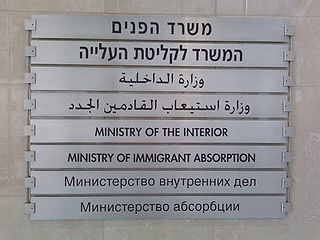
Israel
The State of Israel is a parliamentary republic located in the Middle East, along the eastern shore of the Mediterranean Sea...
i population is a linguistically and culturally diverse community. The 15th edition of Ethnologue
Ethnologue
Ethnologue: Languages of the World is a web and print publication of SIL International , a Christian linguistic service organization, which studies lesser-known languages, to provide the speakers with Bibles in their native language and support their efforts in language development.The Ethnologue...
lists 33 languages and dialects spoken in local communities. The main language used for communication among Israeli citizens is Modern Hebrew
Modern Hebrew
Modern Hebrew , also known as Israeli Hebrew or Modern Israeli Hebrew, is the language spoken in Israel and in some Jewish communities worldwide, from the early 20th century to the present....
, a language that emerged in the late 19th century, based on different dialects of ancient Hebrew and somewhat influenced by many languages (Jewish languages
Jewish languages
Jewish languages are the various languages and dialects that developed in Jewish communities around the world.Although Hebrew was the daily speech of the Jewish people for centuries, by the fifth century BCE, the closely related Aramaic joined Hebrew as the spoken language in Judea and by the third...
, Slavic languages
Slavic languages
The Slavic languages , a group of closely related languages of the Slavic peoples and a subgroup of Indo-European languages, have speakers in most of Eastern Europe, in much of the Balkans, in parts of Central Europe, and in the northern part of Asia.-Branches:Scholars traditionally divide Slavic...
, Arabic, Aramaic, German and others). Hebrew
Hebrew language
Hebrew is a Semitic language of the Afroasiatic language family. Culturally, is it considered by Jews and other religious groups as the language of the Jewish people, though other Jewish languages had originated among diaspora Jews, and the Hebrew language is also used by non-Jewish groups, such...
and Arabic
Arabic language
Arabic is a name applied to the descendants of the Classical Arabic language of the 6th century AD, used most prominently in the Quran, the Islamic Holy Book...
are the official language
Official language
An official language is a language that is given a special legal status in a particular country, state, or other jurisdiction. Typically a nation's official language will be the one used in that nation's courts, parliament and administration. However, official status can also be used to give a...
s of Israel.
Official status of languages
Language policy
Many countries have a language policy designed to favour or discourage the use of a particular language or set of languages. Although nations historically have used language policies most often to promote one official language at the expense of others, many countries now have policies designed to...
in Israel. This confusing situation has led to several appeals to the supreme court
Supreme Court of Israel
The Supreme Court is at the head of the court system and highest judicial instance in Israel. The Supreme Court sits in Jerusalem.The area of its jurisdiction is all of Israel and the Israeli-occupied territories. A ruling of the Supreme Court is binding upon every court, other than the Supreme...
, whose rulings have enforced the current policies of national and local authorities.
Currently, there are two official languages in Israel: Hebrew
Hebrew language
Hebrew is a Semitic language of the Afroasiatic language family. Culturally, is it considered by Jews and other religious groups as the language of the Jewish people, though other Jewish languages had originated among diaspora Jews, and the Hebrew language is also used by non-Jewish groups, such...
and Arabic
Arabic language
Arabic is a name applied to the descendants of the Classical Arabic language of the 6th century AD, used most prominently in the Quran, the Islamic Holy Book...
. English, which has semi-official status, is used extensively at all levels of society. The main law governing language policy is the 82nd paragraph of the “Palestine
Palestine
Palestine is a conventional name, among others, used to describe the geographic region between the Mediterranean Sea and the Jordan River, and various adjoining lands....
Order in Council” issued on 14 August 1922, for the British Mandate of Palestine:
- All Ordinances, official notices and official forms of the Government and all official notices of local authorities and municipalities in areas to be prescribed by order of the High Commissioner, shall be published in English, Arabic and Hebrew.
This law, like most other laws of the British Mandate, was adopted in the State of Israel, subject to certain amendments published by the provisional legislative branch on 19 May 1948. The amendment (paragraph 15-b) states that:
- Any order in the law which requires the use of the English language is hereby abolished.
Hebrew
The Palestine Mandate articles, issued by the Council of the League of NationsLeague of Nations
The League of Nations was an intergovernmental organization founded as a result of the Paris Peace Conference that ended the First World War. It was the first permanent international organization whose principal mission was to maintain world peace...
in 1922, and the 1922 Palestine Order in Council were the first in modern times to acknowledge Hebrew
Hebrew language
Hebrew is a Semitic language of the Afroasiatic language family. Culturally, is it considered by Jews and other religious groups as the language of the Jewish people, though other Jewish languages had originated among diaspora Jews, and the Hebrew language is also used by non-Jewish groups, such...
as an official language of a political entity. This was a significant achievement for the Zionist movement, which sought to establish Hebrew as the national language of the Jewish people and discouraged the use of other Jewish languages
Jewish languages
Jewish languages are the various languages and dialects that developed in Jewish communities around the world.Although Hebrew was the daily speech of the Jewish people for centuries, by the fifth century BCE, the closely related Aramaic joined Hebrew as the spoken language in Judea and by the third...
, particularly Yiddish, just like Hebrew replaced Aramaic in ancient times.
The movement for the revival of Hebrew as a spoken language was particularly popular among new Jewish Zionist immigrants who came to Palestine since the 1880s. Eliezer Ben-Yehuda
Eliezer Ben-Yehuda
Eliezer Ben‑Yehuda was a Jewish lexicographer and newspaper editor. He was the driving spirit behind the revival of the Hebrew language in the modern era.-Biography:...
(born in the Russian Empire
Russian Empire
The Russian Empire was a state that existed from 1721 until the Russian Revolution of 1917. It was the successor to the Tsardom of Russia and the predecessor of the Soviet Union...
) and his followers created the first Hebrew-speaking schools, newspapers, and other Hebrew-language institutions. As Max Weinreich
Max Weinreich
Max Weinreich was a linguist, specializing in the Yiddish language, and the father of the linguist Uriel Weinreich, who edited the Modern Yiddish-English English-Yiddish Dictionary.- Biography :Max Weinreich began his studies in a German school in Kuldiga,...
notes in his book, "History of the Yiddish Language, Volume 1", the "very making of Hebrew into a spoken language derives from the will to separate from the Diaspora
Jewish diaspora
The Jewish diaspora is the English term used to describe the Galut גלות , or 'exile', of the Jews from the region of the Kingdom of Judah and Roman Iudaea and later emigration from wider Eretz Israel....
". After Ben Yehuda's immigration to Israel, and due to the impetus of the Second Aliyah
Second Aliyah
The Second Aliyah was an important and highly influential aliyah that took place between 1904 and 1914, during which approximately 40,000 Jews immigrated into Ottoman Palestine, mostly from the Russian Empire, some from Yemen....
(1905–1914), Hebrew prevailed as the single official and spoken language of the Jewish community of mandatory Palestine. When the State of Israel was formed in 1948, the government viewed Hebrew as the de facto official language and initiated a melting pot
Melting pot
The melting pot is a metaphor for a heterogeneous society becoming more homogeneous, the different elements "melting together" into a harmonious whole with a common culture...
policy, where every immigrant was required to study Hebrew and often to adopt a Hebrew surname. Use of Yiddish, which was the main competitor prior to World War II, was discouraged, and the number of Yiddish speakers declined as the older generations died out. However, Yiddish is still commonly used in Ashkenazi haredi
Haredi Judaism
Haredi or Charedi/Chareidi Judaism is the most conservative form of Orthodox Judaism, often referred to as ultra-Orthodox. A follower of Haredi Judaism is called a Haredi ....
communities worldwide, and is often the first language for the members of such communities.
Today, Hebrew is the official language used in government, commerce, Knesset
Knesset
The Knesset is the unicameral legislature of Israel, located in Givat Ram, Jerusalem.-Role in Israeli Government :The legislative branch of the Israeli government, the Knesset passes all laws, elects the President and Prime Minister , approves the cabinet, and supervises the work of the government...
debates, court sessions, schools, and universities. Hebrew is a required subject in Arabic-speaking schools from the third grade onwards, and a Hebrew exam is an essential part of the matriculation exams for students of Israeli schools.
The state-affiliated Academy of the Hebrew Language
Academy of the Hebrew Language
The Academy of the Hebrew Language was established by the Israeli government in 1953 as the "supreme institution for scholarship on the Hebrew language."-History:...
, established in 1953 by a Knesset law, is tasked with researching the Hebrew language and offering standardized rules for the use of the language by the state. Although its decisions are supposed to be mandatory, their application varies from government bureau to bureau, while commercial adoption of the Academy’s rules (such as in the print media) is voluntary.
Arabic
ArabicArabic language
Arabic is a name applied to the descendants of the Classical Arabic language of the 6th century AD, used most prominently in the Quran, the Islamic Holy Book...
, along with Hebrew, is also an official language in Israel. Arabic is spoken primarily by Arab citizens of Israel
Arab citizens of Israel
Arab citizens of Israel refers to citizens of Israel who are not Jewish, and whose cultural and linguistic heritage or ethnic identity is Arab....
and Israeli Druze
Druze
The Druze are an esoteric, monotheistic religious community, found primarily in Syria, Lebanon, Israel, and Jordan, which emerged during the 11th century from Ismailism. The Druze have an eclectic set of beliefs that incorporate several elements from Abrahamic religions, Gnosticism, Neoplatonism...
, as well as by some Mizrahi
Mizrahi Jews
Mizrahi Jews or Mizrahiyim, , also referred to as Adot HaMizrach are Jews descended from the Jewish communities of the Middle East, North Africa and the Caucasus...
and Yemenite Jews
Yemenite Jews
Yemenite Jews are those Jews who live, or whose recent ancestors lived, in Yemen . Between June 1949 and September 1950, the overwhelming majority of Yemen's Jewish population was transported to Israel in Operation Magic Carpet...
, particularly those of the older generation who immigrated from Arabic-speaking countries. In 1949, 156,000 Palestinian Arabs were left inside Israel’s armistice line, most of whom did not speak Hebrew. Today the vast majority of Arab Israelis, who constitute over a fifth of the Israeli population, speak Hebrew fluently.
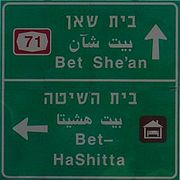
For many years the Israeli authorities were reluctant to use Arabic, except when explicitly ordered by law (for example, in warnings on dangerous chemicals), or when addressing the Arabic-speaking population. This has changed following a November 2000 supreme court ruling which ruled that although second to Hebrew, the use of Arabic should be much more extensive. Since then, all road signs, food labels, and messages published or posted by the government must also be translated into Arabic, unless being issued by the local authority of an exclusively Hebrew-speaking community.
Arabic was always considered a legitimate language for use in the Knesset
Knesset
The Knesset is the unicameral legislature of Israel, located in Givat Ram, Jerusalem.-Role in Israeli Government :The legislative branch of the Israeli government, the Knesset passes all laws, elects the President and Prime Minister , approves the cabinet, and supervises the work of the government...
, but only rarely have Arabic-speaking Knesset members made use of this privilege. This situation can be easily explained: while all Arabic-speaking MKs are fluent in Hebrew, very few Hebrew-speaking MKs can understand Arabic.
Arabic lessons are widespread in Hebrew-speaking schools from the seventh through ninth grades. Those who wish to do so may opt to continue their Arabic studies through the twelfth grade and take an Arabic matriculation exam.
In March 2007 the Knesset approved a new law calling for the establishment of an Arabic Language Academy similar to the Academy of the Hebrew Language
Academy of the Hebrew Language
The Academy of the Hebrew Language was established by the Israeli government in 1953 as the "supreme institution for scholarship on the Hebrew language."-History:...
. This institute was established in 2008, its center is in Haifa
Haifa
Haifa is the largest city in northern Israel, and the third-largest city in the country, with a population of over 268,000. Another 300,000 people live in towns directly adjacent to the city including the cities of the Krayot, as well as, Tirat Carmel, Daliyat al-Karmel and Nesher...
and it is currently headed by Prof. Mahmud Ghanayem
In 2008 a group of Knesset members proposed a bill to remove Arabic's status as an official language.
In 2009 Israel Katz, the transport minister, announced that signs on all major roads in Israel, East Jerusalem and possibly parts of the West Bank would be amended, replacing English and Arabic place names with straight transliterations of the Hebrew name. Currently most road signs are in all three languages. Nazareth
Nazareth
Nazareth is the largest city in the North District of Israel. Known as "the Arab capital of Israel," the population is made up predominantly of Palestinian Arab citizens of Israel...
, for example, would become "Natzrat". The Transport Ministry said signs would be replaced gradually as necessary due to wear and tear.
English
The amendments to the British Mandate's legal system, issued in May 1948 (paragraph 15-b) state:- Any order in the law which requires the use of the English language is hereby abolished.
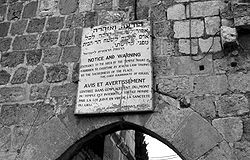
In practice the use of English decreased dramatically during the state's early years. At first, French was used as a diplomatic language, even though most state officials and civil servants were more fluent in English. During the late 1960s, the Israeli-French alliance was undermined, giving way to a stronger Israeli-United States alliance and paving the way for the English language to regain much of its lost status. Today, English is the primary language for international relations and foreign exchange, but it is not sanctioned for use in Knesset debates or in drafting legislation. Some British Mandate laws are still formulated in English, and the process of their translation into Hebrew has been gradual. English is required as a second language in schools and universities, for both Hebrew- and Arabic-speaking students. Despite the country's history of British mandatory rule, written English in Israel today uses primarily American spelling and grammar.
The usage of the language is influenced by factors related to the birthplace of the speaker or the speaker's ancestors: those who are born to American-descended parentages are more likely to speak American English as their preferred dialect of the language, Western Continental European descendants are more likely to speak with accents heavily influenced by languages such as French, German and Yiddish, and so on. A distinctively-Israeli dialect of the language has been slow in development due to continued migration to Israel, large established communities of persistent speakers of languages and dialects from outside of Israel, and the state's focus upon education in Hebrew; the development of English in Israel may depend upon the future of assimilation and integration of generations of native-born Israeli citizens as well as the status of Israel's relations with English-speaking countries including the United States.
Policy towards immigrants' languages
The melting potMelting pot
The melting pot is a metaphor for a heterogeneous society becoming more homogeneous, the different elements "melting together" into a harmonious whole with a common culture...
policy, which governed the Israeli language policy in its early days, was gradually neglected during the late 1970s. While in the 1950s the Israeli law banned Yiddish-language theaters and forced civil servants to adopt Hebrew surnames, the new policy allowed immigrants to communicate with the authorities in their language of origin and encouraged them to keep their original language and culture. This new practice has become evident since the early 1990s with massive immigration from the former Soviet Union and the additional immigration from Ethiopia
Aliyah from Ethiopia
The Jewish aliyah from Ethiopia began during the mid-1970s, during which the majority of the Jewish Ethiopians immigrated to Israel.- Eligibility of Jewish Ethiopians for Aliyah :...
. Israeli authorities began to use Russian and Amharic extensively when communicating with these new immigrants. During the 1991 Gulf War
Gulf War
The Persian Gulf War , commonly referred to as simply the Gulf War, was a war waged by a U.N.-authorized coalition force from 34 nations led by the United States, against Iraq in response to Iraq's invasion and annexation of Kuwait.The war is also known under other names, such as the First Gulf...
, warnings and instructions were issued in at least seven languages. In 1991, a new radio station was erected, called "REKA", which is a Hebrew acronym for "Aliyah Absorption Network". At first, it broadcast exclusively in Russian, also containing programming aimed at teaching Hebrew, which included veteran Israeli radio broadcasters recapping news in "easy Hebrew"; some years later, Amharic and Tigrinya time slots were introduced. Just as news in Arabic existed on Arutz 1, news programmes appeared in Russian, Amharic and Tigrinya. Several newspapers and magazines were published in Russian and easy Hebrew with Niqqud. In the beginning of the twenty first century, the first Russian language TV channel was created.
Non-official languages widely spoken in Israel
Because Israel is a multicultural society, many other languages are used by large sectors of the population. The main ones, after English (covered above), are as follows:- Russian: Russian is by far the most widely spoken non-official language in Israel after English. As many as 20% of Israelis are fluent in Russian after mass immigration from the USSRSoviet UnionThe Soviet Union , officially the Union of Soviet Socialist Republics , was a constitutionally socialist state that existed in Eurasia between 1922 and 1991....
and its successor states in the 1970s, 1990s, and 2000s. The government and businesses often provide information in Russian, and it is semi-official in some areas. - RomanianRomanian languageRomanian Romanian Romanian (or Daco-Romanian; obsolete spellings Rumanian, Roumanian; self-designation: română, limba română ("the Romanian language") or românește (lit. "in Romanian") is a Romance language spoken by around 24 to 28 million people, primarily in Romania and Moldova...
/MoldovanMoldovan languageMoldovan is one of the names of the Romanian language as spoken in the Republic of Moldova, where it is official. The spoken language of Moldova is closer to the dialects of Romanian spoken in northeastern Romania, and the two countries share the same literary standard...
: It is estimated that there are more than 500,000 Romanian-speakers in Israel (including non-citizen workers), making it the second most common "foreign language" in Israel. - YiddishYiddish languageYiddish is a High German language of Ashkenazi Jewish origin, spoken throughout the world. It developed as a fusion of German dialects with Hebrew, Aramaic, Slavic languages and traces of Romance languages...
: The language of Ashkenazi Jews in the diaspora and the second most widely spoken Jewish language, Yiddish is a Germanic language, but incorporates elements of Hebrew. Banned during Israel’s early statehood, Yiddish has undergone a cultural revival in recent years. Furthermore, Yiddish has always and is still regularly used in some harediHaredi JudaismHaredi or Charedi/Chareidi Judaism is the most conservative form of Orthodox Judaism, often referred to as ultra-Orthodox. A follower of Haredi Judaism is called a Haredi ....
Ashkenazi communities. However, despite state-sponsored initiatives for preserving Yiddish culture, the number of Yiddish-speaking Israelis is in decline as older generations of Ashkenazi Jews pass away. - German is spoken natively by around 100,000 Israelis. In PalestinePalestinePalestine is a conventional name, among others, used to describe the geographic region between the Mediterranean Sea and the Jordan River, and various adjoining lands....
during Ottoman rule and the mandate period, as well as during the first decades of Israeli statehood, German was one of the primary languages of Jews living there. Around 1950, the German language Israel-NachrichtenIsrael-NachrichtenIsrael-Nachrichten is a German language daily newspaper published in Tel Aviv. It is a part of the Internationale Medienhilfe network.Founded 1935 by Siegfried Blumenthal. In 1950 it was one of the most sold newspapers in Israel....
was the largest newspaper of Israel. - Amharic: Spoken by most of Israel’s 130,000 Ethiopian JewsBeta IsraelBeta Israel Israel, Ge'ez: ቤተ እስራኤል - Bēta 'Isrā'ēl, modern Bēte 'Isrā'ēl, EAE: "Betä Ǝsraʾel", "Community of Israel" also known as Ethiopian Jews , are the names of Jewish communities which lived in the area of Aksumite and Ethiopian Empires , nowadays divided between Amhara and Tigray...
, most of whom arrived in two massive operations transporting tens of thousands of Ethiopian Jews from EthiopiaEthiopiaEthiopia , officially known as the Federal Democratic Republic of Ethiopia, is a country located in the Horn of Africa. It is the second-most populous nation in Africa, with over 82 million inhabitants, and the tenth-largest by area, occupying 1,100,000 km2...
to IsraelIsraelThe State of Israel is a parliamentary republic located in the Middle East, along the eastern shore of the Mediterranean Sea...
in 1984Operation MosesOperation Moses refers to the covert evacuation of Ethiopian Jews from Sudan during a famine in 1984...
and 1991Operation SolomonOperation Solomon was a 1991 covert Israeli military operation to take Ethiopian Jews to Israel.In 1991, the sitting Ethiopian government of Mengistu Haile Mariam was close to being toppled with the recent military successes of Eritrean and Tigrean rebels, threatening Ethiopia with dangerous...
, Amharic is often used in government announcements and publications. - GeorgianGeorgian languageGeorgian is the native language of the Georgians and the official language of Georgia, a country in the Caucasus.Georgian is the primary language of about 4 million people in Georgia itself, and of another 500,000 abroad...
/Judaeo-Georgian: Although most GeorgianGeorgian peopleThe Georgians are an ethnic group that have originated in Georgia, where they constitute a majority of the population. Large Georgian communities are also present throughout Russia, European Union, United States, and South America....
immigrants speak Russian, they converse among themselves in Georgian. - Ladino: The Sephardi Jewish language and the third most widely spoken Jewish language, Ladino is a variant of medieval Spanish, intermixed with Hebrew. It is spoken by many Sephardi Jews. Today there is a state-supported authority for preserving the Ladino culture.
- PolishPolish languagePolish is a language of the Lechitic subgroup of West Slavic languages, used throughout Poland and by Polish minorities in other countries...
: Polish was spoken by the large number of immigrantsAliyahAliyah is the immigration of Jews to the Land of Israel . It is a basic tenet of Zionist ideology. The opposite action, emigration from Israel, is referred to as yerida . The return to the Holy Land has been a Jewish aspiration since the Babylonian exile...
from PolandPolandPoland , officially the Republic of Poland , is a country in Central Europe bordered by Germany to the west; the Czech Republic and Slovakia to the south; Ukraine, Belarus and Lithuania to the east; and the Baltic Sea and Kaliningrad Oblast, a Russian exclave, to the north...
. Today, it is somewhat common in Polish moshavMoshavMoshav is a type of Israeli town or settlement, in particular a type of cooperative agricultural community of individual farms pioneered by the Labour Zionists during the second aliyah...
ei ovdim (workers’ settlements) created during the 1940s and 1950s. - UkrainianUkrainian languageUkrainian is a language of the East Slavic subgroup of the Slavic languages. It is the official state language of Ukraine. Written Ukrainian uses a variant of the Cyrillic alphabet....
: While most Ukrainian Jews also speak Russian, there is still a significant segment of Ukrainian speakers. - Spanish: Spanish is spoken by Jews from ArgentinaArgentinaArgentina , officially the Argentine Republic , is the second largest country in South America by land area, after Brazil. It is constituted as a federation of 23 provinces and an autonomous city, Buenos Aires...
and other olim from other Spanish-speaking countries, as well as by some Sephardi groups. Spanish is not restricted to Sephardim, as most Argentinian Jews are actually Ashkenazim. Spanish has never been part of the curriculum in Israel. Only English, French, Arabic, Russian and Italian are taught, in addition to Hebrew, and Spanish is only taught as a foreign language in schools and universities.
- French: Spoken by many Moroccan, Algerian, and Tunisian Jews, either as a native or second language of these francizedFrancizationFrancization or Gallicization is a process of cultural assimilation that gives a French character to a word, an ethnicity or a person.-French Colonial Empire:-Francization in the World:...
MaghrebMaghrebThe Maghreb is the region of Northwest Africa, west of Egypt. It includes five countries: Morocco, Algeria, Tunisia, Libya, and Mauritania and the disputed territory of Western Sahara...
i Jews, French is also spoken by the increasing number of new immigrants from France and other French-speaking countries, as well as by foreign workers from French speaking AfricaAfrican FrenchAfrican French is the generic name of the varieties of French spoken by an estimated 115 million African people spread across 31 francophone African countries...
. For many years French had been the diplomatic language of Israel, and it is still taught in many Israeli schools. The French embassy’s Institut Français supports French studies in Israeli schools. Israel has tried to join La FrancophonieLa FrancophonieFrancophonie is an international organization of politics and governments with French as the mother or customary language, where a significant proportion of people are francophones , or where there is a notable affiliation with the French language or culture.Formally known as the Organisation...
, but has been rebuffed by its Arab members. Tel Aviv UniversityTel Aviv UniversityTel Aviv University is a public university located in Ramat Aviv, Tel Aviv, Israel. With nearly 30,000 students, TAU is Israel's largest university.-History:...
is a member of the Agence universitaire de la FrancophonieAgence universitaire de la francophonieThe Agence universitaire de la Francophonie , French for the "Association of Universities of the Francophonie", is a global network of French-speaking higher education and research institutions....
(AUF). - Italian: In addition to being spoken by Italian Jews, Italian is also spoken by many Jews from LibyaLibyaLibya is an African country in the Maghreb region of North Africa bordered by the Mediterranean Sea to the north, Egypt to the east, Sudan to the southeast, Chad and Niger to the south, and Algeria and Tunisia to the west....
(a former Italian colony) and immigrants from other former Italian colonies (EritreaEritreaEritrea , officially the State of Eritrea, is a country in the Horn of Africa. Eritrea derives it's name from the Greek word Erethria, meaning 'red land'. The capital is Asmara. It is bordered by Sudan in the west, Ethiopia in the south, and Djibouti in the southeast...
, Ethiopia and SomaliaSomaliaSomalia , officially the Somali Republic and formerly known as the Somali Democratic Republic under Socialist rule, is a country located in the Horn of Africa. Since the outbreak of the Somali Civil War in 1991 there has been no central government control over most of the country's territory...
) as a primary or second language. As a result of growing demand, Italian may be taken as an optional subject in some schools. - PersianPersian languagePersian is an Iranian language within the Indo-Iranian branch of the Indo-European languages. It is primarily spoken in Iran, Afghanistan, Tajikistan and countries which historically came under Persian influence...
: Persian is spoken by many Persian JewsPersian JewsPersian Jews , are Jews historically associated with Iran, traditionally known as Persia in Western sources.Judaism is one of the oldest religions practiced in Iran. The Book of Esther contains some references to the experiences of Jews in Persia...
who immigrated from Iran and their children. - KaylaKayla languageKayla, or Kayliñña is one of two Agaw dialects formerly spoken by a subgroup of the Beta Israel . It is a dialect of Qimant. The name Kayla is sometimes also used as a cover term for both Beta Israel dialects...
and QwaraQwara languageQwara, or Qwareña , is one of two Agaw dialects formerly spoken by a subgroup of the Beta Israel of the Qwara area. It is a dialect of Qimant....
: These languages are spoken by Ethiopian JewsBeta IsraelBeta Israel Israel, Ge'ez: ቤተ እስራኤል - Bēta 'Isrā'ēl, modern Bēte 'Isrā'ēl, EAE: "Betä Ǝsraʾel", "Community of Israel" also known as Ethiopian Jews , are the names of Jewish communities which lived in the area of Aksumite and Ethiopian Empires , nowadays divided between Amhara and Tigray...
in addition to AmharicAmharic languageAmharic is a Semitic language spoken in Ethiopia. It is the second most-spoken Semitic language in the world, after Arabic, and the official working language of the Federal Democratic Republic of Ethiopia. Thus, it has official status and is used nationwide. Amharic is also the official or working...
. Kayla appears to be extinct. - Chinese, TagalogTagalog languageTagalog is an Austronesian language spoken as a first language by a third of the population of the Philippines and as a second language by most of the rest. It is the first language of the Philippine region IV and of Metro Manila...
, and ThaiThai languageThai , also known as Central Thai and Siamese, is the national and official language of Thailand and the native language of the Thai people, Thailand's dominant ethnic group. Thai is a member of the Tai group of the Tai–Kadai language family. Historical linguists have been unable to definitively...
: While spoken by a negligible number of Israeli Jews, Chinese, Tagalog, and Thai have made inroads in Israeli society in recent years due to an influx of non-Jewish immigrants from China, the PhilippinesPhilippinesThe Philippines , officially known as the Republic of the Philippines , is a country in Southeast Asia in the western Pacific Ocean. To its north across the Luzon Strait lies Taiwan. West across the South China Sea sits Vietnam...
, and ThailandThailandThailand , officially the Kingdom of Thailand , formerly known as Siam , is a country located at the centre of the Indochina peninsula and Southeast Asia. It is bordered to the north by Burma and Laos, to the east by Laos and Cambodia, to the south by the Gulf of Thailand and Malaysia, and to the...
. It is estimated that there are 180,000 such illegal immigrants. Many (though mostly Vietnamese) legally entered the country when Israel opened their doors to “boat peopleBoat peopleBoat people is a term that usually refers to refugees, illegal immigrants or asylum seekers who emigrate in numbers in boats that are sometimes old and crudely made...
” from war-torn Southeast Asia in the 1970s. - MarathiMarathi languageMarathi is an Indo-Aryan language spoken by the Marathi people of western and central India. It is the official language of the state of Maharashtra. There are over 68 million fluent speakers worldwide. Marathi has the fourth largest number of native speakers in India and is the fifteenth most...
: Marathi is the language of Bene IsraelBene IsraelThe Bene Israel are a group of Jews who migrated in the 19th century from villages in the Konkan area to the nearby Indian cities, primarily Mumbai, but also to Pune, and Ahmedabad. Prior to these waves of emigrations and to this day, the Bene Israel formed the largest sector of the subcontinent's...
– Jews from the KonkanKonkanThe Konkan also called the Konkan Coast or Karavali is a rugged section of the western coastline of India from Raigad to Mangalore...
coast of IndiaIndiaIndia , officially the Republic of India , is a country in South Asia. It is the seventh-largest country by geographical area, the second-most populous country with over 1.2 billion people, and the most populous democracy in the world...
. They migrated to Israel beginning in 1948, when the State of Israel was established. In 1977 they numbered about 20,000. Concentrations of Marathi speakers are found in the towns of Dimona and Beersheba. - Bukhori: Bukhori is spoken by the Bukharian Jews who immigrated from Central Asia.
- Israeli Sign LanguageIsraeli Sign LanguageIsraeli Sign Language, or ISL, is the most commonly used sign language in the deaf community of Israel. Some other sign languages are also used in Israel, among them Al-Sayyid Bedouin Sign Language....
is the main language amongst deaf Israelis. It comes from Jewish educators of the Deaf from Germany who relocated to start the first school for the deaf in Israel. - Syriac/Neo-Aramaic: The Syriac language is also spoken by some Iraqi Jews that immigrated to Israel from IraqIraqIraq ; officially the Republic of Iraq is a country in Western Asia spanning most of the northwestern end of the Zagros mountain range, the eastern part of the Syrian Desert and the northern part of the Arabian Desert....
during the 1940s and 1950s.
External links
- Languages of Israel – EthnologueEthnologueEthnologue: Languages of the World is a web and print publication of SIL International , a Christian linguistic service organization, which studies lesser-known languages, to provide the speakers with Bibles in their native language and support their efforts in language development.The Ethnologue...
entry for Israel. - Language Policy Research Center, Bar Ilan University, Ramat Gan, Israel.