
All Topics  
Laminitis

 
Laminitis

   Email Print
   Bookmark   Link


Laminitis


Laminitis is a disease of the digital laminae of the hoof
Hoof

File:Horse rear hooves.jpgA hoof is the tip of a toe of an ungulate mammal, strengthened by a thick horny covering. The hoof consists of a hard or rubbery sole, and a hard wall formed by a thick Nail rolled around the tip of the toe....
 (foot
Foot

The foot is an anatomical structure found in many animals. It is the terminal portion of a limb which bears weight and allows locomotion. In many animals with feet, the foot is a separate organ at the terminal part of the leg made up of one or more segments or bones, generally including claws or nails....
 of an ungulate
Ungulate

Ungulates are several groups of mammals, most of which use the tips of their toes, usually hoofed, to sustain their whole body weight while moving....
). It is most well known in horse
Horse

The horse is a hoofed mammal, a subspecies of one of seven extant species of the family Equidae. The horse has evolution of the horse over the past 45 to 55 million years from a small multi-toed creature into the large, odd-toed ungulate animal of today....
s and cattle
Cattle

Cattle, colloquially referred to as cows, are domestication ungulates, a member of the subfamily Bovinae of the family Bovidae. They are raised as livestock for meat , dairy products , leather and as draft animals ....
.


digital laminae are responsible for suspension of the axial skeleton of the animal within the hoof and dissipate concussive forces during locomotion.


Discussion
Ask a question about 'Laminitis'
Start a new discussion about 'Laminitis'
Answer questions from other users
Full Discussion Forum


Recent Posts


Encyclopedia


Laminitis is a disease of the digital laminae of the hoof
Hoof

File:Horse rear hooves.jpgA hoof is the tip of a toe of an ungulate mammal, strengthened by a thick horny covering. The hoof consists of a hard or rubbery sole, and a hard wall formed by a thick Nail rolled around the tip of the toe....
 (foot
Foot

The foot is an anatomical structure found in many animals. It is the terminal portion of a limb which bears weight and allows locomotion. In many animals with feet, the foot is a separate organ at the terminal part of the leg made up of one or more segments or bones, generally including claws or nails....
 of an ungulate
Ungulate

Ungulates are several groups of mammals, most of which use the tips of their toes, usually hoofed, to sustain their whole body weight while moving....
). It is most well known in horse
Horse

The horse is a hoofed mammal, a subspecies of one of seven extant species of the family Equidae. The horse has evolution of the horse over the past 45 to 55 million years from a small multi-toed creature into the large, odd-toed ungulate animal of today....
s and cattle
Cattle

Cattle, colloquially referred to as cows, are domestication ungulates, a member of the subfamily Bovinae of the family Bovidae. They are raised as livestock for meat , dairy products , leather and as draft animals ....
.

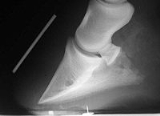
Laminitic

Pathology

The digital laminae are responsible for suspension of the axial skeleton of the animal within the hoof and dissipate concussive forces during locomotion. There are about 600 pairs of interleaved laminae: the epidermal laminae attached to the hoof wall and the dermal laminae attached to the coffin bone. Laminitis results from a compromise of this interaction, the mechanism of which remains unclear and is currently the subject of much research. Laminitis literally means inflammation of the laminae, and while it remains controversial whether this is the primary mechanism of disease, evidence of inflammation occurs very early in some instances of the disease.

Cellular and Molecular Biology of Laminitis

At present, three primary hypotheses exist for the mechanism of laminar failure. The first is classical inflammation, which includes infiltration of potentially destructive white blood cells. The second is ischemia-reperfusion injury. Researchers have observed both decreased and increased blood flow to the laminae. As ischemia-reperfusion injury reconciles both observations, it has received much attention in past years. Finally, metabolic derangements that lead to impaired cell function and proteolytic enzyme activation has been proposed to be the primary mechanism for development of laminitis.

Progression

In laminitis cases, a clear distinction must be made between the acute situation, starting at the onset of a laminitis attack and a chronic situation. A chronic situation can be either stable or unstable. The difference between acute, chronic, stable and unstable is of vital importance, when choosing a treatment protocol.

Laminitis can be mechanical or systemic, unilateral (on one foot) or bilateral (on two feet) or may also occur in all four feet.

Systemic laminitis follows from some metabolic disturbance within the horse, from a multitude of possible causes, and results in the partial dysfunction of the epidermal and dermal laminae, which attach the distal phalanx to the hoof wall. With this dysfunction, the deep digital flexor tendon (which attaches to the semi-lunar crest of the distal phalanx and serves to flex the foot) is able to pull the bone away from the wall, instead of flexing the foot. When the coffin bone is pulled away from the hoofwall, the remaining laminae will tear. This may lead to abscesses, within the hoof capsule, that can be severe and very painful.

Systemic laminitis is usually bilateral and is most common in the front feet, although it sometimes affects the hind feet.

Mechanical laminitis or "mechanical founder" does not start with laminitis or rotation of the distal phalanx. Instead, the wall is pulled away from the bone or lost, as a result of external influences. Mechanical founder can occur when a horse habitually paws, is ridden or driven on hard surfaces or loses laminar function, due to injury or pathologies affecting the wall.

Mechanical founder can be either unilateral or bilateral and can affect both front and hind feet.

Complications


Founder

Founder Severe Rotation
Rotation and sinking of the coffin bone
Pedal bone

The pedal bone, commonly known as the coffin bone , is the bottomost bone in the equine leg and is encased by the horse hoof capsule. Also known as the Phalanx bones, third phalange, third phalanx, or "P3"....
 (in horses) are two possible consequences of a single severe laminitic episode or of repeated episodes and refer to varying degrees of separation of dermal and epidermal laminae, with resulting anatomical changes in the position of the coffin bone. This result is also commonly called founder, from the nautical term "to sink". Informally, particularly in the United States
United States

The United States of America is a Federal government constitutional republic comprising U.S. state and a federal district. The country is situated mostly in central North America, where its Contiguous United States and Washington, D.C., the Capital districts and territories, lie between the Pacific Ocean and Atlantic Oceans, Borders of the U...
, "founder" has come to mean any chronic changes in the structure of the foot that can be linked to laminitis. In some texts, the term "founder" is even used synonymously with laminitis, though such usage is technically incorrect. Put simply, not all horses that experience laminitis will founder but all horses that founder will first experience laminitis.

Rotation occurs when the damage to the laminae is less severe and it will show up mainly in the toe area of the foot. One possible reason for this is the pull of the tendon attached to the coffin bone, the deep digital flexor tendon, literally pulling the dorsal face of the coffin bone away from the inside of the hoofwall. There are also ligaments attaching the collateral cartilages to the digit, primarily in the palmar portion of the foot, possibly contributing to a difference in support from front to back. It is also theorized that the body weight of the animal contributes to rotation of the coffin bone. Rotation results in an obvious misalignment between PII (the short pastern bone) and PIII (the coffin bone). In some cases, the rotation may also result in the tip of PIII penetrating the sole and becoming exposed externally. Coffin bones pierce the bottom of the hoof (near the frog).

Sinking is less common and much more severe. It results when there is a significant failure of the interdigitation between the sensitive and insensitive laminae around the entire perimeter of the hoof. In extreme cases this event allows the entire bony column, often described by its most distal bone, the third phalanx
Phalanx bones

The name Phalanx is commonly given to the bones that form fingers and toes. In primates such as humans and monkeys, the thumb and big toe have two phalanges, while the other fingers and toes consist of three....
 (a.k.a. PIII, P3, coffin bone, pedal bone, distal phalanx) to sink within the bottom of the hoof capsule.

Depending upon the severity at the onset of the pathology, there may be no movement of the coffin bone, rotation only, sinking only or a combination of both rotation and sinking, to varying extents. It is generally agreed that a severe "sinker" warrants the gravest prognosis and may, depending upon many factors, including the quality of after care, age of the horse, diet and nutrition, skill, knowledge and ability of the attending veterinarian and farrier(s), lead to euthanasia
Animal euthanasia

Animal euthanasia is the act of inducing humane death in an animal. Euthanasia methods are designed to cause minimal pain and distress.In domesticated animals, this process is commonly referred to by the euphemisms "lay down," "put down," "put to sleep," "put out of his/her misery," or "sent away to the farm."...
 of the patient.

Separation of the hoof wall

The destruction of the sensitive laminae results in the hoof wall becoming separated from the rest of the hoof. Pus may leak out at the white line or at the coronary band.

Rotation of the third phalanx

The third phalanx, also known as the coffin bone, rotates downward. Normally, the front of the third phalanx should be parallel to the hoof wall and its lower surface should be roughly parallel to the ground surface but, in laminitis, a combination of forces (e.g., the tension of the deep digital flexor tendon and the weight of the horse) allows the coffin bone to rotate. The degree of rotation may be determined by severity of the initial attack or by how soon laminitis is detected and how soon actions are taken to treat the horse.

Penetration of the third phalanx through the sole

If rotation of the third phalanx continues, its tip can eventually penetrate the sole of the foot. Penetration of the sole is not fatal; many horses have been returned to service by aggressive treatment by a veterinarian and farrier, but the treatment is time-consuming, difficult and expensive.

Causes

Laminitis has multiple causes, some of which commonly co-occur. These causes can be grouped into broad categories.

Endotoxins


Carbohydrate overload
One of the more common causes. Current theory states that if a horse is given grain in excess or eats grass that is under stress and has accumulated excess non-structural carbohydrates (NSC, i.e. sugar
Sugar

Sugar is a class of edible crystalline substances, mainly sucrose, lactose, and fructose. Human taste buds interpret its flavor as sweet. Sugar as a basic food carbohydrate primarily comes from sugar cane and from sugar beet, but also appears in fruit, honey, sorghum, sugar maple , and in many other sources....
s, starch
Starch

File:Amylose2.svgFile:Amylopektin Sessel.svgStarch or amylum is a polysaccharide carbohydrate consisting of a large number of glucose units joined together by glycosidic bonds....
 or fructan
Fructan

A fructan is a polymer of fructose molecules. They occur in foods such as artichokes, asparagus, green beans, leek s, onions , yacon, and wheat....
), it may be unable to digest all of the carbohydrate in the foregut
Foregut

The foregut is the anterior part of the alimentary canal, from the mouth to the duodenum at the entrance of the bile duct. At this point it is continuous with the midgut....
. The excess then moves on to the hindgut
Hindgut

The hindgut is the posterior part of the alimentary canal. It includes the distal third of the transverse colon and the splenic flexure, the descending colon, sigmoid colon, rectum and upper part of the anal canal....
 and ferment
Fermentation (biochemistry)

Fermentation is the process of deriving energy from the Redox of organic compounds, such as carbohydrates, using an Endogeny electron acceptor, which is usually an organic compound....
s in the cecum
Cecum

The cecum or caecum is a pouch connected to the ascending colon of the large intestine and the ileum. It is separated from the ileum by the ileocecal valve or Bauhin's valve, and is considered to be the beginning of the large intestine....
. The presence of this fermenting carbohydrate in the cecum causes proliferation of lactic acid bacteria
Lactic acid bacteria

The Lactic Acid Bacteria comprise a clade of Gram-positive, low-GuanineCytosine, acid-tolerant, generally non-sporulating, non-respiring rod or cocci that are associated by their common metabolic and physiological characteristics....
 and an increase in acidity. This process kills beneficial bacteria, which ferment fiber
Fiber

Fiber or fibre is a class of materials that are continuous filaments or are in discrete elongated pieces, similar to lengths of yarn. They are very important in the biology of both plants and animals, for holding tissue s together....
. The endotoxins and exotoxins may then be absorbed into the bloodstream, due to increased gut permeability, caused by irritation of the gut lining by increased acidity. The endotoxaemia results in impaired circulation, particularly in the feet. This results in laminitis.

Nitrogen compound overload
Herbivores are equipped to deal with a normal level of potentially-toxic non-protein nitrogen (NPN) compounds in their forage. If, for any reason, there is rapid upward fluctuation in levels of these compounds, for instance in lush spring growth on artificially fertilized lowland pasture, the natural metabolic processes can become overloaded, resulting in liver disturbance and toxic imbalance. For this reason, many avoid using artificial nitrogen fertilizer on horse pasture. If clover is allowed to dominate the pasture, this may also allow excess nitrogen to accumulate in forage, under stressful conditions such as frost or drought. Many weeds eaten by horses are nitrate accumulators. Direct ingestion of nitrate fertilizer material can also trigger laminitis, via a similar mechanism.

Colic
Laminitis can sometimes develop after a serious case of colic
Horse colic

Colic in horses is defined as abdominal pain, but it is a clinical sign rather than a diagnosis. The term colic can encompass all forms of Gastrointestinal tract conditions which cause pain as well as other causes of abdominal pain not involving the gastrointestinal tract....
, due to the release of endotoxins into the blood stream.

Lush pastures
When releasing horses back into a pasture, after being kept inside (typically during the transition from winter stabling to spring outdoor keeping), it is important to re-introduce them gradually. Feed horses before turning them out and limit the amount of time outside (45 minutes to an hour at first, gradually increasing the amount of time) and decrease the amount fed to them beforehand, as the season progresses. If a horse consumes too much lush pasture, after a diet of dry hay, the excess carbohydrate of grass can be a shock to its digestive system. If the horse is fed beforehand, it will not eat as much fresh grass when turned out and will be less likely to founder. It is also true that ponies are much more susceptible to this form of laminitis than are larger horses.

Frosted grass
Some cases of laminitis have occurred after ingestion of frosted grass. The exact mechanism for this has not been explained but sudden imbalance of the normal bowel flora can be surmised, leading to endotoxin production.

Untreated infections
Systemic infections, particularly where caused by bacteria
Bacteria

The Bacteria are a large group of unicellular microorganisms. Typically a few micrometres in length, bacteria have a wide range of shapes, ranging from spheres to rods and spirals....
, can cause release of endotoxins into the blood stream. A retained placenta
Placenta

The placenta or afterbirth is a highly vascularized ephemeral organ present in Placentalia vertebrates that connects the developing fetal tissues to the uterine wall....
 in a mare (see below) is a notorious cause of laminitis and founder.

Insulin resistance
Laminitis can also be caused by insulin resistance
Insulin resistance

Insulin resistance is the condition in which normal amounts of insulin are inadequate to produce a normal Insulin#Physiological_effects from fat, muscle and liver cell ....
 in the horse (See also Equine Metabolic Syndrome
Equine metabolic syndrome

Also known as Peripheral Cushings Disease and Equine Syndrome XThis is an area of much new research and is increasingly believed to have a major role in conditions such as laminitis....
, below. Insulin resistant horses tend to become obese very easily and, even when starved down, may have abnormal fat
Fat

Fats consist of a wide group of compounds that are generally soluble in organic solvents and largely insoluble in water. Chemistry, fats are generally ester of glycerol and fatty acids....
 deposits in the neck, shoulders, loin, above the eyes and around the tail head, even when the rest of the body appears to be in normal condition. The mechanism by which laminitis associated with insulin resistance occurs is not understood but may be triggered by sugar
Sugar

Sugar is a class of edible crystalline substances, mainly sucrose, lactose, and fructose. Human taste buds interpret its flavor as sweet. Sugar as a basic food carbohydrate primarily comes from sugar cane and from sugar beet, but also appears in fruit, honey, sorghum, sugar maple , and in many other sources....
 and starch
Starch

File:Amylose2.svgFile:Amylopektin Sessel.svgStarch or amylum is a polysaccharide carbohydrate consisting of a large number of glucose units joined together by glycosidic bonds....
 in the diet of susceptible individuals. Ponies
PONY

PONY may refer to:*PONY Baseball and Softball*PONY MagazineA PONY can refer to a small keg of beer....
 and breeds that evolved in relatively harsh environments, with only sparse grass, tend to be more insulin resistant, possibly as a survival mechanism. Insulin resistant animals may become laminitic from only very small amounts of grain or "high sugar" grass. Slow adaptation to pasture is not effective, as it is with laminitis caused by microbial population upsets. Insulin resistant horses with laminitis should be removed from all green grass and be fed only hay that is tested for Non Structural Carbohydrates (sugar, starch and fructan) and found to be below 11% NSC on a dry matter basis. Soaking hay underwater may remove excess carbohydrates and should be part of a first-aid treatment for any horse with laminitis associated with obesity or abnormal fat deposits. This can have the effect of depleting the hay of soluble minerals and vitamins, however, so care with dietary balance is important.

Vasoactive amines

The inflammatory molecule histamine
Histamine

Histamine is a biogenic amine involved in local immune system as well as regulating physiological function in the gut and acting as a neurotransmitter....
 has also been hypothesized as a causative agent of laminitis. However, contradictory evidence has demonstrated that the role of histamine in laminitis has not been conclusively established.

Mechanical separation


Commonly known as road founder, this occurs when horses with long toes are worked extensively on hard ground. The long toes and hard ground together contribute to delayed breakover and hence mechanical separation of the laminae at the toe. Historically this was seen in carriage horses. These horses were bred for heavy bodies and long slim legs with relatively small hooves; their hooves were trimmed for long toes (to make them lift their feet higher, enhancing their stylish "action"); and they were worked at speed on hard roads. Road founder is also seen in overweight animals, particularly when hooves are allowed to grow long: classic examples are ponies on pasture board in spring, and pregnant mares.

Poor blood circulation


Normal blood circulation in the lower limbs of a horse depends in part on the horse moving about. Lack of sufficient movement, alone or in combination with other factors, can cause stagnant anoxia
Anoxia

The term anoxia means a total decrease in the level of oxygen, an extreme form of hypoxia or "low oxygen". The terms anoxia and hypoxia are used in various contexts:...
, which in turn can cause laminitis.

A horse favoring an injured leg will both severely limit its movement and place greater weight on the other legs. This sometimes leads to static laminitis, particularly if the animal is confined in a stall. A notable example is the 2006 Kentucky Derby
Kentucky Derby

The Kentucky Derby is a graded stakes race for three year-old Thoroughbreds, held annually in Louisville, Kentucky, on the first Saturday in May, capping the two-week-long Kentucky Derby Festival....
 winner Barbaro
Barbaro

Barbaro was an American thoroughbred that decisively won the 2006 Kentucky Derby, but shattered his leg two weeks later in the 2006 Preakness Stakes ending his racing career and eventually leading to his death....
.

Transport laminitis sometimes occurs in horses confined in a trailer or other transportation for long periods of time. Historically, the most extreme instances were of horses shipped overseas on sailing ships. However, there is some evidence that the continual shifting of weight required to balance in a moving vehicle enhances blood circulation. For this reason, some horsemen recommend trailering as an initial step in rehabilitation of a horse after long confinement.

Laminitis has been observed following an equine standing in extreme conditions of cold, especially if there is a depth of snow. Laminitis has also followed prolonged heating such as may be experienced from prolonged contact with extremely hot soil or from incorrectly-applied hot-shoeing.

Complex causes


Pituitary Pars Intermedia Dysfunction (formerly 'Cushing's disease')
Pituitary Pars Intermedia Dysfunction (PPID) is common in older horses and ponies and causes an increased predisposition to laminitis.

Peripheral Cushing's disease
Peripheral Cushing's disease (or more properly, Equine Metabolic Syndrome
Equine metabolic syndrome

Also known as Peripheral Cushings Disease and Equine Syndrome XThis is an area of much new research and is increasingly believed to have a major role in conditions such as laminitis....
) is an area of much new research and is increasingly believed to have a major role in laminitis. It involves many factors such as cortisol
Cortisol

Cortisol is a corticosteroid hormone or glucocorticoid produced by the adrenal cortex, that is part of the adrenal gland . It is usually referred to as the "stress hormone" as it is involved in response to stress and anxiety, controlled by Corticotropin-releasing hormone....
 metabolism and insulin
Insulin

Insulin is a hormone with extensive effects on both metabolism and several other body systems . Insulin causes most of the body's cells to take up glucose from the blood , storing it as glycogen in the liver and muscle, and stops use of fat as an energy source....
 resistance. It has some similarities to type II diabetes in humans (see also insulin resistance, described above). In this syndrome, peripheral adipocytes (fat cells) synthesise adipokines which are analogous to cortisol, resulting in Cushings-like symptoms.

Retained placenta
It is common practice, in horse-breeding establishments, to check by careful inspection that the entire placenta has been passed, after the birth of a foal. It is known that mares that retain the afterbirth can founder, whether through toxicity or bacterial fever or both.

Drug reactions
Anecdotally there have been reports of laminitis following the administration of drugs, especially in the case of corticosteroids. The reaction however may be an expression of idiosyncrasy in a particular patient as many horses receive high dose glucocorticoid into their joints without showing any evidence of clinical laminitis.

No evidence exists to show the mechanism by which glucocorticoids may trigger laminitis in the horse nor is there any research definitely proving a causal link between the two.

Exposure to agrichemicals
Even horses not considered to be susceptible to laminitis can become laminitic when exposed to certain agrichemical
Agrichemical

Agrochemical , a contraction of agricultural chemical, is a generic term for the various chemical products used in agriculture. In most cases, agrichemical refers to the broad range of pesticides, including insecticides, herbicides, and fungicides....
s. The most commonly-experienced examples are herbicide
Herbicide

A herbicide is used to kill unwanted plants. Selective herbicides kill specific targets while leaving the desired crop relatively unharmed. Some of these act by interfering with the growth of the weed and are often synthetic "imitations" of plant hormones....
 and synthesized nitrate fertilizer
Fertilizer

Fertilizers are chemical compounds given to plants to promote growth; they are usually applied either through the soil, for uptake by plant roots, or by foliar feeding, for uptake through leaves....
.

Diagnosis

Early diagnosis is essential to effective treatment. However, early outward signs may be fairly non-specific. Careful physical examination typically is diagnostic, but radiographs are also very useful.

Signs

  • Increased temperature of the wall, sole and/or coronary band of the foot.
  • A pounding pulse in the digital palmar artery. (The pulse is very faint or undetectable in a cold horse, readily evident after hard exercise.)
  • Anxiety
  • Visible trembling
  • Increased vital signs and body temperature
  • Sweating
  • Flared Nostrils
  • Walking very tenderly, as if walking on egg shells
  • Repeated "easing" of affected feet
  • The horse standing in a "founder stance" (the horse will attempt to decrease the load on the affected feet). If it has laminitis in the front hooves, it will bring its hindlegs underneath its body and put its forelegs out in front called "pointing"
  • Tendency to lie down, whenever possible or, if extreme, to remain lying down.


Radiographs

A lateral-medial radiograph gives useful information regarding the degree of rotation, the sole thickness, measurement of the dorsal hoof wall thickness, and vertical deviation. It is critical to be consistent in hoof positioning and focal distance in order to make objective comparisons. Digital radiography often provides built-in digital calibration and measurement tools that can be used to provided angle and distance data. Abscesses are sometimes visible as gas pockets. Repeat radiographs can be used to monitor progression of the condition.

The use of venograms
Venography

Venography is a procedure in which an x-ray of the veins, a venogram, is taken after a special dye is injected into the bone marrow or veins. It is the Gold standard for diagnosing acute deep venous thrombosis although its use has been largely supplanted by the less invasive duplex ultrasonography....
 can help to add prognostic information, particularly in horses where the degree of pain does not match the radiographic changes. In venography, a contrast agent which is visible on radiographs is injected into a blood vessel in the foot, delineating the vasculature of the foot. Defects in blood filling and length of solar papillae are possible to determine using this technique.

Other diagnostics

Other imaging tools to show mechanical deviations which have been used in laminitis cases are computed tomography
Computed tomography

Computed tomography is a medical imaging method employing tomography. Geometry Processing is used to generate a stereoscopy of the inside of an object from a large series of two-dimensional X-ray images taken around a single axis of rotation....
 as well as MRI which also provides some physiologic information. Nuclear scintigraphy may also be useful in certain situations. Ultrasonography has been explored as a way to quantify changes in bloodflow to the foot.

Prognosis

The sooner the diagnosis is made the faster the treatment and the recovery process can begin. Rapid diagnosis of laminitis is often difficult since the general problem often starts somewhere else in the horses body. With modern therapies, most laminitics will be able to bear a rider or completely recover, if treated quickly, and if the laminitis was not severe or complicated (e.g. by Equine Metabolic Syndrome
Equine metabolic syndrome

Also known as Peripheral Cushings Disease and Equine Syndrome XThis is an area of much new research and is increasingly believed to have a major role in conditions such as laminitis....
 or Cushing's disease). Even in these cases, a clinical cure can often be achieved. Endotoxic laminitis (e.g. after foaling) tends to be more difficult to treat. Successful treatment requires a competent farrier
Farrier

A farrier is a specialist in equine hoof care, including the trimming and balancing of a horse's horse hoof and the placing of horseshoe to the horse foot....
 and veterinarian
Veterinarian

A veterinarian or a veterinary surgeon , often shortened to vet, is a physician for animals and a practitioner of veterinary medicine....
 and success is not guaranteed. A horse can live with laminitis for many years, and although a single episode of laminitis predisposes to further epidodes, with good management and prompt treatment it is by no means the catastrophe sometimes supposed: most horses suffering an acute
Acute (medicine)

In medicine, an acute disease is a disease with either or both of:# a rapid onset;# a short course .This adjective is part of the definition of several diseases and is, therefore, incorporated in their name, for instance, severe acute respiratory syndrome, acute leukemia....
 episode without pedal bone displacement make a complete functional recovery. Discovery of laminitis, either active or relatively stabilized, on an equine prepurchase exam
Equine prepurchase exam

When buying a horse, many buyers ask for an equine prepurchase exam. This serves to identify any preexisting problems which may hinder a horse?s future performance and reduce buyer risk....
 typically downgrades the horse's value, as the possibility of recurrence is a significant risk factor for the future performance of the horse.

Several radiographic abnormalities can be judged to correlate with a worsened prognosis:
  • Increased degree of rotation of P3 relative to the dorsal hoof wall
  • Increased founder distance, the vertical distance from the coronary band (seen with a radiopaque marker) to the dorso-proximal aspect of P3
  • Decreased sole depth
  • Solar penetration by P3


Treatment

There is no cure for a laminitic episode and many go undetected. Initial treatment with cryotherapy and anti-inflammatories may prevent mechanical breakdown if instituted immediately, but many cases are only detected after the initial microscopic damage has been done.

Alternative therapies such as acupuncture
Acupuncture

Acupuncture is a technique of inserting and manipulating fine wikt:filiform needles into specific points on the body to relieve pain or for therapeutic purposes....
 as well as herbal
Herbalism

Herbalism is a traditional medicinal or folk medicine practice based on the use of plants and plant extracts. Herbalism is also known as botanical medicine, medical herbalism, herbal medicine, herbology, and phytotherapy....
 or homeopathic
Homeopathy

File:LedumPalustre15CH.jpgHomeopathy is a form of alternative medicine first expounded by Samuel Hahnemann in 1796, that treats a disease with heavily diluted preparations created from substances that would ordinarily cause effects similar to the disease's symptoms....
 medicine may aid recovery but require expert veterinary input.

Medical Therapies


Cryotherapy
Cold exposure in the developmental stages of laminitis has been shown to have a protective effect when horses are experimentally exposed to CHO overload. Feet placed in ice slurries were less likely to experience laminitis than "un-iced" feet.

Pain management
Non-steroidal anti-inflammatory medications (NSAIDS) are the main drug type used for analgesia as well as control of any ongoing inflammation. Phenylbutazone
Phenylbutazone

Phenylbutazone, often referred to as bute, is a crystalline Chemical substance having the chemical structure shown at right.* Structural name: 4-butyl-1,2-diphenyl-3,5-pyrazolidinedione...
 (bute) is commonly used for its strong effect and relatively low cost. Flunixin (Banamine), ketofen, and others are also used. While 'stacking' NSAIDS may provide some analgesic
Analgesic

An analgesic is any member of the diverse group of Medication used to relieve pain . The word analgesic derives from Greek an- and algos ....
 benefit, this considerably increases the risk associated with this type of drug, including gastric ulcers, kidney disease, and colitis. Newer non-specific NSAIDS such as suxibuzone
Suxibuzone

Suxibuzone is a drug used for joint and muscular pain....
 may be somewhat safer than bute. Cox-2 specific drugs are now labeled for use in horses, such as firocoxib
Firocoxib

Firocoxib is a non-steroidal anti-inflammatory drug of the COX-2 inhibitor class, currently approved for use in dogs and horses. Firocoxib was the first COX-2 inhibitor approved by the U.S....
 and diclofenac
Diclofenac

Diclofenac is a non-steroidal anti-inflammatory drug taken to reduce inflammation and as an analgesic reducing pain in conditions such as arthritis or acute injury....
, which are much safer than non-selective NSAIDS. Pentoxifylline
Pentoxifylline

Pentoxifylline is the International Nonproprietary Name of a drug sold by Aventis under the name Trental. Its chemical name is 1--3, 7-dimethylxanthine....
 and isoxsuprine
Isoxsuprine

Isoxsuprine, or Isoxsuprine hydrochloride, is a drug used as a vasodilator in humans and equines....
 both have anti-inflammatory effects, and may help improve circulation by improving deformability of red blood cells

Other analgesics currently in less widespread use, but with good potential benefit include opioids, gabapentin
Gabapentin

Gabapentin is a Gamma-aminobutyric_acid analogue. It was originally developed for the treatment of epilepsy, and currently, gabapentin is widely used to relieve pain, especially neuropathic pain....
, and many others.

Vasodilators
Vasodilators are often used with the goal of improving laminar blood flow. However, during the develomental phases of laminitis, vasodilation is contraindicated, either through hot water or vasodilatory drugs. Systemic acepromazine
Acepromazine

Acepromazine or Acetylpromazine is a phenothiazine derivative antipsychotic drug. It was first used in humans in the 1950s, but is now little used in humans , but frequently in animals as a sedative and antiemetic....
 as a vasodilator with the fringe benefit of mild sedation
Sedation

Sedation is a medical procedure involving the administration of sedative drugs, generally to facilitate a medical procedure with local anaesthesia....
 which reduces the horse/pony's movements and thus reduces concussion on the hooves, may be beneficial after lamellar damage has occurred, although no effects on laminar blood flow with this medication have been shown. Nitroglycerine has also been applied topically in an attempt to increase blood flow, but this treatment does not appear to be an effective way to increase bloodflow in the equine digit.

Mechanical approaches to hoofcare


Besides pain management and control of any predisposing factors, mechanical stabilization is a primary treatment goal once the initial inflammatory/metabolic issues have resolved. No approach has been shown to be effective in all situations, and there is ongoing debate over the merits and faults of the numerous techniques.

Once the distal phalanx rotates, it is essential to de-rotate and re-establish proper spatial orientation of P3 within the hoof capsule, to ensure the best long-term prospects for the horse. With correct trimming and, as necessary, the application of orthotics, one can effect this re-orientation. This attempt at re-orientation may be less than one hundred per cent effective, however.

Successful treatment for any type of founder must necessarily involve stabilization of the bony column by some means. Stabilization can take many forms but most include trimming the hoof to facilitate "break over" and trimming the heels to ensure frog pressure. While some horses stabilize if left barefooted, some veterinarians believe that the most successful methods of treating founder involve positive stabilisation of the distal phalanx, by mechanical means, e.g., shoes, pads, polymeric support, etc.

Steps taken to stabilize the bony column gain maximum effect when combined with steps that will reduce the pulling force of the deep digital flexor tendon on the coffin bone.

The barefoot movement
Since the beginning of this millennium the barefoot
Barefoot horses

Barefoot horses refers to horses which are kept barefoot full time, as opposed to horses who are fitted with horse shoes. The hooves of barefoot horses are trimmed with special consideration to a barefoot lifestyle....
 methodology has been proven as a suitable treatment for laminitic and foundered horses. Many case studies and anecdotal successes are described on the internet on the recovery of horses through barefoot methods, although no peer-reviewed journal articles have been published. In the past many farriers have dabbled with the barefoot approach when all else failed, with some rare but good success. Now rather than being a last ditch effort, barefoot trimming properly employed is a front line tool for healing horses. Pete Ramey and others have studied the natural hoof, providing a better understanding of what works and why. In the wild, horses do suffer from laminitis but due to quality of hoof form this does not lead to founder as the foot is functioning correctly.

In the domestic horse with a properly trimmed hoof the risk of founder is almost non existent. With immediate treatment of a properly trimmed barefoot horse diagnosed with Obel Grade 4 laminitis, where the only treatments are phenylbutazone
Phenylbutazone

Phenylbutazone, often referred to as bute, is a crystalline Chemical substance having the chemical structure shown at right.* Structural name: 4-butyl-1,2-diphenyl-3,5-pyrazolidinedione...
 (bute) and cold water therapy, the horse can be sound again within as little as 7 days and being ridden on the roads within 14 days. This is seen even in high risk horses with a compromised endocrine system (Cushings or Insulin Resistance). An interesting factor is that in these cases, the hoof wall shows no ring that is usually connected to founder, so bad laminitis if managed correctly does not always lead to founder.

Barefoot advocates claim that barefoot trimming will gain the fastest recovery to a normal healthy horse after a medical diagnosis of disruption of the hoof capsule (founder). This is often complicated when horses have previously been shod or trimmed badly, as weak walls, thin soles and hoof contraction contribute to pain as well as difficulty in stabilization of P3. Clip on hoof boots (Old Mac, Epic)
Barefoot horses

Barefoot horses refers to horses which are kept barefoot full time, as opposed to horses who are fitted with horse shoes. The hooves of barefoot horses are trimmed with special consideration to a barefoot lifestyle....
 are now available that do not do the damage of nail on shoes or screw on plates. These boots allow a horse to walk normally while their hoof is healing. This is believed to occur much faster and with better strength than with a nail-on or glue-on solution. Veterinarian Dr. Tomas Teskey noted that if the hoof heals with an artificial support IE: hoof putty or screw on plates the tissue heals to function within the support structure. The hoof only receives enough stimulation to heal as if the support is always going to be there. A parallel is seen in fracture repair, where initial stabilization occurs within the cast, but only after removal of the cast in 4-6 weeks does the strength of bone structure develop. Dr. Teskey found that the hoof needs a second 6 month healing process if the hoof was artificially supported for more than a few weeks. With hoof boots the padding system can be changed daily to accommodate the changing needs of the hoof.

An advantage that the properly trimmed unshod foot has over a shod or glued-on approach is that the hoof can be trimmed frequently to facilitate healing and minimise pressures within the wall, with the goal of reversing any rotation and allowing the new hoof capsule to grow in tightly to the bone. With barefoot trimming there can be a distinct change in the angulations of the hoof wall growing down from the coronet within 4 weeks. Barefoot trimmers claim that nail-on shoes or screw-on plates, unless removed on a weekly basis, tend to cause the hoof wall to stretch forward and delay healing.

Studies on hoof health by Dr. Hiltrud Strasser
Hiltrud Strasser

Dr. Hiltrud Strasser is a Germany veterinarian, who has worked for many years on the anatomy, physiology, pathology and Physical therapy of horses' feet....
 (Germany
Germany

Germany , officially the Federal Republic of Germany , is a country in Central Europe. It is bordered to the north by the North Sea, Denmark, and the Baltic Sea; to the east by Poland and the Czech Republic; to the south by Austria and Switzerland; and to the west by France, Luxembourg, Belgium, and the Netherlands....
) and Jaime Jackson
Jaime Jackson

Jaime Jackson is a 35-year veteran hoof care professional, lecturer, author and researcher on wild and domestic horse hooves. He is best known for the practice of natural hoof care first written about in The Natural Horse: Lessons from the Wild ....
 (U.S.
United States

The United States of America is a Federal government constitutional republic comprising U.S. state and a federal district. The country is situated mostly in central North America, where its Contiguous United States and Washington, D.C., the Capital districts and territories, lie between the Pacific Ocean and Atlantic Oceans, Borders of the U...
) suggest an alternative, optimistic view on laminitis, which is supported by proponents of the barefoot horse movement. This is a holistic approach to the disease, mainly based on pulling shoes, proper hoof care and trimming, proper diet and movement. However, definitive studies as to the benefits in laminitic equines are still lacking.

Orthotic devices
The application of external devices to the foot in a horse with non-displaced laminitis and once displacement has occurred is widespread. Most approaches attempt to shift weight away from the laminae and onto secondary weight-bearing structures, while sparing the sole

3M support foam

Heart bar shoes

Lily pad

Nolan Hoof Plate
The Nolan Hoof Plate (NHP) is a band of perforated sheet metal that is wrapped partially around a horse’s hoof, applied with a horseshoe. The NHP and the horseshoe together form an inflexible exoskeleton cage for the bony foot which keeps the hoof walls immobilized, which has been shown by research farrier Michael Savoldi to enhance blood flow in the circumflex artery. The enhanced blood flow is thought to occur because the bars of the foot, when experiencing improved range of motion, together with a stabilized hoof wall, better support the coffin bone. As the hoof wall is constrained against outward flexing when weighted, pressure on the circumflex artery is thought to be relieved, allowing a greater volume of blood to pass through the foot. Since the coffin bone is prevented from descending and tearing the laminae, pain is relieved and the horse walks normally in the short term. In the long term, it enables accelerated healing and stimulates hoof growth in length and wall thickness. Savoldi suggests that this exoskeleton cage acts as an orthotic and helps restore the hoof arch.

During the first three to four weeks as the deteriorating interior foot condition slows and reverses, there is not much visible change to the hoof, Thereafter, the entire hoof grows with unusual speed as a result of the enhanced blood flow. All of this healing takes time, which is why the recommended treatment period is 18-20 weeks. This works for most horses.

The enhanced blood flow has shown advantages in improving the health of the hoof. X-rays have shown that during an extended treatment period with the NHP, the hoof capsule rotates back measurably and “re-aligns” with the bony structure of the foot, returning the horse to a sound condition.

Ultimate Wedge

Other interventional approaches


Dorsal hoof wall resection
A dorsal hoof wall resection may help in certain conditions after consultation with an experienced veterinarian and farrier team. If decreased bloodflow distal to the coronary plexus is seen on a venogram, or when a laminar wedge forms between P3 and the hoof wall, preventing the proper re-attachment (interdigitation) of the laminae, this procedure may be beneficial. When the coffin bone is pulled away from the hoofwall, the remaining laminae will tear. This may lead to abscesses within the hoof capsule that can be severe and very painful, as well as a mass of disorganized tissue called a laminar (or lamellar) wedge.

Deep Digital flexor tenotomy
Because the rotation of P3 is exacerbated by continued pull on the deep digital flexor tendon, one approach to therapy has been to cut this tendon, either in the cannon region or in the pastern region. While this technique has been criticized as being unsuccessful and invasive, its advocates claim that it is too often used in cases which are too far advanced. Advocates claim that by cutting the tendon at the right time, mechanical de-rotation of P3 is possible, which can allow time for the new laminar attachments to form.

Further reading

  • Adams Lameness in Horses Ted S. Stashak, D.V.M.
  • The Lame Horse James R. Rooney, D.V.M.
  • 25 Most Frequently Asked Questions & Answers about Laminitis and Founder Burney Chapman, C.J.F., Bill Moyers, D.V.M, et al.
  • The Illustrated Veterinary Encyclopedia for Horsemen Equine Research Inc.
  • Veterinary Medications and Treatments for Horsemen Equine Research Inc.
  • Horse Owner's Veterinary Handbook James M. Giffin, M.D. and Tom Gore, D.V.M.
  • Founder: Prevention & Cure the Natural Way, Jaime Jackson, Star Ridge Company
  • Who's Afraid of Founder. Laminitis Demystified: Causes, Prevention and Holistic Rehabilitation, Hiltrud Strasser, The Naked Hoof
  • Corrective Farriery, a textbook of remedial horseshoeing Simon Curtis
  • The Principles of Horseshoeing II and The Principles of Horseshoeing III Dr. Doug Butler
  • Illustrated Atlas of Clinical Equine Anatomy and Common Disorders of the Horse, Vol. One, Ronald J. Riegel, Susan E. Hakola
  • Understanding Laminitis, Dr. R.F. Redden
  • Laminitis, C.C. Pollitt


See also

  • Horse hoof
    Horse hoof

    A horse hoof is a structure surrounding the distal Phalanx bones of the 3rd digit of each of the four limbs of Equidae species, which is covered by complex soft tissue and keratinised structures....
  • Horseshoe
    Horseshoe

    File:Horseshoes.JPGA horseshoe is a U-shaped item made of metal or of modern synthetic materials, nail ed or Polymethyl methacrylated to the hooves of horses and some other draught animals....
  • Lameness (equine)
    Lameness (equine)

    Lameness in horses and other equidae is a term used to refer to any number of conditions where the animal fails to travel in a regular and sound manner on all four feet....
  • Farrier
    Farrier

    A farrier is a specialist in equine hoof care, including the trimming and balancing of a horse's horse hoof and the placing of horseshoe to the horse foot....
  • Barefoot horses
    Barefoot horses

    Barefoot horses refers to horses which are kept barefoot full time, as opposed to horses who are fitted with horse shoes. The hooves of barefoot horses are trimmed with special consideration to a barefoot lifestyle....
  • Barbaro
    Barbaro

    Barbaro was an American thoroughbred that decisively won the 2006 Kentucky Derby, but shattered his leg two weeks later in the 2006 Preakness Stakes ending his racing career and eventually leading to his death....


External links

  • Horse Hoof Care Net (CA)
  • Article about Nolan Hoof Plate treating laminitis.
  • Horsetalk.co.nz (NZ)
  • Horse & Hound magazine (UK)
  • Horsetalk.co.nz (NZ)
  • Laminitis information resource
  • Field experts sharing knowledge, Keywords: founder, laminitis
  • The web site of Marjorie Smith, a good overview on barefoot movement