
All Topics  
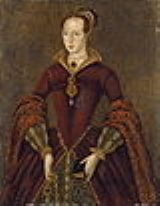
Lady Jane Grey

 
Lady Jane Grey

   Email Print
   Bookmark   Link


Lady Jane Grey


Lady Jane Grey (1536/1537 – 12 February 1554), also known as Queen Jane of England, was a claimant to the Kingdom of England
Kingdom of England

The Kingdom of England was, from 927 to 1707, a state in North-West Europe. The Kingdom of England spanned the southern two-thirds of the island of Great Britain and a number of smaller outlying islands?what is today the legal unit of England and Wales....
 and Kingdom of Ireland, who was de facto monarch of England for just over a week in 1553.

Executed on 12 February 1554, Lady Jane Grey's claimed rule of less than two weeks in July 1553 is the shortest rule of England
List of shortest reigning monarchs of all time

Unknown periods thought to be less than a yearNote: Some of the following have been disputed as legitimate monarchs...
 in its history. Popular history sometimes refers to Lady Jane as "The Nine Days' Queen" or, less commonly, as "The nine Day Queen" owing to disagreements about the beginning of her claimed rule.


Discussion
Ask a question about 'Lady Jane Grey'
Start a new discussion about 'Lady Jane Grey'
Answer questions from other users
Full Discussion Forum


Recent Posts


Encyclopedia


Lady Jane Grey (1536/1537 – 12 February 1554), also known as Queen Jane of England, was a claimant to the Kingdom of England
Kingdom of England

The Kingdom of England was, from 927 to 1707, a state in North-West Europe. The Kingdom of England spanned the southern two-thirds of the island of Great Britain and a number of smaller outlying islands?what is today the legal unit of England and Wales....
 and Kingdom of Ireland, who was de facto monarch of England for just over a week in 1553.

Executed on 12 February 1554, Lady Jane Grey's claimed rule of less than two weeks in July 1553 is the shortest rule of England
List of shortest reigning monarchs of all time

Unknown periods thought to be less than a yearNote: Some of the following have been disputed as legitimate monarchs...
 in its history. Popular history sometimes refers to Lady Jane as "The Nine Days' Queen" or, less commonly, as "The nine Day Queen" owing to disagreements about the beginning of her claimed rule. Historians have taken either the day of her official proclamation as Queen (10 July) or that of her predecessor's death (6 July) as the beginning.

Lady Jane had a reputation as one of the most learned women of her day, and the historical writer Alison Weir
Alison Weir (historian)

Alison Weir is a United Kingdom writer of history books, mostly in the form of biography about British royalty.She currently lives in Surrey, England, with her husband and two children, John and Kate....
 describes her as one of "the finest female minds of the century". She is sometimes reckoned the first Queen regnant
Queen regnant

A queen regnant is a qualifying reference to a female monarch possessing and exercising all of the monarchical powers of a ruler, in contrast to a "queen consort", who is the wife of a male reigning as monarch and who is without any official powers of state....
 of England.

Early life and education

Lady Jane Grey (engraving By Van De Passe)
Jane, the eldest daughter of Henry Grey, Marquess of Dorset
Henry Grey, 1st Duke of Suffolk

Henry Grey, Marquess of Dorset , was an England nobleman of the Tudor dynasty and the father of Jane of England....
 and his wife Lady Frances Brandon
Lady Frances Brandon

Frances Grey, Duchess of Suffolk , born Lady Frances Brandon, was the second child and eldest daughter of Charles Brandon, 1st Duke of Suffolk and Mary Tudor ....
, was born at Bradgate Park
Bradgate Park

Bradgate Park is a public park in Charnwood Forest, in Leicestershire, England, just northwest of Leicester. It covers 850 acres .The park lies between the villages of Newtown Linford, Anstey, Leicestershire, Cropston, Woodhouse Eaves and Swithland....
 in Leicestershire
Leicestershire

Leicestershire County Hall, situated in Glenfield, Leicestershire, about 3 miles northwest of Leicester city centre, is the seat of Leicestershire County Council and the headquarters of the county authority....
. The traditional view is that she was born around October 1537, but recent research has led to the claim that she was born earlier, on an unknown date in late 1536 or early 1537. Lady Frances was the daughter of Princess Mary, the younger sister of Henry VIII, and was thus the first cousin of Edward VI. Jane had two younger sisters, Lady Katherine Grey and Lady Mary Grey
Lady Mary Grey

Lady Mary Grey , sometimes spelled Marie, was the third and last daughter of Henry Grey, 1st Duke of Suffolk and Lady Frances Brandon. She was a younger sister of Lady Jane Grey and Lady Catherine Grey....
; through their mother, the three sisters were members of the House of Tudor: great-granddaughters of Henry VII
Henry VII of England

Henry VII was the Kingdom of England and Lordship of Ireland from his usurpation of the crown on 22 August 1485 until his death on 21 April 1509, as the first monarch of the Tudor dynasty....
 and grandnieces of Henry VIII
Henry VIII of England

Henry VIII was King of England from 21 April 1509 until his death. He was also Lordship of Ireland and claimant to the Early Modern France. Henry was the second monarch of the House of Tudor, succeeding his father, Henry VII of England....
. Jane could claim descent twice from 15th century Royal consort Elizabeth Woodville
Elizabeth Woodville

Elizabeth Woodville or Wydeville was the Queen consort of King Edward IV of England from 1464 until his death in 1483....
; paternally through Woodville's first husband, Sir John Grey of Groby
John Grey of Groby

Sir John Grey, of Groby, Leicestershire , was a House of Lancaster knight, the great-grandfather of Lady Jane Grey, Queen of England.Grey was the son and heir of Elizabeth Ferrers, Baron Ferrers of Groby and of Sir Edward Grey ....
, and maternally through her second husband King Edward IV
Edward IV of England

Edward IV was Kingdom of England from 4 March 1461 until 2 October 1470, and again from 11 April 1471 until his death....
. Jane received a comprehensive education, and studied Latin
Latin

Latin is an Italic language, historically spoken in Latium and Ancient Rome. Through the Military history of the Roman Empire, Latin spread throughout the Mediterranean and a large part of Europe....
, Greek
Greek language

Greek is an Indo-European languages native to the southern Balkan peninsula, the language of the Greek people. It forms an independent branch within Indo-European....
 and Hebrew
Hebrew language

Hebrew is a Semitic languages of the Afro-Asiatic languages. Modern Hebrew is spoken by more than seven million people in Israel and Classical Hebrew is used for prayer or study in Jews communities around the world....
 as well as contemporary languages. Through the teachings of her tutors, she became a committed Protestant.

Jane had a difficult childhood. Even for the harsher standards of the time, Frances Brandon was an abusive, cruel, and domineering woman who felt that Jane was weak and gentle and held her under a strict disciplinary regime. Her daughter's meekness and quiet, unassuming manner irritated Frances who sought to 'harden' the child with regular beatings. Devoid of a mother's love and craving affection and understanding, Jane turned to books as solace and quickly mastered skills in the arts and languages. However, she felt that nothing she could do would please her parents. Speaking to a visitor, Cambridge scholar Roger Ascham
Roger Ascham

Roger Ascham , England scholar and didactic writer, famous for his prose style, his promotion of the vernacular, and his theories of education....
, tutor to the Lady Elizabeth, she said:


For when I am in the presence of either Father or Mother, whether I speak, keep silence, sit, stand or go, eat, drink, be merry or sad, be sewing, playing, dancing, or doing anything else, I must do it as it were in such weight, measure and number, even so perfectly as God made the world; or else I am so sharply taunted, so cruelly threatened, yes presently sometimes with pinches, nips and bobs and other ways ... that I think myself in hell.


In 1546, at less than 10 years old, Jane was sent to live as the ward of 35-year old Katherine Parr, then Queen Consort
Queen consort

A queen consort is the title given to the wife of a reigning Monarch. Queens consort usually share their husbands' Royal and noble ranks and hold the feminine equivalent of their husbands' monarchical titles....
 of England, who had married Henry VIII in 1543. At this time, young Jane became acquainted with her royal cousins, Edward, Mary, and Elizabeth.

Contracts for marriage


After Henry VIII died, Katherine Parr married Thomas Seymour, 1st Baron Seymour of Sudeley
Thomas Seymour, 1st Baron Seymour of Sudeley

Thomas Seymour, 1st Baron Seymour of Sudeley , was a British politician....
. Unfortunately, Katherine died shortly after the birth of her only child, Mary Seymour, leaving the young Jane once again bereft of a maternal figure. Jane acted as chief mourner at Katherine's funeral.

Thomas Seymour proposed marrying Jane to the newly-crowned Edward VI of England
Edward VI of England

Edward VI became List of English monarchs and King of Ireland on 28 January 1547 and was crowned on 20 February at the age of nine. The son of Henry VIII of England and Jane Seymour, Edward was the third monarch of the Tudor dynasty and England's first Protestantism ruler....
, but Thomas' brother, Edward Seymour, 1st Duke of Somerset
Edward Seymour, 1st Duke of Somerset

Edward Seymour, 1st Duke of Somerset was Lord Protector of England in the period between the death of Henry VIII of England in 1547 and his own indictment in 1549....
, who ruled as Lord Protector, had already arranged a match for the king with Princess Elisabeth of France
Elisabeth of Valois

?lisabeth of Valois was the eldest daughter of Henry II of France and Catherine de' Medici....
, the daughter of Henry II of France
Henry II of France

Henry II , of the House of Valois and the son and successor of Francis I of France, was King of France from 31 March 1547, until his death....
.

With two conflicting goals, the Seymour brothers engaged in a power struggle. However, primarily due to the ill health of the young king, the marriage between Edward and Jane never took place. The Seymour brothers were eventually both tried for treason and executed after a coup by the ambitious John Dudley, 1st Duke of Northumberland
John Dudley, 1st Duke of Northumberland

John Dudley, 1st Duke of Northumberland was a Tudor dynasty general, admiral and politician, who de facto ruled England in the latter half of Edward VI of England's reign....
.

Jane was next contracted in marriage to Lord Hertford
Edward Seymour, 1st Earl of Hertford

Edward Seymour, 1st Earl of Hertford was the son of Edward Seymour, 1st Duke of Somerset, by his second wife Anne Stanhope.Following Somerset's disgrace and execution, his son regained the lost Earl of Hertford in 1559, from Elizabeth I of England, but lost it again shortly afterwards, for secretly marrying Lady Catherine Grey, sister of L...
, the eldest son of the late Duke of Somerset. However, ongoing negotiations between her mother, Frances Brandon, and Northumberland led to a proposed marriage to Lord Guilford Dudley, son of the newly powerful Duke. Grey considered Guilford Dudley an arrogant bully, but her mother made her submit to the arrangement. The couple were married, at Durham House, in a double wedding with Jane's sister Catherine
Lady Catherine Grey

Lady Catherine Grey , Countess of Hertford, was the second surviving daughter of Henry Grey, 1st Duke of Suffolk and Lady Frances Brandon. She was the younger sister of Lady Jane Grey and older sister of Lady Mary Grey....
 and Lord Herbert
Henry Herbert, 2nd Earl of Pembroke

Henry Herbert, 2nd Earl of Pembroke Order of the Garter was a statesman of the Elizabethan era. He was the son of William Herbert, 1st Earl of Pembroke and Anne Herbert, Countess of Pembroke....
, son of Lord Pembroke, on 21 May 1553.

Claim to the throne and accession


According to male primogeniture
Primogeniture

Primogeniture is the common law right of the firstborn son to inherit the entire Estate , to the exclusion of younger siblings. It is the tradition brought by the Normans to England in 1066....
, the Suffolks — the Brandons and, later, the Greys — comprised the junior branch of the heirs of Henry VII
Henry VII of England

Henry VII was the Kingdom of England and Lordship of Ireland from his usurpation of the crown on 22 August 1485 until his death on 21 April 1509, as the first monarch of the Tudor dynasty....
. The Third Succession Act
Third Succession Act

The Third Succession Act of Henry VIII of England reign was passed by the Parliament of England in July 1543, and returned both Mary I of England and Elizabeth I of England to the line of the succession behind Edward VI of England....
 restored both Mary and Elizabeth to the line of succession, although the law continued to regard both of them as illegitimate. Furthermore, this Act authorised Henry VIII to alter the succession by his will. Henry's last will reinforced the succession of his three surviving children, then declared that, should none of his three children leave heirs, the throne would pass to heirs of his younger sister, Mary Tudor, Queen of France, who included Jane. Henry's will excluded the descendants of his elder sister Margaret Tudor
Margaret Tudor

Margaret Tudor was the elder of the two surviving daughters of Henry VII of England and Elizabeth of York, and the elder sister of Henry VIII of England....
, owing in part to Henry's desire to keep the English throne out of the hands of the Scots
Scotland

conventional_long_name = ScotlandAlba|common_name= Scotland|image_flag = Flag of Scotland.svg|flag_width = 130px...
 monarchs, and in part to a previous Act of Parliament of 1431 barring foreign-born persons, including royalty, from inheriting property in England.

At the time of Edward's death, the crown would pass to Mary and her male (not female) heirs. Should Mary die without male issue, the crown would then pass to Elizabeth and her male heirs. Should Elizabeth die without male issue, the crown would pass not to Frances Brandon, but rather to any male children she might have produced by that time. In the absence of male children born to Frances, the crown would pass to any male children Jane might have.

When Edward VI lay dying in 1553 at age 15, his Catholic half-sister Mary was still the heiress presumptive to the throne. However, Edward named the (Protestant) heirs of his father's sister, Mary Tudor as his successors in a will composed on his deathbed, perhaps under the persuasion of Northumberland. Both Edward and Northumberland knew that this effectively left the throne to Edward's cousin Jane Grey, who (like them) staunchly supported Protestantism.

This may have contravened customary testatory law because Edward had not reached the legal testatory age of 21. More importantly, many contemporary legal theorists believed the monarch could not contravene an Act of Parliament, even in matters of the succession; Jane's claim to the throne therefore remained obviously weak. Other historians believed that the King could basically rule through divine right. Henry VII had, after all, seized the throne from Richard III
Richard III of England

Richard III was List of the monarchs of the Kingdom of England of Kingdom of England from 1483 until his death. He was the last king from the House of York, and his defeat at the Battle of Bosworth Field marked the culmination of the Wars of the Roses and the end of the Plantagenet dynasty....
 on the battlefield.

Edward VI died on 6 July 1553. Four days later, Northumberland had Lady Jane Grey proclaimed Queen of England on 10 July 1553 - once she had taken up a secure residence in the Tower of London
Tower of London

Her Majesty's Royal Palace and Fortress, more commonly known as the Tower of London , is a historic monument in central London, England, on the north bank of the River Thames....
 (English monarchs customarily resided in the Tower from the time of accession until their coronation). Jane refused to name her husband Dudley as king by letters patent
Letters patent

Letters patent are a type of legal instrument in the form of an open letter issued by a monarch or government, granting an office, right, government-granted monopoly, title, or status to a person or to some entity such as a corporation....
 and deferred to Parliament. She offered to make him Duke of Clarence
Duke of Clarence

Duke of Clarence is a title which has been traditionally awarded to junior members of the Kingdom of England and United Kingdom British Royal Family....
 instead.

A Genoese merchant, Baptista Spinola, who witnessed Jane's stately procession by water from Syon House to the Tower of London, describes her in these words, "This Jane is very short and thin, but prettily shaped and graceful. She has small features, and a well-made nose, the mouth flexible and the lips red. The eyebrows are arched and darker than her hair which is nearly red. Her eyes are sparkling, and reddish brown in colour." He also noticed her freckled skin, and sharp, white teeth. On the day of her procession she wore a green velvet gown stamped in gold.

Northumberland faced a number of key tasks in order to consolidate his power
Political power

Political power is a type of power held by a political organization in a society which allows administration of some or all of public resources, including labour, and wealth....
 after Edward's death. Most importantly, he had to isolate and, ideally, capture Lady Mary in order to prevent her from gathering support around her. Mary, however, learned of his intentions and took flight, sequestering herself in Framlingham Castle
Framlingham Castle

Framlingham Castle is an important castle in the market town of Framlingham, Suffolk, England. In common with many other buildings in Suffolk, the main walls of the castle are built with flint....
 in Suffolk
Suffolk

Suffolk is a Non-metropolitan counties of England of Historic counties of England in East Anglia, England. It has borders with Norfolk to the north, Cambridgeshire to the west and Essex to the south....
.

Within only nine days, Mary had managed to find sufficient support to ride into London in a triumphal procession on 19 July. Parliament had no choice but to declare Mary the rightful Queen and denounced and revoked Jane's proclamation as having been coerced. Mary imprisoned Jane and her husband in the Gentleman Gaoler's apartments at the Tower of London, although their lives were initially spared. The Duke of Northumberland was executed on 21 August 1553.

Trial and execution

Jane and Lord Guilford Dudley were both charged with high treason
High treason

High treason is criminal disloyalty to one's country. Participating in a war against one's country, attempting to overthrow its government, spying on its military, its diplomats, or its secret services for a hostile and foreign power, or attempting to kill its head of state are perhaps the best-known examples of high treason....
, together with two of Dudley's brothers. Their trial, by a special commission, took place on 13 November 1553, at the Guildhall
Guildhall, London

The Guildhall is a building in the City of London, off Cheapside and Basinghall Street, in the wards of Bassishaw and Cheap . It has been used as a town hall for several hundred years, and is still the ceremonial and administrative centre of the City of London and its City of London Corporation....
 in the City of London
City of London

The City of London is a geographically small city status in the United Kingdom within Greater London, England. It is the historic core of London around which, along with Westminster, the modern conurbation grew....
. The commission was chaired by Sir Thomas White
Thomas White (merchant)

Sir Thomas White was an English people cloth merchant, civic benefactor and founder of St John's College, Oxford.He was born in Reading, Berkshire, the son of William White, a clothier, and brought up in London....
, Lord Mayor of London, and included Edward Stanley, 3rd Earl of Derby
Edward Stanley, 3rd Earl of Derby

Edward Stanley, 3rd Earl of Derby was an England nobleman.At the age of thirteen, Edward received the titles and estates of his father, Thomas Stanley, 2nd Earl of Derby, and King of England Henry VIII of England took responsibility for bringing him up until he was of age....
 and John Bourchier, 2nd Earl of Bath
John Bourchier, 2nd Earl of Bath

John Bourchier, 2nd Earl of Bath was the son of John Bourchier, 1st Earl of Bath and Cecily Daubeny. Henry VIII of England, in 1539, granted the manors of Hackpen, Sheldon, Bolham and Saint Hill to the 2nd Earl, who had already inherited the Dynhams' Okehampton Barony from his grandmother, Elizabeth Dynham....
. Both defendants were found guilty and sentenced to death. Jane's sentence was that she "be burned alive [the traditional English punishment
Execution by burning

Capital punishment by combustion, , has a long history as a method of punishment for crimes such as treason, heresy and witchcraft . This method of execution fell into disfavor among governments in the late 18th century; today, it is considered cruel and unusual punishment....
 for treason
Treason

In law, treason is the crime that covers some of the more serious acts of loyalty to one's sovereignty or nation. Historically, treason also covered the murder of specific social superiors, such as the murder of a husband by his wife ....
 committed by women] on Tower Hill or beheaded as the Queen pleases." However, the imperial
Holy Roman Empire

The Holy Roman Empire was a union of territories in Central Europe during the Middle Ages and the Early modern Europe under a Holy Roman Emperor....
 ambassador reported to Charles V, Holy Roman Emperor
Charles V, Holy Roman Emperor

Charles V was ruler of the Holy Roman Empire from 1519 and, as Charles I of Spain, of the Spanish realms from 1516 until his abdication in 1556....
, that her life was to be spared.

The Protestant rebellion of Thomas Wyatt the younger
Thomas Wyatt the younger

Sir Thomas Wyatt the younger was a rebel leader during the reign of Queen Mary I of England; his rising is traditionally called "Wyatt's rebellion"....
 in late January 1554 sealed Jane's fate, although she had nothing to do with it directly. Wyatt's rebellion
Wyatt's rebellion

Wyatt's Rebellion was a Popular revolt in late medieval Europe in Kingdom of England in 1554, named after Thomas Wyatt the younger, one of its leaders....
 started as a popular revolt, precipitated by the imminent marriage of Mary to the Roman Catholic Prince Philip
Philip II of Spain

Philip II was King of Spain from 1556 until 1598, List of monarchs of Naples from 1554 until 1598, king consort of England, as husband of Mary I of England, from 1554 to 1558, lord of the Seventeen Provinces from 1556 until 1581, holding various titles for the individual territories, such as Duke or Count; and King of Portugal as Philip I...
 (later King of Spain from 1556 to 1598). Jane's father (the Duke of Suffolk) and other nobles joined the rebellion, calling for Jane's restoration as Queen. Philip and his councillors pressed Mary to execute Jane to put an end to any future focus for unrest. Five days after Wyatt's arrest the execution
Capital punishment

Capital punishment, the death penalty or execution, is the killing of a person by procedural law for Punishment#Retribution and Punishment#Incapacitation....
 of Jane and Guilford took place.

On the morning of 12 February 1554, the authorities took Guilford from his rooms at the Tower of London to the public execution place at Tower Hill
Tower Hill

Tower Hill is an elevated spot north-west of the Tower of London, just outside the limits of the City of London in the London Borough of Tower Hamlets....
 and there had him beheaded. A horse and cart brought his remains back to the Tower of London, past the rooms where Jane remained as a prisoner. Jane was then taken out to Tower Green
Tower Green

Tower Green is a space within the Tower of London where two English people Queens consort and five other British nobility were execution by Decapitation....
, inside the Tower of London, and beheaded in private. With few exceptions, only royalty were afforded the privilege of a private execution; Jane's execution was conducted in private on the orders of Queen Mary, as a gesture of respect for her cousin.

According to the account of her execution given in the anonymous Chronicle of Queen Jane and of Two Years of Queen Mary, which formed the basis for Raphael Holinshed
Raphael Holinshed

Raphael Holinshed was an England chronicler, whose work, commonly known as Holinshed's Chronicles, was one of the major sources used by William Shakespeare for a number of Shakespeare's plays....
's depiction, Guilford faced the block first, and from her lodgings at Partridge's house, Jane viewed his body being removed from the Tower Green. Upon ascending the scaffold, she gave a speech to the assembled crowd:

Good people, I am come hither to die, and by a law I am condemned to the same. The fact, indeed, against the Queen's highness was unlawful, and the consenting thereunto by me: but touching the procurement and desire thereof by me or on my behalf, I do wash my hands thereof in innocency, before God, and the face of you, good Christian people, this day.


She then recited Psalm 51
Psalm 51

Psalm 51 , traditionally referred to as the Miserere, its Latin incipit, is one of the penitential psalms. It begins: Have mercy on me, O God....
 (Have mercy upon me, O God) in English, and handed her gloves and handkerchief to her maid. John Feckenham
John Feckenham

John Feckenham , also known as John Howman of Feckingham and later John de Feckenham or John Fecknam, was an England churchman, the last abbot of Westminster....
, a Roman Catholic chaplain sent by Mary who had failed to convert Jane, stayed with her during the execution. The executioner asked her forgiveness, and she gave it. She pleaded the axeman, "I pray you dispatch me quickly". Referring to her blindfold, she asked, "Will you take it off before I lay me down?" and the axeman answered, "No, madam". She then blindfolded herself. Jane had resolved to go to her death with dignity, but once blindfolded, failing to find the block with her hands, began to panic and cried, "What shall I do? Where is it?" An unknown hand, possibly Feckenham's, then helped her find her way and retain her dignity at the end. With her head on the block, Jane spoke the last words of Christ as recounted by Luke
Gospel of Luke

The Gospel of Luke is a Synoptic Gospels, and is the third and longest of the four Biblical canonical Gospels of the New Testament. The text narrates the life of Jesus of Nazareth....
: "Lord, into thy hands I commend my spirit!" She was then beheaded.

"The traitor-heroine of the Reformation", as historian Albert Pollard
Albert Pollard

Albert Frederick Pollard was a British historian who specialized in the Tudor period....
 called her, was merely 16 or 17 years old at the time of her execution. Apparently, Frances Brandon made no attempt, pleading or otherwise, to save her daughter's life; Jane's father already awaited execution for his part in the Wyatt rebellion. Jane and Guilford are buried in the Chapel of St Peter ad Vincula on the north side of Tower Green. Queen Mary lived for only four years after she ordered the death of her cousin.

Henry, Duke of Suffolk, Jane's father, was executed a week after Jane, on 19 February 1554. Merely three weeks after her husband's death and not even a month since her daughter's, Frances Brandon shocked the English court by marrying Master of the Horse
Master of the Horse

The Master of the Horse was a historical position of varying importance in several European nations....
 and chamberlain
Chamberlain (office)

A chamberlain is an officer in charge of managing a great house. In many countries there are ceremonial posts associated with the household of the sovereign....
, Adrian Stokes
Adrian Stokes (Master of Horse)

Adrian Stokes was Master of the Horse at the England court.On 9 March 1554, he married Frances Grey, Duchess of Suffolk, daughter of the Charles Brandon, 1st Duke of Suffolk, and mother of Lady Jane Grey....
. Some historians believe she deliberately chose to do this to distance herself from her previous status. She was fully pardoned by Mary and allowed to live at Court with her two surviving daughters. She is not known to have mentioned Jane ever again and was seemingly as indifferent to her child in death as she had been in life.

Cultural depictions

In spite of her short reign, Jane has had a major cultural impact, including three films and several books and paintings about her.

Ancestors


Bibliography


External links

  • - Large collection of images of Jane and her life experiences.
  • at EnglishHistory.net
  • - annotated secondary bibliography by Ph.D. researcher.