
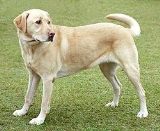
The
Labrador Retriever (also
Labrador, or
Lab for short) is one of several kinds of
retrieverA retriever is a type of gun dog that retrieves game for a hunter. Generally gun-dogs are divided into three major classifications: retrievers, flushing spaniels, and pointing breeds. Retrievers were bred primarily to retrieve birds or other prey and return them to the hunter without damage...
, a type of
gun dogthumb|right|A group of Gun dogs as printed in Dogs of All Nations by W.E. Mason in 1915Gun dogs, also gundogs or bird dogs, are types of dogs developed to assist hunters in finding and retrieving game, usually birds. Gun dogs are divided into three primary types: Retrievers, flushing dogs, and...
. A breed characteristic is webbed paws for swimming, useful for the breed's original purpose of retrieving fishing nets. The Labrador is the most
popular breedDog breeds are groups of closely related and visibly similar domestic dogs, which are all of the subspecies Canis lupus familiaris, having characteristic traits that are selected and maintained by humans, bred from a known foundation stock....
of
dogThe domestic dog is a domesticated form of the gray wolf, a member of the Canidae family of the order Carnivora. The term is used for both feral and pet varieties. The dog may have been the first animal to be domesticated, and has been the most widely kept working, hunting, and companion animal in...
by registered ownership in Canada, the United Kingdom, and the United States (since 1991). It is also one of the most popular
assistance dogAn assistance dog is a dog trained to aid or assist a person with a disability. Many are trained by a specific organization, while others are trained by their handler .-Classification:...
breeds in Australia, Canada, the United Kingdom and the United States and many other countries, as well as being widely used by police and other official bodies for their detection and working abilities. Typically, Labradors are athletic and love to swim, play catch and retrieve games, are good with young children, elderly, and for protection.
History
The modern Labrador's ancestors originated on the island of
Newfoundland, now part of the province of Newfoundland and Labrador, Canada. The founding breed of the Labrador was the
St. John's Water DogThe St. John's Water Dog, also called the St. John’s Dog or the Lesser Newfoundland, was a naturally occurring dog breed from Newfoundland. Little is known of the breeds that went into its creation, although it was likely a random-bred mix of old Irish, English, and Portuguese working breeds. The...
, a breed that emerged through ad-hoc breedings by early settlers of the island in the 16th century. The forebears of the St. John's Dog are not known, but were likely a random-bred mix of English, Irish, and Portuguese working breeds. The Newfoundland (known then as the Greater Newfoundland) is likely a result of the St. John's Dog breeding with
mastiffsThe Rafeiro do Alentejo or Alentejo Mastiff, also called the Portuguese Mastiff, is a breed of dog that originated in Portugal. The Rafeiro do Alentejo is of the livestock guardian dog type, and the name refers to its area of origin, Alentejo, in south-central Portugal...
brought to the island by the generations of Portuguese fishermen who had been fishing offshore since the 16th century. The smaller short-coated St. John's Dog (also known then as the Lesser Newfoundland) was used for retrieval and pulling in nets from the water. These smaller dogs were the forebears of the Labrador Retriever. The white chest, feet, chin, and muzzle - known as tuxedo markings - characteristic of the St. John's Dog often appear in modern Lab mixes, and will occasionally manifest in Labradors as a small white spot on the chest (known as a medallion) or stray white hairs on the feet or muzzle.
The
St. John'sSt. John's is the capital and largest city in Newfoundland and Labrador, and is the oldest English-founded city in North America. It is located on the eastern tip of the Avalon Peninsula on the island of Newfoundland. With a population of 192,326 as of July 1, 2010, the St...
area of Newfoundland was settled mainly by the English and Irish. Local fishermen originally used the St. John's dog to assist in carrying ropes between boats, towing dories, and helping to retrieve fishnets in the water. The Labrador's loyalty and hard working behaviour were valuable assets for fishermen.
A number of St. John's Dogs were brought back to the
PoolePoole is a large coastal town and seaport in the county of Dorset, on the south coast of England. The town is east of Dorchester, and Bournemouth adjoins Poole to the east. The Borough of Poole was made a unitary authority in 1997, gaining administrative independence from Dorset County Council...
area of England in the early 19th century, then the hub of the Newfoundland fishing trade, by the gentry, and became prized as sporting and waterfowl hunting dogs. A few kennels breeding these grew up in England; at the same time a combination of
sheepSheep husbandry is a subcategory of animal husbandry specifically dealing with the raising and breeding of domestic sheep. Sheep farming is primarily based on raising lambs for meat, or raising sheep for wool. Sheep may also be raised for milk or to sell to other farmers.-Shelter and...
protection policy (Newfoundland) and
rabiesRabies is a viral disease that causes acute encephalitis in warm-blooded animals. It is zoonotic , most commonly by a bite from an infected animal. For a human, rabies is almost invariably fatal if post-exposure prophylaxis is not administered prior to the onset of severe symptoms...
quarantineQuarantine is compulsory isolation, typically to contain the spread of something considered dangerous, often but not always disease. The word comes from the Italian quarantena, meaning forty-day period....
(England) led to their gradual demise in their country of origin.
The first and second
Earls of MalmesburyEarl of Malmesbury is a title in the Peerage of Great Britain. It was created in 1800 for the diplomat James Harris, 1st Baron Malmesbury. The son of the grammarian and politician James Harris, he served as Ambassador to Spain, Prussia, Russia and France and also represented Christchurch in the...
, who bred for duck shooting on his estate, and the 5th and 6th
Dukes of BuccleuchThe title Duke of Buccleuch , formerly also spelt Duke of Buccleugh, was created in the Peerage of Scotland on 20 April 1663 for the Duke of Monmouth, who was the eldest illegitimate son of Charles II of Scotland, England, and Ireland and who had married Anne Scott, 4th Countess of Buccleuch.Anne...
, and youngest son Lord George William Montagu-Douglas-Scott, were instrumental in developing and establishing the modern Labrador breed in 19th century England. The dogs Avon ("Buccleuch Avon") and Ned given by Malmesbury to assist the Duke of Buccleuch's breeding program in the 1880s are considered the ancestors of modern Labradors.
The first St. John's dog was said to be brought to England around 1820; however, the breed's reputation had spread to England long before. There is a story that the Earl of Malmesbury saw a St. John's Dog on a fishing boat and immediately made arrangements with traders to have some of these dogs exported to England. These ancestors of the first labradors so impressed the Earl with their skill and ability for retrieving anything within the water and on shore that he devoted his entire kennel to developing and stabilising the breed.
Early descriptions
Several early descriptions of the St. John's Water Dog exist. In 1822, explorer
W.E. CormackWilliam Epps Cormack was a Scottish explorer, philanthropist, agriculturalist and author, born St. John’s, Newfoundland. Cormack was the first European to journey across the interior of the island....
crossed the island of Newfoundland by foot. In his journal he wrote "The dogs are admirably trained as retrievers in fowling, and are otherwise useful.....The smooth or short haired dog is preferred because in frosty weather the long haired kind become encumbered with ice on coming out of the water."
Another early report by a Colonel Hawker described the dog as "by far the best for any kind of shooting. He is generally black and no bigger than a Pointer, very fine in legs, with short, smooth hair and does not carry his tail so much curled as the other; is extremely quick, running, swimming and fighting....and their sense of smell is hardly to be credited...."
In his book
Excursions In and About Newfoundland During the Years 1839 and 1840, the geologist Joseph Beete Jukes describes the St. John's Water Dog. "A thin, short-haired, black dog came off-shore to us to-day. The animal was of a breed very different from what we understand by the term Newfoundland dog in England. He had a thin, tapering snout, a long thin tail, and rather thin, but powerful legs, with a lank body, – the hair short and smooth." wrote Jukes. "These are the most abundant dogs in the country...They are no means handsome, but are generally more intelligent and useful than the others...I observed he once or twice put his foot in the water and paddled it about. This foot was white, and Harvey said he did it to "toil" or entice the fish. The whole proceeding struck me as remarkable, more especially as they said he had never been taught anything of the kind."
Name
The foundational breed of what is now the Labrador Retriever was known as the
St. John's Water DogThe St. John's Water Dog, also called the St. John’s Dog or the Lesser Newfoundland, was a naturally occurring dog breed from Newfoundland. Little is known of the breeds that went into its creation, although it was likely a random-bred mix of old Irish, English, and Portuguese working breeds. The...
, St. John's Dog, or Lesser Newfoundland. When the dogs were later brought to England, they were named after the geographic area known as "the Labrador" or simply
LabradorLabrador is the distinct, northerly region of the Canadian province of Newfoundland and Labrador. It comprises the mainland portion of the province, separated from the island of Newfoundland by the Strait of Belle Isle...
to distinguish them from the larger Newfoundland breed, even though the breed was from the more southern
Avalon PeninsulaThe Avalon Peninsula is a large peninsula that makes up the southeast portion of the island of Newfoundland.The peninsula is home to 257,223 people, which is approximately 51% of Newfoundland's population in 2009, and is the location of the provincial capital, St. John's. It is connected to the...
.
Historical landmarks
The first written reference to the breed was in 1814 ("Instructions to Young Sportsmen" by Colonel
Peter Hawker), the first painting in 1823 ("Cora. A Labrador Bitch" by Edwin Landseer), and the first photograph in 1856 (the
Earl of HomeThe title Earl of Home was created in 1605 in the Peerage of Scotland for Alexander Home of that Ilk, who was already the 6th Lord Home.The Earl of Home holds the subsidiary titles of Lord Home , and Lord Dunglass , in the Peerage of Scotland; and Baron Douglas, of Douglas in the County of Lanark ...
's dog "Nell", described both as a Labrador and a St. Johns dog). By 1870 the name Labrador Retriever became common in England. The first yellow Labrador on record was born in 1899 (Ben of Hyde, kennels of Major C.J. Radclyffe), and the breed was recognised by
The Kennel ClubThe Kennel Club is a kennel club based in London and Aylesbury, United Kingdom.The Kennel Club registration system divides dogs into seven breed groups. The Kennel Club Groups are: Hound, Working, Terrier, Gundog, Pastoral, Utility and Toy...
in 1903. The first
American Kennel ClubThe American Kennel Club is a registry of purebred dog pedigrees in the United States. Beyond maintaining its pedigree registry, this kennel club also promotes and sanctions events for purebred dogs, including the Westminster Kennel Club Dog Show, an annual event which predates the official...
(AKC) registration was in 1917. The chocolate Labrador emerged in the 1930s, although liver spotted pups were documented being born at the Buccleuch kennels in 1892. The St. John's dog survived until the early 1980s, the last two individuals being photographed in old age around 1981.
History of subtypes
Yellow and chocolate pups, would occasionally appear (although often
culledCulling is the process of removing animals from a group based on specific criteria. This is done either to reinforce certain desirable characteristics or to remove certain undesirable characteristics from the group...
), until finally gaining acceptance in the 20th century.
The first recognised yellow Labrador was Ben of Hyde, born 1899, and chocolate Labradors became more established in the 1930s.
Yellow (and related shades)
In the early years of the breed through to the mid-20th century, Labradors of a shade we would now call "yellow" were in fact a dark, almost butterscotch, colour (visible in early yellow Labrador photographs). The shade was known as "Golden" until required to be changed by the UK Kennel Club, on the grounds that "Gold" was not actually a colour. Over the 20th century a preference for far lighter shades of yellow through to cream prevailed, until today most yellow Labradors are of this shade. Also fawn has been a common colour in the yellow lab variety.
Interest in the darker shades of gold and fox red were re-established by English breeders in the 1980s, and three dogs were instrumental in this change: Balrion King Frost (black, born approx. 1976) who consistently sired "very dark yellow" offspring and is credited as having "the biggest influence in the re-development of the fox red shade", and his great-grandson, the likewise famous Wynfaul Tabasco (b.1986), described as "the father of the modern fox red Labrador", and the only modern fox red Show Champion in the UK. Other dogs, such as Red Alert and Scrimshaw Placido Flamingo, are also credited with passing on the genes into more than one renowned bloodline.
Chocolate labradors
Jack Vanderwyk traces the origins of all Chocolate labradors listed on the LabradorNet database (some 34,000 Labrador dogs of all shades) to eight original bloodlines. However, the shade was not seen as a distinct colour until the 20th century; before then according to Vanderwyk, such dogs can be traced but were not registered. A degree of
crossbreedA crossbreed or crossbred usually refers to an animal with purebred parents of two different breeds, varieties, or populations. Crossbreeding refers to the process of breeding such an animal, often with the intention to create offspring that share the traits of both parent lineages, or producing...
ing with Flatcoat or
Chesapeake Bay retrieverThe Chesapeake Bay Retriever is a breed of dog belonging to the Retriever, Gundog, and Sporting breed groups. Members of the breed may also be referred to as a Chessie, CBR, or Chesapeake. The breed was developed in the United States Chesapeake Bay area during the 19th century...
s was also documented in the early 20th century, prior to recognition. Chocolate labradors were also well established in the early 20th century at the kennels of the Earl of Feversham, and Lady Ward of Chiltonfoliat.
The bloodlines as traced by Vanderwyk each lead back to three black labradors in the 1880s—Buccleuch Avon (m), and his sire and dam, Malmesbury Tramp (m), and Malmesbury June (f). Morningtown Tobla is also named as an important intermediary, and according to the studbook of Buccleuch Kennels, the chocolates in this kennel came through FTW Peter of Faskally (1908).
Appearance
Labradors are relatively large, with males typically weighing 29 kilogram and females 25 to 32 kg (55.1 to 70.5 lb). Labradors weighing close to or over 100 lb (45.4 kg) are considered obese or having a major fault under
American Kennel ClubThe American Kennel Club is a registry of purebred dog pedigrees in the United States. Beyond maintaining its pedigree registry, this kennel club also promotes and sanctions events for purebred dogs, including the Westminster Kennel Club Dog Show, an annual event which predates the official...
standards, although some Labradors weigh significantly more. The majority of the characteristics of this breed, with the exception of colour, are the result of breeding to produce a
working retrieverA retriever is a type of gun dog that retrieves game for a hunter. Generally gun-dogs are divided into three major classifications: retrievers, flushing spaniels, and pointing breeds. Retrievers were bred primarily to retrieve birds or other prey and return them to the hunter without damage...
.
As with some other breeds, the Conformation (typically "English", "show" or "bench") and the Field (typically "American" or "working") lines differ, although both lines are bred in both countries. In general, however, Conformation Labradors tend to be bred as medium-sized dogs, shorter and stockier with fuller faces and a slightly calmer nature than their Field counterparts, which are often bred as taller, lighter-framed dogs, with slightly less broad faces and a slightly longer nose; however Field Labradors should still be proportional and fit within AKC standards. With field Labradors, excessively long noses, thin heads, long legs and lanky frames are not considered standard. These two types are informal and not codified or standardized; no distinction is made by the AKC or other kennel clubs, but the two types come from different breeding lines. Australian stock also exists; though not seen in the west, they are common in Asia.
The breed tends to
shedIn biology, moulting or molting , also known as sloughing, shedding, or for some species, ecdysis, is the manner in which an animal routinely casts off a part of its body , either at specific times of year, or at specific points in its life cycle.Moulting can involve the epidermis , pelage...
hair twice annually, or regularly throughout the year in temperate climates. Some Labradors shed considerably; however, individual Labradors vary. Labrador hair is usually fairly short and straight, and the tail quite broad and strong. The
webbed toesWebbed toes is the common name for syndactyly affecting the feet. It is characterised by the fusion of two or more digits of the feet. This is normal in many birds, such as ducks; amphibians, such as frogs; and mammals, such as kangaroos...
of the Labrador Retriever make them excellent swimmers. The webbing between their toes can also serve as a "snowshoe" in colder climates and keep snow from balling up between their toes- a condition that can be painful to other breeds with hair between the toes. Their interwoven coat is also relatively waterproof, providing more assistance for swimming.
Official breed standards
There is a great deal of variety among Labradors. The following characteristics are typical of the
conformation showConformation shows, also referred to as breed shows, are a kind of dog show in which a judge familiar with a specific dog breed evaluates individual purebred dogs for how well the dogs conform to the established breed type for their breed, as described in a breed's individual breed standard.A...
bred (bench-bred) lines of this breed in the United States, and are based on the AKC standard. Significant differences between UK and US standards are noted.
- Size: Labradors are a relatively large breed. They should be as long from the withers
The withers is the ridge between the shoulder blades of a four-legged animal. In many species it is the tallest point of the body, and in horses and dogs it is the standard place to measure the animal's height .-Horses:The withers in horses are formed by the dorsal spinal processes of roughly the...
to the base of the tail as they are from the floor to the withers. Males should stand 22.5 to 24.5 in (57.2 to 62.2 cm) tall at the withers and weigh 65 to 80 lb (29.5 to 36.3 kg). Females should stand 21.5 to 23.5 in (54.6 to 59.7 cm) and weigh 55 to 70 lb (24.9 to 31.8 kg). By comparison under UK Kennel Club standards, height should be 22 to 22.5 in (55.9 to 57.2 cm) for males, and 21.5 to 22 in (54.6 to 55.9 cm) for females.
- Coat: The Lab's coat should be short and dense, but not wiry. The coat is described as 'water-resistant' or more accurately 'water-repellent' so that the dog does not get cold when taking to water in the winter. That means that the dog naturally has a slightly dry, oily coat. Acceptable colours are black, yellow (ranging from ivory or creme to fox red), and chocolate.
- Head: The head should be broad with a pronounced stop and slightly pronounced brow. The eyes should be kind and expressive. Appropriate eye colours are brown and hazel. The lining around the eyes should be black. The ears should hang close to the head and are set slightly above the eyes.
- Jaws: The jaws should be strong and powerful. The muzzle should be of medium length, and should not be too tapered. The jaws should hang slightly and curve gracefully back.
- Body: The body should be strong and muscular with a level top line.
The tail and coat are designated "distinctive [or distinguishing] features" of the Labrador by both the Kennel Club and AKC. The AKC adds that "true Labrador Retriever temperament is as much a hallmark of the breed as the 'otter' tail."
Colour
Labrador Retrievers are registered in three colours: black (a solid black colour), yellow (anything from light cream to "fox-red"), and chocolate (medium to dark brown). Some Labrador retrievers can have markings such as white patches on their chest and other areas, but most commonly they are one solid color.
Puppies of all colours can potentially occur in the same
litterA litter is the offspring at one birth of animals from the same mother and usually from one set of parents. The word is most often used for the offspring of mammals, but can be used for any animal that gives birth to multiple young. In comparison, a group of eggs and the offspring that hatch from...
. Colour is determined primarily by three genes. The first gene (the B locus) determines the density of the coat's eumelanin pigment granules, if that pigment is allowed: dense granules result in a black coat, sparse ones give a chocolate coat. The second (E) locus determines whether the eumelanin is produced at all. A dog with the recessive e allele will produce only phaeomelanin pigment and will be yellow regardless of its genotype at the B locus. The genes known about previously have had their number increased by the introduction of the K locus, where the dominant "black" allele K
B is now known to reside. Black or chocolate Labradors therefore must have the K
B allele. Yellow Labradors are determined at the E locus, so the K locus is irrelevant in determining their colour. Variations in numerous other genes control the subtler details of the coat's colouration, which in yellow Labradors varies from white to light gold to a fox red. Chocolate and black Labradors' noses will match the coat colour.
According to a 2011 study, 13 out of 245 Labradors studied were heterozygous for the M264V mutation responsible for the
melanistic maskA melanistic mask is a dog coat pattern that gives the appearance of a mask on the dog's face. The hairs on the muzzle, and sometimes entire face or ears, are colored by eumelanin instead of pheomelanin pigment. Eumelanin is typically black, but may instead be brown, dark gray, or light gray-brown...
, and one was homozygous. Within the breed, this trait is not visible.
Nose and skin pigmentation
Because Labrador colouration is controlled by multiple
geneA gene is a molecular unit of heredity of a living organism. It is a name given to some stretches of DNA and RNA that code for a type of protein or for an RNA chain that has a function in the organism. Living beings depend on genes, as they specify all proteins and functional RNA chains...
s, it is possible for
recessiveIn genetics, the term "recessive gene" refers to an allele that causes a phenotype that is only seen in a homozygous genotype and never in a heterozygous genotype. Every person has two copies of every gene on autosomal chromosomes, one from mother and one from father...
genes to emerge some generations later and also there can sometimes be unexpected pigmentation effects to different parts of the body. Pigmentation effects appear in regard to yellow Labradors, and sometimes chocolate, and hence the majority of this section covers pigmentation within the yellow Labrador. The most common places where pigmentation is visible are the nose, lips, gums, feet, tail, and the rims of the eyes, which may be black, brown, light yellow-brown ("liver", caused by having two genes for chocolate), or several other colours. A Labrador can carry genes for a different color, for example a black Labrador can carry recessive chocolate and yellow genes, and a yellow Labrador can carry recessive genes for the other two colors. DNA testing can reveal some aspects of these. Less common pigmentations (other than pink) are a fault, not a disqualification, and hence such dogs are still permitted to be shown.
The intensity of black pigment on yellow Labradors is controlled by a separate gene independent of the fur coloring. Yellow Labradors usually have black noses, which may gradually turn pink with age (called "snow nose" or "winter nose"). This is due to a reduction in the
enzymeEnzymes are proteins that catalyze chemical reactions. In enzymatic reactions, the molecules at the beginning of the process, called substrates, are converted into different molecules, called products. Almost all chemical reactions in a biological cell need enzymes in order to occur at rates...
tyrosinaseTyrosinase also known as monophenol monooxygenase is an enzyme that catalyses the oxidation of phenols and is widespread in plants and animals...
which indirectly controls the production of
melaninMelanin is a pigment that is ubiquitous in nature, being found in most organisms . In animals melanin pigments are derivatives of the amino acid tyrosine. The most common form of biological melanin is eumelanin, a brown-black polymer of dihydroxyindole carboxylic acids, and their reduced forms...
, a dark coloring. Tyrosinase is temperature dependent—hence light colouration can be seasonal, due to cold weather—and is less produced with increasing age two years old onwards. As a result, the nose color of most yellow Labradors becomes a somewhat pink shade as they grow older.
A colouration known as "Dudley" is also possible. Dudleys are variously defined as yellow Labradors which have unpigmented (pink) noses (LRC), yellow with liver/chocolate pigmentation (AKC), or "flesh coloured" in addition to having the same colour around the rims of the eye, rather than having black or dark brown pigmentation. A yellow Labrador with brown or chocolate pigmentation, for example, a brown or chocolate nose, is not necessarily a Dudley, though according to the AKC's current standard it would be if it has chocolate rims around the eyes (or more accurately of the genotype eebb). Breed standards for Labradors considers a true Dudley to be a disqualifying feature in a conformation show Lab, such as one with a thoroughly pink nose or one lacking in any pigment along with flesh coloured rims around the eyes. True Dudleys are extremely rare.
Breeding in order to correct pigmentation often lacks dependability. Because colour is determined by many genes, some of which are recessive, crossbreeding a pigmentation non-standard yellow Labrador to a black Labrador may not correct the matter or prevent future generations carrying the same recessive genes. For similar reasons, crossbreeding chocolate to yellow Labradors is also often avoided.
Show and field lines
There are significant differences between field and trial-bred (sometimes referred to as "American") and show-bred (or "English") lines of Labradors, arising as a result of specialised breeding. Dogs bred for hunting and field-trial work are selected first for working ability, where dogs bred to compete in
conformation showConformation shows, also referred to as breed shows, are a kind of dog show in which a judge familiar with a specific dog breed evaluates individual purebred dogs for how well the dogs conform to the established breed type for their breed, as described in a breed's individual breed standard.A...
s are selected for their conformation to the standards and characteristics sought by judges in the show ring.
While individual dogs may vary, in general show-bred Labradors are heavier built, slightly shorter-bodied, and have a thicker coat and tail. Field Labradors are generally longer legged, lighter, and more lithe in build. In the head, show Labradors tend to have broader heads, better defined stops, and more powerful necks, while field Labradors have lighter and slightly narrower heads with longer muzzles.
Field-bred Labradors are commonly higher energy and more high-strung compared to the Labrador bred for conformation showing, and as a consequence may be more suited to working relationships than being a "family
petA pet is a household animal kept for companionship and a person's enjoyment, as opposed to wild animals or to livestock, laboratory animals, working animals or sport animals, which are kept for economic or productive reasons. The most popular pets are noted for their loyal or playful...
". Some breeders, especially those specialising in the field type, feel that breed shows do not adequately recognise their type of dog, leading to occasional debate regarding officially splitting the breed into subtypes.
In the United States, the AKC and the Labrador's breed club have set the breed standard to accommodate the field-bred Labrador somewhat. For instance, the AKC withers-height standards allow conformation dogs to be slightly taller than the equivalent British standard. However, dual champions, or dogs that excel in both the field and the show ring, are becoming more unusual.
Temperament
The AKC describes the Labrador's temperament as a kind, outgoing and tractable nature. Labradors' sense of smell allows them to hone in on almost any scent and follow the path of its origin. They generally stay on the scent until they find it. Labradors instinctively enjoy holding objects and even hands or arms in their mouths, which they can do with great gentleness (a Labrador can carry an
eggEggs are laid by females of many different species, including birds, reptiles, amphibians, and fish, and have probably been eaten by mankind for millennia. Bird and reptile eggs consist of a protective eggshell, albumen , and vitellus , contained within various thin membranes...
in its mouth without breaking it). They are also known to have a very soft feel to the mouth, as a result of being bred to retrieve game such as waterfowl. They are prone to chewing objects (though they can be trained out of this behavior). The Labrador Retriever's coat repels water to some extent, thus facilitating the extensive use of the dog in waterfowl hunting.
Labradors have a reputation as a very even-tempered breed and an excellent family dog. This includes a good reputation with children of all ages and other animals. But some lines (particularly those that have continued to be bred specifically for their skills at working in the field rather than for their appearance) are particularly fast and athletic. Their fun-loving boisterousness and lack of fear may require training and firm handling at times to ensure it does not get out of hand—an uncontrolled adult can be quite problematic. Females may be slightly more independent than males. Labradors mature at around three years of age; before this time they can have a significant degree of puppy-like energy, often mislabelled as being
hyperactive. Because of their enthusiasm, leash-training early on is suggested to prevent pulling when full-grown. Labradors often enjoy retrieving a ball endlessly and other forms of activity (such as
agilityDog agility is a dog sport in which a handler directs a dog through an obstacle course in a race for both time and accuracy. Dogs run off-leash with no food or toys as incentives, and the handler can touch neither dog nor obstacles...
,
frisbeeA flying disc is a disc-shaped glider that is generally plastic and roughly in diameter, with a lip. The shape of the disc, an airfoil in cross-section, allows it to fly by generating lift as it moves through the air while rotating....
, or
flyballFlyball is a dog sport in which teams of dogs race against each other from a start/finish line, over a line of hurdles, to a box that releases a tennis ball to be caught when the dog presses the spring-loaded pad, then back to their handlers while carrying the ball.Flyball is run in teams of four...
).
Although they will sometimes
barkA bark is a noise most commonly produced by dogs and puppies. Other animals that make this noise include wolves and quolls. Woof is the most common representation in the English language for this sound...
at noise, especially noise from an unseen source ("alarm barking"), Labradors are usually not noisy or territorial. They are often very easygoing and trusting with strangers, and therefore are not usually suitable as
guard dogA guard dog, an attack dog or watch dog is a dog used to guard against, and watch for, unwanted or unexpected people or animals. The dog is discriminating so that it does not annoy or attack familiar people.-Barking:...
s.
Labradors have a well-known reputation for
appetiteThe appetite is the desire to eat food, felt as hunger. Appetite exists in all higher life-forms, and serves to regulate adequate energy intake to maintain metabolic needs. It is regulated by a close interplay between the digestive tract, adipose tissue and the brain. Decreased desire to eat is...
, and some individuals may be highly indiscriminate, eating digestible and non-food objects alike. They are persuasive and persistent in requesting food. For this reason, the Labrador owner must carefully control his/her dog's food intake to avoid obesity and its associated health problems (see below).
The steady temperament of Labradors and their ability to learn make them an ideal breed for search and rescue, detection, and therapy work. They are a very intelligent breed. They are ranked # 7 in Stanley Coren's
The Intelligence of DogsThe Intelligence of Dogs is a book on dog intelligence by Stanley Coren, a professor of psychology at the University of British Columbia in Vancouver. Published in 1994, the book explains Coren's theories about the differences in intelligence between different breeds of dogs...
. The AKC describes the breed as an ideal family and sporting dog. Their primary working role in the field continues to be that of a hunting retriever.
Exploration
They do not typically jump high fences or dig. Because of their personalities, some Labradors climb and/or jump for their own amusement. As a breed they are highly intelligent and capable of intense single-mindedness and focus if motivated or their interest is caught. Therefore, with the right conditions and stimuli, a bored Labrador could "turn into an escape artist
par excellence".
Labradors as a breed are curious, exploratory and love company, following both people and interesting scents for food, attention and novelty value. In this way, they can often "vanish" or otherwise become separated from their owners with little fanfare. They are also popular dogs if found, and at times may be stolen. Because of this a number of dog clubs and rescue organizations (including the UK's Kennel Club) consider it good practice that Labradors be
microchippedA microchip implant is an identifying integrated circuit placed under the skin of a dog, cat, horse, parrot or other animal. The chips are about the size of a large grain of rice and are based on a passive RFID technology....
, with the owner's name and address also on their collar and tags.
Use as working dogs
Labradors are an intelligent breed with a good work ethic and generally good temperaments (breed statistics show that 92.3% of Labradors who were tested passed the American Temperament Test.) Common working roles for Labradors include:
huntingHunting is the practice of pursuing any living thing, usually wildlife, for food, recreation, or trade. In present-day use, the term refers to lawful hunting, as distinguished from poaching, which is the killing, trapping or capture of the hunted species contrary to applicable law...
,
trackingThe use of dogs in search and rescue is a valuable component in wilderness tracking, natural disasters, mass casualty events, and in locating missing people. Dedicated handlers and well-trained dogs are required for the use of dogs to be effective in search efforts...
and
detectionA detection dog or sniffer dog is a dog that is trained to and works at using its senses to detect substances such as explosives, illegal drugs, or blood. Hunting dogs that search for game and search dogs that search for missing humans are generally not considered detection dogs...
(they have a great sense of smell which helps when working in these areas),
disabled-assistanceAn assistance dog is a dog trained to aid or assist a person with a disability. Many are trained by a specific organization, while others are trained by their handler .-Classification:...
,
cartingCarting is a dog sport or activity in which a dog pulls a Dogcart filled with supplies, such as farm goods or firewood, but sometimes pulling people. Carting as a sport is also known as dryland mushing and is practiced all around the world, often to keep winter sled dogs in competition form during...
, and
therapy workA therapy dog is a dog trained to provide affection and comfort to people in hospitals, retirement homes, nursing homes, schools, people with learning difficulties, and stressful situations, such as disaster areas....
. Approximately 60–70% of all
guide dogGuide dogs are assistance dogs trained to lead blind and visually impaired people around obstacles.Although the dogs can be trained to navigate various obstacles, they are partially color blind and are not capable of interpreting street signs...
s in Canada are Labradors; other common breeds are Golden Retrievers and German Shepherd Dogs.
Labradors are powerful and indefatigable swimmers noted for their ability to tolerate the coldest of water for extended periods of time. Their ability to work quietly alongside hunters while watching for birds to fall from the sky, marking where they land, and then using their outstanding nose to find and retrieve dead or wounded birds has made them the king of waterfowl retrievers. They are also used for
pointingA pointing breed is a type of gundog typically used in finding game. Gundogs are traditionally divided into three classes: retrievers, flushing dogs, and pointing breeds. The name pointer comes from the dog's instinct to point, by stopping and aiming its muzzle towards game. This demonstrates to...
and
flushingA Flushing Dog is a gundog trained to flush game, especially birds, by first finding the game then driving it from its hiding place for a hunter to shoot or capture. Flushing dogs are different from other gundog types such as pointers and setters, dogs which remain still after locating the game, or...
and make excellent
upland gameUpland Hunting is an American term for a form of bird hunting in which the hunter pursues upland birds including quail, pheasant, grouse, prairie chicken, chukar, grey partridge, and others...
hunting partners.
The high intelligence, initiative and self-direction of Labradors in working roles is exemplified by dogs such as
EndalEndal was a male Labrador retriever in Britain whose abilities as a service dog and as an ambassador for service dog charitable work have had considerable news media coverage....
, who during a 2001 emergency placed an
unconsciousUnconsciousness is the condition of being not conscious—in a mental state that involves complete or near-complete lack of responsiveness to people and other environmental stimuli. Being in a comatose state or coma is a type of unconsciousness. Fainting due to a drop in blood pressure and a...
human being in the
recovery positionThe recovery position refers to one of a series of variations on a lateral recumbent or three-quarters prone position of the body, in to which an unconscious but breathing casualty can be placed as part of first aid treatment.An unconscious person The recovery position refers to one of a series of...
, retrieved his mobile phone from beneath the car, fetched a blanket and covered him, barked at nearby dwellings for assistance, and then ran to a nearby hotel to obtain help. A number of Labradors have also been taught to assist their owner in removing money and credit cards from
ATMAn automated teller machine or automatic teller machine, also known as a Cashpoint , cash machine or sometimes a hole in the wall in British English, is a computerised telecommunications device that provides the clients of a financial institution with access to financial transactions in a public...
s with prior training.
The breed is used in water rescue/
lifesavingLifesaving is the act involving rescue, resuscitation and first aid. It often refers to water safety and aquatic rescue however it could include ice rescue, flood and river rescue, swimming pool rescue and other emergency medical services. Lifesaving also refers to sport where lifesavers compete...
. It continues in that role today, along with the
LeonbergerThe Leonberger is a breed of large dog. The breed's name derives from the city of Leonberg in Baden-Württemberg, Germany. According to legend, the Leonberger was ostensibly bred as a 'symbolic dog' that would mimic the lion in the town crest...
,
NewfoundlandThe Newfoundland is a breed of large dog. Newfoundlands can be black, brown, gray, or black and white. They were originally bred and used as a working dog for fishermen in the Dominion of Newfoundland, now part of Canada. They are known for their giant size, tremendous strength, calm dispositions,...
and
Golden RetrieverThe Golden Retriever is a medium-sized breed of dog. They were historically developed as gundogs to retrieve shot waterfowl such as ducks and upland game birds during hunting and shooting parties. As such, they were bred to have a soft mouth to retrieve game undamaged and have an instinctive love...
dogs; they are used at the Italian School of Canine Lifeguard.
Health
Labrador pups generally are not brought to the home before they are 8 weeks old. Their life expectancy is generally
10 to 12 yearsAging in dogs covers the impact of aging in the domestic dog , common medical and clinical issues arising, and life expectancy.As with humans, advanced years often bring changes in a dog's ability to hear, see and move about easily...
, and it is a healthy breed with relatively few major problems. Notable issues related to health and well-being include:
Inherited disorders
- Labradors are somewhat prone to hip and elbow dysplasia
Elbow dysplasia is a condition involving multiple developmental abnormalities of the elbow-joint in the dog, specifically the growth of cartilage or the structures surrounding it. These abnormalities, known as 'primary lesions', give rise to osteoarthritic processes...
, especially the larger dogs, though not as much as some other breeds. Hip scores are recommended before breeding and often joint supplements are recommended.
- Labradors also suffer from the risk of knee problems. A luxating patella
Luxating patella is a condition in which the patella, or kneecap, dislocates or moves out of its normal location....
is a common occurrence in the knee where the knee dislocates and goes back into place.
- Eye problems are also possible in some Labradors, particularly progressive retinal atrophy
Progressive retinal atrophy is a group of genetic diseases seen in certain breeds of dogs and, more rarely, cats. Similar to retinitis pigmentosa in humans, it is characterized by the bilateral degeneration of the retina, causing progressive vision loss culminating in blindness...
, cataracts, corneal dystrophyCorneal dystrophy is a group of disorders, characterised by a noninflammatory, inherited, bilateral opacity of the transparent front part of the eye called the cornea.The distrophies could be subdivided based on specie affected:...
and retinal dysplasiaRetinal dysplasia is an eye disease affecting the retina of animals and, less commonly, humans. It is usually a nonprogressive disease and can be caused by viral infections, drugs, vitamin A deficiency, or genetic defects...
. Dogs which are intended to be bred should be examined by a veterinary ophthalmologist for an eye score.
- Hereditary myopathy
In medicine, a myopathy is a muscular disease in which the muscle fibers do not function for any one of many reasons, resulting in muscular weakness. "Myopathy" simply means muscle disease...
, a rare inherited disorder that causes a deficiency in type II muscle fibre. Symptoms include a short stilted gait or "bunny hopping," and in rare cases ventroflexion of the neck accompanied by a kyphotic posture.
- There is a small incidence of other conditions, such as autoimmune disease
Autoimmune diseases arise from an overactive immune response of the body against substances and tissues normally present in the body. In other words, the body actually attacks its own cells. The immune system mistakes some part of the body as a pathogen and attacks it. This may be restricted to...
s and deafness in Labradors, either congenitally or later in life.
- Labradors often suffer from exercise induced collapse
Exercise Induced Collapse is a genetic syndrome, predominantly occurring in Labrador Retrievers but also seen in Chesapeake Bay Retrievers and Curly Coated Retrievers. The syndrome has recently been discovered in Boykin Spaniels. Affected Dogs show signs of muscle weakness, incoordination, and...
, a syndrome that causes hyperthermia, weakness, collapse, and disorientation after short bouts of exercise.
Obesity
Labradors like to eat and without adequate exercise, can become obese. Laziness also contributes to this. Obesity is a serious condition, and can be considered the number one nutritional problem with dogs. A study shows that at least 25% of dogs in the United States are overweight. Therefore Labradors must be properly exercised and stimulated. A healthy Labrador can do swimming wind sprints for two hours, and should keep a very slight hourglass waist and be fit and light, rather than fat or heavy-set. When they are fat, they usually develop hip dysplasia or other joint problems and get
diabetesDiabetes mellitus is a disease in which the beta cells of the endocrine pancreas either stop producing insulin or can no longer produce it in enough quantity for the body's needs. The condition is commonly divided into two types, depending on the origin of the condition: Type 1 diabetes, sometimes...
.
OsteoarthritisOsteoarthritis also known as degenerative arthritis or degenerative joint disease, is a group of mechanical abnormalities involving degradation of joints, including articular cartilage and subchondral bone. Symptoms may include joint pain, tenderness, stiffness, locking, and sometimes an effusion...
is common in older, especially overweight, Labradors. A 14 year study covering 48 dogs by food manufacturer Purina showed that Labradors fed to maintain a lean body shape outlived those fed freely, by around two years, emphasizing the importance of not over-feeding.
Appearance around the world
In the United States, the breed gained wider recognition following a 1928
American Kennel GazetteThe American Kennel Club is a registry of purebred dog pedigrees in the United States. Beyond maintaining its pedigree registry, this kennel club also promotes and sanctions events for purebred dogs, including the Westminster Kennel Club Dog Show, an annual event which predates the official...
article,
"Meet the Labrador Retriever". Before this time, the AKC had only registered 23 Labradors in the country, in part because US and UK hunting styles had different requirements. Labradors acquired popularity as hunting dogs during the 1920s and especially after
World War IIWorld War II, or the Second World War , was a global conflict lasting from 1939 to 1945, involving most of the world's nations—including all of the great powers—eventually forming two opposing military alliances: the Allies and the Axis...
, as they gained recognition as combining some of the best traits of the two favourite United States breeds as both game finders and water dogs.
Outside North America and Western Europe, the Labrador arrived later. For example, the Russian Retriever Club traces the arrival of Labradors to the late 1960s, as household pets of
diplomatA diplomat is a person appointed by a state to conduct diplomacy with another state or international organization. The main functions of diplomats revolve around the representation and protection of the interests and nationals of the sending state, as well as the promotion of information and...
s and others in the foreign ministry. The establishment of the breed in the Commonwealth of Independent States (former USSR) was initially hindered by the relatively small numbers of Labradors and great distances involved, leading to difficulty establishing breedings and bloodlines; at the start of the 1980s, home-born dogs were still regularly supplemented by further imports from overseas. Difficulties such as these initially led to Labradors being tacitly cross-bred to other types of retriever. In the 1990s, improved access to overseas shows and bloodlines is said to have helped this situation become regularised.
Demography
The Labrador is an exceptionally popular dog. For example :
- Widely considered the most popular breed in the world.
- Most popular dog by ownership in Australia, Canada, Israel. New Zealand UK, and USA (since 1991),
- In both the UK and USA, there are well over twice as many Labradors registered as the next most popular breed. If the comparison is limited to dog breeds of a similar size, then there are around 3 - 5 times as many Labradors registered in both countries as the next most popular breeds, the German Shepherd and Golden Retriever
The Golden Retriever is a medium-sized breed of dog. They were historically developed as gundogs to retrieve shot waterfowl such as ducks and upland game birds during hunting and shooting parties. As such, they were bred to have a soft mouth to retrieve game undamaged and have an instinctive love...
.
- Most popular breed of assistance dog
An assistance dog is a dog trained to aid or assist a person with a disability. Many are trained by a specific organization, while others are trained by their handler .-Classification:...
in the United States, Australia and many other countries, as well as being widely used by police and other official bodies for their detection and working abilities. Approximately 60–70% of all guide dogGuide dogs are assistance dogs trained to lead blind and visually impaired people around obstacles.Although the dogs can be trained to navigate various obstacles, they are partially color blind and are not capable of interpreting street signs...
s in the United States are Labradors (see below).
- Seven out of 13 of the Australian National Kennel Council "Outstanding Gundogs" Hall of Fame appointees are Labradors (list covers 2000–2005).
There is no global registry of Labradors, nor detailed information on numbers of Labradors living in each country. The countries with the five largest numbers of Labrador registrations as of 2005 are: 1: United Kingdom 2: France and United States (approximately equal), 4: Sweden, 5: Finland. Sweden and Finland have
far lower populations than the other three countries, suggesting that these two countries have the highest proportion of Labradors per million people:
-
- {| class="wikitable sortable"
! Country
!
Population
(millions)
! Labrador
registrations
! Registrations per
million pop.
|-
| Finland
| 5.2
| 2,236
| 426.0
|-
| France
| 60.5
| 9,281
| 153.4
|-
| Sweden
| 9.0
| 5,158
| 570.5
|-
| United Kingdom
| 59.7
| 18,554
| 311.0
|-
| USA
| 307.0
| 10,833
| 36.3
|}
OFA statistics suggest that yellow and black Labradors are registered in very similar numbers (yellow slightly more than black); chocolate in lesser numbers.
- Note: number of registrations is not necessarily the same as number of living dogs at any given time.
US Military Working Dogs (War Dogs); Labrador Retrievers in the Vietnam War
The Vietnam War is the only war in American history in which US war dogs, which were officially classified by the military as "military working dogs" were not allowed to officially return home after the war. Classified as
expendableExpendable is a science fiction novel by the Canadian author James Alan Gardner, published in 1997 by HarperCollins Publishers under its various imprints...
equipment, of the approximate 4,000 US K-9s deployed to the Vietnam War it is estimated that only about 200 US war dogs survived Vietnam to be put into service at other out posts stationed over-seas.
The predominate canine selected by the US Military during the Vietnam War was the German Shepherd which was utilized in the roles of
Scout Dogs,
Sentry Dogs,
Mine Detection Dogs, and the US Navy used
Water Dogs to detect enemy under water divers in South Vietnam. The Labrador Retriever was the military's choice for their
Combat Tracker Teams (CTTs). Combat Tracker Teams consisted of one Labrador and four men; the handler, an observer, a security man, and the team leader. Labradors were selected by the military for tracking because of their distinct smelling qualities, and were utilized to locate wounded US servicemen, enemy patrols, and downed allied airmen in Vietnam. The US Army Labrador Retrievers received their combat training at the
British ArmyThe British Army is the land warfare branch of Her Majesty's Armed Forces in the United Kingdom. It came into being with the unification of the Kingdom of England and Scotland into the Kingdom of Great Britain in 1707. The new British Army incorporated Regiments that had already existed in England...
's
Jungle Warfare School in
Malaysia.
Of the over 4,000 US war dogs serving in the Vietnam War 232 were killed in action, and 295 US servicemen deployed as "dog handlers" were killed in action, of which one dog handler was awarded the Congressional Medal of Honor. Of these numbers 6 Labrador Retrievers were killed in battle while assigned to the 62nd and 63rd US Army
Combat Tracking Teams. During the course of the war the US Army lost 204 dogs, while the US Marine Corps and US Air Force lost 13 and 15 dogs respectively.
In November 2000 President Clinton signed into law an amendment that allowed retired US military working dogs (war dogs) to be adopted by personnel outside of the military, leaving the Vietnam War as the only war in US history in which American war dogs never returned home.
Famous labradors
As both the most popular breed by registered ownership and also the most popular breed for assistance dogs in several countries, there have been many notable and famous labradors since the breed was recognised.
A selection of a few of the most famous labradors within various categories includes:
Assistance dogs
- Endal
Endal was a male Labrador retriever in Britain whose abilities as a service dog and as an ambassador for service dog charitable work have had considerable news media coverage....
, a service dogA service dog is a type of assistance dog specifically trained to help people who have disabilities including visual or hearing impairment, and also to help people with mental disabilities including Post Traumatic Stress Disorder and severe depression...
in BritainThe United Kingdom of Great Britain and Northern IrelandIn the United Kingdom and Dependencies, other languages have been officially recognised as legitimate autochthonous languages under the European Charter for Regional or Minority Languages...
. Among other distinctions, "the most decorated dog in the world" (including "Dog of the Millennium" and the PDSA’s Gold MedalThe PDSA Gold Medal is an animal bravery award that acknowledges the bravery and devotion to duty of animals. It was created by the People's Dispensary for Sick Animals in 2001, and is now recognised as the animal equivalent of the George Cross...
for Animal Gallantry and Devotion to Duty), the first dog to ride on the London EyeThe London Eye is a tall giant Ferris wheel situated on the banks of the River Thames, in London, England.It is the tallest Ferris wheel in Europe, and the most popular paid tourist attraction in the United Kingdom, visited by over 3.5 million people annually...
and the first dog known to work a 'chip and pinChip and PIN is the brandname adopted by the banking industries in the United Kingdom and Ireland for the rollout of the EMV smartcard payment system for credit, debit and ATM cards.- History :...
' ATM card. By Endal's death in March 2009, he and his owner/handler Allen Parton had been filmed almost 350 times by crews from several countries, and a filmA film, also called a movie or motion picture, is a series of still or moving images. It is produced by recording photographic images with cameras, or by creating images using animation techniques or visual effects...
of a year in Endal's life was in production.
Police, military, rescue and detection dogs:
- Zanjeer (Urdu: "Chain", or "Shackles"), a detection dog who detected arms and ammunition used in 1993 Mumbai (Bombay) serial explosions. During his service, he helped recover 57 country-made bombs, 175 petrol bombs, 11 military grade armaments, 242 grenades and 600 detonators. His biggest contribution to the police force and the city was the detection of 3,329 kg of RDX. He also helped detect 18 Type 56
The Type 56 assault rifle is a Chinese copy of the Kalashnikov AK-47 assault rifle, which has been manufactured since 1956. It was produced by State Factory 66 from 1956-73, then by Norinco from 1973 onwards.-Service history:...
rifles and five 9mm pistols.
- Lucky and Flo
Lucky and Flo are a pair of black Labrador retrievers, notable for being the first animals trained to detect optical discs by scent. They are sponsored by the MPAA and FACT, as part of an initiative to combat copyright infringement relating to motion pictures and DVDs.Although the dogs are...
, twin Black Labrador counterfeit detection dogs who became famous in 2007 for "sniffing out nearly 2 million piratedCopyright infringement is the unauthorized or prohibited use of works under copyright, infringing the copyright holder's exclusive rights, such as the right to reproduce or perform the copyrighted work, or to make derivative works.- "Piracy" :...
counterfeit DVDA DVD is an optical disc storage media format, invented and developed by Philips, Sony, Toshiba, and Panasonic in 1995. DVDs offer higher storage capacity than Compact Discs while having the same dimensions....
s" on a six-month secondment to Malaysia in 2007. Following the multi-million dollar, 6-arrest Malaysian detection, they became the first dogs to be awarded Malaysia's, "outstanding service award", and software pirates were stated to have put a £30,000 contractContract killing is a form of murder, in which one party hires another party to kill a target individual or group of people. It involves an illegal agreement between two parties in which one party agrees to kill the target in exchange for consideration, monetary, or otherwise. The hiring party may...
out for their lives.
- Sabi
Sarbi is an Australian special forces explosives detection dog that spent almost 14 months missing in action in Afghanistan having disappeared during an ambush on 2 September 2008. Sarbi was later rediscovered by an American soldier, and was reunited with Australian forces pending repatriation to...
, an Australian special forcesSince 1941, the Australian military has raised a range of special forces and special operations units, which fall into four categories:# Commando units such as the Independent and Commando Companies raised during World War II, and the 1st Commando Regiment, the 4th Battalion, Royal Australian...
explosives detection dogA detection dog or sniffer dog is a dog that is trained to and works at using its senses to detect substances such as explosives, illegal drugs, or blood. Hunting dogs that search for game and search dogs that search for missing humans are generally not considered detection dogs...
that spent almost 14 months missing in actionMissing in action is a casualty Category assigned under the Status of Missing to armed services personnel who are reported missing during active service. They may have been killed, wounded, become a prisoner of war, or deserted. If deceased, neither their remains nor grave can be positively...
(MIA) in Afghanistan before being recovered safe and well in 2009.
Pets:
- Former President of the United States
The President of the United States of America is the head of state and head of government of the United States. The president leads the executive branch of the federal government and is the commander-in-chief of the United States Armed Forces....
Bill ClintonWilliam Jefferson "Bill" Clinton is an American politician who served as the 42nd President of the United States from 1993 to 2001. Inaugurated at age 46, he was the third-youngest president. He took office at the end of the Cold War, and was the first president of the baby boomer generation...
's Labradors BuddyBuddy , a male chocolate-colored Labrador Retriever, was one of two pets owned by Bill Clinton while he was President of the United States. The Clintons' other pet was a cat named Socks.-Life:...
and Seamus.
- Former Russian President, and current Russian Prime Minister
The Chairman of the Government of the Russian Federation The use of the term "Prime Minister" is strictly informal and is not allowed for by the Russian Constitution and other laws....
Vladimir Putin'sVladimir Vladimirovich Putin served as the second President of the Russian Federation and is the current Prime Minister of Russia, as well as chairman of United Russia and Chairman of the Council of Ministers of the Union of Russia and Belarus. He became acting President on 31 December 1999, when...
Labrador 'KoniKoni , full name Connie Paulgrave , also known as Connie, is a female black Labrador Retriever owned by former President and current Prime Minister of Russia Vladimir Putin...
'.
Fiction and media:
- Labradors have featured variously as pets and significant characters in sitcoms and other TV shows, as well as other portrayals in the media. Bouncer in Neighbours
Neighbours is an Australian television soap opera first broadcast on the Seven Network on 18 March 1985. It was created by TV executive Reg Watson, who proposed the idea of making a show that focused on realistic stories and portrayed adults and teenagers who talk openly and solve their problems...
, and Luath in The Incredible JourneyThe Incredible Journey, by British author Sheila Burnford, is a children's book first published by Hodder & they travel 300 miles through the Canadian wilderness searching for their beloved masters. It reveals the suffering and stress of an arduous journey, together with the unwavering loyalty and...
, are two TV examples.
- Marley is an American Labrador featured in Marley & Me
Marley & Me: Life and Love with the World's Worst Dog is a New York Times bestselling autobiographical book by journalist John Grogan, published in 2005, about the thirteen years he and his family shared their life, home, and heart with Marley, a possibly neurotic, and certified "untrainable",...
, a best-selling book by John GroganJohn Grogan is an American journalist and non-fiction writer. His memoir Marley & Me was a best-selling book about his family's dog Marley.- Career :...
, and a subsequent film based on Grogan's life and times with Marley.
- On the BBC the children's television series Big Barn Farm
Big Barn Farm is a live-action television series commissioned by Michael Carrington at the BBC, narrated by Ben Fairman in series 1 and Dave Lamb in series 2. The programmes are about four young animals, the Farmyard Bunch - Petal the piglet, Gobo the ‘kid’ goat, Dash the young donkey and Digger...
, Digger is a yellow Labrador puppy.
- Rowdy on Scrubs
Scrubs is an American medical comedy-drama television series created in 2001 by Bill Lawrence and produced by ABC Studios. The show follows the lives of several employees of the fictional Sacred Heart, a teaching hospital. It features fast-paced screenplay, slapstick, and surreal vignettes...
is a taxidermy golden Labrador Retriever involved in various gags on the show.
Mascots and advertising:
- Since 1972, a yellow Labrador pup known as the Andrex Puppy
Andrex is a British brand of toilet roll. It is a owned by the American company Kimberly-Clark. The "Andrex Puppy", a Labrador Retriever puppy that appears on the company's television adverts, is synonymous with the brand.Sold in the U.S...
has been an advertising symbol for Andrex (CottonelleCottonelle is a toilet paper brand produced by Kimberly Clark. The company has made several different toilet paper types such as regular, Cottonelle Double, Cottonelle Ultra, Cottonelle Aloe & E, Cottonelle Kids, and Cottonelle Extra Strength....
) toilet tissue.
- Michigan State University
Michigan State University is a public research university in East Lansing, Michigan, USA. Founded in 1855, it was the pioneer land-grant institution and served as a model for future land-grant colleges in the United States under the 1862 Morrill Act.MSU pioneered the studies of packaging,...
has an ongoing tradition of Zeke the Wonder DogZeke the Wonder Dog is the stage name of a series of Frisbee-catching dogs that have performed during halftime shows at Michigan State University Spartan football games since the late 1970s.- Zeke :...
. The original "Zeke" as well as the current "Zeke IV" was a yellow Lab, as "Zeke III", and "Zeke II" were black Labs.
Labrador hybrids
The
LabradoodleA Labradoodle is a crossbred dog created by crossing the Labrador Retriever and the Standard or Miniature Poodle.-History:The first known use of the term "Labradoodle" was by Sir Donald Campbell to describe his Labrador/Poodle cross dog in his 1955 book, "Into the Water Barrier"...
is a "designer dog" that is a cross-bred Labrador and
PoodleThe Poodle is a breed of dog. The poodle breed is found officially in toy, miniature, and standard sizes, with many coat colors. Originally bred as a type of water dog, the poodle is highly intelligent and skillful in many dog sports, including agility, obedience, tracking, and even herding...
. A concept that originated in Australia, the intent of breeding this cross was to try and create a
service dogA service dog is a type of assistance dog specifically trained to help people who have disabilities including visual or hearing impairment, and also to help people with mental disabilities including Post Traumatic Stress Disorder and severe depression...
suitable for
allergyAn Allergy is a hypersensitivity disorder of the immune system. Allergic reactions occur when a person's immune system reacts to normally harmless substances in the environment. A substance that causes a reaction is called an allergen. These reactions are acquired, predictable, and rapid...
sufferers. However, there is no guarantee such a cross will inherit the hypo-allergenic poodle coat. Some assistance-dog groups use
Golden RetrieverThe Golden Retriever is a medium-sized breed of dog. They were historically developed as gundogs to retrieve shot waterfowl such as ducks and upland game birds during hunting and shooting parties. As such, they were bred to have a soft mouth to retrieve game undamaged and have an instinctive love...
–Labrador Retriever hybrids because they believe this cross produces dogs with excellent temperaments.
The assistance dog organisation
MiraThe Mira Foundation is a French-Canadian community-based organization which pursues the following stated "objective": "to bring greater autonomy to handicapped people and to facilitate their social integration by providing them with [guide and service] dogs that have been fully trained to...
utilises Labrador-
Bernese Mountain DogThe Bernese Mountain Dog, called in German the Berner Sennenhund, is a large breed of dog, one of the four breeds of Sennenhund-type dogs from the Swiss Alps. The name Sennenhund is derived from the German "Senne" and "hund" , as they accompanied the alpine herders and dairymen called Senn...
crosses ("Labernese") with success.
See also