
All Topics  
Kundalini

 
Kundalini

   Email Print
   Bookmark   Link


Kundalini


Kundalini Sanskrit
Sanskrit

Sanskrit is a historical Indo-Aryan language, one of the liturgical languages of Hinduism and Buddhism, and one of the 22 official languages of India....
, literally "coiled". In Indian yoga
Yoga

Yoga refers to traditional physical and mental disciplines originating in India. The word is associated with meditative practices in both Buddhism and Hinduism....
, a "corporeal energy" - an unconscious, instinctive or libidinal force or Shakti
Shakti

Shakti, from Sanskrit shak - "to be able," meaning sacred force or empowerment, is the primordial cosmic energy and represents the dynamic forces that move through the entire universe....
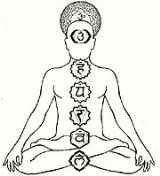
, envisioned either as a goddess or else as a sleeping serpent coiled at the base of the spine, hence a number of English renderings of the term such as 'serpent power'. Kundalini is considered a part of the subtle body
Subtle body

According to various esotericism, occultism, and mysticism teachings, living beings are constituted of a series of psycho-spiritual subtle bodies, each corresponding to a subtle plane of existence, in a hierarchy or great chain of being that culminates in the physical form....
 along with chakra
Chakra

Chakra is a Sanskrit word that translates as wheel or disc.Chakra is a concept referring to wheel-like vortices which, according to traditional Indian medicine, are believed to exist in the surface of the etheric double of man....
s (energy centres) and nadis
Nadi (yoga)

are the channels through which, in traditional Indian medicine and spiritual science, the energies of the subtle body are said to flow. They connect at special points of intensity called chakras....
 (channels). Each chakra is said to contain special characteristics .


Discussion
Ask a question about 'Kundalini'
Start a new discussion about 'Kundalini'
Answer questions from other users
Full Discussion Forum


Encyclopedia


Kundalini Sanskrit
Sanskrit

Sanskrit is a historical Indo-Aryan language, one of the liturgical languages of Hinduism and Buddhism, and one of the 22 official languages of India....
, literally "coiled". In Indian yoga
Yoga

Yoga refers to traditional physical and mental disciplines originating in India. The word is associated with meditative practices in both Buddhism and Hinduism....
, a "corporeal energy" - an unconscious, instinctive or libidinal force or Shakti
Shakti

Shakti, from Sanskrit shak - "to be able," meaning sacred force or empowerment, is the primordial cosmic energy and represents the dynamic forces that move through the entire universe....
, envisioned either as a goddess or else as a sleeping serpent coiled at the base of the spine, hence a number of English renderings of the term such as 'serpent power'. Kundalini is considered a part of the subtle body
Subtle body

According to various esotericism, occultism, and mysticism teachings, living beings are constituted of a series of psycho-spiritual subtle bodies, each corresponding to a subtle plane of existence, in a hierarchy or great chain of being that culminates in the physical form....
 along with chakra
Chakra

Chakra is a Sanskrit word that translates as wheel or disc.Chakra is a concept referring to wheel-like vortices which, according to traditional Indian medicine, are believed to exist in the surface of the etheric double of man....
s (energy centres) and nadis
Nadi (yoga)

are the channels through which, in traditional Indian medicine and spiritual science, the energies of the subtle body are said to flow. They connect at special points of intensity called chakras....
 (channels). Each chakra is said to contain special characteristics . The overall concept has many points in common with Chinese acupuncture
Acupuncture

Acupuncture is a technique of inserting and manipulating fine wikt:filiform needles into specific points on the body to relieve pain or for therapeutic purposes....
.

Yoga and Tantra
Tantra

Tantra , or tantram is a religious philosophy according to which Shakti is usually the main deity worshipped, and the universe is regarded as the divine play of shakti and shiva....
 propose that this energy may be "awakened" by such means as austerities, breath and other physical exercises, visualization and chanting. It may then rise up a subtle channel
Nadi (yoga)

are the channels through which, in traditional Indian medicine and spiritual science, the energies of the subtle body are said to flow. They connect at special points of intensity called chakras....
 at the spine (called Sushumna) to the head, bringing psychological illumination. Yogi
Yogi

A yogi is a term for a male practitioner of various forms of spiritual practice. In contemporary english language yogin is an alternative rendering for the word yogi....
s tend to attempt this alone, Tantric
Tantric

Tantric can refer to:*Tantra, especially Hindu Tantra and tantric yoga*Neotantra, a term used to describe the modern, western use of the word Tantra...
s in couples, both usually under the instruction of a guru.

When Kundalini Shakti
Shakti

Shakti, from Sanskrit shak - "to be able," meaning sacred force or empowerment, is the primordial cosmic energy and represents the dynamic forces that move through the entire universe....
 is conceived as a goddess, then, when it rises to the head, it unites itself with the Supreme Being (Lord Shiva). The aspirant becomes engrossed in deep meditation and infinite bliss.

Indian sources


A number of models of this esoteric subtle anatomy occur in the class of texts known as Agamas
Agama (text)

In Buddhism, an gama is a collection of Early Buddhist schools scriptures, of which there are four, which together comprise the Sutra Pitika of the Sanskritic early schools....
 or Tantras
Tantras

Tantras refers to numerous and varied scriptures pertaining to any of several esoteric traditions rooted in Hindu and Buddhist philosophy. Although Buddhist and Hindu Tantra have many similarities from the outside, they do have some clear distinctions....
, a large body of scriptures, rejected by many orthodox brahmin
Brahmin

Brahmin is the class of educators, law makers, scholars and preachers of Dharma in Hinduism. It is said to occupy the highest position among the varna in Hinduism of Hinduism....
s. In early texts there are various systems of chakra
Chakra

Chakra is a Sanskrit word that translates as wheel or disc.Chakra is a concept referring to wheel-like vortices which, according to traditional Indian medicine, are believed to exist in the surface of the etheric double of man....
s and nadis, with varying connections between them. Over time a system of six or seven chakras up the spine was adopted by most schools. This particular system, which may have originated in about the 11th century AD, rapidly became widely popular. This is the conventional arrangement cited by Monier-Williams, where the chakras are defined as "6 in number, one above the other".

The most famous of the Yoga Upanishads
Upanishad

The Upanishads are Hindu scriptures that constitute the core teachings of Vedanta. They do not belong to any particular period of Sanskrit literature: the oldest, such as the Brhadaranyaka and Chandogya Upanishads, date to the late Brahmana period , while the latest were composed in the medieval and early modern period....
, the Yogatattva, mentions four kinds of yoga, one of which, laya-yoga
Laya yoga

Laya Yoga is a shaivism system of practicing Yoga based on focusing the mind in specific ways on the chakras, and inducing Kundalini energy to arise....
, involves Kundalini. Another source text for the concept is the Hatha Yoga Pradipika
Hatha Yoga Pradipika

The Hatha Yoga Pradipika is a classic Sanskrit manual on Hatha Yoga, written by Yogi Swatmarama, a disciple of Svami Gorakhnath. Said to be the oldest surviving text on the Hatha Yoga, it is one of the three classic texts of Hatha Yoga, the other two being the Gheranda Samhita and the Shiva Samhita....
 written by Swami Svatmarama
Yogi Swatmarama

Yogi Swatmarama was a 15th and 16th century yogic sage in India. He is best known for his compiling the Hatha Yoga Pradipika, which introduced the system of Hatha Yoga....
 (English translation, 1992) somewhere between the twelfth and fifteenth centuries.

Western interpretation


Sir John Woodroffe (pen name Arthur Avalon) was one of the first to bring the notion of Kundalini to the West. A High Court Judge in Calcutta, he became interested in Shaktism
Shaktism

Shaktism is a Hindu denominations of Hinduism that focuses worship upon Shakti or Devi ? the Hindu Divine Mother ? as the absolute, ultimate Godhead....
 and Hindu Tantra
Tantra

Tantra , or tantram is a religious philosophy according to which Shakti is usually the main deity worshipped, and the universe is regarded as the divine play of shakti and shiva....
. His translation of and commentary on two key texts was published as The Serpent Power. Woodroffe rendered Kundalini as "Serpent Power".

Western awareness of the idea of Kundalini was strengthened by the Theosophical Society
Theosophical Society

The Theosophical Society was the organization formed to advance the spiritual principles and search for Truth known as Theosophy....
 and the interest of the psychoanalyst Carl Jung
Carl Jung

Carl Gustav Jung was a Swiss psychiatrist, an influential thinker and the founder of Analytical psychology. Jung's approach to psychology has been influential in the field of depth psychology and in counterculture movements across the globe....
 (1875-1961). "Jung's seminar on Kundalini yoga, presented to the Psychological Club in Zurich in 1932, has been widely regarded as a milestone in the psychological understanding of Eastern thought. Kundalini yoga presented Jung with a model for the development of higher consciousness, and he interpreted its symbols in terms of the process of individuation".

In the early '30s two Italian scholars, Tommaso Palamidessi
Tommaso Palamidessi

Tommaso Palamidessi was an Italian esotericist. Precociously attracted by astrology, parapsychology and yoga-tantric doctrines, he was led by his manifold interests in the field of the occult and by his intense spiritual pursuit to build up an original form of Esoteric Christianity, which he called Archeosophy....
 and Julius Evola
Julius Evola

Julius Evola, also known as Baron Giulio Cesare Evola, was an Italy philosopher, esotericism, occultism, author, artist, poet, political activist, soldier and Traditionalist School....
, published several books with the intent of re-interpreting alchemy with reference to yoga. Those works had an impact on modern interpretations of Alchemy
Alchemy

Alchemy , a part of the Occult Tradition, is both a philosophy and a practice with an aim of achieving ultimate wisdom as well as immortality, involving the improvement of the alchemist as well as the making of several substances described as possessing unusual properties....
 as a mystical science. In those works, Kundalini is called an Igneous Power or Serpentine Fire.

Another popularizer of the concept of Kundalini among Western readers was Gopi Krishna
Gopi Krishna

Gopi Krishna of India was a yogi, mystic, teacher, social reformer, and writer. His autobiography is known under the title Kundalini: The Evolutionary Energy in Man....
. His autobiography is entitled Kundalini—The Evolutionary Energy in Man. According to June McDaniel, his writings have influenced Western interest in kundalini yoga. Swami Sivananda
Swami Sivananda

Swami Sivananda Saraswati was a Hindu spiritual teacher and a well known proponent of Yoga and Vedanta. Sivananda was born Kuppuswami in Pattamadai which is in the Tirunelveli district of Tamil Nadu....
 produced an English language manual of Kundalini Yoga
Kundalini yoga

Kundalini yoga is a physical and meditation, comprising a set of techniques that use the mind, senses and body to create a communication between "mind" and "body"....
 methods. Other well-known spiritual teachers who have made use of the idea of kundalini include Osho
Osho

Osho is the Japanese language reading of the Chinese language he shang , meaning a high-ranking Buddhist monk or highly virtuous Buddhist monk....
, George Gurdjieff, Paramahansa Yogananda
Paramahansa Yogananda

Paramahansa Yogananda , born Mukunda Lal Ghosh , was an Indian yoga and guru who introduced many westerners to the teachings of meditation and Kriya Yoga through his book, Autobiography of a Yogi....
, Rudi (Swami Rudrananda)
Rudi (Swami Rudrananda)

Rudi was born Albert Rudolph in Brooklyn, New York. He was a disciple of Bhagawan Nityananda, whom he met in Ganeshpuri, India, in 1960....
, Yogi Bhajan and Nirmala Srivastava
Nirmala Srivastava

Nirmala Srivastava nee Nirmala Salve is the founder of Sahaja Yoga, a new religious movement. She has proclaimed that she is the complete incarnation of the Shakti, and is worshiped as such....
.

Kundalini references may commonly be found at present in a wide variety of derivative "New Age" presentations, and is a catchword that has been adopted by many new religious movements. However, some commentators, such as transpersonal psychologist Stuart Sovatsky, thinks that the association of Yogic sanskrit terminology (chakras, kundalini, mantras, etc.) with the superficiality of new-age rhetoric, has been unfortunate .

Recently, there has been a growing interest within the medical community to study the physiological effects of meditation
Meditation

Meditation is a mental discipline by which one attempts to get beyond the reflexive, "thinking" mind into a deeper state of relaxation or awareness....
, and some of these studies have applied the discipline of Kundalini Yoga to their clinical settings . Their findings are not all positive. Some modern experimental research seeks to establish links between Kundalini practice and the ideas of Wilhelm Reich
Wilhelm Reich

Wilhelm Reich was an Austrian-American Psychiatry and Psychoanalysis.Reich was a respected analyst for much of his life, focusing on character structure, rather than on individual Neurosis symptoms....
 and his followers.

However, the intensive spiritual practices associated with some Asian traditions are not without their problems. Psychiatric literature notes that "Since the influx of eastern spiritual practices and the rising popularity of meditation starting in the 1960s, many people have experienced a variety of psychological difficulties, either while engaged in intensive spiritual practice or spontaneously". Among the psychological difficulties associated with intensive spiritual practice we find "kundalini awakening","a complex physio-psychospiritual transformative process described in the yogic tradition" . Also, researchers in the fields of Transpersonal psychology
Transpersonal psychology

Transpersonal psychology is a school of psychology that studies the transpersonal, self-transcendence or spirituality aspects of the human experience....
, and Near-death studies
Near-death studies

Near-death studies is a school of psychology and psychiatry that studies the phenomenology and after-effects of a Near-death experience ....
 describe a complex pattern of sensory, motor, mental and affective symptoms associated with the concept of Kundalini, sometimes called the Kundalini Syndrome
Kundalini Syndrome

The Kundalini Syndrome is a set of sensory perception, motor system, mind and affective symptoms reported predominantly among people who have had a near-death experience; it has also been attributed to practitioners of meditation or yoga....
.

See also

  • Kaula
    Kaula

    Kaula Island, also called Kaula Rock, is a small, crescent-shaped offshore islet in the Hawaiian Islands. It is located west-southwest of Kawaihoa Point on Niihau, and about west of Honolulu....
  • Kundalini Yoga
    Kundalini yoga

    Kundalini yoga is a physical and meditation, comprising a set of techniques that use the mind, senses and body to create a communication between "mind" and "body"....
  • Prana
    Prana

    Prana is the Sanskrit for "breath" .It is one of the five organs of vitality or sensation, viz. prana "breath", Vac "speech", caksus "sight", shrotra "hearing", and manas "thought" ....
  • Qi
    Qi

    In traditional Chinese culture, qi is an active principle forming part of any living thing.It is frequently translated as "energy flow," and is often compared to Western notions of energeia or ?lan vital as well as the Yoga Pranayama of prana....
  • Qigong
    Qigong

    Qigong refers to a wide variety of traditional cultivation practices that involve methods of accumulating, circulating, and working with qi, breathing or energy within the body....
  • Samadhi
    Samadhi

    Samadhi is a Hinduism and Buddhism technical term that usually denotes higher levels of concentrated meditation, or dhyana, in Yogic schools. Nirvana of Buddhism is a step towards Samadhi ....
  • Pranotthana
  • Shaktipat
    Shaktipat

    Shaktipat or Saktipata is a Sanskrit word in the Hindu spiritual tradition that refers to the act of the spiritual energy of kundalini being conferred on a disciple or student, by a guru or spirituality teacher in whom it is already active....
  • Taoist sexual practices
    Taoist sexual practices

    Taoist sexual practices literally "Joining Energy" or "The Joining of the Essences", is the way some Taoism practiced sex. Practitioners believed that by performing these sexual arts, one could stay in good health, and eventually, with some other spiritual practices, attain immortality....
  • Tummo
    Tummo

    Tummo is a practice associated with the subtle body of energy-channels, lung and energy-drops. The practices are taught in a suite of advanced sadhana, such as the Six yogas of Naropa, which are contemplative practices, spiritual energetic work or meditations in the Himalayan traditions of Vajrayana and B?n....
  • Turiya
    Turiya

    In Hindu philosophy, turiya is a state of pure consciousness, or the experience of ultimate reality and truth. It is a fourth state of consciousness that underlies and transcends the three common states of consciousness: the state of waking consciousness , the state of dreaming , and dreamless sleep ....
  • Peak experience


Further reading

  • Bentov, Itzhak: Stalking the Wild Pendulum: On the Mechanics of Consciousness, Destiny Books (1988), United States, (ISBN 0-8928-1202-8)


  • Collie, El:


  • Kieffer, Gene (1988): Kundalini for the New Age - Selected Writings of Gopi Krishna, (ISBN 0-533-34433-1)


  • Laue, Thorsten: Kundalini Yoga, Yogi Tee und das Wassermannzeitalter. Bibliografische Einblicke in die Healthy, Happy, Holy Organization (3HO) des Yogi Bhajan. Tübingen: 2008. Online abrufbar unter: http://tobias-lib.ub.uni-tuebingen.de/volltexte/2008/3596/ [in German]


  • Laue, Thorsten: Kundalini Yoga, Yogi Tee und das Wassermannzeitalter. Religionswissenschaftliche Einblicke in die Healthy, Happy, Holy Organization (3HO) des Yogi Bhajan, Münster: LIT, 2007, ISBN 3825801403 [in German]


  • Narayanananda, Swami (1979): The Primal Power in Man or the Kundalini Shakti, N.U. Yoga Trust, Denmark, (ISBN 87-87571-60-9) (6th rev. ed., (1st ed. 1950))


  • Sannella, Lee (1987): The Kundalini Experience, Integral Publishing, California, United States, (ISBN 0-9412-5529-9)


  • Tweedie, I., Daughter of Fire: A Diary of a Spiritual Training with a Sufi Master, 1995, The Golden Sufi Center, ISBN 0-9634574-5-4


  • White, J, edt. (1990) Kundalini. Evolution and enlightenment. New York: Paragon House


External links