

Krystyna Skarbek

Encyclopedia
Krystyna Skarbek, GM
, OBE
, Croix de guerre
(krɨˈstɨna ˈskarbɛk; Warsaw
, 1 May 1908 – 15 June 1952, London
) was a Polish Special Operations Executive
(SOE) agent. She became celebrated especially for her daring exploits in intelligence and irregular-warfare missions in Nazi-occupied
Poland and France.
She became a British agent
months before the SOE was founded in July 1940 and was one of the longest-serving of all Britain's wartime women agents. Her resourcefulness and success have been credited with influencing the sabotage
organization's policy of recruiting increasing numbers of women.
In 1941 she began using the nom de guerre Christine Granville, which she legally adopted after the World War II
.
Although there is no reliable evidence that she was a friend of Ian Fleming
, Skarbek is said, by some, to have been the inspiration for Bond girls, Tatiana Romanova
and Vesper Lynd
.
 Krystyna Skarbek was born in Warsaw
to Count
Jerzy Skarbek, a Catholic
, and Stefania née
Goldfeder, the daughter of a wealthy assimilated Jewish banker. Marrying Stefania in late December 1899, Jerzy Skarbek used her dowry to pay his debts and continue his lavish life-style.
Notable relations included the composer Fryderyk Chopin, Chopin's godfather and prison reform
er Fryderyk Skarbek, and United States
Union
General Włodzimierz Krzyżanowski.
The couple's first child, Andrzej (Andrew), took after the mother's side of the family. Krystyna, their second child, took after her father and his liking for riding horses, which she sat astride rather than side-saddle. She also became an expert skier during visits to Zakopane
in the Tatra mountains
of southern Poland. From the start, there was a complete rapport between father and daughter, who needed little encouragement to become a tomboy
.
It was at the family stables that Krystyna first met Andrzej Kowerski
, whose father had brought him over to play with ten-year-old Krystyna while he and her father, the Count, discussed agricultural matters.
The 1920s left the family in straitened financial circumstances, and they had to give up their country estate and move to Warsaw
. In 1930, when Krystyna was 22, Count Jerzy died. The Goldfeder financial empire had almost completely collapsed, and there was barely enough money to support the widowed Countess Stefania. Krystyna, not wishing to be a burden to her mother, took a job at a Fiat
dealership but soon became ill from automobile fumes and had to give up the job. At first, she was thought, on the basis of shadows on her chest x-rays, to be suffering from tuberculosis
, which had killed her father. She received compensation from her employer's insurance company and took her physicians' advice to lead as much of an open-air life as she could. She began spending a great deal of time hiking and skiing the Tatra Mountains
of southern Poland.
Krystyna married a young businessman, Karol Getlich; but they were incompatible, and the marriage soon ended without rancour. A subsequent love affair came to naught when the young man's mother refused to consider the penniless divorcée as a potential daughter-in-law.
One day, on a Zakopane
ski slope, Krystyna lost control and was saved by a giant of a man who stepped into her path and stopped her descent. Her rescuer was Jerzy (in English
, George) Giżycki, a brilliant, moody, irascible eccentric, who came from a wealthy family in Ukraine
. At fourteen, he had quarrelled with his father, run away from home, and worked in the United States
as a cowboy and gold prospector. He eventually became an author and travelled the world in search of material for his books and articles. He knew Africa
well and hoped one day to return there.
On 2 November 1938, Krystyna and Jerzy Giżycki married at the Evangelical Reformed Church in Warsaw. Soon after, he accepted a diplomatic posting to Ethiopia
, where he served as Poland’s consul general until September 1939, when Germany invaded Poland
. Skarbek would later refer to Giżycki as having been "my Svengali
for so many years that he would never believe that I could ever leave him for good."
, the couple sailed for London
, England
, where Skarbek sought to offer her services in the struggle against the common enemy. The British authorities showed little interest but were eventually convinced by Skarbek's acquaintances, including journalist Frederick Augustus Voigt, who introduced her to the Secret Intelligence Service
(SIS).
; and, in December 1939, she persuaded Polish Olympic
skier Jan Marusarz, brother of Stanisław Marusarz, to escort her across the snow-covered Tatra Mountains
into Poland. Arriving in Warsaw, she vainly pleaded with her mother to leave Nazi-occupied Poland. Stefania Skarbek refused and died at the hands of the occupying Germans in Warsaw's Pawiak
prison. Ironically, the prison had been designed in the mid-19th century by Krystyna Skarbek's great-great-uncle Fryderyk Florian Skarbek, a prison reform
er and Frédéric Chopin
's godfather
, who had been tutored in French language
by Chopin's father.
An incident that probably dates to Skarbek's first visit to Poland, in February 1940, illustrates the hazards she faced while working in her occupied homeland. At a Warsaw café, she was hailed by a woman acquaintance: "Krystyna! Krystyna Skarbek! What are you doing here? We heard that you'd gone abroad!" When Skarbek denied that her name was Krystyna Skarbek, the lady answered that she would have sworn she was Krystyna Skarbek; the resemblance was positively uncanny! After the woman left, Skarbek, to minimize suspicion, tarried a while before leaving the café.
Krystyna Skarbek helped organize a system of Polish couriers who brought intelligence reports from Warsaw to Budapest. Her cousin Ludwik Popiel managed to smuggle out the unique Polish anti-tank rifle, model 35, with the stock and barrel sawed off for easier transport. Skarbek, for a time, concealed it in her Budapest
apartment. However, it never saw wartime service with the Allies
, as the designs and specifications had deliberately been destroyed upon the outbreak of war and there was no time for reverse engineering
. Captured stocks of the rifle were, however, used by the Germans and the Italians.
In Hungary, Skarbek met a Polish army officer, Andrzej Kowerski
(1912–88), who would later use the British nom de guerre "Andrew Kennedy". Skarbek had first met him as a child and briefly encountered him again before the war at Zakopane
. Kowerski, who had lost part of his leg in a pre-war hunting accident, was now exfiltrating Polish and other Allied military personnel and collecting intelligence
.
Skarbek showed her penchant for stratagem when she and Kowerski were arrested by the Gestapo
in January 1941; she won their release, feigning symptoms of pulmonary tuberculosis
by biting her tongue until it bled. Skarbek was distantly related to the Hungarian Regent, Admiral Miklós Horthy
, since a cousin from the Lwów side of the family had married a relative of Horthy. The pair made good their escape from Hungary via the Balkans
and Turkey
.
, Egypt
, they were shocked to learn they were under suspicion because of Skarbek's contacts with a Polish intelligence organization called the "Musketeers". This group had been formed in October 1939 by engineer-inventor Stefan Witkowski, who would be assassinated by parties unknown in October 1942. Another source of suspicion was the ease with which she had obtained transit visas through French-mandated Syria and Lebanon from the pro-Vichy French
consul
in Istanbul
. Only German spies, some Polish intelligence officers believed, could have obtained the visas.
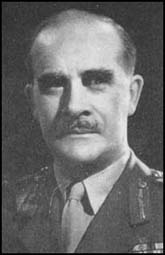
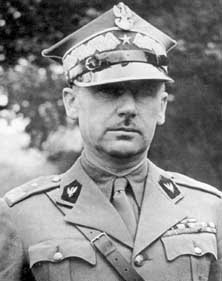 There were also specific suspicions about Kowerski. These were addressed in London
by General Colin Gubbins
—to be, from September 1943, head of SOE—in a letter of 17 June 1941 to Polish Commander-in-Chief and Premier Władysław Sikorski:
Kowerski eventually cleared up any misunderstandings with General Kopański and was able to resume intelligence work. Similarly, when Skarbek visited Polish military headquarters in her British Royal Air Force
uniform, she was treated by the Polish military chiefs with the highest respect.
It could not but have helped that, in the meantime, Germany had started Operation Barbarossa
, an invasion of the Soviet Union
(22 June 1941), as her intelligence obtained from the Musketeers had predicted. It is now known that advance information about Operation Barbarossa had also been provided by a number of other sources, including Ultra
.
When Skarbek's husband, Jerzy Giżycki, was informed that Skarbek and Kowerski's services were being dispensed with, he took umbrage and abruptly bowed out of his own career as a British intelligence agent. When Skarbek told her husband that she loved Kowerski, Giżycki left for London, eventually emigrating to Canada
. They would be formally divorced at the Polish consulate in Berlin
on 1 August 1946.
Krystyna Skarbek was sidelined from mainstream action. Vera Atkins
, assistant to the head of F Section, would later describe Skarbek as a very brave woman, but a law unto herself and a loner.
, she was offered to SOE's teams in France, under the nom de guerre "Madame Pauline". The offer was timely: SOE was running short of trained operatives to cover the increased demands being placed on it in the run-up to the invasion of France. New operatives were already in training, but the work took time. If inserted into occupied Europe before they had absorbed the numerous physical and intellectual skills required for survival, the operatives could compromise not only themselves but their SOE colleagues already in place and French Resistance workers. Skarbek had a track record of successful courier work in occupied Europe and would need only a little
"refresher" work and some guidance about working in France. There was one particular need that required urgent attention: the replacement of a lost courier on a busy circuit
that would be among the first to meet the proposed Allied landings. Skarbek was, therefore, chosen to replace SOE agent Cecily Lefort
, who had been captured, tortured, and imprisoned by the Gestapo
.
The SOE had several branches working in France; and, though most of the women in France answered to F Section in London, Skarbek's mission was launched from Algiers
, the base of the AMF Section. This factor, combined with Skarbek's absence from the usual SOE training program, sometimes intrigues researchers. AMF Section was only set up in the wake of the Allied landings in North Africa
, 'Operation Torch
', partly with staff from London (F Section) and partly with staff from Cairo
(MO.4). AMF Section served three purposes: (1) it was simpler and safer to run the resupply operations from Allied North Africa
than from London, across German-occupied France; (2) since the South of France would be liberated by separate Allied landings there ("Operation Dragoon
"), SOE units in the area needed to be transferred to have links with those headquarters, not with forces for Normandy
; (3) AMF Section tapped into the skills of the French in North Africa, who did not generally support Charles de Gaulle
and who had been linked with opposition in the former "Unoccupied Zone
".
After the two invasions, the distinctions became irrelevant, and almost all the SOE Sections in France would be united with the Maquis
into the Forces Francaises de l'Interieur
(FFI). (There was one exception: The EU/P Section, which was formed by Poles in France and remained part of the trans-European Polish Resistance movement, under Polish command.) Skarbek, as "Pauline Armand", parachuted into southeastern France on 6 July 1944 and became part of the "Jockey" network directed by a Belgian-British lapsed pacifist, Francis Cammaerts
. She assisted Cammaerts by linking Italian
partisan
s and French Maquis
for joint operations against the Germans in the Alps
and by inducing non-Germans, especially conscripted Poles, in the German occupation forces to defect to the Allies.
On 13 August 1944, at Digne, two days before the Allied Operation Dragoon
landings in southern France, Cammaerts, Xan Fielding
—another SOE agent, who had previously operated in Crete
—and a French officer, Christian Sorensen, were arrested at a roadblock by the Gestapo
. Skarbek, learning that they were to be executed, managed to meet with Capt. Albert Schenck, an Alsatian
who acted as liaison officer between the local French prefecture and the Gestapo. She introduced herself as a niece of British General Bernard Montgomery and threatened Schenck with terrible retribution if harm came to the prisoners. She reinforced the threat with a mercenary appeal—an offer of two million francs for the men's release. Schenck in turn introduced her to a Gestapo officer, a Belgian
named Max Waem.
After Cammaerts and the other two men were released, Captain Schenck was advised to leave Digne. He did not and was subsequently murdered by a person or persons unknown. His wife kept the bribe money and, after the war, attempted to exchange it for new francs. She was arrested but was released after the authorities investigated her story. She was able to exchange the money for only a tiny portion of its value.
, since the Empire of Japan
still held on; but Skarbek, as a Pole, was ideally placed to serve as a courier for missions to her homeland in the final missions of SOE. As the Red Army
advanced across Poland, the British government and Polish government-in-exile worked together to leave a network in place that would report on events in the People's Republic of Poland
. Kowerski and Skarbek were now fully reconciled with the Polish forces and were preparing to be dropped into Poland in early 1945. In the event, the mission, called Operation Freston, was canceled because the first party to enter Poland were captured by the Red Army (they were released in February 1945).
The women of SOE were all given military rank, with honorary commissions in either the Women's Transport Service (FANY), officially part of the Auxiliary Territorial Service
(ATS) though a very elite and autonomous part, or the Women's Auxiliary Air Force
(WAAF). Skarbek appears to have been a member of both.
In preparation for her service in France, she appears to have been with FANY
. On her return, she seems to have transferred to the WAAF
as an officer until the end of the war in Europe: 21 November 1944 to 14 May 1945.
Skarbek was one of the few SOE female field agents promoted beyond subaltern rank to Captain, or Air Force equivalent: Flight Officer
, the WAAF counterpart of the Flight Lieutenant
rank for male officers. Skarbek, like Pearl Witherington
, the courier
who had taken command of a group when the designated commander was captured, and Yvonne Cormeau
, the most successful wireless
operator , ended the war as Honorary Flight Officers.
.
Several years after the Digne incident, in London, she told another Pole and fellow World War II
veteran that, during her negotiations with the Gestapo, she had been unaware of any danger to herself. Only after she and her comrades had made good their escape did it hit home: "What have I done! They could have shot me as well."
For her work in conjunction with the British authorities, in May 1947 she was made an Officer of the Order of the British Empire (OBE), an award normally associated with officers about the rank of colonel
, and a rank above the "standard" award of Member of the Order of the British Empire (MBE
) given to other women of SOE.
French recognition of Skarbek's contribution to the liberation of France came with the award of the Croix de Guerre
.
, whom she had saved at Digne, wrote in his 1954 book, Hide and Seek, and dedicated "To the memory of Christine Granville":
In that latter period of her life, she met Ian Fleming
, with whom she allegedly had a year-long affair, although there is no proof that this occurred. The man who made the allegation, Donald McCormick, relied on the word of a woman named "Olga Bialoguski"; McCormick always refused to identify her, and she is not included in his list of acknowledgments.
hotel on 15 June 1952; she was 44. Her assailant was Dennis Muldowney, an obsessed merchant marine steward, and former colleague, whose advances she had rejected. After being tried and convicted of her murder, Muldowney was hanged on the gallows at HMP Pentonville on 30 September 1952.
Krystyna Skarbek was interred in St. Mary's Roman Catholic Cemetery
at Kensal Green
, in northwest London.
Following his death in 1988, the ashes of Skarbek's comrade-in-arms and partner, Andrzej Kowerski
(aka Andrew Kennedy) were interred at the foot of her grave.
, in his first James Bond
novel, Casino Royale
(1953), modeled Vesper Lynd
on her. According to William F. Nolan
, Fleming also based Tatiana Romanova
, in his 1957 novel From Russia, with Love, on Skarbek.
Four decades later, in 1999, Polish writer Maria Nurowska published a novel, Miłośnica (The Lover)—an account of a fictional female journalist's attempt to probe Skarbek's story.
A Polish television series was announced by that country's public broadcasting corporation, Telewizja Polska
(Polish Television).
The 5 February 2009 Krakow Post
reported that Agnieszka Holland
was to direct a big-budget film about Skarbek—Christine: War My Love.
George Medal
The George Medal is the second level civil decoration of the United Kingdom and Commonwealth.The GM was instituted on 24 September 1940 by King George VI. At this time, during the height of The Blitz, there was a strong desire to reward the many acts of civilian courage...
, OBE
Order of the British Empire
The Most Excellent Order of the British Empire is an order of chivalry established on 4 June 1917 by George V of the United Kingdom. The Order comprises five classes in civil and military divisions...
, Croix de guerre
Croix de guerre
The Croix de guerre is a military decoration of France. It was first created in 1915 and consists of a square-cross medal on two crossed swords, hanging from a ribbon with various degree pins. The decoration was awarded during World War I, again in World War II, and in other conflicts...
(krɨˈstɨna ˈskarbɛk; Warsaw
Warsaw
Warsaw is the capital and largest city of Poland. It is located on the Vistula River, roughly from the Baltic Sea and from the Carpathian Mountains. Its population in 2010 was estimated at 1,716,855 residents with a greater metropolitan area of 2,631,902 residents, making Warsaw the 10th most...
, 1 May 1908 – 15 June 1952, London
London
London is the capital city of :England and the :United Kingdom, the largest metropolitan area in the United Kingdom, and the largest urban zone in the European Union by most measures. Located on the River Thames, London has been a major settlement for two millennia, its history going back to its...
) was a Polish Special Operations Executive
Special Operations Executive
The Special Operations Executive was a World War II organisation of the United Kingdom. It was officially formed by Prime Minister Winston Churchill and Minister of Economic Warfare Hugh Dalton on 22 July 1940, to conduct guerrilla warfare against the Axis powers and to instruct and aid local...
(SOE) agent. She became celebrated especially for her daring exploits in intelligence and irregular-warfare missions in Nazi-occupied
Nazi Germany
Nazi Germany , also known as the Third Reich , but officially called German Reich from 1933 to 1943 and Greater German Reich from 26 June 1943 onward, is the name commonly used to refer to the state of Germany from 1933 to 1945, when it was a totalitarian dictatorship ruled by...
Poland and France.
She became a British agent
SPY
SPY is a three-letter acronym that may refer to:* SPY , ticker symbol for Standard & Poor's Depositary Receipts* SPY , a satirical monthly, trademarked all-caps* SPY , airport code for San Pédro, Côte d'Ivoire...
months before the SOE was founded in July 1940 and was one of the longest-serving of all Britain's wartime women agents. Her resourcefulness and success have been credited with influencing the sabotage
Sabotage
Sabotage is a deliberate action aimed at weakening another entity through subversion, obstruction, disruption, or destruction. In a workplace setting, sabotage is the conscious withdrawal of efficiency generally directed at causing some change in workplace conditions. One who engages in sabotage is...
organization's policy of recruiting increasing numbers of women.
In 1941 she began using the nom de guerre Christine Granville, which she legally adopted after the World War II
World War II
World War II, or the Second World War , was a global conflict lasting from 1939 to 1945, involving most of the world's nations—including all of the great powers—eventually forming two opposing military alliances: the Allies and the Axis...
.
Although there is no reliable evidence that she was a friend of Ian Fleming
Ian Fleming
Ian Lancaster Fleming was a British author, journalist and Naval Intelligence Officer.Fleming is best known for creating the fictional British spy James Bond and for a series of twelve novels and nine short stories about the character, one of the biggest-selling series of fictional books of...
, Skarbek is said, by some, to have been the inspiration for Bond girls, Tatiana Romanova
Tatiana Romanova
Tatiana Romanova is a fictional character in the James Bond novel, film, and video game From Russia with Love. She is played by Daniela Bianchi in the movie. According to William F...
and Vesper Lynd
Vesper Lynd
Vesper Lynd is a fictional character featured in Ian Fleming's James Bond novel Casino Royale. The name is a pun on "West Berlin". It has been claimed that Fleming based Lynd on the real life Special Operations Executive agent Christine Granville. In the 1967 film of Casino Royale, she is played by...
.
Early life
Warsaw
Warsaw is the capital and largest city of Poland. It is located on the Vistula River, roughly from the Baltic Sea and from the Carpathian Mountains. Its population in 2010 was estimated at 1,716,855 residents with a greater metropolitan area of 2,631,902 residents, making Warsaw the 10th most...
to Count
Count
A count or countess is an aristocratic nobleman in European countries. The word count came into English from the French comte, itself from Latin comes—in its accusative comitem—meaning "companion", and later "companion of the emperor, delegate of the emperor". The adjective form of the word is...
Jerzy Skarbek, a Catholic
Catholic
The word catholic comes from the Greek phrase , meaning "on the whole," "according to the whole" or "in general", and is a combination of the Greek words meaning "about" and meaning "whole"...
, and Stefania née
NEE
NEE is a political protest group whose goal was to provide an alternative for voters who are unhappy with all political parties at hand in Belgium, where voting is compulsory.The NEE party was founded in 2005 in Antwerp...
Goldfeder, the daughter of a wealthy assimilated Jewish banker. Marrying Stefania in late December 1899, Jerzy Skarbek used her dowry to pay his debts and continue his lavish life-style.
Notable relations included the composer Fryderyk Chopin, Chopin's godfather and prison reform
Prison reform
Prison reform is the attempt to improve conditions inside prisons, aiming at a more effective penal system.-History:Prisons have only been used as the primary punishment for criminal acts in the last couple of centuries...
er Fryderyk Skarbek, and United States
United States
The United States of America is a federal constitutional republic comprising fifty states and a federal district...
Union
Union Army
The Union Army was the land force that fought for the Union during the American Civil War. It was also known as the Federal Army, the U.S. Army, the Northern Army and the National Army...
General Włodzimierz Krzyżanowski.
The couple's first child, Andrzej (Andrew), took after the mother's side of the family. Krystyna, their second child, took after her father and his liking for riding horses, which she sat astride rather than side-saddle. She also became an expert skier during visits to Zakopane
Zakopane
Zakopane , is a town in southern Poland. It lies in the southern part of the Podhale region at the foot of the Tatra Mountains. From 1975 to 1998 it was in of Nowy Sącz Province, but since 1999 it has been in Lesser Poland Province. It had a population of about 28,000 as of 2004. Zakopane is a...
in the Tatra mountains
Tatra Mountains
The Tatra Mountains, Tatras or Tatra , are a mountain range which forms a natural border between Slovakia and Poland, and are the highest mountain range in the Carpathian Mountains...
of southern Poland. From the start, there was a complete rapport between father and daughter, who needed little encouragement to become a tomboy
Tomboy
A tomboy is a girl who exhibits characteristics or behaviors considered typical of the gender role of a boy, including the wearing of typically masculine-oriented clothes and engaging in games and activities that are often physical in nature, and which are considered in many cultures to be the...
.
It was at the family stables that Krystyna first met Andrzej Kowerski
Andrzej Kowerski
Andrzej Kowerski was a Polish Army officer and SOE agent in World War II. From 1941 he used the nom de guerre "Andrew Kennedy."-Life:During the German invasion of Poland in September 1939, Lieutenant Kowerski fought gallantly as a member of Poland's 10th Motorized Cavalry Brigade, commanded by Col...
, whose father had brought him over to play with ten-year-old Krystyna while he and her father, the Count, discussed agricultural matters.
The 1920s left the family in straitened financial circumstances, and they had to give up their country estate and move to Warsaw
Warsaw
Warsaw is the capital and largest city of Poland. It is located on the Vistula River, roughly from the Baltic Sea and from the Carpathian Mountains. Its population in 2010 was estimated at 1,716,855 residents with a greater metropolitan area of 2,631,902 residents, making Warsaw the 10th most...
. In 1930, when Krystyna was 22, Count Jerzy died. The Goldfeder financial empire had almost completely collapsed, and there was barely enough money to support the widowed Countess Stefania. Krystyna, not wishing to be a burden to her mother, took a job at a Fiat
Fiat Automobiles
Fiat Automobiles S.p.A. is an Italian automaker which produces Fiat branded cars, and is part of Fiat Group Automobiles S.p.A.. This is a subsiadiary of Fiat S.p.A., the largest automobile manufacturer in Italy...
dealership but soon became ill from automobile fumes and had to give up the job. At first, she was thought, on the basis of shadows on her chest x-rays, to be suffering from tuberculosis
Tuberculosis
Tuberculosis, MTB, or TB is a common, and in many cases lethal, infectious disease caused by various strains of mycobacteria, usually Mycobacterium tuberculosis. Tuberculosis usually attacks the lungs but can also affect other parts of the body...
, which had killed her father. She received compensation from her employer's insurance company and took her physicians' advice to lead as much of an open-air life as she could. She began spending a great deal of time hiking and skiing the Tatra Mountains
Tatra Mountains
The Tatra Mountains, Tatras or Tatra , are a mountain range which forms a natural border between Slovakia and Poland, and are the highest mountain range in the Carpathian Mountains...
of southern Poland.
Krystyna married a young businessman, Karol Getlich; but they were incompatible, and the marriage soon ended without rancour. A subsequent love affair came to naught when the young man's mother refused to consider the penniless divorcée as a potential daughter-in-law.
One day, on a Zakopane
Zakopane
Zakopane , is a town in southern Poland. It lies in the southern part of the Podhale region at the foot of the Tatra Mountains. From 1975 to 1998 it was in of Nowy Sącz Province, but since 1999 it has been in Lesser Poland Province. It had a population of about 28,000 as of 2004. Zakopane is a...
ski slope, Krystyna lost control and was saved by a giant of a man who stepped into her path and stopped her descent. Her rescuer was Jerzy (in English
English language
English is a West Germanic language that arose in the Anglo-Saxon kingdoms of England and spread into what was to become south-east Scotland under the influence of the Anglian medieval kingdom of Northumbria...
, George) Giżycki, a brilliant, moody, irascible eccentric, who came from a wealthy family in Ukraine
Ukraine
Ukraine is a country in Eastern Europe. It has an area of 603,628 km², making it the second largest contiguous country on the European continent, after Russia...
. At fourteen, he had quarrelled with his father, run away from home, and worked in the United States
United States
The United States of America is a federal constitutional republic comprising fifty states and a federal district...
as a cowboy and gold prospector. He eventually became an author and travelled the world in search of material for his books and articles. He knew Africa
Africa
Africa is the world's second largest and second most populous continent, after Asia. At about 30.2 million km² including adjacent islands, it covers 6% of the Earth's total surface area and 20.4% of the total land area...
well and hoped one day to return there.
On 2 November 1938, Krystyna and Jerzy Giżycki married at the Evangelical Reformed Church in Warsaw. Soon after, he accepted a diplomatic posting to Ethiopia
Ethiopia
Ethiopia , officially known as the Federal Democratic Republic of Ethiopia, is a country located in the Horn of Africa. It is the second-most populous nation in Africa, with over 82 million inhabitants, and the tenth-largest by area, occupying 1,100,000 km2...
, where he served as Poland’s consul general until September 1939, when Germany invaded Poland
Invasion of Poland (1939)
The Invasion of Poland, also known as the September Campaign or 1939 Defensive War in Poland and the Poland Campaign in Germany, was an invasion of Poland by Germany, the Soviet Union, and a small Slovak contingent that marked the start of World War II in Europe...
. Skarbek would later refer to Giżycki as having been "my Svengali
Svengali
Svengali is a fictional character of George du Maurier's 1894 novel Trilby. Svengali "would either fawn or bully and could be grossly impertinent. He had a kind of cynical humour that was more offensive than amusing and always laughed at the wrong thing, at the wrong time, in the wrong place...
for so many years that he would never believe that I could ever leave him for good."
London
Upon the outbreak of World War IIWorld War II
World War II, or the Second World War , was a global conflict lasting from 1939 to 1945, involving most of the world's nations—including all of the great powers—eventually forming two opposing military alliances: the Allies and the Axis...
, the couple sailed for London
London
London is the capital city of :England and the :United Kingdom, the largest metropolitan area in the United Kingdom, and the largest urban zone in the European Union by most measures. Located on the River Thames, London has been a major settlement for two millennia, its history going back to its...
, England
England
England is a country that is part of the United Kingdom. It shares land borders with Scotland to the north and Wales to the west; the Irish Sea is to the north west, the Celtic Sea to the south west, with the North Sea to the east and the English Channel to the south separating it from continental...
, where Skarbek sought to offer her services in the struggle against the common enemy. The British authorities showed little interest but were eventually convinced by Skarbek's acquaintances, including journalist Frederick Augustus Voigt, who introduced her to the Secret Intelligence Service
Secret Intelligence Service
The Secret Intelligence Service is responsible for supplying the British Government with foreign intelligence. Alongside the internal Security Service , the Government Communications Headquarters and the Defence Intelligence , it operates under the formal direction of the Joint Intelligence...
(SIS).
Hungary
Skarbek went to HungaryHungary
Hungary , officially the Republic of Hungary , is a landlocked country in Central Europe. It is situated in the Carpathian Basin and is bordered by Slovakia to the north, Ukraine and Romania to the east, Serbia and Croatia to the south, Slovenia to the southwest and Austria to the west. The...
; and, in December 1939, she persuaded Polish Olympic
Olympic Games
The Olympic Games is a major international event featuring summer and winter sports, in which thousands of athletes participate in a variety of competitions. The Olympic Games have come to be regarded as the world’s foremost sports competition where more than 200 nations participate...
skier Jan Marusarz, brother of Stanisław Marusarz, to escort her across the snow-covered Tatra Mountains
Tatra Mountains
The Tatra Mountains, Tatras or Tatra , are a mountain range which forms a natural border between Slovakia and Poland, and are the highest mountain range in the Carpathian Mountains...
into Poland. Arriving in Warsaw, she vainly pleaded with her mother to leave Nazi-occupied Poland. Stefania Skarbek refused and died at the hands of the occupying Germans in Warsaw's Pawiak
Pawiak
Pawiak was a prison built in 1835 in Warsaw, Poland.During the January 1863 Uprising, it served as a transfer camp for Poles sentenced by Imperial Russia to deportation to Siberia....
prison. Ironically, the prison had been designed in the mid-19th century by Krystyna Skarbek's great-great-uncle Fryderyk Florian Skarbek, a prison reform
Prison reform
Prison reform is the attempt to improve conditions inside prisons, aiming at a more effective penal system.-History:Prisons have only been used as the primary punishment for criminal acts in the last couple of centuries...
er and Frédéric Chopin
Frédéric Chopin
Frédéric François Chopin was a Polish composer and virtuoso pianist. He is considered one of the great masters of Romantic music and has been called "the poet of the piano"....
's godfather
Godparent
A godparent, in many denominations of Christianity, is someone who sponsors a child's baptism. A male godparent is a godfather, and a female godparent is a godmother...
, who had been tutored in French language
French language
French is a Romance language spoken as a first language in France, the Romandy region in Switzerland, Wallonia and Brussels in Belgium, Monaco, the regions of Quebec and Acadia in Canada, and by various communities elsewhere. Second-language speakers of French are distributed throughout many parts...
by Chopin's father.
An incident that probably dates to Skarbek's first visit to Poland, in February 1940, illustrates the hazards she faced while working in her occupied homeland. At a Warsaw café, she was hailed by a woman acquaintance: "Krystyna! Krystyna Skarbek! What are you doing here? We heard that you'd gone abroad!" When Skarbek denied that her name was Krystyna Skarbek, the lady answered that she would have sworn she was Krystyna Skarbek; the resemblance was positively uncanny! After the woman left, Skarbek, to minimize suspicion, tarried a while before leaving the café.
Krystyna Skarbek helped organize a system of Polish couriers who brought intelligence reports from Warsaw to Budapest. Her cousin Ludwik Popiel managed to smuggle out the unique Polish anti-tank rifle, model 35, with the stock and barrel sawed off for easier transport. Skarbek, for a time, concealed it in her Budapest
Budapest
Budapest is the capital of Hungary. As the largest city of Hungary, it is the country's principal political, cultural, commercial, industrial, and transportation centre. In 2011, Budapest had 1,733,685 inhabitants, down from its 1989 peak of 2,113,645 due to suburbanization. The Budapest Commuter...
apartment. However, it never saw wartime service with the Allies
Allies of World War II
The Allies of World War II were the countries that opposed the Axis powers during the Second World War . Former Axis states contributing to the Allied victory are not considered Allied states...
, as the designs and specifications had deliberately been destroyed upon the outbreak of war and there was no time for reverse engineering
Reverse engineering
Reverse engineering is the process of discovering the technological principles of a device, object, or system through analysis of its structure, function, and operation...
. Captured stocks of the rifle were, however, used by the Germans and the Italians.
In Hungary, Skarbek met a Polish army officer, Andrzej Kowerski
Andrzej Kowerski
Andrzej Kowerski was a Polish Army officer and SOE agent in World War II. From 1941 he used the nom de guerre "Andrew Kennedy."-Life:During the German invasion of Poland in September 1939, Lieutenant Kowerski fought gallantly as a member of Poland's 10th Motorized Cavalry Brigade, commanded by Col...
(1912–88), who would later use the British nom de guerre "Andrew Kennedy". Skarbek had first met him as a child and briefly encountered him again before the war at Zakopane
Zakopane
Zakopane , is a town in southern Poland. It lies in the southern part of the Podhale region at the foot of the Tatra Mountains. From 1975 to 1998 it was in of Nowy Sącz Province, but since 1999 it has been in Lesser Poland Province. It had a population of about 28,000 as of 2004. Zakopane is a...
. Kowerski, who had lost part of his leg in a pre-war hunting accident, was now exfiltrating Polish and other Allied military personnel and collecting intelligence
Intelligence (information gathering)
Intelligence assessment is the development of forecasts of behaviour or recommended courses of action to the leadership of an organization, based on a wide range of available information sources both overt and covert. Assessments are developed in response to requirements declared by the leadership...
.
Skarbek showed her penchant for stratagem when she and Kowerski were arrested by the Gestapo
Gestapo
The Gestapo was the official secret police of Nazi Germany. Beginning on 20 April 1934, it was under the administration of the SS leader Heinrich Himmler in his position as Chief of German Police...
in January 1941; she won their release, feigning symptoms of pulmonary tuberculosis
Tuberculosis
Tuberculosis, MTB, or TB is a common, and in many cases lethal, infectious disease caused by various strains of mycobacteria, usually Mycobacterium tuberculosis. Tuberculosis usually attacks the lungs but can also affect other parts of the body...
by biting her tongue until it bled. Skarbek was distantly related to the Hungarian Regent, Admiral Miklós Horthy
Miklós Horthy
Miklós Horthy de Nagybánya was the Regent of the Kingdom of Hungary during the interwar years and throughout most of World War II, serving from 1 March 1920 to 15 October 1944. Horthy was styled "His Serene Highness the Regent of the Kingdom of Hungary" .Admiral Horthy was an officer of the...
, since a cousin from the Lwów side of the family had married a relative of Horthy. The pair made good their escape from Hungary via the Balkans
Balkans
The Balkans is a geopolitical and cultural region of southeastern Europe...
and Turkey
Turkey
Turkey , known officially as the Republic of Turkey , is a Eurasian country located in Western Asia and in East Thrace in Southeastern Europe...
.
Cairo
Upon their arrival at SOE offices in CairoCairo
Cairo , is the capital of Egypt and the largest city in the Arab world and Africa, and the 16th largest metropolitan area in the world. Nicknamed "The City of a Thousand Minarets" for its preponderance of Islamic architecture, Cairo has long been a centre of the region's political and cultural life...
, Egypt
Egypt
Egypt , officially the Arab Republic of Egypt, Arabic: , is a country mainly in North Africa, with the Sinai Peninsula forming a land bridge in Southwest Asia. Egypt is thus a transcontinental country, and a major power in Africa, the Mediterranean Basin, the Middle East and the Muslim world...
, they were shocked to learn they were under suspicion because of Skarbek's contacts with a Polish intelligence organization called the "Musketeers". This group had been formed in October 1939 by engineer-inventor Stefan Witkowski, who would be assassinated by parties unknown in October 1942. Another source of suspicion was the ease with which she had obtained transit visas through French-mandated Syria and Lebanon from the pro-Vichy French
Vichy France
Vichy France, Vichy Regime, or Vichy Government, are common terms used to describe the government of France that collaborated with the Axis powers from July 1940 to August 1944. This government succeeded the Third Republic and preceded the Provisional Government of the French Republic...
consul
Consul
Consul was the highest elected office of the Roman Republic and an appointive office under the Empire. The title was also used in other city states and also revived in modern states, notably in the First French Republic...
in Istanbul
Istanbul
Istanbul , historically known as Byzantium and Constantinople , is the largest city of Turkey. Istanbul metropolitan province had 13.26 million people living in it as of December, 2010, which is 18% of Turkey's population and the 3rd largest metropolitan area in Europe after London and...
. Only German spies, some Polish intelligence officers believed, could have obtained the visas.
London
London is the capital city of :England and the :United Kingdom, the largest metropolitan area in the United Kingdom, and the largest urban zone in the European Union by most measures. Located on the River Thames, London has been a major settlement for two millennia, its history going back to its...
by General Colin Gubbins
Colin Gubbins
Major-General Sir Colin McVean Gubbins KCMG, DSO, MC was the prime mover of the Special Operations Executive in the Second World War....
—to be, from September 1943, head of SOE—in a letter of 17 June 1941 to Polish Commander-in-Chief and Premier Władysław Sikorski:
Kowerski eventually cleared up any misunderstandings with General Kopański and was able to resume intelligence work. Similarly, when Skarbek visited Polish military headquarters in her British Royal Air Force
Royal Air Force
The Royal Air Force is the aerial warfare service branch of the British Armed Forces. Formed on 1 April 1918, it is the oldest independent air force in the world...
uniform, she was treated by the Polish military chiefs with the highest respect.
It could not but have helped that, in the meantime, Germany had started Operation Barbarossa
Operation Barbarossa
Operation Barbarossa was the code name for Germany's invasion of the Soviet Union during World War II that began on 22 June 1941. Over 4.5 million troops of the Axis powers invaded the USSR along a front., the largest invasion in the history of warfare...
, an invasion of the Soviet Union
Soviet Union
The Soviet Union , officially the Union of Soviet Socialist Republics , was a constitutionally socialist state that existed in Eurasia between 1922 and 1991....
(22 June 1941), as her intelligence obtained from the Musketeers had predicted. It is now known that advance information about Operation Barbarossa had also been provided by a number of other sources, including Ultra
Ultra
Ultra was the designation adopted by British military intelligence in June 1941 for wartime signals intelligence obtained by "breaking" high-level encrypted enemy radio and teleprinter communications at the Government Code and Cypher School at Bletchley Park. "Ultra" eventually became the standard...
.
When Skarbek's husband, Jerzy Giżycki, was informed that Skarbek and Kowerski's services were being dispensed with, he took umbrage and abruptly bowed out of his own career as a British intelligence agent. When Skarbek told her husband that she loved Kowerski, Giżycki left for London, eventually emigrating to Canada
Canada
Canada is a North American country consisting of ten provinces and three territories. Located in the northern part of the continent, it extends from the Atlantic Ocean in the east to the Pacific Ocean in the west, and northward into the Arctic Ocean...
. They would be formally divorced at the Polish consulate in Berlin
Berlin
Berlin is the capital city of Germany and is one of the 16 states of Germany. With a population of 3.45 million people, Berlin is Germany's largest city. It is the second most populous city proper and the seventh most populous urban area in the European Union...
on 1 August 1946.
Krystyna Skarbek was sidelined from mainstream action. Vera Atkins
Vera Atkins
Vera Atkins, CBE was a British Intelligence Officer during World War II.-Early life:...
, assistant to the head of F Section, would later describe Skarbek as a very brave woman, but a law unto herself and a loner.
France
Skarbek's situation changed greatly in 1944, with a turn of events that would lead to some of her most famous exploits. Fluent in FrenchFrench language
French is a Romance language spoken as a first language in France, the Romandy region in Switzerland, Wallonia and Brussels in Belgium, Monaco, the regions of Quebec and Acadia in Canada, and by various communities elsewhere. Second-language speakers of French are distributed throughout many parts...
, she was offered to SOE's teams in France, under the nom de guerre "Madame Pauline". The offer was timely: SOE was running short of trained operatives to cover the increased demands being placed on it in the run-up to the invasion of France. New operatives were already in training, but the work took time. If inserted into occupied Europe before they had absorbed the numerous physical and intellectual skills required for survival, the operatives could compromise not only themselves but their SOE colleagues already in place and French Resistance workers. Skarbek had a track record of successful courier work in occupied Europe and would need only a little
"refresher" work and some guidance about working in France. There was one particular need that required urgent attention: the replacement of a lost courier on a busy circuit
Courier
A courier is a person or a company who delivers messages, packages, and mail. Couriers are distinguished from ordinary mail services by features such as speed, security, tracking, signature, specialization and individualization of express services, and swift delivery times, which are optional for...
that would be among the first to meet the proposed Allied landings. Skarbek was, therefore, chosen to replace SOE agent Cecily Lefort
Cecily Lefort
Cecily Lefort was a British SOE agent, during World War II.-Early life:Born as Cecily Margot MacKenzie in London of Scottish ancestry, she lived on the coast of Brittany in France from the age of 24 with her French husband, Dr...
, who had been captured, tortured, and imprisoned by the Gestapo
Gestapo
The Gestapo was the official secret police of Nazi Germany. Beginning on 20 April 1934, it was under the administration of the SS leader Heinrich Himmler in his position as Chief of German Police...
.
The SOE had several branches working in France; and, though most of the women in France answered to F Section in London, Skarbek's mission was launched from Algiers
Algiers
' is the capital and largest city of Algeria. According to the 1998 census, the population of the city proper was 1,519,570 and that of the urban agglomeration was 2,135,630. In 2009, the population was about 3,500,000...
, the base of the AMF Section. This factor, combined with Skarbek's absence from the usual SOE training program, sometimes intrigues researchers. AMF Section was only set up in the wake of the Allied landings in North Africa
North Africa
North Africa or Northern Africa is the northernmost region of the African continent, linked by the Sahara to Sub-Saharan Africa. Geopolitically, the United Nations definition of Northern Africa includes eight countries or territories; Algeria, Egypt, Libya, Morocco, South Sudan, Sudan, Tunisia, and...
, 'Operation Torch
Operation Torch
Operation Torch was the British-American invasion of French North Africa in World War II during the North African Campaign, started on 8 November 1942....
', partly with staff from London (F Section) and partly with staff from Cairo
Cairo
Cairo , is the capital of Egypt and the largest city in the Arab world and Africa, and the 16th largest metropolitan area in the world. Nicknamed "The City of a Thousand Minarets" for its preponderance of Islamic architecture, Cairo has long been a centre of the region's political and cultural life...
(MO.4). AMF Section served three purposes: (1) it was simpler and safer to run the resupply operations from Allied North Africa
North African campaign
During the Second World War, the North African Campaign took place in North Africa from 10 June 1940 to 13 May 1943. It included campaigns fought in the Libyan and Egyptian deserts and in Morocco and Algeria and Tunisia .The campaign was fought between the Allies and Axis powers, many of whom had...
than from London, across German-occupied France; (2) since the South of France would be liberated by separate Allied landings there ("Operation Dragoon
Operation Dragoon
Operation Dragoon was the Allied invasion of southern France on August 15, 1944, during World War II. The invasion was initiated via a parachute drop by the 1st Airborne Task Force, followed by an amphibious assault by elements of the U.S. Seventh Army, followed a day later by a force made up...
"), SOE units in the area needed to be transferred to have links with those headquarters, not with forces for Normandy
Normandy
Normandy is a geographical region corresponding to the former Duchy of Normandy. It is in France.The continental territory covers 30,627 km² and forms the preponderant part of Normandy and roughly 5% of the territory of France. It is divided for administrative purposes into two régions:...
; (3) AMF Section tapped into the skills of the French in North Africa, who did not generally support Charles de Gaulle
Charles de Gaulle
Charles André Joseph Marie de Gaulle was a French general and statesman who led the Free French Forces during World War II. He later founded the French Fifth Republic in 1958 and served as its first President from 1959 to 1969....
and who had been linked with opposition in the former "Unoccupied Zone
Vichy France
Vichy France, Vichy Regime, or Vichy Government, are common terms used to describe the government of France that collaborated with the Axis powers from July 1940 to August 1944. This government succeeded the Third Republic and preceded the Provisional Government of the French Republic...
".
After the two invasions, the distinctions became irrelevant, and almost all the SOE Sections in France would be united with the Maquis
Maquis (World War II)
The Maquis were the predominantly rural guerrilla bands of the French Resistance. Initially they were composed of men who had escaped into the mountains to avoid conscription into Vichy France's Service du travail obligatoire to provide forced labour for Germany...
into the Forces Francaises de l'Interieur
French Forces of the Interior
The French Forces of the Interior refers to French resistance fighters in the later stages of World War II. Charles de Gaulle used it as a formal name for the resistance fighters. The change in designation of these groups to FFI occurred as France's status changed from that of an occupied nation...
(FFI). (There was one exception: The EU/P Section, which was formed by Poles in France and remained part of the trans-European Polish Resistance movement, under Polish command.) Skarbek, as "Pauline Armand", parachuted into southeastern France on 6 July 1944 and became part of the "Jockey" network directed by a Belgian-British lapsed pacifist, Francis Cammaerts
Francis Cammaerts
Francis Charles Albert Cammaerts DSO was an outstanding Special Operations Executive agent who organised French Resistance groups to sabotage German communications in occupied France.-Early life:...
. She assisted Cammaerts by linking Italian
Italy
Italy , officially the Italian Republic languages]] under the European Charter for Regional or Minority Languages. In each of these, Italy's official name is as follows:;;;;;;;;), is a unitary parliamentary republic in South-Central Europe. To the north it borders France, Switzerland, Austria and...
partisan
Partisan (military)
A partisan is a member of an irregular military force formed to oppose control of an area by a foreign power or by an army of occupation by some kind of insurgent activity...
s and French Maquis
Maquis (World War II)
The Maquis were the predominantly rural guerrilla bands of the French Resistance. Initially they were composed of men who had escaped into the mountains to avoid conscription into Vichy France's Service du travail obligatoire to provide forced labour for Germany...
for joint operations against the Germans in the Alps
Alps
The Alps is one of the great mountain range systems of Europe, stretching from Austria and Slovenia in the east through Italy, Switzerland, Liechtenstein and Germany to France in the west....
and by inducing non-Germans, especially conscripted Poles, in the German occupation forces to defect to the Allies.
On 13 August 1944, at Digne, two days before the Allied Operation Dragoon
Operation Dragoon
Operation Dragoon was the Allied invasion of southern France on August 15, 1944, during World War II. The invasion was initiated via a parachute drop by the 1st Airborne Task Force, followed by an amphibious assault by elements of the U.S. Seventh Army, followed a day later by a force made up...
landings in southern France, Cammaerts, Xan Fielding
Xan Fielding
Xan Fielding, born Alexander Wallace Fielding DSO , was a British soldier and writer, noted for his English translations of Planet of the Apes and The Bridge on the River Kwai, both by Pierre Boulle....
—another SOE agent, who had previously operated in Crete
Crete
Crete is the largest and most populous of the Greek islands, the fifth largest island in the Mediterranean Sea, and one of the thirteen administrative regions of Greece. It forms a significant part of the economy and cultural heritage of Greece while retaining its own local cultural traits...
—and a French officer, Christian Sorensen, were arrested at a roadblock by the Gestapo
Gestapo
The Gestapo was the official secret police of Nazi Germany. Beginning on 20 April 1934, it was under the administration of the SS leader Heinrich Himmler in his position as Chief of German Police...
. Skarbek, learning that they were to be executed, managed to meet with Capt. Albert Schenck, an Alsatian
Alsace
Alsace is the fifth-smallest of the 27 regions of France in land area , and the smallest in metropolitan France. It is also the seventh-most densely populated region in France and third most densely populated region in metropolitan France, with ca. 220 inhabitants per km²...
who acted as liaison officer between the local French prefecture and the Gestapo. She introduced herself as a niece of British General Bernard Montgomery and threatened Schenck with terrible retribution if harm came to the prisoners. She reinforced the threat with a mercenary appeal—an offer of two million francs for the men's release. Schenck in turn introduced her to a Gestapo officer, a Belgian
Belgium
Belgium , officially the Kingdom of Belgium, is a federal state in Western Europe. It is a founding member of the European Union and hosts the EU's headquarters, and those of several other major international organisations such as NATO.Belgium is also a member of, or affiliated to, many...
named Max Waem.
After Cammaerts and the other two men were released, Captain Schenck was advised to leave Digne. He did not and was subsequently murdered by a person or persons unknown. His wife kept the bribe money and, after the war, attempted to exchange it for new francs. She was arrested but was released after the authorities investigated her story. She was able to exchange the money for only a tiny portion of its value.
Dénouement
Skarbek's service in France restored her political reputation and greatly enhanced her military reputation. When the SOE teams returned from France (or in some cases, were given 24 hours to depart by de Gaulle), some of the British women sought new missions in the Pacific WarPacific War
The Pacific War, also sometimes called the Asia-Pacific War refers broadly to the parts of World War II that took place in the Pacific Ocean, its islands, and in East Asia, then called the Far East...
, since the Empire of Japan
Empire of Japan
The Empire of Japan is the name of the state of Japan that existed from the Meiji Restoration on 3 January 1868 to the enactment of the post-World War II Constitution of...
still held on; but Skarbek, as a Pole, was ideally placed to serve as a courier for missions to her homeland in the final missions of SOE. As the Red Army
Red Army
The Workers' and Peasants' Red Army started out as the Soviet Union's revolutionary communist combat groups during the Russian Civil War of 1918-1922. It grew into the national army of the Soviet Union. By the 1930s the Red Army was among the largest armies in history.The "Red Army" name refers to...
advanced across Poland, the British government and Polish government-in-exile worked together to leave a network in place that would report on events in the People's Republic of Poland
People's Republic of Poland
The People's Republic of Poland was the official name of Poland from 1952 to 1990. Although the Soviet Union took control of the country immediately after the liberation from Nazi Germany in 1944, the name of the state was not changed until eight years later...
. Kowerski and Skarbek were now fully reconciled with the Polish forces and were preparing to be dropped into Poland in early 1945. In the event, the mission, called Operation Freston, was canceled because the first party to enter Poland were captured by the Red Army (they were released in February 1945).
The women of SOE were all given military rank, with honorary commissions in either the Women's Transport Service (FANY), officially part of the Auxiliary Territorial Service
Auxiliary Territorial Service
The Auxiliary Territorial Service was the women's branch of the British Army during the Second World War...
(ATS) though a very elite and autonomous part, or the Women's Auxiliary Air Force
Women's Auxiliary Air Force
The Women's Auxiliary Air Force , whose members were invariably referred to as Waafs , was the female auxiliary of the Royal Air Force during World War II, established in 1939. At its peak strength, in 1943, WAAF numbers exceeded 180,000, with over 2,000 women enlisting per week.A Women's Royal Air...
(WAAF). Skarbek appears to have been a member of both.
In preparation for her service in France, she appears to have been with FANY
First Aid Nursing Yeomanry
The First Aid Nursing Yeomanry is a British independent all-female unit and registered charity affiliated to, but not part of, the Territorial Army, formed in 1907 and active in both nursing and intelligence work during the World Wars.-Formation:It was formed as the First Aid Nursing Yeomanry in...
. On her return, she seems to have transferred to the WAAF
Women's Auxiliary Air Force
The Women's Auxiliary Air Force , whose members were invariably referred to as Waafs , was the female auxiliary of the Royal Air Force during World War II, established in 1939. At its peak strength, in 1943, WAAF numbers exceeded 180,000, with over 2,000 women enlisting per week.A Women's Royal Air...
as an officer until the end of the war in Europe: 21 November 1944 to 14 May 1945.
Skarbek was one of the few SOE female field agents promoted beyond subaltern rank to Captain, or Air Force equivalent: Flight Officer
Flight officer
The title flight officer was a military rank used by the United States Armed Forces where it was an air force warrant officer rank. It was also an air force rank in several Commonwealth nations where it was used for female officers and was equivalent to the rank of flight lieutenant...
, the WAAF counterpart of the Flight Lieutenant
Flight Lieutenant
Flight lieutenant is a junior commissioned rank in the Royal Air Force and the air forces of many Commonwealth countries. It ranks above flying officer and immediately below squadron leader. The name of the rank is the complete phrase; it is never shortened to "lieutenant"...
rank for male officers. Skarbek, like Pearl Witherington
Pearl Witherington
Cecile Pearl Witherington Cornioley CBE was a World War II SOE agent born in Paris to British parents.-Wartime service:...
, the courier
Courier
A courier is a person or a company who delivers messages, packages, and mail. Couriers are distinguished from ordinary mail services by features such as speed, security, tracking, signature, specialization and individualization of express services, and swift delivery times, which are optional for...
who had taken command of a group when the designated commander was captured, and Yvonne Cormeau
Yvonne Cormeau
Yvonne Cormeau, born Beatrice Yvonne Biesterfeld was a heroine of the Special Operations Executive during the Second World War who was the second female radio operator to be sent to France and who talked her way out of arrest by pretending her wireless was an X-ray machine.-Early life:Beatrice...
, the most successful wireless
Wireless
Wireless telecommunications is the transfer of information between two or more points that are not physically connected. Distances can be short, such as a few meters for television remote control, or as far as thousands or even millions of kilometers for deep-space radio communications...
operator , ended the war as Honorary Flight Officers.
Decorations
Skarbek's exploits at Digne were recognized with the award of the George MedalGeorge Medal
The George Medal is the second level civil decoration of the United Kingdom and Commonwealth.The GM was instituted on 24 September 1940 by King George VI. At this time, during the height of The Blitz, there was a strong desire to reward the many acts of civilian courage...
.
Several years after the Digne incident, in London, she told another Pole and fellow World War II
World War II
World War II, or the Second World War , was a global conflict lasting from 1939 to 1945, involving most of the world's nations—including all of the great powers—eventually forming two opposing military alliances: the Allies and the Axis...
veteran that, during her negotiations with the Gestapo, she had been unaware of any danger to herself. Only after she and her comrades had made good their escape did it hit home: "What have I done! They could have shot me as well."
For her work in conjunction with the British authorities, in May 1947 she was made an Officer of the Order of the British Empire (OBE), an award normally associated with officers about the rank of colonel
Colonel
Colonel , abbreviated Col or COL, is a military rank of a senior commissioned officer. It or a corresponding rank exists in most armies and in many air forces; the naval equivalent rank is generally "Captain". It is also used in some police forces and other paramilitary rank structures...
, and a rank above the "standard" award of Member of the Order of the British Empire (MBE
MBE
MBE can stand for:* Mail Boxes Etc.* Management by exception* Master of Bioethics* Master of Bioscience Enterprise* Master of Business Engineering* Master of Business Economics* Mean Biased Error...
) given to other women of SOE.
French recognition of Skarbek's contribution to the liberation of France came with the award of the Croix de Guerre
Croix de guerre
The Croix de guerre is a military decoration of France. It was first created in 1915 and consists of a square-cross medal on two crossed swords, hanging from a ribbon with various degree pins. The decoration was awarded during World War I, again in World War II, and in other conflicts...
.
Postwar
After the war, Skarbek was left without financial reserves or a native country to return to. Xan FieldingXan Fielding
Xan Fielding, born Alexander Wallace Fielding DSO , was a British soldier and writer, noted for his English translations of Planet of the Apes and The Bridge on the River Kwai, both by Pierre Boulle....
, whom she had saved at Digne, wrote in his 1954 book, Hide and Seek, and dedicated "To the memory of Christine Granville":
In that latter period of her life, she met Ian Fleming
Ian Fleming
Ian Lancaster Fleming was a British author, journalist and Naval Intelligence Officer.Fleming is best known for creating the fictional British spy James Bond and for a series of twelve novels and nine short stories about the character, one of the biggest-selling series of fictional books of...
, with whom she allegedly had a year-long affair, although there is no proof that this occurred. The man who made the allegation, Donald McCormick, relied on the word of a woman named "Olga Bialoguski"; McCormick always refused to identify her, and she is not included in his list of acknowledgments.
Death
Christine Granville was stabbed to death in a KensingtonKensington
Kensington is a district of west and central London, England within the Royal Borough of Kensington and Chelsea. An affluent and densely-populated area, its commercial heart is Kensington High Street, and it contains the well-known museum district of South Kensington.To the north, Kensington is...
hotel on 15 June 1952; she was 44. Her assailant was Dennis Muldowney, an obsessed merchant marine steward, and former colleague, whose advances she had rejected. After being tried and convicted of her murder, Muldowney was hanged on the gallows at HMP Pentonville on 30 September 1952.
Krystyna Skarbek was interred in St. Mary's Roman Catholic Cemetery
St. Mary's Roman Catholic Cemetery
St. Mary's Roman Catholic Cemetery is located at Kensal Green in London, and has its own .-History:Established in 1858, the 29 acre site was built next door to the much larger Anglican & Non-Conformist Kensal Green Cemetery...
at Kensal Green
Kensal Green
Kensal Green, also referred to as Kensal Rise is an area of London, England. It is located on the southern edge of the London Borough of Brent and borders the City of Westminster to the East and the Royal Borough of Kensington and Chelsea to the South....
, in northwest London.
Following his death in 1988, the ashes of Skarbek's comrade-in-arms and partner, Andrzej Kowerski
Andrzej Kowerski
Andrzej Kowerski was a Polish Army officer and SOE agent in World War II. From 1941 he used the nom de guerre "Andrew Kennedy."-Life:During the German invasion of Poland in September 1939, Lieutenant Kowerski fought gallantly as a member of Poland's 10th Motorized Cavalry Brigade, commanded by Col...
(aka Andrew Kennedy) were interred at the foot of her grave.
Popular culture
Skarbek became a legend in her lifetime. Soon after her death, she entered the realm of popular culture. It has been said that Ian FlemingIan Fleming
Ian Lancaster Fleming was a British author, journalist and Naval Intelligence Officer.Fleming is best known for creating the fictional British spy James Bond and for a series of twelve novels and nine short stories about the character, one of the biggest-selling series of fictional books of...
, in his first James Bond
James Bond
James Bond, code name 007, is a fictional character created in 1953 by writer Ian Fleming, who featured him in twelve novels and two short story collections. There have been a six other authors who wrote authorised Bond novels or novelizations after Fleming's death in 1964: Kingsley Amis,...
novel, Casino Royale
Casino Royale (novel)
Casino Royale is Ian Fleming's first James Bond novel. It paved the way for a further eleven novels by Fleming himself, in addition to two short story collections, followed by many "continuation" Bond novels by other authors....
(1953), modeled Vesper Lynd
Vesper Lynd
Vesper Lynd is a fictional character featured in Ian Fleming's James Bond novel Casino Royale. The name is a pun on "West Berlin". It has been claimed that Fleming based Lynd on the real life Special Operations Executive agent Christine Granville. In the 1967 film of Casino Royale, she is played by...
on her. According to William F. Nolan
William F. Nolan
William Francis Nolan is an American author, who wrote stories in the science fiction, fantasy and horror genres. He is best known for coauthoring the novel Logan's Run, with George Clayton Johnson. He co-wrote the screenplay for the 1976 horror film Burnt Offerings which starred Karen Black and...
, Fleming also based Tatiana Romanova
Tatiana Romanova
Tatiana Romanova is a fictional character in the James Bond novel, film, and video game From Russia with Love. She is played by Daniela Bianchi in the movie. According to William F...
, in his 1957 novel From Russia, with Love, on Skarbek.
Four decades later, in 1999, Polish writer Maria Nurowska published a novel, Miłośnica (The Lover)—an account of a fictional female journalist's attempt to probe Skarbek's story.
A Polish television series was announced by that country's public broadcasting corporation, Telewizja Polska
Telewizja Polska
Telewizja Polska Spółka Akcyjna is Poland's public broadcasting corporation...
(Polish Television).
The 5 February 2009 Krakow Post
Krakow Post
The Krakow Post is an English-language monthly newspaper based in Krakow, Poland and owned by Lifeboat Ltd. It covers local and national news, politics, human interest stories, culture, business, and sports and uses only original content. It came under new ownership in April 2008, beginning with...
reported that Agnieszka Holland
Agnieszka Holland
Agnieszka Holland is a Polish film and TV director and screenwriter. Best recognized for her highly political contributions to Polish cinema, Holland is one of Poland's most prominent filmmakers.-Personal life:...
was to direct a big-budget film about Skarbek—Christine: War My Love.
See also
- Madeleine Masson
- Kazimierz Leski (an intelligence officer with the "Musketeers" and the Home Army)
- List of Poles
- Zakopane
- PoglishPoglishPoglish, Polglish or Ponglish , a portmanteau word combining the words "Polish" and "English," designates the product of mixing Polish- and English-language elements within a single speech production, or the use of "false friends" and of cognate words in...