
All Topics  
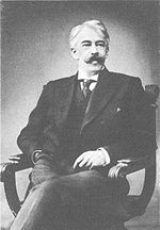
Konstantin Stanislavski

 
Konstantin Stanislavski

   Email Print
   Bookmark   Link


Konstantin Stanislavski


Constantin Sergeyevich Stanislavski ( – 7 August, 1938), was a Russia
Russia

Russia , or the Russian Federation , is a list of countries spanning more than one continent country extending over much of northern Eurasia....
n actor
Actor

An actor or actress is a person who acting in a dramatic production and who works in film, television, theatre, or radio programming in that capacity....
 and theatre director. His innovative contribution to modern European and American realistic acting has remained at the core of mainstream western
Western culture

File:Clash of Civilizations map.pngWestern culture are terms which are used to refer to cultures of European origin. This terminology originated as a way of describing what was different about the Graeco-Roman culture and its descendants, in contrast to the older neighboring civilizations of the Middle East, which in many ways continued...
 performance training for much of the last century. Building on the directorially-unified aesthetic
Gesamtkunstwerk

Gesamtkunstwerk is a German language term coined by the Germany opera composer Richard Wagner ....
 and ensemble
Ensemble cast

An ensemble cast is a cast in which the principal performers are assigned roughly equal amounts of importance in a dramatic production. This kind of casting became more popular in television series because it allows for flexibility for writers to focus on different characters in different episodes....
 playing of the Meiningen company
Meiningen Ensemble

The Meiningen Ensemble, also known as the Meiningen Company, was the Noble court theatre of the Germany Ernestine duchies of Saxe-Meiningen, led by Georg II, Duke of Saxe-Meiningen....
 and the naturalistic
Naturalism (theatre)

Naturalism is a Literary movement in European drama and theatre that developed in the Nineteenth-century theatre and Twentieth-century theatre centuries....
 staging of Antoine
André Antoine (actor)

Andr? Antoine...
 and the independent theatre movement, Stanislavski organized his realistic techniques into a coherent and usable 'system'.


Discussion
Ask a question about 'Konstantin Stanislavski'
Start a new discussion about 'Konstantin Stanislavski'
Answer questions from other users
Full Discussion Forum


Encyclopedia


Constantin Sergeyevich Stanislavski ( – 7 August, 1938), was a Russia
Russia

Russia , or the Russian Federation , is a list of countries spanning more than one continent country extending over much of northern Eurasia....
n actor
Actor

An actor or actress is a person who acting in a dramatic production and who works in film, television, theatre, or radio programming in that capacity....
 and theatre director. His innovative contribution to modern European and American realistic acting has remained at the core of mainstream western
Western culture

File:Clash of Civilizations map.pngWestern culture are terms which are used to refer to cultures of European origin. This terminology originated as a way of describing what was different about the Graeco-Roman culture and its descendants, in contrast to the older neighboring civilizations of the Middle East, which in many ways continued...
 performance training for much of the last century. Building on the directorially-unified aesthetic
Gesamtkunstwerk

Gesamtkunstwerk is a German language term coined by the Germany opera composer Richard Wagner ....
 and ensemble
Ensemble cast

An ensemble cast is a cast in which the principal performers are assigned roughly equal amounts of importance in a dramatic production. This kind of casting became more popular in television series because it allows for flexibility for writers to focus on different characters in different episodes....
 playing of the Meiningen company
Meiningen Ensemble

The Meiningen Ensemble, also known as the Meiningen Company, was the Noble court theatre of the Germany Ernestine duchies of Saxe-Meiningen, led by Georg II, Duke of Saxe-Meiningen....
 and the naturalistic
Naturalism (theatre)

Naturalism is a Literary movement in European drama and theatre that developed in the Nineteenth-century theatre and Twentieth-century theatre centuries....
 staging of Antoine
André Antoine (actor)

Andr? Antoine...
 and the independent theatre movement, Stanislavski organized his realistic techniques into a coherent and usable 'system'. Thanks to its promotion and development by acting teachers who were former students and the many translations of his theoretical writings, Stanislavski's system acquired an unprecedented ability to cross cultural boundaries and developed an international reach, dominating debates about acting in the West. That many of the precepts of his 'system' seem to be common sense and self-evident testifies to its hegemonic success. Actors frequently employ his basic concepts without knowing they do so.

Stanislavski treated theatre-making as a serious endeavour, requiring dedication, discipline and integrity, and the work of the actor as an artistic undertaking. Throughout his life, he subjected his own acting to a process of rigorous artistic self-analysis and reflection. His 'system' resulted from a persistent struggle to remove the blocks he encountered. His development of a theorized praxis—in which practice is used as a mode of inquiry and theory as a catalyst for creative development—identifies him as the first great theatre practitioner
Theatre practitioner

Theatre practitioner is a modern term to describe someone who both creates theatre performances and who produces a theory discourse that informs their practical work....
.

Stanislavski's work was as important to the development of socialist realism
Socialist realism

Socialist realism is a Teleology-oriented style of realism which has as its purpose the furtherance of the goals of socialism and communism. Although related, it should not be confused with social realism, a type of art that realistically depicts subjects of social concern....
 in the USSR as it was to that of psychological realism in the United States
United States

The United States of America is a Federal government constitutional republic comprising U.S. state and a federal district. The country is situated mostly in central North America, where its Contiguous United States and Washington, D.C., the Capital districts and territories, lie between the Pacific Ocean and Atlantic Oceans, Borders of the U...
. Many actors routinely identify his 'system' with the American Method
Method acting

Method acting is a technique in which actors aim to engender in themselves the thoughts and emotions of their characters in an effort to create a lifelike performance....
, although the latter's exclusively psychological techniques contrast sharply with Stanislavski's multivariant, holistic and psychophysical
Psychophysiology

Psychophysiology the branch of psychology that is concerned with the physiology bases of psychology processes. What used to be known as cognitive psychophysiology until the mid 1990's is currently called Cognitive neuroscience....
 approach, which explores character and action both from the 'inside out' and the 'outside in'. Stanislavski's work draws on a wide range of influences and ideas, including his study of the modernist and avant-garde
Avant-garde

Avant-garde means "advance guard" or "vanguard". The adjective form is used in English, to refer to people or works that are experimental or innovative, particularly with respect to art, culture, and politics....
 developments of his time (naturalism
Naturalism (theatre)

Naturalism is a Literary movement in European drama and theatre that developed in the Nineteenth-century theatre and Twentieth-century theatre centuries....
, symbolism
Symbolism (arts)

Symbolism was a late nineteenth-century art movement of French and Belgium origin in symbolist poetry and other arts....
 and Meyerhold's constructivism
Constructivism (art)

Constructivism was an artistic and architecture movement that originated in Russia from 1919 onward which rejected the idea of "art for art's sake" in favour of art as a practice directed towards social purposes....
), Russian formalism
Russian formalism

Russian formalism was an influential school of literary criticism in Russia from the 1910s to the 1930s. It includes the work of a number of highly influential Jewish Russian and Soviet scholars such as Viktor Shklovsky, Yuri Tynianov, Boris Eichenbaum, Roman Jakobson, Grigory Vinokur who revolutionised literary criticism between 1914 and the...
, Yoga
Yoga

Yoga refers to traditional physical and mental disciplines originating in India. The word is associated with meditative practices in both Buddhism and Hinduism....
, Pavlovian
Ivan Pavlov

For other uses, see Pavlov.Ivan Petrovich Pavlov was a Russian Empire, and later Soviet, physiologist, psychologist, and physician. He was awarded the Nobel Prize in Physiology or Medicine in 1904 for research pertaining to the digestive system....
 behaviourist psychology
Behaviorism

Behaviorism or Behaviourism,also called the learning perspective is a philosophy of psychology based on the proposition that all things which organisms do ? including acting, thinking and feeling?can and should be regarded as behaviors....
, James-Lange
James-Lange theory

The James-Lange theory refers to a hypothesis on the origin and nature of Emotion developed independently by two 19th-century scholars, William James and Carl Lange....
 (via Ribot
Théodule-Armand Ribot

Th?odule-Armand Ribot , France psychologist, was born at Guingamp, and was educated at the Lyc?e de St Brieuc.In 1856 he began to teach, and was admitted to the ?cole Normale Sup?rieure in 1862....
) psychophysiology
Psychophysiology

Psychophysiology the branch of psychology that is concerned with the physiology bases of psychology processes. What used to be known as cognitive psychophysiology until the mid 1990's is currently called Cognitive neuroscience....
 and the aesthetics of Pushkin, Gogol
Nikolai Gogol

Nikolai Vasilievich Gogol was a Ukrainians-born Russian people writer. Although his early works, such as Evenings on a Farm Near Dikanka, were heavily influenced by his Ukraine upbringing and identity, he wrote in Russian and his works belong to the tradition of Russian literature; often called the "father of modern Russian realism" he...
, and Tolstoy
Leo Tolstoy

Leo Tolstoy, or Count Lev Nikolayevich Tolstoy Tolstoy's further talents as essayist, dramatist and Education reform made him the most influential member of the aristocracy Tolstoy....
. He described his approach as 'spiritual Realism'.

Biography


Family background

Stanislavski had a privileged youth, growing up in one of the richest families in Russia, the Alekseievs
Alexeyev

Alexeyev, Alekseyev, Alexeiev, Alexeev or Alekseev is a common Russian last name and may refer to several people. Often the same name appears in English in several different transliterations....
; he was born Constantin Sergeievich Alexeiev—"Stanislavski" was a stage name
Stage name

A stage name, also called a showbiz name or screen name, is a pseudonym used by performers and entertainers such as actors, comedians, musician, and professional wrestling....
 that he adopted in 1884 in order to keep his performance activities secret from his parents. The prospect of becoming a professional actor was taboo
Taboo

A taboo is a strong social prohibition against words, objects, actions, or discussions that are considered undesirable or offensive by a group, culture, society, or community....
 for someone of his social class
Social class

Social class refers to the hierarchy distinctions between individuals or groups in societies or cultures. Usually most societies have some notion of social class , but concretely defined social classes are not found in every known type of human societies....
; actors had an even lower social status
Social status

In sociology or anthropology, social status is the honor or prestige attached to one's position in society . The stratification system, which is the system of distributing rewards to the members of society, determines social status....
 in Russia than in the rest of Europe, having only recently been serfs
Russian serfdom

The origins of serfdom in Russia are traced to Kievan Rus in the 11th century. Legal documents of the epoch, such as Russkaya Pravda, distinguished several degrees of feudal dependency of peasants....
 and the property
Property

Property is any physical or virtual entity that is ownership by an individual or jointly by a group of individuals. An owner of property has the right to consumption, sell, Renting, mortgage, transfer and exchange his or her property....
 of the nobility
Nobility

Nobility is a government-privileged title which may be either hereditary or for a lifetime. Titles of nobility exist today in many countries although it is usually associated with present or former monarchies....
. The Alexeievs were a prosperous, bourgeois
Bourgeoisie

Bourgeoisie is a classification used in analyzing human societies to describe a social class of people. Historically, the bourgeoisie comes from the middle or merchant classes of the Middle Ages, whose status or power came from employment, education, and wealth, as distinguished from those whose power came from being born into an aristocrati...
 family, whose factories manufactured gold and silver braid
Braid

A braid is a complex structure or pattern formed by intertwining three or more strands of flexible material such as textile fibers, wire, or human hair....
ing for military decorations and uniforms
Military uniform

Military uniforms comprises standardised dress worn by members of the armed forces and Paramilitary of various nations. Military dress and military styles have gone through great changes over the centuries from colourful and elaborate to extremely utilitarian....
. Up until the communist revolution in 1917, Stanislavski often used his inherited wealth to fund his theatrical experiments in acting and directing. His family's discouragement meant that he appeared only as an amateur
Amateur theatre

Amateur theatre is theatre performed by amateur actors. These actors are not typically members of Actors' Equity groups or Actors' Unions as these organizations generally restrict their members from appearing with companies which are not a signatory to an Equity Agreement or Code....
 onstage and as a director until he was thirty three.

As a child, Stanislavski was exposed to the rich cultural life of his family; his interests included the circus
Circus

File:Faroe stamp 416 circus.jpgA circus is commonly a traveling company of performers that may include acrobatics, clowns, trained animals, trapeze acts, hoopers, tightrope walkers, juggling, unicyclists and other stunt-oriented artists....
, the ballet
Ballet

Ballet is a formalized type of performative dance, the origins of which date lay in sixteenth- and seventeenth-century France courts, and which was further developed in England, Italy, and Russia as a concert dance form....
, and puppetry
Puppetry

Puppetry is a form of theatre or performance which involves the manipulation of puppets. It is very ancient, and is believed to have originated 30,000 years BC....
. His father, Sergei Vladimirovich Alekseiev, was elected head of the merchant class in Moscow (one of the most important and influential positions in the city) in 1877; that same year, he had a fully-equipped theatre on his estate at Liubimovka built for the entertainment of his family and friends, providing a forum for Stanislavski's adolescent theatrical impulses. Stanislavski started, after his début
Debut

Debut may refer to:*Debut , a 1993 album by Bj?rk*Debut Records, a U.S. jazz record labelDebut may also refer to:*The formal introduction of a debutante to society in some cultures, often at a ball dance or similar event...
 performance there, what would become a life-long series of notebooks filled with critical observations on his acting, aphorisms, and problems. It was from this habit of self-analysis and critique that Stanislavski's 'system' later emerged. The family's second theatre was added in 1881 to their mansion at Red Gates, on Sadovaia Street in Moscow (where Stanislavski lived from 1863 to 1903); their house became a focus for the artistic and cultural life of the city. Stanislavski chose not to attend university, preferring to work in the family business.

Early influences

Increasingly interested in "living the part," Stanislavski experimented with the ability to maintain a characterization in real life, disguising himself as a tramp or drunk and visiting the railway station, or disguising himself as a fortune-telling gypsy
Gypsy

The term gypsy has several overlapping meanings. Initially the word was used to referred to the Romani people, who first appeared in England at about the beginning of the 16th century....
; he extended the experiment to the rest of the cast of a short comedy in which he performed in 1883, and as late as 1900 he amused holiday-makers in Yalta
Yalta

Yalta is a city in Crimea, southern Ukraine, on the north coast of the Black Sea.The city is located on the site of an ancient Greece colony, said to have been founded by Greek sailors who were looking for a safe shore on which to land....
 by taking a walk each morning "in character". In 1884, he began vocal training under Fiodor Komissarzhevski, a professor at the Conservatoire and leading tenor
Tenor

The tenor is a type of male voice type and is the highest male voice within the modal register. The typical tenor voice lies between the C one octave below middle C to the A above in choral music, and up to high C in solo work....
 of the Bolshoi
Bolshoi Theatre

The Bolshoi Theatre is a historic theatre in Moscow, Russia, designed by the architect Joseph Bov?, which holds performances of ballet and opera....
 (and father of the famous actress Vera Komissarzhevskaya
Vera Komissarzhevskaya

Vera Fyodorovna Komissarzhevskaya was the most celebrated Russian actress at the turn of the twentieth century. Vera Komissarzhevskaya was the daughter of Fyodor Komissarzhevsky, a high-profile tenor of the Mariinsky Theatre, and sister of Theodore Komisarjevsky, a famous theatrical director....
), with whom he also explored the co-ordination of voice and body. Together they devised exercises in moving and sitting stationary "rhythmically", which anticipated Stanislavski's later use of physical rhythm when teaching his system to opera
Opera

Opera is an Performing arts in which singers and musicians perform a dramatic work which combines a text and a musical score. Opera is part of the Western classical music tradition....
 singers. Komissarzhevski provided one of the models (the other was Stanislavski himself) for the character of Tortsov in his actor's manual An Actor's Work (1938). A year later, in 1885, Stanislavski briefly studied at the Moscow Theatre School, where students were encouraged to mimic the theatrical tricks and conventions of their tutors. Disappointed by this approach, he left after little more than two weeks.

Instead, Stanislavski devoted particular attention to the performances of the Maly Theatre
Maly Theatre (Moscow)

Maly Theatre is the oldest theater in Moscow. His troupe was established at the Moscow University in 1756, immediately after the famous Decree of Elizabeth of Russia, marked the birth of professional theater....
, the home of psychological realism in Russia. Psychological realism had been developed here by Alexander Pushkin, Nikolai Gogol
Nikolai Gogol

Nikolai Vasilievich Gogol was a Ukrainians-born Russian people writer. Although his early works, such as Evenings on a Farm Near Dikanka, were heavily influenced by his Ukraine upbringing and identity, he wrote in Russian and his works belong to the tradition of Russian literature; often called the "father of modern Russian realism" he...
 and Mikhail Shchepkin
Mikhail Shchepkin

Mikhail Semyonovich Shchepkin was the most famous Russian actor of the 19th century.As his father was a serfdom, Shchepkin's freedom had to be bought by his admirers in 1821....
. In 1823, Pushkin had concluded that what united the diverse classical authors—Shakespeare
William Shakespeare

William Shakespeare was an English people poet and playwright, widely regarded as the greatest writer in the English language and the world's preeminent dramatist....
, Racine
Jean Racine

Jean Racine was a France dramatist, one of the "big three" of 17th century France , and one of the most important literary figures in the Western tradition....
, Corneille
Pierre Corneille

File:Pierre Corneille 3.jpgPierre Corneille was a French tragedy who was one of the three great seventeenth Century French dramatists, along with Moli?re and Jean Racine....
 and Calderón
Pedro Calderón de la Barca

Pedro Calder?n de la Barca y Henao , was a dramatist of the Spain Spanish Golden Age....
—was their common concern for truth of character and situation, understood as credible behaviour in believable circumstances: Gogol
Nikolai Gogol

Nikolai Vasilievich Gogol was a Ukrainians-born Russian people writer. Although his early works, such as Evenings on a Farm Near Dikanka, were heavily influenced by his Ukraine upbringing and identity, he wrote in Russian and his works belong to the tradition of Russian literature; often called the "father of modern Russian realism" he...
, meanwhile, campaigned against overblown, effect-seeking acting. In an article of 1846, he advises a modest, dignified mode of comic performance in which the actor seeks to grasp "what is dominant in the role" and considers "the character's main concern, which consumes his life, the constant object of his thought, the 'bee in his bonnet'." This inner desire forms the "heart of the role," to which the "tiny quirks and tiny external details" are added as embellishment. The Maly soon became known as the House of Shchepkin
Mikhail Shchepkin

Mikhail Semyonovich Shchepkin was the most famous Russian actor of the 19th century.As his father was a serfdom, Shchepkin's freedom had to be bought by his admirers in 1821....
, the father of Russian realistic acting who, in 1848, promoted the idea of an "actor of feeling." This actor would "become the character" and identify with their thoughts and feelings: he would "walk, talk, think, feel, cry, laugh as the author wants him to." A copy of Shchepkin's Memoirs of a Serf-Actor, in which the actor describes his struggle to achieve a naturalness of style, was heavily-annotated by Stanislavski. Shchepkin's student, Glikeriya Fedotova, was Stanislavski's teacher (she was responsible for instilling the rejection of inspiration
Artistic inspiration

Inspiration refers to an unconscious burst of creativity in an artistic, musical, or other intellectual endeavor such as the invention of a new scientific theory....
 as the basis of the actor's art, along with the stress on the importance of training and discipline, and the practice of responsive interaction with other actors that Stanislavski came to call "communication"). Shchepkin's legacy included the emphasis on a disciplined, ensemble
Ensemble cast

An ensemble cast is a cast in which the principal performers are assigned roughly equal amounts of importance in a dramatic production. This kind of casting became more popular in television series because it allows for flexibility for writers to focus on different characters in different episodes....
 approach, the importance of extensive rehearsals, and the use of careful observation, self-knowledge, imagination and emotion as the cornerstones of the craft.

As well as the artists of the Maly company, performances given by foreign star actors—who would often come to Moscow during Lent
Lent

Lent, in Christianity, is the period of the liturgical year leading up to Easter. Conventionally it is described as being forty days long, though different Christian denominations calculate the forty days differently....
 (when Russian actors were prohibited from appearing)—also influenced Stanislavski. The effortless, emotive and clear playing of the Italian actor Ernesto Rossi, who performed major Shakespearean tragic
Shakespearean tragedy

Shakespeare wrote tragedies from the beginning of his career. One of his earliest plays was the Roman tragedy Titus Andronicus, which he followed a few years later with Romeo and Juliet....
 protagonists in Moscow in 1877, particularly impressed Stanislavski. So too did Tommaso Salvini
Tommaso Salvini

Tommaso Salvini was an Italy actor. His father and mother were both actors, and Tommaso first appeared when he was barely fourteen as Pasquino in Carlo Goldoni's Donne curiose....
's 1882 performance of Othello
Othello

Othello, the Moor of Venice is a tragedy by William Shakespeare, believed to have been written in approximately 1603, and based on the Italian language short story "Un Capitano Moro" by Cinthio first published in 1565....
. Years later, Stanislavski wrote that Salvini was the "finest representative" of the art of experiencing approach to acting.

The Society of Art and Literature

By the age of twenty-five, Stanislavski was well-known as an amateur
Amateur theatre

Amateur theatre is theatre performed by amateur actors. These actors are not typically members of Actors' Equity groups or Actors' Unions as these organizations generally restrict their members from appearing with companies which are not a signatory to an Equity Agreement or Code....
 actor. He made a proposal to Fyodor Sollogub and Aleksandr Fedotov (a theatre director and estranged husband of Glikeriya Fedotova) to establish a society that would unite amateur and professional actors and artists. The profits from his family's factory were particularly high in 1887-1888; Stanislavski decided to use the surplus 25,000-30,000 roubles to form the Society of Art and Literature, for which he had the Ginzburg House on Tverskaia Street
Tverskaya Street

Tverskaya Street , known as Gorky Street between 1935 and 1990 and Piterskaya in the preceding decades, is the main and probably best-known radial street of Moscow, Russia....
 converted into a luxurious clubhouse with its own large stage and exhibition rooms. Fedotov became head of the dramatic section, Komissarzhevski was the head of the operatic and musical section, while Sollogub was appointed head of the graphic arts section; the drama and opera sections each had a school. To research the curriculum of the society's drama school, Stanislavski spent the summer of 1888 studying the classes and performances of the Comédie-Française
Comédie-Française

The Com?die-Fran?aise or Th??tre-Fran?ais is one of the few state theaters in France. It is the only state theater to have its own troupe of actors....
 in Paris. The society's school was to offer classes in dramatic art, the history of costume, make-up, drama, Russian literature, aesthetics, fencing and dancing. The school opened on 8 October 1888 while the society itself was officially inaugurated on 3 November with a ceremony attended by Anton Chekhov
Anton Chekhov

Anton Pavlovich Chekhov was a Russian Short story writer, playwright and physician, considered to be one of the greatest short-story writers in world literature....
. Under the auspices of the society, Stanislavski performed in plays by Molière
Molière

Jean-Baptiste Poquelin, also known by his stage name Moli?re, was a French playwright and actor who is considered one of the greatest masters of comedy in Western literature....
, Schiller
Friedrich Schiller

Johann Christoph Friedrich von Schiller [johan/jo?han kr?st?f fri?t??? f?n ??l??/??l?] was a Germany poet, philosopher, historian, and playwright....
, Pushkin, and Ostrovsky
Alexandr Ostrovsky

Alexander Nikolayevich Ostrovsky was a Russian playwright....
, as well as gaining his first experiences as a director. With the guidance of Fedotov and Sollogub, Stanislavski finally abandoned the operatic conventions and theatrical clichés in his acting that he had mimicked from other actors' performances. He also became interested in the aesthetic theories of Vissarion Belinski. From Belinski he took his conception of the role of the artist, on which he based a moral justification for his desire to perform that accorded with his family's sense of social responsibility and ethics. At this time Stanislavski warned in his diary: On 5 July 1889, Stanislavski married Lilina (the stage name of Maria Petrovna Perevostchikova), with whom he had just performed in Intrigue and Love
Intrigue and Love

Intrigue and Love , , is a Play , written by the Germany dramatist and writer Friedrich Schiller and first performed on 15 April 1784 in Frankfurt, and then two days later on 16 April 1784 in the National Theatre in Mannheim in Schiller's presence....
. Their first child, Xenia, died of pneumonia in May 1890 less than two months after she was born. Their second daughter, Kira, was born on 21 July 1891. In January 1893, Stanislavski's father died. Their son Igor was born 14 September 1894.

When you play a good man,
try to find out where he is bad,
and when you play a villain,
try to find where he is good.
Stanislavski, 1889.
In 1889 in the society's production of Aleksey Pisemsky
Aleksey Pisemsky

Aleksey Feofilaktovich Pisemsky was a Russian novelist and dramatist who was regarded as an equal of Ivan Turgenev and Fyodor Dostoevsky during his lifetime, but whose reputation suffered a spectacular decline in the 20th century....
's historical play Men Above The Law, Stanislavski discovered his "principle of opposites," as expressed in his aphoristic advice to the actor: "When you play a good man, try to find out where he is bad, and when you play a villain, try to find where he is good." Stanislavski insisted that the actors learnt their parts thoroughly, almost entirely removing the prompter
Prompter

The prompter in an opera house gives the singers the opening words of each phrase a few seconds early. Prompts are mouthed silently or hurled lyrically in a half-voice, audible only on stage....
 from the society's productions.

Stanislavski described his production of Leo Tolstoy
Leo Tolstoy

Leo Tolstoy, or Count Lev Nikolayevich Tolstoy Tolstoy's further talents as essayist, dramatist and Education reform made him the most influential member of the aristocracy Tolstoy....
's The Fruits of Enlightenment
The Fruits of Enlightenment

The Fruits of Enlightenment is a play by the Russian writer Leo Tolstoy. It satirizes the persistence of unenlightened attitudes towards the peasants amongst the Russian landed aristocracy....
 in February 1891 as his first fully-independent directorial work. His directorial methods at this time were closely modeled on the disciplined, autocratic
Autocracy

An autocracy is a form of government in which the political power is held by a single, self-appointed ruler. The term autocrat is derived from the Greek language word 'a?t????t?? ....
 approach of Ludwig Chronegk, the director of the Meiningen Ensemble
Meiningen Ensemble

The Meiningen Ensemble, also known as the Meiningen Company, was the Noble court theatre of the Germany Ernestine duchies of Saxe-Meiningen, led by Georg II, Duke of Saxe-Meiningen....
, whose productions of Julius Caesar
Julius Caesar (play)

Julius Caesar is a Shakespearean tragedy by William Shakespeare, believed to have been written in 1599. It portrays the conspiracy against the Roman Empire dictator Julius Caesar, his assassination and its aftermath....
, The Merchant of Venice
The Merchant of Venice

The Merchant of Venice is a play by William Shakespeare, believed to have been written between 1596 and 1598. Although classified as a Shakespearean comedies in the First Folio, and while it shares certain aspects with Shakespeare's other romantic comedy, the play is perhaps more remembered for its dramatic scenes, and is best known for...
 and Twelfth Night, as well as a number of plays by Schiller
Friedrich Schiller

Johann Christoph Friedrich von Schiller [johan/jo?han kr?st?f fri?t??? f?n ??l??/??l?] was a Germany poet, philosopher, historian, and playwright....
, Stanislavski had studied enthusiastically during their second visit to Moscow in 1890. The Ensemble's general approach included historical accuracy in set, props and costumes and complex crowd effects achieved through a tightly-drilled rehearsal process. Its use of off-stage sound to produce the illusion of a reality beyond the visible stage particularly impressed Stanislavski. Their productions demonstrated a model for artistic achievement with relatively unskilled actors that Stanislavski was to adopt for the early part of his career as a director. By means of a rigid and detailed control of the mise-en-scène, including the strict choreography
Choreography

Choreography , is the art of making structures in which movement occurs. The term dance composition may also refer to the navigation or connection of these movement structures....
 of the actors' every gesture, in Stanislavski's words "the inner kernel of the play was revealed by itself." Whereas the Ensemble's effects tended toward the grandiose, however, Stanislavski introduced lyrical elaborations through the mise-en-scène that dramatised more mundane and ordinary elements of life, in keeping with Belinski's ideas about the "poetry of the real": Writing years later in his autobiography My Life in Art
My Life in Art

My Life in Art is the autobiography of the legendary Russian director Constantin Stanislavski. It was first commissioned while Stanislavski was in the United States on tour with the Moscow Art Theatre, and was first published in Boston, Massachusetts in English in 1924....
 (1925), Stanislavski described Chronegk's approach as one in which the director is "forced to work without the help of the actor." Jean Benedetti suggests that Stanislavski's task at this stage was to unite the realistic tradition of the creative actor inherited from Shchepkin
Mikhail Shchepkin

Mikhail Semyonovich Shchepkin was the most famous Russian actor of the 19th century.As his father was a serfdom, Shchepkin's freedom had to be bought by his admirers in 1821....
 and Gogol
Nikolai Gogol

Nikolai Vasilievich Gogol was a Ukrainians-born Russian people writer. Although his early works, such as Evenings on a Farm Near Dikanka, were heavily influenced by his Ukraine upbringing and identity, he wrote in Russian and his works belong to the tradition of Russian literature; often called the "father of modern Russian realism" he...
 with the director-centered, organically unified
Gesamtkunstwerk

Gesamtkunstwerk is a German language term coined by the Germany opera composer Richard Wagner ....
 naturalistic
Naturalism (theatre)

Naturalism is a Literary movement in European drama and theatre that developed in the Nineteenth-century theatre and Twentieth-century theatre centuries....
 aesthetic of the Ensemble's approach.

It was at this time that Stanislavski first met Leo Tolstoy
Leo Tolstoy

Leo Tolstoy, or Count Lev Nikolayevich Tolstoy Tolstoy's further talents as essayist, dramatist and Education reform made him the most influential member of the aristocracy Tolstoy....
, who delivered, over dinner, a sermon on vegetarianism
Vegetarianism

File:Foods.jpgVegetarianism is the practice of a diet that excludes meat , fish and poultry.There are several variants of the diet, some of which also exclude egg and/or some products produced from animal labour such as dairy products and honey....
. Tolstoy re-wrote the fourth act of his The Power of Darkness
The Power of Darkness

The Power of Darkness also known as The Dominion of Darkness is a five-act dramatic Play by Leo Tolstoy, written in 1886. The play was long-banned in Russia....
 along the lines of Stanislavski's suggestions in 1896. Tolstoy was another important influence on the development of Stanislavski's thought; his What Is Art?
What Is Art?

What Is Art? is a book by Leo Tolstoy in which he argues against numerous Aesthetics which define art in terms of the Goodness and value theory, truth, and especially beauty....
 (1898) promoted immediate intelligibility and transparency as an aesthetic principle. On the eve of creating the Moscow Art Theatre
Moscow Art Theatre

Moscow Art Theatre is a theatre company in Moscow, Russia, founded in 1897 by Constantin Stanislavski and Vladimir Nemirovich-Danchenko. It was conceived as a venue for Naturalism theatre, in contrast to the melodramas that were Russia's dominant form of theatre at the time....
, Stanislavski wrote of the importance of simplicity, directness and accessibility in art.

From 1894 onwards, as part of his painstaking rehearsals for Karl Gutzkow
Karl Gutzkow

Karl Ferdinand Gutzkow was a Germany writer notable in the Young Germany movement of the mid-19th century....
's melodrama
Melodrama

The theatrical genre of Melodrama utilizes theme-music to manipulate the spectator's emotional response and to denote character types. The term combines "melody" and "drama"....
 Uriel Acosta and Shakespeare's
William Shakespeare

William Shakespeare was an English people poet and playwright, widely regarded as the greatest writer in the English language and the world's preeminent dramatist....
 Othello
Othello

Othello, the Moor of Venice is a tragedy by William Shakespeare, believed to have been written in approximately 1603, and based on the Italian language short story "Un Capitano Moro" by Cinthio first published in 1565....
, Stanislavski began to assemble detailed prompt-books that included a directorial commentary on the entire play and from which not even the smallest detail was allowed to deviate in rehearsals. Stanislavski's Othello (1896) made a strong impression on the twenty-two year old Vsevolod Meyerhold
Vsevolod Meyerhold

Vsevolod Emilevich Meyerhold was a Russian theatre director, actor and Theatrical producer whose provocative experiments dealing with physical being and symbolism in an unconventional theatre setting made him one of the seminal forces in modern theatre....
, who was later to work with him before becoming an important director and theatre practitioner
Theatre practitioner

Theatre practitioner is a modern term to describe someone who both creates theatre performances and who produces a theory discourse that informs their practical work....
 in his own right. "The task of our generation," Stanislavski wrote at this time, is "to liberate art from outmoded tradition, from tired cliché and to give greater freedom to imagination and creative ability."

The Moscow Art Theatre

See also: The MAT production of The Seagull
MAT production of The Seagull

The Moscow Art Theatre's production of The Seagull in 1898, directed by Constantin Stanislavski and Vladimir Nemirovich-Danchenko, was a crucial milestone for the fledgling theatre company that has been described as "one of the greatest events in the history of Russian theatre and one of the greatest new developments in the History of d...
 and The MAT production of Hamlet
MAT production of Hamlet

The Moscow Art Theatre's production of Hamlet in 1911-12, on which two of the 20th century's most influential theatre practitioners?Constantin Stanislavski and Edward Gordon Craig?collaborated, is particularly important in the history of performances of Hamlet and of 20th-century theatre in general....
In 1896 Stanislavski discussed with Nikolai Efros his ideas for a scheme to establish a network of touring theatre companies that would bring high-quality drama to the surrounding area of selected towns. He proposed to call them "open" or "accessible" theatres, in a bid to avoid alarming the authorities with their connection to the dangerously democratizing
Democratization

Democratization is the transition to a more democratic political regime. It may be the transition from an authoritarianism regime to a full democracy or transition from a semi-authoritarian political system to a democratic political system....
 "popular theatre" movement that was spreading across Europe, spearheaded by Romain Rolland
Romain Rolland

Romain Rolland was a France dramatist, essayist, art historian, mystic and pacifist who was awarded the Nobel Prize for Literature in 1915....
. In February 1897 Stanislavski joined Anton Chekhov
Anton Chekhov

Anton Pavlovich Chekhov was a Russian Short story writer, playwright and physician, considered to be one of the greatest short-story writers in world literature....
, whom he had met on 15 February at a literary-musical evening, in an open public discussion on the creation of a popular theatre that was reported in the press. At this time he also helped to organise the first all-Russian conference on the theatre, whose keynote speaker, Yevtikhiy Karpov, urged the creation of a "Russian people's theatre."

It was Stanislavski's historic meeting with Vladimir Nemirovich-Danchenko
Vladimir Nemirovich-Danchenko

Vladimir Ivanovich Nemirovich-Danchenko was a Georgia n born Russian theatre director, writer, pedagogue, and playwright, who co-founded the Moscow Art Theatre with his more famous colleague, Constantin Stanislavski, in 1898....
 on 22 June 1897, however, that would create what was called initially the "Moscow Public-Accessible Theatre" but which came to be known as the Moscow Art Theatre
Moscow Art Theatre

Moscow Art Theatre is a theatre company in Moscow, Russia, founded in 1897 by Constantin Stanislavski and Vladimir Nemirovich-Danchenko. It was conceived as a venue for Naturalism theatre, in contrast to the melodramas that were Russia's dominant form of theatre at the time....
 (MAT). Their eighteen-hour discussion—lasting from lunch at 2pm in a private room in the Slavic Bazaar restaurant to 8am the following morning over breakfast at Stanislavski's family estate at Liubimovka—has acquired a legendary status in the history of theatre
History of theatre

Asian theatre...
. Nemirovich was a successful playwright (whose work was performed by the Maly
Maly Theatre (Moscow)

Maly Theatre is the oldest theater in Moscow. His troupe was established at the Moscow University in 1756, immediately after the famous Decree of Elizabeth of Russia, marked the birth of professional theater....
 and whose play
The Worth of Life had beaten Chekhov's The Seagull
The Seagull

The Seagull is the first of what are generally considered to be the four major Play by the Russian dramatist Anton Chekhov. The play was written in 1895 and first produced in 1896 in literature....
to win the Griboyedov prize, much to the author's dismay), critic, theatre director and acting teacher at the Philharmonic school (where he taught Vsevolod Meyerhold
Vsevolod Meyerhold

Vsevolod Emilevich Meyerhold was a Russian theatre director, actor and Theatrical producer whose provocative experiments dealing with physical being and symbolism in an unconventional theatre setting made him one of the seminal forces in modern theatre....
 and Olga Knipper
Olga Knipper

Olga Leonardovna Knipper was a Russian stage actor. She was married to Anton Chekhov. Knipper was among the 39 original members of the Moscow Art Theatre when it was formed by Constantin Stanislavski in 1898....
), who was also committed to the idea of a popular theatre. Their abilities complemented one another: Nemirovich needed Stanislavski's directorial talent for creating vivid stage images and selecting significant details, while Stanislavski needed Nemirovich's talent for dramatic and literary analysis, his professional expertise and his ability to manage a theatre. Stanislavski later compared their discussions to the Treaty of Versailles
Treaty of Versailles

The Treaty of Versailles was one of the peace treaty at the end of World War I. It ended the declaration of war between German Empire and Allies of World War I....
, their scope was so wide-ranging; they agreed on the conventional practices they wished to abandon and, on the basis of the working method they found they had in common, they worked out the policy of their new theatre. Together they would forge a professional company with an ensemble
Ensemble cast

An ensemble cast is a cast in which the principal performers are assigned roughly equal amounts of importance in a dramatic production. This kind of casting became more popular in television series because it allows for flexibility for writers to focus on different characters in different episodes....
 ethos that discouraged individual vantiy, selecting actors from Nemirovich's class at the Philharmonic school and Stanislavski's amateur Society of Art and Literature group, along with other professional actors; they would create a realistic theatre of international renown, with popular prices for seats, whose organically-unified aesthetic
Gesamtkunstwerk

Gesamtkunstwerk is a German language term coined by the Germany opera composer Richard Wagner ....
 would bring together the techniques of the Meiningen Ensemble
Meiningen Ensemble

The Meiningen Ensemble, also known as the Meiningen Company, was the Noble court theatre of the Germany Ernestine duchies of Saxe-Meiningen, led by Georg II, Duke of Saxe-Meiningen....
 and those of André Antoine
André Antoine

Andr? Antoine can refer to:* Andr? Antoine , French* Andr? Antoine , Belgian...
's Théâtre Libre
Théâtre Libre

The Th??tre Libre was a theatre company that operated from 1887 to 1896 in the Montmartre district of Paris, France....
 (which Stanislavski had seen during trips to Paris). Responsibility was to be shared between them on the basis of their individual strengths, with Stanislavski overseeing production and Nemirovich in charge of the repertoire and literary decisions; each had a veto.

Given that Stanislavski's family's assets amounted to some 8 million roubles at the time, Nemirovich assumed initially that Stanislavski would fund the theatre as a privately-owned business, but Stanislavski insisted on a limited
Limited company

A limited company in the United Kingdom is a corporation whose limited liability is Private company limited by shares , which is the most common form of privately held company....
, joint stock company
Joint stock company

A joint stock company is a type of business entity: it is a type of corporation or partnership between two. Certificates of ownership are issued by the company in return for each contribution, and the shareholders are free to transfer their ownership interest at any time by selling their stockholding to others....
. Stanislavski would only ever invest an initial 10,000 roubles in the MAT. To raise the rest of the theatre's 28,000 roubles launch capital
Capital (economics)

In economics, capital or capital goods or real capital refers to factors of production used to create goods or services that are not themselves significantly consumed in the production process....
, Nemirovich persuaded some of the directors of the Philharmonic Society to contribute, members of the board of the Society of Art and Literature also invested, but the theatre's principal shareholder was to be Savva Timofeievich Morozov
Morozovs

Morozovs is a famous Old Believers Russian family of merchants and entrepreneurs. The family name Morozov originates from a Russian word moroz that means frost...
, who invested 10,000 roubles. The company had 13 shareholders, who signed an agreement on 10 April 1898. With an annual salary of 4,200 roubles each, Stanislavski and Nemirovich were to represent the interests of the acting company in the business, though with the aim of transferring control to the actors eventually. The company consisted of 39 actors, 23 men and 16 women, 30% of whom came from Nemirovich's Phiharmonic class and 35% of whom came with Stanislavski from the Society of Art and Literature, with a total staff numbering 323. Viktor Simov
Viktor Simov

Viktor Andreievich Simov was a Russians Painting and scenographer who pioneered the use of Naturalism settings. After having worked for Savva Mamontov Private Opera, on 1 May 1898 Simov became the principal Scenographer of Constantin Stanislavski and Vladimir Nemirovich-Danchenko newly-formed Moscow Art Theatre....
, whom Stanislavski had met in 1896, was engaged as the company's principal designer
Scenographer

A scenographer develops the appearance of a stage design, a TV or movie set, a gaming environment, a trade fair exhibition design or a museum experience exhibition design....
.

For want of suitable rehearsal space in Moscow, the company met in Pushkino, isolated 50 miles from the city. In his opening speech on the first day of rehearsals, 14 June 1898, Stanislavski stressed the "social character" of their collective undertaking: "We are striving to create the first rational, moral, and public-accessible theatre," he said, "and we dedicate our lives to this high goal." In an atmosphere more like a university than a theatre, as Stanislavski described it, the company was introduced to his working method of extensive reading and research and detailed rehearsals in which the action was defined at the table before being explored physically. Throughout June and July the company rehearsed productions of Shakespeare's
William Shakespeare

William Shakespeare was an English people poet and playwright, widely regarded as the greatest writer in the English language and the world's preeminent dramatist....
 
The Merchant of Venice

The Merchant of Venice is a play by William Shakespeare, believed to have been written between 1596 and 1598. Although classified as a Shakespearean comedies in the First Folio, and while it shares certain aspects with Shakespeare's other romantic comedy, the play is perhaps more remembered for its dramatic scenes, and is best known for...
, Sophocles
Sophocles

Sophocles was the second of the three classical Greece tragedy whose work has survived. His first plays were written later than those of Aeschylus and earlier than those of Euripides....
'
Antigone
Antigone (Sophocles)

Antigone is a tragedy by Sophocles written before or in 442 BC. Chronologically, it is the third of the three Theban plays but was written first....
, Hauptmann's
Gerhart Hauptmann

Gerhart Hauptmann was a Germany dramatist who received the Nobel Prize in Literature in 1912....
 
Hannele, Pisemsky's
Aleksey Pisemsky

Aleksey Feofilaktovich Pisemsky was a Russian novelist and dramatist who was regarded as an equal of Ivan Turgenev and Fyodor Dostoevsky during his lifetime, but whose reputation suffered a spectacular decline in the 20th century....
 
Men Above The Law, Lenz's
Jakob Michael Reinhold Lenz

Jakob Michael Reinhold Lenz was a Baltic German writer of the Sturm und Drang movement....
 
The Tutor
The Tutor

The Tutor is an eighteenth-century Germany play by Jakob Michael Reinhold Lenz. It has the subtitle "Or The Benefits of a Private Education". In the twentieth century, it was The Tutor by Bertolt Brecht ? see The Tutor ....
and Alexei Tolstoy
Aleksey Konstantinovich Tolstoy

Count Aleksey Konstantinovich Tolstoy was a Russian poet, novelist and dramatist.Aleksey Konstantinovich Tolstoy was born in Saint Petersburg to the famed family of Tolstoy....
's
Tsar Fiodor Ioannovich. It was at these rehearsals that Stanislavski's life-long relationship with Vsevolod Meyerhold
Vsevolod Meyerhold

Vsevolod Emilevich Meyerhold was a Russian theatre director, actor and Theatrical producer whose provocative experiments dealing with physical being and symbolism in an unconventional theatre setting made him one of the seminal forces in modern theatre....
 began; by the end of June, Meyerhold was so impressed with Stanislavski's directorial skills that he declared him a genius. On his death-bed Stanislavski was to declare Meyerhold "my sole heir in the theatre—here or anywhere else."

Anton Chekhov
Anton Chekhov

Anton Pavlovich Chekhov was a Russian Short story writer, playwright and physician, considered to be one of the greatest short-story writers in world literature....
's
The Seagull
The Seagull

The Seagull is the first of what are generally considered to be the four major Play by the Russian dramatist Anton Chekhov. The play was written in 1895 and first produced in 1896 in literature....
was performed. Initially Chekhov did not grant Danchenko's request to perform the play because he wanted a more experienced troupe to perform it. Stanislavski beautified and innovated Chekov's script, and it created shock in the audiences. According to The Stanislavski Technique: Russia, by Mel Gordon, "his detailed realism transformed the most commonplace scene into an orchestrated display of minute effects... something modern had been born." The MAT had created what became known as psychological realism. Psychological realism embodied hidden conflicts within relationships, which exposed that which is so embedded in everyday life. Chekhov never liked the rendition of his play, but the rest of the audience, and the rest of the world, started to like the work of the MAT. It was then that the MAT became known as the House of Chekhov as they produced Chekhov's melancholic plays (though the playwright himself always insisted they were comedies) like Uncle Vanya
Uncle Vanya

Uncle Vanya is a tragicomedy by the Russian literature playwright Anton Chekhov published in 1899. Its first major performance was in 1900 under the direction of Konstantin Stanislavski....
, Three Sisters
Three Sisters (play)

Three Sisters is a play by Russian author and playwright Anton Chekhov. Written in 1900 in literature and first produced in 1901, It is considered one of Chekhov's major plays....
and The Cherry Orchard
The Cherry Orchard

The Cherry Orchard is Russian playwright Anton Chekhov's last Play . It premiered at the Moscow Art Theatre 17 January 1904 in a production directed by Constantin Stanislavski....
. The MAT became a venerable institution and opened up classes in dance, voice and fencing. During the Russo-Japanese War
Russo-Japanese War

The Russo-Japanese War or the Manchurian Campaign in some English sources, was a conflict that grew out of the rival imperialism ambitions of the Russian Empire and the Empire of Japan over Manchuria and Korea....
, the group traveled to Germany
Germany

Germany , officially the Federal Republic of Germany , is a country in Central Europe. It is bordered to the north by the North Sea, Denmark, and the Baltic Sea; to the east by Poland and the Czech Republic; to the south by Austria and Switzerland; and to the west by France, Luxembourg, Belgium, and the Netherlands....
 and Eastern Europe, where they were so admired that one German playwright called them "artistic divinities." Parades were made in their honor, as the Europeans never saw such brilliant theatre. Upon returning to Russia, Stanislavski fell into an artistic crisis, where his acting and directing became erratic, as he professed his lack of fulfillment and inspiration. He went to Finland
Finland

Finland , officially the Republic of Finland , is a Nordic countries situated in the Fennoscandian region of northern Europe. It borders Sweden on the west, Russia on the east, and Norway on the north, while Estonia lies to its south across the Gulf of Finland....
 with his wife to vacation, and came back to give birth to his acting system that would change what it means to be an actor.The company under the direction of Stanislavski only toured the United States once in 1922-1923. Although they performed in Russian, the verisimilitude of the acting and the ensemble work impressed all who saw them, particularly a number of young actors starting their careers in the commercial theater in New York, among them Stella Adler
Stella Adler

Stella Adler was an United States actor and an acclaimed acting teacher , who founded the Stella Adler Conservatory in New York City , where she taught the Method acting technique of acting for over four decades ....
 and Lee Strasberg
Lee Strasberg

Lee Strasberg was an American actor, director, and one of the best-known acting teachers in American theater and film. He cofounded, with director Harold Clurman, the Group Theatre in 1931, which was "America?s first true theatrical collective"....
. When two former members of the company, Boleslavsky and Ouspenskaya
Maria Ouspenskaya

Maria Ouspenskaya was an Academy Awards-nominated Russian actress who achieved success as a stage actor as a young woman in Russia, and as an elderly woman in Hollywood films....
, began teaching the System at the American Laboratory Theater these performers jumped at the chance to study.

Stanislavski's 'system'

Stanislavski's 'system' focused on the development of artistic truth onstage by teaching actors to "live the part" during performance. Despite being primarily known in The United States for Realism, Stanislavski developed the system to be applied to all forms of theater, directing and producing melodrama, vaudeville, opera, etc. In order to create an ensemble of actors all working together as an artistic unit, he began organizing a series of studios in which young actors were trained in his system. At the First Studio of MAT, actors were instructed to use their own memories
Emotional memory in acting

Affective memory, also known as 'emotional memory', is an element of Stanislavski's 'system' and of Method Acting, two related approaches to acting....
 in order to naturally express emotions. Stanislavski soon observed that some of the actors using or abusing Emotional Memory were given to hysteria
Hysteria

Hysteria, in its colloquial use, describes a state of mind, one of unmanageable fear or emotional excesses. The fear is often caused by multiple events in one's past that involved some sort of severe conflict; the fear can be centered on a body part or most commonly on an imagined problem with that body part ....
. Although he never disavowed Emotional Memory as an essential tool in the actor's kit, he began searching for less draining ways of accessing emotion, eventually emphasizing the actor's use of imagination and belief in the given circumstances of the text rather than her/his private and often painful memories.

Stanislavski's 'system' is a systematic approach to training actors. This system is at some point different from but not a rejection of what he states earlier in affective memory. At the beginning, Stanislavski proposed that actors study and experience subjective emotions and feelings and manifest them to audiences by physical and vocal means - Theatre language
Theatre language

Theatre language are the spoken words and actions by the actors, that the playwright assigns in a performance. Theatre Language enhances the performance, and is the reason for an actor to be dramatic....
. While his System focused on creating truthful emotions and then embodying these, he later worked on The Method of Physical Actions. This was developed at the Opera Dramatic Studio from the early 30s, and worked like Emotion Memory in reverse. The focus was on the physical actions inspiring truthful emotion, and involved improvisation and discussion. The focus remained on reaching the subconscious through the conscious.

Stanislavski survived the Russian Revolution of 1905
Russian Revolution of 1905

The 1905 Russian Revolution is a historical term describing a wave of political terrorism, strikes, peasant unrests, mutinies, both anti-government and undirected, that swept through vast areas of the Russian Empire, leading to the establishment of the State Duma of the Russian Empire, multi-party system and the Russian Constitution of 1906....
 and the Russian Revolution of 1917
Russian Revolution of 1917

The Russian Revolution is the series of revolutions in Russia in 1917, which destroyed the Tsarist autocracy and led to the creation of the Soviet Union....
, with Lenin apparently intervening to protect him. In 1918, Stanislavski established the First Studio as a school for young actors and wrote several works: those available in English translation include:
An Actor Prepares
An Actor Prepares

An Actor Prepares was first published in 1936 and is the first volume of the translations of Constantin Stanislavski's books on acting, which were published as a trilogy in English, though originally meant to be published as two books in Russia....
, Building a Character, Creating a Role, and the autobiography My Life in Art
My Life in Art

My Life in Art is the autobiography of the legendary Russian director Constantin Stanislavski. It was first commissioned while Stanislavski was in the United States on tour with the Moscow Art Theatre, and was first published in Boston, Massachusetts in English in 1924....
.

Stanislavski always thought of his system as if it were a table of contents for a large book which dealt with all aspects of acting. His final work, now known as
The Method of Physical Actions (see Stanislavski's 'system'), is in no way a rejection of his early interest in sense and affective memory. At no time did he ever reject the notion of emotion memory; he simply found other means of accessing emotion, among them the absolute belief in given circumstances; the exercise of the imagination; and the use of physical action.

The main techniques of the 'system' include Units, Objectives, Given Circumstances, the Through Line and Emotional Memory. "Emotional memory" was an idea taken from Ribot
Ribot

Ribot may refer to:* Alexandre Ribot , four times Prime Minister of France* Hugo Ribot , pioneer surgeon and gynecologist* John Ribot Australian sports administrator and former rugby league international...
, which was originally called "affective memory". Stanislavski felt that the name "emotional memory" was more accurate for the actor.

Legacy

Stanislavsky
Stanislavski had different pupils during each of the phases of discovering and experimenting with a Universal System of acting. One such student, Ryszard Boleslawski
Ryszard Boleslawski

Ryszard Boleslawski was a Poland film director, actor and teacher of acting....
, founded the American Laboratory Theatre in 1925. One of Boleslawski's students, Lee Strasberg
Lee Strasberg

Lee Strasberg was an American actor, director, and one of the best-known acting teachers in American theater and film. He cofounded, with director Harold Clurman, the Group Theatre in 1931, which was "America?s first true theatrical collective"....
, went on to co-found The Group Theater (1931-1940) with Harold Clurman
Harold Clurman

Harold Edgar Clurman was an United States theater director and drama critic, most famous for being one of the three original founders of the New York City's Group Theatre ....
 and Cheryl Crawford
Cheryl Crawford

Cheryl Crawford was an United States theatre producer and theatre director.Born in Akron, Ohio, Crawford majored in drama at Smith College. Following graduation, she moved to New York City and enrolled at the Theatre Guild....
, the first American acting company to put Stanislavski's first discoveries into theatrical practice. Boleslawski had been in Stanislavski's class when experimenting with Affective Memory. Stanislavski's theory later evolved to rely on Physical Action inducing feelings and emotions. Another of Stanislavski's students, Sanford Meisner
Sanford Meisner

Sanford Meisner was an United States actor and acting coach who developed an acting methodology, now known as the Meisner technique....
, was an actor at The Group Theater who went on to teach at New York City's Neighborhood Playhouse
Neighborhood Playhouse

The Neighborhood Playhouse School of the Theatre is an actor training school in New York City, generally associated with the Meisner technique of Sanford Meisner....
 where he developed what came to be known as the Meisner Technique.

Among the actors who have employed Stanislavski's System in some form are Jack Garfein
Jack Garfein

Jack Garfein, born July 2 1930 in Mukacevo, Carpathian Ruthenia, Czechoslovakia , is an acting teacher and former motion picture and theater director....
, Jack Nicholson
Jack Nicholson

John Joseph "Jack" Nicholson is an United States actor, film director, film producer, and screenwriter, Movie star for his often dark-themed portrayals of Neurosis Fictional character....
, Marilyn Monroe
Marilyn Monroe

Marilyn Monroe was an American actress, singer, model, and a sex symbol.After spending much of her childhood in foster homes, Monroe began a career as a model, which led to a film contract in 1946....
, James Dean
James Dean

James Byron Dean was a two-time Academy Award-nominated American film actor. Dean's status as a cultural icon is best embodied in the title of his most celebrated film, Rebel Without a Cause, in which he starred as troubled stereotypical high school rebel Jim Stark....
, Marlon Brando
Marlon Brando

Marlon Brando, Jr. was an Academy Award-winning American actor whose body of work spanned over half a century. He is widely considered one of the greatest actors of all time, and was named the fourth AFI's 100 Years......
, Montgomery Clift
Montgomery Clift

Edward Montgomery Clift was an United Statesn film actor. He was known for his brooding, sensitive, working-class character roles, and received four Academy Award nominations during his career....
, Harvey Keitel
Harvey Keitel

Harvey Keitel is an Academy Award-nominated American actor whose latest work is that of Detective Lieutenant Gene Hunt on ABC's crime drama "Life on Mars "....
, Steve McQueen, Paul Newman
Paul Newman

Paul Leonard Newman was an United States actor, film director, entrepreneur, Humanitarianism, and auto racing enthusiast. He won numerous awards, including an Academy Award for his performance in the 1986 Martin Scorsese film The Color of Money and eight other nominations three Golden Globe, a BAFTA Award, a Screen Actors Guild Award, a...
, Warren Beatty
Warren Beatty

Warren Beatty is an United States Academy Award- and Golden Globe-winning actor, film producer, screenwriter and film director....
, Robert Duvall
Robert Duvall

Robert Selden Duvall is an United States film actor and Film director who has won an Academy Award, two Emmys, and four Golden Globes. He has appeared in films such as To Kill a Mockingbird , The Godfather, The Godfather Part II, Apocalypse Now, The Natural , Network , THX 1138, MASH , The Great Santini,...
, Johnny Depp
Johnny Depp

Johnny Depp is an American actor known for his portrayals of offbeat, eccentric characters such as Jack Sparrow in the Pirates of the Caribbean film series and Edward Scissorhands....
, Gregory Peck
Gregory Peck

Gregory Peck was an American film actor. He was one of 20th Century Fox's most popular film stars, from the 1940s to the 1960s, and played important roles well into the 1990s....
, Sidney Poitier
Sidney Poitier

Sir Sidney Poitier, Order of the British Empire is an Academy Award-, Golden Globe-, BAFTA- and Grammy award-winning Bahamas-United States actor, film director, author, and diplomat....
, Jessica Lange
Jessica Lange

Jessica Phyllis Lange is an United States stage and screen actress who, among many other accolades, has won two Academy Awards and four Golden Globe Awards....
, William Hurt
William Hurt

William M. Hurt is an United States actor. He won both the Academy Awards and BAFTA Awards for his work in Kiss of the Spider Woman ....
, Dustin Hoffman
Dustin Hoffman

Dustin Lee Hoffman is a two-time Academy Award-, six-time Golden Globe-, three-time BAFTA- and Emmy Award-winning United States actor....
, Robert De Niro
Robert De Niro

Robert Mario De Niro, Jr. is a two-time Academy Award-winning United States actor, director and producer. He is widely regarded as one of the greatest and most influential actors of all time....
, Al Pacino
Al Pacino

Alfredo James "Al" Pacino is an United States film and theatre actor and Film director, widely considered to be one of the most notable and influential actors of his time....
, Gene Hackman
Gene Hackman

Eugene Allen "Gene" Hackman is a two-time Academy Award-winning American actor. He came to fame during the 1970s, after his role as Jimmy "Popeye" Doyle in The French Connection , and continued to appear in Hollywood films playing major roles, including Harry Caul in The Conversation, Norman Dale in Hoosiers, Agent Rupert Anderso...
, Kevin Spacey
Kevin Spacey

Kevin Spacey is an American character actor, film director, screenwriter, film producer, and crooner. He grew up in California, and began his career as a stage actor during the 1980s, before being cast in supporting roles in film and television....
, Jane Fonda
Jane Fonda

Jane Fonda is an United States actress, writer, political activism, former fashion model and Physical fitness guru. She rose to fame in the 1960s with films such as Barbarella and Cat Ballou and, with interruptions, has appeared in films ever since....
, Vanessa Redgrave
Vanessa Redgrave

Vanessa Redgrave Order of the British Empire is an Academy Award, Golden Globe, Emmy and Tony Award winning England actor. She is the most famous member of the Redgrave family, the world renowned theatrical dynasty....
, Benicio del Toro
Benicio del Toro

Benicio Monserrate Rafael del Toro S?nchez , better known as Benicio del Toro, is a Puerto Rican people actor and film producer. His awards include the Academy Award, Golden Globe Award, Screen Actors Guild Award and British Academy of Film and Television Arts....
, Mark Ruffalo
Mark Ruffalo

Mark Alan Ruffalo is an United States actor, Film director, Film producer and screenwriter. He is perhaps best known for his role as Fanning opposite Tom Cruise in the 2004 film Collateral and Inspector David Toschi in the 2007 film Zodiac ....
, Vincent D'Onofrio
Vincent D'Onofrio

Vincent Phillip D'Onofrio is an United States actor and film producer. He first gained attention for his role as "Private Leonard 'Gomer Pyle' Lawrence" in Full Metal Jacket, and more currently for his role as Robert Goren in Law & Order: Criminal Intent....
, Kate Winslet
Kate Winslet

'Kate Elizabeth Winslet' is an English people Actor and occasional singing. She is noted for having played diverse characters over her career, but probably best-known for her critically acclaimed performances as Marianne Dashwood in Sense and Sensibility , Titanic #Cast in Titanic , Clementine Kruczynski in Eternal Sunshine of the Sp...
, Adrien Brody
Adrien Brody

Adrien Brody is an United States actor. He received widespread recognition and subsequent acclaim after starring in Roman Polanski's The Pianist ....
, Denzel Washington
Denzel Washington

Denzel Hayes Washington, Jr. is an United States actor and film director. He has garnered much critical acclaim for his work in film since the 1990s, including for his portrayals of real-life figures, such as Steve Biko, Malcolm X, Rubin "Hurricane" Carter, Melvin B....
, Elizabeth Taylor
Elizabeth Taylor

Dame Elizabeth Rosemond Taylor, Order of the British Empire , also known as Liz Taylor, is an England-born American actress.Known for her acting skills and beauty, as well as her Cinema of the United States lifestyle, including many marriages, Taylor is considered one of the great actresses of Hollywood's golden years, as well as a la...
, Hilary Swank
Hilary Swank

Hilary Ann Swank is an United States actress. Her Hollywood film career began with a small part in Buffy the Vampire Slayer and then a major part in The Next Karate Kid , where she played Julie Pierce, the first female prot?g? of the sensei Mr....
, Anthony Hopkins
Anthony Hopkins

Sir Philip Anthony Hopkins, Order of the British Empire is a Welsh People film, theater and television actor. Considered by many to be one of film's greatest living actors, he is best known for his portrayal of cannibalism serial killer Hannibal Lecter in the 1991 in film blockbuster The Silence of the Lambs , its sequel, Hannibal ,...
, John Alexander
John Alexander

John Alexander may refer to:* John Alexander , Scottish historical painter and engraver* John Alexander , scriptural commentator* John Alexander , - United States Representative from Ohio...
 and Sean Penn
Sean Penn

Sean Justin Penn is an United States film actor. He is also a filmmaker and political activist. He won an Academy Award for Best Actor and a Golden Globe Award for Best Actor - Motion Picture Drama for his role in Mystic River and the Screen Actors Guild Award for Outstanding Performance by a Male Actor in a Leading Role and Academy Awa...
.

Sir John Gielgud said, "This director found time to explain a thousand things that have always troubled actors and fascinated students." Gielgud is also quoted as saying, "Stanislavski's now famous book is a contribution to the Theatre and its students all over the world."

Stanislavski's goal was to find a universally applicable approach that could be of service to all actors. Yet he said of his System, "Create your own method. Don't depend slavishly on mine. Make up something that will work for you! But keep breaking traditions, I beg you."

Stanislavski's aim was to have all of his characters performed as "truthfully" as possible, relying on full commitment to objectives and physical actions, rather than artificial reproduction of emotion.

Fictional references

Mikhail Bulgakov
Mikhail Bulgakov

Mikhail Afanasyevich Bulgakov was a Russian novelist and playwright active in the first half of the 20th century. He is best known for the novel The Master and Margarita, which The Times has called one of the masterpieces of the 20th century....
 satirized Stanislavski through the character Ivan Vasilievich in his novel
Black Snow (also called "The Theatrical Novel"). (It is no coincidence that Ivan Vasilievich was the name and patronymic of the notorious sixteenth-century czar Ivan the Terrible.) In Bulgakov's novel, Ivan Vasilievich is portrayed as a great actor, but his famous acting "method" is held up as a farce, in fact often hindering actors' performances through ridiculous exercises. Bulgakov's cutting portrait of Ivan Vasilievich likely reflects his frustrating experiences with Stanislavski during the latter's eventually aborted production of Bulgakov's play A Cabal of Hypocrites in 1930–1936. While this depiction of Stanislavski is in stark contrast to most other descriptions, including those of Westerners who had met him, it should be noted that Bulgakov and Stanislavski were otherwise good friends.

Significant students

  • Vsevolod Meyerhold
    Vsevolod Meyerhold

    Vsevolod Emilevich Meyerhold was a Russian theatre director, actor and Theatrical producer whose provocative experiments dealing with physical being and symbolism in an unconventional theatre setting made him one of the seminal forces in modern theatre....
  • Yevgeny Vakhtangov
    Yevgeny Vakhtangov

    Yevgeny Bagrationovich Vakhtangov was a renowned Russian-Armenian director who was associated with the State Institute of Theatre Arts in Moscow in the early 20th century, and founded the Vakhtangov Theatre....
  • Michael Chekhov
    Michael Chekhov

    Mikhail Aleksandrovich Chekhov was an Academy Award-nominated Russian-American actor, director, author, and developer of his own acting technique used by actors such as Clint Eastwood, Marilyn Monroe, Yul Brynner, and Robert Stack....
  • Richard Boleslavsky
    Ryszard Boleslawski

    Ryszard Boleslawski was a Poland film director, actor and teacher of acting....
  • Maria Ouspenskaya
    Maria Ouspenskaya

    Maria Ouspenskaya was an Academy Awards-nominated Russian actress who achieved success as a stage actor as a young woman in Russia, and as an elderly woman in Hollywood films....
  • Stella Adler
    Stella Adler

    Stella Adler was an United States actor and an acclaimed acting teacher , who founded the Stella Adler Conservatory in New York City , where she taught the Method acting technique of acting for over four decades ....
  • Joshua Logan
    Joshua Logan

    Joshua Lockwood Logan III was an American Theatre director and film director and writer....
  • Andrius Jilinsky
  • Leo Bulgakov
  • Varvara Bulgakov
  • Vera Solovyova
  • Tamara Daykarhanova
  • Olga Knipper
    Olga Knipper

    Olga Leonardovna Knipper was a Russian stage actor. She was married to Anton Chekhov. Knipper was among the 39 original members of the Moscow Art Theatre when it was formed by Constantin Stanislavski in 1898....


See also

  • The Group Theatre
  • Actors Studio
    Actors Studio

    The Actors Studio is a membership organization for professional actors, theatre direction and playwrights at 432 West 44th Street in the Hells Kitchen, Manhattan neighborhood of Manhattan in New York City....

Bibliography