
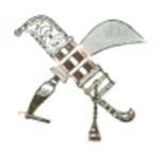
The
Kodava (ಕೊಡವ in
Kannada scriptThe Kannada script is a syllabary of the Brahmic family, used primarily to write the Kannada language, one of the Dravidian languages in India. It is also used for Konkani, Tulu, Beary bashe and Kodava languages....
) are an ethnic group of southern
IndiaIndia, officially the Republic of India , is a country in South Asia. It is the seventh-largest country by geographical area, the second-most populous country, and the most populous democracy in the world. Bounded by the Indian Ocean on the south, the Arabian Sea on the west, and the Bay of Bengal...
who trace their origins to the region of
KodaguKodagu is a district of Karnataka State in southern India. It is also known by its anglicised name of Coorg. It occupies about 4,100 square kilometers of land in the Western Ghats of southwestern Karnataka. As of 2001, the population was 5,48,561, with some 13.74% of the population residing in...
, in
KarnatakaKarnataka is a state in the southern part of India. It was created on November 1, 1956, with the passing of the States Reorganisation Act...
state, and natively speak
Kodava TakkKodava Takk or Kodava takka, is the original language of the south Karnataka district of Kodagu. The language is often called Kodava or Coorg language in English. The number of speakers is estimated at up to about 500,000. It is the primary language of Kodavas, but a large portion of other...
, although they are bilingual in Kannada. The Kodavas constituted the martial nobility and gentry in the past centuries, and the militia and land managers were drawn from them. Originally thought to have migrated from elsewhere many centuries ago their origins remains shrouded in mystery as they are ethnically and culturally distinct from the other peoples and communities found in southern India. Traditionally, they are mainly landlords and cultivators. The Kodavas are mostly found in the Kodagu district, as well as in the cities of Bangalore and Mysore in Karnataka.
Demographics and distribution
The Kodava diaspora has spread to areas outside Kodagu, especially to Bangalore, as well as to other Indian cities and regions, like Mysore, Ooty, Chennai, Mumbai, Kerala and Delhi. The community of Kodavas (anglicized as Coorgs), form an important and integral part of the socio economic culture of Kodagu, in Malenad (Western Ghatlands in Karnataka). As a community, Kodavas are the most numerous and dominant in Kodagu. They are reputed to be agriculturists par excellence. The Kodava community numbers about 100000 in Kodagu district, while
BangaloreBangalore , also known as Bengaḷūru , is the capital of the Indian state of Karnataka. Located on the Deccan Plateau in the south-eastern part of Karnataka, Bangalore is India's third most populous city and fifth-most populous urban agglomeration.Though historical references to the city predate 900...
and
MysoreMysore is the second-largest city in the state of Karnataka, India. It is the headquarters of the Mysore district and the Mysore division and lies about southwest of Bangalore, the capital of Karnataka. The name Mysore is an anglicised version of Mahishūru, which means the abode of Mahisha...
together have more than 45000 Kodava, most of them migrating to these cities for better job prospects. Some of them have now migrated outside India to foreign countries, like the US and the UK. The Kodavas are an ethnic minority, they are a distinct community.
Theories of origin
They are of unknown origin, however for over a thousand years they have lived in Kodagu district in Karnataka. They are ethnically and culturally distinct from the other people of South India, but share close affinity with the
NambiarsNambiar, alternatively spelled Nambiyar, is a title among certain exogamous clans of Nairs in the north Malabar region, defined as north of the Korapuzha river, of Kerala. Men of this clan use Nambiar as their title surname. Use of nangyar is now generally discontinued...
and Namboothiris of northern Kerala, adjacent to the Kodava region. There are several claims regarding the origin of the Kodavas.
A number of sociologists are of the view that the Kodavas are not indigenous to India. There is also a hypothesis on the basis of mythology that they were Kshatriyas belonging to the Lunar dynasty (Chandravansha) who removed their sacred thread and migrated south to escape the wrath of a vengeful Parashurama. Some say they are of
Indo-ScythianThe Indo-Scythians are a branch of Sakas , who migrated from southern Siberia into Bactria, Sogdiana, Arachosia, Gandhara, Kashmir, Punjab, Gujarat, Maharashtra and Rajasthan, from the middle of the 2nd century BCE to the 4th century CE...
(Saka) origin others say they are of Naga origins. Kodavas have been classed as Kshatriyas, as they were a warrior class. There is a belief that when migrating from north during Aryan invasion, some stayed at Kodagu. As they were not initiated by the sacred thread ceremony and didn't maintain the prominence of the priestly order they got categorized by some sources as Sudras. They are believed to be descendants of Indo-Greeks, Persians and Sakas who converted into Hinduism.
Some historians suggest that the Kodavas might have migrated into their present area in the Coorg district around the 3rd century A.D.
There are different theories about the origin of Kodavas. One view is that the Kodava culture resembles the culture of the ancient trading stock of Arabia (Moeling 1855). Another view is that the Kodavas are descendants of Scythians (Connor 1870, Rice 1878). According to yet another view, the Kodavas belong to the Indo-Scythian race. Kodavas have a distinct appearance among people in
south IndiaSouth India, also known as the Dravida in the Indian anthem, is the area encompassing India's states of Andhra Pradesh, Karnataka, Kerala and Tamil Nadu as well as the union territories of Lakshadweep and Pondicherry, occupying 19.31% of area...
since their average cephalic index is 80.6 and the nasal index is 65.2. This may prove that the Kodavas are the descendants of the brachycephalic stock who entered into the Indus Valley during the Mohenjodaro period and migrated to the Coorg region (Hutton, as quoted in Balakrishnan 1976). There is also a legend that during the conquest of
Alexander the GreatAlexander III of Macedon, popularly known as Alexander the Great , was an Ancient Greek king of Macedon who created one of the largest empires in ancient history...
, many of his Indo-Greek soldiers, the Yavanas, stayed back in India. They migrated as warriors Kshatriyas down south, married the natives and settled down in the hilly areas of the
Western GhatsThe Western Ghats also known as the Sahyadri Mountains, is a mountain range along the western side of India. It runs north to south along the western edge of the Deccan Plateau, and separates the plateau from a narrow coastal plain along the Arabian Sea...
. These are all theories, and there isn't any definite clue or evidence to prefer one theory over another.
Kodavas were called as Kodagas by Mysoreans, Kodakars by Malayalis and Coorgs by the British.
History
The Hindu Puranas (Kaveri Purana of Skanda Purana) claim that
Chandra Varma, a Chandravanshi
KshatriyaKshatriya is one of the four varnas in Hinduism. It constitutes the military and ruling order of the traditional Vedic-Hindu social system as outlined by the Vedas and the Laws of Manu...
and son of Emperor of Matsya Desha , was the ancestor of the Kodavas. He had 10 sons, the eldest was called
Devavrata. The Kodavas were freeholder farmers and soldiers. They served as lords and vassals. Skanda Purana, one of the major eighteen Puranas, a Hindu religious text, is the largest Purana and is devoted mainly to the life and deed of Skanda(also called Subramani, Karthik or Muruga), a son of Shiva and Parvati. It also contains a number of legends about Shiva, and the holy places associated with him. The Puranas were recited by Skanda, and it also describes the Shaiva tradition in Hemakuta region (near Vijayanagar) of Karnataka, Kashi part describes the Shaiva tradition of Varanasi, and the Utkal part states about Shaiva tradition of Orissa.
The Kodavas were the earliest agriculturists in
KodaguKodagu is a district of Karnataka State in southern India. It is also known by its anglicised name of Coorg. It occupies about 4,100 square kilometers of land in the Western Ghats of southwestern Karnataka. As of 2001, the population was 5,48,561, with some 13.74% of the population residing in...
, living in that place for centuries. Nayakas and Palegaras like Chengalvas and Kongalvas ruled over them. They were soldiers in the armies of the Rajas of
KarnatakaKarnataka is a state in the southern part of India. It was created on November 1, 1956, with the passing of the States Reorganisation Act...
and Kerala. Also they were associated with several South Indian dynasties like the Kadambas, the Gangas, the Cholas, the Chalukyas, the Rastrakutas, the Hoysalas, and the Vijaynagar Rayas.
Both
Changalvas and
Kongalvas were the feudal lords of Kodagu. Under the suzerainty of Cholas, the Changalvas continued to rule when Raja Raja Chola was ruling in Tanjavur. The descendants of the Changa-lvas and the Konga-lvas are found today among the Kodava clans of Changa-ndas and Konga-ndas. The name of a Changalva lord Pemma Virappa shows that he belonged to the Pemma-nda clan of Kodavas. So these two sets of lords were Kodavas who also ruled parts of Hassan, Mysore and Wynad.
During 12th century local chieftains in the Chola kingdom rebelled against the Chola kings, among them the Alupas of Tulunad and the Changalvas of Kodagu .However it was the Hoysalas, who were in Belur of Hassan district who drove away the Cholas from the Kannada area of Mysore and surrounding regions. But the Chengalvas who then became independent didn’t accept the rule of Hoyasalas easily. Incidentally, it was during the rule of
Pemma Veerappa that for the first time we can see the word “Kodagaru” (Kodavas) carved on the stone shasanas and that the region was called Kodagu. At the same time Kongalvas also accepted the rule of Hoysalas. In the year 1174 AD, Bettarasa the army general of
Ballala II, Hoysala King, laid siege upon the Fort of Palpare and fought two battles against the Changalva king Pemma Veerappa. In the first battle Pemma Veerappa defeated the Hoysalas in the “Palser” war but in the second, Bettarasa defeated the Coorgs and made them subordinates. The ruins of Palpare were rediscovered in the 1850s in South Coorg's forests.
Inscriptions at Palur and
BhagamandalaBhagamandala is a pilgrimage place in Kodagu, Karnataka, in India. It is situated on the river Kaveri in its upstream stretches. At this place, the Kaveri is joined by two tributaries, the Kannike and the mythical Sujyoti river...
refer to a king by name Bodharupa (1380) who has not been identified so far properly. A Council of Elders governed over the Coorgs. Some important Coorg Leaders were (Ajjikuttira)
Achunayaka of Anjikerinad,
Karnayya Bavu of Bhagamandala,
Kaliatanda Ponnappa of Nalknad and (Nayakanda)
Uttanayaka of Armeri. The ancient Coorgs were allies of the Kolathiri and Arakkal kingdoms of Kannur, some Coorgs served as mercenary soldiers of these Hindu and Muslim Rajas, but in general they traded large quantities of rice in exchange for gold, salt and other commodities with them.
From around 1600 until 1834 the
Haleri Rajas ruled over them. But in between from 1774 until 1792 the Mysore Sultans were their rulers. Under the Paleri dynasty Kodagu attained a status as an Independent kingdom. When Linga Raja I died,
Hyder AliHyder Ali was the de facto ruler of the Kingdom of Mysore in southern India. He is said to have induced his brother to employ a Parsi to purchase artillery and small arms from the government of Bombay Presidency, and to enrol some thirty sailors of different European nations as gunners, and is...
took direct control of the Kodavas. This enraged the Kodavas and they started heckling the Muslim garrison in Madikeri. In 1782 the Kodavas took power back from
Hyder Ali. In the same year, Hyder Ali died and his son Tippu Sultan started his ambitious expansion of his kingdom. In 1785, Tippu attacked Kodagu, while returning from
MangaloreMangalore is the chief port city of the Indian state of Karnataka...
to Srirangapattana, his capital city. He retained control of Kodagu for sometime.
Tippu never could continuously hold his power in Kodagu. As soon as he turned his back on Kodagu, the local heroes revolted and took power back from the Muslim rulers. Tippu returned to reclaim control though he found the Kodavas hostile. During his campaigns in Kodagu, Tipu Sultan captured as many as five thousand Kodava men,women and children and took them back with him to Srirangapattana. The captured Kodavas were asked to embrace Islam or die with their families, those who resisted were put to death and many converted. After the demise of Tipu Sultan these converts returned to Kodagu but were not accepted back into the Kodava community. They continued to stay in Kodagu and came to be known as Kodava Mapillas.
Both Hyder Ali and Tippu were interested in Kodagu because of its abundant rice crops. In 1788,
Dodda Vira Rajendra, who had been taken prisoner, escaped and defeated Tippu and recovered his kingdom. In 1790 Dodda Vira Rajendra signed a treaty with the British, who promised to protect his kingdom against Tippu’s onslaught. Eventually, the Kodavas backed the British troops and Tippu fell in the year 1799. In addition to king’s samadhis, “samadhis” were built for diwans and for “Rajguru” Rudrappa. We can see samadhis built for army chief
Biddanda Bopu, who was the commander-in-chief for the army of Dodda Vira Rajendra, and his son
Somaiah’s samadhi too. On the samadhi of Biddanda Bopu, there is a plate carved in Kannada praising him for his bravery shown in the wars fought against Tipu Sultan.
The Paleri rulers continued to rule until 1834, when the British exiled the last of the rajas
Chikka Vira RajaChikka Veerarajendra , was the last ruler of the Kodagu kingdom in South India. His actual name was Vira Rajendra, but this was the name of his uncle as well; as both of them were rulers of Kodagu, the prefix Chikka is used as a distinguisher...
. Chikka Vira Raja was a tyrant and was an exceptionally cruel individual who inflicted numerous atrocities on his subjects, the Kodavas in particular. This led the British to intervene and send him into exile.
Cheppudira Ponnappa was retained as Dewan of Coorg and later his descendants assumed the role of administrators. The Coorgs were classed as a martial race by the British and were recruited into the British Indian Army. The British recognised the exceptional martial abilities of the Kodavas and used them to put down most uprisings in the region which were done with characteristic efficiency and brutality.
During British rule, Coorgs entered politics, government service, medicine, education, and law. Under British protection, Kodagu became a State with nominal independence. The Kodavas in turn earned a name as valiant soldiers and officers in the army. Many Kodavas fought in the two World Wars. They earned a reputation as able commanders and brave fighters both under the British rule as well as post independent India. Eventually, famous sons of Kodagu became prominent members of the armed forces of India. General K.S. Thimayya DSO and Field Marshal K.M. Cariappa OBE are both well known names to Indians. In 1956 the state of Coorg was merged into Karnataka.
Caste Structure
The
1891 Census of IndiaThe 1891 Indian Census was conducted by the British and covered India, Pakistan, Bangladesh and Burma. The ethnic distribution was as follows:...
classified the Kodava among the
Martial raceMartial Race was a designation created by officials of British India, who observed that the Scottish Highlanders were more fierce in battle than others in Britain, and extended this concept to India, where they classified each ethnic group into one of two categories: 'Martial' and 'Non-Martial'. A...
s. Some farmers were freeholders (like the
Bunt{Infobox Ethnic group|image = ,|caption =Krishnadevaraya•Aishwarya Rai•Anushka Shetty•Shilpa Shetty•Ajit Shetty|group = Bunts
ಬಂಟರ
ബന്ടര്
ಬಂತವರು|poptime= 1.5 million{Infobox Ethnic group|image = ,...
s and Kodavas), some other farmers were tenants. Also some were warriors (like the Nairs,
Bunt{Infobox Ethnic group|image = ,|caption =Krishnadevaraya•Aishwarya Rai•Anushka Shetty•Shilpa Shetty•Ajit Shetty|group = Bunts
ಬಂಟರ
ബന്ടര്
ಬಂತವರು|poptime= 1.5 million{Infobox Ethnic group|image = ,...
s and Kodavas), some were traders (like the Settys and
ChettiarChettiar is a title, commonly used by people of South Indian origin in India and abroad. It is usually derived from trading social groups...
s) and others were servants (like the Holeyas). Hence Dravidian upper castes can also be classed as belonging to the Brahmin, Kshatriya and Vaishya varnas. In Kodagu, the Kodavas were owners of land, the caste of Poleyas (who also spoke Kodava takk) were the farm labourers who worked for them. Only the Kodavas had the right to bear weapons and go to war among the castes of Coorg. Their elders met under the village peepal tree and decided disputes. So all this goes to show that the Kodavas were
KshatriyaKshatriya is one of the four varnas in Hinduism. It constitutes the military and ruling order of the traditional Vedic-Hindu social system as outlined by the Vedas and the Laws of Manu...
s. The
BrahminBrahmins have historically been the class of educators, scholars and preachers in Hinduism. They are considered as belonging to the "forward castes" of the four varnas of Hinduism....
s from neighbouring lands (Tulunad and North Malabar) served as temple priests in Coorg but didn't possess land in Coorg.
See more in the main article : Kshatriyas.
Amma Kodavas live in the southern parts of Kodagu and follow some of the Brahmin customs. They were the progeny of intercaste marriages between Brahmins and Kodavas during the ancient times. They belong to 44 family names and 2 gothras. Unlike other Kodavas they are vegetarians, they abstain from alcohol, wear the sacred thread and study the Vedas. Otherwise they follow the Kodava habits and customs, dress like other Kodavas and speak Kodava Takk. They are also known as the Kaveri Brahmins. But because of their mixed race they were treated as a lower caste. While the Kodavas are a Forward caste the Amma Kodavas are a backward caste.
Recognizing their proficiency in Guns the Britishers gave them rights to own guns without license. After independence of India the Coorgs were exempted from Arms Act so that they can carry light rifles without license within the Coorg district limits.
Customs and traditions
The names of Kodava people are characteristic and include a clan name. The clan is central to Kodava culture and families trace their lineage through clans. Marriage within a clan is forbidden.
Kodavas have many cultural differences from other communities in southern India. Kodavas preferr that their ceremonies are conducted by their own caste elders. The elders of the community help in organising the ceremonies. The importance of fire god found in most of the Hindu rituals is completely absent in Kodava culture. Usage of slokas and
vedicThe religion of the Vedic period is the historical predecessor of Hinduism. Its liturgy is reflected in the Mantra portion of the four Vedas, which are compiled in Sanskrit. The religious practices centered on a clergy administering rites that often involved sacrifices...
chants is also not present. They are not vegetarians but , like all Hindus, they do not eat beef.
Boiled rice (
Koolu) and rice gruel(
kanjee) formed the staple food of the Kodavas. The coconut, jackfruit, plantain, mango and other fruits and vegetables were widely used. Ghee was used in well-to-do families and on festive occasions. Rice in the form of 'Kanji' or 'Koolu' was served at meals along with curries and other additional dishes. Non-vegetarian food was not objectionable and alcoholic drinks as a rule weren't prohibited. Pork, chicken and river fish were commonly consumed as also were game meat occasionally but beef was prohibited, as killing of the cow was resented and the Kodavas had a pious attitude towards cows like other Hindus. The wealthy owned large herds of milch cattle. Sweet dishes like akki payasa were prepared during festive occasions. Other special dishes included
Otti(rice roti), Paaputtu (similar to idli), Noolputtu (rice noodles),
Thambuttu(a sweet), etc.
They have distinctive dresses, the men wearing wraparound robes called the
Kupya (now only seen at ceremonial occasions), and the women with a distinctive style of wearing the
sariA sari or saree or shari is a female garment in the Indian Subcontinent. A sari is a strip of unstitched cloth, ranging from four to nine metres in length that is draped over the body in various styles...
. The Kodava woman wears a sari with the pleats at the back and the loose end pinned at the right shoulder. They have many distinctive practices such as carrying ceremonial knives, and martial war dances. The culture also includes communal gatherings where drink, dance and special meat dishes seasoned with
GarciniaGarcinia is a plant genus of the family Clusiaceae native to Asia, Australia, tropical and southern Africa, and Polynesia. The number of species is highly disputed, with various sources recognizing between 50 and about 300 taxa as specifically valid...
are central attractions.
The family unit of the Kodavas is called the
okka. It is a joint patrilineal clan with males of common ancestry. The male members of an okka share an okka name. Currently there are about 1000 okka names and families in Kodagu. Traditionally all the members of an okka lived in a large ancestral home called
ain-mane (ayyangada mane – House of the Elders). Usually the ain- mane has a courtyard in the front surrounded by thick mud walls and bamboo thatched roof. Out houses for additional living space were also common. Ain-mane is surrounded by large property (
jamma) and by huts of laborers attached to the okka, who provide necessary services. This cluster of homes and property form the nucleus of a village called
ur. A group of ur or villages is called the nad. A number of nads make a sime. Traditionally there were eight simes in Kodagu. The land belonging to the okka is cultivated jointly by the family members and cannot be partitioned or sold.
The oldest member of the family is the head of the okka and is called
pattedara or koravukara. It is a hierarchy that is passed on to the eldest member of the clan by right. Similarly each ur (or ooru), nad and sime has a headman called as
takka. The takkas settled disputes and imparted justice after consultation with other elders.
Girls and boys from one okka cannot marry within the same okka. However, cousin marriage between children of brother and sister is accepted (but not between children of two brothers or two sisters). Once married, a girl assumes the okka name of her husband. Mother is held in high esteem in Kodava society. Mother is the first one to bless a young married couple or a journeyman. Unlike Hindu society, a widow is still allowed to participate in happy occasions like marriages of her children. She is the principal figure to conduct the marriage ceremony that traditionally is conducted without a Brahmin priest. A widow is allowed to remarry and this is a common practice as it is fully accepted.
Coorgs affection to guns has added an element of primitive bravado in celebrations, where gunfire is essential part
Typical surnames
The names of Kodavas are characteristic and include a clan name and Kodava families trace their lineage through clans. Kodava clan names follow patrilineal nomenclature. However traditionally the clan name preceded the personal name. For instance as in Pemma Virappa, Biddanda Bopu, Cheppudi Chittauwa and Ketoli Changappa. This was like the normal South Indian nomenclature, but the difference was that elsewhere in South India, the individual's name was preceded by the village name. Under the Raj, Kodavas wrote their clan name first, then their father's name and finally their individual name. As in Kodandera Madappa Cariappa, shortened as K.M. Cariappa. This system of naming was followed even after independence(e.g.
M. P. GaneshM. P. Ganesh is a former Indian field hockey player from Karnataka. He was also captain and coach of the Indian team.He played for India at the 1972 Olympic Games in Munich, finishing third. He was one of the coaches of the Indian team that won a gold medal at the 1980 Olympic Games in...
). But the nomenclature in vogue now is to not include the clan name in one's name, instead use the personal name as the first name (often a common pan-Indian name) and the surname is either the person's second name, his/her father's name or her husband's name (a Kodava name). This is as in
Ashwini NachappaAshwini Nachappa is an accomplished athlete from Karnataka, India. She gained fame at the turn of the 1980's when she outran P.T. Usha on two separate occasions. She has since been referred to as India's FloJo and in 1990 she received the prestigious Arjuna award. She has also acted in Tollywood...
,
Rohan BopannaRohan Bopanna is an Indian professional tennis player, and Indian singles number 2.Bopanna, who started playing tennis at age 11, reached his career high singles rankings on 27 February 2006 when he reached the 230th position in the ATP Rankings...
,
Robin UthappaRobin Venu Uthappa is an Indian cricketer. His father is Venu Uthappa, an international hockey referee from Kodagu, Karnataka, and mother Roselyn is a home maker and hails from Kozhikode, Kerala...
,
Prasad BidapaPrasad Bidapa , a well-known fashion designer has specialised in training models for the Miss India beauty pageants. Many of the past beauty queens are his students...
and
Nikhil ChinnappaNikhil Chinappa is a MTV video jockey from Bangalore, India. He is the host of shows such as MTV Select, MTV Chillout , MTV Super Select, MTV Discover n Download and MTV Splitsvilla 2-Personal life and background:...
. So the surname will be a Kodava personal name, not the clan name.
A Kodava clan name ends with a '-nda'(singular) or an '-era/-ira'(plural) suffix which means "belonging to-". So "Ketolira" means "belonging to the Ketoli clan". This nomenclature finds parallels among the
BuntA bunt is a special type of offensive technique in baseball or fastpitch softball. In a bunt play, the batter loosely holds the bat in front of the plate and intentionally taps the ball into play...
s and
NairNair , is the name of a Hindu Forward caste from the Southern Indian state of Kerala. They are a Kshatriya caste belonging to the Nagavanshi order...
s, like in the case of "Kayyara Kinhana Rai", a well-known Tulu poet. A Kodava name is traditional South Indian, it ends with an 'appa'/'achu'(man),'ayya'/'aiah'(elder),'amma'/'avva'(woman),'anna'(brother) or 'akka'(sister).
Religion
Kodavas are primarily
ancestor worshippers. On their ancestral clan lands they have a shrine (
Kaimada), which is the shrine of the clan's first ancestor (Guru
Karana), where they offer prayers and obeisance. The spirits of departed souls who were prominent figures in the community and had done good deeds while they were alive were worshipped. These spirit gods do not have a set form of physical representation. Symbolically a piece of rock is sanctified and considered as such a spirit deity. A number of weapons, made of wood or metal, are kept in the Keimadas. The shrine is usually made of clay or wood or covered with sheet metal, and housed within a roofed structure built near the entrance to the ain-mane. The founder of each clan (
Okka), the Guru Karana, is worshipped by the members of that particular clan. Sometimes it is simply kept on a platform under a sap-exuding tree near the entrance of ain-mane. Some clans conduct a karana
kola, a dance of the ancestral spirit during which a Malayalee migrant dresses in elaborate colorful clothing and dances in a trance and acts as an oracle. During this ceremony he is symbolically possessed by the karana, the original founder of the particular clan. In every home a lamp called
Nellakki Bolucha is lit in honor of the Guru Karana. The lamp in the central hall is lit by the embers of the kitchen hearth every day. Kodavas were also nature worshippers revering sun, moon, earth and fire. Fire of the kitchen hearth is especially sacred.
References:Chinnappa, Nadikerianda: Pattole Palame
Each village had a
Bhagwathi, each lane had a snake daity and each nad(region) had an
Aiyappa. The Kodavas worshipped
Mahadeva as well.
The word
Kodakar was the Malayalam word for a Kodava, and it comes from the word "Kodag-kara" (people from the "Coorg"(kodagu) district of Karnataka). Devotees from Kodagu(Coorg) District of Karnataka were, and still are, frequent visitors to the temples of Kannur and Waynad (districts of North Kerala). These temples are in places like Payyavur, Bytur, Thirunelli, Kanjirath and Payyanur. Members of a clan of Nambuthiri Brahmins of a place in Payyanur (both that place and that clan is called the Kalakat Illam) would serve for years as temple priests in Coorg during the ancient times. So the Kodavas from time immemorial would attend the annual temple festivals at Kalakat Illam. This family of Brahmins are allegedly gifted Manthravaadi Thanthras(
Tantrics). The kudakar(Kodavas) plays an important role during the Kaliyattam at this Illam. They have a practice of worshipping the Manthramoorthi of Illam from so many years. They worship certain weapons also at their temples which are believed to be the weapons used by the goddess
Bhadra-kaali. If they have a temple at their place in Coorg and the root of that temple is in the Kalakat Illam, they come to this Illam during kaliyattam every year and do komara darshanam of the manthramoorthi, pooja, to increase the power of their weapons, seek blessings from the thanthris at Kalakat Illam and go back satisfied. So they bring their weapons during the kaliyattam, perform pooja and takes it back after the 3 day festival.
See main article:
Kalakat IllamKalakat Illam is the house name of a family of Brahmins in northern Kerala. This family of Brahmins are allegedly gifted with powers of and , or Tantra. The term Tantra here, refers to the method of practices carried over based on certain beliefs on divine energy and its link to the human microcosm...
The Kodavas of Kodagu were originally ancestor worshippers. The reverence of various spirits in addition to the established gods of Hinduism is also part of their religion. This is similar to the bhuta aradhana of Tulunad. There are many spirits worshipped in Kodagu. The Kodavas also practiced snake worship. Shiva (and Parvati as well as Ganapathi and
Subramanya).
The descendants of the Kodavas who were captured and converted to Islam by Tipu Sultan during his various forays into Kodagu called Kodava Mappillais. A few Christian converts exist as well. They are polytheists and believe in a number of deities. This is primarily due to the influence of the lingayat rulers that Kodagu had. The chief deities are
Bhagwathi(
ParvatiParvati is a Hindu goddess. Parvati is also regarded as a representation of Shakti, albeit the gentle aspect of that goddess because she is a mother goddess. Parvati is considered by some schools of Hinduism as the supreme Divine Mother or Lordess and all other goddesses are referred to as her...
),
Mahadeva(
ShivaShiva , also known as Rudra is a major Hindu god and one aspect of Trimurti. In the Shaiva tradition of Hinduism, Shiva is seen as the Supreme God...
),
BhadrakaliBhadrakāli , is according to legends a fierce form of Kali. Bhadra in Sanskrit means blessed, auspicious; fair, beautiful; good; fortunate, prosperous....
(a form of Parvati as Kali or Durga), Subramani and Aiyappa.
Iggutappa, the most important local God, is an incarnation of Lord Subramani , the God of snakes, rain, harvest and rice.
Festivals
The Kodavas are traditionally warriors and agriculturists. Most of their rituals, traditions and festivities center around their agriculture and military prowess. Originally most of their lives were spent in the field: cultivating, harvesting and guarding their fields from the depredations of wild animals, or otherwise they were either waging war or hunting for game. It is in these contexts that weaponry became an integral part of the culture, with deep emotional and religious significance.
Kodavas celebrate only three festivals: the Festival of Arms or
Kailpodhu,
Kaveri Shankaramana and the Harvest Thanksgiving at
Puttari (puthari). These three festivals occur between September and December.
Kailpodhu
Kailpodhu is celebrated on the 3rd of September. Officially, the festival begins on the 18th day after the sun enters the
Simha Raasi (the Western sign of
LeoLeo is the fifth astrological sign of the Zodiac, originating from the constellation of Leo. In astrology, Leo is considered to be a "masculine", positive sign. It is also considered a fire sign and is one of four fixed signs. Leo is ruled by the Sun...
).
Kail means weapon or armory and
Pold means festival. The day signifies the completion of "
nati" - meaning the transplantation of the rice (paddy) crop.
The festival signifies the day when men should prepare to guard their crop from wild boars and other animals, since during the preceding months, in which the family were engaged in the fields, all weapons were normally deposited in the "
Kanni Kombare", or the prayer room. Hence on the day of
Kailpoldu, the weapons are taken out of the
Pooja room, cleaned and decorated with flowers. They are then kept in the "
Nellakki Nadubadec", the central hall of the house and the place of community worship. Each member of the family has a bath, after which they worship the weapons. Feasting and drinking follow. The eldest member of the family hands a gun to the senior member of the family, signifying the commencement of the festivities. The whole family assembles in the "
Mand" (open ground), where physical contests and sports, including marksmanship, are conducted. In the past the hunting and cooking of wild game was part of the celebration, but today shooting skills are tested by firing at a coconut tied onto the branch of a tall tree.
Traditional rural sports, like grabbing a coconut from the hands of a group of 8-10 people (
thenge porata), throwing a stone the size of a cricket ball at a coconut from a distance of 10-15 paces (
thenge eed), lifting a stone ball of 30-40 cm lying at one's feet and throwing it backwards over the shoulders, etc., are now conducted in community groups called
Kodava Samajas in towns and cities.
Kaveri Sankramana
The
Kaveri Sankramana festival normally takes place in mid-October. It is associated with the river Kaveri, which flows through the district from its source at
TalakaveriTalakaveri , is the place that is generally considered to be the source of the Kaveri River. It is located in the Brahmagiri hill near Bhagamandala in Kodagu district, Karnataka, 1,276 m. above sea level...
.
At a predetermined time, when the sun enters
Tula Rasi (
Tula sankramana), a fountain from a small tank fills the larger holy tank at
Talakaveri. Thousands of people gather to dip in this holy water. The water is collected in bottles and reaches every home throughout Kodagu. This holy water is called
Theertha, and is preserved in all Kodava homes. A spoonful of this water is fed to the dying, in the belief that they will attain
mokshaIn Indian religions, Moksha or Mukti , literally "release" , is the liberation from samsara, the cycle of death and rebirth or reincarnation and all of the suffering and limitation of worldly existence after realization of God...
(spiritual emancipation) and gain entry to heaven.
On this day, married women wearing new silk
sariA sari or saree or shari is a female garment in the Indian Subcontinent. A sari is a strip of unstitched cloth, ranging from four to nine metres in length that is draped over the body in various styles...
s perform puja to a vegetable, symbolizing the goddess Kaveri. The vegetable is usually a cucumber or a coconut, wrapped in a piece of red silk cloth and decorated with flowers and jewels (mainly 'Pathak' (
Kodava Mangalasuthra)). This is called the
Kanni Puje.
Kanni means the goddess
ParvatiParvati is a Hindu goddess. Parvati is also regarded as a representation of Shakti, albeit the gentle aspect of that goddess because she is a mother goddess. Parvati is considered by some schools of Hinduism as the supreme Divine Mother or Lordess and all other goddesses are referred to as her...
, who incarnated as Kaveri. Three sets of
betelThe Betel is the leaf of a vine belonging to the Piperaceae family, which includes pepper and Kava. It is valued both as a mild stimulant and for its medicinal properties....
leaves and
arecaAreca is a genus of about 50 species of single-stemmed palms in the family Arecaceae, found in humid tropical forests from Malaysia to the Solomon Islands.-Usage:The best-known member of the genus is A. catechu, the areca nut palm...
nut are kept in front of the goddess with bunches of glass bangles. All the members of the family pray to the goddess by throwing rice and prostrating themselves before the image. The elder members of the family ceremonially bless the younger. Then an older married woman draws water from the well and starts cooking. The menu of the day is
dosa and vegetable curry (usually pumpkin curry (
kumbala kari) ) and payasa. Nothing but vegetarian food is cooked on this day, and this is the only festival which is strictly vegetarian. The Kaveri Sankramana festival was introduced to Kodagu with the advent of the Bramins in the 1600s.
Puttari
Puttari means “new rice” and is the rice harvest festival (also called
huttari in Kannada). This takes place in late November or early December. Celebrations and preparations for this festival start a week in advance.
On the day of
Puttari, the whole family assembles in their
ain mane (the common family house), which is decorated with flowers and green mango and banana leaves. Specific foods are prepared:
thambuttu,
puttari,
kari and
poli poli. Then the eldest member of the family hands a sickle to the head of the family and one of the women leads a procession to the paddy fields with a lit lamp in her hands. The path leading to the field is decorated. A gunshot is fired to mark the beginning of the harvest, with chanting of "Poli Poli Deva" (prosperity) by all present. Then the symbolic harvesting of the crop begins. The rice is cut and stacked and tied in odd numbers and is carried home to be offered to the gods. The younger generation then lite firecrackers and revel, symbolizing prosperity. Groups of youngsters visit neighboring houses and show off their dancing skills and are given monetary gifts. A week later, this money is pooled and the entire village celebrates a communal dinner. All family members gather for this meal. Dinner normally consists of meat dishes, such as pork, and fish curry. Alcoholic beverages are also served at such feasts.
Language
The Kodava language,
Kodava takkKodava Takk or Kodava takka, is the original language of the south Karnataka district of Kodagu. The language is often called Kodava or Coorg language in English. The number of speakers is estimated at up to about 500,000. It is the primary language of Kodavas, but a large portion of other...
, itself is related to, and borrows heavily from the neighbouring languages of Kannada, Malayalam, and Tamil; a point which has led ethnologists to speculate that their female ancestry is from the surrounding regions of Kodagu. Kodava takk has a lot of similarity in accent and pronunciation with that of
Beary basheBeary bashe is the dialect spoken by the Muslim community of Dakshina Kannada, Udupi districts of Karnataka and smaller communities such as Uppala and Manjeshwaram of Kasaragod Taluk in Kerala, called Beary...
, a dialect spoken by
BearyThe Beary is a small Muslim community concentrated mostly in coastal South Kanara district of Karnataka, a south Indian state. It is an ethnic society having its own unique traditions, and distinct cultural identity...
s of Tulunadu. Family histories, rituals and other records were scripted on palm leaves by astrologers. These ancient, scripted leaves called Pattole(patt=palm, ole=leaf) are still preserved at Kodava Aine manes.
Appaneravanda Appachakavi and
Nadikeriyanda Chinnappa are the two important poets and writers of Kodava language.
The
Pattole Palame, a collection of Kodava folksongs and traditions compiled in the early 1900s by Nadikerianda Chinnappa, was first published in 1924. The most important Kodava literature, it is said to be one of the earliest, if not the earliest, collection of the folklore of a community in an Indian language. The fourth edition of the Pattole Palame was published in 2002 by the Karnataka Kodava Sahitya Academy. Nearly two thirds of the book consists of folksongs that were handed down orally through generations. Many of these songs are sung even today during marriage and death ceremonies, during our festivals relating to the seasons and during festivals in honour of local deities and heroes. Traditionally known as Balo Pat, these songs are sung by four men who beat dudis as they sing. The songs have haunting melodies and evoke memories of times long past. Kodava folk dances are performed to the beat of many of these songs.
The Pattole Palame was written using the Kannada script originally; it has been translated into English by Boverianda Nanjamma and Chinnappa, grandchildren of Nadikerianda Chinnappa, and has been published by Rupa & Co., New Delhi.
http://www.kodava.org/kcontent/pp2003.asp
Recent Developments
Expatriate Kodavas both in other states of India as well as in countries other than India have formed
Kodava Samajas(Kodava Associations) in their states and countries of domicile. Examples are the Bangalore Kodava Samaja with 33 branches in Bangalore, and the Canadian Kodava Samaja in North America. These associations of non Kodagu origin retain the cultural uniqueness of the Kodavas at the same time adapting many practices to the times and country of their adoption. Efforts have brought together all Kodava groups the world over under an umbrella " Federation of Kodava Samajas". The Society owns and manages a large number of educational and other institutions. The foundation of the Coorg Association (predecessor of the Kodava Samaj) was laid in Bangalore, in 1912. The Kodava Samaja(R) is an organization created for the upliftment and welfare of the Kodava community. It is headquartered at Vasanthnagar in the city of Bangalore in Karnataka State, India.
A number of socio-religious reform movements in India took shape from 1800s. The Kodavas also felt the need for reform in response to such changes. Throughout the medieval period and until well into the 19th century, the Kodavas had a pre-eminent role in Kodagu. By the middle of the 19th century, however, this dominance started waning. British individuals bought large stretches of land in Coorg and founded plantations. Institutions like the joint family system began to disappear. The sense of decline gave an impetus to the spirit of reform that expressed itself in the work of religious men like
Sadguru Appaiah Swami.
Trouble arose for the community during the post-colonial years, after the Land Reform Act enacted in 1974. Many large land owners lost their lands to the tenants (land to the tiller) and the socio-economic structure of the prominent community of Kodavas changed irreversibly. These Land reforms led to massive loss of land-ownership by the Kodava gentry who were relegated to poverty overnight. The decline of Kodava dominance was however tempered by their conversion through the 20th century to the academic and professional classes and their dominance in Kodagu politics.
External links