

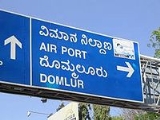
Kannada script

Encyclopedia
The Kannada script (Kannada
Kannada script
The Kannada script is an alphasyllabary of the Brahmic family, used primarily to write the Kannada language, one of the Dravidian languages of southern India and also Sanskrit in the past. The Telugu script is derived from Old Kannada, and resembles Kannada script...
: ಕನ್ನಡ ಲಿಪಿ) is an alphasyllabary (sometimes called an abugida
Abugida
An abugida , also called an alphasyllabary, is a segmental writing system in which consonant–vowel sequences are written as a unit: each unit is based on a consonant letter, and vowel notation is obligatory but secondary...
) of the Brahmic family
Brahmic family
The Brahmic or Indic scripts are a family of abugida writing systems. They are used throughout South Asia , Southeast Asia, and parts of Central and East Asia, and are descended from the Brāhmī script of the ancient Indian subcontinent...
, used primarily to write the Kannada language, one of the Dravidian languages
Dravidian languages
The Dravidian language family includes approximately 85 genetically related languages, spoken by about 217 million people. They are mainly spoken in southern India and parts of eastern and central India as well as in northeastern Sri Lanka, Pakistan, Nepal, Bangladesh, Afghanistan, Iran, and...
of southern India
India
India , officially the Republic of India , is a country in South Asia. It is the seventh-largest country by geographical area, the second-most populous country with over 1.2 billion people, and the most populous democracy in the world...
and also Sanskrit
Sanskrit
Sanskrit , is a historical Indo-Aryan language and the primary liturgical language of Hinduism, Jainism and Buddhism.Buddhism: besides Pali, see Buddhist Hybrid Sanskrit Today, it is listed as one of the 22 scheduled languages of India and is an official language of the state of Uttarakhand...
in the past. The Telugu script
Telugu script
Telugu script, an abugida from the Brahmic family of scripts, is used to write the Telugu language, a language found in the South-Central Indian state of Andhra Pradesh as well as several other neighboring states. The Telugu script is derived from the Bhattiprolu script...
is derived from Old Kannada, and resembles Kannada script. Kannada script evolved primarily from stone carving, hence most of the characters are round, curvy and symmetric with straight strokes/wedges. The Kannada script is second only to the Devanagari script in the number of languages using it in the Indian subcontinent. This script is also used to write the Telugu language (script derived form Old Kannada | Halegannada), Tulu Language, Banada Language, Konkani
Konkani language
KonkaniKonkani is a name given to a group of several cognate dialects spoken along the narrow strip of land called Konkan, on the west coast of India. This is, however, somewhat an over-generalisation. Geographically, Konkan is defined roughly as the area between the river Damanganga to the north...
by the Konkani diaspora
Konkani people
Konkani people , form a group of people mainly found in the Konkan Coast of western India whose mother-tongue is the Konkani language....
in coastal Karnataka.Similarly, Goykanadi
Goykanadi
' is an extinct script used in the territory of Goa .This script was also called as and .This script was similar to the Halekannada and Kadamba script and was extensively used to write Konkani and sometimes Marathi. Similarly this was used by the trading Saraswat and Daivajna families along with...
, a variant of Halekannada and Kadamba lipi has been historically used to write Konkani in the state of Goa.
History
Kannada (Kanarese or Canarese) script is derived from the Old Kannada script. Old Kannada script which evolved around 10th century, is the continuation of the Kadamba scriptKadamba script
The Kadamba script marks the birth of a dedicated Kannada script that was used for Kannada language. It is a descendant of the Brahmi script. The Kadamba script was developed during the reign of the Kadambas in the 4th - 6th centuries. The Kadamba script is also known as Pre-Old-Kannada script...
which in turn came during 4th century CE. Old Kannada was used for writing Kannada and Telugu language
Telugu language
Telugu is a Central Dravidian language primarily spoken in the state of Andhra Pradesh, India, where it is an official language. It is also spoken in the neighbouring states of Chattisgarh, Karnataka, Maharashtra, Orissa and Tamil Nadu...
s, and therefore aptly called as Kannada-Telugu script
Telugu-Kannada script
Between 1100 CE - 1400 CE Telugu script and Kannada script separated from Old-Kannada script ....
. Modern scripts of Kannada and Telugu started to separate as early as the 13th century CE (During 1100 CE – 1400 CE).
The Kadamba script
Kadamba script
The Kadamba script marks the birth of a dedicated Kannada script that was used for Kannada language. It is a descendant of the Brahmi script. The Kadamba script was developed during the reign of the Kadambas in the 4th - 6th centuries. The Kadamba script is also known as Pre-Old-Kannada script...
is said to have evolved from the Proto-Kannada script (during 4th century CE). The Kadamba script is also known as Pre-Old-Kannada script. The Proto-Kannada evolved from the ancient Brahmi
Brāhmī script
Brāhmī is the modern name given to the oldest members of the Brahmic family of scripts. The best-known Brāhmī inscriptions are the rock-cut edicts of Ashoka in north-central India, dated to the 3rd century BCE. These are traditionally considered to be early known examples of Brāhmī writing...
script around 3rd century BCE.
Evolution
Over the centuries some changes have been made to the Kannada script. These changes consist of:- Modification of existing glyphs: In the early Kannada [Telugu-Kannada] script, no orthographic distinction was made between the short mid [e, o] , and long mid [eː, oː] , . However, distinct signs were employed to denote the special consonants viz. the trill [r] the retroflex lateral [ɭ] and the retroflex palatal [ɺ] found only in South Indian languages, by 5th century.
- Introduction of new characters: Kannada script includes characters like [ç] , [ʂ] , [rɨ] , [rɨː] , [lɨ] , [lɨː] , [eʲ] , [oʷ] , [am] , [ah] , and mahāprāṇa characters like [kʰ] , [ɡʱ] , [tʃʰ] , [dʒʱ] , [t̪ʰ] , [d̪ʱ] , [ʈʰ] , [ɖʱ] , [pʰ] , [bʱ] . The introduction was done so that SanskritSanskritSanskrit , is a historical Indo-Aryan language and the primary liturgical language of Hinduism, Jainism and Buddhism.Buddhism: besides Pali, see Buddhist Hybrid Sanskrit Today, it is listed as one of the 22 scheduled languages of India and is an official language of the state of Uttarakhand...
and also loanwords into the Kannada language from the donor language Sanskrit) could be written using the Kannada script.
These changes have facilitated the use of the Kannada script for writing many of the literary Indic languages, including Sanskrit.
General
Kannada script has forty-nine characters in its alphasyllabary and is phonemic. The Kannada character set is almost identical to that of other Indian languages. The number of written symbols, however, is far more than the 49 characters in the alphasyllabary, because different characters can be combined to form compound characters (ottaksharas). Each written symbol in the Kannada script corresponds with one syllableSyllable
A syllable is a unit of organization for a sequence of speech sounds. For example, the word water is composed of two syllables: wa and ter. A syllable is typically made up of a syllable nucleus with optional initial and final margins .Syllables are often considered the phonological "building...
, as opposed to one phoneme
Phoneme
In a language or dialect, a phoneme is the smallest segmental unit of sound employed to form meaningful contrasts between utterances....
in languages like English
English language
English is a West Germanic language that arose in the Anglo-Saxon kingdoms of England and spread into what was to become south-east Scotland under the influence of the Anglian medieval kingdom of Northumbria...
. The Kannada writing system is an abugida
Abugida
An abugida , also called an alphasyllabary, is a segmental writing system in which consonant–vowel sequences are written as a unit: each unit is based on a consonant letter, and vowel notation is obligatory but secondary...
, with consonants appearing with an inherent vowel.
The characters are classified into three categories: swaras (vowel
Vowel
In phonetics, a vowel is a sound in spoken language, such as English ah! or oh! , pronounced with an open vocal tract so that there is no build-up of air pressure at any point above the glottis. This contrasts with consonants, such as English sh! , where there is a constriction or closure at some...
s), vyanjanas (consonant
Consonant
In articulatory phonetics, a consonant is a speech sound that is articulated with complete or partial closure of the vocal tract. Examples are , pronounced with the lips; , pronounced with the front of the tongue; , pronounced with the back of the tongue; , pronounced in the throat; and ,...
s) and yogavaahas (part vowel, part consonants).
The name given for a pure, true letter is akshara, akkara or varna. Each letter has its own form (ākāra) and sound (shabda); providing the visible and audible representations, respectively. Kannada is written from left to right.
Kannada alphabet (aksharamale or varnamale) now consists of 49 letters.
Each sound has its own distinct letter, and therefore every word is pronounced exactly as it is spelt; so the ear is a sufficient guide. After the exact sounds of the letters have been once gained, every word can be pronounced with perfect accuracy. The accent falls on the first syllable.
Vowels
There are thirteen vowels (swaras).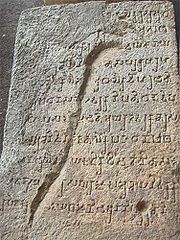
| Kannada | ISO ISO 15919 ISO 15919 Transliteration of Devanagari and related Indic scripts into Latin characters is an international standard for the transliteration of Indic scripts to the Latin alphabet formed in 2001... notation |
Unicode name |
|---|---|---|
| a | KANNADA LETTER A | |
| ā | KANNADA LETTER AA | |
| i | KANNADA LETTER I | |
| ī | KANNADA LETTER II | |
| u | KANNADA LETTER U | |
| ū | KANNADA LETTER UU | |
| r̥ | KANNADA LETTER VOCALIC R | |
| e | KANNADA LETTER E | |
| ē | KANNADA LETTER EE | |
| ai | KANNADA LETTER AI | |
| o | KANNADA LETTER O | |
| ō | KANNADA LETTER OO | |
| au | KANNADA LETTER AU |
Note: (U+0CE1) was removed during 1990.
Yogavaahaka's
The Yogavaahaka's (part-vowel, part consonant) include two letters:- The anusvaraAnusvaraAnusvara is the diacritic used to mark a type of nasalization used in a number of Indic languages. Depending on the location of the anusvara in the word and the language within which it is used, its exact pronunciation can vary greatly....
: (am) - The visargaVisargaVisarga is a Sanskrit word meaning "sending forth, discharge". In Sanskrit phonology , is the name of a phone, , written as IAST , Harvard-Kyoto , Devanagari . Visarga is an allophone of and in pausa...
: (ah)
Consonants
Two types of consonants are identified in Kannada: the structured consonants and the unstructured consonants. The structured consonants are classified according to where the tongue touches the palate of the mouth and are classified accordingly into five structured groups.Structured consonants
These consonants are shown here with the IASTIAST
The International Alphabet of Sanskrit Transliteration is a transliteration scheme that allows a lossless romanization of Indic scripts as employed by the Sanskrit language.-Popularity:...
symbols and the unicode name following.
| voiceless Voiceless In linguistics, voicelessness is the property of sounds being pronounced without the larynx vibrating. Phonologically, this is a type of phonation, which contrasts with other states of the larynx, but some object that the word "phonation" implies voicing, and that voicelessness is the lack of... |
voiceless aspirate Aspiration (phonetics) In phonetics, aspiration is the strong burst of air that accompanies either the release or, in the case of preaspiration, the closure of some obstruents. To feel or see the difference between aspirated and unaspirated sounds, one can put a hand or a lit candle in front of one's mouth, and say pin ... |
voiced Voice (phonetics) Voice or voicing is a term used in phonetics and phonology to characterize speech sounds, with sounds described as either voiceless or voiced. The term, however, is used to refer to two separate concepts. Voicing can refer to the articulatory process in which the vocal cords vibrate... |
voiced aspirate Aspiration (phonetics) In phonetics, aspiration is the strong burst of air that accompanies either the release or, in the case of preaspiration, the closure of some obstruents. To feel or see the difference between aspirated and unaspirated sounds, one can put a hand or a lit candle in front of one's mouth, and say pin ... |
nasal Nasal consonant A nasal consonant is a type of consonant produced with a lowered velum in the mouth, allowing air to escape freely through the nose. Examples of nasal consonants in English are and , in words such as nose and mouth.- Definition :... |
|
|---|---|---|---|---|---|
| Velars | (ka) | (kha) | (ga) | (gha) | (nga) |
| Palatals | (cha) | (chha) | (ja) | (jha) | (IAST IAST The International Alphabet of Sanskrit Transliteration is a transliteration scheme that allows a lossless romanization of Indic scripts as employed by the Sanskrit language.-Popularity:... ña, Unicode nya) |
| Retroflex | (IAST , Unicode tta) | (IAST , Unicode ttha) | (IAST , Unicode dda) | (IAST , Unicode ddha) | (IAST , Unicode nna) |
| Dentals | (ta) | (tha) | (da) | (dha) | (na) |
| Labials Labial consonant Labial consonants are consonants in which one or both lips are the active articulator. This precludes linguolabials, in which the tip of the tongue reaches for the posterior side of the upper lip and which are considered coronals... |
(pa) | (pha) | (ba) | (bha) | (ma) |
See place of articulation
Place of articulation
In articulatory phonetics, the place of articulation of a consonant is the point of contact where an obstruction occurs in the vocal tract between an articulatory gesture, an active articulator , and a passive location...
for more information on tongue positions.
Unstructured consonants
The unstructured consonants are consonants that do not fall into any of the above structures:(ya),
(ra),
(ṟ) (obsolete),
(la),
(va),
(IAST
IAST
The International Alphabet of Sanskrit Transliteration is a transliteration scheme that allows a lossless romanization of Indic scripts as employed by the Sanskrit language.-Popularity:...
śa, Unicode sha),
(IAST
IAST
The International Alphabet of Sanskrit Transliteration is a transliteration scheme that allows a lossless romanization of Indic scripts as employed by the Sanskrit language.-Popularity:...
, Unicode ssa),
(sa),
(ha),
(IAST
IAST
The International Alphabet of Sanskrit Transliteration is a transliteration scheme that allows a lossless romanization of Indic scripts as employed by the Sanskrit language.-Popularity:...
, Unicode lla),
(ll) (obsolete).
Numerals
The decimal numerals in the script are:(0),
(1),
(2),
(3),
(4),
(5),
(6),
(7),
(8),
(9).
Kagunita
Written Kannada is composed of kagunita, corresponding to syllables. The signs for consonants may combine with the signs for vowels to form ligatures. Each kagunita corresponds to a syllable. In the table below the top row lists the vowels, and the leftmost column from row 2 down the consonants (actually represented by kagunita, namely that obtained by combining each consonant with the "neutral" vowel 'a'). The remaining cells contain the corresponding kagunita obtained by combining the consonant of that row with the vowel of that column.Formation example:
| consonant(IPA) | vowels sign(Vowel, IPA) | Kagunita | IPA |
|---|---|---|---|
| ದ್ (d) | (ಅ, a) | ದ | da |
| ದ್ | ಾ (ಆ, aː) | ದಾ | da: |
| ದ್ | ಿ(ಇ, i) | ದಿ | di |
| ದ್ | ೀ(ಈ, iː) | ದೀ | di: |
| ದ್ | ು(ಉ, u) | ದು | du |
| ದ್ | ೂ(ಊ, uː) | ದೂ | du: |
| ದ್ | ೃ(ಋ, r<) | ದೃ | dr< |
| ದ್ | ೆ(ಎ, e) | ದೆ | de |
| ದ್ | ೇ(ಏ, e:) | ದೇ | de: |
| ದ್ | ೈ(ಐ, ai) | ದೈ | dai |
| ದ್ | ೊ(ಒ, o) | ದೊ | do |
| ದ್ | ೋ(ಓ, o:) | ದೋ | do: |
| ದ್ | ೌ(ಔ, au) | ದೌ | dau |
| ದ್ | ಂ(ಅಂ, aṃ) | ದಂ | daṃ |
| ದ್ | ಃ(ಅಃ, aḥ) | ದ: | daḥ |
| ಅ | ಆ | ಇ | ಈ | ಉ | ಊ | ಋ | ಎ | ಏ | ಐ | ಒ | ಓ | ಔ | ಅಂ | ಅಃ | (no vowel) |
| ಕ | ಕಾ | ಕಿ | ಕೀ | ಕು | ಕೂ | ಕೃ | ಕೆ | ಕೇ | ಕೈ | ಕೊ | ಕೋ | ಕೌ | ಕಂ | ಕಃ | ಕ್ |
| ಖ | ಖಾ | ಖಿ | ಖೀ | ಖು | ಖೂ | ಖೃ | ಖೆ | ಖೇ | ಖೈ | ಖೊ | ಖೋ | ಖೌ | ಖಂ | ಖಃ | ಖ್ |
| ಗ | ಗಾ | ಗಿ | ಗೀ | ಗು | ಗೂ | ಗೃ | ಗೆ | ಗೇ | ಗೈ | ಗೊ | ಗೋ | ಗೌ | ಗಂ | ಗಃ | ಗ್ |
| ಘ | ಘಾ | ಘಿ | ಘೀ | ಘು | ಘೂ | ಘೃ | ಘೆ | ಘೇ | ಘೈ | ಘೊ | ಘೋ | ಘೌ | ಘಂ | ಘಃ | ಘ್ |
| ಙ | ಙಾ | ಙಿ | ಙೀ | ಙು | ಙೂ | ಙೃ | ಙೆ | ಙೇ | ಙೈ | ಙೊ | ಙೋ | ಙೌ | ಙಂ | ಙಃ | ಙ್ |
| ಚ | ಚಾ | ಚಿ | ಚೀ | ಚು | ಚೂ | ಚೃ | ಚೆ | ಚೇ | ಚೈ | ಚೊ | ಚೋ | ಚೌ | ಚಂ | ಚಃ | ಚ್ |
| ಛ | ಛಾ | ಛಿ | ಛೀ | ಛು | ಛೂ | ಛೃ | ಛೆ | ಛೇ | ಛೈ | ಛೊ | ಛೋ | ಛೌ | ಛಂ | ಛಃ | ಛ್ |
| ಜ | ಜಾ | ಜಿ | ಜೀ | ಜು | ಜೂ | ಜೃ | ಜೆ | ಜೇ | ಜೈ | ಜೊ | ಜೋ | ಜೌ | ಜಂ | ಜಃ | ಜ್ |
| ಝ | ಝಾ | ಝಿ | ಝೀ | ಝು | ಝೂ | ಝೃ | ಝೆ | ಝೇ | ಝೈ | ಝೊ | ಝೋ | ಝೌ | ಝಂ | ಝಃ | ಝ್ |
| ಞ | ಞಾ | ಞಿ | ಞೀ | ಞು | ಞೂ | ಞೃ | ಞೆ | ಞೇ | ಞೈ | ಞೊ | ಞೋ | ಞೌ | ಞಂ | ಞಃ | ಞ್ |
| ಟ | ಟಾ | ಟಿ | ಟೀ | ಟು | ಟೂ | ಟೃ | ಟೆ | ಟೇ | ಟೈ | ಟೊ | ಟೋ | ಟೌ | ಟಂ | ಟಃ | ಟ್ |
| ಠ | ಠಾ | ಠಿ | ಠೀ | ಠು | ಠೂ | ಠೃ | ಠೆ | ಠೇ | ಠೈ | ಠೊ | ಠೋ | ಠೌ | ಠಂ | ಠಃ | ಠ್ |
| ಡ | ಡಾ | ಡಿ | ಡೀ | ಡು | ಡೂ | ಡೃ | ಡೆ | ಡೇ | ಡೈ | ಡೊ | ಡೋ | ಡೌ | ಡಂ | ಡಃ | ಡ್ |
| ಢ | ಢಾ | ಢಿ | ಢೀ | ಢು | ಢೂ | ಢೃ | ಢೆ | ಢೇ | ಢೈ | ಢೊ | ಢೋ | ಢೌ | ಢಂ | ಢಃ | ಢ್ |
| ಣ | ಣಾ | ಣಿ | ಣೀ | ಣು | ಣೂ | ಣೃ | ಣೆ | ಣೇ | ಣೈ | ಣೊ | ಣೋ | ಣೌ | ಣಂ | ಣಃ | ಣ್ |
| ತ | ತಾ | ತಿ | ತೀ | ತು | ತೂ | ತೃ | ತೆ | ತೇ | ತೈ | ತೊ | ತೋ | ತೌ | ತಂ | ತಃ | ತ್ |
| ಥ | ಥಾ | ಥಿ | ಥೀ | ಥು | ಥೂ | ಥೃ | ಥೆ | ಥೇ | ಥೈ | ಥೊ | ಥೋ | ಥೌ | ಥಂ | ಥಃ | ಥ್ |
| ದ | ದಾ | ದಿ | ದೀ | ದು | ದೂ | ದೃ | ದೆ | ದೇ | ದೈ | ದೊ | ದೋ | ದೌ | ದಂ | ದಃ | ದ್ |
| ಧ | ಧಾ | ಧಿ | ಧೀ | ಧು | ಧೂ | ಧೃ | ಧೆ | ಧೇ | ಧೈ | ಧೊ | ಧೋ | ಧೌ | ಧಂ | ಧಃ | ಧ್ |
| ನ | ನಾ | ನಿ | ನೀ | ನು | ನೂ | ನೃ | ನೆ | ನೇ | ನೈ | ನೊ | ನೋ | ನೌ | ನಂ | ನಃ | ನ್ |
| ಪ | ಪಾ | ಪಿ | ಪೀ | ಪು | ಪೂ | ಪೃ | ಪೆ | ಪೇ | ಪೈ | ಪೊ | ಪೋ | ಪೌ | ಪಂ | ಪಃ | ಪ್ |
| ಫ | ಫಾ | ಫಿ | ಫೀ | ಫು | ಫೂ | ಫೃ | ಫೆ | ಫೇ | ಫೈ | ಫೊ | ಫೋ | ಫೌ | ಫಂ | ಫಃ | ಫ್ |
| ಬ | ಬಾ | ಬಿ | ಬೀ | ಬು | ಬೂ | ಬೃ | ಬೆ | ಬೇ | ಬೈ | ಬೊ | ಬೋ | ಬೌ | ಬಂ | ಬಃ | ಬ್ |
| ಭ | ಭಾ | ಭಿ | ಭೀ | ಭು | ಭೂ | ಭೃ | ಭೆ | ಭೇ | ಭೈ | ಭೊ | ಭೋ | ಭೌ | ಭಂ | ಭಃ | ಭ್ |
| ಮ | ಮಾ | ಮಿ | ಮೀ | ಮು | ಮೂ | ಮೃ | ಮೆ | ಮೇ | ಮೈ | ಮೊ | ಮೋ | ಮೌ | ಮಂ | ಮಃ | ಮ್ |
| ಯ | ಯಾ | ಯಿ | ಯೀ | ಯು | ಯೂ | ಯೃ | ಯೆ | ಯೇ | ಯೈ | ಯೊ | ಯೋ | ಯೌ | ಯಂ | ಯಃ | ಯ್ |
| ರ | ರಾ | ರಿ | ರೀ | ರು | ರೂ | ರೃ | ರೆ | ರೇ | ರೈ | ರೊ | ರೋ | ರೌ | ರಂ | ರಃ | ರ್ |
| ಱ | ಱಾ | ಱಿ | ಱೀ | ಱು | ಱೂ | ಱೃ | ಱೆ | ಱೇ | ಱೈ | ಱೊ | ಱೋ | ಱೌ | ಱಂ | ಱಃ | ಱ್ |
| ಲ | ಲಾ | ಲಿ | ಲೀ | ಲು | ಲೂ | ಲೃ | ಲೆ | ಲೇ | ಲೈ | ಲೊ | ಲೋ | ಲೌ | ಲಂ | ಲಃ | ಲ್ |
| ವ | ವಾ | ವಿ | ವೀ | ವು | ವೂ | ವೃ | ವೆ | ವೇ | ವೈ | ವೊ | ವೋ | ವೌ | ವಂ | ವಃ | ವ್ |
| ಶ | ಶಾ | ಶಿ | ಶೀ | ಶು | ಶೂ | ಶೃ | ಶೆ | ಶೇ | ಶೈ | ಶೊ | ಶೋ | ಶೌ | ಶಂ | ಶಃ | ಶ್ |
| ಷ | ಷಾ | ಷಿ | ಷೀ | ಷು | ಷೂ | ಷೃ | ಷೆ | ಷೇ | ಷೈ | ಷೊ | ಷೋ | ಷೌ | ಷಂ | ಷಃ | ಷ್ |
| ಸ | ಸಾ | ಸಿ | ಸೀ | ಸು | ಸೂ | ಸೃ | ಸೆ | ಸೇ | ಸೈ | ಸೊ | ಸೋ | ಸೌ | ಸಂ | ಸಃ | ಸ್ |
| ಹ | ಹಾ | ಹಿ | ಹೀ | ಹು | ಹೂ | ಹೃ | ಹೆ | ಹೇ | ಹೈ | ಹೊ | ಹೋ | ಹೌ | ಹಂ | ಹಃ | ಹ್ |
| ಳ | ಳಾ | ಳಿ | ಳೀ | ಳು | ಳೂ | ಳೃ | ಳೆ | ಳೇ | ಳೈ | ಳೊ | ಳೋ | ಳೌ | ಳಂ | ಳಃ | ಳ್ |
| ೞ | ೞಾ | ೞಿ | ೞೀ | ೞು | ೞೂ | ೞೃ | ೞೆ | ೞೇ | ೞೈ | ೞೊ | ೞೋ | ೞೌ | ೞಂ | ೞಃ |
Unicode
Kannada script was added to the UnicodeUnicode
Unicode is a computing industry standard for the consistent encoding, representation and handling of text expressed in most of the world's writing systems...
Standard in October, 1991 with the release of version 1.0.
Four rare letters used for writing Sanskrit in Kannada script were added to the Unicode Standard in July, 2006 with the release of version 5.0.
The Unicode block for Kannada is U+0C80–U+0CFF. Grey areas indicate non-assigned code points:
Script similarities
Telugu scriptTelugu script
Telugu script, an abugida from the Brahmic family of scripts, is used to write the Telugu language, a language found in the South-Central Indian state of Andhra Pradesh as well as several other neighboring states. The Telugu script is derived from the Bhattiprolu script...
is closely related to the Kannada script because both scripts are derived from the Telugu-Kannada script
Telugu-Kannada script
Between 1100 CE - 1400 CE Telugu script and Kannada script separated from Old-Kannada script ....
. Scripts which are close to Kannada script other than Telugu script
Telugu script
Telugu script, an abugida from the Brahmic family of scripts, is used to write the Telugu language, a language found in the South-Central Indian state of Andhra Pradesh as well as several other neighboring states. The Telugu script is derived from the Bhattiprolu script...
are Sinhala script (which included some elements from the Kadamba script
Kadamba script
The Kadamba script marks the birth of a dedicated Kannada script that was used for Kannada language. It is a descendant of the Brahmi script. The Kadamba script was developed during the reign of the Kadambas in the 4th - 6th centuries. The Kadamba script is also known as Pre-Old-Kannada script...
), and old Peguan script
(used in Burma).
Old-Kannada Text from Kavirajamarga:
See also
- Kannada
- Telugu scriptTelugu scriptTelugu script, an abugida from the Brahmic family of scripts, is used to write the Telugu language, a language found in the South-Central Indian state of Andhra Pradesh as well as several other neighboring states. The Telugu script is derived from the Bhattiprolu script...
- Tamil scriptTamil scriptThe Tamil script is a script that is used to write the Tamil language as well as other minority languages such as Badaga, Irulas, and Paniya...
- Malayalam scriptMalayalam scriptThe Malayalam script is a Brahmic script used commonly to write the Malayalam language—which is the principal language of the Indian state of Kerala, spoken by 36 million people in the world. Like many other Indic scripts, it is an abugida, or a writing system that is partially “alphabetic” and...
- Grantha script
- Kannada grammarKannada grammarThe Kannada grammar is primarily based on Keshiraja's Shabdamanidarpana , which provides the fullest systematic exposition of the Kannada language...
- Kannada literatureKannada literatureKannada literature is the corpus of written forms of the Kannada language, a member of the Dravidian family spoken mainly in the Indian state of Karnataka and written in the Kannada script....
- Kannada poetryKannada poetryKannada poetry is poetry written in the Kannada language spoken in Karnataka. Karnataka is the land that gave birth to eight Jnanapeeth award winners, the highest honour bestowed for Indian literature...
- KarnatakaKarnatakaKarnataka , the land of the Kannadigas, is a state in South West India. It was created on 1 November 1956, with the passing of the States Reorganisation Act and this day is annually celebrated as Karnataka Rajyotsava...
- Kannada script evolution
- Timeline of Karnataka
- ಠ ಠ
External links
— South and Southeast Asian Scripts- Kannada alphabet — From Omniglot
- Kannada lessons, alphabet worksheet — Kannada library