


Kanagawa Prefecture

Encyclopedia
Prefectures of Japan
The prefectures of Japan are the country's 47 subnational jurisdictions: one "metropolis" , Tokyo; one "circuit" , Hokkaidō; two urban prefectures , Osaka and Kyoto; and 43 other prefectures . In Japanese, they are commonly referred to as...
located in the southern Kantō region
Kanto region
The is a geographical area of Honshu, the largest island of Japan. The region includes the Greater Tokyo Area and encompasses seven prefectures: Gunma, Tochigi, Ibaraki, Saitama, Tokyo, Chiba, and Kanagawa. Within its boundaries, slightly more than 40 percent of the land area is the Kantō Plain....
of Japan
Japan
Japan is an island nation in East Asia. Located in the Pacific Ocean, it lies to the east of the Sea of Japan, China, North Korea, South Korea and Russia, stretching from the Sea of Okhotsk in the north to the East China Sea and Taiwan in the south...
. The capital is Yokohama
Yokohama
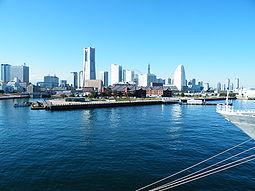
is the capital city of Kanagawa Prefecture and the second largest city in Japan by population after Tokyo and most populous municipality of Japan. It lies on Tokyo Bay, south of Tokyo, in the Kantō region of the main island of Honshu...
. Kanagawa is part of the Greater Tokyo Area
Greater Tokyo Area
The Greater Tokyo Area is a large metropolitan area in Kantō region, Japan, consisting of most of the prefectures of Chiba, Kanagawa, Saitama, and Tokyo . In Japanese, it is referred to by various terms, including the , , and others....
.
History
The prefecture has some archaeological sites going back to the Jōmon periodJomon period
The is the time in Japanese prehistory from about 14,000 BC to 300 BC.The term jōmon means "cord-patterned" in Japanese. This refers to the pottery style characteristic of the Jōmon culture, and which has markings made using sticks with cords wrapped around them...
(around 400 BC
5th century BC
The 5th century BC started the first day of 500 BC and ended the last day of 401 BC.-Overview:This century saw the beginning of a period of philosophical brilliance among Western civilizations, particularly the Greeks which would continue all the way through the 4th century until the time of...
). About 3,000 years ago, Mount Hakone produced a volcanic explosion which resulted in Lake Ashi
Lake Ashi
, or Hakone Lake, Ashinoko Lake, is a scenic lake in the Hakone area of Kanagawa Prefecture in Honshū, Japan. It is a crater lake that lies along the southwest wall of the caldera of Mount Hakone, a complex volcano. The lake is known for its views of Mt. Fuji and its numerous hot springs...
on the western area of the prefecture.
It is believed that the Yamato Dynasty ruled this area from 5th century onwards. In the ancient era, its plains were very sparsely inhabited.
Kamakura
Kamakura, Kanagawa
is a city located in Kanagawa Prefecture, Japan, about south-south-west of Tokyo. It used to be also called .Although Kamakura proper is today rather small, it is often described in history books as a former de facto capital of Japan as the seat of the Shogunate and of the Regency during the...
in central Sagami was the capital of Japan during the Kamakura period
Kamakura period
The is a period of Japanese history that marks the governance by the Kamakura Shogunate, officially established in 1192 in Kamakura by the first shogun Minamoto no Yoritomo....
(1185–1333).
In medieval Japan, Kanagawa was part of the provinces of Sagami
Sagami Province
was an old province in the area that is today the central and western Kanagawa prefecture. It was sometimes called . Sagami bordered on Izu, Musashi, Suruga provinces; and had access to the Pacific Ocean through Sagami Bay...
and Musashi
Musashi Province
was a province of Japan, which today comprises Tokyo Prefecture, most of Saitama Prefecture and part of Kanagawa Prefecture. It was sometimes called . The province encompassed Kawasaki and Yokohama...
.
During the Edo period
Edo period
The , or , is a division of Japanese history which was ruled by the shoguns of the Tokugawa family, running from 1603 to 1868. The political entity of this period was the Tokugawa shogunate....
, the western part of Sagami Province was governed by the daimyo
Daimyo
is a generic term referring to the powerful territorial lords in pre-modern Japan who ruled most of the country from their vast, hereditary land holdings...
of Odawara Castle
Odawara Castle
is a landmark in the city of Odawara in Kanagawa Prefecture, Japan.-History:Odawara was a stronghold of the Doi clan during the Kamakura period, and a fortified residence was built by their collateral branch, the Kobayakawa clan stood on the approximate site of the present castle...
, while the eastern part was directly governed by the Tokugawa Shogunate
Tokugawa shogunate
The Tokugawa shogunate, also known as the and the , was a feudal regime of Japan established by Tokugawa Ieyasu and ruled by the shoguns of the Tokugawa family. This period is known as the Edo period and gets its name from the capital city, Edo, which is now called Tokyo, after the name was...
in Edo
Edo
, also romanized as Yedo or Yeddo, is the former name of the Japanese capital Tokyo, and was the seat of power for the Tokugawa shogunate which ruled Japan from 1603 to 1868...
(Tokyo
Tokyo
, ; officially , is one of the 47 prefectures of Japan. Tokyo is the capital of Japan, the center of the Greater Tokyo Area, and the largest metropolitan area of Japan. It is the seat of the Japanese government and the Imperial Palace, and the home of the Japanese Imperial Family...
).
Commodore
Commodore (USN)
Commodore was an early title and later a rank in the United States Navy and United States Coast Guard and a current honorary title in the U.S. Navy with an intricate history. Because the U.S. Congress was originally unwilling to authorize more than four ranks until 1862, considerable importance...
Matthew Perry landed in Kanagawa in 1853 and 1854 and signed the Convention of Kanagawa
Convention of Kanagawa
On March 31, 1854, the or was concluded between Commodore Matthew C. Perry of the U.S. Navy and the Tokugawa shogunate.-Treaty of Peace and Amity :...
to force open Japanese ports to the United States
United States
The United States of America is a federal constitutional republic comprising fifty states and a federal district...
. Yokohama
Yokohama
is the capital city of Kanagawa Prefecture and the second largest city in Japan by population after Tokyo and most populous municipality of Japan. It lies on Tokyo Bay, south of Tokyo, in the Kantō region of the main island of Honshu...
, the largest deep-water port in Tokyo Bay
Tokyo Bay
is a bay in the southern Kantō region of Japan. Its old name was .-Geography:Tokyo Bay is surrounded by the Bōsō Peninsula to the east and the Miura Peninsula to the west. In a narrow sense, Tokyo Bay is the area north of the straight line formed by the on the Miura Peninsula on one end and on...
, was opened to foreign traders in 1859 after several more years of foreign pressure, and eventually developed into the largest trading port in Japan. Nearby Yokosuka, closer to the mouth of Tokyo Bay, developed as a naval port and now serves as headquarters for the U.S. 7th Fleet and the fleet operations of the Japan Maritime Self-Defense Force
Japan Maritime Self-Defense Force
The , or JMSDF, is the naval branch of the Japan Self-Defense Forces, tasked with the naval defense of Japan. It was formed following the dissolution of the Imperial Japanese Navy after World War II....
. After the Meiji Period
Meiji period
The , also known as the Meiji era, is a Japanese era which extended from September 1868 through July 1912. This period represents the first half of the Empire of Japan.- Meiji Restoration and the emperor :...
, many foreigners lived in Yokohama City, and visited Hakone
Hakone, Kanagawa
is a town in Ashigarashimo District in Kanagawa Prefecture, Japan. As of 2010, the town had an estimated population of 13,339 and a density of 144 persons per km². The total area was 92.82 km².-Geography:...
. The Meiji Government developed the first railways in Japan, from Shinbashi
Shinbashi
is a district of Minato, Tokyo, Japan, located south of Ginza, west of Tsukiji, east of Toranomon and north of Hamamatsucho.-History:Shinbashi was the Tokyo terminus of the first railway in Japan in 1872...
(in Tokyo) to Yokohama in 1872.
The epicenter of the Great Kantō earthquake
1923 Great Kanto earthquake
The struck the Kantō plain on the Japanese main island of Honshū at 11:58:44 am JST on September 1, 1923. Varied accounts hold that the duration of the earthquake was between 4 and 10 minutes...
in 1923 was deep beneath Izu Ōshima
Izu Oshima
is a volcanic island in the Izu Islands and administered by the Tokyo Metropolitan government, Japan, lies about 100 km south of Tokyo, 22 km east of the Izu Peninsula and 36 km southwest of Bōsō Peninsula. serves as the local government of the island...
Island in Sagami Bay. It devastated Tokyo
Tokyo
, ; officially , is one of the 47 prefectures of Japan. Tokyo is the capital of Japan, the center of the Greater Tokyo Area, and the largest metropolitan area of Japan. It is the seat of the Japanese government and the Imperial Palace, and the home of the Japanese Imperial Family...
, the port city of Yokohama
Yokohama
is the capital city of Kanagawa Prefecture and the second largest city in Japan by population after Tokyo and most populous municipality of Japan. It lies on Tokyo Bay, south of Tokyo, in the Kantō region of the main island of Honshu...
, surrounding prefectures of Chiba
Chiba Prefecture
is a prefecture of Japan located in the Kantō region and the Greater Tokyo Area. Its capital is Chiba City.- History :Chiba Prefecture was established on June 15, 1873 with the merger of Kisarazu Prefecture and Inba Prefecture...
, Kanagawa, and Shizuoka
Shizuoka Prefecture
is a prefecture of Japan located in the Chūbu region on Honshu island. The capital is the city of Shizuoka.- History :Shizuoka prefecture was formed from the former Tōtōmi, Suruga and Izu provinces.The area was the home of the first Tokugawa Shogun...
, and caused widespread damage throughout the Kantō region. The sea receded as much a quarter of a mile from the shore at Manazuru Point
Manazuru, Kanagawa
is a town located in Ashigarashimo District, Kanagawa Prefecture, Japan. As of 2010, the town had an estimated population of 8,235 and a density of 1,180 persons per km²...
, and then rushed back towards the shore in a great wall of water which swamped Mitsuishi-shima. At Kamakura
Kamakura, Kanagawa
is a city located in Kanagawa Prefecture, Japan, about south-south-west of Tokyo. It used to be also called .Although Kamakura proper is today rather small, it is often described in history books as a former de facto capital of Japan as the seat of the Shogunate and of the Regency during the...
, the total death toll from earthquake, tsunami, and fire exceeded 2,000 victims. At Odawara
Odawara, Kanagawa
is a city located in western Kanagawa Prefecture, Japan. As of 2010, the city had an estimated population of 198,466 with a population density of 1,740 persons per km² . The total area was .-Geography:...
, ninety percent of the buildings collapsed immediately, and subsequent fires burned the rubble along with anything else left standing.
Yokohama, Kawasaki
Kawasaki, Kanagawa
is a city located in Kanagawa Prefecture, Japan, between Tokyo and Yokohama. It is the 9th most populated city in Japan and one of the main cities forming the Greater Tokyo Area and Keihin Industrial Area....
and other major cities were heavily damaged by the U.S. bombing in 1945. Casualties amounted to more than several thousand. After the war, General Douglas MacArthur
Douglas MacArthur
General of the Army Douglas MacArthur was an American general and field marshal of the Philippine Army. He was a Chief of Staff of the United States Army during the 1930s and played a prominent role in the Pacific theater during World War II. He received the Medal of Honor for his service in the...
, the chief commander of Supreme Commander of the Allied Powers
Supreme Commander of the Allied Powers
Supreme Commander of the Allied Powers was the title held by General Douglas MacArthur during the Occupation of Japan following World War II...
for the Occupation of Japan, landed in Kanagawa, before moving to other areas. U.S. military bases still remain in Kanagawa, including Camp Zama
Camp Zama
is a United States Army post located in the cities of Zama and Sagamihara, in Kanagawa Prefecture, Japan, about southwest of Tokyo.Camp Zama is home to the U.S. Army Japan /I Corps , the U.S. Army Japan Aviation Detachment "Ninjas" , the 500th Military Intelligence Brigade, the Japan Engineer...
(Army
United States Army
The United States Army is the main branch of the United States Armed Forces responsible for land-based military operations. It is the largest and oldest established branch of the U.S. military, and is one of seven U.S. uniformed services...
), Yokosuka Naval Base
United States Fleet Activities Yokosuka
U.S. Fleet Activities Yokosuka, or Commander, Fleet Activities Yokosuka is a United States Navy base, in Yokosuka, Japan. Its mission is to maintain and operate base facilities for the logistic, recreational, administrative support and service of the U.S. Naval Forces Japan, U.S. 7th Fleet and...
, Naval Air Station Atsugi (Navy
United States Navy
The United States Navy is the naval warfare service branch of the United States Armed Forces and one of the seven uniformed services of the United States. The U.S. Navy is the largest in the world; its battle fleet tonnage is greater than that of the next 13 largest navies combined. The U.S...
).
In 1945, Kanagawa was the 15th most populous prefecture in Japan, with the population of about 1.9 million. In the years after the war, the prefecture underwent rapid urbanization as a part of the Tokyo Greater Zone. The population was about 8.9 million as of 2008, and Kanagawa became the second most populous prefecture in 2006.
Geography
Kanagawa is a relatively small prefecture located at the southeastern corner of the Kantō PlainKanto Plain
The ' is the largest plain in Japan located in the Kanto Region of central Honshū. The total area 17,000 sq km covers more than half of the Region extending over Tokyo, Saitama Prefecture, Kanagawa Prefecture, Chiba Prefecture, Gunma Prefecture, and Tochigi Prefecture.The northern limit borders on...
wedged between Tokyo
Tokyo
, ; officially , is one of the 47 prefectures of Japan. Tokyo is the capital of Japan, the center of the Greater Tokyo Area, and the largest metropolitan area of Japan. It is the seat of the Japanese government and the Imperial Palace, and the home of the Japanese Imperial Family...
on the north, the foothills of Mount Fuji
Mount Fuji
is the highest mountain in Japan at . An active stratovolcano that last erupted in 1707–08, Mount Fuji lies about south-west of Tokyo, and can be seen from there on a clear day. Mount Fuji's exceptionally symmetrical cone is a well-known symbol of Japan and it is frequently depicted in art and...
on the northwest, and the Sagami Bay
Sagami Bay
Sagami Bay , also known as the Sagami Gulf or Sagami Sea, lies south of Kanagawa Prefecture in Honshū, central Japan, contained within the scope of the Miura Peninsula, in Kanagawa, to the east, the Izu Peninsula, in Shizuoka Prefecture, to the west, and the Shōnan coastline to the north, while the...
and Tokyo Bay
Tokyo Bay
is a bay in the southern Kantō region of Japan. Its old name was .-Geography:Tokyo Bay is surrounded by the Bōsō Peninsula to the east and the Miura Peninsula to the west. In a narrow sense, Tokyo Bay is the area north of the straight line formed by the on the Miura Peninsula on one end and on...
on the south and east. The eastern side of the prefecture is relatively flat and heavily urbanized, including the large port cities of Yokohama
Yokohama
is the capital city of Kanagawa Prefecture and the second largest city in Japan by population after Tokyo and most populous municipality of Japan. It lies on Tokyo Bay, south of Tokyo, in the Kantō region of the main island of Honshu...
and Kawasaki
Kawasaki, Kanagawa
is a city located in Kanagawa Prefecture, Japan, between Tokyo and Yokohama. It is the 9th most populated city in Japan and one of the main cities forming the Greater Tokyo Area and Keihin Industrial Area....
.
The southeastern area nearby the Miura Peninsula
Miura Peninsula
is a peninsula located in Kanagawa, Japan. It lies south of Yokohama and Tokyo and divides Tokyo Bay, to the east, from Sagami Bay, to the west. Cities and towns on the Miura Peninsula include Yokosuka, Miura, Hayama, Zushi, and Kamakura....
is less urbanized, with the ancient city of Kamakura
Kamakura, Kanagawa
is a city located in Kanagawa Prefecture, Japan, about south-south-west of Tokyo. It used to be also called .Although Kamakura proper is today rather small, it is often described in history books as a former de facto capital of Japan as the seat of the Shogunate and of the Regency during the...
drawing tourists to temples and shrines. The western part, bordered by Yamanashi Prefecture
Yamanashi Prefecture
is a prefecture of Japan located in the Chūbu region of the island of Honshū. The capital is the city of Kōfu.-Pre-history to the 14th century:People have been living in the Yamanashi area for about 30,000 years...
and Shizuoka Prefecture
Shizuoka Prefecture
is a prefecture of Japan located in the Chūbu region on Honshu island. The capital is the city of Shizuoka.- History :Shizuoka prefecture was formed from the former Tōtōmi, Suruga and Izu provinces.The area was the home of the first Tokugawa Shogun...
on the west, is more mountainous and includes resort areas like Odawara
Odawara, Kanagawa
is a city located in western Kanagawa Prefecture, Japan. As of 2010, the city had an estimated population of 198,466 with a population density of 1,740 persons per km² . The total area was .-Geography:...
and Hakone. The area, stretching 80 km from west to east and 60 km from north to south, contains 2,400 km2 of land, accounting for 0.64 % of the total land area of Japan.
Topography
Topographically, the prefecture consists of three distinct areas. The mountainous western region features the Tanzawa Mountain Range and Hakone Volcano. The hilly eastern region is characterized by the Tama HillsTama Hills
is an area of hills stretching across southwest Tokyo and northeast Kanagawa Prefecture in the Kantō Plain on Honshū, Japan. Its total area is approximately 300 km2...
and Miura Peninsula
Miura Peninsula
is a peninsula located in Kanagawa, Japan. It lies south of Yokohama and Tokyo and divides Tokyo Bay, to the east, from Sagami Bay, to the west. Cities and towns on the Miura Peninsula include Yokosuka, Miura, Hayama, Zushi, and Kamakura....
. The central region, which surrounds the Tama Hills and Miura Peninsula, consists of flat stream terraces and low lands around major rivers including the Sagami River
Sagami River
The is a river in Kanagawa and Yamanashi Prefectures on the island of Honshū, Japan.The upper reaches of the river in Yamanashi prefecture are also sometimes known as the , and the portion near the river mouth as the...
, Sakai River, Tsurumi River
Tsurumi River
The is a river in Kanagawa and Tokyo Prefectures on Honshū, Japan.-External links:...
, and Tama River
Tama River
The is a major river in Yamanashi, Kanagawa and Tokyo Prefectures on Honshū, Japan. It is officially classified as a Class 1 river by the Japanese government....
.
The Tama River
Tama River
The is a major river in Yamanashi, Kanagawa and Tokyo Prefectures on Honshū, Japan. It is officially classified as a Class 1 river by the Japanese government....
forms much of the boundary between Kanagawa and Tokyo. The Sagami River
Sagami River
The is a river in Kanagawa and Yamanashi Prefectures on the island of Honshū, Japan.The upper reaches of the river in Yamanashi prefecture are also sometimes known as the , and the portion near the river mouth as the...
flows through the middle of the prefecture. In the western region, the Sakawa (river) runs through a small lowland, the Sakawa Lowland, between Hakone Volcano to the west and the Ōiso Hills to the east and flows into Sagami Bay.
The Tanzawa Mountain Range, part of the Kantō Mountain Range, contains Mount Hiru
Mount Hiru
Mount Hiru is the tallest mountain of the Tanzawa Mountains with a height of ....
(1,673 m), the highest peak in the prefecture. Other mountains measure similar mid-range heights: Mount Hinokiboramaru (1,601 m), Mount Tanzawa
Mount Tanzawa
is a mountain of the Tanzawa Mountains, with an elevation of . Its summit marks the border between Sagamihara, Kiyokawa in Aikō District, and Yamakita in Ashigarakami District.-References:*...
, (1567 m), Mount Ōmuro (1588 m), Mount Himetsugi (1,433 m), and Mount Usu
Mount Usu
is an active stratovolcano in the Shikotsu-Toya National Park, Hokkaidō, Japan. It has erupted four times since 1900: in 1910, 1944–45 , August 7, 1977, and on March 31, 2000. To the north lies Lake Toya...
(1,460 m). The mountain range is lower in height southward leading to Hadano Basin to the Ōiso Hills. At the eastern foothills of the mountain range lies the Isehara Plateau and across the Sagami River the Sagami Plateau.

Cities
Nineteen cities are located in Kanagawa Prefecture:
|
Yamato, Kanagawa is a city located in central Kanagawa Prefecture, Japan. As of 2010, the city had an estimated population of 225,866 and a density of 8,320 persons per km². The total area was 27.06 km².-Surrounding municipalities:*Zama*Fujisawa*Ebina*Sagamihara*Ayase... Yokohama is the capital city of Kanagawa Prefecture and the second largest city in Japan by population after Tokyo and most populous municipality of Japan. It lies on Tokyo Bay, south of Tokyo, in the Kantō region of the main island of Honshu... (capital)
Zama, Kanagawa is a city located in central Kanagawa Prefecture, Japan. The city is also home to the United States' Camp Zama Army base. As of 128,989, the city had an estimated population of 128,989 and a density of 7,320 persons per km². The total area was 17.58 km².... |
Towns and villages
|
Ashigarashimo District, Kanagawa is an administrative district of Japan located in western Kanagawa Prefecture. Most of the mountainous district is sparsely populated, and is part of the Fuji-Hakone-Izu National Park.- Towns and villages :*Hakone*Yugawara*Manazuru-History:...
Koza District, Kanagawa is an administrative district of Japan located in central Kanagawa Prefecture. It currently consists of only one town, Samukawa.- History :Kōza District was one of the ancient subdivisions of Sagami Province, extending from Sagami Bay north to the border of Musashi Province between the Sagami River...
Miura District, Kanagawa is an administrative district of Japan located in Kanagawa Prefecture. It currently consists of only one town, Hayama.- History :Miura District was one of the ancient subdivisions of Sagami Province, covering all of Miura Peninsula...
|
Naka District, Kanagawa is an administrative district of Japan located in central Kanagawa Prefecture. It currently consists of two towns, Ōiso, and Ninomiya.-History:Naka District was one of the four subdivisions of Sagami Province established by the late Hōjō clan of Odawara during the Sengoku period...
|
Festivals and events
- Tama River Firework event
- Yokohama Port Anniversary Festival (June)
- Kamakura Festival (April)
- Hiratsuka Tanabata Festival (July)
- Odawara Hojo Godai Festival (May)
- Yugawara Kifune Festival (July)
Transportation
Kanagawa's transport network is heavily intertwined with that of Tokyo (see: Transportation in Greater TokyoTransportation in Greater Tokyo
The transport network in Greater Tokyo includes public and private rail and highway networks; airports for international, domestic, and general aviation; buses; motorcycle delivery services, walking, bicycling, and commercial shipping. While the nexus is in the central part of Tokyo, every part of...
). Shin-Yokohama
Shin-Yokohama Station
is a train station in Yokohama, Japan. It is serves the Tōkaidō Shinkansen, Yokohama Line, and Yokohama Municipal Subway Line 3.-History:Shin-Yokohama Station was opened on October 1, 1964 as part of the opening of the Tōkaidō Shinkansen...
and Odawara
Odawara Station
) is a railway station in Odawara, Kanagawa, Japan.- Lines :This station is served by following lines.*East Japan Railway Company**Tōkaidō Line**Shōnan-Shinjuku Line*Central Japan Railway Company**Tōkaidō Shinkansen*Odakyu Electric Railway...
stations on the Tōkaidō Shinkansen are located in the prefecture, providing high-speed rail service to Tokyo, Nagoya, Osaka, and other major cities.
Railways
- East Japan Railway CompanyEast Japan Railway Companyis the largest passenger railway company in the world and one of the seven Japan Railways Group companies. The company name is officially abbreviated as JR East in English, and as in Japanese. The company's headquarters are in Yoyogi, Shibuya, Tokyo....
- Tōkaidō Main LineTokaido Main LineThe is the busiest trunk line of the Japan Railways Group , connecting Tōkyō and Kōbe stations. It is long, not counting its many freight feeder lines around the major cities...
- Nambu LineNambu LineThe is a Japanese railway line which connects Tachikawa Station in Tachikawa, Tokyo and Kawasaki Station in Kawasaki, Kanagawa Prefecture. For most of its length, it parallels the Tama River, the natural border between Tokyo and Kanagawa prefectures. It is part of the East Japan Railway Company ...
- Tsurumi LineTsurumi LineThe is a railway line operated by East Japan Railway Company in Kanagawa Prefecture, Japan. It provides passenger service along a 7 km between Tsurumi Station in Tsurumi-ku, Yokohama and Ōgimachi Station in Kawasaki-ku, Kawasaki. Branches bring the total length of track to 9.7 km. The...
- Yokohama Line
- Negishi LineNegishi LineThe is a Japanese railway line which runs between Yokohama and Ōfuna stations. It is operated by East Japan Railway Company . Freight trains also run on this line, and it is essential for the southern Keihin region....
- Yokosuka LineYokosuka LineThe is a railway line in Japan operated by the East Japan Railway Company .The Yokosuka Line connects in Chūō, Tokyo and in Yokosuka, Kanagawa...
- Sagami Line
- Chūō Main LineChuo Main LineThe , commonly called the Chūō Line, is one of the major trunk railway lines in Japan. It runs between Tokyo and Nagoya, although it is the slowest direct railway connection between the two cities; the coastal Tōkaidō Main Line is slightly faster, while the Tōkaidō Shinkansen is the fastest rail...
- Tōkaidō Main Line
- Central Japan Railway CompanyCentral Japan Railway CompanyThe is the main railway company operating in the Chūbu region of central Japan. It is officially abbreviated in English as JR Central and in Japanese as . Its headquarters are located in the JR Central Towers in Nakamura-ku, Nagoya, Aichi Prefecture.The company's operational hub is Nagoya Station...
- Keikyu
- Main Line
- Daishi LineKeikyu Daishi LineThe is a railway line of Keikyu. It connects Keikyū Kawasaki Station and Kojimashinden Station, both located in Kawasaki-ku, Kawasaki, Kanagawa Prefecture.-Data:*Length: 4.5 km*Operator: Keikyu*Gauge: 1,435 mm*Electrification: 1,500 V DC...
- Kurihama LineKeikyu Kurihama LineThe is a commuter rail line operated by Keikyu in Japan. Keikyū Main Line trains from Oshiage and Shinagawa in Tokyo run through the Miura Peninsula on the Keikyū Kurihama Line.-Stations:...
- Zushi LineKeikyu Zushi LineThe ' is a commuter line owned by Keihin Electric Express Railway and connects Kanazawa-Hakkei to Shin-Zushi in Kanagawa Prefecture.-Trains:Train types...
- OdakyuOdakyu Electric Railway, or OER, is a major railway company based in Tokyo, Japan best known for its Romancecar series of limited express trains from Tokyo to Odawara, Enoshima, Tama New Town, and Hakone....
- Sagami RailwaySagami RailwayThe , or , is a railway company operating three lines in Kanagawa Prefecture, Japan. It ranks among the "big 15" major railways in Japan.- Overview :Sagami Railway is one of the core companies of the Sotetsu group...
- Main Line
- Izumino LineSagami Railway Izumino LineThe is a railroad owned by Sagami Railway . It runs from Futamatagawa in Yokohama to Shōnandai in Fujisawa. Rapid services stop at every station on this line. Most trains run to Yokohama on the Main Line.-History:...
- Minatomirai Line
- Izuhakone RailwayIzuhakone RailwayThe is a railway company in Kanagawa Prefecture and Shizuoka Prefecture, Japan. The company also operates excursion ships, and the group companies operate buses and taxis. The company has its roots in founded in 1893. Izuhakone Railway is a member of Seibu group...
- Enoshima Electric RailwayEnoshima Electric RailwayThe connects Kamakura Station in Kamakura, with Fujisawa Station in Fujisawa, Kanagawa Prefecture, Japan. Stations en route include Hase Station, the stop closest to Kōtoku-in, the temple with the colossal outdoor statue of Amida Buddha. It is fully owned by the Odakyu Group of companies.- Train...
Expressway
- Tomei ExpresswayTomei ExpresswayThe is a national expressway on the island of Honshū in Japan. It is operated by Central Nippon Expressway Company. It is a part of Asian Highway Network -Naming:The word Tōmei is an acronym consisting of two kanji characters...
- Chuo ExpresswayChuo ExpresswayThe is a national expressway in Japan. It is owned and operated by Central Nippon Expressway Company.-Naming:Officially the expressway is designated as the Chūō Expressway Nishinomiya Route , the Chūō Expressway Nagano Route , and the Chūō Expressway Fujiyoshida Route The (lit. Central...
- Shuto ExpresswayShuto Expresswayis a network of toll expressways in the Greater Tokyo Area of Japan. It is operated and maintained by the .Most routes consist of elevated roadway above other roads or over water, and have many sharp curves which require caution to drive safely...
- Tokyo Bay Aqua-LineTokyo Bay Aqua-LineThe , also known as the Trans-Tokyo Bay Highway, is a bridge-tunnel combination across Tokyo Bay in Japan.It connects the city of Kawasaki in Kanagawa Prefecture with the city of Kisarazu in Chiba Prefecture, and forms part of National Route 409...
National Highways
- Route 1
- Route 15
- Route 16
- Route 20
- Route 129 (Hiratsuka-Atsugi-Sagamihara)
- Route 132
- Route 133
- Route 134
- Route 135 (ShimodaShimodaShimoda can mean:* Places in Japan:** Shimoda, Shizuoka, a city in Shizuoka Prefecture** Shimoda, Aomori, a town in Aomori Prefecture* Treaty of Shimoda , between Japan and Russia* Shimoda Toyomatsu, an early Japanese Scouting notable...
-Atami-Odawara) - Route 138
- Route 246 (Chiyoda, TokyoChiyoda, Tokyois one of the 23 special wards in central Tokyo, Japan. In English, it is called Chiyoda ward. As of October 2007, the ward has an estimated population of 45,543 and a population density of 3,912 people per km², making it by far the least populated of the special wards...
-Kawasaki-Machida-Atsugi-Isehara-Gotenba-Numazu) - Route 255
- Route 357 (ChibaChiba-Places:* Chiba, Chiba, capital city of Chiba Prefecture, Japan* Chiba Prefecture, a sub-national jurisdiction in the Greater Tokyo Area on the eastern coast of Honshū Island, Japan* Chiba Station, a train station in Chiba, Chiba...
-Funabashi-Daiba of Tokyo-Yokohama-Yokosuka) - Route 409
- Route 412
- Route 413 (Fujiyoshida-Lake YamanakaLake Yamanakais the biggest of the Fuji Five Lakes. Located in Yamanashi Prefecture near Mount Fuji, Japan, the lake is used for boating, fishing, water-skiing, windsurfing, sightseeing and swimming. If the wind comes from the west, the lake provides a smooth lift for paragliding at Mount Myouyama. There are...
-Sagamihara) - Route 466 (Setagaya, TokyoSetagaya, Tokyois one of the 23 special wards of Tokyo in Japan. It is also the name of a neighborhood within the ward. The ward calls itself the City of Setagaya in English...
-Kawasaki-Yokohama) - Route 467
Port
- Yokohama Port - International container hub port
- Misaki Port - Ferry Route to Kisarazu
Education
The Kanagawa Prefectural Board of EducationKanagawa Prefectural Board of Education
Kanagawa Prefectural Board of Education is the board of education of the Kanagawa Prefecture, Japan.The board consists of six members; one of them is elected as the chair , and one of them is appointed by the board as the superintendent .The board administers municipal education...
manages and oversees individual municipal school districts. The board of education also directly operates most of the public high schools in the prefecture.
University
- Kawasaki
- Keio Gijyuku UniversityKeio University,abbreviated as Keio or Keidai , is a Japanese university located in Minato, Tokyo. It is known as the oldest institute of higher education in Japan. Founder Fukuzawa Yukichi originally established it as a school for Western studies in 1858 in Edo . It has eleven campuses in Tokyo and Kanagawa...
- Shin Kawasaki Campus - Meiji UniversityMeiji Universityis a private university in Tokyo and Kawasaki, founded in 1881 by three lawyers of the Meiji era, Kishimoto Tatsuo, Miyagi Kōzō, and Yashiro Misao. It is one of the largest and most prestigious Japanese universities in Tokyo, Japan....
- Ikuta Campus - Senshu UniversitySenshu Universityis a private university in Chiyoda, Tokyo, Japan. Former "Senshu College" was founded in 1880, the first school in Japan comprising Economics and Law Departments to systematically offer a specialized educational curriculum in the Japanese language....
- Ikuta Campus - Japan Women's UniversityJapan Women's Universityis the oldest and largest of private Japanese women's universities. The university was established in 20 April 1901 by education reformist .The university has around 6000 students and 200 faculty...
- Showa University of MusicShowa University of Musicis a private university in Asao-ku, Kawasaki Kanagawa Prefecture, Japan. The predecessor of the school was founded in Shinjuku-ku, Tokyo in 1930. It relocated to Atsugi, Kanagawa and was chartered as a junior college in 1969. In 1984 it became a four-year college and adopted the present name. It...
- Den-en Chofu UniversityDen-en Chofu Universityis a private university in Kawasaki, Kanagawa, Japan. The predecessor of the school, a women's school, was founded in 1926. It was chartered as a women's junior college in 1967 and became coeducational in 1998. In 2002 the school became a four-year college....
- Aso Ward - Nippon Medical SchoolNippon Medical Schoolis a private university in Sendagi, Bunkyo-ku, Tokyo, Japan. In 1876, Tai Hasegawa established a medical school in Tokyo. At that time, the Japanese government and the ministry of education had never permitted any medical schools except The University of Tokyo School of Medicine...
- St. Marianna University, School of Medicine - Miyamae
- Japan Cinema School
- Tokyo City University - Aso Ward
- Keio Gijyuku University
- Yokohama
- Tokyo Institute of TechnologyTokyo Institute of TechnologyThe Tokyo Institute of Technology is a public research university located in Greater Tokyo Area, Japan. Tokyo Tech is the largest institution for higher education in Japan dedicated to science and technology. Tokyo Tech enrolled 4,850 undergaraduates and 5006 graduate students for 2009-2010...
- Suzukakedai - Tokyo University of the Arts - Naka Ward
- Yokohama National UniversityYokohama National University, or is a national university in Hodogaya-ku, Yokohama, Kanagawa Prefecture, Japan. It offers Doctoral degrees in education as part of a coalition with Tokyo Gakugei University, Saitama University, and Chiba University. It is noted for its Business Administration program.-History:The predecessor...
- Hodogaya - Yokohama City UniversityYokohama City Universityis a public university in Japan. The main campus is located in Kanazawa-ku, Yokohama.- History :An origin of YCU was founded in 1882 as . At first this school was maintained by the society of local merchants. In 1888 the school was renamed Yokohama Commercial School , a five-year school for boys...
- Kanazawa Ward - Kanagawa UniversityKanagawa University, abbreviated to is a private university in Japan. The main campus is located in Rokkakubashi, Kanagawa-ku, Yokohama, Kanagawa Prefecture.- History :The university was founded in 1928 by as . It was an evening school for the working youth...
- Kanagawa Ward - Kanto Gakuin UniversityKanto Gakuin Universityis a private university located in Kanazawa-ku, Yokohama, Japan. The school's official English name is Mabie Memorial School.-History:It traces its roots to The Baptist Theological Seminary of Yokohama established by Albert Arnold Bennett, a missionary of the American Baptist Missionary Union, in...
- Kanazawa Ward - Toin University of YokohamaToin University of Yokohamais a private university in Aoba-ku, Yokohama, Kanagawa prefecture, Japan.Toin University of Yokohama was established in 1988. It offers degree programs in sports medicine, medical technology, engineering and law.-External links:*...
- Aoba Ward - Tsurumi UniversityTsurumi Universityis a private university in Tsurumi-ku, Yokohama, Kanagawa, Japan. The precursor of the school was founded in 1953, and it was chartered as a university in 1963....
- Tsurumi Ward - Yokohama College of CommerceYokohama College of Commerceis a private university in Tsurumi-ku, Yokohama, Kanagawa Prefecture, Japan.The predecessor of the school was founded in 1941. It was chartered as a junior college in 1966 and became a four-year college two years later. A subsidiary one-year coursework campus was established in Midori-ku, Yokohama...
- Tsurumi Ward - Yokohama College of Phamacy - Totsuka Ward
- Keio Gijyuku University - Hiyoshi
- Tokyo City University - Tsuzuki Ward
- Meiji Gakuin UniversityMeiji Gakuin Universityis one of the Christian universities in Tokyo and Yokohama which was established in 1863. The Reverend Dr. James Curtis Hepburn was one of the founders and the first president...
- Totsuka Ward - Nippon Sport Science UniversityNippon Sport Science Universityis a private university with campuses in Setagaya, Tokyo and Aoba-ku, Yokohama. The precursor of the school was founded 1893, and it was chartered as a university in 1949...
- Aoba Ward - Toyo Eiwa University - Midori Ward
- Kokugakuin UniversityKokugakuin UniversityKokugakuin University is a private university, whose main office is located in Tokyo's Shibuya district...
- Tama Plaza - Senzoku Gakuen College of MusicSenzoku Gakuen College of Musicis a private university in Takatsu-ku, Kawasaki Kanagawa prefecture, Japan, established in 1967. A women's school, was founded in 1924. The present name was adopted in 2003. The college shares its campus with Senzoku Gakuen Junior College....
- Tokyo Institute of Technology
- Sagamihara
- Aoyama Gakuin UniversityAoyama Gakuin University, abbreviated AGU, is a Japanese Christian university in Shibuya near Omotesandō, Tokyo, Japan. Aoyama Gakuin University is part of a comprehensive educational institute called Aoyama Gakuin, which includes a kindergarten, an elementary school, junior and senior high schools, and a women's junior...
- Azabu UniversityAzabu Universityis a private university in Sagamihara, Kanagawa, Japan. The predecessor of the school was founded in 1890. The school has no relation to Azabu High School in Tokyo.-History:...
- Kitasato UniversityKitasato Universityis one of the famous private university in Minato, Tokyo, Japan.The head of the university is located in the Shirokane Campus, neighboring the Kitasato Institute. Its major educational facilities are located in the Sagamihara Campus, located 60 kilometers west of central Tokyo...
- Sagami Women's UniversitySagami Women's Universityis a private women's college in Sagamihara, Kanagawa Prefecture, Japan.The predecessor of the school was founded in 1900 in Hongō, Bunkyo-ku, Tokyo and was the fourth oldest women’s college in Japan. It was relocated to its present location in Sagamihara in 1946 and was chartered as a university in...
- Obirin University
- Joshi University of Art and Design
- Teikyo UniversityTeikyo Universityis a private university headquartered in the Itabashi ward of Tokyo, Japan. It was established in 1931 as Teikyo Commercial High School by Lee. It became Teikyo University in 1966...
- Aoyama Gakuin University
- Yokosuka
- Kanagawa Dental CollegeKanagawa Dental Collegeis a private university at Yokosuka, Kanagawa, Japan.The predecessor of the school was founded in 1910 in Kanda, Tokyo as the , the first women’s dental school in Japan. After the 1923 Great Kantō earthquake, it relocated to Shinagawa. It relocated again to Ota-ku, Tokyo in 1933, and to its present...
- Kanagawa University of Human ServicesKanagawa University of Human Servicesis a public university at Yokosuka, Kanagawa Prefecture, Japan.The school was established in 2003, and specializes in human welfare studies.-External links:*...
- Kanagawa Dental College
- Hiratsuka
- Tokai UniversityTokai Universityis a private university in Tokyo, Japan. It was established in 1943 by Shigeyoshi Matsumae, who had formerly been the engineering president of the Ministry of Communications...
- Hiratsuka Campus - Shoin UniversityShoin University*Shoin UniversitySeveral different Japanese institutions of higher learning also contain the name Shoin.*Kobe Shoin Women's University*Osaka Shoin Women's College*Shoin Higashi Junior Women's College...
- Hiratsuka Campus - Kanagawa University
- Tokai University
- Isehara
- Tokai University - Isehara Campus
- Sanno University
- Odawara
- Kanto Gakuin University - Odawara Campus
- International University of Health and WelfareInternational University of Health and Welfareis a private university in Ōtawara, Tochigi, Japan, established in 1995.-External links:*...
- Chigasaki
- Bunkyo UniversityBunkyo Universityis a private university in Japan.The Chinese characters of the word "Bunkyo" mean education and learning. The university offers courses mainly in education and research of the cultural and social sciences, and is well-known for its teacher training...
- Chigasaki Campus
- Bunkyo University
- Atsugi
- Tokyo University of AgricultureTokyo University of AgricultureThe , abbreviated as Nodai or Tokyo nodai , is a private university which treats agriculture in Japan.The campus is in three places, Setagaya, Atsugi, and Okhotsk .- Outline :...
- Atsugi Campus - Kanagawa Institute of TechnologyKanagawa Institute of Technologyis a private university in Atsugi, Kanagawa Prefecture, Japan.The predecessor of the school, a vocational school, was founded in 1963. It was chartered as a university in 1975. The present name was adopted in 1988.-External links:*...
- Tokyo Polytechnic UniversityTokyo Polytechnic Universityis a private university in Honchō, Nakano, Tokyo. Its nickname is Shadai . It was formerly known as Tokyo College of Photography .The university was founded as Konishi Professional School of Photography in Shibuya in 1923...
- Atsugi Campus
- Tokyo University of Agriculture
Football and athletics
- Nissan StadiumNissan StadiumThe is a sports venue in Yokohama, Kanagawa Prefecture, Japan.The Yokohama City Office planned multi purpose about the rest place for flood by the Tsurumi River, which included the construction of the main stadium of major sport events - the 53rd National Sports Festival of Japan in Kanagawa...
(International Stadium of Yokohama)—in Yokohama, the final venue of 2002 FIFA World Cup2002 FIFA World CupThe 2002 FIFA World Cup was the 17th staging of the FIFA World Cup, held in South Korea and Japan from 31 May to 30 June. It was also the first World Cup held in Asia, and the last in which the golden goal rule was implemented. Brazil won the tournament for a record fifth time, beating Germany 2–0...
and FIFA Club World CupFIFA Club World CupThe FIFA Club World Cup is a football competition between the champion clubs from all six continental confederations.The first FIFA Club World Championship took place in Brazil in January 2000...
in 2005-2007 - Nippatsu Mitsuzawa Stadium (Mitsuzawa StadiumMitsuzawa StadiumNippatsu Mitsuzawa Stadium is a football stadium in Kanagawa-ku, Yokohama, Japan. It serves as a home ground of Yokohama F.C. and, on occasion, Yokohama F. Marinos. Until 1999 it had been the home of Yokohama F.C.'s spiritual predecessor, Yokohama Flügels, and also, on occasion, to Kawasaki-based...
)—in Yokohama, only for football - Todoroki Athletics StadiumTodoroki Athletics Stadiumis a multi-purpose stadium located in Todoroki ryokuchi in Kawasaki, Japan. It is currently used mostly for football matches and is the home stadium of Kawasaki Frontale. Until the early 2000s it also hosted major clubs in the city, such as Verdy Kawasaki , Toshiba and NKK F.C.. The stadium...
—in Kawasaki, the final venue of 2007 IFAF World Cup2007 IFAF World CupThe 2007 IFAF World Championship was the third instance of the IFAF World Championship, the quadrennial international American football world championship tournament...
(American football). - Hiratsuka Athletics StadiumHiratsuka Athletics Stadiumis a multi-purpose stadium in Hiratsuka, Kanagawa, Japan. It is currently used mostly for football matches and is the home stadium of Shonan Bellmare. The stadium has a seating capacity for 18,500 spectators.- External links :*...
Baseball
- Yokohama StadiumYokohama Stadiumis a stadium in Naka Ward, Yokohama, Japan. It opened in 1978 and holds 30,000 people.It is primarily used for baseball and is the home field of the Yokohama BayStars. The stadium is unique, because it features dirt around the bases and pitcher's mound, but with dirt colored turf infield and base...
—for baseball and American football - Kawasaki StadiumKawasaki Stadiumwas a stadium in Kawasaki, Kanagawa, Japan. The stadium was opened in 1952 and had a capacity of 30,000 people.It was primarily used for baseball and was home of the Taiyo Whales until they moved to Yokohama in 1977 and became the Yokohama Taiyo Whales...
—former homeground of Taiyo Whales (now Yokohama BayStars) and Lotte Orions (now Chiba Lotte MarinesChiba Lotte MarinesThe are a professional baseball team in Japan's Pacific League based in Chiba City, Chiba Prefecture, in the Kantō region, and owned by the Lotte conglomerate.-History:...
). - Yokosuka Stadium
Indoor
- Yokohama ArenaYokohama Arenais an indoor sporting arena located in Yokohama, Japan. The capacity of the arena is 17,000 and was opened in 1989. The arena was modeled after US sports venue Madison Square Garden in New York City. It is a five minute walk from the closest subway station, Shin-Yokohama Station on the JR/Yokohama...
—also for music concert - Yokohama Cultural GymnasiumYokohama Cultural Gymnasiumis an indoor sports arena, located in Naka-ku, Yokohama, Japan. The capacity of the arena is 5,000 people and was opened in 1962.It is a five minute walk from the closest subway station, Kannai Station, on the JR/Yokohama Municipal Subway....
—a volleyball venue of 1964 Summer Olympics1964 Summer OlympicsThe 1964 Summer Olympics, officially known as the Games of the XVIII Olympiad, was an international multi-sport event held in Tokyo, Japan in 1964. Tokyo had been awarded with the organization of the 1940 Summer Olympics, but this honor was subsequently passed to Helsinki because of Japan's...
in Tokyo - Todoroki ArenaTodoroki ArenaTodoroki Arena is a multi-purpose indoor arena in the Todoroki Park in Kawasaki, Kanagawa, Japan. The capacity of the arena is 6,500 and was opened in 1995.- See also :* Todoroki Athletics Stadium...
—in Kawasaki - Odawara Arena
Other
- EnoshimaEnoshimais a small island, about 4 km in circumference, at the mouth of the Katase River, which flows into Sagami Bay in Japan. Part of the city of Fujisawa, it is linked to the Katase section of the same city on the mainland by a 600 meter-long bridge...
YachtSailing at the 1964 Summer OlympicsSailing/Yachting is a Olympic sport starting from the Games of the 1st Olympiad Sailing/Yachting is a Olympic sport starting from the Games of the 1st Olympiad Sailing/Yachting is a Olympic sport starting from the Games of the 1st Olympiad (1896 Olympics in Athens Greece. With the exception of 1904...
Course—used for 1964 Summer Olympics. - Hakone EkidenHakone Ekiden', which is officially called ', is one of the prominent university ekiden races of the year held between Tokyo and Hakone in Japan on 2 and 3 January. The race is telecast on Nippon Television....
Course—from Tokyo to HakoneHakone, Kanagawais a town in Ashigarashimo District in Kanagawa Prefecture, Japan. As of 2010, the town had an estimated population of 13,339 and a density of 144 persons per km². The total area was 92.82 km².-Geography:...
, 108.0 km, mostly on Japan National Route 1 and Route 15Japan National Route 15National Route 15 is a national highway connecting Tokyo and Yokohama in Japan.-Route Data:*Length: 29.2 km *Origin: Nihonbashi, Chūō, Tokyo...
. Runners run on the divided route for ten parts on January 2 (to Hakone) and January 3 (to Tokyo) every year. - Lake SagamiLake Sagamiis an artificial lake located in Midori-ku, Sagamihara, Kanagawa in Japan's Kantō region. Created in 1947 after the Sagami River was dammed, it serves as use for recreational and hydroelectric purposes...
—hosted canoeingCanoeing at the 1964 Summer OlympicsCanoeing at the 1964 Summer Olympics was held between 20 October 1964 and 22 October 1964 on Lake Sagami, from Sagamiko, Kanagawa, Japan. There were 7 events, 5 of which were for men and 2 for women. Both of the women's events were 500 metre kayaking events; there were three kayaking and two...
and rowingRowing at the 1964 Summer OlympicsRowing at the 1964 Summer Olympics featured 7 events, for men only.Vyacheslav Ivanov from the Soviet Union took his third consecutive gold medal in single scull event.-Medal summary:-Medal table:-References:*...
for the 1964 Summer Olympics.
Soccer (football)
- Kawasaki FrontaleKawasaki Frontaleis a J. League Division 1 association football club. The team is located in Kawasaki, Kanagawa Prefecture, south of Tokyo. Their home stadium is Todoroki Athletics Stadium, in Nakahara Ward, in the central area of Kawasaki.-History:...
(KawasakiKawasaki, Kanagawais a city located in Kanagawa Prefecture, Japan, between Tokyo and Yokohama. It is the 9th most populated city in Japan and one of the main cities forming the Greater Tokyo Area and Keihin Industrial Area....
)—Todoroki Athletics - Yokohama F. MarinosYokohama F. Marinosis a Japanese association football team that participates in the fully professional J. League Division 1; the top Japanese professional football league. Having won the J-League title three times and finished second twice, they are one of the most successful J-League clubs. The team are based in...
(Yokohama, YokosukaYokosuka, Kanagawais a city located in Kanagawa, Japan. As of 2010, the city had an estimated population of 419,067 and a population density of 4,160 people per km². It covered an area of 100.62 km²...
)—Nissan Stadium - Yokohama F.C. (Yokohama)—Mitsuzawa Ballpark
- Shonan BellmareShonan Bellmareare a Japanese professional football club, currently playing in the J. League Division 2. The team is located in Hiratsuka, in the west of Kanagawa Prefecture; their home stadium is Hiratsuka Athletics Stadium in Hiratsuka. The name Bellmare is derived from the Latin "bellum" for "war" and "mare"...
(HiratsukaHiratsuka, Kanagawais a city located in Kanagawa Prefecture, Japan. As of 2010, the city had an estimated population of 259,991 and the density of 3,830 persons per km²...
, OdawaraOdawara, Kanagawais a city located in western Kanagawa Prefecture, Japan. As of 2010, the city had an estimated population of 198,466 with a population density of 1,740 persons per km² . The total area was .-Geography:...
and some cities and towns in central and western area of Kanagawa)—Hiratsuka Athletic Stadium (football) and Odawara Arena (futsal)
Baseball
- Yokohama BayStarsYokohama BayStarsThe are a professional baseball team in the Japanese Central League. Home field is the Yokohama Stadium, located in central Yokohama. The clubhouse is located near the stadium....
(Yokohama)—Yokohama Stadium, and Yokosuka Stadium (for its farm team, "Shonan Searex").
Tourism
- The city of Kamakura is famous as the location of many BuddhistBuddhismBuddhism is a religion and philosophy encompassing a variety of traditions, beliefs and practices, largely based on teachings attributed to Siddhartha Gautama, commonly known as the Buddha . The Buddha lived and taught in the northeastern Indian subcontinent some time between the 6th and 4th...
templeTempleA temple is a structure reserved for religious or spiritual activities, such as prayer and sacrifice, or analogous rites. A templum constituted a sacred precinct as defined by a priest, or augur. It has the same root as the word "template," a plan in preparation of the building that was marked out...
s and ShintoShintoor Shintoism, also kami-no-michi, is the indigenous spirituality of Japan and the Japanese people. It is a set of practices, to be carried out diligently, to establish a connection between present day Japan and its ancient past. Shinto practices were first recorded and codified in the written...
shrineShrineA shrine is a holy or sacred place, which is dedicated to a specific deity, ancestor, hero, martyr, saint, daemon or similar figure of awe and respect, at which they are venerated or worshipped. Shrines often contain idols, relics, or other such objects associated with the figure being venerated....
s. - Yokohama ChinatownYokohama ChinatownYokohama Chinatown is located in Yokohama, Japan, which is located just south of Tokyo. Its history is about 150 years long...
is the largest Chinatown in Japan, larger than ChinatownChinatownA Chinatown is an ethnic enclave of overseas Chinese people, although it is often generalized to include various Southeast Asian people. Chinatowns exist throughout the world, including East Asia, Southeast Asia, the Americas, Australasia, and Europe. Binondo's Chinatown located in Manila,...
s in both KobeKobe, pronounced , is the fifth-largest city in Japan and is the capital city of Hyōgo Prefecture on the southern side of the main island of Honshū, approximately west of Osaka...
and Nagasaki, and one of the largest in the world. - Other sightseeing spots include Hakone, Ashinoko, EnoshimaEnoshimais a small island, about 4 km in circumference, at the mouth of the Katase River, which flows into Sagami Bay in Japan. Part of the city of Fujisawa, it is linked to the Katase section of the same city on the mainland by a 600 meter-long bridge...
, and Kawasaki DaishiKawasaki Daishiis the informal name of in Kawasaki, Japan. Founded in 1128, it is the headquarters of the Chizan sect of Shingon Buddhism. Kawasaki Daishi is a popular temple for hatsumōde . In 2006, 2.72 million people engaged in hatsumōde here, the third largest figure in Japan and the largest in Kanagawa...
In popular culture
- Stephen SondheimStephen SondheimStephen Joshua Sondheim is an American composer and lyricist for stage and film. He is the winner of an Academy Award, multiple Tony Awards including the Special Tony Award for Lifetime Achievement in the Theatre, multiple Grammy Awards, a Pulitzer Prize and the Laurence Olivier Award...
's stage musical Pacific OverturesPacific OverturesPacific Overtures is a musical with music and lyrics by Stephen Sondheim, a libretto by John Weidman, and additional material by Hugh Wheeler. The musical is set in 1853 Japan and follows the difficult Westernization of Japan, through the lives of two friends caught in the change...
, about the "opening" of JapanJapanJapan is an island nation in East Asia. Located in the Pacific Ocean, it lies to the east of the Sea of Japan, China, North Korea, South Korea and Russia, stretching from the Sea of Okhotsk in the north to the East China Sea and Taiwan in the south...
to Western influence by Commodore PerryCommodore PerryCommodore Perry may refer to:* Commodore Matthew Perry , United States Navy officer* Commodore Oliver Hazard Perry , United States Navy officer* Commodore Perry Owens , American gunfighter...
, contains the song "Welcome to Kanagawa". - The main team in the Japanese mangaMangaManga is the Japanese word for "comics" and consists of comics and print cartoons . In the West, the term "manga" has been appropriated to refer specifically to comics created in Japan, or by Japanese authors, in the Japanese language and conforming to the style developed in Japan in the late 19th...
and animeAnimeis the Japanese abbreviated pronunciation of "animation". The definition sometimes changes depending on the context. In English-speaking countries, the term most commonly refers to Japanese animated cartoons....
series Slam DunkSlam Dunk (manga)is a sports-themed manga series written by Takehiko Inoue about a basketball team from Shōhoku High School. It was first serialized in Shueisha's Weekly Shōnen Jump in Japan from 1990 to 1996 and had also been adapted into an anime series by Toei Animation which had been broadcast worldwide,...
, Shohoku, is from Kanagawa. - The Hinata Inn and surrounding town from the mangaMangaManga is the Japanese word for "comics" and consists of comics and print cartoons . In the West, the term "manga" has been appropriated to refer specifically to comics created in Japan, or by Japanese authors, in the Japanese language and conforming to the style developed in Japan in the late 19th...
and animeAnimeis the Japanese abbreviated pronunciation of "animation". The definition sometimes changes depending on the context. In English-speaking countries, the term most commonly refers to Japanese animated cartoons....
series Love HinaLove Hinais a Japanese manga series written and illustrated by Ken Akamatsu. It was originally serialized in Weekly Shōnen Magazine by Kodansha from October 21, 1998 to October 31, 2001 and was published in 14 tankōbon volumes by Kodansha. The series tells the story of Keitaro Urashima and his attempts to...
takes place in Kanagawa. - The Japanese mangaMangaManga is the Japanese word for "comics" and consists of comics and print cartoons . In the West, the term "manga" has been appropriated to refer specifically to comics created in Japan, or by Japanese authors, in the Japanese language and conforming to the style developed in Japan in the late 19th...
series Elfen LiedElfen Liedis a Japanese manga series written and illustrated by Lynn Okamoto. A thirteen-episode anime television series adaptation was produced by the studio ARMS and broadcast on TV Tokyo from July to October 2004. The anime was later licensed in North America on DVD by ADV Films...
takes place in Kanagawa, mainly in Kamakura and Enoshima (Fujisawa). - The Japanese animeAnimeis the Japanese abbreviated pronunciation of "animation". The definition sometimes changes depending on the context. In English-speaking countries, the term most commonly refers to Japanese animated cartoons....
series S-CRY-EDS-CRY-ed, also known as s.CRY.ed or Scryed, is a 26 episode Japanese anime TV series, produced by Sunrise, directed by Gorō Taniguchi and written by Yōsuke Kuroda, which first aired in Japan on TV Tokyo and Animax. The music for the series was composed by Kōtarō Nakagawa...
takes place in Kanagawa Prefecture, after a seismic event raises it from the ground. - The Japanese mangaMangaManga is the Japanese word for "comics" and consists of comics and print cartoons . In the West, the term "manga" has been appropriated to refer specifically to comics created in Japan, or by Japanese authors, in the Japanese language and conforming to the style developed in Japan in the late 19th...
and animeAnimeis the Japanese abbreviated pronunciation of "animation". The definition sometimes changes depending on the context. In English-speaking countries, the term most commonly refers to Japanese animated cartoons....
series Kenkō Zenrakei Suieibu UmishōKenko Zenrakei Suieibu Umishois a manga series written and illustrated by Mitsuru Hattori, which has been serialized in Kodansha's Weekly Shōnen Magazine from issue 33 of 2005 to issue 21-22 of 2008...
takes place in the fictional Kanagawa city of Umineko. - The Japanese animeAnimeis the Japanese abbreviated pronunciation of "animation". The definition sometimes changes depending on the context. In English-speaking countries, the term most commonly refers to Japanese animated cartoons....
series Gundam Wings early episodes feature Kanagawa prominently, mainly Yokohama and Yokosuka.