


Junio Valerio Borghese

Encyclopedia
Prince Junio Valerio Scipione Borghese (Artena
, Province of Rome
, 6 June 1906 – Cadiz
, Spain, 26 August 1974) was an Italian Navy
commander
during the regime of Benito Mussolini
's National Fascist Party
and was a prominent hard-line fascist politician
in post-war Italy.
, Province of Rome
, Kingdom of Italy. He was born into a prominent noble
family of Sienese origin, the House of Borghese, of which Pope Paul V was a notable member. Borghese was first educated in London
, England
, and, from 1923, he attended the Royal Italian Navy Academy (Accademia Navale)
in Livorno
.
In 1929, the naval career of Borghese began. By 1933, he was a submarine commander. Borghese took part in the Second Italo-Abyssinian War
. During the Italian intervention in the Spanish Civil War
, he was in command of the submarine Iride
, where he allegedly lost two seamen after his unit was depth-charged by the British destroyer HMS Havock
.
Vettor Pisani
, and in August 1940 was in command of submarine Sciré
, which was modified to carry the new secret Italian weapon, the human torpedo
. Known as "slow speed torpedoes" (siluri a lenta corsa, or SLC), and nicknamed "pigs" (maiali) for their poor maneuverability, these were small underwater assault vehicles with a crew of two.
These were part of the 1ª Flottiglia Mezzi d'Assalto (MAS), the "First Assault Vehicle Flotilla", (later called Decima Flottiglia MAS
) an elite naval sabotage unit of the Royal Italian Navy
(Regia Marina Italiana).
As commander of Sciré Borghese took part in several raids using SLC. The first of these, in September and October 1940 were directed at Gibraltar. The September raid was abandoned when the harbour was found to be empty. In the October raid Borghese took Sciré deep into Algeciras Bay, making a difficult submerged passage in order to release the SLC as close to target as possible. For this he received the Medaglia d'Oro al Valor Militare (MOVM), despite the missions overall lack of success.
In May 1941 a further attempt ended in failure, but on 20 September 1941 a successful mission resulted in damage to three merchant ships in the harbour.
After this last attack he was promoted to Capitano di Fregata, and named commander of Decima MAS sub-surface unit
On 18 December 1941, he reached Alexandria
in Sciré and launched the daring raid
by three SLCs that heavily damaged the two Royal Navy
battleship
s and and two other ships in the harbour. The six Italian Navy crew that attacked Alexandria
harbour all received the Medaglia d'Oro al Valor Militare, and Borghese was named Cavaliere dell'Ordine Militare di Savoia.
In May 1943, Borghese took command of the Decima Flottiglia MAS
("10th Assault Vehicle Flotilla"), or Xª MAS with Roman numerals
, which continued active service in the Mediterranean and pioneered new techniques of commando
assault warfare.
of Italy on 8 September 1943, the Xª MAS was disbanded. Some of its sailors joined the Allied cause to fight against Nazi Germany and what remained of the Axis. He chose to continue fighting with the RSI alongside the German Armed Forces (Wehrmacht
).
On 12 September 1943, he signed a treaty of alliance with the German Navy
(Kriegsmarine
). Many of his colleagues volunteered to serve with him, and the Decima Flottiglia was revived, headquartered in Caserma del Muggiano, La Spezia
. By the end of the war, it had over 18,000 members, and Borghese conceived it as a purely military unit. The X Sailors gained a reputation for never firing a shot at any Italian military units fighting with the allied forces.
In April 1945 when the USA command discovered that the British had granted permission to Marshal Josip Broz Tito
of Yugoslavia
, and his communist troops, to occupy northeastern Italy from Venezia to the east, he moved the bulk of the X from the Liguria and Piemonte area to the Veneto.
The X built a line of defense on the Tagliamento river where they resisted until the arrival of the Allied troops.
In this action the X lost over eighty percent of the fighting sailors dispatched to the front against Tito's troops, and the Italian Communist Partisans allied with Tito.
At the end of the war, Borghese was rescued by Office of Strategic Services
officer James Angleton
, who dressed him up in an American
uniform and drove him from Milan
to Rome
for interrogation by the Allies. Borghese was then tried and convicted of collaboration with the Nazi invaders, but not of war crime
s, by the Italian Court. He was "sentenced to 12 years imprisonment, discounted to 3 years, due to his glorious expeditions during the war, his defence of north east borders against Tito's IX Corpus and his defence of Genoa
harbour". He was released from jail after 4 years of prison by the Italian Supreme Court in 1949.
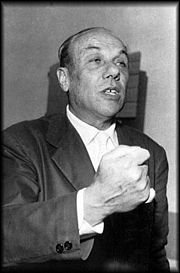 With his record as a war hero and his support of fascism, he became a figurehead for pro-fascist, anti-communist groups in the immediate post-war period, acquiring the nickname Black Prince.
Borghese wrote a supportive introduction affirming his political ideology of an idealistic, neo-fascist new aristocracy meritocratically based purely on character to far right
revolutionary-conservative theorist Julius Evola
's book, Men Among the Ruins
http://forum.hyeclub.com/showthread.php?t=9193. He was associated with the Movimento Sociale Italiano (MSI), the neo-Fascist party formed in the post-World War II period by former supporters of the dictator Benito Mussolini
.
Later, advocating a harder line which the MSI was not able or willing to uphold, he broke from the MSI to form an even stauncher neofascist formation, known as the Fronte Nazionale
.
plot which fizzled out in the night of 8 December 1970 (a religious festivity in Italy, known as the Feast of the Immaculate Conception
), referred to as the Golpe Borghese
, he was forced to cross the border to avoid arrest and interrogation. In 1984, 10 years after Borghese's death, the Italian Supreme Court sentenced that no coup d'état attempt had happened.
Latterly regarded as a political outcast and shunned by his ancestrally blue blood
social connections for his "heretical" political extremism and disregard for the external norms of modern aristocratic etiquette and behavior, Junio Valerio Borghese died in strange circumstances in Cadiz
in 1974.
His body is buried in Cappella Borghese inside Basilica di Santa Maria Maggiore
, Rome.
He wrote a memoir of his wartime exploits, published as "Sea Devils" in 1954.
Artena
Artena is a village and comune in the province of Rome, Italy. It is situated in the northwest of Monti Lepini, in the upper valley of the Sacco River...
, Province of Rome
Province of Rome
The Province of Rome , is a province in the Lazio region of Italy. The province can be viewed as the extended metropolitan area of the city of Rome, although in its more peripheral portions, especially to the north, it comprises towns surrounded by rural landscape.-Geography:The Province of Rome...
, 6 June 1906 – Cadiz
Cádiz
Cadiz is a city and port in southwestern Spain. It is the capital of the homonymous province, one of eight which make up the autonomous community of Andalusia....
, Spain, 26 August 1974) was an Italian Navy
Regia Marina
The Regia Marina dates from the proclamation of the Kingdom of Italy in 1861 after Italian unification...
commander
Commander
Commander is a naval rank which is also sometimes used as a military title depending on the individual customs of a given military service. Commander is also used as a rank or title in some organizations outside of the armed forces, particularly in police and law enforcement.-Commander as a naval...
during the regime of Benito Mussolini
Benito Mussolini
Benito Amilcare Andrea Mussolini was an Italian politician who led the National Fascist Party and is credited with being one of the key figures in the creation of Fascism....
's National Fascist Party
National Fascist Party
The National Fascist Party was an Italian political party, created by Benito Mussolini as the political expression of fascism...
and was a prominent hard-line fascist politician
Politics
Politics is a process by which groups of people make collective decisions. The term is generally applied to the art or science of running governmental or state affairs, including behavior within civil governments, but also applies to institutions, fields, and special interest groups such as the...
in post-war Italy.
Early career
Junio Valerio Borghese was born in ArtenaArtena
Artena is a village and comune in the province of Rome, Italy. It is situated in the northwest of Monti Lepini, in the upper valley of the Sacco River...
, Province of Rome
Province of Rome
The Province of Rome , is a province in the Lazio region of Italy. The province can be viewed as the extended metropolitan area of the city of Rome, although in its more peripheral portions, especially to the north, it comprises towns surrounded by rural landscape.-Geography:The Province of Rome...
, Kingdom of Italy. He was born into a prominent noble
Nobility
Nobility is a social class which possesses more acknowledged privileges or eminence than members of most other classes in a society, membership therein typically being hereditary. The privileges associated with nobility may constitute substantial advantages over or relative to non-nobles, or may be...
family of Sienese origin, the House of Borghese, of which Pope Paul V was a notable member. Borghese was first educated in London
London
London is the capital city of :England and the :United Kingdom, the largest metropolitan area in the United Kingdom, and the largest urban zone in the European Union by most measures. Located on the River Thames, London has been a major settlement for two millennia, its history going back to its...
, England
England
England is a country that is part of the United Kingdom. It shares land borders with Scotland to the north and Wales to the west; the Irish Sea is to the north west, the Celtic Sea to the south west, with the North Sea to the east and the English Channel to the south separating it from continental...
, and, from 1923, he attended the Royal Italian Navy Academy (Accademia Navale)
Accademia Navale di Livorno
The Italian Naval Academy is a coeducational military university in Leghorn , which is responsible for the technical training of military officers of the Italian Navy.-The Hospital of St. James:...
in Livorno
Livorno
Livorno , traditionally Leghorn , is a port city on the Tyrrhenian Sea on the western edge of Tuscany, Italy. It is the capital of the Province of Livorno, having a population of approximately 160,000 residents in 2009.- History :...
.
In 1929, the naval career of Borghese began. By 1933, he was a submarine commander. Borghese took part in the Second Italo-Abyssinian War
Second Italo-Abyssinian War
The Second Italo–Abyssinian War was a colonial war that started in October 1935 and ended in May 1936. The war was fought between the armed forces of the Kingdom of Italy and the armed forces of the Ethiopian Empire...
. During the Italian intervention in the Spanish Civil War
Spanish Civil War
The Spanish Civil WarAlso known as The Crusade among Nationalists, the Fourth Carlist War among Carlists, and The Rebellion or Uprising among Republicans. was a major conflict fought in Spain from 17 July 1936 to 1 April 1939...
, he was in command of the submarine Iride
Italian submarine Iride
The Italian submarine Iride was a 600-Serie Perla-class submarine, serving with the Regia Marina during World War II.She was originally armed with six 21 inch torpedo tubes, 12 torpedoes, one 100 mm deck gun and room for up to four 13.2 mm machine guns...
, where he allegedly lost two seamen after his unit was depth-charged by the British destroyer HMS Havock
HMS Havock (H43)
HMS Havock was an H-class destroyer built for the British Royal Navy in the mid-1930s. During the Spanish Civil War of 1936–1939, the ship enforced the arms blockade imposed by Britain and France on both sides as part of the Mediterranean Fleet...
.
World War II
At the start of the Second World War, Borghese took command of submarineSubmarine
A submarine is a watercraft capable of independent operation below the surface of the water. It differs from a submersible, which has more limited underwater capability...
Vettor Pisani
Italian submarine Vettor Pisani
Vettor Pisani was an Italian , serving the Regia Marina during World War II. It was named after Vettor Pisani, a Venetian admiral.Vettor Pisani was laid down in the Cantiere Navale Triestino yards in Monfalcone on 18 November 1925, launched on 24 November 1927, and completed for the Regia Marina on...
, and in August 1940 was in command of submarine Sciré
Italian submarine Sciré (1938)
The Italian submarine Scirè was an Italian Adua-class submarine, which served during World War II in the Regia Marina. It was named after the Ethiopian region of Shire, at the time part of Italian East Africa.At the beginning of the war, Scirè was commanded by Junio Valerio Borghese, and based in...
, which was modified to carry the new secret Italian weapon, the human torpedo
Human torpedo
Human torpedoes or manned torpedoes are a type of rideable submarine used as secret naval weapons in World War II. The basic design is still in use today; they are a type of diver propulsion vehicle....
. Known as "slow speed torpedoes" (siluri a lenta corsa, or SLC), and nicknamed "pigs" (maiali) for their poor maneuverability, these were small underwater assault vehicles with a crew of two.
These were part of the 1ª Flottiglia Mezzi d'Assalto (MAS), the "First Assault Vehicle Flotilla", (later called Decima Flottiglia MAS
Decima Flottiglia MAS
The Decima Flottiglia MAS was an Italian commando frogman unit of the Regia Marina created during the Fascist regime.The acronym MAS also refers to various light torpedo boats used by the Regia Marina during World...
) an elite naval sabotage unit of the Royal Italian Navy
Regia Marina
The Regia Marina dates from the proclamation of the Kingdom of Italy in 1861 after Italian unification...
(Regia Marina Italiana).
As commander of Sciré Borghese took part in several raids using SLC. The first of these, in September and October 1940 were directed at Gibraltar. The September raid was abandoned when the harbour was found to be empty. In the October raid Borghese took Sciré deep into Algeciras Bay, making a difficult submerged passage in order to release the SLC as close to target as possible. For this he received the Medaglia d'Oro al Valor Militare (MOVM), despite the missions overall lack of success.
In May 1941 a further attempt ended in failure, but on 20 September 1941 a successful mission resulted in damage to three merchant ships in the harbour.
After this last attack he was promoted to Capitano di Fregata, and named commander of Decima MAS sub-surface unit
On 18 December 1941, he reached Alexandria
Alexandria
Alexandria is the second-largest city of Egypt, with a population of 4.1 million, extending about along the coast of the Mediterranean Sea in the north central part of the country; it is also the largest city lying directly on the Mediterranean coast. It is Egypt's largest seaport, serving...
in Sciré and launched the daring raid
Raid on Alexandria (1941)
The Raid on Alexandria was carried out on 19 December 1941 by Italian Navy forces attacking Royal Navy forces in the harbour of Alexandria.-Background:...
by three SLCs that heavily damaged the two Royal Navy
Royal Navy
The Royal Navy is the naval warfare service branch of the British Armed Forces. Founded in the 16th century, it is the oldest service branch and is known as the Senior Service...
battleship
Battleship
A battleship is a large armored warship with a main battery consisting of heavy caliber guns. Battleships were larger, better armed and armored than cruisers and destroyers. As the largest armed ships in a fleet, battleships were used to attain command of the sea and represented the apex of a...
s and and two other ships in the harbour. The six Italian Navy crew that attacked Alexandria
Alexandria
Alexandria is the second-largest city of Egypt, with a population of 4.1 million, extending about along the coast of the Mediterranean Sea in the north central part of the country; it is also the largest city lying directly on the Mediterranean coast. It is Egypt's largest seaport, serving...
harbour all received the Medaglia d'Oro al Valor Militare, and Borghese was named Cavaliere dell'Ordine Militare di Savoia.
In May 1943, Borghese took command of the Decima Flottiglia MAS
Decima Flottiglia MAS
The Decima Flottiglia MAS was an Italian commando frogman unit of the Regia Marina created during the Fascist regime.The acronym MAS also refers to various light torpedo boats used by the Regia Marina during World...
("10th Assault Vehicle Flotilla"), or Xª MAS with Roman numerals
Roman numerals
The numeral system of ancient Rome, or Roman numerals, uses combinations of letters from the Latin alphabet to signify values. The numbers 1 to 10 can be expressed in Roman numerals as:...
, which continued active service in the Mediterranean and pioneered new techniques of commando
Commando
In English, the term commando means a specific kind of individual soldier or military unit. In contemporary usage, commando usually means elite light infantry and/or special operations forces units, specializing in amphibious landings, parachuting, rappelling and similar techniques, to conduct and...
assault warfare.
8 September 1943: the Armistice
Following the armisticeArmistice
An armistice is a situation in a war where the warring parties agree to stop fighting. It is not necessarily the end of a war, but may be just a cessation of hostilities while an attempt is made to negotiate a lasting peace...
of Italy on 8 September 1943, the Xª MAS was disbanded. Some of its sailors joined the Allied cause to fight against Nazi Germany and what remained of the Axis. He chose to continue fighting with the RSI alongside the German Armed Forces (Wehrmacht
Wehrmacht
The Wehrmacht – from , to defend and , the might/power) were the unified armed forces of Nazi Germany from 1935 to 1945. It consisted of the Heer , the Kriegsmarine and the Luftwaffe .-Origin and use of the term:...
).
On 12 September 1943, he signed a treaty of alliance with the German Navy
Kriegsmarine
The Kriegsmarine was the name of the German Navy during the Nazi regime . It superseded the Kaiserliche Marine of World War I and the post-war Reichsmarine. The Kriegsmarine was one of three official branches of the Wehrmacht, the unified armed forces of Nazi Germany.The Kriegsmarine grew rapidly...
(Kriegsmarine
Kriegsmarine
The Kriegsmarine was the name of the German Navy during the Nazi regime . It superseded the Kaiserliche Marine of World War I and the post-war Reichsmarine. The Kriegsmarine was one of three official branches of the Wehrmacht, the unified armed forces of Nazi Germany.The Kriegsmarine grew rapidly...
). Many of his colleagues volunteered to serve with him, and the Decima Flottiglia was revived, headquartered in Caserma del Muggiano, La Spezia
La Spezia
La Spezia , at the head of the Gulf of La Spezia in the Liguria region of northern Italy, is the capital city of the province of La Spezia. Located between Genoa and Pisa on the Ligurian Sea, it is one of the main Italian military and commercial harbours and hosts one of Italy's biggest military...
. By the end of the war, it had over 18,000 members, and Borghese conceived it as a purely military unit. The X Sailors gained a reputation for never firing a shot at any Italian military units fighting with the allied forces.
In April 1945 when the USA command discovered that the British had granted permission to Marshal Josip Broz Tito
Josip Broz Tito
Marshal Josip Broz Tito – 4 May 1980) was a Yugoslav revolutionary and statesman. While his presidency has been criticized as authoritarian, Tito was a popular public figure both in Yugoslavia and abroad, viewed as a unifying symbol for the nations of the Yugoslav federation...
of Yugoslavia
Yugoslavia
Yugoslavia refers to three political entities that existed successively on the western part of the Balkans during most of the 20th century....
, and his communist troops, to occupy northeastern Italy from Venezia to the east, he moved the bulk of the X from the Liguria and Piemonte area to the Veneto.
The X built a line of defense on the Tagliamento river where they resisted until the arrival of the Allied troops.
In this action the X lost over eighty percent of the fighting sailors dispatched to the front against Tito's troops, and the Italian Communist Partisans allied with Tito.
At the end of the war, Borghese was rescued by Office of Strategic Services
Office of Strategic Services
The Office of Strategic Services was a United States intelligence agency formed during World War II. It was the wartime intelligence agency, and it was a predecessor of the Central Intelligence Agency...
officer James Angleton
James Jesus Angleton
James Jesus Angleton was chief of the Central Intelligence Agency's counterintelligence staff from 1954 to 1975...
, who dressed him up in an American
United States
The United States of America is a federal constitutional republic comprising fifty states and a federal district...
uniform and drove him from Milan
Milan
Milan is the second-largest city in Italy and the capital city of the region of Lombardy and of the province of Milan. The city proper has a population of about 1.3 million, while its urban area, roughly coinciding with its administrative province and the bordering Province of Monza and Brianza ,...
to Rome
Rome
Rome is the capital of Italy and the country's largest and most populated city and comune, with over 2.7 million residents in . The city is located in the central-western portion of the Italian Peninsula, on the Tiber River within the Lazio region of Italy.Rome's history spans two and a half...
for interrogation by the Allies. Borghese was then tried and convicted of collaboration with the Nazi invaders, but not of war crime
War crime
War crimes are serious violations of the laws applicable in armed conflict giving rise to individual criminal responsibility...
s, by the Italian Court. He was "sentenced to 12 years imprisonment, discounted to 3 years, due to his glorious expeditions during the war, his defence of north east borders against Tito's IX Corpus and his defence of Genoa
Genoa
Genoa |Ligurian]] Zena ; Latin and, archaically, English Genua) is a city and an important seaport in northern Italy, the capital of the Province of Genoa and of the region of Liguria....
harbour". He was released from jail after 4 years of prison by the Italian Supreme Court in 1949.
Political activism after the war
Borghese wrote a supportive introduction affirming his political ideology of an idealistic, neo-fascist new aristocracy meritocratically based purely on character to far right
Far right
Far-right, extreme right, hard right, radical right, and ultra-right are terms used to discuss the qualitative or quantitative position a group or person occupies within right-wing politics. Far-right politics may involve anti-immigration and anti-integration stances towards groups that are...
revolutionary-conservative theorist Julius Evola
Julius Evola
Barone Giulio Cesare Andrea Evola also known as Julius Evola, was an Italian philosopher and esotericist...
's book, Men Among the Ruins
Men Among the Ruins
Men Among the Ruins: Post-War Reflections of a Radical Traditionalist is a book by Julius Evola.First published as Gli uomini e le rovine in 1953, it is a statement of Evola's view of the political and social manifestations of our time...
http://forum.hyeclub.com/showthread.php?t=9193. He was associated with the Movimento Sociale Italiano (MSI), the neo-Fascist party formed in the post-World War II period by former supporters of the dictator Benito Mussolini
Benito Mussolini
Benito Amilcare Andrea Mussolini was an Italian politician who led the National Fascist Party and is credited with being one of the key figures in the creation of Fascism....
.
Later, advocating a harder line which the MSI was not able or willing to uphold, he broke from the MSI to form an even stauncher neofascist formation, known as the Fronte Nazionale
Fronte Nazionale
Fronte Nazionale is a name that has been used for several Neofascist political parties and movements in Italy.-Junio Valerio Borghese FN:...
.
Attempted coup
Following a last minute aborted coup d'étatCoup d'état
A coup d'état state, literally: strike/blow of state)—also known as a coup, putsch, and overthrow—is the sudden, extrajudicial deposition of a government, usually by a small group of the existing state establishment—typically the military—to replace the deposed government with another body; either...
plot which fizzled out in the night of 8 December 1970 (a religious festivity in Italy, known as the Feast of the Immaculate Conception
Immaculate Conception
The Immaculate Conception of Mary is a dogma of the Roman Catholic Church, according to which the Virgin Mary was conceived without any stain of original sin. It is one of the four dogmata in Roman Catholic Mariology...
), referred to as the Golpe Borghese
Golpe Borghese
The Golpe Borghese was a failed Italian coup d'état allegedly planned for the night of 7 or 8 December 1970. It was named after Junio Valerio Borghese, an Italian World War II commander of the notorious Xª MAS unit, the "Black Prince", convicted of war crimes, but still a hero in the eyes of many...
, he was forced to cross the border to avoid arrest and interrogation. In 1984, 10 years after Borghese's death, the Italian Supreme Court sentenced that no coup d'état attempt had happened.
Latterly regarded as a political outcast and shunned by his ancestrally blue blood
Blue blood
Blue blood may refer to:* Nobility or social prominence- Music :* "Blue Blood", a song by Foals from the album Total Life Forever* Blue Blood, an EP by Atrocity* Blue Blood , 2001...
social connections for his "heretical" political extremism and disregard for the external norms of modern aristocratic etiquette and behavior, Junio Valerio Borghese died in strange circumstances in Cadiz
Cádiz
Cadiz is a city and port in southwestern Spain. It is the capital of the homonymous province, one of eight which make up the autonomous community of Andalusia....
in 1974.
His body is buried in Cappella Borghese inside Basilica di Santa Maria Maggiore
Basilica di Santa Maria Maggiore
The Papal Basilica of Saint Mary Major , known also by other names, is the largest Roman Catholic Marian church in Rome, Italy.There are other churches in Rome dedicated to Mary, such as Santa Maria in Trastevere, Santa Maria in Aracoeli, Santa Maria sopra Minerva, but the greater size of the...
, Rome.
He wrote a memoir of his wartime exploits, published as "Sea Devils" in 1954.