
All Topics  
Jungle

 
Jungle

   Email Print
   Bookmark   Link


Jungle


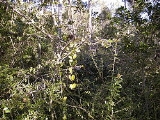
Jungle usually refers to a dense forest
Forest

File:Stara planina suma.jpgA forest is an area with a high density of trees. There are many definitions of a forest, based on various criteria....
 in a hot climate, such as a tropical rainforest
Tropical rainforest

Tropical rainforests are usually found around the equator. They are common in Asia, Australia, Africa, South America, Central America, Southern Mexico and on many of the Pacific Islands....
. The word Jungle originates from the Sanskrit
Sanskrit

Sanskrit is a historical Indo-Aryan language, one of the liturgical languages of Hinduism and Buddhism, and one of the 22 official languages of India....
 word Jangala which means a desert
Désert

?D?sert? is ?milie Simon's debut single, released in October 2002. The song was a huge success both critically and commercially in her homeland....
 or uncultivated land. The term Jungle is prevalent in many colloquial languages of the Indian subcontinent and generally used to refer a dense tropical forest or a swamp
Swamp

A swamp is a wetland featuring temporary or permanent inundation of large areas of land, by shallow bodies of water. A swamp generally has a substantial number of hammock , or dry-land protrusions, covered by aquatic vegetation, or vegetation that tolerates periodical inundation....
. About 6% of the Earth's land mass is classified as jungle.


Discussion
Ask a question about 'Jungle'
Start a new discussion about 'Jungle'
Answer questions from other users
Full Discussion Forum


Encyclopedia


Jungle usually refers to a dense forest
Forest

File:Stara planina suma.jpgA forest is an area with a high density of trees. There are many definitions of a forest, based on various criteria....
 in a hot climate, such as a tropical rainforest
Tropical rainforest

Tropical rainforests are usually found around the equator. They are common in Asia, Australia, Africa, South America, Central America, Southern Mexico and on many of the Pacific Islands....
. The word Jungle originates from the Sanskrit
Sanskrit

Sanskrit is a historical Indo-Aryan language, one of the liturgical languages of Hinduism and Buddhism, and one of the 22 official languages of India....
 word Jangala which means a desert
Désert

?D?sert? is ?milie Simon's debut single, released in October 2002. The song was a huge success both critically and commercially in her homeland....
 or uncultivated land. The term Jungle is prevalent in many colloquial languages of the Indian subcontinent and generally used to refer a dense tropical forest or a swamp
Swamp

A swamp is a wetland featuring temporary or permanent inundation of large areas of land, by shallow bodies of water. A swamp generally has a substantial number of hammock , or dry-land protrusions, covered by aquatic vegetation, or vegetation that tolerates periodical inundation....
. About 6% of the Earth's land mass is classified as jungle. Jungles are vital to sustaining the ecosystem
Ecosystem

An ecosystem is a natural unit consisting of all plants, animals and micro-organisms in an area functioning together with all of the non-living physical factors of the environment....
s of the Earth as we know it. About 57% of all species live in jungle environments. The term may still be used in a technical context to describe the forest biome
Biome

Biomes are Climateally and geographically defined areas of ecologically similar climatic conditions such as Community of plants, animals, and Soil biology, and are often referred to as ecosystems....
 rainforest
Rainforest

Rainforests are forests characterized by high rainfall, with definitions setting minimum normal annual rainfall between 1750?2000 mm . The monsoon trough, alternately known as the intertropical convergence zone, plays a significant role in creating Earth's tropical rain forests....
, a forest characterised by extensive biodiversity
Biodiversity

Biodiversity is the variation of life forms within a given ecosystem, biome, or for the entire Earth. Biodiversity is often used as a measure of the health of biological systems....
 and densely tangled undergrowth including the young tree
TREE

TREE was a Boston hardcore punk band formed in the summer of 1990. They were active in the Boston music scene until disbanding in 2002....
s, vine
Vine

A vine is any plant of genus Grape or, by extension, any similar climbing or trailing plant. The word, derived from Latin vinea, referred to the grape-bearing variety....
s and liana
Liana

The liana is any of various long-stemmed, usually woody vines that are rooted in the soil at ground level and use trees, as well as other means of vertical support, to climb up to the canopy in order to get access to well-lit areas of the forest....
s, and herbaceous
Herbaceous

A herbaceous plant is a plant that has leaf and stem that die down at the end of the growing season to the soil level. A herbaceous plant may be Annual plant, Biennial plant or Perennial plant....
 plants. As a forest biome, "jungles" are present in both equatorial
Equatorial

Equatorial has different meanings:* In geography it relates to the equator of the Earth.* In meteorology, an Equatorial climate is the type of climate experienced near the equator....
 and tropical climatic zones, and are associated with preclimax stages of the rainforest
Rainforest

Rainforests are forests characterized by high rainfall, with definitions setting minimum normal annual rainfall between 1750?2000 mm . The monsoon trough, alternately known as the intertropical convergence zone, plays a significant role in creating Earth's tropical rain forests....
. Jungle is to be distinguished from tropical rainforest in that the former is a profuse thicket of tropical shrubs, vines, and small trees growing in areas outside the light-blocking canopy of a tropical rainforest. Hence, 'jungle' is often found at the edges of climax rain-forests, where human activity may increase sunlight penetration.

Not all regions called "jungles" would qualify as "rain forests" because many would apply "jungle" to the forests of northern Thailand
Thailand

The Kingdom of Thailand is an independent country that lies in the heart of Southeast Asia. It is bordered to the north by Laos and Myanmar, to the east by Laos and Cambodia, to the south by the Gulf of Thailand and Malaysia, and to the west by the Andaman Sea and Myanmar....
 or southern Guangdong
Guangdong

Guangdong is a political divisions of China on the southern coast of People's Republic of China. The province is also known by an alternative English language name, the Canton Province....
 in China
China

China is a Culture of China, an ancient civilization, and, depending on perspective, a national or multinational entity extending over a large area in East Asia....
: but scientifically, these are "monsoon
Monsoon

A monsoon is a seasonal prevailing wind that lasts for several months. The term was first used in English in India, Bangladesh, Pakistan, and neighboring countries to refer to the big seasonal winds blowing from the Indian Ocean and Arabian Sea in the southwest bringing heavy rainfall to the region....
 forests" or "tropical deciduous
Deciduous

Deciduous means falling off at maturity or tending to fall off and is typically used in reference to trees or shrubs that lose their leaves seasonally and to the shedding of other plant structures such as petals after flowering or fruit when ripe....
 forests" but not "rain forests".

As a metaphor

Upton Sinclair
Upton Sinclair

Upton Sinclair, Jr. , was a Pulitzer Prize-winning prolific United States author who wrote over 90 books in many genres and was widely considered to be one of the best investigators advocating Socialism views....
 gave the title The Jungle
The Jungle

The Jungle is a 1906 in literature novel written by author and Socialism journalist Upton Sinclair. It was written about the corruption of the United States meatpacking industry during the early 20th century....
 (1906) to his book about the life of workers at the Chicago Stockyards in order to imply that the workers were being mercilessly exploited and had no legal or other recourse.

The term "The Law of the Jungle
The Law of the Jungle

"The Law of the Jungle" is usually an expression that means "every one for himself" and "anything goes" .However, Rudyard Kipling in The Jungle Book uses it to mean an actual law code used by wolves and other animals in the jungles of India....
" is also used in this kind of context, drawn from Rudyard Kipling's
Rudyard Kipling

Joseph Rudyard Kipling was an English author and poet. Born in Mumbai, British India , he is best known for his works of fiction The Jungle Book , Kim , many short stories, including The Man Who Would Be King ; and his poems, including Mandalay , Gunga Din , and If? ....
 The Jungle Book
The Jungle Book

The Jungle Book is a collection of stories written by Rudyard Kipling. The stories were first published in magazines in 1893–4. The original publications contained illustrations, some by Rudyard's father, John Lockwood Kipling....
 (1894) - though in the society of jungle animals portrayed in that book and obviously meant as a metaphor for human society, that phrase referred to an intricate code of laws which Kipling describes in detail, and not at all to a lawless chaos.

The "Cities in Flight
Cities in Flight

Cities in Flight is an omnibus volume of four novels written by James Blish, originally published between 1955 and 1962, which became known over time collectively as the 'Okie' novels....
" science fiction series by James Blish
James Blish

James Benjamin Blish was an United States author of fantasy fiction and science fiction. Blish also wrote literary criticism of science fiction using the pen-name William Atheling Jr....
 depicted spaceborne cities flying through the galaxy, which the writer compared to Hobos or Okies of space. The term "jungle", borrowed from the above Hobo term, is used for an area of space where such flying cities congregate.

See also

  • Center for Tropical Forest Science
    Center for Tropical Forest Science

    The Center for Tropical Forest Science, or CTFS, is a consortium of forest researchers who pursue long-term research on tree populations using comparable census method....
     (CTFC)


External links