
All Topics  
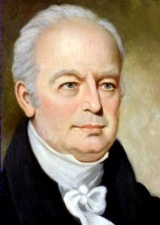
John Rutledge


   Email Print
   Bookmark   Link


John Rutledge


John Rutledge (September 17, 1739 – July 23, 1800) was an American statesman and judge. He was the first Governor of South Carolina
Governor of South Carolina

The Governor of the State of South Carolina is the head of state for the South Carolina. Under the South Carolina Constitution, the Governor is also the head of government, serving as the chief executive of the South Carolina executive branch....
 following the signing of the Declaration of Independence
United States Declaration of Independence

The United States Declaration of Independence is a statement adopted by the Second Continental Congress on July 4, 1776, which announced that the Thirteen Colonies then at war with Kingdom of Great Britain were now independent states, and thus no longer a part of the British Empire....
. For a time, he held dictatorial powers in that state. He was a delegate to the Constitutional Convention
Philadelphia Convention

The Philadelphia Convention took place from May 25 to September 17, 1787, in Philadelphia, Pennsylvania, to address problems in governing the United States of America, which had been operating under the Articles of Confederation following independence from Kingdom of Great Britain....
, and he signed the United States Constitution
United States Constitution

The Constitution of the United States of America is the supreme law of the United States. It is the foundation and source of the legal authority underlying the existence of the United States of America; the Federal Government of the United States; and all the State & local governments and Territorial Administrative bodies contained therein....
. He served as an Associate Justice on the U.S. Supreme Court
Supreme Court of the United States

The Supreme Court of the United States is the highest judicial body in the United States, and leads the federal United States federal courts. It consists of the Chief Justice of the United States and eight Associate Justice of the Supreme Court of the United States, who are nominated by the President of the United States and confirmed with th...
, and was the second Chief Justice
Chief Justice of the United States

The Chief Justice of the United States is the head of the United States federal courts and the chief judge of the Supreme Court of the United States....
 of the Court from July to December 1795. He was the elder brother of Edward Rutledge
Edward Rutledge

Edward Rutledge , was an USA politician and a signer of the United States Declaration of Independence. He later served as governor of South Carolina....
, a signatory of the Declaration of Independence.

Early life and family
Rutledge was born into a large family in Charleston.


Discussion
Ask a question about 'John Rutledge'
Start a new discussion about 'John Rutledge'
Answer questions from other users
Full Discussion Forum


Encyclopedia


John Rutledge (September 17, 1739 – July 23, 1800) was an American statesman and judge. He was the first Governor of South Carolina
Governor of South Carolina

The Governor of the State of South Carolina is the head of state for the South Carolina. Under the South Carolina Constitution, the Governor is also the head of government, serving as the chief executive of the South Carolina executive branch....
 following the signing of the Declaration of Independence
United States Declaration of Independence

The United States Declaration of Independence is a statement adopted by the Second Continental Congress on July 4, 1776, which announced that the Thirteen Colonies then at war with Kingdom of Great Britain were now independent states, and thus no longer a part of the British Empire....
. For a time, he held dictatorial powers in that state. He was a delegate to the Constitutional Convention
Philadelphia Convention

The Philadelphia Convention took place from May 25 to September 17, 1787, in Philadelphia, Pennsylvania, to address problems in governing the United States of America, which had been operating under the Articles of Confederation following independence from Kingdom of Great Britain....
, and he signed the United States Constitution
United States Constitution

The Constitution of the United States of America is the supreme law of the United States. It is the foundation and source of the legal authority underlying the existence of the United States of America; the Federal Government of the United States; and all the State & local governments and Territorial Administrative bodies contained therein....
. He served as an Associate Justice on the U.S. Supreme Court
Supreme Court of the United States

The Supreme Court of the United States is the highest judicial body in the United States, and leads the federal United States federal courts. It consists of the Chief Justice of the United States and eight Associate Justice of the Supreme Court of the United States, who are nominated by the President of the United States and confirmed with th...
, and was the second Chief Justice
Chief Justice of the United States

The Chief Justice of the United States is the head of the United States federal courts and the chief judge of the Supreme Court of the United States....
 of the Court from July to December 1795. He was the elder brother of Edward Rutledge
Edward Rutledge

Edward Rutledge , was an USA politician and a signer of the United States Declaration of Independence. He later served as governor of South Carolina....
, a signatory of the Declaration of Independence.

Early life and family


Rutledge was born into a large family in Charleston. His father was Scots-Irish immigrant John Rutledge (Sr.), a physician. His mother, South Carolina-born Sarah (nee Hext), was of English
English people

The English are a nation and ethnic group native to England who speak English language in England. The English identity as a people is of early medieval origin, when they were known in Old English as the Anglecynn....
 descent. She was only 15 years old when John was born. John’s early education was provided by his father until 1749, when John Sr. died. The rest of Rutledge's primary education was provided by an Anglican priest.

John took an early interest in law and often "played lawyer" with his brothers and sisters. When he was 17 years old, Rutledge began studying law under a man named James Parsons. Two years later, he sailed to England to further his studies at London
London

London is the capital of both England and the United Kingdom, and the most populous municipality in the European Union. An important settlement for two millennia, History of London goes back to its founding by the Roman Empire....
's Middle Temple
Middle Temple

The Honourable Society of the Middle Temple is one of the four Inns of Court exclusively entitled to call their members to the English Bar as barristers; the others being the Inner Temple, Gray's Inn and Lincoln's Inn....
. In the course of his studies, he won several cases in English courts.

After finishing his studies, Rutledge sailed back to Charleston to begin a fruitful legal career. At the time, many lawyers came out of law school and barely scraped together enough business to earn a living. Most new lawyers could only hope that they would win a well-known case to ensure their success. Rutledge, however, emerged almost immediately as one of the most prominent lawyers in Charleston, and his services were in high demand.

With his successful legal career, he was able to build on his mother's fortune. In 1763, Rutledge married Elizabeth Grimke, who eventually bore him 10 children. Rutledge was very devoted to his wife, and Elizabeth's death in 1792 was a major cause of the illness that affected Rutledge in his later years.

Political career


Pre-Revolutionary War

In mid 1765 Rutledge was appointed a delegate to the Stamp Act Congress
Stamp Act Congress

The Stamp Act Congress was a meeting in the building that would become Federal Hall in New York City in October of 1765 consisting of delegates from 9 of the 13 colonies that discussed and acted upon the recently passed Stamp Act 1765....
. This congress produced a resolution that stated that it was "the undoubted right of Englishmen, that no taxes be imposed on them but with their own consent, given personally, or by their representatives". Rutledge chaired a committee that drew up a petition to the House of Lords
House of Lords

The House of Lords is the second house of the Parliament of the United Kingdom and is also commonly referred to as "the Lords". The Parliament comprises the British monarchy, the British House of Commons , and the Lords....
 attempting to persuade them to reject the Stamp Act. They were ultimately unsuccessful.

When the delegates returned to South Carolina after the Congress adjourned, they found the state in turmoil. The people had destroyed all of the revenue stamp
Revenue stamp

A revenue stamp, tax stamp or fiscal stamp is a type of adhesive label used to collect taxes or fees on various items. Many countries of the world have used them, for documents , tobacco products, liquor, medication, playing cards, hunting licenses and other kinds of things....
s they could get their hands on and they broke into suspected Loyalists'
Loyalist (American Revolution)

Loyalists were Thirteen Colonies who remained loyal to the Kingdom of Great Britain during and after the American Revolutionary War. They were often referred to as Tories, Royalists, or King's Men by the Patriot , those that supported the American cause....
 houses to search for stamps. When the Stamp Act
Stamp Act 1765

The Stamp Act of 1765 was a tax imposed by the Parliament of Great Britain on the colonies of British America. The act required that many printed materials in the colonies carry a tax stamp....
 went into effect on November 1, 1765, there were no stamps in the entire colony. Dougal Campbell, the Charleston court clerk
Court clerk

A court clerk is an officer of the court whose responsibilities include maintaining the records of a court. Another duty is to administer oaths to witnesses, Jury, and Grand jury....
, refused to issue any papers without the stamps. Because of this, all legal processes in the entire state came to a standstill until news that the Stamp Act had been repealed reached South Carolina in early May of the next year.

After the Stamp Act conflict ended, Rutledge went back into private life, and to his law practice. Besides serving in the colonial legislature, he did not involve himself in politics. His law practice continued to expand and he became fairly wealthy as a result.

In 1774, Rutledge was sent to the First Continental Congress
First Continental Congress

The First Continental Congress was a convention of delegates from twelve of the thirteen Kingdom of Great Britain North American colonies that met on September 5, 1774, in Philadelphia Pennsylvania, early in the American Revolution....
. It is not known for certain exactly what John Rutledge contributed during this assembly. In the notes we have of the actions of this Congress, the name is given simply as "Rutledge", despite the fact that John's brother Edward Rutledge
Edward Rutledge

Edward Rutledge , was an USA politician and a signer of the United States Declaration of Independence. He later served as governor of South Carolina....
 was also present. In any case, the most important contribution made by "Rutledge" to the Congress was during the debate of how to appropriate votes in the Congress. Some wanted it to be determined by the population of the colonies. Others wanted to give each colony one vote. "Rutledge" observed that as the Congress had no legal authority to force the colonies to accept its decisions, it would make the most sense to give each colony one vote. The other delegates ultimately agreed to this proposal.

President of South Carolina

John Rutledge continued to serve in the First Continental Congress and the Second Continental Congress
Second Continental Congress

The Second Continental Congress was a convention of delegates from the Thirteen Colonies that met beginning in May 10, 1775, in Philadelphia, Pennsylvania, soon after shooting in the American Revolutionary War had begun....
 until 1776. That year, he was elected President of South Carolina under a constitution drawn up on March 26, 1776. Upon taking office, he worked quickly to arrange the new government and to prepare defenses in case of a British attack.

In June 1776, Rutledge learned that a large British naval force was moving toward Charleston. In response, he ordered the construction of Fort Sullivan (now Fort Moultrie
Fort Moultrie National Monument

Fort Moultrie is the name of a series of forts on Sullivan's Island, South Carolina, built to protect the city of Charleston, South Carolina. The first fort, built of Cabbage Palmetto logs, inspired the Flag of South Carolina and nickname of South Carolina....
) on Sullivan's Island in Charleston Harbor
Charleston Harbor

The Charleston Harbor is an inlet of the Atlantic Ocean at Charleston, South Carolina. The inlet is formed by the junction of Ashley River and Cooper River rivers at ....
. By the time the British arrived, the fort was only half completed. General Charles Lee
Charles Lee (general)

Charles Lee was a British Army turned Virginia planter who was a major general of the Continental Army in the American Revolutionary War....
 of the Continental Army
Continental Army

The American Continental Army was an army formed after the outbreak of the American Revolutionary War by the colonies that became the United States. Established by a resolution of the Continental Congress on June 15, 1775, the army was created to coordinate the military efforts of the Thirteen Colonies in their struggle against the rule of Kingdom...
, who had arrived a few days earlier with reinforcements from North Carolina
North Carolina

North Carolina is a U.S. state located on the Atlantic Seaboard in the southeastern United States. The state borders South Carolina and Georgia to the south, Tennessee to the west and Virginia to the north....
, told Rutledge the fort should be evacuated, as Lee considered it indefensible. Lee said that the fort would fall in under a half an hour, and all the men would be killed. In a note to the fort’s commanding officer, Colonel William Moultrie
William Moultrie

William Moultrie , was a general from South Carolina in the American Revolutionary War.He was born in Charleston, South Carolina. He fought in the Anglo-Cherokee War and served in the colonial assembly before the advent of the American Revolution....
, Rutledge wrote "General Lee […] wishes you to evacuate the fort. You will not, without [an] order from me. I would sooner cut off my hand than write one"

On June 28, 1776, the British attacked the fort, expecting it to fall quickly. However, the fort’s walls were made out of soft palmetto palm trees, and the British cannonballs simply sank into the logs without doing any damage. The British attack
Fort Moultrie National Monument

Fort Moultrie is the name of a series of forts on Sullivan's Island, South Carolina, built to protect the city of Charleston, South Carolina. The first fort, built of Cabbage Palmetto logs, inspired the Flag of South Carolina and nickname of South Carolina....
 failed. South Carolina later became known as the Palmetto State as a result of this battle.

Rutledge continued as President of South Carolina until 1778. That year, the South Carolina legislature proposed a new constitution. Rutledge vetoed it, stating that it moved the state dangerously close to a direct democracy
Direct democracy

Direct democracy, classically termed pure democracy, comprises a form of democracy and theory of civics wherein sovereignty is lodged in the assembly of all citizenship who choose to participate....
, which Rutledge believed was only a step away from total anarchy
Anarchy

Anarchy may refer to any of the following:* "No ruler ship or enforced authority." * "Absence of government; a state of lawlessness due to the absence or inefficiency of the supreme power; political disorder."...
. When the legislature overrode his veto, Rutledge resigned.

Governor of South Carolina

A few months after Rutledge’s resignation, the British, having suffered several defeats in the North, decided to try to retake the South. British Lieutenant-Colonel Archibald Campbell
Archibald Campbell (British Army officer)

General Sir Archibald Campbell, KB was a British Army officer who fought in the Seven Years War, the American Revolutionary War and later served as a colonial governor in Jamaica and Madras....
 landed in Georgia with 3000 men and quickly took control of the entire state.

In 1779, Rutledge was elected to head the government of South Carolina under a revision of the new constitution. Governor Rutledge sent a detachment of troops under General Benjamin Lincoln
Benjamin Lincoln

Benjamin Lincoln was an United States army officer. He served as a Major general in the Continental Army during the American Revolutionary War....
 into Georgia to harass the British. The new British commander, General Jacques Prevost, learned what Rutledge was doing and set out toward Charleston with 2500 troops. When Rutledge heard about the British, he hurried back to Charleston and worked furiously to build up defenses. In spite of Rutledge’s efforts, when General Prevost arrived outside Charleston, the British force had been greatly increased by the addition of Loyalists, and the Americans were vastly outnumbered.

Rutledge privately asked Prevost for surrender terms. Prevost made an offer, but when Rutledge submitted it to the council of war, the council instructed Rutledge to ask if the British would accept a declaration of South Carolina’s neutrality
Neutral country

For other uses of Neutral and Neutrality, see NeutralA neutral country takes no side in a war between other parties. A neutralist policy aims at neutrality in case of an armed conflict that could involve the party in question....
 in the Revolution. They forbade Rutledge from surrendering mainly because William Moultrie
William Moultrie

William Moultrie , was a general from South Carolina in the American Revolutionary War.He was born in Charleston, South Carolina. He fought in the Anglo-Cherokee War and served in the colonial assembly before the advent of the American Revolution....
, who was now a general, believed that the Americans had enough troops to at least equal the British force, which consisted largely of untrained civilians. When given the offer, Prevost replied by saying that as he was faced with such a large military force, he would have to take some of them prisoner before he could accept. Moultrie advised the council that he would never stand by and allow the British to simply take them prisoner, so the council decided to fight it out. The city braced itself for an attack, but the next morning, the British had disappeared. Prevost had intercepted a letter from General Lincoln to Moultrie saying that he was marching to the aid of Charleston, and Prevost decided that he could not hold out if the Americans got reinforcements.

Charleston occupied
In early 1780, Sir Henry Clinton
Henry Clinton

Henry Clinton may refer to:* Henry Clinton who fought during the American Revolutionary War* Henry Clinton , son of General Sir Henry Clinton...
 attacked South Carolina, and Charleston was thrown into a panic. The legislature adjourned upon learning of the British. Their last action was to give John Rutledge power to do anything short of executing people without a trial. Rutledge did his best to raise the militia, but Charleston was in the midst of a smallpox epidemic, and few dared to enter the city.

In February, Sir Henry landed on John’s Island, less than 30 miles from Charleston, with 5000 troops and was quickly joined by 1400 more from Savannah. Clinton waited for more troops and in May, he attacked Charleston with around 9000 troops. The Americans under General Lincoln numbered less than 2500, and on May 10, Charleston surrendered.

Rutledge was not captured with Charleston, as he had been urged to leave the city. He remained Governor of the unconquered part of South Carolina. On January 17, 1781, the Americans heavily defeated
Battle of Cowpens

}|-||}The Battle of Cowpens was an decisive victory by American Revolutionary forces under Brigadier General Daniel Morgan, in the Southern theater of the American Revolutionary War of the American Revolutionary War....
 the British at Cowpens, South Carolina
Cowpens, South Carolina

Cowpens is a town in Spartanburg County, South Carolina, South Carolina, United States. The population was 2,279 at the 2000 census....
. This victory greatly raised the spirits of those in Charleston, but the army was soon outmaneuvered by the better-organized British, and the Americans were forced to retreat.

In December, 1781, General Nathanael Greene
Nathanael Greene

Nathanael Greene was a major general of the Continental Army in the American Revolutionary War. When the war began, Greene was a militia private , the lowest rank possible; he emerged from the war with a reputation as George Washington's most gifted and dependable officer....
 retook Charleston and drove the British from South Carolina. In January, 1782, John Rutledge’s term of office came to an end, and he was not able to run again, because of term limits.

Judicial career

A few weeks after leaving the governorship, Rutledge was again elected to the Continental Congress
Continental Congress

The Continental Congress was a convention of delegates from the Thirteen Colonies that became the governing body of the United States during the American Revolution....
, where he served until 1783. In 1784, he was appointed to the South Carolina Court of Chancery
Court of equity

A chancery court, equity court or court of equity is a court that is authorized to apply principles of Equity , as opposed to law, to Legal case brought before it....
.

Constitutional Convention

Rutledge continued to serve on the Court of Chancery until 1791. During this time, he was selected to represent South Carolina in the Constitutional Convention. Rutledge maintained a moderate nationalist stance and chaired the Committee of Detail. He attended all the sessions and served on five committees.

Rutledge recommended that the executive power consist of a single person, rather than a plurality, because he felt that one person would feel the responsibility of the office more acutely. Because the president would not be able to defer a decision to another "co-president", Rutledge concluded that a single person would be more likely to make a good choice.

Rutledge was largely responsible for denying the Supreme Court the right to give advisory opinions. Being a judge himself, he strongly believed that a judge’s sole purpose was to resolve legal conflicts; he held that a judge should only hand down an opinion when ruling on an actual case.

Rutledge also argued that if either house of the legislature was to have the sole authority to introduce appropriation bill
Appropriation bill

An appropriation bill or running bill is a legislature motion which authorizes the government to spend money. It is a bill that sets money aside for specific spending....
s, it should be the Senate
United States Senate

The United States Senate is the upper house of the Bicameralism United States Congress, the lower house being the United States House of Representatives....
. He noted that the Senate, by nature of its lengthier terms of office, would tend to be more leisurely in its actions. Because of this, Rutledge felt that the Senate would be better able to clearly think about what the consequences of a bill would be. And since the bills could not become law without the consent of the House of Representatives
United States House of Representatives

The United States House of Representatives, commonly referred to as "the House", is one of the bicameralism of the United States Congress; the other is the United States Senate....
, he concluded that there would be no danger of the Senate ruling the country.

When the proposal was made that only landowners should have the right to vote, Rutledge opposed it perhaps more strongly than any other motion in the entire convention. He stated that making a rule like this would divide the people into "haves" and "have nots". It would create an undying resentment against the landowners and could do nothing but cause discord. Benjamin Franklin
Benjamin Franklin

Benjamin Franklin was one of the Founding Fathers of the United States of the United States. A noted polymath, Franklin was a leading author and Printer , Satire, list of political philosophers, politician, scientist, inventor, activism, statesman, and diplomacy....
 agreed with Rutledge, saying that such a law would suppress the ambitions of the common people. Franklin also observed that if only people who actually owned land could vote, the sons of a substantial farmer, not having land in their own names, would be denied the right to vote.

In the debate of whether or not to allow slavery in the new country, Rutledge took the side of the slave-owners; he was a Southerner and he owned several slaves. Rutledge said that if the Constitution forbade slavery, the Southern states would never agree to the Constitution.

Supreme Court Associate Justice

In 1789, after the Constitution was ratified, Rutledge was appointed to be an associate justice on the United States Supreme Court. Although he accepted the nomination, he never actually sat on the Court. In 1791, he was elected the Chief Justice of the South Carolina Court of Common Pleas and Sessions, and so resigned his federal post.

Second Chief Justice of the United States


In 1795, the Chief Justice of the United States, John Jay
John Jay

John Jay was an United States politician, statesman, Patriot , diplomat, a Founding Fathers of the United States, President of the Continental Congress from 1778 to 1779 and, from 1789 to 1795, the first Chief Justice of the United States....
, was elected Governor of New York. Jay resigned his post as Chief Justice, and George Washington again appointed Rutledge during a recess of the Senate
Recess appointment

A recess appointment occurs when the President of the United States fills a vacant federal position, of a sufficiently senior level that the nomination must be confirmed by the United States Senate, while the Senate is in recess....
 to the U.S. Supreme Court, this time as Chief Justice of the United States
Chief Justice of the United States

The Chief Justice of the United States is the head of the United States federal courts and the chief judge of the Supreme Court of the United States....
. Rutledge became Chief Justice on July 1, 1795. Soon thereafter, on July 16, 1795, Rutledge gave a highly controversial speech denouncing the Jay Treaty
Jay Treaty

The Jay Treaty, also known as Jay's Treaty and the Treaty of London of 1794, between the United States and Kingdom of Great Britain averted war, solved many issues left over from the American Revolution, and opened ten years of largely peaceful trade in the midst of the French Revolutionary Wars....
 with England. He reportedly said in the speech "that he had rather the President should die than sign that puerile instrument" and that he "preferred war to an adoption of it."

Rutledge's outspoken opposition to the Jay Treaty, the rumors of mental illness
Mental illness

A mental disorder or mental illness is a psychological or behavioral pattern that occurs in an individual and is thought to cause distress or disability that is not expected as part of normal development or culture....
 he had suffered since the death of his wife in 1792, and that he resorted to alcohol caused the Federalist
Federalist

The term "'federalist'" describes several political beliefs around the world. It also has reference to the concept of federalism or the type of government called a federation....
-dominated Senate
United States Senate

The United States Senate is the upper house of the Bicameralism United States Congress, the lower house being the United States House of Representatives....
 to reject his appointment on December 15, 1795. As a result, Rutledge's recess appointment automatically expired at the end of that Senate session: he resigned on December 28. Rutledge thus became the only U.S. Supreme Court Justice in history to be forced out of office involuntarily, ending his public career. Alexander Hamilton
Alexander Hamilton

Alexander Hamilton was the first Secretary of the Treasury, a Founding Fathers of the United States, economist, and political philosopher. He led calls for the Philadelphia Convention, was one of America's first Constitutional lawyers, and cowrote the Federalist Papers, a primary source for Constitutional interpretation....
 questioned his sanity, and Vice President John Adams
John Adams

John Adams was an Politics of the United States and the List of Presidents of the United States President of the United States , after being the List of Vice Presidents of the United States Vice President of the United States for two terms....
 wrote to Abigail Adams
Abigail Adams

Abigail Adams was the wife of John Adams, the second President of the United States, and mother of John Quincy Adams, the sixth. She was the first Second Lady of the United States and the second First Lady of the United States although the terms were not coined until after her death....
 that the Senate's rejection of Rutledge "gave me pain for an old friend, though I could not but think he deserved it. C. Justices must not […] inflame the popular discontents which are ill founded, nor propagate Disunion, Division, Contention and delusion among the people."

Later years

The Senate's rejection completely destroyed Rutledge mentally. He attempted suicide shortly before leaving office as Chief Justice on December 28, 1795. John Adams
John Adams

John Adams was an Politics of the United States and the List of Presidents of the United States President of the United States , after being the List of Vice Presidents of the United States Vice President of the United States for two terms....
 explained that the Senate feared his "accelerated and increased ... Disorder of the Mind."

John Rutledge died on July 18, 1800, at the age of 60. He was interred at St. Michael's Episcopal Church
St. Michael's Episcopal Church

St. Michael's Episcopal Church, or variants thereof, may refer to the following:...
 in Charleston. One of his houses, said to have been built in 1763 and definitely sold in 1790, was renovated in 1989 and opened to the public as the John Rutledge House Inn.

Bibliography

  • Flanders, Henry. The Lives and Times of the Chief Justices of the United States Supreme Court. Philadelphia: J. B. Lippincott & Co., 1874.
  • Fradin, Dennis Brindell. The Founders: The 39 Stories behind the U.S. Constitution. New York: Walker Publishing Company, Inc., 2005.


Further reading


See also

  • List of Justices of the Supreme Court of the United States
    List of Justices of the Supreme Court of the United States

    This is a list of past and present justices of the Supreme Court of the United States. Both Associate Justice of the Supreme Court of the United States and Chief Justice of the United States are nominated by the President of the United States and Advice and consent by the United States Senate....
  • List of United States Chief Justices by time in office
    List of United States Chief Justices by time in office

    This is a list of Chief Justice of the United States by time in office. This is based on the difference between dates; if counted by number of calendar days all the figures would be one greater....
  • List of U.S. Supreme Court Justices by time in office
  • United States Supreme Court cases during the Rutledge Court
    List of United States Supreme Court cases prior to the Marshall Court

    This is a chronological Lists of United States Supreme Court cases by the Supreme Court of the United States during the tenures of Chief Justice of the United States John Jay , John Rutledge , and Oliver Ellsworth ....


External links