
Home      Discussion      Topics      Dictionary      Almanac
Signup       Login
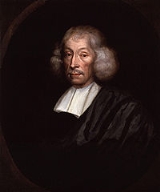
John Ray

John Ray

Overview
John Ray was an English
England
England is a country that is part of the United Kingdom. It shares land borders with Scotland to the north and Wales to the west; the Irish Sea is to the north west, the Celtic Sea to the south west, with the North Sea to the east and the English Channel to the south separating it from continental...

 naturalist
Natural history
Natural history is the scientific research of plants or animals, leaning more towards observational rather than experimental methods of study, and encompasses more research published in magazines than in academic journals. Grouped among the natural sciences, natural history is the systematic study...

, sometimes referred to as the father of English natural history. Until 1670, he wrote his name as John Wray. From then on, he used 'Ray', after "having ascertained that such had been the practice of his family before him".
Discussion
Ask a question about 'John Ray'
Start a new discussion about 'John Ray'
Answer questions from other users
Full Discussion Forum
 
Quotations

If wishes were horses, beggars might ride.

Money begets money.

Blood is thicker than water.

Misery loves company.

To go like a cat upon a hot bakestone.

He speaks Bear-garden. That is, such rude and uncivil, or sordid and dirty language, as the rabble that frequent those sports, are wont to use.

Encyclopedia
John Ray was an English
England
England is a country that is part of the United Kingdom. It shares land borders with Scotland to the north and Wales to the west; the Irish Sea is to the north west, the Celtic Sea to the south west, with the North Sea to the east and the English Channel to the south separating it from continental...

 naturalist
Natural history
Natural history is the scientific research of plants or animals, leaning more towards observational rather than experimental methods of study, and encompasses more research published in magazines than in academic journals. Grouped among the natural sciences, natural history is the systematic study...

, sometimes referred to as the father of English natural history. Until 1670, he wrote his name as John Wray. From then on, he used 'Ray', after "having ascertained that such had been the practice of his family before him".

He published important works on botany
Botany
Botany, plant science, or plant biology is a branch of biology that involves the scientific study of plant life. Traditionally, botany also included the study of fungi, algae and viruses...

, zoology
Zoology
Zoology |zoölogy]]), is the branch of biology that relates to the animal kingdom, including the structure, embryology, evolution, classification, habits, and distribution of all animals, both living and extinct...

, and natural theology
Natural theology
Natural theology is a branch of theology based on reason and ordinary experience. Thus it is distinguished from revealed theology which is based on scripture and religious experiences of various kinds; and also from transcendental theology, theology from a priori reasoning.Marcus Terentius Varro ...

. His classification of plants in his Historia Plantarum
Historia Plantarum
Historia Plantarum is Latin and literally means History of Plants, although in reality it means something closer to "on plants" or "treatise on plants". There has been more than one book by this title....

, was an important step towards modern taxonomy
Taxonomy
Taxonomy is the science of identifying and naming species, and arranging them into a classification. The field of taxonomy, sometimes referred to as "biological taxonomy", revolves around the description and use of taxonomic units, known as taxa...

. Ray rejected the system of dichotomous division by which species were classified according to a pre-conceived, either/or type system, and instead classified plants according to similarities and differences that emerged from observation. Thus he advanced scientific empiricism
Empiricism
Empiricism is a theory of knowledge that asserts that knowledge comes only or primarily via sensory experience. One of several views of epistemology, the study of human knowledge, along with rationalism, idealism and historicism, empiricism emphasizes the role of experience and evidence,...

 against the deductive rationalism
Rationalism
In epistemology and in its modern sense, rationalism is "any view appealing to reason as a source of knowledge or justification" . In more technical terms, it is a method or a theory "in which the criterion of the truth is not sensory but intellectual and deductive"...

 of the scholastics. He was the first to give a biological definition of the term species
Species
In biology, a species is one of the basic units of biological classification and a taxonomic rank. A species is often defined as a group of organisms capable of interbreeding and producing fertile offspring. While in many cases this definition is adequate, more precise or differing measures are...

.

Early life


John Ray was born in the village of Black Notley
Black Notley
Black Notley is a village and civil parish in Essex, England. It is located approximately south of Braintree and is north-northeast from the county town of Chelmsford. The village is in the district and parliamentary constituency of Braintree...

. He is said to have been born in the smithy, his father having been the village blacksmith. He was sent at the age of sixteen to Cambridge University: studying at Trinity College
Trinity College, Cambridge
Trinity College is a constituent college of the University of Cambridge. Trinity has more members than any other college in Cambridge or Oxford, with around 700 undergraduates, 430 graduates, and over 170 Fellows...

 and Catharine Hall. His tutor at Trinity was James Duport
James Duport
James Duport was an English classical scholar.-Life:His father, John Duport, who was descended from an old Norman family , was master of Jesus College, Cambridge...

, and his intimate friend and fellow-pupil the celebrated Isaac Barrow
Isaac Barrow
Isaac Barrow was an English Christian theologian, and mathematician who is generally given credit for his early role in the development of infinitesimal calculus; in particular, for the discovery of the fundamental theorem of calculus. His work centered on the properties of the tangent; Barrow was...

. Ray was chosen minor fellow of Trinity in 1649, and later major fellow. He held many college offices, becoming successively lecturer in Greek (1651), mathematics (1653),and humanity (1655), praelector
Praelector
A praelector is a traditional role at the colleges of the University of Cambridge and the University of Oxford. The role differs between the two universities.At Cambridge, a praelector is a fellow of a college...

(1657), junior dean (1657), and college steward (1659 and 1660); and according to the habit of the time, he was accustomed to preach in his college chapel and also at Great St Mary's
St Mary the Great with St Michael, Cambridge
St Mary the Great is a Church of England church at the north end of King's Parade in central Cambridge, England. It is known locally as Great St Mary's or simply GSM to distinguish it from "Little St Mary's". It is one of the Greater Churches....

, long before he took holy orders on 23 December 1660. Among these sermons were his discourses on The wisdom of God manifested in the works of the creation, and Deluge and Dissolution of the World. Ray's reputation was high also as a tutor; and he communicated his own passion for natural history to several pupils, of whom Francis Willughby
Francis Willughby
thumbnail|200px|right|A page from the Ornithologia, showing [[Jackdaw]], [[Chough]], [[European Magpie|Magpie]] and [[Eurasian Jay|Jay]], all [[Corvidae|crows]]....

 is by far the most famous.

Career


When Ray found himself unable to subscribe to the Act of Uniformity 1661 he obliged to give up his fellowship in 1662, the year after Isaac Newton
Isaac Newton
Sir Isaac Newton PRS was an English physicist, mathematician, astronomer, natural philosopher, alchemist, and theologian, who has been "considered by many to be the greatest and most influential scientist who ever lived."...

 had entered the college. We are told by Dr Derham
William Derham
William Derham was an English clergyman and natural philosopher. He produced the earliest, reasonably accurate estimate of the speed of sound.-Life:...

 in his Life of Ray that the reason of his refusal was:

[...] his having taken the 'Solemn League and Covenant
Solemn League and Covenant
The Solemn League and Covenant was an agreement between the Scottish Covenanters and the leaders of the English Parliamentarians. It was agreed to in 1643, during the First English Civil War....

', for that he never did, and often declared that he ever thought it an unlawful oath; but he said he could not declare for those that had taken the oath that no obligation lay upon them, but feared there might.


From this time onwards he seems to have depended chiefly on the bounty of his pupil Willughby, who made Ray his constant companion while he lived, and at his death left him 6 shillings a year, with the charge of educating his two sons.

In the spring of 1663 Ray started together with Willughby and two other pupils on a tour through Europe
Europe
Europe is, by convention, one of the world's seven continents. Comprising the westernmost peninsula of Eurasia, Europe is generally 'divided' from Asia to its east by the watershed divides of the Ural and Caucasus Mountains, the Ural River, the Caspian and Black Seas, and the waterways connecting...

, from which he returned in March 1666, parting from Willughby at Montpellier
Montpellier
-Neighbourhoods:Since 2001, Montpellier has been divided into seven official neighbourhoods, themselves divided into sub-neighbourhoods. Each of them possesses a neighbourhood council....

, whence the latter continued his journey into Spain
Spain
Spain , officially the Kingdom of Spain languages]] under the European Charter for Regional or Minority Languages. In each of these, Spain's official name is as follows:;;;;;;), is a country and member state of the European Union located in southwestern Europe on the Iberian Peninsula...

. He had previously in three different journeys (1658, 1661, 1662) travelled through the greater part of Great Britain, and selections from his private notes of these journeys were edited by George Scott
George Scott
George Scott may refer to:*George Scott , fought in Canada, governor of Grenada from 1762 to 1764*George Scott , wrote a 1683 book extolling the virtues of Scottish settlement in East Jersey...

 in 1760, under the title of Mr Ray's Itineraries. Ray himself published an account of his foreign travel in 1673, entitled Observations topographical, moral, and physiological, made on a Journey through part of the Low Countries, Germany, Italy, and France. From this tour Ray and Willughby returned laden with collections, on which they meant to base complete systematic descriptions of the animal and vegetable kingdoms. Willughby undertook the former part, but, dying in 1672, left only an ornithology and ichthyology, in themselves vast, for Ray to edit; while the latter used the botanical collections for the groundwork of his Methodus plantarum nova (1682), and his great Historia generalis plantarum (3 vols., 1686, 1688, 1704). The plants gathered on his British tours had already been described in his Catalogus plantarum Angliae (1670), which work is the basis of all later English floras.

In 1667 Ray was elected Fellow of the Royal Society
Royal Society
The Royal Society of London for Improving Natural Knowledge, known simply as the Royal Society, is a learned society for science, and is possibly the oldest such society in existence. Founded in November 1660, it was granted a Royal Charter by King Charles II as the "Royal Society of London"...

, and in 1669 he published in conjunction with Willughby his first paper in the Philosophical Transactions on Experiments concerning the Motion of Sap in Trees. They demonstrated the ascent of the sap through the wood of the tree, and supposed the sap to precipitate a kind of white coagulum or jelly, which may be well conceived to be the part which every year between bark and tree turns to wood and of which the leaves and fruits are made. Immediately after his admission into the Royal Society he was induced by Bishop John Wilkins
John Wilkins
John Wilkins FRS was an English clergyman, natural philosopher and author, as well as a founder of the Invisible College and one of the founders of the Royal Society, and Bishop of Chester from 1668 until his death....

 to translate his Real Character into Latin, and it seems he actually completed a translation, which, however, remained in manuscript; his Methodus plantarum nova was in fact undertaken as a part of Wilkins's great classificatory scheme.

In 1673 Ray married Margaret Oakley of Launton
Launton
Launton is a village and civil parish on the eastern outskirts of Bicester, Oxfordshire, England. Launton is twinned with the village of Gavray in France.-History:King Edward the Confessor gave the manor of Launton to Westminster Abbey in 1065...

; in 1676 he went to Sutton Coldfield
Sutton Coldfield
Sutton Coldfield is a suburb of Birmingham, in the West Midlands of England. Sutton is located about from central Birmingham but has borders with Erdington and Kingstanding. Sutton is in the northeast of Birmingham, with a population of 105,000 recorded in the 2001 census...

, and in 1677 to Falborne Hall in Essex
Essex
Essex is a ceremonial and non-metropolitan county in the East region of England, and one of the home counties. It is located to the northeast of Greater London. It borders with Cambridgeshire and Suffolk to the north, Hertfordshire to the west, Kent to the South and London to the south west...

. Finally, in 1679, he removed to Black Notley, where he afterwards remained. His life there was quiet and uneventful, although he had poor health, including chronic sores. He occupied himself in writing books and in keeping up a wide scientific correspondence, and lived, in spite of his infirmities, to the age of seventy-six, dying at Black Notley. The Ray Society
Ray Society
The Ray Society was instituted in 1844 and named after John Ray, the 17th century naturalist, as a scientific publishing organization whose activities are devoted mainly to the British flora and fauna. So far the Ray Society has published 169 volumes...

, for the publication of works on natural history, was founded in his honor in 1844.

Ray's definition of species


Ray was the first person to produce a biological definition of what a species
Species
In biology, a species is one of the basic units of biological classification and a taxonomic rank. A species is often defined as a group of organisms capable of interbreeding and producing fertile offspring. While in many cases this definition is adequate, more precise or differing measures are...

 is. This definition comes in the 1686 History of plants:
"... no surer criterion for determining species has occurred to me than the distinguishing features that perpetuate themselves in propagation from seed. Thus, no matter what variations occur in the individuals or the species, if they spring from the seed of one and the same plant, they are accidental variations and not such as to distinguish a species... Animals likewise that differ specifically preserve their distinct species permanently; one species never springs from the seed of another nor vice versa".

Ray's works


Ray published about 23 works, depending on how one counts them. The biological works were usually in Latin, the rest in English. For ease of reading, the short titles below are in English.
  • 1660: Catalogue of Cambridge plants.
  • 1668: Tables of plants
  • 1668: Catalogue of English plants plus Fasiculus (an appendix)
  • 1670: Catalogue of English proverbs.
  • 1673: Observations in the Low Countries and Catalogue of plants not native to England.
  • 1674: Collection of English words not generally used.
  • 1675: Trilingual dictionary, or nomenclator classicus.
  • 1676: Willughby's Ornithologia. "In fact, the book was Ray's, based on preliminary notes by Francis Willughby
    Francis Willughby
    thumbnail|200px|right|A page from the Ornithologia, showing [[Jackdaw]], [[Chough]], [[European Magpie|Magpie]] and [[Eurasian Jay|Jay]], all [[Corvidae|crows]]....

    ".p52 Chapter 12 "Willughby and Ray laid the foundation of scientific ornithology".
  • 1682: New method of plants.
  • 1686: History of fishes +frontis & 187 engraved plates. Plates subscribed by Fellows of the Royal Society. Samuel Pepys
    Samuel Pepys
    Samuel Pepys FRS, MP, JP, was an English naval administrator and Member of Parliament who is now most famous for the diary he kept for a decade while still a relatively young man...

    , the President, subscribed for 79 of the plates.
  • 1686–1704: History of plants. 3 vols, vol 1 1686, vol 2 1688, vol 3 1704. The third volume lacked plates, so his assistant James Petiver
    James Petiver
    James Petiver was a London apothecary, a Fellow of the Royal Society as well as London's informal Temple Coffee House Botany Club, famous for his study of botany and entomology.-Life:...

     published Petiver's Catalogue in parts, 1715–1764, with plates. The work on the first two volumes was supported by subscriptions from the President and Fellows of the Royal Society.
  • 1690: Synopsis of British plants.
  • 1691: The wisdom of God. 2nd ed 1692, 3rd ed 1701, 4th ed 1704 (each enlarged from the previous edition). This was his most popular work. It was in the vein later called natural theology
    Natural theology
    Natural theology is a branch of theology based on reason and ordinary experience. Thus it is distinguished from revealed theology which is based on scripture and religious experiences of various kinds; and also from transcendental theology, theology from a priori reasoning.Marcus Terentius Varro ...

    , explaining the adaptation
    Adaptation
    An adaptation in biology is a trait with a current functional role in the life history of an organism that is maintained and evolved by means of natural selection. An adaptation refers to both the current state of being adapted and to the dynamic evolutionary process that leads to the adaptation....

     of living creatures as the work of God. It was heavily plagiarised by William Paley
    William Paley
    William Paley was a British Christian apologist, philosopher, and utilitarian. He is best known for his exposition of the teleological argument for the existence of God in his work Natural Theology, which made use of the watchmaker analogy .-Life:Paley was Born in Peterborough, England, and was...

     in his Natural theology of 1802.p92 p452
  • 1692: Miscellaneous discourses concerning the dissolution and changes of the world. This includes some important discussion of fossils. Ray insisted that fossils had once been alive, in opposition to his friends Martin Lister
    Martin Lister
    Martin Lister FRS was an English naturalist and physician.-Life:Lister was born at Radcliffe, near Buckingham, the son of Sir Martin Lister MP for Brackley in the Long Parliament and his wife Susan Temple daughter of Sir Alexander Temple. Lister was connected to a number of well known individuals...

     and Edward Llwyd. "These [fossils] were originally the shells and bones of living fishes and other animals bred in the sea". Raven commented that this was "The fullest and most enlightened treatment by an Englishman" of that time.p426
    • 1713 Three Physico-theological discourses. This is the 3rd edition of Miscellaneous discourses, the last by Ray before his death, and delayed in publication. Its main importance is that Ray recanted his former acceptance of fossils, apparently because he was theologically troubled by the implications of extinction.p37 Robert Hooke
      Robert Hooke
      Robert Hooke FRS was an English natural philosopher, architect and polymath.His adult life comprised three distinct periods: as a scientific inquirer lacking money; achieving great wealth and standing through his reputation for hard work and scrupulous honesty following the great fire of 1666, but...

      , like Nicolas Steno
      Nicolas Steno
      Nicolas Steno |Latinized]] to Nicolaus Steno -gen. Nicolai Stenonis-, Italian Niccolo' Stenone) was a Danish pioneer in both anatomy and geology. Already in 1659 he decided not to accept anything simply written in a book, instead resolving to do research himself. He is considered the father of...

      , was in no doubt about the biological origin of fossils. Hooke made the point that some fossils were no longer living, for example Ammonite
      Ammonite
      Ammonite, as a zoological or paleontological term, refers to any member of the Ammonoidea an extinct subclass within the Molluscan class Cephalopoda which are more closely related to living coleoids Ammonite, as a zoological or paleontological term, refers to any member of the Ammonoidea an extinct...

      s: this was the source of Ray's concern.p327
  • 1693: Synopsis of animals and reptiles.
  • 1693: Collection of travels.
  • 1694: Collection of European plants.
  • 1695: Plants of each county
    County
    A county is a jurisdiction of local government in certain modern nations. Historically in mainland Europe, the original French term, comté, and its equivalents in other languages denoted a jurisdiction under the sovereignty of a count A county is a jurisdiction of local government in certain...

     (Camden's Brittania).
  • 1696: Brief dissertation.
  • 1700: A persuasive to a holy life.
  • 1705. Method and history of insects. (Post-mortem and unedited)
  • 1713: Synopsis of birds and fishes.

Libraries holding Ray's works


Including the various editions, there are 172 works of Ray, of which most are rare. The only libraries with substantial holdings are all in England.p153 The list in order of holdings is:
The British Library
British Library
The British Library is the national library of the United Kingdom, and is the world's largest library in terms of total number of items. The library is a major research library, holding over 150 million items from every country in the world, in virtually all known languages and in many formats,...

, Euston, London. Holds over 80 of the editions.
The Bodleian Library
Bodleian Library
The Bodleian Library , the main research library of the University of Oxford, is one of the oldest libraries in Europe, and in Britain is second in size only to the British Library...

, University of Oxford.
The University of Cambridge
University of Cambridge
The University of Cambridge is a public research university located in Cambridge, United Kingdom. It is the second-oldest university in both the United Kingdom and the English-speaking world , and the seventh-oldest globally...

 Library.
Library of Trinity College Cambridge.
The Natural History Museum
Natural History Museum
The Natural History Museum is one of three large museums on Exhibition Road, South Kensington, London, England . Its main frontage is on Cromwell Road...

 Library, South Kensington, London.

Legacy

"Ray sweeps away the litter of mythology and fable... and always insists upon accuracy of observation and description and the testing of every new discovery".p10


Ray's works were directly influential on the development of taxonomy by Carl Linnaeus. In 1844, the Ray Society
Ray Society
The Ray Society was instituted in 1844 and named after John Ray, the 17th century naturalist, as a scientific publishing organization whose activities are devoted mainly to the British flora and fauna. So far the Ray Society has published 169 volumes...

 was founded, named after John Ray, and has since published over 160 books on natural history.

In 1986, to mark the 300th anniversary of the publication of Ray's Historia Plantarum, there was a celebration of Ray's legacy in Braintree. A "John Ray Gallery" was opened in the Braintree Museum. The scientific society at his old college, St Catharine's College, Cambridge
St Catharine's College, Cambridge
St. Catharine’s College is a constituent college of the University of Cambridge. Founded in 1473, the college is often referred to informally by the nickname "Catz".-History:...

, is named the "John Ray Society" after him.

Other sources

1950: John Ray, naturalist: his life and works 1686: Historia plantarum species, etc. 3 vols. Vol. I. Londini: Clark. 1713a: Synopsis methodica avium & piscium: opus posthumum, etc. (vol. 1: Avium) [in Latin]. William Innys, London. Digitized version 1713b: Synopsis methodica avium & piscium: opus posthumum, etc. (vol. 2: Piscium) [in Latin]. William Innys, London. Digitized version

External links