
|
|
|
|
John Profumo
|
| |
|
| |
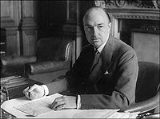
Brigadier John Dennis Profumo, 5th Baron Profumo, CBE (January 30, 1915 Kensington, London, England – March 9, 2006), informally known as Jack Profumo, was a British politician. His title, which he did not use, was Sardinian. Although Profumo held an increasingly responsible series of political posts in the 1950s, he is best known today for his involvement in a 1963 scandal involving a prostitute. The scandal, now known as the Profumo Affair, led to Profumo's resignation and withdrawal from politics, and it may have helped to topple the Conservative government of Harold Macmillan.
After his resignation, Profumo began to work as a volunteer cleaning toilets at Toynbee Hall, a charity based in the East End of London, and continued to work there for the rest of his life.

Discussion
Ask a question about 'John Profumo'
Start a new discussion about 'John Profumo'
Answer questions from other users
|
Recent Posts

Encyclopedia
Brigadier John Dennis Profumo, 5th Baron Profumo, CBE (January 30, 1915 Kensington, London, England – March 9, 2006), informally known as Jack Profumo, was a British politician. His title, which he did not use, was Sardinian. Although Profumo held an increasingly responsible series of political posts in the 1950s, he is best known today for his involvement in a 1963 scandal involving a prostitute. The scandal, now known as the Profumo Affair, led to Profumo's resignation and withdrawal from politics, and it may have helped to topple the Conservative government of Harold Macmillan.
After his resignation, Profumo began to work as a volunteer cleaning toilets at Toynbee Hall, a charity based in the East End of London, and continued to work there for the rest of his life. Eventually, Profumo volunteered as the charity's chief fundraiser. These charitable activities helped to restore the fallen politician's reputation; he was awarded a CBE in 1975, and in 1995 was invited to Margaret Thatcher's 70th birthday dinner. He was a member of Boodle's club in St James's, London from 1969 until his death.
Early life and career Profumo was the son of Albert Profumo, 4th Baron Profumo, a diplomat and barrister of Italian origin, who died in 1940. He was educated at Harrow School and Brasenose College, Oxford, where he took his degree in agriculture and political economy and was a member of the Bullingdon Club.
In 1939 he joined the British Army (Northamptonshire Yeomanry), and served in North Africa (where he was mentioned in dispatches), landed in Normandy on D-Day and was engaged in the subsequent fierce fighting to secure that region of France. His final rank in the British Army was brigadier. He was awarded an OBE (military) for his service on Field Marshal Harold Alexander's staff commanding the 15th Army Group in Italy towards the end of the war.
Political career In 1940, while still serving in the army, Profumo was elected to the House of Commons as a Conservative at a by-election on 3rd March in the Kettering constituency, Northamptonshire. Shortly afterwards he voted against the Chamberlain government in the debate following the British defeat at Narvik in Norway. (This defiance on Profumo's part enraged the Government Whip, David Margesson, who wrote to him a letter containing the following: 'I can tell you this, you utterly contemptible little shit. On every morning that you wake up for the rest of your life you will be ashamed of what you did last night.') Profumo was the youngest MP at that time, and by the time of his death he was last surviving member of the 1940 House of Commons.
At the 1945 election Profumo was defeated at Kettering by a Labour candidate, Dick Mitchison. Later in 1945 he was chief of staff to the British Mission to Japan. In 1950 he left the army and at the general election in February 1950 he was elected for Stratford-on-Avon in Warwickshire, then a safe Conservative seat.
Profumo was a well-connected politician with a good war record, and (despite Margesson's above-mentioned outburst) was highly regarded in the Conservative party. These qualities helped him to rise steadily through the ranks of the Conservative government that was elected in 1951. He was appointed Parliamentary Secretary to the Ministry of Civil Aviation in November 1952, Joint Parliamentary Secretary to the Ministry of Transport and Civil Aviation in November 1953, Parliamentary Under-Secretary of State for the Colonies in January 1957, Parliamentary Under-Secretary of State at the Foreign Office in November 1958, and Minister of State for Foreign Affairs in January 1959. In 1954 he married the actress Valerie Hobson. In July 1960, Profumo was appointed a Secretary of State for War, ( outside of the cabinet) and a member of the Privy Council.
The "Profumo Affair" In July 1961, at a party at Cliveden, home of Viscount Astor, Profumo met Christine Keeler, a model with whom he began a sexual relationship. Profumo ended it after only a few weeks but rumours about the affair began to circulate. Since Keeler also had sexual relations with Yevgeny Ivanov, the senior naval attaché at the Soviet Embassy, the "Profumo Affair" took on a national security dimension.
In December 1962, a shooting incident in London involving two other men who were involved with Keeler led the press to investigate Ms Keeler, and reporters soon learned of her affairs with Profumo and Ivanov. But the British tradition of respecting the private lives of British politicians was maintained until March 1963, when the Labour MP George Wigg, claiming to be motivated by the national security aspects of the case, referred in the House of Commons (ie. under immunity from any possible legal action) to rumours that Profumo was having an affair with Keeler. Profumo then made a personal statement in which he admitted he knew Keeler but denied there was any "impropriety" in their relationship.
Profumo's statement did not prevent newspapers publishing stories about Keeler, and it soon became apparent to Macmillan that his position was untenable. On 5 June 1963 Profumo was forced to admit that he had lied to the House, an unforgivable offence in British politics. He resigned from office, from the House and from the Privy Council. Before making his public confession Profumo confessed the affair to his wife, who stood by him. It was never shown that his relationship with Keeler had led to any breach of national security. The scandal rocked the Conservative government, and was generally held to have been among the causes of its defeat by Labour at the 1964 election.
Profumo maintained complete public silence about the matter for the rest of his life, even when the 1989 film Scandal and the publication of Keeler's memoirs revived public interest in the affair.
Later life
Shortly after his resignation Profumo began to work as a volunteer cleaning toilets at Toynbee Hall, a charity based in the East End of London, and continued to work there for the rest of his life.. He "had to be persuaded to lay down his mop and lend a hand running the place", eventually becoming Toynbee Hall's chief fundraiser, and used his political skills and contacts to raise large sums of money. All this work was done as a volunteer, since Profumo was able to live on his inherited wealth. His wife also devoted herself to charity until her death in 1998. In the eyes of most commentators, Profumo's charity work redeemed his reputation. The social reform campaigner Lord Longford said he "felt more admiration [for Profumo] than [for] all the men I've known in my lifetime".
Profumo was awarded a CBE in 1975, which he received at a Buckingham Palace ceremony from Queen Elizabeth II, signalling his return to respectability. In 1995, former Conservative Prime Minister Margaret Thatcher invited him to her 70th birthday dinner, where he sat next to the Queen. He appeared only occasionally in public, particularly in his last years when he was confined to a wheelchair. His last appearance was at the memorial service for Sir Edward Heath on 8 November 2005.
In 2003, Profumo received the prestigious Beacon Fellowship Prize for his work at Toynbee Hall in countering social deprivation and exclusion.
Death and tributes On 7 March 2006, Profumo suffered a severe stroke and was admitted to London's Chelsea and Westminster Hospital. He died two days later surrounded by his family. In the immediate aftermath of his death, most commentators said that he should be remembered as much for his contribution to society as for the scandal of 1963.
External links
|
| |
|
|