
All Topics  
John Millington Synge

 
John Millington Synge

   Email Print
   Bookmark   Link


John Millington Synge


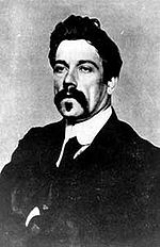
Edmund John Millington Synge (16 April 1871 – 24 March 1909) was an Irish playwright
Playwright

A playwright, also known as a dramatist, is a person who writes dramatic literature or drama. These works may be written specifically to be performed by actors or they may be closet dramas or literary works written using dramatic forms but not meant for performance....
, poet
Poet

A poet is a person who writes poetry....
, prose
Prose

Prose is writing that resembles everyday Speech communication. The word "prose" is derived from the Latin prosa, which literally translates to "straightforward"....
 writer, and collector of folklore
Folklore

Folklore is the body of expressive culture, including tales, music, dance, legends, oral history, proverbs, jokes, superstitions, customs, and so forth within a particular population comprising the traditions of that culture, subculture, or group ....
. He was one of the cofounders of the Abbey Theatre
Abbey Theatre

The Abbey Theatre , also known as the National Theatre of Ireland , is a theatre located in Dublin, Republic of Ireland. The Abbey first opened its doors to the public on 27 December 1904, and despite losing its original building to a fire in 1951, has remained active to the present day....
. He is best known for the play The Playboy of the Western World
The Playboy of the Western World

The Playboy of the Western World is a three-act play written by Ireland playwright J. M. Synge and first performed at the Abbey Theatre, Dublin, on January 26, 1907....
, which caused riots during its opening run at the Abbey theatre. Synge wrote many well-known plays, including "Riders to the Sea", which is often considered to be his strongest literary work.

Synge suffered from Hodgkin's disease
Hodgkin's lymphoma

Hodgkin's lymphoma, also known as Hodgkin's disease is a type of lymphoma . It was named after Thomas Hodgkin, who first described abnormalities in the lymph system in 1832....
, a form of cancer at the time untreatable.


Discussion
Ask a question about 'John Millington Synge'
Start a new discussion about 'John Millington Synge'
Answer questions from other users
Full Discussion Forum


Quotations


A translation is no translation, he said, unless it will give you the music of a poem along with the words of it.

In a good play every speech should be as fully flavoured as a nut or apple.

Preface

Lord, confound this surly sister,Blight her brow with blotch and blister,Cramp her larynx, lung and liver,In her guts a galling give her.

The Curse

There is no language like the Irish for soothing and quieting.

These are rotten, so youre the QueenOf all are living, or have been.

Queens

They're cheering a young lad, the champion playboy of the Western World.

Act III


Encyclopedia


Edmund John Millington Synge (16 April 1871 – 24 March 1909) was an Irish playwright
Playwright

A playwright, also known as a dramatist, is a person who writes dramatic literature or drama. These works may be written specifically to be performed by actors or they may be closet dramas or literary works written using dramatic forms but not meant for performance....
, poet
Poet

A poet is a person who writes poetry....
, prose
Prose

Prose is writing that resembles everyday Speech communication. The word "prose" is derived from the Latin prosa, which literally translates to "straightforward"....
 writer, and collector of folklore
Folklore

Folklore is the body of expressive culture, including tales, music, dance, legends, oral history, proverbs, jokes, superstitions, customs, and so forth within a particular population comprising the traditions of that culture, subculture, or group ....
. He was one of the cofounders of the Abbey Theatre
Abbey Theatre

The Abbey Theatre , also known as the National Theatre of Ireland , is a theatre located in Dublin, Republic of Ireland. The Abbey first opened its doors to the public on 27 December 1904, and despite losing its original building to a fire in 1951, has remained active to the present day....
. He is best known for the play The Playboy of the Western World
The Playboy of the Western World

The Playboy of the Western World is a three-act play written by Ireland playwright J. M. Synge and first performed at the Abbey Theatre, Dublin, on January 26, 1907....
, which caused riots during its opening run at the Abbey theatre. Synge wrote many well-known plays, including "Riders to the Sea", which is often considered to be his strongest literary work.

Synge suffered from Hodgkin's disease
Hodgkin's lymphoma

Hodgkin's lymphoma, also known as Hodgkin's disease is a type of lymphoma . It was named after Thomas Hodgkin, who first described abnormalities in the lymph system in 1832....
, a form of cancer at the time untreatable. He died just weeks short of his 38th birthday and was at the time trying to complete his last play, The Last Black Supper.

Biography


Early life

Synge was born in Newtown Villas, Rathfarnham
Rathfarnham

Rathfarnham , is a suburb of Southside . It is located to the south of Terenure, and to the east of Templeogue, in the postal districts of Dublin 14 and Dublin 16....
, County Dublin
County Dublin

County Dublin , or more correctly today the Dublin Region , is the area that contains the city of Dublin, the Capital of Republic of Ireland as well as the largest city on the island of Ireland; and the modern counties of County of Dun Laoghaire-Rathdown, County of Fingal and County of South Dublin....
 on 16 April 1871. He was the youngest son in a family of eight children. His parents were part of the Protestant middle and upper class: his family on his father's side were landed gentry from Glanmore Castle, County Wicklow
County Wicklow

County Wicklow is a Counties of Ireland on the east coast of Republic of Ireland, immediately south of Dublin. The county is bordered by the Irish Sea and the counties of County Carlow, County Kildare, County Wexford, as well as two parts of what was County Dublin, County of Dun Laoghaire-Rathdown and County of South Dublin....
 and his maternal grandfather, Robert Traill, had been a Church of Ireland
Church of Ireland

The Church of Ireland is an autonomous province of the Anglican Communion, operating across the island of Ireland. Like other Anglican churches, it considers itself to be both Catholicism and Protestant Reformation....
 rector
Rector

The word rector has a number of different meanings, but all of them indicate an academic, religious or political administrator.The word "rector" also appears in many modern languages, such as Albanian, Dutch language, Spanish language, Catalan language and Romanian language....
 in Schull
Schull

Schull or Skull is a village in County Cork, Republic of Ireland. Located on the southwest coast, in West Cork, the village is situated in a scenic and remote location....
, County Cork
County Cork

County Cork is the most southerly and the largest of the modern counties of Republic of Ireland. Cork is nicknamed "The Rebel County", as a result of the support of the townsmen of Cork in 1491 for Perkin Warbeck, a pretender to the throne of England during the Wars of the Roses....
 and a member of the Schull Relief Committee during the Great Irish Famine (1845–1849). Rathfarnham was then a rural part of the county, and during his childhood he was passionately interested in ornithology. His earliest poems are somewhat Wordsworthian in tone: his first 'literary composition' was a nature diary he made in collaboration with Florence Ross when they were both children.

His grandfather, John Hatch Synge, was an admirer of the educationalist Johann Heinrich Pestalozzi
Johann Heinrich Pestalozzi

Johann Heinrich Pestalozzi was a Switzerland pedagogue and educational reformer....
 and founded an experimental school on the family estate. His father, also called John Hatch Synge, was a barrister but contracted smallpox
Smallpox

Smallpox is an infectious disease unique to humans, caused by either of two virus variants, Variola major and Variola minor. The disease is also known by the Latin names Variola or Variola vera, which is a derivative of the Latin varius, meaning spotted, or varus, meaning "pimple"....
 and died in 1872 at the age of 49. Synge's mother, who had a private income from lands in County Galway
County Galway

County Galway is located on the west coast of Ireland. It is in the Provinces of Ireland of Connacht. The county takes its name from the city of Galway....
, moved the family to the house next door to her mother in Rathgar
Rathgar

Rathgar is a suburb of Dublin, Republic of Ireland, lying about 3 kilometres south of the city centre....
, Dublin. Synge, although often ill, had a happy childhood here, and developed an interest in ornithology
Ornithology

Ornithology is the branch of zoology concerned with the study of birds. Several aspects of the study of ornithology differ from closely related disciplines, due partly to the high visibility and the aesthetic appeal of birds....
 along the banks of the River Dodder
River Dodder

The River Dodder is one of the three main rivers of the Dublin region in Republic of Ireland....
 in the grounds of the nearby Rathfarnham Castle, and during family holidays at the seaside resort of Greystones
Greystones

Greystones is a coastal town in County Wicklow, Republic of Ireland. It is located on Ireland?s east coast, 8 km south of Bray and south of Dublin , with a population in the region of 15,000....
, Wicklow, and the family estate at Glanmore.

Synge was educated privately at schools in Dublin and Bray
Bray

Bray is a town in north County Wicklow, Republic of Ireland. It is a busy urban centre and seaside town of approximately 32,000 people, making it the fourth largest town in Ireland ....
, and later studied piano, flute, violin, music theory
Music theory

Music theory is the field of study that deals with how music works. It examines the language and notation of music. It identifies patterns that govern composer techniques....
 and counterpoint
Counterpoint

In music, counterpoint is the relationship between two or more Register that are independent in contour and rhythm, and interdependent in harmony....
 at the Royal Irish Academy of Music
Royal Irish Academy of Music

The Royal Irish Academy of Music is a linked college of Dublin City University located in Dublin, Ireland.It was founded in 1848 by a group of music enthusiasts and moved to its present address in Westland Row in 1871....
. He traveled to Europe to study music, but changed his mind and decided to focus on literature. He proved to be a talented student and won a scholarship in counterpoint in 1891. The family moved to the suburb of Kingstown (now Dún Laoghaire
Dún Laoghaire

D?n Laoghaire is a suburban seaside town and county town of County of Dun Laoghaire-Rathdown, Republic of Ireland.The town is situated some 12 kilometres south of Dublin city centre, and is a major port of entry from Great Britain....
) in 1888, and Synge entered Trinity College, Dublin
Trinity College, Dublin

Trinity College, Dublin , corporately designated as the Provost, Fellows and Scholars of the College of the Holy and Undivided Trinity of Queen Elizabeth near Dublin, was founded in 1592 by Queen Elizabeth I of England as the "mother of a university", and is the only constituent residential college of the University of Dublin....
 the following year, where he graduated with a BA
Bachelor's degree

A bachelor's degree is usually an undergraduate academic degree awarded for a course or major that generally lasts for three, four, or in some cases and countries, five or six years....
 in 1892. While at college, he studied Irish
Irish language

Irish , also known as Irish Gaelic, is a Goidelic languages of the Indo-European language family, originating in Ireland and historically spoken by the Irish people....
 and Hebrew
Hebrew language

Hebrew is a Semitic languages of the Afro-Asiatic languages. Modern Hebrew is spoken by more than seven million people in Israel and Classical Hebrew is used for prayer or study in Jews communities around the world....
, as well as continuing his music studies and playing with the Academy orchestra in the Antient Concert Rooms.

He joined the Dublin Naturalists' Field Club and read Charles Darwin
Charles Darwin

Charles Robert Darwin Royal Society was an English people natural history who realised and presented compelling evidence that all species of life have evolution over time from common descent, through the process he called natural selection....
. Synge wrote:
When I was about fourteen I obtained a book of Darwin's .... My studies showed me the force of what I read, [and] the more I put it from me the more it rushed back with new instances and power ... Soon afterwards I turned my attention to works of Christian evidence, reading them at first with pleasure, soon with doubt, and at last in some casses with derision
He then continued, "Soon after I had relinquished the kingdom of God I began to take up a real interest in the kingdom of Ireland. My politics went round ... to a temperate Nationalism." He later developed an interest in Irish antiquities and the Aran Islands
Aran Islands

The Aran Islands are a group of three islands located at the mouth of Galway Bay, on the west coast of Ireland. The largest island is Inishmore the middle and second-largest is Inishmaan , and the smallest and most eastern is Inisheer ....
, and became a member of the Irish League for a year. He later quite the Irish League because, as he told Maud Gonne
Maud Gonne

Maud Gonne MacBride was an England-born Ireland revolutionary, feminism and actress, best remembered for her turbulent relationship with William Butler Yeats....
, "my theory of regeneration for Ireland differs from yours ... I wish to work on my own for the cause of Ireland, and I shall never be able to do so if I get mixed up with a revolutionary and semi-military movement." In 1893, he published his first known work, a Wordsworth
William Wordsworth

William Wordsworth was a major England Romantic poetry poet who, with Samuel Taylor Coleridge, helped to launch the Romanticism in English literature with the 1798 joint publication Lyrical Ballads....
-influenced poem, in Kottabos: A College Miscellany. His reading of Darwin coincided with a crisis of faith and Synge abandoned the Protestant religion of his upbringing around this time.

Emerging writer

After graduating, Synge decided that he wanted to be a professional musician and went to Germany to study music. He stayed at Coblenz
Koblenz

Koblenz is a city situated on both banks of the Rhine at its confluence with the Moselle River, where the Deutsches Eck and its monument are situated....
 during 1893, and moved to Würzburg
Würzburg

W?rzburg is a city in the region of Franconia which lies in the northern tip of Bavaria, Germany. Located on the Main River, it is the capital of the Regierungsbezirk Unterfranken....
 in the January of the following year. Partly because he was shy about performing in public, and partly because of self-doubt on his ability, Synge decided to abandon music and pursue his literary interests. He returned to Ireland in June 1894, and moved to Paris the following January to study literature and languages at the Sorbonne
University of Paris

The historic University of Paris first appeared in the 12th century. In 1970 it was reorganized as 13 autonomous university . The university is often referred to as the Sorbonne or La Sorbonne after the collegiate institution founded about 1257 by Robert de Sorbon....
.

During summer holidays with his family in Dublin, he met and fell in love with Cherrie Matheson, a friend of his cousin and a member of the Plymouth Brethren
Plymouth Brethren

The Plymouth Brethren is a conservative, Evangelicalism Christian restorationist New religious movement, whose history can be traced to Dublin, Ireland, in the late 1820s....
. He proposed to her in 1895 and again the next year, but she turned him down on both occasions because of their differing religious viewpoints. This rejection affected Synge greatly and reinforced his determination to spend as much time as possible outside Ireland.

In 1896 he visited Italy to study the language for a time before returning to Paris. Later that year he met William Butler Yeats
William Butler Yeats

File:William Butler Yeat by George Charles Beresford.jpgWilliam Butler Yeats was an Irish people poet and dramatist and one of the foremost figures of 20th century in literature....
, who encouraged Synge to live for a while in the Aran Islands
Aran Islands

The Aran Islands are a group of three islands located at the mouth of Galway Bay, on the west coast of Ireland. The largest island is Inishmore the middle and second-largest is Inishmaan , and the smallest and most eastern is Inisheer ....
 and then return to Dublin and devote himself to creative work. That year he joined with Yeats, Augusta, Lady Gregory, and George William Russell
George William Russell

Not to be confused with George William Erskine Russell .George William Russell who wrote under the pseudonym ? , was an Irish people Irish Nationalism, writer, editor, critic, poet, and painter....
 to form the Irish National Theatre Society, which later would establish the Abbey Theatre. He also wrote an amount of literary criticism for Gonne's Irlande Libre and other journals as well as unpublished poems and prose in a decadent, fin de siècle
Fin de siècle

Fin de si?cle is French language for ?end of the century?. The term sometimes encompasses both the closing and onset of an era, as it was felt to be a period of degeneration, but at the same time a period of hope for a new beginning....
 style. These writings were eventually gathered together in the 1960s for his Collected Works. He also attended lectures at the Sorbonne by the noted Celtic scholar Henri d'Arbois de Jubainville
Marie Henri d'Arbois de Jubainville

Marie Henri d'Arbois de Jubainville , was a France historian and philologist.He was born at Nancy, France. In 1851 he left the ?cole des Chartes with the degree of palaeography archivist....
.

Aran Islands and first plays

Teach Synge Inishmaan
Synge suffered his first attack of Hodgkin's disease in 1897 and also had an enlarged gland removed from his neck. The following year, he spent the summer on the Aran Islands. He spent the next five summers on the islands, collecting stories and folklore and perfecting his Irish, while continuing to live in Paris for most of the rest of the year. He also visited Brittany
Brittany

Brittany is a former independent Celtic nations monarchy and duchy, now incorporated into France. It is also, more generally, the name of the cultural area whose limits correspond to the historic province and independent duchy....
 regularly. During this period, Synge wrote his first play, When the Moon has Set. He sent it to Lady Gregory for the Irish Literary Theatre
Irish Literary Theatre

The Irish Literary Theatre was a precursor to the Abbey Theatre. Founded by W. B. Yeats, Isabella Augusta Gregory, George A. Moore and Edward Martyn in 1899, this theatre had presented a number of plays by the founders and other writers, including Padraic Colum....
 in 1900, but she rejected it and the play was not published until it appeared in the Collected Works.

His first account of life on the islands was published in the New Ireland Review in 1898 and his book-length journal, The Aran Islands, was completed in 1901 and published in 1907 with illustrations by Jack Butler Yeats
Jack Butler Yeats

Jack Butler Yeats was an Irish people artist.He was born in London and died in Dublin.Yeats's early style was that of an illustrator and almost a cartoonist ; he only began to work regularly in Oil paint in 1906....
. Synge considered the work "my first serious piece of work". When Lady Gregory read the book's manuscript, she advised Synge to remove any direct naming of the place and adding more folk stories to it, but refused to because he wanted to create something more realistic. The book is a slow-paced reflection of life on the islands and reflects Synge's belief that beneath the Catholicism
Catholicism

Catholicism is a broad term for the body of the Catholic faith, its Theology and doctrines, its Catholic liturgy, Ethics, spiritual, and behavioral characteristics, as well as a religious people as a whole....
 of the islanders it was possible to detect a substratum of the older pagan beliefs of their ancestors. His experiences on Aran were to form the basis for many of the plays of Irish peasant and fishing community life that Synge went on to write.

Abbey1
In 1903, Synge left Paris and moved to London. He had written two one-act plays, Riders to the Sea and The Shadow of the Glen the previous year. These met with Lady Gregory's approval and The Shadow of the Glen was performed at the Molesworth Hall in October 1903. Riders to the Sea was performed at the same venue in February the following year. The Shadow of the Glen, under the title In the Shadow of the Glen, formed part of the bill for the opening run of the Abbey Theatre from 27 December 1904 to 3 January 1905. Both plays were based on stories Synge had collected on the Aran Islands, and Synge relied on props from the Aran Islands to help set the stage. He also relied on Hiberno-English, the English dialect of Ireland, in order to reinforce its usefulness as a language; parts of this stemmed from his belief that Gaelic as a language could not survive.

The Shadow of the Glen was based on a story of an unfaithful wife and it was attacked in print by Irish nationalist
Irish nationalism

Irish nationalism comprises political and social movements and sentiment inspired by a love for Culture of Ireland, Gaelic language and History of Ireland, and a sense of pride in Ireland and the Irish people....
 leader Arthur Griffith
Arthur Griffith

Arthur Griffith was the founder and third leader of Sinn F?in. He served as President of D?il ?ireann from January to August 1922, and was head of the Irish delegation at the negotiations in London that produced the Anglo-Irish Treaty of 1921....
 as "a slur on Irish womanhood". Years later, Synge would write, "When I was writing The Shadow of the Glen some years ago, I got more aid than any learning could have given me from a chink in the floor of the old Wicklow house where I was staying, that let me hear what was being said by the servant girls in the kitchen." This encouraged more critical attacks that alleged that Synge described Irish women in an unfair manner. Riders to the Sea was also attacked by nationalists, this time Patrick Pearse
Patrick Pearse

Patrick Henry Pearse was a teacher, barrister, Irish poetry, writer, nationalist and political activist who was one of the leaders of the Easter Rising in 1916....
, who decried it because of the author's attitude to God and religion. Furthermore, Synge's audience felt that he did a disservice to Irish nationalism for not idealizing his characters. However, later critics would attack Synge for idealizing the Irish peasantry too much. Despite these attacks, the plays are now part of the canon of English language
English language

English is a West Germanic language that originated in Anglo-Saxon England and has lingua franca status in many parts of the world as a result of the military, economic, scientific, political and cultural influence of the British Empire in the 18th, 19th and early 20th centuries and that of the United States from the mid 20th century onwa...
 theatre. A third one-act play, The Tinker’s Wedding was drafted around this time, but Synge initially made no attempt to have it performed, largely because of a scene where a priest is tied up in a sack, which, as he wrote to the publisher Elkin Mathews in 1905, would probably upset "a good many of our Dublin friends".

When the Abbey was set up, Synge was appointed literary advisor to the theatre and soon became one of the directors of the company, along with Yeats and Lady Gregory. However, he differed from Yeats and Lady Gregory in what he believed the Irish theatre should be, as he wrote to Stephen MacKenna:
I do not believe in the possibility of 'a purely fantastic, unmodern, ideal, breezy, spring-dayish, Cuchulainoid National Theatre'... no drama can grow out of anything other than the fundamental realities of life which are never fantastic, are neither modern nor unmodern and, as I see them, rarely spring-dayish, or breezy or Cuchulanoid.
His next play, The Well of the Saints was staged at the theatre in 1905, again to nationalist disapproval, and again in 1906 at the Deutsches Theater
Deutsches Theater

The Deutsches Theater in Berlin is a well-known Germany theatre. It was built in 1850 as Friedrich-Wilhelm-St?dtisches Theater, after Frederick William IV of Prussia....
 in Berlin
Berlin

Berlin is the Capital of Germany city and one of sixteen States of Germany of Germany. With a population of 3.4 million within its city limits, Berlin is the country's largest city....
. The critic Joseph Holloway claimed the play combined "lyric and dirt".

Playboy riots and after

John Millington Synge   Project Gutenberg Etext 19028
The play widely regarded as Synge's masterpiece, The Playboy of the Western World, was first performed in the Abbey in January 1907. The comedy centers on the story of apparent parricide
Parricide

Parricide stemming from is defined as:#the act of murdering one's father , mother , or other close relative#the act of murdering a person who stands in a relationship resembling that of a father...
 and attracted a wide hostile reaction from the Irish public. The Freeman's Journal
Freeman's Journal

The Freeman's Journal was the oldest Irish nationalism newspaper in Ireland. It was founded in 1763 by Charles Lucas and was identified with radical 18th century Protestant Irish Patriot Party politicians Henry Grattan and Henry Flood....
 described it as "an unmitigated, protracted libel upon Irish peasant men, and worse still upon Irish girlhood". Egged on by nationalists, including Arthur Griffith
Arthur Griffith

Arthur Griffith was the founder and third leader of Sinn F?in. He served as President of D?il ?ireann from January to August 1922, and was head of the Irish delegation at the negotiations in London that produced the Anglo-Irish Treaty of 1921....
, who believed that the theatre was insufficiently politically active and described it as "a vile and inhuman story told in the foulest language we have ever listened to from a public platform", and with the pretext of a perceived slight on the virtue of Irish womanhood in the line "... a drift of chosen females, standing in their shift
Chemise

The term chemise or shift can refer to the classic smock, or else can refer to certain modern types of women's undergarments and dresses....
 ..." At the time a shift was known as a symbol representing Kitty O'Shea and adultery. However, George Watson explained the real problem with the play when he says, "this heady mixture of English stereotypical images of Irish violence, of Irish resentment of those images, and of Synge's stress on violence, which for him is almost synonymous with vitality, is, far more than the word 'shift', what made The Playboy so explosive." A significant portion of the crowd rioted, causing the third act of the play to be acted out in dumb show
Masque

The masque was a form of festive Noble court entertainment which flourished in sixteenth and early seventeenth century Europe, though it was developed earlier in Italy, in forms including the intermedio....
.

Yeats returned from Scotland to address the crowd on the second night, and decided to call in the police. Press opinion soon turned against the rioters and the protests petered out. Yeats later referred to this incident in a speech to the Abbey audience in 1926 on the fourth night of Seán O'Casey
Seán O'Casey

Se?n O'Casey was a major Irish theatre dramatist and memoirist. A committed socialist, he was the first Irish playwright of note to write about the Dublin working classes....
's The Plough and the Stars, when he declared: "You have disgraced yourselves again. Is this to be an ever-recurring celebration of the arrival of Irish genius? Synge first and then O'Casey?"

Although writing of The Tinker's Wedding begun at the same time as Riders to the Sea and The Shadow of the glen, it took Synge five years to complete, and was finished in 1907. It was not performed until 1909, and only then in London. The first critic to respond to the play was Daniel Corkery, who said, "One is sorry Synge ever wrote so poor a thing, and one fails to understand why it ever should have been staged anywhere." This claim was popularly held by critics for many decades after. That same year, Synge became engaged to the Abbey actress Maire O'Neill (formerly known as Molly Allgood)
Maire O'Neill

Maire O'Neill was an Irish actress of stage and film.Born as Mary Allgood and known as "Molly", she had been engaged to Irish playwright John Millington Synge before his untimely death....
. He died at the Elpis Nursing Home in Dublin. His Poems and Translations was published by the Cuala Press
Cuala Press

The Cuala Press was set up in 1904 by Elizabeth Yeats and her brother William Butler Yeats. Elizabeth had previously run the Dun Emer Press for two years and had published work by her brother from that imprint....
 on 8 April with a preface by Yeats. Yeats and Molly Allgood completed Synge's unfinished final play, Deirdre of the Sorrows, and it was presented by the Abbey players in January 1910 with Allgood in the lead role. Synge died in Dublin, 24 March 1909.

Personality

Synge is commonly described as an enigma, a person who is hard to read and understand. John Masefield, Synge's acquaintance, said that he "gave one from the first the impression of a strange personality". Not even the members of his own family were close enough to understand him. He was quiet and reserved, and Yeats thought that he was "meditative". Synge was open when he would write letters to women, and instead of being reticent, he was acted like "an ordinary human being but not a particularly eloquent one". However, his letters to Allgood, an actress that Synge wrote to often, are filled with condescending remarks and as a man who is "not only unattractive but also incompatible with the complex personality of the man who wrote the plays".

Masefield felt that Synge's problems and thoughts about life originated with his poor health. In particular, Masefield claims that "His relish of the savagery made me feel that he was a dying man clutching at life, and clutching most wildly at violent life, as the sick man does". In stanza IV of Yeats's "In Memory of Major Robert Gregory", he summarizes his view that Synge was unhealthy, sick and in pain throughout his career:
And that enquiring man John Synge comes next,
That dying chose the living world for text
And never could have rested in the tomb
But that, long travelling, he had come
Towards nightfall upon certain set apart
In a most desolate stony place,
Towards nightfall upon a race
Passionate and simple like his heart.


Legacy

Synge's plays helped set the Abbey house style for the following four decades. The stylised realism of his writing was reflected in the training given at the theatre's school of acting, and plays of peasant life were the main staple of the repertoire until the end of the 1950s. Sean O'Casey
Seán O'Casey

Se?n O'Casey was a major Irish theatre dramatist and memoirist. A committed socialist, he was the first Irish playwright of note to write about the Dublin working classes....
, the next major dramatist to write for the Abbey, knew Synge's work well and attempted to do for the Dublin working classes what his predecessor had done for the rural poor. However, O'Casey was not the only playwright that Synge influenced, as Brendan Behan
Brendan Behan

Brendan Francis Behan was an Irish literature poet, short story writer, novelist, and playwright who wrote in both Irish and English. He was also a committed Irish Republican and a volunteer in the Irish Republican Army ....
, Paul Vincent Carroll, Brinsley MacNamara
Brinsley MacNamara

Brinsley MacNamara - born John Weldon - was a writer born near Delvin, County Westmeath, Ireland. He worked for the Abbey Theatre from 1909, and later as the registrar of the National Gallery of Ireland....
, and Lennox Robinson
Lennox Robinson

Esm? Stuart Lennox Robinson was an Ireland dramatist, poet and theatre producer and director who was involved with the Abbey Theatre.Robinson was born in Westgrove, Douglas in County Cork and raised in a Protestant and Unionism family in which he was the youngest of seven children....
 were all indebted to Synge.

The critic Vivian Mercier
Vivian Mercier

Vivian Mercier was an Irish people literary critic. He was born in Clara, County Offaly, Ireland and educated first at Portora Royal School, Enniskillen, Co....
 was amongst the first to recognise Samuel Beckett
Samuel Beckett

Samuel Barclay Beckett was an Irish people writer, dramatist and poet. Beckett's work offers a bleak outlook on human culture and both formally and philosophically became increasingly minimalism....
's debt to Synge. Beckett was a regular audience member at the Abbey in his youth and particularly admired the plays of Yeats
William Butler Yeats

File:William Butler Yeat by George Charles Beresford.jpgWilliam Butler Yeats was an Irish people poet and dramatist and one of the foremost figures of 20th century in literature....
, Synge and O'Casey
Seán O'Casey

Se?n O'Casey was a major Irish theatre dramatist and memoirist. A committed socialist, he was the first Irish playwright of note to write about the Dublin working classes....
. Mercier points out parallels between Synge's casts of tramps, beggars and peasants and many of the figures in Beckett's novels and dramatic works.

In recent years, Synge's cottage on the Aran Islands has been restored as a tourist attraction. An annual Synge Summer School has been held every summer since 1991 in the village of Rathdrum
Rathdrum, County Wicklow

Rathdrum is a village in County Wicklow, Republic of Ireland. It is situated high on the western side of the beautiful Avonmore Valley and offers the tourist majestic views of the River Avonmore, which flows through the Vale of Clara....
 in Wicklow.

Works

  • In the Shadow of the Glen
    In the Shadow of the Glen

    In the Shadow of the Glen is a one-act play written by Irish playwright J. M. Synge, first performed in Molesworth Hall, Dublin on October 8, 1903....
    , 1903
  • Riders to the Sea
    Riders to the Sea

    Riders to the Sea is a play written by Ireland playwright John Millington Synge. It was first performed on February 25, 1904 at the Molesworth Hall, Dublin by the Irish National Theater Society....
    , 1904
  • The Well of the Saints
    The Well of the Saints

    The Well of the Saints is a three-act play written by Irish playwright J. M. Synge, first performed at the Abbey Theatre by the Irish National Theatre Society in February, 1905 in literature....
    , 1905
  • The Aran Islands, 1907
  • The Playboy of the Western World
    The Playboy of the Western World

    The Playboy of the Western World is a three-act play written by Ireland playwright J. M. Synge and first performed at the Abbey Theatre, Dublin, on January 26, 1907....
    , 1907
  • The Tinker’s Wedding, 1908
  • Poems and Translations, 1909
  • Deirdre of the Sorrows
    Deirdre of the Sorrows

    Deirdre of the Sorrows is a three-act play written by Irish people playwright John Millington Synge, first performed at the Abbey Theatre by the Irish National Theatre Society in 1910....
     1910
  • In Wicklow and West Kerry, 1912
  • Collected Works of John Millington Synge 4 vols., 1962–68
    • Vol. 1: Poems, 1962
    • Vol. 2: Prose, 1966
    • Vols. 3 & 4: Plays, 1968


External links