
All Topics  
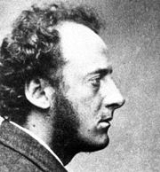
John Everett Millais

 
John Everett Millais

   Email Print
   Bookmark   Link


John Everett Millais


Sir John Everett Millais, 1st Baronet, PRA
Royal Academy

The Royal Academy of Arts is an art institution based in Burlington House on Piccadilly, London, England. As an academy, it functions to encourage British art, and has a membership of practising artists....
 (8 June 1829 – 13 August 1896) was an English painter
Painting

Painting is the practice of applying paint, pigment, color or other medium to a surface . In art, the term describes both the act and the result, which is called a painting....
 and illustrator
Illustrator

An illustrator is a graphic artist who specializes in enhancing writing by providing a visual representation that corresponds to the content of the associated text....
 and one of the founders of the Pre-Raphaelite Brotherhood
Pre-Raphaelite Brotherhood

The Pre-Raphaelite Brotherhood was a group of England Paintings, poets, and critics, founded in 1848 by Dante Gabriel Rossetti, William Michael Rossetti, James Collinson, John Everett Millais, Frederic George Stephens, Thomas Woolner and William Holman Hunt....
.

Pre-Raphaelite works
Millais' Christ In The House Of His Parents
Christ in the House of His Parents

Christ in the House of His Parents is a painting by John Everett Millais depicting the Holy Family in Saint Joseph's carpentry workshop. The painting was extremely controversial when first exhibited, prompting many negative reviews, most notably one written by Charles Dickens....
 (1850) was highly controversial because of its realistic portrayal of a working class Holy Family labouring in a messy carpentry workshop.


Discussion
Ask a question about 'John Everett Millais'
Start a new discussion about 'John Everett Millais'
Answer questions from other users
Full Discussion Forum


Quotations


My maturity has not fulfilled the hopes and ambitions of my youth.


Encyclopedia


Sir John Everett Millais, 1st Baronet, PRA
Royal Academy

The Royal Academy of Arts is an art institution based in Burlington House on Piccadilly, London, England. As an academy, it functions to encourage British art, and has a membership of practising artists....
 (8 June 1829 – 13 August 1896) was an English painter
Painting

Painting is the practice of applying paint, pigment, color or other medium to a surface . In art, the term describes both the act and the result, which is called a painting....
 and illustrator
Illustrator

An illustrator is a graphic artist who specializes in enhancing writing by providing a visual representation that corresponds to the content of the associated text....
 and one of the founders of the Pre-Raphaelite Brotherhood
Pre-Raphaelite Brotherhood

The Pre-Raphaelite Brotherhood was a group of England Paintings, poets, and critics, founded in 1848 by Dante Gabriel Rossetti, William Michael Rossetti, James Collinson, John Everett Millais, Frederic George Stephens, Thomas Woolner and William Holman Hunt....
.

Early life


Millais (pronounced Mih-lay) was born in Southampton
Southampton

Southampton is the largest City status in the United Kingdom in the ceremonial county of Hampshire, on the south coast of England, and is sited around 100 km south-west of London and 30 km north-west of Portsmouth....
, England in 1829, of a prominent Jersey
Jersey

The Bailiwick of Jersey is a British Crown dependency off the coast of Normandy, France. As well as the island of Jersey itself, the bailiwick includes the nearly uninhabited islands of the Minquiers, ?cr?hous, the Pierres de Lecq and other rocks and reefs....
-based family. His prodigious artistic talent won him a place at the Royal Academy schools at the still unprecedented age of eleven. While there, he met William Holman Hunt
William Holman Hunt

William Holman Hunt Order of Merit was a British painter, and one of the founders of the Pre-Raphaelite Brotherhood....
 and Dante Gabriel Rossetti
Dante Gabriel Rossetti

Dante Gabriel Rossetti was an English poet, illustrator, Painting and translator....
 with whom he formed the Pre-Raphaelite Brotherhood (known as the "PRB") in September 1848 in his family home on Gower Street, off Bedford Square.

Pre-Raphaelite works


Millais   Ophelia
Millais Blind Girl
Millais' Christ In The House Of His Parents
Christ in the House of His Parents

Christ in the House of His Parents is a painting by John Everett Millais depicting the Holy Family in Saint Joseph's carpentry workshop. The painting was extremely controversial when first exhibited, prompting many negative reviews, most notably one written by Charles Dickens....
 (1850) was highly controversial because of its realistic portrayal of a working class Holy Family labouring in a messy carpentry workshop. Later works were also controversial, though less so. Millais achieved popular success with A Huguenot
A Huguenot

A Huguenot, on St. Bartholomew's Day, Refusing to Shield Himself from Danger by Wearing the Roman Catholic Badge is a painting by John Everett Millais....
 (1852), which depicts a young couple about to be separated because of religious conflicts. He repeated this theme in many later works.

All these early works were painted with great attention to detail, often concentrating on the beauty and complexity of the natural world. In paintings such as Ophelia
Ophelia (painting)

Ophelia is a painting by United Kingdom artist Sir John Everett Millais, completed in 1852. Currently held in the Tate Britain in London, it depicts Ophelia , a character from William Shakespeare's play Hamlet, singing before she drowns in a river in Denmark....
 (1852) Millais created dense and elaborate pictorial surfaces based on the integration of naturalistic elements. This approach has been described as a kind of "pictorial eco-system".

This style was promoted by the critic John Ruskin
John Ruskin

John Ruskin was a British art critic and social thought, also remembered as an author, poet and artist. His essays on art and architecture were extremely influential in the Victorian era and Edwardian period eras....
, who had defended the Pre-Raphaelites against their critics. Millais' friendship with Ruskin introduced him to Ruskin's wife Effie
Effie Gray

Euphemia Chalmers Gray was the wife of the critic John Ruskin, but eventually left her husband, and after the annulment of the marriage, married his protege, the Pre-Raphaelite Brotherhood painter John Everett Millais....
. Soon after they met she modelled for his painting The Order of Release
The Order of Release

The Order of Release, 1746 is a painting by John Everett Millais exhibited in 1853. It is notable for the fact that it marks the beginnings of Millais's move away from the highly detailed Pre-Raphaelitism of his early years....
. As Millais painted Effie they fell in love. Despite having been married to Ruskin for several years, Effie was still a virgin. Her parents realized something was wrong and she filed for an annulment
Annulment

Annulment is a legal procedure for declaring a marriage Void . Unlike divorce, it is retroactive: an annulled marriage is considered never to have existed....
. In 1856, after her marriage to Ruskin was annulled, Effie and John Millais married. He and Effie eventually had eight children including John Guille Millais
John Guille Millais

John Guille Millais , known as "Johnny" Millais, was an English travel writer, gardener, artist, and naturalist who specialised in ornithology and bird portraiture....
, a notable naturalist and wildlife artist.

Later works


After his marriage, Millais began to paint in a broader style, which was condemned by Ruskin as "a catastrophe". It has been argued that this change of style resulted from Millais' need to increase his output to support his growing family. Unsympathetic critics such as William Morris
William Morris

William Morris was an English architect, furniture and textile designer, artist, writer, and Socialism associated with the Pre-Raphaelite Brotherhood and the English Arts and Crafts Movement....
 accused him of "selling out" to achieve popularity and wealth. His admirers, in contrast, pointed to the artist's connections with Whistler
James McNeill Whistler

'James Abbott McNeill Whistler' was an United States-born, United Kingdom of Great Britain and Ireland-based artist. Averse to sentimentality and moral in painting, he was a leading proponent of the credo "art for art's sake"....
 and Albert Moore, and influence on John Singer Sargent
John Singer Sargent

John Singer Sargent was the most successful portrait painter of his era. During his career, he created roughly 900 oil paintings and more than 2,000 watercolors, as well as countless sketches and charcoal drawings....
. Millais himself argued that as he grew more confident as an artist, he could paint with greater boldness. In his article "Thoughts on our art of Today" (1888) he recommended Velázquez
Diego Velázquez

Diego Rodr?guez de Silva y Vel?zquez was a Spain painting who was the leading artist in the Noble court of King Philip IV of Spain. He was an individualistic artist of the contemporary baroque period, important as a portrait painting....
 and Rembrandt as models for artists to follow.

Princes
Millais Boyhoodofraleigh
Paintings such as The Eve of St. Agnes and The Somnambulist clearly show an ongoing dialogue between the artist and Whistler, whose work Millais strongly supported. Other paintings of the late 1850s and 1860s can be interpreted as anticipating aspects of the Aesthetic Movement. Many deploy broad blocks of harmoniously arranged colour and are symbolic rather than narratival.

Later works, from the 1870s onwards demonstrate Millais' reverence for old masters such as Joshua Reynolds
Joshua Reynolds

Sir Joshua Reynolds Royal Academy Royal Society Royal Society of Arts was an important and influential 18th century English Painting, specialising in portraits and promoting the "Grand Style" in painting which depended on idealisation of the imperfect....
 and Velázquez. Many of these paintings were of an historical theme and were further examples of Millais' talent. Notable among these are The Two Princes Edward and Richard in the Tower (1878) depicting the Princes in the Tower
Princes in the Tower

The Princes in the Tower, Edward V of England and his brother, Richard of Shrewsbury, 1st Duke of York , were two sons of Edward IV of England and Elizabeth Woodville....
, The Northwest Passage (1874) and the Boyhood of Raleigh (1871). Such paintings indicate Millais' interest in subjects connected to Britain's history and expanding empire. Millais also achieved great popularity with his paintings of children, notably Bubbles
Bubbles (painting)

Bubbles, originally entitled A Child's World, is a painting by Sir John Everett Millais that became famous when it was used over many generations in advertisements for Pears soap....
 (1886) – famous, or perhaps notorious, for being used in the advertising of Pears soap
Pears soap

Pears transparent soap is a brand of soap first produced and sold in 1789 by Andrew Pears at a factory just off Oxford Street in London, England....
 – and Cherry Ripe
Cherry Ripe

Cherry Ripe is an English folk song to words by the English poet Robert Herrick , which contains the refrain,Cherry ripe, cherry ripe,...
.His last project (1896) was to be a painting entitled based on his illustration for his Son's book, depicted a white hunter lying dead in the African veldt, his body contemplated by two indifferent Africans.

The Landscapes 1870-92


This fascination with wild and bleak locations is also evident in his many landscape paintings of this period, which usually depict difficult or dangerous terrain. The first of these, Chill October (1870) was painted in Perth
Perth, Scotland

Perth is a town and former royal burgh in central Scotland. Sitting on the banks of the River Tay, it is the administrative headquarters of Perth and Kinross council area....
, near his wife's family home. Chill October,(Collection of Sir Andrew Lloyd Webber)was the first of the large-scale Scottish Landscapes Millais painted periodically throughout his later career. Usually autumnal and often bleakly unpicturesque, they evoke a mood of melancholy and sense of transience that recalls his cycle-of-nature paintings of the later 1850s, especially Autumn Leaves (Manchester Art Gallery) and The Vale Of Rest (Tate Britain), though with little or no direct symbolism or human activity to point to their meaning. In 1870 Millais returned to full landscape pictures, and over the next twenty years painted a number of scenes of Perthshire where he was annually found hunting and fishing from August until late into the autumn each year. Most of these landscapes are autumnal or early winter in season and show bleak, dank, water fringed bog or moor, loch and riverside. Millais never returned to "blade by blade" landscape painting, nor to the vibrant greens of his own outdoor work in the early fifties, although the assured handling of his broader freer, later style is equally accomplished in its close observation of scenery. Many were painted elsewhere in Perthshire
Perthshire

Perthshire , officially the County of Perth, is a registration county in central Scotland. It extends from Strathmore, Angus and Perth & Kinross in the east, to the Pass of Drumochter in the north, Rannoch Moor and Ben Lui in the west, and Aberfoyle, Scotland in the south....
, near Dunkeld
Dunkeld

Dunkeld is a small town in River Tay, Perth and Kinross, Scotland, approximately 15 miles north of Perth, Scotland on the eastern side of the A9 road into the Scottish Highlands and on the opposite side of the River Tay from the Victorian village of Birnam, Perth and Kinross....
 and Birnam
Birnam, Perth and Kinross

Birnam is a town in Perthshire, Scotland. The town originated from the Victorian era with the coming of the railway in 1856, although the place and name is well known because William Shakespeare mentioned Birnam Wood in Macbeth....
, where Millais rented grand houses each autumn in order to hunt and fish. Christmas Eve, his first full landscape snow scene, painted in 1887, was a view looking towards Murthly castle.

Illustrations

Millais was also very successful as a book illustrator, notably for the works of Anthony Trollope
Anthony Trollope

Anthony Trollope became one of the most successful, prolific and respected English language novelists of the Victorian era. Some of Trollope's best-loved works, known as the Chronicles of Barsetshire, revolve around the imaginary county of Barsetshire; he also wrote penetrating novels on politics, social, gender issues and conflicts of hi...
 and the poems of Tennyson
Alfred Tennyson, 1st Baron Tennyson

Alfred Tennyson, 1st Baron Tennyson was Poet Laureate of the United Kingdom and remains one of the most popular English poets.Tennyson excelled at penning short lyrics, including "In the valley of Cauteretz", "Break, break, break", "The Charge of the Light Brigade ", "Tears, Idle Tears" and "Crossing the Bar"....
. His complex illustrations of the parables of Jesus were published in 1864. His father-in-law commissioned stained-glass windows based on them for Kinnoull parish church, Perth
Perth, Scotland

Perth is a town and former royal burgh in central Scotland. Sitting on the banks of the River Tay, it is the administrative headquarters of Perth and Kinross council area....
. He also provided illustrations for magazines such as Good Words. In 1869 he was recruited as an artist for the newly founded weekly newspaper The Graphic
The Graphic

The Graphic was a United Kingdom illustration newspaper, first published on 4 December 1869 by Illustrated Newspapers, Ltd. It continued to be published weekly under this title until 23 April 1932 and then changed title to The National Graphic between 28 April and 14 July 1932; it then ceased publication after 3,266 issues....
.

Academic career

Millias was elected as an associate member of the Royal Academy of Arts in 1853, and was soon elected as a full member of the Academy, in which he was a prominent and active participant. He was granted a baronetcy in 1885, the first artist to be honoured with a hereditary title. After the death of Frederic Leighton in 1896, Millais was elected President of the Royal Academy, but he died later in the same year from throat cancer
Esophageal cancer

Esophageal cancer is cancer of the esophagus. There are various subtypes, primarily squamous cell cancer and adenocarcinoma. Squamous cell cancer arises from the cells that line the upper part of the esophagus....
. He was buried in St Paul's Cathedral
St Paul's Cathedral

St Paul's Cathedral is the Anglicanism cathedral on Ludgate Hill, in the City of London, and the seat of the Bishop of London. The present building dates from the 17th century and is generally reckoned to be London's fifth St Paul's Cathedral, although the number is higher if every major medieval reconstruction is counted as a new cathedr...
.

Memorial statue

When Millais died in 1896, the Prince of Wales (later to become King Edward VII) chaired a memorial committee, which commissioned a statue of the artist. This was installed at the front of the National Gallery of British Art (now Tate Britain
Tate Britain

Tate Britain is an art gallery situated on Millbank in London, and part of the Tate Gallery gallery network in United Kingdom, with Tate Modern, Tate Liverpool and Tate St Ives....
) in the garden on the east side in 1905. On 23 November that year, the Pall Mall Gazette called it "a breezy statue, representing the man in the characteristic attitude in which we all knew him".

In 1953, Tate Director, Sir Norman Reid
Norman Reid (museum director)

Sir Norman Robert Reid was an arts administrator and painter and was the Director of the Tate from 1964 to 1979...
, attempted to have it replaced by Auguste Rodin's John the Baptist, and in 1962 again proposed its removal, calling its presence "positively harmful". His efforts were frustrated by the statue's owner, the Ministry of Works
Ministry of Works

The Ministry of Works was a department of the UK Government formed in 1943, during World War II, to organise the requisitioning of property for wartime use....
. Ownership was transferred from the Ministry to English Heritage
English Heritage

English Heritage is a non-departmental public body of the United Kingdom government with a broad remit of managing the historic built environment of England....
 in 1996, and by them in turn to the Tate. In 2000, under Sir Nicholas Serota
Nicholas Serota

Sir Nicholas Andrew Serota is a United Kingdom art curator. He was director of the Whitechapel Gallery, London, and Modern Art Oxford, before becoming director of the Tate Gallery, the United Kingdom's national gallery of modern and British art in 1988....
's directorship, the statue was removed to the rear of the building.

Selected works in museums

  • The Blind Girl: Birmingham Museum & Art Gallery
    Birmingham Museum & Art Gallery

    Birmingham Museum & Art Gallery is an art gallery in Birmingham, England. Opened in 1885, it has a collection of international importance covering fine art, ceramics, metalwork, jewellery, archaeology, ethnography, local history and industrial history....
  • :
  • The Two Princes Edward and Richard in the Tower: Picture Gallery of Royal Holloway College


Gallery


See also

  • List of Pre-Raphaelite paintings
    List of Pre-Raphaelite paintings

    This is a list of paintings produced by members of the Pre-Raphaelite Brotherhood and other artists associated with the Pre-Raphaelite style....
     - including John Everett Millais
  • English school of painting
  • British art
  • List of British painters
    List of British painters

    The following is a partial list of United Kingdom painters :...


Further reading

Arts Council 1979 by Malcolm Warner, The Drawings of John Everett Millais (cat)

Paul Barlow Time Present and Time Past:The Art of John Everett Millais, Ashgate 2005

Bennett Mary 1967 “Footnotes to the Millais Exhibition , Walker Art Gallery (Liverpool Bulletin, No 12 1967.

Eggeling, Dr Joe : Millais and Dunkeld The story of Millais’s Landscapes 1985.

Grosvenor 1886 Exhibition of the works of John Everett Millais, Bt (With notes by F.G. Stephens) (cat)

Lutyens 1967 (ed) Millais and the Ruskins

Lutyens 1972-4 M. Lutyens “letters from John everett Millais, Bart P.R.A. and William Holman Hunt. O.M. The Walpole Society.

Mancoff 2001 D. N. Mancoff (ed) John Everett Millais beyond the Pre Raphaelite Brotherhood. (Londom and New Haven)
John Guille Millais
John Guille Millais

John Guille Millais , known as "Johnny" Millais, was an English travel writer, gardener, artist, and naturalist who specialised in ornithology and bird portraiture....
 (2 Vols) 1899 The Life and Letters of John Everett Millais by his son,

Millais (catalogue) Tate Britain 2007 Jason Rosenfeld and Alison Smith,

Millais (catalogue) Mary Bennett 1967 Walker Art Gallery and Royal Academy

Millais Portraits (cat) NPG 1999

Spielmann Marion 1898 notes on Millais exhibition R.A. 1898

External links

  • includes many pictures and a complete list of his works
  • Oil-on-canvas reproductions
  • gallery
  • – Short video podcasts about the paintings
  • Discover more about the artists, the techniques they used and a timeline spanning 100 years.