

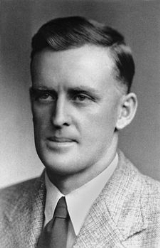
Joh Bjelke-Petersen

Encyclopedia
Sir Johannes "Joh" Bjelke-Petersen, KCMG (13 January 191123 April 2005), was an Australian politician. He was the longest-serving and longest-lived Premier of Queensland, holding office from 1968 to 1987, a period that saw considerable economic development in the state. His uncompromising conservatism (including his role within the downfall of the Whitlam federal government), his political longevity, and his leadership of a government that, in its later years, was revealed to be institutionally corrupt, made him one of the best-known and most controversial political figures of 20th century Australia
. An ironic feature of his government was that while Premier Bjelke-Petersen relentlessly preached the maintenance of law and order as a reason to suppress political opposition, a number of senior government figures, including a Police Commissioner he appointed, were subsequently jailed for corruption.
in the southern Hawke's Bay Region of New Zealand, and lived in Waipukurau
, a small town in Hawke's Bay. Bjelke-Petersen's parents were both Danish immigrants, and his father, Carl, was a Lutheran
pastor
. In 1913 the family left for Australia, moving to Kingaroy in south-eastern Queensland
and taking up dairy farming
.
The young Johannes suffered from polio
, leaving him with a life-long limp. The family was poor, and Carl Bjelke-Petersen was frequently in poor health. Johannes and his mother Maren worked on the farm.
In 1933, Bjelke-Petersen began work on the family's newly-acquired second property at land-clearing and peanut farming. His efforts eventually allowed him to begin work as a contract land-clearer and to acquire further capital which he invested in farm equipment and natural resource exploration. He developed a technique for quickly clearing scrub by connecting a heavy anchor chain between two bulldozers. Obtaining a pilot's licence early in his adult life, Joh also started aerial spraying and grass seeding to further speed up pasture development in Queensland. By the time he entered Parliament, he had built a thriving business.
Under sponsorship from Sir Charles Adermann
and Sir Frank Nicklin
, he was elected as Country Party
member for Nanango
in the Queensland Legislative Assembly
in 1946 (from 1950 to 1987 he was member for Barambah). The Australian Labor Party
(ALP) had held power in Queensland since 1932 and Bjelke-Petersen spent eleven years as an Opposition member.
as a junior coalition partner.
Bjelke-Petersen became one of Nicklin's cabinet ministers in 1963 as minister for works and housing.
When Nicklin retired in January 1968, Jack Pizzey
became Nicklin's successor both as Premier and as Country Party leader. Pizzey died unexpectedly within seven months of assuming office. In the election for leadership of the Country Party, Bjelke-Petersen won. He became Premier on 8 August 1968. (During the interval between Pizzey's death and Bjelke-Petersen's accession, the premiership was held by the Liberals' leader, Sir Gordon Chalk
.) At this stage Bjelke-Petersen was still not very well known even to most Queenslanders, let alone outside the State. Even after becoming Premier, Joh was still very active in his local community teaching Sunday School.
Bjelke-Petersen's government was kept in power in part due to an electoral malapportionment where rural electoral districts had significantly fewer enrolled voters than those in metropolitan areas. This system was originally introduced by the Labor Party in 1949 as an overt electoral fix in order to concentrate its base of rural voters in as many districts as possible. Under Nicklin the bias in favour of rural constituencies was maintained, but reworked to favour the Country and Liberal parties. In 1972 Sir Joh strengthened the system to favour his own party, which led to his opponents referring to it as the "Bjelkemander
," a play on the term "gerrymander". Ironically, while in opposition, Bjelke-Petersen had vehemently criticised the 1949 redistribution, claiming that Labor was effectively telling Queenslanders, "Whether you like it or not, we will be the Government."
Although Bjelke-Petersen's 1972 redistributions occasionally had elements of "gerrymandering" in the strict sense, their perceived unfairness had more to do with malapportionment whereby certain areas (normally rural) are simply granted more representation than their population would dictate if electorates contained equal numbers of voters (or population). The lack of a state upper house
(which Queensland had abolished in 1922) allowed legislation to be passed without the need to negotiate with other political parties.
With Labor weak and chronically divided in Queensland throughout the 1960s and 1970s, Bjelke-Petersen won a series of election victories, often at the expense of his Liberal coalition partners as much as Labor. Typically the Country Party would gain fewer votes than either Labor or Liberal, but those votes would be spread out across the many rural electorates, giving the Country Party more seats than the Liberals and thus making them the senior coalition partner. Together they had more seats in Parliament than Labor, allowing Bjelke-Petersen to govern as Premier of a State in which his party received, in one election (1972), only 20% of the votes. However at each election Bjelke-Petersen won, the combined Liberal and National two party preferred vote was higher than Labor's. His campaigns stressed social conservatism, law and order
and unrelenting attacks on Labor.
In 1984 Bjelke-Petersen was created a Knight Commander of the Order of St Michael and St George
(KCMG) for "services to parliamentary democracy". He was then generally known as "Sir Joh" (rather than "Sir Johannes"), and his wife generally (if incorrectly) known as "Lady Flo."
. All other Australian states and territories had abolished this tax by 1981 in attempt to stem the flow of people to Queensland. The rapid rise in population in the Gold Coast, Brisbane and the Sunshine Coast
led to a building boom that lasted for three decades.
The development boom was particularly noticeable in the tourist area of the Gold Coast. The Bjelke-Petersen government worked closely with property developers, who constructed resorts, hotels, a casino and a system of residential developments. The Hinze Dam
was also constructed on the Gold Coast.
In one controversial case, the Queensland government passed special legislation, the Sanctuary Cove Act, in 1985, to exempt a luxury development, Sanctuary Cove
, from local government planning regulations. The developer, Mike Gore, was seen as a key member of the "white shoe brigade", a group of Gold Coast businessmen who became influential supporters of Bjelke-Petersen. Gore established Queensland's first gated community at Sanctuary Cove.
Gore was a vocal backer of the "Joh for PM" campaign. Bjelke-Petersen denied that had received any money from Gore. A similar piece of legislation was passed to allow the Japanese company, Iwasaki Sangyo, to develop a tourist resort near Yeppoon
in Central Queensland. It was later revealed by the Morning Bulletin newspaper that Bjelke-Petersen's son-in-law, Lester Folker, had been appointed a director of the Australian-based arm of the development company. Bjelke-Petersen denied any conflict of interest, and was quoted by the newspaper as complaining that every time one of his children bought a Japanese car, people decried it as a conflict of interest.
 Considerable development of the state's infrastructure took place during the Bjelke-Petersen era.
He was a leading proponent of Wivenhoe and Burdekin Dams, encouraging the modernising and electrifying of the Queensland railway system, and the construction of the Gateway Bridge
. Airports, coal mines, power stations, and dams were built throughout the state. James Cook University
was established. In Brisbane
, the Queensland Cultural Centre
, Griffith University
, the South East Freeway, and the Captain Cook
, Gateway and Merivale bridges were all constructed, as well as the Parliamentary Annexe that was attached to Queensland Parliament House. Bjelke-Petersen was one of the instigators of World Expo 88 (now South Bank Parklands
) and the 1982 Brisbane Commonwealth Games
.
A Queensland defamation jury found in 1992 that industrialist Sir Leslie Thiess had, during 1981–1984, bribed Bjelke-Petersen generally 'on a large scale and on many occasions'; specifically, to procure Government contracts involving Winchester South, Expo '88, a Gold Coast cultural centre and three prisons.
Despite public protests, several Brisbane heritage sites such as the Bellevue Hotel were demolished. Thirteen Liberal backbenchers supported Labor in parliament, condemning the destruction of the state government owned Bellevue. Former Liberal Parliamentarian, Terry Gygar, described the early morning scene at the Bellevue demolition;
"A large crowd had gathered around the building. There was a cordon of police. They had thrown up a barbed ... a mesh wire fence around it. And then the Deen Bros arrived, rolling through like an armoured division, straight through the crowd. People were knocked sideways. Police were dragging people out of the way. Parking meters were knocked over. Traffic signs were bent and twisted on the road. It looked like Stalingrad." Bjelke-Petersen congratulated the contractors, the Deen Brothers, "on a job well done".
Bjelke-Petersen's authoritarian and manipulative approach to media, at times became visible behind his tangled syntax, which frequently bemused interviewers. It was unknown whether he was joking, confused or saying what he really thought when he said: "The greatest thing that could happen to the state and nation is when we get rid of all the media... then we could live in peace and tranquility and no one would know anything." Joh's catchphrase answer to unwelcome queries, "Don't you worry about that," was widely parodied. Peterson was known to refer to this process of patronising journalists as "feeding the chooks".
Bjelke-Petersen responded to unfavourable media coverage by using government resources to sue for defamation on numerous occasions. The Queensland historian Ross Fitzgerald
was threatened with criminal libel when he sought to publish a critical history.
In 1989, the Australian Broadcasting Tribunal, found that in 1986 Bjelke-Petersen had placed then Channel 9 owner Alan Bond
in a position of 'commercial blackmail' when Bond improperly agreed to pay $400,000 as an out-of-court defamation settlement.
, which was a haven for anti-Bjelke-Petersen sentiment. A decision by this University's Senate to award him an honorary LL.D
brought about criticisms from both students and staff. Leading Queensland poet, Judith Wright
, returned her own honorary Doctorate, in a personal protest.
The 1971 Springbok tour by the South Africa national rugby union team
sparked nation-wide demonstrations against apartheid. The Springboks' Brisbane match was moved from the Rugby Union headquarters at Ballymore
because it was easier to erect barricades at the Exhibition Ground
. The RNA, which administered the ground refused to co-operate. Bjelke-Petersen "grabbed the political initiative", by declaring a state of emergency
, thus compelling the RNA to co-operate. The declaration covered the whole of Queensland and operated for a period from ten days before the first game to fourteen days after the last, "in case the police had any unfinished business". Federal Country Party leader Doug Anthony
called Bjelke-Petersen's support for South Africa's Apartheid regime, in direct defiance of the federal Coalition's stance, "unreasonable, selfish and un-Christian". The Bjelke-Petersen government turned the furore to its advantage, winning two by-elections, including the seat of Merthyr, won by Don Lane, a former Special Branch policeman.
According to Lane, one of Bjelke-Petersen's closest ministerial allies, Joh saw street marchers as a menace who clogged up traffic, caused distress to pedestrians, motorists and shop keepers, and were mainly made up of grubby left wing students, Anarchists, professional agitators and trade union activists. The government transferred 450 police from country areas to suppress anti-apartheid demonstrations. Future Queensland Premier Peter Beattie
, then a student protestor, witnessed police violently attacking peaceful demonstrators, including women. Brisbane aboriginal activist, Sam Watson claimed the police wanted to "smash and cripple and destroy". Bjelke-Petersen praised police conduct during the demonstrations and awarded them an extra day's leave.
Peter Beattie
said that, "...if you went to a protest there was always photos being taken". "You know, you'd always pose to get your best side. (Laughs) And they had a dossier on everybody", Beattie said.
Bjelke-Petersen rejected recommendations by the Police Minister, Max Hodges, and the Police Commissioner, Ray Whitrod
, who sought an inquiry into an incident in 1976, where a police officer struck a student with a baton during a demonstration. Bjelke-Petersen told Whitrod that the cabinet, not the Commissioner, would decide if an investigation was warranted. The Police Union sent a letter of thanks to the Premier and offered support. Hodges was replaced as Police Minister soon after. The Police, secure in the knowledge that they had the Premier's backing, continued to act provocatively, most notably in a raid on a commune at Cedar Bay later that year. The Police who had been looking for marijuana, torched the residents' houses and destroyed their property. Whitrod sought an inquiry but the results were never revealed.
After seven years as Police Commissioner, Whitrod resigned saying he could no longer tolerate political interference and the Police Commissioner had become a political puppet. He was replaced by Terry Lewis who had been previously promoted to Assistant Commissioner, against Whitrod's recommendation, over the heads of 122 officers of higher or equal rank. Whitrod had already told the new Police Minister, "everybody in the police force knows that Lewis is corrupt. Now if he's appointed assistant commissioner, it will nullify all my efforts', and the new Minister said, 'I will talk to the Premier'. And about an hour or so later the Minister rung me up and said, 'The Premier does not want to see you, nor will he allow you to address cabinet'." Whitrod said that he hoped his resignation would send a message to the people of Queensland; "that something very seriously was going wrong with the Queensland police force and with their Premier".
In 1977, Bjelke-Petersen announced that "the day of street marches is over... Don't bother applying for a march permit. You won't get one. That's government policy now!" Bjelke-Petersen said. Liberal parliamentarians crossed the floor defending the right of association and assembly. Colin Lamont, one of the Liberals, told a meeting at the University of Queensland
that the Premier was engineering confrontation for electoral purposes. "Two hours later, he (Bjelke-Petersen) lunged at me across the floor of Parliament, waving a tape recorder and spluttered, 'I've heard every word. You are a traitor to this Government'", Lamont wrote later. Lamont said he learned the Special Branch had been keeping files on Liberal rebels and reporting, not to their Commissioner, but directly to the Premier. "The police state had arrived", Lamont added.
The Uniting Church
synod passed a resolution that "Queensland heads of churches to mediate between the State government and student and civil liberties groups to achieve better ways of expressing their differences." Bjelke-Petersen replied "If churches want to consort with atheists and communists dedicated to the elimination of religion, that is their problem."
Bjelke-Petersen often accused political opponents of being covert communist
s bent on anarchy. "I have always found ... you can campaign on anything you like but nothing is more effective than communism... If he's a Labor man, he's a socialist and a very dangerous man."
to a group of Aboriginal
people, because according to cabinet policy, "The Queensland Government does not view favourably proposals to acquire large areas of additional freehold or leasehold land for development by Aborigines or Aboriginal groups in isolation." This dispute resulted in the case of Koowarta v Bjelke-Petersen
, which was decided partly in the High Court
in 1982, and partly in the Supreme Court of Queensland
in 1988. The courts found that Bjelke-Petersen's policy had discriminated against Aboriginal people.
Also in 1976, Bjelke-Petersen evicted a team treating trachoma
, led by Fred Hollows
from state-controlled Aboriginal land. Bjelke-Petersen claimed that Hollows' team had been encouraging Aborigines to enrol to vote. In his visits to northern communities, Fred Hollows was accompanied by two respected Aboriginal spokesmen and civil rights activists, Mick Miller
and Clarrie Grogan. With an election looming, and keen to shut down this source of independent information, the Premier simply ejected Hollows' team. Electoral office data refuting his claims that there had been a rush of voter enrolments in the wake of the trachoma team, was not released for public consumption.
In 1978, the newly-formed Uniting Church
became involved in a struggle between the rights of Aborigines at Aurukun
and Mornington Island
(former Presbyterian missions) and the Queensland Government, which was anxious to allow mining to proceed. Bjelke-Petersen granted a 1,900 square kilometre mining lease to a mining consortium under extremely favourable conditions. With support from the church, the Aurukun people challenged the legislation, eventually winning their case in the Supreme Court of Queensland
. But they ultimately lost when the Queensland Government appealed to the Privy council
in the UK.
When learning of Eddie Mabo
's emerging legal claim of native title over islands in the Torres Strait, Bjelke-Petersen and his government pushed through the Queensland Coast Islands Declaratory Act 1985 which declared that all native title (even though it had not yet been proved to a court) was extinguished. This law sidelined Mabo's claim, and required him and his legal counsel to get a declaration from the High Court that this law was invalid under the Commonwealth's Racial Discrimination Act 1975, as it clearly discriminated against Indigenous Queenslanders and did not affect any other group's proprietary interests. The High Court declared Bjelke-Petersen's law inoperative which laid the ground for Mabo's historic return to the High Court several years later in Mabo (No 2).
(who referred to Bjelke-Petersen as "that Bible-bashing bastard, Bjelke".) Whitlam's government did not have control of the Senate
, whose members are elected as representatives of the individual states
. Senators are normally elected directly, but if a Senate position becomes vacant, a replacement is appointed by the relevant State Governor
. State Governors are also responsible for the issue of writ
s for elections to the Senate. Bjelke-Petersen twice used these practices to thwart Whitlam's attempts to gain control of the Senate.
In 1974, Whitlam approached former Queensland Premier and then Senator for the Democratic Labor Party
, Vince Gair
, with the offer as a job as ambassador to Ireland as a way of creating an extra vacant Senate position in Queensland that Whitlam hoped would be won by his Labor Party. This arrangement became public before Gair had resigned from the Senate. The opposition played their cards to perfection, keeping Gair away from the Senate President (to whom Gair had to give his resignation) until the witching hour of 6pm. At five minutes past 6 the Queensland Cabinet met, and advised the Governor Sir Colin Hannah
, to issue writs for five, rather than six, vacancies, denying Labor the chance of gaining Gair's Senate spot. The next day Gair appeared in the Senate and claimed that by accepting this office of profit he had forfeited his seat. The Senate however voted on party lines that Gair was still a senator (Gair could vote, as that would have confirmed that he was still a senator. The convention in filling Senate vacancies, first proposed by Premier Gair in 1952, was that the Opposition would provide a short list of three names from which the Premier would have a free choice, thus meaning that the Opposition would have their senator, and the Premier would have the final say. When Labor Senator Bertie Milliner
died, Bjelke-Petersen agreed that it was a genuine death, not a contrived death, and that the replacement should be a Labor man. All he asked was what Labor had asked previously, to have a short list of three nominees, from which he would pick one. When the ALP refused to supply such a list, Bjelke-Petersen said that he would find another Labor man, and appointed Albert Field
, an ALP member who was critical of the Whitlam government. The ALP tried to block the appointment by expelling Field, and announcing that it would expel anyone else who would accept the appointment in Colston's place, but Bjelke-Petersen went ahead with the appointment anyway.
Field's appointment was the subject of a High Court challenge and he took leave in late 1975. During this period, the Coalition led by Malcolm Fraser
declined to allot a pair
to balance Field's absence. This gave the Coalition control over the Senate. Fraser used this control to obstruct passage of the Supply Bills
through Parliament, denying Whitlam's then-unpopular government the legal capacity to appropriate funds for government business and leading to his dismissal as Prime Minister. During the tumultuous election campaign precipitated by Whitlam's dismissal by Sir John Kerr, Bjelke-Petersen alleged that Queensland police investigations had uncovered damaging documentation in relation to the Loans Affair
. This documentation was never made public and these allegations remained unsubstantiated. As it turned out, Field was not needed in the Senate, as the opposition's numbers held firm, but if he had been, he could have been put back in ten minutes. First the Governor would have prorogued the Queensland Parliament. Then Field would have resigned, ending all questions about his eligibility. Then, with the Parliament in recess the Governor could have re-appointed Field under Section 15 of the Constitution.
, a Liberal minister, joined backbench colleagues crossing the floor
to vote against the government in Parliament. The Liberal leader, Dr Llewellyn Edwards
, sacked White from Cabinet, but instead White successfully challenged him for leadership of the Liberal Party. However, when Bjelke-Petersen refused to appoint White as deputy premier, White tore up the coalition agreement. Joh had never really trusted the Liberals, since they drew most of their support from Brisbane. With White tearing up the agreement, he now saw a chance for the Nationals to win a majority in their own right. At the 1983 state election, Joh convinced many right-leaning Liberal supporters that voting Liberal would just put a Labor government into power. The Nationals won 41 seats, one seat short of a majority. Meanwhile, the Liberals were cut down to eight seats—a 14-seat loss Following the election, Bjelke-Petersen openly invited Liberal MPs to cross the floor to the Nationals. On 25 October, following the election, two Liberal MLAs, Brian Austin
(Wavell) and Don Lane
(Merthyr) took Bjelke-Petersen up on his offer and defected to the National Party. The National Party had formed a majority government for the first time at the state level in Australia. In 1986, the Nationals won an outright majority in an election for the only time ever.
. The move attracted intense media attention across Australia. By early 1987 the Joh-for-Canberra push was attracting 20 per cent in opinion poll
s.
The "Joh for Canberra" campaign was abandoned after a snap election was called by incumbent Bob Hawke
. Hawke took advantage of the fact that Bjelke-Petersen had forced federal Nationals leader Ian Sinclair
to tear up the coalition agreement with the Liberals. Labor was able to sneak up the middle and win several three-cornered contests, netting its largest seat count ever in an election.
investigative journalism
program Four Corners aired an episode entitled "The Moonlight State" alleging high-level corruption in the Queensland Police
, including the receipt of bribes from owners of illegal brothels. At the time the program aired, Bjelke-Petersen was outside Queensland. In response to these allegations, Deputy Premier and Minister of Police Bill Gunn, who was serving as acting premier in Bjelke-Petersen's absence, announced an inquiry.
The two-year-long Commission of Inquiry into "Possible Illegal Activities and Associated Police Misconduct" was chaired by barrister Tony Fitzgerald
and known as the Fitzgerald Inquiry
. As it began, evidence of corruption was unearthed implicating not only Police Commissioner Terry Lewis
, but also senior members and associates of the Bjelke-Petersen government. As a result of the inquiry, Lewis was tried, convicted, and jailed on corruption charges. He was later stripped of his knighthood and other honours. A number of other officials, including ministers Don Lane
and Austin were also jailed. Another former minister, Russ Hinze
, died while awaiting trial.
The Bjelke-Petersen government's decline in political standing prompted fierce conflict between his supporters and his detractors within the Nationals' partyroom. Sir Robert Sparkes
, the State President of the party, who for decades had been Bjelke-Petersen's influential sponsor, withdrew his support and the two became enemies. Bjelke-Petersen then met with State Governor Sir Walter Campbell in an effort to restructure his Cabinet and purge dissenters from the ministry. Eventually, Campbell agreed to sack five ministers.
Bjelke-Petersen also wanted Campbell to dissolve parliament with a view toward holding elections a year early. However, three of the ministers he'd sacked—Gunn, Austin and Mike Ahern--told Campbell that Bjelke-Petersen no longer had enough support to govern. Under the circumstances, Bjelke-Petersen was forced to announce he would retire as premier in August 1988.
In the subsequent by-election
in April 1988, the seat was won by Trevor Perrett representing the Citizens Electoral Council
against the endorsed National candidate, Warren Truss
. Perrett ultimately joined the National Party in December 1988 and later became a minister in the Borbidge Ministry
.
Under Ahern (1987–89) and Russell Cooper
(1989), the Nationals were unable to overcome the damage from the revelations about the massive corruption in the Bjelke-Petersen government. In the 1989 state election, Labor finally overcame the Bjelkemander and handed the Nationals the worst defeat of a sitting government since responsible government
was introduced in Queensland.
arising out of the evidence he had given to the Fitzgerald Inquiry (an earlier proposed charge of corruption was incorporated into the perjury charge). Evidence was given to the perjury trial by Sir Joh's former police Special Branch bodyguard Sergeant Bob Carter that in 1986 he had twice been given packages of cash totalling $210,000 at Sir Joh's office. He was told to take them to a Brisbane city law firm and then watch as the money was deposited in a company bank account.
The money had been given over by developer Sng Swee Lee, and the bank account was in the name of Kaldeal, operated by a trustee of the National Party, Edward Lyons. John Huey, a Fitzgerald Inquiry Investigator later told Four Corners: "I said to Robert Sng, "Well what did Sir Joh say to you when you gave him this large sum of money?" And he said, "All he said was, 'thank you, thank you, thank you'." The jury in the case remained deadlocked. In 1992 it was revealed that the jury foreman, Luke Shaw, was a member of the Young Nationals and was identified with the "Friends of Joh" movement. A special prosecutor announced in 1992 there would be no retrial because Sir Joh, then aged 81, was too old. Developer Sng Swee Lee refused to return from Singapore for a retrial. One unproved estimate of Bjelke-Petersen's extortions was at least A$6 million.
In 2003, the Queensland Labor government rejected a $353 million damages claim by Bjelke-Petersen seeking compensation for loss of business opportunities resulting from the Fitzgerald inquiry. In his advice to the government, tabled in parliament, Crown Solicitor Conrad Lohe not only recommended dismissing the claim, but said Sir Joh was "fortunate" not to have faced a second trial.
while trying to pay off debts said to have been incurred during his perjury trial. In fact, Bjelke-Petersen had previously incurred serious losses from monies borrowed in Swiss currency.
Bjelke-Petersen's memoirs, Don't You Worry About That: The Joh Bjelke-Petersen Memoirs, were published in 1991.
, and Queensland Premier, Peter Beattie were speakers. Beattie, who himself had been sued by Sir Joh for defamation and was arrested during the 1971 Springbok Tour protests said "I think too often in the adversarial nature of politics we forget that behind every leader, behind every politician, is indeed a family and we shouldn't forget that." As the funeral was taking place, approximately 200 protesters gathered in Brisbane to "Ensure that those who suffered under successive Bjelke-Petersen governments were not forgotten". Protest organiser Drew Hutton
said "Queenslanders should remember what is described as a dark passage in the state's history."
Bjelke-Petersen is buried "beside his trees that he planted and he nurtured and they grew" at the family property "Bethany" at Kingaroy.
Australia
Australia , officially the Commonwealth of Australia, is a country in the Southern Hemisphere comprising the mainland of the Australian continent, the island of Tasmania, and numerous smaller islands in the Indian and Pacific Oceans. It is the world's sixth-largest country by total area...
. An ironic feature of his government was that while Premier Bjelke-Petersen relentlessly preached the maintenance of law and order as a reason to suppress political opposition, a number of senior government figures, including a Police Commissioner he appointed, were subsequently jailed for corruption.
Early life
Bjelke-Petersen was born in DannevirkeDannevirke
Dannevirke , is a rural service town in the Manawatu-Wanganui Region of the North Island, New Zealand. It is the major town of the administrative Tararua District, the easternmost of the districts in which the Regional Council has responsibilities...
in the southern Hawke's Bay Region of New Zealand, and lived in Waipukurau
Waipukurau
Waipukurau , also known as Ypuk, is the largest town in the Central Hawke's Bay District on the east coast of the North Island of New Zealand. It is located 50 kilometres southwest of Hastings on the banks of the Tukituki River....
, a small town in Hawke's Bay. Bjelke-Petersen's parents were both Danish immigrants, and his father, Carl, was a Lutheran
Lutheranism
Lutheranism is a major branch of Western Christianity that identifies with the theology of Martin Luther, a German reformer. Luther's efforts to reform the theology and practice of the church launched the Protestant Reformation...
pastor
Pastor
The word pastor usually refers to an ordained leader of a Christian congregation. When used as an ecclesiastical styling or title, this role may be abbreviated to "Pr." or often "Ps"....
. In 1913 the family left for Australia, moving to Kingaroy in south-eastern Queensland
Queensland
Queensland is a state of Australia, occupying the north-eastern section of the mainland continent. It is bordered by the Northern Territory, South Australia and New South Wales to the west, south-west and south respectively. To the east, Queensland is bordered by the Coral Sea and Pacific Ocean...
and taking up dairy farming
Dairy farming
Dairy farming is a class of agricultural, or an animal husbandry, enterprise, for long-term production of milk, usually from dairy cows but also from goats and sheep, which may be either processed on-site or transported to a dairy factory for processing and eventual retail sale.Most dairy farms...
.
The young Johannes suffered from polio
Poliomyelitis
Poliomyelitis, often called polio or infantile paralysis, is an acute viral infectious disease spread from person to person, primarily via the fecal-oral route...
, leaving him with a life-long limp. The family was poor, and Carl Bjelke-Petersen was frequently in poor health. Johannes and his mother Maren worked on the farm.
In 1933, Bjelke-Petersen began work on the family's newly-acquired second property at land-clearing and peanut farming. His efforts eventually allowed him to begin work as a contract land-clearer and to acquire further capital which he invested in farm equipment and natural resource exploration. He developed a technique for quickly clearing scrub by connecting a heavy anchor chain between two bulldozers. Obtaining a pilot's licence early in his adult life, Joh also started aerial spraying and grass seeding to further speed up pasture development in Queensland. By the time he entered Parliament, he had built a thriving business.
Under sponsorship from Sir Charles Adermann
Charles Adermann
Sir Charles Frederick Adermann KBE was an Australian federal politician and government minister.Adermann was born at Vernor Siding, near Lowood, Queensland, the son of German immigrants and educated at Lowood and Wooroolin State schools until he was 13...
and Sir Frank Nicklin
Frank Nicklin
Sir George Francis Reuben Nicklin, KCMG, MM was Premier of the Australian state of Queensland from 1957 to 1968, and the first Country Party Premier since 1932.-Early life and career:...
, he was elected as Country Party
National Party of Australia
The National Party of Australia is an Australian political party.Traditionally representing graziers, farmers and rural voters generally, it began as the The Country Party, but adopted the name The National Country Party in 1975, changed to The National Party of Australia in 1982. The party is...
member for Nanango
Electoral district of Nanango
The district of Nanango is an electoral division in the state of Queensland, Australia.Nanango was the original seat of Sir Joh-Bjelke Petersen . In the 2006 legislative election, incumbent member Dorothy Pratt beat off a strong challenge by the late Bjelke-Petersen's son John to retain the seat...
in the Queensland Legislative Assembly
Queensland Legislative Assembly
The Queensland Legislative Assembly is the unicameral chamber of the Parliament of Queensland. Elections are held approximately once every three years. Voting is by the Optional Preferential Voting form of the Alternative Vote system...
in 1946 (from 1950 to 1987 he was member for Barambah). The Australian Labor Party
Australian Labor Party
The Australian Labor Party is an Australian political party. It has been the governing party of the Commonwealth of Australia since the 2007 federal election. Julia Gillard is the party's federal parliamentary leader and Prime Minister of Australia...
(ALP) had held power in Queensland since 1932 and Bjelke-Petersen spent eleven years as an Opposition member.
Rise to power
In 1952, Bjelke-Petersen married Florence "Flo" Gilmour, who would later become a significant political figure in her own right. In 1957, following a split in the Labor Party, the Country Party under Nicklin came to power, with the Liberal PartyLiberal Party of Australia
The Liberal Party of Australia is an Australian political party.Founded a year after the 1943 federal election to replace the United Australia Party, the centre-right Liberal Party typically competes with the centre-left Australian Labor Party for political office...
as a junior coalition partner.
Bjelke-Petersen became one of Nicklin's cabinet ministers in 1963 as minister for works and housing.
When Nicklin retired in January 1968, Jack Pizzey
Jack Pizzey
Jack Charles Allan Pizzey was a Queensland Country Party politician. He was Premier of Queensland, in a coalition with the Liberal Party, from 17 January 1968 until his death on 31 July that year....
became Nicklin's successor both as Premier and as Country Party leader. Pizzey died unexpectedly within seven months of assuming office. In the election for leadership of the Country Party, Bjelke-Petersen won. He became Premier on 8 August 1968. (During the interval between Pizzey's death and Bjelke-Petersen's accession, the premiership was held by the Liberals' leader, Sir Gordon Chalk
Gordon Chalk
Sir Gordon William Wesley Chalk, KBE was Premier of Queensland for a week, from 1 to 8 August 1968. He was the first, and only, Queensland Premier from the modern Liberal Party of Australia....
.) At this stage Bjelke-Petersen was still not very well known even to most Queenslanders, let alone outside the State. Even after becoming Premier, Joh was still very active in his local community teaching Sunday School.
Bjelke-Petersen's government was kept in power in part due to an electoral malapportionment where rural electoral districts had significantly fewer enrolled voters than those in metropolitan areas. This system was originally introduced by the Labor Party in 1949 as an overt electoral fix in order to concentrate its base of rural voters in as many districts as possible. Under Nicklin the bias in favour of rural constituencies was maintained, but reworked to favour the Country and Liberal parties. In 1972 Sir Joh strengthened the system to favour his own party, which led to his opponents referring to it as the "Bjelkemander
Bjelkemander
The Bjelkemander was the term given to a system of malapportionment in the Australian State of Queensland in the 1970s and 1980s. Under the system, electorates were allocated to zones such as rural or metropolitan and electoral boundaries drawn so that rural electorates had about half as many...
," a play on the term "gerrymander". Ironically, while in opposition, Bjelke-Petersen had vehemently criticised the 1949 redistribution, claiming that Labor was effectively telling Queenslanders, "Whether you like it or not, we will be the Government."
Although Bjelke-Petersen's 1972 redistributions occasionally had elements of "gerrymandering" in the strict sense, their perceived unfairness had more to do with malapportionment whereby certain areas (normally rural) are simply granted more representation than their population would dictate if electorates contained equal numbers of voters (or population). The lack of a state upper house
Upper house
An upper house, often called a senate, is one of two chambers of a bicameral legislature, the other chamber being the lower house; a legislature composed of only one house is described as unicameral.- Possible specific characteristics :...
(which Queensland had abolished in 1922) allowed legislation to be passed without the need to negotiate with other political parties.
With Labor weak and chronically divided in Queensland throughout the 1960s and 1970s, Bjelke-Petersen won a series of election victories, often at the expense of his Liberal coalition partners as much as Labor. Typically the Country Party would gain fewer votes than either Labor or Liberal, but those votes would be spread out across the many rural electorates, giving the Country Party more seats than the Liberals and thus making them the senior coalition partner. Together they had more seats in Parliament than Labor, allowing Bjelke-Petersen to govern as Premier of a State in which his party received, in one election (1972), only 20% of the votes. However at each election Bjelke-Petersen won, the combined Liberal and National two party preferred vote was higher than Labor's. His campaigns stressed social conservatism, law and order
Law and order (politics)
In politics, law and order refers to demands for a strict criminal justice system, especially in relation to violent and property crime, through harsher criminal penalties...
and unrelenting attacks on Labor.
In 1984 Bjelke-Petersen was created a Knight Commander of the Order of St Michael and St George
Order of St Michael and St George
The Most Distinguished Order of Saint Michael and Saint George is an order of chivalry founded on 28 April 1818 by George, Prince Regent, later George IV of the United Kingdom, while he was acting as Prince Regent for his father, George III....
(KCMG) for "services to parliamentary democracy". He was then generally known as "Sir Joh" (rather than "Sir Johannes"), and his wife generally (if incorrectly) known as "Lady Flo."
Relations with Cabinet
Bjelke-Petersen evolved from a diffident beginner to an aging autocrat who faced no opposition of any consequence in Cabinet, according to University of Queensland political scientist, Dr Rae Wear. As a National Party Premier, he could choose and dismiss Ministers. There was no developed Cabinet office and because during his last years, submissions did not go to Department heads, power was further concentrated in the hands of the Premier and his advisors.State development
Bjelke-Petersen abolished state duties on deceased estates (inheritance taxes), leading to a steady flow of retired people moving from the southern states of Victoria and New South Wales to Queensland, particularly the Gold CoastGold Coast, Queensland
Gold Coast is a coastal city of Australia located in South East Queensland, 94km south of the state capital Brisbane. With a population approximately 540,000 in 2010, it is the second most populous city in the state, the sixth most populous city in the country, and also the most populous...
. All other Australian states and territories had abolished this tax by 1981 in attempt to stem the flow of people to Queensland. The rapid rise in population in the Gold Coast, Brisbane and the Sunshine Coast
Sunshine Coast, Queensland
The Sunshine Coast is an urban area in South East Queensland, north of the state capital of Brisbane on the Pacific Ocean coastline. Although it does not have a central business district, by population it ranks as the 10th largest metropolis in Australia and the third largest in...
led to a building boom that lasted for three decades.
The development boom was particularly noticeable in the tourist area of the Gold Coast. The Bjelke-Petersen government worked closely with property developers, who constructed resorts, hotels, a casino and a system of residential developments. The Hinze Dam
Hinze Dam
The Hinze Dam, also known as Advancetown Lake, supplies most of the water provided to Gold Coast City in Queensland, Australia. Some water is drawn from Little Nerang Dam and until recently northern suburbs received water from Wivenhoe Dam. It was completed in 1976 and expanded in 1989. Advancetown...
was also constructed on the Gold Coast.
In one controversial case, the Queensland government passed special legislation, the Sanctuary Cove Act, in 1985, to exempt a luxury development, Sanctuary Cove
Sanctuary Cove, Queensland
Sanctuary Cove is a gated community, in the suburb of Hope Island in the Gold Coast area of Queensland, Australia. It was the first of such developments in Australia and is notable for its impact in planning legislation in Queensland which had to be altered to allow it to proceed, due to the...
, from local government planning regulations. The developer, Mike Gore, was seen as a key member of the "white shoe brigade", a group of Gold Coast businessmen who became influential supporters of Bjelke-Petersen. Gore established Queensland's first gated community at Sanctuary Cove.
Gore was a vocal backer of the "Joh for PM" campaign. Bjelke-Petersen denied that had received any money from Gore. A similar piece of legislation was passed to allow the Japanese company, Iwasaki Sangyo, to develop a tourist resort near Yeppoon
Yeppoon, Queensland
Yeppoon is a coastal resort town situated in Central Queensland, Australia. Located on Keppel Bay, at the 2006 census, Yeppoon had a population of 13,284.-Geography:...
in Central Queensland. It was later revealed by the Morning Bulletin newspaper that Bjelke-Petersen's son-in-law, Lester Folker, had been appointed a director of the Australian-based arm of the development company. Bjelke-Petersen denied any conflict of interest, and was quoted by the newspaper as complaining that every time one of his children bought a Japanese car, people decried it as a conflict of interest.
He was a leading proponent of Wivenhoe and Burdekin Dams, encouraging the modernising and electrifying of the Queensland railway system, and the construction of the Gateway Bridge
Gateway Bridge, Brisbane
The Sir Leo Hielscher Bridges are a pair of road bridges on the Gateway Motorway , which skirts the eastern suburbs of Brisbane, Queensland, Australia. They are the most eastern crossing of the Brisbane River, the closest to Moreton Bay, crossing at the Quarries Reach, between Eagle Farm and Murarrie...
. Airports, coal mines, power stations, and dams were built throughout the state. James Cook University
James Cook University
James Cook University is a public university based in Townsville, Queensland, Australia. The university has two Australian campuses, located in Townsville and Cairns respectively, and an international campus in Singapore. JCU is the second oldest university in Queensland—proclaimed in 1970—and the...
was established. In Brisbane
Brisbane
Brisbane is the capital and most populous city in the Australian state of Queensland and the third most populous city in Australia. Brisbane's metropolitan area has a population of over 2 million, and the South East Queensland urban conurbation, centred around Brisbane, encompasses a population of...
, the Queensland Cultural Centre
Queensland Cultural Centre
The Queensland Cultural Centre is a multi-venue centre located at South Bank, Brisbane, capital city of Queensland. It consists of the Queensland Performing Arts Centre , the Queensland Museum, the State Library of Queensland , the Queensland Art Gallery and the Queensland Gallery of Modern Art...
, Griffith University
Griffith University
Griffith University is a public, coeducational, research university located in the southeastern region of the Australian state of Queensland. The university has five satellite campuses located in the Gold Coast, Logan City and in the Brisbane suburbs of Mount Gravatt, Nathan and South Bank. Current...
, the South East Freeway, and the Captain Cook
Captain Cook Bridge, Brisbane
The Captain Cook Bridge is a motorway bridge over the Brisbane River in Brisbane, Australia. It was built exclusively for vehicular traffic and was opened in 1972. The bridge crosses at the South Brisbane Reach of the river, linking Gardens Point to Woolloongabba.Captain Cook Bridge actually...
, Gateway and Merivale bridges were all constructed, as well as the Parliamentary Annexe that was attached to Queensland Parliament House. Bjelke-Petersen was one of the instigators of World Expo 88 (now South Bank Parklands
South Bank Parklands, Brisbane
The South Bank Parklands are located at South Bank in Brisbane, Queensland, Australia. The parkland, on the transformed site of Brisbane's World Expo 88, was officially opened to the public on 20 June 1992.-Overview:...
) and the 1982 Brisbane Commonwealth Games
1982 Commonwealth Games
The 1982 Commonwealth Games were held in Brisbane, Queensland, Australia from 30 September–9 October 1982. The Opening Ceremony was held at the QEII Stadium , in the Brisbane suburb of Nathan. The QEII Stadium was also the venue which was used for the athletics and archery competitions during the...
.
A Queensland defamation jury found in 1992 that industrialist Sir Leslie Thiess had, during 1981–1984, bribed Bjelke-Petersen generally 'on a large scale and on many occasions'; specifically, to procure Government contracts involving Winchester South, Expo '88, a Gold Coast cultural centre and three prisons.
Despite public protests, several Brisbane heritage sites such as the Bellevue Hotel were demolished. Thirteen Liberal backbenchers supported Labor in parliament, condemning the destruction of the state government owned Bellevue. Former Liberal Parliamentarian, Terry Gygar, described the early morning scene at the Bellevue demolition;
"A large crowd had gathered around the building. There was a cordon of police. They had thrown up a barbed ... a mesh wire fence around it. And then the Deen Bros arrived, rolling through like an armoured division, straight through the crowd. People were knocked sideways. Police were dragging people out of the way. Parking meters were knocked over. Traffic signs were bent and twisted on the road. It looked like Stalingrad." Bjelke-Petersen congratulated the contractors, the Deen Brothers, "on a job well done".
Relations with the media
Bjelke-Petersen's government dominated Parliament, not allowing committees or impartial speech, and ran a very sophisticated media operation, sending press releases out right on deadline so journalists had very little chance to research news items. Journalists covering industrial disputes and picketing, were afraid of arrest. In 1985, the Australian Journalists Association withdrew from the system of police passes because of police refusal to accredit certain journalists. Some journalists experienced police harassment.Bjelke-Petersen's authoritarian and manipulative approach to media, at times became visible behind his tangled syntax, which frequently bemused interviewers. It was unknown whether he was joking, confused or saying what he really thought when he said: "The greatest thing that could happen to the state and nation is when we get rid of all the media... then we could live in peace and tranquility and no one would know anything." Joh's catchphrase answer to unwelcome queries, "Don't you worry about that," was widely parodied. Peterson was known to refer to this process of patronising journalists as "feeding the chooks".
Bjelke-Petersen responded to unfavourable media coverage by using government resources to sue for defamation on numerous occasions. The Queensland historian Ross Fitzgerald
Ross Fitzgerald
Ross Fitzgerald is an Australian academic, historian, novelist, secularist, and political commentator.Author of 35 books, in 2009 Professor Fitzgerald co-authored "Made in Queensland: A New History", published by University of Queensland Press and also "Under the Influence, a history of alcohol in...
was threatened with criminal libel when he sought to publish a critical history.
In 1989, the Australian Broadcasting Tribunal, found that in 1986 Bjelke-Petersen had placed then Channel 9 owner Alan Bond
Alan Bond (businessman)
Alan Bond is an Australian businessman noted for his criminal convictions and high-profile business dealings, including what was at the time the biggest corporate collapse in Australian history. Bond was born in the Hammersmith district of London, England, and emigrated to Australia with his...
in a position of 'commercial blackmail' when Bond improperly agreed to pay $400,000 as an out-of-court defamation settlement.
Terrorism
In 1975, after the Whitlam Dismissal and before the ensuing election, a letter-bomb addressed to Bjelke-Petersen was sent to his office. The bomb exploded, resulting in minor injuries to two public servants. As a result, a second bodyguard and a bulletproof vest were allocated to the Premier and a special bomb squad was formed.Civil liberties, the Police and political protest
Police violence was witnessed against demonstrators at the University of QueenslandUniversity of Queensland
The University of Queensland, also known as UQ, is a public university located in state of Queensland, Australia. Founded in 1909, it is the oldest and largest university in Queensland and the fifth oldest in the nation...
, which was a haven for anti-Bjelke-Petersen sentiment. A decision by this University's Senate to award him an honorary LL.D
Doctor of law
Doctor of Law or Doctor of Laws is a doctoral degree in law. The application of the term varies from country to country, and includes degrees such as the LL.D., Ph.D., J.D., J.S.D., and Dr. iur.-Argentina:...
brought about criticisms from both students and staff. Leading Queensland poet, Judith Wright
Judith Wright
Judith Arundell Wright was an Australian poet, environmentalist and campaigner for Aboriginal land rights.-Biography:...
, returned her own honorary Doctorate, in a personal protest.
The 1971 Springbok tour by the South Africa national rugby union team
South Africa national rugby union team
The South African national rugby union team are 2009 British and Irish Lions Series winners. They are currently ranked as the fourth best team in the IRB World Rankings and were named 2008 World Team of the Year at the prestigious Laureus World Sports Awards.Although South Africa was instrumental...
sparked nation-wide demonstrations against apartheid. The Springboks' Brisbane match was moved from the Rugby Union headquarters at Ballymore
Ballymore Stadium
Ballymore is the name of a rugby union stadium situated in Herston, a suburb of Brisbane, Australia. It was the home of Queensland Rugby Union, and used to be the home ground for the Queensland Reds and the Brisbane Strikers Football Club. The Queensland Reds have since moved to Suncorp Stadium...
because it was easier to erect barricades at the Exhibition Ground
Brisbane Exhibition Ground
The Brisbane Exhibition Ground , is a showground established in Brisbane during 1875 especially for Ekka . The Exhibition ground is owned and operated by the Royal National Agricultural and Industrial Association of Queensland...
. The RNA, which administered the ground refused to co-operate. Bjelke-Petersen "grabbed the political initiative", by declaring a state of emergency
State of emergency
A state of emergency is a governmental declaration that may suspend some normal functions of the executive, legislative and judicial powers, alert citizens to change their normal behaviours, or order government agencies to implement emergency preparedness plans. It can also be used as a rationale...
, thus compelling the RNA to co-operate. The declaration covered the whole of Queensland and operated for a period from ten days before the first game to fourteen days after the last, "in case the police had any unfinished business". Federal Country Party leader Doug Anthony
Doug Anthony
John Douglas Anthony, AC, CH , is a former Australian politician. He was leader of the National Party from 1971 to 1984, and Deputy Prime Minister from 1971 to 1972 and again from 1975 to 1983.-Early life:...
called Bjelke-Petersen's support for South Africa's Apartheid regime, in direct defiance of the federal Coalition's stance, "unreasonable, selfish and un-Christian". The Bjelke-Petersen government turned the furore to its advantage, winning two by-elections, including the seat of Merthyr, won by Don Lane, a former Special Branch policeman.
According to Lane, one of Bjelke-Petersen's closest ministerial allies, Joh saw street marchers as a menace who clogged up traffic, caused distress to pedestrians, motorists and shop keepers, and were mainly made up of grubby left wing students, Anarchists, professional agitators and trade union activists. The government transferred 450 police from country areas to suppress anti-apartheid demonstrations. Future Queensland Premier Peter Beattie
Peter Beattie
Peter Douglas Beattie , Australian politician, was the 36th Premier of the Australian state of Queensland for nine years and leader of the Australian Labor Party in that state for eleven and a half years...
, then a student protestor, witnessed police violently attacking peaceful demonstrators, including women. Brisbane aboriginal activist, Sam Watson claimed the police wanted to "smash and cripple and destroy". Bjelke-Petersen praised police conduct during the demonstrations and awarded them an extra day's leave.
Peter Beattie
Peter Beattie
Peter Douglas Beattie , Australian politician, was the 36th Premier of the Australian state of Queensland for nine years and leader of the Australian Labor Party in that state for eleven and a half years...
said that, "...if you went to a protest there was always photos being taken". "You know, you'd always pose to get your best side. (Laughs) And they had a dossier on everybody", Beattie said.
Bjelke-Petersen rejected recommendations by the Police Minister, Max Hodges, and the Police Commissioner, Ray Whitrod
Ray Whitrod
Raymond Wells Whitrod AC CVO QPM was an Australian police officer and criminologist. He was considered a world leader in the way society treats victims of crime. He was known as a man of high professional standards, with a commitment to justice, equity and integrity...
, who sought an inquiry into an incident in 1976, where a police officer struck a student with a baton during a demonstration. Bjelke-Petersen told Whitrod that the cabinet, not the Commissioner, would decide if an investigation was warranted. The Police Union sent a letter of thanks to the Premier and offered support. Hodges was replaced as Police Minister soon after. The Police, secure in the knowledge that they had the Premier's backing, continued to act provocatively, most notably in a raid on a commune at Cedar Bay later that year. The Police who had been looking for marijuana, torched the residents' houses and destroyed their property. Whitrod sought an inquiry but the results were never revealed.
After seven years as Police Commissioner, Whitrod resigned saying he could no longer tolerate political interference and the Police Commissioner had become a political puppet. He was replaced by Terry Lewis who had been previously promoted to Assistant Commissioner, against Whitrod's recommendation, over the heads of 122 officers of higher or equal rank. Whitrod had already told the new Police Minister, "everybody in the police force knows that Lewis is corrupt. Now if he's appointed assistant commissioner, it will nullify all my efforts', and the new Minister said, 'I will talk to the Premier'. And about an hour or so later the Minister rung me up and said, 'The Premier does not want to see you, nor will he allow you to address cabinet'." Whitrod said that he hoped his resignation would send a message to the people of Queensland; "that something very seriously was going wrong with the Queensland police force and with their Premier".
In 1977, Bjelke-Petersen announced that "the day of street marches is over... Don't bother applying for a march permit. You won't get one. That's government policy now!" Bjelke-Petersen said. Liberal parliamentarians crossed the floor defending the right of association and assembly. Colin Lamont, one of the Liberals, told a meeting at the University of Queensland
University of Queensland
The University of Queensland, also known as UQ, is a public university located in state of Queensland, Australia. Founded in 1909, it is the oldest and largest university in Queensland and the fifth oldest in the nation...
that the Premier was engineering confrontation for electoral purposes. "Two hours later, he (Bjelke-Petersen) lunged at me across the floor of Parliament, waving a tape recorder and spluttered, 'I've heard every word. You are a traitor to this Government'", Lamont wrote later. Lamont said he learned the Special Branch had been keeping files on Liberal rebels and reporting, not to their Commissioner, but directly to the Premier. "The police state had arrived", Lamont added.
The Uniting Church
Uniting Church in Australia
The Uniting Church in Australia was formed on 22 June 1977 when many congregations of the Methodist Church of Australasia, the Presbyterian Church of Australia and the Congregational Union of Australia came together under the Basis of Union....
synod passed a resolution that "Queensland heads of churches to mediate between the State government and student and civil liberties groups to achieve better ways of expressing their differences." Bjelke-Petersen replied "If churches want to consort with atheists and communists dedicated to the elimination of religion, that is their problem."
Bjelke-Petersen often accused political opponents of being covert communist
Communism
Communism is a social, political and economic ideology that aims at the establishment of a classless, moneyless, revolutionary and stateless socialist society structured upon common ownership of the means of production...
s bent on anarchy. "I have always found ... you can campaign on anything you like but nothing is more effective than communism... If he's a Labor man, he's a socialist and a very dangerous man."
Aboriginal people
In June 1976, Bjelke-Petersen blocked the proposed sale of a pastoral property on the Cape York PeninsulaCape York Peninsula
Cape York Peninsula is a large remote peninsula located in Far North Queensland at the tip of the state of Queensland, Australia, the largest unspoilt wilderness in northern Australia and one of the last remaining wilderness areas on Earth...
to a group of Aboriginal
Indigenous Australians
Indigenous Australians are the original inhabitants of the Australian continent and nearby islands. The Aboriginal Indigenous Australians migrated from the Indian continent around 75,000 to 100,000 years ago....
people, because according to cabinet policy, "The Queensland Government does not view favourably proposals to acquire large areas of additional freehold or leasehold land for development by Aborigines or Aboriginal groups in isolation." This dispute resulted in the case of Koowarta v Bjelke-Petersen
Koowarta v Bjelke-Petersen
Koowarta v Bjelke-Petersen was a significant court case decided in the High Court of Australia on 11 May 1982. It concerned the constitutional validity of parts of the Racial Discrimination Act 1975, and the discriminatory acts of the Government of Queensland in blocking the purchase of land by...
, which was decided partly in the High Court
High Court of Australia
The High Court of Australia is the supreme court in the Australian court hierarchy and the final court of appeal in Australia. It has both original and appellate jurisdiction, has the power of judicial review over laws passed by the Parliament of Australia and the parliaments of the States, and...
in 1982, and partly in the Supreme Court of Queensland
Supreme Court of Queensland
The Supreme Court of Queensland, which is based at the Law Courts Complex, is the superior court for the Australian State of Queensland and sits around the middle of the Australian court hierarchy...
in 1988. The courts found that Bjelke-Petersen's policy had discriminated against Aboriginal people.
Also in 1976, Bjelke-Petersen evicted a team treating trachoma
Trachoma
Trachoma is an infectious disease causing a characteristic roughening of the inner surface of the eyelids. Also called granular conjunctivitis and Egyptian ophthalmia, it is the leading cause of infectious blindness in the world...
, led by Fred Hollows
Fred Hollows
Frederick "Fred" Cossom Hollows, AC was an ophthalmologist who became known for his work in restoring eyesight for countless thousands of people in Australia and many other countries...
from state-controlled Aboriginal land. Bjelke-Petersen claimed that Hollows' team had been encouraging Aborigines to enrol to vote. In his visits to northern communities, Fred Hollows was accompanied by two respected Aboriginal spokesmen and civil rights activists, Mick Miller
Mick Miller (Aboriginal statesman)
Mick Miller was a notable Aboriginal Australian activist, politician, and statesman who campaigned for most of his life seeking greater social justice, land rights, and improved life opportunities for Aboriginal Australians in North Queensland and Australia.In 1998 Queensland's Land Rights...
and Clarrie Grogan. With an election looming, and keen to shut down this source of independent information, the Premier simply ejected Hollows' team. Electoral office data refuting his claims that there had been a rush of voter enrolments in the wake of the trachoma team, was not released for public consumption.
In 1978, the newly-formed Uniting Church
Uniting Church in Australia
The Uniting Church in Australia was formed on 22 June 1977 when many congregations of the Methodist Church of Australasia, the Presbyterian Church of Australia and the Congregational Union of Australia came together under the Basis of Union....
became involved in a struggle between the rights of Aborigines at Aurukun
Aurukun, Queensland
Aurukun is an Indigenous community, situated approximately south of Weipa in far North Queensland, Australia. The town faces west to the Gulf of Carpentaria, and during the wet season, roads are impassable....
and Mornington Island
Mornington Island
Mornington Island is the northern most of 22 islands that form the Wellesley Islands group. The island is located in the Gulf of Carpentaria at and is part of the Gulf Country region in the Australian state of Queensland. The Manowar and Rocky Islands Important Bird Area lies about 40 km to...
(former Presbyterian missions) and the Queensland Government, which was anxious to allow mining to proceed. Bjelke-Petersen granted a 1,900 square kilometre mining lease to a mining consortium under extremely favourable conditions. With support from the church, the Aurukun people challenged the legislation, eventually winning their case in the Supreme Court of Queensland
Supreme Court of Queensland
The Supreme Court of Queensland, which is based at the Law Courts Complex, is the superior court for the Australian State of Queensland and sits around the middle of the Australian court hierarchy...
. But they ultimately lost when the Queensland Government appealed to the Privy council
Privy council
A privy council is a body that advises the head of state of a nation, typically, but not always, in the context of a monarchic government. The word "privy" means "private" or "secret"; thus, a privy council was originally a committee of the monarch's closest advisors to give confidential advice on...
in the UK.
When learning of Eddie Mabo
Eddie Mabo
Eddie Koiki Mabo was a Torres Strait Islander who is known for his role in campaigning for Indigenous land rights and for his role in a landmark decision of the High Court of Australia that overturned the legal fiction of terra nullius which characterised Australian law with regards to land and...
's emerging legal claim of native title over islands in the Torres Strait, Bjelke-Petersen and his government pushed through the Queensland Coast Islands Declaratory Act 1985 which declared that all native title (even though it had not yet been proved to a court) was extinguished. This law sidelined Mabo's claim, and required him and his legal counsel to get a declaration from the High Court that this law was invalid under the Commonwealth's Racial Discrimination Act 1975, as it clearly discriminated against Indigenous Queenslanders and did not affect any other group's proprietary interests. The High Court declared Bjelke-Petersen's law inoperative which laid the ground for Mabo's historic return to the High Court several years later in Mabo (No 2).
Role in the Whitlam dismissal
In 1975 Bjelke-Petersen played what later turned out to be a key role in the political crisis which brought down the federal Labor government of Gough WhitlamGough Whitlam
Edward Gough Whitlam, AC, QC , known as Gough Whitlam , served as the 21st Prime Minister of Australia. Whitlam led the Australian Labor Party to power at the 1972 election and retained government at the 1974 election, before being dismissed by Governor-General Sir John Kerr at the climax of the...
(who referred to Bjelke-Petersen as "that Bible-bashing bastard, Bjelke".) Whitlam's government did not have control of the Senate
Australian Senate
The Senate is the upper house of the bicameral Parliament of Australia, the lower house being the House of Representatives. Senators are popularly elected under a system of proportional representation. Senators are elected for a term that is usually six years; after a double dissolution, however,...
, whose members are elected as representatives of the individual states
States and territories of Australia
The Commonwealth of Australia is a union of six states and various territories. The Australian mainland is made up of five states and three territories, with the sixth state of Tasmania being made up of islands. In addition there are six island territories, known as external territories, and a...
. Senators are normally elected directly, but if a Senate position becomes vacant, a replacement is appointed by the relevant State Governor
Governors of the Australian states
The Governors of the Australian states are the representatives of the Queen of Australia in each of that country's six states. The Governors perform the same constitutional and ceremonial functions at the state level as does the Governor-General of Australia at the national level...
. State Governors are also responsible for the issue of writ
Writ
In common law, a writ is a formal written order issued by a body with administrative or judicial jurisdiction; in modern usage, this body is generally a court...
s for elections to the Senate. Bjelke-Petersen twice used these practices to thwart Whitlam's attempts to gain control of the Senate.
In 1974, Whitlam approached former Queensland Premier and then Senator for the Democratic Labor Party
Democratic Labor Party
The Democratic Labor Party is a political party in Australia that espouses social conservatism and opposes neo-liberalism. The first "DLP" Senator in decades, party vice-president John Madigan was elected to the Australian Senate with 2.3 percent of the primary vote in Victoria at the 2010 federal...
, Vince Gair
Vince Gair
Vincent Clare "Vince" Gair was an Australian politician. He served as Premier of Queensland from 1952 until 1957, when his stormy relations with the trade union movement saw him expelled from the Australian Labor Party. He was elected to the Australian Senate and led the Democratic Labor Party...
, with the offer as a job as ambassador to Ireland as a way of creating an extra vacant Senate position in Queensland that Whitlam hoped would be won by his Labor Party. This arrangement became public before Gair had resigned from the Senate. The opposition played their cards to perfection, keeping Gair away from the Senate President (to whom Gair had to give his resignation) until the witching hour of 6pm. At five minutes past 6 the Queensland Cabinet met, and advised the Governor Sir Colin Hannah
Colin Hannah
Air Marshal Sir Colin Thomas Hannah KCMG, KCVO, KBE, CB was a senior commander in the Royal Australian Air Force and a Governor of Queensland. Born in Western Australia, he was a member of the Militia before joining the RAAF in 1935. After graduating as a pilot, Hannah served in Nos. 22 and...
, to issue writs for five, rather than six, vacancies, denying Labor the chance of gaining Gair's Senate spot. The next day Gair appeared in the Senate and claimed that by accepting this office of profit he had forfeited his seat. The Senate however voted on party lines that Gair was still a senator (Gair could vote, as that would have confirmed that he was still a senator. The convention in filling Senate vacancies, first proposed by Premier Gair in 1952, was that the Opposition would provide a short list of three names from which the Premier would have a free choice, thus meaning that the Opposition would have their senator, and the Premier would have the final say. When Labor Senator Bertie Milliner
Bertie Milliner
Bertie Milliner was an Australian trade unionist, politician and Senator, representing the Australian Labor Party . He would have been a minor figure in Australia’s political history but for the events that followed his sudden death...
died, Bjelke-Petersen agreed that it was a genuine death, not a contrived death, and that the replacement should be a Labor man. All he asked was what Labor had asked previously, to have a short list of three nominees, from which he would pick one. When the ALP refused to supply such a list, Bjelke-Petersen said that he would find another Labor man, and appointed Albert Field
Albert Field
Albert Patrick Field was an Australian who was a French polisher plucked from obscurity to become a Senator in 1975. The circumstances of his appointment were instrumental in precipitating the 1975 Australian constitutional crisis.Queensland ALP Senator Bertie Milliner died suddenly on 30 June 1975...
, an ALP member who was critical of the Whitlam government. The ALP tried to block the appointment by expelling Field, and announcing that it would expel anyone else who would accept the appointment in Colston's place, but Bjelke-Petersen went ahead with the appointment anyway.
Field's appointment was the subject of a High Court challenge and he took leave in late 1975. During this period, the Coalition led by Malcolm Fraser
Malcolm Fraser
John Malcolm Fraser AC, CH, GCL, PC is a former Australian Liberal Party politician who was the 22nd Prime Minister of Australia. He came to power in the 1975 election following the dismissal of the Whitlam Labor government, in which he played a key role...
declined to allot a pair
Pair (parliamentary convention)
Pairing is a system whereby two members of parliament from opposing political parties may agree to abstain where one member is unable to vote, due to other commitments, illness, travel problems, etc...
to balance Field's absence. This gave the Coalition control over the Senate. Fraser used this control to obstruct passage of the Supply Bills
Loss of Supply
Loss of supply occurs where a government in a parliamentary democracy using the Westminster System or a system derived from it is denied a supply of treasury or exchequer funds, by whichever house or houses of parliament or head of state is constitutionally entitled to grant and deny supply. A...
through Parliament, denying Whitlam's then-unpopular government the legal capacity to appropriate funds for government business and leading to his dismissal as Prime Minister. During the tumultuous election campaign precipitated by Whitlam's dismissal by Sir John Kerr, Bjelke-Petersen alleged that Queensland police investigations had uncovered damaging documentation in relation to the Loans Affair
Loans Affair
The Loans Affair, also called the Khemlani Affair, is the name given to the political scandal involving the Whitlam Government of Australia in 1975, in which it was accused of attempting to borrow money illegally from Middle Eastern countries by bypassing standard procedure as dictated by the...
. This documentation was never made public and these allegations remained unsubstantiated. As it turned out, Field was not needed in the Senate, as the opposition's numbers held firm, but if he had been, he could have been put back in ten minutes. First the Governor would have prorogued the Queensland Parliament. Then Field would have resigned, ending all questions about his eligibility. Then, with the Parliament in recess the Governor could have re-appointed Field under Section 15 of the Constitution.
Break-up of the coalition
In August 1983 Terry WhiteTerry White
Terry White is an American sprint canoer who competed in the mid to late 1980s. Competing in two Summer Olympics, he earned his best finish of fourth in the K-2 1000 m event at Los Angeles in 1984.-References:*...
, a Liberal minister, joined backbench colleagues crossing the floor
Crossing the floor
In politics, crossing the floor has two meanings referring to a change of allegiance in a Westminster system parliament.The term originates from the British House of Commons, which is configured with the Government and Opposition facing each other on rows of benches...
to vote against the government in Parliament. The Liberal leader, Dr Llewellyn Edwards
Llewellyn Edwards
Sir Llewellyn Roy Edwards, AC was the twelfth Chancellor of the University of Queensland, a Queensland state politician and state Liberal Party leader, as well as Chair and CEO of the 1988 World Exposition, Brisbane's World Expo '88...
, sacked White from Cabinet, but instead White successfully challenged him for leadership of the Liberal Party. However, when Bjelke-Petersen refused to appoint White as deputy premier, White tore up the coalition agreement. Joh had never really trusted the Liberals, since they drew most of their support from Brisbane. With White tearing up the agreement, he now saw a chance for the Nationals to win a majority in their own right. At the 1983 state election, Joh convinced many right-leaning Liberal supporters that voting Liberal would just put a Labor government into power. The Nationals won 41 seats, one seat short of a majority. Meanwhile, the Liberals were cut down to eight seats—a 14-seat loss Following the election, Bjelke-Petersen openly invited Liberal MPs to cross the floor to the Nationals. On 25 October, following the election, two Liberal MLAs, Brian Austin
Brian Austin
Brian Austin was a Queensland politician and Minister of Health who represented the state seat of Wavell for the Liberal Party and then for the National Party...
(Wavell) and Don Lane
Don Lane (politician)
Donald Frederick Lane was a Minister of Transport in the Bjelke-Petersen state of Queensland's coalition government. A former policeman in the Special Branch, in 1971 he was elected as the Liberal member for Merthyr. In 1983 he joined the National Party providing it with a majority...
(Merthyr) took Bjelke-Petersen up on his offer and defected to the National Party. The National Party had formed a majority government for the first time at the state level in Australia. In 1986, the Nationals won an outright majority in an election for the only time ever.
"Joh for Canberra"
In 1987 Bjelke-Petersen launched a campaign for the Prime MinistershipJoh for Canberra
The Joh for Canberra or Joh for PM campaign was an attempt by the Queensland branch of the National Party of Australia to install Queensland Premier Joh Bjelke-Petersen as Prime Minister of Australia....
. The move attracted intense media attention across Australia. By early 1987 the Joh-for-Canberra push was attracting 20 per cent in opinion poll
Opinion poll
An opinion poll, sometimes simply referred to as a poll is a survey of public opinion from a particular sample. Opinion polls are usually designed to represent the opinions of a population by conducting a series of questions and then extrapolating generalities in ratio or within confidence...
s.
The "Joh for Canberra" campaign was abandoned after a snap election was called by incumbent Bob Hawke
Bob Hawke
Robert James Lee "Bob" Hawke AC GCL was the 23rd Prime Minister of Australia from March 1983 to December 1991 and therefore longest serving Australian Labor Party Prime Minister....
. Hawke took advantage of the fact that Bjelke-Petersen had forced federal Nationals leader Ian Sinclair
Ian Sinclair
Ian McCahon Sinclair AC , is an Australian politician and former leader of the National Party of Australia.Sinclair was born in Sydney, the son of a suburban accountant. He was educated at Knox Grammar School and at the University of Sydney, where he graduated in arts and law...
to tear up the coalition agreement with the Liberals. Labor was able to sneak up the middle and win several three-cornered contests, netting its largest seat count ever in an election.
Fitzgerald Inquiry
In May 1987, the Australian Broadcasting CorporationAustralian Broadcasting Corporation
The Australian Broadcasting Corporation, commonly referred to as "the ABC" , is Australia's national public broadcaster...
investigative journalism
Investigative journalism
Investigative journalism is a form of journalism in which reporters deeply investigate a single topic of interest, often involving crime, political corruption, or corporate wrongdoing. An investigative journalist may spend months or years researching and preparing a report. Investigative journalism...
program Four Corners aired an episode entitled "The Moonlight State" alleging high-level corruption in the Queensland Police
Queensland Police
The Queensland Police Service is the law enforcement agency responsible for policing the Australian state of Queensland. In 1990, the Queensland Police Force was officially renamed the Queensland Police Service and the old motto of "Firmness with Courtesy" was changed to "With Honour We Serve"...
, including the receipt of bribes from owners of illegal brothels. At the time the program aired, Bjelke-Petersen was outside Queensland. In response to these allegations, Deputy Premier and Minister of Police Bill Gunn, who was serving as acting premier in Bjelke-Petersen's absence, announced an inquiry.
The two-year-long Commission of Inquiry into "Possible Illegal Activities and Associated Police Misconduct" was chaired by barrister Tony Fitzgerald
Tony Fitzgerald
Gerald Edward Fitzgerald, AC, QC is a former Australian judge, who presided over the Fitzgerald Inquiry.-Life and career:...
and known as the Fitzgerald Inquiry
Fitzgerald Inquiry
The Fitzgerald Inquiry into Queensland Police corruption was a judicial inquiry presided over by Tony Fitzgerald QC. The inquiry resulted in the deposition of a premier, two by-elections, the jailing of three former ministers and a police commissioner who was jailed and lost his...
. As it began, evidence of corruption was unearthed implicating not only Police Commissioner Terry Lewis
Terry Lewis (police commissioner)
Terence Murray "Terry" Lewis is a former Queensland, Australia police commissioner who was convicted and jailed for corruption as a result of the Fitzgerald Inquiry. He was stripped of his knighthood and other honours and awards in consequence.In 1976 Lewis was promoted from obscurity to the rank...
, but also senior members and associates of the Bjelke-Petersen government. As a result of the inquiry, Lewis was tried, convicted, and jailed on corruption charges. He was later stripped of his knighthood and other honours. A number of other officials, including ministers Don Lane
Don Lane (politician)
Donald Frederick Lane was a Minister of Transport in the Bjelke-Petersen state of Queensland's coalition government. A former policeman in the Special Branch, in 1971 he was elected as the Liberal member for Merthyr. In 1983 he joined the National Party providing it with a majority...
and Austin were also jailed. Another former minister, Russ Hinze
Russ Hinze
The Hon. Russell James "Russ" Hinze , born in Oxenford on the Gold Coast, was a Queensland politician in the 1970s and 1980s. He presided over an era of controversy that included the setting up of the Racing Development Fund, ministerial rezonings and the licensing of Jupiters Casino...
, died while awaiting trial.
The Bjelke-Petersen government's decline in political standing prompted fierce conflict between his supporters and his detractors within the Nationals' partyroom. Sir Robert Sparkes
Robert Sparkes
Sir Robert Lyndley Sparkes was born in Dalby, Queensland, the son of Sir James Sparkes. He was president of the Queensland National Party from 1970 to 1990....
, the State President of the party, who for decades had been Bjelke-Petersen's influential sponsor, withdrew his support and the two became enemies. Bjelke-Petersen then met with State Governor Sir Walter Campbell in an effort to restructure his Cabinet and purge dissenters from the ministry. Eventually, Campbell agreed to sack five ministers.
Bjelke-Petersen also wanted Campbell to dissolve parliament with a view toward holding elections a year early. However, three of the ministers he'd sacked—Gunn, Austin and Mike Ahern--told Campbell that Bjelke-Petersen no longer had enough support to govern. Under the circumstances, Bjelke-Petersen was forced to announce he would retire as premier in August 1988.
Resignation
Bjelke-Petersen denied his National Party opponents the opportunity to confront him by refusing to call a meeting of the party's parliamentarians. Eventually, the organisational wing of the party intervened and called one. Bjelke-Petersen's request that Nationals MPs join him in a boycott went unheeded, and the caucus deposed him in favor of Ahern. However, Bjelke-Petersen initially refused to resign as premier. After a lengthy standoff, Bjelke-Petersen resigned on 1 December 1987 and retired from politics. Announcing his resignation as premier and parliamentarian, he said:The policies of the National Party are no longer those on which I went to the people. Therefore I have no wish to lead the Government any longer. It was my intention to take this matter to the floor of State Parliament. However, I now have no further interest in leading the National Party any further.
In the subsequent by-election
Barambah state by-election, 1988
The Barambah state by-election, 1988 was a by-election held on 16 April 1988 for the Queensland Legislative Assembly seat of Barambah, based in the town of Kingaroy. The by-election was triggered by the resignation of National MP and former Premier Sir Joh Bjelke-Petersen...
in April 1988, the seat was won by Trevor Perrett representing the Citizens Electoral Council
Citizens Electoral Council
The Citizens Electoral Council of Australia is a minor nationalist political party in Australia affiliated with the international LaRouche Movement, led by American political activist and conspiracy theorist Lyndon LaRouche. It reported having 549 members in 2007...
against the endorsed National candidate, Warren Truss
Warren Truss
Warren Errol Truss , Australian politician, is the current leader of the National Party of Australia in the Parliament of Australia. He has held the House of Representatives seat of Wide Bay since the 1990 election...
. Perrett ultimately joined the National Party in December 1988 and later became a minister in the Borbidge Ministry
Borbidge Ministry
The Borbidge Ministry was a Ministry of the Government of Queensland, led by National Party Premier Rob Borbidge and his deputy, Liberal leader Joan Sheldon....
.
Under Ahern (1987–89) and Russell Cooper
Russell Cooper
Theo Russell Cooper is a former Australian National Party politician.He was Premier of Queensland for a period of 73 days, from 25 September 1989 to 7 December 1989...
(1989), the Nationals were unable to overcome the damage from the revelations about the massive corruption in the Bjelke-Petersen government. In the 1989 state election, Labor finally overcame the Bjelkemander and handed the Nationals the worst defeat of a sitting government since responsible government
Responsible government
Responsible government is a conception of a system of government that embodies the principle of parliamentary accountability which is the foundation of the Westminster system of parliamentary democracy...
was introduced in Queensland.
Perjury trial
In 1991 Bjelke-Petersen faced criminal trial for perjuryPerjury
Perjury, also known as forswearing, is the willful act of swearing a false oath or affirmation to tell the truth, whether spoken or in writing, concerning matters material to a judicial proceeding. That is, the witness falsely promises to tell the truth about matters which affect the outcome of the...
arising out of the evidence he had given to the Fitzgerald Inquiry (an earlier proposed charge of corruption was incorporated into the perjury charge). Evidence was given to the perjury trial by Sir Joh's former police Special Branch bodyguard Sergeant Bob Carter that in 1986 he had twice been given packages of cash totalling $210,000 at Sir Joh's office. He was told to take them to a Brisbane city law firm and then watch as the money was deposited in a company bank account.
The money had been given over by developer Sng Swee Lee, and the bank account was in the name of Kaldeal, operated by a trustee of the National Party, Edward Lyons. John Huey, a Fitzgerald Inquiry Investigator later told Four Corners: "I said to Robert Sng, "Well what did Sir Joh say to you when you gave him this large sum of money?" And he said, "All he said was, 'thank you, thank you, thank you'." The jury in the case remained deadlocked. In 1992 it was revealed that the jury foreman, Luke Shaw, was a member of the Young Nationals and was identified with the "Friends of Joh" movement. A special prosecutor announced in 1992 there would be no retrial because Sir Joh, then aged 81, was too old. Developer Sng Swee Lee refused to return from Singapore for a retrial. One unproved estimate of Bjelke-Petersen's extortions was at least A$6 million.
In 2003, the Queensland Labor government rejected a $353 million damages claim by Bjelke-Petersen seeking compensation for loss of business opportunities resulting from the Fitzgerald inquiry. In his advice to the government, tabled in parliament, Crown Solicitor Conrad Lohe not only recommended dismissing the claim, but said Sir Joh was "fortunate" not to have faced a second trial.
Post-premiership
Bjelke-Petersen remained a popular figure with rural conservatives in Queensland. For a while he pursued business interests in TasmaniaTasmania
Tasmania is an Australian island and state. It is south of the continent, separated by Bass Strait. The state includes the island of Tasmania—the 26th largest island in the world—and the surrounding islands. The state has a population of 507,626 , of whom almost half reside in the greater Hobart...
while trying to pay off debts said to have been incurred during his perjury trial. In fact, Bjelke-Petersen had previously incurred serious losses from monies borrowed in Swiss currency.
Bjelke-Petersen's memoirs, Don't You Worry About That: The Joh Bjelke-Petersen Memoirs, were published in 1991.
Death
Bjelke-Petersen died in April 2005, aged 94, with his wife and family members by his side. He received a state funeral at which the then Prime Minister, John HowardJohn Howard
John Winston Howard AC, SSI, was the 25th Prime Minister of Australia, from 11 March 1996 to 3 December 2007. He was the second-longest serving Australian Prime Minister after Sir Robert Menzies....
, and Queensland Premier, Peter Beattie were speakers. Beattie, who himself had been sued by Sir Joh for defamation and was arrested during the 1971 Springbok Tour protests said "I think too often in the adversarial nature of politics we forget that behind every leader, behind every politician, is indeed a family and we shouldn't forget that." As the funeral was taking place, approximately 200 protesters gathered in Brisbane to "Ensure that those who suffered under successive Bjelke-Petersen governments were not forgotten". Protest organiser Drew Hutton
Drew Hutton
Peter Drew Hutton is an activist, academic, campaigner and past political candidate for the Queensland Greens in elections in Queensland, Australia at all three levels of government....
said "Queenslanders should remember what is described as a dark passage in the state's history."
Bjelke-Petersen is buried "beside his trees that he planted and he nurtured and they grew" at the family property "Bethany" at Kingaroy.
Sources
- Joh Bjelke-Petersen, Don't You Worry About That! The Joh Bjelke-Petersen Memoirs, North Ryde, Angus and Robertson, (1990), ISBN 0 207 16374 X
- Hugh LunnHugh LunnHugh Duncan Lunn is an Australian journalist and author.-Early journalism:Lunn served his journalism cadetship with The Courier-Mail. Upon completing his cadetship, he worked overseas for seven years. During 1967 and 1968 he covered the Vietnam War for Reuters...
, Johannes Bjelke-Petersen. A Political Biography, St. Lucia, University of Queensland Press,(1984), ISBN 0 7022 1815 4 - Rae Wear, Johannes Bjelke-Petersen. The Lord's Premier, St Lucia, University of Queensland Press,(2002), ISBN 0 7022 3304 8
- Deane WellsDeane WellsDean MacMillan Wells is an Australian politician. He has been a Labor member of the Queensland Legislative Assembly since 1986 was a Labor member of the Australian House of Representatives from 1983 to 1984....
, The Deep North (1979) (Outback Press), ISBN 0868882291 - Evan WhittonEvan WhittonEvan Whitton is an Australian journalist who currently is a columnist the online legal journal Justinian. He was editor of The National Times from 1978 to 1981, Chief Reporter and European Correspondent for The Sydney Morning Herald, Reader in Journalism at the University of Queensland, Journalist...
, The Hillbilly Dictator, Australian Broadcasting Commission, 1989, ISBN 0 642 12809 X