
All Topics  
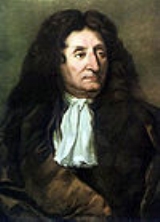
Jean de La Fontaine

 
Jean De La Fontaine

   Email Print
   Bookmark   Link


Jean de La Fontaine


Jean de La Fontaine (July 8, 1621 – April 13, 1695) was the most famous French
France

France , officially the French Republic , is a country whose Metropolitan France is located in Western Europe and that also comprises various Overseas departments and territories of France....
 fabulist
Fable

A fable is a succinct story, in prose or verse, that features animals, plants, inanimate, or nature which are anthropomorphized , and that illustrates a moral lesson , which may at the end be expressed explicitly in a pithy maxim ....
 and one of the most widely read French poets of the 17th century.

According to Flaubert, he was the only French poet to understand and master the texture of the French language
French language

French is a Romance language spoken around the world by around 80 million people as first language, by 190 million as second language, and by about another 200 million people as an acquired tongue, with significant speakers in 54 countries....
 before Hugo
Victor Hugo

Victor-Marie Hugo was a France poet, playwright, novelist, essayist, visual artist, statesman, human rights activist and exponent of the Romanticism movement in France....
. A set of postage stamp
Postage stamp

A postage stamp is adhesive paper evidence of a fee paid for Mail services. Usually a small rectangle attached to an envelope, the stamp signifies the person sending it has fully or partly paid for delivery....
s celebrating La Fontaine and the Fables was issued by France in 1995. A film of his life has been released in France in April 2007 (Jean de La Fontaine - le défi starring Laurent Deutsch).

Biography
Early years
La Fontaine was born at Château-Thierry
Château-Thierry

Ch?teau-Thierry is a Communes of France in northern France about 56 miles east-northeast of Paris. It is a Subprefectures in France of the Aisne Departments of France in Picardie....
 in Champagne
Champagne, France

Champagne is a historic Provinces of France in the northeast of France, now best known for the Champagne that bears its name. Its western edge is about 100 miles east of Paris....
.


Discussion
Ask a question about 'Jean de La Fontaine'
Start a new discussion about 'Jean de La Fontaine'
Answer questions from other users
Full Discussion Forum


Recent Posts


Quotations


A hungry stomach cannot hear.

Book IX (1678–1679), fable 17

Better to suffer than to die: that is mankind's motto.

Book I (1668), fable 16

Beware, as long as you live, of judging people by appearances.

Book VI (1668), fable 5

By the work one knows the workman.

Book I (1668), fable 21 (The Hornets And The Bees), Variant: The artist by his work is known.

He knows the universe, and himself he does not know.

Book VIII (1678–1679), fable 26

I bend but do not break.

Book I (1668), fable 22


Encyclopedia


Jean de La Fontaine (July 8, 1621 – April 13, 1695) was the most famous French
France

France , officially the French Republic , is a country whose Metropolitan France is located in Western Europe and that also comprises various Overseas departments and territories of France....
 fabulist
Fable

A fable is a succinct story, in prose or verse, that features animals, plants, inanimate, or nature which are anthropomorphized , and that illustrates a moral lesson , which may at the end be expressed explicitly in a pithy maxim ....
 and one of the most widely read French poets of the 17th century.

According to Flaubert, he was the only French poet to understand and master the texture of the French language
French language

French is a Romance language spoken around the world by around 80 million people as first language, by 190 million as second language, and by about another 200 million people as an acquired tongue, with significant speakers in 54 countries....
 before Hugo
Victor Hugo

Victor-Marie Hugo was a France poet, playwright, novelist, essayist, visual artist, statesman, human rights activist and exponent of the Romanticism movement in France....
. A set of postage stamp
Postage stamp

A postage stamp is adhesive paper evidence of a fee paid for Mail services. Usually a small rectangle attached to an envelope, the stamp signifies the person sending it has fully or partly paid for delivery....
s celebrating La Fontaine and the Fables was issued by France in 1995. A film of his life has been released in France in April 2007 (Jean de La Fontaine - le défi starring Laurent Deutsch).

Biography


Early years


La Fontaine was born at Château-Thierry
Château-Thierry

Ch?teau-Thierry is a Communes of France in northern France about 56 miles east-northeast of Paris. It is a Subprefectures in France of the Aisne Departments of France in Picardie....
 in Champagne
Champagne, France

Champagne is a historic Provinces of France in the northeast of France, now best known for the Champagne that bears its name. Its western edge is about 100 miles east of Paris....
. His father was Charles de La Fontaine, maître des eaux et forêts - a kind of deputy-ranger - of the duchy of Chateau-Thierry
Château-Thierry

Ch?teau-Thierry is a Communes of France in northern France about 56 miles east-northeast of Paris. It is a Subprefectures in France of the Aisne Departments of France in Picardie....
; his mother was Françoise Pidoux. Both sides of his family were of the highest provincial middle class
Middle class

Middle class is the group of people in contemporary society who are between the working class and nobility. This socioeconomic class includes professionals, highly skilled workers, and lower and middle management....
, but were not noble; his father was also fairly wealthy.

Jean, the eldest child, was educated at the collège
College

File:Government college for Women Dhoke Kala Khan.JPGCollege is a term most often used today to denote an education institution. More broadly, it can be the name of any group of collegialitys, for example, an electoral college, a College of Arms or the College of Cardinals....
 (grammar school) of Reims
Reims

The city of Reims lies in the Champagne-Ardenne region in northeastern France 129 km east-northeast of Paris.Founded by the Gauls, it became a major city during the period of the Roman Empire....
, and at the end of his school days he entered the Oratory in May 1641, and the seminary of Saint-Magloire in October of the same year; but a very short sojourn proved to him that he had mistaken his vocation. He then apparently studied law, and is said to have been admitted as avocat (lawyer).

Family life

He was, however, settled in life, or at least might have been so, somewhat early. In 1647 his father resigned his rangership in his favor, and arranged a marriage for him with Marie Héricart, a girl of fourteen, who brought him twenty thousand livres, and expectations. She seems to have been both beautiful and intelligent, but the two did not get along well together. There appears to be absolutely no ground for the vague scandal as to her conduct, which was, for the most part, raised long afterwards by gossips or personal enemies of La Fontaine. All that can be positively said against her is that she was a negligent housewife and an inveterate novel reader; La Fontaine himself was constantly away from home, was certainly not strict in point of conjugal fidelity, and was so bad a man of business that his affairs became involved in hopeless difficulty, and a separation de biens had to take place in 1658. This was a perfectly amicable transaction for the benefit of the family; by degrees, however, the pair, still without any actual quarrel, ceased to live together, and for the greater part of the last forty years of La Fontaine's life he lived in Paris
Paris

Paris is the Capital of France and the country's largest city. It is situated on the river Seine, in northern France, at the heart of the ?le-de-France Regions of France ....
 while his wife dwelt at Chateau Thierry, which, however, he frequently visited. One son was born to them in 1653, and was educated and taken care of wholly by his mother.

Literary career in Paris

Even in the earlier years of his marriage La Fontaine seems to have been much in Paris, but it was not until about 1656 that he became a regular visitor to the capital. The duties of his office, which were only occasional, were compatible with this non-residence. It was not until he was past thirty that his literary career began. The reading of Malherbe, it is said, first awoke poetical fancies in him, but for some time he attempted nothing but trifles in the fashion of the time - epigram
Epigram

An Epigram is a brief, clever, and usually memorable statement. Derived from the "to write on - inscribe", the literary device has been employed for over two millennia....
s, ballade
Ballade

The ballade is a Verse form typically consisting of three eight-line stanzas, each with a consistent metre and a particular rhyme scheme. The last line in the stanza is a refrain, and the stanzas are followed by a four-line concluding stanza usually addressed to a prince....
s, rondeau
Rondeau

Rondeau may mean:*Rondeau , a form of French poetry*Rondo, a musical form from the 18th century to the present, also spelt 'rondeau'*Rondeau , a medieval and early Renaissance musical form distinct from the 18th century rondo...
x, etc.

His first serious work was a translation or adaptation of the Eunuchus of Terence
Terence

Publius Terentius Afer , better known as Terence, was a playwright of the Roman Republic. His comedies were performed for the first time around 170–160 BC, and he died young probably in Greece or on his way back to Rome....
 (1654). At this time the Maecenas of French letters was the Superintendent Fouquet, to whom La Fontaine was introduced by Jacques Jannart, a connection of his wife's. Few people who paid their court to Fouquet went away empty-handed, and La Fontaine soon received a pension of 1000 livres (1659), on the easy terms of a copy of verses for each quarters receipt. He also began a medley of prose and poetry, entitled Le Songe de Vaux, on Fouquet's famous country house
Vaux-le-Vicomte

The Ch?teau de Vaux-le-Vicomte is a baroque French chateau located in Maincy, near Melun, 55 km southeast of Paris in the Seine-et-Marne d?partement in France of France....
.

It was about this time that his wife's property had to be separately secured to her, and he seems by degrees to have had to sell everything that he owned; but, as he never lacked powerful and generous patrons, this was of small importance to him. In the same year he wrote a ballad, Les Rieurs du Beau-Richard, and this was followed by many small pieces of occasional poetry addressed to various personages from the king downwards.

Fouquet soon incurred the royal displeasure, but La Fontaine, like most of his literary proteges, was not unfaithful to him, the well-known elegy Pleurez, Nymphes de Vaux, being by no means the only proof of his devotion. Indeed it is thought not improbable that a journey to Limoges
Limoges

Limoges is a city and Communes of France in France, the Prefectures in France of the Haute-Vienne Departments of France, and the administrative capital of the Limousin Regions of France....
 in 1663 in company with Jannart, and of which we have an account written to his wife, was not wholly spontaneous, as it certainly was not on Jannart's part.

Just at this time his affairs did not look promising. His father and he had assumed the title of esquire
Esquire

Esquire is a term of United Kingdom origin, originally used to denote social status.Ultimately deriving from the medieval squires who assisted knights, the term came to be used automatically by men of gentry....
, to which they were not strictly entitled, and, some old edicts on the subject having been put in force, an informer procured a sentence against the poet fining him 2000 livres. He found, however, a new protector in the duke and still more in the duchess of Bouillon
La Tour d'Auvergne

La Tour d'Auvergne was a French noble family. Its senior branch, extinct in 1501, held the titles of count of Auvergne and count of Boulogne for about half a century....
, his feudal superiors at Chateau Thierry, and nothing more is heard of the fine.

Some of La Fontaine's liveliest verses are addressed to the duchess, Marie Anne Mancini
Marie Anne Mancini

Marie Anne Mancini, duchesse de Bouillon , was a niece of Cardinal Mazarin and the youngest of the five famous Mancini sisters....
, the youngest of Mazarin's nieces, and it is even probable that the taste of the duke and duchess for Ariosto had something to do with the writing of his first work of real importance, the first book of the Contes, which appeared in 1664. He was then forty-three years old, and his previous printed productions had been comparatively trivial, though much of his work was handed about in manuscript long before it was regularly published.

The years of fame

It was about this time that the quartet of the Rue du Vieux Colombier, so famous in French literary history, was formed. It consisted of La Fontaine, Racine
Racine

GeographyRacine is the name of several communities in the United States of America:* Racine, Wisconsin* Racine, Missouri* Racine, Ohio...
, Boileau
Boileau

Boileau can refer to the following:Persons:*Boileau-Narcejac, pen name of Pierre Boileau and Pierre Ayraud, also known as Thomas Narcejac, French writers of police stories...
 and Molière
Molière

Jean-Baptiste Poquelin, also known by his stage name Moli?re, was a French playwright and actor who is considered one of the greatest masters of comedy in Western literature....
, the last of whom was almost of the same age as La Fontaine, the other two considerably younger. Chapelain was also a kind of outsider in the coterie. There are many anecdotes, some pretty obviously apocryphal, about these meetings. The most characteristic is perhaps that which asserts that a copy of Chapelain's unlucky Pucelle always lay on the table, a certain number of lines of which was the appointed punishment for offences against the company. The coterie furnished under feigned names the personages of La Fontaine's version of the Cupid and Psyche
Cupid and Psyche

The legend of Cupid and Psyche first appeared as a digressionary story told by an old woman in Apuleius' novel, The Golden Ass, written in the second century A.D....
 story, which, however, with Adonis
Adonis

Adonis is a figure of West Semitic origin, where he is a central cult figure in various mystery religions, who enters Greek mythology in Hellenistic culture....
, was not printed till 1669.

Meanwhile the poet continued to find friends. In 1664 he was regularly commissioned and sworn in as gentleman to the duchess dowager of Orleans, and was installed in the Luxembourg
Luxembourg

Luxembourg , officially the Grand Duchy of Luxembourg , is a small landlocked country in western Europe, bordered by Belgium, France, and Germany....
. He still retained his rangership, and in 1666 we have something like a reprimand from Colbert
Colbert

Colbert is a common surname and rare given name of Old French and Old German origins; it was introduced to Britain by the Normans.Colbert most commonly refers to:...
 suggesting that he should look into some malpractices at Chateau Thierry. In the same year appeared the second book of the Contes, and in 1668 the first six books of the Fables, with more of both kinds in 1671. In this latter year a curious instance of the docility with which the poet lent himself to any influence was afforded by his officiating, at the instance of the Port-Royal
Port-Royal

Port-Royal-des-Champs was a Cistercian convent in Magny-les-Hameaux, in the Vall?e de Chevreuse southwest of Paris that launched a number of culturally important institutions....
ists, as editor of a volume of sacred poetry dedicated to the prince de Conti
Conti

Conti may refer to:* Niccol? Da Conti, a 15th century Venice merchant and explorer* Louis Armand II de Bourbon, prince de Conti, Prince of Conti from 1709-1727...
.

A year afterwards his situation, which had for some time been decidedly flourishing, showed signs of changing very much for the worse. The duchess of Orleans died, and he apparently had to give up his rangership, probably selling it to pay debts. But there was always a providence for La Fontaine. Madame de la Sablière
Marguerite de la Sablière

Marguerite de la Sabli?re , friend and patron of Jean de La Fontaine, was the wife of Antoine Rambouillet, sieur de la Sabli?re , a Protestant financier entrusted with the administration of the royal estates, her maiden name being Marguerite Hessein....
, a woman of great beauty, of considerable intellectual power and of high character, invited him to make his home in her house, where he lived for some twenty years. He seems to have had no trouble whatever about his affairs thenceforward; and could devote himself to his two different lines of poetry, as well as to that of theatrical composition.

Admission to the Academy and attendant struggles

In 1682 he was, at more than sixty years of age, recognized as one of the first men of letters of France. Madame de Sévigné, one of the soundest literary critics of the time, and by no means given to praise mere novelties, had spoken of his second collection of Fables published in the winter of 1678 as divine; and it is pretty certain that this was the general opinion. It was not unreasonable, therefore, that he should present himself to the Académie française
Académie française

L'Acad?mie fran?aise, or the French Academy, is the pre-eminent France learned body on matters pertaining to the French language. The Acad?mie was officially established in 1635 by Cardinal Richelieu, the chief minister to Louis XIII of France....
, and, though the subjects of his Contes were scarcely calculated to propitiate that decorous assembly, while his attachment to Fouquet and to more than one representative of the old Fronde
Fronde

The Fronde was a civil war in France, occurring in the midst of the Franco-Spanish War , which had begun in 1635. The word fronde means sling , with which the windows of supporters of Jules Cardinal Mazarin were broken with stones by Parisian Crowds....
ur party made him suspect to Colbert and the king, most of the members were his personal friends.

He was first proposed in 1682, but was rejected for Marquis de Dangeau. The next year Colbert died and La Fontaine was again nominated. Boileau was also a candidate, but the first ballot gave the fabulist sixteen votes against seven only for the critic. The king, whose assent was necessary, not merely for election but for a second ballot in case of the failure of an absolute majority, was ill-pleased, and the election was left pending. Another vacancy occurred, however, some months later, and to this Boileau was elected. The king hastened to approve the choice effusively, adding, Vous pouvez incessamment recevoir La Fontaine, il a promis d'etre sage.

His admission was indirectly the cause of the only serious literary quarrel of his life. A dispute took place between the Academy and one of its members, Antoine Furetière
Antoine Furetière

Antoine Fureti?re France scholar and writer, was born in Paris....
, on the subject of the latter's French dictionary, which was decided to be a breach of the Academy's corporate privileges. Furetire, a man of no small ability, bitterly assailed those whom he considered to be his enemies, and among them La Fontaine, whose unlucky Contes made him peculiarly vulnerable, his second collection of these tales having been the subject of a police condemnation. The death of the author of the Roman Bourgeois, however, put an end to this quarrel.

Shortly afterwards La Fontaine had a share in a still more famous affair, the celebrated Ancient-and-Modern squabble
Quarrel of the Ancients and the Moderns

The quarrel of the Ancients and the Moderns was a literature and artistic quarrel that heated up in the early 1690s and shook the Acad?mie fran?aise....
 in which Boileau and Charles Perrault
Charles Perrault

File:ChPerrault.jpg'Charles Perrault' was a France author who laid foundations for a new literary genre, the fairy tale, and whose best known tales include Le Petit Chaperon rouge , La Belle au bois dormant , Le Ma?tre chat ou le Chat bott? , Cendrillon ou la petite pantoufle de verre , La Barbe bleue , Le Petit Pouce...
 were the chiefs, and in which La Fontaine (though he had been specially singled out by Perrault for favorable comparison with Aesop
Aesop

File:Aesop pushkin01.jpgAesop , known only for the genre of fables ascribed to him, was by tradition a Slavery in Ancient Greece who was a contemporary of Croesus and Peisistratos in the mid-6th century BC in ancient Greece....
 and Phaedrus
Phaedrus

Phaedrus , Roman Empire fabulist, was probably a Thracian slave, born in Pydna of Macedonia and lived in the reigns of Augustus Caesar, Tiberius, Caligula and Claudius....
) took the Ancient side. About the same time (1685–1687) he made the acquaintance of the last of his many hosts and protectors, Monsieur and Madame d'Hervart, and fell in love with a certain Madame Ulrich, a lady of some position but of doubtful character. This acquaintance was accompanied by a great familiarity with Vendome, Chaulieu and the rest of the libertine coterie of the Temple; but, though Madame de la Sablière had long given herself up almost entirely to good works and religious exercises, La Fontaine continued an inmate of her house until her death in 1693.

What followed is told in one of the best known of the many stories bearing on his childlike nature. Hervart on hearing of the death, had set out at once to find La Fontaine. He met him in the street in great sorrow, and begged him to make his home at his house. J'y allais was La Fontaines answer. He had already undergone the process of conversion during a severe illness the year before. An energetic young priest, M. Poucet, had brought him, not indeed to understand, but to acknowledge the impropriety of the Contes, and it is said that the destruction of a new play of some merit was demanded and submitted to as a proof of repentance.

A pleasant story is told of the young duke of Burgundy, Fenelon's pupil, who was then only eleven years old, sending 50 louis to La Fontaine as a present of his own motion. But, though La Fontaine recovered for the time, he was broken by age and infirmity, and his new hosts had to nurse rather than to entertain him, which they did very carefully and kindly. He did a little more work, completing his Fables among other things; but he did not survive Madame de la Sablière much more than two years, dying on 13 April, 1695, at the age of seventy-three. When the Père Lachaise Cemetery
Père Lachaise Cemetery

P?re Lachaise Cemetery is the largest cemetery in the city of Paris, France at , though there are larger cemeteries in the city's suburbs.P?re Lachaise is one of the List of cemeteries in the world....
 opened in Paris, Lafontaine's remains were moved there. His wife survived him nearly fifteen years.

Anecdotes

The curious personal character of La Fontaine, like that of some other men of letters, has been enshrined in a kind of legend by literary tradition. At an early age his absence of mind and indifference to business gave a subject to Gédéon Tallemant des Réaux
Gédéon Tallemant des Réaux

G?d?on Tallemant, Sieur Des R?aux , was a France writer known for his Historiettes, a collection of short biographies....
. His later contemporaries helped to swell the tale, and the 18th century finally accepted it, including the anecdotes of his meeting his son, being told who he was, and remarking, Ah, yes, I thought I had seen him somewhere!, of his insisting on fighting a duel with a supposed admirer of his wife, and then imploring him to visit at his house just as before; of his going into company with his stockings wrong side out, &c., with, for a contrast, those of his awkwardness and silence, if not positive rudeness in company.

It ought to be remembered, as a comment on the unfavourable description by Jean de La Bruyère
Jean de La Bruyère

Jean de La Bruy?re , was a France essayist and moralist....
, that La Fontaine was a special friend and ally of Benserade, La Bruyere's chief literary enemy. But after all deductions much will remain, especially when it is remembered that one of the chief authorities for these anecdotes is Louis Racine
Louis Racine

Louis Racine , was a France poet.The second son of the dramatist Jean Racine, he was born in Paris. Interested in poetry from childhood, he had been dissuaded from trying to make it his career by Nicolas Boileau-Despr?aux on the grounds that the gift never existed in two successive generations....
, a man who possessed intelligence and moral worth, and who received them from his father, La Fontaine's attached friend for more than thirty years. Perhaps the best worth recording of all these stories is one of the Vieux Colombier quartet, which tells how Molière, while Racine and Boileau were exercising their wits upon le bonhomme or le bon (by both which titles La Fontaine was familiarly known), remarked to a bystander, Nos beaux esprits ont beau faire, ils n'effaceront pas le bonhomme. They have not.

La Fontaine's works


The numerous works of La Fontaine fall into three traditional divisions: the Fables, the Contes and the miscellaneous works. Of these the first may be said to be known universally, the second to be known to all lovers of French literature, the third to be with a few exceptions practically forgotten.
Cochinfables
The Fables exhibit the versatility and fecundity of the author's talent more fully than any of his other work. La Fontaine had many predecessors in the fable, especially in the beast fable
Fable

A fable is a succinct story, in prose or verse, that features animals, plants, inanimate, or nature which are anthropomorphized , and that illustrates a moral lesson , which may at the end be expressed explicitly in a pithy maxim ....
. The poet took inspiration from Aesop
Aesop

File:Aesop pushkin01.jpgAesop , known only for the genre of fables ascribed to him, was by tradition a Slavery in Ancient Greece who was a contemporary of Croesus and Peisistratos in the mid-6th century BC in ancient Greece....
, Horace
Horace

This article is about the Roman poet Horace. For other uses, see Horace .Quintus Horatius Flaccus, , known in the English language world as Horace, was the leading Roman Empire Lyric poetry during the time of Augustus....
, Boccaccio and Ariosto and Tasso
Tasso

Tasso may refer to:*Tasso or Tasso ham, a specialty of Cajun cuisine*Tasso, Corse-du-Sud, a commune on Corsica, France*Tasso River, a river in Mumbai, India...
, Machiavelli's comedies and ancient Indian literature
Indian literature

Indian literature refers to the literature produced on the Indian subcontinent until 1947 and in the Republic of India thereafter. The Republic of India has 22 officially recognized Languages of India....
, such as the Panchatantra
Panchatantra

The Panchatantra or Tantrakhyayika also known in other cultures as Kalileh o Demneh or Anvar-e Soheyli or Kalilag and Damnag or Kalilah wa Dimnah or Kalila and Dimna or The Fables of Bidpai or The Morall Philosophie of Doni was originally a canon...
:

"This is the second book of fables that I present to the public... I must acknowledge that the greatest part is inspired from Pilpay, the Indian sage." ("Je dirai par reconnaissance que j’en dois la plus grande partie à Pilpay sage indien.") — Jean de La Fontaine, Avertissement to the Second Compilation of Fables (1678).


The first collection of 124 Fables Choisies had appeared March 31, 1668, wisely dedicated to "Monseigneur" Louis, le Grand Dauphin, the six-year-old son of Louis XIV of France
Louis XIV of France

Louis XIV ruled as List of French monarchs and of King of Navarre. He ascended the throne a few months before his fifth birthday, but did not assume actual personal control of the government until the death of his prime minister , the Italians Jules Cardinal Mazarin, in 1661....
 and his Queen consort
Queen consort

A queen consort is the title given to the wife of a reigning Monarch. Queens consort usually share their husbands' Royal and noble ranks and hold the feminine equivalent of their husbands' monarchical titles....
 Maria Theresa of Spain
Maria Theresa of Spain

Maria Theresa of Spain was the daughter of Philip IV of Spain and ?lisabeth of France . She was List of Queens and Empresses of France as wife of Louis XIV of France....
. In this first issue, comprising what are now called the first six books, La Fontaine adhered to the path of his predecessors with some closeness; but in the later collections he allowed himself far more liberty, and it is in these parts that his genius is most fully manifested.

The boldness of the politics is as much to be considered as the ingenuity of the moralizing, as the intimate knowledge of human nature displayed in the substance of the narratives, or as the artistic mastery shown in their form. It has sometimes been objected that the view of human character which La Fontaine expresses is unduly dark, and resembles too much that of La Rochefoucauld
La Rochefoucauld

La Rochefoucauld can refer to:People:* Fran?ois de La Rochefoucauld , French author* Fran?ois de La Rochefoucauld , French cardinal of the Catholic Church...
, for whom the poet certainly had a profound admiration. It may only be said that satire
Satire

Satire is often strictly defined as a literary genre; although, in practice, it is also found in the graphic arts and performing arts. In satire, human or individual vices, follies, abuses, or shortcomings are held up to censure by means of ridicule, derision, burlesque, irony, or other methods, ideally with the intent to bring about improv...
 (and La Fontaine is eminently a satirist) necessarily concerns itself with the darker rather than with the lighter shades.

Perhaps the best criticism ever passed upon La Fontaine's Fables is that of Silvestre de Sacy
Silvestre de Sacy

Antoine Isaac, Baron Silvestre de Sacy , was a France linguist and orientalist.Sacy was born in Paris to a Civil law notary named Abraham Silvestre, of Jewish origin....
, to the effect that they supply delights to three different ages: the child rejoices in the freshness and vividness of the story, the eager student of literature in the consummate art with which it is told, the experienced man of the world in the subtle reflections on character and life which it conveys. Nor has any one, with the exception of a few paradoxers like Rousseau and a few sentimentalists like Lamartine, denied that the moral tone of the whole is as fresh and healthy as its literary interest is vivid. The book has therefore naturally become a standard French reader both at home and abroad. It is no small testimony to its merit that not even this use (or misuse) has interfered with its popularity.

La Fontaine's Fables provided a model for subsequent fabulists
Fable

A fable is a succinct story, in prose or verse, that features animals, plants, inanimate, or nature which are anthropomorphized , and that illustrates a moral lesson , which may at the end be expressed explicitly in a pithy maxim ....
, including Poland
Poland

Poland , officially the Republic of Poland , is a country in Central Europe. Poland is bordered by Germany to the west; the Czech Republic and Slovakia to the south; Ukraine, Belarus and Lithuania to the east; and the Baltic Sea and Kaliningrad Oblast, a Russian Enclave and exclave, to the north....
's Ignacy Krasicki
Ignacy Krasicki

Ignacy Krasicki , from 1766 Prince-Bishop of Warmia and from 1795 Archbishop of Gniezno , was Poland's leading Polish Enlightenment poet , Fables and Parables, author of the Adventures of Mr....
 and Russia
Russia

Russia , or the Russian Federation , is a list of countries spanning more than one continent country extending over much of northern Eurasia....
's Ivan Krylov
Ivan Krylov

Ivan Andreyevich Krylov is Russia's best known Fable. While many of his earlier fables were loosely based on Aesop and Jean de La Fontaine, later fables were original work....
.

Further reading


  • Young La Fontaine: A Study of His Artistic Growth in His Early Poetry and First Fables, by Philip A. Wadsworth. Pub. Northwestern University Press, 1952.
  • Oeuvres diverses de Jean de La Fontaine, edited by Pierre Clarac. Pub. Gallimard ("Bibliothèque de la Pléiade"), 1958. The standard, fully annotated edition of LF's prose and minor poetry.
  • O Muse, fuyante proie ...: essai sur la poésie de La Fontaine, by Odette de Mourgues. Pub. Corti, 1962. Seminal.
  • Le Monde littéraire de La Fontaine, by Jean-Pierre Collinet. Pub. PUF, 1970
  • The Esthetics of Negligence: La Fontaine's Contes, by John C. Lapp. Pub. Cambridge University Press, 1971.
  • [La Fontaine] l'Esprit Créateur 21.4 (1981); guest-editor: David Lee Rubin.
  • Patterns of Irony in the Fables of La Fontaine, by Richard Danner. Pub. Ohio University Press, 1985.
  • La Fontaine: Fables, 2 volumes, edited by Marc Fumaroli. Pub. Imprimerie Nationale, 1985. Brilliant introductory essays and notes on texts.
  • La Fontaine, by Marie-Odile Sweetser. Pub. G.K. Hall (Twayne World Authors Series 788), 1987.
  • Oeuvres complètes de Jean de La Fontaine: Fables et Contes, edited by Jean-Pierre Collinet. Pub. Gallimard ("Bibliothèque de la Pléiade"), 1991. The standard fully annotated edition of these works.
  • A Pact with Silence: Art and Thought in the Fables of Jean de La Fontaine, by David Lee Rubin. Pub. Ohio State U Press, 1991.
  • La Fabrique des Fables, by Patrick Dandrey. Pub. Klincksieck, 1991.
  • Figures of the Text: Reading and Writing (in) La Fontaine, by Michael Vincent. Pub. John Benjamins (Purdue University Monographs in Romance Literatures), 1992.
  • La Fontaine's Bawdy: Of Libertines, Louts, and Lechers, selections from the Contes et nouvelles, transl. Norman Shapiro. Pub. Princeton University Press, 1992; repr. Black Widow Press, forthcoming.
  • Lectures de La Fontaine, by Jules Brody. Pub. Rookwood Press, 1995.
  • Refiguring La Fontaine: Tercentenary Essays, edited by Anne L. Birberick. Pub. Rookwood Press, 1996.
  • Reading Under Cover: Audience and Authority in Jean La Fontaine, by Anne L. Birberick. Pub. Bucknell University Press, 1998.
  • Cognitive Space and Patterns of Deceit in La Fontaine's Contes, by Catherine M. Grisé. Pub: Rookwood Press, 1998.
  • In La Fontaine's Labyrinth: a Thread through the Fables, by Randolph Paul Runyon. Pub. Rookwood Press, 2000.
  • Poet and the King: Jean de La Fontaine and His Century, by Marc Fumaroli; Jean Marie Todd (transl.). Pub. U. of Notre Dame, 2002.
  • The Shape of Change: Essays on La Fontaine and Early Modern French Literature in Honor of David Lee Rubin, edited by Anne L. Birberick and Russell J. Ganim. Pub. Rodopi, 2002.
  • La Fontaine à l'école républicaine: Du poète universel au classique scolaire, by Ralph Albanese, Jr. Pub. Rookwood Press 2003.
  • The Complete Fables of Jean de La Fontaine, Norman Shapiro (transl.). Pub. U of Illinois Press, 2007.
  • La Fontaine's Complete Tales in Verse, An Illustrated And Annotated Translation, by Randolph Paul Runyon. Pub. McFarland & Company, 2009.


External links

  • : The museum is the native house of the poet in Château-Thierry, France (in French but soon in english)
  • - extensive information and works online
  • (in French)
  • : text, concordance and frequency list (in Italian)